
Iran’s control over the vital Strait of Hormuz waterway appears to be weakening as Gulf Arab nations find ways to transport oil to international markets despite ongoing conflicts.
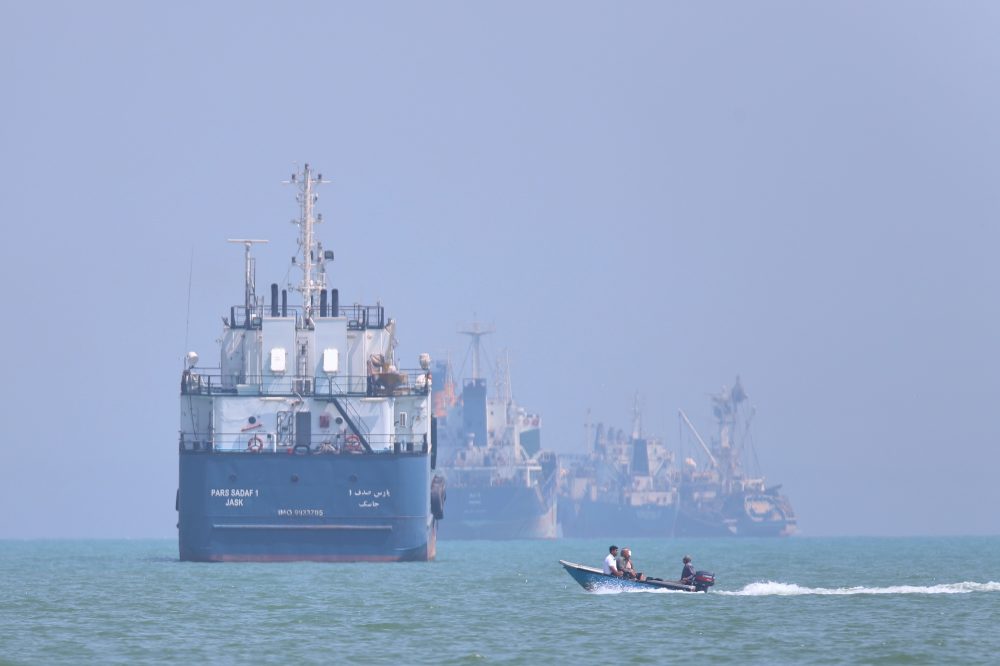
The strategic passage at the entrance to the Persian Gulf, which formerly handled one-fifth of global oil and natural gas shipments, has been largely blocked by Iranian assaults on commercial vessels since February when hostilities began. Despite significant losses to its naval fleet, Iran’s mere threat of attack has made shipping companies and insurance providers reluctant to send vessels through the waterway. This energy shortage has contributed to worldwide inflation, including price increases in the United States.
However, the dynamics appear to be changing. Experts indicate that increasing amounts of crude from Gulf Arab nations are reaching global markets with assistance from American military forces. President Donald Trump claims a “secret mission” providing protection for vessels has enabled more than 100 million barrels of oil to be exported. Simultaneously, U.S. forces enforcing a blockade have repeatedly fired upon or intercepted vessels linked to Iran’s sanctioned petroleum trade, hampering the nation’s ability to obtain essential foreign currency.
Oil movement through the strait remains below the previous level of 15 million barrels daily. This won’t fully satisfy global energy demands, particularly as countries deplete their strategic reserves that have helped offset worldwide supply disruptions.
Nevertheless, if this flow can be maintained or increased, it could alter the crisis dynamics. Iran’s capacity to damage the global economy through its control of the strait has been its primary leverage, providing confidence it can outlast the United States despite war damage and the American blockade severely impacting its economy.
Iran is increasingly experiencing pressure. “We are currently under sanctions, and our routes have been blocked. We face a difficult test,” President Masoud Pezeshkian stated during a live television broadcast Wednesday. “Governing the country is not an easy task under the current circumstances, given the shortages we face, the unrest we have experienced and the problems that remain.”
Still, the conflict’s trajectory remains highly unpredictable. This week featured days of intense combat between Iran, Israel and the United States. Trump threatened Thursday to capture Kharg Island’s oil export facility and intensify bombing of the Islamic Republic, then abruptly retreated and again claimed progress in negotiations to end the war.
Reopening the strait and restoring oil flow has been a primary objective for Trump, though he has appeared to struggle at times finding effective approaches. After initially advising allied countries that the strait wasn’t America’s responsibility and to “go get your own oil,” Trump shifted to threatening everything up to destroying “a whole civilization” to restore tanker passage through the waterway.
Recent weeks appear to have seen increased confidence in U.S. military backing and growing supply needs convince shipping companies to risk transit through the strait using covert methods.
Most likely, vessels have passed through by going “dark,” disabling their tracking systems. TankerTrackers.com, a maritime oil trade monitoring website, reported observing ship-to-ship transfers by Gulf Arab states last weekend, attempting to conceal their crude’s origin and pass through the strait undetected by Iran. This likely occurs with American military support.
Kpler, a commodities market monitoring firm, has tracked approximately 96 million barrels of non-Iranian crude exports leaving the region since early May, either through the strait or via Gulf of Oman export alternatives, according to Kpler analyst Amena Bakr.
Including shipments still loading, she indicated it would likely surpass 100 million barrels, “broadly consistent with Trump’s claim.”
Trump provided the 100 million barrel figure in Wednesday online posts, stating more than 200 vessels had traveled through the strait thanks to “a secret mission” supporting tankers and other ships.
“This wildly successful effort is because the UNITED STATES of AMERICA CONTROLS the Strait of Hormuz — NOT Iran,” Trump wrote.
U.S. forces are conducting a “limited overwatch operation using autonomous vehicles, aircraft and drone escorts to help ships through the southern part of the strait near the coast of Oman,” said Richard Meade, editor-in-chief at Lloyd’s List Intelligence maritime data company.
The U.S. Army AH-64 Apache attack helicopter that crashed this week off Oman after allegedly being struck by an Iranian drone “was probably part of that operation,” he said during an online webinar Thursday.
Iran has declared the strait closed following this week’s exchanges involving two days of American airstrikes on Iran and Iranian retaliatory attacks on Bahrain, Kuwait and Jordan — countries hosting American troops. Iranian Foreign Minister Abbas Araghchi insisted Wednesday the strait wasn’t an international waterway, despite global recognition as such.
While the U.S. assists Gulf Arab states’ tankers in exiting, it continues blocking Iranian vessels from entering or leaving the strait. This has included firing on ships to stop them, such as Wednesday’s attack that killed three Indian sailors.
Unable to export its oil, Iran is reaching maximum onshore storage capacity and using dozens of tankers near Kharg Island for crude storage. Iran also apparently has been forced to reduce or halt oil production at some wells, which experts warn can be dangerous since older wells like Iran’s may not restart after stopping.
Energy firm Wood Mackenzie estimates Iran’s output has declined by 800,000 barrels daily since the American blockade began. Meanwhile, onshore storage is estimated at 69 million barrels, the highest level since Trump’s “maximum pressure” campaign in 2020.
“The mounting economic cost of falling output, restricted exports and tightening storage capacity is increasing pressure on Tehran to seek a diplomatic solution,” Wood Mackenzie’s Alexandre Araman said. “For Iran, even a temporary diplomatic breakthrough could provide immediate relief.”
Oil prices have remained below $100 per barrel, partly due to Trump’s deal promises and other countries using reserves while reducing oil consumption. China, historically a major Iranian sanctioned oil buyer, saw seaborne crude imports drop to 6.8 million barrels daily in May, the lowest since October 2016, according to Kpler.
This has provided Trump and the global economy additional time, but a resolution would likely need to be reached soon to prevent the energy crisis from becoming severe in coming months.