
BRUSSELS (AP) — Starting Friday, the European Union begins rolling out comprehensive new regulations that will reshape how its 27 member nations handle irregular migration and people seeking asylum.
The European Migration and Asylum Pact represents the end result of lengthy and difficult negotiations that completely restructured the previous framework, which had been widely viewed as ineffective and provided far-right political movements with a powerful campaign tool.
Every EU member nation was expected to be ready for Friday’s launch by updating their laws, preparing personnel and strengthening border infrastructure. However, even the European Commission acknowledges that no member country is fully prepared.
Human rights organizations caution that the pact may increase challenges for asylum seekers attempting to secure safety within the EU.
The updated regulations require foreigners to undergo screening at EU borders for as long as seven days before gaining entry.
People seeking asylum from nations classified as “safe” by the EU or who present a “security threat” will undergo expedited asylum procedures lasting three months rather than six. Certain applicants may remain at the border during case processing. They will receive only one opportunity to challenge a denied application.
The European Commission notes that some member states must still establish a new biometric database called Eurodac that will record and maintain information on adults and children starting at age 6.
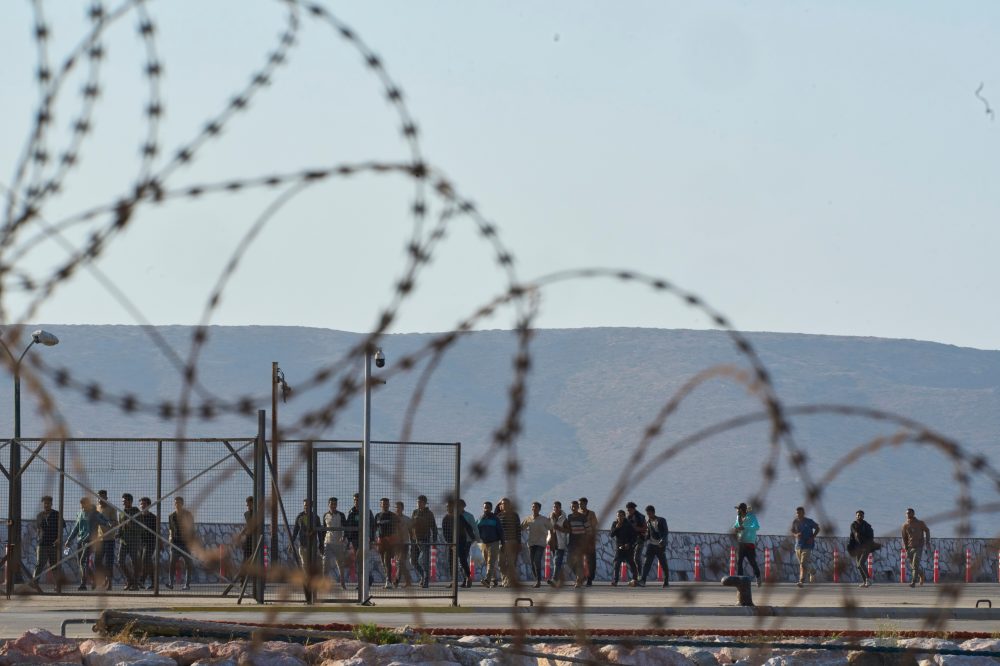
Numerous additional countries must establish border facilities for handling screening, asylum processing and detentions. Additional work is required to guarantee independent rights monitoring at borders, the commission stated.
A key component of the new pact involves accelerating voluntary and forced deportations of rejected asylum seekers through automatic return orders when applications are denied. This represents a clear political goal of center and far-right politicians who gained power across the EU in 2024, with deportees scheduled for countries considered safe like Syria and Bangladesh.
The European Agency for Asylum reported approximately 802,000 pending first-time asylum applications in March.
Member states are also collaborating with EU lawmakers to enable the establishment of “return hubs” in third countries where they can send migrants who cannot be repatriated. Questions regarding deportation centers are being discretely negotiated between a group of five nations and potential international partners.
One of the most divisive issues separating EU countries involved sharing responsibility for asylum seekers, particularly during crisis periods. Since migrants must seek asylum in their first EU entry country, frontline Mediterranean nations like Greece and Italy have consistently argued they shoulder the burden of irregular arrivals.
Claiming their systems cannot handle the pressure, these countries permitted many migrants to travel to northern and western Europe without authorization. This transferred some burden to northern countries like Germany and Sweden that experienced record asylum applications, pushing their migration systems near collapse.
The new pact establishes a solidarity mechanism ensuring border countries receive support. Other EU members will either accept a portion of asylum seekers or provide financial compensation. Countries can also reduce their share if they receive migrants through secondary movements, meaning when a migrant arrives in one country and relocates to another.
However, not every member state supported this approach. Poland, for instance, suspended asylum rights since early 2025 citing the weaponization of migration on its border with Belarus. Initially a temporary measure, it has continued extending the suspension.
Hungary’s new prime minister Péter Magyar continues many hardline immigration policies of his predecessor, Viktor Orbán, including refusing to accept migrants. But Magyar has indicated he would realign Hungary’s asylum procedures to avoid being fined 1 million euros daily for Orban’s policy that violated the bloc’s asylum rules.
The commission has acknowledged that implementation work will continue beyond June 12 since no country is completely ready.
“It won’t be a like a light switch turning on on June 12,” said Susan Fratzke, a senior policy analyst with the Migration Policy Institute. “Some of these things will take time.”
The absence of clarity and consistency is concerning, said Susanna Zanfrini, director of the International Rescue Committee’s Italy office.
That ambiguity “creates uncertainty for both people seeking protection and the organizations supporting them at the very moment they most need clear information about their rights, options, and access to support to survive, recover and rebuild their lives,” she said.
Human rights advocates have condemned the new regulations, claiming they compromise the right to seek asylum by hastening assessments.
They argue accelerated procedures introduce racial profiling while refusing international protection to applicants with valid claims, while also predicting an anticipated increase in extended detentions at EU borders.
Judith Sunderland, senior refugee and migrant rights adviser at Human Rights Watch, said the new pact “slams the door in the face of people who deserve to be treated with dignity and to have a fair hearing of their claims for protection.”
Lukas Gehrke, the Brussels chief for the International Organization For Migration, said regardless of how many people are removed from the EU, many migrants will remain while losing integration funding under the new budget for the pact.
“If we under focus on this, the failure of integration becomes a self-fulfilling prophecy,” he said.