Indian aviation authorities will postpone releasing their final investigation report into a fatal Air India Boeing 787 crash past the one-year anniversary this Friday, as they continue analyzing the aircraft’s engines, according to a source familiar with the investigation.
The following timeline details the tragic sequence of events on June 12, 2025, as documented by Indian investigators in their report released July 12 last year:
05:47 GMT (11:17 a.m. local time) – Air India Dreamliner VT-ANB touched down in Ahmedabad after flying from New Delhi on flight AI423.
07:48:38 GMT – The plane was seen leaving Bay 34 at the airport.
07:55:15 GMT – The aircraft requested permission to taxi, receiving approval from air traffic control. One minute later, the plane moved from the bay to Runway 23 using Taxiway R4, then backtracked and positioned for departure.
08:02:03 GMT – Control was transferred from ground to tower personnel.
08:07:33 GMT – Tower cleared the aircraft for takeoff.
08:07:37 GMT – The plane began its takeoff roll.
08:08:39 GMT – The aircraft became airborne. “The aircraft air/ground sensors transitioned to air mode, consistent with liftoff,” investigators noted.
08:08:42 GMT – The plane hit its maximum speed of 180 knots. “Immediately thereafter, the Engine 1 and Engine 2 fuel cutoff switches transitioned from RUN to CUTOFF position one after another with a time gap of 01 sec.”
“The Engine N1 and N2 began to decrease from their take-off values as the fuel supply to the engines was cut off.
“In the cockpit voice recording, one of the pilots is heard asking the other why did he cutoff.
“The other pilot responded that he did not do so.
“The CCTV footage obtained from the airport showed Ram Air Turbine (RAT) getting deployed during the initial climb immediately after lift-off.
“The aircraft started to lose altitude before crossing the airport perimeter wall.”
08:08:47 GMT – Both engines dropped “below minimum idle speed,” and the RAT hydraulic pump started providing hydraulic power.
08:08:52 GMT – Engine 1’s fuel cutoff switch moved from CUTOFF back to RUN.
08:08:56 GMT – Engine 2’s fuel cutoff switch also returned from CUTOFF to RUN.
“When fuel control switches are moved from CUTOFF to RUN while the aircraft is inflight, each engines full authority dual engine control (FADEC) automatically manages a relight and thrust recovery sequence of ignition and fuel introduction.”
“Engine 1’s core deceleration stopped, reversed and started to progress to recovery. Engine 2 was able to relight but could not arrest core speed deceleration and re-introduced fuel repeatedly to increase core speed acceleration and recovery.”
08:09:05 GMT – A pilot broadcast “MAYDAY MAYDAY MAYDAY.”
08:09:11 GMT – Data recording ceased.
08:14:44 GMT – Emergency fire and rescue vehicles departed the airport for the crash site.
A prominent French entertainer has been formally charged with multiple serious sexual crimes spanning over a decade, according to prosecutors in France.
Patrick Bruel, a 67-year-old singer and actor, received preliminary charges Thursday for rape, attempted rape, sexual assault, and sexual harassment involving multiple women from 2008 through 2019. The performer maintains his innocence regarding all accusations.
Following two days in police detention, Bruel appeared Wednesday before four investigative judges at a court in Nanterre, located in the western suburbs of Paris.
According to the Nanterre prosecutor’s office, the formal investigation encompasses rape allegations from 2008 in Neuilly-sur-Seine, west of Paris, attempted rape charges from 2010 in Brussels, plus sexual assault and harassment accusations from Perpignan in southern France and Ajaccio, Corsica, both occurring in 2019.
The judicial probe also extends to additional allegations of rape, attempted rape, and sexual harassment spanning 2010 to 2019 across three French cities and in Nyon, Switzerland, prosecutors stated.
Authorities noted that certain allegations previously dismissed without action have been reopened and incorporated into the current case.
While released from custody, Bruel faces significant restrictions under judicial supervision. He cannot leave France and must surrender his passport, complete psychological treatment, and provide bail totaling 500,000 euros ($576,760). Additional conditions prohibit contact with his accusers or their family members and ban him from entering massage parlors, where some alleged incidents reportedly occurred.
Legal representatives for Bruel issued a statement indicating the singer will fully cooperate with the investigation and remains accessible to judicial authorities.
Recent media coverage, particularly by French investigative outlet Mediapart, has highlighted accusations from multiple women spanning several decades, leading to additional complaints being filed.
Prosecutors explained that accusations from other women potentially barred by statute of limitations have been included in the case file to provide investigating judges with comprehensive context. Additional complaints from other jurisdictions may later be incorporated into the Nanterre investigation.
Bruel achieved massive fame throughout the French-speaking world during the late 1980s and 1990s. His popularity reached such heights that French media created the term “Bruelmania,” comparing it to Beatlemania.
Popular tracks from his 1989 second album became embedded in French cultural consciousness, exploring themes of love, heartbreak, nostalgia, and childhood while appealing to multiple generations. He subsequently developed a successful acting career, participating in numerous film and television projects.
The performer cancelled all scheduled summer performances last month across France, Canada, Switzerland, and Belgium, as well as year-end shows in Canada.
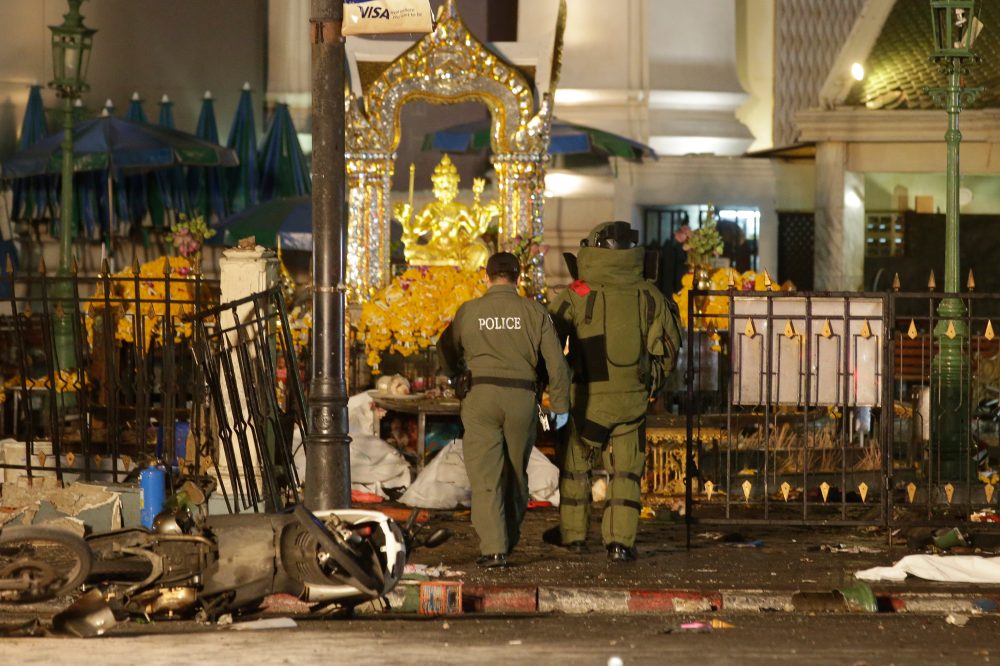
Two men from China’s Uyghur minority received death sentences Thursday from a Thai court for their involvement in a deadly 2015 bombing at a Bangkok tourist site that claimed 20 lives and wounded over 120 people.
Yusufu Mieraili and Bilal Mohammad were taken into custody following the August 17, 2015 attack at the Erawan shrine, a destination favored by tourists, especially those visiting from China.
The defendants faced multiple charges including murder, attempted murder and unlawful possession of explosive devices. Video footage, fingerprint analysis and additional evidence allegedly connected them to the deadly incident.
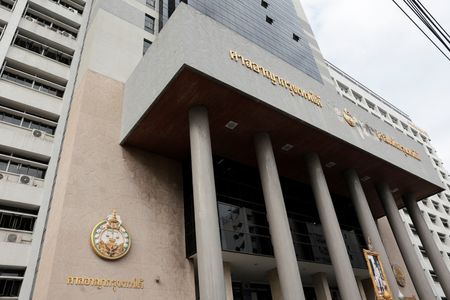
A panel of four judges delivered the verdict at Bangkok South Criminal Court. The court determined guilt based on substantial evidence presented against the defendants, who failed to offer convincing proof of their innocence.
Following the judges’ departure from the courtroom, Mieraili declared his innocence in limited Thai, rejecting the court’s decision.
“I mourn for Thailand,” he said. “I did not receive justice … I ask Thai people to help me.”
During his time in custody, Mieraili acquired Thai language skills, his attorney noted. He is also fluent in English and on Thursday served as a translator for Bilal, converting the court proceedings into Uyghur since only an English interpreter was present. The trial faced numerous postponements due to challenges in securing appropriate translation services.
Defense attorney Chuchart Kanpai announced plans to file an appeal, stating that multiple elements of the case remained unaddressed.
While the defendants reportedly admitted guilt during early interrogations, they entered not guilty pleas when proceedings commenced in 2016. The case initially went before a military tribunal before moving to the civilian Bangkok South Criminal Court in 2019.
Both men claimed they endured abuse and torture while incarcerated following their arrests. However, the judges stated Thursday that no evidence supported torture allegations and that investigators appeared not to have forced the confessions.
Multiple human rights organizations have condemned the legal procedures and extended trial duration. In 2023, the International Federation for Human Rights based in France filed a petition with the United Nations citing various human rights and due process violations, including questionable arrest justification and discriminatory conduct.
Law enforcement identified 17 individuals suspected in the bombing but captured only three. A Thai woman’s charges were dismissed in 2024 for insufficient evidence.
Investigators believe Mieraili triggered the explosive device moments after Bilal, also called Adem Karadag, allegedly placed a backpack containing the bomb at the shrine location.
Thai officials have stated the attack was retaliation by a human trafficking organization whose operations had been disrupted by law enforcement. Thailand intensified efforts against human smugglers in early 2015 after discovering abandoned camps housing Rohingyas fleeing Myanmar persecution and economic migrants from Bangladesh in border jungle areas near Malaysia.
Some experts theorize the bombing was carried out by Uyghur separatists angered by Thailand’s forced return of numerous Uyghurs to China in July 2015. Many Uyghurs attempt to flee persecution and strict oversight in China using professional smuggling networks.
Thailand sent 40 Uyghur asylum seekers back to China in 2025, prompting international condemnation.
The shrine’s appeal to Chinese visitors supported theories that the bombing contained political motivations.
Sweden’s center-right administration announced Thursday it will abandon its disputed proposal to reduce the criminal responsibility age to 13 years old, citing lack of parliamentary backing for the measure.
Justice Minister Gunnar Strommer explained that without adequate legislative support, the government will instead pursue new laws establishing 14 as the minimum age for criminal responsibility, down from the existing threshold of 15.
“We are going to propose that the age of criminal responsibility should be cut to 14 instead of 13-years-old,” Strommer told reporters.
The Nordic nation has experienced a dramatic increase in organized criminal activity over the past two decades, with shooting incidents now ranking among Europe’s highest rates.
While the administration has reformed the justice system by expanding police authority and implementing harsher penalties, efforts to prevent criminal organizations from recruiting increasingly younger participants for violent offenses have proven challenging.
According to Strommer, more than 50 children under 15 appeared in court last year facing charges related to murder or attempted murder.
Currently, minors who commit violent offenses are placed in youth facilities, but this approach is broadly considered ineffective.
The original proposal would have placed children as young as 13 in specialized detention facilities.
The United Nations Committee on the Rights of the Child advocates for a minimum criminal responsibility age of 14, which represents the European Union average.
Diplomatic negotiations between Iran and the United States are gaining momentum as both countries work toward a preliminary agreement, according to three Iranian sources and a European official who spoke to Reuters on Thursday. The discussions continue despite ongoing tensions and recent military actions by both nations, with talks centered on creating a system for unfreezing Iranian assets.
According to the sources, Iran and the United States continue to communicate through intermediaries about the specifics of a potential memorandum of understanding, even as confrontations persist between the two governments.
The Iranian sources indicated that while a basic political agreement has been established, several details still require further negotiation. Chief among these is developing a process for releasing tens of billions of dollars in Iranian oil revenues that have been frozen in international banking institutions.
“Iran wants $6 billion to $12 billion of its frozen funds to be released to Tehran, while Washington wants to release funds in stages for humanitarian goods and rejects returning funds to Iran outright,” said one of the Iranian sources.
According to the Iranian sources, the clerical establishment’s main concern for its continued existence is not achieving a complete resolution but rather establishing a structure that would provide essential relief by accessing frozen resources and bringing an end to current hostilities.
Conflicts in the Middle East and Ukraine will take center stage at next week’s Group of Seven summit, with host nation France designing an agenda focused on maintaining unity while avoiding potential clashes with U.S. President Donald Trump.
The June 15-17 meeting in Evian-les-Bains, located along Lake Geneva’s shoreline, will bring together leaders from France, Britain, Canada, Germany, Italy, Japan and the United States, along with European Union representatives.
Diplomatic sources indicate that crisis management will be the primary focus, as Trump works to resolve a conflict that has disrupted global economic stability while expressing frustration with European partners he believes have disappointed him in the Gulf region and become too dependent on American security support.
Major breakthrough decisions are not anticipated on key matters, which include addressing global economic imbalances and securing critical mineral sources outside of China.
The organization, established fifty years ago, has historically tackled economic and geopolitical challenges through broad agreement. However, this unity has deteriorated since Trump’s return to the White House in 2025.
French officials have already adjusted the summit dates to work around Trump’s birthday plans for cage fighting on the White House lawn, and like other recent host countries, they have set modest expectations, suggesting success would simply mean Trump remaining for the entire event, given his early departure from the 2025 gathering.
“Macron has gone out of his way to have an agenda that is designed to appeal to the sort of things President Trump wants,” said Josh Lipsky, chair of international economics at the Atlantic Council.
The summit’s pace may be influenced by Middle Eastern developments. A delicate ceasefire between the U.S. and Iran faces pressure, and achieving even a temporary agreement that postpones addressing more complex issues like Iran’s nuclear program remains challenging.
Trump seeks Iran’s reopening of the Strait of Hormuz, a critical passage for global oil and gas transport. Tehran demands the U.S. lift its blockade on Iranian ports and unfreeze Iranian assets, while also requiring Israel to halt its offensive against the Iranian-supported Hezbollah militia in Lebanon.
Diplomatic sources suggest Trump’s disposition may depend on securing an agreement before the summit begins. Recently, he has criticized some of America’s closest NATO partners for refusing to support his Gulf operations.
A senior diplomat from a G7 nation indicated that reaching an accord could help the group move past months of U.S. tensions.
France has extended invitations to Saudi Arabia, the United Arab Emirates and Qatar, all nations directly affected by the conflict, along with Egypt, which plays a crucial mediation role.
Ukrainian President Volodymyr Zelenskiy has also received an invitation.
Talks to end Russia’s invasion of Ukraine have reached an impasse, and Zelenskiy seeks renewed momentum while advocating for Europe to assume greater responsibility.
Zelenskiy worries that the Iranian conflict has shifted American focus away from Ukraine. Meanwhile, battlefield conditions have evolved, with Ukrainian drones penetrating deeper into Russian territory to disrupt supply chains and damage energy facilities.
European diplomatic representatives view the summit as a chance to persuade Trump that American proposals for a resolution have been overly generous to Moscow. European countries also aim to demonstrate their readiness to engage with Moscow while strengthening sanctions and increasing military aid to Ukraine, stressing their belief that Russia, rather than Kyiv, is preventing progress.
“What we are increasingly seeing is Europeans beginning to think about a life with less America,” said Victor Cha, head of geopolitics and foreign policy at Washington’s Center for Strategic and International Studies.
French officials have abandoned plans for a comprehensive final statement, choosing instead to focus on specific joint declarations covering areas like critical minerals, migration and drug trafficking.
Asuka Tatebayashi, senior analyst at Mizuho Bank in Tokyo, noted that the Japanese government and major corporations have spent over ten years building critical mineral reserves and demonstrating resilience against supply disruptions.
“It’s one of the few fields that the U.S. actually comes to Japan for advice on,” Tatebayashi said.
She encouraged the G7 to establish meaningful critical mineral initiatives such as minimum pricing, stockpile sharing or collaborative development projects, though acknowledged significant differences remain among member nations.
Paris has leveraged its leadership role to advocate for addressing global macroeconomic imbalances, a persistent American concern, before Washington assumes G20 leadership this year and G7 leadership next year.
France has characterized the issue as shared accountability, with China overproducing, the United States consuming excessively, and Europe investing inadequately.
Brazil, India, Kenya and South Korea have been invited to participate in G7 discussions, while Macron has encouraged China to increase domestic consumption.
“None of that solves the problem, but the first step is recognising that you have one,” Lipsky said. “This has been discussed for years, but not collectively within the G7.”
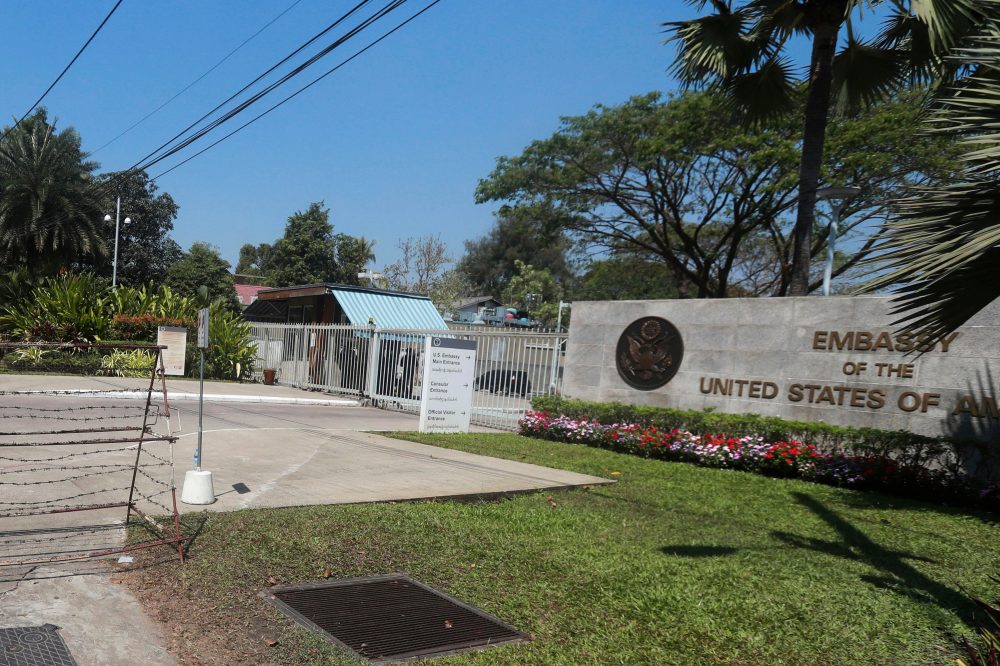
The U.S. State Department has confirmed that an American government worker has died in Yangon, Myanmar’s largest commercial city, according to officials on June 11th. Two sources indicated the incident took place at a hotel facility last month.
“We can confirm the death of a U.S. government employee assigned to U.S. Embassy Rangoon,” stated a spokesperson from the State Department, declining to share further details. The city of Yangon was previously called Rangoon when it was under colonial rule.
“Out of respect for the privacy of the family and loved ones, we have no further information to provide at this time.”
According to two individuals with knowledge of the situation who requested anonymity due to the sensitive nature of the matter, the official was discovered at Yangon’s Sakura Residence & Hotel, located within a major diplomatic area of the city.
When contacted by phone, hotel employees refused to provide any statement, and the local police department has not responded to inquiries for comment.
The Associated Press initially broke this story and reported that authorities have detained a Thai woman in relation to the death. Reuters has not been able to independently confirm these details at this time.
“This is currently a matter of consular assistance and an ongoing police investigation being handled through the relevant official channels,” stated Thailand’s Foreign Ministry, refusing to elaborate further.
Myanmar has experienced significant political and economic instability following the military’s power grab through a coup in February 2021, which resulted in the arrest of Nobel Prize winner Aung San Suu Kyi and other government officials.
This military takeover led to massive public demonstrations, ultimately igniting a civil conflict between the military forces and a combination of pro-democracy armed groups and established ethnic minority militias.
In early April, former military leader Min Aung Hlaing took the oath of office as the nation’s president after a heavily criticized, military-controlled election held during ongoing conflict.
BANGKOK – Two ethnic Uyghur men from China’s northwestern Xinjiang region received death sentences Thursday from a Thai court for their involvement in a deadly 2015 bombing at a Bangkok shrine that claimed 20 lives, court records show.
The blast took place at the Erawan Shrine in central Bangkok, a location frequented by international visitors. Beyond the fatalities, the attack wounded 120 individuals. Among those who died, five were from mainland China and two from Hong Kong.
According to the court’s written decision, “The actions of both defendants constitute multiple separate offenses,” with the death penalty stemming from convictions on premeditated murder charges.
Attorney Choochat Kanpai, representing one of the convicted men, informed reporters that both defendants plan to file appeals within the next month.
While no organization took credit for the attack, security analysts believe it served as payback for Thailand’s forced return of over 100 Uyghurs to China the month before the bombing occurred.
Members of the Uyghur community, predominantly Muslim, report leaving China’s northwestern Xinjiang region to escape what they describe as persecution. Chinese officials dispute these allegations.
Beijing has drawn international condemnation over what critics view as harsh limitations on religious and cultural practices in Xinjiang, home to most of the Uyghur population.
Both men have maintained their innocence throughout the proceedings.
The legal process stretched over more than a decade before reaching trial, as prosecutors worked to gather testimony from hundreds of witnesses. Officials also encountered difficulties securing proper translation services for the defendants.
In the previous year, Thailand sent another 40 Uyghurs back to China, ignoring appeals from United Nations human rights officials who warned the individuals faced potential torture, mistreatment and “irreparable harm” upon their return.
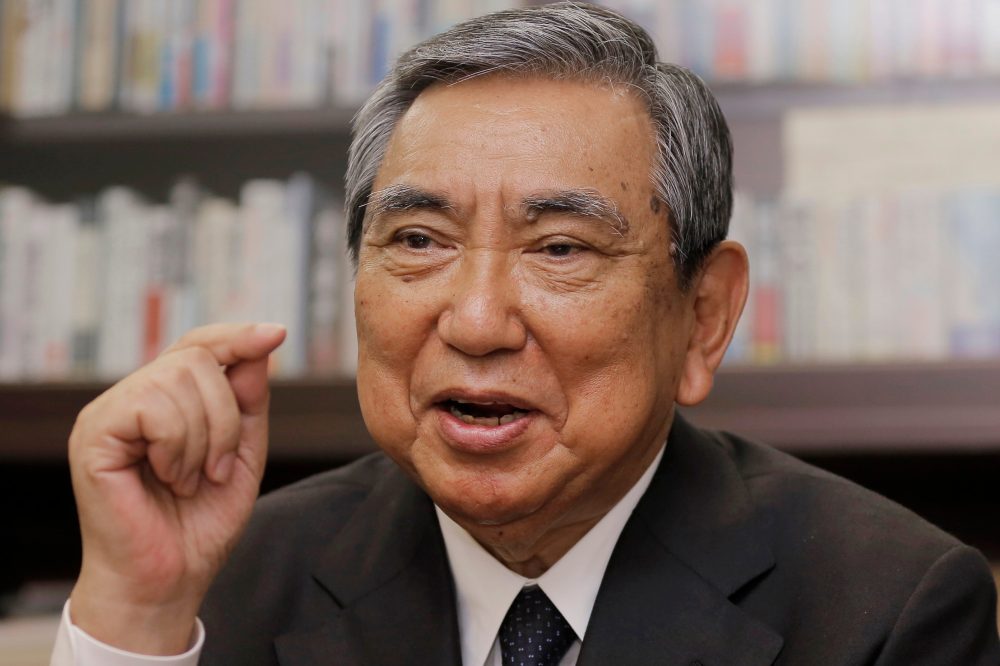
TOKYO – The Bank of Japan faces a challenging communication situation as Governor Kazuo Ueda’s hospitalization will prevent him from attending a crucial policy meeting next week where interest rates are expected to rise.
Ueda’s two-week medical treatment will sideline him during the June 15-16 rate review, creating what analysts call an awkward timing issue as the central bank works to establish its reputation as a serious inflation fighter and demonstrate market commitment.
The 74-year-old governor is receiving hospital care for an infected liver cyst and is anticipated to work from his hospital room before returning for the July 30-31 policy session, according to central bank officials.
Government officials are attempting to minimize concerns about the situation. Chief Cabinet Secretary Minoru Kihara stated during Thursday’s press conference that the central bank’s policy implementation and government coordination would continue without disruption.
However, even short-term leadership questions could challenge the institution as it shifts toward a more aggressive inflation-fighting approach amid global price pressures from the Iran conflict, while managing political concerns about increased borrowing costs and market doubts about the pace of policy tightening.
Former central bank board member Takahide Kiuchi offered his perspective on the situation: “The governor missing just one policy meeting won’t cause big problems. But if it turns into something longer, that’s a different story.”
Kiuchi added: “When markets are turning attention to the rift within the board, his absence may raise questions about his leadership.”
The concern grows more significant given perceptions that Ueda has taken a more measured approach compared to some board colleagues. His absence might spotlight whether more aggressive board members will gain influence or whether the lack of his stabilizing presence will expose internal disagreements.
This hospitalization follows Deputy Governor Shinichi Uchida’s recent medical leave, who was released from the hospital last month after leukemia treatment.
The upcoming policy decision appears largely predetermined. Ueda recently indicated willingness to increase the policy rate to 1% from 0.75%, a move broadly viewed as supported by an increasingly hawkish board.
However, the governor’s absence could complicate the institution’s public messaging since Uchida will conduct the post-decision media briefing, an uncommon arrangement that forces investors to analyze both the message content and the messenger’s delivery style.
For a central bank attempting to carefully manage market expectations, this personnel change introduces additional uncertainty.
Tsuyoshi Ueno, a senior economist at NLI Research Institute, explained the communication challenge: “Even if Uchida’s communication is different in nuance from Ueda, it would be hard to discern whether it’s due to the deputy governor’s character or a change in the BOJ’s thinking.”
Mari Iwashita, executive rates strategist at Nomura Securities, anticipates the institution will avoid providing clear future rate guidance entirely.
“Given uncertainty on how long it may take for the governor to fully recover, it’s also becoming more unclear on whether the BOJ would hike again this year,” she stated.
Analysts currently see minimal likelihood of Ueda resigning before his five-year term concludes in April 2028. Japanese law prevents forced resignation of central bank governors.
Nevertheless, the situation has renewed questions about whether job demands, including constant travel and parliamentary oversight, might eventually impact his leadership capacity.
Should Ueda step down, Uchida would serve as interim governor while the government selects a permanent replacement.
Such circumstances could provide Prime Minister Sanae Takaichi, who is perceived as supporting looser monetary policy, an opportunity to guide the central bank toward a more accommodative stance.
Both deputy governors, Uchida and Ryozo Himino, will complete their five-year terms one month before Ueda’s term ends.
Even if Ueda serves his complete term, the possibility of a dovish administration influencing future appointments could create subtle pressure for cautious policy decisions, some analysts suggest.
A significant test will arrive next July when two hawkish members of the nine-person board complete their terms, giving Takaichi the chance to name replacements.
NLI’s Ueno warned about potential political influence: “Next year’s personnel shift could overhaul the (dove-hawk) balance within the board. The BOJ may find it difficult to do anything that could draw the government’s ire.”
“Given such pressure, the BOJ may not be able to raise rates again for the rest of this year,” he concluded.
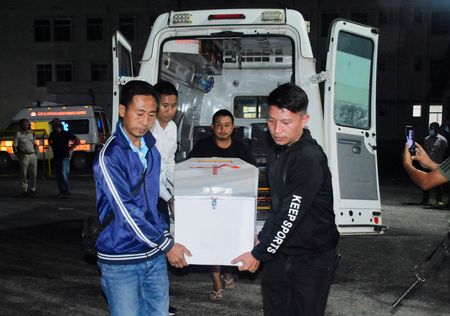
Authorities in India’s northeastern Manipur state have discovered the bodies of six men from the Naga community who were believed to have been kidnapped by armed militants nearly four weeks ago, according to state police officials who announced the findings on Wednesday.
The victims, all members of the Christian Naga community, are thought to be among individuals who were taken captive from Leilon Vaiphei village on May 13, according to a statement posted by Manipur Police on X.
Police located the bodies following an extensive search operation that lasted more than 24 hours and involved 450 officers along with sniffer dogs, the police statement indicated.
The deaths occur against a backdrop of mounting ethnic conflict that initially erupted in May 2023 between the state’s majority Hindu Meitei population and the predominantly Christian Kuki tribal groups, with disputes centered on economic advantages and employment quotas.
The violence expanded in February when the Naga community, representing the state’s third major ethnic group, became drawn into the conflict following reports that Kuki individuals had attacked a Naga man.
The ongoing ethnic strife has resulted in approximately 260 deaths and forced more than 60,000 residents from their homes since the violence first began.
A prominent French entertainer has been formally charged with serious sexual crimes following a lengthy investigation, prosecutors announced Thursday from Paris.
Patrick Bruel, a well-known singer and actor who ranks among France’s best-selling musical artists, now faces formal charges including rape, attempted rape, sexual assault, and harassment. The alleged incidents occurred between 2008 and 2019, according to the local prosecutor’s office.
When authorities place someone under formal investigation, it indicates sufficient evidence exists to suggest criminal activity took place and represents a significant step toward potential trial proceedings.
Multiple women have come forward with accusations against Bruel spanning from 1997 to 2012, though the performer has consistently maintained his innocence in public statements.
The case adds Bruel to a growing list of prominent French celebrities facing legal scrutiny following the #MeToo movement’s impact. Film actor Gerard Depardieu received an 18-month suspended prison sentence last year after being convicted of sexually assaulting two women during film production.
The 67-year-old appeared before four investigating judges on Wednesday to receive the formal charges.
Court officials will also review whether accusations from 13 additional alleged victims dating from September 1992 through September 2008 fall within the statute of limitations, according to French media outlets.
Authorities released Bruel from custody but placed him under judicial supervision.
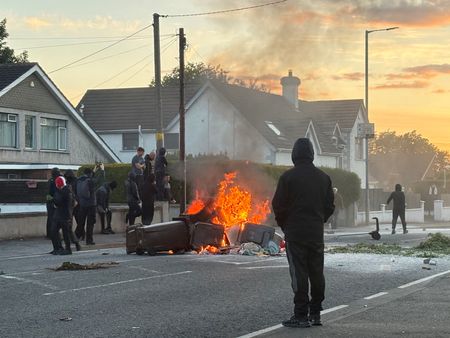
Britain’s minister for Northern Ireland condemned ongoing anti-immigration violence as racist thuggery Thursday, following two consecutive nights of rioting that required police to deploy water cannon against demonstrators.
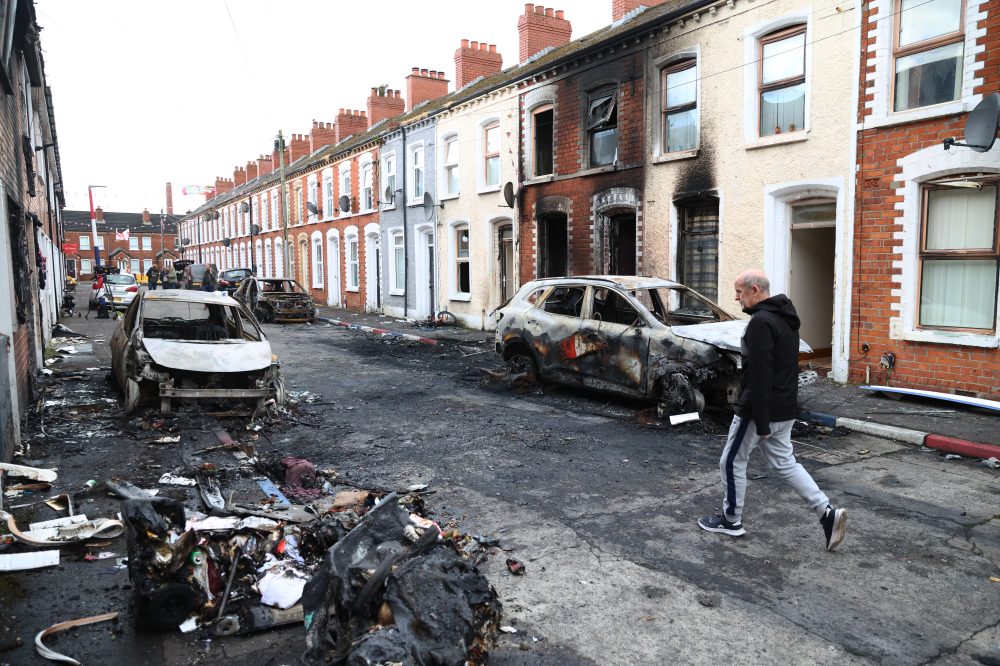
Hilary Benn reported that Wednesday evening saw reduced unrest on Belfast’s streets compared to Tuesday, when rioters set fire to residences and vehicles while targeting ethnic minorities. The violence erupted after a knife attack incident, for which authorities have charged a Sudanese man with attempted murder.
On Wednesday, many confronting police were attempting to reach a hotel located outside Belfast that has previously been targeted for providing accommodation to asylum seekers.
When questioned by Sky News whether the violent incidents constituted racist riots instead of protests, Benn responded: “Well, if you are targeting people on the basis of the color of their skin, how else can you describe them? That is racist thuggery.”
The minister emphasized that the unrest has created significant psychological damage throughout the province.
“It’s really difficult to convey the genuine sense of fear there is on the part of the ethnic minority community here in Northern Ireland as they’ve witnessed these scenes, reports of people being stopped in their cars to be asked what their nationality is, nurses going to work. This is appalling,” Benn stated.
A brutal knife assault on a Belfast street has triggered two consecutive nights of violent unrest fueled by anti-immigrant anger in Northern Ireland.
The accused attacker, a 30-year-old man from Sudan who had sought asylum in the United Kingdom, made his first court appearance Wednesday at Belfast Magistrates’ Court facing charges of attempted murder, making death threats against another individual, and weapons possession.
His court hearing occurred amid escalating street violence that began Tuesday when hooded rioters torched multiple residences they suspected of housing immigrants, destroyed a city bus, and bombarded officers with stones and debris. Emergency crews had to evacuate residents from blazing buildings.
According to police testimony, Hadi Alodid attacked Stephen Ogilvie with a kitchen blade, causing permanent blindness in his left eye and inflicting severe lacerations to his head, face and back.
While receiving medical treatment for an injured hand, Alodid made threats against a hospital radiologist, authorities reported.
“I’ve killed someone, I don’t know if they are dead,” Alodid stated to hospital personnel, a detective testified during court proceedings.
Investigators have not disclosed what motivated the assault but emphasized it does not appear to be terrorism-related.
Speaking through an Arabic translator, Alodid declined legal counsel and entered no plea. The court ordered him detained.
Despite government appeals for peaceful response to the crime, masked groups ignored those calls and launched projectiles at law enforcement, ignited garbage containers, and set fire to homes and cars.
Officers deployed water cannons against demonstrators who threw bricks and chunks of stone ripped from garden structures and walkways.
The violence displaced more than 24 residents from their homes.
Anselme Shima, a Belfast resident who emigrated from Congo, witnessed smoke rising from burning cars near his residence.
“I’ve lived on my street for almost 10 years, I have a good relationship with my neighbors, but last night was a horrific one,” he said. “We don’t know what to do. I’m scared. Seeing this, I’m wondering if I’m next.”
Leaders from both sides of Northern Ireland’s coalition government denounced the unrest. First Minister Michelle O’Neill of Irish nationalist party Sinn Fein called it “thuggery.”
The disturbances echoed similar riots that erupted across England and parts of Northern Ireland two years earlier following a teen’s deadly knife attack on three girls and wounding of 10 others at a dance studio near Liverpool.
The Belfast violence erupted one week after demonstrators confronted police in Southampton regarding the sentencing of a man convicted in the fatal stabbing of a college student.
Each incident involved Black or Asian perpetrators and white victims.
In the 2024 Southport girls’ deaths, the unnamed suspect was falsely portrayed on social media as a Muslim refugee. Despite police clarification that he was a British citizen born in Wales (later disclosed to have been raised by Christian parents from Rwanda), demonstrations primarily targeted migrants and Muslims.
Public anger over the Southampton fatal stabbing centered on police officers who responded to reports of a racist attack but mistakenly identified the victim, Henry Nowak, as the attacker. They initially ignored Nowak’s cries that he had been stabbed and couldn’t breathe, restraining him with handcuffs as he died.
Vickrum Digwa, who carried a ceremonial Sikh blade but used a different dagger to stab Nowak, deceived police by claiming Nowak had attacked him, Judge William Mousley stated when sentencing him to life imprisonment.
Nigel Farage, leader of the anti-immigration Reform UK party, cited Nowak’s death as evidence of alleged two-tier policing — a far-right claim that ethnic minorities receive preferential treatment over white citizens.
Government leaders and law enforcement have rejected such allegations, with many specialists arguing that British policing actually favors white individuals. A study from three years ago determined the Metropolitan Police in London, the nation’s largest department, was plagued by institutional racism.
Demonstrators have been mobilized through social media by British far-right activists, including Stephen Yaxley-Lennon, also known as Tommy Robinson, and encouraged by prominent international figures including tech mogul Elon Musk.
Musk posted more than 100 messages about British politics with heavy emphasis on Nowak’s death during Digwa’s trial period and offered to finance a private prosecution of the local police department.
U.S. Vice President JD Vance, in a post on X, attributed Nowak’s death to “the mass invasion of migrants, many of whom despise the West and the people who love it.”
Prime Minister Sir Keir Starmer responded sharply to Musk and Vance, condemning individuals “trying to interfere in our democracy and seeking to stir up division on our streets.”
Public response to these stabbings demonstrates growing anti-immigrant attitudes in portions of the United Kingdom and Europe recently, driven by political discussions about asylum seekers, small-boat crossings and strain on public services.
Several political leaders highlighted the essentially open border between Northern Ireland, which belongs to the United Kingdom, and the Republic of Ireland, where the suspect arrived in Dublin from Paris before traveling north.
Maintaining free movement of people represents a fundamental element of the peace process that largely ended decades of violence called “The Troubles.” The conflict involving Irish Republican and British Loyalist militants and United Kingdom security forces claimed nearly 3,600 lives before a 1998 peace agreement.
“There is absolutely no doubt in my mind that this man should not have been in this country,” Farage said Wednesday. “He entered the country illegally. And is it any surprise that people in Belfast and elsewhere are scared?”
GENEVA (AP) — Authorities in France and Switzerland are implementing extensive security protocols reminiscent of pandemic border controls as U.S. President Donald Trump and fellow world leaders prepare for a G7 summit beginning Monday, with officials concerned about possible violent demonstrations.
The gathering of leaders from the globe’s wealthiest countries will take place June 15-17 in Evian-les-Bains, a French community situated on Lake Geneva, with discussions planned on Middle Eastern affairs, Ukraine, and worldwide economic disparities.
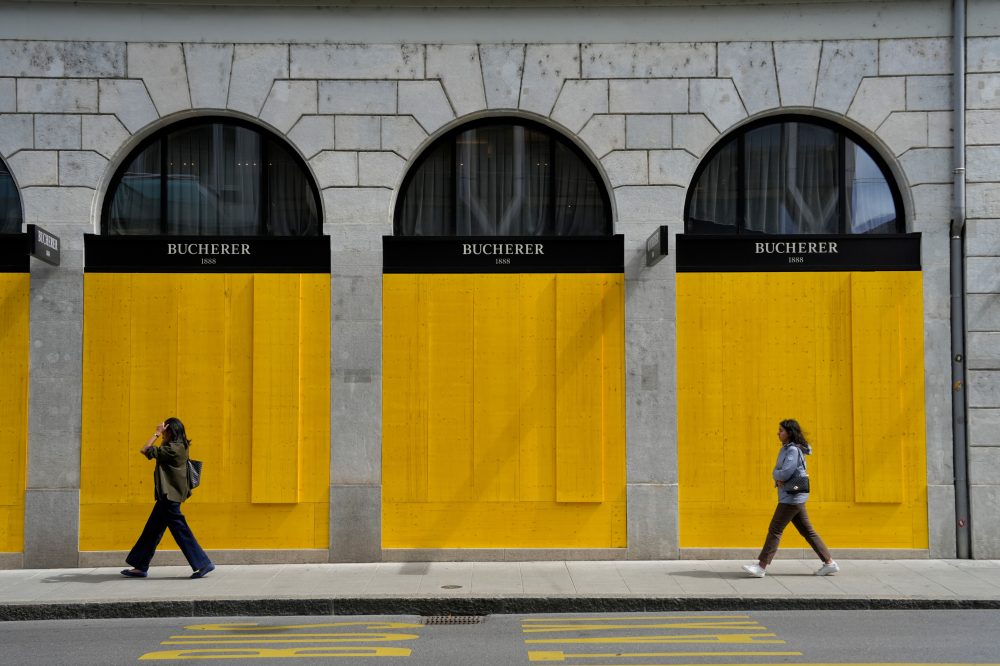
In the neighboring Swiss city of Geneva, merchants and civic officials hope to prevent a recurrence of the destructive demonstrations that damaged shop windows during the 2003 G8 summit when Russia remained part of the group.
Demonstrations have become commonplace at such high-profile international meetings. On this occasion, protesters plan to express dissatisfaction with Trump’s policies on matters ranging from trade tariffs and the conflict in Iran to environmental concerns, while some may also reference his previous connections to convicted sex offender Jeffrey Epstein.
Geneva officials and various activist organizations, including environmental advocates, women’s rights supporters, and anti-capitalist groups, are in conflict over demonstration rights versus protection from those targeting symbols of corporate and governmental authority.
“As the G7 meets in Evian, France, to plan the destruction of peoples, the exploitation of life and the domination of bodies, let us organize our resistance against fascism and imperialism,” the No G7 coalition of anti-capitalism groups said in its call for a “large-scale internationalist mobilization against this meeting.”
Geneva merchants have begun covering their storefronts with protective barriers, while organizations such as the World Trade Organization, which experienced anti-capitalist demonstrations in Seattle during the 1990s, are shuttering offices and directing employees to work from home.
Switzerland, a wealthy Alpine nation, is not part of the G7 membership which consists of Britain, Canada, France, Germany, Italy, Japan and the U.S.
French and Swiss officials have established a military cooperation pact for summit security. Visiting dignitaries will arrive through Geneva’s airport, which sits almost entirely within French territory and connects to Switzerland through a narrow land corridor.
Swiss officials announced that military forces will provide approximately 4,000 personnel to assist law enforcement. Security operations will encompass flight restrictions, Lake Geneva patrols, and traffic limitations. Only seven of 35 border crossing points will stay operational. Geneva authorities are also shutting down a significant park where demonstrators had planned to assemble.
French forces will station over 13,000 police and gendarmerie personnel to maintain security in the summit vicinity across the border. More than 800 French border agents will be working, compared to the typical 60.
France has also established special authorization requirements for Evian residents, the town famous for its bottled water, and surrounding areas while creating a restricted perimeter around the Hotel Royal where leaders will convene.
An approved demonstration is scheduled for June 14. Spontaneous public assemblies are prohibited.
Cedric Dupont, a professor of international relations at the Geneva Graduate Institute, said authorities were “overreacting” with such stringent security measures that will impact the economy and people, alluding to the long lines at the border during the COVID crisis.
“It seems that they have not learned the lesson,” he said, noting that protesters can find their way to Geneva by traveling from other parts of Switzerland. “It’s just creating more problems than actually solving them.”
Over 110,000 cross-border workers commute daily from France to Geneva, France’s Foreign Ministry says.
French authorities have advised people to postpone nonessential travel and work from home when possible.
Lake crossings by boat, also used by commuters, have been moved from Evian to other ferry landings outside restricted areas. Recreational water activities, including paddleboarding and swimming, will be allowed outside the summit area as the summer season begins, authorities said.
The Geneva canton, or state, has set up a 6 million Swiss franc ($7.6 million) fund for businesses that incur damage related to G7 protests.
“Unrest cannot be ruled out,” authorities have said.
International laborers constructing a massive $350 million American diplomatic facility in Milan report receiving wages below $2 per hour despite promises of fair compensation, according to interviews with five former workers and documentation of their contracts and payment records.
Italian authorities are examining Montgomery, Alabama-based Caddell Construction, a prominent contractor for U.S. diplomatic facilities. This month, two company managers in Italy were taken into custody on labor exploitation charges, with one apprehended while attempting to board a departing flight and another preparing to leave the country, according to prosecutors.
Prosecutor Paolo Storari leads the inquiry, who has previously directed investigations into factories serving high-end fashion companies. Currently, only Caddell faces scrutiny as a target, with no subcontractors named in the probe.
The diplomatic facility investigation began approximately six months ago and encompasses roughly 70 laborers, primarily from India. Authorities claim Caddell unlawfully subtracted housing and meal costs from paychecks and required 10-hour shifts six days weekly. Following deductions for accommodations and food, some received as little as 500 euros (under $580) each month, prosecutors stated.
Both Caddell and the U.S. State Department confirmed they are examining the claims and working with Italian officials.
The diplomatic facility represents part of Milan’s construction surge spanning the last twenty years, which has transformed the city’s appearance and elevated the international standing of Italy’s fashion and financial hub.
Reporters interviewed four Kenyan workers and one Indian worker at a labor organization center where officials coordinated support services, including legal representation and housing assistance. The laborers shared documents and agreed to speak anonymously due to concerns about reprisals and to safeguard the ongoing inquiry.
The Kenyan employees stated Caddell recruited them following their work on a multi-million-dollar U.S. Embassy expansion in Nairobi.
Two displayed hiring documents on Caddell letterhead bearing a company official’s signature, guaranteeing yearly compensation exceeding 25,000 euros (approximately $29,000).
They reported receiving substantially less than promised amounts and facing intimidation from human resources staff when they questioned supervisors.
“When you go to the office to ask any question, you are being told, ‘Either you work or you will be returned to your country. That’s the amount you are supposed to be paid,’” one Kenyan electrician said. He added that he was paid just 800 euros ($925) a month after being promised 2,300 euros ($2,660).
A second Kenyan electrician reported threats of defamation charges after showing an AI-generated summary of Italian employment regulations and being informed the 25,000 euros mentioned in his contract was “for visa purposes,” not an actual payment commitment.
The State Department confirmed it is examining the allegations raised by prosecutors and that U.S. law enforcement collaborates with Italian authorities.
“The U.S. government does not tolerate labor exploitation,” the department said in a statement.
Caddell stated it was “fully cooperating” with Italian authorities and conducting its own “comprehensive inquiry into this matter to ensure all our global subcontractors and consultancies are in compliance with all labor standards and legal requirements.”
“Caddell is committed (to) treating and paying workers fairly. We will continue to work with authorities in good faith to ensure the welfare of those who work on this important project,” the company said in a statement.
More than ten years ago, Caddell paid millions to the U.S. government to resolve claims it submitted false statements to obtain government benefits. Caddell did not respond to requests for comment regarding that matter.
All five workers who spoke with reporters, aged from their late twenties to early fifties, reported termination without justification this year. One stated he discovered upon returning from family visits in Kenya that he no longer had employment or housing.
Four workers were skilled electricians, including the Indian employee whose background demonstrated over ten years of experience with other companies in Persian Gulf nations.
The Indian worker reported promises of 2,500 euros (nearly $3,000) monthly. However, his payment documentation revealed actual compensation of approximately 500 euros (under $580) per month. The record showed an hourly rate of 1.55 euros ($1.80).
The Kenyan workers contacted authorities after discovering the investigation.
“I believe in justice,” one said. “Also the workers there should not be afraid. They should come and speak up.”
Two reported currently sleeping outdoors in parks, while another stays with an acquaintance. One declined a job offer at a Caddell location in another country following his Milan experience.
Caddell emerged as a major diplomatic facility contractor when the State Department initiated extensive security improvements following the 1998 U.S. Embassy attacks in Tanzania and Kenya that killed over 250 people.
“Very few contractors can meet the strict requirements to even bid on secure work necessary for diplomatic facility projects,” Caddell stated on its website celebrating its 40th anniversary in 2023. At that time, the company reported 39 embassy projects worth $7.4 billion. Four additional projects have been added since.
The Milan diplomatic campus occupies a 10-acre (40,000-square meter) location at a former shooting facility. The existing U.S. Consulate operates from a tower designed by renowned Italian architect Gio Ponti.
Campus blueprints specified approximately 500 “locally employed workers,” according to the U.S. State Department. The development includes renovating a century-old structure, constructing a five-story consulate building, restoring gardens, adding a reflecting pool and creating a large outdoor assembly space.
Construction continues under judicial oversight. Workers no longer face housing and meal deductions. They work maximum 45 hours with guaranteed two-day weekends.
Payment records shown by workers indicated apparent monthly housing charges of 510 euros (around $590) and food costs exceeding 300 euros (around $350). However, these deductions explain only part of the gap between promised and actual compensation.
Labor organizations plan to pursue compensation for workers to recover at least what they earned “through hard work and commitment,” said Laura Malguzzi, a labor representative at the Fillea Cgil union federation representing construction workers.
Malguzzi expressed surprise that payment records provided by workers appeared to document the alleged violations. Union specialists continue examining the documents, which don’t meet Italian requirements, and couldn’t confirm their authenticity.
“They probably had in their minds the absolute certainty that they were untouchable,” Malguzzi said.
The Kenyan workers reported reluctantly accepting $200 monthly wages in Nairobi, where joblessness is widespread. However, they anticipated better treatment from an American company operating in Europe.
“They can just hire you, and you just go running,” one worker said of the company. “Because you are poor you have nothing. And you have nothing you can do.”
Conservative candidate Keiko Fujimori has reclaimed a razor-thin advantage in Peru’s presidential election, moving ahead of her leftist opponent Roberto Sanchez as international ballots continue to be tallied.
According to Peru’s ONPE electoral authority, Fujimori currently holds 50.002% of the vote compared to Sanchez’s 49.998% – a margin of approximately 650 votes out of roughly 18 million cast. The count reflects results from 98.21% of polling locations.
While only a small fraction of votes remains to be processed, election officials have designated 1.76% of polling stations for judicial examination, representing around 400,000 ballots. This review process could extend for several weeks.
The majority of disputed ballots originate from Lima’s metropolitan area, which serves as Fujimori’s political base.
The race has remained extremely competitive throughout the counting process. Initial exit polling showed Fujimori ahead, while the Ipsos quick count – which has correctly predicted past elections – indicated a slight advantage for Sanchez.
Both contenders initially urged supporters to remain calm and patient during the vote counting. However, Sanchez, who had moved ahead of Fujimori earlier this week with support from rural areas, adopted a more critical stance Wednesday, requesting discussions with international observers regarding what he termed “strange, unusual and questionable developments.”
Wednesday evening saw some Sanchez supporters assemble outside Peru’s National Election Jury headquarters in downtown Lima, but authorities used water cannons to disperse the crowd.
This marks Fujimori’s fourth straight runoff election. She narrowly lost her previous two campaigns by minimal margins. In 2021, Fujimori – whose father is former president Alberto Fujimori – was defeated by now-imprisoned President Pedro Castillo by roughly 45,000 votes.
Sanchez previously held a ministerial position under Castillo and has positioned himself as the continuation of that political movement, adopting the same distinctive cowboy hat and awaiting initial results near the facility where Castillo is currently detained.
Throughout the counting period, Fujimori has made limited public comments but has consistently expressed confidence about the outcome.
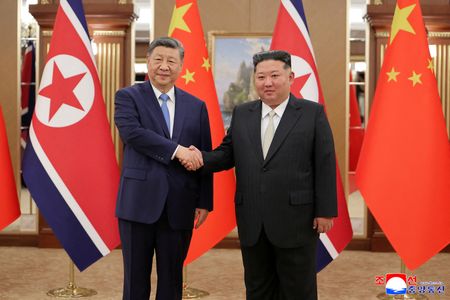
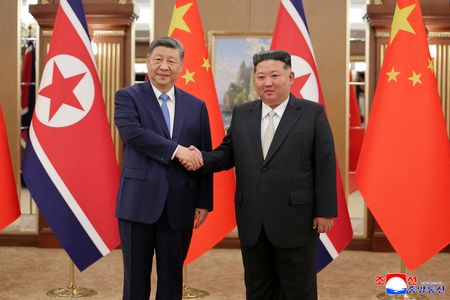
Both North Korea and China are declaring diplomatic victories following Chinese President Xi Jinping’s recent visit to the reclusive nation, a trip that boosted North Korean leader Kim Jong Un’s international profile while strengthening ties between the two countries.
During the two-day diplomatic mission, both nations exchanged high praise and discussed enhanced cooperation. Kim welcomed Xi with ceremonial honors including a 21-gun salute and performances featuring songs from both countries, while deliberately steering clear of sensitive topics like nuclear disarmament and relations with the United States.
Jenny Town, director of the Korea program at the Washington-based Stimson Center, noted Kim’s perspective on global influence. “Kim has often talked about how North Korea is now a pivotal player in reshaping the global order, and its partnership with Russia has been a major catalyst in validating that assertion,” Town explained.
“Having Xi now take his first trip out of country this year to visit Pyongyang on an agenda that didn’t include North Korea’s nuclear programme was a big win for Kim,” she added.
The absence of nuclear disarmament discussions marks a notable shift, as this issue had previously created tension between China and North Korea.
Just before Xi’s arrival, Kim Yo Jong, the North Korean leader’s sister, criticized the U.S. for allegedly spreading misinformation. This came after Washington claimed in May that Xi and U.S. President Donald Trump had agreed on shared denuclearization goals for North Korea during Beijing discussions.
Jeremy Chan, a China & Northeast Asia analyst at Eurasia Group, observed the strategic implications. “Beijing has very clearly moved on from that issue and now tacitly accepts North Korea as a nuclear state, which likely puts China on an equal footing with Russia in Pyongyang’s eyes,” Chan stated.
“I think China achieved its primary goal of this trip, which was drawing North Korea closer and counterbalancing Russia’s growing influence in North Korea,” he continued.
However, Chinese academics disputed suggestions that the visit targeted any third nation. Zhang Yun, an international relations professor at China’s Nanjing University, emphasized different motivations.
“The visit is primarily aimed at consolidating the traditional bilateral friendship between China and the DPRK,” Zhang explained.
When questioned about nuclear discussions during the visit, China’s foreign ministry maintained that their peninsula policies remain unchanged. Officials declined to clarify whether avoiding the nuclear topic signaled acceptance of North Korea’s nuclear status, reiterating their established position.
While China officially opposes North Korea’s nuclear development, Beijing has increasingly avoided public pressure on this issue.
Experts identified notable differences in how each side characterized the leaders’ discussions. North Korea emphasized the ceremonial aspects and portrayed itself as China’s equal, while China focused on potential outcomes in trade, tourism, and law enforcement cooperation.
Town suggested these differences reveal limitations in North Korea’s willingness to strengthen Chinese relations, particularly given its recent alignment with Russia through military support for the Ukraine conflict in exchange for economic assistance.
“It is clear that Kim and Xi do not have the kind of rapport Kim has with Putin; there seems to be little personal affinity between them. But both understand the strategic value of the relationship to push through,” she observed.
Analysts highlighted Kim’s explicit endorsement of Beijing’s One China principle, which asserts that Taiwan and mainland China constitute one nation, along with China’s references to military cooperation.
Chad O’Carroll, founder of North Korea-focused website NK News, noted the broader implications. “North Korea’s support for Russia has shown that Pyongyang can provide material assistance to a major power in wartime. There is no evidence yet of a comparable commitment to China, but DPRK (North Korea) messaging on Taiwan now matters more than before,” O’Carroll said.
Observers also monitored whether Kim’s daughter would appear during the visit, as her presence might support intelligence assessments that she’s being prepared as his successor.
The daughter, believed to be approximately 13 years old and named Ju Ae, joined Kim’s previous Beijing visit and appears regularly in official photos. However, she was absent from images released by both Chinese and North Korean state media covering this trip.
Benjamin Ho, China programme associate professor at the S. Rajaratnam School of International Studies in Singapore, attributed her absence to diplomatic protocol.
“Given Beijing’s penchant for protocol, it would be awkward if a young girl appears among all the senior officials present,” Ho explained.
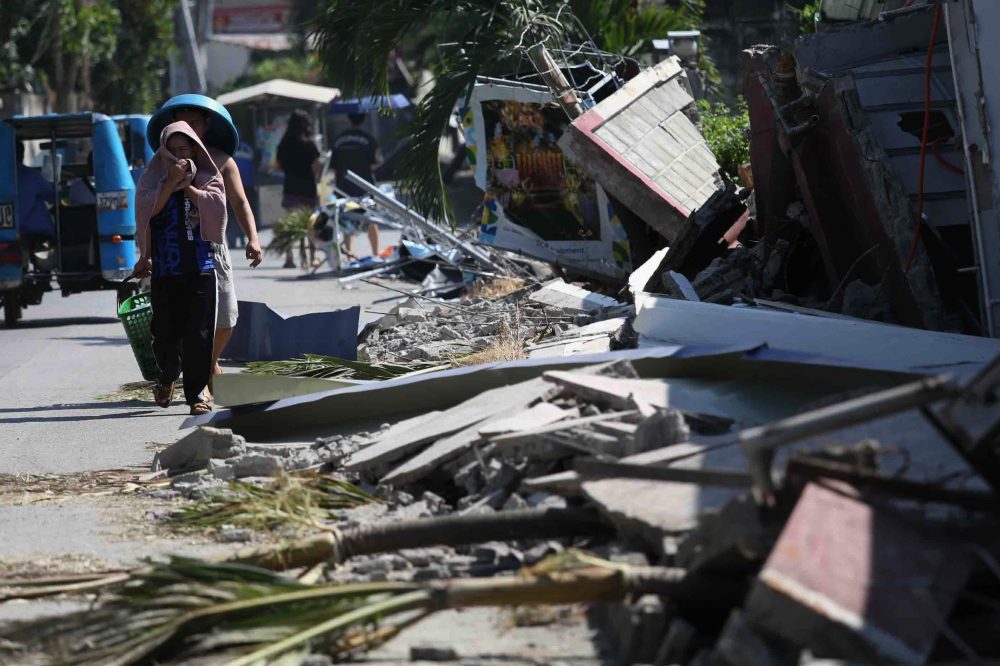
GENERAL SANTOS, Philippines — A local mayor whose community was ravaged by a devastating earthquake made an urgent appeal Thursday for military aircraft to deliver essential supplies to villages cut off by landslides and facing starvation.
Monday’s massive 7.8 magnitude tremor, which originated offshore near the southern province of Sarangani, ranks among the most severe seismic events to impact the Philippine islands in fifty years. The disaster has claimed no fewer than 47 lives while wounding 688 individuals, with 31 people still unaccounted for.
Over 45,000 residents continue to live in displacement, with approximately half housed in temporary emergency facilities, following extensive damage to more than 12,600 homes across agricultural communities and urban centers. Provincial authorities report that many survivors remain too frightened by continuing aftershocks to return to their residences.
The province of Sarangani has recorded the highest death count at 20 fatalities among all impacted areas, with most casualties resulting from a devastating landslide that engulfed homes in the seaside community of Glan, as reported by the government’s Office of Civil Defense disaster response agency.
Victor James Yap, who serves as mayor of Glan, explained that electrical service has yet to be restored throughout his province, while 10 out of 31 communities within his municipality of over 100,000 residents remain completely cut off, primarily due to landslide damage. He has requested immediate deployment of military helicopters to transport food and emergency supplies to these affected zones.
“We need food and water but it’s difficult to transport them to some of our villages which remain isolated,” Yap stated during an interview with DZMM radio network. “Choppers are needed to transport food because people there are already very hungry.”
While a critical transportation route into the community has been cleared and should permit fuel deliveries by Thursday, the municipality continues to operate without electricity and cellular communications remain unreliable, Yap noted.
The majority of earthquake fatalities resulted from falling rubble and building collapses, along with landslides affecting Sarangani, the port city of General Santos, and surrounding areas including South Cotabato and Davao Occidental provinces.
Three swimmers were caught in dangerous waters off General Santos when the earthquake occurred, with two drowning and one person still missing after being pulled out to sea. Ocean surges reaching 1.4 meters (4.6 feet) above normal tide levels were recorded across the nation’s southern regions, while smaller wave activity reached shores in Indonesia and Palau, extending as far as Japan’s southern coastline.
This seismic event represents one of the most powerful to strike the archipelago since the catastrophic 8.1 magnitude earthquake and tsunami of August 17, 1976, which resulted in approximately 8,000 deaths.
The Philippine islands frequently experience earthquakes and volcanic activity due to their position along the Pacific “Ring of Fire,” a zone of active seismic activity encircling the Pacific Ocean.
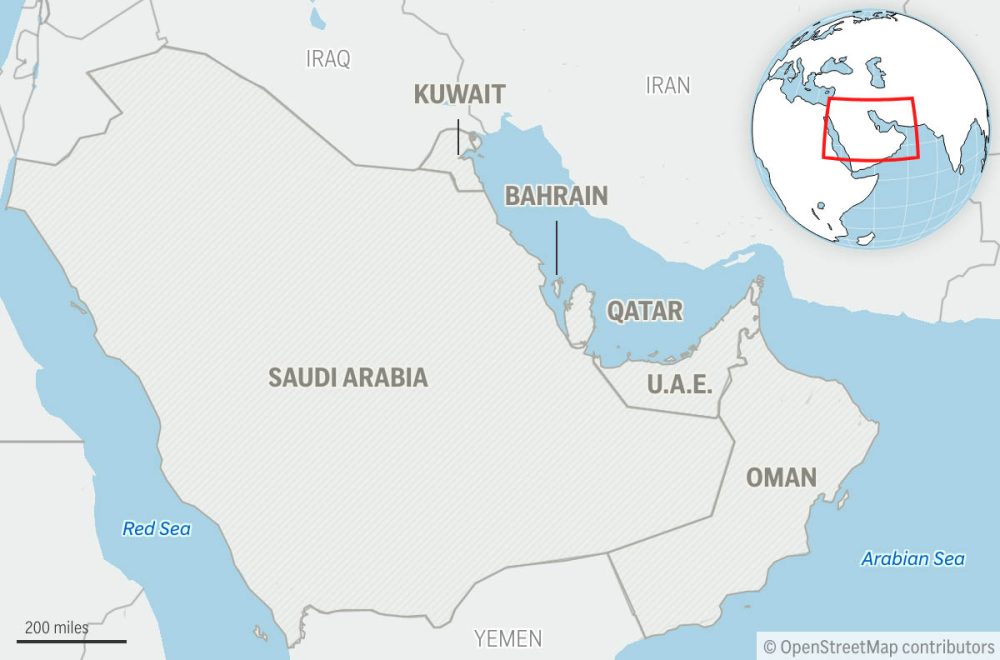
DUBAI, United Arab Emirates (AP) — America conducted another round of military strikes against Iran on Thursday morning following U.S. President Donald Trump’s warning that Tehran would face consequences for stagnant peace talks, while Iran launched retaliatory attacks on Bahrain, Kuwait and Jordan.
Thursday’s American military operation targeted several Iranian cities as diplomatic efforts to resolve the conflict appeared deadlocked once again, with Iran maintaining its blockade of the Strait of Hormuz that has caused global energy supply disruptions and elevated oil costs. The latest U.S. offensive seemed more extensive and forceful than Wednesday’s action, though Iran provided no details about targets that were struck.
Kuwait shut down its airspace due to Thursday morning’s attack, offering no details about potential damage. Jordan made no public statement regarding the strike, although the U.S. Embassy in Amman issued warnings about it. Bahrain activated its missile warning sirens without reporting any casualties or damage.
This week’s third exchange of strikes has put strain on a fragile two-month ceasefire. Sunday and Monday saw the initial attacks between Iran and Israel, followed by two rounds of military action between America and Tehran.
Trump has pushed Iran to agree to a peace deal and indicated earlier this week that a settlement might be achieved within days.
However, Iran has shown endurance despite weeks of intensive bombardment. The nation is counting on its capacity to effectively shut down the Strait of Hormuz — a vital corridor for oil and natural gas transport — as a powerful negotiating advantage.
Nevertheless, both nations appear to be seeking an exit from the conflict — provided they can present it as a victory to their domestic audiences.
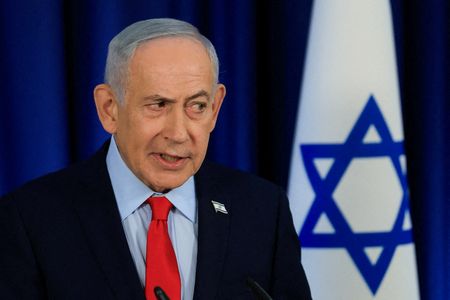
At the same time, Israeli Prime Minister Benjamin Netanyahu seems determined to pursue objectives that complicate any potential settlement: toppling Iran’s theocratic leadership, dismantling its nuclear capabilities, and defeating the Iranian-backed Hezbollah militant organization in Lebanon.
The U.S. Central Command reported its most recent airstrikes concluded shortly before Thursday’s sunrise in Iran. The military authority stated the attacks occurred “in response to Iran’s unwarranted and continued aggression” and focused on “Iranian military surveillance capabilities, communication systems and air defense sites.” Officials provided no specifics about strike damage, noting the operations involved the U.S. Air Force, Marines and Navy.
Strike explosions reverberated throughout Iran’s capital, Tehran, along with the port city of Bandar Abbas and additional southern regions near the Strait of Hormuz.
Iran retaliated by conducting strikes against Bahrain, Kuwait and Jordan for the second consecutive day.
Israel also issued early Thursday shelter warnings to northern residents following detection of potential incoming fire from Lebanon.
The conflict, which began with Feb. 28 attacks on Iran by the U.S. and Israel, has destabilized the global economy, increased energy costs and made food and other essentials more costly.
International crude oil benchmarks traded above $93 per barrel on Wednesday, representing a more than 25% increase since the war’s beginning.
Trump revealed the U.S. military has conducted a “secret mission” since last month to smuggle oil shipments past Iranian forces in the Strait of Hormuz. He explained that vessels were navigating through during nighttime hours, assisted by the destruction of Iranian radar infrastructure.
Trump claimed these efforts have resulted in more than 100 million barrels of oil bypassing Iran’s strait blockade. No immediate verification of this number was available, though it roughly represents five days worth of oil shipments through the waterway before hostilities began.
The military’s specific involvement remained unclear. The U.S. Central Command on Wednesday challenged Iran’s assertions that the Strait of Hormuz is sealed, maintaining that commercial vessels continue normal transit operations.
Concerned about elevated gas prices ahead of November’s midterm elections, Trump appears to want a swift resolution. However, he is also making demands that will be difficult for Iran to accept.
The U.S. seeks Iran’s surrender of its highly enriched uranium stockpile. Although Iran maintains its nuclear program serves peaceful purposes, this uranium requires only brief technical processing to reach weapons-grade concentrations.
Iran refuses to relinquish the uranium and demands sanctions relief. The nation also wants frozen assets released before any final agreement is completed, which Trump has rejected.
Iran has maintained that any war-ending agreement must also halt combat between its ally Hezbollah and Israel.
ASHTON-IN-MAKERFIELD, England — Approximately 75,000 voters in northwest England are preparing to make a crucial decision that could determine Britain’s next prime minister or send the nation’s volatile political landscape into further chaos.
The special election on June 18 in Makerfield has attracted global media attention, unusual for a midterm contest to fill a single House of Commons seat among 650 total positions.
“I think they’re all a waste of time,” voter Shirley Prior commented about the candidate choices in this closely watched race.
Should centre-left Labour Party candidate Andy Burnham secure victory, he could potentially unseat struggling Prime Minister Keir Starmer as both party chief and national leader. His opponent from Reform UK, a far-right organization, aims to demonstrate that this traditional Labour territory welcomes their anti-immigration platform, which could have dramatic implications for British politics.
While Labour has maintained control of this district for 120 years, Burnham’s victory isn’t guaranteed. Reform, under veteran anti-immigration figure Nigel Farage, captured 24 of 25 available council positions in recent local voting.
“I always voted Labour because my dad, my grandad, everybody voted Labour then,” Prior explained. “I’ve never done that for a lot, a lot of years.”
The voting occurs during heightened immigration debates. A stabbing incident in Belfast this week, resulting in attempted murder charges against a Sudanese man, sparked violent demonstrations across Northern Ireland with vehicles and homes set ablaze.
In Ashton-in-Makerfield, located 200 miles northwest of London, some residents support Reform’s claims that newcomers are overwhelming housing and public resources.
“Immigration’s too high, all the services are being put under pressure and Labour just keep inviting more and more people into the country and it’s the taxpayer who has to pay for them,” retiree Phil Arrowsmith stated.
Net migration to Britain peaked above 900,000 in 2023 under Conservative leadership before dropping to 171,000 last year.
This decrease hasn’t helped Labour’s government, which has struggled since taking power in July 2024. Starmer faces criticism for failing to deliver promised economic expansion, fix damaged public services, and address living costs. His troubles include controversial appointments like Peter Mandelson, a scandal-linked associate of Jeffrey Epstein, as Britain’s Washington ambassador.
Poor local election results last month prompted Labour legislators to demand Starmer’s departure. While he’s declined to step down, Cabinet minister Wes Streeting resigned to pursue a potential leadership campaign.
Burnham, Greater Manchester’s well-regarded mayor, also seeks leadership but requires a parliamentary seat to challenge Starmer. The opportunity arose when Josh Simons, Makerfield’s Labour representative, resigned to trigger this special vote.
Burnham acknowledges voter frustration and describes the substantial Reform UK support as “a cry for real change” that Labour must address.
The Makerfield area represents British transformation – former coal mining towns now serving as commuter communities. The industrial decay and poor housing George Orwell documented in his 1937 work “The Road to Wigan Pier” has given way to neat modern neighborhoods mixed with Victorian worker homes and farmland.
Despite being outside the city center, it belongs to Greater Manchester, where Burnham receives supportive honks and gestures from drivers as he campaigns in his typical dark jeans, navy shirt and jacket.
The 56-year-old has led the 3 million-person region since 2017, overseeing central Manchester’s growth with new skyscrapers replacing former industrial sites. Residents credit him for promoting the city and consolidating fragmented public transit under municipal control as the Bee Network.
Before his mayoral role, he spent fifteen years as a parliamentary member and Labour government minister. He downplays that experience, preferring his outsider image that earned him the “King of the North” nickname.
“What we’ve built in Greater Manchester needs to go national,” Burnham told reporters during campaign activities this week. “I know what it is to turn places around.”
The race combines local and international elements. While some voters prioritize immigration concerns, others focus on declining shopping areas, road conditions, and minor criminal activity.
Burnham’s primary challenger is Reform UK’s Rob Kenyon, a 41-year-old plumber and local council member who finished second to Labour in the 2024 general election. He presents himself as an unpretentious ordinary citizen, though critics highlight his inappropriate, sexist, and anti-vaccination social media posts.
Reform supporters also face competition from Restore, an even more extreme anti-immigration organization.
Michael Poultney, a retired educator and Labour backer, believes Starmer’s government unpopularity creates significant obstacles for Burnham.
“Without his personal vote, I think we would struggle,” he observed. “Keir Starmer has done reasonably well on the international stage, but the government are yet to be in control of the economy.”
Burnham maintains he’s campaigning for Makerfield residents rather than personal advancement and isn’t assuming victory.
“I am making no assumptions beyond the 18th of June,” Burnham declared.
However, he emphasized that “this is a change byelection.”
“I will take the fight for the changes I want to see in politics as far as I can take it,” he added.
Former President Donald Trump offered his congratulations Wednesday to Armenian Prime Minister Nikol Pashinyan following his Civil Contract party’s victory in weekend elections.
The prime minister’s political party secured 49.8% of the vote in Sunday’s election, providing enough support for a parliamentary majority according to Armenia’s voting structure. International election monitors reported obvious meddling by Russia during the electoral process.
“I was very proud to have Endorsed him for Re-Election, and have no doubt that, with him as the Leader of the beautiful Country of Armenia, it will attain levels of Greatness and Success beyond everyone’s wildest expectations!” Trump stated in a social media message.
The prime minister’s victory occurs while Russia continues applying increased pressure on the South Caucasus nation that was previously under Moscow’s control. Since taking office in 2018, Pashinyan has pursued closer relationships with the European Union and strengthened connections with Washington.
Moscow, which has implemented extensive trade limitations against Armenia, blamed Western nations for election interference and supported Armenian opposition claims of voting irregularities.
Russian officials stated Wednesday that Armenia’s continued participation in both a military partnership of former Soviet nations and a distinct economic alliance needs immediate resolution.
According to TASS news agency reporting Thursday, Russia has requested Armenia halt certification for the Russian market for all Armenian fish exporters except two companies, while Russian agriculture watchdog chief Sergei Dankvert confirmed the country has moved trout procurement to Iran and Turkey.
Military tensions between Iran and the United States reached new heights Thursday as both countries engaged in retaliatory strikes following the breakdown of diplomatic efforts, with U.S. President Donald Trump declaring that Tehran would “pay the price” for negotiations that have reached an impasse.
The military confrontation intensified after American forces conducted their second wave of overnight bombing missions Thursday. Bahrain, which serves as home base for the U.S. Navy’s 5th Fleet, found itself targeted in the escalating conflict.
The expanded military operations targeting several Iranian population centers occurred as diplomatic solutions to end the conflict appeared to have collapsed, with Iran declaring its intention to continue controlling the Strait of Hormuz. Peace negotiations have also broken down due to Israeli military operations against Hezbollah, the Iranian-backed militant organization operating in Lebanon. Earlier this week, both Iran and Israel launched attacks against one another.
During the initial round of military action Wednesday, Iran fired missiles while the U.S. conducted aerial bombardments, with Iranian forces targeting Bahrain, Kuwait and Jordan with missile attacks. These strikes followed American military responses to Iran’s downing of a U.S. helicopter over the strait.
According to U.S. Central Command, American forces finished their most recent bombing campaign just as dawn broke Thursday across Iran. Military officials reported that the operations focused on destroying Iranian military observation posts, communication networks and defensive installations, utilizing aircraft from the U.S. Air Force, Marines and Navy. Officials declined to provide details about the extent of destruction caused by the attacks.
The sound of explosions from American strikes could be heard throughout Iran’s capital city, Tehran, and also reached the coastal city of Bandar Abbas along with other southern regions near the strait.
Kuwait’s armed forces reported that their defensive systems were actively responding Thursday morning following Iranian threats of retaliation for the overnight American bombing campaign. Meanwhile, Bahrain activated its missile warning systems across the island nation that houses the U.S. Navy’s 5th Fleet command center.
Global displacement from conflict and persecution declined in 2025, marking the first decrease in ten years, according to a Thursday report from the U.N. refugee agency. Despite this improvement, the organization warns that millions continue to face extended displacement with little hope of resolution.
During 2025, 5.4 million individuals were forced to leave their homes, pushing the worldwide total of refugees and those in similar circumstances to 41.6 million people, which includes 6 million Palestinian refugees, UNHCR reported.
Simultaneously, approximately 14.7 million refugees and internally displaced individuals went back to their home countries, representing a 50% jump from the prior year and marking the second-largest return figure documented since 1965.
The majority of these homecomings occurred in six nations: the Democratic Republic of the Congo, Sudan, Syria, Afghanistan, Ukraine and Myanmar.
Nevertheless, many who returned encountered challenging circumstances including restricted access to essential services, extensive infrastructure destruction and continued security threats, creating questions about whether these returns are sustainable and safe, according to UNHCR.
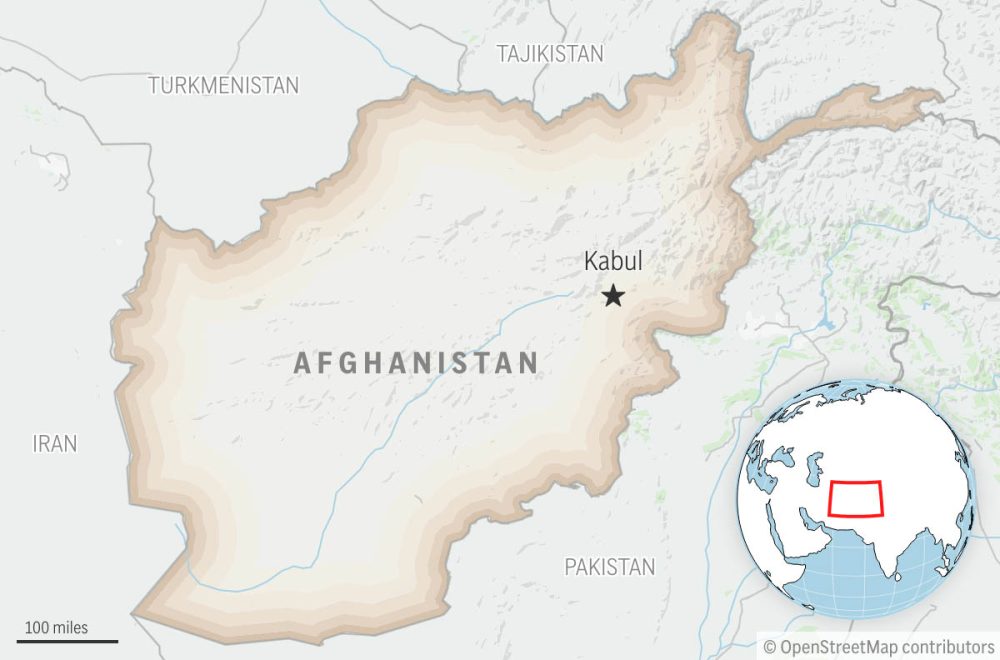
Approximately 2.9 million Afghans went back home in 2025, with 1.9 million being refugees — a fivefold increase from the previous year — primarily due to tougher policies in neighboring Iran and Pakistan, with many stating they had no alternative but to depart, the agency discovered.
This dramatic increase brought down the global Afghan refugee population from 5.8 million in 2024 to 3.7 million in 2025, the report indicated.
Syria, which had represented one of the globe’s most significant displacement emergencies for over ten years, witnessed around 1.3 million people returning in 2025 — almost three times the previous year’s number — after Bashar al-Assad’s government collapsed in December 2024. This brought the worldwide Syrian refugee population down from 6 million to 4.9 million by 2025’s end.
“However, many returnees face serious challenges, including insecurity, widespread destruction, weak economic conditions, limited services and jobs, and continued sporadic violence in parts of the country,” the report said.
The report highlighted that the Middle East crisis has already influenced worldwide displacement patterns in 2026. Roughly 3.2 million people have experienced temporary displacement in Iran since joint U.S.-Israeli strikes in late February, while approximately one million individuals have been displaced from their homes in Lebanon since warfare began on March 2, due to Israeli strikes and evacuation directives, UNHCR stated.
UNHCR has established a goal to reduce by half the number of refugees and others experiencing prolonged displacement who need humanitarian aid by 2035, through supporting employment creation and educational opportunities, especially in low- and middle-income nations that host most refugees.
Worldwide, 70% of refugees have lived in exile for five years or longer, frequently in nations like Lebanon, Jordan, Turkey and Iran.
“Asylum and protection are life-saving and not up for debate, but we cannot accept a future in which millions of refugees remain trapped for years or decades without realistic prospects of rebuilding their lives,” said UNHCR High Commissioner Barham Salih.
The initiative includes encouraging voluntary returns and helping refugees gain access to education and jobs in host nations so they can achieve financial independence and reduce their reliance on aid.
Federal prosecutors on Wednesday officially requested a judge dismiss criminal charges against Halkbank, stating the government no longer intends to pursue the case against the Turkish state-owned financial institution.
Legal representatives for Halkbank have not yet provided a response to requests for comment.
The formal request follows a settlement reached in March between Halkbank and federal authorities to conclude the extended criminal proceedings. The resolution was expected to eliminate a persistent source of tension between NATO partners Turkey and the United States. News of the settlement caused Halkbank stock prices to surge on Istanbul’s exchange.
The bank faced accusations during the previous administration of assisting Iran in circumventing U.S. economic sanctions. Turkish President Recep Tayyip Erdogan previously described the case as unlawful and “ugly.” However, diplomatic relations between the nations have reached their strongest point in years following recent political changes.
Justice Department officials stated that ending the prosecution would advance American objectives in reducing Iranian support. The settlement prohibits Halkbank from conducting transactions that aid Iran and mandates oversight to ensure the bank follows sanctions and anti-money-laundering regulations.
The agreement involves no financial payments and the bank has not acknowledged any criminal conduct. Halkbank had entered a not guilty plea to all charges.
Following the deal’s announcement, Manhattan-based U.S. District Judge Richard Berman suspended proceedings for 90 days to allow the bank to prove adherence to settlement conditions. Halkbank retained Ernst & Young to examine its compliance procedures.
In Wednesday’s court document filed after the 90-day review period concluded, Manhattan U.S. Attorney’s office prosecutors reported the examination found no compliance violations by Halkbank and requested Judge Berman approve their dismissal motion.
The legal proceedings have followed a complex route through federal courts.
In October, the U.S. Supreme Court upheld a lower court ruling permitting the prosecution to continue. Halkbank had contended that its status as a Turkish government-owned institution should provide immunity from foreign court proceedings.
The settlement announcement came after the U.S.-Israeli conflict with Iran commenced in February.
Federal prosecutors alleged Halkbank covertly moved $20 billion in restricted funds, transformed oil revenues into gold and cash for Iranian benefit, and created fraudulent food shipment records to justify oil proceeds transfers.
Following meetings between Erdogan and the former president last year, the Turkish leader expressed optimism for resolving the Halkbank situation. Erdogan stated in October that he was told during a September White House meeting and subsequent phone conversation that “the Halkbank problem is finished for us.”
A deadly explosion in China’s southwestern Guangxi region has claimed seven lives, according to a statement released by local officials on June 11th.
The blast also wounded seventeen additional people who were transported to area hospitals for treatment. Authorities reported that none of the hospitalized victims sustained life-threatening injuries.
Local officials confirmed they have eliminated gas pipeline malfunctions as a potential cause of the explosion. The investigation into what triggered the deadly incident remains active.
Canadian officials unveiled new legislation Wednesday aimed at preventing children under 16 from accessing social media platforms unless those companies can demonstrate their services are adequately protected for young users.
The proposal represents Canada’s entry into a worldwide movement to strengthen online safety measures for minors. Government representatives explained that social media companies could receive exemptions by implementing appropriate protective measures.
“We are failing our children. Enough is enough,” Marc Miller, Canada’s culture minister, said. “We need basic protection in place.”
The proposed law addresses seven categories of dangerous material, including posts that encourage self-harm among youth, violent and hateful content, and intimate images shared without permission.
Officials plan to establish the Digital Safety Commission of Canada as a new oversight body. Details about exemption requirements will be released later, with Miller estimating the regulatory setup could require up to 18 months.
Miller emphasized that platforms must demonstrate their safety credentials, and age verification systems will be implemented.
Several nations including Australia, Brazil and Indonesia have already enacted or announced age-related limitations for children’s social media use. Meanwhile, Britain, France, Spain, Denmark, Thailand and South Korea are exploring or developing comparable policies.
Canadian platforms featuring adult material would be ineligible for exemptions under the proposed rules.
The legislation would also oversee artificial intelligence chatbot companies by requiring responsible practices, including emergency response procedures.
Australian officials reported that social media companies have removed approximately 4.7 million accounts belonging to children since that country implemented its under-16 ban. The Australian law sparked significant discussion about technology usage, privacy concerns, youth safety and mental health issues, inspiring other nations to explore similar policies.
A Canadian government representative told reporters that officials plan to study Australia’s experience for guidance.
Lianna McDonald, Executive Director of the Canadian Centre for Child Protection, praised the initiative, highlighting the significant increase in social media sextortion cases.
Officials in the Russian-controlled Crimean city of Sevastopol announced Wednesday that fuel rationing distribution has been halted after delivery trucks were prevented from entering the city due to recent Ukrainian strikes on supply lines.
Governor Mikhail Razvozhayev stated that gasoline rationing vouchers would temporarily not be accepted, as Ukrainian President Volodymyr Zelenskiy highlighted the success of Ukraine’s ongoing strategy of targeting energy infrastructure in Russia and territories under its control.
The Crimean peninsula, which Russia took control of in 2014 before launching its full invasion of Ukraine in 2022, began fuel rationing last month due to supply shortages across the region.
“Unfortunately, oil tanker trucks were unable to come to the city tonight,” Razvozhayev posted on Telegram, noting that refueling priority on Thursday would go to public transportation, utilities, emergency services and government vehicles.
“I am addressing everyone: there is no point in lining up at… the gas stations tomorrow,” he wrote late Wednesday, explaining that current fuel rationing vouchers would be voided and replacement ones distributed Thursday.
Razvozhayev later reported on Telegram that more than two dozen Ukrainian drones were shot down early Thursday during another assault on Sevastopol, the peninsula’s second-largest city and headquarters of Russia’s Black Sea fleet.
The fuel shortage crisis comes as Ukraine escalates its campaign of medium and long-range drone and missile attacks on Russian industrial targets, which has already compelled Moscow to reduce oil production in the world’s third-largest producing nation.
“In recent months, we are especially grateful for the mid-strikes: Russian military logistics throughout the entire depth of the temporarily occupied territory are now within reach of Ukrainian drones,” Zelenskiy stated in his evening address.
Ukrainian forces attacked the Russian-occupied Mariupol port, Kyiv announced Wednesday, marking the latest in a series of drone strikes on logistics infrastructure across a vital section of Moscow-controlled southern Ukraine that connects Russia to Crimea.
The port assault, which Ukraine’s military reported caused a complete power outage at the facility, came after two earlier strikes this week on a bridge connecting the Russian-occupied Kherson region to the Crimean peninsula.
Thursday brought reports from authorities in Russia’s southern Krasnodar region, located across from Crimea, that a blaze erupted near the Afipsky refinery due to falling drone fragments as air defense systems fought off an aerial assault.
Regional governor Veniamin Kondratyev reported on Telegram that three individuals were wounded when drone debris sparked a fire in a Krasnodar city apartment building and during a drone strike on the neighboring Seversky district, though he provided no additional information. The Ilsky refinery is also situated in that area.
This followed a major Wednesday drone offensive against Russia’s Volga region of Samara, located more than 900 kilometers (550 miles) from the battle lines, which according to sources compelled state oil company Rosneft to stop operations at its Kuibyshev oil refinery.
“Our impact reaches Russia’s border regions as well. The enemy feels it, and we will continue to expand it,” Zelenskiy posted on Telegram late Wednesday.
Crude oil prices surged more than $2 per barrel on Thursday following Iran’s announcement that it was shutting down the Strait of Hormuz, a vital shipping lane for global energy supplies, in response to fresh US military strikes against Iranian targets.
Brent crude futures jumped $2.30, representing a 2.47% increase to reach $95.40 per barrel. US West Texas Intermediate crude saw an even steeper climb of $2.60, or 2.89%, settling at $92.63. Earlier during trading, US crude futures had gained more than $3.
Iran’s top joint military command declared Thursday that the Strait of Hormuz was now closed to all vessels, including oil tankers and commercial ships, warning that any ship attempting to pass through would face gunfire.
The US military countered these claims on X Wednesday, stating that commercial vessels were still moving through the waterway without incident.
Military officials also denied Iranian state media reports that US ships near the strait had been hit by missiles and drones, confirming that no US warships sustained damage in the area.
American forces initiated new strikes against multiple Iranian targets beginning at 5:15 p.m. EDT (21:15 GMT), marking the latest development in an escalating conflict that threatens to restart full-scale warfare. The two nations had maintained a fragile ceasefire agreement reached in early April.
The strait, which typically handles one-fifth of worldwide oil and gas transportation, has been under Iranian blockade for months, contributing to sustained higher oil prices.
In related energy market news, the EIA reported Wednesday that US crude inventories dropped by 7.2 million barrels to 426.5 million barrels for the week ending June 5. This decline exceeded analyst predictions from a Reuters survey, which had forecast a 4 million-barrel decrease.
Since the conflict with Iran began on February 28, US crude inventories, including strategic reserves, have declined by 79 million barrels as the nation has worked to compensate for supply disruptions caused by the strait’s effective closure.
Military forces have been sent to combat illegal mining operations in Venezuela’s gold-rich southern region, as confirmed by local residents and human rights monitors on June 10th.
The military deployment has focused on areas surrounding Las Claritas in southern Bolivar state, according to those living in the region and activists tracking the situation. This community serves as a central location for unauthorized gold extraction within the mineral-abundant Orinoco Mining Arc, an expansive zone located close to the borders with Guyana and Brazil.
Officials from Venezuela’s Communications Ministry have not yet responded to requests for information, and no public statements about the military action have been released by the government.
Local residents, numbering five who spoke with Reuters, reported hearing blasts and shooting, which has led many to avoid public areas and caused commercial establishments to shut down temporarily.
“Bombs and gunfire could be heard in the jungle,” a 45-year-old resident said. “There are mines in those areas. This is bad; you can’t go out.”
A business owner operating in Las Claritas described unmanned aircraft flying at low altitudes throughout the nighttime hours. All individuals who provided information requested anonymity due to safety concerns.
International non-profit organizations and investigators backed by the United Nations have reported that criminal organizations and militant groups control much of the mining operations throughout this territory.
“The Venezuelan Army is deploying a massive operation in Las Cristinas and at Km 88 in Bolivar state,” rights group Provea said in a post on X. “We warn of the risk of extrajudicial executions and arbitrary detentions against the civilian population in the area.”
This military action occurs while Venezuela’s current administration attempts to reopen economic sectors that have been closed to international investment for extended periods. Following developments in January when U.S. forces captured Venezuelan President Nicolas Maduro, leaving Delcy Rodriguez to assume leadership on a temporary basis, discussions between Washington and Caracas have focused on revitalizing petroleum and mining investments.
New mining legislation was enacted by Venezuela in April with the goal of encouraging international investment, while U.S. Interior Secretary Doug Burgum indicated that security assurances for incoming corporations had been promised by the government.
The Las Cristinas gold development project had been planned by Canadian mining company Crystallex until former President Hugo Chavez stopped the initiative in 2008 during a widespread government takeover campaign that included electricity, telecommunications, cement, steel and petroleum industries.
Following these government acquisitions, international mining investment remained minimal. Some analysts currently believe there is potential for short-term export recovery, especially in gold, but caution that the industry will need substantial investment along with renewed exploration efforts.
The Pentagon on Wednesday rejected claims that American naval vessels were hit in the Strait of Hormuz, contradicting Iranian state media reports that suggested U.S. ships near the waterway had been targeted by missiles and drones from Iranian military forces.
Despite Iran’s top joint military command declaring the strait closed to all vessel traffic, the U.S. Central Command stated in a post on X that commercial shipping continues to move through the Strait of Hormuz in both directions.
WASHINGTON – The Trump administration is standing firm on its Cuba sanctions policy following criticism from the United Nations’ top human rights official, who cautioned that American measures are inflicting “widespread harm to the population and endangering lives.”
A White House official responded to the UN concerns by telling Reuters that “These sanctions target the leaders and entities who sustain the regime’s malicious campaign to subvert and destabilize U.S. national security.”
The United States has placed sanctions on numerous Cuban organizations and individuals, including the country’s president, as part of efforts to increase pressure on the island’s communist government. These measures come after Washington declared a national emergency earlier this year, implementing tariffs on nations that provide oil to Cuba, which has led to recurring power outages across the island.
U.N. High Commissioner for Human Rights Volker Turk criticized the sanctions on Monday, stating they are impacting Cuban citizens’ human rights, particularly their ability to access basic necessities like water, food and medical care.
“Such severe sanctions packages that target entire sectors of an economy and produce broad, indiscriminate and harsh effects on populations are incompatible with basic principles of international human rights law,” Turk said.
The White House official referenced earlier statements from U.S. Secretary of State Marco Rubio, emphasizing that Washington remains willing to begin fresh relations with Havana.
According to the official, Cuba’s current leadership is the sole obstacle to improved relations, warning that the country’s “leaders should make a deal with the United States before it is too late.”
While the Cuban foreign ministry has not yet provided comment, Cuban Foreign Minister Bruno Rodriguez wrote on social media that America’s energy blockade has damaged the Cuban people and obstructed international organizations.
U.S. President Donald Trump has consistently discussed potential American action regarding Cuba. Cuban officials have condemned U.S. suggestions of possible military intervention, with Rodriguez calling such threats potential international crimes.
A father in Indonesia thought his 3-year-old daughter’s tears before daycare were just typical toddler reluctance to leave home. Aldewa Anjasmara Halip never imagined his child was among dozens of youngsters facing physical abuse at their childcare facility.
Authorities in Yogyakarta, Indonesia’s cultural hub, took 13 daycare workers into custody in late April following allegations of child abuse and neglect at the Little Aresha daycare center. The arrests have triggered widespread public anger and demands for enhanced government supervision of the nation’s expanding childcare industry. Law enforcement also discovered the facility had been running without proper permits.
“I thought it was just a normal thing because she was simply too lazy to go … but it turns out she has been traumatised there,” Aldewa explained. Both he and his spouse are employed at local shopping centers.
During their April raid, officers discovered the majority of the center’s more than 100 enrolled children with restraints on their hands and feet, according to Apri Sawitri, who leads child protection efforts for Yogyakarta’s police criminal investigation division. Some youngsters were secured to doorways, she revealed during a Reuters interview.
Diyah Puspitarini, a commissioner with Indonesia’s child protection agency, told Reuters that numerous children faced regular slapping and pinching.
Staff members informed police the physical discipline aimed to make children “more manageable,” Diyah reported.
The 13 accused individuals are all female, including the facility’s owner, director, and staff members, police confirmed. Following standard Indonesian procedure before court proceedings, authorities have only released the suspects’ initials rather than full names.
Reuters could not reach any defendants or locate their legal representation for statements. Phone calls to Little Aresha’s registered number received an automated message stating the line was disconnected. No suspect has made public comments regarding the charges.
Child rights advocates describe this as Indonesia’s largest single alleged child violence incident, generating major newspaper headlines, widespread social media attention, and strong criticism from advocacy organizations and government officials.
Following these arrests, government leaders have committed to increased supervision and regulation, plus improved coordination between national and local authorities.
“We hope Yogyakarta can serve as a starting point for a national review to ensure that all daycare centres in Indonesia meet child protection standards to the highest possible standard,” said Minister for Women’s Empowerment and Child Protection Arifah Fauzi, whose department supervises daycare facilities.
Little Aresha ranked among Yogyakarta’s pricier childcare options in this nearly 4 million-person cultural tourism destination. Monthly fees reached 1 million rupiah ($55.74), according to child protection agency official Diyah, in a city where typical monthly earnings average about 3.2 million rupiah.
Since the case became public knowledge, vandals have covered the center’s walls and windows with spray-painted obscenities.
Diyah said the accusations surfaced when a staff member came forward as a whistleblower.
Workers told investigators children were restrained following the director’s instructions as a method to maximize the child-to-staff ratio, she explained.
The five-room facility, housed in a residential building, was overcrowded with up to 30 children crammed into single 3-by-3 meter rooms, she noted. Staff lacked proper training and each caregiver supervised 10 children, she added. Government staffing recommendations, though non-mandatory, suggest one caregiver per four children.
Indonesian law sets maximum penalties for child abuse and neglect convictions at five years imprisonment plus 100 million rupiah ($5,574) in fines.
Police additionally accused the center of violating national education statutes by operating without licensing, an offense carrying up to 10 years imprisonment.
Little Aresha had operated since 2018, Diyah confirmed. A sign Reuters observed at the location advertised services for infants as young as 2 months, featuring rainbow imagery and children at play.
Indonesia hosts thousands of childcare centers, though the concept remains relatively recent in a nation where extended families traditionally provide child supervision.
“The government does not have an official figure of the total number of daycares in Indonesia,” Minister Arifah stated, noting authorities now require all such facilities to register.
These childcare centers function under different organizational structures, she explained. Some connect to early childhood education programs or kindergartens, others operate community-based or home-based models, and many lack registration with any government body.
Diyah’s agency has called on government officials, police, and local community leaders to conduct regular inspections at all childcare facilities.
The organization has also pressed for higher qualification standards for caregivers and improved facility requirements, she said.
Police reported that Imedia Dwi Anjani’s 4-year-old son was discovered tied to a door during their raid.
She had previously noticed bruises and bumps on her child’s body, but staff explained these resulted from normal toddler roughhousing. Her son has delayed speech development, preventing him from describing his experiences, she said.
“Everything they have done is despicable,” she stated.
Police anticipate completing their investigation by late June, Apri confirmed, after which their report will go to the provincial prosecutor’s office for potential formal charges.
Law enforcement officials in Buenos Aires announced Wednesday they have confiscated Nazi-related materials, including uniforms, weapons, and ammunition, from the residence of an individual who was marketing items through online platforms.
According to authorities, they became aware on April 8 of a Facebook Marketplace listing posted by someone using the username Fernando Martinsohn, which displayed a U.S. military star image and advertised military uniforms and related items for sale. Police identified the individual as Diego Fernando Martinez.
Armed with a search warrant issued by the court, officers visited Martinez’s residence located in Buenos Aires’ suburban area, where they discovered the entrance featured floor tiles decorated with swastikas, according to an official statement. The confiscated materials included a copy of Adolf Hitler’s “Mein Kampf” and knives bearing swastika symbols.
Attempts to reach Martinez for comment through the Facebook profile identified by authorities were unsuccessful.
Law enforcement did not detail what criminal charges Martinez might encounter. Under Argentine law, distributing materials that advocate racial superiority concepts is forbidden.
Argentina periodically sees discoveries of Nazi-related items, as the country welcomed both Holocaust survivors and numerous Nazi war criminals following World War Two, including Adolf Eichmann and Josef Mengele.
In the previous year, Dutch systems specialist Paul Post’s review of his father’s wartime journals from the Nazi period resulted in Buenos Aires officials filing charges against the daughter of a senior Nazi official for hiding an 18th-century artwork stolen during the Holocaust.
American forces have launched attacks against numerous Iranian positions for the second consecutive day, marking a significant escalation in military tensions between the two nations.
The renewed military action raises concerns about the potential impact on diplomatic efforts aimed at bringing the ongoing conflict to an end. President Trump has issued a stern warning to Tehran, stating the country would “pay the price” for negotiations that have reached an impasse.
The series of strikes represents a continuation of military operations that began the previous day, with American forces targeting what officials describe as multiple strategic positions within Iran.
Saudi Arabia declared Wednesday it would terminate its comprehensive trade embargo against Lebanon that has been in place for five years, representing a significant development in efforts to restore diplomatic relationships between Lebanon and Gulf nations.
The Saudi government initially prohibited Lebanese fruit and vegetable imports in 2021, citing their use as vehicles for illegal drug trafficking. In a prominent incident, Saudi authorities reported confiscating more than 5 million Captagon amphetamine tablets concealed within a pomegranate shipment from Lebanon.
Several months afterward, the oil-rich Gulf nation expanded the prohibition to encompass all Lebanese goods following public statements by Lebanon’s then-Information Minister George Kordahi condemning Saudi Arabia’s military campaign against Iran-supported rebels in Yemen.
The underlying cause of the diplomatic breakdown stemmed from Saudi Arabia’s geopolitical competition with Iran and concerns over the Iran-allied militant organization Hezbollah’s power within Lebanon. The trade restrictions arrived during Lebanon’s severe economic downturn and currency devaluation.
The Saudi foreign ministry announced Wednesday that Crown Prince Mohammed bin Salman ordered the ban’s removal following “positive steps taken by the Lebanese state.”
While the ministry didn’t detail these measures, Lebanon’s government has recently outlined initiatives to disarm non-governmental armed organizations, including Hezbollah. Prior to the recent Israel-Hezbollah conflict, Lebanese military forces had advanced in executing this strategy in the country’s southern region.
In his official response, Lebanese President Joseph Aoun expressed gratitude to bin Salman for the move, stating it “will contribute tangibly to reviving the national economy and providing support to broad segments of Lebanese producers and exporters.”
Lebanon’s current administration, which assumed office last year pledging reforms, has worked to restore connections with Gulf states. Before the latest military conflict began, Lebanese authorities were encouraging Gulf visitors to return, hoping to stimulate economic recovery, while several Gulf nations had already removed travel restrictions on their citizens visiting Lebanon.
Tensions flared Wednesday in a bitter war of words between Israeli Prime Minister Benjamin Netanyahu and Turkish President Recep Tayyip Erdogan, with both leaders trading harsh accusations in an escalating diplomatic confrontation.
The clash began when Erdogan declared Wednesday that Israeli military actions in Syria and Lebanon have escalated to levels where they “also threaten Turkey.” The Turkish president condemned what he called Israel’s “aggression,” stating it poses dangers to the entire globe and must be halted.
During his Wednesday remarks, Erdogan expressed alarm about Israeli operations in the region and raised concerns about what he characterized as Israeli activities in the Mediterranean Sea.
“We see malicious initiatives led by Israel in the Mediterranean as well, and nobody should pursue adventures there,” Erdogan said.
Netanyahu fired back with a scathing response, alleging that Erdogan backs Hamas while crushing political dissent within Turkey.
“The antisemitic dictator Erdogan, who supports the Hamas terrorist organization, oppresses his own people and imprisons political rivals, is the last person who can preach morality to the State of Israel,” Netanyahu said.
The Israeli prime minister further alleged that Erdogan is conducting “genocide against the Kurds.”
Turkey’s Foreign Ministry quickly fired back, dismissing Netanyahu’s statements and claiming he was spreading lies. The ministry declared that Turkey will persist in pursuing legal action against Israeli officials through international courts.
Later Wednesday, President Donald Trump attempted to calm worries about potential conflict between Israel and Turkey, referencing his personal ties with Erdogan.
Following a domestic security signing ceremony in the Oval Office, President Trump expressed admiration for the Turkish leader and spoke favorably about their personal relationship.
“He is a very good friend of mine, and we have worked together very well. I love him. He is a great leader and a very strong person,” the president said.
When questioned by an Israeli reporter about whether Israeli-Turkish tensions might escalate into armed conflict, Trump rejected the possibility.
“I have not heard of anything like that. If I did, I would call him and make sure everything was fine. I don’t think anything like that will happen with Turkey,” he said, adding, “He respects me, and I respect him. Beyond that, we have a good friendship.”
The Moshe Dayan Center for Middle Eastern and African Studies reports that relations between the two nations have severely declined since October 7, 2023. The center noted that commercial exchanges have stopped, official diplomatic ties have been cut, and statements from Ankara have grown more aggressive.
Canadian officials unveiled comprehensive digital safety legislation Wednesday aimed at restricting social media access for minors under 16, following Australia’s lead in establishing the world’s first such prohibition.
The proposed measure would create exceptions for platforms that demonstrate compliance with specific safety requirements. Additionally, the legislation seeks to enhance AI chatbot security through the establishment of a digital oversight agency responsible for developing safety protocols, according to a government official.
Parliament received the bill just weeks following legal action by families impacted by one of Canada’s deadliest mass violence incidents. The lawsuit targets OpenAI, claiming the company was aware through ChatGPT interactions that the suspected perpetrator was planning the attack but failed to alert authorities.
Australia made history in December by implementing the first national social media restriction for children under 16. Within one month of enforcement, social media platforms had closed approximately 5 million teenage accounts.
Several European nations are exploring similar protective measures for young users, including France, Denmark and Poland. Greece has already announced plans to implement access restrictions for those under 15, effective January 2027.
During a technical briefing, government representatives indicated the legislative process could require up to one year for passage, with an additional 18 months needed to establish the digital regulatory body.
Prime Minister Mark Carney maintains a narrow parliamentary majority as the legislative body prepares for its upcoming summer break.
Defense Secretary Pete Hegseth announced on June 10 that the United States plans to launch military strikes against Iranian targets this Wednesday, targeting what he described as important installations within the country.
Speaking from Los Angeles, Hegseth indicated that American forces will conduct a significant assault on Iranian infrastructure, specifically mentioning plans to attack “key facilities.”
A veteran correspondent for The Associated Press who documented the fall of an authoritarian government and the rise of democratic rule during a turbulent era in the Philippines has passed away, according to his family. He was 82 years old.
The journalist died Sunday at a care facility in Kapolei, Hawaii, according to his wife, Leonor Briscoe. He had been battling amyloidosis since an April diagnosis, a condition where protein accumulation can cause damage to organs.
Throughout a distinguished career that took him across multiple decades and countries, the reporter applied his investigative instincts from his home state of Utah to the nation’s capital and eventually Hawaii. However, it was his position in Manila that placed him at the heart of his most significant assignment.
When he assumed leadership of the bureau in 1980, the correspondent documented the final years of Ferdinand Marcos’ dictatorial rule and the chaos that followed the murder of opposition figure Benigno Aquino Jr. Along with his team, he traveled throughout the nation using chartered aircraft, rental vehicles and on one occasion, a cart pulled by horses. Their work encompassed an intensive period of probes, official proceedings and an election campaign so unlikely it appeared fictional, featuring a hesitant widow propelled by circumstances to lead a democracy movement.
The dramatic finale, which saw Corazon Aquino rise to power while Marcos fled the country, left a lasting impression on the reporter. He remembered vivid scenes “of nuns kneeling in front of military tanks” and “soldiers and civilians crying in each other’s arms.”
“I expect to witness or cover no greater event in my life,” he wrote in AP World, an in-house magazine, in 1986, recounting his coverage of the upheaval.
Born July 30, 1943, in Salt Lake City, Utah, he was the son of a labor organizer and a stay-at-home mother who brought up her two boys in the Church of Jesus Christ of Latter-day Saints. His passion for reporting developed at the University of Utah, where he contributed to the campus publication before landing a position at the Deseret News, handling death notices and profiles of exceptional local students.
Following a two-year stint at the paper, he enlisted in the Peace Corps and was stationed in Paracale, then Naga City, in the Philippines, teaching English. For someone who had barely ventured beyond Utah during his early years, each new experience felt like a discovery, from water buffalo emerging from mud pools to youngsters racing along unpaved streets.
He fell in love with his adopted country. When his Peace Corps service concluded, the idea of departing troubled him deeply. He secured employment with a regional publication, and while covering an event where Marcos was scheduled to appear, he encountered the former Leonor Aureus, who edited a competing newspaper. The couple soon married in a ceremony where they decorated the aisle with editions of The Naga Times and the Bicol Mail.
The AP brought him aboard in Manila in 1970, where he reported on a devastating earthquake that struck the capital, an attack on Pope Paul VI and an aircraft hijacking. However, by the following year, AP required him to work stateside. He relocated to Salt Lake, hoping circumstances might eventually return him to the Philippines.
Back in his birthplace, his relationship with his religious community began to deteriorate. His spouse recalls he faced church discipline after addressing the organization’s prohibition against Black men serving in its priesthood during a class he led. He opposed this policy. The church subsequently removed the restriction.
He also clashed with the church regarding a three-part investigation he co-authored with colleague Bill Beecham, exploring the organization’s complex business operations and member donations that the reporters calculated exceeded $1 billion annually. No Utah publication would publish their findings, according to the writing team.
After nine years in Salt Lake, his supervisors offered him the opportunity to return to Manila as bureau chief. He immediately called his wife with the announcement.
“Noree, are you sitting down?” she recalled him asking.
Following his six-year tenure leading the AP’s Philippines operation, he transferred to Washington in 1986, concentrating on global affairs. He served as bureau chief in Honolulu from 2001 until his 2009 retirement.
In Hawaii, wearing tropical shirts under the island sun, he could once again call a Pacific island his home. He described feeling “halfway back.”
Until his final moments, he treasured his Philippine years. As death approached, his loved ones surrounded him in prayer. He clasped his wife’s hand, expressed his love, and asked her to release him.
The family intends to charter a vessel and spread his ashes in Pacific waters, hoping ocean currents will carry his remains to his chosen homeland.
“The land that David learned to love,” his wife said, “and where he met the love of his life.”
NOAA has officially ushered in a new chapter in space weather forecasting with the start of operational service for its SOLAR-1 observatory, a next-generation mission designed to provide earlier and more accurate warnings of potentially disruptive solar storms. The milestone represents a significant advancement in the nation’s ability to monitor activity on the Sun and protect critical infrastructure both on Earth and in space.
Formerly known as Space Weather Follow On-Lagrange 1 (SWFO-L1), the spacecraft was renamed SOLAR-1 after reaching its permanent position near the Sun-Earth L1 Lagrange point, roughly one million miles from Earth. From this unique vantage point, the observatory continuously monitors the solar wind and tracks coronal mass ejections (CMEs) before they arrive at our planet.
The mission’s primary goal is to improve NOAA’s ability to issue timely space weather watches, warnings, and forecasts. Powerful solar storms can interfere with satellite operations, GPS navigation, radio communications, aviation, electric power grids, and even astronaut safety during missions beyond Earth’s protective atmosphere. Earlier detection means operators have more time to prepare and reduce potential impacts.
SOLAR-1 carries a suite of advanced instruments, including a compact coronagraph that images the Sun’s outer atmosphere and sensors that continuously measure the solar wind flowing toward Earth. The real-time data are transmitted directly to NOAA’s Space Weather Prediction Center, where they are incorporated into operational forecasts used by governments, utilities, airlines, emergency managers, satellite operators, and researchers around the world.
For skywatchers, improved space weather forecasting could also mean better predictions of auroral activity. During periods of heightened solar activity, strong geomagnetic storms can push the Northern Lights much farther south than usual, occasionally making them visible across portions of the Mid-Atlantic and Delmarva under favorable conditions. More accurate monitoring from SOLAR-1 should help forecasters better pinpoint the timing and intensity of these events.
As Solar Cycle 25 continues to produce frequent flares and coronal mass ejections, NOAA’s newest observatory is expected to play a critical role in safeguarding modern technology while advancing our understanding of the dynamic relationship between the Sun and Earth. With continuous observations from one of the most strategically important locations in space, SOLAR-1 marks a major leap forward in operational space weather monitoring.
A commemorative blue plaque was installed Wednesday at the London residence where legendary British actor Laurence Olivier spent his childhood years, celebrating what many consider Britain’s finest stage performer of all time.
The ceremony took place at 22 Lupus Street in Pimlico, where Ian McKellen revealed the plaque honoring the location where Olivier first began his acting journey as a young boy.
“For those of us who were lucky enough to have seen him in the theater, it’s of course quite right that, because he was the leader of our profession for so many years, it’s appropriate that this should be put up,” McKellen told The Associated Press following the ceremony. “Actors go out of fashion very quickly, but I’ve a feeling that this man’s name will never be forgotten, and because of this plaque.”
The legendary performer resided at this address from ages 6 through 11. During his time there, he allegedly created his own theatrical space using a wooden box and blue curtains as an improvised stage, where he would spend countless hours singing, dancing, and performing.
The acclaimed actor gained recognition primarily for his Shakespearean performances, taking on legendary roles throughout London theaters including Hamlet, Henry V, Macbeth and, in a controversial casting choice, Othello. His portrayal of Hamlet earned him his sole Academy Award for best actor in 1949. His notable film appearances included “Rebecca,” “Wuthering Heights,” “Marathon Man” and “Sleuth.”
The city of London benefited greatly from Olivier’s advocacy, particularly his efforts to establish the National Theatre. The facility that currently houses the theater opened its doors officially in 1976, with its main auditorium bearing Olivier’s name.
“Laurence Olivier transformed British theater and film through the brilliance, range and intensity of his performances,” stated English Heritage senior historian Howard Spencer. “The plaque celebrates the formative home where one of Britain’s greatest cultural figures first found his voice as an actor.”
London’s prestigious theater awards, known as the Olivier Awards, bear his name in recognition of his contributions to the theatrical community.
The capital’s blue plaque initiative has operated for more than 150 years, honoring distinguished individuals who called London home during their lives. Over 900 official plaques currently exist throughout the city.
The initial plaque honored poet Lord Byron in 1867, though that building no longer stands. The most ancient remaining plaque recognizes Napoleon III, France’s last emperor.
The U.S. State Department announced Wednesday that it will contribute another $20 million toward combating the Ebola outbreak in Africa, raising America’s total direct assistance to more than $220 million.
According to a department statement, the funding will support emergency preparedness initiatives in Burundi, Kenya, Rwanda, and South Sudan. The assistance will help establish national emergency operations centers and bolster surveillance capabilities, testing procedures, border screening measures, and infection prevention and control protocols.
The funding will also assist these nations in distributing essential supplies and caring for Ebola patients, according to the statement.
WASHINGTON – Federal authorities announced Wednesday they are placing sanctions on 11 individuals and organizations accused of helping Iran’s Islamic Revolutionary Guard Corps and Iranian military obtain weapons, with the majority of those targeted operating out of China and Hong Kong.
According to the U.S. Treasury’s Office of Foreign Assets Control, nine of the sanctioned parties were individuals and businesses based in China and Hong Kong who helped Iran’s military acquire weapons. The sanctions also target a Hong Kong-based company that operates within Iran’s secret banking network.
Treasury officials said the U.S. State Department simultaneously sanctioned two additional companies and individuals located in Iran and Belarus for their involvement in Iran’s conventional weapons activities.
The United Nations mission in Afghanistan confirmed Wednesday that a deadly confrontation occurred during demonstrations against the detention of women for supposed dress code infractions in the country’s western region.
According to witnesses, Taliban security forces discharged weapons during Tuesday’s demonstration, which drew between 100 and 150 participants protesting the weekend detentions of women in the western city of Herat.
The U.N. mission reported Wednesday it had “confirmed that at least one person, a boy, was killed by gunfire, while several others suffered injuries including from being beaten with sticks.” Officials indicated they were also investigating reports of a potential second death.
Such demonstrations are uncommon in Afghanistan, where the Taliban has maintained control since 2021 following the turbulent departure of U.S.-led military forces. The current administration has established regulations based on a rigid understanding of Islamic law, or Shariah. Opposition is prohibited, and demonstrations challenging government policies are banned.
These rules encompass severe limitations on women and girls, including prohibitions on schooling past elementary levels and restrictions on women’s attire.
The guidelines mandate that women may only appear publicly while wearing complete hijab — including a head covering and lengthy garment covering the full body — plus a facial covering that exposes only the eyes. These requirements are enforced by the Ministry for the Propagation of Virtue and the Prevention of Vice.
The U.N. mission, referred to by its abbreviation UNAMA, reported that no fewer than 30 women were detained in Herat on Saturday and Sunday. “Dozens more women reportedly received verbal warnings. While the women were released on 8 June, the impact of such arbitrary arrests and detentions on women and their families is profound,” the organization stated.
UNAMA urged officials to withdraw policies limiting women’s and girls’ rights in Afghanistan, emphasizing that law enforcement “must comply with international legal standards.”
“Individuals have the right to express dissent peacefully without fear of violence, intimidation or reprisals,” the statement read.
Herat police command spokesperson Sayed Masoud Hosseini declared Wednesday that police “takes a serious, Shariah, and principled approach to any action that disrupts public security.”
He stated “a number of rioters” had assembled Tuesday “under the pretext of protesting issues related to the observance of the hijab and opposition to the Islamic hijab, and acted to disrupt public order.” He indicated security forces’ intervention “brought the situation under control in the shortest possible time.”
“The Herat Provincial Security Command once again emphasizes that individual and social freedoms must be implemented within the framework of Shariah law and social values, and any behavior or action that disrupts public security, creates tension, and disrupts public order is unacceptable.”
On Monday, Afghanistan’s vice and virtue ministry rejected reports regarding arrests and detentions of women.
“The issues being spread about women being arrested in Herat are all rumors,” the ministry announced, noting that wearing the “hijab is a divine command, a law that we are obliged to implement.”
Georgette Gagnon, the U.N.’s Deputy Special Representative of the Secretary-General and officer in charge of UNAMA, explained that detaining women in Afghanistan “carries enormous stigma, which can put women at risk of further violence and isolation in their families and communities even after they are released.”
She emphasized that authorities were “obliged under international law to uphold the rights of all Afghans to freedom of expression, peaceful assembly, liberty and security of person, and freedom from arbitrary detention.”
Armed militants attacked a school in Nigeria’s Kogi state on Wednesday, resulting in three deaths before security forces drove off the assailants following an intense firefight, according to police reports.
The violent incident highlights ongoing security struggles across Nigeria, where militant groups repeatedly target educational institutions and local communities, sparking widespread fears about student safety and questioning whether officials can effectively combat the escalating violence.
According to Kogi State police, approximately 40 motorcycle-riding gunmen launched an assault on the Iluke Bunu community and its secondary school, triggering an immediate response from police officers, military personnel, and community vigilante groups.
Law enforcement engaged the militants in combat, ultimately driving them to retreat into the surrounding wilderness, police reported. During the gun battle, security forces killed one suspected attacker while launching pursuit operations to capture those who escaped.
Police verified that three civilians died in the attack: the school’s vice principal, a 70-year-old community member, and a 6-year-old child. The violence also left one security officer wounded.
Officials stated they found no definitive proof of mass kidnappings, though the investigation continues. A local resident suggested some students might have been taken, but this claim remains unconfirmed through independent sources.
Educational institution kidnappings typically occur in Nigeria’s northwestern regions, where criminal organizations conduct abductions seeking ransom payments. Students taken from Oyo state in the southwest last month remain missing.
Israeli military officials reported Wednesday that they successfully targeted and killed two senior Hamas financial operatives who oversaw the organization’s money transfer operations in Gaza.
The strike eliminated Khader Jamasi, described as the leader of Hamas’ fund transfer network, and Muhammad Harazin, who served as his deputy, according to military statements released on social media.
Military officials described both men as key players in Hamas’ financial structure, stating they were responsible for channeling substantial amounts of money to the organization’s armed forces.
The Israeli military reported that these operatives managed a system of currency exchangers throughout Gaza that moved funds to Hamas. Officials said this network processed tens of millions of dollars that were ultimately funneled to the group’s armed activities.
According to military statements, the financial operation depended on “a network of dozens of money exchangers operating throughout the Strip.”
“These funds enabled the Hamas terrorist organization to continue paying salaries to its terrorists, supporting the planning and execution of terrorist attacks against IDF troops and Israeli civilians,” the military stated.
This development occurs as Israeli military operations against Hamas infrastructure persist following the ceasefire that began in October 2025. Military officials say they continue working to disrupt terrorist networks and have confirmed eliminating numerous Hamas operatives, including high-ranking officials.
Israeli authorities claim Hamas has not fulfilled the terms of the US-backed 20-point plan due to the organization’s continued refusal to surrender its weapons.
Multiple senior Hamas military commanders have been eliminated in Israeli operations over recent months. In late May 2026, Mohammed Odeh, who had been newly named commander of Hamas’s military wing, the Izz ad-Din al-Qassam Brigades, was eliminated in a targeted Israeli airstrike in Gaza City.
Earlier that same month in May 2026, an Israeli operation in Gaza City resulted in the death of Izz al-Din al-Haddad, who had formerly led Hamas’s military wing in Gaza.
Military officials emphasized that Jamasi and Harazin were crucial in maintaining Hamas’ armed operations by facilitating money transfers within the Gaza Strip.
Iran’s top diplomat declared Wednesday that his country’s military forces successfully struck American military installations throughout the region, while multiple Gulf nations reported defending against incoming Iranian aerial assaults.
Foreign Minister Abbas Araghchi announced through Iran’s Foreign Ministry that the Islamic Revolutionary Guard Corps had caused significant damage to American bases and military assets. According to the ministry’s statement, Iran “will not hesitate to target the source of attacks.”
Military forces in Jordan confirmed they successfully intercepted and destroyed five Iranian missiles on Wednesday. Reuters previously reported that Iran’s Revolutionary Guards claimed to have struck four locations at the American al-Azraq base using long-range missiles.
Bahrain’s Interior Ministry reported that multiple warning sirens sounded early Wednesday morning. Meanwhile, Kuwait’s military announced it was defending against an aerial assault after the IRGC declared it had launched drone strikes against the Ali Al Salem base.
Araghchi took to social media platform X to discuss the military confrontation, stating that Iran would respond to any American military actions.
“Despite its defeats on the battlefield, the US opted to test our determination. Our Powerful Armed Forces will leave no attack or threat unanswered. Leave our region if you want to be safe. History of the Persian Gulf has many chapters on dire fates of intruding outsiders,” he wrote.
These declarations followed military exchanges between America and Iran that occurred early Wednesday. The combat operations came after CENTCOM revealed that American forces were retaliating for the destruction of a US Army Apache helicopter.
American forces targeted approximately 20 locations within Iran and reported successfully intercepting nearly all incoming missiles and drones launched in retaliation. A US official confirmed no known injuries to American personnel or damage to US installations.
American warplanes focused on Iranian air defense systems, radar equipment, and command facilities around the Strait of Hormuz. The New York Times reported additional strikes occurred in Jask and Sirik coastal regions and Qeshem Island, where a communications tower and two water storage facilities sustained damage.
US Central Command posted on X that its forces had finished conducting “self-defense strikes” against Iran on June 9. CENTCOM reported that Air Force and Navy fighter aircraft used precision weapons to attack Iranian air defense networks, ground control stations, and radar surveillance sites near the Strait of Hormuz. The command characterized the mission as a “proportional response” and stated US forces remain ready to counter additional attacks.
Ukraine’s top law enforcement official has revealed that Russian agents are targeting teenage Ukrainian girls for recruitment in deadly plots against their own country’s military forces.
National police chief Ivan Vyhivskyi disclosed in a Wednesday interview with Ukrainian outlet Cenzor.NET that authorities have documented six contract murder cases this year orchestrated through the Telegram messaging platform, with one attack successfully thwarted.
“We are talking about planned murders organised by the special services of the aggressor state and carried out by Ukrainian citizens,” he said.
Russia’s FSB security service was not immediately available for comment. Russian security services accuse Kyiv of recruiting Russians for bombings in Russia, and Ukrainian military intelligence has claimed responsibility for assassinating several senior Russian officers since Moscow’s 2022 invasion.
According to Vyhivskyi, Russian operatives target young women through messaging applications, offering them quick financial rewards while directing their activities from afar.
The recruits receive instructions to locate Ukrainian service members on dating platforms and are given funds by their controllers to secure apartments for meetings, Vyhivskyi explained.
The handlers also provide information about where to acquire methadone, a synthetic opioid painkiller that becomes deadly in large quantities, for spiking beverages, he added.
Ukrainian security officials report that more than 1,100 Ukrainian citizens have faced charges for arson, terrorism or sabotage against their homeland during the ongoing conflict.
Authorities apprehended a 17-year-old female suspect in the western Zhytomyr region last week after a serviceman was poisoned, with investigators saying she had been in contact through Telegram with someone believed to be a Russian intelligence operative.
The teenager had received a package containing a crystalline material that investigators believe was methadone, according to police.
Germany’s premier aviation exhibition launched Wednesday amid significant challenges, including ongoing Middle Eastern conflicts and the recent termination of a major European defense initiative that had been considered one of the continent’s most significant military projects.
The ILA aviation showcase in Berlin, which traces its origins to 1909, serves as a major platform for European defense contractors to demonstrate cutting-edge technology to government officials and military procurement teams.
The exhibition underscores European manufacturers’ efforts to close the competitive gap with American companies while encouraging regional governments to support domestic industry as defense budgets expand across the continent.
However, preparations for the event were overshadowed by the cancellation of the Franco-German Future Combat Air System (FCAS), previously promoted as Europe’s most significant defense undertaking but ultimately derailed by competition between industrial partners. The project’s failure has highlighted the challenges Europe encounters in developing large-scale military capabilities.
This development occurs as Western leaders warn of increasing threats from Russia and American officials urge Europe to accelerate rearmament efforts.
Industry sources indicate that Airbus, which had represented Germany and Spain in the FCAS program, is now exploring partnerships with Sweden’s Saab as companies work to restructure industrial partnerships.
The conflict in Iran has contributed to growing concerns, creating tension in transatlantic relationships and raising questions about NATO’s future direction, while also affecting commercial aviation through flight cancellations and increased fuel expenses.
Chancellor Friedrich Merz, who has publicly questioned whether a piloted sixth-generation fighter aircraft remains appropriate for Germany’s air force, was scheduled to speak at the exhibition Wednesday.
MTU Aero Engines Head of Programmes Ottmar Pfaender indicated that decisions regarding future direction must be made within the coming weeks, noting the engine manufacturer’s willingness to collaborate with alternative partners.
Stephanie Lingemann, a senior executive at defense startup Helsing, suggested that technologies including software-based defense systems and autonomous warfare capabilities could be incorporated into whatever replaces FCAS.
“There’s always a chance in these kinds of endings,” she said.
The aviation showcase also provides Emirates President Tim Clark an opportunity to lobby the German government for Berlin landing rights, with one of the Gulf carrier’s A380 aircraft featured in the display.
Opening day activities were disrupted by demonstrators who blocked access routes to the venue while chanting phrases including “Free Palestine.”
Witnesses reported that dozens of police officers were deployed, with buses unable to reach the location and hundreds of attendees forced to walk to the entrance, with some expressing frustration about the delays.
The ILA exhibition runs through June 14 and will feature more than 750 exhibitors representing 37 nations.
Coinciding with the show’s launch, Germany’s cabinet endorsed a new 15-year aviation strategy designed to reduce costs and enhance research capabilities to address rising expenses and increasing international competition.
ZONNEBEKE, Belgium (AP) — A personal postcard carried by a World War I soldier has led to the identification of his remains and brought together separated family branches more than a century after he perished on the Western Front.
Memorial services took place Wednesday in western Belgium where dozens gathered to honor six British soldiers whose identities were recently confirmed using archival records and DNA testing. The ceremony featured the dedication of six fresh white marble headstones.
Among those laid to rest at Tyne Cot Cemetery was Pvt. Thomas Whitaker, who had been carrying a postcard from Bradford in northeast England when he died in the trenches. Family members from that same area attended the service.
Three Whitaker relatives participated in the ceremony. As sunlight broke through overcast skies, 22-year-old Joe Whitaker recited a poem he composed for his great-great-uncle: “At peace in foreign hills, he finally drifts away to sleep, his mind on Bradford mills.”
The postcard Thomas carried became vital evidence for British government investigators working to confirm his identity and eventually connected Joe’s family with a previously unknown branch of the Whitaker lineage.
“The thought that (Thomas) might have been thinking of home, comforted by this postcard that he kept on him from Bradford — we were all quite taken aback by that,” Joe said.
He explained that composing the poem “felt like the right thing to do.”
Alexia Clark, who works commemorations cases for the U.K. Ministry of Defence’s Joint Casualty and Compassionate Centre (JCCC), explained that the six soldiers were discovered during excavation work in western Belgium. The postcard found with one soldier provided an important clue.
“And then actually when we looked at the missing list and went, ‘Oh we have got one from Bradford! Great, there’s a strong chance that he is going to be one of them,’” she said.
The JCCC team, nicknamed “the war detectives,” combined the postcard with other recovered items like a Lewis Gun and military uniforms to narrow down possibilities from the more than half million British soldiers still unaccounted for from World War I.
Investigators reached out to possible family members for DNA samples, which confirmed the identities of Thomas Whitaker along with privates Horace Frederick Cook, Frederick Martin, Charles Richard Russels, Courtney Darvill Hart and Joseph Turnley — all serving with the 2/4 Battalion Queen’s Royal West Surrey Regiment.
Paul Turnley received a ceremonially folded British flag presented by military officials in recognition of his relative Pvt. Joseph Turnley’s sacrifice.
“Just a privileged to be laying a relative of ours to rest, to watch, to be present and then to be passed the flag… it was the greatest treasure actually,” Paul said, honoring his grandfather’s cousin.
The ceremony took place as local residents, cyclists, and students observed from a nearby farm road. A military musician performed a solemn melody on cornet while Rev. Adéle Rees offered prayers.
Pvt. Jone Wainile from the Princess of Wales’s Royal Regiment honor guard then recited the moving Kohima Epitaph: “When you go home tell them of us and say, ‘For your tomorrow, we gave our today.’”
Paul Whitaker reflected: “My children, my grandchildren, anyone, can come and know where Thomas is, and that is a lovely thing to have. It’s just a real privilege to have Thomas be one of the ones that has been found.”
TOKYO (AP) — A longtime Japanese political figure who delivered a groundbreaking apology regarding his nation’s wartime sexual exploitation of women has passed away, according to officials. Yohei Kono was 89 years old.
The veteran politician had emphasized building positive relationships with China, South Korea and other Asian nations that endured Japanese brutalities before and throughout World War II. According to his son’s office, former Foreign Minister Taro Kono, he passed away from natural causes on Monday.
While serving as chief Cabinet secretary in 1993, Yohei Kono issued an apology to tens of thousands of women known as “comfort women,” recognizing the Japanese military’s role in coercing them into service at military brothels. His remarks came after an official government review.
This declaration paved the way for Japan’s more comprehensive apology regarding its wartime crimes in a 1995 statement delivered by then-Prime Minister Tomiichi Murayama.
The international community viewed both declarations as evidence that Japan had acknowledged its wartime history, leading to improved relationships with neighboring Asian countries. However, these statements have lost favor among Japanese conservatives who believe Japan should move away from dwelling on dark historical chapters to rebuild national pride.
Kono encountered increasing opposition and efforts to undermine his 1993 apology, particularly during the tenure of nationalist former Prime Minister Shinzo Abe.
Kono cautioned that any efforts to sanitize historical truths “hurts the Japanese people’s reputation.”
Born in January 1937, Kono began his political career in 1967 following the death of his father, Ichiro Kono, who was also a notable lawmaker with the ruling Liberal Democratic Party. Yohei Kono held important political positions including speaker of the lower house, the more influential chamber of Japan’s bicameral parliament, and LDP president before stepping down in 2009.
Even in his later years, Kono stayed engaged in political affairs and made nearly annual visits to China leading political and business delegations, contributing to the stabilization of delicate relations between the two nations.
As recently as this year, he was still planning a China visit when Tokyo’s relationship with Beijing deteriorated to its worst point in years after Prime Minister Sanae Takaichi angered Beijing in November by stating that a hypothetical Chinese military action against Taiwan would warrant Japanese military involvement.
U.S. Defense Secretary Pete Hegseth arrived at the American naval facility at Guantanamo Bay, Cuba, on Wednesday, marking another significant visit by a top U.S. official to the communist nation as President Donald Trump intensifies diplomatic pressure on the island.
The Defense Secretary’s arrival comes just under two weeks following a visit by General Francis Donovan, the leading U.S. military commander for Latin America, who toured Naval Station Guantanamo Bay and conducted talks with a high-ranking Cuban general at the base’s boundary.
The trip also comes after CIA Director John Ratcliffe made an uncommon journey to Havana in May.
Upon arriving at Guantanamo Bay, Hegseth offered no public statements and is scheduled to meet with American military personnel deployed at the facility.
During his second presidential term, Trump has frequently mentioned achieving political transformation in Cuba as one of his administration’s international objectives.
According to Michael Bustamante, who leads the Cuban studies program at the University of Miami, the visit may be designed to demonstrate American determination as Cuba faces increasing fears of a potential U.S. military strike.
“Perhaps Hegseth’s visit is intended to yet again reinforce the message that the cost of not coming to the table could be use of a military option, even as observers increasingly warn of such an operation’s potential complications,” he said.
Relations between Cuba and the United States have remained hostile since Fidel Castro’s revolutionary takeover in 1959.
Trump enjoys strong backing from hardline Cuban Americans in Florida who have advocated for U.S.-supported government change for many years, and his current administration has been progressively increasing pressure on the Cuban government.
In a significant legal move on May 20, the United States officially filed criminal charges against former Cuban President Raul Castro, accusing him of four murder counts related to the 1996 shooting down of civilian planes flown by Miami-based Cuban exiles.
This legal action represents another instance of the Trump administration’s campaign to expand U.S. influence throughout the Western Hemisphere.
The administration’s more aggressive approach in Latin America was demonstrated by a bold U.S. military operation on January 3 that resulted in the capture of Venezuelan President Nicolas Maduro. Maduro, a socialist leader with ties to Cuba, was transported to New York to face drug trafficking allegations. He has entered not guilty pleas to all charges.
U.S. Secretary of State Marco Rubio, whose parents immigrated from Cuba and who is considered a potential candidate for the 2028 Republican presidential race, has created concern in Havana by discussing the national security threat he believes is posed by what he describes as a failing nation located just 90 miles from Florida.
On May 5, Rubio and Donovan appeared together in front of a Cuban map in a social media post from Donovan’s Southern Command. The post indicated their discussions centered on “U.S. efforts to counter threats that undermine security, stability and democracy in our hemisphere.”
Cuban Foreign Minister Bruno Rodriguez has issued warnings that any military intervention would result in a “bloodbath” causing the deaths of thousands of both Cubans and Americans.
The current administration has essentially created a fuel embargo against the island by threatening tariffs against nations that provide Cuba with oil and other energy resources, causing widespread power failures and further damaging the country’s struggling economy.
Policy analysts warn that instability in Cuba could lead to a refugee crisis.
TOKYO – Yohei Kono, the Japanese political figure responsible for a historic 1993 government statement acknowledging women who were coerced into working at military brothels during wartime, has passed away at the age of 89.
According to local reports, he died Monday, though no cause of death was provided.
Kono stood as a firm critic of former Prime Minister Shinzo Abe’s efforts to strengthen Japan’s military capabilities and amend the nation’s pacifist constitution. Even following his retirement from political life, he remained an uncommon moderate voice within the conservative ruling Liberal Democratic Party.
His most significant accomplishment within a political system reluctant to confront Japan’s World War Two actions was delivering what became known as the Kono Statement in August 1993. This marked the initial instance when the government admitted that the Japanese Imperial Army had compelled women, primarily Korean, into service at military brothels.
The situation of these so-called “comfort women” damaged relations between Japan and South Korea for many years.
“The then-Japanese military was, directly or indirectly, involved in the establishment and management of the comfort stations,” the statement said, adding that in many cases the women were recruited against their will and that administrative and military personnel took part in their recruitment.
“They lived in misery at comfort stations under a coercive atmosphere,” it added.
In 1995, Kono held the position of deputy premier in a coalition administration when Socialist Prime Minister Tomiichi Murayama delivered a “heartfelt apology” for wartime harm and suffering caused by Japan.
Various prominent political figures opposed such expressions of remorse. Abe, who passed away in 2022, voiced concerns about both Murayama’s and Kono’s apologies. Conservative critics have also attacked these statements over the years as cold relations between Japan and South Korea persisted regarding Japan’s early 20th-century colonization of the Korean peninsula.
In 2014, a Japanese committee assigned to examine the Kono statement reported that South Korea had assisted with the delicate language of the original document.
South Korea voiced strong disappointment about the review, claiming the findings minimized the facts and challenged the conclusion that Seoul was directly involved in crafting the formal 1993 apology.
Prime Minister Sanae Takaichi offered condolences for Kono’s passing on social media Wednesday evening. “In diplomacy, (Kono) endeavoured to build a relationship of trust with neighbouring countries,” Takaichi wrote on X.
“In particular, he faced historical issues sincerely. His emphasis on dialogue and understanding should be remembered as one of the cornerstones of our country’s peace diplomacy.”
Born to a family of lawmakers, Kono came from Kanagawa prefecture near Tokyo and completed his education at Tokyo’s Waseda University. He entered politics in 1967 following his father’s death.
During the 1990s and early 2000s, he held positions including deputy prime minister and foreign minister. He led the Liberal Democratic Party from 1993 to 1995, but because other parties controlled coalition governments, he became one of just two LDP leaders who never served as premier.
Kono’s son Taro is also in politics. The father and son gained attention in 2002 when Taro, then 39, provided part of his liver to his father, whose liver was deteriorating from a long-term hepatitis infection. The operation succeeded.
“Japan made a fresh start 70 years ago based on remorse for that tragic war, the many lives lost and the troubles caused to neighbouring countries,” Kono told Reuters in 2015.
“Now Japanese people worry in their hearts that we will somehow set aside that remorse and those memories, and walk the same path as in the past.”
BAMAKO, Mali — Two well-known journalists have been detained by Mali’s military government within a 48-hour period, marking another escalation in the West African nation’s restrictions on media freedom during ongoing security challenges.
According to the “Maison de La Presse,” Mali’s primary press organization, Abderhmane Keita was taken into custody Tuesday facing accusations of “undermining national unity and the credibility of the State” along with “dissemination of false and misleading information.”
During his widely-watched television show “Grand Jury,” Keita had reported that the Al-Qaeda-affiliated JNIM group maintains control over Kidal, a northern community that fell to JNIM forces and separatist fighters during large-scale coordinated strikes in April.
Within Mali’s borders, public commentary indicating military losses to extremist organizations frequently results in criminal charges.
Keita’s detention followed Monday’s arrest of Chahana Takiou, a prominent television host and chief editor at the “22 Septembre” newspaper. The press organization reported that Takiou faces accusations of “undermining the credibility of the State through the judicial system.” Takiou had recently spoken out against how authorities implement cybercrime legislation, arguing it constitutes an assault on media freedoms.
Mali, together with its neighbors Niger and Burkina Faso, has experienced multiple military takeovers in recent years and remains under the control of armed forces leaders who seized control through force, promising enhanced citizen security.
Following their rise to power, these military governments have severed relationships with France and other Western nations, established their own defense partnership, and sought Russian military assistance to combat extremist uprisings.
According to analysts, the security climate across Mali, Niger and Burkina Faso has deteriorated lately, with Islamic extremist attacks reaching unprecedented levels. Military forces face allegations of civilian killings based on suspected militant collaboration.
Simultaneously, the military leadership has intensified restrictions on political opposition and media personnel. This January, Malian officials prohibited sales of the Pan-African publication Jeune Afrique. Multiple French news organizations, including France24, TV5 Monde, and Radio France International, face broadcasting bans throughout Mali. Various opposition figures remain imprisoned for speaking against the military government.
A former high-ranking Canadian official known for her contentious exchanges with President Donald Trump is authoring a book focused on the strained diplomatic ties between Canada and America.
Publishing house Simon & Schuster revealed Wednesday that Chrystia Freeland’s upcoming work, titled “Unreliable Boyfriend,” is scheduled for release on October 13th. Freeland previously held the position of Deputy Prime Minister.
“This is a book about power, democracy, and the choices countries make when the old rules no longer seem to apply,” Freeland explained in a publisher’s statement. “As a Canadian negotiating with the United States during years of extraordinary political turbulence, I had a front-row seat to historic change. I wanted to tell the story of what I saw — and what it means for the future.”
Before entering the political arena, Freeland established herself as both an author and journalist, bringing expertise in Russian and Ukrainian affairs along with educational credentials from Harvard University and the University of Oxford. Following Canada’s 2015 electoral cycle, then-Prime Minister Justin Trudeau named her to the international trade ministry, launching a decade-long tenure in various governmental roles.
During Trump’s initial presidential term in 2017, she became a target of criticism from the president while both nations negotiated what eventually became the United States-Mexico-Canada Agreement. “We’re very unhappy with the negotiations and the negotiating style of Canada. We don’t like their representative very much,” Trump remarked during that period.
More recently in 2024-25, as Trump made threats regarding tariffs on Canadian goods and floated the idea that Canada would benefit from becoming America’s 51st state, she labeled him an “existential threat” to her nation’s prospects. Trump has responded by calling her “totally toxic” and a “terrible person.”
Freeland’s relationship with Trudeau soured, leading to her cabinet resignation in 2024 over disagreements about Trump policy responses, ultimately contributing to Trudeau’s political exit. She has subsequently worked within Prime Minister Mark Carney’s administration and taken on a special diplomatic role regarding Ukraine. This July, she will assume leadership of Rhodes House as Warden and serve as CEO of the Rhodes Trust in Oxford, managing the prestigious scholarship initiative. She earned her own Rhodes scholarship in 1993.
President Donald Trump issued a stern warning to Iran on Wednesday, declaring the nation is taking “too long to negotiate a deal” and that “now they will have to pay the price.” The president’s remarks left unclear what specific consequences Tehran might face.
Trump’s warning followed early Wednesday airstrikes launched by the United States against Iran, which the president justified by blaming Tehran for downing an American attack helicopter. Iran responded by launching attacks against regional nations.
Iranian forces targeted Bahrain, Kuwait and Jordan – all countries that host American military personnel. This marked the second instance this week where mutual strikes have put strain on ceasefire efforts, following Monday’s exchange of fire between Iran and Israel.
The president posted his message on his Truth Social platform following the Iranian retaliation. The escalating cycle of attacks has raised concerns about how much strain the current deal can withstand before breaking down completely.
Israeli Prime Minister Benjamin Netanyahu simultaneously posted on X, reaffirming that Iran must never possess nuclear weapons and justifying Israel’s previous military actions against the Islamic Republic.
While both Iran and the United States appear to be seeking ways to conclude the conflict, Netanyahu seems committed to more ambitious objectives: toppling Iran’s religious government, dismantling its nuclear capabilities, and destroying the Iranian-backed Hezbollah organization in Lebanon. These goals could significantly complicate any potential agreement.
Despite Trump’s repeated claims that peace talks with Iran are advancing, he has consistently alternated between expressing hope and threatening to resume full-scale warfare. Iran has demonstrated remarkable endurance despite enduring weeks of intensive bombardment, counting on its capacity to effectively shut down the Strait of Hormuz – a vital channel for global oil and natural gas transport – as leverage in negotiations.
Meanwhile, Congress advanced legislation providing nearly $70 billion for immigration enforcement. The House approved the measure Tuesday in a narrow 214-212 vote, with Republicans using their majority to push it through despite Democratic opposition. The bill now awaits the president’s signature.
The White House indicates the legislation will allocate $38 billion to Immigration and Customs Enforcement, $26 billion to the Border Patrol, and an additional $5 billion for unexpected expenses. The funding is structured to ensure continuous financial support as the administration pursues its goal of deporting approximately one million individuals annually.
Economic concerns also emerged Wednesday as the Labor Department reported consumer prices climbed 4.2% in May compared to the previous year, rising from April’s 3.8% rate. Monthly price increases reached 0.5% in May, following significant jumps of 0.6% in April and 0.9% in March.
These inflation figures present challenges for both the Federal Reserve and the administration as midterm elections approach. Price increases had been moderating before widespread tariffs implemented in April 2025 made numerous products more expensive. The Iran conflict has further driven up oil and gas costs, potentially spreading price increases throughout the economy.
In Maine’s political landscape, Graham Platner clinched the Democratic Senate nomination, establishing a crucial contest against long-serving Republican Senator Susan Collins. This race could influence which party controls the Senate. Trump’s influence within his party faced evaluation in South Carolina and Nevada, where he backed preferred candidates.
Immigration enforcement issues also surfaced in a federal report criticizing conditions at a Texas ICE facility. The Government Accountability Office documented serious problems at Camp East Montana, a large tent complex at Fort Bliss in El Paso, where three detainees died within six months. The report found evidence related to one death – a 55-year-old Cuban migrant who died in January after being restrained by guards – was “missing or destroyed.”
ICE opened the camp hastily in August before construction finished and failed to provide proper oversight ensuring sanitary conditions and adequate medical care, according to investigators. The Department of Homeland Security noted that ICE has replaced the facility’s contractor, with spokesperson Lauren Bis stating the change will help maintain “the highest detention standards with the ability to provide more medical care on-site.”
Cuban diplomatic tensions also intensified as Cuba’s top representative to the United States told The Associated Press that recent sanctions targeting Cuban leadership and the indictment of former President Raúl Castro serve as a “pretext” for the administration to gain American support for military intervention.
Ambassador Lianys Torres Rivera, whose formal title is chargé d’affaires, described the situation as “a war without bombs” during Tuesday’s interview at Cuba’s Washington embassy. She insisted Cuba poses no threat to the United States and opposes confrontation, while warning that attempts to change Cuba’s government through force would meet fierce resistance.
KYIV, June 10 – A research organization is warning that Ukraine will experience electricity shortfalls and consumer blackouts during the upcoming summer season, even with energy imports and robust solar power generation, according to the DiXi Group think tank’s latest analysis.
Throughout the ongoing conflict, Russia has continuously targeted Ukraine’s electrical generation facilities and transmission infrastructure, causing extensive damage to thermal power stations and forcing the country to boost energy imports while implementing widespread consumer power cuts.
According to DiXi’s analysis, assuming mild weather conditions and no additional infrastructure damage, the electricity deficit could reach 0.7 gigawatts during peak usage periods, but this figure could climb to 2.4 GW if temperatures rise substantially.
The situation will be further complicated by scheduled maintenance work at nuclear facilities that serve as crucial components of the nation’s power grid.
“As average daily temperatures rise, hourly power cuts will be unavoidable, and a shortage could occur even at night, when demand is at its lowest,” the organization reported.
Should high temperatures combine with additional infrastructure damage, the deficit would surge to 6.2 GW compared to total demand of 15.8 GW, representing approximately 40% of power needs.
During the 2025-2026 winter period, when Russian missile strikes destroyed more than half of Ukraine’s electricity generation infrastructure, power outages in the capital Kyiv extended for 14 to 16 hours at a time.
WASHINGTON, June 10 – A coalition of Western nations on Wednesday issued a forceful joint condemnation of Iranian-sponsored assassination schemes targeting dissidents, journalists and Jewish communities across multiple countries.
The collaborative statement, issued through the U.S. Department of State, declared: “We stand united in our determination to protect our countries and our people against these threats. The Islamic Republic of Iran must halt these actions now.”
The coalition specifically pointed to “lethal plotting” and related activities carried out by Iran’s Islamic Revolutionary Guard Corps-Intelligence Organization, Quds Force, and Ministry of Intelligence and Security.
The allied nations also denounced a recent wave of attacks throughout Europe that were claimed by the pro-Iranian organization Harakat Ashab al-Yamin al-Islamiya (HAYI).
“Attempts to kill, kidnap, harass, intimidate, or otherwise attack people on our soil, undermines national sovereignty and international norms. These actions must stop immediately,” the countries stated in their joint declaration.
Britain’s communications watchdog issued a stern warning Wednesday to social media companies about potential legal action after their platforms were used to fuel recent violence in Belfast that followed a stabbing incident in the city.
The regulator, Ofcom, sent correspondence to online service providers stating that some of the Belfast disturbances appeared to have been driven by online activity and featured racially motivated attacks, fires set to homes and cars, and violence against law enforcement officers.
The agency emphasized to these companies their obligations under the Online Safety Act to evaluate and reduce illegal material on their platforms.
ISLAMABAD (AP) — All military personnel aboard a Pakistani army MI-17 helicopter died Wednesday when the aircraft went down due to mechanical failure in Pakistan-controlled Kashmir, according to military officials. The number of people on the helicopter was not immediately revealed by military authorities.
The aircraft went down close to Muzaffarabad, the area’s main city, while a demonstration and work stoppage organized by the Joint Awami Action Committee, a recently prohibited coalition of different organizations, was taking place.
Military officials made no connection between the demonstration and the aircraft accident.
People who saw the incident reported the helicopter went down moments after departing from a landing area. Emergency vehicles responded to the location and took the casualties to a local medical facility.
“Rescue and recovery teams immediately reached the crash site,” the military said, adding that a board of inquiry had been ordered to determine the exact cause of the accident.
Pakistan’s President Asif Ali Zardari and Prime Minister Shehbaz Sharif expressed sorrow over the crash, paying tribute to the military personnel killed. In separate statements, they conveyed sympathies to the families of the victims.
Pakistan’s army chief, Field Marshal Asim Munir, also expressed deep sorrow over the loss of life and extended condolences to the families of those killed, according to the statement.
These types of accidents occur regularly in Pakistan. In September 2025, an army helicopter on a routine flight crashed in northern Pakistan, killing two pilots and three technicians on board.
MOSCOW, June 10 – Russian authorities announced Wednesday they have taken into custody at least two suspects linked to a car bombing incident in Moscow, apprehending teenagers whom the domestic security service claims were manipulated into placing the explosive device.
Two separate car bombing incidents occurred Tuesday across Moscow – one exploded during morning hours in the city’s eastern section, while security forces discovered another in the southwestern area of the capital.
Russia’s state Investigative Committee announced they have initiated a criminal investigation regarding the southwestern Moscow bombing, which was aimed at a worker from a scientific production company. Officials have not clarified how that explosive was detonated.
According to the committee’s findings, unknown individuals instructed a teenage girl to retrieve the bomb, which she then gave to a teenage boy who attached it to the vehicle alongside a GPS tracking device.
No injuries resulted from this incident, and authorities have filed charges against the detained suspects.
In the separate eastern Moscow car bombing, a driver lost their life, as reported by the Kommersant newspaper, though officials have not released the victim’s identity.
Kremlin spokesman Dmitry Peskov confirmed an explosion occurred but stated that specifics cannot be revealed during the ongoing investigation.
“An explosion took place, but the details, as you understand, are not subject to disclosure in connection with the investigation that is underway,” Peskov said. “Of course, this is a matter for our special services.”
Authorities have not disclosed whether any arrests have been made regarding the second bombing incident.
Following the conflict’s beginning in 2022, Ukrainian military intelligence has taken credit for killing multiple high-ranking Russian officers, some of whose names have been featured on Ukraine’s public enemy registry.
A U.S. government employee stationed at the American Embassy in Myanmar has died, according to the State Department, while diplomatic sources report that Myanmar authorities have taken a Thai woman into custody as part of their investigation.
The State Department confirmed the death of the embassy worker in Yangon but declined to provide additional details about the circumstances.
“Out of respect for the privacy of the family and loved ones, we have no further information to provide at this time,” the State Department said in an e-mailed reply to questions from The Associated Press.
Three diplomatic community members in Myanmar, speaking anonymously because they lack authorization to discuss the matter, revealed that the man’s body was discovered approximately two weeks ago at the Sakura Residence & Hotel. The establishment offers extended-stay accommodations and serves diplomats, business professionals, and other international guests, situated roughly 1.5 kilometers (1 mile) from the U.S. Embassy.
These sources indicated that law enforcement officials are investigating the death as a potential murder and have detained a Thai woman in the case.
The Southeast Asian nation, previously called Burma, remains engulfed in conflict between its military rulers, who removed democratically elected leader Aung San Suu Kyi from power in 2021, and various militia groups representing ethnic minorities and pro-democracy movements.
Local officials rarely share information with journalists, and when an AP reporter contacted the police station covering the hotel’s area, the duty officer declined to provide comment and ended the call.
Hotel management at the Sakura facility also refused to discuss the incident.
Both Thailand’s Embassy in Yangon and the Thai Foreign Ministry declined to confirm whether they had offered consular assistance to the detained individual or share any related information.
A leading international human rights organization on Wednesday released findings alleging Israel is conducting systematic displacement of Palestinian populations in the occupied West Bank as part of efforts to incorporate the territory.
The allegations were detailed in a comprehensive 149-page study claiming that the forced removal of West Bank Palestinian residents stems from coordinated government policy, rather than solely from actions by violent settlers.
United Nations statistics indicate that more than 100 West Bank villages have experienced complete or partial evacuation between January 2023 and April 2026. During the same period, the United Nations documented over 7,280 cases of individual Palestinian displacement due to home and structure demolitions by Israeli forces, with some individuals being displaced multiple times.
Israel, which has previously rejected similar charges — including ethnic cleansing allegations — as persistent unfair prejudice, had not immediately issued a response to the study.
“These abuses are not the result of a few ‘bad apples.’ Settler violence is a core component of a state-sanctioned campaign of ethnic cleansing,” said Agnès Callamard, the head of Amnesty. “What we are witnessing is deliberate, state-led annexation, in complete violation of international law unfolding before the eyes of the entire world.”
Israeli leadership has criticized especially severe violence by Jewish settlers but typically characterizes such incidents as anomalies. Senior Cabinet officials in Prime Minister Benjamin Netanyahu’s right-wing administration are advocating for official annexation of the territory, with government representatives expressing support for Israeli control over the West Bank.
The human rights organization reports identifying numerous legislative proposals in Israel’s parliament, the Knesset, aimed at expanding Israeli civil law and legal authority over settlement areas, including courts handling Palestinian cases. The parliament recently passed legislation establishing capital punishment as the standard sentence for West Bank Palestinians found guilty of nationalist-motivated killings.
Previously, U.S. President Donald Trump stated he would not permit Israel to annex the West Bank. The American-mediated ceasefire agreement between Israel and the militant Hamas organization intended to end the Gaza conflict also recognized Palestinian statehood goals.
The organization attributes widespread displacement of Palestinian Bedouin populations in the region to settler violence, expansion of new settlements, and Israeli control of extensive unregistered territories. Human rights organizations had warned about this type of displacement prior to 2023, but it significantly escalated following Hamas’ Oct. 7, 2023 attack on Israel that sparked the conflict.
Human rights advocates note that Bedouin herding populations in isolated West Bank areas face the greatest displacement risk. Unlike Palestinians in urban centers throughout the West Bank, these rural residents have less capacity to resist pressure from frequently armed settlers establishing new outposts near Palestinian communities.
The anti-settlement watchdog organization Peace Now reports that 212 of at least 363 current outposts in the West Bank have been established since 2023. These outposts are constructed without Israeli government approval, with authorities sometimes removing them but often ignoring them or subsequently providing legal recognition.
The global community broadly considers the settlements illegal. Israel, however, regards the West Bank as contested territory and maintains its ultimate status requires negotiated resolution.
The human rights group stated its study examined 27 hamlets and villages in the West Bank where Palestinians experienced displacement between 2023 and 2025. Investigators conducted interviews with numerous Palestinians and attorneys, spoke with witnesses to settler violence, reviewed more than 420 videos, and examined government declarations and additional reports.
The organization also criticized the international community for failing to take action to prevent the displacement.
More than 700,000 Israelis reside in the occupied West Bank and east Jerusalem, areas seized by Israel in 1967 and claimed by Palestinians for their future independent state, alongside the Gaza Strip.
KYIV, Ukraine — Ukrainian military forces carried out extensive long-distance strikes against targets located far within Russian territory on Wednesday, as part of Ukraine’s strategy to increase the war’s costs for Moscow by attacking energy infrastructure and military production facilities.
President Volodymyr Zelenskyy announced that Ukrainian troops successfully hit multiple military and energy infrastructure locations, including a military production facility that he stated provided components for Russian drones and missiles.
Through a social media announcement, Zelenskyy revealed that Ukrainian FP-5 Flamingo long-range missiles successfully struck the target in Cheboksary, situated in the Chuvashiya region over 900 kilometers (more than 560 miles) away from the battle front.
Russia’s Defense Ministry reported that air defense systems intercepted 326 Ukrainian drones during nighttime operations.
Oleg Nikolayev, the head of Chuvashiya, verified the missile strike occurred but provided no additional information. The Astra online news outlet indicated that the Ukrainian attack targeted the VNIIR-Progress plant that manufactures antennas for drones.
Zelenskyy additionally reported that Ukrainian troops attacked a refinery in Russia’s Samara region, where Gov. Vyacheslav Fedorishchev stated that multiple industrial facilities sustained damage from drone attacks and three individuals were wounded.
Fedorishchev declined to identify the specific damaged facilities, though Astra published photographs showing a major fire at the Samara refinery.
Zelenskyy further noted that Ukraine’s Security Service (SBU) had targeted two oil infrastructure sites in Russia’s Vladimir region, approximately 700 kilometers from the battle zone.
In Russian-controlled Crimea, a Ukrainian drone struck the structure containing a massive panorama artwork depicting the city’s defense during the 19th century Crimean War. Mikhail Razvozhayev, the Kremlin-appointed head of Sevastopol, stated the painting by artist Franz Rubo was essentially destroyed.
With the more than 1,000-kilometer battle front in the four-year conflict remaining mostly unchanged as drone swarms prevent territorial gains, both nations have increasingly turned to long-distance attacks.
The progressively deeper and bold Ukrainian attacks have presented a challenge to Russia’s President Vladimir Putin, contradicting his assertion that Moscow was prevailing in the war now in its fifth year.
Last week, Putin promised to enhance Russia’s air defense capabilities following Ukrainian strikes that ignited an oil terminal in St. Petersburg and struck a nearby naval facility, overshadowing his prominent economic forum in his home city.
The St. Petersburg attacks represented another setback for the Russian leader, occurring weeks after he scaled back an annual Victory Day parade in Moscow due to concerns about Ukrainian drone strikes.
Ukraine’s Air Force reported air defenses intercepted 181 of 207 Russian drones.
A wave of 26 drones attacked Kharkiv early Wednesday, wounding at least four individuals, according to regional administration head Oleh Syniehubov. He reported one person died and 15 others sustained injuries in the region during the previous 24 hours.
In Zaporizhzhia and surrounding areas, 10 people were wounded overnight during multiple Russian aerial strikes, according to regional head Ivan Fedorov.
In Odesa, a mother and two children, ages 8 and 10, needed medical care after Russian drones damaged two residential structures, according to regional administration head Oleh Kiper.
ALTAY, China (AP) — Chinese officials welcomed international delegates to Xinjiang on Wednesday for a conference aimed at showcasing economic opportunities in the northwestern territory that has drawn global attention for its treatment of ethnic minorities.
The International Conference for Trans-Altai Subregional Cooperation took place in Altay, bringing together representatives from Kazakhstan, Mongolia, Russia and additional countries to explore trade partnerships and economic collaboration in the landlocked area. Chinese authorities outlined development strategies for coal, oil and gas extraction, cotton production and other industrial sectors throughout Xinjiang.
“Xinjiang has become a vivid epitome of China’s rapid economic development and fully reflected the significant advantages and vitality of China’s governance,” said Chen Xiaojiang, secretary of the Chinese Communist Party Xinjiang Committee.
Chen also outlined ambitious infrastructure expansion plans, including additional railway lines and increased air travel options for the region.
Xinjiang faces significant economic challenges compared to China’s prosperous eastern provinces. In 2020, rural residents in the territory earned an average of 13,052 yuan ($1,927) per person, while their counterparts in wealthy Zhejiang province averaged 31,930 yuan ($4,714) annually.
This economic inequality contributed to unrest that eventually led to violent incidents by extremist elements within the Uyghur population. Beginning in 2017, Chinese authorities detained one million or more individuals from ethnic minority communities, predominantly Uyghurs. Officials characterized these mass detentions as necessary measures to address the previous attacks.
Chinese authorities announced the closure of most detention facilities by 2021, though several camps were transformed into traditional prison complexes. Documents obtained by The Associated Press revealed that thousands of Uyghurs received lengthy prison terms based on what experts describe as fabricated or inflated accusations.
Human rights organization Global Rights Compliance reports that those not incarcerated, especially in southern Xinjiang areas with substantial Uyghur communities, face mandatory participation in government employment programs that activists say is expanding under China’s current five-year economic strategy.
Chinese officials have previously stated that what they term “anti-China forces” have distorted conditions in Xinjiang by mischaracterizing the government’s counterterrorism and anti-extremism initiatives as discriminatory actions against particular ethnic, regional or religious communities.
TAICHUNG, Taiwan (AP) — Taiwan’s armed forces launched rockets toward China using American-made mobile rocket systems during military exercises Wednesday, showcasing defensive tactics against a potential Chinese invasion.
The exercise marked the first occasion that the U.S.-provided HIMARS system fired rockets into the Taiwan Strait waters separating the island from mainland China, though the weapons platform had undergone previous testing.
“Due to the current enemy threat, we will continue HIMARS training with unwavering determination to protect Taiwan as the nation’s strongest force,” army Sgt, Wang Ming-hui said.
Military officials confirmed they deployed training rockets with shortened range capabilities that splash down in coastal waters shortly after launch.
Beijing considers Taiwan a breakaway territory that must eventually reunite with mainland China. Chinese military vessels and aircraft routinely patrol near the island, while major war games have taken place in surrounding areas recently. Washington maintains no formal diplomatic ties with Taiwan but opposes forced reunification and serves as the island’s primary arms supplier.
The High Mobility Artillery Rocket System features truck-mounted rocket pods that can emerge from concealed locations, fire missiles, and rapidly relocate using “shoot-and-scoot” strategies.
The rocket launches occurred during day two of military exercises along Taiwan’s western coastline facing China. The training operations, which also featured 155mm howitzers, practiced responses to Chinese invasion scenarios while testing quick deployment and accurate targeting abilities.
The HIMARS platform served as the drill’s main attraction. Following launch authorization, the vehicle positioned itself and fired rockets with brilliant flashes in under three minutes, highlighting its “shoot-and-scoot” maneuverability.
Washington announced intentions in December to provide Taiwan with 82 additional HIMARS units through a significant weapons package, though the deal appears suspended following President Donald Trump’s recent meeting with Chinese leader Xi Jinping in Beijing last month.
Authorities in South Africa report that a dozen people lost their lives and at least nine others sustained injuries during a violent shooting spree that occurred Tuesday evening in Johannesburg.
Law enforcement officials believe over 10 gunmen arrived by minibus to an unplanned residential community in Cleveland, a Johannesburg neighborhood, where they began firing at residents during the nighttime hours.
This incident adds to a troubling pattern of mass violence that has plagued the South African metropolis in recent months, including two separate December attacks that claimed more than 20 lives. At least one of those previous incidents also involved multiple shooters.
These violent episodes are often connected to criminal organizations involved in unauthorized mining operations that function in the Johannesburg area. The Cleveland neighborhood where Tuesday’s attack occurred is known to have ties to such illegal mining activities.
Law enforcement described how the perpetrators “moved through the area, opening fire on residents and community members at multiple locations before fleeing the scene in the same vehicle.”
The casualties included nine male victims and three female victims, authorities confirmed. Eleven individuals were pronounced dead at the location, while one additional victim succumbed to injuries after being transported to a medical facility.
Investigators continue their search for the suspects, with no apprehensions reported thus far. Officials stated that the reason behind the attack has not yet been determined.
Unplanned residential communities in South Africa consist of spontaneous housing developments typically constructed with temporary structures like shacks.
Police spokesperson Athlenda Mathe explained that “Provincial and district detectives, supported by crime intelligence and forensic experts, have been mobilized to investigate the incident and track down the suspects.”
Police commissioner Tommy Mthombeni condemned the perpetrators as “heartless” but declined to connect the killings to unauthorized mining operations pending completion of the investigation.
“We are still investigating, but what we have seen here is a criminal act. We have deployed all required units,” he stated, noting that intelligence personnel have also been assigned to the location.
JAKARTA, Indonesia — Four members of Indonesia’s armed forces were convicted Wednesday by a military tribunal for carrying out an acid assault against a well-known human rights lawyer, receiving prison terms ranging from 18 months to three years in a case that has heightened questions about military oversight and sparked fresh condemnation from advocacy organizations.
The convicted personnel include three naval marines — Sgt. Edi Sudarko, First Lt. Budhi Hariyanto Widhi Cahyono, and Capt. Nandala Dwi Prasetya — along with air force officer Lt. Sami Lakka. All four worked for the intelligence division of Indonesia’s National Armed Forces, known as TNI. Their convictions stem from a March assault on Andrie Yunus, a civil rights attorney and senior member of the Commission for the Disappeared and Victims of Violence, called KontraS.
The 27-year-old Yunus sustained serious burns and lasting injury to his right eye when attackers threw hydrochloric acid at his face as he traveled by motorcycle through central Jakarta. The incident occurred after he had finished recording a podcast discussing the military’s role in Indonesia’s government.
At Jakarta Military Court, the three-judge panel imposed a three-year sentence on Sudarko, two and a half years for Cahyono, while Prasetya received two years and Lakka got 18 months. Sudarko, believed to have organized the recruitment of the other three servicemen, and Cahyono, who proposed using acid in the attack, were also dismissed from TNI.
Presiding military judge Fredy Isnartanto stated: “The defendants, as TNI service members, betrayed their duties by deliberately throwing acid at Andrie Yunus. Their actions damaged the image of the Indonesian military and demonstrated clear arrogance. The attack inflicted trauma and suffering on the victim and caused permanent damage to his eye.”
Advocacy organizations quickly condemned both the verdict and case management, contending it neglected to examine potential involvement from higher-ranking officials.
Amnesty International Indonesia stated that the comparatively lenient prosecution requests strengthened worries the proceedings could become a “show trial,” demanding that anyone who might have commanded or funded the assault be identified and tried in civilian courts.
The National Commission on Human Rights of Indonesia, or Komnas HAM, initiated a comprehensive probe and discovered evidence suggesting the attack was a deliberate and organized effort, possibly involving additional people beyond the four accused. The commission identified several rights violations, including violations of security rights, protection from torture, and access to justice.
Prosecutors had earlier requested two and a half year sentences for all four military members, claiming the defendants operated independently rather than under orders, driven by frustration over Yunus’ work. They characterized the assault motivation as personal, intended to “teach him a lesson” for his military criticism.
Yunus has gained recognition for his work fighting impunity in Indonesia, focusing on security sector reform and civil rights protection. He participated actively in demonstrations last year against proposed changes to Indonesia’s military legislation that would broaden the armed forces’ involvement in civilian matters. Associates report he has experienced ongoing intimidation related to his advocacy.
During the trial that started in late April, Yunus declined to attend or provide testimony, citing continued medical treatment from skin graft procedures and distrust of the military court system, according to the Advocacy Team for Democracy, or TAUD, a civil society organization representing Yunus.
Last week, judges at the civilian South Jakarta District Court partially approved Yunus’ pretrial request, including directing Jakarta Police to maintain their investigation to guarantee justice and human rights protection.
The district court panel also acknowledged pressure from Komnas HAM on police to pursue the investigation further to reveal other perpetrators, including civilians. Both Komnas HAM and the Civil Society Coalition assert that over a dozen individuals participated in the attack.
This incident has renewed worries about military accountability and recalls previous unsolved attacks on activists, including the 2004 killing of Munir Said Thalib, a prominent human rights advocate and KontraS founder who died from arsenic poisoning during a flight to Amsterdam.
STOCKHOLM, June 10 – A former Swedish military employee faces charges of attempting to conduct espionage activities on behalf of Russia, according to an announcement from Swedish prosecution officials on Wednesday.
The 34-year-old defendant previously served in Sweden’s armed forces, where his position granted him access to highly sensitive classified materials, prosecutors revealed in their statement.
“The suspect attempted to disclose (the information) by travelling to Moscow in November 2025 and meeting with representatives of the Russian intelligence and security service there,” Prosecutor Mats Ljungqvist said in the statement.
Officials from the Russian embassy in Stockholm have not yet responded to requests for comment regarding the charges.
The accused individual has remained in custody since January and is scheduled to face trial in Stockholm beginning June 15.
Benjamin Netanyahu’s political party confirmed Wednesday that the Israeli prime minister will pursue re-election this year, following comments from former U.S. President Donald Trump questioning whether Netanyahu would seek another term.
The Likud Party issued a short statement declaring that Netanyahu would compete in the upcoming election and, with divine blessing, would emerge victorious. While the election date hasn’t been officially set, it must take place by October.
The announcement followed remarks from Trump to ABC News Chief Washington Correspondent Jonathan Karl, who shared on X that the former president expressed uncertainty about Netanyahu’s political future.
“I don’t know, he’s had an amazing career. Does he want to continue?” Trump was quoted as telling the journalist.
This will mark the first Israeli election since the October 7, 2023 Hamas assault, which represented the nation’s most severe security breakdown and triggered Israel’s military campaign in the Gaza Strip.
Netanyahu has experienced a challenging period since regaining office in December 2022, leading what has been described as the most right-wing coalition in Israeli history. His government confronted widespread anti-government demonstrations prior to the conflicts involving Gaza, Lebanon and Iran.
Public opinion surveys consistently suggest his coalition would struggle to secure a majority in the next election. Research released June 9 by the Jerusalem-based Israel Democracy Institute think tank indicated that 61% of Israeli citizens believe he should not seek re-election.
Nevertheless, polling data also reveals that opposition parties would likely fall short of a parliamentary majority unless they partner with Arab parties, an alliance some opposition figures have rejected.
According to U.S. and Israeli officials, Trump and Netanyahu maintain a strong relationship despite occasional tensions, including recent disagreements as Trump has urged Israel to reduce military operations in Lebanon while Washington pursues peace negotiations with Tehran. The two leaders jointly initiated the Iran conflict in February.
Trump recently admitted to calling Netanyahu “fucking crazy” during a heated phone conversation, though he emphasized their good working relationship. He has consistently urged Israel’s president to grant Netanyahu a pardon regarding pending corruption allegations, which Netanyahu disputes.
BELFAST, Northern Ireland — A Sudanese man, age 30, is scheduled to appear before a Belfast court facing attempted murder charges in connection with a brutal knife attack that seriously wounded a victim and sparked violent anti-immigrant demonstrations throughout Northern Ireland.
Groups of masked individuals torched multiple residences they suspected of housing immigrants, ignited garbage containers and a Belfast public bus, and hurled debris at law enforcement officers during Tuesday evening’s unrest. Emergency responders pulled multiple individuals from blazing houses.
Leaders from both sides of Northern Ireland’s coalition government denounced the violence. First Minister Michelle O’Neill of Irish nationalist party Sinn Fein characterized it as “thuggery.”
“Groups of masked men burning families out of their homes is nothing less than disgusting cowardice,” she said.
Deputy First Minister Emma Little-Pengelly, of the pro-British Democratic Unionist Party, said that “taking frustration at the evil actions of a person out on those who had no part in it is utterly wrong.”
Monday’s assault, captured in disturbing video that rapidly circulated across social platforms, was exploited by anti-immigration groups. The injured party, a man in his 40s, remains hospitalized with severe wounds to his eyes, face and back following the north Belfast incident.
Authorities stated the accused is a Sudanese national who arrived in Northern Ireland from the neighboring Republic of Ireland in 2023, sought asylum and received a 5-year residency authorization.
The Police Service of Northern Ireland indicated no evidence suggests the assault involves terrorism and they are not pursuing additional suspects.
The street disturbances occurred despite political appeals for restraint.
Prime Minister Starmer described the knife attack as “sickening” and declared he had “no tolerance for abhorrent scenes of violence like this on our streets.”
Demonstrations were promoted online by far-right organizers including Stephen Yaxley-Lennon, also known as Tommy Robinson.
Northern Ireland Justice Minister Naomi Long said social media instigators who “yesterday would have struggled to find Belfast on a map” were “weaponizing” the fears of local people.
“If you’re driving people from their homes based on nothing but the color of their skin, you can’t dress that up any other way, it’s racism, and those bad faith actors need to take a step back,” she told the BBC.
Last week a separate case of a university student who was stabbed to death in Southampton, England in December was seized on by activists and U.S. Vice President JD Vance who blamed immigration for the violence.
Henry Nowak, who was white, was killed by Vickrum Digwa, a Sikh who falsely claimed to police that he was the victim of a racist assault by Nowak. When police officers arrived, they initially treated the wounded Nowak as a suspect before noticing his injury and trying to resuscitate him.
Digwa was convicted of murder for stabbing Nowak with a Sikh dagger and sentenced last week to life in prison with a minimum 21-year term. But the case has spurred heated debates about policing and race, and a protest over Nowak’s death turned violent with some attacking police with chairs and rocks. Several people were charged with violent disorder over the protest.
HAVANA, June 10 – An 85-year-old former government worker named Sagrado Armando Garcia recently collapsed at home, but his son couldn’t transport him to medical care because there was no fuel available for their vehicle. Garcia has experienced episodes of severe hunger-induced dizziness that left him worried he might collapse again.
Garcia dedicated years of service to Cuba’s Ministry of Social Security, trusting in a system that pledged to protect citizens during their retirement years. That confidence has now disappeared.
“They are leaving us to our fate,” he said.
For years, Cuba has battled against severe U.S. economic sanctions while attempting to fulfill the promises made by the communist government to provide essential services for workers: subsidized food, healthcare, education, public transportation, and pensions.
The island’s elderly residents – already familiar with deteriorating public services, electrical blackouts and persistent shortages of food and medicine – now confront even more difficult circumstances following the administration’s decision in late January to eliminate the country’s fuel supply.
A U.S. State Department spokesperson directed Reuters to recent testimony from Secretary of State Marco Rubio, who attributes Cuba’s problems to internal corruption and mismanagement rather than U.S. sanctions.
“Cuba was having blackouts well before January 3rd of this year, for two reasons: they were no longer getting free oil from Venezuela, and they did not invest a single dollar back into their plants,” the spokesperson said, citing Rubio. “Cuba is a mess.”
AGING POPULATION AT HIGH RISK
Monthly pensions have decreased to approximately $7 on the black-market exchange, as the peso has lost roughly one-third of its value compared to the dollar since the blockade began.
The Cuban government has requested assistance from the United Nations World Food Programme to help maintain two daily meals for vulnerable and elderly populations.
Cuba represents the most rapidly aging country in Latin America and the Caribbean. Over 25% of residents are above age 60, based on Cuban government statistics, due to declining birth rates and massive emigration of younger citizens. The total population has dropped below 10 million since 2021, representing a 10% decrease.
Etienne Labande, the WFP representative in Havana, explained that the combination of rising prices and diminishing pensions and rations has created dangerous circumstances for many seniors, who cannot afford adequate food or medical treatment.
“This is a very high-risk population right now, a situation that worsened starting in January,” he told Reuters. “Inflation has skyrocketed, there’s no public transportation, and getting around costs a lot of money.”
The Ministry of Internal Commerce, which oversees public food kitchens, did not immediately respond to a request for comment.
CRUMBLING SERVICES
Cuba’s public healthcare system, previously considered a major accomplishment of communist governance, has deteriorated under years of sanctions.
The number of doctors in Cuba dropped by 30% between 2019 and 2024, according to Cuban government figures – the most recent year of publicly available data – while 70% of essential medicines were either scarce or completely unavailable.
The waiting list for surgeries is expected to reach 160,000 patients by year’s end, a 60% increase, according to the Cuban health ministry. Most medications, including blood pressure treatments, are in short supply, doctors told Reuters.
HAVES AND HAVE-NOTS
On an island where typical monthly earnings hover around $15, even modest amounts of money sent by relatives abroad make a difference.
For elderly Cubans who don’t receive remittances from abroad, conditions are especially tight.
“In this crisis that Cuba has been experiencing since January, the elderly are most affected,” Bryan Arbuelles, a member of the clergy at the San Juan de Letran church in Havana, said. “They are people who worked for decades but whose pension is now not enough to live on.”
He added: “The outlook is terrible.”
Regina Zaida Jorge, a 74-year-old retired doctor who lives alone in the former servants’ quarters of a once-regal old house, receives no money from outside Cuba.
Her small apartment lacks running water, forcing her to carry it daily from a rooftop cistern. She survives on government rations and food donations from the Catholic Church.
“The policies here were designed to guarantee the basics,” she said. “But deep down they are cosmetic measures, to keep you alive. You have to forget about aspiring to have a television, a telephone; the pension isn’t enough for anything.”
She explained that she had given “everything” as a low-paid state worker to a system unable to provide her with necessities as fundamental as a bar of soap.
Now that she is a pensioner struggling to survive, she said, “I feel like I sacrificed myself in vain.”
Last year, U.S. sanctions prompted top money transfer company Western Union to halt services to Cuba.
Some still find a way to get an external cash injection.
Sonia Belmonte Puebla, 73, receives small amounts of money in dollars from a daughter in Florida.
Unlike many of her generation, she said she is enjoying her old age, living independently at home with her husband with little need for state assistance.
“I can treat myself now and then and eat well,” Belmonte said.
During Israeli aircraft strikes on Beirut’s southern neighborhoods last March, a detained man seized his chance to flee. While residents evacuated in terror, he broke free from a Hezbollah detention facility and headed toward the hills above Lebanon’s capital city.
He vanished into the Ukrainian Embassy compound located in Baabda’s upscale diplomatic district.
His current whereabouts remain unknown, caught in an intelligence operation as Hezbollah works to expose Israeli operatives who have penetrated the organization.
Lebanese authorities identify the individual as Khaled al-Aydi, described as a Palestinian refugee from Syria who also possesses Ukrainian citizenship. Hezbollah had been holding him in Beirut’s suburbs, with Lebanese officials claiming he participated in a failed Israeli intelligence scheme involving planned bombings and targeted killings.
Information about al-Aydi’s escape and the Lebanese military court proceedings came from three judicial officials and two senior security officials in Lebanon who requested anonymity since they lacked authorization for public statements. A senior political official within Hezbollah also shared details.
Al-Aydi’s vanishing act may create political complications for Lebanon’s government, which has stayed largely quiet regarding this matter.
Should proof surface that al-Aydi fled Lebanon with government assistance, it might anger Hezbollah’s predominantly Shiite Muslim supporters. The government already faces criticism for conducting direct negotiations with Israel, which has maintained intense combat with Hezbollah since the Iran war’s beginning.
According to a Lebanese government document acquired by The Associated Press, the Ukrainian embassy requested Lebanese officials in March to help al-Aydi leave the country following his escape from Hezbollah custody. However, Lebanon’s General Security agency denied the request, citing a judicial arrest warrant issued in September 2025, the document shows.
Israel’s Mossad intelligence service refused to provide comments. Ukraine’s Foreign Ministry similarly declined to respond.
A Ukrainian official familiar with the situation stated that al-Aydi is neither in the Ukrainian Embassy nor its compound in Lebanon. The official, speaking anonymously due to the matter’s sensitivity, wouldn’t reveal al-Aydi’s location and declined to confirm whether he was ever at the embassy or if Ukraine assisted his escape, citing security concerns for the embassy and staff.
Through human assets and advanced surveillance technology, Israel has developed extensive intelligence operations in Lebanon. This network has enabled dramatic strikes against Hezbollah.
In the most sophisticated operation, Israel penetrated Hezbollah’s supply network and provided the Iran-supported militant organization with thousands of explosive-rigged pagers and walkie-talkies. Israel triggered the devices remotely in September 2024, resulting in at least 37 deaths. Shortly afterward, Israeli air attacks eliminated Hezbollah’s long-serving leader, Hassan Nasrallah, while he hid in a heavily protected underground facility.
Prior to that operation, Israel’s intelligence penetration of Hezbollah enabled strikes against the group’s top leadership and field commanders “with relative ease,” according to Nicholas Blanford, an expert on the militant organization at the Atlantic Council.
Following the 2024 Israel-Hezbollah conflict, Hezbollah and Lebanese officials have intensified efforts against suspected intelligence networks. Approximately 50 individuals have received convictions and are serving prison terms, while others face ongoing investigations, judicial officials reported.
“We were successful in detecting many spy networks, and the state was also successful in this matter,” said Hezbollah political official Wafiq Safa. However, “the Israelis are always working to recruit young Lebanese people from all communities.”
Numerous suspected intelligence operations have included current or former Hezbollah members or people with family connections to the organization.
Al-Aydi, by contrast, was an outsider. He obtained Ukrainian citizenship through his mother, the Lebanese government document AP reviewed shows. The method of his alleged Israeli recruitment remains unknown.
Hundreds of thousands of Syrians sought refuge in Lebanon during Syria’s 14-year civil conflict. However, Al-Aydi arrived in the country in August 2025 on a flight from Ethiopia, according to one Lebanese security official.
Although Hezbollah started in the 1980s as a small guerrilla force opposing Israel’s occupation of southern Lebanon, it expanded significantly after its 2006 conflict with Israel, making it “easier for the Israelis to penetrate,” Blanford explained. The group’s involvement in Syria’s civil war created additional vulnerabilities as recruitment standards dropped, he noted.
Lebanon’s economic difficulties also helped Israel’s recruitment activities, Blanford said.
Court filings in Lebanon’s military court show operatives receiving payments between $2,500 and $20,000 for intelligence on Hezbollah weapons storage sites and political headquarters. Many suspected agents were contacted by Israeli handlers via social media platforms, judicial officials stated.
One notable case involved Mohammad Hadi Saleh, a singer and well-known religious performer in circles linked to Hezbollah. Authorities arrested him in May 2025 and charged him with supplying the Mossad with maps and coordinates of important Hezbollah locations later targeted in Israeli operations. He remains imprisoned awaiting trial.
“It’s ironic that they (Hezbollah) were spending a lot of time accusing their opponents of being Israeli spies, and it turns out that the spies were actually from within the organization and its support base,” explained Mohanad Hage Ali, a senior fellow at the Malcolm H. Kerr Carnegie Middle East Center in Beirut.
Recruitment activities persist. During the recent war, Israel distributed leaflets over Lebanon containing QR codes that, according to the Lebanese army, connect people to an Israeli military unit responsible for recruiting agents.
Lebanon’s General Security announced in October it had dismantled a network planning bombings and assassinations in Lebanon, including an operation targeting events for the one-year anniversary of Nasrallah’s death. Officials found a motorcycle equipped with explosives and a car modified to carry explosives, security and judicial officials reported.
Al-Aydi and six others, all Lebanese, face charges. One of the six also escaped, while the others remain in a Lebanese prison awaiting trial, judicial officials said. Only al-Aydi was held by Hezbollah, probably because he was considered a valuable prisoner.
The military court claims the operation was directed by a Mossad handler residing in Germany who contacted others through encrypted messaging applications. The court issued a summons to the Ukrainian embassy that received no response.
Safa mentioned there was a failed attempt to smuggle al-Aydi out of Lebanon to Syria. He provided no additional details.
The two senior Lebanese security officials believe al-Aydi has departed the country. Whether he crossed into Syria remains unclear, as officials there reported having no information about him.
Relations between Lebanon’s government and Hezbollah have reached a low point. The government was upset by the militant group’s independent decision to engage in another conflict with Israel, while Hezbollah is angry the government chose to negotiate a ceasefire and potentially broader security and political agreements directly with Israel.
Al-Aydi’s escape might worsen tensions and create difficulties for the Lebanese state.
If Lebanese authorities denied al-Aydi permission to leave the country, the U.S. and Ukraine were “well-positioned to exert significant pressure” to secure his release, Hage Ali said. Conversely, if the state appears to have allowed al-Aydi’s escape, it would face “public anger, predominantly among Lebanese Shia” sympathetic to Hezbollah, which could use that sentiment to increase internal tensions, he said.
Officials in Hong Kong announced Wednesday that seven individuals and two companies now face criminal charges related to the catastrophic apartment fire that claimed 168 lives last November.
The devastating blaze swept through seven residential buildings on Nov. 26, 2025, marking the territory’s most deadly fire incident in recent decades. Survivors and families of victims have spent months seeking accountability following the tragedy that devastated the Wang Fuk Court community in the Tai Po suburban area, where thousands of residents lived.
According to Wednesday’s official announcement, law enforcement and the Independent Commission Against Corruption have filed 25 separate charges against the defendants. The allegations span multiple crimes including manslaughter, conspiracy, money laundering, obstruction of justice, and tax violations.
All seven charged individuals had various responsibilities connected to Wang Fuk Court’s extensive renovation work. The two corporate defendants include the consulting company that advised on the project and the primary construction contractor.
Court proceedings for these cases were set to begin Wednesday afternoon.
Earlier this year in March, police detained 38 individuals on charges related to the housing complex, with accusations ranging from manslaughter to fraud. Law enforcement confirmed that nine people have now been formally charged. That same month, anti-corruption investigators also took 23 people into custody on suspicion of bribery and conspiracy to commit fraud.
Victor Dawes, an attorney working with an independent panel investigating what caused the fire, has stated that nearly every fire protection system malfunctioned during the incident due to mistakes made by people.
GENERAL SANTOS, Philippines — Emergency responders wearing protective helmets rushed from a damaged shopping center in a southern Philippines city Wednesday when tremors from continuing aftershocks shook the structure following a devastating earthquake that claimed 45 lives and left 17 people unaccounted for across the area.
A safety coordinator sounded an alarm whistle while others shouted warnings for approximately 30 firefighters and coast guard members to evacuate quickly as chunks of concrete fell from the tilting three-story structure in General Santos city, according to witness accounts from an Associated Press video journalist on scene.
The waterfront city, known as a major commercial center and the nation’s tuna fishing capital, suffered severe damage from Monday’s 7.8-magnitude tremor that carved a path of destruction throughout southern Mindanao, the country’s second-largest populated area.
“It was a strong aftershock and an alarm was immediately sounded so those inside and under the damaged building can run out for a headcount,” said Ressa Mia Tactaquin-Betoya, who speaks for the firefighters searching for the last employee missing in the ruined grocery, where two upper floors collapsed during the initial quake.
“It was scary because we don’t want our rescuers to be harmed so the area must be secured before they can go back in,” she told The Associated Press.
More than 2,100 secondary tremors have followed the main earthquake, including several measuring up to 6.4 magnitude — powerful enough to inflict additional injuries and structural damage, according to Teresito Bacolcol, who heads the Philippines Institute of Volcanology and Seismology.
Over 25,000 residents continue living away from their homes, with many housed in 45 government emergency facilities and remaining too frightened to return to their residences, authorities reported.
The Monday tremor ranked among the most severe to strike the Philippines in fifty years. It left at least 630 people injured and caused damage to more than 3,100 homes, 29 roadways, 11 bridges and over 100 government facilities.
The disaster also affected General Santos’ international airport, forcing officials to suspend all operations indefinitely except for government and military aircraft delivering supplies and emergency personnel, Civil Aviation Authority of the Philippines spokesperson Eric Apolonio said.
Approximately 6,000 public school structures in earthquake-affected areas require safety evaluations before educational activities can restart. The tremor occurred on the opening day of nationwide classes following a two-month summer vacation, with many injuries affecting young students who had assembled enthusiastically for morning flag ceremonies.
The majority of fatalities resulted from falling rubble and landslides in General Santos and surrounding provinces of Sarangani, South Cotabato and Davao Occidental.
At least one fatality occurred when someone was carried into the ocean after the earthquake, as wave heights reached 1.4 meters (4.6 feet) above normal tide levels in the southern Philippines. Smaller waves reached shores in Indonesia and Palau and extended to southern Japan before tsunami alerts were canceled.
Seven people swimming near General Santos were caught by powerful currents immediately following the earthquake. Coast guard teams rescued three individuals, one managed to reach shore independently, one perished, and two remain unlocated, Philippine coast guard officials reported.
The dangerous currents that carried away the victims were likely triggered by the seismic activity, Bacolcol explained.
Movement within the Cotabato Trench caused the earthquake, marking one of the most powerful to affect the nation since the same underwater geological feature generated an 8.1-magnitude quake that created tsunami waves on Aug. 17, 1976 and resulted in approximately 8,000 deaths.
The Philippines, recognized as among the globe’s most disaster-vulnerable nations, frequently experiences earthquakes and volcanic activity because of its position along the Pacific “Ring of Fire,” a zone of seismic activity surrounding the ocean.
In Latvia’s peaceful woodland region near the Russian border, a tourism crisis is unfolding as visitors abandon their vacation plans due to concerns about wayward Ukrainian military drones.
Martins Kiscenko, who operates Birdwhistles Guesthouse in a rustic wooden structure located 50 kilometers from Russia, reports that all eight of his rooms sit empty during what should be peak season. Two wedding celebrations scheduled to take place at his facility were called off by couples worried their guests might need to seek emergency shelter during drone alerts.
The affected area, known as the Land of Blue Lakes, typically attracts summer visitors seeking tranquility in its pristine forests and clear waters. Tourists usually come for fishing, bird observation, forest walks among towering birch trees, and evening folk singing in intimate cabins.
However, the possibility of interruptions from errant Ukrainian attack drones has driven tourists elsewhere, putting approximately 500 small tourism-dependent enterprises at risk of financial hardship, according to Jelena Kijasko from the regional tourism industry association.
After a two-week period without drone incidents in late May raised hopes for improvement, a French NATO aircraft was compelled to destroy another drone on Monday. “Now we know it will not be so easy,” Kijasko told Reuters following that event.
Since March, Ukrainian military drones have been straying into Latvian and neighboring Baltic nations’ airspace. Both Ukrainian officials and NATO countries attribute these diversions to Russian electronic interference that redirects the weapons from their intended Russian targets.
While no injuries have occurred, these intrusions have prompted repeated shelter orders for residents. Kiscenko’s wooden lodge offers no basement or reinforced walls for protection. “That was not a requirement when I built it,” he noted.
During the previous month, two drones detonated within the town of Rezekne, where visitors typically come to see ancient castle ruins on a hilltop. Two additional drones struck a nearby oil storage facility, sparking a fire.
Government officials are working to convince Latvians that the region remains safe for normal vacation activities. Prime Minister Andris Kulbergs plans to spend his summer holiday in the area, his spokesperson confirmed to Reuters.
The reassurance efforts may be insufficient. Kijasko reported that her association’s survey of tourism operators revealed 85% experienced cancellations related to drone concerns, with some losing more than half their future bookings.
Kijasko argued that tourist fears are unreasonable. “We live here and we don’t feel ourselves particularly endangered,” she explained. “The probability of being in a road accident in Riga is much, much higher than having a drone fall on your head in the forest.”
BEIJING/TAIPEI, June 10 (Reuters) – A diplomatic confrontation erupted Wednesday between China and Taiwan regarding Chinese coast guard operations in waters east of the island, following Taiwan’s accusations that commercial vessels were being “harassed” near its territorial waters.
Beijing, which considers the democratically-run island part of its territory, became incensed after Japan and the Philippines announced plans last month to initiate official discussions about their sea boundaries, interpreting this as affecting Taiwan’s surrounding waters.
Chinese state media announced over the weekend that vessels had been deployed for a “special maritime traffic law-enforcement operation” in Taiwan’s eastern waters, responding to the Japanese-Philippine declaration.
Taiwan reported that these vessels had been “harassing” commercial shipping in recent days by requesting information about ships’ origins and destinations while asserting territorial control.
“The relevant mainland authorities’ law-enforcement patrols in the relevant waters are a just act to safeguard national sovereignty and maritime rights and interests,” Zhang Han, a spokesperson for China’s Taiwan Affairs Office, said in Beijing.
The Chinese coast guard is conducting “law-enforcement patrols” in the waters east of Taiwan in accordance with the law, and China will continue to strengthen its control over those waters, she said.
TAIWAN ANGERED
The patrols have angered Taiwan’s government, which rejects Beijing’s sovereignty claims, saying only the Taiwanese people can decide their future.
Speaking to reporters in Taipei on Wednesday, Taiwan Foreign Minister Lin Chia-lung said China was “using so-called ‘law enforcement’ as a pretext to pursue expansion”.
“The Chinese communists have no right to intervene in matters concerning the waters east of Taiwan, whether they involve Taiwan’s sovereignty or jurisdiction,” he said, describing China as a “problem-maker” that is damaging the status quo.
Beijing recognises no claims of sovereignty by Taiwan’s government and has rejected multiple offers of talks by President Lai Ching-te, saying he is a “separatist.”
“The Chinese communists’ actions not only endanger our country’s sovereignty, but also violate relevant international laws and international conventions,” Taiwan’s cabinet Secretary-General Xavier Chang said at a separate event in Taipei.
“We will not yield an inch of our blue maritime territory,” he added.
Taiwan has also complained in the past month of Chinese coast guard ships getting close to the Taiwan-controlled Pratas Islands, which sit strategically at the top of the South China Sea.
Zhang said China had sovereignty over the Pratas and its patrols there were likewise “normal”.
“If the Democratic Progressive Party authorities dare to provoke, they must bear all consequences arising from this,” she added, referring to Taiwan’s ruling party.
Greek lawmakers voted late Tuesday to enact new measures designed to expedite the removal of asylum seekers whose applications have been rejected, while also establishing the framework for transferring them to detention facilities in nations outside the European Union once bilateral deals are finalized.
As the southernmost nation in Europe along the Mediterranean Sea, Greece serves as a primary gateway for migrants seeking to enter the continent. The country faced enormous pressure during the 2015-16 migration surge when over one million individuals from Middle Eastern and African nations made their way into Europe.
While the number of new arrivals has decreased since that period, two Greek islands closest to the African coastline – Crete and Gavdos – have experienced a significant increase in migrant vessels, primarily originating from Libya, arriving at their coastlines in recent years.
Last week, European Union legislators and national governments reached agreement on updated regulations that would permit member nations to transport migrants who have been ordered to depart to facilities located in non-EU countries. This decision has faced strong opposition from human rights organizations, which caution it may lead to potential mistreatment.
Greece has been collaborating with the Netherlands, Denmark, Germany and Austria to establish shared deportation and transit facilities, though discussions with Uganda regarding a comparable arrangement have been temporarily suspended.
Prior to Tuesday’s parliamentary vote, Greek Migration Minister Thanos Plevris indicated that EU member states have been conducting negotiations with non-EU nations as they work to finalize initial agreements this year, with the goal of having these facilities operational by 2027.
“The Greek government has already been in consultations with two African countries,” Plevris stated to the semi-state Athens News Agency on Wednesday. He declined to identify which specific countries were involved in these discussions.
GENEVA — Swiss citizens face an historic decision this Sunday as they vote on an unprecedented measure that would place a ceiling on the country’s population, representing the latest effort by conservative politicians to restrict foreign immigration to the wealthy Alpine nation.
The nationwide referendum asking whether to limit Switzerland’s population to 10 million people in the coming decades will conclude with in-person voting on Sunday. Switzerland’s democratic system allows citizens direct input on policy decisions through ballot measures conducted four times annually.
The populist Swiss People’s Party, which holds the largest number of parliamentary seats and has long promoted isolationist policies in Switzerland, supports the measure.
Polling data from the gfs.bern agency indicates the outcome may be decided by a narrow margin.
Those backing the initiative oppose the arrival of expatriates from nearby European Union nations, claiming that Swiss infrastructure, housing, social services, natural resources and quality of life have suffered due to population increases.
Opponents argue approval would harm the country’s interests, contending that Switzerland gains from stronger EU relationships and receives essential workers, knowledge and expertise from foreign nationals in industries including healthcare, finance, pharmaceuticals and technology.
Both the federal government and Parliament reject the proposal. EconomieSuisse, a prominent Swiss business organization, condemned it as an “absurd proposal” that endangers Switzerland’s security and economic well-being.
Bernard Bapst, a People’s Party legislator from the Fribourg region and former customs official, dismissed security concerns and claimed “various forms of criminality” have increased since Switzerland implemented open-border policies.
Following the 2002 relaxation of border restrictions between Switzerland and the EU for citizens living and working across boundaries, the Swiss population has expanded by 23% to 9.1 million by the end of last year. Economic production has similarly risen by 24% during this timeframe, according to government statistics.
“We are the victim of our own success,” said Reto Föllmi, a professor of international economics at the University of St. Gallen in northern Switzerland.
Approval would mandate government action to establish a 10 million population ceiling by 2050. Should the population reach 9.5 million beforehand, authorities would need to implement limits on asylum, family reunification and residency permits, potentially requiring the elimination of Switzerland’s EU free movement agreement entirely.
Due to the extended timeline, analysts suggest immediate economic and demographic consequences would be minimal.
Rene Schwok, a political science professor at the University of Geneva, warned that approval would damage Switzerland’s relationship with Brussels and create uncertainty for foreign investment, noting the EU serves as the country’s primary trading partner.
The 38-member Organization for Economic Cooperation and Development reported Switzerland’s foreign-born population at 32% in 2024, ranking third behind Luxembourg, where over half of residents were born abroad, and Australia.
Immigration has remained a contentious topic across Europe as nations address aging populations and growing anti-foreigner attitudes. Unlike other European countries where such sentiment focuses on developing world migrants, most foreign residents in Switzerland are Europeans.
Swiss voters have addressed immigration through multiple referendums over five decades. Only the 2014 “Against mass immigration” measure narrowly succeeded, following campaigns that raised concerns about overpopulation and increasing Muslim populations.
Philippe Wanner, a demography expert at the University of Geneva, noted no nation has previously voted to restrict its population, though countries like China have implemented population control policies.
Etienne Piguet, a professor at the Institute of Geography at the University of Neuchatel, observed that many countries do limit immigration.
The debate has persisted for decades in Switzerland.
Around 2000, as anti-immigration sentiment grew in Switzerland, then-President Adolf Ogi declared: “We live from foreigners … we need laborers for tourism … we need intelligent people in Switzerland.”
South African authorities report that a devastating shooting Tuesday night claimed the lives of 12 individuals and left nine others wounded at an informal settlement in the Cleveland area, located east of Johannesburg.
According to a police statement released Wednesday, investigators have initiated a search for more than 10 suspects connected to the deadly incident at the Jumpers informal settlement.
Authorities have not yet determined what prompted the violent attack.
Law enforcement officials report that the perpetrators traveled in a white Toyota Quantum vehicle, accessed the settlement through two separate entry points, and discharged weapons at several locations throughout the area before departing in their original vehicle.
The nation of South Africa experiences one of the globe’s most severe murder rates, with approximately 60 homicides occurring daily.
Dense layers of volcanic pumice from an ongoing underwater volcanic blast in Papua New Guinea’s Bismarck Sea have created floating barriers that are preventing boats from operating, destroying fishing areas and raising concerns about potential food shortages, according to leaders from isolated coastal communities on Manus Island.
The underwater volcanic activity, which remains active, started on May 8 approximately 125 kilometers southeast of the island, according to NASA satellite data, creating floating pumice debris and discolored ocean water spreading outward from the eruption site.
Coastal villages have experienced severe impacts, according to local government official Jayso James So-on, who is requesting disaster relief assistance from the provincial government.
“Our livelihoods are based on saltwater, and with the influx of the pumice now, it’s really affecting daily activities,” he stated, noting that coral reefs have been buried and ocean transportation to Lorengau, the provincial capital, has been interrupted.
Government officials have not yet responded to requests for comment. News reports indicate that Papua New Guinea Prime Minister James Marape has directed agencies to evaluate the underwater volcanic activity.
Photographs reveal brown volcanic rock debris lining the island’s shoreline, reaching depths of two to three meters in some locations according to local residents, creating walkable surfaces where water once existed.
These floating pumice formations, as scientists call them, develop only under specific circumstances, such as when gas-filled magma erupts at the proper depth to create foam that remains buoyant, explained volcanologist Mike Rosenberg of Earth Sciences New Zealand.
“The pumice itself is not dangerous,” Rosenberg noted. “The main issue is that it’s just massive and you can’t move through it easily.”
These floating debris fields may require months or years to sink after becoming saturated by ocean currents and tidal action, he explained.
Local residents report difficulties with essential daily activities including fishing for food and traveling to Lorengau for supplies and services.
“Food will run out first and then water,” said head teacher Michael Kuam from Timoenai, a community of approximately 800 people, where boat motors cannot operate because pumice has accumulated two to three meters deep in certain areas.
“People can’t afford food too because they sell fish to get money,” Kuam added, who has coordinated students and community members to spend mornings attempting to remove the pumice to prevent long-term damage to fishing areas.
Collected pumice bags are being utilized to fill marshy areas around the school and create a level surface for the sports field, he reported.
The underwater volcanic eruption remains ongoing, according to the latest report from the Smithsonian Institute’s Global Volcanism Program.
JAKARTA – Four Indonesian military personnel received prison sentences Wednesday from a military tribunal for their roles in an acid assault targeting a human rights advocate who opposed the military’s expanding influence.
The court handed down varying sentences: one officer received three years behind bars, another was given 2.5 years, a third officer got two years, and the fourth will serve 1.5 years, according to the presiding judge.
The military personnel were convicted of serious premeditated assault in the attack against Andrie Yunus, who serves as deputy coordinator with the Commission for Missing Persons and Victims of Violence, a human rights organization also called KontraS.
HARARE, Zimbabwe — When Melisa Kasu’s mother passed away, her family wasn’t financially ready for the elaborate funeral customs expected in Zimbabwe. These ceremonies require substantial expenses for food and music, often pushing families into debt to maintain their reputation in the community.
The 29-year-old Kasu recalled how their local burial society stepped in with large cooking pots, bags of cornmeal, and other necessities. The group even started the cooking fires for the ceremony.
“That’s the time I decided to join them,” she said.
After assuming her deceased mother’s membership in 2023, Kasu witnessed an unexpected transformation occurring throughout parts of Africa: Traditional burial societies are broadening their scope to assist living members alongside their funeral services.
Beyond funeral support, these organizations now provide grocery savings programs and small business development opportunities. They’re helping families navigate rising expenses, limited banking access, and irregular earnings in a nation where more than two-thirds of workers are employed informally. Participants contribute small monthly fees.
During a recent gathering of Kasu’s Kuchemana Burial Society, funeral planning wasn’t the primary focus. Female members sang together, discussed various topics, and presented business proposals from chicken farming to soap production.
“We wanted dignity in death. Now we are striving for it in life,” society secretary Nyadzisayi Mirisawu said. “We don’t want members suffering while alive.”
A women’s group established the society in Kuwadzana, a township in Zimbabwe’s capital of Harare, during 2021 to help families avoid what members described as “embarrassing” funerals that reveal financial hardship.
Providing a proper burial for family members represents one of the most significant household duties. Kuchemana translates to “mourning one another” in the local Shona language. However, membership benefits extend far beyond funeral planning.
The organization includes 40 participants ranging from 23 to 72 years old. They contribute $3 each month and receive food supplies, cooking assistance, and a $150 payment when a family member dies.
In addition to funeral contributions, members now deposit $10 monthly into a group savings program. Both members and trusted community residents can access loans from this fund at 20% interest, with participants splitting annual profits.
“Borrow for health care, school fees or projects,” Mirisawu explained to members who recently gathered beneath an avocado tree. Wearing coordinated T-shirts and floral skirts, they formed lines to make their monthly payments. A separate grocery initiative enables bulk purchasing of essential items.
For Kasu, who lost her hardware store job in 2022, the organization’s appeal stems more from its financial support than burial benefits. She received $100 from the savings program in December and borrowed an additional $30 without banking complications.
“I bought gas tanks and a scale. Now I sell cooking gas to neighbors,” she said. “Business is good. I support myself.”
Academic experts suggest these developments represent a widespread trend across the African continent.
“Banks normally do not lend to the poor or the unemployed, and governments are not providing enough support,” said Sharon Chilunjika, a lecturer in social sciences at Midlands State University in Zimbabwe. “People are using an institution they already trust, the burial society, and expanding it to cover more of their needs.”
She described funerals as “one of the most underrated or underappreciated drivers of household poverty” in Africa, with families sometimes resorting to predatory lenders or asset sales.
“The way you bury your loved one says a lot about who you are as a family. A cheap coffin or scant food invites judgment. The society will talk,” she said.
In Zimbabwe, burial societies trace back to the early 1900s during colonial times, when migrant laborers created mutual assistance networks to guarantee respectful funerals away from their homes in locations like neighboring South Africa.
This custom has persisted in Zimbabwe, where funeral coverage is more prevalent than health insurance, which remains unaffordable for many residents. Government data shows fewer than one in 10 people have health coverage.
Studies from insurance companies, research organizations, and the nation’s statistics agency reveal funeral policies as the most common insurance type in the country, with providers and mobile phone companies marketing affordable options.
However, members explain that community-based burial societies continue thriving primarily because they offer something corporations find difficult to replicate: genuine connection and belonging.
“It is your neighbor, your church mate,” Chilunjika said. “They don’t ask you to fill a form. They come to your home and comfort you.”
JERUSALEM (AP) — After fighting for decades to protect his residence, Fakhri Abu Diab watched helplessly as Israeli officials demolished his home with bulldozers two years ago.
Today, he and his spouse live surrounded by fragments of their past: a bicycle sits where their bedroom once was; a garden exists where he grew tomatoes during his childhood; a portrait of his deceased mother adorns a remaining wall, recreated from a photograph destroyed during the demolition. The temporary trailer they now occupy among the debris is also scheduled for demolition.
“They are trying to erase my memories, my childhood, my history,” he stated while tears streamed down his face.
For many years, Israel has pursued efforts to increase Jewish settlement in annexed east Jerusalem — the center of the Israeli-Palestinian dispute and location of significant Jewish, Christian and Muslim holy sites. Settlement groups have used discriminatory regulations and archaeological arguments to remove Palestinians from areas distant from active conflict zones.
According to activists, these initiatives have accelerated dramatically in recent years, as Israel faces reduced U.S. diplomatic pressure while global focus has turned toward Gaza, Lebanon and Iran.
More than 260 residential and other buildings were destroyed in 2025, representing a 70% rise compared to three years prior, with certain areas experiencing their highest eviction rates in decades, based on data from Ir Amim, an Israeli organization opposing settlements that monitors such policies closely. At least 116 demolitions have occurred so far this year, the group reported.
“This represents an intensity and scope that we have never seen,” stated Aviv Tatarsky, a researcher with Ir Amim. “Israel can decide, yes, this neighborhood, we want to erase it … No one is going to stop us.”
Israel seized east Jerusalem, together with the West Bank and Gaza, during the 1967 Middle East conflict. Palestinians seek all three territories for their planned state, while the U.N. and most of the international community regard them as illegally occupied.
Israel views all of Jerusalem as its unified capital and maintains that residents receive equal treatment under law.
Palestinians living in annexed east Jerusalem can apply for Israeli citizenship, but unlike Jewish residents, they must go through an application process — a lengthy, uncertain procedure. Most decline to apply because doing so would acknowledge Israel’s territorial claims. This leaves them with limited options to contest housing policies, which are primarily determined by Israel’s Parliament.
Human rights advocates report that beyond supporting major Jewish settlement development — which many Israelis consider regular neighborhoods — officials have strictly restricted Palestinian neighborhood expansion, making housing permit approval nearly impossible.
During the previous year, almost 9,000 permits received approval for Jerusalem’s Jewish population while fewer than 700 were granted to Palestinians, according to Bimkom, an Israeli human rights organization. Palestinians comprise approximately 40% of Jerusalem’s residents and are primarily located in the eastern section.
Israeli authorities explain the disparity by noting that Palestinians seldom submit permit applications. Many Palestinians describe the process as pointless.
Palestinians who construct buildings without permits face demolition threats. Meanwhile, settlement organizations use various legal provisions to acquire or seize Palestinian properties.
Earlier U.S. administrations urged Israel to reduce or halt settlement projects, considering them barriers to conflict resolution. U.S. President Donald Trump departed from this approach during his initial presidency, acknowledging Jerusalem as Israel’s capital.
The U.S. State Department indicated in a statement that Israeli authorities determine Jerusalem policy, and that it anticipates they will honor due process and legal standards.
Abu Diab’s community, al-Bustan, spreads through a valley adjacent to the Old City, with the Al-Aqsa Mosque’s dome visible above the towering walls. Named after orchards that previously flourished there, the area now consists of crowded low concrete structures and demolition sites.
The neighborhood belongs to the broader Silwan district, housing approximately 20,000 Palestinians and desired by settlers due to its proximity to important religious and archaeological locations. The mosque ranks as Islam’s third holiest site, while the hilltop where it sits represents Judaism’s most sacred location, known to Jews as the Temple Mount where two ancient Jewish temples once stood.
The Jerusalem municipality explained that al-Bustan homes face demolition because they were constructed without permits in areas not designated for residential use. A park and public parking facility will be created there to serve all residents, according to their statement.
The municipality reported proposing alternative housing plans for the neighborhood but said residents failed to demonstrate “serious intentions” toward reaching an agreement.
Abu Diab has contested demolition orders in court since 2004. Portions of his residence predated 1967, but his expanding family enlarged it without permits because obtaining them was impossible, he explained.
In February 2024, police provided him and his spouse only minutes to gather belongings before destroying their home. Since then, they have resided in the mobile home with packed suitcases.
They join approximately 1,500 Palestinians in al-Bustan whose homes face potential demolition at any moment.
Nearby, in the crowded Batan al-Hawah neighborhood, settlers are establishing residence as Palestinians face eviction.
Zuhair al-Rajabi and numerous extended family members received eviction orders in January, following Israel’s Supreme Court ruling against them after more than ten years of legal proceedings.
Reviewing documents in his living room, he displayed a 1966 paper confirming his property ownership. He must vacate by July but lacks alternative housing due to expensive Jerusalem rental costs. “The problem, in short, is that they don’t want us here,” he said.
March witnessed the neighborhood’s highest state-directed eviction rate in decades, with 15 families removed and hundreds more people facing risk, according to B’Tselem, an Israeli human rights organization.
Israeli legislation permits settlers to reclaim properties previously owned by other Jewish residents before the 1948 conflict surrounding Israel’s establishment. Palestinians who fled or were expelled from homes in present-day Israel during that war cannot return. Authorities have also transferred government-controlled land to settlement groups.
The Batan al-Hawah evictions demonstrate “the cooperation between settler organizations and state institutions, based on discriminatory laws, toward a shared goal — the Judaization of east Jerusalem and the replacement of Palestinian residents with Israeli settlers,” said Yair Dvir, a spokesperson for B’Tselem.
The Israeli judiciary stated in a response that courts decide cases based on individual merits, circumstances, applicable law and established precedent, and rejected claims of collaboration with private organizations.
Daniel Luria, executive director of Ateret Cohanim, a primary settler organization in east Jerusalem, said the group works to address a “monumental historical injustice” by assisting Jewish families in returning to what had been a Yemenite and Sephardic Jewish community until the early 20th century, when he claims they were forced out by Arabs and subsequently by the British.
Since 2004, approximately 50 Jewish families have relocated to the neighborhood with more seeking to join them, he reported. “There’s never going to be a Palestinian state,” he added.
An Israeli flag flies over the residence where Khalil Basbous faced eviction in January. The 68-year-old relocated to a relative’s home nearby but passes his former residence daily.
“It’s mine,” he declared, tears flowing as he gently touched an olive tree he had planted beside the entrance. “I have no doubt that I will return.”
DUBAI, United Arab Emirates (AP) — Tensions escalated dramatically Wednesday as Iran launched missile strikes against multiple targets after the United States conducted airstrikes on Iranian territory, blaming Tehran for the downing of an American military helicopter. Iran’s retaliation included attacks on Bahrain, Kuwait and Jordan, marking a dangerous expansion of hostilities that could undermine ongoing diplomatic efforts to end the Iran conflict.
Iran targeted locations across Bahrain and Kuwait, prompting both nations to activate warning systems and deploy air defense systems. Jordan confirmed its forces intercepted five missiles that Iran directed at an air base where U.S. military personnel are stationed.
The conflict, which began when the U.S. and Israel initiated strikes against Iran on Feb. 28, has created ripple effects across the global economy, pushing energy costs higher worldwide and increasing the price of essential goods like food.
Diplomatic efforts to transform the April ceasefire into a lasting peace agreement have stalled, complicated by Israel’s expanding military operations in Lebanon targeting the Iranian-supported militia Hezbollah.
The helicopter incident and subsequent U.S. military response have put additional pressure on the ceasefire just one day after Iran and Israel engaged in direct combat for the first time since the fragile truce began. Iranian state media reported Tuesday that Israeli attacks resulted in the deaths of at least two personnel from the country’s air-defense forces.
U.S. Air Force and Navy aircraft carried out the strikes against Iran, according to the U.S. military’s Central Command, focusing on “air defense, ground control stations, and surveillance radar sites.” Iran confirmed strikes occurred near Bandar Abbas and Qeshm Island but provided no information about casualties or damage.
“The operation was a proportional response to recent attacks on U.S. forces and international commercial ships transiting regional waters,” Central Command said.
Iran’s top diplomat warned that foreign military forces operating near its borders “are at constant risk” and promised retaliation for the latest U.S. strikes.
Iranian forces “will leave no attack or threat unanswered,” Iranian Foreign Minister Abbas Araghchi said on X. “Leave our region if you want to be safe.”
Jordan confirmed Wednesday that it successfully intercepted five incoming missiles from Iran, which Iran said were aimed at the Muwaffaq Salti Air Base. The facility has previously housed American F-35 fighter jets and other military aircraft.
Jordan’s state-run Petra news agency published the military’s statement, noting that no personnel were harmed in the attack and that bomb disposal experts had analyzed debris from the intercepted missiles.
A U.S. Army AH-64 Apache attack helicopter crashed near the Strait of Hormuz after striking an Iranian drone, according to a U.S. official who requested anonymity due to the ongoing investigation.
Officials have not determined whether the collision was deliberate, and formal statements indicate the incident remains under review. CNN, CBS News and other media outlets previously reported the collision.
In an unprecedented rescue operation by American forces, a drone boat retrieved two crew members at 3:30 a.m. local time Tuesday, approximately two hours after their helicopter went down during a patrol mission off Oman’s coast, U.S. Central Command reported.
Trump confirmed both service members were “safe and uninjured.”
The U.S. personnel were located and recovered by a drone boat that transported them to another maritime location, where a helicopter completed their evacuation, explained Capt. Tim Hawkins, a spokesman for U.S. Central Command.
According to Hawkins, this marked the first documented drone rescue operation at sea conducted by the U.S. military.
AH-64 Apache helicopters serve as crucial equipment for American forces enforcing a blockade on Iranian oil shipments and tankers, designed to pressure Tehran toward a negotiated settlement. The United Arab Emirates has also deployed these helicopters to intercept Iranian drones.
Prior to blaming Iran for the U.S. helicopter loss, Trump voiced renewed hope regarding negotiations with Iran, though he did not explain the basis for his optimism.
Mediators, primarily led by Pakistan, have spent weeks attempting to finalize an agreement. Nevertheless, both Iran and the U.S. maintain inflexible negotiating positions.
The U.S. seeks Iran’s surrender of its highly enriched uranium stockpile, believed to be buried following American airstrikes during the 12-day conflict in 2025. Iran rejects this demand while insisting on sanctions relief and the release of frozen assets before any final agreement, conditions Trump has rejected.
The ongoing conflict between Israel and Hezbollah remains a central concern for Iran. Lebanon’s army chief, Gen. Rodolphe Haykal, visited Pakistan on Tuesday, meeting with Pakistan’s army chief, Field Marshal Asim Munir, who plays a significant role in Iran-U.S. negotiations.
Haykal’s trip occurs as Lebanon’s government adopts a tougher stance toward Hezbollah while remaining unable to dismantle the influential militia. Hezbollah expressed gratitude to Iran on Tuesday for attacking Israel “in defense of our Lebanese people,” suggesting Lebanon’s government should use this moment to strengthen ties with Tehran.
Ukrainian drone strikes damaged a historic war museum in Sevastopol, located in Russian-controlled Crimea, according to local officials who announced the attack on Wednesday. The incident has prompted authorities to scale back overnight train operations due to escalating aerial assaults.
The targeted museum honors the 1853-1856 Crimea War, a conflict between the Russian Empire and a coalition that included the Ottoman Empire, which resulted in Russia’s defeat.
Mikhail Razvozhayev, Sevastopol’s Russian-installed governor, reported via Telegram that the museum’s roof sustained damage from the drone attack. He did not elaborate on the extent of the destruction or report any injuries.
“The enemy will pay for this sacrilege!” Razvozhayev declared in his Wednesday morning social media post.
In other parts of Crimea, officials have reduced train operations during nighttime hours, according to Sergei Aksyonov, the peninsula’s Russian-installed governor, who made the announcement on Telegram. This decision follows a recent drone strike that wounded a train operator and fatally injured his colleague.
The Black Sea peninsula, which Russia seized from Ukraine in 2014, is experiencing fuel supply problems due to recent Ukrainian drone operations, coinciding with the start of vacation season.
Ukrainian President Volodymyr Zelenskiy recently suggested direct negotiations with Russian President Vladimir Putin, which Putin declined. Following the railway incident, the Kremlin accused Ukraine of sabotaging efforts toward a peaceful settlement of the conflict.
Meanwhile, the city of Novokuibyshevsk in Russia’s Samara region was defending against drone attacks, according to the regional governor. The city serves as a significant petroleum center along the Volga river and houses multiple refineries run by state-owned oil company Rosneft.
Officials advised the city’s one million residents to take cover as public transit was halted during air raid warnings, local news outlets reported.
Ukraine’s persistent strikes on Russian energy facilities have compelled Moscow to reduce oil production, despite being the world’s third-largest producer.
In Russia’s southern Rostov region, which borders Ukraine, debris from a drone caused a fire in a fuel storage tank at a civilian location, the regional governor reported on Telegram.
The mayor of Moscow also announced via Telegram that the capital was defending against drone attacks.
In unusual developments, distant Russian oil-producing areas including Khanty-Mansiysk, Perm and Tyumen, along with industrial regions Chelyabinsk and Sverdlovsk in the Ural mountains thousands of kilometers from Ukraine, issued air raid warnings, based on local officials’ social media announcements.
Reuters was unable to independently confirm these reports.
Manila officials are demanding that Beijing remove a newly installed structure from the Scarborough Shoal, claiming the installation breaches agreements regarding conduct in the South China Sea region.
On Wednesday, Philippine maritime affairs spokesperson Rogelio Villanueva stated that the structure’s installation occurred without authorization and represents a breach of Philippine territorial rights.
Beijing’s foreign ministry responded on Tuesday by reaffirming China’s “indisputable sovereignty” over the Scarborough Shoal and declaring that Chinese operations in the area, including scientific research activities, are lawful.
Afghan authorities reported Wednesday that Pakistani forces conducted fresh airstrikes on their territory, resulting in the deaths of at least 13 individuals and injuring 14 more.
The strikes were announced by Taliban chief spokesperson Zabihullah Mujahid, who stated the attacks hit the Afghan provinces of Khost, Kunar and Paktika. According to Mujahid, the casualties included 11 children, one woman and one elderly man.
Pakistani officials have not yet confirmed or responded to reports of the strikes.
The two neighboring countries have been locked in months of violent cross-border conflict that has claimed hundreds of lives since late February, when Afghanistan conducted a retaliatory cross-border assault on Pakistan following Pakistani airstrikes on Afghan soil.
Pakistani authorities claim Afghanistan provides safe haven for militants who conduct fatal attacks within Pakistani borders, particularly the Pakistani Taliban, referred to as Tehrik-e-Taliban Pakistan or TTP. This organization operates independently from but maintains an alliance with the Afghan Taliban, which has controlled Afghanistan since taking power in 2021 during the tumultuous departure of U.S.-led forces. Afghan leadership rejects these accusations.
SYDNEY, June 10 – The suspect in a devastating mass shooting that occurred at Sydney’s renowned Bondi Beach in December has been hit with 19 more criminal charges, authorities announced.
Law enforcement officials say the deadly assault during a Hanukkah celebration that claimed 15 lives was motivated by Islamic State ideology.
Originally, authorities filed 59 charges against Naveed Akram in the immediate aftermath of the shooting incident, which included 15 murder charges, 40 charges for wounding with intent to murder, and one terrorism-related charge.
During a Sydney court hearing on Wednesday, Akram’s legal representative, Leonie Gittani, confirmed that prosecutors had added 19 more charges to the case, local media outlets reported.
According to court documentation, the latest charges encompass 10 counts of shooting with intent to murder, six counts of discharging a firearm with intent to resist arrest, and three counts of causing wounding or grievous bodily harm with intent to murder.
The 24-year-old Akram has not yet submitted a plea in the case.
Authorities say his father, Sajid Akram, 50, who was also allegedly involved in carrying out the shooting attack, was killed by police officers at the location.
The violent incident shocked Australia, a country recognized for having stringent firearm regulations, leading to fresh demands for stronger gun control measures and more effective efforts to address antisemitism.
The Australian government has initiated an official investigation into antisemitism and social cohesion, with results expected to be released by December.
American military forces have launched strikes against Iran after investigators determined that Iranian forces were responsible for shooting down a US Army Apache helicopter, US Central Command announced Tuesday.
The military action commenced at 5 p.m. Eastern Time following direct orders from President Donald Trump, according to a statement released on social media by US Central Command.
“US Central Command forces began launching self-defense strikes against Iran at 5 p.m. ET today at the Commander in Chief’s direction, in response to yesterday’s downing of a U.S. Army Apache helicopter. The mission is a proportional response to unjustified Iranian aggression,” the command stated.
The strikes followed President Trump’s earlier declaration that America would retaliate after military investigators determined Iran was behind the helicopter incident.
In a post on Truth Social, President Trump revealed that military leadership had briefed him on their investigation results.
“I have just been informed by our Great Military that last night the Iranians shot down one of our highly sophisticated Apache Helicopters while patrolling over the Strait of Hormuz,” President Trump wrote.
The president confirmed that both aviators aboard the aircraft made it out safely.
“There were two pilots involved, both are safe and uninjured. Nevertheless, the United States must, of necessity, respond to this attack,” he stated.
The helicopter went down Monday evening in the vicinity of the Strait of Hormuz. According to two sources speaking to The New York Times, both crew members were recovered without sustaining injuries.
Initially following the crash, questions remained about whether enemy fire or mechanical failure caused the aircraft to go down. President Trump made public remarks about the incident soon after it occurred, and a follow-up investigation concluded that Iran had deliberately attacked the helicopter.
The incident took place during a lull in hostilities between Iran and Israel after recent tensions had escalated.
Military officials have not disclosed what specific mission the helicopter was conducting when it was hit.
Based on US Central Command documentation, Apache helicopters serve multiple combat roles, including targeted strikes, supporting ground forces, and surveillance operations.
Both US Central Command and President Trump have not revealed specific information about which targets are being hit in the retaliatory strikes or the expected duration of the military response.
WASHINGTON — The Trump administration is pressuring European countries to implement stronger travel controls for individuals arriving from African nations experiencing Ebola outbreaks, warning that insufficient action could lead to heightened U.S. travel restrictions from Europe, potentially affecting the World Cup soccer tournament.
On Tuesday, Secretary of State Marco Rubio contacted European Commission President Ursula von der Leyen to express these concerns and “to discuss U.S. and European coordination and response efforts to the Ebola outbreak in the Democratic Republic of the Congo and Uganda,” according to a State Department statement.
“The department’s highest priority and focus remain protecting the health of the American people and preventing this Ebola outbreak from reaching our shores,” the statement declared.
A State Department official spoke more directly about the situation, stating that the U.S. “has stepped up” to address the outbreak and “now the world must do more to step up as well.”
Speaking anonymously about the private conversation between Rubio and von der Leyen, the official emphasized that immediate action is needed and warned that inaction could impact trans-Atlantic travel.
The official indicated that the U.S. seeks action including financial support to fight the disease and “commonsense restrictions on travel from the affected area.”
The World Cup tournament begins Thursday in Mexico and continues for nearly six weeks, with the United States serving as host for most matches.
The Trump administration has prohibited travelers who visited any affected countries within the past three weeks from entering the United States and is implementing quarantine protocols for American citizens returning from those regions.
While relatively few direct flights operate daily between Africa and the United States, more than 300 direct daily flights connect Europe and the United States.
The U.S. reports contributing over $200 million toward efforts to stop the outbreak in Congo and Uganda since its initial confirmation last month.
The European Union announced Tuesday that it was increasing its Ebola response funding by 16.5 million euros ($19 million) in addition to 15 million euros ($17.3 million) it provided last month for outbreak response. The European Union delegation in Washington did not immediately respond regarding Rubio’s conversation with von der Leyen.
During congressional hearings last week, Democrats criticized Rubio concerning the dismantling of the U.S. Agency for International Development and its potential impact on Ebola response efforts. Rubio maintained that early detection programs have been incorporated into health agreements with African countries and that the U.S. “response has been very quick.”
Six Western nations unveiled coordinated sanctions Tuesday against Israeli officials and settlers linked to West Bank settlement activities, with France specifically barring Finance Minister Bezalel Smotrich from entering French territory.
Foreign ministers from Australia, the United Kingdom, Canada, France, Norway and New Zealand released a collective statement condemning what they termed persistent settler violence and the ongoing growth of settlements and outposts.
“Extremist violent settlers, with the backing of their supporters, continue to attack Palestinians and abuse their human rights,” the ministers said. “For too long, violent settlers have been able to act with near impunity, and settlement expansion and creation of outposts continue with the support and facilitation of the government of Israel.”
In a separate announcement, French Foreign Minister Jean-Noël Barrot disclosed that Smotrich was included among multiple Israelis now subject to French entry restrictions. The ban encompasses four heads of settler organizations and 21 individual settlers as well.
Barrot explained the decision’s reasoning through a social media post on X, claiming Smotrich endorses policies that France rejects.
The French minister’s accusations against Smotrich included his backing of West Bank annexation and what Barrot described as the “recolonization” of Gaza.
Barrot additionally condemned the Israeli minister’s stance regarding the Palestinian Authority. He claimed that Smotrich was promoting “the economic collapse of the Palestinian Authority and its deleterious consequences on the Palestinian population.”
Such positions clash with the approach preferred by governments backing a negotiated two-state solution, according to Barrot.
He wrote that these policies are something “the overwhelming majority of the international community, firmly committed to the two-state solution, cannot accept.”
Smotrich now joins other Israelis facing limitations announced by European nations as part of wider actions related to West Bank developments.
The declarations came Tuesday as multiple Western governments synchronized measures aimed at Israeli individuals and organizations.
The top military official from Lebanon’s armed forces conducted diplomatic meetings in Pakistan this week, focusing on defense partnerships and regional security matters between the two nations.
General Rodolphe Haykal, who leads Lebanon’s military forces, held discussions with Pakistan’s Field Marshal Asim Munir regarding current regional security challenges, military collaboration, and opportunities to enhance cooperation between their respective armed forces.
Pakistan’s military communications department, the Inter-Services Public Relations (ISPR), released information on Tuesday detailing how the discussions took place at the General Headquarters located in Rawalpindi. The talks centered on enhancing professional military partnerships, collaborative training programs, and institutional connections between both nations’ military branches.
Field Marshal Munir emphasized Pakistan’s enduring positive relationship with Lebanon and highlighted the Pakistan Army’s dedication to broadening defense partnerships with Lebanon’s military forces.
The ISPR’s statement noted that General Haykal commended the professional standards and operational effectiveness of Pakistan’s military and acknowledged their role in promoting regional stability, peace efforts, and international peacekeeping operations.
According to the ISPR, the visit demonstrates “the shared commitment of both countries’ armed forces to further enhance military-to-military cooperation and strengthen bilateral defense relations.”
Lebanon’s military announced on June 6 that their commander was traveling to Pakistan for official business. General Haykal made the trip following an invitation from his Pakistani military counterpart.
The Tuesday discussions at Rawalpindi’s General Headquarters represent the first confirmed official meeting during the Lebanese military leader’s visit, though it’s uncertain whether he has also engaged with Pakistan’s civilian government officials.
General Haykal’s Pakistan trip occurs while the country pursues diplomatic initiatives to reduce tensions involving the United States, Israel, and Iran.
Recent weeks have seen conflict effects extending into Lebanon, adding complexity to the regional security situation.
A Middle East scholar warns that Iran’s strategy of using terrorist proxy organizations to encircle Israel is facing significant challenges, though the Islamic Republic remains committed to maintaining these alliances.
Recent escalations began Tuesday following a day of military exchanges between Israel and Iran that concluded after American intervention, elevating the Lebanon-based Hezbollah terrorist group’s role as a significant regional force.
President Donald Trump quickly moved to pressure both Israel and Iran to cease their mutual attacks. According to media accounts, a heated phone call between President Trump and Israeli Prime Minister Benjamin Netanyahu included the American leader threatening to withdraw support from Israel if it continued striking the Islamic Republic.
“The Trump administration has created a totally new and very bad reality,” Amatzia Baram, a professor emeritus at the University of Haifa and an expert in Middle Eastern politics, told The Media Line. “To appease Iran, they are willing to limit Israel in Lebanon. Washington wants this even more than the Lebanese government itself. This is a grave mistake.”
Weekend Israeli operations against Hezbollah prompted retaliatory action from Iran, establishing a new dynamic. For years, Israel viewed Hezbollah as its primary adversary. While Israel believed it had nearly neutralized Hezbollah by late 2024, it now finds itself constrained as Iran employs the organization as a shield, threatening to attack Israel if it targets this valuable proxy.
Monday’s brief period of military exchanges between Israel and Iran concluded with Iranian warnings of stronger retaliation if Israel continues operations in Lebanon.
Hezbollah commenced attacks on Israel two days following the joint American-Israeli offensive against Iran that started in March, culminating in a ceasefire one month afterward. Subsequently, Israel has maintained strikes on Hezbollah positions in southern Lebanon, strengthening its foothold in the region, which Hezbollah considers a breach of the original November 2024 ceasefire agreement.
Hezbollah has maintained its rocket and drone attacks on northern Israel. Both parties are essentially breaking the ceasefire while attempting to manage violence levels and restrict attacks to northern Israel and southern Lebanon, keeping the Hezbollah stronghold of the Dahieh neighborhood in Beirut beyond Israel’s reach.
The ceasefire briefly collapsed when Israel targeted Hezbollah operatives in the Dahieh, deep inside Lebanon. Iran warned of retaliation for such strikes and followed through.
No casualties resulted from Iran’s missile attack on Israel. Iranian reports also indicated no casualties on their side.
“The Iranian attack appears to be an attempt to save face and not an effort to exact a price on Israel,” Dr. Menahem Merhavy, a research fellow and expert on Iran at the Harry S. Truman Institute for the Advancement of Peace at the Hebrew University of Jerusalem, told The Media Line. “The attack extracted Iran from a trap.”
“Iran has been unsuccessful in leveraging what it believes was victory over the US and Israel,” Merhavy continued. “Iran is on the verge of catastrophe, and losing Hezbollah is a major source of stress for it.”
Iran has been orchestrating Middle Eastern affairs through multiple terrorist groups it has supported, funded, and trained over the years, establishing a “ring of fire” around Israel.
“The ‘ring of fire’ is currently stuttering,” said Merhavy. “But Iran won’t give up the idea and will not abandon Hezbollah.”
“Hezbollah has been weakened to about half of its previous abilities,” Baram said. “But still, they have significant ability to fight. Hezbollah is busy rebuilding itself, and despite Iran being in a difficult position, it is still helping Hezbollah—financially, militarily, and strategically by positioning itself as its defender and savior.”
“Hezbollah was meant to help Iran, not the opposite,” Baram continued. “The US bears responsibility for this.”
The October 2023 conflict started with an unexpected assault by Gaza-based Hamas against Israel and rapidly expanded into a regional war involving Iran’s proxy network. Israel’s counteroffensive has systematically dismantled this web, weakening Iran before its initial direct confrontation with Israel in April 2024.
“Iran’s latest attack and its quick signal that it finished retaliating, signals its unwillingness to enter another prolonged conflict because they cannot afford it,” said Merhavy.
Following Monday’s cessation of hostilities by both Iran and Israel, Netanyahu declared “our struggle with them has not ended yet,” referring to both Iran and Hezbollah.
“They are weaker than ever,” he added in an attempt to convince the public that Israel had the upper hand.
“Israel didn’t attack Hezbollah between 2006 to 2023 for one reason—it was afraid that the massive missile and rocket arsenal would cause major damage to Israel,” Baram said. “Now, Israel isn’t afraid of attacking Hezbollah because of its potential to cause damage, but rather Israel is concerned that Iran will get involved and the US will not support Israel if it chooses to respond to this.”
Tuesday saw Israeli military forces believed responsible for strikes against Hezbollah positions in southern Lebanon. The Israel Defense Forces (IDF) did not provide confirmation.
Netanyahu has consistently promised to eliminate Hezbollah after the organization joined Gaza-based Hamas’ conflict against Israel in October 2023. Despite multiple wars and repeated fighting, Israel has failed to definitively neutralize Hezbollah’s threat. The group’s attacks primarily target northern Israel, severely disrupting daily life and creating substantial frustration.
“Attacks against Hezbollah targets in southern Lebanon are small, tactical, and have little significance to Hezbollah’s standing in Lebanon,” said Baram. “Attacks against command headquarters, weapons depots, and assembly factories in Beirut and north of Beirut are at an almost strategic level that can weaken Hezbollah, and that needs to be Israel’s target for the future.”
According to Merhavy, this new dynamic may prove temporary. However, currently Hezbollah faces considerable vulnerability to Israeli operations.
“Hezbollah can be pounded all over Lebanon, but Beirut and Iran can do absolutely nothing about it,” he said. “Israel has been able to act freely in Lebanon for months.”
Apart from its military strength, Hezbollah has established an extensive financial and social infrastructure deeply integrated into Lebanese society, particularly within the nation’s Shiite population. Through charitable organizations, educational institutions, medical services, reconstruction efforts, and direct monetary aid, the group has developed an alternative support structure that numerous Lebanese families rely upon, especially in regions where government services are inadequate. This entrenched social and economic presence has complicated efforts by both the Lebanese government and Israel to substantially diminish Hezbollah’s power.
“There is a lot of frustration with both Hezbollah and Iran amongst the Shiite community in Lebanon,” Merhavy said. “Iran has yet to provide funds to rebuild homes that were destroyed by the Israeli military in the past two years. Hezbollah terrorists are also unable to move freely in Lebanon for constant fear of being targeted by Israel.”
The circumstances are further complicated by conflicting objectives between Israel and the United States.
Netanyahu faces significant pressure from President Donald Trump to reduce operations against Hezbollah, with concerns that such actions could undermine negotiations for a lasting agreement between the US and Iranian leadership. Israel has also engaged in direct talks with the Lebanese government for several weeks. With US mediation, there is optimism that Beirut’s government could compel Hezbollah to retreat from southern Lebanon, thereby eliminating a major direct threat to Israel. Tehran has reportedly warned the Lebanese government against negotiating with Israel.
“It should be an American interest that Israel weakens Hezbollah,” said Baram. “Israel has no choice but to continue to engage in dialogue with the US. But because it is now extremely limited in conducting military strikes against Hezbollah, Israel must work with the US to target Hezbollah’s financial network and also cooperate with Syria against Hezbollah.”
The late 2024 fall of the Assad government in Syria significantly damaged Hezbollah’s regional standing by disrupting crucial supply lines used for transferring Iranian weapons through Syria into Lebanon. Israel has attempted to exploit Syria’s changing situation, conducting strikes within the country and restricting Hezbollah’s capacity to restore its military strength along Israel’s northern frontier.
This new arrangement allows all parties to declare success while creating fresh constraints. Israel can target Hezbollah but risks confrontation with Iran and tension with Washington. Iran can threaten escalation but seems hesitant to engage in another broader direct conflict. Hezbollah, formerly the cornerstone of Tehran’s regional deterrence approach, is increasingly focused on ensuring its own survival.
The consequences are significant. Whether this new balance persists or breaks down in another cycle of violence, the result will determine the power structure throughout the Middle East.
Japan’s central banking authority is confronting intensifying demands to speed up interest rate adjustments as the nation’s currency remains under pressure and the Federal Reserve appears poised for a more aggressive stance following robust U.S. employment figures.
While the Fed will likely maintain current rates at this month’s gathering, the initial session led by Chair Kevin Warsh, recent employment statistics revealing three consecutive months of solid job creation have heightened expectations for a U.S. rate increase by year-end, shifting from earlier predictions of a decrease.
“The firm U.S. labour data has added pressure on the BOJ for interest rate hikes,” said Masayuki Koguchi, executive chief fund manager at Mitsubishi UFJ Asset Management. “There had been optimism that the yen might strengthen as U.S. rates had been expected to fall.”
On Tuesday, the Japanese currency was exchanging at 160.14 against the dollar, reaching levels that have triggered Tokyo’s intervention in currency markets. After the yen initially surpassed 160 on April 30, Japan has allocated 11.7 trillion yen ($73 billion) — an unprecedented monthly sum — to support its currency.
Market observers broadly anticipate the Bank of Japan will boost its primary rate by 25 basis points to 1% during its June 15-16 session, with a second increase later this year already largely factored into market expectations.
However, given that the substantial difference between U.S. and Japanese monetary policy rates represents a primary driver of the yen’s decline, financial experts are watching closely to determine whether currency market forces will compel the BOJ toward a more aggressive approach.
“I interpret the coming rate hike as a defensive measure intended to prevent further yen depreciation,” said Shigeto Nagai, the head of Japan economics at Oxford. “The focus of the coming meeting is how the BOJ will communicate their stance regarding future interest rate hikes.”
This approach may represent the primary instrument available to Japanese officials in addressing currency weakness, despite Prime Minister Sanae Takaichi’s emphasis on fostering economic expansion through government expenditure and her cautious stance toward rapid interest rate normalization.
“The gap between the one-year forward policy rates of Japan and the U.S. is expected to widen as of now. Based on this fundamental, currency intervention at this point may not be effective,” added Satsuki Yuba, an economist at Daiwa Asset Management.
Trading markets on Tuesday reflected a 93% probability of a BOJ rate adjustment this month, rising from May expectations of approximately 80%, based on information from Tokyo Tanshi, a money market broker.
These same markets are also indicating a 92.5% likelihood of an additional rate increase to 1.25% by December.
Chinese President Xi Jinping announced that he and North Korean leader Kim Jong Un achieved significant agreements during his recent diplomatic mission to Pyongyang, according to North Korean state media KCNA reports released Wednesday.
In a thank-you message published in its entirety by KCNA, Xi stated the two nations had “exchanged in-depth views on issues of common concern and reached a series of important joint consensus,” demonstrating their commitment to strengthening their relationship.
Moving forward, Xi expressed his readiness to collaborate with Kim “based on fundamental and long-term interests” to “steadily safeguard, consolidate and develop” their nations’ partnership while contributing to regional and global peace and development.
The Chinese leader also declared the diplomatic mission had been “successfully concluded” and that their relationship had entered “a new historical stage,” while voicing his desire for future meetings with Kim.
Xi’s diplomatic mission to Pyongyang lasted from Monday through Tuesday, marking his first journey to North Korea in seven years. According to China’s official Xinhua news agency, Xi stated the visit created deeper, more comprehensive understanding and provided a clearer direction for advancing their nations’ ties.
The leaders committed to broadening collaboration in political, economic and cultural areas, while promising enhanced strategic communication between their administrations, state media from both nations reported.
Additional KCNA coverage Wednesday revealed the two leaders honored fallen Chinese soldiers at Pyongyang’s Sino-Korean Friendship Tower, which memorializes those who perished in the Korean War, and visited a political training facility for party officials.
Brazilian authorities have conducted their most significant humanitarian rescue mission in Roraima state, saving 108 Cuban migrants from human traffickers near the border with Guyana.
The rescued migrants are currently being held in Roraima state as officials work to resolve their immigration documentation before connecting them with social services personnel, authorities announced Tuesday.
Five individuals face human smuggling charges following their arrest in connection with the operation. These traffickers, referred to as “coyotes,” demanded excessive payments while guaranteeing safe passage into Brazil, according to law enforcement.
“In reality, the route imposed by them ignores any standard of human dignity or road safety. Foreigners are subjected to exhausting journeys in vehicles that are not properly maintained,” police added.
Monday’s rescue operation represents the most extensive humanitarian mission documented in the state. Since June 2024, officials report saving 297 Cuban migrants who were attempting unauthorized entry into Brazil through Roraima.
Cuba’s deteriorating economic situation amid a worsening financial crisis and intensifying U.S. sanctions has prompted increasing numbers of Cuban citizens to seek refuge in Brazil. Official statistics show Cuban immigration to Brazil has dramatically increased since 2022.
By 2025, Cubans overtook Venezuelans as the primary nationality applying for refugee protection in Brazil, submitting over 40,000 requests, according to the Ministry of Justice’s annual migration report released in May.
“If geopolitical tensions between Cuba and the United States worsen, migration flows toward Brazil could increase,” the ministry said. It added that regularization through refugee status recognition could be an alternative.
Government officials note that wealthier migrants typically fly directly to Sao Paulo, the nation’s most populous city. Those facing more difficult financial circumstances frequently travel by land, crossing through the northern Amazon regions of Amapa and Roraima, which collectively house nearly 60% of migrants’ residential locations.
WASHINGTON (AP) — Cuba’s highest-ranking diplomatic representative in the United States claims that new American sanctions against the island nation’s leadership and criminal charges filed against former President Raúl Castro serve as justification for the Trump administration to build public support for potential military intervention, according to statements made to The Associated Press.
During a Tuesday interview, Ambassador Lianys Torres Rivera echoed criticisms previously voiced by other Cuban government officials, including the foreign minister and the president, while expressing strong objections to America’s longstanding trade embargo and recent energy blockade affecting the Caribbean nation.
“The sanctions against our leaders, we see as a pretext to make the American people think we are a threat,” she said at Cuba’s embassy in Washington. “We are not a threat to the U.S., and we don’t want confrontation.”
Torres Rivera, whose official designation is chargé d’affaires, characterized the current circumstances as “a war without bombs.” She warned that any attempts to overthrow Cuba’s government through pressure or military force would face determined opposition.
“Raúl is sacred,” she stated regarding last month’s federal grand jury charges against Castro. The 95-year-old former leader has been indicted on conspiracy and murder allegations connected to the 1996 downing of two civilian aircraft flown by the Miami-based exile organization Brothers to the Rescue during his tenure as Cuba’s defense minister.
“Raúl is a sacred symbol of the revolution, and we will defend Raúl — as we will the country — until the end,” Torres Rivera said. “If we are attacked, we are going to respond, and we are prepared for that. But we don’t want it.”
Her statements mirror widespread sentiment among Cubans and Cuba experts who view the criminal charges against Castro and penalties imposed on other socialist government officials as comparable to justifications the Trump administration promoted before January’s military intervention in Venezuela that removed then-President Nicolás Maduro.
Last Thursday, coinciding with the U.S. Treasury Department’s announcement of sanctions targeting Cuban President Miguel Díaz-Canel, Castro’s son and grandson, and additional officials, U.S. President Donald Trump declared regarding Cuba: “We’re going to handle that as soon as we’ve finished” military operations in Iran.
Trump has maintained threats of military action against Cuba following Maduro’s removal and the implementation of an energy blockade that has severely restricted fuel deliveries to the island. These measures have triggered widespread power outages, food scarcity, and economic devastation throughout Cuba.
Torres Rivera explained that the Trump administration’s efforts to intensify pressure on Cuba’s already struggling economy have caused tremendous hardship for ordinary citizens who face daily survival challenges including power outages lasting up to 20 hours and dramatically increased prices for gasoline, kerosene, and essential items such as food and medicine.
“What is happening now is tough,” she said. “It is heartbreaking.”
Trump, Secretary of State Marco Rubio and other administration representatives have consistently rejected claims that Cuba’s economic difficulties stem from American policies, instead attributing responsibility to the Cuban government’s socialist economic approach. While not eliminating the possibility of military action against the island, they have indicated willingness to allow Cuban leadership time to implement changes.
Torres Rivera described recent conversations between high-level U.S. and Cuban representatives in Havana and other locations as “professional and respectful.” However, she emphasized that Cuba will not accept changes imposed externally and insists any reforms must originate internally without external pressure.
Drawing on her previous experience as Cuban ambassador to Vietnam, another socialist nation maintaining long-established relationships with Cuba, she observed that Washington and Hanoi have developed positive diplomatic ties over four decades, but only because Vietnamese leaders implemented changes according to their own timeline. She argued Cuba deserves similar consideration.
“We want to make sure that the only changes to the system are done by us,” she said.
Rubio, however, has characterized Cuba as presenting a significant national security risk to America due to its security and intelligence connections with China and Russia, as well as cordial relationships with U.S. adversaries throughout Latin America.
“I really don’t believe this system is capable of reform unless new people take over or a new mindset takes hold,” he told lawmakers at a congressional hearing last week.
The State Department didn’t immediately respond to a request for comment on the Cuban ambassador’s comments.
The chief prosecutor of the International Criminal Court (ICC), Karim Khan, has been placed on suspension as member nations weigh potential disciplinary action following the completion of an investigation into sexual misconduct claims, Reuters and the Associated Press report.
This development comes after an 18-month investigation examining accusations that Khan participated in unwanted sexual contact with a female attorney employed within his office. Khan has consistently rejected these accusations.
A diplomatic source told Reuters that the ICC’s governing body determined Khan had participated in serious and inappropriate behavior. The ultimate decision now lies with the court’s 125 member nations, who will cast votes during an upcoming session that remains unscheduled.
Information from the investigation was also covered by the Associated Press, which obtained access to a document created by the United Nations Office of Internal Oversight Services.
Based on the document referenced by the AP, Khan engaged in “nonconsensual sexual contact with (the aide) in his office, at his private residence, and whilst on mission.”
The ICC’s bureau stated it had made a determination concerning disciplinary action against Khan and forwarded the issue to the Assembly of States Parties. The bureau kept the details of its determination private.
“The decision of the Bureau and the related documentation will remain confidential,” the bureau stated in a press release.
Khan’s attorneys contested both the investigation’s conclusions and the suspension procedures.
“The decision is unlawful, procedurally unfair and unsupported by evidence,” the attorneys’ statement said.
The matter now advances to the Assembly of States Parties, whose representatives will decide the next steps.
During Khan’s time in office, notable actions included issuing arrest warrants for Prime Minister Benjamin Netanyahu and former defense minister Yoav Gallant related to the Israel-Hamas conflict in Gaza.
BOGOTA, Colombia (AP) — A Colombian presidential hopeful has called on prosecutors Tuesday to examine potential voter intimidation by rebel forces in outlying areas during the country’s recent election.
Abelardo de la Espriella has requested an investigation into whether armed groups forced residents of distant municipalities to cast ballots for government party candidate Sen. Iván Cepeda in the May 31 first-round voting.
According to a statement from de la Espriella’s campaign, Cepeda received over 70% support in 109 municipalities where illegal armed organizations operate, with some areas showing support as high as 97%. Cepeda’s team has not yet responded to these claims.
Sen. Cepeda, who supports President Gustavo Petro and previously belonged to Colombia’s communist party, has served as an intermediary between the government and Marxist rebel organizations. He captured approximately 41% of votes in the initial election round, which featured 14 candidates.
“These results, on their own, do not constitute definitive proof of a crime,” de la Espriella’s campaign stated after filing their complaint with prosecutors. “But they should oblige authorities to investigate if there were threats, pressures or mechanisms to coerce voters and alter their freedom.”
De la Espriella, a conservative attorney who backs U.S. President Donald Trump and goes by “The Tiger,” led the first round with 43.7% compared to Cepeda’s 40.9%. The two will compete in a June 21 runoff to determine Colombia’s next four-year leader.
A European Union election monitoring team reported receiving voter complaints about pressure from “government officials and illegal armed groups” during May’s voting, though they did not identify which candidate benefited from the alleged coercion.
Colombian voters have identified security as a primary concern, alongside corruption and healthcare system problems.
The municipalities where Cepeda achieved strong results are situated along Colombia’s Pacific coastline, a region that typically backs the current administration.
Under Petro’s leadership, a former M-19 rebel group member, Colombia has pursued peace negotiations with remaining rebel organizations through a strategy called “total peace.”
Political experts suggest rebel groups have exploited government-granted ceasefires to expand control over rural areas, where they operate cocaine laboratories, collect taxes from legitimate businesses, and intimidate opposing civilians.
Throughout his campaign, Cepeda has advocated continuing rebel negotiations while potentially modifying tactics. De la Espriella has vowed to end talks and adopt a more aggressive stance, including aerial herbicide spraying of coca crops.
Trump recently backed de la Espriella on Truth Social, calling the 47-year-old attorney a “Smart, Strong and Tough Leader” who would successfully restore “LAW AND ORDER!”
Petro responded to Trump’s endorsement on X, stating that “freedom dies” when nations interfere in each other’s domestic matters.