
A healthcare worker employed by Doctors Without Borders was detained during Afghanistan’s recent enforcement campaign targeting alleged violations of women’s clothing regulations, the humanitarian organization announced Friday.
The paramedic was taken into custody for failing to wear a face covering during her commute to a medical facility in Herat, a western Afghan city, and remained in detention for two days, stated Sarah Champion, who manages the aid group’s Afghanistan operations.
In a Thursday statement, the organization, which operates under the French initials MSF, expressed being “outraged by the arrest and detention of one of its employees as part of the enforcement of dress code requirements in the city.”
“This incident is not isolated. Women in Afghanistan already face very severe restrictions on movement and access to public life, which have direct consequences on the access to care and delivery of healthcare services across the country,” the statement continued.
United Nations officials reported that no fewer than 30 women faced arrest in Herat during Saturday and Sunday for purported violations of Afghanistan’s harsh female dress requirements. These detentions triggered an uncommon demonstration in the city Monday, which Taliban authorities violently broke up.
The U.N. mission in Afghanistan reported that police response to the demonstration resulted in at least one death from gunshots and multiple injuries, including those caused by physical assault.
Such demonstrations occur infrequently in Afghanistan, where Taliban rule has been in place since 2021 following the disorderly departure of U.S.-led military forces. The current administration has established regulations based on a rigid understanding of Islamic law, or Shariah. Opposition is not permitted, and demonstrations challenging official policies are prohibited.
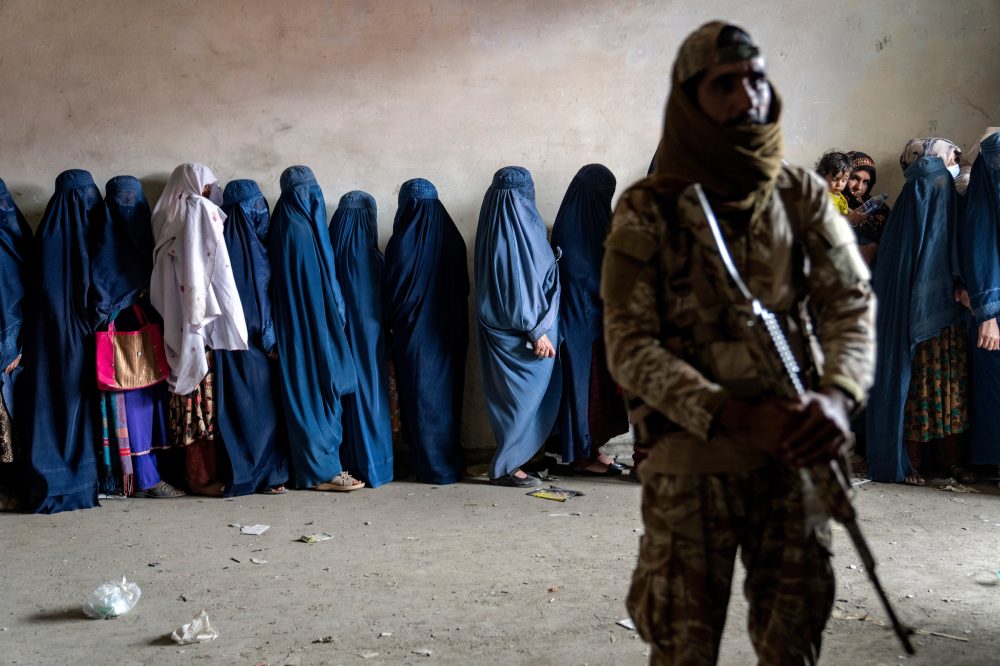
These regulations encompass severe limitations on women and girls, including prohibitions on schooling past elementary level and restrictions on numerous occupations. Women must have a male guardian present when leaving their homes, and rigid guidelines dictate women’s attire. Medical care remains among the limited fields where female employment continues.
The guidelines mandate that women may appear publicly only when dressed in complete hijab — including head covering and lengthy garment covering their entire body — plus a face covering that exposes only the eyes. These requirements are enforced by the Ministry for the Propagation of Virtue and the Prevention of Vice.
The MSF employee was traveling to her hospital job with her husband when authorities at a checkpoint established by the vice and virtue ministry stopped them, Champion explained Friday.
Officials informed the woman that her lack of face covering constituted a dress code violation. Nevertheless, she wore her approved work clothing, which Afghanistan’s Health Ministry has sanctioned for female hospital personnel, Champion informed The Associated Press.
Following her explanation about her hospital employment, the employee departed the checkpoint. However, both she and her husband faced arrest upon reaching the medical facility and spent two days in custody, Champion reported.
The imprisonment “is completely disproportionate,” Champion stated. “You don’t go to jail for that. You don’t get arrested and detained for not covering your face.”
Prior to their release, both spouses were required to sign written pledges that the woman would wear a niqab — clothing that covers the complete body, including head and face, showing only the eyes. The agreement specified that failure to comply could result in one month of imprisonment, Champion noted.
The woman’s father, brother and brother-in-law were additionally required to sign the agreement, ensuring the woman’s husband would guarantee his wife’s adherence to clothing rules.
MSF operates seven initiatives throughout Afghanistan providing maternity, pediatric, trauma and tuberculosis treatment. The organization reported that women comprise 45% of its nursing staff and over half of its maternity project workforce.