
Coordinated Ukrainian attacks on fuel infrastructure have created the most severe gasoline shortage in Russian-occupied Crimea since Moscow’s 2014 takeover of the peninsula. The strategic strikes target refineries, storage facilities, pipelines, and transport routes supplying the Black Sea region.
The fuel shortage represents a significant setback to Moscow’s claims of success in the nearly four-year conflict with Ukraine. Ukrainian forces have systematically attacked supply lines to Crimea, creating widespread disruptions that Russian authorities have struggled to address effectively.
These ongoing assaults demonstrate Ukraine’s increasing capability and precision in drone warfare, catching Russian forces unprepared and without adequate countermeasures.
The timing coincides with Russia Day celebrations on Friday, traditionally marking the beginning of summer tourist season. The gasoline crisis threatens to severely impact the peninsula’s tourism-dependent economy, which relies heavily on its coastal attractions and resort destinations.
In an unusual public statement, the Kremlin has admitted the severity of the situation and pledged swift action to resolve the fuel shortage.
Ukraine’s tactical successes underscore its capacity to deliver significant strategic damage to Russian operations and alter the trajectory of the war, even as Moscow’s recent territorial gains have largely stalled. Thursday marked the 1,569th day of Russia’s comprehensive invasion of Ukraine, now exceeding the length of World War I.
The peninsula has held strategic importance for Russia since its conquest from Turkic-speaking Tatars during the 18th century following Moscow’s victory over the Ottoman Empire.
In 1954, Soviet leader Nikita Khrushchev relocated Crimea from Russian to Ukrainian administrative control while both regions remained within the USSR. Following the Soviet collapse in 1991, the diamond-shaped territory became part of independent Ukraine.
Moscow maintained naval facilities in Sevastopol, and after a popular revolution removed a pro-Russian Ukrainian leader in February 2014, Russian President Vladimir Putin deployed military forces to occupy Crimea. Moscow subsequently annexed the peninsula through a referendum widely rejected by the international community.
This annexation sparked a Moscow-supported separatist conflict in eastern Ukraine that continued with fluctuating intensity until the February 2022 full-scale invasion. Russian forces based in Crimea rapidly captured extensive areas of southern Ukraine early in the war, establishing overland access to the peninsula.
Throughout the conflict, Ukraine has employed missiles and drones attempting to break Russian control of the territory. Ukrainian forces have destroyed multiple Russian naval vessels in the Black Sea and at Crimean ports, severely damaging Moscow’s maritime capabilities and forcing fleet relocation to Novorossiysk.
Ukraine has systematically attacked ammunition storage sites, military airfields, and Putin’s signature project, the Kerch Bridge connecting Crimea to Russia. A truck bombing in October 2022 killed five people, destroyed two bridge sections, and required extensive reconstruction. Additional bridge attacks occurred in 2023 and 2025.
Following the Kerch Bridge incidents, Russia redirected most fuel and supply shipments through highway and rail routes via occupied territories along the Sea of Azov coastline. These deliveries faced disruption last month when Ukrainian drones struck fuel transport vehicles on roads Moscow considered secure, leaving numerous burning trucks.
Additional persistent Ukrainian attacks have targeted refineries, petroleum storage facilities, and pipelines throughout Russia, damaging oil export capabilities and creating domestic fuel shortages.
The Washington-based Institute for the Study of War highlighted the coordination between long-distance strikes and attacks disrupting supplies to Crimea and other occupied areas.
“The long-range strike campaign is therefore reducing Russia’s production capacity, while the midrange strike campaign is hurting Russia’s ability to transport the gasoline Russia is still able to produce,” it said in an analysis.
Compounding the situation, Ukrainian drones repeatedly targeted the Chonhar Bridge this week, which connects mainland Ukraine and Crimea across a narrow waterway. Officials have installed temporary pontoon crossings.
The Ukrainian military said it struck the bridge to disrupt movement of troops, ammunition and fuel from Crimea.
While the immediate impact on Russian military operations remains unclear, civilians in Crimea and other occupied regions are experiencing significant hardship.
The current crisis surpasses all previous fuel shortages caused by Ukrainian strikes since the 2014 annexation.
By late May, officials implemented rationing limiting gasoline purchases to 20 liters per vehicle owner weekly through prepaid vouchers. These vouchers sold out immediately upon release through official messaging channels, forcing motorists to wait hours in refueling lines.
Social media platforms overflow with fuel location requests and tips, while authorities established a helpline for stranded tourists.
Although fuel transport across the Kerch Bridge ceased for security reasons following Ukrainian attacks, ferry deliveries continue and are expected to expand.
Some drivers transport personal fuel supplies across the bridge from mainland Russia, though regulations limit individual vehicles to 100 liters. Black market dealers sell gasoline at twice the standard price.
Crimea hosted nearly 7 million visitors last year and projected higher numbers for this season. The business publication Kommersant reported nearly 80% of hotel reservations were cancelled in late May and early June.
Several hotels began offering complimentary gasoline with new bookings, promotions that were immediately claimed.
Tourist concerns increased following a Ukrainian drone attack earlier this week on a passenger train traveling from Moscow to Crimea, wounding the operator and killing his assistant. Service was temporarily halted while passengers were transported by bus.
A previous attack on a regional train in Crimea resulted in one death and three injuries, prompting authorities to modify schedules and restrict daytime operations.
Kremlin spokesman Dmitry Peskov acknowledged the Crimean fuel shortages earlier this week and promised that “measures were being taken” to deal with them.
The Russian Defense Ministry has remained silent regarding Ukrainian attacks on the overland corridor, while some military commentators have sharply criticized the armed forces for inadequate preparation and delayed responses.
Some proposed military protection for fuel convoys while others advocated increased strikes on Ukrainian bridges, fuel storage locations, and infrastructure.
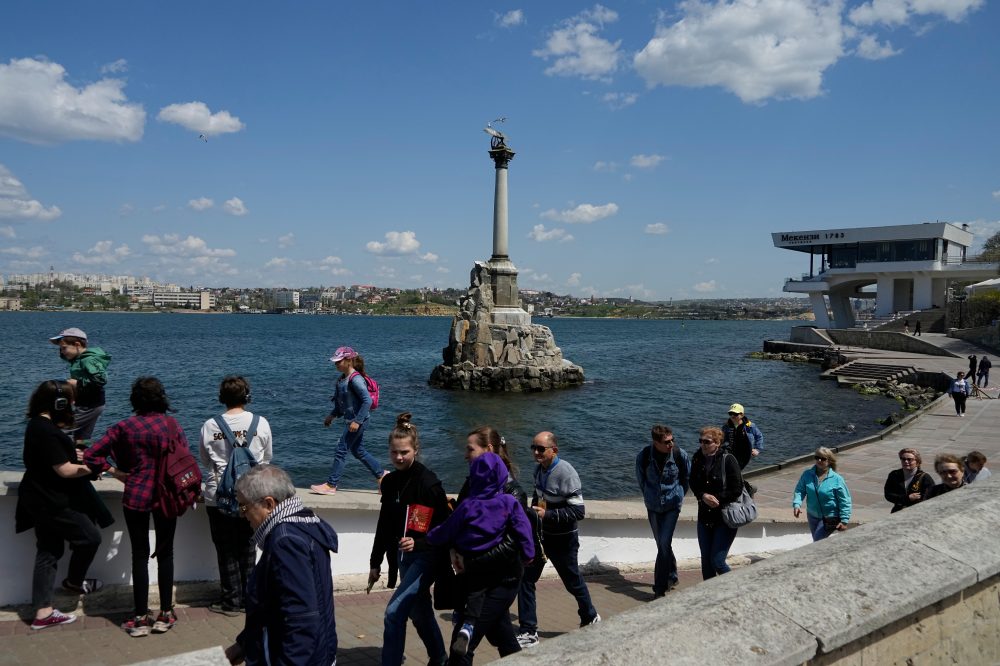
During the fuel crisis and blame allocation, Ukraine delivered another symbolic strike against Russia, hitting a historic Sevastopol structure housing a massive panoramic artwork depicting the city’s defense during the 19th century Crimean War. The painting was effectively destroyed by fire during the attack, according to Mikhail Razvozhayev, the Kremlin-appointed head of Crimea’s largest city.
Considering Putin’s emphasis on Crimea, military blogger Valery Shiryayev suggested the attack would particularly infuriate the Russian leader.
“It’s hard to find another work of art, another part of national heritage, whose destruction would be as painful for Putin,” he said.