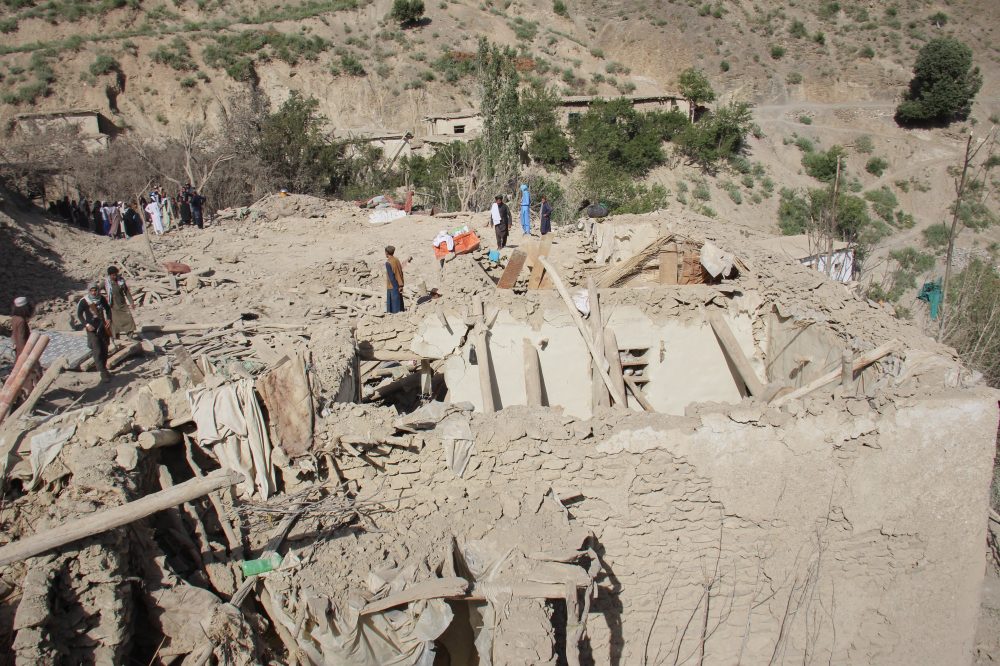

KABUL, Afghanistan — The United Nations mission in Afghanistan announced Thursday that it has verified the deaths of 13 civilians, primarily women and children, resulting from Pakistani military strikes on eastern Afghanistan the day before, backing up casualty figures provided by Afghan officials.
Pakistan had rejected as false propaganda a Wednesday statement from Afghan government spokesperson Zabihullah Mujahid claiming the military strikes in Khost, Kunar and Paktika provinces resulted in 13 civilian deaths — including 11 children, one woman and one man.
The military action ended a month-long peaceful period after what Pakistan had earlier characterized as “open war” between the two nations. The ongoing dispute has resisted international attempts to establish lasting peace.
UNAMA, the UN mission’s official designation, stated on X that it had “documented 13 civilian deaths and 10 injuries, mainly children and women, from airstrikes” during the overnight hours between Tuesday and Wednesday.
“UNAMA reiterates its call for de-escalation, a durable ceasefire, protection of civilians, reopening of border crossings particularly for humanitarian assistance, and dialogue to resolve differences,” the organization stated. The border closure has lasted for months, hampering commerce and travel while leaving thousands stranded.
Since February, when Afghanistan launched retaliatory strikes against Pakistan following Pakistani airstrikes within Afghan territory, hundreds have died in the cross-border violence. Multiple rounds of internationally brokered peace negotiations have been unsuccessful in achieving a permanent ceasefire.
Pakistan maintains that Afghanistan provides sanctuary to militants responsible for deadly attacks within Pakistani territory, particularly the Pakistani Taliban, identified as Tehrik-e-Taliban Pakistan, or TTP. This organization operates independently from but maintains ties with the Afghan Taliban, which has controlled Afghanistan since taking power in 2021 following the disorganized departure of U.S.-led forces. Afghan authorities reject these allegations.
Pakistan stated it conducted border strikes with Afghanistan on Wednesday to eliminate militant training facilities and safe houses.
During Thursday’s regular press briefing in Islamabad, Foreign Ministry spokesperson Tahir Andrabi explained that the strikes responded to numerous recent militant attacks within Pakistan.
“We carried out these strikes to target safe havens, masterminds and planners belonging to Fitna al-Khawarij,” Andrabi stated, referencing the government’s designation for the Pakistani Taliban and similar militant organizations. “We acted on credible intelligence, and there was selective targeting of their hideouts.”
He emphasized that protecting Pakistani citizens remains the government’s primary concern and that anti-militant operations will persist. “We continue to undertake military strikes with precision and accuracy, eliminating terrorist hideouts,” he stated.
Andrabi refused to address the UN casualty report directly, indicating officials would need to examine its findings. Nevertheless, he challenged the UN’s casualty documentation methods.
“What is their methodology for measuring that?” he questioned. “Our strikes were precise and targeted at the hideouts and camps of these terrorists.”
Following increased militant attacks against Pakistani civilians and security personnel, Pakistan announced in February it was engaged in open warfare with Afghanistan. The combat has focused primarily along border regions, though Pakistan has also launched airstrikes against Afghanistan’s capital, Kabul.
In March, an airstrike targeted a drug rehabilitation facility in the city, with Afghan officials reporting over 400 fatalities. Pakistan contested the casualty count and denied civilian targeting, claiming it had struck an arms storage facility.
Wednesday’s military action occurred months following China’s hosting of peace negotiations between Pakistan and Afghanistan. Beijing subsequently reported both nations had committed to avoiding conflict escalation and pursuing resolution.
Pakistani officials have indicated that China and other allied nations continue encouraging both parties to reach a sustainable peace agreement.