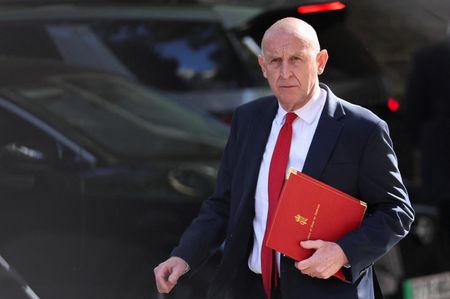

Britain’s defense minister John Healey stepped down from his position Thursday following disagreements about military funding, claiming Prime Minister Keir Starmer has not allocated sufficient government resources to protect the nation during a period of increased security concerns.
The surprise departure, paired with a harsh public resignation letter, adds to mounting challenges facing Starmer as he confronts a potential leadership contest and highlights the government’s central dilemma of boosting defense expenditures while operating with limited financial resources.
For several months, Britain’s defense and finance departments have engaged in ongoing discussions about addressing growing demands for increased military investment, causing delays to Britain’s Defence Investment Plan that was originally scheduled for release last year.
Senior military officials have emphasized the necessity of this plan to address escalating security risks, particularly with frequent Russian naval activities in British territorial waters, while the government simultaneously works to lower national debt amid record-high taxation levels.
This prominent resignation occurs as Starmer faces political instability, following Wes Streeting’s departure as health minister in May and Andy Burnham’s efforts to re-enter prominent political roles for a potential leadership campaign.
“You have been unable, and the Treasury has been unwilling, to commit the resources that the nation needs to defend the country at this time of rising threats,” Healey stated in his resignation letter to Starmer.
The defense sector has expressed frustration over the plan’s postponement, arguing that uncertainty prevents investment in extended military programs.
Britain faces challenges as the United States reduces its European protection role, while the U.S.-Israeli conflict with Iran revealed Britain’s military preparedness gaps when its navy couldn’t rapidly send an advanced vessel to the area.
The defense strategy aims to outline funding for military hardware and services to bring armed forces to “warfighting readiness” status, with Starmer announcing Wednesday that publication would occur before the NATO summit starting July 7.
“Your DIP financial settlement – which I was first given in full on Monday afternoon this week – falls well short of what is required for defence and the country at this dangerous time,” Healey wrote.
“I am being forced to make decisions that would reduce the readiness of our forces and increase the risk to personnel on operations, and could make the country less safe.”