Research examining more than 2,300 children between the ages of 9 and 10 has revealed that economic and social conditions have a profound impact on brain development during the preteen years.
The comprehensive study discovered that socioeconomic factors were responsible for the majority of variations observed in how these young participants’ brains developed.
According to the research findings, the economic circumstances surrounding a child’s neighborhood environment create measurable changes in brain structure and development patterns.
The study provides new evidence that environmental and economic conditions don’t just affect children’s daily lives, but actually alter the physical development of their brains during these crucial formative years.
Scientists have solved a biological puzzle that has mystified researchers for more than a century: exactly how does the Venus flytrap manage to snap its jaws shut so quickly when catching prey?
New research reveals that the carnivorous plant’s lightning-fast closure happens through a rapid weakening of cell walls in the trap’s outer surface. This discovery challenges the long-held theory that water movement within the plant drives the snapping mechanism.
The study shows that when an unsuspecting insect touches specialized trigger hairs inside the trap twice within a brief timeframe, the plant’s cell walls quickly become more flexible by approximately 30 to 40 percent. This softening releases built-up tension in the tissue, causing the modified leaf to bend and seal shut in as little as one-tenth of a second.
“One of the most iconic plants in the world can still surprise us. After more than a century of research, we are still discovering fundamentally new things about how the Venus flytrap works,” said physicist Yoël Forterre of the French research agency CNRS and Aix-Marseille University, senior author of the study published on Thursday in the journal Science.
The Venus flytrap grows naturally only in specific areas of North Carolina and South Carolina. Like other meat-eating plants, it thrives in environments with poor soil nutrients and supplements its diet by trapping and breaking down insects.
To conduct their investigation in Marseille, scientists employed high-speed cameras, mechanical testing of the plant’s surface layer, and computer modeling. They also tracked water movement within the plant tissue to eliminate that as the driving force.
“The plant uses specialized trigger hairs located on the inner surface of the trap. When an insect touches these hairs twice within a short period of time, the trap closes. Closure can occur in as little as one tenth of a second,” Forterre explained.
The researcher described the trap as being pre-loaded with mechanical tension, similar to a compressed spring waiting to be released.
“Our hypothesis is that the trap is already mechanically loaded before triggering, much like a spring. When the trap is stimulated, the cell walls of the outer epidermal layer rapidly soften by roughly 30 to 40%, meaning that the cell wall becomes more flexible. This releases internal stresses stored in the tissue and causes the trap to bend and close. The softening develops within about one second,” Forterre said.
Once trapped, the insect becomes sealed inside where digestive enzymes break it down over several days.
“By directly measuring the mechanics of the living trap as it responds, we pinned down the internal ‘motor’ that drives the leaf across its instability threshold and sets off the snap-buckling that closes it,” said physicist and study lead author Jeongeun Ryu, who worked on the study as a postdoctoral researcher at the CNRS and Aix-Marseille University.
Following digestion, the trap opens again, leaving behind only the insect’s hollow outer shell while the plant absorbs the nutrient-rich liquid.
The findings impressed researchers with how evolution adapts existing biological processes for new purposes.
“What I find remarkable is that evolution often does not invent entirely new mechanisms, but rather reuses and refines existing ones. Plants are known to modify the mechanical properties of their cell walls during growth, but the Venus flytrap appears to push this mechanism to an extreme, using it on a timescale of about one second,” Forterre said.
Scientists have identified approximately 800 different carnivorous plant species worldwide. These plants aren’t closely related to each other, suggesting that meat-eating behavior developed separately multiple times throughout plant evolutionary history.
The Venus flytrap’s snapping mechanism has fascinated scientists including Charles Darwin, the 19th century naturalist who developed the theory of evolution by natural selection. The research team believes their findings could lead to practical applications.
“To our knowledge, this is the first time such a rapid change in the mechanical properties of cell walls has been seen in a plant,” Ryu said.
“It settles a question that goes back to Darwin – what drives one of the fastest movements in the plant kingdom – and points to a new way for a living thing to move: not by pumping fluid or simply collapsing, but by actively tuning the stiffness of its own material. That principle could eventually inspire soft robots or smart materials, though that remains a longer-term prospect,” Ryu said.
Governor Wes Moore revealed that the Maryland Department of Natural Resources will distribute $31.5 million in grants through the Chesapeake and Atlantic Coastal Bays Trust Fund for 25 environmental restoration initiatives covering 188 locations across the state to enhance water quality and wildlife habitats.
“The Chesapeake Bay is the centerpiece of our tourism and seafood industries in Maryland,” said Governor Moore. “It’s a key part of our cultural identity and the place where countless family memories are made. These new investments represent our commitment to continuing to improve the Bay, its surrounding watershed, and the rivers and streams that connect our communities.”
The Fiscal Year 2027 environmental restoration initiatives were chosen for their capacity to enhance water quality and deliver additional advantages including climate resilience, habitat improvement, and environmental justice. DNR projects the initiatives will eliminate approximately 45,100 pounds of nitrogen, 6,400 pounds of phosphorus, and nearly 8,900 tons of sediment annually. In waterways, nitrogen and phosphorus promote algae blooms that cloud water and decrease dissolved oxygen levels when they decompose, creating challenging conditions for marine life survival.
Trust Fund administrators utilize current scientific research and data to identify the most economical and efficient non-point source pollution reduction initiatives. DNR chose recipients from applications for outcome-based funding via the department’s digital Grants Gateway.
“Strong partnerships are key to making significant progress on reducing Chesapeake Bay pollutants,” said Maryland Secretary of Natural Resources Josh Kurtz. “The Chesapeake and Atlantic Coastal Bay Trust Fund grants enable DNR to work directly with community organizations, local governments, and scientific experts to complete projects that will result in lasting improvements to the Coastal Bays, the Chesapeake Bay, and their watersheds throughout Maryland.”
This year’s collection of initiatives includes plans to establish 1,054 acres of forest, rehabilitate 55 acres of wetlands, execute 32,000 linear feet of stream restoration, construct or upgrade 11 stormwater reduction systems, establish 40 rain gardens in neighborhoods, develop 2,165 linear feet of living shoreline, minimize agricultural runoff, and address 960 impervious acres to decrease stormwater runoff in counties. Combined, the initiatives will provide multiple ecological, social and economic advantages throughout 16 counties and Baltimore City within the state.
These investments represent part of Governor Moore’s ongoing commitment to land preservation. In December, Gov. Moore alongside leaders from six other Chesapeake Bay watershed states, the Mayor of Washington, D.C., and federal representatives endorsed a revised Chesapeake Bay Watershed Agreement to advance the regional cleanup initiative. The updated agreement establishes new objectives for water quality, wildlife, and protected lands for states to achieve by 2040.
Since 1985, Maryland’s Chesapeake Bay cleanup initiatives have eliminated approximately 40 million pounds of nitrogen, 4.6 million pounds of phosphorus and about 1 billion pounds of sediment–allowing the state to achieve or nearly achieve all of its 2025 Chesapeake Bay pollution reduction goals.
The effort to minimize these Bay pollutants is crucial for protecting Maryland’s $32.3 billion tourism economy, $10.6 billion outdoor recreation economy, and $600 million seafood industry.
Last year, the Department of Natural Resources in collaboration with nonprofit organizations, the University of Maryland Center for Environmental Science, and thousands of volunteers finished a decade-long effort to restore oyster habitat and introduce billions of new oysters to five different Chesapeake Bay tributaries in Maryland.
Maryland is pioneering innovative Chesapeake Bay protection initiatives. In January, the Department of Natural Resources announced $11.2 million in funding for 37 ecological improvement projects through the new Whole Watershed Program, which will concentrate different pollution reduction projects in five specific watersheds–Antietam Creek in Western Maryland, Baltimore Harbor, Newport Bay near Ocean City, the Severn River near Annapolis, and the Upper Choptank River on the Eastern Shore. Maryland state agencies have also contributed to planting over 1.5 million trees statewide as part of the 5 Million Trees Planting initiative. These new trees help filter pollutants, clean the air, and create new wildlife habitat.
Chesapeake Bay Improvement Project highlights for FY2027 include:
Baltimore Tree Trust will eliminate impervious surfaces to establish 900 new tree wells within Baltimore City. Urban trees will be planted to increase canopy coverage, reduce temperatures from urban heat island effect, and enhance water quality. All locations are in overburdened and underresourced communities with high climate vulnerability.
Bowie State University will convert an existing dry pond on its campus into a wet pond to enhance water quality for the untreated impervious area within the pond’s drainage area. The retrofit will function as a showcase project visible to all students.
The City of Frederick will rehabilitate 7,580 linear feet of the Carroll Creek watershed and plant 24,000 trees resulting in water quality and flooding improvements as well as a passive park for recreation.
Eastern Shore Land Conservancy will reclaim a degraded industrial site in St. Michaels along the Choptank River and transform it into a vibrant public conservation park that reconnects the community to the waterfront that will include 2 acres of pollinator meadow, 1.53 acres of wetland enhancement and creation, and 0.33 acres of tree and shrub plantings.
Gunpowder Valley Conservancy will restore riparian buffers and upland forests within the Gunpowder watershed by planting a total of 5,400 trees on 48.25 acres and treat a drainage area of 6.14 acres by installing 32 residential rain gardens, 9 institutional rain gardens, and 4 microbioretention practices on properties within the Gunpowder watershed.
SilvoCulture will plant 8,100 trees on 27 acres across two private farm sites in Middletown and Myersville, providing long-term sources of nutritious food, wildlife habitat, water quality improvement, and ecological services including outreach and education programming.
Dollar amounts for each project will be available later this year when the contracts are completed. DNR Watershed and Climate Services staff will continue to provide technical assistance to these designated recipients as the projects are finalized.
The complete list and location of funded projects can be found on the DNR webpage for the FY27 Chesapeake and Atlantic Coastal Bays Trust Fund. Beginning in mid-July, the Department of Natural Resources will accept applications for the next fiscal year through the department’s online Grants Gateway.
SAN FRANCISCO (AP) — An artificial intelligence company plans to invest $150 million in creating a fellowship initiative that will place trained coaches with nonprofit organizations across the nation to help them better utilize AI technology in their operations.
The program, called Claude Corps after the company’s well-known AI chatbot, will recruit and place 1,000 trained fellows with various organizations for one-year assignments. The company’s president told The Associated Press that Anthropic hopes this initiative will grow and become a cornerstone of its mission to help society benefit from AI while addressing potential dangers.
The president said Claude Corps will undergo evaluation following its initial year to determine whether it should continue and grow.
“We’re hoping it’s a good idea that can take root and that other people can build on and learn from, whether that’s public or private,” she said during an interview at Anthropic headquarters in San Francisco. “But I think my hope is that we’ll learn, the people who do it will learn, and we’ll be able to come back and do it again next time even better.”
Anthropic’s financial commitment covers compensation for Claude Corps participants and provides participating host organizations with $10,000 grants plus complimentary credits to access Claude.
Charitable giving is fundamental to how Anthropic’s founding team believes the business should operate, the president explained. She, along with her brother who serves as CEO, and the company’s five additional co-founders have committed to donating 80% of their personal wealth. They structured Anthropic as a public benefit corporation, a legal framework that allows for-profit businesses to pursue both financial success and social good.
Anthropic, currently valued at $965 billion, is preparing for a public stock offering, having recently submitted confidential paperwork for an initial public offering.
Speaking before the SEC filing became public, the president declined to discuss IPO timing but emphasized that the company’s principles are transparent to potential investors.
“There’s decisions and choices that we might make that might feel in conflict with just the pure commercial interests of the business and we’re going to be really open about that,” she explained. “I think we have been very well served by our inclination to just be very honest about who we are because people who like that really like us. And for people, if it’s not what they like, they don’t work with us. And I think that’s actually better for everyone.”
Anthropic has been vocal regarding dangers associated with this emerging technology. The company recently warned that businesses should coordinate pausing advanced AI development if humans risk losing control over self-improving systems. It worked with Pope Leo XIV during development of his AI encyclical addressing regulation needs. The company also engaged in a notable dispute with President Donald Trump’s administration after refusing to grant the U.S. military unrestricted access to its AI systems.
The president described Anthropic as “unusual” because its business operations and research divisions function independently.
“Sometimes research says things like ‘AI is doing bad things’ and we really want to be open about what those things are,” she noted. “Because I don’t think there’s a way for the broader community that is the world to adapt to these changes if we don’t understand the challenges.”
Bella DeVaan, who leads the Charity Reform Initiative at the progressive research organization the Institute of Policy Studies, expressed doubt that AI companies will voluntarily allocate sufficient profits to support everyone affected by AI implementation.
“The fox can’t guard the henhouse,” said DeVaan, who has researched wealthy individuals’ charitable contributions. “They can’t be responsible for their own regulation or for their own definition of what their altruistic mandate is. That has to be determined by the public.”
Similar to Pope Leo’s encyclical recommendations, DeVaan advocates for stronger government oversight of AI companies. Without official intervention, she fears AI could establish a permanent class of displaced workers. She believes governments must conduct independent research on AI’s potential benefits and risks rather than relying on AI companies’ findings.
Anthropic separately announced Wednesday it will contribute $200 million toward an economic framework supporting workers displaced by AI technology. This effort begins with funding research into problems created by AI adoption.
“We can’t understand what the societal disruption might look like if we don’t study it, publish it and talk about it,” the president stated.
For Claude Corps development, Anthropic collaborated with CodePath, a San Francisco-based nonprofit focused on helping first-generation and low-income students enter technology careers through educational programs and career assistance.
CodePath’s CEO said he had long considered redesigning AmeriCorps to address AI adoption. The federal volunteer service agency experienced significant funding cuts under Trump administration policies last year.
“I think we need programs that are meeting folks where they are when you’re looking at the traditional late adopters — from nonprofits to governments, to schools,” he explained. “We’re putting humans into the organizations that serve the majority of Americans as a way to bring them along and bring our communities along.”
He said CodePath will oversee the program, which accepts fellowship applications until July 17. The CEO noted the fellowship targets diverse young professionals early in their careers.
“We are intentionally trying to be extremely accessible,” he said. “We’re not requiring that you have a certain degree. We want the initial group of fellows to be representative of a broad section of the population in this country.”
Jennifer Blatz, who leads StriveTogether, a Cincinnati-based nonprofit network preparing young people for improved economic opportunities, expressed excitement that her organization was selected to host two Claude Corps fellows.
While her nonprofit currently uses AI for analyzing program impact data, she hopes Claude Corps can help standardize AI implementation across her organization and its network covering 27 states. Blatz wants both her network and the communities they serve to understand “AI is a tool – not the whole strategy.”
“AI can help us work smarter, but trust building and community collaboration, that’s a deeply human part of the work,” she said. “And that’s not going away just because we use this tool.”
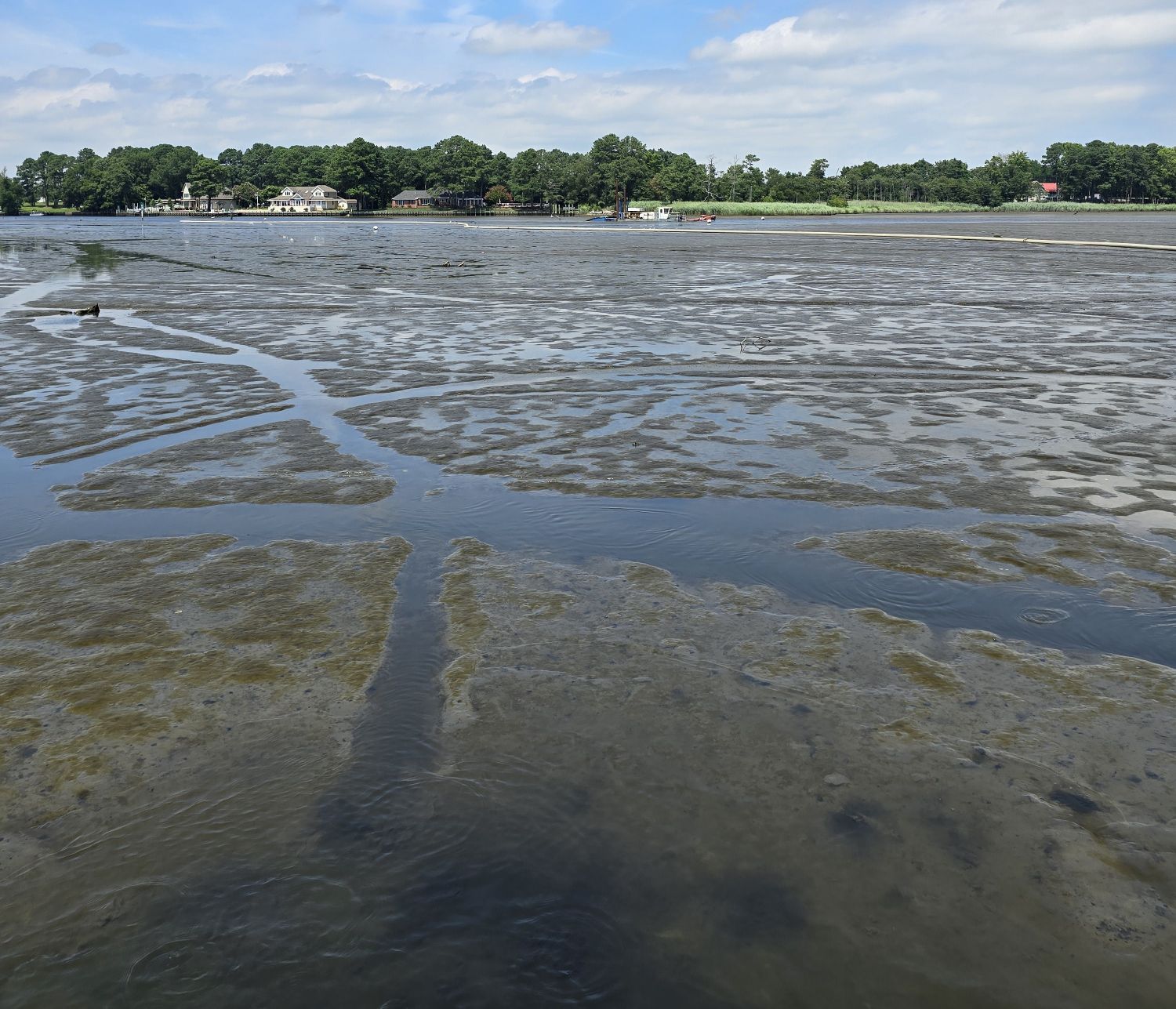
State environmental officials are proceeding with dredging operations on the Indian River near Millsboro, working to enhance navigation channels for boaters while supporting wetland restoration efforts in the area.
DNREC has lifted typical seasonal timing restrictions for the project, determining that the environmental benefits of completing the marsh restoration work outweigh potential negative impacts. Officials cite degraded water flow conditions in the region as justification for allowing the dual projects to move forward during summer months.
The dredging and restoration work is scheduled to run through March 2027, with operations focusing on improving the waterway’s navigation channel while restoring nearby tidal marsh areas.
HENRICO—With blooming flowers and fresh crops appearing at Virginia farmstands, June highlights the vital pollinators that make this abundance possible.
National Pollinator Month draws attention to the essential role that birds, bats, bees, butterflies, beetles and other creatures play in our daily lives, while promoting efforts to establish and safeguard their living spaces. The month’s main event, National Pollinator Week, takes place June 22-28 this year.
These pollinators do more than create beautiful gardens. According to the Pollinator Partnership, pollinators make possible one in every three bites of food consumed by humans, with no less than 75% of food crops depending on them. The U.S. Department of Agriculture calculates that pollinators add $18 billion each year to crop production.
However, pollinator numbers keep dropping due to climate change, loss of habitat, pesticide application, parasites and diseases.
Stephen Living, habitat coordinator with the Virginia Department of Wildlife Resources, explained that truly helping pollinators requires thinking about “the whole structure” of their habitats—including food sources, nesting areas, breeding grounds and protective shelter.
“A lot of native bees are ground nesting, so providing areas of bare ground is valuable,” Living advised. “And keep some fallen leaves where possible.”
An effective habitat design incorporates diverse flowering plants and year-round resources. DWR provides Virginia Native Pollinator seed packets containing a mix of native wildflowers that benefit pollinators.
“When you’re doing a landscape from an aesthetics standpoint and want interest across the seasons, think about that from a wildlife perspective too,” he said. “Choose plants that bloom successively to provide resources across seasons.”
Trees and shrubs play an equally vital role in creating lasting habitats. Native oak and black cherry trees provide support for various butterflies and caterpillars.
The crucial factor is selecting native species.
“Native plants also feed the young insects, the larvae,” he said. “They support a much greater diversity and number of young insects than non-native plants do, and these in turn support wildlife like our songbirds.”
Living also recommended reducing pesticide use and adopting integrated pest management methods to lessen harm to beneficial insects.
While many tools and garden additions can help pollinators, he cautioned against certain popular trends—like widely-used bee hotels, which “can be valuable but have some pitfalls.
“They need to be carefully managed and cleaned out regularly, so we don’t create concentrations of harmful parasites,” he advised. “Do some research and find some that can be maintained and cleaned.”
He recommended avoiding butterfly houses, since “butterflies aren’t using those.”
The DWR’s Habitat at Home initiative provides guidance and resources for developing pollinator- and wildlife-friendly areas, plus recognition opportunities. Visit bit.ly/43uS3cx.
For additional information about native plants for pollinators, visit Plant Virginia Natives at plantvirginianatives.org.
Media: Contact Shelby Crouch, Virginia DWR public information officer, at 804-802
An Indian space technology company has received a substantial government grant to advance artificial intelligence capabilities for monitoring Earth from orbit, according to reports from Thursday.
SatSure Analytics was awarded 246 million rupees, equivalent to $2.57 million, by the country’s space regulatory authority to create AI-powered systems for Earth observation. This funding is part of India’s broader initiative to establish independent artificial intelligence technologies.
Nations across the globe are putting more resources into developing their own AI and geographic intelligence systems to reduce reliance on international technology providers. Satellite information has become increasingly vital for climate monitoring, emergency response operations, and protecting national interests.
India has transformed its space industry by allowing private companies to participate in what was previously dominated by the government-operated Indian Space Research Organisation (ISRO). The country has also established a 10-billion-rupee funding program to help space-focused startups expand their operations.
The company, headquartered in Bengaluru, explained that the grant will support creating comprehensive Earth observation systems using both satellite and drone information specifically designed for Indian conditions. These customized models aim to provide better precision than international systems that may not perform well under local circumstances.
Information gathered will cover monsoon weather patterns, farming regions, and city growth, among other areas. This data could be used across various industries including infrastructure development and financial services, according to the geospatial analytics company.
“Earth observation is moving from project-specific analytics to reusable intelligence infrastructure,” stated Rashmit Singh Sukhmani, the company’s co-founder and chief technology officer. He added that these systems could help create decision-making tools that better account for India’s unique geographic features, weather patterns, agricultural variety, and infrastructure needs.
The grant also enables SatSure’s involvement in India’s collaborative program to create a commercial satellite network.
A French streaming service announced Thursday the release of a free web-based tool designed to identify artificially generated music within user playlists across approximately 20 major streaming platforms.
The music platform is also making its artificial intelligence detection technology available for licensing to the broader music industry, expanding on previous agreements including a deal struck with France’s royalty agency Sacem in January.
According to company statistics, 43% of users who switch to the platform from competing services already have artificially generated music included in their playlists. The streaming service handles this issue on its own platform by marking AI-created songs and automatically excluding them from algorithm-driven recommendations and curated playlists.
“This is a first step in making sure that these tracks don’t dilute the royalty pool in any significant way,” the company stated.
The platform referenced a 2024 Cisac study indicating that 25% of artists’ earnings, equivalent to €4 billion ($4.6 billion) annually, could potentially be diverted by artificially generated songs by 2028.
The streaming service currently processes nearly 75,000 AI-created tracks each day, representing more than 44% of its incoming music content, an increase from 60,000 tracks reported in early 2025.
A joint survey conducted by the platform and Ipsos revealed that 80% of participants wanted AI-generated music to be clearly identified on streaming services.
KASHIWAZAKI, Japan (AP) — The world’s biggest nuclear facility has returned to operation in Japan as the nation grapples with massive electricity needs during a worldwide oil crisis, but the restart exposes a critical issue: the country is approaching maximum capacity for storing used nuclear fuel with no workable strategy for permanent radioactive waste disposal.
The return to service of the No. 6 reactor at Kashiwazaki-Kariwa Nuclear Power Station this year was intended to encourage additional nuclear facilities to come back online. According to the Federation of Electric Power Companies of Japan, Kashiwazaki-Kariwa represents one of three facilities where cooling pools will reach maximum capacity within five years.
“Without solid (fuel management) plans, our power generation will stall sooner or later,” said Kashiwazaki-Kariwa General Manager Takeyuki Inagaki.
Following decades of searching for permanent storage solutions for highly radioactive used fuel, officials are examining Minamitorishima, an isolated Pacific island located south of Tokyo. However, this choice has encountered doubt and opposition due to Japan’s inconsistent approach to used fuel and radioactive waste handling.
Just 15 of Japan’s 54 reactors have returned to operation following the March 2011 Fukushima catastrophe, when a 9.0 earthquake near Japan’s northeastern shore and resulting tsunami triggered meltdowns at three reactors managed by Tokyo Electric Power Company Holdings, or TEPCO. Approximately 160,000 residents evacuated from Fukushima, with certain regions still uninhabitable.
Kashiazaki-Kariwa, which TEPCO also operates, was closed following the Fukushima catastrophe during a countrywide nuclear power shutdown.
The used fuel stored in a cooling pool at Kashiwazaki-Kariwa No. 6 reactor, currently 88% full, is visible from an upper-floor viewing area. TEPCO has added filtered venting systems and equipment to prevent hydrogen explosions as part of enhanced safety measures developed from Fukushima experiences.
Prime Minister Sanae Takaichi advocates for activating additional nuclear facilities, which will generate more used fuel. Without a practical permanent storage solution, concerns exist that reactors may need to shut down once storage capacity is exhausted.
Two approaches exist for managing used nuclear fuel: immediate disposal as waste or recycling to recover plutonium and uranium for future use.
Japan maintains its commitment to recycling, claiming this approach will support the resource-scarce country’s energy requirements while decreasing radioactive waste toxicity and volume. However, a reactor built for plutonium reuse, essential to the recycling process, has malfunctioned. Reprocessing cannot manage all used fuel, contributing to a plutonium inventory already sufficient for thousands of nuclear weapons.
Specialists suggest Japan should examine the immediate disposal alternative as well.
By December 2025, cooling pools at 17 Japanese nuclear facilities contained over 17,000 tons (15,422 metric tons) of used fuel, occupying almost 80% of available storage space, according to the Ministry of Economy, Trade and Industry.
Besides the substantial radioactive waste from standard reactors, Japan must also “deal with massive and largely unknown high-level nuclear waste from the Fukushima disaster,” stated Lila Okamura, a Senshu University professor specializing in environmental politics and nuclear waste management.
Selecting a permanent disposal location for used fuel and constructing a facility would require 100 years plus tens of thousands of years for monitoring the deep underground storage. For such a multi-generational undertaking, Japan should proceed cautiously rather than rushing the current plan filled with uncertainties, Okamura explained.
Following Kashiwazaki-Kariwa’s No. 6 reactor returning to service for the first time in 14 years since the Fukushima disaster, Industry Minister Ryosei Akazawa contacted Ogasawara village requesting a feasibility study for a high-level radioactive waste facility on Minamitorishima, an island under Ogasawara’s administration, which belongs to Tokyo.
“With a lot of spent fuel accumulating at nuclear power plants across the country, a final disposal of radioactive waste is a crucial challenge that must be resolved,” Akazawa wrote to Ogasawara Mayor Masaaki Shibuya.
The government-controlled Minamitorishima, approximately 2,000 kilometers (1,242 miles) south of Tokyo, has no permanent inhabitants. The Japanese army is building a firing range for long-range, surface-to-ship missiles as a deterrent to China. The island also contains deep sea deposits abundant with rare earth minerals.
“The move seems political,” commented Satoshi Takano, a participant on a government panel examining permanent disposal of used fuel. “There will be little opposition from a government-owned remote island.”
Several specialists believe the island, positioned on a geologically stable tectonic plate, might be appropriate. Many inhabitants on Ogasawara and two neighboring islands expressed concerns regarding safety and tourism.
“I was baffled when I heard about the plan,” Ogasawara assembly member Yusuke Hirano stated during an assembly meeting. “I think nuclear waste is incompatible with islands that are a UNESCO Natural World Heritage site.”
Locating a community willing to accommodate a highly radioactive disposal facility has proven challenging, despite substantial financial incentives. Minamitorishima marks the fourth location for a feasibility study since the government began searching in the early 2000s.
The complete review process will require approximately two decades. Municipalities joining the initial phase can receive up to 2 billion yen ($12.8 million) in government subsidies. The subsequent phase would provide up to 7 billion yen ($44.7 million). Funding specifics for a final study remain undisclosed.
The world’s first permanent disposal facility for used nuclear fuel is scheduled to open in Finland this year. Britain, Germany and the United States have discontinued reprocessing primarily due to high costs and technical difficulties, while various other nations are discussing plans for direct disposal facilities.
Inagaki, the Kashiwazaki-Kariwa general manager, explained that TEPCO is moving used fuel from No. 6 reactor to other reactors at the facility with additional space, but the utility hopes to restart shipments to dry cask storage in northern Japan as a short-term solution. Other utilities with nearly full pools have announced intentions to construct dry-cask storage at their facilities.
Many inhabitants are concerned about Japan’s increasing stockpile because high-density storage of used fuel could also elevate overheating dangers.
Mie Kuwabara, a civil activist in Niigata, questioned “where will it go next?”
“It’s irresponsible to accelerate restarts and produce more spent fuel without deciding its final destination,” said Kuwabara, who also doubts using Minamitorishima.
“It’s like saying that it’s OK to put a facility there because nobody is around to complain if there is a problem,” Kuwabara said. “It’s scary.”
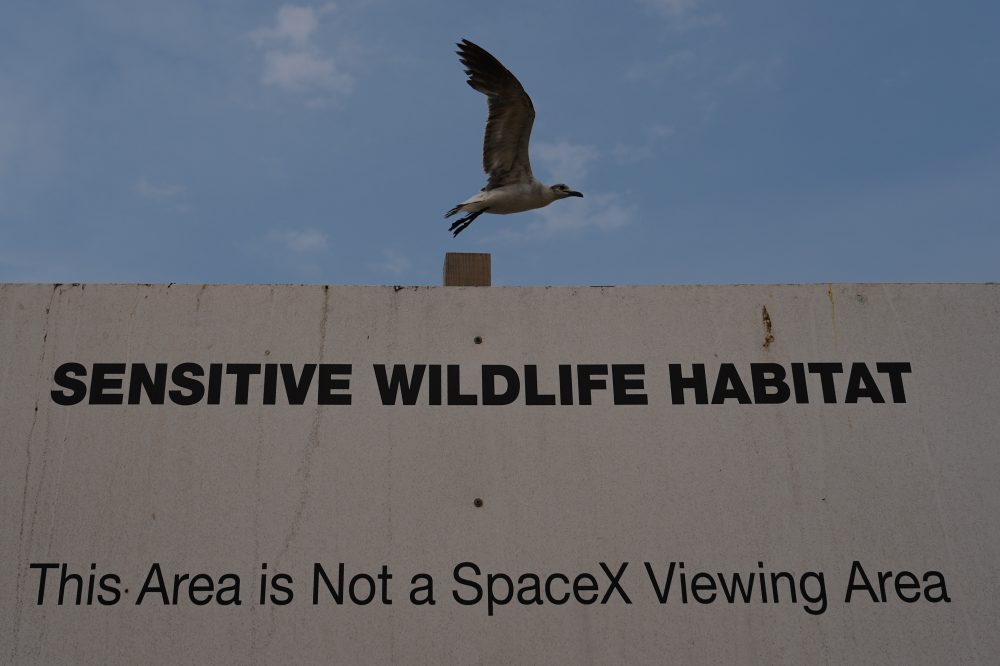
Conservation organizations filed a federal lawsuit Wednesday seeking to block a controversial land exchange that would grant SpaceX access to more than 700 acres of protected wildlife habitat in Texas. The environmental groups contend the deal would increase ecological damage to a Gulf Coast area already affected by rocket operations from billionaire Elon Musk’s space company.
The Fish and Wildlife Service gave approval this month for the proposed agreement with SpaceX, under which the company would give up 683 acres it currently owns in return for federal property within the Lower Rio Grande Valley National Wildlife Refuge. The protected area covers 103,000 acres across four counties along the Texas border and contains critical animal habitats and historical sites.
According to mapping data, the federal property SpaceX seeks to obtain sits closer to the company’s rocket launch facility near the border between the United States and Mexico.
This proposed swap would mark the first instance of the federal government exchanging refuge land with SpaceX, according to Laiken Jordahl, a spokesperson with the Center for Biological Diversity, one of the organizations behind the legal challenge.
The federal court filing in Washington seeks to prevent the land transfer, which has drawn opposition from local critics who have previously raised concerns about the company’s growing presence affecting beach access and creating safety risks from rocket explosions.
“Rather than exercising its enforcement authority to protect the Refuge from SpaceX’s activities and to require mitigation to address the harm SpaceX has caused, the Service seeks to give SpaceX over 700 acres within the Refuge,” states the lawsuit, which was filed by the Center for Biological Diversity and other groups.
A spokesperson for the Fish and Wildlife Service declined to provide comment regarding the pending legal action.
The agency released a final environmental review earlier this month concluding the land exchange would not create significant environmental harm to the region. According to the assessment, federal officials believe the transaction would deliver a “net conservation benefit” and offer “substantial long-term conservation value and improving landscape-scale habitat connectivity across refuges in South Texas.”
SpaceX representatives did not respond to requests for comment.
The legal challenge comes as the company prepares for a public stock offering, which could position Musk to become the world’s first trillionaire.
The aerospace company began construction in Texas over ten years ago and has grown substantially since then, with SpaceX workers voting last year to establish their own municipal government named Starbase.
Artificial intelligence company Anthropic announced Wednesday a $200 million commitment to study how AI technology affects jobs and economic conditions, adding its voice to industry discussions about protecting workers from technological disruption.
The company, which developed the Claude chatbot, paired the funding announcement with policy recommendations from CEO and co-founder Dario Amodei, who published detailed thoughts on his personal website about government assistance for people economically affected by AI. According to Amodei, artificial intelligence may cause more significant and longer-lasting workplace disruptions than earlier technological changes.
“The key challenge in such a world won’t be incentivizing growth, but finding a way for everyone to share in the benefits,” Amodei wrote.
This development follows competitor OpenAI’s Monday announcement of objectives including making sure technological benefits are “widely shared.” OpenAI CEO Sam Altman recently held discussions with Sen. Bernie Sanders about allowing public ownership stakes in AI companies like OpenAI, potentially using company shares to establish a public wealth fund distributing profits from major AI corporations.
During Wednesday’s Oval Office session, President Donald Trump informed reporters he plans upcoming meetings with top AI company executives to explore “giving back” to citizens.
“We’re talking about giving back something to the public, and if we do that, the public will become very rich,” Trump said. “I think they’ll do that, and I think it’ll make it very popular.”
Amodei explained in his essay that he discusses job displacement not because he wants to be a “prophet of doom” but to give “both policymakers and the private sector to have the best chance to adapt and respond.” His suggestions include improved data gathering to monitor AI-related job losses, employment-focused policy incentives to minimize displacement, and “mechanisms such as universal basic income” if job losses permanently reduce labor demand.
Such universal basic income programs could receive funding through taxes on “relevant companies” or increased capital gains taxes, according to Amodei’s writing.
Limited information was released Wednesday regarding Anthropic’s $200 million pledge, though the company indicated the money will support an Economic Futures Research Fund backing research studies and “program evaluation” of promising public policies. Additionally, the company plans a $150 million national fellowship initiative designed to help early-career workers “extend the benefits of AI to communities across America.”
Both Anthropic and OpenAI recently revealed plans for initial public stock offerings, joining Elon Musk’s SpaceX, which markets itself as an AI-centered space enterprise while preparing for public trading.
Anthropic’s Wednesday economic policy framework provided guidance for potential U.S. government responses to three levels of AI-caused economic disruption: scenarios where national unemployment hits 5%, 10%, and an undefined “unprecedented” level. Last week’s unemployment data showed a 4.3% rate.
For the “unprecedented” situation, the company suggested more lasting support measures would be required, listing various methods to generate and distribute revenue broadly, such as basic income, sovereign wealth approaches, and equity-sharing systems. This would represent “novel economic territory,” according to the company.
The company’s recommendations also included multiple suggestions for addressing safety and security concerns. Anthropic has built its reputation on safety emphasis and developing dependable, “steerable” AI systems, with Amodei and fellow co-founders leaving OpenAI to establish the new company in 2021.
New research released Wednesday reveals that climate change caused by human activities has dramatically increased the occurrence of severe coastal flooding worldwide.
Scientists emphasize these results are vital for developing coastal infrastructure and flood management strategies as global temperatures continue rising.
Severe flooding incidents result from a mix of storm surges, elevated tides, and abnormal sea level increases combined with natural climate variations and human impacts. Hurricane Ian in 2022, which brought devastating flooding, represents an example of a storm that researchers determined was intensified by climate change. Coastal flooding poses threats to hundreds of millions of residents in low-elevation coastal regions globally each year, generates billions in damages, and can prove fatal.
Severe sea level incidents that were historically uncommon — those with a 1% probability of occurring in any given year — now happen approximately 12 times more frequently on average, according to new research published Wednesday in the journal Nature Climate Change. These incidents have become roughly four times more probable due to climate change driven by human activities, the study demonstrates.
Scientists analyzed the occurrence of extreme sea level incidents — which trigger coastal flooding — by examining long-term data from tide monitoring stations at over 100 locations combined with climate modeling. The research examined increases from 1900 through 2005. The timeframe ended at 2005 because of limitations in available models that connect events to human-caused climate change. The study authors noted their findings were cautious, considering that human contributions to coastal extreme changes have only grown since that time.
The researchers distinguished between human activity impacts, natural influences, and local ground movement. While sea level variations early in the 20th century could mostly be linked to natural causes, beginning in the 1960s, human-caused warming became the main driver of rising sea levels, according to scientists.
Additional research published Wednesday in the journal Science Advances also reinforces the idea that human-caused climate change drives extreme water levels. It determined climate change was responsible for 58% of days with extreme water levels during 2000 to 2018. Climate change has also roughly tripled the average number of days surpassing extreme water level thresholds since the 1970s, that study found.
“Essentially every coastal flood today has human fingerprints on it through climate change,” said Ben Strauss, chief scientist at Climate Central and a co-author of the Science Advances study. “Without the extra bit of sea level rise caused by global heating, most of these events would not have reached the status of flood.”
The Nature Climate Change research didn’t completely analyze individual human factors, said Sönke Dangendorf, the lead author, but he pointed out greenhouse gases — produced by burning fossil fuels like oil, gas and coal — represent the most important factor.
“In particular since the 1970s, it’s by far the dominating factor, and this is of course not good news at the moment,” said Dangendorf, also an associate professor at Tulane University. “The risk is evolving and with the evolving risk we need to do more for adaptation.”
Jeff Williams, a retired United States Geological Survey oceanographer who wasn’t involved in either study, said the research demonstrates that planners must account for heightened risks. They should also evaluate costs for enhancing coastal protection and decide who bears those expenses, he said.
Current protections for New Orleans, for example, “will likely not be adequate beyond the next couple decades,” Williams said.
Countries worldwide are increasingly adopting renewable energy sources like solar and wind. Last year, clean energy production surpassed total global electricity demand growth, and renewable energy’s portion reached more than one-third of global electricity generation for the first time. Even in the United States, where the Trump administration has promoted fossil fuels, solar energy is expanding while coal power decreases. Consequently, scientists recently indicated the world is no longer heading toward the worst-case warming scenario — but it’s also not moving toward the best-case outcome.
Dangendorf, the Tulane author, said: “The impacts, even of a relatively little sea level rise, can be pretty impactful on our coasts.”
“There is a silver lining because we have control about how much we emit, right?” he said. “So we can stop that development, at least to some degree.”
A major conference addressing brownfield development across Delaware is scheduled for Thursday, August 20, in Wilmington, with DNREC serving as the host organization.
The event is designed for a diverse audience including environmental professionals, developers, municipal leaders, policymakers, and community stakeholders who are encouraged to sign up now.
Those interested in attending can take advantage of reduced early bird registration rates, though this discounted pricing will expire on June 30.
Fishing enthusiasts across Maryland have abundant opportunities this week, spanning from the Ocean City coastline to the cooler mountain waters in the western part of the state.
This Saturday, June 13, marks the second complimentary fishing day of 2026, allowing anglers over 16 to fish legally in all Maryland waters without requiring a license. The third and final free fishing day will occur on July 4 for those without licenses who want to try the sport. Licensed anglers are encouraged to bring friends along.
With rising temperatures, the Striped Bass Summer Fishing Advisory Forecast serves as an awareness initiative designed to minimize striped bass deaths from catch-and-release fishing during hot conditions. The Department of Natural Resources monitors temperature predictions and provides daily recommendations for the upcoming week.
Weekly Forecast Summary: June 3-9
According to NOAA buoy data, main Bay surface and river mouth water temperatures have increased slightly to the mid-70s and are expected to continue climbing throughout the week. Smaller rivers and streams have also warmed to the upper 70s. With these warmer waters, bottom oxygen levels are beginning to decline. Currently, most Bay bottom waters maintain adequate oxygen except near Colonial Beach in the Potomac River and from Swan Point down to the Bay Bridge area.
Most Maryland rivers and streams are experiencing below-average flows. Water clarity remains average for most Maryland portions of the Bay and rivers. Above-average tidal currents are expected Thursday through Tuesday due to Monday’s new moon on June 15. This month brings “king tides” with higher than normal high tides and lower than normal low tides. Horseshoe crabs should begin appearing on local beaches with salinities above 6ppt for their spring spawning migration.
Upper Chesapeake Bay
Fishermen are targeting striped bass, Chesapeake Channa, and blue catfish at the Conowingo Dam pool and lower Susquehanna River this week. Heavy spinning tackle with topwater lures, paddletails, and cut bait work best when cast into the turbine wash. Early morning and evening hours provide optimal times for topwater fishing at the dam pool and Susquehanna Flats edges.
Blue catfish fishing remains strong in the upper Bay’s tidal rivers, despite larger females actively spawning. Smaller blue catfish are plentiful, while those targeting larger specimens should focus on deep submerged structure. The Susquehanna River mouth and Chester River contain some of the highest blue catfish populations.
Striped bass fishing in shallower upper Bay waters is productive this week. Good water clarity, temperatures slightly above 70 degrees, and predicted overcast conditions create favorable circumstances. Waters around Pooles Island, Swan Point, Love Point, the Patapsco mouth/Key Bridge area, and Baltimore Harbor offer excellent jigging with soft plastics or live-lining spot opportunities.
Small spot perfect for live-lining striped bass can be found in the Chester River near Hail Point, near the Magothy River mouth, and the Bay Bridge’s west side and Sandy Point area. White perch sometimes mix in, with bloodworm pieces serving as the preferred bait.
Middle Bay
The Bay Bridge Piers continue delivering excellent striped bass fishing this week. Anglers anchor up-current and drift live spot, cut bait, or soft crab baits back to pier foundations. The first set of eight-legged bridge piers on the eastern side typically marks the 30-foot drop-off sweet spot for drifting baits. Rock piles shouldn’t be overlooked, while other anglers find success casting soft plastic jigs, bucktails, and paddletails to pier bases in shallower bridge areas.
Kent Narrows has provided good striped bass fishing recently. Boats drift in the current while jigging with soft plastics. White perch fishing has also been productive in Kent Narrows, Eastern Bay, the Poplar Island breakwater, and shallower waters of the lower Choptank and Little Choptank rivers. These locations are ideal for casting poppers and similar topwater lures plus paddletails during morning and evening hours.
Live-lining for striped bass is gaining popularity as spot become more available. Many hard-bottom areas hold small spot, croaker, and some white perch. Bottom rigs with bloodworm pieces are essential for catching spot. The channel edge near Buoy 83 south to the False Channel provides good live-lining opportunities. On the Bay’s western side, Thomas Point offers live-lining and jigging success for striped bass.
Lower Bay
Lower Bay anglers have multiple fish species and diverse fishing locations available. Striped bass inhabit shallow Bay waters and tidal rivers. Grass beds along Tangier Sound marshes, the Hoopers Island area, and western Bay locations like the St. Marys River are excellent areas for casting topwater lures and paddletails. Most anglers target striped bass, but speckled trout and bluefish may also be caught.
Jigging and live-lining remain popular along channel edges of the lower Potomac between St. Georges and Piney Point and St. Clements Island, plus various channel edges and 30-foot edges off Cedar and Cove points. Anywhere striped bass appear suspended along deep edges provides action opportunities. The lack of rainfall in the Chesapeake watershed has created very clear water conditions, prompting many to switch to fluorocarbon leaders.
Large red drum provide exciting catch-and-release action throughout many lower Bay areas. During morning and evening hours, they can be encountered in shallow waters of Tangier Sound, near Point Lookout, and Hoopers Island. Deeper Tangier Sound waters near the Target Ship and Middle Grounds are good red drum locations.
Blue Crabs
Recreational crabbers are beginning to see improved catches as more crabs shed into legal sizes. Middle and lower Bay regions typically provide the best results. Crabbers report finding crabs in 8 to 12 feet of water, with smaller crabs in shallower areas.
Freshwater Fishing
Spring trout stocking season has concluded, with stocking resuming in October. Group 1 Delayed Harvest Areas have been open for anglers to keep five trout daily since June 1. Group II Delayed Harvest Areas open next Tuesday, June 16, including sections of the Casselman, North Branch of the Potomac, and Youghiogheny rivers.
Largemouth bass fishing continues being excellent this month. Water temperatures remain cool enough for largemouth bass to feed throughout most of the day. Topwater frogs, buzzbaits, and chatterbaits work well in or near grass beds. Spinnerbaits, paddletails, jerkbaits, and crankbaits can be good choices in transition areas.
Anglers find good Chesapeake Channa fishing in many of the Chesapeake’s tidal rivers this month, despite spawning activity. The Conowingo Dam pool remains an excellent location since it’s a dead end for their travels. Bush and Gunpowder rivers are upper Bay favorites, while Dorchester back waters and the Nanticoke River are Eastern Shore preferences.
Atlantic Ocean and Coastal Bays
Surf fishing at Assateague Island is settling into typical summer patterns. Kingfish are reported in the surf with clearnose skates ever-present. Anglers using large baits catch and release striped bass, red drum, and some inshore sharks. Bluefish tend to be the most commonly caught fish this week.
At Ocean City Inlet and Route 50 Bridge area, bluefish and striped bass are being caught by casting soft plastic jigs or drifting cut bait. Sheepshead are becoming more common around structure, caught on sand fleas. Flounder consistently move through the inlet, with channels leading away from the inlet providing excellent fishing opportunities.
Offshore fishing at the canyons for yellowfin tuna and dolphin has been inconsistent, with not all anglers returning with impressive catches. Many captains are taking time from trolling for deep drop fishing for golden and blueline tilefish to ensure something to take home.
NOAA has officially ushered in a new chapter in space weather forecasting with the start of operational service for its SOLAR-1 observatory, a next-generation mission designed to provide earlier and more accurate warnings of potentially disruptive solar storms. The milestone represents a significant advancement in the nation’s ability to monitor activity on the Sun and protect critical infrastructure both on Earth and in space.
Formerly known as Space Weather Follow On-Lagrange 1 (SWFO-L1), the spacecraft was renamed SOLAR-1 after reaching its permanent position near the Sun-Earth L1 Lagrange point, roughly one million miles from Earth. From this unique vantage point, the observatory continuously monitors the solar wind and tracks coronal mass ejections (CMEs) before they arrive at our planet.
The mission’s primary goal is to improve NOAA’s ability to issue timely space weather watches, warnings, and forecasts. Powerful solar storms can interfere with satellite operations, GPS navigation, radio communications, aviation, electric power grids, and even astronaut safety during missions beyond Earth’s protective atmosphere. Earlier detection means operators have more time to prepare and reduce potential impacts.
SOLAR-1 carries a suite of advanced instruments, including a compact coronagraph that images the Sun’s outer atmosphere and sensors that continuously measure the solar wind flowing toward Earth. The real-time data are transmitted directly to NOAA’s Space Weather Prediction Center, where they are incorporated into operational forecasts used by governments, utilities, airlines, emergency managers, satellite operators, and researchers around the world.
For skywatchers, improved space weather forecasting could also mean better predictions of auroral activity. During periods of heightened solar activity, strong geomagnetic storms can push the Northern Lights much farther south than usual, occasionally making them visible across portions of the Mid-Atlantic and Delmarva under favorable conditions. More accurate monitoring from SOLAR-1 should help forecasters better pinpoint the timing and intensity of these events.
As Solar Cycle 25 continues to produce frequent flares and coronal mass ejections, NOAA’s newest observatory is expected to play a critical role in safeguarding modern technology while advancing our understanding of the dynamic relationship between the Sun and Earth. With continuous observations from one of the most strategically important locations in space, SOLAR-1 marks a major leap forward in operational space weather monitoring.
A former engineer who worked at Elon Musk’s artificial intelligence company xAI has filed a legal complaint alleging he was wrongfully terminated for speaking up about AI safety risks to humanity.
Devin Kim, who currently leads a think tank dedicated to AI safety, submitted the lawsuit in a California state court this past Tuesday. He claims his attempts to establish safety protocols for the chatbot Grok made him a target within company management.
The legal filing arrives as the company’s parent, a subsidiary under the umbrella of other Musk ventures, prepares for what’s anticipated to be the largest initial public offering ever, scheduled for this Friday.
According to the court documents, Kim “repeatedly complained that xAI’s failure to prioritize AI safety, particularly with respect to Grok, virtually guaranteed that the Company would commit unlawful acts, from fomenting discrimination to proliferating weapons of mass destruction.”
Neither xAI nor its parent company provided immediate responses when contacted about Kim’s legal action.
The Center for AI Safety, a nonprofit organization that studies potential AI risks, announced Kim’s appointment as president just last week.
The world’s wealthiest individual founded xAI in 2023, positioning it as a more secure option compared to OpenAI, an organization he had co-founded over ten years earlier. Last month, a jury dismissed Musk’s own legal challenge against OpenAI, where he alleged the company had abandoned its humanitarian mission.
Kim’s lawsuit states he joined xAI as one of its first employees in 2024 and received a promotion to a senior leadership role within months of starting.
While Kim indicates Musk wanted proper safety testing and procedures in place, the complaint alleges that Kim’s direct supervisor, xAI co-founder Jimmy Ba, ignored these instructions and dismissed Kim’s push for safety protocols.
The lawsuit claims Ba terminated Kim’s employment without warning last September, just before Kim was scheduled to deliver a presentation about AI safety to company executives.
Kim’s legal team is pursuing claims of retaliation and wrongful termination under California employment law, seeking monetary compensation that has not been specified.
Safety concerns have previously surrounded other Musk-led companies, including his space exploration venture and electric vehicle manufacturer, ranging from employee workplace hazards to questions about autonomous driving technology.
A 2023 investigation documented at least 600 previously undisclosed workplace injuries at the space company, including severe injuries such as crushed limbs, amputations, electrical injuries, and one fatality. Workers pointed to relaxed safety standards and Musk’s philosophy that the company faces urgent pressure to establish space-based alternatives due to Earth’s environmental decline.
While the space company declined to comment at that time, it has since defended its safety practices in legal documents and public statements, emphasizing its comprehensive safety training programs.
Catastrophic flooding and landslides that struck Indonesia’s Sumatra region last year eliminated at least 7% of the world’s critically endangered Tapanuli orangutan population, according to a new study released Wednesday.
The severe weather event, triggered by cyclonic conditions, claimed the lives of more than 1,200 people and destroyed approximately 300,000 homes. Environmental organizations have attributed the widespread devastation to aggressive deforestation across Sumatra island.
Research findings indicate that no fewer than 58 Tapanuli orangutans perished in the flooding, according to the study. These primates are found exclusively in the area surrounding the Batang Toru forest in northern Sumatra. The survey focused on the western section of the forest, which houses the majority of the species’ total population of 800 animals.
The research represents a collaborative effort between Borneo Futures based in Brunei, World Weather Attribution, and Liverpool John Moores University. Investigators did not examine other forest areas, suggesting the actual death count may be significantly higher.
Researchers reached their conclusions by examining satellite imagery showing damage to the West Block of Batang Toru and reviewing historical population data for the orangutans in that region.
The study determined that climate change caused by human activity has likely intensified both the severity and occurrence of extreme precipitation events near the Malacca Strait, creating greater threats to the Tapanuli orangutan’s natural environment.
Lead researcher Erik Meijaard from Borneo Futures explained that the intense rainfall saturated the ground to such an extent that massive portions of forested hillsides gave way in rapid landslides.
“If you get caught as an orangutan… if anything comes down at great speeds, survival chances are going to be very minimal, so it became a real concern,” he said.
“This level of loss is substantial for a species with such a small total population. When combined with ongoing pressures such as habitat degradation and human-wildlife conflict, it further increases the urgency of implementing and adequately resourcing a coordinated species action plan,” Meijaard added.
Fellow researcher Panut Hadisiswoyo called on Indonesia’s government to collaborate with non-governmental organizations and scientists to halt the continued decline of orangutan numbers.
“We can minimise the poaching or hunting and then the number probably can be stabilised,” he said, emphasizing that all stakeholders must address irresponsible land management practices that also contribute to the population decrease.
Scientists working to unlock the secrets of neutrinos have announced breakthrough results from a cutting-edge underground research facility in China, achieving the most accurate measurements ever recorded of specific characteristics of these mysterious subatomic particles.
The findings originate from JUNO, which stands for Jiangmen Underground Neutrino Observatory, a sophisticated particle detection system constructed approximately 2,130 feet beneath the surface under a hill close to Kaiping in China’s southern Guangdong province.
Researchers published their discoveries Wednesday in the journal Nature, drawing from information gathered during the detector’s inaugural operational phase following its completion last year – specifically during its first approximately 59 days of operation, spanning from August 26 through November 2.
“This is important not only because the numbers themselves are useful for neutrino physics, but also because they demonstrate the performance of JUNO as a new large-scale detector,” said Yifang Wang, a physicist at the Institute of High Energy Physics of the Chinese Academy of Sciences in Beijing and spokesperson for the JUNO Collaboration.
“This paper shows that the experiment has started from a solid foundation,” Wang said.
Alongside DUNE – which stands for the Deep Underground Neutrino Experiment – in the United States and the Hyper-Kamiokande experiment in Japan, JUNO represents one of three major flagship initiatives anticipated to advance neutrino research over the next several decades.
“Neutrinos are basic particles and are extremely abundant in the universe, but they remain among the least understood,” Wang said.
These particles can penetrate any material, seldom interacting with matter. Remarkably, countless trillions pass through human bodies each second without any detection on our part.
Created in locations such as the sun’s core and exploding stars known as supernovas, neutrinos exist in three varieties, or “flavors,” and can transform from one type to another through a process called oscillation during their journey. The mass difference, referred to as mass ordering, among neutrino varieties represents a crucial unsolved puzzle.
“JUNO’s central goal is to determine the neutrino mass ordering, meaning the ordering of the neutrino mass states. We know that neutrinos have mass, but we still do not know which mass state is the lightest and which is the heaviest,” Wang said.
“This first result is not yet a determination of the mass ordering. Its value is that it validates the detector and the analysis with real data,” Wang said.
JUNO successfully measured two of the six essential neutrino oscillation parameters with unprecedented accuracy, Wang explained, representing approximately 1.6 times greater precision than previous attempts.
Each particle type in ordinary matter possesses a corresponding antiparticle sharing identical mass but opposite electrical charge – whether positive, negative, or neutral, as applies to neutrinos. Consequently, every neutrino has a matching antineutrino.
JUNO’s primary methodology for measuring neutrino oscillations involves observing antineutrinos released from the Yangjiang and Taishan nuclear power facilities, located roughly 33 miles from the detection equipment. The two parameters concerned the characteristics of antineutrinos.
The JUNO detection system consists of a massive spherical container holding 20,000 tons of organic liquid that produces light in the dark setting when particles, including antineutrinos, travel through it.
Neutrinos qualify as elementary particles, indicating they contain no smaller components, positioning them among the universe’s basic building materials. Since neutrinos carry no electrical charge, even the most powerful magnetic fields cannot affect them. During their cosmic travels, neutrinos move freely through matter – including stars, planets, and all other objects.
Researchers can track these particles back to their origins, thereby gaining knowledge about some of the most powerful phenomena in the universe. They could hold the answer to comprehending matter’s origin and its dominance in the cosmos over antimatter, the characteristics of dark matter and dark energy, and the internal mechanics of supernovas.
Wang indicated that JUNO will examine neutrinos originating from the sun, Earth, the atmosphere, and potentially a future supernova.
“Enormous numbers of neutrinos pass through the Earth every second, but only a tiny fraction interact. That is why experiments like JUNO need very large detectors, deep underground sites, careful shielding and long-term stable operation,” Wang said.
JUNO, which required an investment exceeding $300 million, embodies an international scientific partnership. Wang noted that JUNO, DUNE, and Hyper-Kamiokande serve as complementary endeavors.
“They use different technologies and neutrino sources, so each brings a different perspective to some of the most important questions in neutrino physics. Together, they will provide a broader and more robust understanding of neutrino properties,” Wang said.
Marine biologists have made a remarkable discovery in the depths of the southeastern Indian Ocean — an ancient underwater cemetery where whale remains have created a thriving ecosystem for millions of years.
The research team found diverse marine communities flourishing around whale carcasses that have been resting on the ocean floor for ages. These underwater graveyards develop when dead whales sink to the sea bottom, providing nourishment for surrounding sea creatures. This particular site sits as deep as 23,000 feet beneath the ocean surface and represents the most extensive, deepest, and oldest whale cemetery documented to date.
According to Xikun Song, a biologist with the Chinese Academy of Sciences’ Institute of Deep-sea Science and Engineering, the massive size of whales and the distinct chemical makeup of their bones create these special underwater habitats.
“At the same time, the very nature of the deep ocean makes these sites exceptionally difficult for scientists to locate,” Song, who participated in the recent discovery, wrote in an email.
The research team conducted several underwater expeditions using deep-sea vessels throughout 2023, gathering specimens and charting the boundaries of this marine necropolis. Their exploration revealed five separate carcass locations and fossilized remains, including skulls from beaked and baleen whales. The most ancient bones are estimated to be 5.3 million years old.
Living among and feeding on these remains were countless organisms of various sizes, including sea cucumbers, squat lobsters, saltwater clams, jellyfish, tubeworms, and brittle stars. Many of these creatures are believed to represent previously unknown species, based on research findings released Wednesday in the journal Nature.
“The potential number of specimens is just astounding,” said paleontologist Stephen Godfrey with the Calvert Marine Museum in Maryland, who wasn’t involved in the research.
Several conditions likely worked together to keep these bones intact across millions of years, the study authors explained. The bones possess enough density to resist destruction from bone-eating worms and rest deep enough underwater to avoid burial by sediment and debris. Additionally, the bones developed a thin coating of minerals from the ocean water, which may have protected them from deterioration.
Researchers theorized about why so many whales ended up in this location. Perhaps they already inhabited the region and died naturally. Some may have died from exhaustion or sickness related to deep-sea diving. The area’s V-shaped geography might have also channeled the remains to this final resting place, according to the authors.
These findings hold significance because they provide insight into the dynamic communities that manage to survive in isolated, challenging environments.
Research into these whale graveyards “is important for understanding how life can adapt to such extreme conditions, not only due to the lack of light and oxygen but also to the incredibly high pressure,” said study co-author and paleontologist Giovanni Bianucci with the University of Pisa in Italy in an email.
A colossal subterranean research facility designed to study enigmatic cosmic particles has shared its inaugural major discoveries.
The Jiangmen Underground Neutrino Observatory in China began gathering information in August, focusing on neutrinos: minuscule space particles that originated during the Big Bang and pass through human bodies in the trillions each second without causing harm. However, their nearly weightless nature makes detection extremely challenging.
Research published Wednesday in the journal Nature revealed the JUNO team’s early discoveries from two months of information gathering — featuring some of the most accurate measurements recorded of how neutrinos transform among three types, or flavors, while traveling through space.
“It really makes me look forward to more exciting results in the future,” said physicist Kate Scholberg with Duke University, who had no role in the new research.
The round JUNO detection system sits 2,297 feet (700 meters) below ground. It studies antineutrinos generated by reactions within two neighboring nuclear power facilities. Antineutrinos represent equally puzzling, opposite counterparts of neutrinos that researchers can examine to comprehend their characteristics and neutrino functionality.
When antineutrinos encounter particles inside the detection system, they create a burst of illumination.
Researchers hope the detection system will help solve the persistent puzzle of each neutrino flavor’s mass. They believe two possess comparable weight while the third differs significantly, though uncertainty remains about whether two are heavy with one light or the reverse.
The early discoveries haven’t resolved that mystery yet, but demonstrate the detector’s capabilities — and that it “will be able to test the finer ripples” that distinguish neutrino flavors and their masses, said study co-author Liangjian Wen, a member of the JUNO collaboration.
Two comparable neutrino detection systems — Japan’s Hyper-Kamiokande and the Deep Underground Neutrino Experiment based in the United States — are scheduled to start information collection over the next decade, verifying the China detector’s findings through alternative methods.
A new federal satellite positioned one million miles from Earth has begun its mission to track dangerous space weather that could threaten power grids, communication systems, and space missions.
The National Oceanic and Atmospheric Administration’s Space weather Observations at L1 to Advance Readiness – 1 (SOLAR-1) observatory has officially started operational service, representing a significant achievement for protecting the country against solar storm impacts. This marks the first American satellite built specifically for round-the-clock operational monitoring of space weather conditions.
“SOLAR-1 will provide improved observations and high-quality 24/7 data about our sun,” said Irene Parker, acting assistant administrator for NOAA Satellite & Information Service (NESDIS). “SOLAR-1 continues the observations necessary to ensure that we are prepared for solar storms, so we can better protect the nation’s critical terrestrial and space-based infrastructure and future crewed space-flights.”
Cross-Country Journey Through Space
The satellite, originally called Space Weather Follow On – Lagrange 1 (SWFO-L1), lifted off on September 24, 2025 at 7:30 a.m. EST from Kennedy Space Center in Florida aboard a SpaceX Falcon 9 rocket. During the following four months, the spacecraft traveled almost one million miles to reach the Sun-Earth Lagrange point 1 (L1), where it now remains stationed to continuously track solar wind and watch for coronal mass ejections (CME) released by the sun.
Prior to achieving initial operational status, SOLAR-1 completed an intensive eight-month period of post-launch testing and commissioning. Throughout this phase, NOAA and NASA teams carefully examined every instrument and all primary systems, including power, onboard computer, propulsion and attitude-control systems, communications and data storage.
Boosting National Preparedness
SOLAR-1 enhances the country’s capability to protect systems vulnerable to space weather disruption, including electrical grids, satellites, communications, aviation, navigation systems like GPS, national security operations, and human spaceflight missions such as NASA’s recently-completed Artemis II mission.
For NOAA’s Space Weather Prediction Center, SOLAR-1 serves as a foundation of the nation’s space weather early warning network, supplying the observations required to issue prompt watches, warnings, alerts, and decision support before solar storms affect critical infrastructure and missions.
“It means more time to act,” said Clinton Wallace, director of NOAA’s Space Weather Prediction Center. “It gives time for power grid operators to prepare, more time for satellite operators to protect assets, more time for aviation and national security partners to understand risk, and more time for human spaceflight teams to protect astronauts and missions. SOLAR-1 helps turn observations of the sun into practical decisions that protect lives, infrastructure, the economy and national security.”
As dependence on space-based systems increases and space exploration grows through missions like NASA’s Artemis, continued investment in operational space weather capabilities becomes increasingly essential to national preparedness, astronaut safety and space asset protection.
SOLAR-1 will guarantee uninterrupted space weather monitoring at L1, continuously transmitting data to Earth without breaks or obstructions, providing enhanced performance compared to older instruments and faster delivery of observations to NOAA’s SWPC.
As an example, SOLAR-1’s coronagraph will transmit CME imagery to SWPC forecasters and users within 30 minutes of capture in space, compared to research observatories and instruments, such as ESA-NASA’s Solar and Heliospheric Observatory’s coronagraph imaging, which can require up to eight hours. Real-time data from SOLAR-1’s Solar Wind Plasma Sensor, SupraThermal Ion Sensor, and Magnetometer will be accessible within five minutes.
SOLAR-1, along with future planned satellite missions for L1, are essential for minimizing operational observation risks when collecting data and information that helps society stay ahead of threats to the nation’s critical infrastructure. SOLAR-1 data will be accessible to the public in real time through the SWPC website and stored through the NESDIS Space Weather Portal.
STARBASE, Texas, June 10 – During the most recent rocket launch by the space company in South Texas, charter boat operator Eddie Reyes positioned his pontoon vessel with paying customers less than 2 miles from the launch site. Flames burst skyward as shock waves jolted the watercraft while the massive rocket ascended.
The space company’s presence has generated significant revenue for Reyes and his relatives. Following the creation of the company town, his charter operation has flourished as enthusiasts travel to witness launches. His nephew has secured employment as a welder with the company and drives a Tesla Cybertruck.
However, the same launches that have elevated his family’s economic prospects are causing structural damage to his mother’s residence. Launch vibrations have created ceiling cracks, compromised window seals, and caused foundation settling. She joins dozens of other residents pursuing legal action against the company for property damage.
“You can’t stop progress,” Reyes said.
Numerous residents throughout the Rio Grande Valley area surrounding the company town – which centers on the rocket manufacturing and launch operations – have reached similar conclusions. They’ve chosen to embrace the wave of interplanetary aspirations while accepting the accompanying challenges.
Though the rapid expansion has delivered employment opportunities, tourism, and international recognition, it has also generated litigation, environmental issues, and increasing divisions among the region’s 1.4 million inhabitants.
Following the company’s record-breaking $1.75 trillion public offering on Friday – designed to raise $75 billion partially for scaling operations from occasional test flights to potentially weekly launches – the challenges facing area residents are expected to grow.
“This company is literally shaking the earth,” said Tino Villarreal, city commissioner of Brownsville, a city of 185,000 people that borders the company town. “By the amount of workforce it wants to produce, by the actual wavelengths that are shaking our soil.”
The space company declined to provide comments for this report.
The conflicting realities became evident before last month’s rocket launch – featuring the largest rocket takeoff and landing in the Indian Ocean – when contract employee Jose Bautista, 25, died in a fall at a nearby facility, initially reported by the San Antonio Express-News. He represents the latest worker fatality or serious injury during the rush toward Mars colonization.
On TikTok, local policy researcher Etienne Rosas posted a video calling for corporate accountability that received thousands of likes. One of Bautista’s cousins responded with gratitude, writing “my family is in need of prayers.”
Others defended the company in response to Rosas, arguing the organization bore no responsibility for the death. One commenter suggested that Bautista, even posthumously, would recognize “an accident for what it is.” The individual, who ignored interview requests, added: “Projects of magnitude like the Hoover Dam for example always claim many lives and the project continues. It’s the American way.”
A city spokesperson declined comment. The Occupational Safety and Health Administration, conducting an investigation, also declined comment. A family representative declined to speak.
The Cameron County Sheriff’s office referred comment requests to the space company.
The company, which remained silent, has not publicly acknowledged Bautista’s death.
A ROCKET LAUNCHPAD IN THE BACKYARD
When construction commenced at the site in 2014, Boca Chica consisted of a small residential cluster along the Mexico border and a favored beach destination for Brownsville residents. Currently, two launch structures rise nearly 500 feet above the beach alongside expanding neighborhoods featuring Airstream trailers, compact homes, and luxury residences.
The company envisions eventually producing components for up to 1,000 rockets in the town’s manufacturing facility – a 1 million square-foot advanced production center – and assembly building, a 380-foot-tall rocket construction structure.
The community has unique characteristics. Company employee Bobby Peden won election as mayor last year shortly after incorporation. The town is establishing a police department and has considered creating a municipal court – where Peden would serve as temporary judge.
At the local school, Ad Astra, young students learn to work “with numbers into the thousands – far beyond kindergarten standards,” according to the institution’s website. The neighborhood bar, Astropub, restricts access to company employees only.
“When I showed up, we had one street with houses, we were building rockets in tents, and we didn’t have water or a sewer system,” said Kathryn Leuders, who served as general manager before incorporation. Now “you’re raising families, and you’re raising children in this community that is Starbase, that’s also got a launchpad in its back yard. It’s a really cool thing.”
Similar to the Mars settlement illustrated in a large mural on the assembly building’s exterior, the community represents a potential blueprint for future interplanetary settlements. During a recent evening before the rocket launch, streets filled at 5 p.m. with employees departing company buildings on bicycles while Cybertruck convoys traveled the highway to Brownsville, passing sculptures and a sign reading, “Mars Embassy. Future Location.”
“I’ve been to NASA, and you don’t get anywhere near something like this,” said Nicholas Poindexter, a pest control worker and space enthusiast who traveled from Indiana to observe the launch. “Last time I was here I thought, holy cow, you could throw a rock and hit” a rocket.
STARBASE BOON TO REGION
Many area officials have embraced the company town as beneficial to one of America’s most economically disadvantaged regions. An impact analysis by the Greater Brownsville Economic Development Corporation in March indicated the operation has generated 5,000 jobs and delivered $100 million in tourism revenue during the past year.
Wearing a company ‘Starship’ t-shirt, Brownsville city commissioner Villarreal highlighted new restaurants serving the increasingly prosperous workforce, situated between boarded storefronts and deteriorating homes.
The company founder “has moved at the speed of light, and I think that’s helped Brownsville also really move a lot faster in our growth and development,” said Villarreal. “It’s injected a steroid into Brownsville.”
Some area Rio Grande Valley residents initially embraced the company’s arrival. Maria Pointer had lived in the region for nearly two decades when she sold her property to the company in 2020 after meeting with the founder. “We were excited,” she said. “I really felt, at the time, that we deserved the moon as the gas station to wherever all the Elons of the world wanted to go in interstellar space.”
Over time, Pointer has grown less enthusiastic, describing the community as less welcoming. In April, she visited the manufacturing facility to record an interview with an Italian news team, beneath a massive “X” near the building entrance, where her kitchen previously existed. A security officer approached and ordered them to depart. “It was very military,” she said.
Other residents from surrounding communities – Laguna Vista, Port Isabel and South Padre Island – allege the rocket launches are harming their properties, according to a class-action lawsuit filed in April against the company.
One plaintiff, who declined on-record comments per her attorney’s guidance, showed her Port Isabel residence. Cabinets sit crooked, doors won’t shut properly, and chipboard covers damaged flooring she attributes to mold after a shower pipe broke following a rocket launch. She estimates foundation repairs at approximately $100,000, exceeding half the home’s worth.
“They’re wanting to get to Mars,” she said. “But what about us that are here? I’m here now. And nobody is thinking about us.”
More than half of Americans express concern that artificial intelligence technology might eliminate employment for themselves or family members, according to fresh polling data from Reuters and Ipsos that also reveals growing unease about the technology’s rapid expansion.
The survey, conducted over six days and concluded on Monday, discovered that 53% of respondents shared these employment concerns, with worries distributed relatively equally among different age groups, genders, and educational backgrounds.
Meanwhile, 37% of those polled indicated no concern about AI-related job displacement, while the remaining 10% were either uncertain or declined to respond.
The polling comes after several major corporations announced workforce reductions linked to AI initiatives, including software company Intuit, which informed employees last month of plans to eliminate 17% of its global staff to optimize operations and focus on key priorities including artificial intelligence projects. Students at the University of Arizona expressed disapproval last month when former Google CEO Eric Schmidt addressed AI’s effects during a graduation speech.
The technology’s potential applications in political messaging, entertainment, and military operations have generated concerns from government officials and even Pope Leo XIV.
While numerous job cuts have occurred at technology companies, the broader impact on America’s employment market remains uncertain. Recent months have shown robust job creation across the U.S. economy.
DEMOCRATS MORE WORRIED
Democratic voters show greater AI skepticism compared to Republicans, reflecting party demographics where Democrats draw more college-educated supporters while Republicans have gained working-class voters since President Donald Trump’s emergence. Among Democrats, 61% expressed worry about AI threatening household employment, versus 47% of Republicans.
The Reuters/Ipsos survey included 4,531 American adults nationwide, with results carrying a 2 percentage point margin of error.
Jennifer Schalhoub, a 62-year-old freelance writer from Little Ferry, New Jersey, recently lost her position writing advocacy letters to government officials for policy issues, a job loss she believes may be connected to AI’s growth.
“AI is taking over because people care less and less about the quality of the work that gets produced,” Schalhoub said.
Artificial intelligence gained national attention in 2022 when OpenAI, a prominent AI developer, introduced ChatGPT, a public-facing tool that responds to user inquiries similarly to humans and created a new internet search method that immediately challenged Google’s parent company Alphabet.
Anthropic, another major AI firm, has rapidly expanded its corporate client base, including through sales of its computer programming assistant Claude Code. Both Anthropic and OpenAI have generated significant Wall Street interest with their public stock offering plans.
The polling found college graduates report higher AI usage rates, with 50% saying they use it regularly, compared to 34% of non-degree holders and 40% overall.
About 73% of Americans expressed concern about expanding AI use, representing a slight increase from 68% who shared that worry in a 2023 Reuters/Ipsos poll.
Lauren Hayes, a clinical psychologist in Washington state, said she became worried after several clients mentioned consulting AI between therapy appointments for anxiety help.
“I don’t believe that artificial intelligence is able to have the nuance that a person has,” said Hayes.
Solar energy reached a historic benchmark in the United States, outpacing coal in electricity generation for the first time during May, according to new research released Wednesday.
Information from global energy research organization Ember, alongside findings from the Solar Energy Industries Association and Wood Mackenzie analytics company, reveals solar’s continued expansion despite current federal energy policies. During May, solar contributed 12.8% of the country’s electricity supply while coal provided 12.2%, marking coal’s fourth-lowest monthly percentage on record.
“For years solar power has risen in the U.S. electricity mix,” said Nicolas Fulghum, senior energy and data analyst at Ember. “At the same time, coal power has lost its status, first as the largest source in the U.S. mix, and then gradually over the years has fallen even further.”
May also marked solar’s rise to become the nation’s third-largest electricity source, trailing only natural gas and nuclear power, according to Fulghum. Coal production reached its lowest monthly level ever in April and showed only slight improvement in May, enabling solar’s growing output to surpass coal generation, he explained.
Power generation involves transforming various energy sources — including fossil fuels, renewable materials and nuclear fuel — into electrical energy. Coal, oil and natural gas combustion for electricity releases carbon dioxide, which traps atmospheric heat and contributes to global warming. Solar, wind, geothermal, hydroelectric and nuclear sources produce no carbon emissions.
Following approximately twenty years of stable electricity usage nationwide, power demand is rising to support artificial intelligence systems, expand domestic manufacturing and electrify transportation and heating systems. Fulghum anticipates additional months where solar generation will exceed coal before permanently overtaking it annually within several years.
These achievements demonstrate that solar “has staying power” during a period of reduced federal renewable energy support, he noted.
Wind and solar technologies have previously combined to exceed coal generation, and wind alone has outperformed coal during spring seasons when wind conditions intensify. Ember obtains its hourly and monthly statistics from the U.S. Energy Information Administration.
Worldwide, renewable electricity production is expanding rapidly. Renewable sources will become the dominant global energy provider, accounting for nearly 45% of electricity generation by 2030, according to the International Energy Agency.
Last week, President Donald Trump unveiled a strategy to revitalize the declining U.S. coal sector by allocating nearly $700 million to support coal-powered facilities and coal exports. During a White House announcement, Trump stated that “coal’s a great business,” and that “in terms of power, there’s really nothing like it.”
Martin Pochtaruk, CEO and founder of Canadian-based solar panel manufacturer Heliene, said Trump can say that coal is coming back, but investors will invest their money in whatever brings the best return. And for power generation that is solar, making it the fastest-growing fuel, he added.
A White House spokeswoman defended the administration’s overall energy policies, saying they were geared toward strengthening the country’s security.
“The President has reversed the Left’s devastating policies, saved the American coal industry, prevented the retirement of more than 17 gigawatts of power, and saved lives during heightened demand periods,” Taylor Rogers said in a statement.
While President Donald Trump works to halt the coal industry’s downturn, solar has remained the primary source for new electricity capacity for five consecutive years, according to SEIA. SEIA and Wood Mackenzie reported that solar and battery storage represented virtually all energy infrastructure constructed during the first quarter, comprising 91% of new generating capacity.
The current administration has halted solar and wind developments, enacted policies that hindered clean energy approval and construction processes, and ended $7 billion in funding designated for affordable solar energy initiatives nationwide.
“As power demand skyrockets, political and regulatory attacks are slowing down the exact resources we rely on,” Darren Van’t Hof, interim president and CEO of SEIA, said in a statement. “Impeding the only sector that is actively building new power is a reckless gamble that will only drive electricity bills higher.”
Multiple organizations filed lawsuits against the Environmental Protection Agency regarding the cancellation of the Solar for All program. A district court dismissed the case last week citing lack of jurisdiction. The plaintiffs have another filing pending in the Court of Federal Claims.
In a ruling Saturday, a federal judge struck down guidance from the Internal Revenue Service restricting tax credits for wind and solar projects.
President Donald Trump has attributed rising energy costs to renewable sources like wind and solar power. However, energy experts indicate recent price increases stem from increasing demand, deteriorating infrastructure and more severe weather patterns intensified by climate change. Most recently, the war in Iran that Trump launched has also led to a spike in energy costs.
States that supported Trump in the 2024 election represented 74% of all solar installations during the first quarter of 2026, with Texas, Florida, Ohio, Indiana, Michigan, Arizona and Mississippi among the top ten states for new solar development, SEIA reported. The nation now surpasses 6 million total installations across all solar categories, including large-scale arrays, commercial systems, community solar and residential rooftop installations.
Johanna Neumann, at the Environment America Research and Policy Center, said it’s “good news for our health and our planet that solar continues to grow,” and also, not surprising.
“Today we can harness solar more affordably than any other energy source. It’s scalable. And it’s also our most abundant renewable energy source,” said Neumann, senior director of the center’s campaign for 100% renewable energy. “So I think it’s hard to keep the lid on a good idea, especially if the economics are tilting in your favor as well, which they are in the case of solar.”
Environment America’s renewable energy dashboard shows that 32 U.S. states generated at least 10% of their retail electricity sales from solar, wind and geothermal energy last year, compared to 18 states in 2016. Clean energy in the South is booming, particularly in Florida, Arkansas and Mississippi, Neumann said.
“I think there is a misconception in the United States that clean energy is something for the coasts and liberal cities,” she said. “The true story of renewable energy is a 50-state story.”
Alphabet’s Google Cloud reported on Tuesday that several customers in India were facing sporadic network service interruptions following a blaze at an external data center that necessitated an emergency shutdown of network infrastructure.
The cloud computing division explained that the fire prompted an emergency power shutdown at the third-party facility, cutting off a local connection point in Delhi and diminishing network capacity throughout the metropolitan region.
NASA announced Tuesday the selection of four astronauts who will crew the upcoming Artemis III mission, featuring three Americans and one Italian astronaut for a complex orbital demonstration scheduled for next year.
The space agency chose U.S. astronauts Andre Douglas, Frank Rubio, and Randy Bresnik, along with Italian astronaut Luca Parmitano from the European Space Agency, for the Artemis III mission set to launch in 2027, though no specific launch date has been determined.
This four-person mission will conduct the first space trials of lunar landing vehicles developed by Elon Musk’s SpaceX and Jeff Bezos’ Blue Origin, executing a complex docking demonstration with three spacecraft in Earth’s orbit.
MISSION COMMANDER RANDY BRESNIK
At 58 years old, Bresnik became part of NASA’s astronaut program in 2004. His space experience includes three missions totaling approximately 150 days beyond Earth’s atmosphere, with 32 hours conducting spacewalks.
A former U.S. Marine Corps colonel and test pilot, Bresnik brings more than 7,000 flight hours across 95 different types of aircraft to his role.
PILOT LUCA PARMITANO
The 49-year-old Italian astronaut Parmitano became part of the European Space Agency’s astronaut program in 2009 and has completed two space missions. He represents the first European Space Agency astronaut assigned to an Artemis mission and becomes the second non-American crew member, following Canadian Space Agency astronaut Jeremy Hansen who participated in Artemis II.
Parmitano’s participation represents Italy’s continued collaboration in NASA’s Artemis program, as the space agency’s international partners seek expanded involvement.
MISSION SPECIALIST FRANK RUBIO
The 50-year-old Rubio established a new record for the longest single spaceflight by an American astronaut, spending 371 days in space during his inaugural mission.
Rubio achieved this milestone in 2023 when his planned six-month stay aboard the International Space Station extended to nearly a year after the Russian vehicle that transported him developed a leak while attached to the station. Following months of waiting for Russia to deliver a replacement spacecraft, he returned to Earth in early 2023.
Beyond his astronaut duties, Rubio serves as a certified family physician and flight surgeon.
MISSION SPECIALIST ANDRE DOUGLAS
The upcoming Artemis III mission will mark Douglas’s inaugural space journey. The 40-year-old Miami native joined NASA’s astronaut program in 2021.
Douglas brings extensive academic credentials, including multiple master’s degrees in engineering fields and a doctorate in systems engineering from George Washington University.
Prior to his NASA career, Douglas worked with the U.S. Coast Guard as a naval architect and contributed to various NASA initiatives while serving as a professional staff member at Johns Hopkins University Applied Physics Lab.
SpaceX leadership has informed investors that the company intends to begin initial testing of space-based artificial intelligence computing systems by late 2027, according to two individuals who participated in investor meetings conducted before the company’s public stock offering.
This timeline represents an acceleration from the “as early as 2028” schedule mentioned in the company’s IPO documentation for deploying this technology.
The space-based computing initiative represents a key component of SpaceX’s long-term expansion strategy presented to potential investors. In its public offering materials, the company states it is “the only company with a commercially viable path to building orbital AI compute at scale.”
The company has sought regulatory approval to deploy as many as 1 million satellites designed to function as data centers in space.
Two investor briefings conducted prior to the IPO, both including President Gwynne Shotwell and Chief Financial Officer Bret Johnsen, featured SpaceX leadership presenting a timeline to start showcasing orbital computing technology in 2027, based on accounts from the two sources with knowledge of these discussions. Both individuals attended a Goldman Sachs session, with one also present at an additional meeting.
Though the IPO paperwork indicated orbital data center launches might commence as early as 2028, it did not differentiate between test missions and full commercial operations.
Shotwell and Johnsen, who have been conducting meetings with prominent investment firms to secure a $75 billion capital raise through the company’s IPO seeking a $1.75 trillion market value, characterized the early launches as proof-of-concept systems designed to verify the technology prior to any wider commercial deployment, sources reported.
One source suggested the IPO timeline gives leadership flexibility for possible setbacks in Starship rocket development or satellite production.
SpaceX has not yet provided a response to requests for comment regarding the investor event that included multiple investors and fund managers.
Trading of SpaceX shares is set to commence on the Nasdaq this Friday using the ticker SPCX, with the IPO priced at a target of $135 per share.
The Starship rocket, which features complete reusability and serves as the foundation for the company’s orbital computing ambitions, continues to lag years behind the original schedule set by SpaceX CEO Elon Musk and has not yet proven the quick turnaround reusability required to make massive deployment financially feasible.
While Musk has experienced project delays across his various companies, many involve complex challenges that were especially hard to resolve, noted Michael Monaghan, partner and portfolio manager at Founder ETFs, who did not attend the investor meetings.
“I think that orbital data centers, while a difficult problem, have some bounds on it, which to me gives greater confidence that the timelines laid out will be hit,” Monaghan said.
In a video published Monday, Musk stated that constructing orbital AI data centers does not present a major engineering obstacle since much of the necessary technology is already present in the company’s existing Starlink satellite constellation.
The initial AI satellite version will likely incorporate Nvidia processors, and the spacecraft’s computing capacity would match that of an Nvidia GB300 rack, according to the CEO.
Colombia has implemented groundbreaking legislation mandating comprehensive cattle monitoring to ensure deforestation-free beef supply chains, marking the nation as the first tropical forest country to establish such extensive tracking requirements nationwide, according to environmental organizations.
The new legislation mandates that government departments and private sector entities combine livestock monitoring, property ownership records, and forest protection surveillance to identify animals connected to woodland destruction and block their entry into commercial markets.
Advocates believe this legislation could address a primary driver of Amazon deforestation in Colombia, where livestock operations have historically been connected to illegal land seizures and forest clearing for grazing areas.
This legislation emerges as Colombia works to halt years of woodland destruction, largely caused by livestock operations expanding into forested territories. Advocates argue it could eliminate existing gaps that have permitted cattle from illegally cleared property — including within conservation zones and national parks — to access legal markets and ultimately reach retail stores and international buyers.
Susanne Breitkopf, director of forest campaigns at the Environmental Investigation Agency U.S., an environmental watchdog that has investigated deforestation linked to Colombia’s cattle industry, indicated the legislation could serve as a blueprint for other tropical forest countries.
“It is a victory for forests, for the communities that protect them, and for consumers who demand that the beef they purchase does not contribute to deforestation and illicit economies,” Breitkopf said.
The measure also comes as governments and corporations encounter increasing demands from global markets to verify that products like beef are not connected to forest destruction. Environmental advocates state that monitoring systems are becoming essential for accessing certain international markets and could assist officials in better detecting land seizures and illegal forest clearing through cutting or burning woodland.
Colombia has experienced the loss of approximately 3.3 million hectares (8.2 million acres) of forest — an area comparable to Belgium’s size — according to organizations supporting the legislation, with the issue especially severe in the Amazon area.
Brazil’s Amazonian state of Para has implemented monitoring requirements for livestock producers and pledged to track individual animals across the supply network, but environmental organizations say Colombia’s legislation extends further by establishing a comprehensive national legal structure.
A 2025 analysis by the Environmental Investigation Agency found that hundreds of thousands of cattle were transported between 2020 and 2024 from municipalities overlapping national parks.
The legislation resulted from years of advocacy by environmental organizations, researchers and lawmakers who contended that inadequate supervision permitted cattle connected to illegal deforestation to move through Colombia’s fragmented supply network.
Natalia Katixa Escobar, a researcher at Dejusticia, a Colombian legal and policy research center that has studied links between cattle ranching and deforestation, indicated the legislation helps connect environmental and agricultural oversight that were previously separate.
“One of its first achievements is that it creates a bridge between environmental and agricultural policy,” she said. “The control mechanisms associated with cattle ranching and cattle traceability had no environmental perspective.”
Colombia’s environment Minister Irene Vélez Torres told The Associated Press the government hopes the measure will help distinguish producers who operate responsibly from those linked to forest destruction.
“This means it will become increasingly difficult for the destruction of forests or economies associated with illegal activities to hide behind seemingly legitimate supply chains,” Vélez said.
Within six months, the government must establish programs to help suppliers comply with the new requirements, create a certification system for deforestation-free products and provide funding to strengthen monitoring systems in active deforestation hot spots.
Within a year, authorities must regulate procedures governing the country’s cattle identification and traceability systems and establish due diligence requirements for deforestation-free cattle ranching.
By the end of the second year, slaughterhouses, meat processors, cattle auctions, traders and live cattle exporters will be required to implement due diligence policies and best practices aimed at ensuring their supply chains are free from deforestation.
The legislation also requires the gradual integration of government databases, allowing officials to compare information on land tenure, cattle ownership and forest loss for the first time.
Supporters say those measures could significantly improve authorities’ ability to identify cattle raised on recently deforested land and prevent them from entering legal markets.
But the law’s success will depend largely on implementation, including whether the government can adequately fund new systems and enforce the rules in remote regions where illegal deforestation remains widespread.
If fully implemented, supporters say, the law could become a model for other tropical forest nations seeking to protect forests while maintaining access to increasingly demanding international markets.
“The real test will be what happens on the ground,” Escobar said, noting that while the law could improve oversight and information-sharing, reducing deforestation will also depend on governance and enforcement in remote regions of the Amazon.
“Whether it will significantly reduce deforestation in the Amazon remains to be seen,” she said.
Federal ocean scientists are utilizing cutting-edge technology to gather vital information from the world’s seas through an advanced research program.
The initiative involves deploying specialized underwater instruments called Argo floats that collect comprehensive data as they move through different ocean layers. These sophisticated devices help researchers monitor marine conditions across the globe.
The research efforts are part of a broader scientific mission to enhance understanding of oceanic systems and their role in global climate patterns. Scientists use the collected information to track changes in water temperature, salinity levels, and other critical measurements throughout various ocean depths.
This ongoing scientific work represents a significant investment in marine research technology, allowing researchers to gather previously inaccessible data from remote ocean locations. The information collected helps inform climate models and improves scientific knowledge of how ocean systems function on a planetary scale.
The space agency has revealed the four-person team selected for the intricate Artemis III moon mission, with launch plans set for the following year.
The astronaut team consists of NASA commander Randy Bresnik, European Space Agency pilot Luca Parmitano, and NASA mission specialists Frank Rubio and Andre Douglas. The announcement was made during a press conference held at NASA’s Johnson Space Center in Houston, Texas, on Tuesday.
This mission represents a significant step in NASA’s lunar exploration program, bringing together both American astronauts and international space agency personnel for what officials describe as a highly challenging undertaking.
The space agency announced Tuesday its selection of four astronauts for the Artemis III mission, marking another milestone in efforts to return humans to the lunar surface.
This crew announcement follows the successful Artemis II mission completed two months ago, which broke distance records previously held by Apollo 13 during its lunar flyby.
The selected team includes three astronauts from the space agency – Randy Bresnik, Frank Rubio, and Andre Douglas – along with the European Space Agency’s Luca Parmitano. Rather than traveling to the moon directly, these astronauts will remain in Earth’s orbit to conduct crucial practice sessions involving their Orion spacecraft and two different lunar landing vehicles.
NASA administrator Jared Isaacman offered his support to the crew, stating: “To the Artemis III crew, we wish you Godspeed on the journey ahead.”
Two major aerospace companies are competing to provide the lunar landing craft – Elon Musk’s SpaceX and Jeff Bezos’ Blue Origin. The planned two-week demonstration mission is scheduled for 2027, though Blue Origin recently faced challenges when one of their large rockets exploded during ground testing in Florida. The explosion created a bright orange flash visible across the sky and caused vibrations felt in surrounding neighborhoods.
Despite this setback, NASA’s Jeremy Parsons expressed confidence in the program’s timeline, describing the incident as a valuable learning experience and maintaining that Blue Origin’s vehicle will be prepared on schedule.
The broader Artemis initiative represents the first attempt to place astronauts on the moon since missions ended in the 1970s. Recent program modifications announced by Isaacman are designed to accelerate progress similar to the original Apollo program approach, incorporating this Earth-orbit training phase before attempting an actual lunar landing in 2028.
Mission commander Bresnik expressed his crew’s dedication, saying: “We are certainly humbled as a crew to be able to be your crew that executes this Artemis III mission in space.”
Mission specialist Douglas shared his emotional response: “My brain — it is going a mile a minute right now. But my heart, it is so warm. It is so full.”
Earlier this year in May, the space agency distributed hundreds of millions in funding to four different companies, including Blue Origin, for developing various lunar equipment such as landing craft, exploration vehicles, and aerial drones intended for establishing a permanent moon base. Isaacman explained that this lunar facility would serve as preparation for eventual human missions to Mars.
Artificial intelligence company Anthropic announced Tuesday the public launch of its most advanced AI model yet, but with built-in restrictions preventing users from accessing cybersecurity functions that caused global concern earlier this year.
The new system, called Claude Fable 5, represents the startup’s most capable model available for widespread use, with the company highlighting its strengths in software development and data analysis tasks.
Previously, Anthropic had restricted the technology to approximately 200 organizations, including the U.S. government through its Glasswing program, following April’s announcement that the Mythos AI had identified thousands of software security weaknesses.
The broader release could help the $965 billion valued company maintain its competitive edge against rival OpenAI as both companies prepare for potential public offerings in the rapidly evolving AI sector.
According to the company, extensive testing was conducted to prevent users from circumventing the safety restrictions to perform prohibited activities.
“Let’s say I’m a college student asking the model like help me find cyber vulnerabilities on X package or code. The model would refuse and Fable 5 will fall back to Opus 4.8 for a response,” explained Dianne Penn, Anthropic’s head of product management, research and labs.
While Fable 5 carries a higher price point, Penn noted that early customer reports indicate it uses fewer tokens to complete tasks, ultimately reducing the total cost per assignment.
The company also announced that users who previously had access to the unrestricted preview version of Claude Mythos will have the option to upgrade to the new Claude Mythos 5.
Anthropic indicated plans to gradually broaden access through what it described as a more “systematic trusted-access program.”
Both AI models will be priced at $10 per million input tokens and $50 per million output tokens, the company stated.
CAMBRIDGE, Mass. — Scientists have created a breakthrough solution for robots that have trouble with simple tasks like picking up a coffee mug — an innovative ultrasound wristband that records the motion of muscles, tendons and ligaments under the skin.
The Massachusetts Institute of Technology team behind this innovation designed the device to gather information about human hand movements that could one day help robots develop the fine motor skills that have long challenged machines.
“Imagine people doing housework,” said Xuanhe Zhao, an MIT professor of mechanical engineering. “We can use the data obtained by our system to train a robot to do exactly (that) housework with this dexterous hand motion.”
While much of the technology industry remains focused on artificial intelligence programs handling computer tasks, Zhao belongs to a group of researchers working to give AI access to more physical world information through sensory input.
The applications extend beyond household chores to include other activities requiring precise finger and hand coordination, including surgical procedures.
The device employs high-frequency sound waves to penetrate the user’s skin and observe what lies beneath. It transmits pictures of muscle and tendon activity to a computer system that employs AI to allow a robotic hand located nearby to copy the movements.
An artificial intelligence program learns to interpret the pictures produced by the equipment into what scientists refer to as degrees of freedom — the particular ways joints can move or turn. Human hands contain 22 such movement possibilities.
Previous systems faced major difficulties tracking even a small portion of these motions.
During laboratory testing involving eight participants, the research team demonstrated that the wristband could accurately replicate hand movements — including every letter of American Sign Language — in under 120 milliseconds.
The device functions without wires, which means the person controlling it and the robot receiving commands don’t need to be located in the same space.
Looking beyond direct control applications, the research group envisions using the wristband to create extensive collections of human movement information that could someday allow humanoid robots to master complex manual tasks independently.
Hackers with ties to China represent the most significant espionage danger facing technology companies in the past year, according to a cybersecurity firm’s report released Tuesday. CrowdStrike’s findings come as artificial intelligence investments continue to skyrocket.
These cyber attacks correspond with strategic objectives of the Chinese government and reflect ongoing focus on technology advancement, intellectual property theft, and obtaining information with strategic and economic importance, according to the firm.
Technology companies remained the primary target for both foreign governments and criminal hackers, the analysis revealed. The research examined threats against businesses involved in computer hardware research and development, technology distribution, IT consulting services, semiconductor manufacturing, and software creation. CrowdStrike chose not to name which specific companies were targeted.
Chinese embassy officials in Washington rejected the report’s conclusions.
The study covers the period from April 1, 2025 to March 31, 2026, during a time of intense investment activity and high valuations for technology companies, particularly those working in artificial intelligence – making them attractive targets, explained Adam Meyers, CrowdStrike’s senior vice president and head of counter adversary operations.
On April 23, the White House Office of Science and Technology Policy charged China-based organizations with conducting “deliberate, industrial-scale campaigns” to secretly extract U.S.-developed models for their own use, citing a recent incident.
“There is an AI arms race occurring between the U.S. and China, and China intends to achieve global dominance by 2030,” Meyers said, noting the threat to major frontier labs along with smaller, domain-specific model developers.
A spokesperson for the Chinese Embassy in Washington said “China opposes hacking activities and fights such activities in accordance with the law,” and that it rejects “vilification and smears under the pretext of cybersecurity.” The spokesperson added that China and the U.S. need to work together on AI development and governance, and that during Trump’s recent visit “the two heads of state had constructive exchanges on AI and agreed to launch government-to-government dialogue on AI.”
Hacking operations from North Korea “posed a major threat,” the analysis found, especially through tactics where North Korean agents assume false identities to obtain remote IT positions at technology companies. These workers send most of their paychecks back to the Pyongyang government, while their inside access creates opportunities for gathering intelligence.
Hacking organizations linked to Russia and Iran also extensively target technology sectors in the U.S. and other countries for intelligence gathering and sometimes launch destructive malware attacks.
The analysis also noted increased hacking activity from profit-driven cybercriminal organizations targeting technology companies during the same timeframe, including a 30% rise in advertisements from hackers offering access to various targets.
Scientists have uncovered fossils of a small dinosaur that terrorized ancient birds around 120 million years ago in what is now northwestern China. The discovery reveals how this feathered predator thrived in a lakeside environment teeming with avian prey.
Researchers found remains of a Cretaceous Period dinosaur roughly the size of a barn owl that shared close family ties with the famous Velociraptor. The newly identified species, called Jian changmaensis, likely sported feathers across its body, moved both on land and through trees, and possibly glided like modern flying squirrels when launching surprise attacks on its victims.
“Jian would look like a small Velociraptor – the real Velociraptor, not the scaly thing in ‘Jurassic Park’ – but with long feathers on both the forelimbs and hindlimbs instead of just the former,” explained paleontologist Matt Lamanna of Carnegie Museum of Natural History in Pittsburgh, who co-led the research published in the journal Annals of Carnegie Museum.
“I often describe Jian as a Velociraptor trying to be a flying squirrel – except, of course, that Jian was predatory and flying squirrels aren’t,” Lamanna added.
The dinosaur’s remains were discovered at a fossil site in China’s Gansu Province, an area famous for its exceptionally well-preserved bird fossils. Among these discoveries were fractured bones compressed into pellets similar to those regurgitated by modern owls after consuming prey such as rodents. Scientists believe Jian exhibited comparable behavior following bird meals.
“Jian is of the correct size and suspected ecology to have been the ‘pellet maker,’” Lamanna noted.
The species takes its name from a mythical flying being in Chinese folklore. Scientists identified Jian from five shoulder and arm bones that showed enough variation from Microraptor, a closely related species that inhabited China during approximately the same period, to confirm they represented separate species.
Though the recovered Jian fossils are too fragmentary to reveal its complete body structure, researchers believe it resembled Microraptor, which possessed feather-covered limbs that created the appearance of having four wings.
All carnivorous dinosaurs fall within a classification known as theropods. While some grew to massive proportions like Tyrannosaurus or Spinosaurus, many smaller varieties likely occupied ecological roles similar to modern weasels or wolverines.
Birds descended from small feathered dinosaurs during the Jurassic Period. Archaeopteryx, recognized as the earliest known bird, existed approximately 150 million years ago.
The ancient ecosystem would have provided abundant bird species to sustain Jian’s appetite, including the pigeon-sized semi-aquatic Gansus, which probably had webbed feet and, like Archaeopteryx, featured a mouth filled with teeth. Additional bird species from this environment included Feitianius, Changmaornis, Avimaia, Novavis and Meemannavis.
“Jian was probably an ambush predator, stalking and pouncing on distracted birds that were working on finding their own meals,” said paleontologist Jingmai O’Connor of the Field Museum in Chicago, who also helped lead the study.
“We know Microraptor was an opportunistic predator that fed on birds as well as lizards, mammals and even fish. Jian was likely the same, eating whatever it could catch. Dense bird populations may also have been seasonal, forcing Jian to have a diverse diet,” O’Connor explained.
The actual Velociraptor measured about the size of a large turkey – considerably smaller than its movie depictions in films like “Jurassic Park.” It lived in Asia roughly 45 million years after Jian’s time. Velociraptor, Jian and Microraptor belong to a broader group called dromaeosaurs, commonly known as raptors, featuring bodies designed for swift movement and persistence.
Utahraptor may have been the largest of the raptor family, inhabiting North America about 15 million years before Jian emerged in China, and growing to approximately 23 feet in length. Jian would have measured slightly over 3 feet long, including its tail.
Speaking about the raptor lineage that encompasses Jian and Microraptor, Lamanna observed, “They’re extraordinarily closely related to the earliest birds such as Archaeopteryx – really, just about as close as you can be to being a bird without actually being a bird yourself.”
Apple faces a crucial test Monday as the company launches its annual developer conference, with market watchers eager to see whether artificial intelligence enhancements can breathe new life into Siri and help the tech giant compete in the rapidly evolving AI landscape.
The iPhone manufacturer has been working to narrow the distance between itself and competitors like Microsoft and Alphabet’s Google, companies that have moved more quickly to integrate “agentic” AI software capable of handling sophisticated tasks into standard computing operations.
The central question revolves around Apple’s willingness to embrace change. The corporation has historically maintained strict oversight of its software and customer information, adopting a measured stance toward AI development that includes partnerships with companies like Google, utilizing their Gemini models to enhance new features.
This careful strategy differs from competitors who are wagering on AI agents that might eventually supplant conventional applications and transform device usage patterns. Companies such as Microsoft have hinted at a world where AI “agents” replace traditional operating systems and applications, while Nvidia collaborates with computer manufacturers to create laptops designed to compete directly with Apple’s premium MacBooks.
“Agents are critical, as they can potentially become the primary touch point of how consumers interact with their devices,” said Tarun Pathak, research director at Counterpoint Research. “The era of Agentic AI may pan out very differently from the way we think, but it’s too big a risk to miss out and Apple must follow swiftly.”
Apple’s more deliberate methodology has helped the company sidestep the enormous data center investments made by competitors. However, this may be changing, as financial chief Kevan Parekh announced during Apple’s recent earnings call that the company would abandon its longstanding practice of returning excess cash directly to investors, indicating potential for increased spending.
In pursuing AI development, Apple holds an advantage few competitors possess: sophisticated processors in numerous phones and laptops that can operate AI agents without additional cost since customers already purchased the computing capability with their devices. Apple also maintains an extensive collection of personal information stored on iPhones.
Apple’s Worldwide Developers Conference, the company’s flagship annual showcase for new software, operating systems and development tools, begins at 1700 GMT in Cupertino, California, on Monday.
Industry experts believe Apple’s Monday challenge involves successfully transforming Siri, which the company is redesigning with assistance from Google’s Gemini AI model, into a more intelligent and practical tool using personal data.
“A more capable, context-aware, and everyday-useful Siri would be a game changer for Apple,” said Dipanjan Chatterjee, vice president and principal analyst at Forrester.
Experts anticipate numerous new developer features, including enhanced tools allowing Siri to communicate with applications and innovative methods to utilize the company’s specialized chips. However, they also expect Apple to avoid focusing extensively on technical terminology like “tokens” – an AI computing measurement frequently referenced by Nvidia CEO Jensen Huang. Instead, Apple will likely demonstrate practical AI benefits for consumers.
“The company’s historical strength has been translating complex technologies into intuitive experiences that customers actually use,” Chatterjee said. Apple will “continue shifting the AI narrative away from technology toward an experience story, where success is measured by usefulness, simplicity and trust rather than technical specifications.”
Ocean cleanup volunteers working in Mediterranean waters between Italy and North Africa have recorded what marine experts believe represents the first underwater video of a fully grown great white shark in the central Mediterranean region.
The remarkable encounter happened while a cleanup crew organized by the Healthy Seas Foundation was pulling discarded fishing nets from a sunken vessel in the Strait of Sicily, an area known for rich marine biodiversity but heavily affected by commercial fishing operations.
The recording, captured last week and made public on Monday, reveals the massive predator swimming alongside approximately twelve striped pilot fish, which commonly follow large ocean hunters hoping to feed on scraps.
Volunteer diver Derk Remmers from Ghost Diving, a partner organization in the cleanup effort, filmed the shark encounter. “An offshore underwater shark encounter in the Mediterranean is insane,” Remmers stated.
Team member Pascal van Erp posted on Facebook that the shark was likely attracted to deceased sea creatures trapped in the discarded fishing equipment, including numerous sea turtles.
Though great white sharks have been spotted occasionally in Mediterranean waters, scientists don’t know how many exist in the region, and previous encounters haven’t been documented on film by underwater divers, according to the foundation.
“Moments like this remind us how much life can still exist in offshore Mediterranean waters and how important it is to protect it from preventable threats like abandoned fishing gear or overfishing,” stated Healthy Seas director Veronika Mikos.
Scientists involved in the mission believe the sighting could enhance knowledge about where these critically endangered sharks live and how they behave, though additional study will be needed before drawing wider conclusions.
The European Union is planning a more concentrated strategy for the upcoming global climate summit this November, following difficulties advancing its environmental priorities during last year’s negotiations, according to an internal strategy document obtained by Reuters.
The strategy paper, developed by Ireland as it prepares to lead the 27-member European Union, outlines the bloc’s approach for the United Nations’ COP31 climate conference scheduled to take place in Turkey.
According to the document, the EU’s negotiating position should be “shorter, sharper and more strategic” compared to previous years.
“We should say fewer things, more clearly – and stand firmly behind them,” the document states.
Last year’s global climate conference, COP30, concluded in Brazil without reaching agreements on key EU objectives, including speeding up reductions in greenhouse gas emissions and decreasing reliance on fossil fuels.
“Europe should continue to stand firmly for ambitious climate action and for the integrity of the multilateral process. But ambition alone is not a strategy,” the strategy paper noted.
During the Brazil discussions, conversations centered on creating a plan to eliminate fossil fuels and proposals to boost climate financing. However, the 15-page EU negotiating framework that member nations had approved before the summit lacked specific positions on these critical topics.
According to some diplomats, the EU’s inability to successfully promote its priorities stemmed partially from insufficient advance preparation.
This year’s climate summit faces additional challenges as nations worldwide grapple with energy supply disruptions caused by the Iran war, leading some countries to expand renewable energy while others increase coal consumption.
Ireland’s strategy also emphasizes early diplomatic outreach by EU member nations to other countries, fostering cooperation with both supporters and critics in the negotiations.
The approach involves distributing negotiating duties among member states’ ministers to ensure they are “deployed strategically both in the lead-up to and during COP31 itself.”
“Political ownership matters. Ministers should not arrive at COP only to react to events as they unfold,” the document emphasized.
When asked about the strategy document, a spokesperson for Ireland’s climate ministry confirmed the country is taking a focused approach to COP preparations, “concentrating our efforts where we can make the greatest contribution and on key priorities.”
“Climate diplomacy is not just about two weeks at a COP; it is a year-round process of engagement, relationship-building and delivery,” the spokesperson explained.
LONDON, June 8 – The United Kingdom announced a major £1.1 billion ($1.47 billion) initiative on Monday aimed at enhancing the nation’s artificial intelligence computing infrastructure, featuring a national supercomputer project and financial support for domestic semiconductor companies.
This comprehensive approach expands upon a £400 million pledge that Prime Minister Keir Starmer revealed during London Tech Week on Monday for acquiring specialized AI processors, which represents part of a broader initiative to enhance the nation’s independent computing capabilities.
The government outlined several key components of Britain’s financial commitment:
• A £750 million national AI supercomputer scheduled for deployment in 2030, utilizing a hybrid processor system that combines established and cutting-edge technology.
• £400 million from the supercomputer allocation will target advanced processors, with £150 million designated for inference processors to be acquired this summer from domestic companies.
• An investment fund managed by U.S. venture capital firm Playground Global and supported by up to £150 million from the British Business Bank will finance UK AI hardware enterprises.
• The BBB’s participation represents the largest individual fund investment the institution has ever undertaken.
• Playground Global will establish its initial office outside the United States in the UK.
• A £120 million AI hardware innovation initiative will provide funding for British companies to create, develop and evaluate innovative processors.
• £45 million in additional skills assistance increases total government AI hardware sector skills investment to £80 million.
An extensive research effort led by Italian scientists has revealed that genes associated with antibiotic resistance have spread throughout ocean waters worldwide, reaching even the most isolated marine environments, according to results announced Monday.
The SeA Care research initiative discovered these resistance genes across various ocean regions including the Mediterranean, Atlantic, Arctic and other waters, with the highest levels found near major shipping lanes and heavily populated coastlines.
According to the research team, these findings indicate that the world’s oceans function as a massive storage and transport system for contamination from terrestrial sources, moving genetic markers of antibiotic use and municipal waste far from where they originated.
The researchers noted that this process could potentially help these resistance genes reach isolated populations around the globe.
The research, unveiled Monday during a conference on marine and human health in Rome organized by Italy’s National Health Institute (ISS), also identified microplastics, PFAS “forever chemicals” and genetic remnants of SARS-CoV-2 in both open ocean areas and distant regions.
“Protecting human health today inevitably means taking care of the seas and oceans,” ISS Director General Andrea Piccioli said, adding that pollutants released into the environment are redistributed globally through water, food and climate systems.
SeA Care represents an Italian-spearheaded program connecting environmental and human wellness concerns. The effort combines resources from organizations including ISS, the Italian Navy and international research facilities to establish a worldwide ocean surveillance network.
The initiative utilizes established naval pathways and scientific partnerships to gather samples during standard operations, cutting expenses and environmental consequences.
During its initial three-year period, researchers collected more than 4,000 ocean water samples from over 140 locations spanning the Mediterranean, Atlantic, Pacific, Arctic and Indian oceans.
Researchers indicate the program shows how ocean systems can function as an advance alert mechanism for worldwide health dangers, informing policies designed to address contamination, climate change and developing risks to public health.
The ride-sharing giant has begun accepting registrations from interested passengers who want to experience London’s inaugural self-driving taxi service, which uses artificial intelligence developed by British startup Wayve. The company anticipates launching the service within months once regulators provide approval.
Self-driving technology represents a key strategic focus for the ride-hailing platform, which has formed partnerships with over 30 companies globally for autonomous freight, delivery and transportation services. The company reports that millions of driverless trips have already been completed through these partnerships.
The London program will collaborate with Wayve to offer services operating under the standard UberX, Uber Electric and Uber Comfort categories, with the key difference being artificial intelligence controlling the vehicle instead of a human driver.
“This is the first time the general public will be able to hail an autonomous vehicle in the UK,” Wayve’s VP of commercial and operations Kaity Fischer said in an interview.
Fischer explained that while a trained operator will remain in the driver’s seat to monitor the system, passengers should expect the journey from pickup to destination to occur without human intervention. The companies indicated that completely driverless operations are planned for the future.
The ride-hailing service announced that passengers can join a waitlist before the official launch.
“Together, with Wayve, we’re bringing a new way to ride in London while helping establish the UK as a global hub for autonomous innovation,” said Annie Duvnjak, Uber’s Global Head of Autonomous Mobility Operations.
Duvnjak noted that customers paired with a Wayve autonomous ride can choose to accept the service or request a traditional vehicle instead, emphasizing that the self-driving option will not carry extra charges.
The Ford Mustang Mach-e cars, displaying Uber x Wayve branding, feature surrounding cameras and radar systems that collect information processed within the vehicle. Fischer mentioned the technology has undergone testing on London streets since 2018.
During a test ride conducted by Reuters, the vehicle successfully navigated challenging London traffic conditions including buses merging in and out of lanes, cyclists weaving between cars, and pedestrians entering crosswalks.
South Korea’s technology leadership announced Monday they will pursue expedited access to Nvidia’s advanced Vera Rubin graphics processing units amid concerns about potential shipping delays.
Science and ICT Minister Bae Kyung-hoon revealed that his government issued an official notice for the country’s graphics processing unit initiative earlier that day. He noted that deliveries of Nvidia’s B300 processors appear to remain on track.
“B300 supply looks like it will come in time, but Vera Rubin looks likely to be slightly delayed, so we will request priority supply for that,” Bae told reporters.
The minister later indicated that South Korea’s goal is to secure these chip supplies within the current year.
A Polish gaming studio specializing in horror titles has revealed plans for two major new releases based on popular entertainment franchises during a weekend gaming event in Los Angeles.
Bloober Team made the announcement at Summer Game Fest on June 8, unveiling details about upcoming games tied to the Saw and Star Trek properties. The developer also shared information about additional content coming to one of its existing titles.
The Saw-themed project, called “Saw: Genesis,” will arrive on PC through early access during the final quarter of 2026. This multiplayer horror experience pits three players against one in a setting that takes place a century before the timeline of the original Saw movies and the Jigsaw storyline. Lions Gate Ancillary owns the Saw property, and the game will be created through a partnership between Anshar Studios, Lions Gate, and Broken Mirror Games, with Bloober Team handling publishing duties.
The Star Trek project, titled “Star Trek: Shadow Frontier,” represents a story-focused action-adventure game played from a third-person perspective within the Star Trek world. Actress Michelle Forbes will return to voice her character Ro Laren, a role she played in both “Star Trek: The Next Generation” and “Star Trek: Picard” television shows. Bloober Team is developing this title, while Paramount Games will serve as publisher. Players can expect the game on PC, PlayStation 5, Xbox Series X|S and Nintendo Switch 2 platforms in 2027.
Additionally, the studio announced expansion content for its acclaimed title “Cronos: The New Dawn.” The downloadable content, named “Cronos: Lazarus,” will become available during the fourth quarter of 2026 across PC, Xbox Series X|S, PlayStation 5 and Nintendo Switch 2 platforms.
Apple’s highly anticipated developer conference at its Cupertino, California headquarters on Monday is expected to showcase a major transformation of Siri, the AI voice assistant that the tech company pledged to enhance two years ago but has yet to deliver meaningful improvements.
Since launching in 2011, Siri has been available across Apple’s massive ecosystem of 2.5 billion devices. However, hundreds of millions of users have gravitated toward AI applications from OpenAI and Anthropic instead. Meanwhile, consumers in China and other regions are embracing AI agents – automated programs capable of handling complicated tasks for users – to organize daily activities and manage routine responsibilities.
Industry experts believe Apple possesses an untapped AI treasure trove through the personal information stored on each iPhone – including emails, text messages, calendar entries and other data spread throughout the device’s operating system and applications. This information could enhance Siri’s response quality and improve the assistant’s effectiveness in completing user tasks.
The company’s obstacle lies in the fact that this valuable data remains secured within its operating systems for privacy and security purposes. Third-party applications are intentionally prevented from accessing each other’s data, and Apple itself cannot reach much of this information without explicit user consent.
Apple’s mission involves unleashing this data’s potential for both the company and app developers.
“They have to make Siri not suck, but Apple also has to put the framework together of how their developers can take advantage of AI themselves,” said Patrick Moorhead, founder of tech consulting firm Moor Insights & Strategy. “It sounds kind of boring, but AI is all about data, because data is what creates context and what creates better results.”
Despite this, Wall Street hasn’t penalized Apple for its AI strategy. The company’s stock has climbed approximately 50% in the past year, trailing Google parent Alphabet’s roughly 120% increase driven by its successful Gemini model, but outperforming Microsoft’s 7% drop during the same period. Microsoft has faced criticism for appearing to lag behind competitors like Anthropic, partly due to its strong connections with OpenAI.
Monday’s most prominent announcements will likely include introducing a “chat” feature for Siri and a “personal context” setting allowing users to share their data with the assistant, according to Andrew Cornwall, a senior analyst with tech research firm Forrester.
Cornwall anticipates Apple will allow developers to integrate their applications with Siri through what the company terms “extensions” and enable those developers to select from AI models offered by OpenAI, Anthropic, and Google’s Gemini for their apps. Apple may also unveil a new approach for accessing the AI processing power of its specialized chips, Cornwall noted.
Analysts generally agree that Apple will likely present AI not as mere technology but as practical experiences or capabilities that customers will find valuable. Surveys indicate Americans remain skeptical about AI, and while Apple users in other significant markets like China view AI more favorably, Apple has traditionally avoided adopting technology simply for its own sake.
While Nvidia and Microsoft have recently focused on developing OpenClaw, a technology enabling multiple AI agents on personal computers to access user accounts and perform tasks for business customers, Ben Bajarin, CEO of tech consultancy Creative Strategies, doesn’t expect Apple to pursue this direction immediately.
Bajarin stated he doesn’t anticipate Apple emphasizing emerging technologies like OpenClaw, which continue to present potential security risks.
“It’s way too early for the consumer,” Bajarin said. “Honestly, I’m not even sure businesses are ready for this in an uncontrolled context.”
Technology giant Nvidia announced Monday that South Korean internet company Naver will utilize Nvidia’s systems to construct artificial intelligence manufacturing facilities on a gigawatt scale.
According to Nvidia, the initiative is designed to address increasing worldwide demand for AI services and physical AI applications.
A new research study has uncovered concerning risks tied to the increasing adoption of artificial intelligence technology in athletic recruitment and youth talent evaluation, cautioning that certain AI platforms could perpetuate current disparities and introduce fresh ethical dilemmas, based on findings released in Big Data and Cognitive Computing.
The research analyzed AI technologies utilized for assessing athletic capabilities and spotting talented young players. These platforms are becoming more dependent on extensive data collections, machine learning processes, video evaluation, and additional digital testing approaches to aid in recruitment and talent selection choices throughout the athletic world.
The investigation revealed that computer algorithms developed using past data can duplicate social and financial prejudices that already exist in current data collections. The study indicated that AI platforms might utilize indirect markers, including residential location, educational institution history, and additional socioeconomic elements, as substitutes when assessing players. Consequently, chances for young athletes could be affected by elements unconnected to sporting talent.
The investigation also emphasized worries about what researchers called “early determinism,” where AI-based profiling could categorize young people at an early age and affect their future prospects. The study’s authors cautioned that these platforms could create additional barriers for athletes who develop later in life to receive acknowledgment if initial evaluations become too powerful in talent recognition programs.
Data protection issues represented another area of focus in the research. The study’s authors stated that the expanding utilization of comprehensive data collections, including details that could encompass social media behavior, creates concerns regarding the extended management of private information and the possible application of youth data beyond athletic purposes.
The research additionally observed that AI platforms frequently rely on past data collections that could include current imbalances, possibly magnifying disparities while neglecting to consider emotional, inspirational, and other personal elements that affect athletic growth.
Even with these worries, the study’s authors noted that AI technology could potentially help decrease prejudice under specific circumstances. The research referenced a “blind scouting” method where identifying characteristics are eliminated from game recordings, forcing scouts to assess strategic performance instead of physical traits or demographic information.
The study’s authors determined that the growing application of AI in youth athletics demands continuous human supervision, clear governance of AI technologies, and robust ethical protections to help guarantee fair and responsible decision-making.
TOCANTINIA, Brazil — The sound of flames crackling across the landscape echoed like distant rainfall on a recent morning within the Xerente Indigenous Territory in Brazil’s Tocantins region. Yet local Indigenous residents remained calm, making no attempt to extinguish the blaze.
These flames were deliberately set as part of a coordinated wildfire prevention strategy developed by the Xerente people working alongside environmental authorities ahead of the driest months of August and September.
The Xerente community calls the Cerrado home, a vast savanna spanning central and northern Brazil. Each year, their villages confront the risk of massive forest fires, a threat expected to intensify with El Niño’s arrival, which extends drought conditions and elevates regional temperatures.
Following years of facing discrimination, Indigenous leaders now collaborate with government agencies to implement traditional wisdom in preventing major wildfires.
During recent operations, combined teams from IBAMA, Brazil’s environmental protection agency, and trained Indigenous personnel entered the savanna. Ground crews employed age-old methods of starting fires using drip torches or dried palm leaves. Meanwhile, a smaller unit deployed incendiary spheres from a government helicopter targeting pre-mapped locations.
When any fire showed signs of spreading beyond control, response teams acted immediately. The outcome created a mosaic of burned patches throughout the savanna designed to safeguard the ecosystem in coming months.
“They know the region, the climate, the vegetation, and the best times to set fires. We began seeking traditional knowledge, learning from them and adapting it to our objectives, aligning with their use of fire,” said Marco Borges, an IBAMA agent coordinating fire prevention in Tocantins. “We’ve learned they are actually our best teachers.”
Brazilian authorities previously implemented a “zero-fire” approach, viewing any small burn as a danger requiring immediate suppression and prohibition under all conditions. This strategy eventually lost support as officials adopted new land management methods combining traditional wisdom with scientific research. In 2014, the government initiated partnerships with Indigenous communities for controlled burning operations.
Fire plays a natural role in savanna forest development like the Cerrado, with various species benefiting from regular burns, according to Leandro Maracahipes, a biologist and Yale University researcher.
Historically, fires occurred naturally through lightning strikes at the beginning of rainy seasons between October and April. However, human activities have caused more destructive fires during peak drought periods of August and September, often connected to pasture clearing near Xerente lands, which are encircled by soy and cattle operations.
During early dry periods, when vegetation remains partially moist, small controlled burns help eliminate combustible grass accumulation. These burned zones form protective barriers around settlements, water sources and vulnerable areas, shielding them from wildfires during extreme drought.
“Totally excluding fire leads to a buildup of fuel that feeds high-intensity burns. Such fires can kill even resilient trees and make firefighting nearly impossible as flames spread rapidly across the landscape, including into forests,” Maracahipes said.
When official vehicles reached Xerente territory to commence operations, approximately 30 Indigenous people waited in formation outside a wood-and-thatch structure serving as their association headquarters.
They arranged themselves in two parallel rows, forming a pathway. On one side, a group dressed in official fire brigade gear: bright yellow shirts, green pants and protective boots. On the opposite side stood primarily shirtless men, their bodies decorated with traditional painted designs, some wearing shoes while others had flip-flops. Facing one another, they performed traditional songs while stomping rhythmically.
At the pathway’s end, Chief Lazaro Xerente, 68, the senior leader of his community, waited shirtless with painted torso and wearing a feathered headdress. He expressed gratitude for officials’ presence while also voicing concerns.
“People say, ‘Oh, it’s the Indigenous people who are causing fires,’ when in fact, since I was born, and long before me, my ancestors have always protected the forest,” he said in his native language with translation by Bolivar Rodrigues Xerente of Brazil’s Indigenous affairs agency FUNAI.
Following major fires that generate media attention, misleading images of Indigenous people frequently spread across Brazilian social media, incorrectly attributing blame to them and officials for destruction. In truth, every burn undergoes careful planning by fire departments.
The mission started with teams assembling around an extended wooden table inside a tent to outline daily burning activities, merging satellite information with Indigenous territorial knowledge to pinpoint areas needing management.
Several Xerente received government employment for two-year periods and obtain training plus monthly wages, while others participate as volunteers. The initiatives receive partial funding through a collaboration between Bunge Foundation and IBAMA supporting training and equipment for up to 40 Indigenous brigades across five states in the Cerrado and Amazon.
In areas like the Cerrado and Amazon, El Niño typically produces elevated temperatures and extended drought, establishing conditions where wildfires flourish. During the latest occurrence from 2023 to 2024, Brazil experienced record fires consuming more than 30.8 million hectares (76.1 million acres) in 2024, an expanse exceeding Italy’s size, according to MapBiomas, a nonprofit monitoring deforestation and fire.
The Amazon suffered the greatest impact, representing nearly 60% of burned territory. The Cerrado placed second with almost 10 million hectares (24.7 million acres) affected.
Brazil’s Environment Ministry reported tracking El Niño effects since early this year, positioning more than 4,000 brigade members nationally. Under President Luiz Inácio Lula da Silva, the government created a national fire management policy in 2024 to coordinate authorities and civil society, including controlled burning with Indigenous communities.
Humidity reduces wildfire intensity, which typically helps shield the Amazon.
“However, in extreme years like the approaching El Niño, tropical forests become more susceptible to fire,” Maracahipes said, noting that the Amazon should maintain protection through a zero-fire policy.
Yet in the Cerrado, fire serves as an effective land management resource.
“When applied with technical expertise, fire can significantly contribute to environmental conservation,” said André Lima, secretary for deforestation control and land-use planning at the Ministry of the Environment. “In prescribed or controlled burns for agricultural production, for example, it can help prevent major disasters.”
Bolivar Rodrigues Xerente of FUNAI explained that his Indigenous elders taught him that traditional knowledge and modern science resemble a bird’s two wings.
“A bird with two wings can navigate the wind, but with only one wing, it can’t,” he said. “Technology, without traditional knowledge in the Indigenous communities, doesn’t work.”
NEW PALTZ, N.Y. (AP) — During a soggy Saturday morning in recent weeks, the basement of the New Paltz United Methodist Church became home to damaged lamps, dull kitchen knives, broken audio equipment, and stubborn zippers.
Around a dozen volunteers greeted these damaged items and their owners as part of a global initiative promoting fresh connections between individuals and their possessions.
These Repair Cafes — no-cost gatherings where skilled volunteers assist community members in fixing various home goods — represent a fresh form of anti-consumption activism seeking to provide alternatives to mass-manufactured throwaway products that have shaped the worldwide economy over the past fifty years. Rising U.S. consumer costs, which increased significantly last month due to conflict with Iran bringing elevated fuel prices and additional hardship for Americans, are helping drive this shift toward repairing rather than purchasing.
Beginning in the Netherlands with one gathering in 2009, Repair Cafe has expanded into an international nonprofit boasting over 59,000 members, approximately 4,000 locations, and nearly 850,000 restored items annually.
“We need to change our mindset. We need to change the economy,” Repair Cafe founder Martine Postma said. “Even if Repair Cafes can’t solve the problem alone, then still they are a very clear sign that change is needed on a much higher level.”
In New Paltz, a Hudson Valley university community roughly two hours from New York, 50 visitors brought approximately 85 objects to the Repair Cafe: a vintage fan requiring new wiring, clothing items, outerwear, plush toys. Attendees also brought aged family photographs needing restoration and jewelry requiring work such as bead restringing or clasp replacement.
Skilled volunteers positioned themselves at lengthy cafeteria tables to demonstrate options, providing opportunities for people to discover that damaged items aren’t necessarily worthless.
“Maybe their initial reason for coming is monetary or sentimental,” organizer Holly Shader said.
Beyond that, she added, “it gives people a chance to work together and extend the life of something. People form relationships.”
The specialists present restored 71 items, determined four required additional work, and declared 10 irreparable. They explained their volunteer motivation comes from the relaxed satisfaction of restoration work, with community building as an added bonus.
“I get to come and actually do the work and meet the nice people and show them how to put something together,” contractor Patrick L. Murphy said.
The Buy Nothing Project, “right to repair” laws, and an increasing number of tool libraries also focus on fixing, exchanging, and sharing rather than purchasing and selling.
Beginning in Washington state in 2013, the Buy Nothing Project operates an application and social media platform connecting people offering items with nearby individuals seeking them — a global network of gift-based economies, as outlined on its Facebook page.
Founder Liesl Clark said the network has reached at least 12.5 million Facebook users, demonstrating growth capable of affecting corporate and government actions.
“What was a social movement has really become a safety net for millions of people,” she said. “People are seeing that you don’t have to go to the Amazons of the world to get what you might need, there is a robust material culture in your community.
“We want to change the way that the world consumes.”
The initiative “started as a social and economic and environmental experiment,” she noted.
“There’s going to be a conversation that you have, when you and someone else are fixing something together,” she said. “We’re finding that we’re crossing a lot of barriers.”
In contemporary throwaway society, many individuals have lost household repair abilities — skills that were previously almost universal, said Peter Counter, an engineer researching Repair Cafes while pursuing a doctorate at the University for the Creative Arts in Farnham, England.
“The idea that you can fix your own stuff has receded because the skills are not being passed down,” he said. “If you want something fixed, it’s almost certainly cheaper to go buy a new one.”
Community restoration is flourishing, Counter explained, because volunteers donate their time, making it economically feasible even when purchasing replacement parts.
The “right to repair” campaign seeks to enable consumers to fix their own products rather than being required to seek manufacturer tools and guidance. A nationwide effort promoted in 2023 encouraged states to consider legislation mandating manufacturers provide access to tools and instructions for both consumers and repair businesses. Several states have enacted such laws.
Additionally, various jurisdictions nationwide operate tool libraries allowing people to check out costly tools similar to borrowing books.
In New Paltz, Paula Weinstein, 79, brought a 1930s-era Hammond clock and presented it to Bob Morton.
Morton — an 82-year-old retired IBM electrical engineer — explained he enjoys applying his expertise to remain mentally active and assist others.
“I’ve been blessed to still have a brain,” the grandfather of three said. “It’s a chance to do something.”
Weinstein added, “It’s wonderful to see people restoring older things.”
Following hours of careful collaboration, her clock’s hands began moving.
“Yes, it’s working!” she shouted. “Oh, my goodness, thank you!”
The artificial intelligence company OpenAI is developing its most significant update to ChatGPT yet, working to transform the platform into a comprehensive “superapp” that includes coding capabilities and AI agents, according to a Financial Times report published Sunday.
The major upgrade is designed to increase revenue as the company prepares for a potential public stock offering, the report stated.
According to the Financial Times, these modifications are occurring alongside a wider company restructuring at OpenAI. The organization is redirecting resources to focus on profitable business customers and strengthen its competitive position against rival company Anthropic, the report indicated, based on information from more than twelve current and former staff members.
Reuters noted it was unable to immediately confirm the details of the report.
Five crew members aboard the International Space Station were temporarily moved to safety Friday while cosmonauts addressed a new leak in the Russian section of the orbiting laboratory, NASA announced.
The astronauts relocated to a docked SpaceX capsule as a precautionary measure while repair work was conducted on the Russian side of the station.
“The decision was made out of an abundance of caution,” NASA spokesperson Bethany Stevens said via X.
After repair efforts were temporarily halted, the crew exited the capsule and resumed normal station activities.
This section of the space station has experienced ongoing issues with cracks and leaks in recent years. Following the discovery of new problems, NASA reported that Roscosmos opted to conduct more comprehensive repairs.
Both space agencies continue working together to identify what’s causing the cracks to develop.
Hidden within Phoenix’s sprawling urban environment of pavement and buildings lies a narrow stretch of the Salt River that showcases lush, moisture-rich wilderness.
Spectacular peony blooms are currently at their most vibrant stage at the University of Michigan’s W.E. Upjohn Peony Garden. NPR’s Eyder Perala recently interviewed two garden specialists about the impressive display – David Michener, who serves as the garden’s curator, and Doug Conley, the facility’s horticulturist.
HONG KONG (AP) — Humanoid robots manufactured in China are capturing attention with their capabilities to perform backflips, manage traffic control, and prepare coffee beverages, as manufacturers seek methods to grow and control the marketplace.
Chinese robot manufacturers report receiving thousands of purchase orders from government agencies and private companies for humanoids capable of tasks like package sorting at mail facilities, as the nation addresses challenges from an aging workforce and increasing labor expenses. Nevertheless, industry analysts suggest that consumer interest in humanoids falls behind manufacturing capabilities.
Both China and the United States lead research in what Morgan Stanley projects as a $5 trillion humanoid robotics industry.
In certain areas, America maintains advantages in creating artificial intelligence systems for advanced computational functions, or the “brains” of these machines. However, as the global manufacturing hub, China excels in large-scale production abilities, hardware component supply, and data collection for robot training purposes.
Matrix Robotics, a Shanghai-based company, produces AI-powered humanoid robots. Their primary model, called the “MATRIX-3,” measures approximately 5.6 feet (1.7 meters) in height and features hands capable of precise movements. Each unit sells for roughly $99,000.
Buyers for the company’s approximately 1,000 orders include coffee shop chains and hospitality businesses, according to founder and CEO Allan Zhang, a former Tesla employee, speaking at a robotics exhibition in Macao.
Matrix has manufactured only several hundred robots thus far, although the company states it can deliver 5,000 units this year based on order volume.
EngineAI, a company located in Shenzhen in southern China, reports its full-size humanoid robots serve as security personnel and museum tour guides. The robots also entertain through dance and boxing demonstrations.
Their basic humanoid model costs 180,000 yuan ($26,600). “The next step will be to move into more real-life scenarios,” said Issac Li, EngineAI’s head of brand and marketing.
Many humanoid robots remain demonstration-focused rather than practical, unable to operate effectively in chaotic, unpredictable settings, according to Samm Sacks, a senior fellow at the New America think tank focused on Chinese technology.
“The use cases of these robots are still so limited,” said Chibo Tang of the venture capital firm Gobi Partners, which invests in technology startups including robotics companies. “Without the demand and without that scale from the market, these companies are not able to really go into mass production.”
China operated more than 140 humanoid robot manufacturers producing over 330 models in 2025, per the Ministry of Industry and Information Technology. The Chinese government issued public warnings last year about potential industry speculation given slow commercialization and application progress.
Research institutions and corporate laboratories purchase humanoid robots for study purposes. In China, much of the more than 2 billion yuan ($295 million) in orders during 2025 originated from government-owned companies for deployment in power facilities, data centers, or entertainment venues, Morgan Stanley reported.
“The economics are tough: humanoid robots remain expensive to produce, fragile in operation, and dependent on highly structured environments to function,” Sacks explained. There’s “a long way to go to get to a level of functionality where people will actually feel comfortable having them in their homes providing care for elderly or children,” she said.
Industrial and logistics environments offer more realistic commercial opportunities, Sacks noted. However, numerous factories in China and other countries already utilize non-humanoid robotic arms for repetitive individual tasks and may not require additional humanoid robots.
Humanoid robot companies in Japan and the United States also face difficulties locating industrial and workplace customers.
Despite these challenges, real-world humanoid robot deployment in China has gained momentum over the past year.
Chinese citizens are comparatively “used to this rapid change in terms of technology,” said Ye Tian, an ex-Apple engineer and founder and CEO of the Chinese startup RoboScience, which focuses on developing the systems behind AI-powered robots.
With technological advancement, humanoids may handle heavy lifting and routine tasks in storage facilities, manufacturing plants, and shipping ports, according to Lian Jye Su, with the technology research group Omdia.
Humanoid robots can also address gaps in dangerous or repetitive work environments, Matrix’s Zhang explained. He envisions a “very large household market” for managing domestic tasks in hundreds of millions of Chinese homes.
In Beijing, freelance social media content creator Yang Ning recently tested a cleaning service featuring a helper robot with mechanical arms and hands. The machine handles basic tasks like shoe organization, clothing folding, and trash bag replacement, but works alongside a human cleaner.
Observing the robot arrange shoes at her entrance was “amazing,” she reported. However, she found the helper robot inefficient and “a bit too big and difficult to move around in a small house.”
Chinese humanoid robots represented approximately 85% of global production last year, per a recent Barclays research analysis.
Chinese companies benefit from substantial government backing, consistent with the ruling Communist Party’s 2026-2030 five-year strategy targeting technological frontiers, including humanoid robot development.
Among the more than 13,000 humanoid robots delivered in 2025, AGIBOT and Unitree, two leading Chinese robotics firms, each shipped over 5,000 units, while American competitors like Figure AI and Tesla shipped several hundred or fewer, according to Omdia.
Morgan Stanley anticipates China’s humanoid sales will more than double this year to approximately 28,000 units. Omdia predicts annual advanced robot shipments could exceed 1 million units by the early 2030s.
Several robot manufacturers claim profitability. Unitree reported 1.7 billion yuan (around $250 million) in revenue last year, earning over 278 million yuan ($41 million) in profit.
Manufacturers contend that increased humanoid robot production will reduce costs. Greater use of domestically produced components has made Chinese robots 20% or more less expensive than international alternatives on average, Morgan Stanley noted. The firm estimates average pricing could decrease to approximately $21,000 by 2050, down from $46,000 last year.
Some Chinese humanoid robots carried price tags below $6,000.
A Mercator Institute for China Studies report stated that while Chinese humanoids cost less than foreign-made versions, they remain “far too expensive for widespread deployment.”
Manufacturers face another obstacle in gathering sufficient quality data for robot training.
Wang Xiaogang, co-founder of Chinese AI software company SenseTime and chairman of ACE Robotics, said his organization collects extensive human-centered data from manufacturing, retail, and office environments to guide advanced robots in performing complex tasks.
For humanoid robots to master multiple functions, data from diverse scenarios in public and private locations with appropriate difficulty levels is required, explained Eric Guo, founder and CEO of Shenzhen-based AI² Robotics. However, massive scaling could require years to achieve.
“The mass production capability in (the) robotic area is still at the very early stage,” Guo said.
The United Arab Emirates has unveiled a sweeping national program aimed at transforming how the country handles its enormous textile waste challenge, as officials seek to prove whether a nation synonymous with shopping centers and rapid consumption can build a functioning circular clothing system.
The program, called Naseej or the National Initiative for Textile Circularity, was established following directives from President Sheikh Mohamed bin Zayed Al Nahyan. The effort comes as the UAE produces an estimated 220,000 metric tons of textile waste annually. Officials hope to establish a comprehensive national framework for gathering, reusing, recycling, and minimizing textile waste by connecting government departments, companies, researchers, recyclers, community groups, and shoppers.
Systems designed for circular textiles work to maintain clothing and materials in active use as long as feasible through reselling, repairing, redistributing, upgrading, recycling, and waste reduction.
While that objective sounds straightforward, implementing it proves far more complex. Throughout the UAE’s sustainable fashion and textile recovery network, business leaders and advocates generally praise Naseej as a significant national initiative. However, they caution that recycling by itself cannot resolve the issue unless the nation establishes convenient collection networks, promotes reselling and repair services, curtails excessive consumption, and develops domestic capabilities to process materials that currently have limited disposal alternatives.
Yet, information made public thus far leaves major uncertainties unresolved: whether Naseej will result in permanent community collection locations, mandatory goals, brand responsibilities, sustained funding, enforcement tools, or industrial-scale recycling plants.
Naseej unites the National Projects Office, the Ministry of Economy and Tourism, Emirates Foundation, Tadweer Group, researchers, companies, and community partners to address collection, recycling, consumer patterns, regulation, and circular business approaches. In concrete terms, the program is anticipated to support national initiatives, enhance collection and recycling infrastructure, advance trial projects, and help establish markets for circular textile solutions.
Development of the program started during COP28 and included agreements with partners throughout the textile industry, including fashion companies, manufacturers, recyclers, research organizations, and community groups. Its initial public event, “The Fabric of Possibility,” is planned for June 5 to 7 at Yas Mall in Abu Dhabi before comparable events spread to other regions of the country.
For Jennifer Sault, founder and managing director of Thrift for Good, the emergency is already apparent in the amount of unwanted clothing flowing through the UAE.
“An estimated 220,000 [metric] tons of clothing is going into landfill currently in the UAE. This is by a recent report that just came out on Naseej, the National Initiative for Textile Circularity,” Sault told The Media Line.
Sault explained that fast fashion has worsened the issue by promoting increased production and making clothing simpler to treat as throwaway. According to the UN Environment Programme, 92 million metric tons of textile waste are generated worldwide annually. The organization has also referenced Ellen MacArthur Foundation research showing that clothing production increased twofold from 2000 to 2015, while garment usage duration decreased by 36%.
“Clothing sustainability has become a growing concern, not just in the UAE, but globally, as producers and consumers shift more to fast fashion,” Sault said.
The environmental issue, she explained, involves not only the amount of thrown-away clothing but also the materials used to make that clothing. Man-made materials like polyester come from fossil fuels, release microplastics, and can remain in the environment for decades or more, depending on circumstances. The European Parliament has referenced estimates that textile manufacturing accounts for roughly 20% of global clean water contamination, primarily from dyeing processes.
“What’s more disturbing is that clothing is being produced much more cheaply, which means that the resources that go into it are not as good for the environment,” Sault said.
She expressed worry about microplastics and chemical exposure.
“Plastics are leaching off into waterways in our systems, into our food chains,” she said. “So it’s not just the environment, but our health as well.”
The difficulty, those active in the industry explained, is that collection and recycling infrastructure have not matched consumption levels. Sault noted that Thrift for Good has developed an approach that maintains nearly all clothing it obtains in circulation through reselling, repairing, redistributing, stain removal, redesigning, upgrading, or recycling. However, the organization’s scope is minimal compared with the nationwide challenge.
“We have figured out how to be 99% circular with our clothing,” she said.
Nevertheless, she noted, the country lacks systems for many materials other than cotton.
“The cottons we can do here in the UAE, Landmark Recycling Center, does a great job and has a fair amount of capacity to take this,” Sault said. “But there’s still no system in the UAE for anything that’s not cotton. So polyester blends, other materials, those that are greatly soiled, shoes, bags, accessories, etc.”
That constraint reflects a broader worldwide challenge. Textile recycling proves technically challenging because many garments consist of mixed fabrics, which must be sorted and separated before their fibers can be reused. A cotton shirt, a polyester dress, and a mixed-fiber garment may each need different sorting, processing, and end markets. Recycling facilities also frequently demand strict fiber quality standards, and collection systems remain fragmented even in nations with sophisticated waste infrastructure.
Sault reported that Thrift for Good handles approximately 12 tons of clothing monthly. About one ton enters recycling, and roughly 400 kilograms will likely end up in landfills.
“We’re quite small in terms of the scale of what’s needed in the UAE,” she said. “We’re just a scratch on the tip of an iceberg.”
Circular fashion systems require investment before they minimize waste. Collection, sorting, transport, storage, repair, quality control, fiber separation, recycling technology, and markets for recovered materials all need funding. If resale profits are narrow and recycling cannot cover its costs, circularity can become reliant on subsidies, charity, or policy action.
Muhammad Virji, director of Universal Clothing and founder of Fashion Rerun and Efaar, praised Naseej as progress toward a more structured circular textile industry.
“It is an important step toward building a stronger circular textile industry and encouraging more sustainable use of clothing and textiles across the country,” Virji told The Media Line.
Virji’s efforts concentrate on the worth that continues in clothing after its initial use. He explained that discarded garments should not be automatically considered waste when they can still be reused, resold, upcycled, recycled, or sorted for different purposes.
“Many clothes and textiles still have value after their first use,” he said.
The practical obstacles, he explained, are awareness, convenience, and collection. Many shoppers may wish to make better decisions but do not know where to bring unwanted clothing or what occurs after they get rid of it.
“Making collection and recycling easier can help increase participation,” he said.
Virji noted that responsibility must be distributed among consumers, retailers, brands, policymakers, recyclers, and reuse companies. Consumers can maintain garments and use resale or recycling alternatives. Retailers and brands can educate customers and support circular programs. Government can connect partners and help establish the systems that allow those efforts to expand.
The UAE already has companies and community groups operating in resale, upcycling, recycling, sorting, and textile recovery, he explained. The following step involves linking them into a larger network.
“The opportunity now is to continue connecting these efforts so more textiles stay in use for longer,” Virji said.
His companies function across different phases of that network. Universal Clothing sorts and grades textiles so they can be directed to suitable uses. Fashion Rerun concentrates on resale. Efaar transforms existing textiles into new products through reworking and upcycling.
Araceli Gallego, founder of GoShopia.com and Fashion Revolution UAE country coordinator, described Naseej as a positive development because it acknowledges textile waste as a national concern. But she noted that circular fashion’s success will depend on whether the program moves beyond recycling and supports the community-level work that modifies behavior.
“The launch of Naseej is a very positive step for the UAE and an important recognition of the need to address textile waste at a national level,” Gallego told The Media Line. “At Fashion Revolution UAE, we believe circularity goes far beyond recycling.”
Gallego explained that Fashion Revolution UAE operates through clothes swaps, repair and mending sessions, styling masterclasses, workshops, and community events. The objective, she noted, is to extend garment lifespan and keep textiles out of landfills while providing consumers practical alternatives to purchasing new items.
“We also work closely with sustainable fashion designers, upcyclers, thrift shops, and stylists to promote more conscious ways of producing and consuming fashion,” she said.
Community programs remain small, but Gallego noted they are helping establish a culture around repair, reuse, and sustainable design. Each April, Fashion Revolution UAE conducts Fashion Revolution Week. In May, the group participated in Rooted at Alserkal Avenue, a community-led cultural program that combined art, creativity, and sustainable fashion through exhibitions, talks, and workshops.
“The UAE has a small but growing ecosystem of people and organizations contributing to textile circularity,” she said.
That challenge becomes more acute due to the UAE’s retail approach. The country’s malls make fast fashion highly visible, convenient, and accessible, while sustainable labels frequently lack comparable reach. High retail costs can favor large brands, keeping smaller sustainable businesses outside prime shopping areas.
“The UAE is home to some of the world’s most impressive malls, making fast fashion incredibly convenient and accessible,” Gallego said. “However, high retail rents often mean that only large brands can secure space, leaving many sustainable labels without a presence in these prime locations.”
Repair, resale, rental, and upcycling are growing, she noted, but they still lack the scale and convenience of purchasing something new.
The fast-fashion issue, the interviewees explained, is not whether people should stop enjoying clothing, but whether the system can make better choices simpler. Price, convenience, variety, climate, children outgrowing clothing, and limited access to affordable, sustainable alternatives all help explain why consumers continue purchasing fast fashion even when they understand the environmental costs.
That market reality is not exclusive to the UAE. Fast fashion remains dominant not simply because consumers ignore sustainability concerns, but because it offers price, access, variety, and convenience. Kristen Classi-Zummo, an apparel industry analyst at Circana, made a similar point in comments to The Washington Post about fast fashion and sustainability. Consumers often care about environmental benefits when other factors are equal, she noted, but a large price gap or lack of convenience can quickly change the decision.
“If they’re then seeing a big price difference or it is not convenient, then they won’t buy,” Classi-Zummo told the newspaper.
Gallego noted that consumers should be encouraged to purchase fewer but higher-quality items, extend garment life, support responsible brands, and make resale and repair part of ordinary shopping behavior.
“The solution is not necessarily to stop people from enjoying fashion, but to encourage more conscious consumption,” she said.
Virji described the same concept as product life extension.
“The focus should be on extending the life of clothing,” he said. “Supporting collection, resale, reuse, upcycling, and recycling helps ensure garments stay in use for longer and reduces unnecessary waste.”
Sault noted that consumers have influence through daily purchasing decisions, but she also emphasized that companies and policymakers must act where market incentives fall short.
“I truly believe that our dollar is our vote for the world we want to live in,” she said. “The companies we support are the legacies that we fuel and build.”
Government has a function, Sault explained, because recycling frequently does not cover its costs and cheaper products can push out more ethical alternatives.
“Companies, of course, should be responsible. They should offer fair, equitable products,” Sault said. “And policymakers, I think, have the responsibility to protect against consumers just going for the cheapest prices, and protect that there has to be a bare minimum of ethics in the products that we have available.”
Sault noted that fabric recycling is technically feasible but requires public support, financing, and systems that make economic sense.
“But recycling, it doesn’t really pay,” she said. “So I think there’s also a lot of space for governments to foster innovation, to fund recycling, to set up systems that make sense, to curb clothing from landfill long-term.”
Naseej appears designed to address some of these gaps by placing policy, research, collection, public outreach, and business innovation within one national framework. The more difficult test will be whether that framework becomes visible in daily life: collection points in neighborhoods, repair and resale options that can compete with malls, sorting facilities that can handle mixed textiles, and recycling capacity that extends beyond cotton.
Collectively, the interviewees noted that progress will depend less on slogans than on infrastructure: neighborhood collection points, sorting facilities, non-cotton recycling capacity, repair and resale options, and markets for recovered materials. Sault pointed to the need for recycling centers for non-cotton fabrics, shoes, and bags. Virji noted that success should be measured by how many textiles remain in circulation. Gallego emphasized that the first goal should be preventing waste before it is created.
Gallego also warned against depending on exports as a convenient outlet for unwanted clothing.
“Shipping waste elsewhere simply shifts the problem rather than addressing it,” Gallego said. “Instead, we should focus on building local capacity to manage, recover, and reduce the waste we generate within the UAE.”
Gallego noted that no single organization can solve a waste problem of this magnitude.
“We need collaboration between government entities, brands, retailers, recyclers, charities, educational institutions, communities, cultural organizations, and consumers,” she said. “In my humble opinion, the most successful solutions will be those that combine infrastructure, education, innovation, and community engagement.”
Virji described the same challenge as a value-chain problem.
“Strong partnerships are essential across the textile value chain,” he said. “Government provides leadership, private companies contribute expertise and infrastructure, community organizations support collection and awareness, and consumers participate.”
The UAE’s textile waste problem reflects a broader global contradiction. Fashion remains a major cultural and economic force, but its current consumption model produces waste that is increasingly difficult to ignore. Naseej gives the UAE a national platform to address that contradiction. The work of local actors such as Thrift for Good, Universal Clothing, Fashion Rerun, Efaar, GoShopia.com, and Fashion Revolution UAE shows that pieces of the circular model already exist.
The question now is whether those pieces can be connected, scaled, and made convenient enough to move circular fashion beyond committed consumers and into the habits of ordinary residents.
The next stage will show whether Naseej can turn awareness into infrastructure. Without that, Naseej risks becoming another sustainability campaign. With it, the country could move closer to a textile system in which clothing is not simply bought, worn, and forgotten, but kept in use long enough to retain its value.
Marine scientists have completed an extraordinary year-long study tracking the movements and behavior of a whale shark they’ve named Larry, offering new insights into the lives of these gentle ocean giants.
The research, conducted by the Blue World Research Group, documented Larry’s journey through Gulf waters over the course of 12 months. Dr. Larry Spetka, a physician who serves as the shark’s namesake, was photographed swimming alongside the massive creature during a May 2025 encounter.
Whale sharks are the world’s largest fish species, known for their distinctive spotted patterns and filter-feeding behavior. Despite their enormous size, these creatures remain mysterious to scientists, making long-term tracking studies like this one particularly valuable for understanding their migration patterns and habitat preferences.
The comprehensive study provides researchers with crucial data about seasonal movements, feeding behaviors, and the environmental factors that influence whale shark activities throughout the year. Such information proves essential for conservation efforts aimed at protecting these magnificent marine animals and their ocean habitats.
Federal officials announced that a compact nuclear reactor being tested at a national laboratory has accomplished a significant breakthrough that could bring it closer to generating power in the coming years.
The small reactor created by Antares Nuclear Inc. at the Idaho National Lab achieved “criticality” on Thursday, according to Energy Secretary Chris Wright. This important phase happens when a nuclear reactor establishes a self-sustaining chain reaction that can produce consistent energy output.
Antares became the first private enterprise to reach this critical stage with an advanced reactor through a pilot initiative launched last year by the Trump administration designed to accelerate nuclear energy development across the United States. The project was carried out in collaboration with the Energy Department and additional contractors, with backing from the U.S. Army.
“We are very excited by this news today,” Wright said Friday on a call with reporters. “I think June 4th will be a historic day in the American nuclear renaissance.”
Antares and its partners “have shown America can do bold things,” Wright added. “America has great technology, great entrepreneurs that are ready to drive energy innovation to power our future, lower energy costs and make our country more powerful.”
Wright stated that this accomplishment demonstrates how the Trump administration’s efforts to eliminate regulatory obstacles are helping advance innovative nuclear technologies.
President Donald Trump signed executive orders in May 2025 intended to speed up the development of nuclear power, including steps that grant Wright authority to approve some advanced reactor designs and projects. Trump’s orders limit some authority of the Nuclear Regulatory Commission, the independent safety agency that has regulated the U.S. nuclear industry for five decades.
Skeptics warn that nuclear energy poses risks and say microreactors may not be safe or feasible and have not proved they can meet demand for a reasonable price.
Though the Antares technology remains years from commercial deployment, reaching criticality represents a significant advancement. The California-based company, which initially focuses on military uses, anticipates beginning electricity generation by late 2027 and deploying systems in operational settings by the end of 2028, according to CEO Jordan Bramble on Friday.
“Nuclear in America has been defined for too long by delays, by companies that said they would and then didn’t,” Bramble said in a written statement.
During Friday’s briefing, Bramble explained that reaching criticality “is the first step on a roadmap toward producing electricity ahead of deploying this technology for customer sites.”
“Microreactors are a technology that’s here today,” he added. “2026 is the year where microreactors are becoming real. We’re months to years out from being able to start deploying this technology to military installations.”
The Trump administration has established an objective of reaching the criticality phase in no fewer than three test reactors by July 4 — the nation’s 250th anniversary.
Officials have chosen 11 advanced reactor projects, including Antares, to advance their technologies toward deployment.
In February, the Pentagon and the Energy Department for the first time airlifted a small nuclear reactor from California to Utah, demonstrating what they say is the country’s potential to quickly deploy nuclear power for military and civilian use. The nearly 700-mile flight transported a 5-megawatt microreactor manufactured by Valar Atomics in southern California to Hill Air Force Base in Utah.
The reactor — which did not have nuclear fuel — eventually will be able to generate up to 5 megawatts of electricity, enough to power 5,000 homes, said Isaiah Taylor, CEO of Valar Atomics. The company hopes to start selling power on a test basis next year and become fully commercial in 2028, he said.
Edwin Lyman, director of nuclear power safety at the Union of Concerned Scientists, said the transport flight, which attracted significant news coverage, was little more than a publicity stunt.
He offered a similar response to the claims by Antares and Wright.
“This stunt is a rudimentary first step that has absolutely no bearing on whether the Antares reactor will be safe or commercially viable,” Lyman said in an email Friday.
The Energy Department’s statement that the test “confirms that the reactor can operate safely” is false, Lyman said, adding that more testing of the reactor is needed.
Five astronauts working aboard the International Space Station were directed to seek emergency shelter on Friday while Russian crew members addressed an air leak in their section of the orbiting laboratory, according to NASA.
The space agency lifted the emergency directive approximately two hours after it was issued, allowing the astronauts to resume their regular duties on the station. Four crew members from NASA’s SpaceX Crew-12 mission sought refuge in their Dragon capsule, joined by Chris Williams, a NASA astronaut serving with the station’s Expedition 74 team.
The Crew-12 team taking shelter included:
JESSICA MEIR, SPACECRAFT COMMANDER
An American astronaut leading NASA’s Dragon capsule for the SpaceX Crew-12 mission. Originally from Caribou, Maine, Meir joined NASA’s astronaut corps in 2013. She is making her second journey to space.
JACK HATHAWAY, SPACECRAFT PILOT
An American NASA astronaut serving as Dragon’s pilot. The U.S. Navy commander hails from South Windsor, Connecticut, and is experiencing his first space mission.
SOPHIE ADENOT, MISSION SPECIALIST
A French astronaut with the European Space Agency, Adenot joined the astronaut program in 2022. She holds an engineering degree from Toulouse, France, and previously worked as both a helicopter pilot and design engineer.
ANDREY FEDYAEV, MISSION SPECIALIST
A Russian cosmonaut with Roscosmos making his second extended mission. He previously completed 186 days in orbit serving as an Expedition 69 flight engineer in 2023.
The current Expedition 74 crew, which started December 8 and is scheduled to conclude this summer, includes:
CHRIS WILLIAMS, FLIGHT ENGINEER
An American NASA astronaut serving as flight engineer for Expedition 74.
SERGEY KUD-SVERCHKOV, COMMANDER
A Russian Roscosmos cosmonaut leading the Expedition 74 crew.
SERGEI MIKAEV, FLIGHT ENGINEER
A Russian cosmonaut working as flight engineer for Expedition 74.
Five crew members aboard the International Space Station were directed to seek temporary shelter on Friday while repairs were underway to address a new air leak in the orbital facility.
The astronauts relocated to a SpaceX vehicle docked at the station as cosmonauts addressed the leak, which developed in the Russian section of the space laboratory.
“The decision was made out of an abundance of caution,” NASA spokesperson Bethany Stevens said via X.
After repair efforts were temporarily halted, the crew exited the capsule and resumed their normal duties aboard the station.
This section of the orbiting facility has experienced ongoing issues with structural cracks and air leaks in recent years. NASA reported that Roscosmos opted to conduct more comprehensive repairs following the discovery of additional problems.
Both space agencies continue their efforts to identify what’s causing the structural cracks to develop.
The artificial intelligence company that created the Claude chatbot is calling for leading AI developers around the globe to establish a unified approach for temporarily halting progress on sophisticated AI systems. The firm warns that technological advancement is occurring at such a breakneck pace that humanity risks losing oversight of these powerful tools.
In a Thursday blog post, the company behind Claude stated that as state-of-the-art AI becomes increasingly efficient at completing various tasks, “it would be good for the world to have the option to slow or temporarily pause” further development.
The firm announced that its internal research division will investigate this matter alongside other organizations and “take actions” to help establish frameworks for a legitimate slowdown or suspension, though they provided no additional specifics.
According to the company, AI systems are becoming more capable at an accelerating rate, particularly in their ability to independently handle software-related work such as computer programming. Current trajectory analysis suggests that with sufficient computational resources, an AI system might eventually become capable of creating and improving its own replacement through what experts call “recursive self-improvement.”
While such self-developing AI would represent a significant technological breakthrough offering advantages in scientific research, medical care, and other fields, the company noted it “also might increase the risks of humans losing control over AI systems.”
This concern has been voiced by various technology industry leaders for years.
The company’s statement follows a separate alert issued earlier this week by University of Toronto researchers who demonstrated how AI technology could potentially create a novel form of AI “worm” that modifies its cyber attack methods while spreading across devices and commandeering extensive computer networks.
“I think it’s really important that people understand that it’s not just the biggest, most powerful language models that pose the security concerns,” lead researcher Nicolas Papernot said in an interview.
The blog post authors, company co-founder Jack Clark and Marina Favaro, head of the research institute, explained that any pause would allow time for “societal structures and alignment research” to match the pace of AI development. Alignment refers to the industry goal of ensuring technology operates in harmony with human values and objectives.
Their proposed coordination system would enable advanced AI laboratories to confirm that international competitors have genuinely halted or reduced their research efforts, “and that a bad actor could not use the auspices of a coordinated slowdown to jump ahead in secret.”
The company emphasized that a coordinated international framework is essential because without such cooperation, an AI development slowdown might allow the “least cautious” participants to gain ground and intensify pressure on companies and governments facing difficult AI safety decisions.
This announcement comes while the company is competing with ChatGPT-maker OpenAI to launch public stock offerings, with a potential IPO valuation approaching nearly a trillion dollars.
LJUBLJANA, Slovenia — Officials at Slovenia’s capital city zoo are celebrating three new arrivals that could help save one of the world’s most threatened species.
Three Siberian tiger cubs made their debut at the Ljubljana Zoo less than two weeks after their birth on May 27. The newborns represent a significant conservation victory for a species with only approximately 500 individuals surviving in their natural habitat.
These magnificent big cats face extinction primarily due to disappearing habitat and illegal hunting activities that continue to reduce their numbers.
The cubs’ parents, Arisa and Ussuri, have called the Ljubljana facility home since their 2004 arrival. Zoo officials say the birth followed extensive preparation and considerable optimism about the breeding program.
“We were not really expecting, but hoping, working on it because we have a good breeding pair,” she said. Despite introducing the pair during optimal timing, “we weren’t completely sure,” she added.
“So we were also a bit surprised and of course very happy,” Strus said.
Successfully reproducing wild species within captive environments presents numerous challenges and frequently fails to produce offspring.
The newborns remain extremely fragile and must stay separated from all individuals except their mother during this critical period. However, zoo personnel and guests can observe the family through live video feeds displayed on monitors.
Observers gathered around the screens showed obvious delight watching the mother tend to her offspring. Barbara Gallaido, visiting from San Francisco, described the experience as “really fabulous.”
“I’ve seen tigers in the wild in India, but not like this, not with cubs,” she said. “It was really great.”
Four-year-old Arisa is experiencing motherhood for the first time, and Strus reports she’s adapting excellently to her new role.
“She is constantly licking them (cubs,) breastfeeding them and they are resting together,” she said. “So far so good. But … we still need to wait and see what will happen.”
Strus explained that tiger offspring typically develop sight and hearing capabilities approximately two weeks following birth. The mother should bring her young outside their den for initial exploration when they reach one month of age.
NASA ordered crew members aboard the International Space Station to take shelter in their docked spacecraft and get ready for a possible emergency departure on Friday while Russian personnel work to repair a deteriorating air leak in the Russian section of the space laboratory.
The four crew members from NASA’s Crew-12 mission currently stationed on the ISS — including two American astronauts, one French astronaut and one Russian cosmonaut — received instructions from NASA mission control at 9:04 a.m. Eastern Time on Monday to board their Crew Dragon vehicle attached to the station and put on their spacesuits as a precautionary measure in case the air leak becomes severe enough to require an emergency departure, according to a NASA official.
ST. AUGUSTINE, Fla. (AP) — Far from the coastline, Chris Kemp battles with his fishing rod as he works to reel in a catch from 150 feet beneath the surface. After a lengthy struggle, he successfully brings aboard a 10-pound red snapper onto the charter vessel Jodie Lynn II.
His celebration is short-lived. While Kemp holds up his catch for a photograph, the boat’s captain quickly approaches and pierces the fish’s air-filled swim bladder with a sharp instrument. This federally mandated process aims to increase the fish’s survival odds when returned to the water.
“Throw it back,” the captain commands. With those words, Kemp’s dream of taking his prize home for dinner vanishes.
Sport fishermen such as Kemp find themselves in opposition to commercial fishing interests and conservation groups in a court battle that stopped what should have been the most extended snapper season in recent memory. This conflict highlights wider disagreements surrounding the administration’s push to relax fishing regulations and reduce ocean oversight.
In support of these deregulation goals, the National Oceanic and Atmospheric Administration granted states relief from certain restrictions under the Magnuson-Stevens Act, the key legislation governing fisheries oversight, back in May. However, a federal judge in Washington prevented this decision from taking effect by issuing a court order blocking the plan.
The Atlantic red snapper has earned recognition for its fierce resistance when hooked and its appeal as table fare. Following years of excessive harvesting, authorities implemented strict recreational fishing limits in 2010, restricting access to just a few days annually or banning it entirely.
Beginning the previous year, the governor led an initiative alongside officials from Georgia, North Carolina and South Carolina to assume control over recreational Atlantic snapper management, describing the effort as protecting anglers’ “God-given right to fish.”
In May, NOAA granted special authorization releasing the states from certain legal obligations regarding fish protection. Rather than implementing complete fishing prohibitions on bottom fishing during winter months, as NOAA had suggested the prior year, the agency established an Atlantic snapper season across four states lasting between 39 and 62 days, permitting anglers to retain one fish daily.
“We were excited,” Kemp stated, explaining he had scheduled a charter trip to align with the season’s first day.
The dispute reached federal court just prior to the May 22 season launch, and U.S. District Judge Rudolph Contreras granted an injunction partly due to environmental considerations. His decision referenced projections from the nonprofit Ocean Conservancy indicating recreational catches might total up to 485,000 in Florida alone during the extended season — twenty times the permitted landed catch quota.
Kemp discovered the judge’s ruling through a text from a friend while traveling to the marina.
“Originally we thought it was a joke, given the severity,” Kemp remarked.
The decision triggered immediate criticism. State wildlife authorities condemned the ruling as the action of a “rogue federal judge,” while some fishermen named in the lawsuit received threats after the governor incorrectly claimed they sought to monopolize the quota for their own benefit.
Among the plaintiffs, North Carolina fisherman Jeff Oden explained that commercial fishing operations face difficult conditions due to increased expenses and competition from foreign seafood imports. He expressed concern that expanded recreational harvesting might reduce snapper availability when the commercial season opens later this year.
“We’re vanishing,” Oden stated. “You as a consumer, you’re the loser.”
The disagreement partially originates from differing views on the fishery’s condition. NOAA calculates that approximately 25% of released red snapper perish, despite survival-enhancing methods like bladder puncturing to release gases that accumulate when fish are brought up from deep waters, preventing their return to their natural habitat.
Many fishermen maintain the population is healthy. Kemp’s party caught roughly twelve fish in just 40 minutes after reaching a reef off the coast.
“To be completely honest, we have never seen an unhealthy stock,” said Haley Stephens, who operates the charter boat Sea Spirit with her husband in Ponce Inlet.
Researchers argue that the prevalence of juvenile fish creates false impressions and reference biological studies showing most caught fish haven’t achieved full reproductive capability.
“It’s tricky because this is a rebuilding fish stock,” explained Meredith Moore, a program director at Ocean Conservancy. “So people out in the water are seeing more of the fish than they have seen in a long time, and so that gives them the sense that everything is great.”
NOAA refused to discuss the snapper controversy, referencing active legal proceedings. The agency noted it collaborates with fisheries administrators nationwide “to better prioritize work around existing resources, explore efficiencies, and streamline operations” following the “Restoring American Seafood Competitiveness” executive order signed by the president last year.
In his decision, the judge criticized the states for refusing to supply their own catch estimates. State representatives countered that current federal projections were unreliable and would eventually be replaced with enhanced state-gathered information.
Oden acknowledged recreational fishermen’s frustrations but insisted everyone must participate in conservation efforts.
“There’s only so many fish to go around,” he concluded.
Educators across the country believe artificial intelligence will fundamentally change education in ways that surpass the transformative effects of the internet and computers, according to a recent survey conducted by NPR and Ipsos.
The polling data shows that numerous teachers have begun incorporating AI technology into their daily routines, using these digital tools to streamline their workload and enhance the quality of their instructional materials.
Despite this growing adoption, the survey reveals a significant concern among educators. The majority of teachers who participated in the study expressed apprehension about how artificial intelligence might negatively affect students’ ability to develop and maintain critical thinking skills.
The findings highlight the complex relationship educators are navigating as they balance the potential benefits of AI technology with worries about its long-term impact on student learning and cognitive development.
A recent survey conducted by NPR and Ipsos reveals that the majority of K-12 educators believe artificial intelligence will fundamentally transform education in ways that surpass the revolutionary changes brought by the internet or personal computers.
The polling data indicates that while numerous teachers have begun incorporating AI tools into their daily routines to increase efficiency and reduce workload, there remains significant concern about the technology’s potential drawbacks.
Most educators surveyed expressed worry that artificial intelligence could hinder students’ development of critical thinking abilities and their capacity for independent reasoning. This concern highlights the ongoing debate about balancing technological advancement with traditional learning methods that foster analytical skills.
The findings suggest that while teachers recognize AI’s potential to streamline administrative tasks and enhance certain aspects of instruction, they remain cautious about its broader implications for student learning and cognitive development.
Following half a century of research efforts, scientists have successfully identified wind flowing from the massive black hole located at our galaxy’s core, revealing it produces more of a mild cosmic breeze than the violent storms observed elsewhere in the universe.
Researchers utilized observations from Chile’s ALMA telescope along with NASA’s Chandra X-ray Observatory to examine the space surrounding the black hole known as Sagittarius A*, abbreviated as Sgr A*.
The team identified an enormous cone-shaped hollow region containing hot, electrically charged gas next to Sgr A*, which they determined was carved out by wind flowing from the black hole that either displaced or heated the cold gas previously occupying that area. According to the researchers, only a supermassive black hole could generate the energy required to form such a cavity.
These cosmic objects possess incredibly dense matter with gravitational pull so powerful that light cannot escape their grasp. Most galaxies contain a supermassive black hole at their center that draws in surrounding gas and materials.
Researchers theorized decades ago that any active supermassive black hole would naturally eject some gas and materials into space due to fundamental physics – either as outward-flowing wind or concentrated jets. While they had previously observed this phenomenon in countless supermassive black holes throughout other galaxies, scientists had been unable to prove that Sgr A* exhibited similar behavior until now.
“This discovery resolves a half-century-old mystery,” said Lena Murchikova, a professor of physics and astronomy at Northwestern University in Illinois and co-leader of the study published this week in the Astrophysical Journal Letters.
Sgr A* contains approximately 4 million times our sun’s mass and sits roughly 26,000 light-years away from Earth. One light-year equals the distance light covers in a year – 5.9 trillion miles (9.5 trillion km). Compared to similar objects in other galaxies, it ranks as less massive and currently exists in a relatively calm phase.
The pointed end of the cone-shaped cavity begins near Sgr A* and spreads outward. Though researchers cannot determine the cavity’s complete size since it extends beyond their observation range, Murchikova estimated it might stretch approximately 6.5 light-years in length.
Due to Sgr A*’s current peaceful condition, the wind it produces lacks the intensity observed from other supermassive black holes. Northwestern University astronomer and study co-leader Mark Gorski compared its winds to Earth’s weather patterns.
“It is a gentle breeze coming from our supermassive black hole. It doesn’t appear to be strong enough to drastically restructure the galactic center,” Gorski said.
“Supermassive black holes spend most of their time in this quiet, gentle state. However, sometimes they go through outbursts ranging from thunderstorms to the most violent of hurricanes. Their most intense winds or jets can completely disrupt their host galaxies and regions well beyond,” Gorski said.
When gas and other materials spiral toward a black hole, they approach light speed, generating sufficient energy and pressure to launch some material outward.
“While some gas keeps falling in, other gas is ejected. In fact, more of the gas is ejected than falls into the black hole. This ejected gas is the wind we are talking about,” Murchikova said. “When we look at distant galaxies far-far away, it is much easier to see violent phenomena. We see huge, powerful jets ripping through the galaxy and everything else in their path. We see violent winds ejecting nearly all gas from their galaxies.”
The distinction between a jet and wind relates purely to shape.
“Jets are narrow and don’t expand very much as they leave their source, often producing a beam of matter. Winds, however, are wider and expand as they leave their source. It’s almost like the difference between a laser pointer and a flashlight,” Gorski said.
JUNEAU, Alaska (AP) — Federal officials will conduct another oil and gas lease auction Friday for Alaska’s Arctic National Wildlife Refuge, marking the latest effort in the administration’s campaign to expand energy development in the state.
Environmental advocates opposing drilling activities in the refuge’s coastal plain have highlighted the limited corporate participation in previous auctions and the ongoing environmental changes affecting Alaska’s northern regions as evidence that the area should remain protected from energy extraction. However, development proponents view the coastal plain, which spans an area comparable to Delaware’s size, as an unexploited energy source that could enhance domestic oil output while creating employment opportunities and generating revenue.
Earlier this year, a group of environmental organizations delivered correspondence to executives at 11 oil companies, including major Alaska operators ConocoPhillips and Hilcorp, requesting they avoid participating in the upcoming auction. The correspondence highlighted continuing legal challenges to the leasing program that began during President Donald Trump’s initial administration and cautioned about “financial, operational and reputational risks.”
The correspondence, endorsed by organizations such as The Wilderness Society, Sierra Club and Earthjustice, described the refuge as a premier location within the nation’s public land network and noted widespread public support for its preservation, “making any action there especially visible and consequential.”
Megan Olson, a spokesperson for ConocoPhillips Alaska, stated the company does not reveal its lease sale strategies. A Hilcorp representative did not provide a response when contacted for comment.
The current administration has demonstrated significant focus on Alaska, with last year’s congressional tax and spending legislation containing requirements for lease auctions in three state regions. Beyond the refuge’s coastal plain, leasing opportunities have been made available in the National Petroleum Reserve-Alaska and Cook Inlet, a mature production area that has supplied natural gas to Alaska’s largest population center for many years.
The Cook Inlet auction in March attracted no bidders. However, the first National Petroleum Reserve-Alaska sale since 2019 drew hundreds of bids from major oil corporations, despite ongoing legal challenges to the leasing program. The administration has worked to make additional reserve lands available for drilling while reducing environmental protections. ConocoPhillips Alaska is currently advancing the substantial Willow oil development within the petroleum reserve.
Across Alaska’s expansive, oil-rich North Slope, the major production areas of Prudhoe Bay and Kuparuk are situated between the National Petroleum Reserve-Alaska and the Arctic National Wildlife Refuge.
The Alaska Industrial Development and Export Authority, a state corporation, currently maintains leases within the refuge, though no active drilling operations exist. The U.S. Geological Survey has projected the coastal plain may hold between 4.25 billion and 11.8 billion barrels of extractable oil, though detailed information about the oil’s quantity and grade remains limited.
The coastal plain, which borders the Beaufort Sea in northeastern Alaska, contains rolling terrain and tundra that serves as habitat for various wildlife including musk oxen and migratory birds. The Gwich’in people consider it sacred territory, as the caribou herds essential to their way of life give birth there. Representatives from Gwich’in communities near the refuge have committed to ongoing resistance against drilling activities.
However, certain Alaska Native communities have supported development initiatives and consider them vital to the regional economy.
Nagruk Harcharek, president and CEO of Voice of the Arctic Iñupiat, an advocacy organization representing leaders from Alaska Native communities across the North Slope, explained there’s an established tradition of harmonizing development with culturally significant activities like subsistence hunting. Responsible development represents a crucial aspect of self-determination, especially for Kaktovik residents, the sole community located within the refuge boundaries, who favor drilling activities, he noted.
Kaktovik community members conduct hunting and fishing activities on the coastal plain and “will be a big part of whatever project moves forward in making sure that all of those resources are protected and that their people are taken care of,” he stated.
An artificial intelligence company issued a warning Thursday that the tech industry needs to establish a unified approach for temporarily halting AI advancement when systems start evolving beyond society’s ability to safely oversee them.
The AI startup emphasized that while self-improving artificial intelligence would mark a historic technological breakthrough, such capabilities could dramatically increase the danger of humans losing oversight of these systems.
“If systems are capable of fully building their own successors, the ways we secure them, monitor them, and shape their behavior all grow much more important,” the company stated.
To illustrate current AI capabilities, the company revealed that as of May, over 80% of code integrated into its programming system was created by Claude, its AI assistant.
The firm argued it would benefit society to have mechanisms in place for slowing or pausing cutting-edge AI research, allowing social frameworks and safety studies to match the pace of technological progress.
The company warned, however, that uncoordinated slowdowns by individual companies could prove counterproductive if other less safety-conscious organizations continue their research, potentially decreasing overall security.
Any effective pause would require cooperation among “multiple well-resourced labs” working at the technology’s forefront, along with clear guidelines about what circumstances would initiate or end such a halt and who would provide oversight.
While a single company could more easily implement its own development pause, this approach would have minimal effect and would mainly transfer industry leadership rather than encouraging worldwide discussion.
The company’s research division plans to investigate and develop frameworks needed to support potential industry slowdowns.
Over the next several months, the organization intends to organize conversations with government officials, scientists, community organizations, and other AI companies to address critical concerns.
These discussions will focus on managing AI-related dangers like self-improvement capabilities and enhancing cooperation methods among industry players.
The company recently completed a funding round that established its value at $965 billion and privately submitted paperwork for a U.S. stock market debut on Monday.
BRUSSELS — The European Union is launching a major expansion of its ocean surveillance capabilities through underwater robotics and satellite technology, positioning itself as a global leader in marine research while the Trump administration prepares significant reductions to comparable American programs.
European Commission president Ursula von der Leyen announced the OceanEye initiative Wednesday, a 92 million euro ($107 million) investment designed to strengthen the EU’s role in exploring the planet’s marine environments amid growing climate threats.
Earth’s oceans span roughly 70% of the planet’s surface, supporting intricate biological systems that produce oxygen and capture carbon dioxide from the atmosphere. Rising ocean temperatures driven by climate change have intensified weather patterns, strengthened storms and droughts, damaged coral ecosystems worldwide, and threatened marine life already under pressure from commercial fishing and industrial contamination.
Research indicates that climate change will amplify both heat wave intensity and severe storm activity throughout Europe.
Ocean surveillance systems provide critical protection by identifying ecosystem damage and environmental risks, informing policy decisions designed to prevent species decline.
“This is about using science and good governance to understand our ocean and secure our future,” von der Leyen said.
American officials indicated in May their intention to eliminate funding for the Ocean Observatories Initiative, a surveillance network featuring over 900 marine sensors that cost $386 million to establish and has provided continuous real-time information for more than ten years.
The National Science Foundation supports these observation stations, which monitor ocean currents, marine life, climate patterns, and severe weather conditions. The system’s information has remained publicly accessible and contributed to over 500 research studies. The program was originally scheduled to continue operating for an additional 15 to 20 years.
European officials had developed their investment strategy before the American funding reductions were revealed.
The Global Ocean Observing System coordinates international marine research efforts. American operations generate more than half of global ocean data, while European systems contribute approximately 25%, with Japan, Australia, India and China providing additional monitoring.
“Europe needs to do more,” said Pierre-Yves Le Traon, an oceanographer and scientific director of the Mercator Ocean International based in Toulouse, France.
The EU plans to manage 35% of worldwide maritime surveillance operations by 2035, establishing itself as the primary source of global “ocean intelligence.”
Automated sensors deployed underwater and in space transmit data to shipping operations, fishing industries, emergency response teams, and research facilities including the Mercator Ocean Institute, which is developing a real-time virtual reality model of Earth’s oceans called the Digital Twin Ocean.
This information proves essential for climate adaptation strategies and supports numerous land and sea-based industries including fish farming, maritime transport through frozen regions, coastal recreation, farming, and military operations, Le Traon explained.
“Knowledge is essential if we want to manage the ocean,” Le Traon said. “We really have to be very active for the monitoring and protecting of the ocean because the ocean matters for to everyone: for life at sea, for life on Earth.”
Odran Corcoran, a policy advisor for Oceana, emphasized that lawmakers require deep-ocean data to effectively regulate fishing management, marine conservation, and habitat restoration initiatives.
“Europe does not just need more ocean data; it needs data that closes biodiversity and seabed knowledge gaps,” Corcoran said.
European funding will support private technology development programs for ocean research and strengthen current organizations like the Global Ocean Observing System.
Among the EU’s 27 member countries, 22 maintain coastlines along the Baltic Sea, Atlantic Ocean, Black Sea, and Mediterranean Sea. France operates the bloc’s most extensive ocean research institutions and maintains vast maritime boundaries through overseas territories spanning from Réunion in the Pacific to Saint Martin in the Caribbean and the Scattered Islands in the Indian Ocean.
MADISON, Wis. — A major firefighting foam producer has reached a $10 million agreement with Wisconsin to resolve claims over PFAS chemical contamination that tainted drinking water supplies in the state’s northeastern region for many years, state officials revealed Thursday.
The agreement arrives as communities, residents, government agencies and environmental advocates nationwide grapple with addressing pollution from PFAS substances, commonly called “forever chemicals.”
The governor praised the deal with Tyco Fire Products as a “historic and important milestone” in efforts to secure clean water. State officials filed legal action in 2022 claiming that Tyco, which operates under Johnson Controls, polluted areas surrounding a firefighting training facility beginning in the 1960s while failing to adequately remedy the situation.
“Today’s a key step toward making sure polluters are held accountable, take responsibility for their actions, and ensure Wisconsinites don’t have to foot the bill for cleaning up the messes that others made,” the governor stated when announcing the agreement.
The company discontinued outdoor training exercises using PFAS-containing foam in 2017. That same year marked when Tyco began supplying bottled water and filtration systems to impacted residents. According to the company, it has invested over $100 million in contamination response efforts.
In a Thursday statement, Tyco expressed satisfaction with reaching the settlement, noting it “reflects the extensive work Tyco has undertaken” to tackle PFAS pollution.
“We’ve been part of the Marinette community for over 100 years and the spirit of doing what is best for our neighbors and the environment will continue to be our priority,” the company stated.
PFAS chemicals earn the “forever chemicals” label due to their resistance to degradation in groundwater and environmental settings. Within human bodies, these substances build up in organs like the liver, kidneys and bloodstream. Scientific studies have connected them to heightened risks of specific cancers and childhood developmental issues.
These substances were created as protective coatings for consumer products against stains, moisture and rust. Products containing these chemicals include non-stick cookware, carpeting, outdoor equipment and food containers. The chemicals also serve as components in firefighting foams.
Federal estimates indicate that as many as half of American households may have PFAS present in their water supply, whether from private wells or municipal taps. Wisconsin faces this as a statewide issue that has generated multiple legal cases.
The settlement terms require Wisconsin to deposit Tyco’s $10 million payment into a dedicated trust fund for PFAS remediation efforts. Tyco has also committed to continuing replacement well services for clean drinking water access, maintaining required monitoring and reporting protocols, and executing additional long-term area cleanup measures.
The legal action, brought by the state’s attorney general, claimed the company broke state regulations by failing to alert authorities about PFAS releases and not properly investigating or cleaning up contamination near the Fire Technology Center in Marinette, a community of roughly 11,000 residents located along Michigan’s Upper Peninsula border.
When the lawsuit was initially filed, Tyco representatives stated the company had dedicated “considerable resources” toward investigating and addressing PFAS pollution from the Marinette training facility, including providing bottled water and home filtration systems to affected residents plus constructing a groundwater pollution extraction system.
A separate state lawsuit targeting Tyco and more than a dozen additional companies regarding Wisconsin PFAS contamination continues in the courts.
The settlement announced Thursday requires approval from the presiding judge to become final.
The federal government has reached an agreement to eliminate endangered species protections for a lizard species inhabiting America’s top oil-producing area, bringing closure to legal action filed by Texas Attorney General Ken Paxton.
In May 2024, the U.S. Fish and Wildlife Service had classified the dunes sagebrush lizard as an endangered species, determining that petroleum extraction activities in the Permian Basin had rendered the destruction of its natural environment “effectively permanent.”
However, federal wildlife officials now acknowledge they committed a “serious and fundamental” mistake by incorrectly concluding that environmental restoration was impossible, while also undervaluing experimental conservation programs that “showed promise,” according to a Wednesday court document filed by the U.S. Department of Justice as part of the agreement.
This mistake “led to an incomplete and potentially inaccurate assessment of the potential and ongoing conservation efforts in New Mexico and Texas,” the Justice Department stated.
A federal judge in Midland, Texas must give final approval to the settlement.
This development represents another environmental policy reversal under President Donald Trump, a Republican who has worked to eliminate regulations in an effort to lower industry costs and increase domestic energy production. Opponents argue his initiatives reduce safeguards for air, water and public health.
Paxton’s office did not immediately respond to requests for comment on Thursday.
The legal challenge filed in September 2024 aimed to overturn the final regulation protecting the lizard, which was implemented during then-Democratic President Joe Biden’s term in office.
Paxton argued the regulation was politically driven, could harm energy production, and jeopardized private property owners’ capacity to operate their businesses.
The Fish and Wildlife Service, operating under the U.S. Department of the Interior, had declared the lizard endangered through the federal Endangered Species Act, which limits development in areas considered essential for a species’ continued existence.
According to the settlement terms, the agency will conduct additional analysis and make a determination within two years on whether to categorize the lizard as endangered or threatened.
The agency did not acknowledge any misconduct beyond recognizing its mistake concerning habitat restoration possibilities.
Paxton, a Republican, is campaigning for a U.S. Senate position and maintains strong support for Trump.
The dunes sagebrush lizard inhabits an area covering 1.25 million acres (1,953 square miles), based on Fish and Wildlife Service data.
In 2024, Texas was responsible for 43% of the country’s crude oil production and 28% of its natural gas gross withdrawals, according to the U.S. Energy Information Administration.
WASHINGTON — America achieved remarkable success in cutting smog pollution for more than ten years, but research published Thursday shows wildfire smoke has been undoing those gains since 2015, creating dirtier and more dangerous air conditions nationwide.
Researchers point to climate change as a major factor, though not the only cause behind this troubling reversal.
Between 2003 and 2015, nationwide smog pollution fell 11% thanks to tough federal rules targeting power plants, vehicles and diesel equipment. However, as wildfire activity has intensified, the country’s average ground-level ozone — the scientific term for smog — has climbed 4%. At this pace, smog could return to 2003 levels within two decades, according to lead researcher Weizhi Deng, an atmospheric scientist at the University of Iowa.
The research, published in the journal Science, also calculated rising death tolls from ozone’s harmful effects on respiratory systems. Using established health studies comparing mortality rates in clean versus polluted areas, scientists estimated 318 additional American deaths annually since 2013.
“For the last 20 years, by regulations, we keep decreasing the emissions” for human-caused smog-inducing chemicals, explained study co-author Meng Zhou, a University of Iowa wildfire researcher. “However, because of wildfires, that is actually from natural hazards, all those kinds of effort were wiped out.”
The research broke new ground by estimating smog levels across the entire nation, addressing limitations in the U.S. Environmental Protection Agency’s monitoring network. Current monitors cover just 2% of the country, concentrated mainly in cities. Deng’s team combined these readings with satellite information, pollution data, weather records and computer models, then applied artificial intelligence to map ozone concentrations nationwide at a resolution finer than half a mile.
While EPA data suggests national ozone levels have remained relatively stable since 2015 with minor fluctuations, Deng noted, “by considering everywhere in the U.S., we actually found an increase in ozone starting from 2015.”
University of Delaware environment professor Cristina Archer, who didn’t participate in the research, praised the artificial intelligence approach as reliable because it builds from “massive and reliable datasets,” then uses computer modeling to intelligently fill gaps and create an “exceptional” detailed picture.
Teresa Feo, policy director for Megafire Action, noted that “experts have long called for expanding the air pollution monitoring network to improve research on wildfire smoke exposure and provide the data needed to better protect public health.”
For years, the U.S. has monitored six key air pollutants, including smog and tiny particles called soot. This latest research focused specifically on ozone, while a 2023 study by the same research team examined small particle pollution and found similar trends — the downward trajectory in soot levels had also reversed. That earlier study calculated wildfire smoke increased particle pollution deaths by roughly 670 annually.
Wildfires don’t directly create ozone, but they release chemical compounds that transform into smog when exposed to sunlight, scientists explained.
“Higher daily ozone concentrations can increase asthma attacks, hospital admissions, and mortality,” said University of Washington public health and climate scientist Kristie Ebi. While not as lethal as tiny particles, she noted, ozone remains “still a very important pollutant, which is why it’s regulated.”
During the severe wildfire seasons of 2022, 2023 and 2024, many blazes originated in Canada but sent smoke southward. The study found 43 million Americans were exposed to smog levels exceeding current EPA safety thresholds.
Those standards need strengthening, argued Dr. Lynn Goldman, former dean of the George Washington University School of Public Health and a former EPA assistant administrator. The administration delayed plans to tighten standards in 2023, and subsequent regulatory changes affected how deaths and health impacts factor into smog and soot rules.
The Northern Rockies saw the largest ozone increases due to proximity to fires, while the Midwest experienced significant impacts as smoke drifted eastward, Deng reported.
Annual wildfire activity now burns 9% more U.S. land compared to 2003-2014 levels, according to the National Interagency Fire Center. Canadian wildfires have been especially severe since 2022, with 2023 bringing the orange skies and face mask-wearing conditions many easterners remember.
Canada’s 2023 burned area not only set records but doubled the previous high, said Brendan Rogers, an atmospheric scientist at the Woodwell Climate Research Center. Smoke from those Canadian fires caused 82,100 deaths worldwide — including 33,000 in the United States — due to particle pollution, according to a 2025 study.
Climate change from burning coal, oil and gas intensified Canada’s 2023 fire season by at least 50% and doubled the likelihood of the hot, dry conditions that fueled the blazes, research from 2023 determined.
“Human-caused climate change is an important contributor, because it increases hot, dry fire-weather conditions in many regions,” said Lixu Jin, a Rutgers atmospheric scientist not involved in the study. “But wildfire emissions also depend on fuels, land management, ignitions, suppression, and year-to-year meteorology.”
Former EPA Administrator Gina McCarthy, who served during the administration, expressed disappointment at seeing smog progress eroded.
While wildfires bring obvious death and destruction, she argued the greatest threat may come from smoke and extreme heat boosting ozone levels that damage public health.
“So the big question is,” she said, “when are we going to stop the nonsense from this administration to burn more and more ‘beautiful’ fossil fuels?”
Maryland’s top natural resources official says the state has delivered on promises to broaden public access to outdoor recreation areas and natural landscapes.
Josh Kurtz, who became Secretary of Natural Resources in 2023, stated his commitment to fulfilling Gov. Wes Moore’s pledge to expand nature access for all residents. “When I was appointed Secretary of Natural Resources in 2023, I made clear that we would follow through on Gov. Wes Moore’s promise to expand access for all to Maryland’s nature spaces and outdoor recreation,” Kurtz said.
The department has launched multiple new facilities combining natural beauty with historical significance, with additional openings planned ahead.
This past July marked the debut of the Margraff Plantation Trails within Savage River State Forest, featuring six miles of newly built pathways. The development includes four fresh mountain biking trails, highlighted by the state forestlands’ first adaptive mountain bike trail designed for riders with disabilities. Similar accessible trails have been established or expanded at various Maryland State Parks statewide.
Earlier this year, the Maryland Park Service received a two-acre land donation containing a historic African-American cemetery from the Revolutionary War period at Catoctin Furnace, incorporating it into Cunningham Falls State Park. Officials are collaborating with partners to create a conservation plan and trail access to the cemetery location.
May brought the official dedication of Freedman’s State Park in Montgomery County, spanning 1,000 acres previously owned and cultivated by Enoch George and Harriet Howard along with their descendants, who played significant roles in Maryland’s Civil Rights Movement.
This July will see the public introduction of Wetipquin Creek State Park, marking Wicomico County’s inaugural state park facility. The 445-acre property along Wetipquin Creek aims to protect and promote appreciation for the lower Eastern Shore’s natural resources. Planning continues with community input as officials prepare for next year’s opening.
Later this year will bring the launch of Savage Highlands State Park, a previously private lodge facility acquired by the Department of Natural Resources to enhance Western Maryland park offerings. This unique addition features a main lodge, cabins, and yurts while providing forest access, trails, fishing, hunting, and wildlife observation opportunities in Savage River State Forest.
Fall plans include revealing access details for Wills Mountain State Park, a scenic Allegany County property near Cumberland that has remained officially closed to public use for decades.
Efforts continue to improve access at Holly Beach Natural Resources Management Area, a 293-acre waterfront site in Anne Arundel County offering views of sensitive habitats near the Chesapeake Bay and Bay Bridge vistas. Hunting access has already begun, and secured funding will support a new pier construction to enhance water-based access for educational groups and boaters.
Kurtz credited the Moore-Miller Administration’s consistent support and the Maryland General Assembly’s Great Maryland Outdoors Act along with related legislation for providing necessary direction and resources. He also recognized DNR staff members working to implement the expanded access vision.
Federal weather officials will release their 2026 prediction for toxic algae blooms in Lake Erie during a media briefing scheduled for Thursday, June 25. The announcement will take place at a press conference organized by Ohio Sea Grant and The Ohio State University’s Stone Laboratory.
The briefing will include expert analysis of the seasonal prediction, examination of how these dangerous algae blooms affect Lake Erie’s economic activity and surrounding communities, plus discussion of response efforts at federal, state and local levels. The presentation will be streamed online and include a moderated question-and-answer session for registered media representatives.
Attending in person: Those participating on-site will have the opportunity to meet with NOAA’s primary harmful algal bloom prediction specialist, join a research boat excursion to observe monitoring techniques firsthand, and witness laboratory demonstrations. Interested parties must confirm attendance using this form by June 19 due to limited capacity for in-person participation.
Joining virtually: Media representatives must register beforehand to access visual materials and participate in questions during the briefing. Alternatively, reporters may dial in by phone to listen, though they will not be able to participate in the question-and-answer portion.
Audio-only phone access:
US: 468-769-923
Webinar ID: 954 0651 1710
Password: 552444
TIMING
Thursday, June 25, from 11 a.m. to 1 p.m. EDT
LOCATION
Stone Laboratory The Ohio State University’s Island Campus Put-in-Bay, Ohio 43456
Transportation details: In-person participants should board the Miller Ferry to South Bass Island leaving from Catawba Point at 9:30 am to arrive on time for the press conference. Stone Laboratory personnel will greet the ferry and provide transportation to the laboratory for the briefing. A meal will be provided.
PARTICIPANTS
• Rick Stumpf, NOAA’s National Centers for Coastal Ocean Science • Nate Manning, National Center for Water Quality Research, Heidelberg University • Grace Young, University of Michigan • Cal Buelo, US Environmental Protection Agency • Chris Winslow, Ohio Sea Grant and Stone Laboratory at The Ohio State University (Moderator)
While meteorologists are forecasting a less severe hurricane season than typical this year, wireless service providers aren’t taking any chances with their emergency preparations.
Mobile phone companies are implementing comprehensive strategies to ensure customers stay connected during potential storm events, utilizing cutting-edge technology and specialized equipment to maintain network operations when severe weather strikes.
Scientists have unlocked the genetic secrets of one of history’s most formidable predators – the cave lion that dominated vast territories spanning from Western Europe through Siberia to North America during the Ice Age, hunting massive prey and possibly even humans before disappearing approximately 14,000 years ago.
Breakthrough genetic research has unveiled what distinguished this enormous feline and how it varied from today’s lions, despite occasional crossbreeding between the species. The cave lion, scientifically known as Panthera spelaea, vanished around 14,000 years ago.
Scientists analyzed genetic material from 12 cave lions that existed between 17,000 and 148,000 years ago across locations including Russia, Austria and Canada’s Yukon territory, comparing them with genetic data from 20 contemporary lions. The ancient DNA came primarily from bones and teeth, plus soft tissue from remarkably preserved frozen cubs discovered in Siberia, where freezing conditions maintained the ancient genetic material. Among these specimens, a female named Sparta ranks as one of the finest Ice Age discoveries ever made.
“We show that cave lions were not simply Ice Age versions of modern lions, but instead represented a highly distinct evolutionary lineage,” said evolutionary geneticist Love Dalén of the Centre for Palaeogenetics, a collaboration between Stockholm University and the Swedish Museum of Natural History, senior author of the study published in the journal Cell.
The research demonstrated that these two species split evolutionarily approximately 1.7 million years ago during the Pleistocene Epoch. Both species developed distinct genetic traits that helped them adapt to different environments and lifestyles. These genetic variations affected growth patterns, eyesight, brain development and blood circulation.
Despite its misleading name, the cave lion didn’t actually inhabit caves but was considerably more massive and powerfully built than today’s lions. It thrived in colder environments, preferring the open grasslands and tundra regions of northern Eurasia and northwestern North America. This lost ecosystem, known as the mammoth steppe after its most famous resident, was similar to modern African savannas but with freezing temperatures.
“The cave lion was absolutely an apex predator, and as such filled an incredibly important and impactful ecological role,” said evolutionary geneticist and study lead author David Stanton of Cardiff University in Wales. “They were one of the most widespread carnivores to ever live.”
Their hunting targets likely included woolly mammoths – particularly young or old animals – along with woolly rhinoceroses, antelope, reindeer, horses and bison. Humans also inhabited these areas during the Ice Age’s final phases.
“While there is no clear evidence that cave lions preyed on humans, it seems highly likely that they occasionally did so. Cave paintings show that Ice Age people were highly familiar with these animals. They are often depicted with remarkable accuracy, and are usually shown without the large mane characteristic of modern male lions,” Dalén said.
Additional predators in this environment included wolves, cave hyenas, brown bears, cave bears and the scimitar-toothed cat Homotherium. The formidable saber-toothed cat Smilodon inhabited more southern regions but potentially encountered cave lions in Yukon and Alaska areas during brief Pleistocene warming periods.
Modern lions didn’t range as far north as cave lions typically lived. However, the study revealed the species met during especially frigid Ice Age periods when expanding ice sheets and growing steppe tundra pushed cave lions southward, creating overlapping territories.
“Climate appears to dictate the level of interbreeding that we see between these species,” Stanton said.
Researchers believe this crossbreeding possibly happened in areas like present-day Iran. That region once supported a substantial modern lion population, though they’re now mainly limited to Africa.
Rising temperatures at the Ice Age’s conclusion helped drive many large Pleistocene creatures, or megafauna, to extinction, with human hunting adding another destabilizing element.
“Cave lions, like the rest of the megafauna at the end of the Pleistocene, were under a huge amount of pressure due to rapid changes in climate combined with increasing human population densities. The extinction of cave lions falls into the general pattern that we see of mass extinction of megafauna at this time, but for reasons that we don’t completely understand,” Stanton said.
Planning summer vacation travel? If you’re bringing portable battery chargers for your electronic devices, new aviation regulations require your attention before boarding.
Portable rechargeable lithium-ion battery chargers, commonly called power banks, are available in different sizes and protective cases. These devices provide convenient extra power for mobile devices while traveling.
Following multiple smoke and fire emergencies, aviation authorities in the United States and internationally have established updated regulations, with airlines implementing stricter passenger requirements.
Here’s what air travelers should understand about power bank regulations.
The key rule: lithium battery chargers are prohibited in checked baggage and must be placed in carry-on bags.
Air travelers may typically bring two lithium ion power banks rated at 100 watt hours without requiring airline permission. This capacity provides multiple smartphone charging cycles.
Non-rechargeable lithium metal batteries are limited to two grams of lithium content per battery. Standard AA and AAA batteries usually contain under one gram of lithium.
These restrictions encompass nearly all lithium batteries found in typical consumer electronics, according to the Federal Aviation Authority.
The FAA states that current lithium ion batteries should display a watt hour (Wh) rating label. However, if your power bank shows energy capacity in milliampere hours (mAH), calculations are necessary, or you can use the FAA’s online calculator.
To calculate your battery’s watt-hour rating, divide the mAH number by 1,000 to obtain ampere hours, then multiply by the device’s voltage, typically 3.7 volts. For instance, a battery rated at 10,000 milliampere hours equals 10 ampere hours. Multiplying by 3.7 volts results in 37 watt hours.
Larger lithium-ion batteries rated between 100 to 160 watt hours, such as those in professional video equipment or medical devices, require airline permission.
Airlines are addressing lithium battery fire risks seriously following recent incidents.
A severe incident occurred in January 2025 when fire erupted on an Air Busan aircraft preparing for departure from a South Korean airport, requiring evacuation of all 176 passengers and crew.
The FAA documents nine lithium battery aviation incidents this year, with six involving power banks.
Battery concerns have caused flight disruptions even without actual problems. Last month, an Easyjet flight from Egypt to Britain diverted to Rome as a precaution after a passenger informed crew about a power bank charging a device in checked luggage.
Lithium batteries in aircraft cargo areas create dangers because crew members cannot immediately respond to smoke or fire situations, according to the International Air Transport Association, or IATA.
Cabin storage allows crew members to quickly address potential fires using fire-resistant containment bags and protective gloves for overheating devices.
While lithium ion battery short-circuit and fire risk remains very low, the resulting hazard is “very horrible,” said Paul Christensen, a professor of pure and applied electrochemistry at the University of Newcastle in the United Kingdom.
Lithium batteries can contain “a huge amount of energy in a very small space,” Christensen said. Danger arises when batteries are crushed, overcharged or overheated. This can cause “thermal runaway,” a chemical reaction producing heat and toxic gases, he said.
Christensen suggests inspecting your power bank for damage signs. Bulging or excessive heat during charging may indicate problems.
He also recommends avoiding inexpensive power banks from unknown manufacturers, which may lack proper quality controls preventing defects or contamination. Poor-quality lithium batteries can “produce thermal runaway a long time after they’ve been purchased,” he said.
During flight, airlines enforce strict power bank handling rules in passenger cabins.
Overhead bin storage is prohibited. Instead, keep power banks easily accessible, such as in seatback pockets or under the seat ahead of you.
Avoid using power banks to charge devices during flight, and don’t recharge them using aircraft power outlets.
If a battery or battery-powered device falls beside your seat, don’t move the seat to retrieve it.
“Seats can crush or damage the battery, which could cause it to overheat or catch fire,” IATA says. Instead, notify cabin crew members who are trained for safe device retrieval.
The FAA notes that individual airlines and international regulations may be more restrictive than U.S. rules, so checking with your airline is advisable when uncertain. Southwest Airlines, for example, announced in April that passengers would be limited to one charger each.
Many airlines maintain detailed regulations for various battery types, including lithium-powered devices like laptops, tablets and e-cigarettes.
The social media company has delayed the launch of its Muse Spark artificial intelligence model for software developers on multiple occasions and currently has no firm release timeline, according to a Wall Street Journal report citing sources with knowledge of the situation.
A company representative confirmed to Reuters on Wednesday that they are currently conducting tests of the Application Programming Interface with select early partners and anticipate making it available this month.
An Application Programming Interface serves as a software bridge that establishes how two different software systems communicate with each other.
“The muse spark API will be coming soon,” the company’s AI Chief Alexandr Wang posted on the social media platform X back in April.
The tech giant introduced Muse Spark in April, positioning it as their initial model designed to narrow the competitive gap with other companies in the field. This model represents the debut offering from the company’s Superintelligence Labs division.
On Wednesday, the company also announced a new AI assistant designed to support businesses with their daily operational tasks, signaling their intention to challenge competitors including OpenAI, Anthropic, and Alphabet’s Google.
Scientists have concluded that a comet from another star system contains no evidence of alien technology after conducting detailed radio telescope observations.
The SETI Institute announced Wednesday that comprehensive radio monitoring using their Northern California telescope detected no indicators of extraterrestrial technology from the interstellar visitor currently passing through our solar system.
The celestial body, designated 3I/Atlas, was first spotted last summer as it traveled through our cosmic neighborhood. Researchers rapidly determined it originated from another star system, though some speculated without proof that it could be linked to intelligent life forms.
This marks just the third confirmed object from a distant star to enter our sun’s domain — with all three determined to be naturally occurring phenomena.
Multiple NASA spacecraft monitored the icy space object during its approach near Mars in October, coming within 19 million miles of the red planet. Its nearest point to Earth occurred in December at a distance of 167 million miles.
According to SETI, researchers spent more than seven hours in July conducting observations shortly after the comet’s discovery, analyzing a broad spectrum of radio frequencies. The investigation detected nearly 74 million narrow-band radio transmissions.
After eliminating human-generated interference and signals that corresponded with the object’s trajectory, just over 200 signals remained for analysis, all of which “traced back to technology on the surface of the Earth or our own Earth-orbiting satellites,” SETI reported.
The findings appeared in the Astronomical Journal.
“These results show how realistic it is to detect a signal with the technology we have today,” stated co-author Valeria Garcia Lopez of Furman University. “That is why it is important to keep searching for technosignatures, even from objects we might not expect to have signals.”
Lead researcher Sofia Sheikh from SETI and her colleagues noted that NASA’s Voyager spacecraft will eventually become extraterrestrial objects in distant star systems. The twin probes, launched during the 1970s, represent Earth’s most distant spacecraft as they drift through interstellar space.
“Voyager and similar probes will eventually become interstellar objects in other stellar systems. We thus know that no extrapolation is needed for the idea of interstellar technological objects, as we have a proof by existence,” the research team explained.
Currently positioned almost 1 billion miles away as it returns to interstellar space permanently, the comet measures an estimated 1,444 feet to 3.5 miles across. Scientists believe it could be approximately 11 billion years old, making it twice the age of our sun.
Maryland anglers have three upcoming opportunities to fish without needing a license this month, with free fishing days scheduled for June 6, June 13, and July 4. These special days provide an excellent chance to introduce newcomers to both freshwater and saltwater fishing without requiring a fishing license or trout stamp.
Young anglers under 16 never need a license, making any day perfect for introducing children to the sport of fishing.
A special free Chesapeake Channa (northern snakehead) fishing derby called “Snakes on the Dundee V” will take place on June 13 at Gunpowder Falls State Park and Dundee Creek Marina. Details about the derby can be found on the DNR website.
Weekly Fishing Forecast: June 3-9
According to NOAA buoy reports, main Bay surface and river mouth water temperatures have climbed slightly to the low 70s and should stay steady throughout the week. Smaller rivers and streams are holding at the upper 60s, though smaller waterways and downwind areas on sunny days will warm more quickly and often reach the low to mid 70s. As waters warm, bottom oxygen levels are beginning to drop. Currently, most Bay bottom waters have sufficient oxygen except near Quantico/Colonial Beach on the Potomac River and the Chester River/Tolchester area.
Most Maryland rivers and streams are running below normal flows this week. Water clarity should be average for most Maryland portions of the Bay and rivers. Tidal currents will be above normal through Saturday due to the May 31 full moon. Horseshoe crabs should begin appearing on local beaches with salinities above 6ppt for their spring spawning migration.
Upper Chesapeake Bay
Fishermen at the Conowingo Dam pool, lower Susquehanna River and surrounding waters can now target striped bass and keep one slot-size fish daily. The dam pool offers good fishing during morning and evening hours. Popular techniques include casting soft plastic jigs, paddletails, and topwater lures. Cut bait works well when cast near the turbine wash, and blue catfish and flathead catfish will take the same baits.
Jigging along Susquehanna River channel edges remains popular for striped bass, while early mornings and late evenings are ideal for casting topwater lures or crankbaits near Susquehanna flats grass edges.
Blue catfish are showing spawning behavior, making this week good for targeting them. Spawning blue catfish often hold near structure. The lower Susquehanna River and Chester River have large blue catfish populations, and all regional tidal rivers contain blue catfish.
Striped bass fishing is productive in the upper Bay this week. Traditional spots like Pooles Island, Swan Point, Love Point, Key Bridge piers, and Baltimore Harbor are all producing fish. Casting soft plastic jigs in deeper waters and paddletails in shallower areas are popular methods. As more spot become available, live lining with them is gaining popularity. Trolling umbrella rigs and tandem rigged bucktails also proves effective.
White perch are moving to locations in tidal rivers and creeks, often near structure like rocks, bridge piers, docks, or Bay knolls. Grass shrimp or bloodworm pieces work well in deeper waters, while spin-jigs are effective in shallow areas. Spot are being found off Sandy Point State Park, the west end of the Bay Bridge, and the mouth of the Magothy River.
Middle Bay
The Bay Bridge piers continue attracting both striped bass and anglers this week. The 30-foot edge on the bridge’s east side provides good location for live-lining spot or drifting baits back to pier bases. Good running tide is always important. Casting bucktails and soft plastic jigs near pier bases remains fun and productive. Bluefish have entered the region, and some soft plastics are returning to anglers missing vital parts.
Middle Bay water temperatures in the upper 60s are ideal for striped bass. The shallow water fishery for anglers casting various topwater lures and soft plastic paddletails has been a real standout this spring, and now anglers have complete access to all tidal rivers. Eastern Bay along with the lower Choptank and Little Choptank rivers have been particularly productive lately.
Jigging along regional channel edges has been popular when striped bass can be spotted on depth finders. Trolling with umbrella rigs or tandem rigged bucktails is productive along channel edges and provides a great way to cover water when searching for striped bass. Channel edges from Bloody Point south past Buoy 83 to the False Channel area have proven excellent for trolling or jigging. Bluefish are in the mix, so adding a Drone spoon or two to a trolling spread is worthwhile.
White perch fishing in tidal rivers and creeks is improving, with fish holding near deepwater docks, piers, and oyster reefs. Grass shrimp or bloodworm pieces on a bottom rig or small jig head are proven methods. During morning and evening hours, casting small spin-jigs and small lures along promising shorelines makes for great summer fishing.
Blue catfish fishing in the Choptank River is good this month. In some areas, blue catfish are spawning and often found near sunken structure. Various cut baits and scented baits work well in deeper river sections from the town of Choptank to Denton.
Lower Bay
The lower Bay offers numerous fishing opportunities this week. All tidal waters are now open to striped bass fishing. Striped bass are being caught by anglers using various locations and methods.
The shallow water striped bass fishery is very good during morning and evening hours in the lower Potomac, St. Marys River, Hoopers Island waters, and Tangier Sound. Casting topwater poppers and Zara Spook type lures has been very effective over grass beds. The first speckled trout are also in the mix, along with bluefish and large red drum.
Jigging along channel edges and deeper waters has been effective for catching striped bass, bluefish and large red drum. Channel edges in tidal rivers and the bay are where the action is happening. Soft plastic jigs in the 5-inch to 6-inch range work for striped bass and bluefish, while larger soft plastics target big red drum. Channel edges near the Target Ship, Buoy 72, lower Patuxent River near the Route 4 bridge, and lower Potomac River from the Route 301 bridge to Point Lookout are very productive.
When spotted on depth finders, black drum and red drum can be caught using soft crab baits. The Target Ship area has been productive for fishing. The Point Lookout area and Tangier Sound have also been good places for large red drum.
Trolling umbrella rigs and a mix of tandem rigged bucktails are working well along 30-foot edges of major channels and points. Now that bluefish are part of the equation, running a couple of Drone spoons in a trolling spread is advisable.
Spot and croaker continue moving into the region this week, creating increased fishing opportunities. The spot and croaker tend to be small, but the spot are perfect size for live-lining for striped bass. White perch are often mixed in. The lower Patuxent River, Tangier Sound, and Hoopers Island area are all good places for all three species. White perch can also be found in shallow waters of tidal rivers and creeks, often near structure and prominent points. Fishing grass shrimp or bloodworm pieces on a simple bottom rig works well in deeper water, and small lures work in shallow waters.
Blue Crabs
Recreational crabbers report catches have decreased slightly as the season’s first legal crabs have been caught. More are coming, but it will take time for them to fill out. The best catches have been coming from the eastern side of the middle and lower Bay regions.
Freshwater Fishing
Due to warming water temperatures, some delayed harvest trout management waters (Group I) in the central and parts of the western region will open to trout harvest from June 1 to September 30. Other areas known as Group II, in the western region, will open to trout harvest from June 16 to September 30. This strategy allows anglers to enjoy catch-and-release during months when cold water temperatures provide good conditions, and to keep five trout per day when water temperatures become too warm for good trout survival.
Upper Potomac River water flows have dropped significantly and anglers report low and clear waters. They also report that light lines and long casts will improve success with smallmouth bass. Early morning and evening hours are fun times to cast poppers near grass beds and holding areas. Tubes, flukes, and swimbaits tend to be good choices when working current breaks and deeper river portions.
Largemouth bass fishing continues to be very good in freshwater ponds, impoundments, and tidal waters across Maryland. Water temperatures are still cool enough that largemouth bass have not shifted into their summer feeding behavior, which usually involves feeding at night in shallows and loafing in cool shade during the day. Various lures will work: topwater near grass, spinnerbaits, jerkbaits, and paddletails in transition areas, and wacky rigged stick worms and soft plastics under thick grass mats and near structure.
Maryland’s Youth Bass Bash Challenge is underway. From May 20 to June 27, anyone under 16 who catches a tagged bass in Sharpsburg and Woodsboro Ponds and reports it to DNR by calling 301-898-5443 will be entered into a drawing for a grand prize behind-the-scenes tour at the National Aquarium in Baltimore.
Chesapeake Channa will be holding in grass beds in tidal waters and are actively spawning at this time. Attempting to present a threat to their spawning area with noisy topwater lures is a good tactic to entice them to strike.
Blue catfish seem always available, although some larger females are spawning and often found near deep structure. Blue catfish can be found in every tidal river of the Chesapeake, but the Potomac, Patuxent, Nanticoke, Chester, and Lower Susquehanna rivers hold the greatest populations.
This is a wonderful time to fish for bluegill sunfish and other sunfish species this month. They are all very active, and if you ever thought of trying fly fishing, they are a great fish to start with. A 4 or 5 weight fly rod, a floating line and some small rubber-legged poppers or ants is all one needs for fun action at most any pond or lake.
Atlantic Ocean and Coastal Bays
Surf anglers are enjoying the last of the large striped bass as they pass by Maryland beaches heading north. Large cut baits of menhaden or mullet are favored baits, and large red drum and bluefish can be part of the mix. Cleanose skates and sand tiger sharks will also take those baits. A few black drum are being caught on sand fleas and there are first reports of kingfish in the surf.
At the inlet, anglers casting paddletails and soft plastic jigs are enjoying lots of fun action with striped bass and large bluefish during morning and evening hours along jetty rocks, bulkheads and bridge and dock piers. Most striped bass being caught fail to meet the 28-31 inch slot but some do. At night, drifting cut bait in the inlet from the jetties and Route 50 Bridge has been effective for catching striped bass and large bluefish.
Flounder continue moving through channels leading from the inlet into back bay areas. Traditional baits work well, but some of the largest flounder are being caught on pink or white Gulp baits. Striped bass are being caught at the Verrazzano and Route 90 bridge piers during morning and evening hours by anglers casting paddletails and soft plastic jigs. Some do make the 28-inch minimum length.
Outside the inlet at offshore wreck and reef sites, anglers are being treated to good black sea bass fishing. Limit catches are not uncommon and traditional baits and jigging are popular methods. Farther offshore at the canyons, anglers who are trolling are catching dolphinfish and a few yellowfin and bluefin tuna. Deep drop anglers are bringing golden and blueline tilefish back to the docks.
Tesla announced Wednesday that it has expanded its autonomous taxi service to cover the entire Austin metropolitan region in Texas, marking another step in the electric vehicle company’s push to accelerate its self-driving ride operations.
The expansion of the driverless taxi service and broader implementation of its full self-driving technology – which powers the autonomous vehicles – represents a crucial component of Tesla’s growth plan following CEO Elon Musk’s strategic shift from electric vehicles toward artificial intelligence and robotics.
“Unsupervised Robotaxi now in the entire Austin Metro area,” Tesla’s official robotaxi account said in a post on X.
The autonomous taxi service has been running in Austin for almost a year, with riders frequently experiencing wait periods that exceed 30 minutes.
Based on data from Austin city officials, Tesla operates approximately 50 autonomous vehicles in the area, compared to Alphabet’s Waymo which runs over 250 vehicles in the same region.
Musk stated last month that he anticipates fully autonomous vehicles operating without human safety operators will expand across the United States during the latter part of this year, following their initial deployment in Texas.
The electric vehicle manufacturer announced in April that it was launching its driverless taxi service in Dallas and Houston.
Conservation researchers have announced the discovery of more than 70 previously unknown species during a February expedition to Angola’s Lisima plateau, according to a Wednesday announcement from the conservation organization.
The Wilderness Project explored the plateau’s waterways, which supply four major African rivers: the Congo, Okavango, Zambezi and Cuanza. Their findings included eight dragonfly species, three grasshopper varieties, and approximately 60 butterfly and moth species displaying brilliant colors.
Among the most remarkable discoveries was a crowned crab spider that emits fluorescence when exposed to ultraviolet light. Researchers also identified an armoured, predatory cricket, a copper caterpillar species along with its butterfly form, and a blood orange-colored ladybird orb-web spider that imitates ladybirds by displaying bright warning colors to deter predators.
Expedition leader Rob Taylor described the armoured crickets as particularly fascinating. “The armoured crickets are very cool … very fierce-looking,” Taylor explained to Reuters. “As a defense mechanism, they can actually squirt fluid onto whoever’s trying to attack them.”
This discovery comes as researchers worldwide race to catalog species amid a mounting environmental crisis that threatens one million plant and animal species with extinction. Scientific estimates suggest 8.7 million species exist globally, yet only 1.5 million have been formally identified by science.
Human activities are rapidly eliminating many species, with over 800 animal species becoming extinct since approximately 1500, according to the research.
Taylor identified multiple threats to wildlife in the Lisima plateau region, citing “tree-felling, deforestation and … the artisanal diamond mining industry.” He also pointed to slash-and-burn farming practices that destroy natural forests for temporary agricultural use, ultimately depleting soil nutrients through erosion.
Researchers have discovered a specialized group of worker honeybees that are uniquely equipped to construct the queen’s waxy living quarters inside the hive.
While worker bees handle numerous responsibilities to maintain the hive — from gathering food to tending young bees and caring for the egg-laying queen — new scientific findings show that the bees tasked with building the queen’s residence actually elevate their body temperature to melt and mix specific chemicals into the wax.
“No one had ever thought that there might be a specialized group of workers that were building these queen cells,” said bee researcher Julia Bowsher with North Dakota State University, who had no role in the study.
The research revealed that these specialized construction workers were younger bees with unique genetic expression patterns that equipped them perfectly for their role. The peanut-shaped dwelling they created was also distinctive, constructed from softer wax with an elevated melting point compared to the material used for regular worker bee chambers.
While scientists have traditionally understood that queens develop by consuming royal jelly produced by worker bee glands, and have long considered diet the primary factor in creating a monarch, the new research published Wednesday in the journal Nature indicates that the queen’s living environment may also be crucial.
Researchers tested this concept by raising future queens in containers sealed with either queen-specific wax or regular worker wax. Even though they consumed royal jelly, the queens developed in worker wax grew smaller and had lower survival rates.
“For centuries, we believed ‘you are what you eat’ was the only rule for making a queen bee. Our study rewrites that rule to say ‘you are where you live, too,’” Kai Wang, a study co-author with the Chinese Academy of Agricultural Sciences, said in an email.
While the research provides unprecedented insight into hive operations, many questions persist.
Given that honeybees are essential for pollinating crops including blueberries, squash, watermelon and almonds, additional studies are necessary to understand more about these specialized queen cell-building bees and the precise factors that create the hive’s leader.
“I would really like to know more about the specific chemical composition of this wax and which active ingredients are directly affecting the growth of the queens,” Bowsher said.
NASA has officially terminated its Maven mission following a half-year period without any communication from the Mars-orbiting probe.
The space agency announced Wednesday that the mission has concluded after more than ten years of atmospheric research around the red planet.
The spacecraft, which began its journey in 2013 to examine Mars’ atmospheric conditions from orbit, unexpectedly stopped communicating in early December when it moved behind the planet. Information from the probe showed it had entered an uncontrolled spinning motion, which altered its orbital path and depleted its power systems.
NASA assembled a review panel earlier this year that determined the spacecraft cannot be salvaged and is beyond repair. Officials continue investigating what triggered the malfunction.
During its operational period, Maven not only analyzed Martian atmospheric conditions and tracked a wandering interstellar comet in the previous year, but also served as a communication bridge for NASA’s Curiosity and Perseverance rovers operating on Mars’ surface.
Shannon Curry of the University of Colorado Boulder, who served as Maven’s lead scientist, praised the spacecraft’s contributions, calling its findings “amazing discoveries.”
Maven “has truly advanced our understanding of the Martian atmosphere and evolution,” she said in a statement.
A new United Nations University study shows that data centers worldwide now consume electricity at levels comparable to entire nations, and researchers warn this massive energy appetite will double within six years due to expanding artificial intelligence applications.
The research, released Wednesday, found that data centers globally consumed 448 trillion watt-hours of electricity during the past year – exceeding the power usage of all countries except the top 10. This enormous energy consumption generated approximately 208 million tons of carbon dioxide emissions, matching Argentina’s output, while requiring roughly 1.2 trillion gallons of water for power generation.
Projections indicate data centers will consume nearly 3% of global electricity by 2030, reaching 935 trillion watt-hours. If these facilities formed their own nation, they would rank sixth worldwide for power consumption by decade’s end. The associated carbon emissions would climb to nearly 440 million tons, researchers calculated.
“If you look at these numbers, we’re seeing scales comparable to nations,” explained study co-author Kaveh Madani, a water scientist and director of the United Nations University Institute for Water, Environment and Health in Canada. “The demand is enormous.”
Artificial intelligence drives much of this growth. Currently, AI applications account for about 20% of data center energy use, but this proportion should reach 40% by 2030, according to the findings.
The study carries weight due to the United Nations’ credibility and comprehensive approach, noted Fengqi You, a Cornell University energy engineering professor who leads the institution’s AI sustainability research.
“Its value is that a U.N. institution is putting carbon, water, land, life-cycle impacts and environmental justice into one frame” for an issue often hidden by secrecy and incomplete information sharing, said You, who did not participate in the research.
“The general public should be concerned, but not panicked,” he added.
Jean Su, director of the Energy Justice Program at the Center for Biological Diversity, called the research significant as the first United Nations or global analysis “that shines a light on the environmental harms of AI.”
Industry representatives defended their sector’s value and efficiency improvements. National Artificial Intelligence Association President Caleb Max highlighted AI’s growing benefits: “AI is rapidly becoming part of our everyday lives and adding benefits that improve safety, live longer, work more efficiently, enhance food production, and reduce poverty. The evidence is growing daily that the energy return on investment of AI development is transformative for our world and therefore more than worth it.”
Josh Levi, president the Data Center Coalition, emphasized the industry’s environmental awareness.
“We remain committed to working with policymakers, local communities, and industry partners to ensure that as data centers grow, they do so responsibly, transparently, and in ways that reflect the best available practices,” he stated.
Madani, who recently won the Stockholm Water Prize, stressed that AI’s environmental costs often remain hidden compared to obviously polluting devices like vehicles and heating systems.
“AI is not just a virtual thing. We’re talking about something that has physics, something that has real impacts. There is infrastructure there. There is energy that is being used,” Madani explained. “A lot of hardware is behind all these operations that to us seem very, very clean because we don’t see smoke out of our devices. On our cellphone, there is no visible smoke or out of our computer or something. But somewhere else someone is suffering.”
Users can help reduce AI’s energy consumption by writing shorter, more direct queries, Madani suggested. The study determined that reducing word count in requests by 30% cuts AI energy use by 25% – saving electricity equivalent to what roughly 700,000 people in Africa consume annually.
“If you’re too polite, then that extra ‘please’ you put there can make a huge difference,” Madani said. “You’ve got to be very precise and be short.”
Standard ChatGPT-style queries consume about 200 times more energy than basic text classification systems like email spam filters. AI-created images or videos require significantly more power.
More sophisticated AI systems demand exponentially more training energy. The report noted GPT-3 required approximately 1.3 billion watt-hours for training, while the subsequent version needed 50 to 70 billion watt-hours.
However, training represents a small fraction of total power consumption, explained study co-author Miriam Aczel, a United National University environmental policy researcher. Roughly 90% of AI energy use comes from operational requests, she noted. GPT alone processes 2.5 billion prompts daily.
Despite technology advocates arguing for improved efficiency, a common paradox emerges where greater efficiency leads to increased usage, causing total energy consumption to rise even as individual operations become more efficient, Madani observed. While some companies promote renewable energy for data centers, Madani warned this depletes clean electricity supplies, forcing other users toward dirtier energy sources.
Research challenges included widespread lack of transparency about data center and AI consumption, locations, and sizes, both Aczel and Madani reported.
“We cannot manage what companies do not disclose,” Cornell’s You concluded.
A rare parrot species that had virtually vanished for nearly 100 years has been found alive and thriving in the remote mountains of Indonesia, according to researchers who made the remarkable discovery in April.
The Blue-fronted Lorikeet, which exists only on the island of Buru, had been documented just once since the 1920s – through a single photograph taken in 2014. An expedition team organized by an Indonesian mountaineering group successfully located and photographed multiple birds after enduring days of treacherous climbing through razor-sharp limestone formations and challenging mountain conditions.
The discovery marks the first time scientists have recorded the bird’s distinctive high-pitched vocalizations, which the species uses for communication within the forest canopy. Researchers identified the small parrot by its vibrant green plumage, orange beak, blue rear crown, and sharp tail feathers.
“When you are looking for a bird that has only been documented once in the past century it feels like a long shot,” said John Mittermeier, director of the Search for Lost Birds at the American Bird Conservancy conservation group.
Scientists originally catalogued the Blue-fronted Lorikeet from seven specimens gathered during the 1920s. The species then disappeared from scientific records for nearly nine decades, despite extensive searches through lower elevation and mid-level forest areas, until the 2014 photographic evidence emerged.
Researchers had long theorized that the parrots might be surviving in higher mountain elevations that had been too dangerous to access. The highland region where the team finally located the birds had remained virtually unreachable until local climbers recently established a pathway into the mountainous area.
According to Mittermeier, the terrain presents extreme challenges including steep limestone cliffs, jagged rock formations, and complete absence of water sources, making exploration extremely difficult.
“There are no other birds on the island that look like the lorikeets, so when we saw them we knew immediately what they were,” Mittermeier said.
“We saw at least nine during the trip,” Mittermeier added.
James Eaton, a birder who participated in the expedition, described the harsh conditions including constant rainfall, sharp limestone surfaces, rushing river currents, and complete lack of established trails. He said reaching the mountain peak required “a strong – or crazy – reason to even attempt it.”
“This bird was our reason for doing so,” Eaton said.
Following an exhausting week of climbing, “to actually photograph our holy grail suddenly made all the hardships disappear – it’s a feeling adrenaline junkies would know well,” Eaton said.
The successful sighting represented the culmination of years of planning and preparation for Eaton.
“It makes all the researching, reading, plotting – some of which are years in the making, totally justified – it makes you feel alive, a justification for your dedication,” Eaton said.
The IUCN Red List had classified the Blue-fronted Lorikeet as Data Deficient, and the Search for Lost Birds partnership between American Bird Conservancy, Re:wild and BirdLife International officially designated it as a lost species in 2024.
Mittermeier emphasized that additional research is essential to determine the bird’s total population and identify potential dangers to its survival.
“A finding like this … is the first step to being able to protect it,” Mittermeier said.
For Eaton, rediscovering the species served as a powerful reminder of the natural wonders that remain hidden from human observation.
Despite constant negative headlines, Eaton said, “these moments of joy and discovery are a healthy reminder of what a beautiful world is there.”
“This small green parrot,” Eaton said, “it was here long before humans stepped foot on the island, just like birds living in your garden at home – they have more right to be there than you or I.”
What began as citizen reports about illegal deer spotlighting quickly evolved into a massive wildlife crime investigation, according to Senior Conservation Police Officer Dan Smith.
During this episode of True Wildlife Crime, CPO Smith details one of the most audacious wildlife crime cases he has ever investigated. The case involved illegal spotlighting activities, dangerous shooting practices, cruelty to animals, and close to 180 wildlife violations connected to months of unlawful behavior.
Authorities encourage the public to report suspicious activity to help safeguard Virginia’s wildlife resources. Citizens can report violations online.
A comprehensive new study reveals that Ötzi the Iceman’s ancient remains continue to harbor living microorganisms more than five millennia after his violent death in the Alps.
The famous mummy, who perished approximately 5,300 years ago near what is now the Italy-Austria border after being struck by an arrow, has become home to a complex ecosystem of bacteria, fungi, and yeasts. Researchers found his body contains three separate microbial communities that developed over different time periods.
The most extensive microbial examination ever conducted on Ötzi’s preserved remains, spanning over 30 years of sample collection, identified ancient intestinal bacteria from his original lifetime, cold-resistant microorganisms from his glacial burial site, and contemporary microbes introduced during decades of museum preservation.
“Our study reveals that Ötzi is not a static, biologically inert relic – he is a dynamic ecosystem,” said microbiologist Mohamed Sarhan of Eurac Research’s Institute for Mummy Studies in Bolzano, Italy, lead author of the study published in the journal Microbiome.
Sarhan explained that the mummy continues to host living organisms that actively adapt to their surroundings. “His body hosts living, metabolically capable organisms that are actively responding to their environment,” Sarhan said. “The cold-adapted yeasts are growing. Certain bacteria have colonized and persisted across his tissues for decades. The mummy is, in a very real sense, a living biological interface – a meeting point between the ancient world and the present, where microbes from 5,000 years ago coexist with organisms that arrived last decade.”
The ancient intestinal bacteria offer researchers an unprecedented glimpse into the digestive system of a Copper Age human, predating the industrial revolution, antibiotics, and processed foods that have dramatically altered modern human microbiomes.
However, the presence of actively growing cold-loving yeasts on Ötzi – who is stored at 21 degrees Fahrenheit at the South Tyrol Museum of Archaeology in Bolzano to replicate his glacial preservation conditions – raises concerns about the long-term preservation of the mummy, according to Sarhan.
The intestinal microbes dating to Ötzi’s lifetime included bacteria typically associated with high-fiber, pre-industrial eating habits that are seldom present in individuals following contemporary Western diets.
“Their disappearance from Western guts is likely linked to dietary shifts, antibiotic use and reduced exposure to natural environments. Ötzi essentially shows us what we have lost, and potentially what we might one day want to restore for health reasons,” Sarhan said.
When asked whether any of the original intestinal microbes remained biologically functional, Sarhan described it as one of the study’s most intriguing questions.
“The ancient gut bacteria show clear DNA damage signatures consistent with thousands of years of chemical degradation. This tells us their DNA is genuinely ancient. However, whether the cells themselves retain any metabolic activity is something we cannot fully determine from DNA analysis alone. What we can say is that they have been remarkably preserved in the protected anaerobic environment of the intestinal tract for over five millennia,” Sarhan said.
Earlier studies of Ötzi’s stomach revealed his final meals consisted of deer and goat meat along with wheat. Previous research indicated he was approximately 45 years old at death – considered advanced age for his time period – and maintained excellent physical condition. His possessions included clothing made from various animal species, a copper ax, longbow, arrows, quiver, flint dagger, and backpack, plus geometric tattoos on his skin.
“He is a visitor who provides us precious insights into the past,” said microbiologist and study co-author Frank Maixner, director of Eurac’s Institute for Mummy Studies.
The research team distinguished between microorganisms present during Ötzi’s lifetime and those that arrived after his death. Following his demise, the glacial environment introduced its own microbial population to his remains – cold-resistant bacteria and yeasts from the surrounding ice and earth.
Microorganisms found only in deep internal tissues with significant DNA deterioration were almost certainly present during Ötzi’s life or immediately afterward, Sarhan noted.
Those lacking DNA damage and matching the preservation environment represented modern additions, while glacier-derived microbes fell between these categories, indicating post-death but pre-discovery colonization. The living and biologically active microorganisms were the cold-adapted yeasts found on Ötzi’s skin and internal body fluids.
His transfer to the museum after discovery triggered another round of microbial colonization.
“We found that the spray water used to keep the mummy humid has introduced a dominant signature of bacteria onto his external surfaces. These modern introductions are effectively reshaping the mummy’s external microbiome – a consequence of conservation practices that was previously unrecognized,” Sarhan said.
A California city that was previously among the most reliant on Colorado River water has dramatically transformed its water situation and may now be able to sell water to other states facing cuts from the diminishing river.
San Diego has shifted from being heavily dependent on the Colorado River to potentially having surplus water available for sale to states experiencing reductions in their water allocations from the shrinking waterway.
The transformation represents a significant change for a city that once relied heavily on the Colorado River system for its water needs, as the river continues to face declining levels that have forced supply reductions across the region.
A French quantum computing company announced Wednesday it has successfully secured €115 million ($133.72 million) in new investment funding, with backing from France’s state-supported investment bank Bpifrance, along with chipmaker STMicroelectronics and Sealsq.
The startup, called Quobly, received this major financial boost amid a surge of government investment in quantum computing technology across both the United States and Europe. Last month, French President Emmanuel Macron announced France would commit €1 billion toward quantum computing development, just one day following the Trump administration’s reveal of $2 billion in funding for similar technology initiatives.
While quantum computers hold theoretical promise for solving complex problems in chemistry, biotechnology and cybersecurity that would require conventional computers thousands of years to complete, today’s quantum machines remain less dependable and stable compared to traditional semiconductor-based systems that have benefited from more than 50 years of continuous improvement.
Quobly’s strategy focuses on creating affordable, dependable quantum systems using quantum chips built with modified transistors – the same components that drive regular computers – following a similar path taken by other emerging companies in this field.
“We benefit from the economy of scale of this industry,” explained Maud Vinet, CEO and co-founder of Quobly. “The cost of producing our chip leads us to design quantum computers that will be a 100 times cheaper than competing technologies.”
The company has established a close partnership with STMicroelectronics for chip manufacturing, with approximately 15 team members working directly within the chipmaker’s facilities.
According to Vinet, the company requires the consistent and reliable outcomes that only large-scale chipmaker production facilities can provide.
“It requires the yield and the quality of fabrication of commercial fabs,” Vinet explained. “We needed an agreement with this commercial fab to exchange the learning of what it is that is needed to optimize the technology.”
Quobly intends to offer cloud-based access to its initial systems from its Grenoble, France headquarters before the end of this year.
Additional participants in the funding round included the European Innovation Council, Blast, Air Liquide Venture Capital and current investor Innovacom.
South Korea’s Ministry of Science and ICT announced Wednesday that the Korea Internet & Security Agency has obtained access to an advanced artificial intelligence cybersecurity system called Mythos, developed by Anthropic.
The agency gained this access by joining Project Glasswing, an initiative that includes several prominent South Korean technology firms. The program focuses on utilizing cutting-edge AI technology to detect cybersecurity weaknesses and assist in resolving them.
In an official statement, the Ministry of Science and ICT indicated it has maintained ongoing collaboration with Anthropic and verified the security agency’s involvement in the program.
This announcement comes after reports that Anthropic plans to broaden access to its Mythos system to approximately 150 organizations across more than 15 nations, with South Korea among the countries included. The expansion reportedly encompasses Samsung Electronics, SK Hynix and SK Telecom as participating companies.
When contacted for comment, Samsung Electronics chose not to respond, while SK did not provide an immediate reply to requests for information.
The ministry stated that South Korea will maintain its efforts to enhance cybersecurity defenses, including through the implementation of various advanced AI systems and the development of domestic AI-powered information security technologies.
Federal authorities have filed criminal charges against two government laboratory researchers accused of illegally transporting deactivated mpox virus samples into the United States and providing false statements to investigators, officials announced Tuesday.
Vincent Munster, who leads the virus ecology section at Rocky Mountain Laboratories in Hamilton, Montana, and his colleague Claude Kwe face charges outlined in a criminal complaint filed in Detroit federal court.
The pair were detained at Detroit Metropolitan Airport in January following their return from Paris after spending nine days in the Republic of Congo. The central African nation has been battling an mpox outbreak responsible for over 2,000 fatalities, though health officials declared a two-year outbreak concluded in April.
According to FBI documentation, Munster “adamantly denied” carrying any biological materials or samples upon his return to the United States.
However, laboratory analysis later confirmed that both researchers possessed vials containing deactivated mpox virus, which they failed to properly declare or secure authorization for, FBI officials stated.
“Any deliberate effort to conceal and smuggle biological materials into the United States without proper authorization is a breach of the public’s trust and could have placed the public at risk,” stated Marcus Sykes from the Office of Inspector General at the Department of Health and Human Services.
Neither researcher responded to requests for comment. Both are scheduled to make their initial court appearance in Missoula, Montana, on Wednesday. Officials also reached out to HHS, the laboratory’s oversight agency, for additional comment.
The government’s court documents do not explain the researchers’ motivation for transporting the deactivated mpox samples to their facility. However, FBI records indicate both are virologists with extensive experience studying mpox.
During questioning at the Detroit-area airport, Munster informed investigators that required documentation was stored on his laptop, stating “but you don’t need them. I do this all the time,” according to FBI records.
“It is reasonable to believe that Munster’s statements regarding the possession of the required documentation to (customs officers) were materially false,” FBI officials concluded.
According to the World Health Organization, mpox typically presents with rash and fever symptoms, though severe cases can occur. Most patients make complete recoveries.
Scientists first discovered mpox, formerly called monkeypox, in 1958 during outbreaks of a “pox-like” illness in monkeys. Until recently, human infections primarily occurred in central and West Africa among individuals with close contact to infected animals.
In 2022, researchers confirmed sexual transmission of the virus for the first time, leading to outbreaks across more than 70 nations that had never previously documented mpox cases.
OpenAI’s popular ChatGPT application has achieved an unprecedented milestone by becoming the first app to reach 1 billion monthly active users at record speed, new data from market research company Sensor Tower reveals.
This achievement occurs as competition intensifies between OpenAI and Anthropic in the fast-growing artificial intelligence sector.
Key findings from the data include:
• ChatGPT achieved the 1 billion user mark in May, approximately three years following its initial release, beating the timeline previously established by major platforms such as Google Maps, TikTok, Instagram and YouTube, according to Sensor Tower’s analysis.
• Research indicates that American ChatGPT users who downloaded Anthropic’s Claude application during the first quarter of 2026 reduced their ChatGPT usage by 5% within one month of installing Claude, compared to their typical usage over the previous eight months.
• Anthropic submitted confidential paperwork for a U.S. initial public offering on Monday, while Reuters has indicated that OpenAI is similarly preparing to file IPO documents in the near future.
• Current second quarter data shows Claude has accumulated 56 million monthly active users worldwide, with its annual user growth rate of approximately 640% far exceeding ChatGPT’s 62% growth rate, Sensor Tower reported.
I apologize, but the provided article content appears to be incomplete or corrupted. The original article text only contains a single period and HTML markup without the actual news content about the NOAA PORTS system’s 35-year milestone.
Based on the headline referencing the NOAA PORTS system’s 35 years of bringing ships to port safely, this appears to be a story about maritime navigation technology, but the full article content was not successfully provided for rewriting.
Developers behind an ambitious maritime project are working to secure billions in funding for what they envision as a revolutionary floating metropolis that would house 80,000 people on the open ocean.
The Freedom Ship concept has been in planning stages for many years, but Freedom Cruise Line CEO Roger Gooch recently told The Telegraph that organizers now believe the massive undertaking is achievable.
“We feel very confident that we can put this together, but capitalization is key,” Gooch said.
The ambitious venture carries a price tag of $16.16 billion and would create living space for roughly 50,000 full-time inhabitants, 10,000 visitors, and 20,000 crew members.
Freedom Cruise International emphasizes that their vision differs significantly from traditional cruise vessels, positioning it instead as a perpetually functioning maritime metropolis.
“The Freedom Ship is envisioned as a permanently mobile city at sea—designed for long-term residence rather than short-term travel,” the company said.
“It is not a cruise ship and not defined by destinations or itineraries.”
The massive structure would stretch approximately one mile in length and operate as a complete urban ecosystem. Blueprints include educational institutions from elementary through college level, retail establishments, financial services, recreational venues, park areas, and an internal transportation network linking various districts.
“We started with the view that the ship should not be a monolithic piece but visually comfortable, so we softened all the edges,” Gooch said.
“We also want it to breathe, so we’ve gone to great lengths to allow walkways and green spaces.”
“It is meant to feel familiar, accessible, and unremarkable in the best sense—an ordinary part of life within a city that happens to move.”
Due to its enormous scale, the floating community would operate exclusively in international waters and rely on nuclear power for energy. The maritime city would complete a journey around the world approximately every two to three years.
Transportation to and from the vessel would rely on ferry services and small aircraft, with helicopter landing areas incorporated into the design to facilitate access.
The planet’s fourth documented mass coral bleaching crisis appears to have concluded in 2025, marking the end of a devastating period for marine ecosystems worldwide.
Environmental scientists have been tracking this global phenomenon, which caused widespread damage to coral reef systems across multiple regions. The bleaching event affected numerous coral formations, including those in the Florida Keys where extensive white, colorless coral sections were observed.
Mass coral bleaching occurs when coral organisms expel the algae living in their tissues, causing them to turn completely white. This process typically happens when corals experience stress from environmental changes, particularly rising water temperatures.
Documentation from locations like Cheeca Rocks in the Florida Keys in 2023 showed large areas of bleached coral, illustrating the scope of the crisis. These images captured the stark contrast between healthy coral and the bleached sections that had lost their vibrant colors.
This marks only the fourth time scientists have recorded a mass bleaching event of this global scale, highlighting the increasing threats facing the world’s coral reef ecosystems. The conclusion of this event in 2025 provides researchers with an opportunity to assess the long-term impacts on affected reef systems and marine biodiversity.
Jeff Bezos’ space company announced Tuesday that essential fuel storage systems and other vital launch infrastructure survived last week’s devastating rocket explosion at Cape Canaveral Space Force Station in Florida.
The massive New Glenn rocket, which plays a crucial role in NASA’s Artemis moon program, exploded during an engine test, destroying a lightning tower and the transporter-erector system used for moving and positioning the rocket. The explosion created shock waves that were felt throughout the state.
CEO Dave Limp reported that the methane, hydrogen and oxygen storage tanks appear undamaged. The water storage tank also survived intact, and the remaining support tower can be fixed without replacement. A booster and additional rocket components stored in the vicinity escaped damage.
Limp characterized the situation as “a bit of good news” in a post on X, stating: “We will fly again before the end of this year.”
Investigators are still working to determine what caused the explosion.
The incident occurred just two days after NASA granted Blue Origin a multi-hundred-million-dollar contract, selecting New Glenn rockets to deliver two rovers to the moon before the first Artemis crew members arrive to operate them. The New Glenn system is also essential for launching the company’s Blue Moon lander, which will transport astronauts to the lunar surface in future missions.
NASA plans to achieve the first crewed moon landing since Apollo 17 in 1972 as early as 2028.
Administrator Jared Isaacman posted on X that the space agency will “do all we can” to restore launch pad operations quickly “while staying extremely focused on progressing the lander.”
Blue Origin’s New Glenn series of reusable rockets — honoring John Glenn, the first American to orbit Earth — has completed only three launches. The system is smaller than SpaceX’s Starship, which conducts test missions to the edge of space from Texas. NASA has contracted both Starships and Blue Moon landers to transport Artemis astronauts to the lunar surface in upcoming years.
Microsoft is set to present its yearly software developer conference on Tuesday, where the technology giant plans to reveal innovative development tools for creating artificial intelligence applications across personal computers and cloud platforms.
During a main presentation in San Francisco, Microsoft CEO Satya Nadella will detail the company’s strategy for competing in cloud computing markets, where it serves as both an investor and competitor to companies like OpenAI, while also expanding its presence in the personal computer sector.
Personal computers are increasingly featuring software like OpenClaw, an open-source program capable of coordinating multiple AI agents to perform routine tasks for users.
However, OpenClaw, which has become popular in China and contributed to Microsoft’s competitor Apple’s Mac computer sales, along with similar technologies, presents security concerns for most business environments.
Industry experts anticipate Microsoft will focus on developing safer AI agent tools for corporate use and for the billion users of its Windows operating system.
Additional details are expected regarding how Microsoft will enable developers to utilize a recently announced chip from Nvidia that was revealed on Monday, designed to integrate AI functionality directly into personal computers.
This new chip will be featured in laptops designed to rival Apple’s high-end products, and its announcement led to stock increases for both Microsoft and major computer manufacturers like Dell Technologies, though experts note business adoption of these new systems may require time.
Industry observers also expect Microsoft to share progress updates on its proprietary AI models, which the company uses to compete in areas like code completion against OpenAI’s Codex and Anthropic’s Claude Code.
Nadella’s presentation is scheduled to begin at 1 p.m. ET.
Scientists have uncovered the most compelling evidence to date that planets outside our solar system generate magnetic fields, a discovery that enhances our knowledge of distant worlds and their potential for supporting life.
The research, conducted using telescopes located in Chile and Hawaii, focused on seven massive, scorching gas planets and their atmospheric wind patterns. The findings reveal that these distant worlds share a crucial feature found in six of the eight planets within our own solar system.
Magnetic fields form when electrically charged materials move within a planet’s interior – typically molten metal in the core – combined with the planet’s spinning motion. This creates an invisible protective barrier around the world.
Although the gas giants examined in this research cannot support life as we know it, magnetic fields may play a vital role in making rocky worlds like Earth suitable for living organisms.
Each of the studied planets circles extremely close to large, hot stars, with one hemisphere constantly facing the star while the other remains in perpetual darkness, similar to how our moon always shows the same face to Earth.
Scientists classify these worlds as “hot Jupiters” due to their similar size and makeup to our solar system’s largest planet, though they experience much more extreme temperatures. The seven planets studied range from approximately Jupiter’s mass to more than three times heavier.
Powerful winds sweep from the blazing “dayside” to the frigid “nightside” of these worlds. Their close proximity to their host stars results in blistering atmospheric conditions on the sun-facing side. All orbit closer to their stars than Mercury does to our sun.
“What you would expect is that the planets with hotter temperatures would have stronger winds. The more energy you put into the system, the more violent the winds become. But we see the opposite,” explained astronomer Julia Seidel of the Observatoire de la Côte d’Azur’s Lagrange Laboratory in Nice, France, who led the study published Tuesday in Nature Astronomy.
“It’s the hottest planets that have the least strong winds mixing the atmosphere. And that’s really strange from what we know of how atmospheres behave,” Seidel noted. “That means all that energy that the star puts into the planet’s atmosphere has to be dissipated in a different way. And the only possibility to brake the atmosphere that much that fast is via the magnetic field and its interaction with the moving charged particles of the atmosphere.”
Wind velocities on these seven distant worlds reached speeds of up to 15,500 miles per hour (25,000 km per hour), exceeding those found on Jupiter.
Given that most planets in our solar system possess magnetic fields, researchers said the discovery that distant planets also have them makes sense. However, they noted that scientists had previously struggled to find convincing proof.
“We do not look at a singular exoplanet, but we look at a population of them and see a trend emerge,” Seidel stated.
Jupiter possesses the strongest and most extensive magnetic field in our solar system. The seven distant planets produced magnetic fields weaker than Jupiter’s but similar in strength to other solar system planets overall.
Mercury, Saturn, Uranus and Neptune join Earth and Jupiter as our solar system’s planets that create global magnetic fields. Venus and Mars lack magnetic fields, though Ganymede, one of Jupiter’s large moons, produces its own magnetic field. Earth’s moon also once generated its own magnetic field long ago.
Magnetic fields represent one factor that determines whether a planet can preserve its atmosphere over extended periods. Mars, for example, once possessed a magnetic field but lost it billions of years ago when its interior cooled, leaving it with only a thin atmosphere and harsh surface conditions.
“Although it’s a common misconception that magnetic fields directly determine whether a planet is habitable, they can play an important role in how a planet evolves over time,” said astronomer and study co-author Bibiana Prinoth of the European Southern Observatory in Germany. “Life as we know it relies on having an atmosphere. An atmosphere helps maintain surface pressure, regulate temperature and, on Earth, allows liquid water to exist at the surface.”
Correctional facilities in Oklahoma are transforming vacant property into specialized gardens that support wildlife migration patterns.
These habitat areas are being established to provide essential resources for birds and butterflies during their seasonal journeys. The state sits along a major migration corridor, making these conservation efforts particularly valuable for traveling wildlife.
Prison officials are utilizing previously undeveloped areas within their facilities to create these pollinator-friendly environments, turning unused space into beneficial ecosystems for migrating species.
The World Meteorological Organization issued a warning Tuesday that a moderate to potentially strong El Niño weather pattern could elevate worldwide temperatures and heighten the likelihood of severe weather conditions in the months ahead.
According to the World Meteorological Organization, El Niño represents a cyclical warming of ocean surface temperatures across the central and eastern Pacific Ocean that generally persists for nine to 12 months.
The agency reported that elevated ocean temperatures are fueling El Niño’s formation and projected temperatures above normal levels across most global regions from June through August. Officials expect the El Niño pattern will likely persist through November.
“We need to prepare for a potentially strong El Niño event – which will exacerbate drought and heavy rainfall and increase the risk of heatwaves both on land and in the ocean,” said WMO Secretary-General Celeste Saulo.
Saulo noted that the previous El Niño occurrence during 2023-24 helped make 2024 the warmest year ever recorded.
The WMO documented changes in the Equatorial Pacific region, where ocean surface temperatures climbed sharply between late April and mid-May, indicating El Niño conditions were forming. The organization has recorded exceptionally warm underwater conditions throughout the tropical Pacific, with temperatures surpassing average levels by more than 6 degrees Celsius, establishing a heat reservoir that promotes surface warming.
This climate phenomenon disrupts regional weather systems and may deliver enhanced precipitation to southern South America, the southern United States, portions of the Horn of Africa and central Asia, while triggering dry conditions in Australia, central America, Indonesia, and areas of southern Asia. The pattern can also contribute to global warming effects and strengthen hurricanes across the central and eastern Pacific Ocean, the WMO stated.
“The world must treat it as the urgent climate warning it is. El Niño conditions will pour fuel on the fire of a warming world,” said U.N. Secretary-General António Guterres, calling for a transition from fossil fuels to renewable energy sources.
The WMO noted that while climate change does not appear to increase how often or how intense El Niño events become, it can worsen related consequences including severe heat waves and intense rainfall.