
Scientists have unlocked the genetic secrets of one of history’s most formidable predators – the cave lion that dominated vast territories spanning from Western Europe through Siberia to North America during the Ice Age, hunting massive prey and possibly even humans before disappearing approximately 14,000 years ago.
Breakthrough genetic research has unveiled what distinguished this enormous feline and how it varied from today’s lions, despite occasional crossbreeding between the species. The cave lion, scientifically known as Panthera spelaea, vanished around 14,000 years ago.
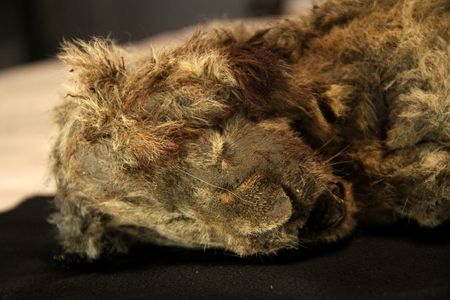
Scientists analyzed genetic material from 12 cave lions that existed between 17,000 and 148,000 years ago across locations including Russia, Austria and Canada’s Yukon territory, comparing them with genetic data from 20 contemporary lions. The ancient DNA came primarily from bones and teeth, plus soft tissue from remarkably preserved frozen cubs discovered in Siberia, where freezing conditions maintained the ancient genetic material. Among these specimens, a female named Sparta ranks as one of the finest Ice Age discoveries ever made.
“We show that cave lions were not simply Ice Age versions of modern lions, but instead represented a highly distinct evolutionary lineage,” said evolutionary geneticist Love Dalén of the Centre for Palaeogenetics, a collaboration between Stockholm University and the Swedish Museum of Natural History, senior author of the study published in the journal Cell.
The research demonstrated that these two species split evolutionarily approximately 1.7 million years ago during the Pleistocene Epoch. Both species developed distinct genetic traits that helped them adapt to different environments and lifestyles. These genetic variations affected growth patterns, eyesight, brain development and blood circulation.
Despite its misleading name, the cave lion didn’t actually inhabit caves but was considerably more massive and powerfully built than today’s lions. It thrived in colder environments, preferring the open grasslands and tundra regions of northern Eurasia and northwestern North America. This lost ecosystem, known as the mammoth steppe after its most famous resident, was similar to modern African savannas but with freezing temperatures.
“The cave lion was absolutely an apex predator, and as such filled an incredibly important and impactful ecological role,” said evolutionary geneticist and study lead author David Stanton of Cardiff University in Wales. “They were one of the most widespread carnivores to ever live.”
Their hunting targets likely included woolly mammoths – particularly young or old animals – along with woolly rhinoceroses, antelope, reindeer, horses and bison. Humans also inhabited these areas during the Ice Age’s final phases.
“While there is no clear evidence that cave lions preyed on humans, it seems highly likely that they occasionally did so. Cave paintings show that Ice Age people were highly familiar with these animals. They are often depicted with remarkable accuracy, and are usually shown without the large mane characteristic of modern male lions,” Dalén said.
Additional predators in this environment included wolves, cave hyenas, brown bears, cave bears and the scimitar-toothed cat Homotherium. The formidable saber-toothed cat Smilodon inhabited more southern regions but potentially encountered cave lions in Yukon and Alaska areas during brief Pleistocene warming periods.
Modern lions didn’t range as far north as cave lions typically lived. However, the study revealed the species met during especially frigid Ice Age periods when expanding ice sheets and growing steppe tundra pushed cave lions southward, creating overlapping territories.
“Climate appears to dictate the level of interbreeding that we see between these species,” Stanton said.
Researchers believe this crossbreeding possibly happened in areas like present-day Iran. That region once supported a substantial modern lion population, though they’re now mainly limited to Africa.
Rising temperatures at the Ice Age’s conclusion helped drive many large Pleistocene creatures, or megafauna, to extinction, with human hunting adding another destabilizing element.
“Cave lions, like the rest of the megafauna at the end of the Pleistocene, were under a huge amount of pressure due to rapid changes in climate combined with increasing human population densities. The extinction of cave lions falls into the general pattern that we see of mass extinction of megafauna at this time, but for reasons that we don’t completely understand,” Stanton said.