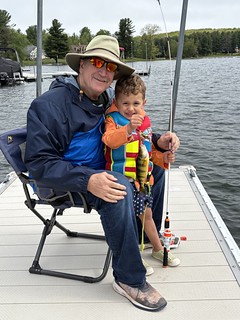

Maryland anglers have three upcoming opportunities to fish without needing a license this month, with free fishing days scheduled for June 6, June 13, and July 4. These special days provide an excellent chance to introduce newcomers to both freshwater and saltwater fishing without requiring a fishing license or trout stamp.
Young anglers under 16 never need a license, making any day perfect for introducing children to the sport of fishing.
A special free Chesapeake Channa (northern snakehead) fishing derby called “Snakes on the Dundee V” will take place on June 13 at Gunpowder Falls State Park and Dundee Creek Marina. Details about the derby can be found on the DNR website.
Weekly Fishing Forecast: June 3-9
According to NOAA buoy reports, main Bay surface and river mouth water temperatures have climbed slightly to the low 70s and should stay steady throughout the week. Smaller rivers and streams are holding at the upper 60s, though smaller waterways and downwind areas on sunny days will warm more quickly and often reach the low to mid 70s. As waters warm, bottom oxygen levels are beginning to drop. Currently, most Bay bottom waters have sufficient oxygen except near Quantico/Colonial Beach on the Potomac River and the Chester River/Tolchester area.
Most Maryland rivers and streams are running below normal flows this week. Water clarity should be average for most Maryland portions of the Bay and rivers. Tidal currents will be above normal through Saturday due to the May 31 full moon. Horseshoe crabs should begin appearing on local beaches with salinities above 6ppt for their spring spawning migration.
Upper Chesapeake Bay
Fishermen at the Conowingo Dam pool, lower Susquehanna River and surrounding waters can now target striped bass and keep one slot-size fish daily. The dam pool offers good fishing during morning and evening hours. Popular techniques include casting soft plastic jigs, paddletails, and topwater lures. Cut bait works well when cast near the turbine wash, and blue catfish and flathead catfish will take the same baits.
Jigging along Susquehanna River channel edges remains popular for striped bass, while early mornings and late evenings are ideal for casting topwater lures or crankbaits near Susquehanna flats grass edges.
Blue catfish are showing spawning behavior, making this week good for targeting them. Spawning blue catfish often hold near structure. The lower Susquehanna River and Chester River have large blue catfish populations, and all regional tidal rivers contain blue catfish.
Striped bass fishing is productive in the upper Bay this week. Traditional spots like Pooles Island, Swan Point, Love Point, Key Bridge piers, and Baltimore Harbor are all producing fish. Casting soft plastic jigs in deeper waters and paddletails in shallower areas are popular methods. As more spot become available, live lining with them is gaining popularity. Trolling umbrella rigs and tandem rigged bucktails also proves effective.
White perch are moving to locations in tidal rivers and creeks, often near structure like rocks, bridge piers, docks, or Bay knolls. Grass shrimp or bloodworm pieces work well in deeper waters, while spin-jigs are effective in shallow areas. Spot are being found off Sandy Point State Park, the west end of the Bay Bridge, and the mouth of the Magothy River.
Middle Bay
The Bay Bridge piers continue attracting both striped bass and anglers this week. The 30-foot edge on the bridge’s east side provides good location for live-lining spot or drifting baits back to pier bases. Good running tide is always important. Casting bucktails and soft plastic jigs near pier bases remains fun and productive. Bluefish have entered the region, and some soft plastics are returning to anglers missing vital parts.
Middle Bay water temperatures in the upper 60s are ideal for striped bass. The shallow water fishery for anglers casting various topwater lures and soft plastic paddletails has been a real standout this spring, and now anglers have complete access to all tidal rivers. Eastern Bay along with the lower Choptank and Little Choptank rivers have been particularly productive lately.
Jigging along regional channel edges has been popular when striped bass can be spotted on depth finders. Trolling with umbrella rigs or tandem rigged bucktails is productive along channel edges and provides a great way to cover water when searching for striped bass. Channel edges from Bloody Point south past Buoy 83 to the False Channel area have proven excellent for trolling or jigging. Bluefish are in the mix, so adding a Drone spoon or two to a trolling spread is worthwhile.
White perch fishing in tidal rivers and creeks is improving, with fish holding near deepwater docks, piers, and oyster reefs. Grass shrimp or bloodworm pieces on a bottom rig or small jig head are proven methods. During morning and evening hours, casting small spin-jigs and small lures along promising shorelines makes for great summer fishing.
Blue catfish fishing in the Choptank River is good this month. In some areas, blue catfish are spawning and often found near sunken structure. Various cut baits and scented baits work well in deeper river sections from the town of Choptank to Denton.
Lower Bay
The lower Bay offers numerous fishing opportunities this week. All tidal waters are now open to striped bass fishing. Striped bass are being caught by anglers using various locations and methods.
The shallow water striped bass fishery is very good during morning and evening hours in the lower Potomac, St. Marys River, Hoopers Island waters, and Tangier Sound. Casting topwater poppers and Zara Spook type lures has been very effective over grass beds. The first speckled trout are also in the mix, along with bluefish and large red drum.
Jigging along channel edges and deeper waters has been effective for catching striped bass, bluefish and large red drum. Channel edges in tidal rivers and the bay are where the action is happening. Soft plastic jigs in the 5-inch to 6-inch range work for striped bass and bluefish, while larger soft plastics target big red drum. Channel edges near the Target Ship, Buoy 72, lower Patuxent River near the Route 4 bridge, and lower Potomac River from the Route 301 bridge to Point Lookout are very productive.
When spotted on depth finders, black drum and red drum can be caught using soft crab baits. The Target Ship area has been productive for fishing. The Point Lookout area and Tangier Sound have also been good places for large red drum.
Trolling umbrella rigs and a mix of tandem rigged bucktails are working well along 30-foot edges of major channels and points. Now that bluefish are part of the equation, running a couple of Drone spoons in a trolling spread is advisable.
Spot and croaker continue moving into the region this week, creating increased fishing opportunities. The spot and croaker tend to be small, but the spot are perfect size for live-lining for striped bass. White perch are often mixed in. The lower Patuxent River, Tangier Sound, and Hoopers Island area are all good places for all three species. White perch can also be found in shallow waters of tidal rivers and creeks, often near structure and prominent points. Fishing grass shrimp or bloodworm pieces on a simple bottom rig works well in deeper water, and small lures work in shallow waters.
Blue Crabs
Recreational crabbers report catches have decreased slightly as the season’s first legal crabs have been caught. More are coming, but it will take time for them to fill out. The best catches have been coming from the eastern side of the middle and lower Bay regions.
Freshwater Fishing
Due to warming water temperatures, some delayed harvest trout management waters (Group I) in the central and parts of the western region will open to trout harvest from June 1 to September 30. Other areas known as Group II, in the western region, will open to trout harvest from June 16 to September 30. This strategy allows anglers to enjoy catch-and-release during months when cold water temperatures provide good conditions, and to keep five trout per day when water temperatures become too warm for good trout survival.
Upper Potomac River water flows have dropped significantly and anglers report low and clear waters. They also report that light lines and long casts will improve success with smallmouth bass. Early morning and evening hours are fun times to cast poppers near grass beds and holding areas. Tubes, flukes, and swimbaits tend to be good choices when working current breaks and deeper river portions.
Largemouth bass fishing continues to be very good in freshwater ponds, impoundments, and tidal waters across Maryland. Water temperatures are still cool enough that largemouth bass have not shifted into their summer feeding behavior, which usually involves feeding at night in shallows and loafing in cool shade during the day. Various lures will work: topwater near grass, spinnerbaits, jerkbaits, and paddletails in transition areas, and wacky rigged stick worms and soft plastics under thick grass mats and near structure.
Maryland’s Youth Bass Bash Challenge is underway. From May 20 to June 27, anyone under 16 who catches a tagged bass in Sharpsburg and Woodsboro Ponds and reports it to DNR by calling 301-898-5443 will be entered into a drawing for a grand prize behind-the-scenes tour at the National Aquarium in Baltimore.
Chesapeake Channa will be holding in grass beds in tidal waters and are actively spawning at this time. Attempting to present a threat to their spawning area with noisy topwater lures is a good tactic to entice them to strike.
Blue catfish seem always available, although some larger females are spawning and often found near deep structure. Blue catfish can be found in every tidal river of the Chesapeake, but the Potomac, Patuxent, Nanticoke, Chester, and Lower Susquehanna rivers hold the greatest populations.
This is a wonderful time to fish for bluegill sunfish and other sunfish species this month. They are all very active, and if you ever thought of trying fly fishing, they are a great fish to start with. A 4 or 5 weight fly rod, a floating line and some small rubber-legged poppers or ants is all one needs for fun action at most any pond or lake.
Atlantic Ocean and Coastal Bays
Surf anglers are enjoying the last of the large striped bass as they pass by Maryland beaches heading north. Large cut baits of menhaden or mullet are favored baits, and large red drum and bluefish can be part of the mix. Cleanose skates and sand tiger sharks will also take those baits. A few black drum are being caught on sand fleas and there are first reports of kingfish in the surf.
At the inlet, anglers casting paddletails and soft plastic jigs are enjoying lots of fun action with striped bass and large bluefish during morning and evening hours along jetty rocks, bulkheads and bridge and dock piers. Most striped bass being caught fail to meet the 28-31 inch slot but some do. At night, drifting cut bait in the inlet from the jetties and Route 50 Bridge has been effective for catching striped bass and large bluefish.
Flounder continue moving through channels leading from the inlet into back bay areas. Traditional baits work well, but some of the largest flounder are being caught on pink or white Gulp baits. Striped bass are being caught at the Verrazzano and Route 90 bridge piers during morning and evening hours by anglers casting paddletails and soft plastic jigs. Some do make the 28-inch minimum length.
Outside the inlet at offshore wreck and reef sites, anglers are being treated to good black sea bass fishing. Limit catches are not uncommon and traditional baits and jigging are popular methods. Farther offshore at the canyons, anglers who are trolling are catching dolphinfish and a few yellowfin and bluefin tuna. Deep drop anglers are bringing golden and blueline tilefish back to the docks.