
Marine biologists have made a remarkable discovery in the depths of the southeastern Indian Ocean — an ancient underwater cemetery where whale remains have created a thriving ecosystem for millions of years.
The research team found diverse marine communities flourishing around whale carcasses that have been resting on the ocean floor for ages. These underwater graveyards develop when dead whales sink to the sea bottom, providing nourishment for surrounding sea creatures. This particular site sits as deep as 23,000 feet beneath the ocean surface and represents the most extensive, deepest, and oldest whale cemetery documented to date.
According to Xikun Song, a biologist with the Chinese Academy of Sciences’ Institute of Deep-sea Science and Engineering, the massive size of whales and the distinct chemical makeup of their bones create these special underwater habitats.
“At the same time, the very nature of the deep ocean makes these sites exceptionally difficult for scientists to locate,” Song, who participated in the recent discovery, wrote in an email.
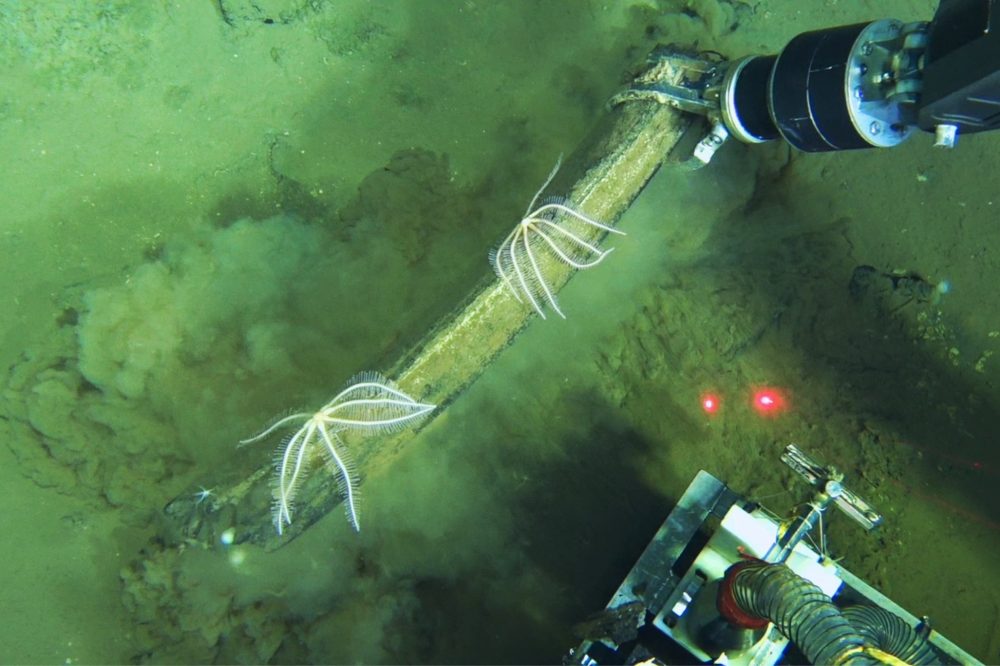
The research team conducted several underwater expeditions using deep-sea vessels throughout 2023, gathering specimens and charting the boundaries of this marine necropolis. Their exploration revealed five separate carcass locations and fossilized remains, including skulls from beaked and baleen whales. The most ancient bones are estimated to be 5.3 million years old.
Living among and feeding on these remains were countless organisms of various sizes, including sea cucumbers, squat lobsters, saltwater clams, jellyfish, tubeworms, and brittle stars. Many of these creatures are believed to represent previously unknown species, based on research findings released Wednesday in the journal Nature.
“The potential number of specimens is just astounding,” said paleontologist Stephen Godfrey with the Calvert Marine Museum in Maryland, who wasn’t involved in the research.
Several conditions likely worked together to keep these bones intact across millions of years, the study authors explained. The bones possess enough density to resist destruction from bone-eating worms and rest deep enough underwater to avoid burial by sediment and debris. Additionally, the bones developed a thin coating of minerals from the ocean water, which may have protected them from deterioration.
Researchers theorized about why so many whales ended up in this location. Perhaps they already inhabited the region and died naturally. Some may have died from exhaustion or sickness related to deep-sea diving. The area’s V-shaped geography might have also channeled the remains to this final resting place, according to the authors.
These findings hold significance because they provide insight into the dynamic communities that manage to survive in isolated, challenging environments.
Research into these whale graveyards “is important for understanding how life can adapt to such extreme conditions, not only due to the lack of light and oxygen but also to the incredibly high pressure,” said study co-author and paleontologist Giovanni Bianucci with the University of Pisa in Italy in an email.