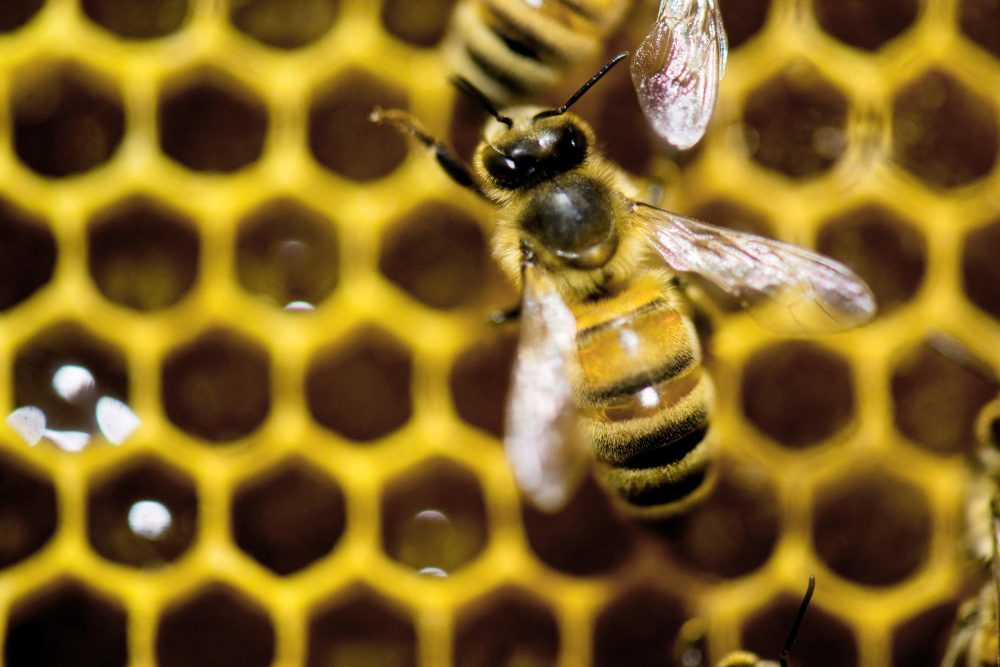

Researchers have discovered a specialized group of worker honeybees that are uniquely equipped to construct the queen’s waxy living quarters inside the hive.
While worker bees handle numerous responsibilities to maintain the hive — from gathering food to tending young bees and caring for the egg-laying queen — new scientific findings show that the bees tasked with building the queen’s residence actually elevate their body temperature to melt and mix specific chemicals into the wax.
“No one had ever thought that there might be a specialized group of workers that were building these queen cells,” said bee researcher Julia Bowsher with North Dakota State University, who had no role in the study.
The research revealed that these specialized construction workers were younger bees with unique genetic expression patterns that equipped them perfectly for their role. The peanut-shaped dwelling they created was also distinctive, constructed from softer wax with an elevated melting point compared to the material used for regular worker bee chambers.
While scientists have traditionally understood that queens develop by consuming royal jelly produced by worker bee glands, and have long considered diet the primary factor in creating a monarch, the new research published Wednesday in the journal Nature indicates that the queen’s living environment may also be crucial.
Researchers tested this concept by raising future queens in containers sealed with either queen-specific wax or regular worker wax. Even though they consumed royal jelly, the queens developed in worker wax grew smaller and had lower survival rates.
“For centuries, we believed ‘you are what you eat’ was the only rule for making a queen bee. Our study rewrites that rule to say ‘you are where you live, too,’” Kai Wang, a study co-author with the Chinese Academy of Agricultural Sciences, said in an email.
While the research provides unprecedented insight into hive operations, many questions persist.
Given that honeybees are essential for pollinating crops including blueberries, squash, watermelon and almonds, additional studies are necessary to understand more about these specialized queen cell-building bees and the precise factors that create the hive’s leader.
“I would really like to know more about the specific chemical composition of this wax and which active ingredients are directly affecting the growth of the queens,” Bowsher said.