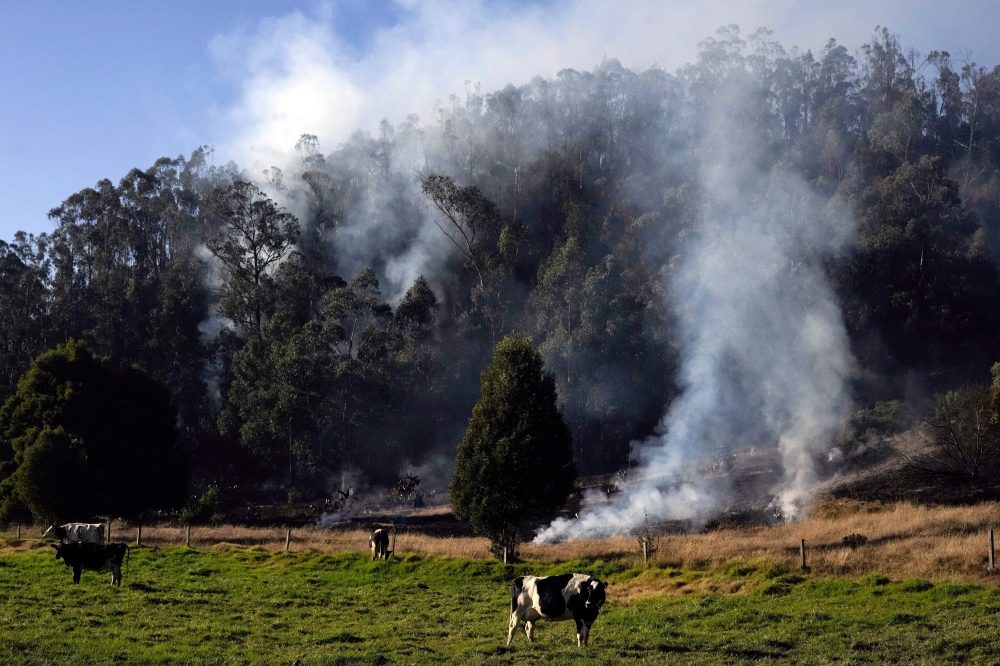

Colombia has implemented groundbreaking legislation mandating comprehensive cattle monitoring to ensure deforestation-free beef supply chains, marking the nation as the first tropical forest country to establish such extensive tracking requirements nationwide, according to environmental organizations.
The new legislation mandates that government departments and private sector entities combine livestock monitoring, property ownership records, and forest protection surveillance to identify animals connected to woodland destruction and block their entry into commercial markets.
Advocates believe this legislation could address a primary driver of Amazon deforestation in Colombia, where livestock operations have historically been connected to illegal land seizures and forest clearing for grazing areas.
This legislation emerges as Colombia works to halt years of woodland destruction, largely caused by livestock operations expanding into forested territories. Advocates argue it could eliminate existing gaps that have permitted cattle from illegally cleared property — including within conservation zones and national parks — to access legal markets and ultimately reach retail stores and international buyers.
Susanne Breitkopf, director of forest campaigns at the Environmental Investigation Agency U.S., an environmental watchdog that has investigated deforestation linked to Colombia’s cattle industry, indicated the legislation could serve as a blueprint for other tropical forest countries.
“It is a victory for forests, for the communities that protect them, and for consumers who demand that the beef they purchase does not contribute to deforestation and illicit economies,” Breitkopf said.
The measure also comes as governments and corporations encounter increasing demands from global markets to verify that products like beef are not connected to forest destruction. Environmental advocates state that monitoring systems are becoming essential for accessing certain international markets and could assist officials in better detecting land seizures and illegal forest clearing through cutting or burning woodland.
Colombia has experienced the loss of approximately 3.3 million hectares (8.2 million acres) of forest — an area comparable to Belgium’s size — according to organizations supporting the legislation, with the issue especially severe in the Amazon area.
Brazil’s Amazonian state of Para has implemented monitoring requirements for livestock producers and pledged to track individual animals across the supply network, but environmental organizations say Colombia’s legislation extends further by establishing a comprehensive national legal structure.
A 2025 analysis by the Environmental Investigation Agency found that hundreds of thousands of cattle were transported between 2020 and 2024 from municipalities overlapping national parks.
The legislation resulted from years of advocacy by environmental organizations, researchers and lawmakers who contended that inadequate supervision permitted cattle connected to illegal deforestation to move through Colombia’s fragmented supply network.
Natalia Katixa Escobar, a researcher at Dejusticia, a Colombian legal and policy research center that has studied links between cattle ranching and deforestation, indicated the legislation helps connect environmental and agricultural oversight that were previously separate.
“One of its first achievements is that it creates a bridge between environmental and agricultural policy,” she said. “The control mechanisms associated with cattle ranching and cattle traceability had no environmental perspective.”
Colombia’s environment Minister Irene Vélez Torres told The Associated Press the government hopes the measure will help distinguish producers who operate responsibly from those linked to forest destruction.
“This means it will become increasingly difficult for the destruction of forests or economies associated with illegal activities to hide behind seemingly legitimate supply chains,” Vélez said.
Within six months, the government must establish programs to help suppliers comply with the new requirements, create a certification system for deforestation-free products and provide funding to strengthen monitoring systems in active deforestation hot spots.
Within a year, authorities must regulate procedures governing the country’s cattle identification and traceability systems and establish due diligence requirements for deforestation-free cattle ranching.
By the end of the second year, slaughterhouses, meat processors, cattle auctions, traders and live cattle exporters will be required to implement due diligence policies and best practices aimed at ensuring their supply chains are free from deforestation.
The legislation also requires the gradual integration of government databases, allowing officials to compare information on land tenure, cattle ownership and forest loss for the first time.
Supporters say those measures could significantly improve authorities’ ability to identify cattle raised on recently deforested land and prevent them from entering legal markets.
But the law’s success will depend largely on implementation, including whether the government can adequately fund new systems and enforce the rules in remote regions where illegal deforestation remains widespread.
If fully implemented, supporters say, the law could become a model for other tropical forest nations seeking to protect forests while maintaining access to increasingly demanding international markets.
“The real test will be what happens on the ground,” Escobar said, noting that while the law could improve oversight and information-sharing, reducing deforestation will also depend on governance and enforcement in remote regions of the Amazon.
“Whether it will significantly reduce deforestation in the Amazon remains to be seen,” she said.