
A colossal subterranean research facility designed to study enigmatic cosmic particles has shared its inaugural major discoveries.
The Jiangmen Underground Neutrino Observatory in China began gathering information in August, focusing on neutrinos: minuscule space particles that originated during the Big Bang and pass through human bodies in the trillions each second without causing harm. However, their nearly weightless nature makes detection extremely challenging.
Research published Wednesday in the journal Nature revealed the JUNO team’s early discoveries from two months of information gathering — featuring some of the most accurate measurements recorded of how neutrinos transform among three types, or flavors, while traveling through space.
“It really makes me look forward to more exciting results in the future,” said physicist Kate Scholberg with Duke University, who had no role in the new research.
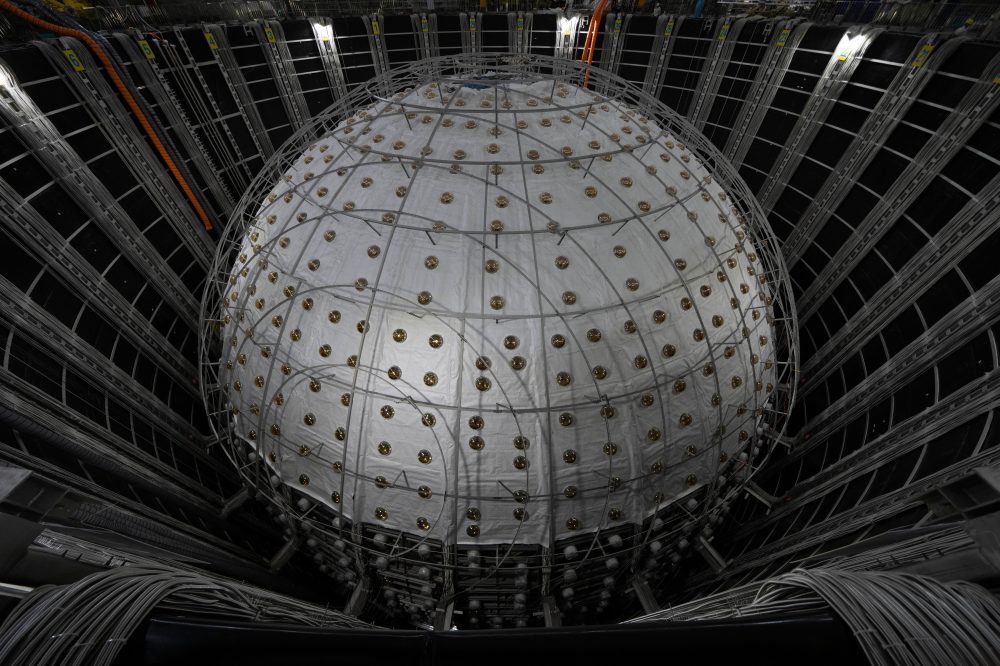
The round JUNO detection system sits 2,297 feet (700 meters) below ground. It studies antineutrinos generated by reactions within two neighboring nuclear power facilities. Antineutrinos represent equally puzzling, opposite counterparts of neutrinos that researchers can examine to comprehend their characteristics and neutrino functionality.
When antineutrinos encounter particles inside the detection system, they create a burst of illumination.
Researchers hope the detection system will help solve the persistent puzzle of each neutrino flavor’s mass. They believe two possess comparable weight while the third differs significantly, though uncertainty remains about whether two are heavy with one light or the reverse.
The early discoveries haven’t resolved that mystery yet, but demonstrate the detector’s capabilities — and that it “will be able to test the finer ripples” that distinguish neutrino flavors and their masses, said study co-author Liangjian Wen, a member of the JUNO collaboration.
Two comparable neutrino detection systems — Japan’s Hyper-Kamiokande and the Deep Underground Neutrino Experiment based in the United States — are scheduled to start information collection over the next decade, verifying the China detector’s findings through alternative methods.