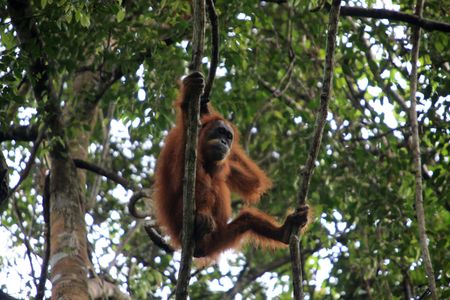

Catastrophic flooding and landslides that struck Indonesia’s Sumatra region last year eliminated at least 7% of the world’s critically endangered Tapanuli orangutan population, according to a new study released Wednesday.
The severe weather event, triggered by cyclonic conditions, claimed the lives of more than 1,200 people and destroyed approximately 300,000 homes. Environmental organizations have attributed the widespread devastation to aggressive deforestation across Sumatra island.
Research findings indicate that no fewer than 58 Tapanuli orangutans perished in the flooding, according to the study. These primates are found exclusively in the area surrounding the Batang Toru forest in northern Sumatra. The survey focused on the western section of the forest, which houses the majority of the species’ total population of 800 animals.
The research represents a collaborative effort between Borneo Futures based in Brunei, World Weather Attribution, and Liverpool John Moores University. Investigators did not examine other forest areas, suggesting the actual death count may be significantly higher.
Researchers reached their conclusions by examining satellite imagery showing damage to the West Block of Batang Toru and reviewing historical population data for the orangutans in that region.
The study determined that climate change caused by human activity has likely intensified both the severity and occurrence of extreme precipitation events near the Malacca Strait, creating greater threats to the Tapanuli orangutan’s natural environment.
Lead researcher Erik Meijaard from Borneo Futures explained that the intense rainfall saturated the ground to such an extent that massive portions of forested hillsides gave way in rapid landslides.
“If you get caught as an orangutan… if anything comes down at great speeds, survival chances are going to be very minimal, so it became a real concern,” he said.
“This level of loss is substantial for a species with such a small total population. When combined with ongoing pressures such as habitat degradation and human-wildlife conflict, it further increases the urgency of implementing and adequately resourcing a coordinated species action plan,” Meijaard added.
Fellow researcher Panut Hadisiswoyo called on Indonesia’s government to collaborate with non-governmental organizations and scientists to halt the continued decline of orangutan numbers.
“We can minimise the poaching or hunting and then the number probably can be stabilised,” he said, emphasizing that all stakeholders must address irresponsible land management practices that also contribute to the population decrease.