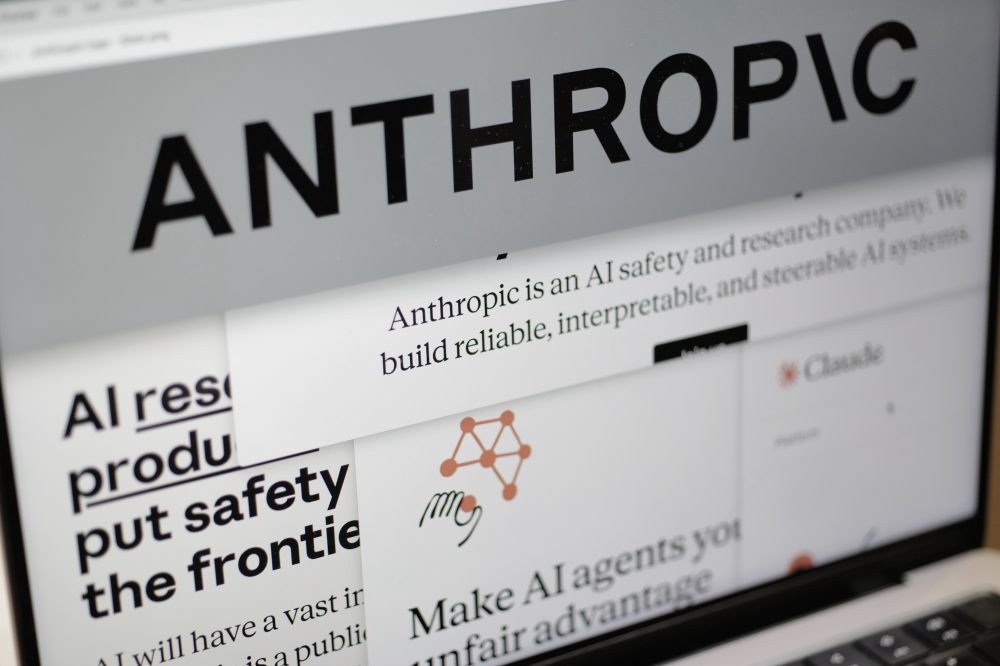

The artificial intelligence company that created the Claude chatbot is calling for leading AI developers around the globe to establish a unified approach for temporarily halting progress on sophisticated AI systems. The firm warns that technological advancement is occurring at such a breakneck pace that humanity risks losing oversight of these powerful tools.
In a Thursday blog post, the company behind Claude stated that as state-of-the-art AI becomes increasingly efficient at completing various tasks, “it would be good for the world to have the option to slow or temporarily pause” further development.
The firm announced that its internal research division will investigate this matter alongside other organizations and “take actions” to help establish frameworks for a legitimate slowdown or suspension, though they provided no additional specifics.
According to the company, AI systems are becoming more capable at an accelerating rate, particularly in their ability to independently handle software-related work such as computer programming. Current trajectory analysis suggests that with sufficient computational resources, an AI system might eventually become capable of creating and improving its own replacement through what experts call “recursive self-improvement.”
While such self-developing AI would represent a significant technological breakthrough offering advantages in scientific research, medical care, and other fields, the company noted it “also might increase the risks of humans losing control over AI systems.”
This concern has been voiced by various technology industry leaders for years.
The company’s statement follows a separate alert issued earlier this week by University of Toronto researchers who demonstrated how AI technology could potentially create a novel form of AI “worm” that modifies its cyber attack methods while spreading across devices and commandeering extensive computer networks.
“I think it’s really important that people understand that it’s not just the biggest, most powerful language models that pose the security concerns,” lead researcher Nicolas Papernot said in an interview.
The blog post authors, company co-founder Jack Clark and Marina Favaro, head of the research institute, explained that any pause would allow time for “societal structures and alignment research” to match the pace of AI development. Alignment refers to the industry goal of ensuring technology operates in harmony with human values and objectives.
Their proposed coordination system would enable advanced AI laboratories to confirm that international competitors have genuinely halted or reduced their research efforts, “and that a bad actor could not use the auspices of a coordinated slowdown to jump ahead in secret.”
The company emphasized that a coordinated international framework is essential because without such cooperation, an AI development slowdown might allow the “least cautious” participants to gain ground and intensify pressure on companies and governments facing difficult AI safety decisions.
This announcement comes while the company is competing with ChatGPT-maker OpenAI to launch public stock offerings, with a potential IPO valuation approaching nearly a trillion dollars.