Blog

  • Global Oil Giants Target Canada After Middle East Turmoil Shifts Investment Focus

    Global Oil Giants Target Canada After Middle East Turmoil Shifts Investment Focus

    International oil giants are turning their attention back to Canada’s energy sector as ongoing Middle East conflicts make the North American nation appear increasingly attractive for major investments, with Shell’s massive $16.4 billion acquisition of ARC Resources serving as the most prominent example of this strategic shift.

    Major corporations including TotalEnergies and ConocoPhillips are reportedly examining potential Canadian acquisition opportunities, joined by Equinor and BP in reassessing the market. Investment banking sources indicate these companies have recently requested detailed analyses of viable takeover candidates, according to discussions with twelve industry insiders.

    This renewed attention marks a dramatic reversal from the past ten years, during which international firms systematically reduced or eliminated their Canadian fossil fuel investments. Canada’s political landscape has become more favorable to oil and gas development since Prime Minister Mark Carney assumed leadership amid the Iran conflict, as investors increasingly prioritize stable operating environments. The nation has also established new export infrastructure for both crude oil and natural gas that could accelerate additional development, while maintaining extensive untapped resources to fuel expanding export operations.

    Shell’s ARC acquisition represents the first tangible evidence of this broader strategic reassessment. The European energy major announced Monday its intention to acquire ARC, Canada’s leading natural gas producer concentrated exclusively in the Montney shale formation, in what would rank among the largest foreign acquisitions of a Canadian energy company in history.

    “The fact they (Shell) are buying in Canada is an indication that we have tremendous, world quality resources,” stated Mike Verney, executive vice president at Calgary-based energy consultancy McDaniel & Associates, describing the foreign attention as “validating.”

    However, industry sources caution that recent market instability means Total and other companies may not immediately pursue similar acquisitions. Most individuals who spoke with reporters requested anonymity due to the confidential nature of ongoing discussions.

    TotalEnergies and Equinor have not responded to comment requests, while BP and ConocoPhillips declined to provide statements.

    DEPARTURE AND COMEBACK

    Canada’s constrained pipeline infrastructure and export limitations previously made it less attractive compared to U.S. shale developments, renewable energy projects, and other growth sectors. The world’s largest energy corporations particularly avoided Alberta’s oil sands – the country’s primary oil-producing area – due to investor concerns about the environmental consequences of extracting heavy, viscous crude.

    This exodus concentrated Canada’s energy industry under domestic control, with Canadian ownership of oil sands operations increasing to roughly 89% in 2025 from 69% in 2016, based on Bank of Montreal research.

    Current domestic policies and international conflicts have now shifted in Canada’s favor. Disruptions around the closed Strait of Hormuz have enhanced the appeal of the world’s fourth-largest oil producer as a more secure option for international energy companies. Carney has also adopted a more supportive approach toward oil and gas development compared to predecessor Justin Trudeau, promising industry growth assistance and reversing certain climate regulations.

    “When you want energy and you look at the world and what could go wrong, Canada has a lot of things going for it,” observed Jose Valera, a partner at law firm Mayer Brown.

    ACQUISITION TARGETS

    Canada’s developing liquefied natural gas export capabilities from Pacific coast facilities, providing direct shipping routes to Asian markets, represent a major attraction for investors.

    Total purchased an ownership stake last year in the proposed Ksi Lisims LNG project along British Columbia’s northwest coastline, which could become Canada’s second-largest LNG export facility if approved. Shell and its partners initiated production from LNG Canada last June, with a decision on the project’s second phase anticipated shortly.

    Participation in these projects is driving investors to examine upstream assets that supply these facilities, particularly opportunities within the Montney formation – a vast shale region covering northeast British Columbia and northwest Alberta, according to two sources. While the area is currently controlled by ARC, Tourmaline Oil, and other domestic producers, it remains significantly less developed than U.S. formations like the Permian Basin.

    As the world’s fifth-largest natural gas producer, Canada’s Montney formation generates approximately 10 billion cubic feet daily, representing roughly 50% of the nation’s total production. The Permian Basin produces about 25 billion cubic feet per day by comparison, according to U.S. government data.

    Rising crude oil prices are providing major companies with enhanced financial resources for acquisitions, though available takeover targets remain limited with ARC no longer available.

    Canada’s largest natural gas producer Tourmaline Oil emerges as a potential acquisition target, three sources indicated. The C$18 billion ($13.2 billion) company’s stock price has remained stagnant over the past year, and is managed by 68-year-old Chief Executive Mike Rose. A potential sale could address succession planning concerns, some sources noted.

    Tourmaline declined to provide comment.

    Major companies could also consolidate smaller producers, including those backed by private equity firms.

  • Jerome Powell to Remain Federal Reserve Governor After Chair Term Expires

    Jerome Powell to Remain Federal Reserve Governor After Chair Term Expires

    Federal Reserve Chairman Jerome Powell announced Wednesday that he plans to remain on the central bank’s board of governors once his tenure as chair concludes next month.

    During a press conference that followed the most recent Federal Open Market Committee meeting, Powell revealed his intentions to continue in a different capacity. “After my term as chair ends on May 15, I will continue to serve as a governor for a period of time to be determined. I plan to keep a low profile as a governor,” Powell stated.

    The announcement clarifies Powell’s future role within the Federal Reserve system as the leadership transition approaches in mid-May.

  • Five-Time Major Champion Koepka Signs Up for Myrtle Beach Tournament

    Five-Time Major Champion Koepka Signs Up for Myrtle Beach Tournament

    Five-time major champion Brooks Koepka is demonstrating his dedication to maintaining competitive sharpness by entering lower-tier tournaments as he prepares for the remaining three major championships of 2026.

    Following his recent departure from LIV Golf and swift re-entry to the PGA Tour via the newly-established Returning Player Program, Koepka faces restrictions that prevent him from receiving sponsor invitations to signature events in 2026. With two premier tournaments scheduled before the PGA Championship next month, Koepka has decided to participate in the upcoming Myrtle Beach Classic, an alternate-field competition.

    The three-time PGA Championship winner will use Myrtle Beach and its $4 million prize pool as his final preparation while most elite players compete for $20 million at Charlotte’s Truist Championship at Quail Hollow.

    Victory at Myrtle Beach would offer Koepka an additional benefit: automatic qualification for the season’s final two signature tournaments, the Memorial and Travelers championships.

    Koepka’s recent performance includes a missed cut alongside teammate Shane Lowry at the Zurich Classic, though he posted a respectable tie for 12th at the Masters. He has recorded four top-20 results in his last five individual stroke-play tournaments and currently ranks 59th in FedEx Cup points.

    Two weeks ago at the RBC Heritage, Koepka served as first alternate, waiting through opening-round tee times hoping for a withdrawal that would allow him entry. His participation will bring star power to the three-year-old Myrtle Beach event.

    “Having Brooks Koepka commit to the ONEflight Myrtle Beach Classic is a tremendous moment for our tournament and our community,” tournament director Darren Nelson said, per the Post and Courier. “He’s one of the most accomplished players of his generation, and his presence speaks to the continued momentum of this event on the PGA TOUR calendar.”

    The PGA Championship begins May 14 at Aronimink Golf Club in Newtown Square, Pennsylvania.

  • Newark Police Host Annual Fishing Event for Community at Glasgow Park

    A beloved community tradition is making its return to Newark this weekend as local law enforcement officers prepare to host their annual fishing event with residents.

    The Casting with Cops event will take place this Saturday, May 2, 2026, from 11:00 AM until 2:00 PM at the Glasgow Park Fishing Pond, located at 2275 Pulaski Highway in Newark.

    Community members are encouraged to bring their fishing equipment and join officers for an afternoon of angling and relationship-building. The event represents one of the department’s most popular annual community outreach initiatives, designed to foster positive interactions between law enforcement and local families.

    Organizers describe the gathering as a favorite yearly tradition that brings together people of all ages for outdoor recreation and community connection at the popular Newark fishing destination.

  • High Court Backs Faith Center in First Amendment Fight Over NJ Probe

    High Court Backs Faith Center in First Amendment Fight Over NJ Probe

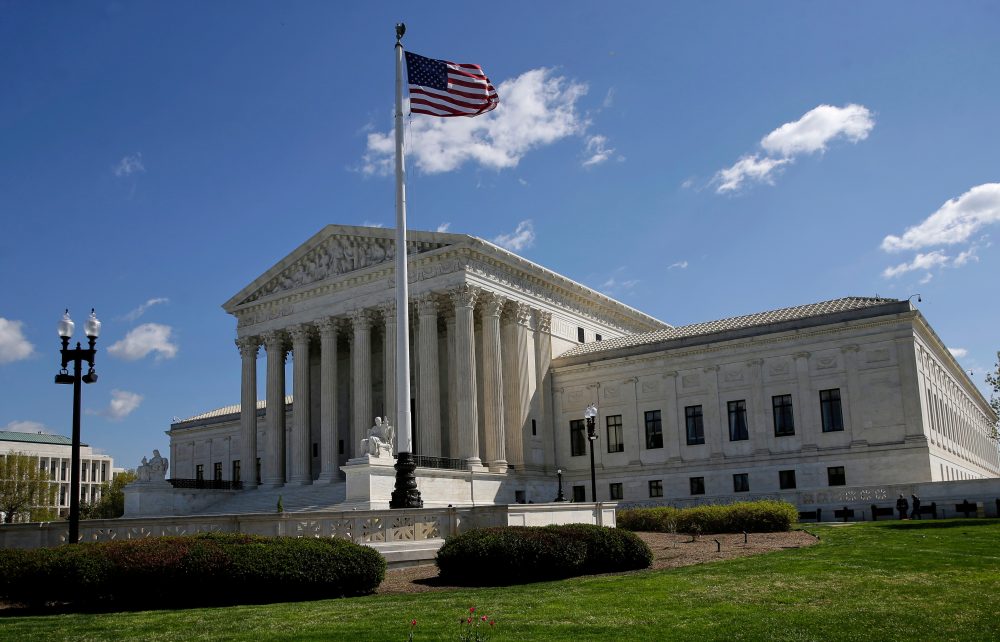
    WASHINGTON — In a unanimous decision Wednesday, the U.S. Supreme Court ruled in favor of a faith-based pregnancy center that claimed a New Jersey state investigation violated their constitutional rights.

    The nation’s highest court delivered a procedural win for First Choice Women’s Resource Centers, which has been fighting a New Jersey probe into whether the organization misled clients to prevent them from seeking abortions.

    While the conservative-dominated court has delivered several major victories to abortion opponents in recent years — including the landmark 2022 decision that eliminated the constitutional right to abortion — this case drew unusual support from across the political spectrum. Even the American Civil Liberties Union, which advocates for abortion access, backed First Choice’s constitutional arguments.

    Wednesday’s ruling allows the organization to challenge a state subpoena in federal court, though it doesn’t settle the core dispute.

    Alliance Defending Freedom attorney Erin Hawley, who represented the group, said they’re prepared to pursue the matter in federal court if New Jersey’s attorney general decides to “continue these efforts on remand.”

    These facilities, commonly called “crisis pregnancy centers,” have expanded across the country as Republican-led states implement abortion restrictions and direct public funding toward the centers. The facilities typically provide pregnancy services while encouraging women to continue their pregnancies.

    Meanwhile, Democratic-controlled states have launched investigations into whether these anti-abortion facilities deceive women, sometimes by suggesting they provide abortion services when they don’t.

    New Jersey’s then-Attorney General Matthew Platkin issued a subpoena demanding donor information and other records from First Choice.

    The organization fought back, claiming the investigation lacked merit and that demanding donor lists violated their constitutional rights to free expression and association. When they attempted to challenge the subpoena in federal court, both a trial judge and appeals court determined the case wasn’t ready for federal review.

    That led First Choice to petition the Supreme Court.

    The organization contended that federal court access is crucial when government officials are accused of overstepping their authority. The ACLU supported this position, arguing that subpoenas targeting donor information can intimidate supporters.

    New Jersey countered that the information would only be used to determine if donors were misled about the center’s services. The state also argued the subpoena couldn’t violate First Amendment rights since no information had actually been turned over yet.

    Enforcing the subpoena requires a court order, and the judge handling the case has only directed both parties to negotiate so far.

    New Jersey also warned that permitting First Choice to sue could trigger numerous lawsuits from the thousands of organizations that receive similar subpoenas.

    The Trump administration supported First Choice’s position. The Justice Department maintained that any impact would be limited since the ruling would only affect organizations with comparable First Amendment claims.

  • U.S. Poultry Production Shows Growth as Egg Setting and Chick Placement Rise

    U.S. Poultry Production Shows Growth as Egg Setting and Chick Placement Rise

    New statistics from the U.S. Department of Agriculture show positive trends in the nation’s poultry production sector, with key indicators pointing to expanded operations across the country.

    According to the latest federal report, the number of broiler-type eggs placed in incubators nationwide has increased by 3 percent compared to previous figures. This uptick suggests producers are preparing for higher future output of meat chickens.

    Meanwhile, the placement of young broiler chicks has also grown, rising by 2 percent across United States facilities. This measurement tracks when newly hatched birds are moved to growing operations where they will be raised for meat production.

    These statistics provide insight into the health and direction of America’s poultry industry, which supplies chicken meat to consumers nationwide. The increases in both egg setting and chick placement indicate producers expect continued demand for their products.

  • National Egg Production Shows Slight Decline According to USDA Data

    National Egg Production Shows Slight Decline According to USDA Data

    New data from the United States Department of Agriculture shows a modest drop in shell egg production nationwide, with numbers falling 3 percent below last year’s figures.

    The decline was documented in the latest report from the USDA’s National Agricultural Statistics Service, which tracks various agricultural commodities and production levels across the country.

    The decrease in shell egg production reflects ongoing challenges within the poultry industry, which has faced various pressures affecting output levels in recent months.

  • New Castle County Police Search for Missing 13-Year-Old Aiden Carter

    New Castle County Police Search for Missing 13-Year-Old Aiden Carter

    New Castle County police are actively searching for a missing teenager after issuing a Gold Alert Tuesday evening.

    Thirteen-year-old Aiden Carter vanished from the West Newport Pike area, specifically near the 2000 block, according to the New Castle County Division of Police. Authorities report Carter was last observed around 4:30 p.m. on Tuesday, April 28, 2026.

    Police describe the missing teen as standing approximately 6 feet 2 inches tall with a weight between 200 and 225 pounds.

    The Gold Alert system is activated when a child or vulnerable adult goes missing under circumstances that may indicate they are in danger.

    Anyone with information regarding Aiden Carter’s whereabouts is urged to contact the New Castle County Division of Police immediately.

  • Federal Reserve Keeps Interest Rates Unchanged Amid Rising Inflation Concerns

    Federal Reserve Keeps Interest Rates Unchanged Amid Rising Inflation Concerns

    The Federal Reserve decided Wednesday to maintain current interest rates while acknowledging growing inflation worries in what became the central bank’s most contentious decision in over three decades.

    The 8-4 vote marked the most split decision since October 1992, highlighting deep disagreements among policymakers about the direction of monetary policy. Three Federal Reserve officials opposed language in the policy statement that suggested a willingness to cut rates in the future, while a fourth member voted in favor of immediately reducing rates by a quarter percentage point.

    “Inflation is elevated, in part reflecting the recent increase in global energy prices,” the Federal Reserve stated in its policy announcement, removing previous language that described inflation as only “somewhat” elevated. “Developments in the Middle East are contributing to a high level of uncertainty about the economic outlook.”

    Cleveland Federal Reserve President Beth Hammack, Minneapolis Fed President Neel Kashkari, and Dallas Fed President Lorie Logan all supported keeping rates in the current 3.50%-3.75% range but “did not support inclusion of an easing bias in the statement at this time” and voted against the new statement.

    The division comes as incoming Fed Chair Kevin Warsh prepares to take over leadership of the central bank. The Republican-controlled Senate Banking Committee advanced Warsh’s nomination Wednesday on a 13-11 party-line vote, with full Senate confirmation expected next month. Current Chair Jerome Powell’s term concludes May 15.

    Oil prices remaining above $100 per barrel due to the U.S.-backed conflict with Iran have complicated the Fed’s decision-making process. Policymakers are struggling to determine whether higher energy costs will primarily impact economic growth or fuel additional inflation.

    The policy statement noted that “the unemployment rate has been little changed in recent months” while economic expansion continues “at a solid pace” alongside the elevated inflation concerns.

    Fed Governor Stephen Miran continued his pattern of dissenting in favor of a quarter-point rate cut, as he has done at every meeting since joining the central bank from his previous role as one of President Trump’s economic advisers.

    Minutes from the Fed’s March meeting revealed that more policymakers were considering the possibility that the next policy move might be a rate increase rather than a decrease. The growing number of officials opposing rate cuts may lead investors to increase expectations for higher borrowing costs this year.

    Powell is scheduled to conduct a press conference at 2:30 p.m. Eastern time to discuss the meeting results and economic outlook. He may also address whether he plans to remain at the Fed as a governor, a separate position that extends through January 2028.

  • Broadcasting Industry Warns FCC’s Disney License Review Sets Troubling Precedent

    Broadcasting Industry Warns FCC’s Disney License Review Sets Troubling Precedent

    The nation’s leading broadcasting industry organization is expressing alarm over a Federal Communications Commission move to conduct an early examination of Disney’s eight ABC television station licenses, describing the action as virtually unheard of in regulatory history.

    On Wednesday, the National Association of Broadcasters warned that this regulatory decision “creates significant uncertainty for all broadcasters” across the United States. The organization emphasized concerns about potential ripple effects throughout the industry.

    The broadcasting group cautioned that “FCC must be careful to avoid actions that create further instability for the local stations viewers and listeners depend on,” highlighting worries about how such regulatory moves might affect communities that rely on these television outlets for news and information.

  • Wall Street Investor Bill Ackman Launches $5B Fund for Everyday Investors

    Wall Street Investor Bill Ackman Launches $5B Fund for Everyday Investors

    Wall Street heavyweight Bill Ackman made his highly anticipated debut on the New York Stock Exchange Wednesday, launching his Pershing Square USA closed-end fund that brings his exclusive investment strategies to everyday investors for the first time.

    The billionaire hedge fund manager successfully raised $5 billion through the public offering, with shares available at $50 each under the ticker symbol PSUS. His management company, Pershing Square, also began trading under the symbol PS. According to Dealogic, this ranks among the ten largest public offerings of the past decade.

    Accompanied by his wife Neri Oxman and chief investment officer Ryan Israel, Ackman received enthusiastic applause from traders on the Manhattan exchange floor as trading commenced Wednesday morning.

    Speaking with reporters, Ackman explained that his new fund aims to “democratize investing” by providing access to the substantial double-digit returns his investments have produced over two decades. Previously, hedge funds remained exclusive to ultra-wealthy investors who met strict regulatory standards proving they could handle significant financial risks.

    However, Ackman warned that initial trading might experience volatility as some investors could seek quick profits from his hedge fund company or rapidly exit the closed-end fund. To increase appeal, he offered complimentary Pershing Square Inc shares to IPO buyers of Pershing Square USA – a strategy he credits to his wife’s suggestion.

    The NYSE listing provides the only avenue for American investors to benefit from Ackman’s performance, since his London-listed Pershing Square Holdings fund cannot be directly marketed to U.S. residents due to regulatory restrictions.

    Ackman’s track record shows impressive annual returns of approximately 25% over the past eight years, significantly outperforming the typical closed-end fund’s 7% return during the same period.

    “This is something people will want to own,” Ackman stated, highlighting his ability to work closely with companies and manage fund risks while maintaining tax efficiency. “This is not going to be your grandmother’s closed-end fund.”

    Wednesday’s successful launch represents a comeback for Ackman, who attempted a similar New York listing nearly two years ago but withdrew due to lukewarm investor response.

    Major institutional investors who committed $2.8 billion of the total $5 billion and agreed to hold their investments for six months will receive 1.5 Pershing Square shares for every five Pershing Square USA shares purchased.

    Ackman built his reputation and estimated $9 billion wealth through aggressive activist investing campaigns targeting companies like Canadian Pacific and Chipotle. He has become one of Wall Street’s most monitored investors, recently expanding his influence through social media platform X, where he shares opinions on topics ranging from health concerns about sugary beverages to presidential politics with his 2.1 million followers.

    While Ackman initially expected his social media presence would help attract funding two years ago, he revealed that institutional investors – including family offices, pension funds, insurance companies, and wealthy individuals – provided more than 80% of this offering’s capital.

    The new fund targets retail investors and will largely mirror Ackman’s existing investment strategies, focusing on holdings such as Alphabet (Google’s parent company), Universal Music Group, and Uber Technologies.

    This launch occurs as the IPO market shows signs of recovery following increased volatility from Middle East conflicts and investor hesitation regarding AI-related software companies.

    The offering will test market interest in closed-end funds, which frequently trade below the value of their underlying assets. These funds cannot be redeemed directly and only trade on secondary markets after initial allocation, making them susceptible to significant price fluctuations that can diverge from their actual net asset value.

    “I would expect decent demand, but the structure with shares of the managing company as a sweetener suggests that the closed-end fund alone may not be enough to secure the desired level of investor interest,” commented IPOX Research Associate Lukas Muehlbauer.

  • OPEC+ Members Expected to Boost Oil Production Despite UAE Exit

    OPEC+ Members Expected to Boost Oil Production Despite UAE Exit

    Seven nations within the OPEC+ alliance are expected to approve higher oil production targets during their upcoming Sunday meeting, according to three sources familiar with the discussions who spoke to Reuters on Wednesday.

    The planned production increase will be adjusted downward to compensate for the United Arab Emirates’ departure from the oil producer coalition.

    Despite the planned increases, most member countries face challenges in actually ramping up production due to shipping disruptions in the Strait of Hormuz caused by the ongoing U.S.-Israeli conflict with Iran.

    Prior to the UAE’s unexpected Tuesday announcement that it would withdraw from both OPEC and OPEC+ effective May 1, eight coalition members had been preparing to implement a 206,000 barrel-per-day increase to their production quotas for June. This would have mirrored similar production bumps implemented in April and May, according to sources within OPEC+.

    The group now plans to move forward with a comparable increase while subtracting the UAE’s 18,000 barrel-per-day allocation, sources indicated. All individuals providing information requested anonymity, with one noting that no final decision has been reached ahead of the scheduled meeting.

    OPEC officials did not provide an immediate response to requests for comment made after regular business hours on Wednesday.

  • NFL Safety Justin Simmons Calls It Quits After 9-Year Career

    NFL Safety Justin Simmons Calls It Quits After 9-Year Career

    Former NFL defensive back Justin Simmons has called time on his professional football career after nine seasons in the league, with the Denver Broncos making the announcement Wednesday.

    The timing of the retirement news holds special significance, coming exactly a decade after Denver selected the Boston College product in the third round of the 2016 NFL Draft.

    While Simmons completed his career by starting all 16 games for Atlanta in 2024 and recording two picks, his most memorable achievements came during his eight-year tenure in Denver. The safety earned both of his Pro Bowl selections while wearing orange and blue, along with four second-team All-Pro honors.

    “Being a Denver Bronco was more than just a team,” Simmons expressed in Denver’s social media statement. “It was my heart, my home and my story.”

    Simmons continued: “I’m always going to be a Bronco, and I’m always going to be a Broncos fan. They took a chance on me, extended me. This is my home.”

    Throughout his career, Simmons proved remarkably consistent in creating turnovers, recording no fewer than two interceptions in every season he played. His career total of 32 picks includes a league-best six during the 2022 campaign. The veteran defender appeared in 134 games over nine seasons, earning starting assignments in 124 of those contests.

    Atlanta also shared congratulatory messages for their former player on social media platforms.

  • Musk Testifies Against OpenAI Co-Founder in High-Stakes California Trial

    Musk Testifies Against OpenAI Co-Founder in High-Stakes California Trial

    OAKLAND, Calif. — Tesla CEO Elon Musk continued his courtroom testimony Wednesday for the second consecutive day in a high-profile federal lawsuit against OpenAI co-founder Sam Altman, whom he claims violated agreements to maintain the artificial intelligence company as a nonprofit organization.

    The legal battle focuses on how the company behind ChatGPT transformed from its 2015 launch as a nonprofit startup — largely bankrolled by Musk — into a for-profit enterprise now worth $852 billion. The trial began Monday and is anticipated to continue for approximately three weeks.

    During his testimony, Musk detailed his version of OpenAI’s formation, explaining how he contributed roughly $38 million to the venture between December 2015 and May 2017. The billionaire described losing faith in Altman’s commitment to maintaining the nonprofit structure. Under questioning from his attorney Steven Molo, Musk testified that by the end of 2022, he suspected Altman was attempting to “steal the charity.”

    “It turned out to be true,” Musk declared from the witness stand, dressed in his typical courtroom uniform of a black suit and tie.

    Altman, who serves as OpenAI’s chief executive, attended the proceedings at the Oakland federal courthouse but was not expected to provide testimony Wednesday.

    OpenAI’s legal team has dismissed the accusations in Musk’s civil case, asserting that no binding commitments were ever made to maintain nonprofit status indefinitely. The company contends that Musk’s lawsuit represents an attempt to hamper OpenAI’s explosive expansion while promoting his own competing artificial intelligence venture, xAI, which he established in 2023.

  • Afghan Man Found Guilty in 2021 Kabul Airport Bombing Conspiracy

    Afghan Man Found Guilty in 2021 Kabul Airport Bombing Conspiracy

    ALEXANDRIA, Va. — A federal jury in Virginia has found a suspected ISIS militant guilty of conspiracy in connection with the devastating 2021 suicide attack at Kabul’s airport that occurred during America’s military exit from Afghanistan.

    Mohammad Sharifullah now faces up to two decades behind bars following his conviction on Wednesday for providing support to ISIS-K, the regional branch of the Islamic State. The case gained national attention when former President Donald Trump highlighted it during a congressional address last year. Sharifullah chose not to take the stand during his week-long trial.

    The August 26, 2021 bombing claimed the lives of roughly 160 Afghan civilians and 13 American military personnel. The attack happened as U.S. forces were managing evacuation efforts at the airport, when a single bomber set off an explosive device near the facility’s Abbey Gate entrance.

    While the Virginia jury found Sharifullah guilty of supporting the terrorist organization, they could not reach a unanimous decision on whether fatalities at the airport directly stemmed from his conspiracy. Had they agreed on that point, Sharifullah could have received a life sentence instead of the current maximum of 20 years.

    Sharifullah showed no apparent emotional response when the verdict was read. U.S. District Judge Anthony Trenga has not yet scheduled his sentencing hearing.

    Defense lawyer Lauren Rosen contended that government prosecutors lacked concrete evidence connecting her client to the bombing beyond his own statements made during extensive FBI interviews. She suggested Sharifullah may have told agents what he believed they wanted to hear, potentially out of fear of mistreatment while in Pakistani detention before his transfer to the United States.

    “The problem was, he didn’t know much about what actually happened that day,” Rosen told jurors during the trial’s closing arguments. “The government has told you nothing about how this attack actually happened.”

    Justice Department attorney Ryan White painted Sharifullah as a key figure in orchestrating the Abbey Gate attack and claimed he participated in other ISIS-K operations, including the group’s March 2024 assault on a Moscow concert venue that resulted in approximately 140 deaths.

    “The defendant thought nothing of killing,” White said. “For him, it was just another day at the office.”

    According to a U.S. Central Command investigation, the Abbey Gate attacker was identified as Abdul Rahman al-Logari, an Islamic State member who had been freed from an Afghan prison by Taliban forces. FBI documents indicate Sharifullah recognized the bomber as someone he had encountered during his own imprisonment.

    Congressional testimony from a former Marine revealed that he and colleagues had identified two suspicious individuals on the morning of the attack but were denied authorization to intervene. Despite this, the Central Command investigation determined that the snipers had not actually spotted the real bomber and concluded the attack could not have been prevented.

    Last year, a prosecutor working on the Abbey Gate case was dismissed after facing public criticism from a conservative commentator regarding his service during President Joe Biden’s administration. Michael Ben’Ary’s removal was part of a wider effort to replace Justice Department officials considered insufficiently loyal to Trump.

    Throughout his recent presidential campaign, Trump frequently criticized Biden’s handling of the Afghanistan withdrawal and held him responsible for the Abbey Gate tragedy.

    However, Biden’s administration was implementing a withdrawal agreement and schedule that Trump’s first presidency had negotiated with the Taliban in 2020. A 2022 analysis by a government-appointed investigator found that decisions by both administrations contributed significantly to Afghanistan’s military collapse and the Taliban’s return to power.

    Prosecutor White revealed that Sharifullah had told a reporter he wanted to “catch and kill the crusaders” from America for invading his homeland following the September 11, 2001 terrorist attacks.

    “This case is not complicated,” White said. “The defendant told you everything you need to know.”

    Defense attorney Rosen argued that American officials took ISIS claims of responsibility for the airport bombing at face value without proper scrutiny. She proposed that militants from a Taliban faction who were stationed at Abbey Gate might have been involved in the attack.

    “You can’t base your verdict on mere conjecture and speculation,” Rosen said. “That’s what the prosecution is asking you to do.”

  • New Orleans Center DeAndre Jordan Wins NBA Teammate of the Year Honor

    New Orleans Center DeAndre Jordan Wins NBA Teammate of the Year Honor

    The NBA announced Wednesday that New Orleans Pelicans center DeAndre Jordan has earned the Twyman-Stokes Teammate of the Year award for this season.

    The honor, which has been given out each year since the 2012-13 season, celebrates the player who best demonstrates unselfish play, serves as a leader both during games and in the locker room, acts as a mentor and positive influence for fellow NBA players, and shows unwavering dedication to their team.

    A group of league executives narrowed the field to 12 finalists, and active NBA players cast ballots to select the final winner.

    The 37-year-old Jordan edged out Portland Trail Blazers guard Jrue Holiday, who had previously claimed the award three times. Jordan secured the victory with 66 first-place votes and accumulated 1,445 total points, just eight more than Holiday’s 1,437 points. Houston’s Jeff Green claimed third place with 1,420 points, while Toronto’s Garrett Temple finished fourth with 1,223 points, creating significant separation from the remaining candidates.

    Throughout his distinguished career, Jordan has earned recognition as a three-time All-NBA selection, made two All-Defensive Teams, participated in the 2016-17 All-Star Game, and captured an NBA championship with the Denver Nuggets during the 2022-23 season. This past season with New Orleans, he participated in 12 contests, starting seven of them, while contributing 4.4 points and 6.3 rebounds per game.

    During his 18-year professional career spanning eight different franchises, Jordan has compiled statistics of 8.5 points, 9.7 rebounds, and 1.4 blocks per game across 1,123 total games, including 798 starts.

  • House Narrowly Approves Debate on Immigration and Surveillance Bills

    House Narrowly Approves Debate on Immigration and Surveillance Bills

    WASHINGTON – Congressional representatives on Wednesday narrowly voted to proceed with discussions on important legislation addressing immigration enforcement budgets and the extension of overseas surveillance programs.

    House Speaker Mike Johnson successfully convinced Republican colleagues to support the procedural motion during a lengthy voting process that remained open for over two hours. The chamber ultimately decided 215-210 to move forward with formal discussions on the bills.

    The legislation under consideration would establish funding parameters for immigration enforcement activities while also addressing the renewal of foreign intelligence surveillance capabilities.

  • Three NHL Goalies Compete for Vezina Trophy as League’s Best Netminder

    Three NHL Goalies Compete for Vezina Trophy as League’s Best Netminder

    The National Hockey League announced Wednesday that three goaltenders have been chosen as finalists for this year’s Vezina Trophy, the prestigious award given to the league’s outstanding netminder.

    Tampa Bay Lightning’s Andrei Vasilevskiy earned his nomination alongside New York Islanders goalkeeper Ilya Sorokin and Boston Bruins’ Jeremy Swayman. The annual honor, determined by votes from NHL general managers, recognizes excellence in goaltending during the regular season, with the winner to be revealed at a future date.

    The 31-year-old Vasilevskiy topped all goalies this season with 39 victories while recording a 2.31 goals-against average that ranked second league-wide. This marks his second time as a Vezina finalist, having claimed the trophy in 2019 with a 39-10-4 record, 2.40 GAA, and .925 save percentage.

    Sorokin, age 30, compiled a 29-24-2 record this season while leading the NHL with seven shutouts, alongside a 2.68 GAA and .906 save percentage. Should he win, Sorokin would become the first Islanders goalie to capture the award since Hall of Fame member Billy Smith achieved the honor in the 1981-82 campaign.

    The 27-year-old Swayman, earning his first Vezina nomination, finished with a 31-18-4 record, 2.71 GAA, and .908 save percentage. His standout statistic was leading all NHL goalies with 38 games started while maintaining at least a .900 save percentage.

    Last season’s Vezina Trophy recipient was Winnipeg Jets netminder Connor Hellebuyck, who also captured the Hart Trophy as the league’s Most Valuable Player.

  • President Meets Oil Execs on Iran Blockade as Tensions Escalate

    President Meets Oil Execs on Iran Blockade as Tensions Escalate

    President Trump held discussions with American oil industry executives about sustaining a potential extended naval blockade against Iranian ports, according to a White House official who spoke Wednesday. The president simultaneously called on Iran to “get smart soon” and enter into negotiations.

    The meeting with energy sector leaders occurred Tuesday amid stalled diplomatic efforts to end the standoff that has prompted Washington to implement a naval blockade targeting Iran’s oil shipments in an attempt to force Tehran to reopen the Strait of Hormuz for commercial vessels.

    The president has indicated Iran is welcome to initiate contact for discussions. In a Wednesday post on Truth Social before news of the executive meeting became public, Trump stated Tehran “couldn’t get its act together.”

    According to the White House official, Trump and energy executives “discussed the steps President Trump has taken to alleviate global oil markets and steps we could take to continue the current blockade for months if needed and minimize impact on American consumers.”

    Global oil markets responded with Brent crude prices jumping over 6% Wednesday to reach a month-long peak amid concerns about an extended blockade.

    A senior Pentagon official revealed Wednesday that military operations have already cost the United States $25 billion, marking the first official financial estimate for the ongoing conflict.

    Iranian leadership has vowed to maintain disruption of strait traffic while facing continued threats, potentially extending Middle Eastern oil supply interruptions from a conflict that has resulted in thousands of casualties and worldwide economic instability.

    On Wednesday, Tehran issued warnings of “unprecedented military action” in response to continued American blockade operations against Iran-connected ships. While Trump has declared Iran cannot possess nuclear weapons, Iranian officials maintain their atomic program serves peaceful purposes.

    “They don’t know how to sign a nonnuclear deal. They’d better get smart soon!” Trump wrote in his social media message, though he provided no specifics about such an agreement’s terms.

    The post included a digitally altered photograph showing him wearing sunglasses and holding a machine gun with text reading “No more Mr. Nice Guy.”

    Iran’s economic situation has deteriorated significantly as its currency dropped to an unprecedented low of 1,810,000 rials per U.S. dollar Wednesday, according to the Iranian Students’ News Agency. This decline reflects pent-up foreign currency demand from six weeks of fighting now entering open markets.

    The rial has lost nearly 15% of its value in just the past two days, ISNA reported.

    Central bank data shows inflation reached 65.8% for the period between March 20 and April 20, a situation likely to worsen due to the currency collapse.

    Iran seeks American recognition of its uranium enrichment rights for what it describes as peaceful civilian applications. The country maintains approximately 440 kilograms (970 pounds) of uranium enriched to 60% purity, material that could potentially produce several nuclear weapons with additional processing.

    Mohammad Baqer Qalibaf, Iran’s parliament speaker and chief negotiator, accused Trump of attempting to divide Iranians and force surrender through the blockade.

    “The solution for confronting the enemy’s new conspiracy is only one thing: maintaining unity, which has been the bane of all the enemy’s conspiracies,” Qalibaf stated in a Telegram audio message.

    Iran’s most recent proposal for ending the conflict, which has been paused since April 8 under a ceasefire arrangement, would postpone nuclear program discussions until formal conflict resolution and shipping problem solutions. This approach conflicts with Trump’s insistence on addressing nuclear issues immediately.

    At senior administration officials’ request, U.S. intelligence services are analyzing potential Iranian responses if Trump declares unilateral victory, according to two U.S. officials and a knowledgeable source who spoke to Reuters.

    Since February 28, when U.S. and Israeli airstrikes against Iran began, Tehran has effectively prevented all non-Iranian shipping through the Strait of Hormuz, a critical passage for global energy transportation. American blockade operations against Iranian vessels commenced this month.

    Iran no longer maintains unified clerical leadership following the deaths of several top political and military officials, including Supreme Leader Ayatollah Ali Khamenei, during U.S.-Israeli attacks.

    The appointment of Khamenei’s injured son, Mojtaba, as his replacement has shifted additional authority to hardline Islamic Revolutionary Guard Corps commanders, according to Iranian officials and regional analysts.

    Domestically, Trump faces mounting pressure to conclude a conflict for which he has offered varying justifications to Americans dealing with rising fuel costs. His approval rating has dropped to 34%, the lowest point of his current presidency, according to Reuters/Ipsos polling data, down from 36% in previous surveys.

    Defense Secretary Pete Hegseth defended the Iran conflict during heated congressional testimony, rejecting characterizations of it as a quagmire while calling Democratic critics “feckless” for opposing the unpopular military engagement.

  • Security Breach at White House Press Dinner Sparks Event’s Future Debate

    Security Breach at White House Press Dinner Sparks Event’s Future Debate

    WASHINGTON – A security breach at Saturday’s White House Correspondents’ Association Dinner has sparked renewed debate about the future of the century-old journalism event, as safety concerns merge with existing ethical questions.

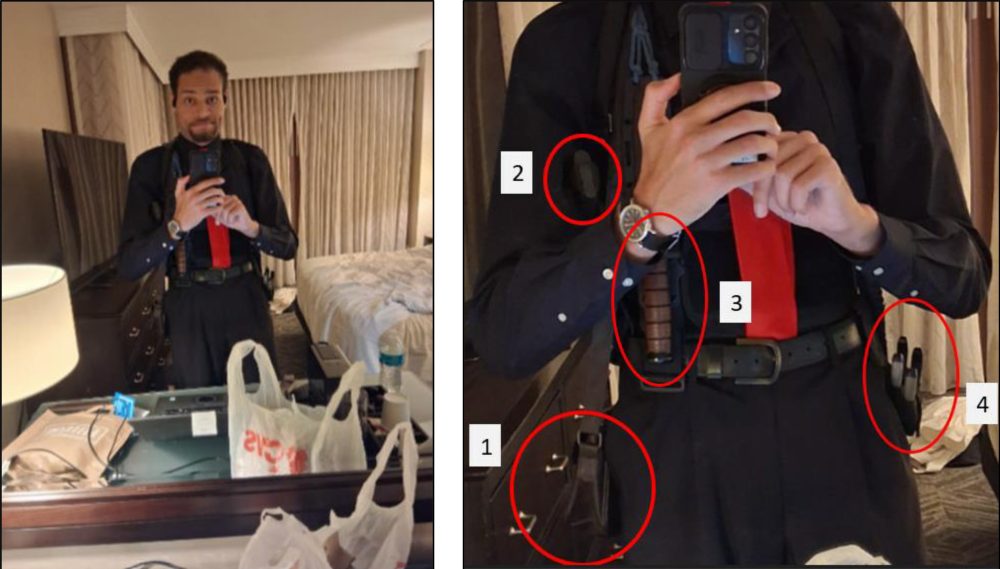
    An armed individual rushed past security barriers at the Washington Hilton hotel, where prosecutors say he planned to harm President Donald Trump in the nearby ballroom. Security personnel quickly evacuated Trump and first lady Melania Trump from the venue without incident.

    The security breach disrupted what had been an unusual evening of cooperation between the press and a president who has frequently criticized media coverage. However, even before this weekend’s events, many questioned whether reporters should socialize with the government officials they’re assigned to cover.

    The annual black-tie gathering has operated as a Washington tradition for over 100 years, funding journalism scholarships while honoring First Amendment protections for free speech and press freedom.

    Media companies buy tables and bring guests from top political and business circles. Celebrity-filled afterparties typically continue until the early morning hours. While presidents usually participate, Trump had avoided the event throughout his previous White House tenure until this year’s attendance.

    “I think it’s not a good look for journalists to be dressed in tuxedos and gowns and hanging out with the people they cover,” said Jane Kirtley, a professor of media ethics and law at the University of Minnesota. “It’s always been a really tricky proposition.”

    Through a Truth Social message Saturday evening, Trump indicated he wanted to reschedule the dinner. However, the White House Correspondents’ Association maintains authority over the event’s future.

    When asked about upcoming plans, WHCA President Weijia Jiang directed questions to Sunday’s official statement.

    “The WHCA board will be meeting to assess what happened and determine how to proceed,” Jiang wrote. “We will provide updates as soon as any are available.”

    The organization’s statement praised journalists present for “jumping into reporting immediately after the incident unfolded.”

    The formal dinner traditionally features comedic entertainment, with presidents often attempting humor themselves. In 2011, then-President Barack Obama used his speaking time to mock Trump, who attended as a business figure and television personality.

    During Trump’s first presidency in 2018, comedian Michelle Wolf delivered harsh criticism of White House press secretary Sarah Huckabee Sanders at the dinner, worsening Trump’s already tense media relations. That year’s WHCA leader, Margaret Talev, acknowledged members felt “dismay” over Wolf’s remarks, leading to a more subdued program the next year.

    Trump chose this year for his first presidential appearance at the event. Washington observers had eagerly anticipated his participation and expected comments, considering his history of attacking news organizations.

    His actions against media outlets include multiple lawsuits, labeling truthful reporting as “fake news,” targeting individual journalists personally, and limiting reporter access to White House briefings and Pentagon coverage. Despite this, he has also shown more openness than past presidents to unstructured press sessions and reporter phone calls.

    The New York Times stopped buying dinner tables in 2008 citing ethical concerns, though the newspaper continues reporting on the event.

    Patrick Plaisance, an ethics professor at Pennsylvania State University’s Bellisario College of Communications, said the Times’ approach demonstrates “the inherent conflict that the event poses for journalists.”

    Supporters argue that reporters regularly build source relationships in casual environments beyond formal briefings or scheduled interviews.

    “Even though it may look like journalists are cozying up to politicians — and some are — a lot of beat reporting looks like that,” said Eric Deggans, a professor of journalism and media ethics at Washington and Lee University.

    “It’s a more complicated situation than some of the critics are willing to allow,” he said.

    Nevertheless, academic experts acknowledged that the dinner’s mission of celebrating press freedom often gets lost amid images of journalists and politicians enjoying expensive meals together. This year’s entertainment choice — mentalist Oz Pearlman — failed to address appearance concerns, Deggans noted.

    “There’s been a long history of comics who roast the room — politicians and the press alike,” he said. “Moving away from that without explaining why creates its own public impression.”

    “Once you layer in the security and safety concerns,” Deggans added, “it becomes an even more challenging proposition.”

  • Dover Police Makes History: First Female Officer of the Year in 101-Year Department History

    Dover Police Makes History: First Female Officer of the Year in 101-Year Department History

    The Dover Police Department has made history by selecting Corporal Heather Seibert as its 2025 Officer of the Year, marking the first time a woman has received this distinction in the agency’s 101-year existence.

    Additionally, Animal Control Officer Caitlyn Smith earned the 2025 Civilian of the Year award, creating another milestone as both top honors went to women for the first time in department history.

    These awards highlight not just a groundbreaking moment, but also recognize the significant contributions both women have made to the Dover community.

    Corporal Heather Seibert – Officer of the Year

    Throughout the department’s century-plus history, Dover Police has annually honored its most outstanding officer. In 2025, that recognition goes to Corporal Heather Seibert—a law enforcement professional whose dedication, investigative skills, and thorough approach have distinguished her among colleagues.

    Joining Dover Police in 2019, Seibert has earned a reputation among fellow officers as “the officer with the answers,” built through her meticulous attention to detail, eagerness to tackle any assignment, and determination to see cases through to completion.

    During her dual role as patrol officer and primary shift investigator, Seibert managed an extraordinary caseload in 2025’s second quarter—answering roughly 400 service calls, completing over 80 reports, and investigating more than a dozen vehicle crashes within just three months.

    Several cases from that period demonstrate her exceptional impact:

    April 7, 2025 – Gunfire Investigation:

    Corporal Seibert answered a 911 call about a vehicle hit by gunfire. She located bullet damage on the car and during her investigation, linked it to a second victim with a similar report. Her quick intelligence gathering and coordination with detectives resulted in a suspect’s arrest and the recovery of two weapons.

    April 21, 2025 – Hit-and-Run Crash with Injuries:

    Corporal Seibert investigated a hit-and-run that injured two pedestrians. Using witness descriptions of the suspect and vehicle, she searched the area for video evidence and identified the fleeing car through surveillance footage, leading to an arrest and felony charges.

    May 1, 2025 – Pedestrian Injury Case:

    Corporal Seibert responded to another vehicle-pedestrian crash involving serious injuries. Despite challenges obtaining information from those involved, including the victim, she canvassed nearby homes for witnesses and surveillance video. Her persistence uncovered critical evidence that led to the suspect’s arrest.

    May 25, 2025 – Child Abuse Case:

    On May 25, 2025, Corporal Seibert responded after a child fled to a neighbor’s house to escape abuse. She conducted a thorough yet sensitive investigation, documented the child’s injuries, and identified the mother as the perpetrator. After consulting with investigators and prosecutors, she arrested the suspect on child abuse charges and ensured the child was safely removed from the home.

    Corporal Seibert’s exceptional work during the second quarter earned her Officer of the Quarter recognition and ultimately Officer of the Year. She was promoted to Detective in the Criminal Investigations Unit in January 2026.

    Reflecting on her career and historic recognition, Corporal Seibert shared her thoughts:

    What attracted you to law enforcement and Dover Police specifically?
    “I’ve been watching crime TV shows and helping my dad catch thieves in his convenience store since a young age. I’ve always loved righting wrongs and standing up for the little guy. Choosing Dover PD was really just luck. I happened to be moving to the area when I was starting my career and it was really the only department I ever looked at and never looked back.

    Can you describe a particularly meaningful case you’ve handled?
    “It wasn’t one moment as much as a reaffirmation of why the work I do is important. In a domestic violence case, I later saw the victim again months later. She told me that our interaction was the push she needed to leave the relationship and that she and her kids were now thriving. We don’t usually get to see the positive outcomes, so it was great to see that my work contributed to helping a family long term.”

    What does community service mean to you daily?
    “Serving the community looks different every day, but for me it means showing up and doing the job the right way regardless of the circumstances.”

    Who has most influenced your career?
    “My husband and mom have been my biggest personal supporters. Professionally, Lt. Jeffrey Gott and Sgt. Nathanial Warren were instrumental early on—they helped shape me as an officer and pushed me to stay motivated and keep working toward my goals, even during difficult times.”

    What motivates your thorough approach to casework?
    “I honestly just love to know the answer to the puzzle and make sure there are no loose ends. Those details can make or break a case and shed a lot of light on the big picture.”

    What advice would you offer young women considering law enforcement?
    “Take the time to fully understand what this career demands. Law enforcement isn’t just a job—it’s a lifestyle that affects every part of your life. If it’s something you truly want, start preparing now—both physically and mentally. Build resilience, discipline, and confidence. And don’t be discouraged by challenges or expectations—there is absolutely a place for you in this field.”

    What does being the first female Officer of the Year mean to you?
    “I’m honored to represent the women in law enforcement who contribute to this profession every day. Our academy motto was ‘exceed the standard, raise the bar,’ and I hope this shows that I’m just the first of many and encourages others to continue raising that bar.”

    How do you relax when off duty?
    “My favorite way to recharge is to travel and see the world. But I can’t do that every weekend, so I usually hit a yoga class and watch tv with a cup of tea and a bowl of ice cream.

    Animal Control Officer Caitlyn Smith – Civilian of the Year

    In just over one year with Dover Police, Animal Control Officer Caitlyn Smith has proven herself as a highly effective, reliable, and caring team member—earning Civilian of the Year through both her work volume and case impact. Smith has quickly taken on significant responsibilities that demonstrate both departmental confidence and her strong dedication to the position.

    In 2025’s fourth quarter alone, ACO Smith handled 114 complaints, serving as lead officer on 103 of those calls. During this period, she issued numerous warnings and enforcement actions, conducted investigations that resulted in an arrest, and obtained a warrant involving seven animal-related charges.

    ACO Smith’s fourth-quarter achievements earned her Civilian of the Quarter recognition and ultimately Civilian of the Year.

    ACO Smith’s duties frequently place her in challenging and sometimes disturbing situations—but also position her to create immediate, meaningful change.

    On November 25, 2025, ACO Smith investigated an animal neglect complaint at a South New Street apartment. She found three dogs and four cats in severely undernourished condition, with visible ribs and hips, living in an apartment covered with urine and feces. While working to secure a search warrant, the owner fled with one dog. Despite this setback, ACO Smith worked largely independently to coordinate with the Office of Animal Welfare and City Code Enforcement to rescue six animals and help condemn the residence, removing them from dangerous conditions.

    On December 23, 2025, ACO Smith responded to reports of a dead dog inside a North Kirkwood Street home. Her investigation revealed the animal had starved to death while confined in a waste-filled crate. She filed charges against the responsible person and, in the same case, persuaded the owner to surrender a second dog—personally driving it to Brandywine Valley SPCA to give it a chance at a better life.

    Beyond her primary duties, ACO Smith showed initiative by helping the Parking Enforcement Unit during staffing shortages. She voluntarily modified her schedule—often arriving early—to support major community events, including parades and city functions.

    Despite the challenging nature of her work, ACO Smith approaches her role with a clear philosophy focused on both enforcement and education:

    “I have always had a love for animals, and this is a great position to educate owners and the public on the proper laws on owning animals.”

    She stresses a balanced field approach:

    “I evaluate each situation on a case-by-case basis and determine if education or law enforcement is appropriate.”

    For ACO Smith, satisfaction comes from positive outcomes, even in the most difficult cases:

    “I enjoy the variety of work that I do daily, and even the challenging moments can be rewarding when the animal is in a safe place.”

    She described the recognition as both humbling and inspiring:

    “It’s an honor and a shock to be recognized by my peers in such a high regard, and I hope to maintain the expectations of such an award.”

    Her work demonstrates dedication not only to enforcing animal welfare laws, but to improving conditions for both animals and the broader community—often in situations where quick action makes all the difference.

    The recognition of Corporal Seibert and ACO Smith represents a pivotal moment in Dover Police Department’s 101-year history. While their roles differ, both have shown unwavering dedication to service, accountability, and performing their duties with integrity and compassion.

    Their work embodies the department’s core values and demonstrates the impact committed professionals can have across all aspects of public safety. Together, their service represents the standard Dover Police Department works to deliver daily.

    Chief Thomas Johnson, Jr. commended both recipients, saying: “Caitlyn and Heather are highly professional, get-things-done members of our organization. In each situation they address, their empathy and compassion is clearly visible while they hold individuals accountable for their behavior. They serve the interests of justice as they champion the needs of our victims, and society as a whole. We have 150 or so stellar employees in the Dover Police Department. Dozens were nominated for their outstanding performance in 2025. ACO Smith and Corporal Seibert clearly distinguished themselves above all others and earned this annual recognition through quiet excellence. The Dover PD is happy to announce that excellence loudly and proudly. Congratulations to both of them.”

  • South African Protesters Demand Immigration Crackdown as Businesses Close

    South African Protesters Demand Immigration Crackdown as Businesses Close

    Hundreds of South African demonstrators filled the streets of Johannesburg on Wednesday, demanding stricter controls on unauthorized immigration in protests that have heightened tensions between citizens and foreign residents.

    The march represents part of a growing movement of demonstrations, following similar rallies in Pretoria on Tuesday. Groups opposing illegal immigration are pushing for rigorous enforcement of existing laws and widespread deportations.

    South Africa’s status as one of Africa’s leading industrial nations draws migrants seeking economic opportunities, including both those who enter through legal channels and those without proper documentation.

    The Johannesburg demonstrations prompted widespread business closures, affecting establishments owned by both citizens and immigrants, as owners worried about possible looting and criminal activity.

    The rally was spearheaded by the anti-immigration organization March and March, drawing support from similar groups including Operation Dudula and political organizations ActionSA and Patriotic Alliance.

    “We are not xenophobic, we just want the right thing to be done in South Africa, to put the South African first. We do want to live with foreigners in our country, but those foreigners must be legally in the country,” said Themba Mabunda of ActionSA, who participated in the march.

    Current estimates for undocumented migrants in South Africa range widely, with commonly referenced numbers between 3 to 5 million people. Precise current data remains disputed since many foreign residents lack official documentation.

    Groups opposing illegal immigration claim that unauthorized migration leads to overcrowded cities, workplace conflicts, reduced tax collections, and increased crime and border security risks in a nation where joblessness surpasses 30%.

    Some anti-migration activists have forced foreign residents away from public healthcare centers, alleging they worsen medicine shortages and facility overcrowding.

    United Nations Secretary-General António Guterres recently voiced alarm about reports of xenophobic violence and harassment targeting migrants and foreign residents in various South African regions, including KwaZulu-Natal and Eastern Cape Province.

    An anti-migration demonstration in Eastern Cape Province last month led to violent destruction of minibus taxis and public property, while reported attacks against Ghanaian citizens in KwaZulu-Natal created a diplomatic crisis that resulted in South Africa’s ambassador to Ghana being called to account for the incidents.

    South African authorities removed 109,344 undocumented immigrants during the previous two fiscal years as the country intensifies immigration enforcement efforts.

  • New Castle County Police Search for Man Wanted in Fatal Scooter Crash

    New Castle County Police Search for Man Wanted in Fatal Scooter Crash

    New Castle County police are actively seeking Roland Fleming, who has failed to appear in court on several felony and misdemeanor charges stemming from a fatal traffic accident.

    According to authorities, Fleming was behind the wheel of a vehicle that collided with and fatally injured a 72-year-old man who was operating an electric scooter on April 19, 2025. Following the deadly incident, Fleming was taken into custody but has since missed his required court appearance.

    The New Castle County Division of Police has issued a capias warrant for Fleming’s arrest due to his failure to appear before the court on the pending charges related to the fatal crash.

    Anyone with information regarding Fleming’s whereabouts is encouraged to contact the New Castle County Division of Police.

  • Universal Music Plans to Sell Half of Spotify Holdings for Share Buybacks

    Universal Music Plans to Sell Half of Spotify Holdings for Share Buybacks

    Universal Music Group announced Wednesday its intention to divest half of its ownership position in Spotify while expanding its share repurchase program, following a first quarter where revenue was dampened by unfavorable U.S. dollar exchange rates.

    The music company stated that funds generated from reducing its Spotify holdings will fund the buyback initiative and be distributed to recording artists.

    This announcement follows by three weeks an unexpected $64 billion acquisition offer from activist investor Bill Ackman, who contended that the market was undervaluing UMG’s 2.7-billion-euro investment in Spotify. Ackman’s proposal included liquidating this investment and allocating 1.5 billion euros from the sale toward financing the acquisition.

    UMG’s leadership has now acted on its own initiative, authorizing the divestiture under its own conditions instead of directly distributing the funds to shareholders as Ackman had recommended.

    This strategy enables UMG to fulfill its “Taylor Swift clause” — a 2018 agreement made when the superstar renewed her contract with the label, stipulating that revenues from any Spotify stake sale would be distributed among all artists without recoupment requirements.

    The company also announced plans to initiate an additional 500-million-euro share repurchase program, pending shareholder authorization at the upcoming annual meeting, which would double its current buyback capacity.

    Company leadership indicated they believe the stock is trading below its actual worth given the firm’s operational results and future outlook.

    Revenue for the first quarter totaled 2.9 billion euros ($3.4 billion), remaining unchanged from the previous year when reported in euros but showing 8.1% growth when calculated in constant currency terms.

    Adjusted EBITDA decreased 3.8% to 636 million euros, though it increased 3.9% when measured in constant currency.

    Leading performers during the quarter included BTS, Taylor Swift, Olivia Dean, Morgan Wallen and the K-Pop Demon Hunters soundtrack, according to the company.

  • LIV Golf Delays Louisiana Tournament Amid Financial Uncertainty

    LIV Golf Delays Louisiana Tournament Amid Financial Uncertainty

    The LIV Golf league announced it will delay its Louisiana tournament originally set for June, claiming the organization maintains “strong momentum” despite growing uncertainty about its financial future past 2026.

    League officials told Field Level Media on Wednesday they plan to “explore” hosting a fall tournament in Louisiana instead, pointing to excessive summer temperatures, scheduling conflicts with other sporting events, and golf course conditions as reasons for the delay.

    “In coordination with the Governor of Louisiana and Louisiana Economic Development, we have made the strategic decision to explore moving LIV Golf Louisiana to a new window later this fall,” the statement read. “This shift allows us to avoid the peak summer heat and the crowded global sports calendar while ensuring the course is in the championship condition our fans and players expect.”

    The statement continued: “We are grateful for the continued partnership and flexibility of the state of Louisiana as we work together to deliver a world-class debut this fall. Our team is focused on maintaining the strong momentum of the 2026 season and we look forward to sharing finalized dates in the near future.”

    The postponement follows recent reports suggesting Saudi Arabia’s Public Investment Fund may withdraw financial support for the golf league. LIV Golf CEO Scott O’Neil had previously assured staff in an email that the current season would proceed “exactly as planned, uninterrupted and at full throttle.”

    The cancellation of the June 25-28 New Orleans tournament creates a scheduling gap between LIV Golf Andalucia in Spain (June 4-7) and LIV Golf United Kingdom (July 23-26). The league plans to resume competition with LIV Golf Virginia this coming weekend.

    Louisiana Governor Jeff Landry revealed Tuesday that the state has already disbursed $3.2 million from a $7 million contract. LIV Golf “is expected to return all state incentive funds” worth $1.2 million, while the remaining $2 million funded upgrades to Bayou Oaks at City Park golf course.

    “We appreciate LIV’s good-faith efforts and look forward to maintaining our partnership as we continue conversations around an event later this year,” Landry said. “We are grateful for the work of our local partners and the collaboration that supported this effort.”

    NOLA.com reported earlier this week that LIV officials were considering a scaled-down “exposition-style” event in New Orleans during the fall months. The league’s team championship in late August remains the final confirmed event on the schedule, with the Louisiana tournament now appearing without a date at the bottom of their website’s calendar.

  • Global Hospital Attacks Surge Since Middle East Conflict Escalated, WHO Reports

    Global Hospital Attacks Surge Since Middle East Conflict Escalated, WHO Reports

    The World Health Organization announced Wednesday that violence targeting medical facilities and healthcare personnel has escalated worldwide, with a marked increase following the outbreak of recent Middle East hostilities.

    Global incidents involving healthcare facilities and medical staff have climbed from an average of 3.7 daily occurrences to 4.3 since U.S. and Israeli forces conducted airstrikes against Iran in late February, according to WHO data.

    “This is clearly showing that healthcare is the target,” stated Altaf Musani, Director of Emergency Health Interventions at the WHO, during a press briefing in Geneva.

    The violent incidents encompass aerial bombardments and artillery strikes against medical centers and hospitals, along with detention and harassment of medical personnel.

    “When healthcare is needed most, it is being attacked… These attacks are having a deep impact on functionality,” Musani explained.

    Following the escalation of Middle Eastern hostilities, 50 medical facilities and private healthcare centers have ceased operations while 16 hospitals sustained damage throughout the region, WHO officials reported.

    WHO Director-General Tedros Adhanom Ghebreyesus, who has consistently condemned these incidents and demanded accountability, pointed to Lebanon where 149 healthcare-related attacks have been documented.

    Israeli airstrikes have resulted in more than 2,500 fatalities across Lebanon since March 2, following Iran-backed Hezbollah’s assault on Israeli positions that prompted Israel’s air and ground response. The UN Human Rights office stated last month that Israeli strikes targeting civilians, including medical workers, in Lebanon could constitute war crimes.

    Israeli officials have consistently rejected claims of deliberately targeting healthcare personnel, maintaining they are focusing on Hezbollah installations.

    Iran has experienced 26 documented attacks on medical sites since late February, Ghebreyesus noted.

    Healthcare delivery in Gaza has been severely compromised by these incidents, with only one hospital remaining fully operational, while Sudan faces similar challenges with just 54% of hospitals functioning at full capacity, the WHO stated.

  • EPA Administrator Zeldin Overhauls Agency, Eliminates Science Positions

    EPA Administrator Zeldin Overhauls Agency, Eliminates Science Positions

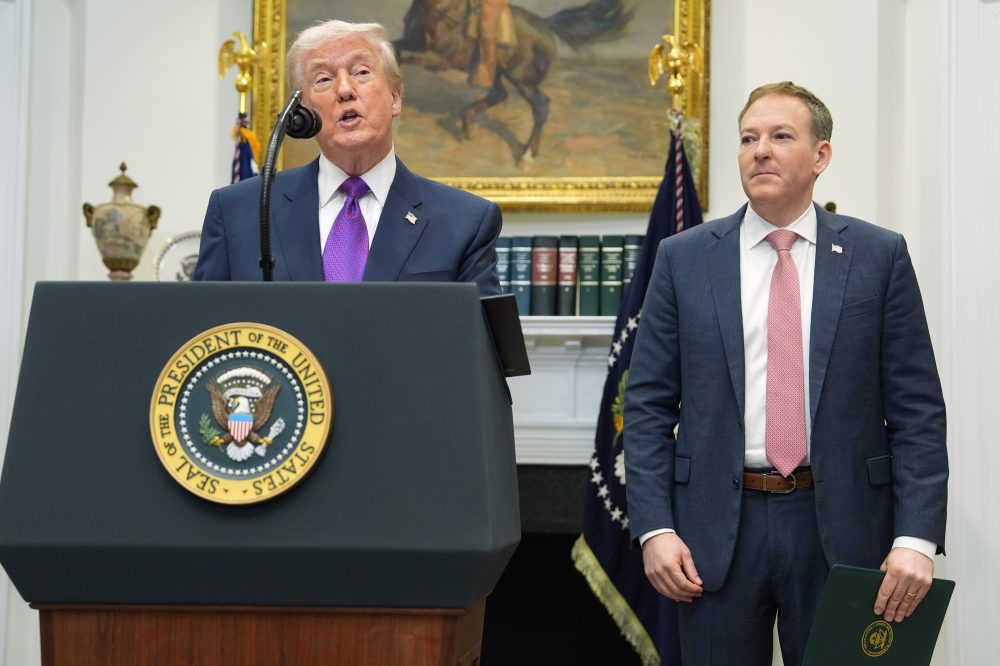
    Environmental Protection Agency Administrator Lee Zeldin has dramatically reshaped the federal environmental watchdog agency through sweeping changes that have drawn criticism from environmental advocates, according to a new report.

    New Yorker journalist Elizabeth Kolbert reports that Zeldin has rolled back numerous environmental protections, dismantled or significantly reduced various agency departments, and laid off substantial numbers of scientific personnel since assuming leadership of the EPA.

    The changes represent a significant shift in the agency’s operations and priorities under Zeldin’s leadership. President Trump has praised Zeldin’s work, referring to him as “our secret weapon” in the administration’s approach to environmental policy.

    The restructuring has affected multiple areas of the agency’s work, with particular impact on the scientific workforce that conducts environmental research and analysis for federal policy decisions.

  • Congressional Democrats Launch Probe Into $2B Wind Project Buyouts

    Congressional Democrats Launch Probe Into $2B Wind Project Buyouts

    Congressional Democrats have launched an investigation into the Trump administration’s plan to spend close to $2 billion in taxpayer funds convincing energy companies to abandon offshore wind developments.

    After federal courts blocked President Trump’s executive orders aimed at halting offshore wind projects, the Republican administration shifted to this new approach. Three separate agreements have now been revealed.

    Representatives Jared Huffman of California, who leads Democrats on the House Natural Resources Committee, and Jamie Raskin, the top Democrat on the House Judiciary Committee, are seeking detailed information about the largest of these arrangements. The March announcement revealed that French energy firm TotalEnergies would receive $1 billion — effectively returning their lease payments for wind projects planned off North Carolina and New York — provided they redirect that investment toward fossil fuel developments.

    Huffman characterized the arrangement as a “scam” and warned the administration plans to “light a lot of federal taxpayer money on fire if we let them.”

    In correspondence sent Wednesday to TotalEnergies and shared with The Associated Press, Huffman and Raskin notified the company of their investigation, requested documents and communications, and urged the CEO to reject the payment. Their letter details multiple ways they believe the agreement violates federal law.

    “You can’t come into the United States and do a backroom deal like this, that just essentially treats the treasury as a slush fund, and walk away with a billion dollars,” Huffman stated.

    When contacted for response, TotalEnergies referenced its earlier announcement. CEO Patrick Pouyanné had explained that TotalEnergies abandoned U.S. offshore wind development in return for lease fee reimbursement, “considering that the development of offshore wind projects is not in the country’s interest.”

    Monday brought news of additional agreements, with the administration announcing that Bluepoint Wind and Golden State Wind had accepted lease terminations worth nearly $900 million combined, contingent on equal fossil fuel investments. Trump has embraced fossil fuel electricity generation, arguing it will reduce family energy costs, improve grid reliability and preserve America’s competitive edge in artificial intelligence development.

    Both Bluepoint and Golden State operate under Ocean Winds, a partnership between EDP Renewables and French energy company Engie. Ocean Winds North America CEO Michael Brown explained that changing market conditions require companies to “adapt.”

    Offshore wind project critics applauded the administration’s innovative approach.

    “This is the latest strategy and we think it’s a winner,” stated Robin Shaffer, who leads Protect Our Coast New Jersey, on Wednesday. Shaffer argued the administration “is well within their rights to do this and private businesses can’t be forced to build anything.”

    However, Senate Majority Leader Chuck Schumer of New York condemned it as a “bailout for fossil fuel donors dressed up as a deal.”

    “Donald Trump spent years calling offshore wind subsidies a waste of taxpayer money,” Schumer declared. “Now his administration is handing nearly $2 billion of those very same taxpayer dollars to companies to abandon clean energy projects that would have powered millions of American homes and created thousands of good-paying union jobs.”

    Following these deal completions, Ocean Winds will retain just one U.S. offshore wind project — SouthCoast Wind off Massachusetts. That project’s progress has decelerated under Trump’s presidency.

    Amber Hewett, who oversees offshore wind energy initiatives at the National Wildlife Federation, argued that compelling developers to switch from offshore wind to oil and gas further delays U.S. climate change mitigation efforts. Fossil fuel combustion remains the dominant driver of global climate change.

    Upon taking office in January 2025, Trump implemented a temporary suspension of wind energy project leasing and permitting. His administration has halted ongoing wind farm construction, scrapped plans for new offshore wind development in federal waters, and introduced additional review requirements for wind and solar projects.

    Federal courts permitted wind farm construction to continue, overturned the initial order blocking wind energy development, and prevented the administration from requiring Trump’s interior secretary to personally approve all solar and wind projects on federal property.

    Energy law specialist Kristoffer Svendsen believes the lease buyouts represent a final effort to eliminate offshore wind projects following the administration’s courtroom defeats. He knows of no similar arrangements where energy project developers received payment to abandon their plans.

    “This saga never ends. They continue to surprise the industry and those of us following the industry,” said Svendsen, who serves as assistant dean for energy law at George Washington University Law School.

    Svendsen anticipates energy companies will pursue opportunities in European and Asian markets, given the “quite bleak” outlook for new U.S. offshore wind development.

    “At this point if you’re interested in offshore wind, you’ll most likely go to a jurisdiction where they want you,” he explained.

    Last week, the Global Wind Energy Council reported record global wind installations of 165 gigawatts in onshore and offshore projects, with 138 nations now incorporating wind energy into their economies. This capacity can supply 118 million households. Asian markets, dominated by China and India, accounted for 80% of worldwide installations.

    David Carroll, CEO and chief renewables officer for Engie North America, also predicts limited U.S. offshore wind advancement in coming years. He pointed to the administration’s permit revocations after years of preparation and substantial investment, plus construction halts on fully approved projects, as factors undermining business confidence.

    “The offshore wind industry does not have a strong future here in the U.S. And that’s unfortunate,” said Carroll, who chairs the American Clean Power Association board, in a recent interview. “The Northeast needs more energy and that is one of the very key ways we can get energy in the Northeast.”

  • SpaceX Wins Settlement, California Regulators Apologize to Elon Musk

    SpaceX Wins Settlement, California Regulators Apologize to Elon Musk

    California state regulators have issued a formal apology to SpaceX CEO Elon Musk this week following the resolution of a federal lawsuit that accused the agency of political discrimination against the aerospace company and its leader.

    Under terms of the settlement agreement, the California Coastal Commission admitted that its members made “improper” comments regarding Musk’s political positions during a 2024 hearing about SpaceX’s Falcon 9 rocket operations.

    “The commission agrees that it may not consider irrelevant factors in performing its function and specifically agrees that it will not take into account the perceived political beliefs, political speech or labor practices of SpaceX or its officers in considering any regulatory action concerning SpaceX,” the commission stated in federal court documents filed Tuesday.

    The legal dispute centered on SpaceX’s challenge to the commission’s resistance to increasing Falcon 9 launch frequency at Vandenberg Space Force Base, located along the Southern California coastline near Santa Barbara.

    In its federal complaint, the rocket manufacturer claimed the coastal agency engaged in political retaliation by blocking a U.S. Air Force proposal to increase launch operations at the federally-owned military installation.

    SpaceX’s legal team argued that commissioners rejected the expansion plans due to their opposition to Musk’s public political statements, which they said violated constitutional protections for free speech and due process rights.

    Under the settlement terms, the lawsuit will be permanently dropped, with both sides agreeing the resolution does not represent an admission “of any liability or unlawful conduct.”

    The coastal agency also committed to not requiring a coastal development permit for SpaceX’s state launch operations moving forward.

    SpaceX representatives have not yet provided comment on the settlement agreement.

    In a Wednesday statement, the coastal commission confirmed it had apologized for “irrelevant” remarks from its members while maintaining ongoing environmental concerns about increased rocket activity at Vandenberg.

    “These impacts include restrictions on public coastal access, harm to sensitive species and coastal habitat, as well as the frequency and intensity of sonic booms,” the statement said. “Federal law requires the federal government to provide information to and coordinate with the Coastal Commission on such issues. The federal government has yet to provide sufficient information to the Coastal Commission about these activities and their impact on the California coast.”

    The settlement resolution occurred as Musk testified this week in an unrelated legal battle with OpenAI co-founder Sam Altman that could influence artificial intelligence development.

  • Former Lebanese President Urges New Peace Talks with Israel

    Former Lebanese President Urges New Peace Talks with Israel

    BIKFAYA, Lebanon — A former Lebanese leader who previously negotiated a failed peace agreement with Israel believes current circumstances present a new opportunity for diplomatic success.

    Amin Gemayel, 84, discussed his views with The Associated Press Wednesday following the first direct negotiations between Lebanon and Israel since the 1980s, as both nations explore potential security arrangements or eventual diplomatic normalization. Gemayel represents one of Lebanon’s most influential political families and helped establish the Christian Phalange party, which maintained significant influence for many years.

    The former president, who seldom grants interviews to international journalists, recognized that conditions have shifted dramatically since Lebanese officials renewed diplomatic efforts with Israel while maintaining a delicate ceasefire. The Washington-based discussions have sparked angry demonstrations as Israeli forces continue operations in southern Lebanon and areas of Beirut work to rebuild following devastating Israeli airstrikes earlier this month.

    Notably, the Iranian-supported Hezbollah organization had just formed during Gemayel’s presidential term and lacked the substantial military and political influence it later developed. Hezbollah rejects direct negotiations with Israel and advocates for Lebanon to back Iran’s discussions with the United States, claiming Tehran possesses greater bargaining power.

    However, Hezbollah has suffered significant setbacks, Gemayel observed, and he advocates for the group’s disarmament. Israeli operations in Lebanon over recent years substantially damaged the organization’s military strength. Additionally, the removal of long-term supporter Bashar Assad in Syria by Islamist-led opposition forces eliminated much of the porous border previously used for arms smuggling.

    Regional dynamics have also shifted, Gemayel explained.

    “During my time, discussing a peace agreement with Israel was an unforgivable fatal crime,” he said.

    He now perceives greater regional receptiveness, citing Syria’s direct negotiations with Israel and the Abraham Accords, through which several Arab nations, particularly the United Arab Emirates, established diplomatic relationships with Israel.

    Gemayel became Lebanon’s youngest president in 1982 when sworn in at age 40. The nation was experiencing a brutal 15-year civil conflict, with both Syrian and Israeli forces occupying territory.

    He chose to participate in U.S.-mediated direct negotiations with Israel through a foreign ministry representative, achieving an accord in May 1983 that included terminating the war status existing between the nations since Israel’s establishment in 1948. Israeli forces would retreat from southern Lebanon while Lebanese troops would deploy to the area.

    Despite support from U.S. President Ronald Reagan and overwhelming Lebanese parliamentary approval, the agreement never took effect. Gemayel attributed the failure to Syria and its Lebanese allies, who opposed Israeli negotiations from the beginning, as well as Israel itself.

    “Israel, though we had finished the negotiations and reached the stage of signing, tried to impose an article outside of the framework of the agreement, which was the simultaneous withdrawal alongside the Syrian army in Lebanon. So the Israeli military wouldn’t withdraw unless the Syrians would,” Gemayel said.

    “It gave the Syrian military a veto to the agreement … and a public atmosphere of doubt that (then-Syrian President Hafez) Assad and his crew created.”

    Currently, Gemayel believes Lebanon’s leadership should pursue comprehensive peace arrangements. Even an armistice similar to the 1949 agreement that maintained border stability for 18 years could represent positive progress, provided it preserves national unity.

    President Joseph Aoun has indicated he seeks an arrangement similar to the 1949 accord, rather than complete diplomatic normalization with Israel.

    Aoun and Prime Minister Nawaf Salam’s decision to engage in direct Israeli negotiations has received both widespread support and criticism in the deeply polarized nation. Officials maintain these talks represent the only path to securing Israeli troop withdrawal and achieving lasting stability.

    “There is an opportunity for the Lebanese government to go into negotiations to reach a solution that achieves peace, security, and stability in Lebanon,” Gemayel said.

    “That would also satisfy the feelings of Lebanese who yearn for the bare minimum of calm, peace, stability, and an end to the war.”

    During the most recent conflict between Israel and Hezbollah, which started two days after U.S. and Israeli operations against Iran on February 28, more than 2,500 Lebanese have died and over one million have been displaced.

    Israeli troops maintain control over extensive areas of southern Lebanon and continue fighting Hezbollah militants despite an official truce. Both parties accuse the other of ceasefire violations.

    Lebanese citizens have generally criticized Hezbollah’s decision to fire rockets into Israel on March 2, while also expressing horror at Israel’s bombing campaign and ground offensive.

    Gemayel acknowledged the situation remains complex, particularly in a “boiling region” experiencing severe security and economic consequences from the Iran conflict.

    “We have to see how far we can go,” he said. “We trust General Aoun to enter negotiations as far as they go while maintaining the interests of the country and the unity of Lebanon. And he knows exactly how far he can go in negotiations.”

  • Salisbury University Athletics Breaks Fundraising Records on Giving Day

    Salisbury University Athletics Breaks Fundraising Records on Giving Day

    Salisbury University’s athletic department has once again shattered fundraising expectations, collecting approximately $302,000 during the institution’s annual Giving Day campaign.

    The athletics and campus recreation divisions achieved this remarkable fundraising milestone during the university’s 2026 Giving Day event, extending a pattern of consecutive years marked by growing donor support and financial contributions.

    This latest achievement represents another chapter in what has become a consistent story of escalating philanthropic success for Salisbury University’s athletic programs, demonstrating strong community backing for the Sea Gulls’ sports initiatives.

  • Three Men on Trial for Arson Attacks on UK PM Starmer’s Properties

    Three Men on Trial for Arson Attacks on UK PM Starmer’s Properties

    LONDON — Three foreign nationals appeared in a British courtroom Wednesday facing charges they were recruited by a Russian-speaking individual to torch properties belonging to UK Prime Minister Keir Starmer in exchange for payment.

    Prosecutor Duncan Atkinson informed the court that Roman Lavrynovych, 22, and Petro Pochynok, 35, both Ukrainian citizens, along with Romanian national Stanislav Carpiuc, 27, participated in a series of fires that occurred in London during a five-day period from May 8-12 of last year.

    The trio faces conspiracy to commit arson charges, while Lavrynovych faces additional counts of property damage by fire with intent to endanger lives. Police investigators have identified Lavrynovych as the individual who actually started all three fires. All defendants have entered not guilty pleas.

    “Three fires in the same area within five days would be pretty unusual. However, three fires all involving property linked to the same person were beyond a coincidence,” Atkinson stated during court proceedings.

    According to the prosecution, the first incident involved a Toyota vehicle that was intentionally ignited during the early morning hours of May 8 in north London’s Kentish Town neighborhood. This was followed by house fires on May 11 and May 12.

    Atkinson explained that both residential fires were started using comparable materials and “were set in the dead of night, when the occupants of the addresses would inevitably have been asleep,” suggesting the perpetrators intended to put lives at risk.

    The targeted vehicle had previously been owned by Starmer, while the Ellington Road residence was managed by a business where the prime minister had served as both director and shareholder. The second home on Countess Road housed Starmer’s sister-in-law and remains under his ownership.

    The prosecutor told jurors these attacks were “planned and directed, with those involved promised payment for their participation.” Evidence shows Lavrynovych received instructions and payment offers through the Telegram messaging platform from someone using the alias “El Money.”

    Both house fires forced residents to flee for safety, according to testimony. During the May 11 incident, a top-floor tenant was awakened around 3 a.m. by smoke odors, discovered smoke-filled hallways, experienced breathing difficulties, and escaped to the roof.

    The following night, Starmer’s sister-in-law heard loud noises around 1 a.m. and witnessed smoke pouring through her front door and up the stairway. She also had trouble breathing, while her 9-year-old daughter became “very frightened” during the ordeal.

    Atkinson instructed the jury that determining the defendants’ motivations was unnecessary for their deliberations, noting it “does not matter whether they knew that the property they were targeting was connected to the prime minister or whether that formed part of their motivation.”

    Investigators recovered over 320 messages between Lavrynovych and “El Money” dating back to September 2024, though Atkinson told jurors they should not concern themselves with the identity of “El Money” or their reasons for recruiting individuals to conduct these attacks. The court was not informed about the specific payment amounts offered or whether anyone sustained injuries in the fires.

  • Climate Activist Worth $2.4B Campaigns Against Wealthy in California Governor Race

    Climate Activist Worth $2.4B Campaigns Against Wealthy in California Governor Race

    SACRAMENTO, Calif. — Climate activist Tom Steyer is positioning himself as an unlikely champion against wealth inequality in California’s gubernatorial campaign, despite his own $2.4 billion fortune.

    The Democratic candidate advocates for increased taxes on wealthy individuals and corporations while earning support from progressive organizations that oppose the existence of billionaires. Steyer, who established one of the globe’s most successful hedge funds, now faces the strongest opposition from business organizations among all candidates.

    “I’m the billionaire who wants to tax other billionaires,” Steyer frequently declares, although his support for a billionaire tax measure potentially appearing on California’s November ballot remains lukewarm.

    The 68-year-old has consistently embraced the apparent contradictions between his financial achievements and political positions. His hedge fund previously held fossil fuel investments while he simultaneously donated millions to defend California legislation targeting emissions reductions. During his 2019 presidential campaign against Donald Trump, Steyer advocated for removing corporate financing from political campaigns.

    “I’m not one of the people who begrudges people’s success,” Steyer explained to The Associated Press, discussing entrepreneurs who achieve wealth in California. “If you’re going to come here and build a company and make a ton of money, great.”

    “But you’re part of a system — you’re depending on a system built by, basically, poor people,” he added. “If you aren’t willing to pay your fair share, I feel like you’re spitting on those people.”

    These positions have generated both strong support and ongoing skepticism. Progressive allies view him as an exceptional wealthy individual willing to challenge financial interests, while critics across party lines consider him insincere and question whether his campaign promises are realistic. Democratic opponents criticize his attempt to purchase the election, highlighting his advertising spending that exceeds his closest Democratic competitor by nearly 30 times.

    Following years of leveraging his wealth to shape politics and policy, Steyer has emerged as a frontrunner in the race to lead America’s most populated state before the June 2 primary election. His former investment firm’s portfolio continues drawing criticism from Democratic rivals.

    “You made the billions that you’re using to fund your campaign off fossil fuels,” former U.S. Representative Katie Porter challenged during Tuesday’s debate. Steyer countered by pointing to business groups opposing his candidacy: “That’s how you know I’m for real.”

    Steyer established Farallon Capital Management in San Francisco during 1986. He gained recognition among business colleagues for the firm’s quick growth while managing criticism from environmental activists regarding the company’s oil and coal investments. He departed in 2012 to create NextGen America, an organization focused on youth voter engagement.

    His political contributions have primarily targeted climate issues, including a $5 million donation in 2010 opposing a California ballot measure that would have suspended greenhouse gas reduction requirements. The environmental legislation survived. Beginning in 2013, he utilized NextGen’s political division to support gubernatorial and Senate candidates with strong climate positions, achieving mixed results.

    Steyer has invested over $62 million in California ballot initiatives, including an unsuccessful 2020 campaign to preserve legislation eliminating cash bail requirements. He ranked among the top contributors to a successful 2016 measure imposing tobacco taxes to fund healthcare for low-income residents.

    Some view his contributions with skepticism. Republican strategist Rob Stutzman referenced an advertisement Steyer funded last year prominently featuring himself promoting a redistricting ballot measure. The initiative was championed by Governor Gavin Newsom, with Steyer’s only involvement being financial support for advertising.

    “Steyer has always been a self-promoter with his dollars,” Stutzman observed.

    Steyer identifies three primary challenges: climate change, California’s expensive living costs, and threats from the Trump administration.

    Recently, hundreds gathered at a San Francisco ping-pong venue for cocktails and appetizers funded by his campaign while Steyer emphasized his climate commitment. His plan lacks detailed specifics but includes defending the state’s cap-and-trade system.

    Major environmental organizations have endorsed his candidacy. Progressive groups also support him, including Our Revolution, established by Vermont Senator Bernie Sanders and dedicated to eliminating corporate and billionaire political influence. State Assemblyman Alex Lee, leading the progressive caucus, backs Steyer partly due to his support for government-operated healthcare, despite repeated legislative failures in Sacramento.

    Lee initially hesitated supporting a billionaire but considers Steyer unique.

    “He is someone who became wealthy in his lifetime,” Lee explained, “but didn’t go off and become (Mark) Zuckerberg level.”

    Meanwhile, Pacific Gas & Electric, among America’s largest utilities, spent $10 million opposing his candidacy. Steyer has promised to “break up utility monopolies” to reduce Californians’ notoriously expensive electricity costs. One advertisement partially funded by PG&E claims Steyer isn’t truly a “different type of billionaire” as he maintains. The California Chamber of Commerce argues Steyer will increase rather than decrease costs.

    “His policy promises will cost billions, driving investment out of California and worsening the state’s affordability crisis,” chamber spokesperson John Myers stated.

    Whether financial resources and endorsements will convert to votes remains uncertain. Political analysts suggest Steyer’s potential breakthrough would be apparent by now given his extensive spending campaign.

    Financial resources proved insufficient during the 2020 Democratic presidential primary. Steyer focused his campaign on appealing to minority voters, emphasizing healthcare access, environmental, and criminal justice inequalities. In South Carolina, his $24 million advertising investment exceeded all other candidates combined, yet he withdrew after placing third.

    He frequently attracted attention for personal quirks rather than policy positions — his signature red plaid tie and colorful belt, plus his dance performances to rapper Juvenile’s music.

    Steyer had planned $100 million in spending, but his wealth became problematic in a race where competitors like Sanders criticized billionaire existence.

    He has exceeded that amount in California’s gubernatorial primary alone, including advertisements targeting opponents. This time, reception has been more favorable.

    “Tom Steyer is running on taxing the wealthy, supporting single-payer healthcare, and taking on corporate power — positions that are central to our movement,” Our Revolution Executive Director Joseph Geevarghese stated. “That alignment with a pro-worker, anti-corporate agenda — and the urgency of this race — is why we are backing him.”

  • Ex-FBI Chief Comey Faces Court Over Social Media Post Targeting Trump

    Ex-FBI Chief Comey Faces Court Over Social Media Post Targeting Trump

    ALEXANDRIA, Va. — Former FBI Director James Comey will appear in federal court Wednesday, launching a criminal prosecution that legal analysts believe will be difficult for the Justice Department to successfully pursue.

    Federal prosecutors in North Carolina filed charges Tuesday alleging Comey threatened President Donald Trump through a social media photograph he shared last year showing seashells positioned to form the numbers “86 47.” According to the government, these digits constituted a threat against Trump, who serves as the nation’s 47th president. Comey maintains he viewed the arrangement as expressing a political viewpoint rather than advocating violence against the Republican leader, and he deleted the image once he realized some viewers interpreted it as threatening.

    This marks the second time in a year that Comey, who has clashed with Trump since his FBI tenure, faces federal charges. A judge dismissed the previous case involving allegations of false statements and obstruction. Now government attorneys must demonstrate that Comey either deliberately intended to communicate a genuine threat or recklessly ignored the possibility his post could be viewed as menacing.

    While the charging document alleges Comey acted “knowingly and willfully,” it provides limited supporting details for this claim. Acting Attorney General Todd Blanche refused to discuss what evidence of criminal intent prosecutors possess during a press briefing. However, robust First Amendment speech protections, established Supreme Court rulings, and Comey’s public denials of threatening intent will likely create substantial obstacles for the government’s case.

    “In this situation, ’86’ carries multiple meanings — it doesn’t clearly suggest violence, and the fact that a former FBI Director posted this openly on a public platform indicates he wasn’t trying to communicate a violent threat,” explained John Keller, a former senior Justice Department attorney who previously oversaw prosecution of violent threats against election officials.

    Prosecutors filed the case in North Carolina’s Eastern District, where the beach location Comey says he discovered the shells is situated. His initial court hearing is scheduled for Wednesday at the federal courthouse in Alexandria, Virginia, where he currently resides.

    The Supreme Court has established that speech loses First Amendment protection only when it constitutes a “true threat.”

    This legal standard requires prosecutors to demonstrate, at minimum, that a defendant recklessly ignored the possibility their statement could be interpreted as threatening violence. In a 2023 Supreme Court decision, the majority ruled that prosecutors must prove the “defendant possessed some personal awareness of his statements’ threatening character.”

    Additionally, the Supreme Court has determined that exaggerated political rhetoric receives constitutional protection. In a 1969 ruling, the justices found that a Vietnam War demonstrator did not make a deliberate threat against the president when he stated that “If they ever make me carry a rifle the first man I want to get in my sights is L.B.J,” referring to President Lyndon B. Johnson. The court observed that audience laughter when the protester spoke, among other factors, demonstrated it wasn’t a genuine threat of violence.

    Concerning this current matter, Merriam-Webster dictionary defines 86 as slang meaning “to throw out,” “to get rid of” or “to refuse service to.” The dictionary notes: “Among the most recent senses adopted is a logical extension of the previous ones, with the meaning of ‘to kill.’ We do not enter this sense, due to its relative recency and sparseness of use.”

    Comey removed the post quickly after publishing it, explaining: “I didn’t realize some folks associate those numbers with violence” and “I oppose violence of any kind so I took the post down.”

    John Fishwick, who formerly served as U.S. attorney in Virginia’s Western District, suggested the government will likely argue that Comey’s FBI background should have made him aware of the implications.

    “I believe they’re going to attempt to argue circumstantially that as former FBI head, you understood what these terms signified and you broadcast them globally as a presidential threat,” Fishwick explained, while acknowledging such reasoning would face challenges given Comey’s clear First Amendment protections.

    Comey cooperated with a Secret Service interview last year, and the absence of false statement charges suggests prosecutors lack evidence he deceived agents, Fishwick noted.

    Jonathan Turley, a George Washington University law professor, argued in a Tuesday opinion piece that “despite being one of Comey’s longest critics, the indictment raises troubling free speech issues. In the end, it must be the Constitution, not Comey, that drives the analysis and this indictment is unlikely to withstand constitutional scrutiny.”

    “If it did,” he continued, “it would allow the government to criminalize a huge swath of political speech in the United States.”

  • Charlie Crist Launches Bid for St. Petersburg Mayor After Political Career Shifts

    Charlie Crist Launches Bid for St. Petersburg Mayor After Political Career Shifts

    ST. PETERSBURG, Fla. — A veteran Florida politician who has held offices at both state and federal levels is now setting his sights on leading his hometown as mayor.

    Charlie Crist, 69, submitted campaign documents this week to pursue the mayor’s seat in St. Petersburg, marking another chapter in a political journey that has seen him change party affiliations multiple times. Throughout his decades-long career, Crist has identified as Republican, Democrat, and independent at different points.

    The politician’s resume includes serving as Florida’s governor under the Republican banner from 2007 through 2011, followed by three terms as a Democratic congressman representing the area until 2022. His recent electoral efforts proved unsuccessful, including a 2022 gubernatorial challenge against Republican Ron DeSantis and a 2014 attempt to unseat then-Governor Rick Scott, both as a Democratic candidate.

    Crist will compete against incumbent Ken Welch, who made history as St. Petersburg’s first Black mayor and is seeking another term. Notably, Crist had previously supported Welch’s initial campaign for the position. The mayoral contest operates as a nonpartisan election, with approximately six other contenders currently in the field.

    The city, located across Tampa Bay from Tampa, ranks among Florida’s more liberal municipalities and consistently elects Democratic candidates to various positions. During a previous interview last autumn, Crist emphasized his deep connections to the community, highlighting his graduation from St. Petersburg High School and his congressional representation of the region.

    “St. Petersburg is a very special place to me. It’s home,” Crist said.

    Crist’s political biography spans numerous roles and party switches throughout Florida government. His early career included positions as state senator, education commissioner, and Florida attorney general, all while serving as a Republican. Multiple unsuccessful U.S. Senate campaigns dot his record, including a 2010 independent bid against Marco Rubio, who now serves as U.S. Secretary of State. He once earned the nickname “chain-gang Charlie” for implementing programs requiring prisoners to perform highway cleanup duties.

    During his congressional tenure, Crist cast votes to impeach President Donald Trump on two occasions during Trump’s initial presidency. His most recent statewide campaign ended in defeat when DeSantis secured approximately 59% of the gubernatorial vote against him.

    Meanwhile, Welch has indicated his concentration remains on mayoral duties. St. Petersburg recently faced significant challenges, including damage from back-to-back Hurricanes Helene and Milton in 2024, ongoing uncertainty surrounding the Tampa Bay Rays baseball team’s sale, and persistent problems with elevated water utility costs.

  • UD Swimmer Matvei Namakonov Receives National Academic Honor

    UD Swimmer Matvei Namakonov Receives National Academic Honor

    A University of Delaware swimmer has received national recognition for his outstanding performance in the classroom.

    Matvei Namakonov, who competes for the Blue Hens men’s swimming and diving team, was selected for the College Swimming & Diving Coaches Association Academic All-America Third Team. The honor was announced by the organization on Wednesday from their headquarters in Greenwood, Indiana.

    The Academic All-America program recognizes student-athletes who excel both athletically and academically, highlighting the balance between competitive sports and scholarly achievement at the collegiate level.

  • Mexico Mandates Domestic Steel for Government Projects After US Tariff Talks Fail

    Mexico Mandates Domestic Steel for Government Projects After US Tariff Talks Fail

    MEXICO CITY – Following failed negotiations to eliminate US steel tariffs, Mexican President Claudia Sheinbaum declared Wednesday that all government construction projects must utilize steel manufactured by domestic companies.

    “The commitment we are making here is that the government’s purchases will be steel produced in Mexico,” Sheinbaum stated during her regular morning news briefing.

    This directive represents Mexico’s initial major attempt to decrease its heavy economic reliance on the United States. While Trump’s global trade policies have prompted nations like Canada to diversify away from US dependence, Mexico had previously avoided actions that might upset its primary trading partner, which purchases 80% of Mexican exports.

    The announcement comes during the ongoing review of the U.S.-Mexico-Canada Agreement. Trump’s comprehensive tariff strategy included imposing 50% duties on steel and aluminum imports last year.

    Mexican government representatives have consistently argued these tariffs are unjustified, particularly since the United States maintains a trade surplus with Mexico in both steel and aluminum products.

    More than half of Mexico’s automotive and steel industry exports are shipped to the world’s largest economy.

    Mexican negotiators had been working toward an agreement to eliminate the tariffs. One potential arrangement would have allowed a predetermined amount of Mexican steel to enter the US without duties or at reduced rates, while imports exceeding that threshold would face the complete 50% tariff.

    However, during a recent visit to Mexico, US Trade Representative Jamieson Greer informed the country’s automotive and steel sectors that they should not anticipate the USMCA review process will result in tariff removal for their industries, according to an exclusive Reuters report.

  • Detroit Lions Exercise Option on RB Gibbs, Pass on LB Campbell

    Detroit Lions Exercise Option on RB Gibbs, Pass on LB Campbell

    Detroit Lions management chose different paths for their two 2023 first-round draft picks, according to reports that surfaced Tuesday evening. The team exercised the fifth-year contract option for running back Jahmyr Gibbs while choosing not to pick up linebacker Jack Campbell’s option.

    Fox 2 Detroit first reported the news Tuesday night, with ESPN sources later confirming the information.

    The decision means Gibbs will receive a guaranteed $14.29 million salary for the 2027 season. Had the Lions picked up Campbell’s option, the All-Pro linebacker would have earned approximately $21.925 million, which ESPN notes exceeds the current highest salary for any off-ball linebacker in the NFL.

    According to ESPN’s reporting, Detroit’s front office plans to pursue long-term contract extensions with both Campbell and Gibbs. The organization also faces upcoming extension decisions for tight end Sam LaPorta and defensive back Brian Branch, though neither requires immediate action since they weren’t selected in the first round.

    The choice regarding Gibbs appeared straightforward given his exceptional performance. The 24-year-old has accumulated 5,029 yards from scrimmage and scored 49 touchdowns across 49 games with 24 starts during his initial three NFL seasons. His consistent excellence earned him three consecutive Pro Bowl selections.

    Campbell, age 25, delivered an outstanding 2023 campaign that included first-team All-Pro recognition and Pro Bowl honors. He achieved personal bests with 176 tackles, five sacks, and three forced fumbles while starting all 17 games. Throughout his 51-game career spanning 46 starts, Campbell has recorded 402 tackles and 8.5 sacks.

    Detroit selected both players during the 2023 NFL Draft, taking Gibbs with the 12th overall selection and Campbell at 18th overall.

  • America Hits Historic Milestone: First Weekly Net Oil Exporter Since WWII Era

    America Hits Historic Milestone: First Weekly Net Oil Exporter Since WWII Era

    America reached a remarkable energy milestone this week, transforming into a net oil exporter for the first time on a weekly basis since World War II, according to federal data released Wednesday by the Energy Information Administration.

    The nation’s crude oil reserves dropped sharply by 6.2 million barrels during the week ending April 24, falling to 459.5 million barrels total. This massive decline far exceeded industry predictions, which had anticipated only a modest 231,000-barrel decrease. The strategic storage facility in Cushing, Oklahoma also saw significant reductions, losing 796,000 barrels during the same period.

    America’s crude oil shipments abroad reached an unprecedented 6.44 million barrels daily, representing a substantial jump of 1.64 million barrels per day compared to the previous week. The balance between what the country imports versus exports shifted dramatically, dropping by 1.97 million barrels per day into negative numbers – the lowest figure recorded since weekly tracking began in 2001.

    While the U.S. hasn’t been a net crude exporter on an annual basis since 1943, this weekly achievement marks a significant shift in global energy dynamics, driven partly by increased international demand during current Middle East conflicts.

    “Refineries didn’t change. Domestic production was unchanged. It was all about the export numbers. Those barrels are going overseas rather than into storage,” explained Bob Yawger, who oversees energy futures at Mizuho.

    Oil markets responded positively to the news, with international Brent crude climbing $5.85 to reach $117.11 per barrel by late morning, while domestic West Texas Intermediate prices jumped $5.21 to $105.14 per barrel.

    Domestic refinery operations increased modestly, processing an additional 84,000 barrels daily while operating at 89.6% capacity – up half a percentage point from the prior week.

    Gasoline inventories also declined substantially, dropping 6.1 million barrels to 222.3 million barrels total, significantly exceeding analyst projections of a 2.1 million-barrel reduction. Diesel and heating oil supplies fell by 4.5 million barrels to 103.6 million barrels, also surpassing the expected 2.2 million-barrel decrease.

    “With refinery runs still in check, solid draws were seen to both gasoline and distillate inventories,” noted Matt Smith, an energy analyst with maritime tracking company Kpler.

    Overall petroleum product exports reached 14.18 million barrels daily, climbing 1.298 million barrels from the previous week. Total domestic fuel consumption, measured through product supplied data, increased by 1.4 million barrels daily to 21.13 million barrels.

  • FDA Study Confirms Baby Formula Sold in US Safe for Consumption

    FDA Study Confirms Baby Formula Sold in US Safe for Consumption

    Federal health officials announced Wednesday that comprehensive testing confirms baby formula sold throughout the United States meets safety standards for infant consumption.

    The Food and Drug Administration examined over 300 samples from 16 different manufacturers distributed across the country, according to their latest report.

    Investigators looked for dangerous substances including heavy metals like arsenic, cadmium, lead and mercury, along with pesticides, synthetic chemicals, and phthalates.

    Most samples showed either no detectable contamination or extremely minimal levels, federal officials reported.

    Health Secretary Robert F. Kennedy Jr. has been working to minimize chemicals in food products and initiated a comprehensive review of infant formula nutrition standards last year. Earlier this year, federal health authorities documented 28 confirmed cases of infant botulism connected to ByHeart formula through February — marking the first global outbreak of this type linked to baby formula, according to the FDA.

    Although contamination levels remained low overall, certain samples required additional examination, the FDA noted. Regulators examined powdered formulas, ready-to-use liquids and concentrated liquid products.

    Test results showed mercury was absent in 95% of samples, lead was undetectable in 20% of samples, 99% showed no measurable pesticides and most PFAS chemicals were not found.

    Officials also examined a limited number of breast milk samples, discovering that most contained at least one measurable contaminant, while 15% showed no contamination.

    Trace amounts of contaminants may occur naturally in food products, including baby formula and breast milk, or may enter through environmental contact during manufacturing processes.

    Federal health agencies launched Operation Stork Speed last year, a program designed to verify the quality, safety and nutritional standards of domestically produced infant formula.

    The FDA announced it will maintain ongoing testing and release findings from additional surveys, while Secretary Kennedy plans to conduct a roundtable discussion with industry leaders in May.

    “Producing infant formula at scale in the U.S. is a matter of national security, and these results affirm the safety of our domestic supply,” Abbott, maker of Similac, said on Wednesday, adding its U.S. formulas meet heavy metal limits set by the EPA, the European Commission and Health Canada.

  • DSU Hornets Claim No. 2 Seed for MEAC Softball Championship

    DSU Hornets Claim No. 2 Seed for MEAC Softball Championship

    Delaware State University’s softball team has earned the No. 2 seed as they prepare to compete in the 2026 Mid-Eastern Athletic Conference Tournament.

    The Hornets’ strong regular season performance has positioned them favorably for the upcoming conference championship tournament. As the second-seeded team, DSU will have an advantageous path through the tournament bracket.

    The MEAC Tournament represents the culmination of the conference softball season, with teams competing for the championship title and potential postseason opportunities.

    Delaware State’s softball program continues to build momentum with this high tournament seeding, reflecting the team’s competitive performance throughout the 2026 season.

  • Former FBI Director Comey Faces Charges Over Cryptic ‘8647’ Social Media Post

    Former FBI Director James Comey now faces federal criminal charges stemming from a cryptic social media post that authorities say contained a veiled threat against President Donald Trump’s life.

    Federal prosecutors say a grand jury has indicted Comey over his now-deleted 2025 social media post showing seashells arranged to form the numbers ‘8647.’ Legal experts say the charges center on the interpretation of this coded message as a threat against Trump, who serves as the nation’s 47th president.

    The numerical sequence has sparked widespread debate about its intended meaning. The number ’47’ clearly references Trump’s position as the 47th commander-in-chief, while ’86’ carries several potential interpretations that prosecutors apparently view as threatening.

    During recent anti-Trump demonstrations, including a ‘No Kings’ rally held in Louisville, Kentucky last June, protesters have adopted the ‘8647’ symbol as a rallying cry. Demonstrators at that event were photographed displaying signs bearing the same numerical code that has now landed the former law enforcement chief in legal trouble.

    The case highlights growing tensions over social media communications and their potential legal consequences, particularly when involving high-profile political figures and former government officials.

  • Uber Adds Hotel Booking Feature in Push to Become All-in-One Travel App

    Uber Adds Hotel Booking Feature in Push to Become All-in-One Travel App

    The ride-sharing giant is venturing into new territory by adding hotel reservations to its platform.

    Uber announced Wednesday that customers can now reserve hotel accommodations directly through its application. The company has partnered with Expedia Group’s booking platform, which provides access to approximately 700,000 hotels and lodging properties worldwide. The ride-hailing service plans to incorporate over one million vacation rental options from Vrbo, Expedia’s subsidiary based in Seattle, before the year ends.

    According to Sachin Kansal, Uber’s chief product officer, the addition of hotel reservations represents a significant milestone in the San Francisco company’s vision to create a comprehensive service platform. The company, established in 2009, introduced Uber Eats for food delivery in 2015 and added grocery delivery services in 2020.

    “Consumers are spending too much time coordinating their life, using multiple apps. AI is in the air and they’re all trying to figure out, how does AI help me or does it not help me?” Kansal told The Associated Press. “Our goal with these announcements is to bring everything into one app, to help them save time, and to also help them save money.”

    All Uber application users will have access to hotel booking capabilities. However, Uber One subscribers, who pay a monthly fee of $9.99 for benefits like free delivery, will receive special pricing advantages. These premium members can access 20% discounts on a rotating selection of 10,000 hotels and earn 10% back in Uber credits for future ride bookings, Kansal explained.

    Kansal revealed that Uber considered several potential collaborators before selecting Expedia as their partner. The integration process required several months of technical work to incorporate Expedia’s systems into Uber’s platform. The executive declined to reveal the financial details of their partnership agreement.

    “They’re very excited because Uber brings a certain user base that is very travel-friendly,” Kansal said. “So I would say it’s going to mutually beneficial for both the parties.”

    Travel plays a significant role in how people use Uber’s services, according to Kansal. The platform transports over 100 million passengers annually to and from airports. Additionally, more than 1.5 billion Uber trips in the previous year occurred outside riders’ home cities.

    The hotel booking capability was among multiple travel-focused features unveiled during Uber’s annual product showcase Wednesday. The company also introduced an enhanced travel mode designed to help users discover dining establishments and attractions in destinations they visit.

    Uber revealed plans to offer restaurant suggestions and table reservation services through OpenTable integration within its app. Competitor DoorDash has recently added similar restaurant booking features after acquiring hospitality technology company SevenRooms.

    The company also announced a premium service allowing customers to pre-order beverages or snacks that will be ready when their Uber Black vehicle arrives. This service will debut in the coming weeks across multiple cities including Atlanta, Philadelphia, and Los Angeles.

  • Delaware Blue Hens Get 2026 Football Schedule After Conference USA Settlement

    Delaware Blue Hens Get 2026 Football Schedule After Conference USA Settlement

    Conference USA revealed Delaware’s revised 2026 football schedule on Tuesday after resolving a settlement agreement with Louisiana Tech that required schedule adjustments across the league.

    The Fightin’ Blue Hens will compete in a dozen games during the upcoming season, combining their four previously scheduled non-conference matchups with eight Conference USA battles. Delaware will host four conference games at home while traveling for four others.

    The schedule presents a challenging slate for the reigning 68 Ventures Bowl champions, as they’ll face eight opponents that earned bowl game appearances during the previous season. This marks a significant test for the Blue Hens as they look to build on their recent postseason success.

    The announcement from the Dallas-based conference office comes as leagues continue to navigate scheduling complexities amid ongoing realignment discussions and legal settlements affecting member institutions.

  • Canadian School Shooting Families Sue ChatGPT Creator Over AI Warning Failures

    Canadian School Shooting Families Sue ChatGPT Creator Over AI Warning Failures

    Relatives of those killed and wounded in a devastating February school shooting in British Columbia have filed federal lawsuits against OpenAI, arguing the artificial intelligence company bears responsibility for not warning law enforcement about the attacker’s disturbing exchanges with its ChatGPT system.

    Legal action filed Wednesday represents 12-year-old Maya Gebala, who suffered critical injuries during the attack, marking the beginning of what attorneys say will be dozens of similar cases from families in Tumbler Ridge, British Columbia. The lawsuits include claims of wrongful death, negligence and defective product design.

    Chicago-based attorney Jay Edelson, representing the families, stated during an interview that choices made by OpenAI and CEO Sam Altman “have destroyed the town. The people are really resilient, but what happened is unimaginable.”

    Last week, Altman issued a formal written apology to the community, acknowledging his company’s failure to contact law enforcement regarding the shooter’s online activities.

    According to investigators, the attacker murdered her mother and 11-year-old stepbrother at home on February 10 before launching an assault at Tumbler Ridge Secondary School, where she fatally shot five students and one staff member before taking her own life. The rampage left 25 others wounded, making it Canada’s most lethal mass shooting in recent years.

    The litigation underscores growing worries about dangers from overly accommodating AI chatbots and questions regarding the technology sector’s duty to monitor them or alert authorities about users planning violent acts. Earlier this month, investigators looking into the deaths of two University of South Florida doctoral students revealed the suspect had consulted ChatGPT about disposing of bodies before the students vanished.

    OpenAI responded to the legal challenge with a written statement saying the “events in Tumbler Ridge are a tragedy. We have a zero-tolerance policy for using our tools to assist in committing violence.”

    “As we shared with Canadian officials, we have already strengthened our safeguards, including improving how ChatGPT responds to signs of distress, connecting people with local support and mental health resources, strengthening how we assess and escalate potential threats of violence, and improving detection of repeat policy violators,” the company stated.

    Edelson, who specializes in challenging technology companies, currently handles multiple prominent cases against OpenAI, including representation for relatives of a California teen who committed suicide following ChatGPT conversations and another involving heirs of an 83-year-old Connecticut woman killed by her son after ChatGPT allegedly reinforced the man’s “paranoid delusions.”

    “This is not a passive technology,” Edelson explained, contrasting chatbot interactions with traditional internet searches. “What we’ve seen in the past is that (for) people who are mentally ill, the chatbot will validate what they’re saying and then amplify what they’re saying.”

    Last week, Edelson traveled to the small community of Tumbler Ridge, meeting with dozens of residents in a visitor center basement. He also visited Gebala at a Vancouver children’s hospital, where she continues treatment and appeared alert but unable to communicate verbally.

    “It was so heartbreaking,” he remarked.

    Wednesday’s legal filings represent families of the five murdered students: Zoey Benoit, Abel Mwansa Jr., Ticaria “Tiki” Lampert and Kylie Smith, all age 12, plus 13-year-old Ezekiel Schofield, along with education assistant Shannda Aviugana-Durand.

    Following the shooting, OpenAI disclosed that in June, the company had identified the shooter’s account for discussing violence against others.

    The company explained it weighed whether to report the account to the Royal Canadian Mounted Police but concluded the activity didn’t warrant law enforcement notification at that time. OpenAI suspended the account in June for policy violations.

    Wednesday’s lawsuits claim “the victims didn’t learn this because OpenAI was forthcoming, but because its own employees leaked it to The Wall Street Journal after they could no longer stomach the company’s silence.”

    In his Friday letter, Altman wrote he was “deeply sorry that we did not alert law enforcement to the account that was banned in June.”

    “While I know words can never be enough, I believe an apology is necessary to recognize the harm and irreversible loss your community has suffered,” Altman stated.

    British Columbia Premier David Eby responded on social media, calling the apology “necessary, and yet grossly insufficient for the devastation done to the families of Tumbler Ridge.”

    The Gebala case charges OpenAI with negligence for failing to notify law enforcement and “aiding and abetting a mass shooting.”

    Beyond monetary compensation, the Gebala lawsuit requests judicial orders requiring OpenAI to permanently ban users whose accounts were suspended for violent misuse, and mandating the company notify law enforcement when systems detect individuals posing “real-world risk of violence.”

    While an initial case was filed in British Columbia court, legal teams from both countries are working to consolidate related cases in San Francisco, where OpenAI maintains headquarters.

  • Britain Kicks Out Russian Diplomat After Moscow Expels UK Official

    Britain Kicks Out Russian Diplomat After Moscow Expels UK Official

    LONDON — Britain removed a Russian diplomat from the country Wednesday, striking back after Moscow kicked out a British official and launched what officials called a smear campaign against the UK.

    The British Foreign, Commonwealth and Development Office announced it called in Russia’s ambassador to London to notify him of the “reciprocal action.” These back-and-forth diplomatic moves highlight the worsening relationship between Russia and Western nations.

    “This behavior is wholly unacceptable, and we will not tolerate harassment or intimidation of our diplomatic staff,” the Foreign Office declared in its statement.

    The British response follows Russia’s decision last month to remove a UK diplomat based on espionage accusations that Britain dismissed as “complete nonsense.”

    Russia’s Federal Security Service, the FSB, which handles domestic security and counterintelligence operations, claimed the British official attempted to collect “sensitive information” about Russia’s economy through “unofficial meetings” with Russian specialists. Moscow gave the diplomat two weeks to depart the country.

    Since Russia began its comprehensive military assault on Ukraine in 2022, Russia and countries belonging to NATO have engaged in several cycles of removing each other’s diplomatic personnel, pushing diplomatic ties to their worst state since the Cold War era.

  • High Court Weakens Key Voting Rights Protection in Louisiana Case

    High Court Weakens Key Voting Rights Protection in Louisiana Case

    The nation’s highest court has dealt a significant blow to voting rights protections that have combated racial discrimination at the polls for over fifty years, ruling against a Louisiana congressional district with a Black majority.

    The court’s conservative justices determined that the district, currently held by Democratic Representative Cleo Fields, placed too much emphasis on racial factors when boundaries were drawn. Chief Justice John Roberts characterized the district as resembling a “snake” that winds across more than 200 miles to connect communities in Shreveport, Alexandria, Lafayette and Baton Rouge.

    The full impact on Section 2 of the Voting Rights Act remains uncertain, but legal experts warn the decision may enable GOP-controlled states to dismantle Black and Latino districts that typically support Democratic candidates, potentially shifting congressional power dynamics. This comes as President Donald Trump has already initiated nationwide redistricting efforts to strengthen Republican electoral prospects.

    Those challenging the district contended that Louisiana’s second Black-majority congressional seat, created to address previous discriminatory mapping, violated constitutional principles by using race as a primary factor while ignoring traditional redistricting criteria such as geographic compactness.

    Civil rights leaders responded with sharp criticism to Wednesday’s ruling. Derrick Johnson, who leads the NAACP, called the court’s action “a devastating blow to what remains of the Voting Rights Act.”

    “This ruling is a license for corrupt politicians who want to rig the system by silencing entire communities,” Johnson stated. “The Supreme Court betrayed Black voters, they betrayed America, and they betrayed our democracy.”

    Johnson noted the timing’s significance, coming roughly six weeks after civil rights veterans commemorated the 61st anniversary of Bloody Sunday, when peaceful voting rights demonstrators faced violent attacks from Alabama state troopers on Selma’s Edmund Pettus Bridge. That brutality helped galvanize national support for the landmark voting legislation now under threat.

    “This ruling is a major setback for our nation and threatens to erode the hard-won victories we’ve fought, bled, and died for. But the people still can fight back,” Johnson declared. “Our democracy is crying for help.”

    Lauren Groh-Wargo, who directs Fair Fight Action, the Georgia voting rights organization established by Democrat Stacey Abrams, accused the court of dismantling voting protections “while pretending to uphold it.”

    According to Groh-Wargo, the justices effectively rewrote the law to demand proof of deliberate discrimination, despite Congress specifically amending the Voting Rights Act in the early 1980s to reject such requirements after an earlier Supreme Court ruling attempted similar changes. Notably, Roberts served as a Justice Department lawyer at that time advocating for intentional discrimination standards.

    “It allows states, counties and cities to shield their discriminatory maps by claiming they are advancing their own partisan interests, ignoring that race and party are highly correlated in places across the country, particularly the South,” Groh-Wargo explained in a message to the Associated Press.

    The White House celebrated the outcome, with spokesperson Abigail Jackson calling it “a complete and total victory for American voters.”

    “The color of one’s skin should not dictate which congressional district you belong in. We commend the court for putting an end to the unconstitutional abuse of the Voting Rights Act and protecting civil rights,” Jackson said.

    Multiple states have already implemented new House district maps following Trump’s call last year for Texas Republicans to redraw boundaries, aiming to secure additional seats and preserve the party’s narrow House majority heading into midterm elections.

    The redistricting competition appears balanced so far. Republican strategists believe they could capture up to nine additional seats through new maps in Texas, Missouri, North Carolina and Ohio, with potentially four more if Florida approves pending legislation. Democratic analysts project their party could gain 10 seats from redistricting efforts in California, Utah and Virginia.

    New Orleans Mayor Helena Moreno, a Democrat representing the state’s other predominantly Black congressional district, criticized the Supreme Court’s decision as “a step backward.”

    “For decades, the Voting Rights Act has served as a critical safeguard to ensure every voice, especially those historically marginalized, has a meaningful opportunity to be heard,” Moreno explained.

    “Striking down a district that reflected diversity suppresses voices and weakens our democracy. We should be working to expand representation, not roll it back,” she added.

    The timing proved particularly relevant in Florida, where the state Senate briefly paused proceedings so members could examine the ruling and consult legal counsel. However, the Republican-controlled chamber proceeded with plans to approve Governor Ron DeSantis’ congressional redistricting proposal later Wednesday.

    Florida’s current congressional boundaries gave Republicans a 20-8 seat advantage in 2024 elections. DeSantis’ redistricting plan aims to expand that margin to potentially 24-4 by November.

    The 1965 voting rights legislation represented the Civil Rights Movement’s signature achievement, successfully expanding ballot access for Black Americans while reducing systematic voting discrimination.

    Election law specialist Nicholas Stephanopoulos estimates that nearly 70 of the nation’s 435 congressional districts currently receive Section 2 protections.

    Justice Elena Kagan warned in her dissenting opinion that “the consequences are likely to be far-reaching and grave. Today’s decision renders Section 2 all but a dead letter.”

    Justice Samuel Alito, writing for the six conservative justices, declared the Louisiana district central to the case “an unconstitutional gerrymander.”

    The court released its decision while Florida lawmakers debated DeSantis’ proposed congressional map changes, designed to potentially give Republicans a 24-4 delegation advantage.

    Senate Democrats unsuccessfully urged their Republican colleagues to postpone deliberations, allowing time to review the Supreme Court ruling and seek legal guidance on its implications for the governor’s proposal.

    Legal scholars and redistricting attorneys contacted immediately after the decision’s release indicated they needed additional time to fully analyze the ruling’s broader consequences.

  • California Man Photographed Himself Armed Before Alleged Trump Assassination Attempt

    California Man Photographed Himself Armed Before Alleged Trump Assassination Attempt

    Federal prosecutors have disclosed disturbing new evidence against a California man accused of attempting to assassinate President Donald Trump during the White House Correspondents’ Association dinner, including a self-portrait he captured moments before the alleged attack.

    According to court documents filed Wednesday, 31-year-old Cole Allen of Torrance, California, photographed himself in his Washington Hilton hotel room wearing tactical gear including an ammunition pouch, gun holster, and knife sheath. The image showed Allen dressed in dark clothing with a red necktie just before he allegedly attempted his assault.

    Federal authorities say Allen tried to rush security barriers outside the ballroom where Trump and hundreds of media members had gathered for Saturday evening’s gala event. The incident resulted in gunfire between Allen and Secret Service personnel protecting the venue.

    The president escaped injury and was quickly evacuated by his protection detail. Speaking from the White House two hours afterward while still wearing his formal attire, Trump commented on the incident.

    “When you’re impactful, they go after you. When you’re not impactful, they leave you alone,” Trump stated. “They seem to think he was a lone wolf.”

    Prosecutors seeking to keep Allen detained revealed additional planning details in their court submission. They allege he continuously monitored Trump’s whereabouts that evening through online sources, including watching live feeds of the president’s arrival at the hotel. Investigators discovered pre-written emails containing an “Apology and Explanation” document that were automatically sent around 8:30 p.m.

    Assistant U.S. Attorney Charles Jones emphasized the severity of the threat in court papers, writing: “He intended to kill and fired his shotgun while trying to breach security and attack his target. Put simply, the defendant poses an uncommonly serious danger to the community if released pending trial. The defendant’s lack of criminal history and other personal circumstances do not alter this conclusion.”

    FBI documentation from Monday’s filing revealed extensive advance preparation for the attack. Investigators say Allen booked his hotel accommodation on April 6, securing a room at the same Washington venue where the heavily secured event would occur weeks later. He made a cross-country train journey from California the previous week, arriving at the Washington Hilton one day prior to the dinner for his weekend reservation.

    The assault began almost immediately after the evening’s festivities commenced, with officials reporting Allen’s attempt to charge past security positions near the large ballroom filled with media professionals and their guests. Authorities say he carried a 12-gauge pump-action shotgun purchased the previous year and a .38 caliber semiautomatic handgun bought in 2023.

    While Allen sustained injuries during the confrontation, he was not struck by gunfire. One Secret Service agent was shot during the incident but survived due to protective body armor, according to officials. Allen’s federal public defender maintains his client’s presumption of innocence.

  • Senate Panel Advances Trump’s Fed Chair Pick Kevin Warsh in Party-Line Vote

    Senate Panel Advances Trump’s Fed Chair Pick Kevin Warsh in Party-Line Vote

    WASHINGTON — A Senate committee moved President Donald Trump’s choice to head the Federal Reserve one step closer to confirmation Wednesday, approving Kevin Warsh’s nomination in a split vote along party lines.

    Republican senators supported Warsh’s nomination 13-11, while Democratic members opposed his selection to replace current Federal Reserve Chairman Jerome Powell, who has faced repeated criticism from Trump over interest rate policies.

    Warsh previously served as a senior Federal Reserve official but has become a vocal critic of both the institution and Powell’s management. He has described the 2022 inflation surge that reached 9.1% as the central bank’s most significant policy error in 40 years. While a full Senate vote likely won’t occur until February, confirmation could happen before Powell’s chairmanship expires on May 15.

    Wednesday’s banking committee decision coincides with what may be Powell’s final meeting leading the Fed’s rate-setting panel. During an afternoon press conference, Powell might reveal whether he plans to continue serving on the central bank’s board of governors once his chairman role concludes.

    Though it would be uncommon for Powell to remain, such a move would prevent the Trump administration from naming a replacement board member. Powell might choose to stay if he believes it’s essential for preserving the Fed’s independence, which has become a defining aspect of his tenure.

    Committee Chairman Tim Scott, the South Carolina Republican, praised Warsh as “battle tested” and stated, “It is incredibly important that we break the bind of Bidenomics on households across this nation.”

    Massachusetts Democrat Elizabeth Warren condemned the committee’s action on Warsh’s nomination, arguing it “will bring the president one step closer to completing his illegal attempt to seize control of the Fed and artificially juice the economy.” She referenced Trump’s efforts to remove Fed governor Lisa Cook and investigate Powell.

    The Federal Reserve is expected to maintain its benchmark rate at approximately 3.6% for the third consecutive meeting Wednesday, going against Trump’s demands for lower rates.

    Warsh has advocated for “regime change” at the Fed and might modify numerous institutional practices, including economic modeling approaches, public communication strategies, and long-term bond portfolio size.

    While such modifications could impact financial markets, they may not be immediately apparent to ordinary Americans. However, Warsh has supported additional rate reductions, which could potentially decrease costs for home mortgages, car loans, and business financing. He faces obstacles to implementing quick cuts, primarily because the Iran conflict has driven up gas prices, pushing inflation to a two-year peak of 3.3%.

    The Federal Reserve generally maintains or increases rates when confronting rising inflation.

    The majority of the remaining 11 rate-setting committee members have signaled they prefer to assess inflation and economic trends before adjusting rates. Building sufficient influence to advocate for swift rate cuts may require time for Warsh. He will also succeed Stephen Miran, a Trump appointee from September who has been the most consistent voice for rate reductions on the committee.

    Questions about Warsh’s independence from the White House persist, an issue that dominated his Senate Banking hearing last week. Warren said Wednesday, “Mr. Warsh is a Trump sock puppet who is so cowed by the president that he could not even say that Trump lost the 2020 election.”

    Trump posted on social media in December calling for significantly lower interest rates, adding that “anyone who does not agree with me will never be Fed chair!” Last week, he told Fox Business he anticipates rates declining “when Kevin gets in.”

    During his confirmation hearing, Warsh denied that Trump had ever directly pressured him to reduce rates.

  • Uncertainty Remains as Weekend Coastal Storm To Bring Rain To Delmarva

    Uncertainty Remains as Weekend Coastal Storm To Bring Rain To Delmarva

    A developing coastal storm system could bring a period of rain to the Delmarva region on Saturday, though uncertainty remains regarding how widespread the impacts will be.

    The setup involves a large, closed upper-level low lingering across southeastern Canada, with a stronger disturbance rotating around its base from the Ohio Valley into the Mid-Atlantic. This feature is expected to help generate an area of low pressure near or just south of the region. However, forecast models continue to differ on exactly where this surface low will track and how strong it becomes.

    Some guidance like the ECMWF suggests a stronger system tracking farther north, which would spread a steady shield of rain across much of Delaware, Maryland’s Eastern Shore, and adjacent coastal areas. Other solutions, including the GFS model, depict a weaker and more southern track, which would keep the bulk of the rainfall offshore and result in more limited precipitation locally.

    Despite the uncertainty, one consistent signal is that this system will be relatively fast-moving. Any rainfall that does develop would likely move through quickly rather than linger for an extended period.

    In addition to the rain chances, temperatures across Delmarva are expected to run well below average for late April. The influence of the upper-level low will keep conditions noticeably chilly, with Saturday shaping up to be the coolest day of the weekend.

    We will continue to refine the track and strength of this system over the coming days. A slight shift north or south will ultimately determine whether Delmarva sees a widespread soaking rain or only spotty, light precipitation.

  • NOAA Launches Interactive Tool to Track Environmental Education Grants

    NOAA Launches Interactive Tool to Track Environmental Education Grants

    The National Oceanic and Atmospheric Administration has introduced a new digital tool that allows the public to browse through previous environmental education grant competitions and awards distributed through its Environmental Literacy Program.

    The interactive platform includes filtering capabilities and a map-based interface that users can navigate to examine the history of funding opportunities and recipients from past program cycles.

    The Environmental Literacy Program, administered through NOAA’s Office of Education, has provided grants to support environmental education initiatives across the country.

  • DNA Study Shows Peaceful Integration After Roman Empire’s Collapse

    DNA Study Shows Peaceful Integration After Roman Empire’s Collapse

    A groundbreaking genetic study has overturned long-held assumptions about what transpired following the collapse of the Western Roman Empire in 476 AD, when Germanic leader Odoacer overthrew the young Emperor Romulus Augustulus in Italy, triggering the breakdown of centralized power across much of Europe.

    Scientists analyzing DNA from ancient burial sites in what is now southern Germany have discovered how these monumental political upheavals impacted everyday citizens, while challenging the widespread belief in violent “barbarian invasions” that supposedly swept across the former empire’s territories.

    The research revealed that once imperial marriage laws were no longer enforced, Roman garrison troops and city dwellers quickly began intermarrying with lower-status residents, including people of Northern European heritage.

    “The temporal alignment between the fall of the Western Roman Empire in Italy and the genetic shift we detect in southern Germany is remarkably precise,” explained Joachim Burger, an anthropologist and population geneticist at Johannes Gutenberg University Mainz in Germany who served as the study’s senior author. The findings were published Wednesday in the journal Nature.

    Scientists examined genetic material from 258 individuals buried in distinctive row-style graves across present-day Bavaria and Hesse, with 112 of these remains discovered at the Bavarian village of Altheim. The majority of burials occurred between 450 and 620 AD.

    “Row grave cemeteries were a newly emerging early-medieval burial practice where individuals were buried in rows, often containing grave goods like clothing, jewelry and weapons. These cemeteries stretched across the former Roman frontier from the Netherlands to Hungary,” stated Jens Blöcher, a population geneticist at Johannes Gutenberg University Mainz who led the study.

    Roman forces had constructed military installations along the German frontier to defend against attacks and civil unrest, with some of these outposts growing into substantial communities and eventually major cities. Mainz, Regensburg, Trier and Cologne all developed near the burial locations examined in this research.

    The genetic evidence documented a significant population change that coincided with the late fifth-century breakdown of Roman governmental systems. Data showed that Northern Europeans had already begun migrating south into the region in small numbers during the empire’s lengthy decline, living apart from the established Roman communities, likely working as farm laborers. During this period, outsiders could receive land grants under specific conditions, including restrictions on marrying Romans.

    “They have lived there for generations, marrying almost exclusively within their own group – preserving their northern genetic heritage,” Burger noted.

    The Roman military and civilian populations displayed significant genetic diversity, including people with ancestral roots from throughout the empire. These groups were genetically different from the outsiders gradually arriving from Northern Europe, including areas as far away as Britain, as well as from the Balkans and even Asia.

    The genetic data showed intermarriage between these two populations following the empire’s end and a peaceful blending of peoples that ultimately created a new early-medieval society.

    “While we do detect north-to-south movement of people across the former imperial frontier, the majority of this migration occurred generations before the pivotal horizon” of the empire’s collapse, Burger explained, noting the movement began in the third and fourth centuries.

    “Crucially, this influx was not driven by large, ethnically homogeneous tribal blocs or major clans, but rather by small kinship groups and even isolated individuals. This pattern directly contradicts the traditional narrative of a ‘mass barbarian invasion’ following Rome’s collapse,” Burger added.

    Well before Romulus Augustulus was removed from power, the vast Roman Empire had been split into eastern and western sections. While the Western Roman Empire crumbled after an extended period of chaos and military defeats, the Eastern Roman Empire, later known as the Byzantine Empire, remained centered in Constantinople – modern-day Istanbul – and continued to flourish.

    The genetic information also revealed demographic details about the studied population, showing life expectancies of approximately 40 years for women and 43 years for men, along with high infant death rates in a society where nearly 25 percent of children lost at least one parent by age 10.

    Christianity had already become established as the official Roman religion. The genetic data indicated families followed monogamous nuclear structures, widows did not remarry within their deceased husband’s family, and there was strict prevention of marriages between close relatives like cousins.

    “All these traits reflect Christian norms from Late Antiquity,” Burger observed.

    The evidence suggests additional Northern Europeans continued arriving in the region during the centuries following the empire’s fall, with a new genetic pattern developing by approximately the seventh century – “one that closely resembles the genetic profile we observe today in central Europe,” according to Burger.

  • Trump Meets Oil Execs on Iran Blockade as Tensions Rise

    Trump Meets Oil Execs on Iran Blockade as Tensions Rise

    President Trump met with oil industry leaders Tuesday to address how America might handle market disruptions if a naval blockade against Iranian ports extends for several months, according to White House sources.

    The discussions come as diplomatic efforts remain stalled and the U.S. continues pressuring Iran’s oil exports through naval operations aimed at forcing Tehran to reopen the Strait of Hormuz for international shipping.

    Taking to Truth Social Wednesday before news of the meeting broke, Trump criticized Iran’s leadership, saying the country “couldn’t get its act together.”

    The president’s conversations with energy sector executives covered strategies for stabilizing oil markets during a potentially lengthy blockade, a White House spokesperson confirmed. Topics included domestic oil production levels, futures markets, shipping logistics, and natural gas supplies.

    Market reactions were swift, with oil prices jumping nearly 4% Wednesday and Brent crude reaching its highest point in a month following initial Wall Street Journal reporting about possible blockade extensions.

    Iran continues threatening to disrupt strait traffic as long as U.S. pressure persists, raising concerns about further Middle Eastern energy supply interruptions from the ongoing conflict that has claimed thousands of lives and created worldwide economic instability.

    Iranian officials issued warnings Wednesday about “unprecedented military action” in response to continued American interference with Iran-connected vessels. Trump has repeatedly emphasized that Iran must not obtain nuclear weapons, while Tehran maintains it seeks only civilian nuclear capabilities.

    “They don’t know how to sign a nonnuclear deal. They’d better get smart soon!” Trump wrote in his social media post, though he provided no specifics about what such an agreement might include.

    His post included a digitally altered image showing him wearing sunglasses and holding a machine gun, captioned “No more Mr. Nice Guy.”

    Iran’s economic situation continues deteriorating as its currency plummeted to historic lows of 1,810,000 rials per U.S. dollar Wednesday, according to Iranian Students’ News Agency reports. Demand for foreign currency accumulated during six weeks of fighting is now flooding open markets.

    The rial lost nearly 15% of its value over just two days, ISNA noted. Iran’s central bank reported inflation reached 65.8% for the month spanning March 20 to April 20, a trend expected to worsen as currency values collapse.

    Iran’s most recent proposal for ending the conflict, which has been suspended since April 8 under ceasefire terms, would postpone nuclear program discussions until the war formally concludes and shipping problems are resolved. This approach conflicts with Trump’s insistence on addressing nuclear concerns immediately.

    U.S. intelligence services are analyzing potential Iranian responses if Trump declares unilateral victory, according to two government officials and one source familiar with the situation.

    Since fighting began February 28, Tehran has essentially shut down all non-Iranian shipping through the Strait of Hormuz, a critical passage for global energy transport. American blockade operations against Iranian vessels started this month.

    Iran’s power structure has shifted significantly since several top political and military leaders, including Supreme Leader Ayatollah Ali Khamenei, died in U.S.-Israeli attacks. The wounded son of Khamenei, Mojtaba, has assumed leadership roles, giving increased influence to hardline Islamic Revolutionary Guard Corps commanders, according to Iranian sources and regional experts.

    Domestically, Trump faces mounting pressure to conclude a war he has justified with varying explanations to Americans dealing with rising fuel costs. His approval ratings dropped to 34% in recent Reuters/Ipsos polling, down from 36% previously and marking the lowest point of his current presidency.

    International governments, especially in Asia, are implementing fuel conservation measures and spending billions on subsidies. The European Union relaxed state assistance regulations, allowing member nations to help agriculture, fishing, and transportation sectors manage increased fuel and fertilizer expenses through 2026, though usage restrictions remain absent.

  • Uber Partners with Expedia to Launch Hotel Booking Service in App

    Uber Partners with Expedia to Launch Hotel Booking Service in App

    Ride-sharing giant Uber Technologies announced Wednesday it has joined forces with Expedia Group to launch hotel booking capabilities within its mobile application, continuing the company’s strategy to transform into a comprehensive travel and lifestyle platform.

    The collaboration represents Uber’s ongoing effort to increase customer interaction and develop additional income sources by incorporating travel services into its existing app, as the company vies for a larger portion of consumers’ complete mobility and lifestyle expenditures.

    Revealed during Uber’s yearly GO-GET conference, the new service will enable users across the United States to browse and reserve accommodations from over 700,000 hotels globally through the Uber application, utilizing Expedia’s extensive lodging inventory. Vacation rental options from Vrbo, which Expedia owns, are planned for inclusion later in 2024.

    The collaboration has notable leadership connections, as Uber’s current CEO Dara Khosrowshahi previously served as Expedia’s chief executive before moving to Uber in 2017.

    According to Uber’s announcement, subscribers to its Uber One loyalty program will receive discounts of at least 20% on a curated selection of 10,000 properties and earn 10% back in Uber Credits for their hotel reservations.

    Customers can find the new hotel booking option through a dedicated tab on the app’s main screen, sort results by cost, customer ratings and available amenities, and finalize purchases using their established Uber payment methods.

    The ride-sharing company is simultaneously broadening its travel-related services. Beginning in June, Uber One membership perks will extend to international locations, while a new travel mode feature will offer destination-specific transportation advice and handpicked suggestions for restaurants and tourist attractions.

    Additional new capabilities include a service called “eats for the way,” which lets passengers in certain U.S. metropolitan areas order snacks or beverages along with premium ride services, and “shop for me,” giving users the ability to request items from retailers not currently available through Uber Eats.

    Uber is simultaneously introducing artificial intelligence-powered voice ordering and a comprehensive search tool that covers transportation, food delivery and retail services, as the company works toward establishing itself as a “super app” that combines multiple services on one platform.

    The company reported that Uber One subscription membership reached 46 million users during the fourth quarter of 2024, representing a 55% increase compared to the previous year.

  • Salisbury Plans Water Line Replacement, Road Closure on Pinehurst Avenue

    Salisbury Plans Water Line Replacement, Road Closure on Pinehurst Avenue

    Salisbury, MD — City crews will replace aging water infrastructure in the 400 block of Pinehurst Avenue on Wednesday, April 29, as part of the municipality’s continuing efforts to upgrade and maintain its water distribution network.

    The street will be shut down to all vehicle traffic between Russell and Camden avenues while the work takes place. City officials say the project is set to start at 9 a.m. and should wrap up around 3:30 p.m., unless unexpected issues arise.

    City staff will alert utility locating services and Central Alarm ahead of the construction.

    Municipal leaders are asking residents for their understanding and patience while this brief disruption takes place.

    Questions about the project can be directed to the Utilities Division at 410-548-3103.

  • Former Palestinian Diplomat Arrested in Lebanon on Corruption Charges

    Former Palestinian Diplomat Arrested in Lebanon on Corruption Charges

    Authorities in Lebanon have arrested a former Palestinian diplomat on corruption allegations after he landed at the country’s main airport, according to officials who spoke Wednesday.

    Ashraf Dabbour, who previously served as Palestine’s ambassador to Lebanon, was taken into custody when he arrived at Rafik Hariri International Airport in Beirut on Tuesday evening. Four officials from judicial and security agencies confirmed the arrest but requested anonymity since they lacked authorization to discuss the matter publicly.

    Palestinian leader Mahmoud Abbas had already removed Dabbour from his diplomatic position in Lebanon the previous year following corruption accusations from the Palestinian Authority.

    According to Lebanese officials, Dabbour’s detention was carried out following an international arrest warrant issued through Interpol in late 2023.

    Allegations suggest Dabbour participated in the unauthorized sale of real estate in Lebanon that belonged to the Palestine Liberation Organization, which had maintained its headquarters in the country before Israel’s military operation in 1982 forced its departure.

    Officials confirmed that Dabbour was undergoing interrogation by a magistrate at the prosecutor’s office in Beirut.

  • High Court Strikes Down Louisiana Congressional Map as Racial Gerrymandering

    The nation’s highest court has declared Louisiana’s congressional district boundaries an illegal form of racial gerrymandering, delivering a Wednesday ruling that civil rights advocates say severely undermines voting protections for minorities.

    While the Supreme Court chose to preserve Section 2 of the Voting Rights Act, Wednesday’s ruling effectively dismantles much of the historic legislation that emerged from the Civil Rights Movement and safeguarded minority communities’ collective electoral influence during redistricting processes.

    The decision marks another significant blow to the landmark voting rights law, which has faced repeated challenges and restrictions in recent years as states redraw their political maps following the 2020 census.

  • Elderly Americans Rally for Immigrant Caregivers as Supreme Court Reviews TPS

    Elderly Americans took their voices to the nation’s capital to defend the immigrant workers who care for them daily. The demonstration occurred as the highest court in the land examines whether the previous administration can terminate special immigration protections for people from Haiti and Syria.

    The rally on April 28, 2026, brought together older adults who depend on immigrant caregivers for daily assistance and medical support. These seniors argued that ending Temporary Protected Status would devastate both immigrant families and the Americans who rely on their care.

    The Supreme Court case centers on the Trump administration’s move to cancel TPS designations that have allowed thousands of Haitians and Syrians to work legally in the United States while their home countries face ongoing crises.

    Many of these protected immigrants work in healthcare and elder care industries, providing crucial services to America’s aging population. The seniors who gathered outside the Capitol emphasized how removing these workers would create a care crisis affecting vulnerable Americans nationwide.

  • High Court Eliminates Louisiana Black-Majority District, May Help GOP

    High Court Eliminates Louisiana Black-Majority District, May Help GOP

    WASHINGTON — In a ruling that may reshape congressional maps across the nation, the U.S. Supreme Court invalidated Louisiana’s second Black-majority congressional district on Wednesday, determining that racial considerations played too significant a role in its creation.

    The high court’s conservative justices ruled against the district currently held by Democratic Representative Cleo Fields. Chief Justice John Roberts had previously criticized the district’s unusual shape, calling it a “snake” that spans over 200 miles to connect communities in Shreveport, Alexandria, Lafayette and Baton Rouge.

    This ruling significantly undermines protections within the historic Voting Rights Act that guard against discriminatory redistricting practices. Legal experts question how much enforcement power remains in Section 2 of the law, which serves as the primary tool for challenging racially biased election procedures.

    The 1965 Voting Rights Act represented a cornerstone achievement of the Civil Rights era, successfully expanding ballot access for Black Americans and combating widespread voting discrimination.

    According to election law specialist Nicholas Stephanopoulos, approximately 70 of the nation’s 435 congressional districts currently receive Section 2 protections.

    The justices reviewed this case for the second time in October, though it remains uncertain whether the timing allows states like Louisiana to redraw their maps before the 2026 midterm contests, where Republicans aim to maintain their narrow congressional majority.

    President Donald Trump has already initiated a nationwide redistricting effort designed to strengthen Republican electoral prospects.

    State legislatures can already create heavily partisan districts following a 2019 Supreme Court ruling that removed restrictions on such practices.

    This decision represents a complete reversal from the court’s position in a comparable Alabama case less than three years ago, which resulted in new congressional boundaries that elected two Black Democrats to Congress.

    The Alabama ruling also led Louisiana legislators to establish their second Black-majority district. Black residents comprise roughly one-third of Louisiana’s population and now hold majorities in two of the state’s six congressional seats. Alabama maintains a separate appeal currently before the Supreme Court.

  • German Mail Carrier Returns to Delivering Letters by Boat Through Forest Waterways

    German Mail Carrier Returns to Delivering Letters by Boat Through Forest Waterways

    LEHDE, Germany — After eagerly anticipating the arrival of spring for months, Andrea Bunar has returned to her distinctive role of transporting mail via barge through the winding waterways of the Spreewald Forest delta, located southeast of Berlin.

    On Wednesday, the 55-year-old mail carrier resumed her position at the stern of her vessel, wielding a single lengthy oar to propel, direct, and guide her craft through the shallow channels.

    “The start of the season is always special for me,” Bunar remarked as she stepped aboard the yellow barge wearing her postal service uniform. “After the long winter break, I enjoy being in the nature and back on the water.”

    For 14 years, Bunar has been transporting correspondence and parcels to residents of Lehde, situated approximately 100 kilometers southeast of Berlin.

    Throughout winter months, she uses an automobile to reach farms and residences, though this method proves challenging due to icy conditions and requires significantly more time than summer deliveries. Between April and October, she operates her 9-meter-long vessel, depositing mail Monday through Saturday into mailboxes that Lehde residents have positioned directly along the riverbank.

    Her services extend beyond delivery, as she also provides stamps to those living along her remote route and collects outgoing mail from residents.

    The Spreewald region is renowned for its extensive network of 300 kilometers of waterways, many winding through verdant forests and wetlands. This inland delta forms where the Spree River, which also flows through Berlin, divides into numerous small channels within the forest.

    The area has earned UNESCO biosphere designation to safeguard its ecosystem, including the region’s varied plant and animal life.

    Lehde holds the distinction of being Germany’s sole location where postal delivery occurs by boat. This village has received its mail via watercraft for 129 years.

    Previously, residents collected their correspondence once weekly on Sundays at church following religious services. However, as populations migrated from rural areas to urban centers, the demand for frequent long-distance communication increased, prompting the German postal service to implement more regular delivery schedules — and in Lehde’s case, which resembles a verdant Germanic miniature of Venice, by boat.

    Weekly, Bunar transports approximately 600 letters and 80 packages, requiring roughly two hours to navigate her barge along the 8-kilometer route.

    In recent times, the postal worker has noticed a shift from letters to packages in her deliveries.

    “I already delivered an e-scooter, a lawnmower and a fridge — sometimes my barge feels like a little container ship,” she explained. On Wednesday, her first day of the spring season, she transported a large saw to one resident, along with typical items including bills, registered mail, and personal correspondence.

    “This is and has been my dream job all along,” Bunar said with a smile. “Being on the water is just so relaxing — it slows down life.”

  • Indonesia Demands Social Media Companies Report Child Account Suspensions

    Indonesia Demands Social Media Companies Report Child Account Suspensions

    JAKARTA, Indonesia (AP) — Indonesian officials are demanding that social media companies publicly reveal how many underage accounts they have suspended under new government restrictions protecting children under 16, authorities announced Wednesday.

    “We will continue to insist that compliance alone is not enough; we must also report the figures to the public in the interest of transparency,” said Communication and Digital Affairs Minister Meutya Hafid.

    The Southeast Asian nation launched new government restrictions in late March that prohibit children younger than 16 from using digital platforms where they might encounter pornography, cyberbullying, online scams and addiction.

    According to Hafid, Indonesian youth spend as much as eight hours daily on the internet.

    Several social media and digital platforms did not immediately follow the new restriction, which impacts approximately 70 million children and teenagers across Indonesia.

    TikTok emerged as the first platform to demonstrate concrete compliance results, announcing it had shut down 1.7 million accounts owned by users under 16.

    The nation’s massive population likely “explains the platforms’ reluctance to accelerate compliance with this regulation,” Hafid noted.

    Among the eight platforms designated as high-risk, seven have pledged to limit children’s access to their services, including YouTube, TikTok, Facebook, Instagram, Threads, X, and Bigo Live.

    Gaming platform Roblox remains the sole holdout, refusing to agree to block access for children under 16. The company has not responded to requests for comment from The Associated Press.

    YouTube declared its commitment to blocking younger users three weeks following the implementation of restrictions, though it has not disclosed how many children’s accounts were located and deactivated.

    “We remain focused on protecting the community and will continue working closely with the Indonesian government to support a secure digital future for the next generation,” a YouTube spokesperson said in a statement on Wednesday.

    Age-based social media restrictions for children under 16 initially launched in Australia last December, where social media companies removed access to roughly 4.7 million accounts identified as belonging to minors.

    Indonesia has become the first Southeast Asian nation to adopt similar measures.

    Several other nations — including Spain, France and the United Kingdom — are implementing or exploring steps to limit children’s social media access due to mounting concerns about harm from uncontrolled social media content.

    Hafid acknowledges ongoing challenges in enforcing the regulation, with the Indonesian government permitting platforms to choose their own account verification approaches.

    “We understand the technology will continue to evolve rapidly. However, the platform is responsible for determining the best and most appropriate technology for its needs,” Hafid stated.

    Critics have pointed to practical enforcement difficulties. Effective age verification typically requires gathering sensitive personal information, raising privacy and data security concerns. Some children will circumvent restrictions using false identification or their parents’ accounts, according to Nenden Sekar Arum, executive director of the Southeast Asia Freedom of Expression Network, or SAFEnet, a digital rights organization.

    Arum emphasized the government must monitor each platform’s user identity verification processes to ensure uniform compliance.

    “The core problem is not the presence of children in the digital space, but how that digital space is shaped into a safe ecosystem. And how to ensure that those who are actually making this ecosystem harmful are held accountable. That is what needs to be addressed,” Arum said.

  • High Court Eliminates Louisiana’s Black-Majority District, May Help GOP

    High Court Eliminates Louisiana’s Black-Majority District, May Help GOP

    WASHINGTON — In a ruling that may reshape congressional representation nationwide, the U.S. Supreme Court eliminated Louisiana’s second majority-Black congressional district on Wednesday, determining that racial considerations played too dominant a role in its creation.

    The court’s conservative justices ruled against the district currently held by Democratic Representative Cleo Fields. Chief Justice John Roberts had previously criticized the district’s unusual shape, calling it a “snake” that winds over 200 miles to connect communities in Shreveport, Alexandria, Lafayette and Baton Rouge.

    This ruling significantly undermines protections found in historic voting rights legislation designed to prevent discriminatory redistricting practices. Legal experts question how much remains of Section 2, the primary tool for challenging racially biased electoral maps.

    The 1965 Voting Rights Act represented a cornerstone achievement of the Civil Rights era, successfully expanding ballot access for Black Americans and combating widespread voting discrimination.

    According to election law specialist Nicholas Stephanopoulos, approximately 70 of the nation’s 435 congressional districts currently receive Section 2 protections.

    The justices reviewed this case twice, hearing arguments again in October. It remains uncertain whether the timing allows Louisiana and other states to redraw their maps before the 2026 midterm contests, where Republicans aim to maintain their narrow House majority.

    President Donald Trump has already initiated nationwide redistricting efforts designed to benefit Republican candidates.

    State legislatures can already create heavily partisan districts following a 2019 Supreme Court ruling that removed federal oversight of such practices.

    This decision reverses course from a similar Alabama case decided less than three years ago, which resulted in new congressional boundaries that elected two Black Democrats to the House.

    That Alabama ruling also led Louisiana legislators to establish their second majority-Black district. Black residents comprise roughly one-third of Louisiana’s population and now hold majorities in two of the state’s six congressional seats. Alabama maintains a separate appeal before the Supreme Court.

  • High Court Backs Pregnancy Center in First Amendment Case Against NJ Investigation

    High Court Backs Pregnancy Center in First Amendment Case Against NJ Investigation

    WASHINGTON – The nation’s highest court delivered a unanimous decision Wednesday allowing a religious pregnancy counseling facility to pursue federal litigation over what it claims is an unconstitutional state probe into its operations.

    The ruling represents a procedural win for First Choice Women’s Resource Centers, which has been fighting a New Jersey examination of whether the organization provides misleading information to women seeking reproductive health services.

    While the conservative-leaning Supreme Court has handed significant victories to abortion opponents in recent years – including the landmark 2022 decision eliminating constitutional abortion protections – this case drew unexpected backing from the American Civil Liberties Union. Despite supporting reproductive rights, the ACLU sided with the pregnancy center’s constitutional free speech arguments.

    The court’s decision clears the way for First Choice to pursue its federal lawsuit challenging the state subpoena.

    These pregnancy counseling facilities, commonly called “crisis pregnancy centers,” have expanded across America as Republican-led states implement abortion restrictions and direct public funding toward organizations that encourage women to continue pregnancies.

    Meanwhile, Democratic-controlled states have launched investigations into whether these anti-abortion facilities provide deceptive information to clients, sometimes suggesting they perform abortions when they do not.

    New Jersey’s former Democratic Attorney General Matthew Platkin issued a subpoena demanding donor information and additional records from the organization.

    The pregnancy center fought back, claiming the investigation lacked merit and that requiring donor lists violated constitutional protections for free expression and association. When they attempted to contest the subpoena in federal court, a district judge ruled the matter was premature. An appellate court upheld that decision.

    First Choice subsequently petitioned the Supreme Court for review.

    The organization contended that federal court access remains crucial when government officials face accusations of abusing their authority, while the ACLU supported their position that subpoenas targeting donor information can intimidate financial supporters.

    New Jersey officials maintained they would only use the information to question donors about potential deception regarding the center’s services, arguing no First Amendment violation occurred since no information had actually been surrendered.

    Enforcing the subpoena requires a court order, and the presiding judge has only directed both parties to engage in negotiations thus far.

    State officials also warned that permitting First Choice to sue could trigger numerous similar lawsuits from thousands of businesses receiving comparable subpoenas.

    The Trump administration filed a brief supporting the pregnancy center’s position. Federal attorneys argued the impact would remain limited since the ruling would only affect organizations with comparable First Amendment claims.

  • High Court Reviews Trump’s Plan to End Protection for Haitian, Syrian Migrants

    High Court Reviews Trump’s Plan to End Protection for Haitian, Syrian Migrants

    WASHINGTON — The nation’s highest court examined arguments Wednesday regarding the Trump administration’s effort to terminate legal safeguards for migrants from Haiti and Syria who fled violence and disasters in their homelands.

    Citizens from Haiti and Syria were part of a group from 17 nations covered by Temporary Protected Status, a program that permits migrants currently in America to remain with employment authorization for 18-month periods, provided the Homeland Security Secretary determines their home country remains too dangerous for return.

    Following President Donald Trump’s inauguration for his second term, the Department of Homeland Security has terminated protections for 13 nations, leaving their migrants vulnerable to removal proceedings.

    The legal challenge centers on whether officials appropriately evaluated circumstances in Haiti and Syria before ending TPS and whether the decision discriminated against non-white immigrants.

    The legal action initially targeted Kristi Noem, Trump’s first Homeland Security secretary during his second term. However, following her dismissal and Markwayne Mullin’s appointment as the new DHS chief, he became the named defendant in all related litigation.

    Legal challenges typically follow agency leadership, so when personnel changes occur, incoming secretaries inherit responsibility for ongoing lawsuits, regardless of when the cases began. This pattern continues across different administrations. Immigration rights groups initially sued Trump’s first presidency over TPS termination efforts, naming DHS Secretary Kirstjen Nielsen. By the case’s conclusion six years later, Biden’s DHS Secretary Alejandro Mayorkas had become the named defendant.

    Conservative critics of TPS frequently argue that programs designed as temporary solutions effectively become permanent fixtures. Republican lawmakers often cite TPS designations that receive repeated extensions long after the original crisis has passed.

    El Salvador’s TPS designation, established in 2001 following catastrophic earthquakes, serves as a prime example of this concern.

    However, immigration rights supporters maintain there are no statutory time limits on TPS usage, arguing the administration seeks to return people to nations still experiencing upheaval.

    The United Nations High Commissioner for Refugees reports that Syria’s current situation reflects both large-scale returns and ongoing humanitarian challenges. According to the agency, 15.6 million Syrians needed assistance as of March 2026, while more than 1.5 million refugees and 1.8 million internally displaced individuals have returned since December 2024.

    “Internal displacement remains high (5.5 million), underscoring that returns are occurring within a still-fragile system with strained absorption capacity,” the UN agency stated in its report.

    Haiti has operated without a president since Jovenel Moïse’s assassination at his residence in July 2021. While officials hope to conduct initial elections before year’s end, experts consider this timeline unrealistic given escalating gang violence.

    A recent International Rescue Committee evaluation identified “grave protection risks and rapidly shrinking access to public services” for Haitian civilians, describing the nation as facing one of the world’s most severe humanitarian emergencies.

    The assessment warns that conditions may worsen as political instability persists and clashes between gangs and security forces continue.

    “Millions of people in Haiti continue to face a compounding crisis of food insecurity, forced displacement, deadly disease outbreaks, and surging violence,” stated Alice Ribes, emergency country director for the IRC in Haiti. “Public services in many areas have collapsed under gang rule, leaving people with limited or no access to clean drinking water, food, medical care, and education.”

    On April 16, the House achieved rare bipartisan cooperation by passing legislation extending TPS for Haitians. The measure, advanced by House Democrats with Republican support despite GOP leadership opposition, would mandate a three-year TPS extension by the Trump administration, protecting hundreds of thousands of qualifying immigrants from deportation.

    The bill faces uncertain prospects in the Senate, and President Trump would likely attempt a veto.

    Democratic Senator Edward J. Markey and Congresswoman Ayanna Pressley of Massachusetts, Senator Lisa Blunt Rochester of Delaware, and Congresswoman Debbie Wasserman Schultz of Florida urged the Supreme Court Tuesday to reject the administration’s termination efforts.

    They joined a coalition including representatives from the American Business Immigration Coalition and the National Domestic Workers Alliance, among other organizations.

    “TPS holders serve as a backbone for families and our economy—caring for our elders and loved ones through illness, strengthening our communities, and making innumerable contributions daily,” Pressley said. “Our message to the Supreme Court today is simple: do your job, uphold the law, save lives, and protect our communities.”

    The administration maintains that TPS recipients can safely return to their home countries, where circumstances have improved since protections were initially granted.

    Immigration advocates dispute claims that safe conditions exist for returnees. They highlight a contradiction, noting the State Department advises U.S. citizens against travel to Haiti or Syria due to violence, instability, and limited basic services.

    “These terminations have come without credible evidence that conditions have improved,” said Krish O’Mara Vignarajah, president and Chief Executive Officer of Global Refuge, among the largest faith-based refugee assistance organizations.

    “The administration is essentially arguing two things at once: that these countries are too dangerous for American tourists, but safe enough to deport families to. Policy makers cannot credibly hold both positions at the same time,” Vignarajah explained.

    Immigration advocates contend the administration’s TPS termination decision ignores actual conditions in origin countries. Instead, they argue it represents part of a comprehensive deportation strategy targeting not only unauthorized immigrants but also hundreds of thousands of legal residents.

    “By trying to kill TPS, they are attacking people who are living and working here legally, paying fees and taxes, following all the rules,” said José Palma, coordinator at the National TPS Alliance. “They are de-documenting people… it’s cruel, arbitrary, pointless, needless, and wrong.”

    Viles Dorsainvil, Co-Founder and Executive Director of the Haitian Support Center and a Haitian TPS holder, explained: “TPS provides dignity, stability, and hope… TPS represents more than protection. It represents the ability of families to stay together.”

    The Public Rights Project, a non-governmental organization assisting local governments with litigation, submitted an amicus brief detailing economic, workforce and public service consequences cities would experience if TPS ends.

    Filed April 13, the brief represented a coalition of 47 local governments, mayors and community leaders nationwide urging the Court to maintain TPS.

    The court allocated 80 minutes for arguments, though proceedings could extend to two hours or longer.

    Following post-pandemic protocols, other justices permit 77-year-old Justice Thomas, the court’s longest-serving member, to ask initial questions before general questioning begins. During a second round, justices pose questions by seniority order, with Chief Justice John Roberts, seated centrally as the most senior, leading off.

    Before arguments commence, justices will handle routine business, issuing at least one decision from fall or winter arguments. The majority opinion author will read a summary from the bench. The court will then ceremonially admit lawyers to the Supreme Court bar before livestreaming begins.

  • Latin American E-Commerce Giant MercadoLibre May Sell Loan Portfolio Assets

    Latin American E-Commerce Giant MercadoLibre May Sell Loan Portfolio Assets

    The chief executive of Latin American e-commerce powerhouse MercadoLibre announced the company may divest portions of its rapidly expanding loan portfolio as a strategy to better finance its growing financial technology division.

    During a Tuesday interview in Buenos Aires, CEO Ariel Szarfsztejn told Reuters that “We could sell part of the loan book … in order to find the right funding tools.” He emphasized that the company has no intentions of divesting its core operations or dismantling Mercado Pago, its financial services arm.

    The 44-year-old executive, who assumed leadership in January after taking over from company co-founder Marcos Galperin, addressed investor concerns about credit risks as the company prepares to release first-quarter financial results.

    MercadoLibre’s stock price declined earlier this year as investors expressed growing concerns about the aggressive expansion of credit card services through Mercado Pago and increasing operational expenditures. The company fell short of quarterly profit projections in February following substantial investments in logistics infrastructure, complimentary shipping services, and credit card programs.

    “The toughest challenge for a credit portfolio that is growing so fast is having the right funding mechanisms in order to scale,” Szarfsztejn explained.

    The CEO revealed that MercadoLibre is implementing generative artificial intelligence technology to enhance its credit assessment processes, enabling more accurate customer evaluations and more efficient lending practices.

    Regarding the company’s recently established warehouse facility in China, Szarfsztejn minimized expectations, describing it as a “test and learn” initiative that “doesn’t move the needle” on capital expenditures.

    Addressing questions about Venezuela operations, Szarfsztejn provided the company’s most definitive statement yet following recent political developments that have prompted investors to reconsider the country’s business environment.

    “We have a small operation there. It’s operating normally,” he stated, clarifying that MercadoLibre maintains only an e-commerce marketplace in Venezuela without actively providing financial technology services in that market.

    Various industries, from energy to banking sectors, are reevaluating their Venezuelan operations following the U.S. removal of President Nicolas Maduro and Washington’s decision to relax certain financial sanctions.

    Szarfsztejn noted that MercadoLibre, which has maintained Venezuelan operations for more than twenty years but excluded the country from primary financial reporting in 2017 due to capital control restrictions, has not observed significant changes that would alter its current approach.

    “The moment in which we see changes in the environment, that will allow us to do something different from what we are doing, we will try to capture that,” Szarfsztejn said.

    The executive confirmed that the company has not initiated discussions with U.S. officials regarding Venezuela, reiterating that Brazil and Mexico remain strategic priorities.

    Operating across 18 countries, MercadoLibre confronts intensifying competition from international competitors including Amazon, Temu, and Sea Ltd’s Shopee platform, especially in Brazil, which represents its largest market.

    Despite competitive pressures, the company maintains its current strategic direction. Szarfsztejn indicated that logistics investments reflect the substantial opportunities available in Latin America rather than responses to competitive threats.

    Following recent stock price declines, Wall Street analysts maintain generally positive outlooks. Most financial experts recommend purchasing the stock, with average projections suggesting potential gains exceeding 35% over the coming twelve months.

    Investors will receive updated performance data when MercadoLibre releases its first-quarter earnings report in early May.

  • Starbucks Stock Jumps 5% as CEO’s Turnaround Strategy Shows Results

    Starbucks Stock Jumps 5% as CEO’s Turnaround Strategy Shows Results

    Starbucks stock surged 5% Wednesday following the coffee giant’s decision to increase its yearly projections, suggesting that Chief Executive Brian Niccol’s revival efforts are gaining momentum.

    Since assuming leadership in September 2024, Niccol has worked to reinvigorate the coffee company through his ‘Back to Starbucks’ initiative. His approach has centered on streamlining menu options, reducing customer wait periods, boosting employee numbers, and implementing new store technology to better organize order processing.

    Niccol reported that foot traffic grew among customers from every income bracket. He noted that economic concerns haven’t impacted shopping patterns, with strong sales performance extending into April.

    Data from Placer.ai showed that typical visits to Starbucks stores jumped 5.9% during the first quarter of the year.

    Stifel analysts commented that ‘The recovery is notable for its breadth, indicating the turnaround is structurally sound rather than dependent on a specific group.’

    Following the second-quarter earnings report, no fewer than five investment firms increased their stock price predictions.

    Morningstar analysts observed that ‘Starbucks drove U.S. spending growth across all income and age cohorts, which points to consumers’ appetite for on-trend innovation, even against a hazy macro backdrop.’

    TD Cowen analysts highlighted that the company’s March overhaul of its loyalty program contributed to more frequent membership registrations, particularly among Generation Z and Millennial customers.

    Despite revenue growth, North American profit margins dropped to 9.9% from the previous year’s 11.6%, reflecting higher workforce investments.

    UBS analysts stated they are ‘increasingly focused on North America margins over the coming quarters,’ while noting that operational enhancements should begin yielding benefits, including improved service speed and cost reduction initiatives from the past year.

    Starbucks stock has climbed approximately 15.5% year-to-date and currently trades at a forward price-to-earnings multiple of 36.08 times projected 12-month earnings.

  • Bulgarian Police Find Massive Cannabis Operation Hidden in Abandoned Mine

    Bulgarian Police Find Massive Cannabis Operation Hidden in Abandoned Mine

    Law enforcement officials in Bulgaria announced Wednesday that they have arrested three individuals and are actively searching for a fourth suspect following the discovery of an elaborate marijuana cultivation facility constructed within an abandoned zinc mine.

    The operation, which authorities believe was designed for international drug distribution, has yielded significant seizures including approximately 154 pounds of cannabis, roughly $701,400 in cash, and 600 rounds of ammunition, according to Emil Borisov, who serves as deputy director of the General Directorate for Combating Organised Crime.

    “The former mine was equipped with high-tech infrastructure and was likely used for large-scale production intended for trafficking abroad,” Borisov said.

    The underground facility was discovered near Garlyano village, situated at the base of Osogovo mountain just a few kilometers away from the North Macedonia border.

    Law enforcement officials indicated that their investigation remains active and could continue for several more months as they work to determine the mine’s ownership structure and assess the complete extent of the criminal enterprise.

  • Canadian Mass Shooting Families Sue ChatGPT Maker Over Warning Failures

    Canadian Mass Shooting Families Sue ChatGPT Maker Over Warning Failures

    Relatives of those killed in a devastating mass shooting in British Columbia have taken legal action against the artificial intelligence company OpenAI and its chief executive Sam Altman, claiming the firm recognized the shooter posed a dangerous threat but chose not to contact law enforcement.

    The federal court filings in San Francisco on Wednesday assert that OpenAI discovered the threat eight months prior to the February attack but remained silent to avoid revealing the extent of violent discussions occurring on its ChatGPT platform, which could have damaged the company’s prospects for a massive public stock offering worth nearly $1 trillion.

    Nine individuals perished in the February tragedy in Tumbler Ridge, British Columbia, with many of the victims being young children.

    A representative for OpenAI described the incident as “a tragedy” and emphasized the company maintains strict policies against using their technology to facilitate violent acts.

    “As we shared with Canadian officials, we have already strengthened our safeguards, including improving how ChatGPT responds to signs of distress, connecting people with local support and mental health resources, strengthening how we assess and escalate potential threats of violence, and improving detection of repeat policy violators,” the spokesperson said in a statement.

    These legal challenges represent part of an expanding collection of court cases targeting artificial intelligence firms for allegedly failing to stop chatbot conversations that legal representatives claim lead to self-injury, psychological harm and violent behavior. These appear to mark the first instances in America where ChatGPT is accused of helping enable a mass shooting incident.

    Attorney Jay Edelson, representing the affected families, indicated plans to bring forward approximately two dozen additional cases against the company in upcoming weeks on behalf of others affected by the shooting.

    The perpetrator, 18-year-old Jesse Van Rootselaar, whose ChatGPT communications form the basis of these lawsuits, killed her mother and stepbrother at their residence before taking the lives of an education worker and five students between ages 12 and 13 at her previous school on February 10, law enforcement reported. Van Rootselaar subsequently took her own life.

    Those bringing the lawsuits include family members of the school victims and a 12-year-old survivor who was shot three times and continues receiving intensive medical care.

    Court documents indicate that OpenAI’s automated monitoring systems identified concerning ChatGPT exchanges in June 2025 where the shooter outlined violent scenarios involving firearms.

    Members of the safety team urged contacting law enforcement after determining she represented a genuine and immediate danger, according to the legal filing, which references a Wall Street Journal report from February detailing the company’s internal deliberations.

    However, Altman and other OpenAI executives rejected the safety team’s recommendation and authorities were never notified, the lawsuit contends. While the shooter’s account was shut down, she managed to create a new profile and continued using the service to organize her attack, the legal action claims.

    After the Wall Street Journal story appeared, the company stated the account triggered systems designed to detect “misuses of our models in furtherance of violent activities” but the circumstances did not satisfy internal standards for law enforcement notification.

    A week ago, a Tumbler Ridge local publication printed an open letter where Altman expressed being “deeply sorry” the account wasn’t reported to police.

    In a Tuesday blog post, OpenAI explained it develops its systems to reject requests that could “meaningfully enable violence,” and contacts law enforcement when discussions indicate “an imminent and credible risk of harm to others,” with mental health professionals assisting in evaluating uncertain situations. The company noted it continuously improves its systems and detection approaches based on user patterns and expert guidance.

    The legal cases demand unspecified monetary compensation and a judicial mandate requiring OpenAI to reform its safety procedures, including required law enforcement notification protocols. One victim initially pursued her case in Canadian courts but withdrew it to seek resolution in California, Edelson explained.

    These lawsuits regarding the Tumbler Ridge incident follow numerous other legal actions against OpenAI filed in various American courts in recent months alleging ChatGPT enabled dangerous conduct, suicide attempts, and in one instance, a murder-suicide.

    The ongoing litigation, still in preliminary stages, will require courts to determine what responsibility an AI system bears in encouraging violence and whether companies can be held accountable for their operations or user behavior.

    OpenAI has rejected the allegations in these cases, maintaining in the murder-suicide lawsuit that the individual involved had an extensive history of mental health issues.

    Florida’s Attorney General James Uthmeier revealed earlier this month a criminal inquiry into ChatGPT’s involvement in a 2025 shooting incident at Florida State University.

  • Salisbury University’s Inman Earns Second Weekly Honor This Season

    Salisbury University’s Inman Earns Second Weekly Honor This Season

    SALISBURY, Md. – Salisbury University baseball player Jackson Inman has received his second national recognition of the season after being named to the D3baseball.com National Team of the Week, the organization announced Wednesday morning.

    The third baseman from the seventh-ranked Sea Gulls has now earned the prestigious weekly honor three times during his collegiate career. The latest selection represents his second appearance on the national team this season.

    D3baseball.com made the announcement recognizing outstanding performers across Division III baseball programs nationwide.

  • Historic Massachusetts Weather Station Keeps 141-Year Climate Record Alive

    Historic Massachusetts Weather Station Keeps 141-Year Climate Record Alive

    MILTON, Mass. — Each morning, Matthew Douglas ascends a narrow staircase to emerge through a rooftop hatch, where a glass orb housed in metal framework has etched a delicate line across a paper strip, documenting yesterday’s sunshine hours.

    This daily ritual represents part of an unbroken tradition at Blue Hill Observatory and Science Center, located 15 miles south of Boston, where weather watchers have maintained identical procedures for 141 consecutive years. Through virtually unchanged analog equipment, they’ve compiled an uninterrupted database of temperature readings, moisture levels, rainfall amounts, wind measurements and additional atmospheric data that supports forecasting models and scientific studies.

    “My routine is the same every day,” said chief weather observer Douglas, who has worked there since 1997, sporting a dark blue sweatshirt with the name of the observatory on the front. “The only thing that changes are the numbers and the weather itself.”

    According to executive director Alex Evans, Blue Hill stands as America’s longest continuously functioning weather observatory. Since 1885, employees and volunteers have depended on identical instruments, including mercury and alcohol-based thermometers, moisture-detecting devices that utilize human hair strands, and the rooftop glass sphere that tracks bright sunshine periods.

    Maintaining identical equipment in the same location for nearly 150 years, Douglas explained, ensures that any detected shifts in weather patterns represent genuine changes rather than variations caused by different instruments producing altered measurements compared to previous equipment. Possessing such a “tried and true database” as a baseline proves invaluable for climate studies, he emphasized.

    While climate science faces challenges from political opposition, budget reductions and staff cuts have affected federal weather agencies since 2025. Blue Hill, operating as a private nonprofit organization, has largely escaped this turbulence. Nevertheless, its continued operations remain uncertain, as funding sources are scarce in the current political climate, Evans noted.

    Blue Hill’s mission extends beyond maintaining weather records to bridging the gap between ordinary citizens and climate science, despite appearing outdated compared to modern technology.

    Very few American weather observatories match Blue Hill’s age, and even fewer maintain manual data collection methods. While volunteer networks across the nation still employ similar techniques to supply information to the National Weather Service, weather stations — both private facilities and those connected to the National Oceanic and Atmospheric Administration — have transitioned to automated digital systems since the 1990s.

    Blue Hill transmits daily observation summaries to the National Weather Service, which chief scientist Michael Iacono says may influence weather predictions under certain conditions, plus monthly reports to the National Centers for Environmental Information for distribution to climate researchers. Local television meteorologists also receive daily summaries and occasionally incorporate these observations into their broadcasts, he added.

    Within Blue Hill’s circular three-story tower, crowned with castle-style battlements, weather observers Douglas and Amanda Joly occupy an office surrounded by evidence of their daily efforts. Wall-mounted boxes contain sunshine recording cards, wind velocity charts printed on EKG paper fill filing cabinets, and computer systems house spreadsheets where Douglas and Joly carefully document temperature and humidity readings.

    Records spanning more than a century “is really unique,” according to Chris Fiebrich, a University of Oklahoma meteorologist. This “dataset is golden,” he explained, because climate change involves gradual trends that “you can only see that clearly if you have measurements that go way back, from before we had satellites” and other contemporary equipment.

    Blue Hill’s documentation reveals, for instance, a 5-degree Fahrenheit (approximately 2.8-degree Celsius) rise in average yearly temperatures at the observatory since 1885, plus local ponds now freeze for nearly three weeks less during winter compared to that era.

    Observers can also identify the effects of environmental policies. Since the 1990s, Blue Hill has documented increased bright sunshine duration following a low point during the 1980s. Since airborne pollutants like particulate matter block sunlight, cleaner air produces more sunshine, making this improvement partially attributable to the Clean Air Act — federal legislation enacted in 1970 and revised in 1990 to enhance air quality through reduced pollutant emissions.

    One-third of Americans believe climate scientists comprehend “not too well” or “not at all well” whether climate change occurs, based on a 2023 Pew Research Center survey. Trump labeled climate change “the greatest con job ever perpetrated on the world” during a United Nations General Assembly address last September, while attempting to undermine climate science.

    During times when “the word ‘climate’ is politically demonized in some circles,” stated Alan Sealls, American Meteorological Society president, locations like Blue Hill can serve as “a small part of many possible solutions” to make weather and climate science accessible to people, including young audiences.

    The pathway to Blue Hill Observatory follows a curving asphalt route threading through woodland and alongside a ski lift; drivers must carefully navigate around hikers and dog walkers. At the summit, guests can appreciate westward views above the forest canopy or enter through an open archway into the observatory’s courtyard.

    Annie Hayes, a Milton resident who toured Blue Hill in mid-March with her spouse and two children, explained that witnessing how observers gather data creates stronger confidence in the science, which otherwise might seem “a little bit of a mystery.”

    The mercury barometers in the observers’ workspace — including one the observatory considers the oldest such device in active daily operation within the United States — exemplify this principle. “If somebody’s standing there seeing it while you’re explaining it to them … it becomes a little less scary,” noted chief scientist Iacono.

    Blue Hill’s atmospheric pressure instruments consist of glass tubes and small mercury containers — a lustrous, silver-white liquid — mounted within wooden wall cases. When air pressure pushes down on exposed mercury, it rises through the tubes, with the distance traveled indicating atmospheric pressure changes. This mechanism explains the pressure measurement “inches of mercury.”

    Another visitor favorite is the Campbell-Stokes recorder, designed to measure bright sunshine hours. Its glass sphere, positioned within a curved metal mount, functions as a magnifying lens, concentrating sunlight onto a paper card and burning a streak as the sun travels across the sky.

    While indicating the glass sphere displayed in the history room, Amanda Joly, Blue Hill’s deputy chief observer, described how this recorder, dating to 1898, was stolen in 1993 and subsequently recovered. The theft’s silver lining is that while a modern replacement handles rooftop duties, visitors can now handle the original sphere — something children especially enjoy — without observers worrying about measurement interference.

    Hayes’ family, local residents, was examining rain gauges in the gift shop when facilities director Don McCasland described a new Blue Hill citizen science initiative, enabling residents to collect and contribute weather data to a central database. The family intends to begin using their rain gauge this summer.

    It’s “a great way to involve the kids and get them excited,” Hayes said. “And who knows? Maybe they’ll find an interest and want to pursue it on their own, too.”

  • I-495 North Lane Closure Thursday for Drainage Work Near Edgemoor

    I-495 North Lane Closure Thursday for Drainage Work Near Edgemoor

    Delaware transportation officials are warning drivers about upcoming lane restrictions on Interstate 495 north this Thursday as crews tackle necessary drainage repairs.

    DelDOT has scheduled the maintenance work for Thursday, May 7th, running from 9:00 am until 3:00 pm. During this six-hour window, the left lane of northbound I-495 will be closed approximately half a mile beyond the Edgemoor on-ramps.

    State transportation officials are advising drivers to exercise extra caution while traveling through the construction zone and to plan for possible minor traffic delays during the repair period.

  • Marine Experts Share Key Ways to Distinguish Dolphins from Porpoises

    Marine wildlife enthusiasts often struggle to identify whether they’ve spotted a dolphin or porpoise during ocean encounters, but marine biologists say there are several clear distinguishing features between these related cetaceans.

    Both species belong to the cetacean family, yet they possess unique characteristics that make identification possible for trained observers. The most noticeable differences appear in their physical structure and behavior patterns.

    Body shape serves as the primary identifier, according to marine experts. Dolphins typically display a more streamlined, elongated build, while porpoises tend to have a more compact, rounded body structure.

    Fin configuration provides another key distinction. Dolphins feature curved, hook-shaped dorsal fins positioned on their backs, whereas porpoises have triangular, more upright dorsal fins.

    Facial features offer additional identification clues. Dolphins possess an extended snout or beak-like projection called a rostrum, while porpoises have a more blunt, rounded head without the prominent beak structure.

    Tooth structure also varies significantly between the species. Dolphins have cone-shaped, pointed teeth designed for grasping prey, while porpoises possess flattened, spade-like teeth better suited for their feeding habits.

    Size differences can help with identification as well. Most dolphin species grow larger than their porpoise counterparts, though some overlap exists between smaller dolphin species and larger porpoise varieties.

    Understanding these distinctions helps marine wildlife observers properly identify and report sightings to research organizations studying cetacean populations and migration patterns.

  • Australian Families Stranded in Syria After Government Refuses Repatriation

    Australian Families Stranded in Syria After Government Refuses Repatriation

    BEIRUT (AP) — Thirteen Australian women and children with suspected connections to Islamic State militants remain stranded in Syria after their home country’s government blocked their return, Syrian authorities announced Wednesday.

    The four families departed from Roj camp last Friday, a detention facility located near Iraq’s border that holds relatives of alleged extremist fighters, and made their way to Syria’s capital city.

    A camp representative had indicated at the time that the families would spend approximately three days in Damascus before being transported back to Australia.

    However, when the Associated Press inquired about their whereabouts, Syria’s information ministry revealed in an official statement that following the families’ departure from the camp, the foreign ministry learned that “the Australian government had refused to receive them.”

    According to the information ministry’s statement, the families were prevented from accessing Damascus International Airport.

    “These families are still awaiting a solution, which can only be achieved through coordination with the relevant international parties.”

    During a Wednesday press briefing, Australian Prime Minister Anthony Albanese declared that “we are providing no support for repatriation and no assistance for these people.”

    Syria’s information ministry reported that the families had secured passports through legal representation, which were provided by an unnamed “individual” while they remained in northeastern Syria under Kurdish-led Syrian Democratic Forces control.

    Lebanese-Australian physician Jamal Rifi had previously informed Australian news outlets that he was facilitating the repatriation process. Attempts to contact Rifi for additional comments were unsuccessful.

    An earlier repatriation effort in February involving 34 women and children from the same camp was also blocked by Syrian officials.

    Following the collapse of Islamic State’s territorial control in Syria during 2019, former fighters from various nations and their family members have been detained in multiple camps and facilities throughout northeastern Syria. Despite the group’s defeat, dormant cells continue conducting lethal operations across Syria and Iraq.

    The larger al-Hol detention facility has since been shuttered, with thousands of suspected Islamic State members previously detained in Syria being relocated to Iraq by U.S. forces to face prosecution.

    These transfers occurred following clashes between government troops and the Syrian Democratic Forces in January. Government forces captured significant portions of SDF-controlled territory. During the resulting turmoil, numerous detainees escaped from al-Hol while others broke out of a separate detention facility.

    Australian administrations have previously facilitated the return of Australian women and children from Syrian detention facilities on two separate occasions. Additional Australians have also returned home through independent means.

  • London Stabbing Attack Targets Jewish Community, PM Condemns Antisemitic Violence

    London Stabbing Attack Targets Jewish Community, PM Condemns Antisemitic Violence

    LONDON — A knife attack in London’s heavily Jewish Golders Green neighborhood left two victims hospitalized Wednesday morning, prompting authorities to arrest a 45-year-old suspect on attempted murder charges in what officials are calling an antisemitic assault.

    Counterterrorism investigators are examining potential connections between this stabbing incident and multiple recent arson attacks targeting synagogues and Jewish facilities throughout London.

    British Prime Minister Keir Starmer strongly denounced the violence, declaring that “attacks on our Jewish community are attacks on Britain.”

    According to the Jewish security group Shomrim, the assailant “was seen running along Golders Green Road armed with a knife and attempting to stab Jewish members of the public” during Wednesday’s morning hours.

    Shomrim volunteers subdued the attacker before police arrived and used a stun gun during the arrest, the organization reported.

    Scotland Yard’s Metropolitan Police confirmed both victims — men aged in their 30s and 70s — received hospital treatment and remain in stable condition. Officials noted the suspect also attempted to attack responding officers, though no police were harmed.

    While counterterrorism detectives have taken charge of the investigation, authorities have not formally classified the incident as terrorism.

    Investigators are working to determine the suspect’s nationality and background, with Detective Chief Superintendent Luke Williams stating that “investigators are considering all possible motives.”

    The attack comes after several weeks of arson incidents targeting Jewish institutions in London, including damage to charity ambulances in Golders Green and a nearby synagogue fire.

    “It happens in Israel, but happening on our own doorstep, of course it’s shocking,” local resident Moishe Grunfeld told reporters. “I have kids, I have grandchildren.”

    Golders Green serves as a major hub for Britain’s Jewish population of approximately 300,000, featuring numerous kosher establishments, Jewish educational institutions, and dozens of synagogues alongside diverse Asian and Middle Eastern communities.

    London Mayor Sadiq Khan addressed the escalating situation, saying “London’s Jewish community have been the target of a series of shocking antisemitic attacks.”

    “There must be absolutely no place for antisemitism in society,” Khan emphasized.

    Counterterrorism officials are exploring whether Iranian-backed groups may be responsible for the recent arson campaign.

    The fire-setting incidents caused no injuries but occurred within close proximity to each other, leading to arrests and charges against multiple suspects ranging from teenagers to individuals in their 40s.

    Britain’s chief rabbi has warned that Jewish citizens face an organized campaign of violence and intimidation.

    The Community Security Trust reports a dramatic surge in antisemitic incidents nationwide since Hamas’s October 7, 2023 attack on Israel and the ensuing Gaza conflict, with 3,700 recorded incidents in 2025 compared to 1,662 in 2022.

    In October 2025, a separate attack outside a Manchester synagogue during Yom Kippur resulted in one person being fatally stabbed and another killed when police accidentally shot them during the response.

  • Cuba Launches Petition Drive Against U.S. Amid Rising Tensions

    Cuba Launches Petition Drive Against U.S. Amid Rising Tensions

    HAVANA — Cuban citizens gathered around tables throughout the island nation this month to participate in their government’s petition drive aimed at defending national independence while challenging the United States amid growing diplomatic friction.

    Citizens 16 years and older have been participating in the ‘My signature for the Homeland’ initiative that President Miguel Díaz-Canel introduced in recent weeks.

    While critics of the government-sponsored effort question why residents would wait in lines to sign petitions when food shortages and economic hardship continue spreading throughout Cuba, advocates describe the campaign as a message to Washington that ordinary Cubans desire peace but refuse to surrender in the face of recent invasion rhetoric.

    ‘Anything for the revolution,’ stated Rodolfo Ruiz, 64, who operates a small business selling sunglasses and various goods from his Havana residence. He explained that he participated in the signing last week due to President Donald Trump’s continued statements about Cuba, ‘so that he may hear and know that we are willing to defend our sovereignty.’

    ‘Watch out, Trump. Think before you invade Cuba, think carefully. The people are prepared,’ Ruiz said.

    This past January, Trump issued an executive directive declaring that the ‘policies, practices, and actions of the Government of Cuba constitute an unusual and extraordinary threat,’ a characterization that Cuban leadership has consistently dismissed.

    Trump has described the Caribbean nation as a ‘failing nation’ and mentioned the possibility of a ‘friendly takeover.’

    ‘We may stop by Cuba after we’re finished with this,’ he said in mid-April, referring to the war in Iran.

    At the same time, U.S. Secretary of State Marco Rubio — whose parents were Cuban immigrants who departed before the revolution — has advocated for ‘new people in charge’ of Cuba.

    ‘It is absurd for the State Department to claim that Cuba — a relatively small, developing country subjected to a brutal economic war — could pose a threat to the world’s greatest military, technological, and economic power,’ Cuban Foreign Affairs Minister Bruno Rodríguez wrote in a post on X on Wednesday.

    Díaz-Canel has expressed his opposition to military conflict but emphasized that Cuba must prepare to prevent such action, and if required, overcome it.

    Havana resident Delfina Hernández declared she would unite with fellow Cubans to resist a U.S. energy embargo, an intensification of existing American sanctions and what many describe as the ‘imperialist threat.’

    During three days last week, the community facility she operates in Havana with her spouse received signature forms and welcomed residents who wanted to sign them. Hernández signed first.

    ‘Cuba is something very sacred to us,’ she said. ‘We are well-armed, and the people of Cuba will fight to the very end. We are going to hit them — and with everything we’ve got.’

    However, social media backlash emerged quickly, with campaign opponents arguing that the ‘homeland’ has failed to provide for their needs. Some suggested the government should permit citizens to sign petitions supporting democratic choices like selecting their president.

    The patriotic initiative launched on April 19 and coincides with Cuba’s commemoration of the 65th anniversary of its April 1961 Bay of Pigs triumph over approximately 1,500 Cuban exiles supported by the CIA who unsuccessfully attempted to topple Fidel Castro’s newly established Communist administration.

    Alberto Olivera, a visual artist and Hernández’s spouse, wondered how Cuba could threaten the U.S.

    ‘If it’s a failed revolution, then leave us alone,’ he said. ‘What do they care?’ Hernández added.

    Olivera acknowledged that Cubans face unaddressed challenges, noting that he has experienced hunger personally, but maintained that the ‘pressure cooker’ strategy by the U.S. would prove unsuccessful.

    ‘If I’m a failed state, why are you seeking me out?’ he asked.

    The Trump administration has insisted that Cuba free political detainees, enact significant economic changes and alter its governing structure — demands Cuba has refused, stating its willingness to engage in dialogue and cooperation in specific areas while advocating for ending a U.S. energy embargo that has worsened the island’s difficulties.

    Both nations have acknowledged recent discussions, though specifics remain confidential.

    While diplomatic tensions continue, Cuba’s administration is collecting signatures at employment sites and communities throughout the island of approximately 10 million residents, keeping quiet about the total number gathered.

    Officials stated in a release that the signatures aim to denounce ‘the U.S. blockade and economic war against Cuba,’ which they labeled a ‘genocidal act,’ and to reject military aggression threats while defending ‘the inalienable right of Cubans to live in peace.’

  • Trump Breaks Royal Protocol, Shares Private Chat with King Charles

    Trump Breaks Royal Protocol, Shares Private Chat with King Charles

    LONDON (AP) — When it comes to diplomatic missteps, this one wasn’t the worst imaginable.

    During Tuesday evening’s state dinner celebrating King Charles III and Queen Camilla’s visit, President Donald Trump broke established protocol by sharing details from a confidential discussion he’d had with the British king earlier that day. Trump revealed that Charles had expressed agreement with his stance that Iran must never obtain nuclear weapons.

    “We’re doing a little Middle East work right now … and we’re doing very well,” Trump addressed the dinner guests. “We have militarily defeated that particular opponent, and we’re never going to let that opponent ever — Charles agrees with me, even more than I do — we’re never going to let that opponent have a nuclear weapon.”

    Although Trump’s position on Iran likely resonates with many British citizens, his public disclosure created unease among political observers in the United Kingdom.

    Such behavior simply violates British customs.

    Traditional protocol dictates that private discussions with the monarch should remain confidential. This rule exists both to keep the king removed from political controversies and because the sovereign cannot publicly defend himself or clarify statements if misrepresented.

    “Generally, as a matter of protocol, I think I would expect discussions between heads of state to be sort of behind the scenes, in those closed meetings, for those to be sort of kept private,” said Craig Prescott, an expert on constitutional law and the monarchy at Royal Holloway, University of London. “And, you know, this was something that the U.K. government wanted to avoid.”

    Considerable anxiety preceded the king’s American visit, particularly given Trump’s open displeasure with U.K. Prime Minister Keir Starmer for not backing U.S. military actions in the Iran conflict.

    This royal visit, like others, represents a meticulously planned diplomatic mission undertaken at the British government’s behest, with hopes that positive relations between Charles and Trump — who appears fascinated by royal traditions — might help mend strained ties.

    However, Trump’s unconventional leadership style and tendency to disregard established norms raised questions about potential inappropriate remarks or actions.

    Fortunately, the king’s reported views appeared consistent with current U.K. governmental policy.

    “The King is naturally mindful of his government’s long-standing and well-known position on the prevention of nuclear proliferation,” Buckingham Palace stated, providing context for the president’s comments.

    Prescott noted that “in a sense, this was always the issue, just what Trump would do or say — would he put the king in an embarrassing position.”

    “You always had that sort of issue of what he would post on social media,” he continued. “And I think, you know, this could have been much, much worse.”

    Earlier, Charles addressed a joint Congressional session before the state dinner. The monarch received multiple standing ovations during his remarks, which honored enduring U.S.-British relationships while acknowledging disagreements on NATO, Ukraine support, and climate action.

    From the British government’s perspective, the visit now moves to less risky territory as the royal couple departs Washington for New York, where they’ll focus on the city’s creative sectors rather than political matters.

    The visit’s most challenging phase may have concluded, Prescott suggested.

    “If this is the only controversy arising out of this phase of the state visit, I think overall this has been an enormous success for the king and the British government, because the king was able to make some quite pointed remarks in Congress and it hasn’t really yielded any sort of negative reaction from the president.”

    “In a sense,” he added, “you get the feeling that the king (has) rather charmed Washington with his speech to Congress and, you know, his very witty speech at the state banquet.”

  • Royal Charity Marks 50 Years Supporting Youth Career Development with NYC Gala

    Royal Charity Marks 50 Years Supporting Youth Career Development with NYC Gala

    NEW YORK — A Scottish business owner who built his wealth through online tire sales says his career path might have led him to the funeral industry instead, if not for crucial support he received as a teenager from what is now King Charles III’s charitable organization.

    Mike Welch, who dealt with dyslexia and came from a blue-collar family, had difficulty with college entrance tests and began working at a tire installation shop after dropping out of school at 15. After losing that position, he visited the Liverpool employment office where job postings included both a funeral director position — which he describes as likely “great” but “pretty grim” — and an opportunity to compete for business funding through a charitable program.

    Welch chose the latter option and within a day found himself in a church surrounded by antique furnishings and welcoming elderly volunteers. Though the setting bore no resemblance to “Shark Tank,” he remembers feeling like a contestant on the reality program as he pitched his idea to offer affordable tires to specialized customers like his car enthusiast friends.

    This marked Welch’s introduction to what was then called The Prince’s Trust, which was renamed The King’s Trust when Charles assumed the throne in 2023. “It wasn’t a well thought out plan, really,” explained Welch, who now lives in Florida. “But they backed me. And they backed my enthusiasm. And they gave me a chance.”

    Countless British citizens share similar experiences with The Prince’s Trust and The King’s Trust, organizations that have assisted young people in building careers since 1976. Charles established the charity using his Royal Navy discharge payment during a period of significant economic hardship in the United Kingdom. Over five decades, the King’s Trust reports helping more than 1.3 million young British people through educational and career programs, producing numerous success stories including actor Idris Elba and fashion designer Ozwald Boateng.

    During Charles and Queen Camilla’s inaugural state visit to America since his coronation, their trip includes recognition of The King’s Trust as the organization expands its influence across more than 24 nations, including the United States. The charity will mark its 50th anniversary Wednesday evening with a celebration in New York.

    While British Royal Family members typically support existing charities as patrons to increase visibility and donations in their regions, experts note that Charles’s continued commitment to youth employment demonstrates his personal investment in creating his own foundation and maintaining his association with its growing mission even after becoming monarch.

    “The harsh reality today is that the need for the work of people like the trust is growing at a rate far faster than we can grow,” stated Jeremy Green, who serves as both a trustee for the King’s Trust Group Company and chairman of the King’s Trust USA.

    The organization’s international presence primarily includes nations that were historically under British governance.

    The trust connects with young people through educational institutions and established nonprofit partnerships. Programs include Get Hired, which assists youth — many without college degrees — in securing initial employment, and Development Awards, grants that help cover career-advancing purchases like computers or professional attire.

    The Enterprise Challenge operates as an after-school initiative where students create businesses addressing local community issues.

    “What we see every time is that young people want to be helped. They want to be taken seriously,” Green explained. “And it’s not just giving them money. It’s giving them opportunity.”

    LaKenya Sharpe, who leads The Collins Academy High School in Chicago’s North Lawndale area, says her students have been transformed by the serious attention they received from The King’s Trust after winning the Enterprise Challenge for creating C2C: Crops2Customers. Their enterprise cultivates and sells fresh produce to local retailers in an area with limited access to stores offering fresh vegetables.

    “A lot of times our babies, especially in this community, feel like no one’s watching, no one is looking, no one is paying attention,” Sharpe explained. “This shows that they can achieve anything. Their belief now is ‘Oh, other people are watching. Other people are seeing this.’ And they ask ‘How far can this go?’ My answer is, ‘It can go as far as you guys take it. Don’t let anything limit you.’”

    According to King’s Trust USA CEO Victoria Gore, Wednesday’s celebration aims to highlight “the very best of British-American philanthropy through the individual arts, culture, investments between the two countries.”

    The event occurs during a period of diplomatic strain between the longtime allies’ elected leadership. President Donald Trump has expressed frustration with British Prime Minister Keir Starmer’s decision not to back U.S. military action in Iran.

    Trust officials stress that anniversary planning began well before recent tensions emerged. However, Charles’s focus on shared philanthropic connections could help emphasize common interests, according to JP Tribe, a University of Liverpool law lecturer who studies royal charitable patronages.

    “Hopefully the gala is a kind of event which shows that both countries have and can continue to engage in very positive public benefit activity that helps the most disadvantaged in our society,” Tribe observed.

    The King’s Trust US aims to serve 1,000 American youth this year.

    Their primary partnership involves City Year, an educational nonprofit that connected The Collins Academy with The King’s Trust and places young adults as teaching assistants in schools nationwide. AmeriCorps volunteers are helping test an American version of the “Get Hired” initiative. The organization also works with nonprofit Per Scholas and Maryland educational districts to pilot additional programs.

    Gore notes that participating students typically concentrate on their immediate neighborhoods. The objective is demonstrating how they can create positive change in their own communities.

    “Keeping employment in communities and keeping people in communities is actually the key to everyone’s success,” Gore said.

    Welch emphasizes that meaningful impact doesn’t require massive financial commitments. He received a 500-pound ($677) grant and, equally valuable, a mentor who offered office space for the startup he would eventually sell to Michelin for 50 million pounds ($68 million).

    He believes the framework for The King’s Trust’s successful expansion already exists, requiring only the development of relationships with local partners who can reach those most in need.

    “What we see in Chicago, what we see in Orlando, is really no different — with obvious local nuances,” explained Welch, who has since launched the Anglo Atlantic advisory and investment company. “But it’s not very different to what we see in Liverpool, Birmingham, Manchester.”

  • Families File Lawsuit Against OpenAI After Canadian Mass Shooting

    Grieving families affected by a deadly mass shooting in Tumbler Ridge, British Columbia have initiated legal proceedings against artificial intelligence company OpenAI, alleging the tech firm bears responsibility for failing to notify law enforcement about concerning activity.

    According to the lawsuit filed Wednesday, OpenAI’s internal systems had identified and marked the shooter’s ChatGPT account due to content involving “gun violence activity and planning,” yet the company took no action to alert authorities about the potential threat.

    The legal complaint argues that OpenAI acted negligently by not reporting the flagged account to law enforcement agencies, which the families claim could have prevented the tragic incident that devastated the small British Columbia community.

    At a temporary memorial erected for the shooting victims, mourners continue to pay their respects as the community grapples with the aftermath of the violence that shook Tumbler Ridge.

    The case raises significant questions about the responsibility of AI companies to monitor user activity and intervene when their platforms may be used to plan violent acts.

  • Teen Accused of Using Social Media to Sell Stolen Honda, Acura Vehicles

    Teen Accused of Using Social Media to Sell Stolen Honda, Acura Vehicles

    New Castle County police have filed charges against a teenager accused of operating a stolen vehicle scheme through social media platforms.

    Law enforcement officials launched their investigation in September 2025 after receiving reports about someone allegedly marketing stolen Honda and Acura automobiles on various social networking sites.

    Through their investigation, officers identified 18-year-old Ailear Braxton as the person behind the alleged operation. According to police, Braxton operated under several different identities across social media platforms while conducting the illegal sales.

    The case highlights the growing trend of criminals using online platforms to facilitate illegal activities, particularly in the auto theft sector.

    Details about the total number of vehicles involved or the scope of the alleged operation have not been released by authorities at this time.

  • British Terror Watchdog Warns Laws May Target Peaceful Protesters

    British Terror Watchdog Warns Laws May Target Peaceful Protesters

    Britain’s independent terrorism oversight official issued a warning Wednesday that the government may be overextending anti-terrorism statutes by applying them to activist organizations, creating confusion between legitimate demonstrations and genuine security concerns.

    Jonathan Hall, who serves as the independent reviewer monitoring Britain’s terrorism laws, released his yearly assessment of how these regulations were implemented throughout 2024. In his findings, Hall pointed to the prohibition of Palestine Action, a pro-Palestine organization, as evidence of significant confusion about whether property destruction alone should constitute terrorist activity.

    Hall expressed concern that the legislation’s expansive language might draw peaceful demonstration activities under terrorism enforcement without proper boundaries, even when no intention exists to cause physical harm to individuals.

    “There is no legal authority on what ‘serious damage to property’ means,” Hall stated in his report, noting that this definition might encompass everything from violent assaults to simple vandalism, based on judicial interpretation of the standards.

    Though Hall acknowledged it would be unrealistic to completely eliminate property destruction from terrorism definitions, he proposed that legislators might tighten the criteria by incorporating requirements for life-threatening risks, national security elements, or exemptions for peaceful demonstrations.

    These findings emerge while the government challenges a High Court decision that declared Palestine Action’s prohibition illegal due to free speech violations. The restriction, enacted in July 2025, continues while the appeal proceeds. UN Human Rights Chief Volker Turk cautioned at that time that employing anti-terrorism measures to enforce Palestine Action’s ban could “hinder the legitimate exercise of fundamental freedoms across the UK.”

    Hall’s assessment also emphasized increasing dependence on terrorism statutes to regulate internet propaganda and political discourse.

    The independent monitor examined the 2024 prohibitions of Islamic organization Hizb ut-Tahrir and the far-right online Terrorgram network, characterizing both situations as instances where groups faced bans primarily for internet messaging rather than violent operations.

    Criminal charges related to banned organizations increased during 2024, partially due to arrests following Britain’s Hamas prohibition after the October 2023 Israeli attack. Hall predicted prosecution figures would climb further following Palestine Action’s 2025 ban.

    Interior Minister Shabana Mahmood stated she would examine Hall’s suggestions before providing an official response.

  • Delaware’s Seasonal Outdoor Burning Restrictions Start Thursday

    Delaware’s Seasonal Outdoor Burning Restrictions Start Thursday

    Delaware environmental officials are notifying residents that the state’s yearly prohibition on most outdoor burning begins Thursday, May 1st, and will remain in effect until September 30th.

    The Department of Natural Resources and Environmental Control says the seasonal restrictions help maintain air quality standards during the months when ozone levels are typically at their highest.

    While most forms of outdoor burning will be prohibited across the state during this period, residents can still enjoy cooking fires, recreational campfires, and ceremonial bonfires throughout the year as long as they burn approved materials like firewood, charcoal, propane, or natural gas.

  • Salisbury State Athletes Earn National Recognition in Latest Rankings

    Salisbury State Athletes Earn National Recognition in Latest Rankings

    SALISBURY, Md. – Salisbury University athletics are making waves nationally as three Sea Gulls teams have secured positions in the top-10 of this week’s Roadie Joes Rankings, released on the final Wednesday of April.

    The university’s women’s lacrosse squad, men’s lacrosse team, and baseball program all earned prestigious spots in their respective national rankings, highlighting the strength of Salisbury’s athletic programs across multiple sports.

    The rankings, which showcase the nation’s top collegiate athletic programs, underscore the continued excellence of Sea Gulls athletics as the spring sports season progresses.

  • Minnesota Wild Return Home With Shot at First Playoff Series Win Since 2015

    Minnesota Wild Return Home With Shot at First Playoff Series Win Since 2015

    The Minnesota Wild find themselves in a position they haven’t experienced in nearly a decade — one win away from advancing in the Stanley Cup playoffs.

    Minnesota returns to their home ice Thursday evening holding a 3-2 series advantage over the Dallas Stars, seeking to eliminate their opponents and reach the second round for the first time since 2015.

    “I think it’s important just to stay calm. You know, don’t overthink it,” said Mats Zuccarello, the veteran forward who has spent seven seasons with Minnesota during his 16-year NHL career. “Don’t read whatever you guys (media) say about we haven’t gotten out of the first round in a couple of years. Just calm and collected.”

    The 38-year-old Zuccarello made his presence felt immediately upon returning from a three-game injury absence, netting the opening goal less than four minutes into Tuesday’s contest in Dallas. Minnesota capitalized on that early momentum to secure a 4-2 victory, marking their 12th playoff appearance across 14 seasons.

    This represents only the second time in franchise history that Minnesota has held a 3-2 series advantage, with their previous occurrence coming during that successful 2015 campaign when they defeated St. Louis in six games. Since then, the Wild have endured nine straight playoff series defeats, including losses to these same Stars in both 2016 and 2023.

    Forward Marcus Foligno, now in his ninth season, believes this team possesses different qualities than previous versions. “We’ve got to just look to control our emotions in Game 6 and in front of our home crowd, a place where we had a good feeling leaving last time,” Foligno explained. “I think it’s a little bit different. I think we have a lot of leadership and guys that are experienced. … It’s a close group but a really hard working group and a confident one right now.”

    Among current roster members, only team captain Jared Spurgeon and defenseman Jonas Brodin participated in Minnesota’s last playoff series triumph. Spurgeon, then 25 years old and in his fifth season, has now spent all 16 of his NHL campaigns with the same organization. However, Brodin’s availability for Thursday’s potential series-clinching game remains questionable after he sustained a lower-body injury during Game 5.

    Should Minnesota fail to close out the series on home ice — where they previously captured Game 4 in overtime — the teams would meet for a decisive seventh game Saturday back in Dallas.

    The eventual series victor will face the top-seeded Colorado Avalanche in the Central Division, a well-rested opponent that completed a four-game sweep of the Los Angeles Kings last Sunday.

    Star forward Kirill Kaprizov contributed two assists during Tuesday’s victory, just two days following his 29th birthday celebration, before adding an empty-net goal in the final two minutes. That second goal of the series marked his 17th career playoff score, establishing a new franchise record by surpassing Zach Parise’s previous mark. Kaprizov also broke Parise’s record for most multi-point playoff performances with his ninth such game.

    Rising star Matt Boldy, the 25-year-old forward, delivered the game-winning power-play goal in the second period’s closing minute, after officials had previously disallowed an earlier score due to goaltender interference.

    Rookie netminder Jesper Wallstedt, the 23-year-old who has earned the starting role over Filip Gustavsson throughout this series, made 20 saves in Game 5. The young goaltender has been particularly effective in even-strength situations, allowing Dallas just three goals during five-on-five play across the entire series.

    “We’re very confident of where we’re at. … Now we get to bring the series home,” Wallstedt said. “I’ve never played in a game of that type of magnitude. I’m very excited. I’m looking forward to it so much.”

  • Big Ten Overtakes SEC in NFL Draft First Round for First Time Since 2015

    Big Ten Overtakes SEC in NFL Draft First Round for First Time Since 2015

    For the first time since 2015, the Big Ten conference knocked the SEC off its throne in the opening round of the NFL draft, though the Southeastern Conference still managed to break records for overall player selections.

    The Big Ten claimed 10 first-round selections, powered by recent national championship teams Indiana and Ohio State, ending the SEC’s streak of leading round one. The SEC managed just seven first-round picks — a dramatic drop from last year’s record 15 selections and their smallest first-round showing since 2015.

    LSU cornerback Mansoor Delane became the first SEC player selected when Kansas City chose him sixth overall, marking the latest an SEC player has been picked to start a draft since 2018, when Roquan Smith went eighth to Chicago.

    Where the SEC truly flexed its muscle was in the later rounds, demonstrating remarkable depth across the conference. The league dominated days two and three with 29 selections in rounds two and three, plus 51 additional picks in the final four rounds. Their total of 87 drafted players shattered previous records and easily surpassed the Big Ten’s 67 selections.

    This marks two decades of SEC draft supremacy, with the conference leading total selections in every draft since the ACC topped the list in 2006. That period coincided with Florida’s national championship the following year, launching an era where SEC schools captured 13 of 17 national titles.

    That championship dominance shifted when Michigan claimed the 2023 title, followed by Ohio State and Indiana winning their own championships recently.

    The remaining power conferences trailed significantly, with both the Big 12 and ACC placing six players in round one and 38 total selections each.

    Recent conference realignment, combined with relaxed transfer rules and NIL compensation, has increasingly concentrated top talent at major programs within the power conferences.

    San Diego State cornerback Chris Johnson stood as the lone exception among first-round picks, going 27th to Miami as the only player who didn’t complete his college career in a power conference or at Notre Dame.

    Group of Six representation remained minimal, with Toledo safety Emmanuel McNeil-Warren selected 58th by Cleveland as the next non-power conference player chosen. Georgia State receiver Ted Hurst went 84th to Tampa Bay as the only other Group of Six player picked in the first two days.

    Overall, just 14 Group of Six players heard their names called, with the American and MAC conferences leading with four selections each. ESPN reported that 39 additional draftees had transferred from Group of Six schools to power conferences.

    FBS independents contributed seven players, including six from Notre Dame and one from UConn. Four players came from FCS programs, while Philadelphia selected Nigerian native Uar Bernard in the seventh round through the NFL’s International Pathway Program despite him never playing college football.

    Running backs experienced a historic night in round one, with Notre Dame’s Jeremiyah Love becoming the first back selected in the top five in eight years when Arizona took him third overall. His teammate Jadarian Price closed out the round as Seattle’s final pick.

    This marked just the sixth instance since 1967 of two running backs from the same school going in the first round of one draft, last occurring in 2008 with Arkansas teammates Darren McFadden and Felix Jones.

    The position became an afterthought afterward, with Indiana’s Kaelon Black becoming the next running back selected near the end of round three at 90th overall to San Francisco. This created the smallest group of running backs ever chosen in the first three rounds of the modern draft era.

    Only 10 additional running backs were selected on the final day, bringing the total to 13 — the fewest in draft history.

    Tight ends enjoyed a resurgence with 22 selections, matching 2015 for the most since that year, reflecting the NFL’s increased use of multiple tight end formations.

    Traditional position priorities remained evident with teams selecting 51 defensive linemen and 50 offensive linemen. Defensive backs (46), wide receivers (36), linebackers (26), quarterbacks (10), and specialists (3) rounded out the selections.

    Ohio State achieved historic draft success, becoming the third school ever to place four players in the top 11 selections. Carnell Tate, Arvell Reece, Sonny Styles, and Caleb Downs all went within those first 11 picks.

    Only Michigan State in 1967 (four in the top eight) and Notre Dame in 1946 (four in the top 10) had accomplished similar early-draft dominance.

    The Buckeyes continued their strong showing with seven additional selections, leading all schools with 11 total picks. Alabama and Texas A&M each had 10 players chosen, while Clemson, Miami, and Texas Tech contributed nine apiece.

    Michigan and USC extended their remarkable consistency, each having at least one player selected for the 88th consecutive draft — the longest active streaks. Notre Dame has missed just one regular draft since 1938 (1977, though Al Hunter was picked in that year’s supplemental draft).

    Wisconsin saw its streak of annual selections since 1979 come to an end.

    The NFL streamlined the first round by reducing selection time from 10 to eight minutes, completing the opening round in 2 hours and 53 minutes Thursday night — 36 minutes faster than last year and 40 minutes quicker than the five-year average.

    This efficiency represents a dramatic change from Commissioner Roger Goodell’s first draft in 2007, when 15-minute selection windows created a marathon 6-hour, 8-minute first round. The current format cuts that duration in half.

  • Former Yankees Star Don Mattingly Takes Over Struggling Phillies as Manager

    Former Yankees Star Don Mattingly Takes Over Struggling Phillies as Manager

    PHILADELPHIA — Don Mattingly had called it quits on his managerial career and was essentially finished with baseball after departing his bench coaching position with Toronto following the World Series.

    Encouraged by his son, Mattingly chose to return to baseball one more time, accepting a bench coach position with Philadelphia during the winter to work alongside his longtime friend from their New York Yankees days, manager Rob Thomson.

    But return to managing when the Yankees legend known as Donnie Baseball was approaching his 65th birthday?

    “I don’t think I have the energy for that anymore,” Mattingly stated in January.

    Mattingly appeared honest about his plans at the time since all indications suggested he was joining a powerhouse World Series contender in Philadelphia. Why even consider the possibility of managing again, particularly with an expensive, playoff-experienced roster loaded with stars like Bryce Harper, Trea Turner, Kyle Schwarber and Zack Wheeler?

    Four months later, the Phillies’ season has reached this point: Mattingly’s final opportunity to capture his first World Series championship after more than four decades in baseball begins with leading one of the National League’s poorest performing teams.

    Mattingly has taken over as manager for the remainder of the season, accepting the interim position Tuesday just hours after the Phillies dismissed Thomson — and openly considered replacing him with former Red Sox skipper Alex Cora — with the firm conviction that a championship-caliber team exists within this disappointing roster.

    The position comes with either an advantage or potential awkwardness, as Mattingly is also the father of his new supervisor, Phillies general manager Preston Mattingly.

    “I know how competitive he is,” Mattingly commented. “Him and I are a little different. He looks at things, he’s a little outside the box at times, which I appreciate. It’s helped me grow.”

    Credit 11-year-old son Louis Mattingly with largely influencing his father’s decision to return during the offseason.

    Mattingly — who sported a white pinstriped uniform in the 1980s Hit Man poster that decorated countless New York kids’ bedrooms — has started successfully in Philadelphia.

    Thomson, who guided the Phillies to four consecutive postseason appearances, including the 2022 World Series, would likely still be employed if Philadelphia had consistently performed like they did in a 7-0 victory over San Francisco in Mattingly’s first game.

    “I’m going to watch our game,” Thomson commented in a video conference with reporters before the contest. “I really am.”

    Thomson undoubtedly appreciated the outcome — though it likely came with some irritation that the Phillies couldn’t deliver more steady performances throughout April.

    Turner recorded the first four-hit performance by any Phillie this season. Jesús Luzardo, just two outings after the left-hander surrendered nine runs and 12 hits against the Cubs, delivered two-hit baseball, fanned eight batters and issued no walks across seven scoreless frames. He combined with two relievers for Philadelphia’s first shutout of the year.

    The Phillies dropped 10 consecutive contests and 11 of 12 during Thomson’s final stretch of an otherwise productive tenure. Mattingly retained the existing coaching staff — including embattled hitting coach Kevin Long, who absorbed most criticism for the Phillies’ struggles — while third base coach Dusty Wathan received a promotion to bench coach.

    “I don’t know if I’m a whole lot different from Rob, honestly,” Mattingly explained. “I trust players, I believe in players, I like players. But I want us to play better baseball.”

    Mattingly, who led the Dodgers from 2011-15 and the Marlins from 2016-22, also appeared unbothered that he wasn’t Philadelphia’s primary managerial target.

    Dave Dombrowski, the Phillies’ president of baseball operations, acknowledged Tuesday that Cora was his preferred candidate to replace Thomson. Dombrowski oversaw the front office in Boston when Cora led the Red Sox to a World Series title in 2018. A Philadelphia reunion seemed logical, though Cora eventually declined.

    “I came to the conclusion that if he took it, I would make a change. I thought he would take it,” Dombrowski explained. “Until Monday morning it was apparent from his perspective he wanted to take time with his family. He wanted to be a father first and foremost and so that’s what he had decided.”

    The Phillies’ problems extend far beyond the manager position.

    From former All-Star third baseman Alec Bohm to second baseman Bryson Stott, the Phillies have underdelivered for a franchise with a $284.7 million payroll. The Phillies are getting older and the starting rotation has been terrible — leading to the choice to release Taijuan Walker — all contributing to a team that used Tuesday’s victory to reach 10-19.

    The Phillies have experienced this situation previously, particularly in 2022 when Dombrowski dismissed Joe Girardi following a 22-29 beginning and they finished 65-46 under Thomson. The upcoming schedule favors Mattingly’s chances to replicate that turnaround with nine of the next 13 contests at home, with only the Athletics (among three other opponents) possessing a winning record.

    Mattingly believed he was finished. He’s now completely back in the game — and the Phillies’ World Series aspirations rest entirely on a manager who has never captured one.

    “This is not about how I’m going to do,” Mattingly said. “It’s really about club.”

  • Auto Review: Ford Mustang Takes on Dodge Charger in Muscle Car Showdown

    Auto Review: Ford Mustang Takes on Dodge Charger in Muscle Car Showdown

    Two iconic American muscle cars face off in a battle that’s been brewing since the 1960s, as automotive experts compare the latest Ford Mustang against Dodge’s completely redesigned Charger. While both vehicles honor their high-performance heritage, each takes a different path to deliver thrills behind the wheel.

    Ford’s current Mustang has evolved toward sports car performance, featuring precise handling and the track-focused Dark Horse variant. Meanwhile, Dodge has transformed the Charger into a more practical machine, launching it as an electric vehicle under the Daytona name in 2024 before adding turbocharged six-cylinder options in the R/T and Scat Pack versions. Automotive reviewers examined four specific models: the Mustang GT, Mustang Dark Horse, Charger R/T, and Charger Scat Pack.

    Dodge’s new two-door Charger serves as the spiritual successor to the discontinued Challenger, though it’s considerably larger and heavier than its predecessor. The extra weight comes partly from standard all-wheel-drive across the Charger lineup, which enhances traction in poor weather and improves launch performance.

    Under the hood, both Charger variants feature Dodge’s new turbocharged six-cylinder engine. The R/T generates 420 horsepower while the Scat Pack’s enhanced version delivers 550 horsepower. This power enables the Scat Pack to sprint from zero to 60 mph in just 4.2 seconds, outpacing both the 480-horsepower Mustang GT and 500-horsepower Dark Horse in testing. However, testers found the Charger’s stopping distances disappointing, and its vague steering provides little feedback when pushing through corners.

    Ford’s Mustang continues its transformation from traditional muscle car to sports car, particularly evident in the Dark Horse model designed for road course performance rather than straight-line acceleration. Both GT and Dark Horse variants offer agile handling, quick acceleration, and impressive braking capability. The Mustang’s V8 engine also produces a more appealing sound and can be paired with a manual transmission for enhanced driving involvement.

    In the performance category, reviewers declared the Mustang the winner.

    Without adjustable suspension options, the six-cylinder Charger models achieve a reasonable compromise between comfort and handling. Combined with well-tuned throttle response, a smooth eight-speed automatic transmission, and a hatchback-style rear opening for easier cargo loading, the Charger excels at daily driving tasks and highway cruising.

    Technology represents the Charger’s strongest advantage. The interior features abundant USB ports, wireless phone charging, and a crisp 12.3-inch touchscreen with quick response times and comprehensive features. Dodge also maintains separate physical controls for climate functions, earning praise from reviewers.

    Mustang comfort varies significantly based on equipment choices. Both GT and Dark Horse models offer performance-oriented adaptive suspension systems with adjustable firmness settings. However, the Mustang’s compact dimensions create cramped rear seating and limited storage space regardless of options.

    The Mustang’s large 13.2-inch display modernizes the cabin compared to previous generations, but relocating all climate controls to the touchscreen creates more complicated and distracting adjustments while driving.

    For comfort and technology, reviewers favored the Charger.

    Starting at $48,645 including delivery fees, the Mustang GT costs several thousand dollars less than the base Charger R/T at $51,990. However, upgrading to the Dark Horse requires a significant jump to $66,075, with options easily pushing the total above $70,000.

    The Charger Scat Pack begins at $56,990, representing strong value for buyers prioritizing acceleration and luxury features. Like the Mustang, extensive options can quickly inflate the final price.

    Reviewers called the value comparison a tie.

    Dodge’s reimagined Charger delivers turbocharged performance, generous interior space, and modern technology that its predecessor lacked. However, it trails the Mustang GT and Dark Horse in several performance measures, and its six-cylinder engine cannot match the character and appeal of the Mustang’s V8. While the Charger offers distinct advantages, the Mustang emerges as the overall winner in this comparison.

  • DelDOT Worker Hurt When Vehicle Hits Mower on Route 1 in Smyrna

    DelDOT Worker Hurt When Vehicle Hits Mower on Route 1 in Smyrna

    A Delaware Department of Transportation worker suffered injuries Monday afternoon when a vehicle veered off Route 1 and collided with his grass-cutting equipment near Duck Creek in Smyrna.

    The incident occurred on April 26 as the DelDOT employee was performing routine grass maintenance along the highway. According to officials, a vehicle traveling south departed the roadway and crashed into the state tractor.

    The collision resulted in significant damage to both the maintenance equipment and the striking vehicle. Fortunately, the DelDOT worker avoided life-threatening injuries despite the severity of the crash.

    Delaware State Police responded to the scene and issued a citation to the motorist involved in the collision. The incident highlights ongoing safety concerns for highway maintenance crews working along busy roadways.

  • Zimbabwe Ex-Leader’s Son Faces Deportation from South Africa After Guilty Plea

    Zimbabwe Ex-Leader’s Son Faces Deportation from South Africa After Guilty Plea

    A South African court has ordered the immediate deportation of Bellarmine Mugabe, the son of Zimbabwe’s former longtime leader Robert Mugabe, following his guilty plea to criminal charges this month.

    Magistrate Renier Boshoff directed that the 29-year-old be escorted by law enforcement to Johannesburg’s international airport for his return to Zimbabwe on Wednesday.

    The younger Mugabe admitted guilt to displaying an item that could reasonably be mistaken for a firearm and to unlawful presence in South Africa. The court imposed financial penalties totaling approximately $36,000, with the alternative being a two-year prison term.

    Both Mugabe and his cousin were taken into custody in February, initially facing attempted murder allegations connected to the shooting of a worker at Mugabe’s Johannesburg residence. Authorities have yet to recover the weapon involved in the incident.

    Through negotiations with prosecutors, Mugabe accepted responsibility for reduced charges that were separate from the shooting incident.

    His relative, Tobias Matonhodze, admitted guilt to attempted murder in the shooting case along with additional charges, receiving a three-year prison sentence. The magistrate determined that Matonhodze would also face deportation to Zimbabwe upon completing his incarceration.

    Addressing Mugabe directly, Boshoff stated: “I do not know whether the second accused took the rap for you. Number two pleaded guilty on all these counts… and I can only act on what is before me.”

    Bellarmine Mugabe is the youngest offspring of the deceased Zimbabwean president and his second spouse, Grace Mugabe. Robert Mugabe governed Zimbabwe for nearly four decades, earning recognition as one of Africa’s most enduring authoritarian rulers until his overthrow in a military coup during 2017. He passed away in 2019 at age 95.

    Various members of the Mugabe family have faced legal troubles through the years.

    Grace Mugabe faced accusations of attacking a model with an electrical cord in front of her children at an upscale Johannesburg hotel in 2017. Though initially summoned to court while serving as first lady, she ultimately received diplomatic immunity protection.

  • Philippines House Panel Finds Grounds to Impeach Vice President Duterte

    Philippines House Panel Finds Grounds to Impeach Vice President Duterte

    MANILA, Philippines — A Philippine House committee determined Wednesday there exists “probable cause” to move forward with impeachment proceedings against Vice President Sara Duterte following an investigation into criminal accusations, including undisclosed wealth, improper handling of government money, and assassination threats against the president.

    The Southeast Asian democracy has faced ongoing challenges with governance scandals and political instability for decades, including an escalating feud between Duterte and President Ferdinand Marcos Jr.

    The 53-member House justice committee’s unanimous ruling represents another blow to the vice president, who has consistently denied all accusations and declined to provide detailed responses to the specific charges.

    The impeachment accusations focus on Duterte’s suspected illegal handling and mismanagement of substantial sums from both the vice presidential office and during her tenure leading the education department under Marcos.

    During Wednesday’s proceedings, the National Bureau of Investigation testified that statements Duterte made during a 2024 online press conference threatening to kill Marcos, his spouse, and the House speaker if she were assassinated constituted a national security threat.

    The committee’s ruling advances both impeachment cases against Duterte to the full House chamber for consideration and voting by more than 300 lawmakers.

    Should the Marcos-controlled House vote to impeach, Duterte would then stand trial in the Senate.

    Critics have expressed particular alarm about Duterte’s alleged misconduct given her announced plans to run for president in 2028.

    Justice committee chair Rep. Gerville Luistro criticized the vice president for skipping six televised hearings over recent months and petitioning the Supreme Court to halt the impeachment investigation into various accusations, including substantial unreported bank transactions spanning multiple years.

    “If there is nothing to hide, there is no reason to hide, there is no reason to obstruct,” Luistro stated as Wednesday’s committee session began. “The only people who fear the disclosures of these transactions are those with dirty secrets.”

    On Monday, Duterte’s spouse, Manases Carpio, filed criminal charges against Luistro and other officials after the couple’s banking records were publicly disclosed during a recent House hearing, claiming violations of banking privacy laws.

    Duterte is the child of former President Rodrigo Duterte, who faces detention by the International Criminal Court in the Netherlands for suspected crimes against humanity related to his administration’s lethal anti-drug campaigns.

    Many of the current accusations against the vice president were part of a previous impeachment attempt she escaped on procedural grounds last year.

    The House voted to impeach her previously and forwarded the matter to the Senate for trial. The Supreme Court subsequently determined that the lower chamber had violated a constitutional provision limiting impeachment proceedings to one case annually.

    Public opinion polls continue to show the vice president maintains strong popular support.

    Duterte and the president formed a surprising partnership for the 2022 election but have since engaged in a bitter public dispute.

  • Raw Milk Advocates Push for Easier Access Despite Recent E. Coli Outbreak

    Raw Milk Advocates Push for Easier Access Despite Recent E. Coli Outbreak

    Advocates for unpasteurized milk are working to expand access to the controversial product nationwide, despite ongoing health concerns and a recent E. coli outbreak that has affected nine people, including several young children.

    Legislative efforts supporting raw milk sales have emerged in 18 states during the current session, with more than 40 bills aimed at making unpasteurized dairy products easier to purchase and distribute. Research conducted using bill-tracking software found these measures span both Democratic and Republican-controlled states.

    The movement has gained momentum from high-profile supporters and social media campaigns. Health Secretary Robert F. Kennedy Jr. publicly consumed raw milk at the White House last year and has previously vowed to end what he called “aggressive suppression” of the product. Online posts promoting unsubstantiated health benefits of raw milk have increased significantly in recent months.

    These developments concern public health authorities, who have consistently cautioned that non-pasteurized dairy can contain harmful bacteria. The latest outbreak, connected to raw milk cheddar cheese produced by California’s Raw Farm, has infected nine individuals with E. coli, with half of those affected being children under age 5.

    Current legislative proposals vary in scope. Some bills would authorize human consumption sales in states that currently prohibit it, while others aim to streamline or expand existing legal sales. Over three dozen states already permit raw milk sales for human consumption.

    Federal lawmakers are also considering related legislation. A bipartisan House bill would prohibit federal agencies or courts from restricting raw milk transportation between states where sales are already legal.

    Donald Schaffner, a food science professor at Rutgers University, warned that increased availability will likely lead to more disease outbreaks.

    Medical experts and scientists continue to advise against consuming raw milk. The FDA and Centers for Disease Control and Prevention maintain websites documenting risks of severe illness from bacteria including campylobacter, listeria, salmonella, and E. coli.

    CDC data shows more than 200 outbreaks linked to unpasteurized milk between 1998 and 2018, affecting over 2,600 people and resulting in 225 hospitalizations. Additional research indicates raw dairy products cause 840 times more illness and 45 times more hospitalizations compared to pasteurized alternatives.

    Children face particular vulnerability to these illnesses due to developing immune systems and frequent milk consumption, according to Alex O’Brien, safety and quality coordinator for the Center for Dairy Research in Madison, Wisconsin. However, adults can also experience severe complications.

    Mari Tardiff of Ashland, Oregon, spent five months hospitalized after consuming campylobacter-contaminated raw milk in 2008. Medical professionals diagnosed her with Guillain-Barré syndrome resulting from the bacterial infection. She required ventilator support and experienced temporary paralysis and loss of speech.

    “Your whole life is completely blown apart,” Tardiff, now 70, reflected.

    Raw milk supporters welcome the increasing availability. Even where retail sales for human consumption remain prohibited, consumers can access products marketed for pets or participate in “herd share” programs where they purchase partial ownership in dairy operations.

    Producers emphasize their commitment to safety protocols. Ben Beichler of Creambrook Farm in Middlebrook, Virginia, which operates through herd shares, noted his family’s daily consumption of their own product.

    “My family and my wife, who’s currently pregnant, drink about a gallon of our own raw milk every single day,” Beichler explained. “So if there’s anybody who has a vested interest in making sure our milk is safe, it is us.”

    Beichler described his 150-cow operation’s safety measures, including veterinary oversight, regular herd inspections, and weekly laboratory testing for common pathogens.

    As raw milk gains market presence, stakeholders across the debate increasingly support regulatory frameworks.

    “It’s kind of like legalization of weed, right?” Schaffner observed. “If people want it, we should find a way to regulate it and do it safely.”

  • Raw Milk Advocates Push for Expanded Access Despite Health Warnings

    Raw Milk Advocates Push for Expanded Access Despite Health Warnings

    Advocates for unpasteurized milk are working to expand availability of the controversial product nationwide, despite ongoing health concerns and recent illness outbreaks affecting American children.

    The Associated Press discovered that state lawmakers have introduced more than 40 pieces of legislation supporting expanded raw milk access. An increasing number of states are legalizing sales of the product, with dairy producers reporting they struggle to maintain inventory despite prices reaching $10 to $20 per gallon.

    High-profile government figures and social media personalities are fueling this trend. Health Secretary Robert F. Kennedy Jr. consumed raw milk at the White House last May and has previously vowed to end what he calls “aggressive suppression” of the product. Social media discussions about unpasteurized milk have increased dramatically in recent months, frequently promoting unsubstantiated health benefit claims.

    These developments concern public health authorities, who have consistently cautioned that unpasteurized milk may contain dangerous bacteria. A recent outbreak connected to raw milk cheddar cheese from California’s Raw Farm has infected nine individuals with E. coli, including five children under age 5. One patient developed severe complications that could permanently damage kidney function.

    Washington University biology professor Petra Anne Levin questioned the product’s popularity.

    “If you wouldn’t lick a cow’s underneath, why would you drink raw milk?” she said. “There’s a reason pasteurization is around.”

    The pasteurization process eliminates harmful bacteria by heating milk to at least 161 degrees Fahrenheit for a minimum of 15 seconds. Scientists emphasize this treatment doesn’t significantly affect milk’s nutritional value and has prevented millions of foodborne illnesses.

    However, some consumers prefer unpasteurized milk despite known dangers. Both supporters and opponents increasingly advocate for federal oversight of the product.

    “People want access,” said Mary McGonigle-Martin, co-chair of Stop Foodborne Illness, a consumer advocacy organization. “Public health has lost the battle on raw milk.”

    Eighteen states have introduced pro-raw milk legislation during current sessions, spanning both Democratic and Republican-controlled legislatures.

    The AP examined legislation across all states using Plural bill-tracking software, analyzing proposals that expand or simplify access to unpasteurized milk and related products. More than 40 bills introduced through late April would facilitate purchasing, selling, or consuming raw milk.

    Several proposals would authorize raw milk sales for human consumption for the first time. New Jersey’s Senate bill would establish a raw milk licensing program.

    “You can buy cigarettes. You can buy alcohol. You can buy quote-unquote legalized marijuana,” said Republican state Senator Michael Testa, who sponsors the legislation. “Why shouldn’t someone be able to consume raw milk?”

    If enacted, New Jersey would join over three dozen states permitting raw milk sales. Rutgers University food science professor Donald Schaffner predicts broader access will likely increase outbreak frequency.

    Additional bills aim to manage or expand existing legal sales. Iowa House legislation would help farmers sell unpasteurized products by allowing sales at farm stores alongside items like meat.

    Republican state Representative Chad Ingels, the bill’s sponsor, initially opposed legalizing raw milk due to safety worries.

    “But it’s law now, and I’m very pro-local foods,” said Ingels, who expects his current bill to pass. “I just thought it made sense to allow those farm businesses to sell all their products in one location.”

    Missouri has two bills permitting unpasteurized dairy sales in grocery stores, farmers’ markets, or similar venues, provided products include warning labels about potential harmful bacteria and herds undergo testing.

    “We just want to make it more accessible, so that way, people have the freedom of choice,” said Republican state Representative Bryant Wolfin, who sponsored one proposal.

    The legislation specifically references the Raw Milk Institute, defining standards based on the California organization’s guidelines or requiring farms to obtain institute certification.

    Raw Farm owner Mark McAfee leads the organization, which claims to improve raw milk safety and quality. While Wolfin supports this approach, Schaffner argues the institute emphasizes advocacy over risk management, noting McAfee’s farm has been connected to multiple outbreaks.

    The number of raw milk bills that will pass this year remains uncertain, but federal legislation is also under consideration.

    A bipartisan House bill would prevent federal agencies or courts from restricting raw milk movement between states where sales are legal. Kentucky Republican Thomas Massie and Maine Democrat Chellie Pingree introduced the Interstate Milk Freedom Act in March.

    Legal experts say the federal government could take additional steps to increase raw milk availability regardless of congressional action. The FDA could eliminate interstate sales restrictions or establish national standards while encouraging state enforcement.

    FDA officials didn’t respond to inquiries about the likelihood of such measures.

    Despite raw milk’s growing popularity, scientists and public health professionals advise against consumption. FDA and CDC websites document serious illness risks from various bacteria, including campylobacter, listeria, salmonella, and E. coli.

    CDC research identified more than 200 raw milk-related outbreaks between 1998 and 2018, sickening over 2,600 people and hospitalizing 225 individuals.

    Separate analysis revealed raw dairy products cause 840 times more illnesses and 45 times more hospitalizations compared to pasteurized alternatives.

    Alex O’Brien, food safety coordinator for Wisconsin’s Center for Dairy Research, explained that children face particular vulnerability due to developing immune systems and frequent milk consumption.

    Before milk safety standards were implemented over a century ago, approximately 25% of American foodborne illnesses involved dairy consumption, O’Brien noted. Currently, dairy products account for roughly 1% of such illnesses. Historical research shows 19th-century infant mortality rates were 30-60 times higher than today, with thousands dying annually from “summer diarrhea” primarily caused by heat-worsened bacterial milk contamination.

    O’Brien, who grew up on a farm and has consumed raw milk, said drinking it once might not cause harm, but risks increase with repeated exposure.

    Consumer advocate Martin believes understanding raw milk risks has become more challenging in today’s political environment.

    “They can’t grasp it, or they think it’s so rare it won’t happen to them,” she said.

    Martin’s son Chris nearly died in 2006 after consuming E. coli-contaminated raw milk from Organic Pastures, Raw Farm’s former name. For two decades, Martin has worked to educate people about dangers and hold suppliers responsible.

    Mari Tardiff of Ashland, Oregon, spent five months hospitalized after drinking campylobacter-contaminated raw milk in 2008, seeking what she called “a natural probiotic.”

    Doctors diagnosed Tardiff with Guillain-Barré syndrome from her campylobacter infection. She required ventilator support, experienced temporary paralysis and speech loss, and later used a wheelchair and hospital bed at home, needing her husband’s help turning every two hours to prevent pressure sores.

    “Your whole life is completely blown apart,” she said.

    Despite her experience, the 70-year-old said she wouldn’t advise other adults about raw milk consumption, though she worries about children receiving it.

    “If you make a mistake, it’s one thing to come to terms with when you’re the one dealing with the consequences,” Tardiff said. “But holy moly … if I did something like that and one of my kids or my grandchildren was going through what I went through, I would never forgive myself.”

    Raw milk supporters celebrate increasing availability. Even where retail sales for human consumption are prohibited, consumers can purchase products marketed for pets or join “herd share” programs that provide partial dairy herd ownership.

    “I’ve been involved in raw milk for roughly 14 years,” said Ben Beichler of Creambrook Farm in Middlebrook, Virginia, which operates through herd shares. “To see how public perception and political perception has altered over the years with raw milk is quite exciting.”

    Beichler emphasized safety as paramount.

    “My family and my wife, who’s currently pregnant, drink about a gallon of our own raw milk every single day,” he said. “So if there’s anybody who has a vested interest in making sure our milk is safe, it is us.”

    Beichler’s 150-cow operation works with veterinarians for regular herd examinations and maintains safety protocols including weekly laboratory testing for common bacteria.

    In Foristell, Missouri, Tony Huffstutter said his family conducts daily bacterial testing in an on-site laboratory at Twisted Ash Farm & Dairy, where they maintain 15 cows and sell raw milk for $29 per gallon.

    “You can’t just go out there, throw a bucket under the cow and start milking it,” he said. “There are so many steps in doing it right.”

    He argued raw milk shouldn’t be regulated differently from other natural products like spinach, which has caused previous foodborne outbreaks.

    “They don’t pasteurize the salad,” he said. “They don’t force you to only buy cooked salad.”

    With raw milk gaining ground, Martin believes FDA regulation as strict as pasteurized dairy oversight might be the best approach.

    McAfee agrees. “High standards and testing should be part of that,” he said.

    Food safety expert Schaffner also supports regulation. While he has serious concerns about giving raw milk to children, he describes himself as “a raw milk libertarian” regarding adult consumption.

    “It’s kind of like legalization of weed, right?” he said. “If people want it, we should find a way to regulate it and do it safely.”

    However, he noted there’s already a reliable method for making raw milk safe.

    “It’s called pasteurization,” he said. “And it works really well.”

  • EPA Chief Defends Proposed 50% Budget Cut in Heated Capitol Hill Showdown

    EPA Chief Defends Proposed 50% Budget Cut in Heated Capitol Hill Showdown

    WASHINGTON — Environmental Protection Agency Administrator Lee Zeldin defended the Trump administration’s proposal to cut his agency’s budget in half during heated congressional budget hearings this week, leading to fiery exchanges with Democratic lawmakers who accused him of abandoning the EPA’s core mission.

    During three days of budget hearings, Zeldin took a combative stance when questioned about the proposed $4.2 billion budget, often turning questions back on Democratic representatives and at times suggesting they were unprepared or indifferent to the agency’s accomplishments.

    Since taking charge, Zeldin has dismantled major climate initiatives, advanced what he describes as the most extensive deregulation effort in U.S. history, and terminated billions in environmental justice funding from the Biden era, which he characterizes as ending “EPA’s radical diversity, equity, and inclusion programs.”

    The Republican administration’s budget proposal would dramatically cut funding for state environmental initiatives and water infrastructure loans, end what officials term “radical climate research,” and reduce enforcement resources. However, the plan requests additional funding for expedited project approvals and addressing drinking water emergencies.

    Congressional approval is required for budget changes, and historically lawmakers have rejected such drastic cuts. Last year, despite Trump administration requests for over 50% reductions, Congress only decreased EPA spending by 3.5%. Democrats argue the budget demonstrates Zeldin’s favoritism toward industry while ignoring pollution’s health impacts including cancer and respiratory diseases.

    “The budget proposal reads like a climate change deniers’ manifesto,” Connecticut Representative Rosa DeLauro, the leading Democrat on the House Appropriations Committee, stated during Monday’s hearing. She questioned how the EPA could justify abandoning its responsibility to protect Americans “under the false flag of economic growth?”

    The agency has moved to reverse a key determination that climate change poses dangers, weakened Biden-era coal plant pollution standards, and proposed eliminating greenhouse gas limits for certain vehicles.

    When DeLauro challenged him, Zeldin countered by asking where climate change appears in the Clean Air Act and whether she knew about recent Supreme Court rulings limiting EPA’s regulatory authority.

    “You do not have the right to say climate change does not exist, that it’s a hoax,” DeLauro responded.

    Zeldin replied that he recognized her frustration and suggested she should be familiar with major Supreme Court cases. “You’re just somebody who likes to have the microphone on,” he added.

    The confrontation escalated from there, with DeLauro calling the Trump administration’s conduct “arrogant” and accusing it of “making a mockery of what the agencies are all about.”

    In another tense moment, Zeldin dismissed data cited by California Democratic Representative Josh Harder regarding coal plant emissions rollbacks as worthless, saying “Have your dog pee on it. It is not accurate.” Harder’s office subsequently provided the EPA report they said was the source of their figures.

    Zeldin maintained that despite reduced funding, the agency continues enforcing environmental laws and achieving notable successes, citing an agreement with Mexico to decrease sewage flowing into the polluted Tijuana River and accelerated efforts to address radioactive contamination in the St. Louis area.

    He argued this work reflects strict legal compliance, contrasting it with what he called regulatory overreach by President Joe Biden’s administration that sought to harm essential industries like coal.

    Republican lawmakers generally endorsed Zeldin’s assertion that “Not only will we be able to fulfill all of our statutory obligations, we will be able to do more with less.”

    The 2021 bipartisan infrastructure legislation allocated tens of billions for drinking and wastewater loans through state programs, but this funding expires this year, and the EPA’s proposed budget would eliminate most agency support.

    “It was never intended to be a new norm for spending,” Virginia Republican Representative Morgan Griffith noted.

    However, this would eliminate funding to remove dangerous PFAS chemicals from drinking water. Democratic Representative Jake Auchincloss of Massachusetts found the agency’s claim that improved technology could accomplish more with less funding unconvincing.

    “How do we get rid of PFAS in municipal water supplies with 90% fewer dollars?” he inquired.

    Zeldin mentioned promising technologies before criticizing congressional earmarks, which members use to fund district projects with money otherwise allocated to states for loans — a practice many experts oppose.

    “I know that members of Congress are going to raid it, and they have been doing it for a long time,” said Zeldin, who previously served as a New York congressman.

    Auchincloss responded that Zeldin wasn’t responsible for earmarks and that “hope is not a strategy.”

    Questions also arose about industry influence on policy decisions, particularly regarding the Make America Healthy Again movement, which has criticized environmental damage from products like fertilizer. Health Secretary Robert F. Kennedy Jr. leads this initiative.

    Maine Democratic Representative Chellie Pingree asked Zeldin if he understood advocates’ concerns about industry influence at the EPA and the Trump administration’s support for increased pesticide use.

    He characterized much of her lengthy question as inaccurate, then mentioned plans to examine microplastics as potential drinking water contaminants and an upcoming review of the controversial herbicide glyphosate.

    “I get it, you have an agenda,” Zeldin said. “I mean, I understand you’d like to have a gavel in your hand.”

  • Construction Blocks Right Lane on Foulk Road at Silverside Until 3:30 PM

    Construction Blocks Right Lane on Foulk Road at Silverside Until 3:30 PM

    Drivers using Foulk Road are facing traffic delays today as construction work has forced the closure of the right lane in the southbound direction at Silverside Road.

    According to Delaware Department of Transportation officials, the lane restriction is expected to remain in effect until 3:30 PM this afternoon.

    Motorists are advised to plan for extra travel time and use caution when passing through the construction zone. Drivers should merge safely into the left lane before reaching the work area.

  • Ukraine Leverages Drone Technology for Global Partnerships, Faces Export Hurdles

    Ukraine Leverages Drone Technology for Global Partnerships, Faces Export Hurdles

    KYIV, April 29 – Ukrainian President Volodymyr Zelenskyy has transformed his nation’s battlefield innovations in unmanned aircraft technology into powerful diplomatic leverage, securing defense partnerships across Europe and the Middle East as he works to expand Ukraine’s global influence.

    Following Russia’s 2022 invasion, Zelenskyy has worked to expand Kyiv’s international partnerships beyond traditional Western supporters to include nations from the “global south,” aiming to limit Moscow’s diplomatic influence worldwide.

    The ongoing conflict has demonstrated the critical role of unmanned aircraft in contemporary military operations, providing Zelenskyy with significant diplomatic advantages during a period when American backing for Ukraine appears uncertain, according to defense analysts.

    Throughout the conflict, Ukraine has developed cost-effective methods to defend against drone strikes rather than depending solely on advanced missile defense systems like the expensive U.S. Patriot systems deployed in the Gulf region. Kiev has additionally created long-distance attack capabilities using unmanned aircraft to target Russian energy facilities.

    This month, Ukraine has finalized defense and drone agreements with Germany, Norway and the Netherlands, building on long-term security partnerships established with Saudi Arabia, Qatar and the United Arab Emirates in March.

    Zelenskyy has recently established security cooperation frameworks with Turkey and Syria, and completed agreements over the weekend with Azerbaijani President Ilham Aliyev covering defense and energy sectors.

    “Zelenskyy is really trying hard to show that Ukraine is an asset and not a liability and that it has an answer to the changing nature of war,” said Orysia Lutsevych, head of the Ukraine Forum at Chatham House, a London-based think tank. “Ukraine now needs to organize itself to actually deliver.”

    EXPORT RESTRICTIONS LIMIT UKRAINE’S DEFENSE DEALS

    Ukrainian drone producers report substantial unused manufacturing capacity, yet government officials have authorized only limited defense export permits.

    Ukraine has established drone production facilities abroad, including operations in Germany and Britain, though this overseas manufacturing is designated for Ukrainian military requirements.

    “In Ukraine, the choke point is the export control: basically it’s an export ban,” Lutsevych said, adding that Ukraine needed to streamline the rules. “It needs to find a balance between its war needs and exports.”

    During his Tuesday evening remarks, Zelenskyy announced that Ukraine’s defense manufacturing sector maintains 50% unused capacity in certain areas and will soon commence weapons exports. Officials plan to reduce bureaucratic export procedures, he stated, while implementing safeguards to prevent Ukrainian technology and weaponry from reaching Russian forces.

    Ukraine faces an additional obstacle as its achievements have primarily involved creating effective integrated systems – including coordinated networks of interceptor drones, automatic weapons and electronic jamming equipment for aerial defense – rather than revolutionary technology breakthroughs.

    To demonstrate these capabilities, Ukraine has stationed approximately 200 specialists in Gulf nations to assist with defense against Iran’s Shahed long-range drones.

    Kurt Volker, a former U.S. NATO ambassador and Ukraine envoy during President Donald Trump’s first administration, said Kyiv was rightly cautious about sharing its wartime systems too widely.

    “Much of what the Ukrainians have done is develop process and mentality,” Volker said, adding Ukraine was concerned about Russia learning how its systems operate. “What any business would do is protect your IP for as long as possible. That’s what makes it valuable. So of course they’re doing that.”

    DEPENDENCE ON SKILLED OPERATORS

    Ukraine’s budget-friendly air defense systems depend heavily on the expertise and training of personnel operating interceptor drones, according to Fabian Hoffmann, a senior researcher at the Norwegian Defence University College.

    This approach has proven highly successful against propeller-driven aircraft, including Russia’s Geran-2, though the gradual deployment of jet-powered variants capable of 400 kilometer per hour speeds presents greater challenges for human operators.

    “Ukraine has been moving towards autonomously guided interceptor drones but, so far, the operators have done a lot of the heavy lifting,” Hoffmann said, adding that European companies such as Tytan in Germany and Frankenburg in Estonia were developing autonomous systems that might erode Ukraine’s advantage.

    Defense exports would provide significant economic advantages for Ukraine, specialists indicate. Approximately 400,000 individuals currently work in Ukraine’s defense manufacturing sector, according to UCDI, a manufacturers’ association. Enhanced funding for the defense industry could decrease dependence on Western financial and military assistance while driving economic expansion following an eventual ceasefire.

    Zelenskyy anticipates that drone diplomacy will help secure energy supply agreements with Middle Eastern nations and create markets for Ukrainian agricultural exports.

    He also seeks to enhance Ukraine’s missile defense capabilities. The U.S.-Israel conflict with Iran has generated concerns in Ukraine that Patriot system supplies – essential for intercepting Russian ballistic missiles – might become scarce as Washington prioritizes domestic requirements.

    Ukraine’s $4-billion defense agreement with Germany this month included Patriot system deliveries and commitments for collaboration on European ballistic missile defense development. Zelenskyy has stated Ukraine requires independent anti-ballistic missile defenses within twelve months.

    Hoffmann noted the enormous challenges in developing interceptors capable of destroying modern maneuvering ballistic missiles: the Patriot PAC-3, achieving perhaps 60% success rates, represents decades of development work.

    Behind Ukraine’s diplomatic initiative, analysts suggest, lies uncertainty about Washington’s dependability as a partner.

    “He (Zelenskyy) understands that America stopped being an ally,” Lutsevych said. “The Ukrainians also understand that they need to walk a fine line by keeping America on side as long as possible.”

  • Newark Police Honor More Than 15 Officers at Annual Recognition Event

    Newark Police Honor More Than 15 Officers at Annual Recognition Event

    More than 15 Newark police officers received recognition for their exceptional service during the past year at the department’s annual awards ceremony held on April 24, 2026.

    The recognition event took place at the Courtyard by Marriott Newark-University of Delaware, where law enforcement personnel and civilian staff members gathered to celebrate outstanding contributions to public safety and community service.

    The ceremony highlighted the dedication and professional achievements of officers who went above and beyond their regular duties to serve the Newark community throughout the previous year.

  • Slovakia’s High Court Confirms 21-Year Prison Term for Fico Assassination Attempt

    Slovakia’s High Court Confirms 21-Year Prison Term for Fico Assassination Attempt

    BRATISLAVA, Slovakia (AP) — Slovakia’s highest court confirmed Wednesday a 21-year prison term for a man convicted of terrorism after he shot the country’s Prime Minister Robert Fico in an assassination attempt nearly two years ago.

    The gunman, 73-year-old Juraj Cintula, shot Fico on May 15, 2024, while the prime minister was meeting with supporters after a government session in Handlová, a town located roughly 85 miles northeast of Slovakia’s capital.

    Police took Cintula into custody immediately following the shooting and he has remained jailed since. During proceedings, he stated his actions were motivated by opposition to government policies, though he disputed being labeled a “terrorist.” He maintained that while he intended to injure Fico, he did not plan to kill him.

    Cintula expressed disagreement with several of Fico’s policy decisions, specifically citing the elimination of a specialized anti-corruption prosecutor’s office and the termination of military assistance to Ukraine.

    The initial sentencing occurred on October 21, which Cintula subsequently challenged through an appeal.

    The Supreme Court’s decision Wednesday marks the end of the legal process.

    The shooting wounded Fico in his stomach, and emergency responders transported him from Handlová to a medical facility in nearby Banská Bystrica. Doctors performed an initial five-hour surgical procedure, followed by an additional two-hour operation 48 hours later. Fico has made a full recovery from his injuries.

    Since regaining power in 2023, Fico has remained a polarizing political figure. His pro-Russian stance and various policy positions have sparked widespread public demonstrations throughout the country.

  • Ukraine Strikes Russian Oil Facility 900 Miles Away in Latest Drone Attack

    Ukraine Strikes Russian Oil Facility 900 Miles Away in Latest Drone Attack

    A Russian oil facility caught fire Wednesday after Ukrainian forces launched what officials described as their latest extended-range drone strike deep into enemy territory.

    Ukraine’s Security Service (SBU) confirmed it targeted an oil pumping station in Russia’s Perm region, nestled in the Ural Mountains over 900 miles from Ukraine’s border. The strike represents part of Ukraine’s broader strategy to cripple Russia’s energy infrastructure.

    While Russian media confirmed the incident, Perm Governor Dmitry Makhonin would only acknowledge that a drone struck an unidentified industrial site, causing a blaze.

    Russian authorities have remained tight-lipped about Ukraine’s claims of conducting increasingly sophisticated long-distance attacks using domestically manufactured drones with improved precision capabilities.

    Drone warfare has emerged as a crucial element in the conflict as Russia’s larger military continues its invasion that began more than four years ago. Ukraine has responded by accelerating development of both offensive and defensive drone systems.

    Ukrainian President Volodymyr Zelenskyy shared footage on Telegram Wednesday showing thick black smoke billowing skyward from a rural area near populated zones. While not confirming the video showed the Perm strike, Zelenskyy announced Ukraine was extending its long-distance attack capabilities, calling it a new phase aimed at cutting Russia’s oil revenues that fund its war effort.

    Independent verification of the footage was not possible.

    The SBU alleged that multiple oil storage tanks were burning at the targeted facility, which it identified as belonging to Transneft, Russia’s pipeline operator, and described as a critical component of the nation’s oil transport network. These assertions could not be independently confirmed.

    Zelenskyy praised the SBU for the accuracy of its operations.

    “The straight-line distance is more than 1,500 kilometers. We will continue to increase these ranges,” he stated.

    This attack followed Tuesday’s Ukrainian strike on the Tuapse oil refinery and terminal along the Black Sea, marking the third such assault in under two weeks. That operation forced local evacuations and prompted Russian President Vladimir Putin to warn of potential “serious environmental consequences.” Tuapse authorities reported containing the fire by Wednesday.

    According to the Washington-based Institute for the Study of War, Ukraine has intensified its long-range campaign against Russian oil infrastructure to prevent Moscow from benefiting financially from a U.S. sanctions waiver during global supply constraints linked to conflicts involving Iran.

    Kiev is taking advantage of Russia’s vast territory and its defensive weaknesses, the think tank noted.

    “Ukrainian forces will likely continue to exploit the large attack surface of Russia’s deep rear and overstretched Russian air defenses to launch more frequent and larger strikes against Russian oil infrastructure and military assets, supported by increased Ukrainian domestic drone production,” the institute reported Tuesday evening.

    Russia’s Defense Ministry announced Wednesday that its air defense systems intercepted 98 Ukrainian drones overnight across Russian territories and Crimea, which Russia unlawfully seized in 2014.

    Following years of heavy dependence on international military aid, Ukraine now appears ready to share its advanced drone technology with other nations.

    Zelenskyy revealed that Ukraine is generating surplus production of up to 50% for certain weapon categories.

    Military partnerships with Ukraine’s supporting allies “is already underway” involving nations across the Middle East, Gulf region, Europe and Caucasus, he announced on Telegram Tuesday night.

    These agreements encompass drone and missile production and delivery, plus software and technological transfers, Zelenskyy explained.

    Ukraine has also submitted a cooperation proposal to the United States covering drones, defense systems and various weapons for air, land and sea applications, he added.

    Meanwhile, Russia has maintained its own long-distance strikes targeting Ukrainian civilian areas, causing damage to residential buildings and infrastructure, regional officials reported.

    The northeastern Kharkiv region saw eight people wounded during overnight attacks, according to regional prosecutors.

    In the northeastern Sumy region, authorities reported a 60-year-old woman died from carbon monoxide poisoning resulting from an attack.

    Russian forces also hit Izmail in the southern Odesa region, damaging city infrastructure and a district hospital building, local administrators said.

    Ukraine’s air force reported successfully intercepting 154 of 171 drones Russia launched during overnight operations.

  • China’s Capital Implements Complete Drone Ban Starting May 1

    China’s Capital Implements Complete Drone Ban Starting May 1

    China’s capital city has implemented a comprehensive prohibition on unmanned aircraft within its boundaries effective May 1.

    Municipal authorities in Beijing approved new regulations in late March that eliminate both the sale and operation of drones throughout the metropolitan area, though aerial restrictions for these devices were already in place.

    Online marketplace Taobao, a major Chinese e-commerce platform, now prevents customers with Beijing shipping addresses from completing purchases of drone equipment. A representative from a local DJI electronics retailer informed state media outlet Jiemian that management has instructed them to clear all drone inventory by Thursday.

    The updated rules provide exemptions for academic institutions, research organizations, and law enforcement applications, though operators must secure police authorization beforehand. Those who violate these restrictions could face penalties of 500 yuan (approximately $73) and risk having their equipment seized.

    Current regulations in China require all drone operators to create verified accounts using their actual names and identification through an official government website before operating these devices.

    Chinese manufacturers control much of the worldwide consumer drone industry, creating security worries in nations like the United States, where the Federal Communications Commission has prohibited new foreign drone models.

    Beijing typically enforces stricter security measures compared to other regions across the nation. In the past, China has prevented Tesla owners from parking their electric vehicles at certain government facilities, including airports, due to surveillance concerns about the cars’ built-in camera systems.

  • Bell Enthusiasts Hunt Down Liberty Bell Replicas Hidden Across America

    Bell Enthusiasts Hunt Down Liberty Bell Replicas Hidden Across America

    RALEIGH, N.C. — Planning to visit the Liberty Bell during America’s upcoming 250th anniversary celebration but can’t make it to Philadelphia? You might be surprised to learn there’s likely a nearly identical replica sitting in your own state.

    While it won’t be the authentic bell, these copies are remarkably accurate reproductions.

    Back in 1950, the U.S. Treasury Department created replicas of the iconic cracked bell for every state and several territories as part of a savings bond campaign. Apart from unique serial numbers, these reproductions were exact matches — complete with the Pass and Stow maker’s mark and an artificial crack.

    A dedicated community of “bell hunters” has emerged, committed to tracking down as many of these replicas as they can find. Leading this movement is Tom Campbell, who has become something of an authority on the subject.

    “It was a casual thing that turned into an obsession,” said Campbell, who works as a graphic designer.

    Though Campbell now calls Fort Collins, Colorado home, he grew up in Philadelphia and experienced the original Liberty Bell during his childhood visits.

    The original bell was commissioned for Pennsylvania’s State House, which we now call Independence Hall. It famously cracked during its initial test in the 1750s, leading officials to melt it down and recast it. Historians have found no proof it actually rang on July 4, 1776. Abolitionists gave it the “Liberty Bell” name during the 1830s, referencing the biblical inscription around its top: “Proclaim Liberty Throughout All the Land Unto All the Inhabitants thereof.”

    The exact timing and cause of the bell’s second crack remains a mystery, though the final major repair effort took place during the 1840s.

    Campbell remained unaware of the replica program until relocating to Denver in the late 1990s.

    “I was wandering around, meeting a friend at a bar for a drink, and cut across the Capitol lawn and saw a full-size Liberty Bell sitting there,” he remembered. After reading about the bond campaign on a small bronze marker, his mission began.

    During their travels across the nation, Campbell and his wife Dawn Putney started incorporating bell visits into their trips. She eventually surprised him by creating a website called tomlovesthelibertybell.com.

    “It was just a kind of a fun goof,” Campbell explained.

    Three decades after discovering that initial bell, Campbell has established himself as the leading authority on these American artifacts.

    The French company Paccard Foundry, operated by a family crafting bells since 1796 in southeastern France, created all the replicas.

    Each reproduction matches the original’s weight at 2,080 pounds, though they differ significantly in one crucial area: their metal composition.

    The National Park Service reports the original contained 70% copper, 25% tin, plus “small amounts of lead, gold, arsenic, silver, and zinc.” Those additional metals represent “impurities” in bell-making, according to Anne Paccard, the foundry’s communications director who oversees “art of sound” projects involving sculptural bells.

    “I must say that the original Liberty Bell is a very poor quality bell, metallurgically speaking,” Paccard explained to The Associated Press via email. “The bells we delivered in 1950 are made of a specific alloy of bronze called ‘airain’: 78% copper, 22% tin, nothing else.”

    During the campaign, these Treasury bells traveled nationwide on flatbed Ford trucks equipped with loudspeakers and decorated with patriotic banners.

    “You could buy a savings bond, ring the Liberty Bell, have a party,” Campbell noted.

    When the drive concluded, Treasury donated the bells to all 48 states plus the territories of Alaska, Hawaii, U.S. Virgin Islands, and Puerto Rico. Washington D.C. and the Treasury Department each received one too. Three additional bells went to Tokyo, a church in Paccard’s French hometown, and the Harry S. Truman Presidential Library in Independence, Missouri, giving that state two bells.

    The problem was these gifts came without instructions or funding for upkeep.

    “A local or state historian described it to me as an ‘unaccessioned artifact,’” Campbell said. “Not every state wanted them necessarily, and not every state knew what to do with them.”

    Virginia held a public vote, with citizens choosing to send their bell to Thomas Jefferson’s Monticello. It later ended up in a storage shed before finally being displayed outside a local fire station.

    Over half of these bells have spent most of their existence outdoors. Weather, neglect, and environmental exposure have caused significant damage.

    Many of the painted cracks have faded away entirely. Other bells sit without their clappers or yokes, or within steel frames that prevent them from being rung.

    “At that point, it really transitions to more of a monument than a functional bell,” Campbell observed. “And, to me, that’s kind of sad.”

    As America approaches its 250th birthday celebration, several of these forgotten bells are receiving renewed attention.

    Kansas’s bell sat disassembled in a Capitol parking garage for years until state Senator Elaine Bowers intervened. This past October, the reassembled bell — now resting on a heated concrete platform with a custom wooden yoke but still missing its clapper — received an honored placement outside the new Docking State Office Building.

    “It just belongs here,” said a delighted Bowers standing next to bell number 21. “It’s a fascinating piece of artwork, but also history that we all should be proud of.”

    Alabama and Idaho shipped their bells to Charleston, South Carolina’s Bell Foundry Christoph for restoration, with both expected to return by the Fourth of July. Several other bells have also received recent maintenance.

    While Campbell doesn’t actively pressure states to repair and showcase their bells, if his website provides some encouragement, “maybe I’ll take a little credit for that.”

    His efforts have also inspired a new wave of bell hunters.

    Zoe Murphy from Morris County, New Jersey, mastered all state capitals and flags by age 4. At 5, she encountered her first replica in Allentown, Pennsylvania.

    Now 14 and a high school freshman, she operates her own website at zlovesamerica.com. Over the years, she’s visited 39 bells, spanning from Alabama to Wyoming and even distant Alaska.

    According to Zoe, traveling nationwide has deepened her understanding of America’s “collective mix of people and our culture.”

    Campbell’s recent trip to Arizona’s newly restored bell — which was touring the state with a rope for visitors to pull — brought his total to 40 bells. What draws him to the Liberty Bell?

    “The fact that a cracked bell is the symbol of the United States is really the perfect symbol of an imperfect union,” he explained.

    Despite their dedication, these Liberty Bell enthusiasts face challenges in completing their quest. Campbell believes three replicas remain completely inaccessible to the public during this anniversary year. Ironically, Pennsylvania’s is among them.

    For decades, the Treasury bell served as the focal point of a museum in Allentown’s former Zion’s Reformed Church, where the original was once hidden from British soldiers who might have melted it for ammunition. However, the building changed ownership in 2023, making the bell unavailable to visitors during church renovations. Local officials plan to install a lighter, taller replica in front of the church for the anniversary.

    Last June, North Carolina removed its bell from its position across from Raleigh’s Legislative Building during a multi-year state history museum renovation. When the AP requested to view it, officials politely declined.

    “Our Liberty Bell is in a secure storage facility,” said spokeswoman Mary Huntley.

    The only replica that’s genuinely lost is Washington D.C.’s, which disappeared from storage in the early 1980s. Campbell suspects it was likely sold for scrap metal.

    “That’s 2,080 pounds of bronze,” he noted. “So, that has a scrap value.”

    However, if anyone has leads about the missing capital bell, Campbell welcomes the information.

  • Train Security Gaps Exposed After White House Correspondents’ Dinner Attack Plot

    Train Security Gaps Exposed After White House Correspondents’ Dinner Attack Plot

    Federal investigators say a suspect accused of planning an assassination attempt against President Donald Trump at Saturday’s White House Correspondents Association dinner managed to transport a shotgun and semiautomatic pistol aboard an Amtrak train traveling from California to Washington, D.C.

    The case began nearly two years ago when a railway employee noticed suspicious behavior from a passenger on a Chicago-bound train and alerted authorities. Police discovered firearms and materials about crowd control in his luggage, along with what appeared to be plans for a mass violence incident.

    The arrest has renewed calls from railway worker unions for enhanced security measures on passenger trains, highlighting a significant gap in transportation safety protocols.

    Unlike air travel, where the Transportation Security Administration screens all passengers and carry-on items, train travelers face no such security checks whether boarding at small unstaffed stations or major hubs like Washington’s Union Station.

    An Amtrak representative would not comment on security procedures or confirm whether the suspect, Cole Tomas Allen, followed proper protocols for firearm transportation. The company stated it is cooperating with federal investigators by providing travel records.

    Current Amtrak policies mandate that firearms must be declared, unloaded, stored in hard cases meeting specific dimensions and weight limits, and transported only in checked luggage – similar to airline regulations.

    Sean Jeans-Gail, who serves as vice president of government affairs and policy for the Rail Passengers Association, explained that while Amtrak and other ground transportation providers prohibited weapons after September 11th, none implemented passenger screening systems. Congressional legislation in 2010 required Amtrak to permit firearm transport in checked baggage.

    Typically, declared weapons are secured in dedicated baggage cars accessible only to staff members. However, trains without baggage cars use zip-tied, labeled bags to indicate firearm presence and detect tampering, according to former Amtrak workers.

    “It is a little hard to take a train hostage, to say it is different than the post 9/11 concerns raised regarding an airplane,” Jeans-Gail said. “Amtrak has been safe from gun violence largely. The main incidents have been police shootings or interdictions.”

    Railway unions began pressing for improved security during the COVID-19 pandemic when enforcing mask requirements proved challenging. They intensified their efforts after January 6th Capitol riot participants traveled to Washington by train, creating disturbances during return trips.

    Jared Cassity, national safety and legislative director for the Sheet Metal, Air, Rail and Transportation Workers union’s Transportation Division, said many Amtrak conductors and crew members avoid discussing incidents publicly due to concerns about company retaliation.

    “Operator assaults are the most common conversations we have with our membership, but guns on trains is second or third in terms of concerns for workers,” Cassity said.

    The union has successfully advocated for state-level legislation and currently has two federal bills pending. The proposed laws would resolve jurisdictional complications in prosecuting assaults against rail workers and establish criminal penalties for interfering with railway employees similar to those protecting airline staff.

    Cassity noted that the conductor who identified the alleged mass shooting suspect in 2024 had recently completed union-sponsored security training. While the employee received recognition, the arrest generated little media coverage.

    A 2022 fatal shooting aboard an Amtrak train near Lee’s Summit, Missouri, drew significant attention when the train failed to stop for medical assistance until reaching the next station, delaying emergency care. A federal jury ruled in 2024 that Amtrak must pay 90% of a $158 million settlement to the victim’s family, who alleged negligence including inadequate security measures.

    Michael Callanan, a former Amtrak employee now working as a rail safety consultant, said he’s aware of additional security breaches involving drug smuggling and other contraband due to absent screening procedures.

    “They never want to spend money on infrastructure or security,” Callanan said. “Maybe this shooter will be a significant enough of an event to push Amtrak to fund things.”

    Callanan emphasized that Amtrak police officers differ significantly from TSA agents. Their primary responsibilities include station patrols, track inspections, and occasional train rides, but individual officers cover vast territories.

    “There’s one officer who I think patrols from Orlando to Miami,” he said. “Something has to be done to increase security.”

    While the Rail Passengers Association supports expanding Amtrak police presence on trains, Jeans-Gail opposes implementing TSA-style screening at approximately 500 stations nationwide.

    “The thought of expanding that, even outside of the logistical issues, if you look at the experience of riding the Amtrak network it’s very impractical because it ranges from New York’s Penn Station where it’s very active, many points of access to the station, unlike an airport where all traffic is filtered to specific points,” he said. “Then you have Whitefish, Montana, on the other side of the spectrum — a rustic structure with not a lot of traffic.”

    Cassity acknowledged these varying security needs across the network. The union doesn’t expect uniform solutions like airports provide, but wants meaningful discussions to begin.

    “We have to change the narrative about safety and realize something has to be done to prevent guns from getting onto the trains freely,” he said. “We sympathize with the challenge this is for Amtrak. … When you start talking about how you secure the most rural places, and those being the majority of stations, it becomes a daunting, daunting task. …But we need to have the conversation.”