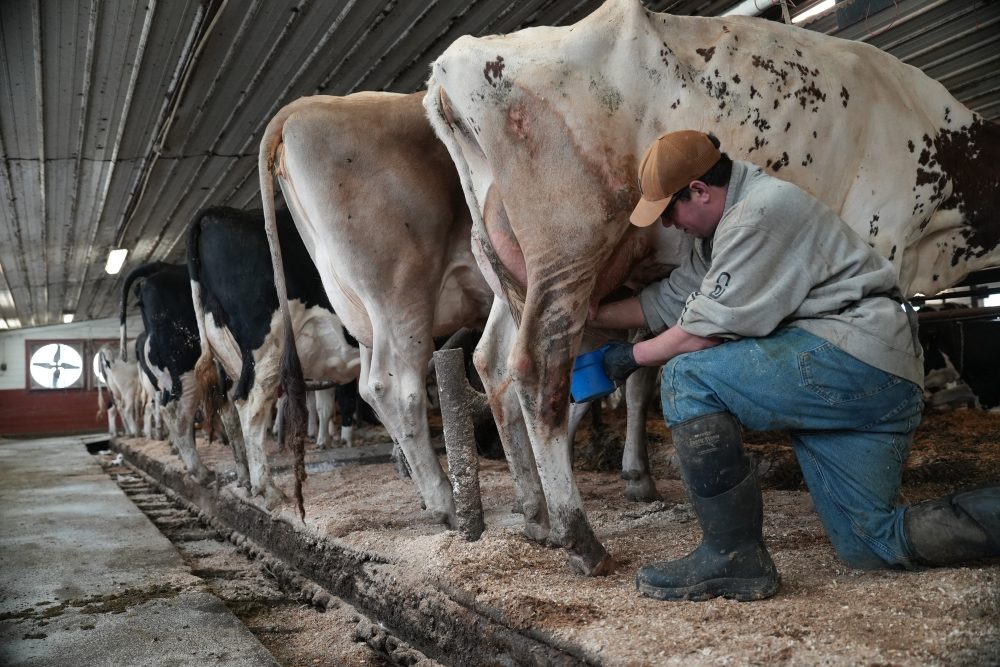

Advocates for unpasteurized milk are working to expand availability of the controversial product nationwide, despite ongoing health concerns and recent illness outbreaks affecting American children.
The Associated Press discovered that state lawmakers have introduced more than 40 pieces of legislation supporting expanded raw milk access. An increasing number of states are legalizing sales of the product, with dairy producers reporting they struggle to maintain inventory despite prices reaching $10 to $20 per gallon.
High-profile government figures and social media personalities are fueling this trend. Health Secretary Robert F. Kennedy Jr. consumed raw milk at the White House last May and has previously vowed to end what he calls “aggressive suppression” of the product. Social media discussions about unpasteurized milk have increased dramatically in recent months, frequently promoting unsubstantiated health benefit claims.
These developments concern public health authorities, who have consistently cautioned that unpasteurized milk may contain dangerous bacteria. A recent outbreak connected to raw milk cheddar cheese from California’s Raw Farm has infected nine individuals with E. coli, including five children under age 5. One patient developed severe complications that could permanently damage kidney function.
Washington University biology professor Petra Anne Levin questioned the product’s popularity.
“If you wouldn’t lick a cow’s underneath, why would you drink raw milk?” she said. “There’s a reason pasteurization is around.”
The pasteurization process eliminates harmful bacteria by heating milk to at least 161 degrees Fahrenheit for a minimum of 15 seconds. Scientists emphasize this treatment doesn’t significantly affect milk’s nutritional value and has prevented millions of foodborne illnesses.
However, some consumers prefer unpasteurized milk despite known dangers. Both supporters and opponents increasingly advocate for federal oversight of the product.
“People want access,” said Mary McGonigle-Martin, co-chair of Stop Foodborne Illness, a consumer advocacy organization. “Public health has lost the battle on raw milk.”
Eighteen states have introduced pro-raw milk legislation during current sessions, spanning both Democratic and Republican-controlled legislatures.
The AP examined legislation across all states using Plural bill-tracking software, analyzing proposals that expand or simplify access to unpasteurized milk and related products. More than 40 bills introduced through late April would facilitate purchasing, selling, or consuming raw milk.
Several proposals would authorize raw milk sales for human consumption for the first time. New Jersey’s Senate bill would establish a raw milk licensing program.
“You can buy cigarettes. You can buy alcohol. You can buy quote-unquote legalized marijuana,” said Republican state Senator Michael Testa, who sponsors the legislation. “Why shouldn’t someone be able to consume raw milk?”
If enacted, New Jersey would join over three dozen states permitting raw milk sales. Rutgers University food science professor Donald Schaffner predicts broader access will likely increase outbreak frequency.
Additional bills aim to manage or expand existing legal sales. Iowa House legislation would help farmers sell unpasteurized products by allowing sales at farm stores alongside items like meat.
Republican state Representative Chad Ingels, the bill’s sponsor, initially opposed legalizing raw milk due to safety worries.
“But it’s law now, and I’m very pro-local foods,” said Ingels, who expects his current bill to pass. “I just thought it made sense to allow those farm businesses to sell all their products in one location.”
Missouri has two bills permitting unpasteurized dairy sales in grocery stores, farmers’ markets, or similar venues, provided products include warning labels about potential harmful bacteria and herds undergo testing.
“We just want to make it more accessible, so that way, people have the freedom of choice,” said Republican state Representative Bryant Wolfin, who sponsored one proposal.
The legislation specifically references the Raw Milk Institute, defining standards based on the California organization’s guidelines or requiring farms to obtain institute certification.
Raw Farm owner Mark McAfee leads the organization, which claims to improve raw milk safety and quality. While Wolfin supports this approach, Schaffner argues the institute emphasizes advocacy over risk management, noting McAfee’s farm has been connected to multiple outbreaks.
The number of raw milk bills that will pass this year remains uncertain, but federal legislation is also under consideration.
A bipartisan House bill would prevent federal agencies or courts from restricting raw milk movement between states where sales are legal. Kentucky Republican Thomas Massie and Maine Democrat Chellie Pingree introduced the Interstate Milk Freedom Act in March.
Legal experts say the federal government could take additional steps to increase raw milk availability regardless of congressional action. The FDA could eliminate interstate sales restrictions or establish national standards while encouraging state enforcement.
FDA officials didn’t respond to inquiries about the likelihood of such measures.
Despite raw milk’s growing popularity, scientists and public health professionals advise against consumption. FDA and CDC websites document serious illness risks from various bacteria, including campylobacter, listeria, salmonella, and E. coli.
CDC research identified more than 200 raw milk-related outbreaks between 1998 and 2018, sickening over 2,600 people and hospitalizing 225 individuals.
Separate analysis revealed raw dairy products cause 840 times more illnesses and 45 times more hospitalizations compared to pasteurized alternatives.
Alex O’Brien, food safety coordinator for Wisconsin’s Center for Dairy Research, explained that children face particular vulnerability due to developing immune systems and frequent milk consumption.
Before milk safety standards were implemented over a century ago, approximately 25% of American foodborne illnesses involved dairy consumption, O’Brien noted. Currently, dairy products account for roughly 1% of such illnesses. Historical research shows 19th-century infant mortality rates were 30-60 times higher than today, with thousands dying annually from “summer diarrhea” primarily caused by heat-worsened bacterial milk contamination.
O’Brien, who grew up on a farm and has consumed raw milk, said drinking it once might not cause harm, but risks increase with repeated exposure.
Consumer advocate Martin believes understanding raw milk risks has become more challenging in today’s political environment.
“They can’t grasp it, or they think it’s so rare it won’t happen to them,” she said.
Martin’s son Chris nearly died in 2006 after consuming E. coli-contaminated raw milk from Organic Pastures, Raw Farm’s former name. For two decades, Martin has worked to educate people about dangers and hold suppliers responsible.
Mari Tardiff of Ashland, Oregon, spent five months hospitalized after drinking campylobacter-contaminated raw milk in 2008, seeking what she called “a natural probiotic.”
Doctors diagnosed Tardiff with Guillain-Barré syndrome from her campylobacter infection. She required ventilator support, experienced temporary paralysis and speech loss, and later used a wheelchair and hospital bed at home, needing her husband’s help turning every two hours to prevent pressure sores.
“Your whole life is completely blown apart,” she said.
Despite her experience, the 70-year-old said she wouldn’t advise other adults about raw milk consumption, though she worries about children receiving it.
“If you make a mistake, it’s one thing to come to terms with when you’re the one dealing with the consequences,” Tardiff said. “But holy moly … if I did something like that and one of my kids or my grandchildren was going through what I went through, I would never forgive myself.”
Raw milk supporters celebrate increasing availability. Even where retail sales for human consumption are prohibited, consumers can purchase products marketed for pets or join “herd share” programs that provide partial dairy herd ownership.
“I’ve been involved in raw milk for roughly 14 years,” said Ben Beichler of Creambrook Farm in Middlebrook, Virginia, which operates through herd shares. “To see how public perception and political perception has altered over the years with raw milk is quite exciting.”
Beichler emphasized safety as paramount.
“My family and my wife, who’s currently pregnant, drink about a gallon of our own raw milk every single day,” he said. “So if there’s anybody who has a vested interest in making sure our milk is safe, it is us.”
Beichler’s 150-cow operation works with veterinarians for regular herd examinations and maintains safety protocols including weekly laboratory testing for common bacteria.
In Foristell, Missouri, Tony Huffstutter said his family conducts daily bacterial testing in an on-site laboratory at Twisted Ash Farm & Dairy, where they maintain 15 cows and sell raw milk for $29 per gallon.
“You can’t just go out there, throw a bucket under the cow and start milking it,” he said. “There are so many steps in doing it right.”
He argued raw milk shouldn’t be regulated differently from other natural products like spinach, which has caused previous foodborne outbreaks.
“They don’t pasteurize the salad,” he said. “They don’t force you to only buy cooked salad.”
With raw milk gaining ground, Martin believes FDA regulation as strict as pasteurized dairy oversight might be the best approach.
McAfee agrees. “High standards and testing should be part of that,” he said.
Food safety expert Schaffner also supports regulation. While he has serious concerns about giving raw milk to children, he describes himself as “a raw milk libertarian” regarding adult consumption.
“It’s kind of like legalization of weed, right?” he said. “If people want it, we should find a way to regulate it and do it safely.”
However, he noted there’s already a reliable method for making raw milk safe.
“It’s called pasteurization,” he said. “And it works really well.”