A Louisiana sheriff and her top financial officer are facing serious criminal charges connected to one of the most significant prison escapes in recent American history.
Susan Hutson, who serves as sheriff in New Orleans, along with Chief Financial Officer Bianka Brown, received indictments Wednesday following a special grand jury investigation into the May 2025 incident where 10 detainees fled from the Orleans Parish Justice Center.
Louisiana Attorney General Liz Murrill announced that Hutson faces 30 felony charges while Brown was hit with 20 counts. The charges include criminal malfeasance, obstruction of justice, and conspiracy offenses.
A judge established bail amounts of $300,000 for Hutson and $200,000 for Brown. Both officials must give up their passports and cannot travel outside Louisiana’s borders.
“While Sheriff Hutson did not personally open the doors of the jail for the escapees, her refusal to comply with basic legal requirements and to take even minimal precautions in the discharge of her duties directly contributed to and enabled the escape,” Murrill said in a statement.
Neither the Orleans Parish Sheriff’s Office nor attorneys for the accused officials provided immediate comments following the indictment announcement. It remains uncertain whether Hutson and Brown will step down from their positions.
Michelle Woodfork, who won the sheriff’s election, is set to take the oath of office in early May, replacing Hutson.
The dramatic escape occurred on May 16 when inmates at the Orleans Parish Justice Center, a facility primarily housing individuals awaiting trial or sentencing, managed to break free by dismantling a sink and toilet from their cell wall and crawling through the opening they created.
Staff discovered the missing prisoners during regular morning roll call. The escapees included individuals facing murder charges, though authorities eventually captured all 10 fugitives.
Prior to Wednesday’s charges against the top officials, more than a dozen people had already faced prosecution as accomplices in the breakout, including detention facility staff members and family members of the escaped inmates. Among those charged was a maintenance employee who shut off water to the compromised cell when the inmates requested it.
The indictment details that Hutson faces 14 counts of malfeasance in office, along with multiple conspiracy charges, accusations of maintaining fraudulent public records, and obstruction of justice violations. Brown received similar charges.
Hutson, originally from Philadelphia, won the Orleans Parish sheriff’s race in December 2021 and began serving in May 2022. Her election marked historic firsts as Louisiana’s first African-American female sheriff and New Orleans’ first woman to hold the position.
Her career background includes work as both a defense lawyer and prosecutor before moving to Los Angeles, where she monitored the police department and oversaw detention facilities from 2007 to 2010. She returned to New Orleans in 2010 as an independent police monitor, spending a decade implementing reforms including specialized teams for officer-involved shooting investigations and mandatory body camera programs.
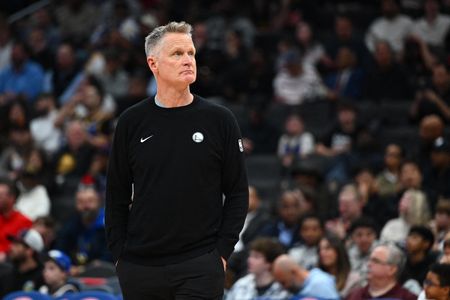
Golden State Warriors head coach Steve Kerr sat down with team owner Joe Lacob and general manager Mike Dunleavy for a lengthy two-hour discussion on Monday regarding his future role with the organization, sources revealed Wednesday.
The conversation was described as constructive despite numerous unresolved issues remaining on the table. The trio plans to reconvene for another meeting in the coming week.
Kerr currently has no contract in place for the upcoming season. The 60-year-old coach has spent 12 seasons leading Golden State and delivered four NBA championships to the franchise in 2015, 2017, 2018, and 2022. His regular-season coaching record stands at 604-353, a .631 winning percentage.
Despite his successful track record, the Warriors failed to reach the playoffs this year after falling to the Phoenix Suns in a play-in tournament game. This marks the second playoff absence in three seasons for the team.
The Warriors also struggled to a 37-45 record, finishing with a losing record for only the second time during Kerr’s coaching tenure.
Following Golden State’s elimination earlier this month, Kerr acknowledged the possibility that it could have been his final game leading the team.
“I still love coaching, but I get it,” Kerr said to reporters. “These jobs all have an expiration date. There is a run that happens, and when the run ends, sometimes it’s time for new blood and new ideas.”
Complicating matters further are veteran stars Stephen Curry and Draymond Green, who may be reluctant to enter a rebuilding phase under different leadership.
Another potential factor involves Kerr’s tendency to voice opinions on controversial political topics, often while positioned in front of the team’s official branding.
According to a SF Gate report from last week, senior organization officials have grown frustrated with Kerr’s ongoing commentary, including his criticisms of President Donald Trump. The report indicated these continued public statements have created “internal frustration” within the organization.
The Detroit Tigers suffered a double blow Wednesday when they moved pitcher Casey Mize and shortstop Javier Baez to the injured list following injuries sustained in Tuesday’s defeat against the Atlanta Braves.
Mize, age 27, was assigned to the 15-day injured list due to a right groin muscle strain. The 2025 All-Star showed signs of discomfort following a strikeout in the second inning and left the game in the third after making a throw to first base. His placement marks the eighth Tigers pitcher to land on the injured list and represents the second member of Detroit’s opening day starting rotation to be sidelined, alongside Justin Verlander who has been out since April 4 with left hip inflammation. Verlander participated in a bullpen workout on Wednesday.
“Probably the most optimistic news we can get on Casey, that it’s a Grade 1,” Detroit manager A.J. Hinch told reporters before Wednesday’s game in Atlanta.
The three-time All-Star Baez was moved to the 10-day injured list after his right shoe got caught in the ground while sliding headfirst into first base during the fifth inning following a weak grounder. The 33-year-old veteran showed clear signs of pain and was removed from the contest.
“Javy’s (injury) is a pretty significant ankle sprain, so I don’t know what that means in terms of timeline, other than it’s a minimum of 15 days and if he’s back by then, that’s great. If it takes longer, it’s because of swelling and soreness,” Hinch said.
Through six outings in 2026, Mize holds a 2-2 record with a 2.90 ERA, recording 35 strikeouts against 11 walks with a 1.194 WHIP across 31 innings pitched. During his six-year tenure with Detroit, who chose him first overall in the 2018 amateur draft, Mize has compiled a 25-27 record with a 4.11 ERA across 95 appearances (93 as a starter). In 471 career innings, he has registered 400 strikeouts, 132 walks and maintains a 1.282 WHIP.
This season, Baez is batting .256 with two home runs and six runs batted in through 24 contests. Selected ninth overall by Chicago in the 2011 draft, he maintains a career .252 batting average with 195 home runs, 691 RBIs and 116 stolen bases spanning 13 seasons. Beyond his time with the Cubs (2014-21) and current stint with Detroit (2022-present), Baez also spent time with New York’s Mets in 2021.
With Baez unavailable, rookie Kevin McGonigle stands as the only healthy shortstop on Detroit’s active roster while Zach McKinstry recovers from left hip and abdominal inflammation. Prospect Hao-Yu Lee, ranked sixth in the organization by MLB Pipeline, represents another potential short-term solution during the absences of both Baez and McKinstry.
To fill the roster spots, Detroit promoted left-handed pitcher Enmanuel De Jesus and third baseman Jace Jung from Triple-A Toledo.
Jung, 25, entered Wednesday’s starting lineup against Atlanta as the designated hitter for his first appearance of the season, while McGonigle received the starting assignment at shortstop. A first-round selection (12th overall) by Detroit in 2022, Jung made his major league debut in 2024. Entering Tuesday’s action, Jung had posted a .190 batting average with six RBIs across 55 games over two seasons.
De Jesus, 29, earned a spot on the opening day roster as a relief pitcher, compiling a 1-0 record with a 10.13 ERA through six outings covering eight innings. He reached the majors for the first time in 2023 with Miami, recording an 11.37 ERA in two relief appearances with the Marlins.
The Australian Securities Exchange announced Thursday that it has selected internal executive Darren Yip to serve as temporary chief executive officer beginning May 29.
Yip, who became part of the ASX team in 2023 and currently oversees the company’s markets and listings division, will step into the role previously held by Managing Director and CEO Helen Lofthouse, who revealed her resignation plans in February.
The company indicated that Yip will guide ASX operations temporarily starting at the end of May while board members continue their search for a long-term chief executive.
“This appointment supports a planned process with ample time for handover activities in the coming month,” ASX said.
Following the announcement, the exchange operator’s stock value jumped by as much as 3.9% to reach A$60.080 in early trading, marking the highest level since September 24, 2025. The stock appeared headed for its best performance since April 9, based on current trading patterns.
Lofthouse stepped down in February following more than a decade with the exchange company. The organization did not provide specific reasons for her exit when it was announced.
The Australian stock exchange has encountered regulatory challenges in recent years due to various operational problems, including a corporate name confusion incident in August 2025 and a system failure affecting its announcements platform in early December.
Wide receiver George Pickens has put pen to paper on his franchise tag agreement with the Dallas Cowboys, securing a guaranteed $27.3 million payday for the 2026 season, the team announced Wednesday.
The 25-year-old pass-catcher is fresh off a breakout Pro Bowl campaign in 2025, his debut season in Dallas. Pickens hauled in 93 receptions from 137 targets, accumulating 1,429 receiving yards and nine touchdowns across 17 games with 15 starts — marking personal records in every statistical category.
Cowboys management has made clear they have no plans to pursue a long-term contract with Pickens currently, and trading him is not under consideration. The receiver, who would have entered free agency without the tag, still has until the league’s July 15 deadline to negotiate an extended deal with Dallas if the organization reconsiders its position.
“We have no intention of moving George,” Cowboys chief operating officer and co-owner Stephen Jones stated during a press conference after the NFL draft’s opening day last week. “We’re fired up about him signing his (tag), because it means he’s ready to come in here and get to work. … We have zero intention of moving (him).”
The Cowboys applied the franchise designation to Pickens on February 27, marking the first time the organization had utilized the tag since 2022 when they tagged tight end Dalton Schultz.
Originally drafted by Pittsburgh in the second round of the 2022 NFL Draft from the University of Georgia, Pickens spent his initial three professional seasons with the Steelers. Throughout his four-year career, he has accumulated 267 catches for 4,270 yards and 21 touchdowns across 65 games with 55 starts.
The Steelers dealt Pickens to Dallas on May 7, 2025, in a trade that also included a 2027 sixth-round selection in exchange for a 2026 third-round pick (which became the 76th overall selection used on quarterback Drew Allar) and a 2027 fifth-round choice.
Federal prosecutors have indicted three members of a Minnesota family for allegedly attacking a conservative media contributor during an anti-immigration enforcement demonstration, court documents revealed Wednesday.
Christopher Ostroushko, his wife DeYanna, and their daughter Paige each face federal assault charges following an April 11 incident involving Turning Point USA writer Savanah Hernandez. Federal prosecutors also charged Christopher and Paige with interfering with federally protected activities.
Additionally, Christopher Ostroushko is facing separate state-level misdemeanor assault charges through the Hennepin County Attorney’s Office.
Defense lawyers for the family stated they plan to vigorously fight the charges, noting that an indictment does not constitute a conviction.
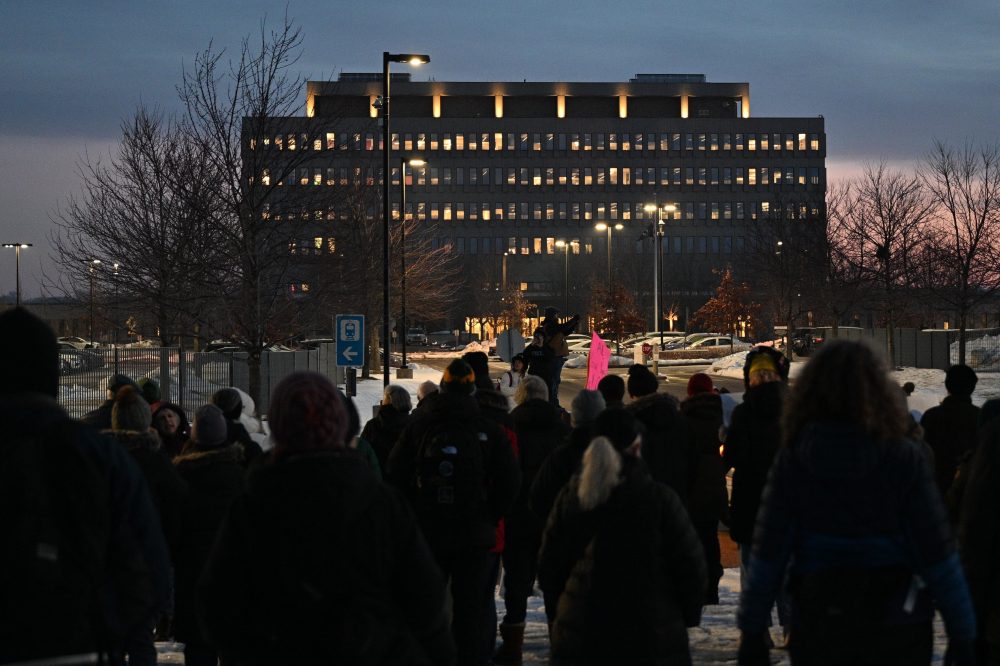
The confrontation occurred during ongoing demonstrations against the Trump administration’s immigration policies near the Twin Cities. Protesters have regularly gathered outside the Bishop Henry Whipple Federal Building at Fort Snelling, where Immigration and Customs Enforcement operates a temporary detention facility.
Video evidence recorded by Hernandez on April 11 shows the incident escalating when Paige approached the journalist and blew a whistle directly at her face. Additional footage from different angles captures Hernandez attempting to shield herself and pushing back as the situation intensified.
During the altercation, Hernandez can be heard saying, “Get away from me.”
The video shows Paige shoving Hernandez, causing her to fall backward into a fence.
Subsequently, both parents confronted Hernandez separately, with Paige engaging again in the conflict.
According to the Hennepin County Attorney’s Office, Christopher Ostroushko “forcefully shoved the victim in the back, head first to the ground.” Prosecutors determined there was not enough evidence to pursue state charges against the other family members.
Bystanders at the scene attempted to calm the situation and separate those involved.
Following the April incident, Hernandez reported on social media that her eyeglasses were damaged, she sustained a concussion along with neck and back pain, and suffered leg abrasions. She indicated she was working with law enforcement to file charges.
Family attorney James Cook argued that circulated videos don’t capture the complete story and expressed confidence in mounting a strong defense.
“We think that there’s a lot of things in the videos that provide a means to exonerate,” he stated.
Cook explained that the Ostroushkos were frequent demonstrators at the federal building, participating to “provide a voice and a demonstration against Metro Surge.” He noted the family has faced online harassment since the incident, and both parents have lost their employment.
“They wish they could turn back the clock,” Cook said. “They wish that things didn’t turn out how they did.”
The family is scheduled to appear before a federal judge on May 12.
Acting Attorney General Todd Blanche released a statement Wednesday declaring that the Justice Department will consistently “punish unhinged acts of political violence.”
“Hernandez was allegedly surrounded, physically assaulted, and shoved to the ground — simply because she was identified by the defendants as a conservative journalist,” Blanche said. “That is NOT ‘peaceful protest.’”
In response to the charges, Hernandez posted that she was “incredibly grateful to see our justice system at work.” She did not respond to requests for additional comment.
WASHINGTON — President Donald Trump issued a fresh warning to NATO partner Germany on Wednesday, indicating he may decrease American military forces stationed there amid ongoing tensions with Chancellor Friedrich Merz regarding the U.S.-Israel conflict with Iran.
The president’s warning followed Merz’s earlier comments this week claiming Iranian leadership was “humiliating” the United States and condemning Washington’s apparent lack of clear strategy in the conflict. Trump has also consistently criticized NATO members for their unwillingness to support America in the two-month military engagement.
“The United States is studying and reviewing the possible reduction of Troops in Germany, with a determination to be made over the next short period of time,” Trump declared on social media.
Earlier Wednesday, Merz stated his personal ties with Trump continued to be “as good as ever,” though he acknowledged having “had doubts from the very beginning about what was started there with the war in Iran.”
This isn’t Trump’s first attempt to reduce American forces in Germany. During his initial presidency, he previously sought to decrease U.S. troops there, arguing the nation wasn’t spending adequately on its own defense.
In June 2020, Trump revealed plans to withdraw approximately 9,500 of the roughly 34,500 American service members deployed in Germany at that time, though the reduction never began. President Joe Biden officially halted the proposed withdrawal after assuming office in 2021.
Germany hosts multiple significant American military installations, including headquarters for both U.S. European Command and U.S. Africa Command, along with Ramstein Air Base and Landstuhl Regional Medical Center, which serves as the largest U.S. hospital beyond American borders.
Merz visited Trump at the White House in March, shortly after the U.S. and Israel launched their bombing campaign against Iran. During that meeting, Merz expressed Germany’s willingness to collaborate with America on planning for the eventual fall of Iran’s current government. He also voiced concerns that prolonged warfare could severely harm the worldwide economy.
Those worries, shared by numerous European officials, have intensified as the U.S. and Iran remain unable to negotiate the reopening of the Strait of Hormuz, the vital shipping channel that previously carried roughly 20% of global oil supplies before hostilities commenced on February 28.
“We are suffering considerably in Germany and in Europe from the consequences of, for example, the closure of the Strait of Hormuz,” Merz stated Wednesday, just hours before Trump posted his warning online. “And in that regard, I urge that this conflict be resolved.”
Merz emphasized that his administration maintained “good speaking terms” with the Trump administration.
Meanwhile, Trump has made little effort to hide his irritation with the German leader.
On Tuesday, he posted: “The Chancellor of Germany, Friedrich Merz, thinks it’s OK for Iran to have a Nuclear Weapon. He doesn’t know what he’s talking about!” Trump continued by saying it came as no surprise “that Germany is doing so poorly, both economically and in other respects!”
The United States is working to build a new international partnership designed to restore ship traffic through the Strait of Hormuz, according to a Wednesday report from the Wall Street Journal.
Maritime traffic has come to a standstill in the critical waterway, prompting American officials to reach out to other nations for support in forming what they’re calling the “Maritime Freedom Construct,” the newspaper reported.
According to the Journal’s reporting, which cited an internal State Department communication, this proposed alliance would focus on sharing intelligence, working together diplomatically, and assisting with sanctions enforcement efforts.
Reuters has not been able to independently confirm the Wall Street Journal’s reporting at this time.
SALISBURY, Md. – The Salisbury University Sea Gulls men’s lacrosse team delivered a commanding performance Wednesday night, overwhelming Stockton University 18-5 in the Coastal Lacrosse Conference semifinal at Sea Gull Stadium.
The fifth-ranked Sea Gulls showcased exceptional defensive play throughout the contest, shutting down the third-seeded Stockton offense while building a substantial lead. The lopsided victory propels Salisbury into the CLC championship game.
The Sea Gulls controlled the game from start to finish, demonstrating why they hold a top-five national ranking. Their defensive unit effectively neutralized Stockton’s offensive threats, limiting the visiting team to just five goals while Salisbury’s attack found the net 18 times.
With this decisive semifinal win, Salisbury advances to compete for the Coastal Lacrosse Conference title, continuing their pursuit of postseason success.
FRISCO, Texas — Wide receiver George Pickens has officially put pen to paper on his $27.3 million franchise tag deal with the Dallas Cowboys, virtually guaranteeing the Pro Bowl player will attend required offseason activities as team leadership continues to insist they won’t consider trading CeeDee Lamb’s teammate.
The receiver notified Dallas of his intention to accept the one-year agreement just hours before the NFL draft began last week, which fueled rumors about a potential trade since executive vice president Stephen Jones had stated just one day prior that the organization wouldn’t pursue long-term contract negotiations with Pickens during this offseason.
The 25-year-old wideout, who came to Dallas through a trade with Pittsburgh last season, posted personal bests with 93 receptions, 1,429 receiving yards, and nine touchdowns as part of one of the NFL’s most productive offensive units. However, Dallas struggled defensively, ranking among the league’s worst units and finishing with a 7-9-1 record that left them out of playoff contention for consecutive seasons.
Pickens flourished playing opposite Lamb, who is entering his second season under a massive $136 million, four-year deal that places him third among NFL receivers with a $34 million annual average.
The franchise tag represented a significant financial motivation for Pickens, offering guaranteed compensation that dwarfs his previous earnings of $6.8 million over his entire rookie contract as a second-round selection from Georgia in 2022.
With the contract now signed, Pickens becomes eligible to join the voluntary offseason program that commenced this week.
Team owner and general manager Jerry Jones has consistently expressed throughout the offseason that the organization views Pickens as part of their long-term strategy. Jones indicated he wouldn’t have extended such a substantial offer under the franchise tag without confidence that Pickens will remain with Dallas beyond 2026.
The Cowboys have previously used the franchise tag with quarterback Dak Prescott and defensive end DeMarcus Lawrence over the past eight years, with both players eventually securing long-term agreements. Conversely, tight end Dalton Schultz and running back Tony Pollard each played under the tag before departing via free agency the following season.
Stephen Jones cited the “newness” of Pickens’ time with the Cowboys as a contributing factor in their choice to pursue a one-year arrangement rather than an extended contract at this time.
While Pickens demonstrated his abilities during three seasons in Pittsburgh, he also displayed concerning episodes of immature or disengaged conduct that prompted former coach Mike Tomlin to publicly question his development.
First-year head coach Brian Schottenheimer, following 25 years as an NFL assistant, has avoided publicly criticizing Pickens. However, both Pickens and Lamb faced discipline when they were benched for the opening series against Las Vegas after violating team curfew during a casino visit the previous evening.
Brazilian labor officials filed a significant legal action Wednesday targeting JBS, the world’s biggest meatpacking corporation, alleging the company purchased livestock from ranches operating under slavery-like working conditions.
The civil lawsuit, filed in a labor tribunal in Para state in northern Brazil, demands compensation of nearly 119 million reais (approximately $24 million), representing the complete value of business dealings between JBS and the problematic suppliers, according to prosecutors.
Court documents reveal that 53 workers were freed from ranches owned by seven cattle suppliers who conducted business with the meat processing giant from 2014 to 2025. These ranch owners appeared on Brazil’s government database of employers found guilty of subjecting employees to slavery-like working environments, prosecutors stated.
The legal filing accused JBS of displaying “a systematic pattern of negligence.” Company representatives have not yet provided a response to requests for comment.
Brazil leads global beef production, responsible for approximately 20% of worldwide output. The South American country has recently overtaken the United States, which now produces roughly 19% of the world’s beef supply, based on U.S. Department of Agriculture data.
Brazilian labor prosecutors emphasized in their statement that cattle ranching generates the largest number of worker rescues across the country and serves as a significant factor in Amazon rainforest destruction. Para state falls within the Amazon basin.
In March, the Office of the United States Trade Representative placed Brazil among 60 nations being examined for forced labor practices.
JBS holds the position as the globe’s largest meat processing corporation, valued at roughly $17 billion in market worth. The company runs facilities throughout the United States, including operations in Colorado, where employees conducted a three-week work stoppage earlier this year.
Brazilian President Luiz Inácio Lula da Silva suffered a major political setback Wednesday when the nation’s Senate voted down his Supreme Court appointment in an unprecedented rejection spanning more than a century.
The Senate cast 42 votes against Jorge Messias, the country’s solicitor-general since 2023 and a trusted legal adviser to Lula, while only 34 lawmakers supported the nomination. The appointment required 41 favorable votes to succeed.
President Lula, who is campaigning for a fourth non-consecutive term in the upcoming October election, had selected Messias to fill the vacancy left by Luís Roberto Barroso’s resignation last November. The Supreme Court has been functioning with just 10 justices since Barroso’s departure.
The 46-year-old Messias had previously gained approval from a Senate committee, but lawmakers ultimately rejected him in a confidential ballot by the full chamber.
Messias received backing from other Supreme Court justices in addition to President Lula, and made efforts to win support from evangelical legislators who share his religious background.
The president must now select a different candidate, who will face the same confirmation process and Senate vote.
The last instance of Brazil’s Senate turning down a Supreme Court nomination occurred in 1894 during the presidency of Floriano Peixoto, the nation’s second president, amid conflicts with congressional leaders.
A senior government official announced Wednesday that Canada will serve as the home base for NATO’s newly proposed financial institution designed to lower military borrowing expenses for alliance nations.
The unnamed official revealed that nearly 20 founding NATO members participated in Canada-hosted discussions that led to the selection for the Defense, Security and Resilience Bank headquarters location.
This new banking institution aims to assist NATO countries and their partners in fulfilling defense budget obligations while cutting military expenditure costs through combined credit resources.
Speaking anonymously to The Associated Press due to lack of authorization before formal announcements, the source indicated uncertainty about which Canadian city would house the facility.
Ontario Premier Doug Ford responded to reports of Canada’s selection by advocating for Toronto as the location through social media, describing the opportunity as positioning Canada at the heart of international defense financing and production.
“As our nation’s financial capital, with a skilled workforce and unparalleled global connectivity, there’s no better place for the bank to be headquartered than Toronto,” Ford stated.
Prime Minister Mark Carney’s administration has committed to achieving NATO military spending requirements.
Alliance nations, Canada included, have promised to allocate 5% of their gross domestic product toward defense. Carney announced last year that the government would reach the previous 2% benchmark this year, then later pledged Canada would achieve the 5% goal by 2035.
European partners and Canada have significantly increased military investments, including weapons and ammunition purchases, following Russia’s comprehensive attack on Ukraine beginning February 24, 2022.
President Donald Trump has previously criticized Canada for insufficient military expenditures.
A federal judge in Washington D.C. handed down a four-year prison sentence Wednesday to a Romanian citizen who orchestrated fake emergency calls targeting numerous high-ranking American officials, federal prosecutors announced.
Thomasz Szabo, age 27, coordinated what authorities describe as an extensive campaign of fraudulent threats aimed at congressional members, cabinet officials, federal judges, and top law enforcement administrators.
The defendant had become heavily involved in swatting – a hazardous type of cyber harassment that has grown into a significant threat facing public servants throughout the United States political landscape.
Federal prosecutors had sought nearly five years behind bars for Szabo, who entered guilty pleas in June to conspiracy and threatening charges. U.S. District Judge Amy Berman Jackson also ordered three years of supervised release following his incarceration, according to U.S. Attorney Jeanine Pirro’s office.
“This administration will not tolerate attacks on the institutions and individuals who serve this country,” Pirro said in a statement.
Starting in 2018 while based in Romania, Szabo established online chat platforms where he and similar-minded individuals engaged in internet harassment activities. His digital operations evolved by late 2020 to include swatting schemes, where participants place false emergency reports designed to trigger heavily armed police responses at victims’ residences. Additional conspirators assisted in placing the fraudulent calls.
“Despite (or because of) the fact that they resulted in far greater harm to the victim and society, these activities offered much more entertainment value to the defendant and his followers, since swatting and bomb threats often resulted in an observable real-world impact,” prosecutors wrote.
Authorities also charged Nemanja Radovanovic of Serbia in connection with Szabo’s case, though that matter remains pending.
A separate Florida case involved another Szabo collaborator. Alan Filion received a four-year sentence in February 2025 at age 18 after admitting guilt for approximately 375 swatting incidents between August 2022 and January 2024. Though Filion was underage during his criminal activities, he entered adult guilty pleas.
Court documents reveal that in December 2023, Szabo advised Radovanovic they should select victims from both major political parties because “we are not on any side.” The following day, Radovanovic and Filion launched a swatting campaign against at least 25 congressional members or their family members, plus dozens of additional state and federal government personnel, according to prosecutors.
“Over and over, police departments and other first responders were hijacked by the defendant and deployed to fictitious emergencies,” prosecutors wrote. “As a result, fewer personnel and resources were available to respond to real emergencies.”
Secret Service agents interviewed Szabo on January 19, 2024, after Romanian law enforcement searched his residence. Officials said he was extradited from Romania to the United States in November 2024.
A Louisiana sheriff is facing serious criminal charges after a state investigation revealed her mismanagement led to a dramatic escape of 10 inmates from a New Orleans detention facility.
Orleans Parish Sheriff Susan Hutson was hit with a 30-count indictment Wednesday by a grand jury, facing charges of malfeasance, obstruction of justice, and falsifying public records. While prosecutors say Hutson didn’t directly assist in the escape, Louisiana Attorney General Liz Murrill determined that inadequate jail oversight made the breakout possible.
“While Sheriff Hutson did not personally open the doors of the jail for the escapees, her refusal to comply with basic legal requirements and to take even minimal precautions in the discharge of her duties directly contributed to and enabled the escape,” Murrill said in a statement.
The dramatic escape involved inmates crawling through an opening they created behind a restroom toilet, then climbing over razor wire fencing to freedom. Adding insult to injury, the escapees left behind mocking graffiti reading “To Easy LoL” at the scene. Perhaps most troubling, jail staff failed to discover the missing prisoners for more than seven hours.
Hutson has been ordered to surrender her passport and remain within state boundaries, with bail set at $300,000. The sheriff’s office chief financial officer, Bianka Brown, also faces 20 similar charges in connection with the incident.
Following the breakout, Hutson drew criticism for her delayed notification to law enforcement and for initially suggesting political enemies orchestrated the escape without offering proof. She also pointed to defective door locks and inadequate funding for facility improvements as contributing factors.
The Orleans Parish detention system has struggled with violence, corruption, and operational failures for years, prompting federal supervision beginning in 2013. Despite significant financial investment and a new facility opening in 2015, federal monitors had previously flagged concerns about insufficient staffing, poor oversight, and increasing incidents of “internal escapes” in the years preceding this major breakout.
All escapees were eventually recaptured after an extensive manhunt. Hutson, who lost her bid for reelection, is scheduled to step down from her position Monday.
Neither Hutson nor Brown immediately responded to requests for comment, and court documents did not identify personal attorneys for either defendant.
The massive USS Gerald R. Ford will return to its Virginia home base following an unprecedented deployment lasting more than 300 days, during which the vessel participated in military operations against Iran and the capture of Venezuelan leader Nicolás Maduro, according to two U.S. officials who spoke Wednesday.
The enormous aircraft carrier will depart the Middle East within days and arrive at Naval Station Norfolk in Virginia by mid-May, said the officials, who requested anonymity when discussing classified military operations. The Washington Post first reported this development.
Last week’s arrival of the USS George H.W. Bush created an unusual situation with three American aircraft carriers stationed in the Middle East simultaneously — a concentration not witnessed since 2003 — as a fragile ceasefire continues in the Iran conflict. The USS Abraham Lincoln has also maintained a presence in the area since January amid rising tensions with Tehran.
Earlier this month, the Ford established a new U.S. military record for the longest deployment since the Vietnam War ended, spending nearly 10 months away from Naval Station Norfolk after departing in June.
The vessel’s 295th day at sea exceeded the previous record for aircraft carrier deployments over the past five decades, surpassing the Lincoln’s 294-day mission in 2020 during the COVID-19 pandemic, based on information gathered by U.S. Naval Institute News, a publication of the nonprofit U.S. Naval Institute.
The Ford’s extended mission has sparked concerns about the effects on military personnel spending prolonged periods away from their families, as well as increased wear on the ship and its systems, particularly after the carrier suffered a fire requiring extensive repairs.
During Wednesday’s House Armed Services Committee hearing, Defense Secretary Pete Hegseth addressed questions about the Ford’s lengthy deployment, explaining he had discussed the matter with Navy leadership who acknowledged challenges related to readiness and maintenance.
“Multiple times the operational requirements — whether it was down in Southcom or up to Centcom — demanded additional assets in real time, which through a tough decision-making process led to an extension,” Hegseth stated, referencing U.S. Southern Command’s oversight of Latin America and U.S. Central Command’s Middle East operations.
The Ford initially sailed to the Mediterranean Sea when its deployment began, but was redirected to the Caribbean Sea in October during what became the region’s largest naval presence in decades.
The carrier participated in military actions to apprehend Maduro before encountering additional combat situations as it moved toward the Middle East amid escalating Iranian tensions.
From the Mediterranean Sea, the carrier engaged in initial phases of the Iran conflict before traveling through the Suez Canal and entering the Red Sea in early March.
A fire in the ship’s laundry facilities, however, forced the vessel to reverse course and return to the Mediterranean for repairs, displacing hundreds of sailors from their sleeping quarters.
While the Ford’s 295-day mission sets a post-Vietnam record, it remains shorter than Cold War-era deployments, particularly the decommissioned USS Midway’s 332-day mission spanning 1972 and 1973.
The USS Nimitz crew spent 341 days away from home during 2020 and 2021, though that period included extended quarantine time on U.S. soil designed to limit COVID-19 transmission.
Several states wasted no time responding to Wednesday’s Supreme Court decision that severely curtails the consideration of race when creating congressional districts, undermining decades-old civil rights protections that enhanced minority representation in Congress.
The high court’s ruling targeted a predominantly Black congressional district in Louisiana, but its impact is already reverberating across multiple states where officials had been anticipating this exact outcome.
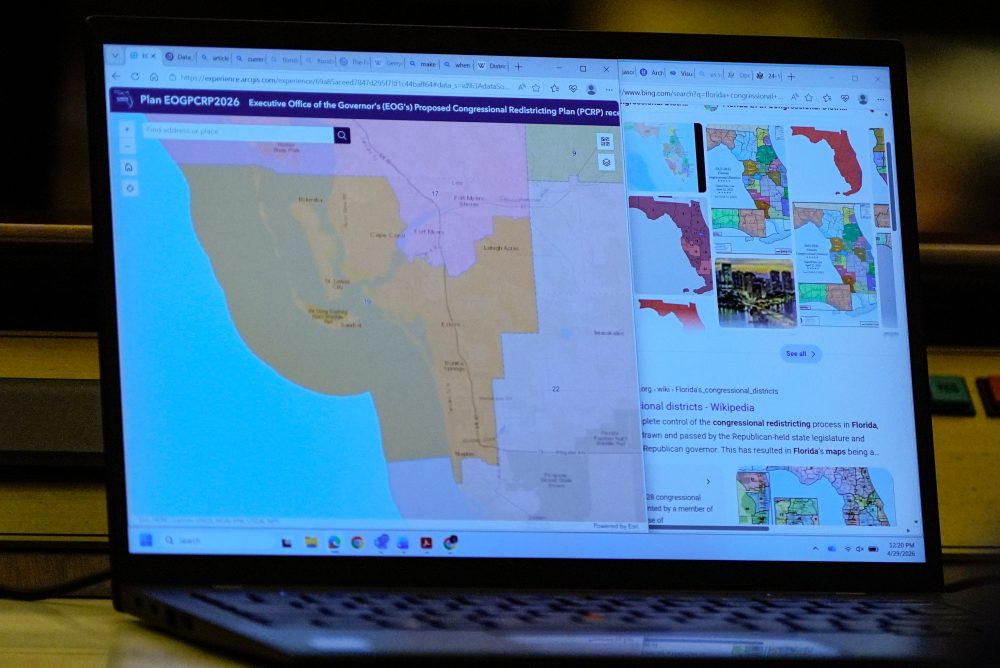
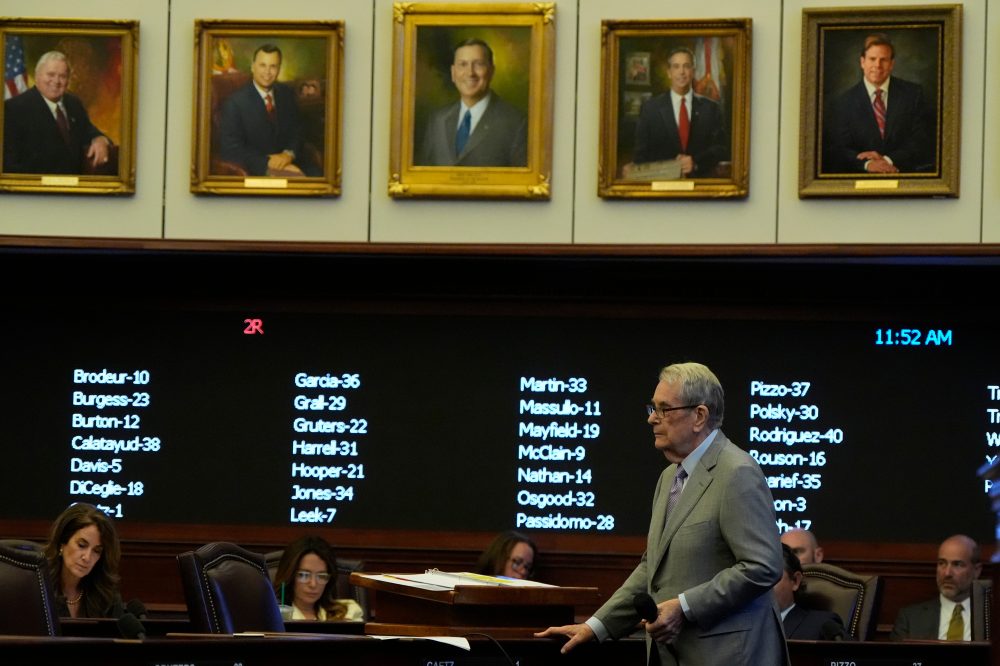
Florida’s Republican-controlled Legislature moved within hours of the decision, passing new congressional maps that could deliver the GOP as many as four extra House seats in upcoming elections. Governor Ron DeSantis had strategically scheduled a special legislative session, betting the Supreme Court would rule in his favor.
DeSantis revealed his proposed House map earlier this week, which restructures a southeastern Florida district he claimed was designed specifically to ensure Black representation under federal voting rights law.
“Properly understood, the Fourteenth Amendment forbids the government from divvying up the citizenry based in whole or in part upon race,” DeSantis stated in his Monday correspondence to state legislators.
Florida voters passed a constitutional amendment in 2010 that prevents districts from being designed to weaken racial or language minorities’ voting power. However, DeSantis has maintained this amendment conflicts with federal constitutional law.
Ruth Greenwood, who heads Harvard Law School’s Election Law Clinic, cautioned that the Supreme Court’s decision doesn’t automatically invalidate state constitutional safeguards against racial discrimination in voting districts.
Mississippi Governor Tate Reeves had already announced plans for a special legislative session to redesign the state’s Supreme Court districts, scheduled to begin three weeks after the federal court ruling. A federal judge previously mandated Mississippi redraw these districts after determining they violated the Voting Rights Act by weakening Black voter influence.
Reeves indicated in his announcement that the Supreme Court’s guidance would help lawmakers understand whether “race-conscious redistricting” contradicts constitutional principles.
Louisiana legislators postponed their primary elections from April to May, expecting to need time to respond to the Supreme Court’s decision on their congressional maps. With early voting beginning Saturday, it remains uncertain whether the Republican-led legislature can modify districts before November’s general election.
House Speaker Phillip DeVillier and Senate President Cameron Henry released a joint statement saying they’re examining the ruling and consulting advisors to “determine next steps to be taken in the best interests of Louisiana voters and our state.” Governor Jeff Landry similarly announced he’s discussing options with legislative leaders.
Alabama faces a complex situation, as a federal court in 2023 mandated creation of a new district with a near-majority Black population, resulting in the election of the state’s second Black House representative. While Alabama must use this map through 2030, a pending Supreme Court appeal challenges it as illegal racial gerrymandering.
Alabama Attorney General Steve Marshall welcomed Wednesday’s Louisiana decision, stating he will “act as quickly as possible to apply this ruling to Alabama’s redistricting efforts and ensure that our congressional maps reflect the will of the people, not a racial quota system the Constitution forbids.”
Governor Kay Ivey noted the state isn’t positioned for an immediate special session, with primaries scheduled for May 19.
In Tennessee, where the legislative session concluded last week, Republican Senator Marsha Blackburn called via social media for lawmakers to reconvene and redraw the state’s sole Democratic congressional district to favor Republicans. This district encompasses Memphis, which has a Black majority population.
Tennessee’s Republican legislative leaders acknowledged discussing redistricting possibilities, though Senate Speaker Randy McNally highlighted logistical hurdles since candidate filing deadlines have passed and the primary approaches in August.
“With the filing deadline passed and qualified candidates already running for election, redistricting congressional seats at this time would present several logistical challenges,” McNally explained.
Illinois Democrats, anticipating the Supreme Court might weaken voting rights protections, approved a proposed state constitutional amendment last week that would safeguard race-based redistricting. The measure prioritizes creating districts where voters can elect representatives of their choice “on account of race,” ranking minority-majority districts above geographical considerations.
However, Senate President Don Harmon announced Wednesday the amendment won’t advance this session, allowing legal experts time to analyze the court’s decision.
“The last thing we want is to act in haste and risk unintended consequences down the road,” he stated. “Too much is at stake for too many.”
Flying glass fragments surrounded Eric Gockel as he endured what meteorologists are calling one of Missouri’s most devastating hailstorms on record.
The massive ice chunks that pummeled the Springfield region on Tuesday reached an enormous 4.75 inches in diameter. The destructive storm claimed the life of a zoo emu, left several motorists injured, cut electricity to thousands of residents, and caused extensive damage to hundreds of cars and aircraft.
“I consider myself fortunate to have escaped without injury,” said Gockel on Wednesday, describing how his windshield was destroyed while he sheltered in his vehicle on a highway shoulder during the storm’s passage.
The destructive spring weather pattern affecting the South and Midwest brought what emergency officials are calling Springfield’s most severe hailstorm ever recorded, though it didn’t break the state’s overall record. National Weather Service meteorologist Mark Burchfield in Springfield explained that Missouri’s record remains the 6-inch hail documented in 2004 near Maryville.
“This type of storm is extremely uncommon,” Burchfield explained regarding the Springfield event. “We witnessed a supercell thunderstorm with significant wind shear and tremendous energy that kept the hailstones suspended in the atmosphere for an extended period.”
Zoo staff at Springfield’s Dickerson Park Zoo attempted to bring animals indoors, including a 21-year-old female emu named Adam. However, spokesperson Joey Powell explained in a statement to The Associated Press that emus instinctively flatten themselves to the ground when seeking protection.
Adam succumbed to severe head injuries from the hail impact. Meanwhile, Oscar, a 17-year-old rhea (another flightless bird species), sustained hail injuries but was responding well to pain treatment Wednesday morning while the zoo remained temporarily closed.
The Springfield-Branson National Airport, located approximately 5 miles northwest of downtown, experienced some of the most severe destruction.
Airport public information officer Ren Luebbering reported that dozens of flights faced delays or cancellations, while hundreds of parked vehicles suffered shattered windshields and sunroofs.
Because rental vehicles were also damaged, some travelers required bus transportation roughly 100 miles to Bentonville, Arkansas’s airport. Luebbering described how airport personnel worked for three hours to cover the most severely damaged cars with donated tarps.
“Our team distributed approximately 300 to 400 tarps across the parking areas,” Luebbering stated. The airport posted online advisories warning visitors to “Expect damage to your vehicle.”
Nicolette Zangara from the Springfield-Greene County Office of Emergency Management said she anticipated trouble from the beginning.
“The radar imagery clearly showed the hail was increasing in size,” Zangara explained. “When we began receiving photographs from surrounding counties showing their hail damage, we immediately recognized this would be a devastating storm.”
She confirmed that several individuals contacted 911 reporting injuries from hail shattering their windshields, though specific injury counts weren’t available. Vehicle damage appears to represent the most widespread destruction, with Zangara describing her own car as so heavily dented it resembles “the surface of a golf ball.”
“Late April seems particularly unlucky for our region,” she observed, referencing severe spring storms that struck the area exactly one year earlier.
Since the storm passed, Gockel has been busy filing multiple insurance claims. The hail completely destroyed his home’s gutters, and contractors are scheduled to assess his roof damage.
As a pizza business owner, Gockel reported damage to his food truck, work vehicles, and his teenage daughter’s first car, which he had purchased for her just one month ago.
Despite being accustomed to severe weather alerts, Gockel typically responds by watching storms from his front porch rather than seeking shelter.
“Usually nothing dramatic actually happens,” he reflected. “This marks the first time I’ve experienced a storm that truly matched the severity of the advance warnings.”
The University of Delaware men’s golf squad wrapped up their debut season in Conference USA with a 10th place performance at the 2026 Conference USA Men’s Golf Championship in Texarkana, Arkansas.
Playing at the challenging par-72 Texarkana Country Club, which measures 6,969 yards, the Fightin’ Blue Hens recorded a combined three-round total of 876 strokes, finishing 12 shots above par for the tournament.
The championship marked the conclusion of Delaware’s first campaign as a Conference USA member, representing a significant milestone for the program as they compete at the highest level of collegiate golf in their new conference affiliation.
Motorists using Route 72 eastbound should expect delays this afternoon as construction crews have shut down the right lane in a section of Wrangle Hill Road.
The Delaware Department of Transportation reports that the lane closure affects the stretch between Sunnyside Lane and McCoy Road, with work expected to continue until 3 PM today.
Drivers are advised to use caution when traveling through the construction zone and allow extra time for their commute. Traffic is being directed around the work area using the remaining open lanes.
Defense Department leaders disclosed to lawmakers that military operations against Iran have reached an estimated price tag of $25 billion during budget hearings on Capitol Hill.
Pentagon officials made the financial revelation while testifying before Congress about defense spending priorities and budget allocations.
Woolworths, Australia’s largest grocery retailer, announced Thursday that its quarterly sales jumped 4.5%, surpassing what financial analysts had predicted for the company.
The retail giant generated A$18.10 billion (equivalent to $12.89 billion USD) in total sales during the 13-week period that concluded on April 5. This represents a significant increase from the A$17.31 billion recorded during the same timeframe last year.
Financial experts had anticipated the company would reach approximately A$17.98 billion in sales, according to Visible Alpha consensus estimates, making the actual results a pleasant surprise for investors.
Company officials attributed the strong performance to sustained positive trading patterns, particularly within Woolworths’ primary Australian Food division, which experienced accelerated growth throughout the quarter.
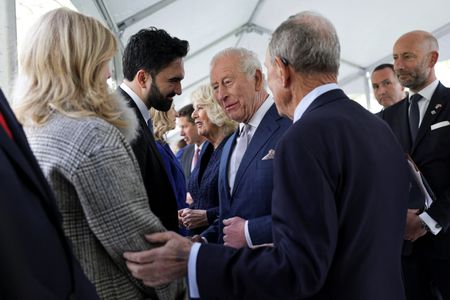
During King Charles III’s current visit to the United States, New York City Mayor Zohran Mamdani publicly urged the British monarch to give back a controversial diamond that has sparked international debate for decades.
Speaking at a Wednesday press conference before a September 11th memorial ceremony, the Indian American mayor addressed the issue of the Koh-i-Noor Diamond when questioned by reporters.
“If I were to speak to the king separately from that, I would probably encourage him to return the Koh-i-Noor Diamond,” Mamdani stated during the media briefing.
The mayor and King Charles later met face-to-face during the memorial service honoring victims of the 2001 terrorist attacks. However, Mamdani’s office has not disclosed whether the diamond controversy was discussed during their encounter. Buckingham Palace has refused to provide any statement on the matter.
The massive 105-carat gemstone has been the subject of repeated demands from India for its return to the country. Historical records show that Britain’s colonial governor-general orchestrated the diamond’s presentation to Queen Victoria in 1850, following the East India Company’s takeover of Punjab in 1849 and seizure of the precious stone from a defeated Indian ruler.
King Charles spent Wednesday paying tribute to those lost in the September 11th attacks, placing flowers at the memorial site where the World Trade Center towers previously stood.
The diamond dispute remains deeply connected to India’s colonial past, as the nation gained independence from British control in 1947. The harsh treatment and widespread injustices inflicted on Indians during the colonial era continue to be painful topics for the country.
Indian officials have previously described the diamond as a “valued piece of art with strong roots in our nation’s history.” Many Indians view Britain’s possession of the gem as representing the brutalities of colonial domination.
According to the Historic Royal Palaces charity, the diamond’s ownership history includes India’s Mughal rulers, Persian shahs, Afghan emirs, and Sikh maharajas before falling into British hands.
Federal prosecutors in New York announced drug trafficking and weapons charges against ten Mexican government officials Wednesday, alleging they facilitated the smuggling of dangerous narcotics into the United States on behalf of a major cartel.
The indictment, revealed in Manhattan federal court, targets current and former officials from Mexico’s Sinaloa state, with the most prominent defendant being Governor Rubén Rocha Moya, who has held office since November 2021.
Rocha previously supported former President Andrés Manuel López Obrador’s “Hugs, Not Bullets” approach, a strategy that emphasized avoiding direct military confrontations with drug trafficking organizations.
The governor issued a strong denial of the allegations, stating he “categorically and completely rejects” the accusations and describing them as unfounded. Rocha characterized the charges as an “attack” targeting Mexico’s governing party and its leadership.
“It is part of a perverse strategy to violate (Mexico’s) constitutional order, specifically on national sovereignty,” he wrote in a post on X on Wednesday afternoon. “We will show them that this slander doesn’t have any sort of foundation.”
According to the federal indictment, several of the accused officials allegedly took part in the Sinaloa Cartel’s violent operations and retaliation campaigns.
The charging documents claim the defendants worked closely with a wing of the Sinaloa Cartel controlled by the children of Joaquín “El Chapo” Guzmán, the former cartel boss currently serving life imprisonment in an American facility.
Federal authorities say these officials provided crucial assistance to help the Sinaloa Cartel transport fentanyl, heroin, cocaine and methamphetamine across the border from Mexico. The United States has classified the Sinaloa Cartel as one of eight Latin American criminal enterprises designated as terrorist organizations.
U.S. Attorney Jay Clayton described the Sinaloa Cartel as “a ruthless criminal organization that has flooded this community with dangerous drugs for decades.”
He added: “As the indictment lays bare, the Sinaloa Cartel, and other drug trafficking organizations like it, would not operate as freely or successfully without corrupt politicians and law enforcement officials on their payroll.”
Drug Enforcement Administration chief Terrance Cole said the indictment “exposes a deliberate effort to undermine public institutions and put American lives at risk.” The charged officials “used positions of trust to protect cartel operations, enabling a pipeline of deadly drugs into our country.”
The defendants include at least three officials connected to Mexican President Claudia Sheinbaum’s Morena party: Governor Rocha, the mayor of Sinaloa’s capital city, and a senator. Several other charged officials held non-partisan government positions.
These charges follow remarks last week from U.S. Ambassador to Mexico Ron Johnson, who announced plans for an anti-corruption initiative targeting Mexican officials allegedly connected to organized crime networks.
“Corruption not only hinders progress, it distorts it. It increases costs, weakens competition, and erodes the trust upon which markets depend. It is not a problem without victims,” Johnson said.
Mexican President Claudia Sheinbaum responded Monday by stating her administration has not received “any evidence” supporting the corruption allegations.
“Any investigation in the United States against any person in Mexico must have evidence reviewed by the (Mexican) Attorney General’s Office,” Sheinbaum said.
This case follows the 2023 conviction of former Mexican cabinet official Genaro García Luna, who was found guilty of accepting bribes to assist the Sinaloa Cartel while serving as the country’s public security secretary. García Luna received a sentence exceeding 38 years in prison, though he maintains his innocence and is pursuing an appeal.
None of the newly charged defendants are currently in custody, according to federal officials.
The United Nations human rights chief revealed Wednesday that Iran has put at least 21 people to death and detained more than 4,000 individuals on national security charges since the beginning of the conflict with the United States and Israel two months ago.
According to Volker Turk, the executions included at least nine people connected to January protests, 10 individuals accused of belonging to opposition organizations, and two people facing espionage allegations.
“I am appalled that – on top of the already severe impacts of the conflict – the rights of the Iranian people continue to be stripped from them by the authorities, in harsh and brutal ways,” Turk stated.
The UN official demanded immediate action from Iranian leadership: “I call on the authorities to halt all further executions, establish a moratorium on the use of capital punishment, fully ensure due process and fair trial guarantees, and immediately release those arbitrarily detained.”
January witnessed Iran’s most significant domestic upheaval since the 1979 Islamic Revolution, with government forces killing thousands during anti-government demonstrations. Human rights organizations report that authorities have intensified their suppression of dissidents throughout the ongoing conflict.
Iranian officials dismissed criticism from the UN Human Rights Council in January, labeling it as “politicized.”
The Norway-based Iran Human Rights organization reported last week that authorities have detained at least 3,646 people, with a minimum of 767 arrests documented after the ceasefire began on April 8.
Turk described disturbing treatment of detainees, stating that many among the thousands arrested “have been forcibly disappeared, tortured, or subjected to other forms of cruel, inhuman and degrading treatment, including coerced – and sometimes televised – confessions and mock executions.”
The UN official noted that ethnic and religious minority members face heightened danger.
“Dozens of prisoners have been transferred to unknown locations with no information on their fate, among them human rights lawyer Nasrin Sotoudeh,” Turk reported.
Nobel Peace Prize winner Narges Mohammadi’s health has reportedly deteriorated following a heart attack, with her medical situation worsened by pre-existing chronic conditions stemming from her detention, according to Turk.
At Chabahar Prison in southeastern Iran, security personnel allegedly killed at least five individuals and wounded 21 others during confrontations with people protesting extended suspension of food distribution, Turk said. He added that two additional detainees died while in custody at another facility, with evidence suggesting they had endured torture.
Microsoft’s latest quarterly earnings show the technology company’s substantial investments in artificial intelligence are beginning to deliver expected returns, as its cloud computing division posted growth figures that aligned with Wall Street forecasts.
The tech giant’s Azure cloud platform generated revenue increases of 40% during the first quarter of the year, meeting analyst projections compiled by research firm Visible Alpha.
These results may help calm investor concerns about whether Microsoft’s early advantage in artificial intelligence could be eroding due to slow business adoption of its Copilot 365 workplace assistant and its heavy dependence on OpenAI technology.
The performance figures could also support the company’s rationale for massive data center investments that have put pressure on cash flow, as major cloud computing companies are projected to invest over $600 billion in AI infrastructure during 2024.
Microsoft has been working to strengthen its market position by incorporating Anthropic’s technology into its cloud platform and Copilot products, responding to growing customer interest in Claude AI models.
This strategy led to a major business win this week when Microsoft announced its largest Copilot deployment ever, serving approximately 743,000 Accenture workers across most of the consulting firm’s global operations.
The company also restructured its partnership with OpenAI earlier this week, securing its 20% revenue share from the AI startup through 2030, regardless of future technological developments.
However, the updated agreement removes Microsoft’s exclusive rights to distribute OpenAI’s products through its cloud platform, as competition increases from Google parent company Alphabet and Amazon.
Amazon has already begun providing OpenAI’s newest models and programming tools through its own cloud services.
This change may actually benefit Microsoft by freeing up cloud computing capacity, which the company has cited as a constraint on revenue growth and used to justify its extensive infrastructure spending.
The substantial costs of these investments have prompted companies to seek expense reductions. Microsoft launched its first voluntary employee buyout program in over 50 years this month.
Similar cost-cutting measures have been implemented by Amazon and Meta, which have eliminated thousands of positions.
Bereaved families whose relatives perished in last year’s deadly flooding at Camp Mystic urged Texas legislators to prevent the facility from resuming operations during testimony before a state legislative commission.
The all-girls camp’s ownership also appeared before the commission to outline their emergency response protocols and disaster preparedness measures.
The legislative hearing focused on the tragic 2025 flooding incident that claimed multiple lives at the camp facility.
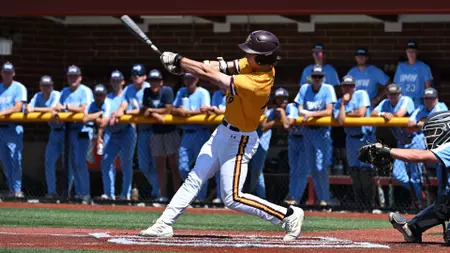
SALISBURY, Md. – Salisbury University’s baseball squad didn’t need much time to find their rhythm Wednesday afternoon, delivering a commanding 15-0 victory over Immaculata in just seven innings at Donnie Williams Sea Gull Baseball Stadium.
The nationally seventh-ranked Sea Gulls extended their winning streak to nine games with the dominant performance against the Mighty Macs, showcasing the offensive firepower that has made them one of the top teams in college baseball.
The lopsided victory was called after seven innings due to the mercy rule, as Salisbury’s bats came alive early and often throughout the contest. The Sea Gulls’ impressive run of success continues to build momentum as they advance through their season schedule.
The nation’s highest court showed signs it may back the Trump administration’s efforts to terminate temporary protected status for migrants from Haiti and Syria currently living in the United States.
During court proceedings, the justices demonstrated openness to arguments supporting the administration’s position to end these special protections that have allowed thousands of migrants to remain in the country legally due to dangerous conditions in their home nations.
The temporary protected status program provides relief from deportation for individuals whose countries face ongoing armed conflict, environmental disasters, or other extraordinary circumstances that make return unsafe.
A final ruling from the Supreme Court could affect the legal status of thousands of Haitian and Syrian nationals who have been living and working in the United States under these protections.
WASHINGTON — In a 235-191 vote, the House passed legislation Wednesday extending a controversial U.S. surveillance program for three years, just days before it’s set to expire on Friday. The measure includes additional oversight provisions but falls short of requiring warrants that privacy advocates have pushed for.
Most Republicans were joined by a significant number of Democrats in supporting the extension. However, the legislation’s future remains unclear as it awaits action from the Senate and President Donald Trump.
Senate Majority Leader John Thune indicated Wednesday evening that his chamber probably won’t quickly approve the House version, suggesting a temporary extension will be necessary to avoid Friday’s expiration deadline.
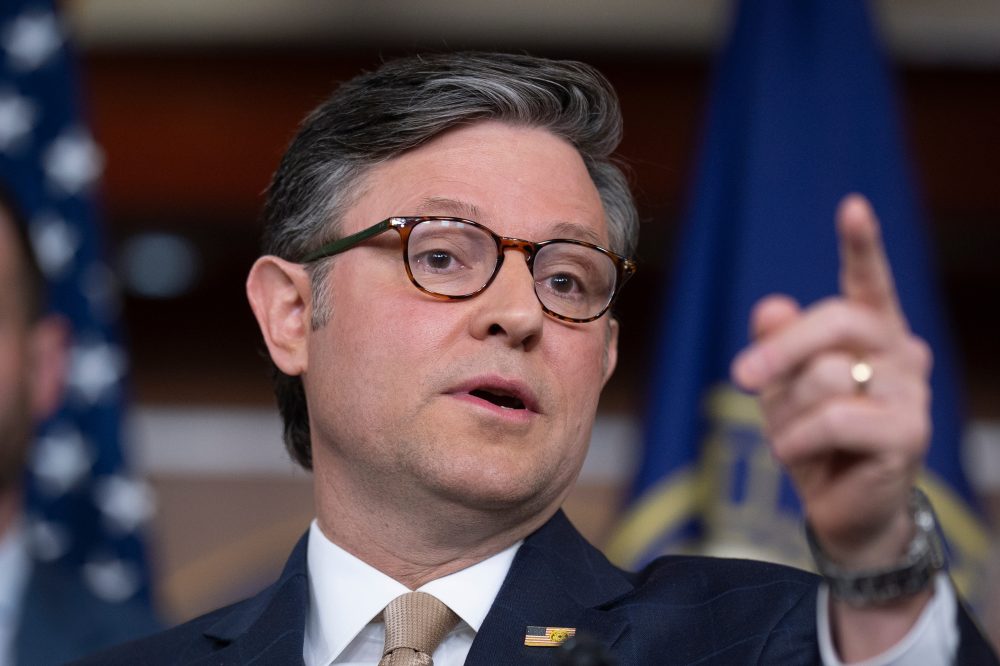
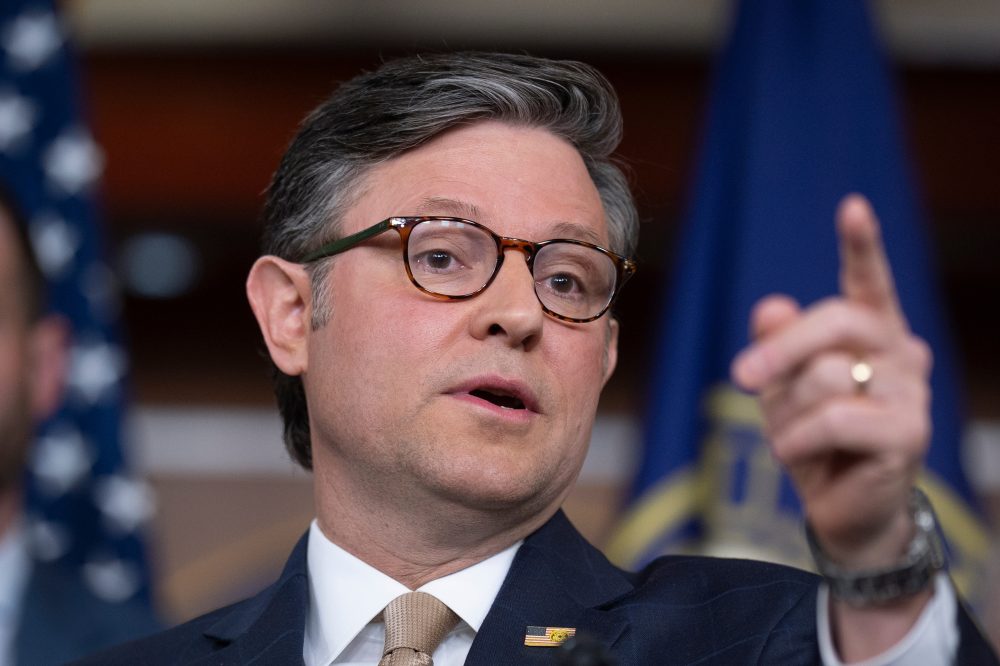
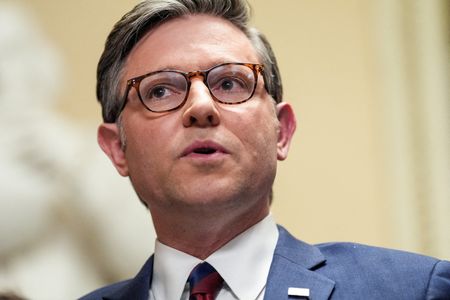
The House vote represented a victory for Republican leadership after Speaker Mike Johnson spent the day winning over several GOP holdouts to move the measure to a final vote. Previous attempts to pass a long-term extension had failed after chaotic late-night sessions earlier this month.
“Two-thirds of the president’s daily national security briefing comes from intelligence collected by that statute,” Johnson said about the program. “We cannot allow it to go dark.”
At the heart of the controversy is a section of the Foreign Intelligence Surveillance Act (FISA) that permits the CIA, NSA, FBI and other intelligence agencies to gather and examine communications from foreign subjects without obtaining warrants. This process can inadvertently capture communications involving Americans who communicate with those foreign targets, which many legislators view as problematic.
“The intel community always just comes in and says, ‘People will die if you do this,’” Republican Rep. Chip Roy said Tuesday, advocating for warrant requirements. “Well, I’m sorry. A lot of Americans died to give us and protect that Fourth Amendment right that we don’t have government looking at our stuff.”
Rather than including warrant requirements, the House legislation establishes new oversight mechanisms. These include monthly civil liberties reviews of searches involving U.S. citizens by an official from the Office of the Director of National Intelligence, with violations reported to the Intelligence Community’s inspector general.
Additional provisions would establish criminal penalties for officials who deliberately abuse the system or falsify compliance records, mandate a government audit of targeting procedures, and create new protocols to give Congress greater access to FISA court proceedings.
House Democrats criticized the extension during floor debate before Wednesday evening’s vote. Maryland Rep. Jamie Raskin, the ranking Democrat on the House Judiciary Committee, called the measure a “three-year blank check” that comes “without any meaningful guardrails.”
“Under this bill, FBI agents will still collect, search and review Americans’ communications without any review from a judge,” Raskin stated.
However, Rep. Jim Himes, the top Democrat on the House Intelligence Committee, supported the extension, describing the program as “without question, the most important foreign intelligence tool.” Himes, who voted for the measure, said the legislation makes oversight of the program “marginally and modestly stronger.”
While Thune said he has maintained contact with Johnson throughout the process, the next steps remain unclear even if the House passes the bill.
“We’re probably going to end up doing a short term,” Thune told reporters following the House vote.
A complicating factor is that House Republicans have tied the surveillance renewal to separate legislation that would prohibit a central bank digital currency — a proposal Thune has described as “very, very hard to pass” in the Senate.
Oregon Sen. Ron Wyden, who has long advocated for FISA reforms, characterized the House deal as “deeply flawed,” though he declined to specify whether he would back an extension.
Thune suggested Wednesday that another temporary extension might be needed while lawmakers work out final details. He indicated a 60-day extension “could be a landing spot.”
Meta Platforms, the company behind Facebook and Instagram, delivered first-quarter financial results on Wednesday that surpassed Wall Street projections, though the tech giant simultaneously raised its capital investment outlook for the coming year.
During the first three months of 2024, the social media company generated profits of $26.77 billion, translating to $10.44 per share – a substantial 61% increase from the $16.64 billion, or $6.43 per share, recorded during the corresponding period in 2023. Total revenue climbed 33% year-over-year to reach $56.31 billion. Wall Street analysts had anticipated earnings of $6.67 per share with revenues of $55.6 billion, according to FactSet Research data.
“We had a milestone quarter with strong momentum across our apps and the release of our first model from Meta Superintelligence Labs,” CEO Mark Zuckerberg said in a statement. “We’re on track to deliver personal superintelligence to billions of people.”
Looking ahead to the second quarter, Meta projects revenues will fall between $58 billion and $61 billion, which aligns closely with analyst predictions averaging $59.48 billion.
The company has revised its annual capital expenditure projections upward to a range of $125 billion to $145 billion, marking an increase from its earlier forecast of $115 billion to $135 billion. Meta attributed this adjustment to anticipated higher component costs and additional expenses related to data center operations.
During Meta’s previous spending forecast announcement at year-end, the company explained that increased investments in Meta Superintelligence Labs initiatives were driving the year-over-year growth. The company has since announced plans to eliminate approximately 10% of its staff – roughly 8,000 positions – while simultaneously expanding investments in artificial intelligence infrastructure and recruiting high-compensation AI specialists.
As of March’s conclusion, Meta employed nearly 78,000 people, representing a modest 1% increase from the previous year.
Following the earnings announcement, Meta’s share price declined by more than 6% during after-hours trading.
WASHINGTON — Historic preservation advocates appeared in federal court Wednesday asking a judge to stop President Donald Trump’s proposed major construction work at the Kennedy Center, Washington’s renowned performing arts complex that has undergone significant changes since Trump returned to the presidency.
The coalition of cultural and preservation organizations wants U.S. District Judge Christopher Cooper to grant a preliminary injunction stopping all construction before the planned July 6 beginning date. They express concern that Trump and the center’s board of trustees may ignore historic preservation regulations designed to protect the building that welcomes millions of annual visitors.
Following Wednesday’s court session, attorney Greg Werkheiser explained that the governing statutes address “the very fundamental question of: Do we slow down and take stock before we make changes to properties that define the American experience?”
Federal prosecutors defending the president and board contended Wednesday that the proposed building modifications are narrow in scope and fall clearly within the board’s existing powers, requiring no additional governmental approvals.
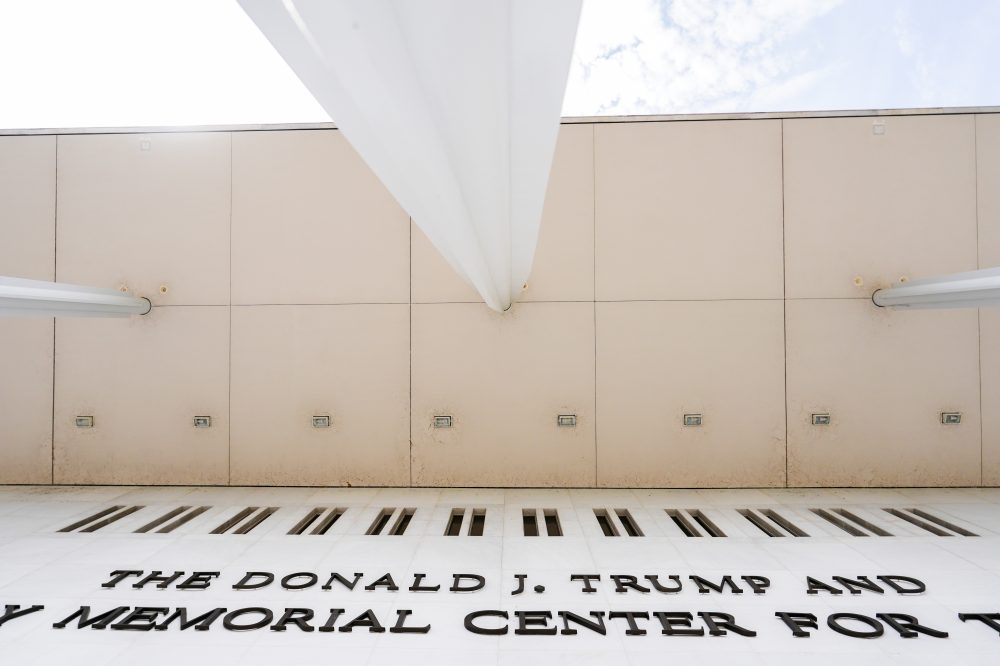
Trump has focused considerable attention on the Kennedy Center since resuming the presidency. He removed the facility’s former management team and installed his own chosen board members, who subsequently appointed him as chairman. These leadership changes sparked significant criticism from the arts community and worsened the center’s budget problems. Trump’s name was subsequently added to the building’s exterior, and he revealed the renovation plans earlier this year.
Beyond serving as a top-tier arts and cultural institution, the Kennedy Center functions as a “living monument” honoring President John F. Kennedy, who secured funding for the project’s construction but was killed before its completion. Located along the Potomac River, the enormous building with its distinctive white marble exterior has become an iconic feature of Washington’s skyline.
This marks the second consecutive day of legal proceedings concerning the Kennedy Center’s future. Representative Joyce Beatty, an Ohio Democrat, has filed a separate lawsuit seeking to prevent the renovations in her capacity as an ex officio board member. Judge Cooper is presiding over both cases. For the second straight day, the judge’s balanced questioning of both legal teams made it challenging to predict his eventual decision.
During his testimony, executive director Matt Floca, a former facilities manager promoted by the Trump-appointed board, described the planned work as necessary maintenance to address years of deterioration, including significant water damage to a section of the building staff dubbed “the swamp.”
“The most efficient and effective way to complete the magnitude of projects we need to complete is to close the center,” Floca testified.
Lawyers representing the preservation groups questioned whether the project scope is truly limited, citing Trump’s public comments about plans to “fully expose” the building’s steel framework.
Yaakov Roth, the Justice Department lawyer defending the president, dismissed these concerns as excessive.
“There’s no risk that there will be unilateral changes … that we’ll wake up and the building will be gone,” Roth argued.
The Kennedy Center legal battles reflect broader disputes over Trump’s initiatives to make permanent changes to Washington’s landscape. Since taking office, the former New York real estate developer has frustrated preservationists by renovating the White House’s historic Rose Garden. Last October, the administration demolished the White House’s East Wing to construct a $400 million ballroom.
In addition to the Kennedy Center, Trump has also placed his name on the United States Institute of Peace building. The president is also pursuing plans for constructing a 250-foot “triumphal arch.”
ST. PAUL, Minn. (AP) — Federal investigators carried out extensive searches across Minnesota this week, seizing documents and evidence as part of a continuing probe into fraudulent activities within publicly funded children’s programs.
The Tuesday operations involved 22 search warrants executed by federal agents, with armed officers visible at multiple childcare facilities throughout the state. The searches represent the most recent chapter in Minnesota’s ongoing battle against widespread fraud within social service programs.
Minnesota has faced numerous interconnected fraud investigations spanning multiple years, with federal prosecutors estimating that potentially billions of dollars in government funding may have been misappropriated.
The state’s fraud problems gained national attention through the Feeding Our Future scandal, a pandemic-era school meal program that federal authorities say resulted in $300 million in fraudulent losses. Since initial charges were filed in 2022, nearly 80 individuals have faced prosecution, with at least 65 convictions secured. Defendants allegedly falsely claimed to have provided millions of meals to children.
Federal prosecutors noted that most defendants in the Feeding Our Future case were of Somali heritage and held U.S. citizenship, though the alleged mastermind, Aimee Bock, is white. Bock received convictions on multiple charges including conspiracy, wire fraud, and bribery, with sentencing scheduled for May 21.
This wasn’t Minnesota’s first encounter with social service fraud. State legislative auditors reported in 2019 that suspected fraud in a single childcare program was costing $100 million or more each year.
President Donald Trump has cited these scandals as grounds for implementing extensive immigration enforcement in Minnesota, initially targeting the state’s substantial Somali population. However, the majority of over 4,000 arrests involved Hispanic individuals, most without criminal histories, despite administration claims of targeting “the worst of the worst.”
Trump characterized Minnesota as “a hub of fraudulent money laundering activity” under Gov. Tim Walz, the 2024 Democratic vice presidential candidate, writing on social media around Thanksgiving: “Somali gangs are terrorizing the people of that great State, and BILLIONS of Dollars are missing. Send them back to where they came from. It’s OVER!”
The administration launched Operation Metro Surge in early December, deploying approximately 3,000 federal officers in what officials called the largest immigration enforcement operation in history. The crackdown triggered widespread protests, with residents attempting to shield immigrants from arrest. Demonstrations intensified following fatal shootings of two individuals by federal officers.
In December, federal prosecutors unveiled a new wave of Medicaid fraud charges involving child nutrition services, housing assistance, and autism support programs. Autism rates are notably elevated within the Somali community for unexplained reasons. First Assistant U.S. Attorney Joe Thompson, who spearheaded the Feeding Our Future prosecutions, estimated that half or more of approximately $18 billion in federal funding distributed through 14 Minnesota programs since 2018 may have been stolen.
“The magnitude cannot be overstated,” Thompson stated before later resigning amid an exodus of career officials protesting Trump administration policies. “What we see in Minnesota is not a handful of bad actors committing crimes. It’s staggering, industrial-scale fraud.”
While frequently referenced, Thompson’s dollar figure represents an estimate, with actual losses alleged in filed cases totaling significantly less.
Conservative influencer Nick Shirley posted an extensive video the day after Christmas alleging that Minneapolis Somali community members operated fraudulent childcare centers to collect federal subsidies. The video gained attention from Trump administration officials and conservative activists, though state inspectors dismissed the claims.
Tuesday’s federal searches involved multiple state and federal agencies, including the Department of Homeland Security. Minnesota’s Bureau of Criminal Apprehension officers removed boxes from several locations. Democratic state Attorney General Keith Ellison confirmed his office’s Medicaid Fraud Control Unit participated in searches at five sites alongside federal law enforcement. The state’s child welfare agency provided supporting information.
The timeline for potential criminal charges remains unclear, as fraud investigations typically require extensive time to complete due to their complexity.
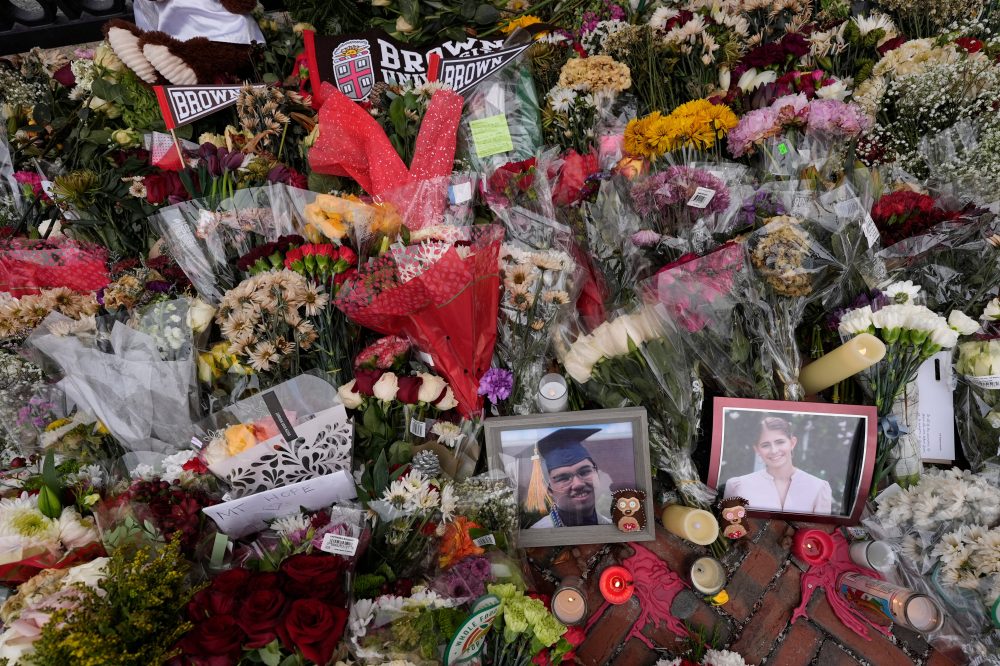
BOSTON — Federal authorities have concluded that the gunman responsible for a deadly shooting at Brown University and the murder of an MIT professor deliberately selected his targets based on deep-seated personal resentments, rather than striking at random.
According to a comprehensive behavioral analysis made public Wednesday, Claudio Neves Valente, a 48-year-old Portuguese citizen and former Brown University student, chose locations and individuals that symbolized what he perceived as personal setbacks, lost chances, and unfair treatment in his life.
The FBI report details how Neves Valente spent years in solitude developing his attack plan before opening fire in an engineering facility on December 13, resulting in two student deaths and nine injuries. He subsequently murdered MIT professor Nuno F.G. Loureiro at the educator’s Brookline, Massachusetts residence two days afterward. Law enforcement discovered Neves Valente’s body at a Salem, New Hampshire storage unit, apparently dead from a self-inflicted gunshot, concluding a manhunt across multiple states.
Federal investigators characterized the perpetrator as someone who lived in extreme isolation for years, frequently changing locations and lacking the typical support networks of family members, friends, or mentors who might have detected concerning behavior and contacted authorities.
Investigators determined that he gradually constructed a worldview centered on personal grievances and feelings of inadequacy, with “little to no opportunity for bystanders to observe and contextualize the significance of his behaviors.”
“He appeared to struggle with how he viewed his life achievements and felt he was considerably marginalized by others,” the FBI wrote in the report. “As his failures outweighed successes, his paranoia increased, compounding his continued inability to thrive and leading to him being mentally unwell and committed to dying.”
Law enforcement officials emphasized that the violence carried symbolic meaning. Both Brown University and Professor Loureiro embodied what the shooter viewed as “his personal failures and injustices he perceived were inflicted by others over time,” according to investigators.
“By attacking them, Neves Valente was likely able to overcome his shame and envy by using violence to punish those communities that he perceived contributed to his downfall,” the FBI said.
However, investigators recognized the limitations of their analysis, acknowledging that only Neves Valente truly understood his complete motivation and that psychological stress factors alone cannot provide a full explanation for the attacks.
Following the shootings, authorities discovered that Neves Valente had created multiple video and audio recordings where he admitted to the crimes, showed no regret, and discussed some of the resentments detailed in the FBI analysis, though he provided no definitive rationale for his actions.
Law enforcement has determined that Neves Valente operated independently and that the incidents had no established links to terrorist activity.
Officials revealed that Neves Valente was enrolled briefly as a doctoral candidate at Brown during the early 2000s but failed to finish his studies, a detail that investigators believe influenced his later perception of the institution. The weapons used in both attacks were purchased legally in Florida several years before the incidents, according to authorities.
These revelations emerge as victims wounded in the shooting initiated legal action this week, claiming the university disregarded previous warnings about the gunman and failed to implement sufficient security measures that might have prevented the tragedy.
LOS ANGELES — Legal authorities in Los Angeles County announced Wednesday that recording artist D4vd fatally attacked 14-year-old Celeste Rivas Hernandez with a knife in what they describe as a calculated murder.
The District Attorney’s Office revealed new details in court documents Wednesday, outlining what prosecutors claim is evidence showing the musician’s attempts to destroy the victim’s remains and eliminate proof of the crime.
According to the filing, D4vd, legally known as David Burke, first encountered Rivas Hernandez when she was just 11 years old, initiated an illegal sexual relationship when she turned 13 while he was 18, and murdered her after she threatened to expose their illicit affair.
“Knowing he had to silence the victim before she ruined his music career as she had threatened, very soon after her arrival at his home, defendant stabbed the victim to death multiple times and stood by while she bled out.”
Authorities discovered her decomposing remains inside a Tesla vehicle that had been towed from the Hollywood Hills area last September.
Investigators recovered text communications between Burke and the victim from April 22, 2025 — the final day before her phone went silent and officials believe she was murdered.
“The messages reveal the victim’s jealousy over defendant’s relationships with other women, as defendant led her to believe they had a future together. She became extremely upset and threatened to disclose damaging information about her relationship with defendant to end his career and destroy his life,” the document says.
Court papers allege Burke purchased two chainsaws through online retailers, which he then used to dismember the teenager’s body inside an inflatable swimming pool. Investigators reportedly discovered the girl’s DNA evidence in Burke’s garage, where they believe the dismemberment took place.
“Defendant took horrifying measures to destroy and discard the victim’s body,” prosecutors said in the brief.
The victim’s remains had deteriorated so severely that medical examiners could not identify basic physical characteristics like eye color. At the time of her death, she wore dental braces and had gotten a tattoo reading “Shhh…” on her finger along with Burke’s name, according to official reports. Two fingers were absent from the body, along with portions of her arms and legs.
Until now, prosecutors had not publicly outlined their theory of how Rivas Hernandez died or provided specifics about her connection to the defendant. Medical examination results indicated she died from stab wounds.
Burke has entered a not guilty plea to first-degree murder charges and additional counts. His legal representatives maintain his innocence and deny he caused Rivas Hernandez’s death.
Defense lawyers requested that Superior Court Judge Charlaine F. Olmedo seal the prosecution’s filing during Wednesday’s hearing, but the judge rejected their motion. The attorneys declined to speak with reporters after court proceedings.
A father-daughter team from New Jersey has admitted to orchestrating an elaborate art forgery scheme that fooled some of New York City’s most prestigious auction houses out of at least $2 million.
The case began unraveling just over a year ago when Karolina Bankowska, 26, walked into art dealer Robert Rogal’s private showroom carrying what appeared to be an authentic Andrew Wyeth watercolor. She claimed it was a family heirloom and hoped to sell it through consignment for an estimated $20,000 to $30,000.
“The provenance was a little fuzzy,” Rogal recalled. “But she seemed credible. It wasn’t an obvious counterfeit.”
Federal prosecutors now say that painting was among more than 200 sophisticated fakes that Bankowska and her father, 50-year-old Erwin Bankowski, attempted to sell to unsuspecting buyers. On Tuesday, both Polish citizens entered guilty pleas to fraud charges.
The counterfeit artworks were created by an unidentified accomplice in Poland and included reproductions of lesser-known pieces by renowned artists such as Banksy and Andy Warhol, according to prosecutors. Their biggest payday came from a fake Richard Mayhew painting that sold through DuMouchelles auction house last October for $160,000.
A DuMouchelles spokesperson confirmed cooperation with federal investigators but declined further comment. Other targeted auction houses, including Bonhams, Phillips, Freeman’s and Antique Arena, either refused to comment or did not respond to requests.
The defendants face wire fraud conspiracy charges and additional counts for misrepresenting Native American-produced artwork after forging pieces attributed to Luiseño artist Fritz Scholder. Federal sentencing guidelines call for more than three years imprisonment, plus $1.9 million in restitution payments and potential deportation to Poland.
During Tuesday’s court hearing, Bankowska acknowledged to the judge that her “conduct was wrong and I am guilty.” Her lawyer, Todd Spodek, noted that his client has already placed over $1 million in an escrow account.
Speaking through a Polish translator, Erwin Bankowski also expressed remorse. His defense attorney, Jeffrey Chabrowe, explained that his client had “regrettably made a terrible decision in an effort to support his family.”
Art world experts say this type of fraud is more common than many industry insiders care to acknowledge.
“The only unusual thing about this case is that the forgers got caught,” said Erin Thompson, who teaches art crime at the City University of New York.
“People think of the art world as a genteel place full of cultured people who just want to share the wonder of beautiful art,” she continued. “You should assume there are a lot more fakes out there.”
According to prosecutors, the scheme launched in 2020 when the pair began hiring a Polish artist to produce the fraudulent works. They used vintage paper and created fake gallery stamps, choosing names of defunct galleries where the supposed artists might have realistically displayed their work.
Red flags began appearing by March 2023, when representatives for artist Raimonds Staprans discovered a forged painting called “Triple Boats” being offered at auction. Despite the artist’s representatives contacting the auction house, the piece still sold for $60,000 just days later, prosecutors stated.
Thompson, the art crime expert, spotted additional warning signs. The gallery stamp on the counterfeit Wyeth listed 1976 as the year but used a zoning address format that had been discontinued in 1962.
Ironically, the fake stamp carried the name and address of M. Knoedler & Co., one of New York’s most prestigious galleries until it shuttered in 2011 following its own forgery scandal involving fake works by Jackson Pollock, Mark Rothko and other masters.
Rogal ultimately decided against listing the Wyeth painting, partly because the stamp appeared “too clean.” When he contacted Bankowska to retrieve the artwork, she never responded.
On Tuesday, while examining the painting again in his Queens warehouse filled with consigned pieces, Rogal reflected on the experience.
“You try to do a service and provide it correctly,” he said. “Can we be fooled? Absolutely.”
WASHINGTON — The House of Representatives voted Wednesday to extend a controversial U.S. surveillance program for three more years, passing the measure 235-191 despite ongoing concerns about privacy protections.
The legislation received support from most Republicans and a significant number of Democrats, though its future remains unclear as it heads to the Senate. The program is set to expire Friday, creating pressure for quick action.
Senate Majority Leader John Thune indicated Wednesday evening that the upper chamber likely won’t fast-track the House version, suggesting a temporary extension may be needed to meet the Friday deadline.
The House vote marked a victory for Republican leadership after Speaker Mike Johnson worked throughout the day to win over GOP holdouts who had previously blocked the legislation. Earlier attempts this month to renew the surveillance authority had failed on the House floor.
“Two-thirds of the president’s daily national security briefing comes from intelligence collected by that statute,” Johnson stated regarding the program. “We cannot allow it to go dark.”
The controversy revolves around a section of the Foreign Intelligence Surveillance Act (FISA) that permits intelligence agencies including the CIA, NSA, and FBI to gather and examine communications from foreign subjects without obtaining warrants. During this process, the agencies sometimes inadvertently collect communications involving Americans who communicate with foreign targets, which many legislators find problematic.
“The intel community always just comes in and says, ‘People will die if you do this,’” stated Republican Representative Chip Roy on Tuesday while advocating for warrant requirements. “Well, I’m sorry. A lot of Americans died to give us and protect that Fourth Amendment right that we don’t have government looking at our stuff.”
Rather than including warrant requirements, the House measure establishes new oversight mechanisms. These include monthly civil liberties reviews of searches involving U.S. citizens by an official from the Office of the Director of National Intelligence, with any violations being reported to the Intelligence Community’s inspector general.
The legislation would also establish criminal penalties for officials who deliberately abuse the system or falsify compliance records, mandate a government audit of targeting procedures, and require new protocols to give Congress greater access to FISA court proceedings.
House Democrats voiced strong opposition to the extension during floor debate before Wednesday’s vote. Maryland Representative Jamie Raskin, the ranking Democrat on the House Judiciary Committee, criticized the measure as a “three-year blank check” that arrives “without any meaningful guardrails.”
“Under this bill, FBI agents will still collect, search and review Americans’ communications without any review from a judge,” Raskin argued.
Representative Jim Himes, the leading Democrat on the House Intelligence Committee, defended the extension, describing the program as “without question, the most important foreign intelligence tool.” Himes, who supported the extension, said the legislation makes protective measures “marginally and modestly stronger.”
While Thune reported staying in communication with Johnson throughout the process, the bill’s next steps remain unclear even if it passes the House.
“We’re probably going to end up doing a short term,” Thune informed reporters following the House vote.
One complication involves House Republicans connecting the surveillance renewal with separate legislation that would prohibit a central bank digital currency — a proposal Thune described as “very, very hard to pass” in the Senate.
Oregon Senator Ron Wyden, who has long pushed for FISA reforms, called the House agreement “deeply flawed,” though he wouldn’t specify whether he would back an extension.
Thune suggested Wednesday that another temporary extension might be necessary while lawmakers work out final details. He indicated a 60-day extension “could be a landing spot.”
SALISBURY, Md. – Salisbury University’s softball squad wrapped up their final home games of the season Wednesday with a doubleheader split against Catholic University at Margie Knight Sea Gull Softball Stadium.
The Sea Gulls dominated the first contest, securing a convincing 7-2 victory over the visiting Cardinals. However, Catholic University responded in the second game, edging out a narrow 2-1 win to even the day’s competition.
With the split results, Salisbury’s record now stands at 23-13 for the season, while Catholic University improved their mark to 27-11. The doubleheader marked the conclusion of home play for the Sea Gulls’ 2026 campaign.
New York Yankees outfielder Jasson Dominguez was forced to leave Wednesday’s matchup with the Texas Rangers after taking a pitch to his left elbow that left him visibly injured.
The incident occurred during the fourth inning when Rangers pitcher Nathan Eovaldi’s cutter, traveling at 89.1 mph, struck Dominguez in the elbow. The impact left the player doubled over in discomfort, though he initially remained in the game following treatment from New York’s medical staff.
Medical personnel conducted X-rays on Dominguez, and team officials plan additional examinations once the Yankees conclude their Texas series and return home to New York.
Max Schuemann took over Dominguez’s position when the Yankees returned to the field. The young outfielder had just been promoted from the team’s Triple-A affiliate in Scranton/Wilkes-Barre earlier this week and had appeared in two games as designated hitter before taking his first start in the outfield Wednesday.
The switch-hitting player made an impressive debut in September 2023, launching four home runs across eight contests before requiring Tommy John surgery on his elbow. During the previous season, Dominguez posted a .257 batting average while contributing 10 home runs and 47 RBIs over 123 games, though his appearances became less frequent following the All-Star break.
The nation’s highest court indicated during oral arguments that it may be inclined to terminate Temporary Protected Status protections for certain immigrant populations, a move that could impact thousands of people currently residing in the United States.
The Supreme Court justices heard arguments regarding the humanitarian program that shields migrants from deportation when conditions in their home countries are deemed unsafe due to armed conflict, natural disasters, or other extraordinary circumstances.
TPS provides temporary relief from removal proceedings and work authorization for eligible nationals whose countries face ongoing crises that prevent safe return. The program currently covers individuals from multiple nations experiencing various forms of instability.
Legal experts monitoring the proceedings noted the justices’ questioning suggested skepticism about continuing certain designations under the program. The court’s eventual ruling could significantly alter immigration policy and affect the legal status of numerous individuals who have built lives in American communities.
Immigration advocates have argued that ending TPS protections would force people to return to dangerous conditions, while opponents contend the temporary nature of the program should be enforced more strictly.
A final decision from the Supreme Court is expected in the coming months, with potential implications for immigration enforcement nationwide.
WASHINGTON – The White House confirmed Wednesday that President Donald Trump’s administration is conducting an assessment of American military personnel stationed in Germany, with the possibility of reducing troop numbers under consideration.
Speaking on the matter, Trump indicated that his team would reach a conclusion on potential changes to the military presence soon.
The announcement comes as part of ongoing evaluations of U.S. military deployments overseas.
Align Technology surpassed financial analysts’ expectations for first-quarter earnings on April 29, driven by robust sales of its dental alignment products, while simultaneously unveiling a $200 million stock repurchase initiative that pushed shares higher by up to 4% during extended trading hours.
Industry experts anticipate the dental market will find stability by 2026, though they maintain a reserved outlook regarding complete recovery following last year’s turbulent period characterized by inconsistent patient appointments that has made investors wary.
The company behind Invisalign reported minimal effects from Middle Eastern conflicts during the first quarter, although healthcare providers in that region have observed some reduction in patient visits and treatment acceptance rates.
“Overall, we think this is a much better than expected print and like that many of the underlying longer-term growth drivers are beginning to bear fruit,” said Evercore ISI analyst Elizabeth Anderson.
The manufacturer of dental retainers, oral scanning equipment, and laboratory software projects second-quarter revenues between $1.04 billion and $1.06 billion, closely matching analyst projections of $1.06 billion based on LSEG data compilation.
Company leadership also maintained their annual forecast of 3% to 4% revenue expansion and mid-single digit volume increases for their primary Clear Aligner product line.
For the quarter concluding March 31, Align reported adjusted earnings of $2.58 per share with revenues reaching $1.04 billion, surpassing analyst predictions of $2.28 per share profit and $1.02 billion in sales.
Financial markets are shifting their expectations about Federal Reserve policy, with traders now wagering that interest rates will climb in the first half of 2027 rather than fall this year. This change comes after the central bank maintained its current borrowing costs unchanged during its April 28-29 meeting, marking the third consecutive session without a rate adjustment.
According to CME Group data tracking futures contracts tied to Fed policy decisions, market participants now see approximately a 55% probability of a rate increase by April 2027. This represents a significant jump from the roughly 20% chance traders were pricing in before the Fed’s latest announcement.
The central bank maintained its benchmark rate within the 3.50%-3.75% range during the recent two-day meeting. However, the decision faced opposition from three regional Fed presidents who disagreed with the institution’s current policy direction.
Cleveland Fed President Beth Hammack, Minneapolis Fed President Neel Kashkari, and Dallas Fed President Lorie Logan all voted against maintaining what’s known as an “easing bias” in the Fed’s official communications. These officials believe the central bank should stop indicating that rate reductions are the most likely next policy move.
Despite keeping the dovish language in its post-meeting statement, Fed Chair Jerome Powell indicated that modifications to this messaging could potentially occur as early as the June meeting.
Market sentiment shifted dramatically on Wednesday when oil prices surged amid concerns about potential extended U.S. restrictions on Iranian shipping routes. This development led traders to nearly eliminate expectations for rate cuts this year while simultaneously introducing small wagers on rate increases.
Wednesday’s meeting marked Powell’s final session as Fed chair, concluding his tenure amid regular criticism from President Donald Trump regarding his reluctance to lower borrowing costs. Trump has consistently advocated for reduced interest rates throughout Powell’s leadership.
The president has nominated Kevin Warsh to replace Powell beginning May 15, with expectations that Warsh will implement rate reductions. However, Warsh has publicly stated he made no commitments to Trump regarding future policy decisions.
Meanwhile, Fed Governor Stephen Miran, Trump’s other appointee during his current term, voted in favor of a rate cut at Wednesday’s meeting. This continues Miran’s consistent pattern of supporting lower rates at every meeting since he assumed his position in September.
Thursday night brings pivotal moments for three NBA playoff series, as the New York Knicks and Boston Celtics each seek to eliminate their opponents with away-game victories, while the defending champion Denver Nuggets battle to extend their season against an injury-riddled Minnesota Timberwolves squad.
The Atlanta Hawks find themselves in a difficult position after dropping two straight games, prompting coaching staff to explore different defensive strategies and player rotations to counter New York’s potent offensive attack. While Karl-Anthony Towns delivered a triple-double performance in Saturday’s contest as Atlanta successfully contained Jalen Brunson, Tuesday’s game told a different story with Brunson breaking free for 39 points.
“Everyone’s going to make adjustments,” Towns said. “So just being prepared for whatever the defense throws at us and being able to react accordingly.”
New York’s defensive adjustments have effectively neutralized CJ McCollum, who had previously dominated Games 2 and 3 with crucial scoring performances. Atlanta’s leading scorers, Jalen Johnson and Nickeil Alexander-Walker, have been unable to match their regular-season production levels.
“Their defense never really let us establish consistently how we need to play to beat them,” Hawks coach Quin Snyder said after Tuesday’s 126-97 loss. “We need to execute on who we are and what we’ve done to be a good team, and like I said, that’s hard against a team of their caliber.”
In the Eastern Conference’s other series, Philadelphia 76ers center Joel Embiid demonstrated his value to the team in just his second appearance following appendix surgery. The former MVP led all scorers with 33 points, powering Philadelphia to a convincing 113-97 victory on Boston’s home court.
“He (Embiid) was dominant, especially in the second half,” Tyrese Maxey said after the game. “He did a really good job of just inserting himself, and you know, I was proud of him tonight, man.”
Philadelphia enters Game 6 with renewed energy, hoping to level the series on their home floor, while Boston aims to secure their spot in the Eastern Conference semifinals.
“It’ll take everything we’ve got,” Maxey said Tuesday. “It’ll take even more of an effort than it did tonight.”
Minnesota may have maintained their competitive spirit despite injuries to star player Anthony Edwards and key contributor Donte DiVincenzo, but their execution and concentration clearly suffered during Game 5’s loss in Denver. The Timberwolves trailed by as much as 27 points in the final quarter, with their 25 turnovers representing their most significant weakness.
While Edwards and DiVincenzo serve as the team’s premier three-point threats and offensive playmakers, Minnesota’s path to victory lies in rediscovering the suffocating defensive intensity that sparked their Game 2 comeback and dominant performances in Games 3 and 4.
“There’s no doubt that we miss Donte and Ant and all the things they do offensively and defensively, but we played a large part of Game 4 without those guys, so we still have really good defenders elsewhere,” coach Chris Finch said. “I didn’t like our attack mindset the other day. I thought we kind of waited on our heels a little bit too much. We’ve just got to be better getting back to what we know will work for us better.”
Game 6 between New York and Atlanta tips off at 7 p.m. EDT on ESPN, with the Knicks favored by 2.5 points while holding a 3-2 series advantage. New York ranks second among all playoff teams in scoring at 113.2 points per game, shooting 48.1% from the field and 38.4% from three-point territory. Atlanta lags behind in each statistical category, averaging 102.6 points on 44.8% field goal shooting and 32.2% from beyond the arc.
Brunson’s 39-point explosion marked his finest offensive showing of the series, extending his franchise record to 22 career playoff games with 30 or more points. Towns has emerged as an improved facilitator, recording 16 assists across the last two contests and averaging 2.2 more assists per game compared to the regular season. Hawks guard Alexander-Walker has seen his scoring dip to 14.2 points per game in the postseason, down 6.8 points from his regular-season average.
Boston and Philadelphia square off at 8 p.m. EDT on Peacock, with the Celtics holding a 3-2 series lead and favored by 6.5 points. The Celtics lead all playoff teams with 84 made three-pointers and 47.6 rebounds per game. Jaylen Brown paces Boston’s scoring at 25.8 points per contest, while Jayson Tatum contributes across multiple categories with averages of 10.6 rebounds, 7.6 assists, and 1.4 steals per game.
Payton Pritchard established a postseason career-high with 32 points against Philadelphia on Sunday. Through two playoff meetings with Boston, Embiid has averaged 29.5 points primarily through field goals and free throws, connecting on just 1 of 11 three-point attempts while shooting 21 of 44 from the field overall. Maxey has logged over 40 minutes per game in the playoffs, contributing 25.6 points, 6.8 assists, and 4.2 rebounds per contest.
The final game of the evening features Denver hosting Minnesota at 9:30 p.m. EDT on ESPN, with the Nuggets favored by 5.5 points despite trailing 3-2 in the series. Ayo Dosunmu and Mike Conley Jr. received their first starting assignments of the series for Minnesota due to the Edwards and DiVincenzo injuries. Dosunmu leads the team in postseason scoring at 21.8 points per game, seven points higher than his regular-season average.
For Denver, both Nikola Jokic and Jamal Murray are averaging more than 25 points per game, with Jokic adding team-leading totals of 14 rebounds and 9.4 assists per contest. The reigning Finals MVP has recorded two triple-doubles during the series.
Delaware Department of Transportation officials have implemented a temporary speed limit reduction on Interstate 495, lowering the maximum speed to 55 miles per hour due to current weather conditions.
The speed restriction has been put in place as a safety precaution to help motorists navigate the highway more safely during the ongoing weather event. DelDOT monitors road conditions continuously and adjusts speed limits when necessary to protect drivers.
Motorists traveling on I-495 are advised to reduce their speed, maintain safe following distances, and exercise extra caution while the weather-related speed limit remains in effect.
The temporary speed reduction will remain in place until weather conditions improve and normal driving conditions return to the area.
ARLINGTON, Va. — A major agriculture trade organization is celebrating congressional action on a funding bill that would bolster America’s grain and feed sectors.
The National Grain and Feed Association announced its support on April 29, 2026, after the House Appropriations Committee moved forward with the fiscal year 2027 agriculture appropriations measure.
The proposed legislation contains multiple provisions aimed at enhancing the dependability, openness, and worldwide competitiveness of America’s grain and feed operations, according to the association.
Key elements of the bill would require the U.S. Department of Agriculture to create and execute backup plans ensuring grain inspection and weighing services continue during future disruptions. The measure emphasizes clear operational procedures and input from stakeholders, including export elevators and officially designated agencies.
The legislation also promotes better collaboration between USDA’s Federal Grain Inspection Service and the Food and Drug Administration to speed up approvals for grain reconditioning plans, boosting efficiency at export locations when grain shipments need corrective measures.
Additional provisions highlight the critical nature of uninterrupted grain terminal operations for U.S. exports and reinforce the need for dependable data by instructing USDA’s National Agricultural Statistics Service to preserve important reports and surveys while giving Congress advance warning before major changes to data gathering programs.
The bill also acknowledges the significance of the FDA’s Center for Veterinary Medicine to America’s food supply by ensuring adequate funding for its operations.
“NGFA commends the House Appropriations Committee for advancing an agriculture appropriations bill that addresses several top priorities for the grain and feed industry,” said NGFA President and CEO Mike Seyfert. “From safeguarding the continuity of export inspection services to maximizing coordination across federal agencies and preserving essential market data, these provisions help ensure that U.S. agriculture remains competitive, reliable, and resilient in the global marketplace.”
The association indicated it plans to continue collaborating with both chambers of Congress as the legislative process moves forward.
Weather officials have issued a coastal flood advisory that went into effect Monday evening and will remain active until early Tuesday morning.
The National Weather Service office in Mount Holly, New Jersey issued the advisory at 5:41 PM on April 29th, with the warning set to expire at 1:00 AM on April 30th.
Residents in coastal areas should be prepared for potential flooding conditions during the advisory period. The weather service typically issues these advisories when tidal flooding is expected in low-lying coastal areas.
SALISBURY, Md. – Salisbury University’s men’s tennis squad wrapped up their regular season campaign with a disappointing 4-2 defeat against UC Santa Cruz’s Banana Slugs on Wednesday at the Sea Gulls’ home facility.
The match, held at Salisbury University’s Outdoor Tennis Center, marked the conclusion of regular season play for the local team as they faced off against the visiting California squad.
Despite competing on their home courts, the Sea Gulls were unable to secure a victory in what proved to be their final regular season contest of the year.
Listen to the Evening Delmarva Farm Report Update — April 29, 2026
DELMARVA — Soybean futures climbed higher Wednesday, fueled by strength in both soybean oil and crude oil markets. Investment funds and technical traders drove purchasing activity, pushing soy oil to new peak levels on favorable crush margins.
Weather forecasts showing drier conditions ahead should help farmers accelerate planting operations across growing regions. National soybean planting progress continues to advance despite some weather-related delays.
Policy
House Agriculture Committee Chairman Glenn Thompson said he’s confident lawmakers will pass the Farm, Food, and National Security Act Thursday. Thompson told agricultural media at the National Association of Farm Broadcasters Washington Watch event he expects the bill to clear the House by noon Thursday. The legislation sets major policy direction for the nation’s agricultural sector over the coming years.
Markets
June live cattle finished up $1.75 at $255.25. August live cattle gained $0.62 to close at $249.72. Feeder cattle moved lower, with May contracts down $0.22 at $371.50.
For local grain, Laurel Grain Company in Laurel, Delaware is paying $5.23 per bushel for corn with July delivery. Soybeans at Laurel are bringing $11.37 for July.
Forecast
Showers and thunderstorms are expected tonight with lows around 50°F. Thursday looks mostly sunny with highs near 66°F and northwest winds at 10-15 mph.
This article is based on the Delmarva Farm Report Update Evening Edition, April 29, 2026. Hosted by Tom Bradley.
AUSTIN, Texas — Satirical news publication The Onion is making a renewed attempt to acquire conspiracy theorist Alex Jones’ Infowars media empire and convert it into a parody platform.
A Texas judge will decide Thursday whether to greenlight the comedy outlet’s latest acquisition proposal, even as Jones has submitted eleventh-hour appeals in both state and federal courts attempting to block the proceedings. This legal battle stems from ongoing disputes over the more than $1 billion Jones must pay to families of Sandy Hook Elementary School shooting victims after he falsely claimed the 2012 Connecticut tragedy was staged.
This isn’t The Onion’s first attempt to secure the Infowars brand, and the publication is preparing for potential success. The comedy site has already begun marketing Infowars products through its own online store, featuring shirts and bags displaying an Infowars logo modified to include The Onion’s signature symbol replacing the letter ‘o.’
Jones has promised to resist any Onion acquisition. Should the takeover proceed, he plans to maintain his broadcasts through personal social media profiles, new websites, and the numerous radio stations that carry his show. He also intends to continue his merchandise operations, including nutritional supplements and apparel that generate millions annually.
Multiple family members of the 20 children and six staff members murdered at Sandy Hook filed lawsuits against Jones and his business in both Connecticut and Texas courts for defamation and emotional harm after he claimed the massacre was performed by ‘crisis actors’ to promote stricter gun legislation.
Family members provided testimony describing how Jones’ followers sent them death and sexual assault threats, confronted them in person, and bombarded them with hostile social media messages.
Jones maintained there was insufficient evidence connecting him to his followers’ behavior, though he acknowledged under oath that the shooting actually occurred.
Connecticut courts awarded victims’ families more than $1.4 billion in damages against Jones, later reduced by approximately $150 million during the appeals process. Texas courts ordered Jones to pay nearly $50 million in damages, with his Texas appeal still ongoing.
Jones declared bankruptcy in late 2022.
Throughout three decades, Jones promoted numerous conspiracy theories, including claims that the U.S. government orchestrated or allowed the 1995 Oklahoma City bombing and the September 11 attacks.
As his false statements became increasingly extreme, his reach expanded across radio networks, the Infowars website, and social media platforms.
Following his dismissal from an Austin radio station in the mid-1990s, he started broadcasting from his residence using his Infowars website. He purchased the domain name for just $9.
In 2004, his operation consisted of two staff members and a small office. By 2010, Jones employed more than 60 people. By 2024, he operated four Austin studios and a warehouse for his product sales.
Jones claims he has prepared a new Austin studio facility in case he loses Infowars.
Jones’ bankruptcy proceedings included a 2024 auction to sell Infowars’ assets to help satisfy the court judgments, with The Onion selected as the successful bidder. However, the bankruptcy judge rejected that arrangement, pointing to issues with The Onion’s offer and the auction procedures.
The bankruptcy judge subsequently permitted the Sandy Hook families to pursue asset liquidation through state court. Jones has challenged that decision.
The Onion’s current proposal involves a six-month licensing agreement with renewal options while a court-designated receiver works toward eventually selling the assets of Free Speech Systems, Infowars’ parent company. Money from the asset sale would go to the Sandy Hook families.
The Onion would contribute $81,000 monthly to cover building rent for the Infowars studios, utilities, and other operational expenses.
The Onion recently revealed it has recruited staff to operate the redesigned Infowars platforms, including Tim Heidecker from the comedy partnership Tim and Eric, recognized for their Cartoon Network ‘Adult Swim’ programming. Beyond parody content, plans include featuring various comedy formats.
Headquartered in Chicago, The Onion launched in the 1980s and has spent decades satirizing politics and popular culture, frequently targeting Jones in mocking articles. The publication uses ‘America’s Finest News Source’ as its tagline.
Following mass shootings in America, The Onion typically republishes modified versions of one of its most famous recurring satirical pieces: “‘No Way to Prevent This,’ Says Only Nation Where This Regularly Happens.”
Alphabet Inc., the parent company of Google, delivered exceptional financial results for the first quarter, demonstrating that its massive investments in artificial intelligence technology are generating significant returns.
The tech giant reported earnings of $62.6 billion, equivalent to $5.11 per share, for the three-month period ending in March. This represents a remarkable 81% jump compared to the same quarter last year. Total revenue increased by 22% year-over-year, reaching $109.9 billion and surpassing Wall Street expectations.
Following the earnings announcement on Wednesday, Alphabet’s stock price jumped more than 6% in after-hours trading, positioning the shares to reach a new record high during Thursday’s regular trading session. The company’s market capitalization now stands at $4.2 trillion, more than doubling from $1.9 trillion just one year ago.
The strong quarterly performance led Alphabet CEO Sundar Pichai to highlight the company’s strategic AI investments over the past three years. According to Pichai, these investments “are lighting up every part of the business.”
Google’s core advertising business, powered by its leading search engine, continued to drive growth with revenue increasing 16% compared to the first quarter of last year. This marks the fourth consecutive quarter where Google’s advertising sales have grown by more than 10% year-over-year.
The company’s Cloud division emerged as the fastest-growing segment, benefiting significantly from the AI revolution as it expands its offerings to business clients and government entities, including a recent contract with the U.S. military. Google Cloud revenue skyrocketed 63% from the previous year, reaching $20 billion.
This robust growth demonstrates that Alphabet’s substantial AI spending is yielding positive results, though some investors remain concerned about the massive capital requirements for this emerging technology across the tech industry.
Alphabet maintains its strategy of aggressive AI investment rather than risking falling behind competitors in this critical technology race.
In its February quarterly report, Alphabet revealed plans to allocate between $175 billion and $185 billion for capital expenditures this year, primarily focused on constructing AI data centers and related infrastructure. This spending plan builds upon the $91 billion in capital expenditures from the previous year.
“It’s really exciting to see how our AI investments are delivering value,” Pichai commented on Wednesday.
WASHINGTON — Federal officials announced sweeping changes to firearms regulations Wednesday, marking a significant policy shift favored by Second Amendment advocates within President Donald Trump’s political coalition.
The timing drew sharp criticism from gun safety advocates, coming just days after authorities reported an armed individual attempted to breach security at the White House Correspondents’ Association dinner with intentions to harm the Republican president.
The comprehensive package includes more than 30 regulatory modifications, with the most notable being plans to eliminate a 2024 Biden-era requirement that would have mandated thousands of additional gun dealers nationwide to conduct background screenings for purchasers at gun shows and other venues beyond traditional storefronts.
The previous regulation targeted what critics termed the “gun show loophole,” which permitted unlicensed sellers to complete firearm transactions without verifying whether buyers were legally barred from gun ownership. Second Amendment organizations and GOP-controlled states had mounted legal challenges against the requirement, claiming it infringed on constitutional rights and exceeded Biden’s executive authority.
Acting Attorney General Todd Blanche described the regulatory overhaul as the “most comprehensive regulatory reform package in the history” of the Bureau of Alcohol, Tobacco, Firearms and Explosives. Blanche explained the modifications align gun rules with Supreme Court decisions while reducing administrative obstacles for firearms retailers and legal gun purchasers.
“For too long, regulations were written without any real understanding of how firearms businesses operate, how lawful gun owners handle their firearms, or what truly improves public safety,” Blanche said.
Anti-gun violence organizations criticized the administration for prioritizing gun rights supporters through relaxed rules they believe will compromise national security.
“Four days after the nation watched gunfire break out at the White House Correspondents’ Dinner, the Trump administration’s answer is to gut commonsense gun safety laws and sabotage the only federal agency dedicated to keeping guns out of criminal hands,” John Feinblatt, president of Everytown for Gun Safety, said in a statement.
The regulatory changes received approval shortly after the U.S. Senate confirmed Robert Cekada, a veteran law enforcement professional, to head the ATF, the federal bureau tasked with enforcing America’s firearm statutes. Cekada, an ATF employee since 2005, has overseen the agency’s daily functions as deputy director for the past year.
Cekada becomes just the third confirmed director since Congress made the position subject to Senate approval in 2006. The bureau has predominantly operated under interim leadership, as both Republican and Democratic presidents have struggled to navigate the politically challenging confirmation process for ATF nominees.
While conservatives have historically criticized the ATF for its regulatory enforcement role, Trump’s Justice Department has emphasized the agency’s contributions to removing illegal weapons from communities and combating violent criminal activity.
“Rob is exactly the right person to lead the ATF at this moment,” Blanche said.
Amazon delivered impressive financial results for its first quarter on Wednesday, with the Seattle-based tech giant crediting much of its success to booming demand for cloud computing services.
The company’s Amazon Web Services division experienced a remarkable 28% surge in revenue during the January through March timeframe, marking the strongest quarterly performance for the cloud unit in nearly four years. This represents a significant acceleration from the 24% growth AWS posted in the previous quarter and the 20% increase recorded in the third quarter.
Despite beating analyst expectations, Amazon’s stock price dropped nearly 2% in extended trading following the earnings announcement.
Wall Street has been keeping a close eye on Amazon’s financial performance, particularly given the company’s ambitious plan to spend $200 billion this year on artificial intelligence infrastructure, robotics technology, computer chips, and satellite systems. This massive investment represents a 60% jump from the $128 billion Amazon allocated for capital expenditures in the previous year, causing investor concern when first announced in February and triggering an 11% after-hours stock decline.
During the company’s previous earnings discussion, CEO Andy Jassy stood by the substantial spending strategy, emphasizing Amazon’s expectation of strong long-term returns on these investments.
The latest quarterly performance demonstrates continued strong appetite for Amazon’s technological offerings and services.
“We’re in the middle of some of the biggest inflections of our lifetime, we’re well positioned to lead, and I’m very optimistic about what’s ahead for our customers and Amazon,” Jassy stated in Wednesday’s earnings release.
Amazon released its quarterly results alongside three other major technology companies – Microsoft, Meta, and Alphabet – providing market observers with comprehensive insights into artificial intelligence investments and cloud computing expansion across the sector.
Several major partnership agreements Amazon secured this month with OpenAI, Anthropic, and Meta have strengthened the company’s market position.
On Tuesday, Amazon unveiled what it described as a “major expansion” of its collaboration with ChatGPT creator OpenAI, coming just one day after the AI company announced it was reducing its dependence on long-standing partner Microsoft.
In a separate development last week, Anthropic committed to investing more than $100 billion in Amazon’s AWS cloud infrastructure over the coming decade to develop and operate the AI firm’s Claude chatbot system. This arrangement will provide Anthropic with access to up to 5 gigawatts of Amazon’s specialized Trainium processors for training and running their artificial intelligence applications, according to Amazon.
Additionally, Amazon announced that Meta – the parent company of Instagram, WhatsApp, and Facebook – has signed a deal to utilize AWS’ Graviton chips for powering advanced AI capabilities.
However, Amazon faces some headwinds similar to other retail companies, including increased tariff expenses resulting from President Trump’s trade policies. The company also confronts rising shipping expenses as Middle East conflicts impact oil and fuel pricing, potentially affecting e-commerce profitability.
Earlier this month, Amazon implemented a 3.5% fuel and logistics fee for certain third-party merchants using its marketplace. This temporary surcharge took effect April 17 for many sellers utilizing Amazon’s fulfillment network, the company verified to The Associated Press.
At the same time, Amazon continues advancing delivery speed through enhanced robotics, artificial intelligence applications, and improved warehouse operations.
The company’s new Amazon Now service promises delivery of selected items within 30 minutes or less from thousands of available products. This ultra-rapid service currently operates in multiple cities across India, Mexico, and the United Arab Emirates, with pilot programs underway in several U.S. and UK locations, Amazon reported in February.
For the quarter ending March 31, Amazon posted earnings of $30.3 billion, equivalent to $2.78 per share, substantially higher than the $17.1 billion, or $1.59 per share, recorded in the corresponding period last year.
Total revenue climbed 17% to $181.5 billion during the quarter, compared to $155.7 billion in the prior year period.
Financial analysts had projected earnings of $1.63 per share on revenue of $177.28 billion, based on FactSet polling data.
Amazon Web Services generated $37.58 billion in revenue, exceeding analyst forecasts of $36.6 billion according to FactSet.
Looking ahead to the current quarter, Amazon projected net sales ranging from $194 billion to $199 billion.
This forecast suggests growth of 16% to 19% compared to the same quarter last year. Analysts had anticipated $188.96 billion for the current period, according to FactSet research.
A landmark Supreme Court decision Wednesday delivered Republicans their most significant advantage yet in the ongoing fight for control of Congress and state legislatures nationwide, though the timing may prevent major changes to this year’s midterm races.
The court’s 6-3 conservative majority essentially dismantled key portions of the Voting Rights Act that required electoral districts to provide minority communities fair opportunities to choose their preferred candidates. This protection had previously safeguarded reliably Democratic majority-minority districts, even within Republican-dominated states where GOP lawmakers might otherwise create maps favoring their party.
Without this federal requirement, Republican state officials nationwide—particularly throughout the South—now possess greater freedom to dismantle Democratic-friendly districts and increase the number of seats they can capture to maintain House control. More than twelve such seats exist in GOP-controlled states.
Following Wednesday’s announcement, Republicans immediately began pushing for congressional map reviews in Alabama, Louisiana, Tennessee and other states.
However, they face a significant obstacle: the decision arrived well past filing deadlines for 2022 primary elections, and some primaries have already occurred. This means ballots are finalized and early voting has commenced in several states.
These timing constraints make wholesale map revisions extremely difficult. Louisiana exemplifies this challenge—where the requirement to create a second Democratic-leaning, majority-Black House district prompted Tuesday’s court action, the federal primary is scheduled for May 16 with early voting beginning Saturday. Despite this, the state’s governor, attorney general and legislative leadership planned meetings to determine their response.
Republican officials have been working frantically to follow President Donald Trump’s instructions to redesign maps and create additional winnable House seats to prevent midterm losses. Demonstrating the urgency Republicans feel to capitalize on this opportunity, several gubernatorial primary candidates demanded immediate redistricting.
Georgia businessman and GOP gubernatorial candidate Rick Jackson emphasized urgency even as voting continued for the May 19 primary. “There is no time to waste,” Jackson declared while advocating for immediate redistricting. “Georgia must act now to ensure secure elections in Georgia and counter the Democrats’ national assault on our elections.”
Tennessee GOP gubernatorial nominee Sen. Marsha Blackburn demanded her state redraw its congressional boundaries to eliminate its single majority-Black Democratic congressional district in favor of one more favorable to Republicans—despite the March 10 ballot qualification deadline having passed.
While Democrats have largely neutralized Republican attempts to create more winnable seats during last year’s mid-decade redistricting cycle, they lack clear options to offset GOP gains from the effective weakening of the Voting Rights Act.
Former Attorney General Eric Holder, who chairs the National Democratic Redistricting Committee, criticized the timing in a statement referencing Republican-nominated Chief Justice John Roberts. “It should not be lost on anyone that the Roberts court makes this decision at a time when Republican leaders across the country are foaming at the mouth to draw the American people out of a meaningful say in our elections,” Holder stated. “They want to retain illegitimately obtained power through the use of, among other things, now Supreme Court-sanctioned racial and partisan gerrymandering.”
Florida stands as the only Republican state with a realistic opportunity to gain seats from Wednesday’s decision before the midterms. GOP Governor Ron DeSantis has scheduled a special session to approve his map potentially delivering four additional winnable House seats for his party. DeSantis had anticipated this Supreme Court outcome, and Florida’s primary doesn’t occur until August.
Wednesday saw the Florida Legislature approve the new congressional map.
Other states must navigate the unusual challenge of potentially revising maps while voting is already underway or candidate filing processes have concluded.
National Republican Congressional Committee Chairman Rep. Richard Hudson of North Carolina acknowledged uncertainty about fall implications. “I don’t know what the implications are going be for the fall. It’s pretty late,” Hudson said.
He indicated that upcoming redistricting decisions would remain with governors and state legislatures.
Long-term, the ruling opens the door for dramatic changes to America’s political landscape, potentially taking full effect by the 2028 presidential election.
Carnegie Mellon University political scientist Jonathan Cervas, who has served as court-appointed special master and mapmaker in multiple Voting Rights Act cases, declared the law’s protective power essentially eliminated. “The Voting Rights Act as a means to protect minority voters from vote dilution is essentially dead,” Cervas explained. “It’s hard to imagine how this decision does not lead to additional GOP districts into the future.”
Cervas observed that the Voting Rights Act doesn’t exclusively benefit Democrats. Its primary application occurs in local, nonpartisan elections for positions like school board or city council. However, Republicans have long argued that Democrats exploited the law to secure winnable districts for Black voters in red states—advantages that Republican-leaning white voters could never obtain in blue states.
National Republican Redistricting Trust Executive Director Adam Kincaid celebrated the decision in a statement. “For decades the left has spent hundreds of millions of dollars seeking to divide Americans along racial lines in a cynical pursuit of partisan power masquerading as civil rights,” Kincaid said. “Today’s decision rebukes that divisive and unconstitutional effort.”
Although the Voting Rights Act helped maintain Democratic-leaning districts, those voters don’t disappear because of Wednesday’s ruling. Republicans in some states cannot simply eliminate all such districts without distributing enough Democratic voters to threaten their own incumbents.
Similarly, the mandate to concentrate Democratic-leaning minority voters in specific districts has occasionally disadvantaged Democrats in states like Michigan, reducing the number of competitive districts they might capture. The party could partially offset Republican gains by distributing minority voters more broadly in states under their control.
However, political pressure against this approach will likely come from some Black and Hispanic Democrats who want to ensure their communities maintain majority status in certain districts. Democratic-controlled states are also more likely to have nonpartisan redistricting commissions that make congressional maps less partisan and increasingly adopt state-level Voting Rights Act versions to protect marginalized communities.
While this will require time, it all indicates a much less regulated mapmaking environment ahead.
This prospect concerns Thomas Johnson, a Black voter from New Orleans who was at the state Capitol lobbying on unrelated legislation Wednesday when the Supreme Court ruling was announced. The majority-Black congressional district where he lives could now be divided by the state’s Republican legislature.
“We are going to do all we can and continue fighting so our voices are heard,” Johnson said. “That’s all we want, to be heard.”
WASHINGTON – Federal education officials announced Wednesday they have launched an investigation into Stanford University regarding the school’s diversity initiatives, which the current administration claims constitute discriminatory practices.
The investigation represents part of President Trump’s wider campaign against diversity, equity and inclusion programs throughout both government agencies and private organizations since he returned to office in early 2024. University officials at Stanford have not yet provided a response to requests for comment about the federal probe.
Texas Rangers outfielder Brandon Nimmo was forced to leave Wednesday’s matchup with the New York Yankees after experiencing tightness in his right hamstring.
The injury occurred during the fifth inning when Nimmo was advancing from second base to third on a ground ball hit by teammate Joc Pederson. Nimmo had reached base moments earlier with a single that deflected off Yankees first baseman Ben Rice’s glove. Sam Haggerty came in as a pinch runner to replace Nimmo and took over left field duties, while Alejandro Osuna shifted from left field to right field.
The injury happened just after Josh Jung delivered a two-run single that put Texas ahead 2-0.
The Rangers obtained Nimmo from the New York Mets in a November trade that sent Marcus Semien to New York. Through his first 30 games in a Rangers uniform, Nimmo has posted a .287 batting average along with four home runs and 12 RBIs.
While Nimmo dealt with frequent injuries during his early years with the Mets, he has been more durable recently, missing just 40 games total across the previous four seasons. During his last campaign with New York, Nimmo achieved personal bests with 25 home runs and 92 RBIs while appearing in a career-high 155 games.
Chipotle Mexican Grill delivered unexpected financial results Wednesday, beating Wall Street predictions with first-quarter sales growth fueled by customer appetite for high-protein menu additions and snacks.
The burrito chain’s stock price jumped approximately 7% during after-hours trading following the announcement.
Despite economic headwinds that have squeezed spending power for many lower-income families, Chipotle has benefited from a consumer trend favoring protein-heavy meals and minimally processed food choices. The chain’s signature burrito bowls and salad offerings align well with these dietary preferences.
Same-store sales climbed 0.5% for the quarter, defying analyst forecasts that predicted a 0.8% drop, based on LSEG data compilation.
Total quarterly revenue grew 7.4% to reach $3.09 billion, surpassing the analyst consensus estimate of $3.07 billion compiled by LSEG.
The Mexican food chain, which revealed plans in February to implement menu price increases of 1% to 2% this year due to rising ingredient costs, has maintained momentum through creative menu updates, competitively priced Tex-Mex items, and strengthened promotional campaigns. The brand’s higher-income customer segment has demonstrated continued spending power and brand loyalty.
Chipotle’s strategic initiative called “Recipe for Growth” focuses on reversing weak customer demand through operational improvements, expanded marketing reach, and menu revitalization. This approach has successfully increased customer visits, with overall foot traffic growing 5.8% according to Placer.ai analytics.
The research company also identified the Chicken al Pastor entrée, which Chipotle brought back to menus earlier this year, as the primary factor driving increased customer traffic to locations nationwide.
The University of Delaware women’s lacrosse squad has secured their position as the number one seed heading into the ASUN Conference tournament semifinals, where they will battle fourth-seeded Lindenwood.
The Blue Hens’ strong regular season performance has positioned them favorably for their postseason run as they look to advance to the conference championship game.
The semifinal contest will determine which team moves forward in the ASUN tournament bracket, with the winner earning a spot in the conference title game.
The University of Delaware Blue Hens softball squad is set to conclude their regular season schedule with a series against the Western Kentucky Hilltoppers.
This matchup represents the final opportunity for the Blue Hens to compete in regular season action before potentially advancing to postseason play.
The series will take place on the Blue Hens’ home field as they welcome Western Kentucky to Delaware for what promises to be an important conclusion to their regular season campaign.
Delaware transportation officials are alerting drivers about upcoming overnight construction that will impact traffic flow on a busy Claymont roadway.
State highway crews will close lanes on eastbound Naamans Road between Society Drive and the northbound Interstate 95 entrance ramp beginning Wednesday, May 6th through Friday, May 22nd. The construction zone will be active nightly from 7:00 p.m. until 6:00 a.m. while workers replace bridge deck joints.
Transportation department officials are advising drivers to exercise extra caution when traveling through the work zone and to plan for possible delays during the construction period.
Facebook’s parent company Meta Platforms announced Wednesday it will increase spending on artificial intelligence infrastructure, raising its projected capital expenditure for 2026 despite ongoing plans for employee layoffs.
The social media giant now anticipates spending between $125 billion and $145 billion in 2026, marking an increase from its previous estimate of $115 billion to $135 billion.
This announcement follows recent reports about Meta’s upcoming workforce reductions, as CEO Mark Zuckerberg works to weave artificial intelligence technology throughout the company’s operations and restructure staffing around these new capabilities.
The company behind Instagram, WhatsApp and Threads has been investing heavily in AI systems and offering competitive salaries to attract talent, particularly for its Meta Superintelligence Labs division, which unveiled its inaugural AI model named Muse Spark this month.
Meta’s advertising platform continues to drive revenue growth, enabling the company to fund these substantial AI investments. The platform helps businesses automate and customize their marketing campaigns effectively.
The company’s Advantage+ advertising automation system operates using several AI technologies, including the Andromeda ad-retrieval system, Lattice ranking framework, and GEM generative recommendation engine. These tools have helped Meta draw more advertisers despite global economic uncertainties stemming from Middle East tensions.
Meta introduced advertising capabilities to WhatsApp messaging and Threads microblogging services last year, creating increased rivalry with platforms such as Elon Musk’s X. At the same time, Instagram’s Reels feature competes directly with TikTok and YouTube Shorts for dominance in the profitable short-form video space.
Research firm Emarketer projects Meta will surpass Alphabet as the world’s largest online advertising company for the first time, anticipating $243.46 billion in global net advertising revenue this year, excluding traffic acquisition expenses. The forecast places Google and YouTube’s parent company at $239.54 billion in annual advertising income.
The company recently expanded access to its Meta AI business assistant tool, created to help advertisers improve campaign results and address technical problems through immediate support.
Meta has begun installing monitoring software on employee computers in the United States to record mouse activity, clicks and keyboard inputs for AI model training purposes, according to recent reports. This initiative represents part of a broader effort to develop AI systems capable of completing workplace tasks independently.
Chinese authorities mandated Monday that Meta dissolve its acquisition of AI startup Manus, valued at over $2 billion, as Beijing increases oversight of American investments in domestic companies developing advanced technologies.
Fresh federal court documents filed Wednesday have created uncertainty around earlier government statements regarding who actually wounded a Secret Service agent during Saturday’s alleged assassination attempt at the White House Correspondents’ Association dinner.
The suspect, 31-year-old Cole Tomas Allen, discharged a shotgun toward the staircase that led down to the ballroom where President Donald Trump, administration officials, and journalists had assembled, according to a pretrial detention filing that provides the most detailed government narrative of the incident to date.
While prosecutors mention in the filing that an officer discharged his weapon five times, the document makes no reference to that officer or any other agent being wounded. Investigators recovered one spent shell from Allen’s shotgun, the Wednesday filing states.
The paperwork does not allege that Allen targeted or hit the Secret Service agent who officials say sustained a chest wound but was shielded by body armor.
This account differs significantly from previous statements by acting Attorney General Todd Blanche and U.S. Attorney for the District of Columbia Jeanine Pirro, and opens questions about the source of the gunfire that wounded the federal agent.
Following the incident, Pirro announced to media that Allen would face charges for “assault on a federal officer using a dangerous weapon,” though such charges have not yet materialized. Pirro indicated additional charges against Allen remain possible. Prosecutors have charged Allen with attempting to kill the president.
During a Sunday interview with ABC’s George Stephanopoulos, Blanche stated his belief that Allen’s shotgun rounds struck the officer. He maintained this position at Monday’s press conference while adding the qualifier, “We’re still looking at that.”
When Reuters sought clarification about who shot the Secret Service officer, a White House spokesperson directed inquiries to law enforcement agencies. Neither the Secret Service nor the Justice Department provided immediate responses to requests for comment.
The government’s version of events faced additional scrutiny Wednesday when the Washington Post analyzed security camera footage the publication acquired, which showed no evidence that Allen discharged his weapon.
The Post’s review revealed that a law enforcement officer fired his handgun repeatedly at Allen as he rushed through the security checkpoint at the Washington Hilton hotel. During the brief incident lasting only seconds, other security personnel appeared to be positioned in the shooting officer’s line of fire as Allen ran past.
Wednesday’s detention motion omitted any mention of a wounded Secret Service officer, though a Monday affidavit supporting the criminal complaint referenced the shooting without identifying the shooter.
The federal court affidavit stated that Secret Service personnel “heard a loud gunshot.” An agent identified only by the initials “V.G.” who was wearing protective gear sustained one gunshot wound, according to the document, which does not specify who fired the shot.
The affidavit indicates Officer V.G. fired several rounds at Allen, who was not wounded but collapsed to the ground.
Court documents reveal that Allen prepared a manifesto before his attack, writing that “in order to minimize casualties I will also be using buckshot rather than slugs (less penetration through walls).”
When questioned at Monday’s news conference about whether Officer V.G. was the sole officer to discharge his weapon, Blanche said investigators were gathering evidence but acknowledged the process was not an “exact science.” He observed that buckshot specifically “scatters everywhere, and sometimes it just disappears.”
Wednesday’s court filing contains a photograph Allen captured of himself in his hotel room mirror prior to the attack. The image shows him dressed entirely in black except for what appears to be a red necktie tucked into his trousers, equipped with an ammunition pouch, shoulder holster, sheathed blade, pliers and wire cutting tools.
Amazon’s cloud computing division delivered stronger-than-expected financial results on Wednesday, surpassing analyst predictions as businesses increased their spending on artificial intelligence technology.
The company’s Amazon Web Services division reported first-quarter revenue of $37.6 billion, representing a 28% increase from the previous year. Financial analysts had projected a smaller growth rate of 25.08%, with revenue expectations of $36.61 billion, according to LSEG data.
These positive results come as Amazon, the leading global provider of cloud services, has strengthened investor confidence through recent strategic alliances with two prominent AI companies, OpenAI and Anthropic.
Just this week, Amazon announced the availability of OpenAI’s newest models and its programming tool, Codex, through AWS. This move capitalized on the weakening relationship between the ChatGPT developer and competing cloud provider Microsoft.
Additionally, Amazon recently finalized an agreement to invest as much as $25 billion in Anthropic, while the Claude AI developer pledged to spend over $100 billion on AWS services during the next decade.
These strategic moves, combined with Amazon’s earlier announcement that AWS AI services are producing more than $15 billion in yearly revenue, have contributed to a 14% stock price increase this year. This performance places Amazon among the top-performing companies in the elite “Magnificent 7” technology group.
The Seattle-based company has allocated approximately $200 billion for capital expenditures this year and continues working to convince investors that its AI infrastructure investments will yield quick returns.
In his recent shareholder communication, CEO Andy Jassy indicated that investments made in 2026 would likely generate revenue during 2027 and 2028.
However, the technology industry’s collective $600 billion AI spending plan for this year has strained company cash flows, creating some investor concern despite companies arguing the investments are essential to meet overwhelming AI demand that currently exceeds available computing resources.
Beyond cloud services, Amazon continues expanding its retail operations by extending same-day delivery to additional smaller communities and focusing more heavily on grocery delivery services to compete with retail giants like Walmart and Kroger.
Excitement is building among Chesapeake Bay fishing enthusiasts as new regulations take effect this Friday, May 1st, allowing anglers to harvest striped bass within specific size limits for the first time this season.
Fishermen will be permitted to keep one striped bass daily that measures between 19 and 24 inches in designated Bay waters stretching from the Brewerton Channel south to the Virginia border. The harvest zone excludes most bays, tributaries, creeks and rivers, with exceptions for Tangier and Pocomoke Sounds and Potomac River tributaries below the Nice Memorial Bridge on U.S. 301. Spawning rivers remain completely closed to striped bass fishing.
Trolling restrictions remain in place, limiting anglers to six lines with barbless hooks and prohibiting stinger hooks.
Meanwhile, freshwater fishing continues to provide excellent opportunities, with trout fishing remaining strong and both largemouth and smallmouth bass offering good action. Young anglers are particularly enjoying family fishing outings during the current fishing rodeo season.
Water Conditions for April 29 – May 5:
Bay surface temperatures and river mouth readings are steady around 60 degrees, according to monitoring buoys. Smaller waterways are also maintaining temperatures in the 60s, though shallow areas and downwind locations can reach the upper 60s on sunny days. These warmer zones in low-salinity areas remain prime spots for hickory shad, which prefer temperatures between 55-65 degrees during their spawning period over the next few weeks.
Most Maryland rivers and streams are running below normal levels. Bay and river clarity remains average throughout most Maryland waters. Strong tidal currents are expected all week due to the full moon on May 1st.
Upper Chesapeake Bay Conditions
The striped bass spawning season near the Susquehanna River mouth is wrapping up, with post-spawn fish beginning their journey toward New England waters. Once these fish move south of the line between Abbey and Worton points, catch-and-release fishing becomes available. Starting May 1st, anglers south of the Brewerton Channel may harvest one striped bass daily within the 19-24 inch range.
Trolling and jigging along the main channel are proving effective this week. Light tackle enthusiasts are finding success in shallow Bay shoreline waters using paddletails, jerkbaits and glide baits.
Hickory shad continue offering catch-and-release opportunities in the lower Susquehanna River, Octoraro Creek, and near Deer Creek’s mouth, though numbers remain well below historical levels. Colorful flies, shad darts, and small gold and silver spoons are working well under various conditions.
Largemouth bass fishing remains strong at the Susquehanna Flats grass beds and area tidal rivers, with Chesapeake Channa (northern snakehead) also active in these waters.
White perch are entering the lower Susquehanna River, with larger females now arriving. Small jig heads tipped with grass shrimp or minnow pieces are effective, as are bottom rigs baited with grass shrimp or bloodworm pieces.
Blue catfish action is outstanding in upper Bay tidal rivers this week, with some of the largest specimens coming from the Conowingo Dam pool and open Bay waters. The Chester River holds particularly high blue catfish populations. Cut bait and scented baits work well whether fishing from boats or shore.
Middle Bay Report
Post-spawn striped bass are moving down from upper Bay spawning areas, while fish have been leaving the Choptank River for weeks. Middle Bay temperatures are holding at or slightly above 60 degrees.
Light-tackle anglers are enjoying excellent catch-and-release fishing in Bay shallows and will soon be able to harvest slot-sized fish. Exceptionally clear water conditions due to limited rainfall are creating ideal sight fishing opportunities. Topwater lures provide the most excitement, while paddletails remain another top choice.
Channel edge trolling will become popular once harvest season begins, but anglers must remember the six-line limit with barbless hooks and no stingers. When using bait, non-offset circle hooks are required and eels are banned.
White perch are moving into lower tidal river sections and transitioning to summer habitat. In deeper waters, small jigs with grass shrimp or minnows work well, along with bottom rigs using bloodworm pieces. Around structure like docks, points, jetties and oyster bars, simple bottom rigs with grass shrimp or bloodworms are popular.
The Choptank River holds good blue catfish numbers, with all regional tidal rivers and creeks supporting populations to varying degrees. The area between Choptank town and Denton typically holds the highest concentrations due to optimal salinity levels.
Lower Bay Fishing
While many larger post-spawn striped bass from the Potomac, Patuxent and Nanticoke rivers have moved through, smaller males continue lingering in the area. Light-tackle casting with topwater and paddletail lures works well in shallow Bay waters, while jigging succeeds in deeper channels.
Traditional striped bass locations include the steep channel edge on the Bay’s east side from Buoy 76R to 72B, plus Cove Point, Cedar Point, Point Lookout and Smith Point on the western shore. In the Potomac, the steep edge from St. Georges Island to Piney Point consistently produces fish, as does the Route 4 Bridge area on the Patuxent River.
White perch are present in lower tidal river sections and steadily moving toward summer areas. Black drum are being caught in Tangier Sound using peeler or soft crab baits.
Hickory shad and American shad spawning runs in the Potomac River near Washington D.C. have been hampered by extremely low water levels this month. Anglers are finding better catch-and-release action near the Cain Bridge, while Fletchers Landing pool waters have been unproductive. Expected rainfall later this week may improve this fishery significantly.
Blue catfish are providing excellent action in the Potomac River from the Route 301 Bridge to Wilson Bridge, with better fishing typically found upriver due to higher salinity levels. The Patuxent River above Benedict to Jug Bay and the Sharpstown area on the Nanticoke offer good blue catfish opportunities.
Freshwater Opportunities
Trout fishing continues benefiting from weekly stockings in put-and-take and special regulation waters. As temperatures warm, stockings will become less frequent and focus on the cooler western regions. Low stream flows due to limited rainfall are creating challenging trout conditions.
Largemouth bass are beginning to spawn statewide, though western areas typically start later due to cooler conditions. The catch-and-release season continues until June 16th, when harvest season opens for both tidal and non-tidal waters with a 12-inch minimum and five-fish daily limit. Targeting larger females in transition waters outside shallow spawning areas often proves more productive than focusing on males near spawning beds.
Chesapeake Channa remain active in areas where tidal largemouth bass are found. White paddletails excel when fishing near grass or structure. Developing grass beds will provide summer cover, while fishing large minnows under bobbers or popping corks in open water works well during spring.
Smallmouth bass have been spawning in the upper Potomac River and Deep Creek Lake for several weeks. The upper Potomac continues experiencing low flows with clear water, requiring long casts with light line toward emerging grass beds, current breaks and deep pools. Tubes, swimbaits, crankbaits and craw jigs all prove effective.
Crappie completed spawning in late March and early April and now hold near structure. Marina docks, fallen trees, bridge piers, sunken wood and brush attract crappie in both tidal and non-tidal waters. Small minnows under slip bobbers remain popular, though marabou jigs also work well.
Youth fishing rodeo events continue providing excellent opportunities for young anglers to find success in safe, family-friendly environments.
Atlantic Ocean and Coastal Areas
Surf anglers are experiencing a strong black drum run along Assateague and Ocean City beaches this week, with sand fleas and clams serving as preferred baits. Large striped bass and bluefish are also moving along beaches during their northward migration. Cut menhaden, particularly the head section, resists damage from clearnose skates and dogfish better than other baits.
At Ocean City Inlet and Route 50 Bridge areas, anglers are catching and releasing large striped bass by drifting cut bait during evening and nighttime hours. Smaller striped bass are being caught during early morning and evening using paddletails and soft plastic jigs. Tautog are active near jetty rocks, bulkheads and bridge piers, taking sand flea baits. Flounder continue moving through the inlet toward back bay waters.
Channels leading from the inlet are producing the best flounder action this week. Striped bass continue providing excellent catch-and-release opportunities during morning and evening hours near the Verrazzano and Route 90 Bridge piers, with paddletails and soft plastic jigs being the preferred methods.
Charter and private boats fishing inshore and offshore wreck and reef sites are finding good numbers of tautog and flounder, with crab pieces being the most effective bait.
WASHINGTON — Tuesday evening’s state dinner honoring King Charles III and Queen Camilla at the White House represented one of the most sought-after invitations in the nation’s capital, featuring nearly 130 distinguished guests who enjoyed Dover sole meunière and a unique beehive-themed chocolate dessert made with honey from the White House’s own beehive.
The guest roster for President Donald Trump and First Lady Melania Trump’s formal dinner revealed a strong emphasis on corporate executives, technology company leaders, and personal acquaintances from the Trump family’s Palm Beach social circle.
Notably, every conservative Supreme Court justice received an invitation — including those who have previously ruled against Trump’s key tariff policies. However, the court’s three liberal justices were absent from the evening’s festivities.
The attendee list featured numerous personalities from Fox News, Trump’s preferred television network, along with representatives from two additional conservative media organizations. Three of the president’s five children attended alongside their spouses, and Trump’s father-in-law was also present. The gathering included several prominent athletic figures and multiple members of Congress, including top leadership from both the House and Senate.
ORLANDO, Fla. — A recently released police report reveals troubling details about the mental state of a man now facing murder charges in the deaths of two University of South Florida doctoral students from Bangladesh.
Family members described a dramatic deterioration in Hisham Abugharbieh’s behavior following his marijuana use, according to documents from the Hillsborough County Sheriff’s Office released Wednesday. The report stems from a May 2023 incident where Abugharbieh struck his brother in the face and kicked his mother in the back.
During that arrest three years ago, Abugharbieh displayed signs of severe mental distress, making statements such as “I am son of Mary” and “I created my brother. I am his god.” Authorities placed him under Florida’s Baker Act, which permits emergency mental health evaluations lasting up to 72 hours.
“HIsham used to be a cool guy, a supportive and helpful eldest son, until he started smoking cannabis, especially medical marijuana,” a relative whose name was redacted wrote in a victim impact statement more than a week after Abugharbieh’s May 2023 arrest. “It turned him mentally ill, with hurtful behavior and anger problems which is affecting the family life. We lost Hisham as a normal family member.”
When questioned by law enforcement during the 2023 incident, Abugharbieh claimed he acted defensively because his brother had threatened him. His family chose not to pursue criminal charges but requested substance abuse treatment instead. He subsequently participated in a first-time offender diversion program.
The 26-year-old now faces two first-degree murder charges in connection with the deaths of the USF students. He remains in custody without bail.
Investigators discovered the body of Abugharbieh’s roommate, Zamil Limon, in a trash bag on the Howard Frankland bridge last Friday. Authorities announced Sunday that another body was recovered from waters near the bridge, though the medical examiner has not officially identified it as Limon’s girlfriend, Nahida Bristy.
Both victims vanished on April 16. Limon was last observed at the off-campus housing complex he shared with Abugharbieh, while Bristy was last seen at a university science facility. Limon pursued studies in geography, environmental science and policy, while Bristy focused on chemical engineering.
Jennifer Spradley, a public defender representing Abugharbieh in Tampa, declined to provide comment when contacted earlier this week.
MINERAL WELLS, Texas — Authorities verified Wednesday that a devastating tornado struck this small Texas community, hospitalizing five individuals while destroying manufacturing facilities and tearing roofs from residential properties.
City leaders said they prepared for the worst Tuesday when they witnessed structures crumbling as severe weather hammered Mineral Wells, a community of approximately 15,000 residents located west of Dallas.
“We are most grateful for no loss of life in this event yesterday,” Mayor Regan Johnson stated during Wednesday’s press briefing. “When you see the destruction that’s here, you can tell that’s really amazing.”
National Weather Service meteorologist Allison Prater from Fort Worth confirmed the tornado struck Mineral Wells with wind speeds reaching at least 120 mph. Weather officials dispatched a survey team Wednesday to assess the devastation in the area situated 80 miles west of Dallas.
Severe weather conditions have been battering regions throughout the South and Midwest. Two fatalities occurred in North Texas over the weekend when thunderstorms generated destructive tornadoes, while a Michigan resident died Monday after being struck by a storm-toppled tree.
Tuesday brought a hailstorm that damaged roofing, skylights and parked cars at a Springfield, Missouri zoo, also claiming the life of one of its large birds. A female emu named Adam succumbed to head injuries during the hailstorm at Dickerson Park Zoo, according to spokesperson Joey Powell’s Wednesday statement.
Additional severe weather remained possible Wednesday throughout the South and portions of the Mid-Atlantic region. Weather forecasters indicated a moderate risk of damaging winds and large hail across sections of Texas, Louisiana, Mississippi and Alabama.
In Mineral Wells, city officials addressed media Wednesday amid a neighborhood littered with broken lumber, downed trees and scattered debris.
Fire Chief Ryan Dunn reported that five storm victims required hospital treatment, while emergency responders treated others for minor injuries at the scene.
“As we arrived on scene, we noticed there was a lot of debris, a lot of roofs off,” Dunn explained. “And then we started seeing buildings collapse.”
Dunn noted that the tornado primarily impacted commercial and industrial zones, though residential properties also sustained damage. At least two manufacturing companies experienced significant destruction.
Ventamatic, a company producing large fans and ventilation systems in Mineral Wells, was among those affected. The business announced on its website that workers evacuated before the storm arrived and no employees were hurt. Wednesday operations ceased “due to severe damage and ongoing safety hazards,” the company reported.
More than 9,000 residences and businesses remained without power across Texas Wednesday afternoon, based on PowerOutage.us tracking data. Approximately 230 of those outages affected the Mineral Wells vicinity.
Mineral Wells authorities announced a local disaster declaration and established an overnight curfew continuing through Wednesday, Police Chief Tim Denison confirmed.
Chip manufacturer Qualcomm disappointed Wall Street investors Wednesday when it projected third-quarter earnings and revenue below analyst expectations, citing continued challenges from memory chip shortages that are dampening consumer electronics demand.
The San Francisco-based company’s stock dropped approximately 4% in after-hours trading following the announcement.
Despite the lackluster projections, Qualcomm CEO Cristiano Amon expressed optimism during a Reuters interview, stating he believes the smartphone industry has reached its lowest point and will begin recovering following the company’s third fiscal quarter.
“We can now call the bottom,” Amon stated, noting that insights from the company’s licensing division, which exceeded Wall Street projections, provide visibility into smartphone manufacturers’ upcoming plans.
The semiconductor giant anticipates third-quarter revenue ranging from $9.2 billion to $10 billion, falling short of analyst estimates of $10.27 billion compiled by LSEG.
As one of the world’s leading smartphone chip suppliers, Qualcomm serves major clients including Apple, Samsung, and prominent Chinese smartphone brands.
Throughout this year, the company has navigated significant uncertainty as rising memory chip costs have driven up smartphone and PC prices, leading consumers to reduce their purchasing.
Adjusted earnings per share for the third quarter are projected between $2.10 and $2.30, below analyst expectations of $2.45 per share.
The company announced second-quarter revenue of $10.6 billion, meeting market expectations.
According to Counterpoint Research, worldwide smartphone shipments dropped 6% during the first quarter due to the memory shortage crisis, with the supply constraints potentially continuing through late next year.
Given Qualcomm’s extensive involvement in consumer electronics through chips for wireless audio devices and automotive computing systems beyond smartphones, industry analysts view the company’s performance as a key indicator of market conditions and supply-demand trends.
Chinese smartphone manufacturers are expected to present additional challenges for Qualcomm as domestic brands experience declining sales amid the memory chip shortage. Budget and mid-range devices are anticipated to face greater impact compared to premium smartphone producers.
Qualcomm shares have declined roughly 10% year-to-date after gaining more than 11% in 2025, as investors assess the effects of tight memory supplies driven by artificial intelligence data center demand.
Last month, the company announced a $20 billion share repurchase program aimed at reassuring investors during the demand slowdown.
Beyond smartphones, Qualcomm is pursuing entry into the expanding data center chip sector, with product shipments scheduled to begin before year-end.
During Wednesday’s announcement, Amon revealed the company is collaborating with clients on three chip categories: central processing units, inference accelerators, and application-specific integrated circuits (ASICs), a growing market where competitors like Broadcom and Marvell are active.
“We have engagement on a custom ASIC, which is what we wanted to do when we bought AlphaWave,” Amon explained, “and now we have a lot of connectivity (intellectual property) that enables us to do that. We’re executing on all three” chip categories.
Industry analysts suggest that increased chip usage in smartphones and computers driven by premium and AI-enhanced devices should benefit companies like Qualcomm through higher chip revenues.
Second-quarter chip segment revenue reached $9.08 billion, falling short of $9.21 billion estimates.
The company projected third-quarter chip revenue between $7.9 billion and $8.5 billion, below analyst estimates of $8.93 billion.
Congressional leaders made progress Wednesday toward extending the federal government’s controversial surveillance capabilities, following intense lobbying efforts by House Speaker Mike Johnson and Trump administration representatives who successfully swayed reluctant Republican lawmakers.
Following an extended voting period lasting more than two hours, during which GOP leadership applied significant pressure on dissenting members to change their positions from opposition to support, the procedural motion to begin floor debate succeeded by a narrow 216-210 margin. This procedural vote was bundled with measures addressing immigration enforcement funding and agricultural policy.
The successful procedural vote clears the way for consideration of Foreign Intelligence Surveillance Act renewal without including provisions that would mandate court approval before federal law enforcement agencies can search through Americans’ communications data gathered by intelligence services. Several resistant lawmakers had insisted on such warrant requirements as a condition for their backing.
Following the vote, Johnson expressed his intention to expedite the legislation through the chamber quickly.
“We’ll move forward on FISA reauthorization. We’ll do that first,” Johnson stated to members of the media following the procedural vote. “We can still get it done tonight. The schedule’s been pushed back.”
The three-year extension of FISA authorities requires approval from both congressional chambers before becoming law. According to Elizabeth Goitein, who serves as senior director of the Brennan Center for Justice’s Liberty and National Security Program, the outcome remains uncertain.
“It’s rare for members to cross party lines on a rule vote, so the fact that the rule passed is not a strong indicator of what the vote will be on the underlying bill,” she explained via email.
President Donald Trump, who previously criticized FISA but now strongly supports it, has been applying pressure on congressional members to back the measure. The administration sent officials to the House floor Wednesday as part of their successful strategy to influence wavering lawmakers, according to Republican Representative Tim Burchett, who described FISA as “a nightmare.”
Burchett initially cast a vote against the procedural measure before changing his position to support it.
The NHL Department of Player Safety issued its maximum allowable financial penalty to Dallas Stars captain Jamie Benn on Wednesday following an illegal cross-checking incident against Minnesota Wild player Ryan Hartman.
The league imposed a $2,604.17 fine on Benn, representing the highest monetary punishment permitted under the current collective bargaining agreement for this type of infraction.
The 36-year-old team captain committed the violation during the closing moments of Tuesday night’s fifth game in their Western Conference opening round playoff matchup, striking Hartman twice with his stick – first targeting the ribs, then making contact with the head area.
Officials assessed Benn a two-minute cross-checking penalty during the game, while Hartman received an unsportsmanlike conduct citation for his role in the incident.
Minnesota claimed a 4-2 victory in Tuesday’s contest, giving the Wild a 3-2 advantage in the seven-game playoff series. The teams will meet for Game 6 on Thursday night in St. Paul, Minnesota.
The University of Delaware men’s lacrosse program made an impressive debut in the Atlantic 10 Conference, collecting seven postseason honors as announced by the league on Wednesday.
In their first season competing in the A-10, the Blue Hens saw three players earn All-Conference Second Team recognition: Nick Cowen, Tyler Owings, and Brendan Powers.
The conference also recognized three Delaware newcomers with spots on the All-Rookie Team: Scott Conte, Keegan Lathrop, and Colton Silverstein.
Cowen added to his accolades by also securing a place on the A-10 All-Academic Team, bringing the team’s total award count to seven.
The strong showing reflects the program’s successful transition to their new conference home and establishes a solid foundation for future seasons in Atlantic 10 competition.
Virginia’s Department of Wildlife Resources honored its finest conservation officers during an awards ceremony held March 18, recognizing outstanding achievements in law enforcement, public safety, and community service throughout 2025.
2025 CONSERVATION POLICE OFFICER OF THE YEAR
Senior Officer Kevin Webb
Senior Officer Webb earned the top honor through remarkable leadership, training expertise, and investigative excellence during 2025. Webb mentored officers as a Field Training Officer, conducted extensive driver training for DWR and academy personnel, and participated in 11 community outreach programs including youth camps and school presentations.
Webb’s investigative prowess shone in complex cases, including volunteering as lead investigator for a late-night predator hunting fatality outside his assigned area. The intricate case required search warrants, crime scene recreations, and comprehensive interviews, ultimately resulting in felony murder and reckless handling charges. His quick response, evidence preservation, and coordination proved crucial for successful prosecution.
Throughout the year, Webb built substantial cases through thorough investigations. His determination in an antler possession case led to convictions on all 12 charges by disproving fake documentation through database research and social media examination. He filed 18 charges in a major baiting and trespassing case, handled four spring turkey tagging violations, and secured felony charges in separate hunting-related shootings. His work resulted in multiple felony convictions and earned high praise from a Commonwealth’s Attorney.
2025 VIRGINIA BOATING OFFICER OF THE YEAR
Officer First Class B. Tyler Dagliano
Officer First Class Dagliano excelled in boating safety enforcement and officer mentorship throughout 2025. As primary Field Training Officer for two trainees, he balanced teaching responsibilities with aggressive enforcement against impaired and unsafe boaters, recording 30 boating violations and making five primary OUI arrests while assisting with four additional arrests.
His mentorship directly built confidence in newer officers, including guiding a trainee through two OUI arrests during one shift. Dagliano strategically targeted peak boating periods and coordinated joint operations with neighboring areas, extending his enforcement reach to major events like the Lake Anna Glow Party.
Beyond enforcement, Dagliano responded to four boaters-in-distress calls and multiple search and rescue incidents, while investigating two boating incidents including one fatality. His exceptional service earned him Region 1 Operation Dry Water Officer of the Year, the 2025 MADD Award for OUI enforcement, and an Excellence in Police Service certificate for his response to the Reagan National Airport aircraft collision.
2025 SPECIAL OPERATIONS CPO OF THE YEAR
Senior Special Agent Zach Howlett
Special Agent Howlett stepped up when the Special Investigations Unit lost both Marine Fraud & Theft positions, recovering three stolen vessels, two trailers, and identifying $58,000 in marine fraud while recovering $1,725 in taxes and penalties. He sacrificed personal time responding to 10 critical incidents statewide, including multiple fatal hunting and boating incidents.
Howlett showcased advanced investigative techniques, utilizing 43 search warrants, digital forensics, surveillance technology, and social media analysis to solve complex cases. His certification as a Cellebrite Operator and Physical Analyst enhanced his effectiveness. Notably, he coordinated a successful bait boat operation using a covert IP camera that allowed real-time viewing of the theft.
Beyond investigations, Howlett significantly impacted training and outreach. He helped develop and instruct DWR’s first-ever IHEA Academy and led regional hunting incident training. He also enhanced agency visibility through community events and media engagement, including the widely viewed “True Wildlife Crime: The Hollywood Buck Case” video episode, which has garnered over 236,000 views.
2025 COMMUNICATIONS OFFICER OF THE YEAR
Renee Brown
Dispatcher Brown demonstrated exceptional skill and composure during 2025, particularly when safeguarding a Conservation Police Officer who suffered a medical emergency while on duty. As the sole dispatcher present, she simultaneously managed emergency coordination, dispatched medical resources, and maintained full radio and phone operations across multiple channels.
Her performance metrics reflect excellence: thousands of calls for service, extensive CJIS transactions, numerous public tips managed, and zero unverified addresses – crucial for officer safety across Virginia’s varied terrain. Brown maintained perfect attendance and volunteered for additional shifts during high-demand periods. She also serves as Dispatch COOP and Sunshine Coordinator, strengthening continuity planning and team morale.
COLONEL’S LEADERSHIP AWARD
First Sergeant Derrick Kekic
First Sergeant Kekic, who began his DWR career in 2000, returned in 2018 and quickly advanced to District 41 Sergeant in 2021 and First Sergeant for Region IV-A in 2022. His leadership was particularly evident during the January 2025 Reagan National Airport aircraft collision response, where he coordinated DWR operations within a Joint FBI-NTSB command post.
Kekic leads the Region IV Hunting Incident Investigation Team and serves as a peer support member and Internal Affairs investigator while contributing to statewide training initiatives.
OFFICE OF PROFESSIONAL STANDARDS PROFESSIONALISM DECREE
K-9 Sergeant Richard Howald
Sergeant Howald, a Marine Corps veteran who joined DWR in 2005, helped establish the Conservation Police K-9 Program in 2011 and was promoted to K-9 Sergeant in 2022. He designed the entire training curriculum and served as lead instructor, with his expertise extending to West Virginia DNR’s K-9 Program training in 2023 and 2024.
MERITORIOUS SERVICE MEDAL
Senior Officer Justin Chambers
On July 19, 2025, Senior Officer Chambers prevented a suicide attempt under extremely dangerous conditions. He encountered a distressed individual on a bridge above the flooded, fast-moving South Fork of the Shenandoah River. Despite a malfunctioning radio, Chambers remained calm and attempted de-escalation. When the individual began climbing over the railing, Chambers physically intervened, risking his own life to prevent the jump until additional officers arrived.
Additional Awards
Excellence in Police Service awards went to Senior Officer Corey Gardner, Senior Officer Derrick Rickels, Sergeant Matthew Meade, Officer First Class Trace Hughes, and Sergeant Matt Arnold.
Regional Officers of the Year included representatives from all four regions, with Officer First Class B. Tyler Dagliano earning both statewide and Region 1 recognition, while other regions honored officers including Tyler Thompson, Matthew Sandy, Ethan Goodman, Andrew Rohrer, Justin Chambers, and David Rogers for their outstanding service in their respective areas.
Florida’s state legislature has given final approval to a new congressional redistricting map that political experts believe could deliver up to four additional House seats to Republican candidates.
The redistricting plan, which was championed by Florida Governor Ron DeSantis, represents a significant component of former President Trump’s broader strategy to influence electoral boundaries in advance of the upcoming midterm elections.
Political analysts suggest that Republicans now maintain a narrow advantage over Democrats in the national redistricting process, as states across the country redraw their congressional maps following the 2020 census.
The approved map reflects the ongoing partisan battle over electoral district boundaries, a process that occurs every decade and can significantly impact which party controls Congress.
MEXICO CITY — Federal prosecutors announced Wednesday that they have filed criminal charges against Ruben Rocha, the governor of Mexico’s Sinaloa state, along with several current and former government officials for their suspected connections to a powerful drug trafficking organization.
According to the Justice Department, Rocha and the other defendants allegedly worked together with high-ranking members of the Sinaloa Cartel in a scheme to smuggle enormous amounts of illegal drugs across the border into the United States. In return, prosecutors say the officials provided political protection and accepted corrupt payments from the criminal organization.
Federal prosecutors in Chicago announced they will dismiss conspiracy charges against four individuals who were arrested during immigration protests last September, according to defense lawyers.
The defendants include Kat Abughazaleh, a former journalist who previously ran for Congress as a Democrat, along with Andre Martin, Michael Rabbitt, and Brian Straw. Defense attorney Chris Parente confirmed that prosecutors revealed their decision during a Wednesday court session.
While the conspiracy charges represented the only felony counts against the group, the four still face misdemeanor charges for impeding a federal officer. The Chicago U.S. Attorney’s Office has not yet responded to requests for comment.
The protesters became known as the “Broadview Six” after their demonstration at a detention center in Broadview, Illinois. Two other defendants, Catherine Sharp and Jocelyn Walsh, had all charges against them dismissed last month.
“The conspiracy charge was the most serious count, and it’s the most troubling because it was intended to silence dissent,” Parente stated.
According to prosecutors, the four defendants surrounded a federal agent’s vehicle and deliberately blocked its path as the agent attempted to enter the Broadview facility during the September 26 demonstration.
The protest occurred during the Trump administration’s immigration enforcement campaign called “Operation Midway Blitz,” which sparked widespread demonstrations throughout the Chicago area involving residents, political candidates, and elected officials.
During the operation, federal agents fatally shot one person and wounded another, while also using tear gas, pepper spray, and rubber bullets against demonstrators. The Broadview detention center emerged as a central point of conflict during the enforcement action.
Federal health authorities announced Wednesday that American baby formula contains minimal levels of harmful substances following an extensive contamination study described as the most comprehensive analysis ever conducted.
The examination was part of the Food and Drug Administration’s Operation Stork Speed initiative, which officials characterized as the most thorough investigation of its kind. Results indicated the nation’s infant formula supply poses no safety concerns, according to agency representatives and independent specialists.
“There’s no reason not to use any available formula” in the U.S., said Dr. Steven Abrams, a pediatrics professor at the University of Texas at Austin who reviewed the findings.
Between 2023 and 2025, FDA researchers examined more than 300 commercial infant formula samples, screening for heavy metals like lead, arsenic, cadmium and mercury. The investigation also looked for pesticides, plastic-related chemicals called phthalates, and PFAS compounds, commonly referred to as “forever chemicals.”
All contamination levels registered as either undetectable or extremely minimal, officials reported. Heavy metal concentrations fell significantly below Environmental Protection Agency standards for drinking water. Pesticides were absent in 99% of tested samples. Among 30 different PFAS compounds examined, 25 showed no presence whatsoever.
Independent specialists largely supported the government’s conclusions, explaining that trace amounts of substances like heavy metals occur naturally in the environment. However, other compounds including phthalates and PFAS are manufactured.
“These chemicals are completely synthetic,” said Dr. Sheela Sathyanarayana, a pediatrics professor at UW Medicine and the Seattle Children’s Research Institute. “The detection of some of these compounds at all is concerning.”
She emphasized the importance of continued formula monitoring and broader food supply oversight.
The Trump administration initiated Operation Stork Speed in March 2025, pledging to examine infant formula safety and quality standards for the first time in decades.
This effort expanded upon earlier FDA investigations into substances like heavy metals in baby foods, which can harm brain development, learning capabilities and behavior in children, Abrams explained.
Currently, the FDA lacks enforceable heavy metal limits for infant formulas, unlike the European Union, Canada and Australia.
Consumer advocacy organizations have pressed the FDA for years to establish concrete contamination limits. Last year, Consumer Reports analyzed 41 American infant formulas and suggested many contained troubling levels of heavy metals and other contaminants.
That analysis applied its own safety standards, setting thresholds far stricter than European Union requirements. The report received widespread attention and caused some parents to abandon commercial formula even when medically necessary, Abrams observed.
Abrams urged the FDA to maintain ongoing formula monitoring and publish findings regularly.
Abbott, among the country’s major formula manufacturers, encouraged the FDA to establish scientific contamination standards for infant formula.
“We believe that producing infant formula at scale in the U.S. is a matter of national security,” Abbott spokesman John Koval said in an email. “These results affirm the safety of our current domestic supply.”
PANAMA CITY — A diplomatic war of words erupted Wednesday between Washington and Beijing after the US State Department criticized China for allegedly undermining Panama’s sovereignty in a port-related shipping dispute.
The latest friction began in early April when Secretary of State Marco Rubio condemned China for “bullying” tactics, claiming Beijing temporarily detained or delayed dozens of ships flying Panama’s flag. This action came after Panama took control of two vital canal ports from a Hong Kong-based company’s subsidiary earlier this year. Chinese officials have rejected these accusations.
On Tuesday, the State Department issued a joint declaration alongside several regional allies — Bolivia, Costa Rica, Guyana, Paraguay, and Trinidad and Tobago — condemning what they called a “blatant attempt to politicize maritime trade.” The statement expressed unified support for Panama.
These developments unfold as President Trump has adopted an increasingly assertive approach toward Latin America, including capturing Venezuela’s leader in a nighttime operation, implementing sweeping Venezuelan reforms, establishing an oil embargo against Cuba, interfering in regional elections, and threatening military intervention against Mexican drug cartels.
“The sovereignty of our hemisphere is non-negotiable,” Rubio declared in a Tuesday evening social media message.
Chinese Foreign Ministry spokesman Lin Jian pushed back forcefully during Wednesday’s press briefing, dismissing the American statements as baseless and reality-distorting.
“Who occupied the Panama Canal for a long time, invaded Panama with its military, and arbitrarily trampled on its sovereignty and dignity? Who covets the Panama Canal, seeks to turn this international waterway — meant to remain permanently neutral — into its own territory, and disregards the sovereignty of regional countries? The answer is self-evident,” Jian said.
“The one who has politicized and securitized the issue of ports is the United States,” he added.
Panamanian President José Raúl Mulino responded by thanking allied nations for their support regarding the detained vessels while attempting to calm rising tensions.
“We do not wish to engage in controversy, as we value respectful relations with all nations,” he said.
Washington has consistently worked to counter Beijing’s expanding influence across Latin America. Panama has become particularly significant in this superpower competition due to the canal’s essential role in global commerce, especially after Trump last year accused China of controlling the strategic waterway.
TALLAHASSEE, Fla. — Florida’s Republican-dominated legislature has given final approval to a congressional redistricting plan designed to strengthen GOP control of the state’s House delegation in upcoming midterm elections.
The legislative action occurred merely 48 hours after Governor Ron DeSantis presented his redistricting proposal, coinciding with a U.S. Supreme Court decision that weakened key Voting Rights Act protections. This Supreme Court ruling may complicate Democratic efforts to contest Republican redistricting plans that potentially diminish minority voter influence.
Under DeSantis’ redistricting scheme, Florida’s congressional representation could shift dramatically from the existing 20-8 Republican split to a commanding 24-4 GOP majority. This potential pickup of four additional Republican seats matches what Virginia Democrats anticipate gaining from their own recent redistricting changes, though those face ongoing state court challenges.
Legal challenges to Florida’s new boundaries appear inevitable, particularly given state constitutional language that explicitly forbids redistricting for partisan political gain. However, DeSantis and his team express confidence that these constitutional protections have been significantly undermined by previous Florida Supreme Court decisions and Wednesday’s federal Supreme Court action.
During the hastily convened special legislative session, Florida Republicans holding supermajorities in both chambers offered minimal discussion about the new district boundaries. The bill’s sponsor, Representative Jenna Persons-Mulicka from Fort Myers, restricted her comments to cautious responses about the changing legal environment when pressed by Democratic lawmakers about the redistricting effort.
“I believe that there is a likelihood that that map will be upheld against legal challenge,” Persons-Mulicka said.
Democratic legislators condemned the redistricting as partisan manipulation designed to appease Trump while undermining the majority of Florida voters who aren’t registered Republicans.
“Y’all are doing this because y’all’s daddy in the White House is injecting national political objectives into what should be a state-driven process,” Rep. Michele Rayner, D-St. Petersburg, told her Republican colleagues.
NEW YORK — A federal appeals court has declined to allow all of its active judges to review President Donald Trump’s challenge to an $83 million defamation judgment, court officials announced Wednesday.
The 2nd U.S. Circuit Court of Appeals voted against holding what’s known as an “en banc” hearing, where the full court would reconsider the massive award to magazine columnist E. Jean Carroll. This development occurs as Trump has separately asked the Supreme Court to review a different $5 million judgment Carroll won after a jury determined he sexually assaulted her at Bergdorf Goodman in 1996 and subsequently made defamatory statements about her.
Trump’s legal representatives have not yet commented on the appeals court’s latest decision.
Carroll’s lawyer, Roberta Kaplan, released a statement saying her client was “eager for this case, originally filed in 2019, to be over so that she can finally obtain justice.”
The full court’s refusal to hear the case follows a September decision by a three-judge panel that upheld the $83 million award. One appeals judge had requested that all Manhattan-based appeals court judges consider the matter.
Wednesday’s vote showed five judges opposed the full court review while three supported it, according to the 2nd Circuit’s announcement.
Appeals Judge Denny Chin noted this marked the fourth occasion the court has refused to have all judges examine an appeal related to this litigation.
Chin referenced how Carroll initially made public allegations in her 2019 book, claiming Trump had sexually assaulted her during the 1990s in a Bergdorf Goodman dressing room.
Following those revelations, Trump denied ever meeting Carroll, dismissed her allegations as false, and stated “she’s not my type” during a media interview. Carroll filed her defamation lawsuit in November 2019.
While Trump was absent from a May 2023 trial where jurors concluded he had sexually abused and defamed Carroll, he provided brief testimony during a second proceeding in January 2024 when the jury awarded Carroll the $83 million defamation judgment.
Chin supported the appeals court’s decision to maintain the substantial defamation award.
“The record showed that Trump made multiple statements over many years accusing Carroll of lying for political and financial gain, and suggesting that Carroll was too unattractive for Trump to have sexually assaulted her,” Chin explained in his opinion.
“As a result of Trump’s statements, Carroll was harassed and humiliated, subjected to death threats, and feared for her physical safety for years. And Trump showed no remorse, continuing his attacks against Carroll during and after two federal trials, and even proclaiming two days into the Carroll I trial that he would continue to defame her ‘a thousand times,’” Chin stated.
Three appeals judges — Steven J. Menashi, Michael H. Park and Debra Ann Livingston — supported having the complete 2nd Circuit review the appeal.
In their dissenting opinion authored by Menashi, these judges argued the appeals panel should have allowed the United States government to replace Trump as defendant after the attorney general determined he was operating within his official duties when the allegations emerged.
The dissenting judges also believed Trump should have been permitted to claim presidential immunity protections.
Additionally, they contended Trump deserved a new trial and determined the defamation award amount was “grossly excessive.”
“Put together, these proceedings represent a manifest miscarriage of justice,” Menashi concluded in the dissent.
A tragic structural collapse at a medical facility in Bengaluru, India has claimed seven lives, according to state officials reporting on the incident Wednesday.
The 8-foot hospital wall fell during severe weather, crushing a young child, four street vendors, and two individuals from Kerala state, announced D.K. Shivakumar, Karnataka’s deputy chief minister. Officials have yet to identify one additional victim.
Three additional people sustained injuries in the collapse and are currently receiving medical care, Shivakumar confirmed.
Indian Prime Minister Narendra Modi described the deadly incident as “unfortunate” in a social media statement.
A Reuters reporter observed medical personnel treating an injured woman who received emergency care before being transported for further evaluation.
The collapse occurred as Bengaluru experienced dramatic weather changes Wednesday. After enduring weeks of oppressive heat and high humidity, the city was suddenly hit by powerful storms featuring heavy rain, strong winds, and hail.
While the intense rainfall provided temporary relief from the sweltering temperatures, it also caused significant problems throughout the area, including flooding and downed trees across multiple neighborhoods.
WASHINGTON, April 29 – Federal Reserve Chairman Jerome Powell announced he will extend his tenure at the nation’s central bank beyond his original timeline, expressing deep concerns about ongoing legal challenges that could compromise the institution’s independence.
Speaking at a press conference following his final policy meeting as chair, Powell stated he will depart when “I think it’s appropriate to do so,” emphasizing his worries about sustained legal pressure on the Federal Reserve.
“I worry that these attacks are battering the institution and putting at risk the thing that really matters to the public, which is the ability to conduct monetary policy without taking into consideration political factors,” Powell explained during the news conference.
The Fed chairman stressed the critical importance of maintaining a central banking system that operates independently from political pressures, describing it as essential for American economic stability.
“It’s part of the absolute foundation of this amazing economy that we have. It’s just one of the many reasons why the U.S. economy is the envy of the world,” Powell remarked, clarifying that his concerns extend beyond typical verbal criticism from political leaders.
International oil giants are turning their attention back to Canada’s energy sector as ongoing Middle East conflicts make the North American nation appear increasingly attractive for major investments, with Shell’s massive $16.4 billion acquisition of ARC Resources serving as the most prominent example of this strategic shift.
Major corporations including TotalEnergies and ConocoPhillips are reportedly examining potential Canadian acquisition opportunities, joined by Equinor and BP in reassessing the market. Investment banking sources indicate these companies have recently requested detailed analyses of viable takeover candidates, according to discussions with twelve industry insiders.
This renewed attention marks a dramatic reversal from the past ten years, during which international firms systematically reduced or eliminated their Canadian fossil fuel investments. Canada’s political landscape has become more favorable to oil and gas development since Prime Minister Mark Carney assumed leadership amid the Iran conflict, as investors increasingly prioritize stable operating environments. The nation has also established new export infrastructure for both crude oil and natural gas that could accelerate additional development, while maintaining extensive untapped resources to fuel expanding export operations.
Shell’s ARC acquisition represents the first tangible evidence of this broader strategic reassessment. The European energy major announced Monday its intention to acquire ARC, Canada’s leading natural gas producer concentrated exclusively in the Montney shale formation, in what would rank among the largest foreign acquisitions of a Canadian energy company in history.
“The fact they (Shell) are buying in Canada is an indication that we have tremendous, world quality resources,” stated Mike Verney, executive vice president at Calgary-based energy consultancy McDaniel & Associates, describing the foreign attention as “validating.”
However, industry sources caution that recent market instability means Total and other companies may not immediately pursue similar acquisitions. Most individuals who spoke with reporters requested anonymity due to the confidential nature of ongoing discussions.
TotalEnergies and Equinor have not responded to comment requests, while BP and ConocoPhillips declined to provide statements.
DEPARTURE AND COMEBACK
Canada’s constrained pipeline infrastructure and export limitations previously made it less attractive compared to U.S. shale developments, renewable energy projects, and other growth sectors. The world’s largest energy corporations particularly avoided Alberta’s oil sands – the country’s primary oil-producing area – due to investor concerns about the environmental consequences of extracting heavy, viscous crude.
This exodus concentrated Canada’s energy industry under domestic control, with Canadian ownership of oil sands operations increasing to roughly 89% in 2025 from 69% in 2016, based on Bank of Montreal research.
Current domestic policies and international conflicts have now shifted in Canada’s favor. Disruptions around the closed Strait of Hormuz have enhanced the appeal of the world’s fourth-largest oil producer as a more secure option for international energy companies. Carney has also adopted a more supportive approach toward oil and gas development compared to predecessor Justin Trudeau, promising industry growth assistance and reversing certain climate regulations.
“When you want energy and you look at the world and what could go wrong, Canada has a lot of things going for it,” observed Jose Valera, a partner at law firm Mayer Brown.
ACQUISITION TARGETS
Canada’s developing liquefied natural gas export capabilities from Pacific coast facilities, providing direct shipping routes to Asian markets, represent a major attraction for investors.
Total purchased an ownership stake last year in the proposed Ksi Lisims LNG project along British Columbia’s northwest coastline, which could become Canada’s second-largest LNG export facility if approved. Shell and its partners initiated production from LNG Canada last June, with a decision on the project’s second phase anticipated shortly.
Participation in these projects is driving investors to examine upstream assets that supply these facilities, particularly opportunities within the Montney formation – a vast shale region covering northeast British Columbia and northwest Alberta, according to two sources. While the area is currently controlled by ARC, Tourmaline Oil, and other domestic producers, it remains significantly less developed than U.S. formations like the Permian Basin.
As the world’s fifth-largest natural gas producer, Canada’s Montney formation generates approximately 10 billion cubic feet daily, representing roughly 50% of the nation’s total production. The Permian Basin produces about 25 billion cubic feet per day by comparison, according to U.S. government data.
Rising crude oil prices are providing major companies with enhanced financial resources for acquisitions, though available takeover targets remain limited with ARC no longer available.
Canada’s largest natural gas producer Tourmaline Oil emerges as a potential acquisition target, three sources indicated. The C$18 billion ($13.2 billion) company’s stock price has remained stagnant over the past year, and is managed by 68-year-old Chief Executive Mike Rose. A potential sale could address succession planning concerns, some sources noted.
Tourmaline declined to provide comment.
Major companies could also consolidate smaller producers, including those backed by private equity firms.
Federal Reserve Chairman Jerome Powell announced Wednesday that he plans to remain on the central bank’s board of governors once his tenure as chair concludes next month.
During a press conference that followed the most recent Federal Open Market Committee meeting, Powell revealed his intentions to continue in a different capacity. “After my term as chair ends on May 15, I will continue to serve as a governor for a period of time to be determined. I plan to keep a low profile as a governor,” Powell stated.
The announcement clarifies Powell’s future role within the Federal Reserve system as the leadership transition approaches in mid-May.
Five-time major champion Brooks Koepka is demonstrating his dedication to maintaining competitive sharpness by entering lower-tier tournaments as he prepares for the remaining three major championships of 2026.
Following his recent departure from LIV Golf and swift re-entry to the PGA Tour via the newly-established Returning Player Program, Koepka faces restrictions that prevent him from receiving sponsor invitations to signature events in 2026. With two premier tournaments scheduled before the PGA Championship next month, Koepka has decided to participate in the upcoming Myrtle Beach Classic, an alternate-field competition.
The three-time PGA Championship winner will use Myrtle Beach and its $4 million prize pool as his final preparation while most elite players compete for $20 million at Charlotte’s Truist Championship at Quail Hollow.
Victory at Myrtle Beach would offer Koepka an additional benefit: automatic qualification for the season’s final two signature tournaments, the Memorial and Travelers championships.
Koepka’s recent performance includes a missed cut alongside teammate Shane Lowry at the Zurich Classic, though he posted a respectable tie for 12th at the Masters. He has recorded four top-20 results in his last five individual stroke-play tournaments and currently ranks 59th in FedEx Cup points.
Two weeks ago at the RBC Heritage, Koepka served as first alternate, waiting through opening-round tee times hoping for a withdrawal that would allow him entry. His participation will bring star power to the three-year-old Myrtle Beach event.
“Having Brooks Koepka commit to the ONEflight Myrtle Beach Classic is a tremendous moment for our tournament and our community,” tournament director Darren Nelson said, per the Post and Courier. “He’s one of the most accomplished players of his generation, and his presence speaks to the continued momentum of this event on the PGA TOUR calendar.”
The PGA Championship begins May 14 at Aronimink Golf Club in Newtown Square, Pennsylvania.
A beloved community tradition is making its return to Newark this weekend as local law enforcement officers prepare to host their annual fishing event with residents.
The Casting with Cops event will take place this Saturday, May 2, 2026, from 11:00 AM until 2:00 PM at the Glasgow Park Fishing Pond, located at 2275 Pulaski Highway in Newark.
Community members are encouraged to bring their fishing equipment and join officers for an afternoon of angling and relationship-building. The event represents one of the department’s most popular annual community outreach initiatives, designed to foster positive interactions between law enforcement and local families.
Organizers describe the gathering as a favorite yearly tradition that brings together people of all ages for outdoor recreation and community connection at the popular Newark fishing destination.
WASHINGTON — In a unanimous decision Wednesday, the U.S. Supreme Court ruled in favor of a faith-based pregnancy center that claimed a New Jersey state investigation violated their constitutional rights.
The nation’s highest court delivered a procedural win for First Choice Women’s Resource Centers, which has been fighting a New Jersey probe into whether the organization misled clients to prevent them from seeking abortions.
While the conservative-dominated court has delivered several major victories to abortion opponents in recent years — including the landmark 2022 decision that eliminated the constitutional right to abortion — this case drew unusual support from across the political spectrum. Even the American Civil Liberties Union, which advocates for abortion access, backed First Choice’s constitutional arguments.
Wednesday’s ruling allows the organization to challenge a state subpoena in federal court, though it doesn’t settle the core dispute.
Alliance Defending Freedom attorney Erin Hawley, who represented the group, said they’re prepared to pursue the matter in federal court if New Jersey’s attorney general decides to “continue these efforts on remand.”
These facilities, commonly called “crisis pregnancy centers,” have expanded across the country as Republican-led states implement abortion restrictions and direct public funding toward the centers. The facilities typically provide pregnancy services while encouraging women to continue their pregnancies.
Meanwhile, Democratic-controlled states have launched investigations into whether these anti-abortion facilities deceive women, sometimes by suggesting they provide abortion services when they don’t.
New Jersey’s then-Attorney General Matthew Platkin issued a subpoena demanding donor information and other records from First Choice.
The organization fought back, claiming the investigation lacked merit and that demanding donor lists violated their constitutional rights to free expression and association. When they attempted to challenge the subpoena in federal court, both a trial judge and appeals court determined the case wasn’t ready for federal review.
That led First Choice to petition the Supreme Court.
The organization contended that federal court access is crucial when government officials are accused of overstepping their authority. The ACLU supported this position, arguing that subpoenas targeting donor information can intimidate supporters.
New Jersey countered that the information would only be used to determine if donors were misled about the center’s services. The state also argued the subpoena couldn’t violate First Amendment rights since no information had actually been turned over yet.
Enforcing the subpoena requires a court order, and the judge handling the case has only directed both parties to negotiate so far.
New Jersey also warned that permitting First Choice to sue could trigger numerous lawsuits from the thousands of organizations that receive similar subpoenas.
The Trump administration supported First Choice’s position. The Justice Department maintained that any impact would be limited since the ruling would only affect organizations with comparable First Amendment claims.
New statistics from the U.S. Department of Agriculture show positive trends in the nation’s poultry production sector, with key indicators pointing to expanded operations across the country.
According to the latest federal report, the number of broiler-type eggs placed in incubators nationwide has increased by 3 percent compared to previous figures. This uptick suggests producers are preparing for higher future output of meat chickens.
Meanwhile, the placement of young broiler chicks has also grown, rising by 2 percent across United States facilities. This measurement tracks when newly hatched birds are moved to growing operations where they will be raised for meat production.
These statistics provide insight into the health and direction of America’s poultry industry, which supplies chicken meat to consumers nationwide. The increases in both egg setting and chick placement indicate producers expect continued demand for their products.
New data from the United States Department of Agriculture shows a modest drop in shell egg production nationwide, with numbers falling 3 percent below last year’s figures.
The decline was documented in the latest report from the USDA’s National Agricultural Statistics Service, which tracks various agricultural commodities and production levels across the country.
The decrease in shell egg production reflects ongoing challenges within the poultry industry, which has faced various pressures affecting output levels in recent months.
New Castle County police are actively searching for a missing teenager after issuing a Gold Alert Tuesday evening.
Thirteen-year-old Aiden Carter vanished from the West Newport Pike area, specifically near the 2000 block, according to the New Castle County Division of Police. Authorities report Carter was last observed around 4:30 p.m. on Tuesday, April 28, 2026.
Police describe the missing teen as standing approximately 6 feet 2 inches tall with a weight between 200 and 225 pounds.
The Gold Alert system is activated when a child or vulnerable adult goes missing under circumstances that may indicate they are in danger.
Anyone with information regarding Aiden Carter’s whereabouts is urged to contact the New Castle County Division of Police immediately.
The Federal Reserve decided Wednesday to maintain current interest rates while acknowledging growing inflation worries in what became the central bank’s most contentious decision in over three decades.
The 8-4 vote marked the most split decision since October 1992, highlighting deep disagreements among policymakers about the direction of monetary policy. Three Federal Reserve officials opposed language in the policy statement that suggested a willingness to cut rates in the future, while a fourth member voted in favor of immediately reducing rates by a quarter percentage point.
“Inflation is elevated, in part reflecting the recent increase in global energy prices,” the Federal Reserve stated in its policy announcement, removing previous language that described inflation as only “somewhat” elevated. “Developments in the Middle East are contributing to a high level of uncertainty about the economic outlook.”
Cleveland Federal Reserve President Beth Hammack, Minneapolis Fed President Neel Kashkari, and Dallas Fed President Lorie Logan all supported keeping rates in the current 3.50%-3.75% range but “did not support inclusion of an easing bias in the statement at this time” and voted against the new statement.
The division comes as incoming Fed Chair Kevin Warsh prepares to take over leadership of the central bank. The Republican-controlled Senate Banking Committee advanced Warsh’s nomination Wednesday on a 13-11 party-line vote, with full Senate confirmation expected next month. Current Chair Jerome Powell’s term concludes May 15.
Oil prices remaining above $100 per barrel due to the U.S.-backed conflict with Iran have complicated the Fed’s decision-making process. Policymakers are struggling to determine whether higher energy costs will primarily impact economic growth or fuel additional inflation.
The policy statement noted that “the unemployment rate has been little changed in recent months” while economic expansion continues “at a solid pace” alongside the elevated inflation concerns.
Fed Governor Stephen Miran continued his pattern of dissenting in favor of a quarter-point rate cut, as he has done at every meeting since joining the central bank from his previous role as one of President Trump’s economic advisers.
Minutes from the Fed’s March meeting revealed that more policymakers were considering the possibility that the next policy move might be a rate increase rather than a decrease. The growing number of officials opposing rate cuts may lead investors to increase expectations for higher borrowing costs this year.
Powell is scheduled to conduct a press conference at 2:30 p.m. Eastern time to discuss the meeting results and economic outlook. He may also address whether he plans to remain at the Fed as a governor, a separate position that extends through January 2028.
The nation’s leading broadcasting industry organization is expressing alarm over a Federal Communications Commission move to conduct an early examination of Disney’s eight ABC television station licenses, describing the action as virtually unheard of in regulatory history.
On Wednesday, the National Association of Broadcasters warned that this regulatory decision “creates significant uncertainty for all broadcasters” across the United States. The organization emphasized concerns about potential ripple effects throughout the industry.
The broadcasting group cautioned that “FCC must be careful to avoid actions that create further instability for the local stations viewers and listeners depend on,” highlighting worries about how such regulatory moves might affect communities that rely on these television outlets for news and information.
Wall Street heavyweight Bill Ackman made his highly anticipated debut on the New York Stock Exchange Wednesday, launching his Pershing Square USA closed-end fund that brings his exclusive investment strategies to everyday investors for the first time.
The billionaire hedge fund manager successfully raised $5 billion through the public offering, with shares available at $50 each under the ticker symbol PSUS. His management company, Pershing Square, also began trading under the symbol PS. According to Dealogic, this ranks among the ten largest public offerings of the past decade.
Accompanied by his wife Neri Oxman and chief investment officer Ryan Israel, Ackman received enthusiastic applause from traders on the Manhattan exchange floor as trading commenced Wednesday morning.
Speaking with reporters, Ackman explained that his new fund aims to “democratize investing” by providing access to the substantial double-digit returns his investments have produced over two decades. Previously, hedge funds remained exclusive to ultra-wealthy investors who met strict regulatory standards proving they could handle significant financial risks.
However, Ackman warned that initial trading might experience volatility as some investors could seek quick profits from his hedge fund company or rapidly exit the closed-end fund. To increase appeal, he offered complimentary Pershing Square Inc shares to IPO buyers of Pershing Square USA – a strategy he credits to his wife’s suggestion.
The NYSE listing provides the only avenue for American investors to benefit from Ackman’s performance, since his London-listed Pershing Square Holdings fund cannot be directly marketed to U.S. residents due to regulatory restrictions.
Ackman’s track record shows impressive annual returns of approximately 25% over the past eight years, significantly outperforming the typical closed-end fund’s 7% return during the same period.
“This is something people will want to own,” Ackman stated, highlighting his ability to work closely with companies and manage fund risks while maintaining tax efficiency. “This is not going to be your grandmother’s closed-end fund.”
Wednesday’s successful launch represents a comeback for Ackman, who attempted a similar New York listing nearly two years ago but withdrew due to lukewarm investor response.
Major institutional investors who committed $2.8 billion of the total $5 billion and agreed to hold their investments for six months will receive 1.5 Pershing Square shares for every five Pershing Square USA shares purchased.
Ackman built his reputation and estimated $9 billion wealth through aggressive activist investing campaigns targeting companies like Canadian Pacific and Chipotle. He has become one of Wall Street’s most monitored investors, recently expanding his influence through social media platform X, where he shares opinions on topics ranging from health concerns about sugary beverages to presidential politics with his 2.1 million followers.
While Ackman initially expected his social media presence would help attract funding two years ago, he revealed that institutional investors – including family offices, pension funds, insurance companies, and wealthy individuals – provided more than 80% of this offering’s capital.
The new fund targets retail investors and will largely mirror Ackman’s existing investment strategies, focusing on holdings such as Alphabet (Google’s parent company), Universal Music Group, and Uber Technologies.
This launch occurs as the IPO market shows signs of recovery following increased volatility from Middle East conflicts and investor hesitation regarding AI-related software companies.
The offering will test market interest in closed-end funds, which frequently trade below the value of their underlying assets. These funds cannot be redeemed directly and only trade on secondary markets after initial allocation, making them susceptible to significant price fluctuations that can diverge from their actual net asset value.
“I would expect decent demand, but the structure with shares of the managing company as a sweetener suggests that the closed-end fund alone may not be enough to secure the desired level of investor interest,” commented IPOX Research Associate Lukas Muehlbauer.
Seven nations within the OPEC+ alliance are expected to approve higher oil production targets during their upcoming Sunday meeting, according to three sources familiar with the discussions who spoke to Reuters on Wednesday.
The planned production increase will be adjusted downward to compensate for the United Arab Emirates’ departure from the oil producer coalition.
Despite the planned increases, most member countries face challenges in actually ramping up production due to shipping disruptions in the Strait of Hormuz caused by the ongoing U.S.-Israeli conflict with Iran.
Prior to the UAE’s unexpected Tuesday announcement that it would withdraw from both OPEC and OPEC+ effective May 1, eight coalition members had been preparing to implement a 206,000 barrel-per-day increase to their production quotas for June. This would have mirrored similar production bumps implemented in April and May, according to sources within OPEC+.
The group now plans to move forward with a comparable increase while subtracting the UAE’s 18,000 barrel-per-day allocation, sources indicated. All individuals providing information requested anonymity, with one noting that no final decision has been reached ahead of the scheduled meeting.
OPEC officials did not provide an immediate response to requests for comment made after regular business hours on Wednesday.
Former NFL defensive back Justin Simmons has called time on his professional football career after nine seasons in the league, with the Denver Broncos making the announcement Wednesday.
The timing of the retirement news holds special significance, coming exactly a decade after Denver selected the Boston College product in the third round of the 2016 NFL Draft.
While Simmons completed his career by starting all 16 games for Atlanta in 2024 and recording two picks, his most memorable achievements came during his eight-year tenure in Denver. The safety earned both of his Pro Bowl selections while wearing orange and blue, along with four second-team All-Pro honors.
“Being a Denver Bronco was more than just a team,” Simmons expressed in Denver’s social media statement. “It was my heart, my home and my story.”
Simmons continued: “I’m always going to be a Bronco, and I’m always going to be a Broncos fan. They took a chance on me, extended me. This is my home.”
Throughout his career, Simmons proved remarkably consistent in creating turnovers, recording no fewer than two interceptions in every season he played. His career total of 32 picks includes a league-best six during the 2022 campaign. The veteran defender appeared in 134 games over nine seasons, earning starting assignments in 124 of those contests.
Atlanta also shared congratulatory messages for their former player on social media platforms.
OAKLAND, Calif. — Tesla CEO Elon Musk continued his courtroom testimony Wednesday for the second consecutive day in a high-profile federal lawsuit against OpenAI co-founder Sam Altman, whom he claims violated agreements to maintain the artificial intelligence company as a nonprofit organization.
The legal battle focuses on how the company behind ChatGPT transformed from its 2015 launch as a nonprofit startup — largely bankrolled by Musk — into a for-profit enterprise now worth $852 billion. The trial began Monday and is anticipated to continue for approximately three weeks.
During his testimony, Musk detailed his version of OpenAI’s formation, explaining how he contributed roughly $38 million to the venture between December 2015 and May 2017. The billionaire described losing faith in Altman’s commitment to maintaining the nonprofit structure. Under questioning from his attorney Steven Molo, Musk testified that by the end of 2022, he suspected Altman was attempting to “steal the charity.”
“It turned out to be true,” Musk declared from the witness stand, dressed in his typical courtroom uniform of a black suit and tie.
Altman, who serves as OpenAI’s chief executive, attended the proceedings at the Oakland federal courthouse but was not expected to provide testimony Wednesday.
OpenAI’s legal team has dismissed the accusations in Musk’s civil case, asserting that no binding commitments were ever made to maintain nonprofit status indefinitely. The company contends that Musk’s lawsuit represents an attempt to hamper OpenAI’s explosive expansion while promoting his own competing artificial intelligence venture, xAI, which he established in 2023.
ALEXANDRIA, Va. — A federal jury in Virginia has found a suspected ISIS militant guilty of conspiracy in connection with the devastating 2021 suicide attack at Kabul’s airport that occurred during America’s military exit from Afghanistan.
Mohammad Sharifullah now faces up to two decades behind bars following his conviction on Wednesday for providing support to ISIS-K, the regional branch of the Islamic State. The case gained national attention when former President Donald Trump highlighted it during a congressional address last year. Sharifullah chose not to take the stand during his week-long trial.
The August 26, 2021 bombing claimed the lives of roughly 160 Afghan civilians and 13 American military personnel. The attack happened as U.S. forces were managing evacuation efforts at the airport, when a single bomber set off an explosive device near the facility’s Abbey Gate entrance.
While the Virginia jury found Sharifullah guilty of supporting the terrorist organization, they could not reach a unanimous decision on whether fatalities at the airport directly stemmed from his conspiracy. Had they agreed on that point, Sharifullah could have received a life sentence instead of the current maximum of 20 years.
Sharifullah showed no apparent emotional response when the verdict was read. U.S. District Judge Anthony Trenga has not yet scheduled his sentencing hearing.
Defense lawyer Lauren Rosen contended that government prosecutors lacked concrete evidence connecting her client to the bombing beyond his own statements made during extensive FBI interviews. She suggested Sharifullah may have told agents what he believed they wanted to hear, potentially out of fear of mistreatment while in Pakistani detention before his transfer to the United States.
“The problem was, he didn’t know much about what actually happened that day,” Rosen told jurors during the trial’s closing arguments. “The government has told you nothing about how this attack actually happened.”
Justice Department attorney Ryan White painted Sharifullah as a key figure in orchestrating the Abbey Gate attack and claimed he participated in other ISIS-K operations, including the group’s March 2024 assault on a Moscow concert venue that resulted in approximately 140 deaths.
“The defendant thought nothing of killing,” White said. “For him, it was just another day at the office.”
According to a U.S. Central Command investigation, the Abbey Gate attacker was identified as Abdul Rahman al-Logari, an Islamic State member who had been freed from an Afghan prison by Taliban forces. FBI documents indicate Sharifullah recognized the bomber as someone he had encountered during his own imprisonment.
Congressional testimony from a former Marine revealed that he and colleagues had identified two suspicious individuals on the morning of the attack but were denied authorization to intervene. Despite this, the Central Command investigation determined that the snipers had not actually spotted the real bomber and concluded the attack could not have been prevented.
Last year, a prosecutor working on the Abbey Gate case was dismissed after facing public criticism from a conservative commentator regarding his service during President Joe Biden’s administration. Michael Ben’Ary’s removal was part of a wider effort to replace Justice Department officials considered insufficiently loyal to Trump.
Throughout his recent presidential campaign, Trump frequently criticized Biden’s handling of the Afghanistan withdrawal and held him responsible for the Abbey Gate tragedy.
However, Biden’s administration was implementing a withdrawal agreement and schedule that Trump’s first presidency had negotiated with the Taliban in 2020. A 2022 analysis by a government-appointed investigator found that decisions by both administrations contributed significantly to Afghanistan’s military collapse and the Taliban’s return to power.
Prosecutor White revealed that Sharifullah had told a reporter he wanted to “catch and kill the crusaders” from America for invading his homeland following the September 11, 2001 terrorist attacks.
“This case is not complicated,” White said. “The defendant told you everything you need to know.”
Defense attorney Rosen argued that American officials took ISIS claims of responsibility for the airport bombing at face value without proper scrutiny. She proposed that militants from a Taliban faction who were stationed at Abbey Gate might have been involved in the attack.
“You can’t base your verdict on mere conjecture and speculation,” Rosen said. “That’s what the prosecution is asking you to do.”
The NBA announced Wednesday that New Orleans Pelicans center DeAndre Jordan has earned the Twyman-Stokes Teammate of the Year award for this season.
The honor, which has been given out each year since the 2012-13 season, celebrates the player who best demonstrates unselfish play, serves as a leader both during games and in the locker room, acts as a mentor and positive influence for fellow NBA players, and shows unwavering dedication to their team.
A group of league executives narrowed the field to 12 finalists, and active NBA players cast ballots to select the final winner.
The 37-year-old Jordan edged out Portland Trail Blazers guard Jrue Holiday, who had previously claimed the award three times. Jordan secured the victory with 66 first-place votes and accumulated 1,445 total points, just eight more than Holiday’s 1,437 points. Houston’s Jeff Green claimed third place with 1,420 points, while Toronto’s Garrett Temple finished fourth with 1,223 points, creating significant separation from the remaining candidates.
Throughout his distinguished career, Jordan has earned recognition as a three-time All-NBA selection, made two All-Defensive Teams, participated in the 2016-17 All-Star Game, and captured an NBA championship with the Denver Nuggets during the 2022-23 season. This past season with New Orleans, he participated in 12 contests, starting seven of them, while contributing 4.4 points and 6.3 rebounds per game.
During his 18-year professional career spanning eight different franchises, Jordan has compiled statistics of 8.5 points, 9.7 rebounds, and 1.4 blocks per game across 1,123 total games, including 798 starts.
WASHINGTON – Congressional representatives on Wednesday narrowly voted to proceed with discussions on important legislation addressing immigration enforcement budgets and the extension of overseas surveillance programs.
House Speaker Mike Johnson successfully convinced Republican colleagues to support the procedural motion during a lengthy voting process that remained open for over two hours. The chamber ultimately decided 215-210 to move forward with formal discussions on the bills.
The legislation under consideration would establish funding parameters for immigration enforcement activities while also addressing the renewal of foreign intelligence surveillance capabilities.
The National Hockey League announced Wednesday that three goaltenders have been chosen as finalists for this year’s Vezina Trophy, the prestigious award given to the league’s outstanding netminder.
Tampa Bay Lightning’s Andrei Vasilevskiy earned his nomination alongside New York Islanders goalkeeper Ilya Sorokin and Boston Bruins’ Jeremy Swayman. The annual honor, determined by votes from NHL general managers, recognizes excellence in goaltending during the regular season, with the winner to be revealed at a future date.
The 31-year-old Vasilevskiy topped all goalies this season with 39 victories while recording a 2.31 goals-against average that ranked second league-wide. This marks his second time as a Vezina finalist, having claimed the trophy in 2019 with a 39-10-4 record, 2.40 GAA, and .925 save percentage.
Sorokin, age 30, compiled a 29-24-2 record this season while leading the NHL with seven shutouts, alongside a 2.68 GAA and .906 save percentage. Should he win, Sorokin would become the first Islanders goalie to capture the award since Hall of Fame member Billy Smith achieved the honor in the 1981-82 campaign.
The 27-year-old Swayman, earning his first Vezina nomination, finished with a 31-18-4 record, 2.71 GAA, and .908 save percentage. His standout statistic was leading all NHL goalies with 38 games started while maintaining at least a .900 save percentage.
Last season’s Vezina Trophy recipient was Winnipeg Jets netminder Connor Hellebuyck, who also captured the Hart Trophy as the league’s Most Valuable Player.
President Trump held discussions with American oil industry executives about sustaining a potential extended naval blockade against Iranian ports, according to a White House official who spoke Wednesday. The president simultaneously called on Iran to “get smart soon” and enter into negotiations.
The meeting with energy sector leaders occurred Tuesday amid stalled diplomatic efforts to end the standoff that has prompted Washington to implement a naval blockade targeting Iran’s oil shipments in an attempt to force Tehran to reopen the Strait of Hormuz for commercial vessels.
The president has indicated Iran is welcome to initiate contact for discussions. In a Wednesday post on Truth Social before news of the executive meeting became public, Trump stated Tehran “couldn’t get its act together.”
According to the White House official, Trump and energy executives “discussed the steps President Trump has taken to alleviate global oil markets and steps we could take to continue the current blockade for months if needed and minimize impact on American consumers.”
Global oil markets responded with Brent crude prices jumping over 6% Wednesday to reach a month-long peak amid concerns about an extended blockade.
A senior Pentagon official revealed Wednesday that military operations have already cost the United States $25 billion, marking the first official financial estimate for the ongoing conflict.
Iranian leadership has vowed to maintain disruption of strait traffic while facing continued threats, potentially extending Middle Eastern oil supply interruptions from a conflict that has resulted in thousands of casualties and worldwide economic instability.
On Wednesday, Tehran issued warnings of “unprecedented military action” in response to continued American blockade operations against Iran-connected ships. While Trump has declared Iran cannot possess nuclear weapons, Iranian officials maintain their atomic program serves peaceful purposes.
“They don’t know how to sign a nonnuclear deal. They’d better get smart soon!” Trump wrote in his social media message, though he provided no specifics about such an agreement’s terms.
The post included a digitally altered photograph showing him wearing sunglasses and holding a machine gun with text reading “No more Mr. Nice Guy.”
Iran’s economic situation has deteriorated significantly as its currency dropped to an unprecedented low of 1,810,000 rials per U.S. dollar Wednesday, according to the Iranian Students’ News Agency. This decline reflects pent-up foreign currency demand from six weeks of fighting now entering open markets.
The rial has lost nearly 15% of its value in just the past two days, ISNA reported.
Central bank data shows inflation reached 65.8% for the period between March 20 and April 20, a situation likely to worsen due to the currency collapse.
Iran seeks American recognition of its uranium enrichment rights for what it describes as peaceful civilian applications. The country maintains approximately 440 kilograms (970 pounds) of uranium enriched to 60% purity, material that could potentially produce several nuclear weapons with additional processing.
Mohammad Baqer Qalibaf, Iran’s parliament speaker and chief negotiator, accused Trump of attempting to divide Iranians and force surrender through the blockade.
“The solution for confronting the enemy’s new conspiracy is only one thing: maintaining unity, which has been the bane of all the enemy’s conspiracies,” Qalibaf stated in a Telegram audio message.
Iran’s most recent proposal for ending the conflict, which has been paused since April 8 under a ceasefire arrangement, would postpone nuclear program discussions until formal conflict resolution and shipping problem solutions. This approach conflicts with Trump’s insistence on addressing nuclear issues immediately.
At senior administration officials’ request, U.S. intelligence services are analyzing potential Iranian responses if Trump declares unilateral victory, according to two U.S. officials and a knowledgeable source who spoke to Reuters.
Since February 28, when U.S. and Israeli airstrikes against Iran began, Tehran has effectively prevented all non-Iranian shipping through the Strait of Hormuz, a critical passage for global energy transportation. American blockade operations against Iranian vessels commenced this month.
Iran no longer maintains unified clerical leadership following the deaths of several top political and military officials, including Supreme Leader Ayatollah Ali Khamenei, during U.S.-Israeli attacks.
The appointment of Khamenei’s injured son, Mojtaba, as his replacement has shifted additional authority to hardline Islamic Revolutionary Guard Corps commanders, according to Iranian officials and regional analysts.
Domestically, Trump faces mounting pressure to conclude a conflict for which he has offered varying justifications to Americans dealing with rising fuel costs. His approval rating has dropped to 34%, the lowest point of his current presidency, according to Reuters/Ipsos polling data, down from 36% in previous surveys.
Defense Secretary Pete Hegseth defended the Iran conflict during heated congressional testimony, rejecting characterizations of it as a quagmire while calling Democratic critics “feckless” for opposing the unpopular military engagement.