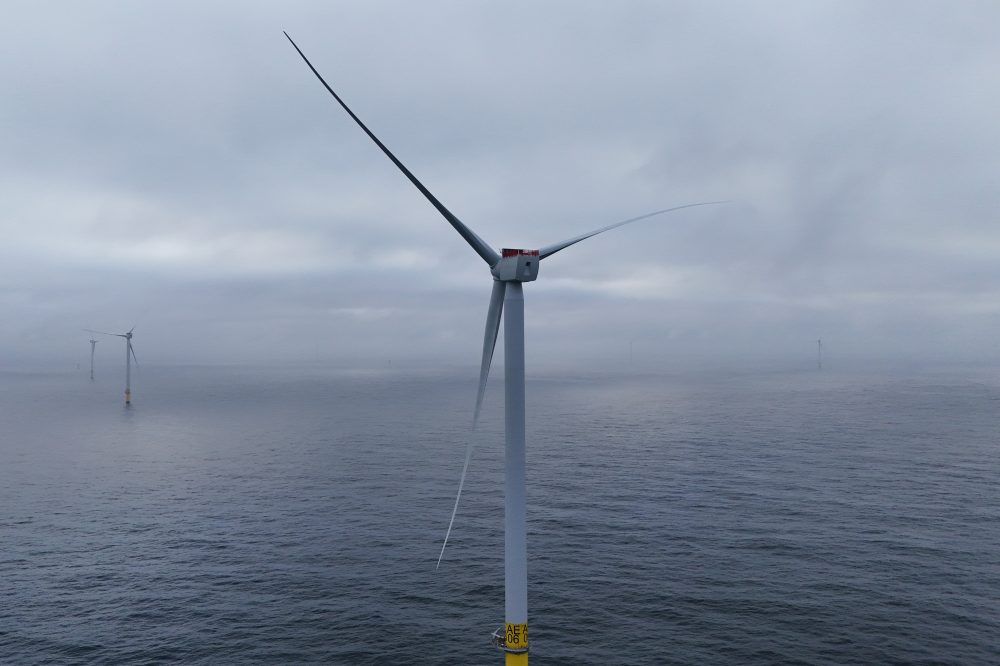

Congressional Democrats have launched an investigation into the Trump administration’s plan to spend close to $2 billion in taxpayer funds convincing energy companies to abandon offshore wind developments.
After federal courts blocked President Trump’s executive orders aimed at halting offshore wind projects, the Republican administration shifted to this new approach. Three separate agreements have now been revealed.
Representatives Jared Huffman of California, who leads Democrats on the House Natural Resources Committee, and Jamie Raskin, the top Democrat on the House Judiciary Committee, are seeking detailed information about the largest of these arrangements. The March announcement revealed that French energy firm TotalEnergies would receive $1 billion — effectively returning their lease payments for wind projects planned off North Carolina and New York — provided they redirect that investment toward fossil fuel developments.
Huffman characterized the arrangement as a “scam” and warned the administration plans to “light a lot of federal taxpayer money on fire if we let them.”
In correspondence sent Wednesday to TotalEnergies and shared with The Associated Press, Huffman and Raskin notified the company of their investigation, requested documents and communications, and urged the CEO to reject the payment. Their letter details multiple ways they believe the agreement violates federal law.
“You can’t come into the United States and do a backroom deal like this, that just essentially treats the treasury as a slush fund, and walk away with a billion dollars,” Huffman stated.
When contacted for response, TotalEnergies referenced its earlier announcement. CEO Patrick Pouyanné had explained that TotalEnergies abandoned U.S. offshore wind development in return for lease fee reimbursement, “considering that the development of offshore wind projects is not in the country’s interest.”
Monday brought news of additional agreements, with the administration announcing that Bluepoint Wind and Golden State Wind had accepted lease terminations worth nearly $900 million combined, contingent on equal fossil fuel investments. Trump has embraced fossil fuel electricity generation, arguing it will reduce family energy costs, improve grid reliability and preserve America’s competitive edge in artificial intelligence development.
Both Bluepoint and Golden State operate under Ocean Winds, a partnership between EDP Renewables and French energy company Engie. Ocean Winds North America CEO Michael Brown explained that changing market conditions require companies to “adapt.”
Offshore wind project critics applauded the administration’s innovative approach.
“This is the latest strategy and we think it’s a winner,” stated Robin Shaffer, who leads Protect Our Coast New Jersey, on Wednesday. Shaffer argued the administration “is well within their rights to do this and private businesses can’t be forced to build anything.”
However, Senate Majority Leader Chuck Schumer of New York condemned it as a “bailout for fossil fuel donors dressed up as a deal.”
“Donald Trump spent years calling offshore wind subsidies a waste of taxpayer money,” Schumer declared. “Now his administration is handing nearly $2 billion of those very same taxpayer dollars to companies to abandon clean energy projects that would have powered millions of American homes and created thousands of good-paying union jobs.”
Following these deal completions, Ocean Winds will retain just one U.S. offshore wind project — SouthCoast Wind off Massachusetts. That project’s progress has decelerated under Trump’s presidency.
Amber Hewett, who oversees offshore wind energy initiatives at the National Wildlife Federation, argued that compelling developers to switch from offshore wind to oil and gas further delays U.S. climate change mitigation efforts. Fossil fuel combustion remains the dominant driver of global climate change.
Upon taking office in January 2025, Trump implemented a temporary suspension of wind energy project leasing and permitting. His administration has halted ongoing wind farm construction, scrapped plans for new offshore wind development in federal waters, and introduced additional review requirements for wind and solar projects.
Federal courts permitted wind farm construction to continue, overturned the initial order blocking wind energy development, and prevented the administration from requiring Trump’s interior secretary to personally approve all solar and wind projects on federal property.
Energy law specialist Kristoffer Svendsen believes the lease buyouts represent a final effort to eliminate offshore wind projects following the administration’s courtroom defeats. He knows of no similar arrangements where energy project developers received payment to abandon their plans.
“This saga never ends. They continue to surprise the industry and those of us following the industry,” said Svendsen, who serves as assistant dean for energy law at George Washington University Law School.
Svendsen anticipates energy companies will pursue opportunities in European and Asian markets, given the “quite bleak” outlook for new U.S. offshore wind development.
“At this point if you’re interested in offshore wind, you’ll most likely go to a jurisdiction where they want you,” he explained.
Last week, the Global Wind Energy Council reported record global wind installations of 165 gigawatts in onshore and offshore projects, with 138 nations now incorporating wind energy into their economies. This capacity can supply 118 million households. Asian markets, dominated by China and India, accounted for 80% of worldwide installations.
David Carroll, CEO and chief renewables officer for Engie North America, also predicts limited U.S. offshore wind advancement in coming years. He pointed to the administration’s permit revocations after years of preparation and substantial investment, plus construction halts on fully approved projects, as factors undermining business confidence.
“The offshore wind industry does not have a strong future here in the U.S. And that’s unfortunate,” said Carroll, who chairs the American Clean Power Association board, in a recent interview. “The Northeast needs more energy and that is one of the very key ways we can get energy in the Northeast.”