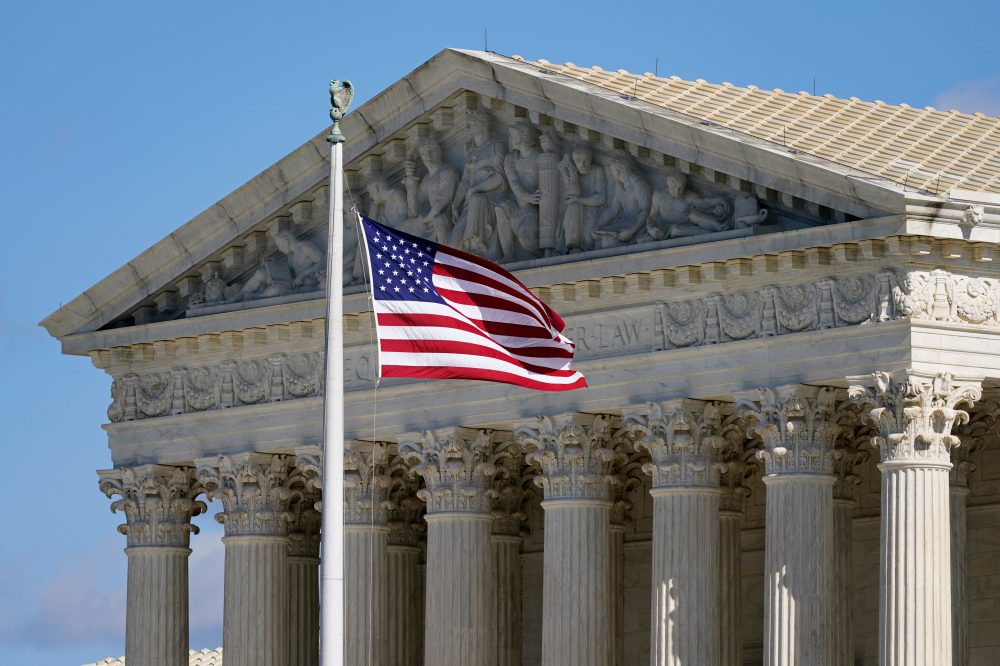

The nation’s highest court has dealt a significant blow to voting rights protections that have combated racial discrimination at the polls for over fifty years, ruling against a Louisiana congressional district with a Black majority.
The court’s conservative justices determined that the district, currently held by Democratic Representative Cleo Fields, placed too much emphasis on racial factors when boundaries were drawn. Chief Justice John Roberts characterized the district as resembling a “snake” that winds across more than 200 miles to connect communities in Shreveport, Alexandria, Lafayette and Baton Rouge.
The full impact on Section 2 of the Voting Rights Act remains uncertain, but legal experts warn the decision may enable GOP-controlled states to dismantle Black and Latino districts that typically support Democratic candidates, potentially shifting congressional power dynamics. This comes as President Donald Trump has already initiated nationwide redistricting efforts to strengthen Republican electoral prospects.
Those challenging the district contended that Louisiana’s second Black-majority congressional seat, created to address previous discriminatory mapping, violated constitutional principles by using race as a primary factor while ignoring traditional redistricting criteria such as geographic compactness.
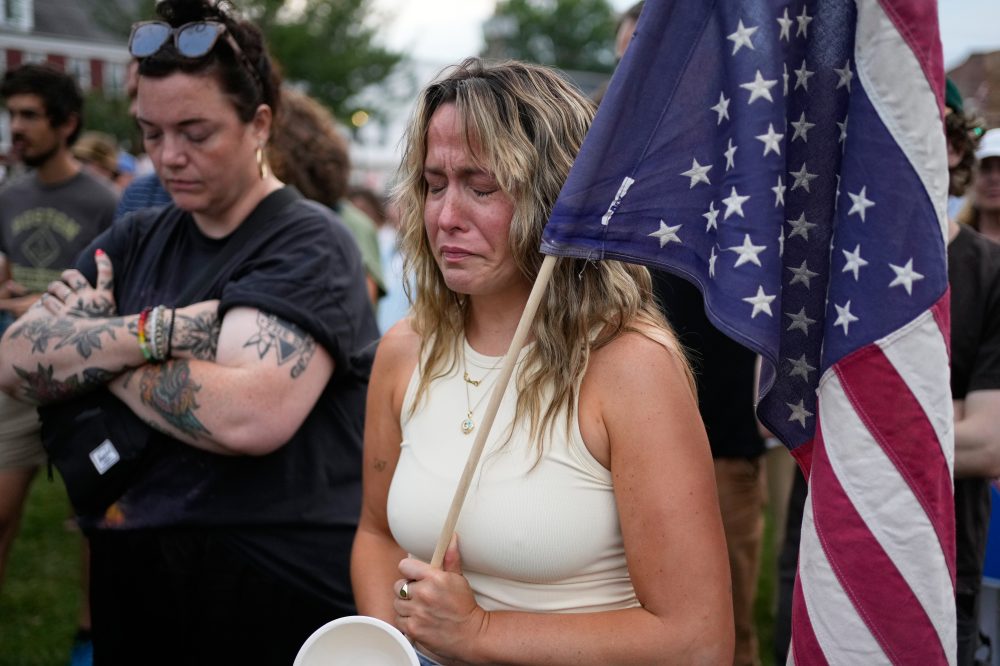
Civil rights leaders responded with sharp criticism to Wednesday’s ruling. Derrick Johnson, who leads the NAACP, called the court’s action “a devastating blow to what remains of the Voting Rights Act.”
“This ruling is a license for corrupt politicians who want to rig the system by silencing entire communities,” Johnson stated. “The Supreme Court betrayed Black voters, they betrayed America, and they betrayed our democracy.”
Johnson noted the timing’s significance, coming roughly six weeks after civil rights veterans commemorated the 61st anniversary of Bloody Sunday, when peaceful voting rights demonstrators faced violent attacks from Alabama state troopers on Selma’s Edmund Pettus Bridge. That brutality helped galvanize national support for the landmark voting legislation now under threat.
“This ruling is a major setback for our nation and threatens to erode the hard-won victories we’ve fought, bled, and died for. But the people still can fight back,” Johnson declared. “Our democracy is crying for help.”
Lauren Groh-Wargo, who directs Fair Fight Action, the Georgia voting rights organization established by Democrat Stacey Abrams, accused the court of dismantling voting protections “while pretending to uphold it.”
According to Groh-Wargo, the justices effectively rewrote the law to demand proof of deliberate discrimination, despite Congress specifically amending the Voting Rights Act in the early 1980s to reject such requirements after an earlier Supreme Court ruling attempted similar changes. Notably, Roberts served as a Justice Department lawyer at that time advocating for intentional discrimination standards.
“It allows states, counties and cities to shield their discriminatory maps by claiming they are advancing their own partisan interests, ignoring that race and party are highly correlated in places across the country, particularly the South,” Groh-Wargo explained in a message to the Associated Press.
The White House celebrated the outcome, with spokesperson Abigail Jackson calling it “a complete and total victory for American voters.”
“The color of one’s skin should not dictate which congressional district you belong in. We commend the court for putting an end to the unconstitutional abuse of the Voting Rights Act and protecting civil rights,” Jackson said.
Multiple states have already implemented new House district maps following Trump’s call last year for Texas Republicans to redraw boundaries, aiming to secure additional seats and preserve the party’s narrow House majority heading into midterm elections.
The redistricting competition appears balanced so far. Republican strategists believe they could capture up to nine additional seats through new maps in Texas, Missouri, North Carolina and Ohio, with potentially four more if Florida approves pending legislation. Democratic analysts project their party could gain 10 seats from redistricting efforts in California, Utah and Virginia.
New Orleans Mayor Helena Moreno, a Democrat representing the state’s other predominantly Black congressional district, criticized the Supreme Court’s decision as “a step backward.”
“For decades, the Voting Rights Act has served as a critical safeguard to ensure every voice, especially those historically marginalized, has a meaningful opportunity to be heard,” Moreno explained.
“Striking down a district that reflected diversity suppresses voices and weakens our democracy. We should be working to expand representation, not roll it back,” she added.
The timing proved particularly relevant in Florida, where the state Senate briefly paused proceedings so members could examine the ruling and consult legal counsel. However, the Republican-controlled chamber proceeded with plans to approve Governor Ron DeSantis’ congressional redistricting proposal later Wednesday.
Florida’s current congressional boundaries gave Republicans a 20-8 seat advantage in 2024 elections. DeSantis’ redistricting plan aims to expand that margin to potentially 24-4 by November.
The 1965 voting rights legislation represented the Civil Rights Movement’s signature achievement, successfully expanding ballot access for Black Americans while reducing systematic voting discrimination.
Election law specialist Nicholas Stephanopoulos estimates that nearly 70 of the nation’s 435 congressional districts currently receive Section 2 protections.
Justice Elena Kagan warned in her dissenting opinion that “the consequences are likely to be far-reaching and grave. Today’s decision renders Section 2 all but a dead letter.”
Justice Samuel Alito, writing for the six conservative justices, declared the Louisiana district central to the case “an unconstitutional gerrymander.”
The court released its decision while Florida lawmakers debated DeSantis’ proposed congressional map changes, designed to potentially give Republicans a 24-4 delegation advantage.
Senate Democrats unsuccessfully urged their Republican colleagues to postpone deliberations, allowing time to review the Supreme Court ruling and seek legal guidance on its implications for the governor’s proposal.
Legal scholars and redistricting attorneys contacted immediately after the decision’s release indicated they needed additional time to fully analyze the ruling’s broader consequences.