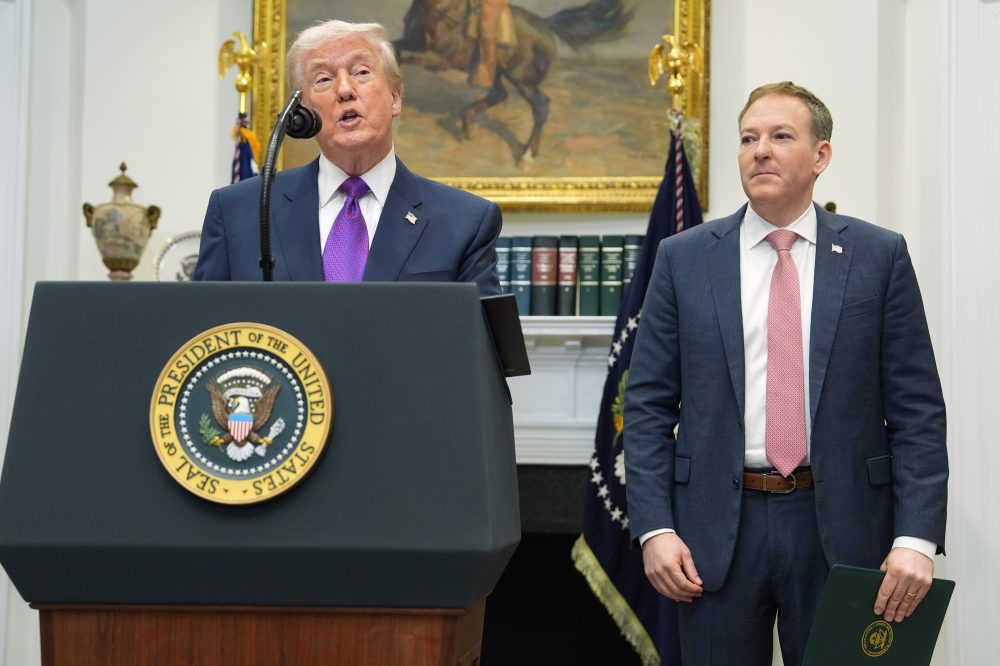

WASHINGTON — Environmental Protection Agency Administrator Lee Zeldin defended the Trump administration’s proposal to cut his agency’s budget in half during heated congressional budget hearings this week, leading to fiery exchanges with Democratic lawmakers who accused him of abandoning the EPA’s core mission.
During three days of budget hearings, Zeldin took a combative stance when questioned about the proposed $4.2 billion budget, often turning questions back on Democratic representatives and at times suggesting they were unprepared or indifferent to the agency’s accomplishments.
Since taking charge, Zeldin has dismantled major climate initiatives, advanced what he describes as the most extensive deregulation effort in U.S. history, and terminated billions in environmental justice funding from the Biden era, which he characterizes as ending “EPA’s radical diversity, equity, and inclusion programs.”
The Republican administration’s budget proposal would dramatically cut funding for state environmental initiatives and water infrastructure loans, end what officials term “radical climate research,” and reduce enforcement resources. However, the plan requests additional funding for expedited project approvals and addressing drinking water emergencies.
Congressional approval is required for budget changes, and historically lawmakers have rejected such drastic cuts. Last year, despite Trump administration requests for over 50% reductions, Congress only decreased EPA spending by 3.5%. Democrats argue the budget demonstrates Zeldin’s favoritism toward industry while ignoring pollution’s health impacts including cancer and respiratory diseases.
“The budget proposal reads like a climate change deniers’ manifesto,” Connecticut Representative Rosa DeLauro, the leading Democrat on the House Appropriations Committee, stated during Monday’s hearing. She questioned how the EPA could justify abandoning its responsibility to protect Americans “under the false flag of economic growth?”
The agency has moved to reverse a key determination that climate change poses dangers, weakened Biden-era coal plant pollution standards, and proposed eliminating greenhouse gas limits for certain vehicles.
When DeLauro challenged him, Zeldin countered by asking where climate change appears in the Clean Air Act and whether she knew about recent Supreme Court rulings limiting EPA’s regulatory authority.
“You do not have the right to say climate change does not exist, that it’s a hoax,” DeLauro responded.
Zeldin replied that he recognized her frustration and suggested she should be familiar with major Supreme Court cases. “You’re just somebody who likes to have the microphone on,” he added.
The confrontation escalated from there, with DeLauro calling the Trump administration’s conduct “arrogant” and accusing it of “making a mockery of what the agencies are all about.”
In another tense moment, Zeldin dismissed data cited by California Democratic Representative Josh Harder regarding coal plant emissions rollbacks as worthless, saying “Have your dog pee on it. It is not accurate.” Harder’s office subsequently provided the EPA report they said was the source of their figures.
Zeldin maintained that despite reduced funding, the agency continues enforcing environmental laws and achieving notable successes, citing an agreement with Mexico to decrease sewage flowing into the polluted Tijuana River and accelerated efforts to address radioactive contamination in the St. Louis area.
He argued this work reflects strict legal compliance, contrasting it with what he called regulatory overreach by President Joe Biden’s administration that sought to harm essential industries like coal.
Republican lawmakers generally endorsed Zeldin’s assertion that “Not only will we be able to fulfill all of our statutory obligations, we will be able to do more with less.”
The 2021 bipartisan infrastructure legislation allocated tens of billions for drinking and wastewater loans through state programs, but this funding expires this year, and the EPA’s proposed budget would eliminate most agency support.
“It was never intended to be a new norm for spending,” Virginia Republican Representative Morgan Griffith noted.
However, this would eliminate funding to remove dangerous PFAS chemicals from drinking water. Democratic Representative Jake Auchincloss of Massachusetts found the agency’s claim that improved technology could accomplish more with less funding unconvincing.
“How do we get rid of PFAS in municipal water supplies with 90% fewer dollars?” he inquired.
Zeldin mentioned promising technologies before criticizing congressional earmarks, which members use to fund district projects with money otherwise allocated to states for loans — a practice many experts oppose.
“I know that members of Congress are going to raid it, and they have been doing it for a long time,” said Zeldin, who previously served as a New York congressman.
Auchincloss responded that Zeldin wasn’t responsible for earmarks and that “hope is not a strategy.”
Questions also arose about industry influence on policy decisions, particularly regarding the Make America Healthy Again movement, which has criticized environmental damage from products like fertilizer. Health Secretary Robert F. Kennedy Jr. leads this initiative.
Maine Democratic Representative Chellie Pingree asked Zeldin if he understood advocates’ concerns about industry influence at the EPA and the Trump administration’s support for increased pesticide use.
He characterized much of her lengthy question as inaccurate, then mentioned plans to examine microplastics as potential drinking water contaminants and an upcoming review of the controversial herbicide glyphosate.
“I get it, you have an agenda,” Zeldin said. “I mean, I understand you’d like to have a gavel in your hand.”