
Federal investigators say a suspect accused of planning an assassination attempt against President Donald Trump at Saturday’s White House Correspondents Association dinner managed to transport a shotgun and semiautomatic pistol aboard an Amtrak train traveling from California to Washington, D.C.
The case began nearly two years ago when a railway employee noticed suspicious behavior from a passenger on a Chicago-bound train and alerted authorities. Police discovered firearms and materials about crowd control in his luggage, along with what appeared to be plans for a mass violence incident.
The arrest has renewed calls from railway worker unions for enhanced security measures on passenger trains, highlighting a significant gap in transportation safety protocols.
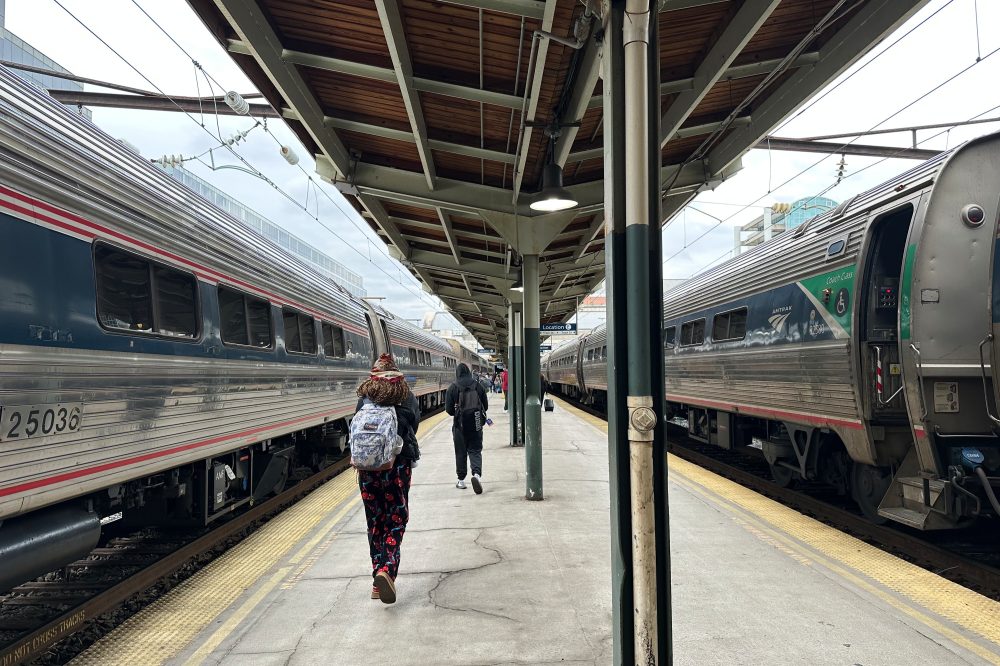
Unlike air travel, where the Transportation Security Administration screens all passengers and carry-on items, train travelers face no such security checks whether boarding at small unstaffed stations or major hubs like Washington’s Union Station.
An Amtrak representative would not comment on security procedures or confirm whether the suspect, Cole Tomas Allen, followed proper protocols for firearm transportation. The company stated it is cooperating with federal investigators by providing travel records.
Current Amtrak policies mandate that firearms must be declared, unloaded, stored in hard cases meeting specific dimensions and weight limits, and transported only in checked luggage – similar to airline regulations.
Sean Jeans-Gail, who serves as vice president of government affairs and policy for the Rail Passengers Association, explained that while Amtrak and other ground transportation providers prohibited weapons after September 11th, none implemented passenger screening systems. Congressional legislation in 2010 required Amtrak to permit firearm transport in checked baggage.
Typically, declared weapons are secured in dedicated baggage cars accessible only to staff members. However, trains without baggage cars use zip-tied, labeled bags to indicate firearm presence and detect tampering, according to former Amtrak workers.
“It is a little hard to take a train hostage, to say it is different than the post 9/11 concerns raised regarding an airplane,” Jeans-Gail said. “Amtrak has been safe from gun violence largely. The main incidents have been police shootings or interdictions.”
Railway unions began pressing for improved security during the COVID-19 pandemic when enforcing mask requirements proved challenging. They intensified their efforts after January 6th Capitol riot participants traveled to Washington by train, creating disturbances during return trips.
Jared Cassity, national safety and legislative director for the Sheet Metal, Air, Rail and Transportation Workers union’s Transportation Division, said many Amtrak conductors and crew members avoid discussing incidents publicly due to concerns about company retaliation.
“Operator assaults are the most common conversations we have with our membership, but guns on trains is second or third in terms of concerns for workers,” Cassity said.
The union has successfully advocated for state-level legislation and currently has two federal bills pending. The proposed laws would resolve jurisdictional complications in prosecuting assaults against rail workers and establish criminal penalties for interfering with railway employees similar to those protecting airline staff.
Cassity noted that the conductor who identified the alleged mass shooting suspect in 2024 had recently completed union-sponsored security training. While the employee received recognition, the arrest generated little media coverage.
A 2022 fatal shooting aboard an Amtrak train near Lee’s Summit, Missouri, drew significant attention when the train failed to stop for medical assistance until reaching the next station, delaying emergency care. A federal jury ruled in 2024 that Amtrak must pay 90% of a $158 million settlement to the victim’s family, who alleged negligence including inadequate security measures.
Michael Callanan, a former Amtrak employee now working as a rail safety consultant, said he’s aware of additional security breaches involving drug smuggling and other contraband due to absent screening procedures.
“They never want to spend money on infrastructure or security,” Callanan said. “Maybe this shooter will be a significant enough of an event to push Amtrak to fund things.”
Callanan emphasized that Amtrak police officers differ significantly from TSA agents. Their primary responsibilities include station patrols, track inspections, and occasional train rides, but individual officers cover vast territories.
“There’s one officer who I think patrols from Orlando to Miami,” he said. “Something has to be done to increase security.”
While the Rail Passengers Association supports expanding Amtrak police presence on trains, Jeans-Gail opposes implementing TSA-style screening at approximately 500 stations nationwide.
“The thought of expanding that, even outside of the logistical issues, if you look at the experience of riding the Amtrak network it’s very impractical because it ranges from New York’s Penn Station where it’s very active, many points of access to the station, unlike an airport where all traffic is filtered to specific points,” he said. “Then you have Whitefish, Montana, on the other side of the spectrum — a rustic structure with not a lot of traffic.”
Cassity acknowledged these varying security needs across the network. The union doesn’t expect uniform solutions like airports provide, but wants meaningful discussions to begin.
“We have to change the narrative about safety and realize something has to be done to prevent guns from getting onto the trains freely,” he said. “We sympathize with the challenge this is for Amtrak. … When you start talking about how you secure the most rural places, and those being the majority of stations, it becomes a daunting, daunting task. …But we need to have the conversation.”