
WASHINGTON – A security breach at Saturday’s White House Correspondents’ Association Dinner has sparked renewed debate about the future of the century-old journalism event, as safety concerns merge with existing ethical questions.
An armed individual rushed past security barriers at the Washington Hilton hotel, where prosecutors say he planned to harm President Donald Trump in the nearby ballroom. Security personnel quickly evacuated Trump and first lady Melania Trump from the venue without incident.
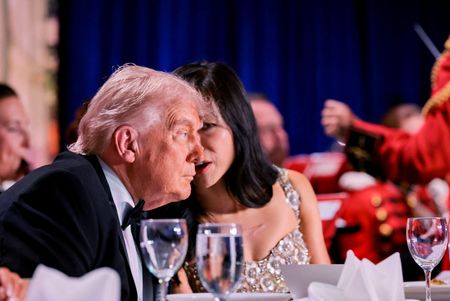
The security breach disrupted what had been an unusual evening of cooperation between the press and a president who has frequently criticized media coverage. However, even before this weekend’s events, many questioned whether reporters should socialize with the government officials they’re assigned to cover.
The annual black-tie gathering has operated as a Washington tradition for over 100 years, funding journalism scholarships while honoring First Amendment protections for free speech and press freedom.
Media companies buy tables and bring guests from top political and business circles. Celebrity-filled afterparties typically continue until the early morning hours. While presidents usually participate, Trump had avoided the event throughout his previous White House tenure until this year’s attendance.
“I think it’s not a good look for journalists to be dressed in tuxedos and gowns and hanging out with the people they cover,” said Jane Kirtley, a professor of media ethics and law at the University of Minnesota. “It’s always been a really tricky proposition.”
Through a Truth Social message Saturday evening, Trump indicated he wanted to reschedule the dinner. However, the White House Correspondents’ Association maintains authority over the event’s future.
When asked about upcoming plans, WHCA President Weijia Jiang directed questions to Sunday’s official statement.
“The WHCA board will be meeting to assess what happened and determine how to proceed,” Jiang wrote. “We will provide updates as soon as any are available.”
The organization’s statement praised journalists present for “jumping into reporting immediately after the incident unfolded.”
The formal dinner traditionally features comedic entertainment, with presidents often attempting humor themselves. In 2011, then-President Barack Obama used his speaking time to mock Trump, who attended as a business figure and television personality.
During Trump’s first presidency in 2018, comedian Michelle Wolf delivered harsh criticism of White House press secretary Sarah Huckabee Sanders at the dinner, worsening Trump’s already tense media relations. That year’s WHCA leader, Margaret Talev, acknowledged members felt “dismay” over Wolf’s remarks, leading to a more subdued program the next year.
Trump chose this year for his first presidential appearance at the event. Washington observers had eagerly anticipated his participation and expected comments, considering his history of attacking news organizations.
His actions against media outlets include multiple lawsuits, labeling truthful reporting as “fake news,” targeting individual journalists personally, and limiting reporter access to White House briefings and Pentagon coverage. Despite this, he has also shown more openness than past presidents to unstructured press sessions and reporter phone calls.
The New York Times stopped buying dinner tables in 2008 citing ethical concerns, though the newspaper continues reporting on the event.
Patrick Plaisance, an ethics professor at Pennsylvania State University’s Bellisario College of Communications, said the Times’ approach demonstrates “the inherent conflict that the event poses for journalists.”
Supporters argue that reporters regularly build source relationships in casual environments beyond formal briefings or scheduled interviews.
“Even though it may look like journalists are cozying up to politicians — and some are — a lot of beat reporting looks like that,” said Eric Deggans, a professor of journalism and media ethics at Washington and Lee University.
“It’s a more complicated situation than some of the critics are willing to allow,” he said.
Nevertheless, academic experts acknowledged that the dinner’s mission of celebrating press freedom often gets lost amid images of journalists and politicians enjoying expensive meals together. This year’s entertainment choice — mentalist Oz Pearlman — failed to address appearance concerns, Deggans noted.
“There’s been a long history of comics who roast the room — politicians and the press alike,” he said. “Moving away from that without explaining why creates its own public impression.”
“Once you layer in the security and safety concerns,” Deggans added, “it becomes an even more challenging proposition.”