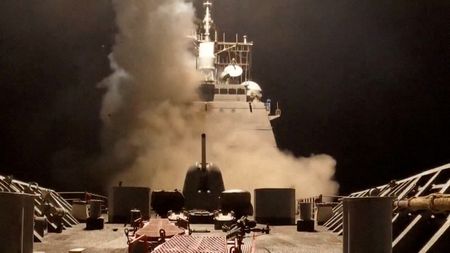

Yemen’s Houthi forces fired their first ballistic missiles directly at Tel Aviv since the October ceasefire ended, launching attacks in the early morning hours of Saturday, March 28, 2026. A follow-up operation occurred Sunday, March 29, with the group using drones and cruise missiles to target what they called strategic locations in Eilat.
The attacks occurred one month into the US-Israel conflict with Iran and have heightened concerns about potential closure of international shipping through the Bab el-Mandeb Strait. The Houthis announced their participation in the conflict as part of the “axis of resistance,” but Yemen’s unstable internal conditions could face serious repercussions. Peace negotiations with Saudi Arabia that were nearly finalized are now in jeopardy, potentially triggering new international responses that could further devastate the nation’s crumbling infrastructure.
Mohammed Salem, using a pseudonym and working with Houthi war media, explained that these operations were carefully planned strategic moves rather than impulsive actions. “The military wing has studied the situation closely since the first day of the regional war,” he stated, explaining that joining the conflict represents “a response to the will of the Yemeni people and a national and religious duty to support the resistance in Palestine, Lebanon, Iraq, and Iran.”
Salem emphasized that the Houthis aren’t using these attacks as negotiating leverage to secure better terms, describing them as part of their ongoing campaign against what he called the Zionist and American enemy. He noted that Yemen now controls significant military resources, positioning it among major regional powers, and cautioned that “the coming days will reveal many surprises that will astonish the world, as we are still in an escalating phase until the aggression stops on all fronts.”
The cross-border attacks have created a sharp division within Yemeni society, going beyond military and political considerations. This split demonstrates vastly different views of the current crisis—with supporters believing the escalation restores national pride, while critics worry it will destroy the nation’s final opportunities for survival.
Mohammed, a young Sanaa resident who backs the Houthis’ actions, spoke enthusiastically to The Media Line about the Tel Aviv strikes representing a pivotal moment that restored Yemen’s international position.
He maintained that Yemenis—previously relegated to being seen as a “forgotten civil war”—have proven they cannot be overlooked in regional politics. Speaking boldly, he dismissed concerns about potential Israeli or American retaliation, asking what more a population devastated by years of blockade and poverty could possibly lose. He argued that “dying with dignity” through direct confrontation is better than “a slow death” while depending on limited humanitarian assistance, calling the expected sacrifices “an inevitable price for freedom and dignity.”
However, strong opposition voices are emerging elsewhere. Badri Saleh, who lives in al-Jawf governorate, characterized the military involvement as dangerous gambling that leads the nation toward “collective suicide” to serve foreign interests.
He expressed regret over the missed opportunity for a significant peace agreement with Saudi Arabia—which was nearly completed—that could have reduced domestic hardship. Instead, he argued, the missile attacks have undermined political progress “to satisfy Tehran.”
Saleh’s worries go beyond political breakdown to include fears of extensive infrastructure destruction, warning that a strong international response could hit ports and airports, driving the country into “economic paralysis” with no clear way out.
Abdulsalam Mohammed, who leads Abaad Studies & Research Center, described what he called substantial military preparation by the Houthis. He reported that the Houthis currently control 200 missile launch locations strategically placed throughout Saadah, Hodeidah, al-Jawf, and Taiz, plus 300 drones, including large suicide drone models appearing in combat for the first time.
He also highlighted a major change in naval operations, mentioning an “underwater base” with unmanned submarines, along with launch sites for explosive boats in as-Salif and Hodeidah. These capabilities are backed by secret manufacturing and development facilities built inside mountain tunnels in Sa’dah.
Mohammed additionally claimed that approximately 2,000 foreign specialists—primarily former Syrian army officers and Hezbollah and Iraqi armed group members—are managing technical operations. He stated that strategic planning and advanced operational coordination remain connected to Iran’s Revolutionary Guard command center, while the local group focuses on mobilization and field implementation.
Military affairs analyst and journalist Adnan al-Jabarni rejected the notion that the armed intervention is simply reactive. In analysis posted on X, he argued the Houthis intentionally started their direct involvement by attacking Tel Aviv to accomplish strategic goals—primarily to trigger a direct Israeli response. This approach, he contended, establishes the group as a major player in the conflict while reducing perceptions of complete tactical reliance on Iran.
Al-Jabarni noted that the Houthis are following a “gradual entry” strategy based on “axis of resistance” requirements.
If Iran’s current goals involve wearing down Israeli defenses and causing direct harm, the emphasis will continue on Israeli territory. However, if objectives change toward applying political and economic pressure on the US administration—especially to complicate President Donald Trump’s strategic calculations—then efforts might shift toward limiting navigation through the Bab el-Mandeb Strait and potentially attacking regional military installations under sovereignty claims to expand the pressure campaign.
He concluded that if the Axis fully commits to this confrontation, especially during perceived weakness or distraction in Tehran, the region might face an extended conflict with a definitive result—either favorable or unfavorable to them.
As missiles illuminate regional skies, Yemen finds itself once more at the heart of a historic crisis that has continued for decades. From internal mountain conflicts to open maritime confrontations, the nation has transformed into a global battleground for rival powers. While the international community monitors the straits and shipping lanes, average Yemenis remain trapped between hopes of reconstructing their homeland and the reality of international conflicts.