
Energy markets experienced a dramatic turnaround during Tuesday’s Asian trading session, with crude oil prices falling after earlier gains, following reports that President Donald Trump indicated to his staff he may be prepared to halt military operations against Iran without requiring immediate reopening of the Strait of Hormuz.
Brent crude futures for May delivery dropped $1.22, representing a 1.08% decline to $111.56 per barrel as of 0210 GMT, despite climbing 2% earlier in the trading day. The May contract reaches expiration Tuesday, while the more actively traded June contract stood at $105.76.
West Texas Intermediate futures for May fell 98 cents, or 0.95%, to $101.90 per barrel after reaching their highest levels since March 9 during early trading hours.
Market experts indicated the price decline represents a short-term response to potential conflict resolution, though substantial pricing changes would require complete restoration of shipping through the Strait of Hormuz.
According to a Wall Street Journal report published Monday citing administration sources, Trump informed his advisers he would consider ending the military operation against Iran while potentially delaying the waterway’s reopening to a future date.
Just one day earlier, Trump issued a stern warning that the United States would “obliterate” Iran’s energy infrastructure and petroleum facilities if Tehran failed to reopen the strategic waterway.
Iran’s effective blockade of the Strait of Hormuz, a critical passage that normally handles approximately one-fifth of worldwide oil shipments and substantial liquefied natural gas transport, has driven Brent futures up 59% throughout March, marking their largest monthly increase on record. WTI has similarly risen 58% this month, the steepest gain since May 2020.
“While diplomatic signals remain mixed, the ground reality suggests that uncertainty will persist,” stated Sugandha Sachdeva, founder of SS WealthStreet, a New Delhi-based research firm.
“Even in the event of de-escalation, restoring damaged infrastructure will take time, keeping supply tight,” Sachdeva added.
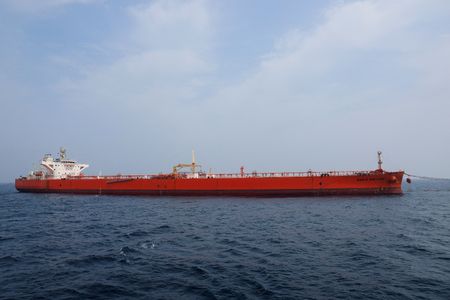
Demonstrating ongoing threats to maritime energy transportation amid the conflict involving Iran, the U.S., and Israel, Kuwait Petroleum Corp announced Tuesday that its fully loaded crude tanker Al Salmi, with capacity for up to 2 million barrels, sustained damage from what officials described as an Iranian attack at a Dubai port facility. Authorities also expressed concerns about possible environmental contamination in the region.
Over the weekend, Yemen’s Iran-backed Houthi forces launched missile attacks targeting Israel, sparking renewed worries about potential disruptions to the Bab el-Mandeb strait, the narrow passage connecting the Red Sea and Gulf of Aden that serves as a vital shipping corridor between Asia and Europe through the Suez Canal.
Saudi Arabia has redirected its crude exports through this route, with shipments rerouted from the Gulf to the Red Sea facility at Yanbu reaching 4.658 million barrels daily last week according to Kpler data, representing a significant increase from the average 770,000 barrels per day recorded in January and February.
In domestic developments, U.S. crude oil inventories were projected to have decreased last week, alongside reductions in distillate and gasoline stocks, according to a preliminary Reuters survey released Monday.
“Contradictory statements and signals on the state of the war are flying thick and fast and truth and facts are the biggest casualty,” commented Vandana Hari, founder of oil market analysis provider Vanda Insights.
“Crude is likely to continue being whiplashed and directionless,” Hari concluded.