
DUBAI, United Arab Emirates — American military forces conducted what appears to be a major strike against Iran’s central city of Isfahan in the early morning hours Tuesday, creating enormous explosions visible from great distances, while Iranian forces retaliated by attacking a fully-loaded Kuwaiti oil vessel in Persian Gulf waters.
These escalating strikes demonstrate how fierce the month-long conflict between the United States, Israel, and Iran has become, with Tehran continuing to block the strategically important Strait of Hormuz and cutting off crucial global oil shipping lanes, causing petroleum costs to spike dramatically and creating chaos in international markets.
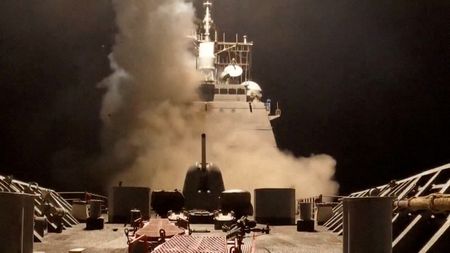
President Donald Trump, who continues to claim diplomatic negotiations toward ending hostilities are making headway, posted footage of the Isfahan assault on social media, showing bright explosions illuminating the darkness. The targeted city houses one of three locations previously bombed by American forces in June and likely contains significant quantities of Iran’s highly enriched uranium materials stored underground.
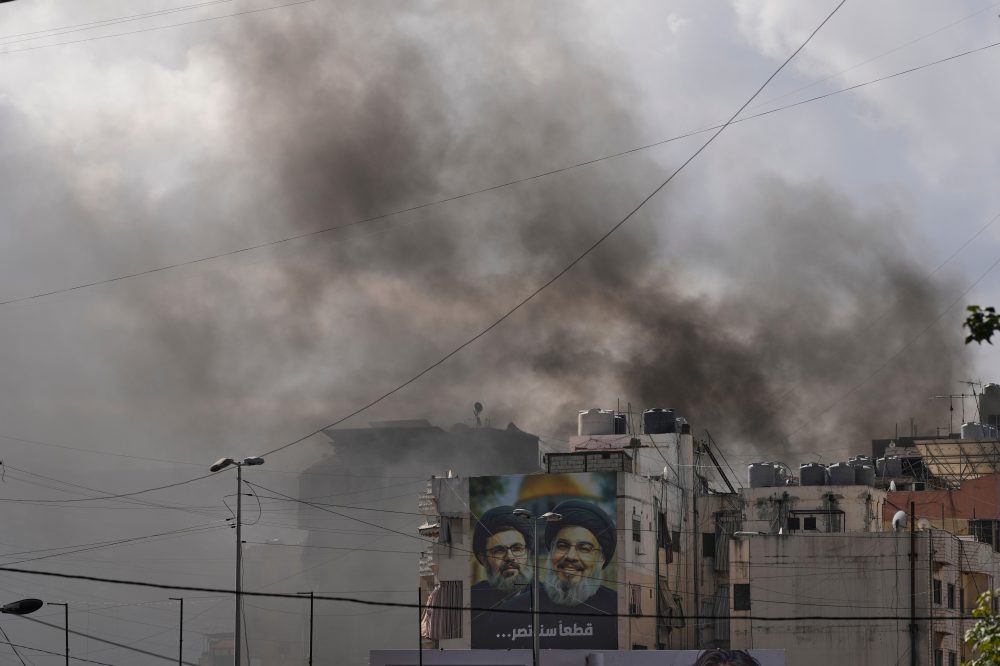
Separately, Israeli officials reported that four additional soldiers lost their lives during their Lebanese military operation, along with two more United Nations peacekeeping personnel, leading the U.N. Security Council to call an urgent meeting for Tuesday evening.
International Brent crude oil pricing reached approximately $107 per barrel during morning trading sessions, marking a more than 45% increase since military actions began February 28 when American and Israeli forces first attacked Iranian targets.
Iran’s control over the Strait of Hormuz, the critical waterway connecting the Persian Gulf through which one-fifth of global oil moves during normal times, has caused worldwide petroleum prices to climb, along with Tehran’s strikes against regional energy facilities throughout the Gulf area.
Responding to increasing frustration from Arab Gulf nations, Iranian Foreign Minister Abbas Araghchi stated Tuesday that Tehran only aims at American military personnel. Multiple countries have been urging Washington to continue military operations until Iran’s armed forces are completely eliminated.
“Our operations are aimed at enemy aggressors who have no respect for Arabs or Iranians, nor can provide any security,” Araghchi wrote on X. “High time to eject U.S. forces.”
However, civilian targets remained under attack as an Iranian unmanned aircraft struck the Kuwaiti tanker in waters near Dubai, igniting fires that emergency crews later extinguished, according to Dubai Media Office statements.
Four Dubai residents sustained injuries when fragments from a destroyed drone crashed into a neighborhood area.
Warning sirens activated across Bahrain, while Saudi Arabia’s Defense Ministry reported intercepting three ballistic rockets aimed at Riyadh, with falling debris from a destroyed drone southeast of the capital causing minor property damage to six residential buildings.
Alert signals also sounded in Jerusalem with loud blasts heard shortly after Israeli military officials warned of incoming Iranian missile attacks.
Israel and the United States launched fresh bombing campaigns against Iran, striking Tehran during early morning hours.
The footage Trump shared appeared to document a massive assault on Isfahan, where NASA fire-detection satellites indicate the blasts occurred near Mount Soffeh, a location believed to contain military installations. Iranian officials have not yet acknowledged the attack.
Satellite imagery captured just before June’s 12-day conflict between Iran and Israel suggests Tehran moved a truck containing highly enriched uranium to its Isfahan nuclear complex.
The photograph from an Airbus Defense and Space Pléiades Neo satellite depicts a vehicle carrying 18 blue containers entering a tunnel at the Isfahan Nuclear Technology Center approximately two weeks before U.S. forces bombed the location.
Intelligence experts concluded the truck probably transported most or all of Iran’s uranium stockpile enriched to 60% purity levels. This represents a brief technical process away from weapons-grade concentrations of 90%.
Trump stated this week that “great progress is being made” in negotiations with Iran to cease military activities. However, he warned that without a deal reached “shortly,” and if the Strait of Hormuz remains closed, America would expand its campaign by “completely obliterating” electrical facilities, oil installations, Kharg Island and potentially desalination plants.
The United States has deployed 2,500 Marines to the region with additional forces en route, while ordering 1,000 paratroopers to the conflict zone.
Trump has publicly discussed potentially attempting to capture Kharg Island, Iran’s primary oil export terminal, and Iran has accused America of using diplomatic discussions to delay while positioning more military personnel.
U.S. forces have already struck military positions on Kharg Island. Iran has warned it will launch ground invasions of Gulf Arab nations and place mines throughout the Persian Gulf if American troops enter Iranian territory.
During Trump’s second presidency, the United States has twice attacked Iran while high-level peace talks were ongoing, including the February 28 strikes that initiated the current war.
The U.N. Security Council scheduled Tuesday’s emergency session after officials reported three peacekeepers in southern Lebanon had died within a 24-hour period.
The United Nations peacekeeping mission in the area where Israel is fighting Iran-supported Hezbollah forces did not identify who was responsible for the fatalities.
Iranian authorities report more than 1,900 casualties within their borders, while 19 deaths have been confirmed in Israel.
Twenty-four people have died in Gulf states and the occupied West Bank. Lebanese officials said over 1,200 people have been killed, with more than 1 million displaced from their homes.
Ten Israeli soldiers have been killed in Lebanon, including the four announced Tuesday, while 13 U.S. military personnel have died in the conflict.