
WASHINGTON — Middle Eastern partners of the United States are privately pressing President Donald Trump to maintain military operations against Iran, contending that Tehran remains insufficiently weakened after weeks of U.S.-led airstrikes, sources from American, Gulf, and Israeli governments report.
Following initial behind-the-scenes complaints that they received insufficient warning about the U.S.-Israeli offensive and concerns about regional devastation, several allied nations now view this moment as a unique chance to permanently undermine Iran’s religious government.
Representatives from Saudi Arabia, the United Arab Emirates, Kuwait, and Bahrain have privately expressed their desire for military actions to continue until Iran’s leadership undergoes major changes or dramatically alters its conduct, according to officials speaking anonymously due to lack of authorization for public statements.
This regional pressure emerges as Trump wavers between declaring Iran’s weakened leadership ready for negotiations and threatening escalation if agreements aren’t reached quickly.
Meanwhile, Trump faces challenges building domestic support for a conflict that has claimed over 3,000 lives throughout the Middle East and disrupted global economic stability. However, the president appears increasingly confident about backing from key regional partners who initially showed reluctance about renewed military action.
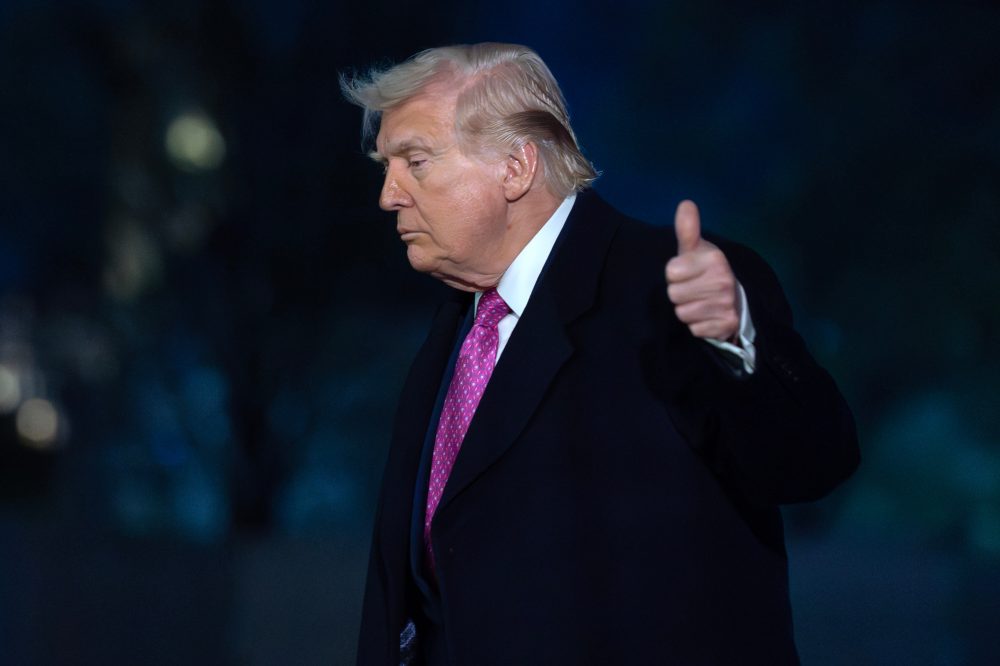
“Saudi Arabia’s fighting back hard. Qatar is fighting back. UAE is fighting back. Kuwait’s fighting back. Bahrain’s fighting back,” Trump stated to reporters aboard Air Force One Sunday evening during his return flight to Washington from Florida. “They’re all fighting back.”
These Gulf nations provide hosting facilities for American forces and military bases used for launching Iranian strikes, though they haven’t participated directly in offensive operations.
Although regional leadership generally supports current U.S. actions, one Gulf diplomatic source noted internal disagreements, with Saudi Arabia and the UAE spearheading calls for intensified military pressure against Tehran.
The UAE has positioned itself as potentially the most aggressive among Gulf states, strongly advocating for Trump to authorize ground invasion operations, the diplomat revealed. Kuwait and Bahrain also support this approach. The UAE, having endured over 2,300 missile and drone strikes from Iran, grows increasingly frustrated as ongoing warfare threatens its reputation as the region’s secure, pristine commercial and tourism center.
Conversely, Oman and Qatar, traditionally serving as mediators between economically isolated Iran and Western nations, prefer diplomatic resolution.
The diplomat indicated Saudi Arabia has argued to American officials that concluding warfare prematurely won’t achieve a “good deal” ensuring security for Iran’s Arab neighbors.
Saudi demands for any eventual settlement include neutralizing Iran’s nuclear capabilities, eliminating ballistic missile systems, ending Tehran’s proxy group support, and preventing future Islamic Republic shutdowns of the Strait of Hormuz as occurred during this conflict. Approximately 20% of global oil previously flowed through this waterway.
Accomplishing these objectives would require dramatic policy reversals by the theocratic government controlling the country since 1979’s Islamic Revolution or complete regime change.
Senior Emirati officials have adopted increasingly direct language regarding Iran.
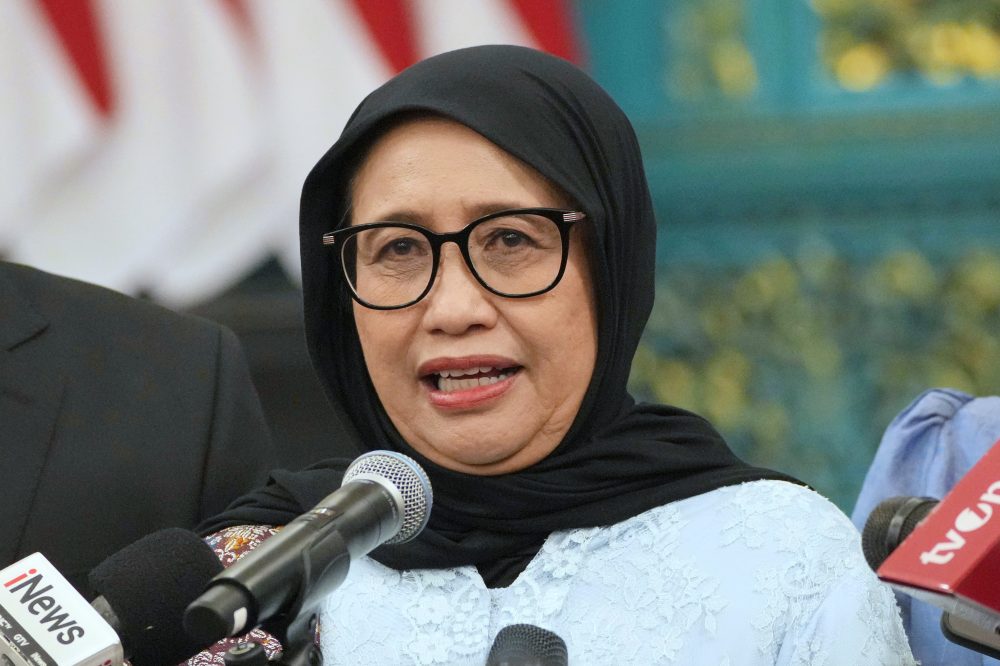
“An Iranian regime that launches ballistic missiles at homes, weaponizes global trade and supports proxies is no longer an acceptable feature of the regional landscape,” wrote Noura Al Kaabi, UAE Foreign Ministry minister of state, in Monday’s column for state-affiliated English publication The National. She continued: “We want a guarantee that this will never happen again.”
The White House refused comment regarding Gulf ally consultations. However, Secretary of State Marco Rubio emphasized Monday that America and Gulf Arab partners share unified views about Iran.
“They are religious zealots who can never be allowed to possess a nuclear weapon because they have an apocalyptic vision of the future,” Rubio said about Iran during his ABC “Good Morning America” appearance. “And all of their neighbors know that, by the way, which is why all of their neighbors have been supportive of the efforts we’re conducting.”
Crown Prince Mohammed bin Salman, the kingdom’s effective ruler, has informed White House officials that further reducing Iran’s military capabilities and clerical leadership benefits long-term Gulf regional interests and beyond, according to someone briefed on these discussions.
Nevertheless, Saudis remain concerned that prolonged conflict provides Iran additional opportunities for striking the kingdom’s energy infrastructure, which forms the foundation of its oil-dependent economy.
A Saudi government representative emphasized the kingdom ultimately seeks political crisis resolution, but immediate priorities focus on protecting citizens and essential infrastructure.
Trump recently highlighted most Gulf countries’ unified support for his administration’s war prosecution, praising their crisis solidarity while criticizing NATO allies for refusing to join American efforts.
Friday brought Trump’s praise for Bahrain, Kuwait, Qatar, Saudi Arabia, and the United Arab Emirates, commending their “bravery” throughout the conflict.
Speaking at a Miami event sponsored by Saudi sovereign wealth funds, the president offered particular acclaim for the Saudi crown prince, describing him as a “warrior” and “fantastic man.”
Trump also acknowledged Gulf countries’ initial hesitation about his and Israeli Prime Minister Benjamin Netanyahu’s war decision, but noted their subsequent rallying.
“They weren’t thinking this was going to happen, nobody was,” Trump said, referencing Iran’s thousands of retaliatory strikes across the Gulf region. “And they turned against them and really became very powerfully aligned. And they were with us, but they weren’t with us very obliquely. They were with us.”
Trump has not yet requested Gulf nations’ participation in offensive operations.
One consideration may involve administrative calculations that additional militaries beyond Israel would create unnecessary complications in crowded airspace.
Three American fighter aircraft were accidentally shot down by friendly Kuwaiti forces during initial conflict days amid Iranian aerial assault. All six crew members successfully ejected from the F-15E Strike Eagles.
Additionally, six American service members died March 12 when their KC-135 refueling plane crashed in western Iraq.
Another complication involves only UAE and Bahrain maintaining formal diplomatic relationships with Israel among Gulf states, adding complexity to their strategic considerations, notes Yasmine Farouk, International Crisis Group’s Gulf and Arabian Peninsula project director.
However, Iran has threatened attacks on neighbors’ critical infrastructure, including desalination facilities providing regional drinking water, should Trump execute his threat against Iranian power plants if the Strait of Hormuz isn’t reopened by April 6.
“The absence of a clear objective, the absence of the trust that the United States is really going to go until the end and finish the jobs … it’s making some of them reluctant,” Farouk explained. “But if there is a consequential or mass casualty (event) in one of those countries, then it would be justified for them to become a belligerent.”