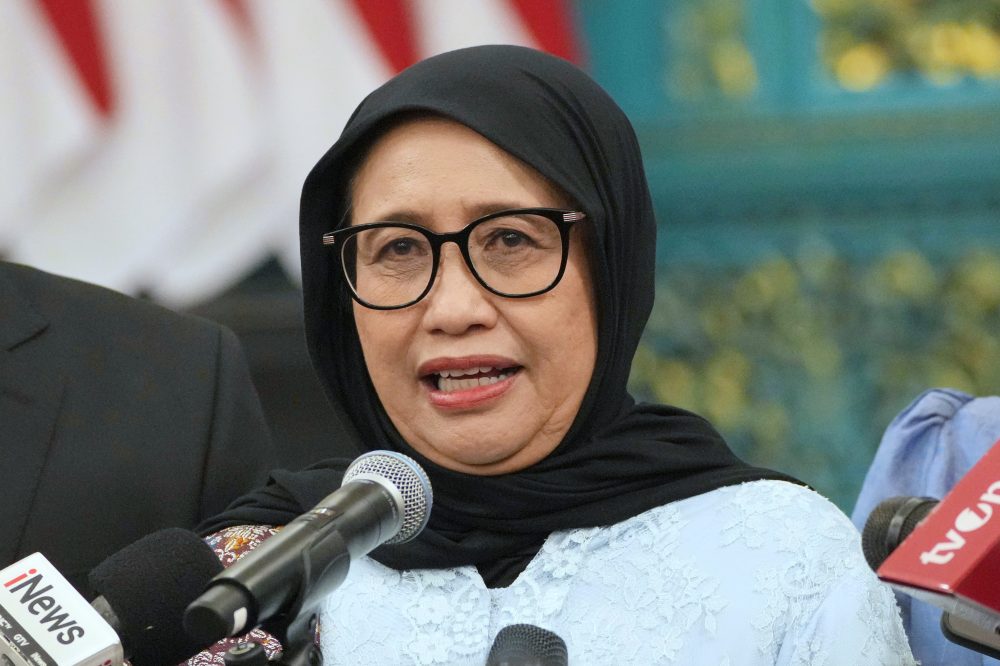

PARAMARIBO, Suriname (AP) — Chandrikapersad Santokhi, the former leader of Suriname who once served as a police commissioner investigating a notorious 1982 massacre of political dissidents, has passed away at the age of 67.
Known by the nickname “Chan,” Santokhi held the presidency of the South American nation from 2020 through 2025. He also held the position of justice and police minister between 2005 and 2010.
Current Suriname President Jennifer Geerlings-Simons announced Santokhi’s passing through a social media post, stating that “his years of service in various public functions will be remembered.”
Officials have not disclosed the cause of his death.
Netherlands Prime Minister Rob Jetten expressed his condolences on X, saying he was “grieved and shocked by the sudden passing” of the former leader. “As president, and in his other roles, he meant a great deal to Suriname. He also tirelessly worked to strengthen the ties between the Netherlands and Suriname,” Jetten wrote.
The nation of Suriname was once under Dutch colonial rule.
When Santokhi assumed the presidency, he inherited a financially devastated country from his predecessor, the late dictator Desi Bouterse. Under his leadership, the nation achieved economic recovery with assistance from an International Monetary Fund assistance package. The recovery required difficult economic reforms, including eliminating government subsidies for fuel, utilities, and water services, creating hardships for citizens.
Widespread public anger over rising energy and fuel costs led to violent protests in February 2023, when hundreds of demonstrators breached the Parliament building calling for Santokhi to step down.
Following the May 2025 national elections, voters chose not to grant Santokhi another presidential term.
During his tenure as justice and police minister, Santokhi gained recognition for his aggressive approach to combating drug smuggling and criminal activity, which earned him the moniker “The Sheriff.”
Prior to his political career, Santokhi worked as a police commissioner and spearheaded the investigation into what became known as the “December killings” — the execution-style murders of 15 opposition figures by Bouterse’s military government in December 1982.
Bouterse eventually faced prosecution beginning in 2007, twenty-five years after the murders occurred. He received two convictions and a 20-year prison sentence for the killings but evaded capture until his death in late 2024.
While Bouterse acknowledged “political responsibility” for the murders, he consistently maintained he was not present during the executions.
Before legal proceedings commenced, Bouterse publicly accused Santokhi of plotting to imprison and assassinate him. The two men remained bitter political rivals throughout their careers.
Santokhi’s achievements in law enforcement and government service positioned him to become leader of the Progressive Reform Party in 2011 after chairman Ramdien Sardjoe stepped down.