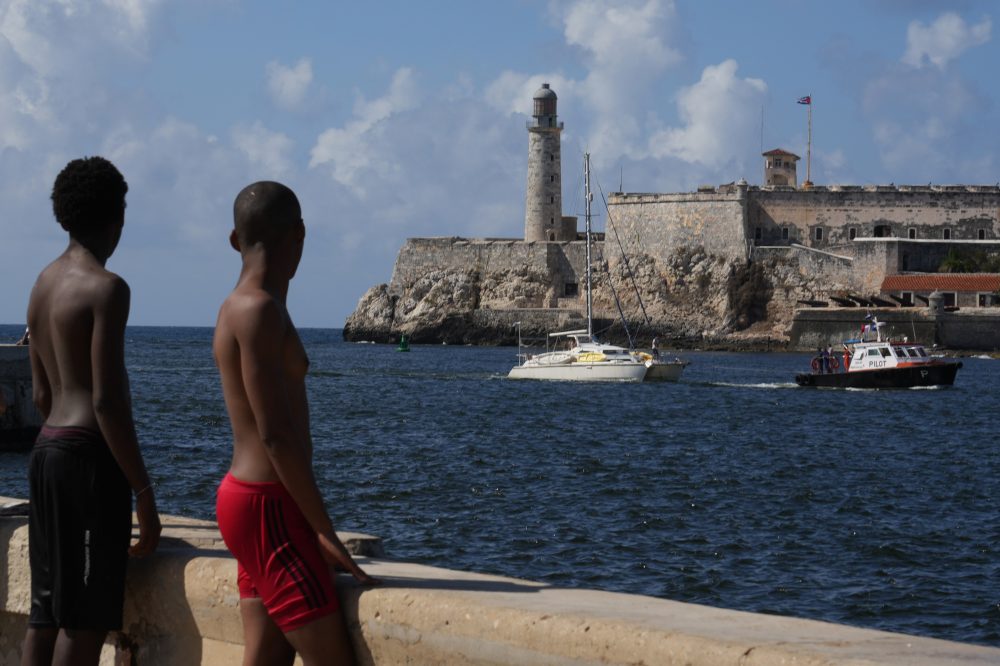

HAVANA — Cuban officials prepared Monday to welcome a Russian oil tanker under sanctions that transported approximately 730,000 barrels of crude oil to the Caribbean island, representing the nation’s initial such shipment in 2025.
The delivery occurred one day following President Donald Trump’s statement to media that he had “no problem” with Russian vessels providing fuel assistance to Cuba, a nation severely impacted by American oil restrictions.
Conflicting information emerged Monday regarding the precise whereabouts of the Russian vessel Anatoly Kolodkin. Although Russia’s Transport Ministry and Cuban state media outlet Cubadebate reported the ship had reached its destination, maritime tracking systems indicated the tanker remained in Cuban territorial waters with an anticipated arrival at port on Tuesday.
Russian government spokesman Dmitry Peskov confirmed Monday that Moscow had coordinated the fuel delivery with Washington officials beforehand. “Russia сonsiders it its duty not to stand aside, but to provide the necessary assistance to our Cuban friends,” he told reporters.
The vessel is bound for Matanzas port, a crucial facility for the island nation that generates less than 40% of its fuel requirements domestically and depends on foreign imports to maintain electrical power. Energy analysts estimate the incoming cargo could yield approximately 180,000 barrels of diesel fuel, sufficient to meet Cuba’s consumption needs for nine to ten days.
Trump’s administration has pursued more stringent policies toward the Caribbean nation than previous U.S. governments in recent decades, essentially eliminating Cuba’s access to critical petroleum supplies in an attempt to pressure political transformation. The embargo has severely affected Cuban citizens whom Trump and Secretary of State Marco Rubio claim to support, creating widespread hardship.
Nationwide power failures have disrupted daily life for Cubans already enduring prolonged economic difficulties, while fuel shortages and resource scarcity have paralyzed medical facilities and dramatically reduced public transportation services.
Mexico previously provided oil to Cuba as a gesture of support during the island’s energy shortage, but Washington’s tariff threats effectively ended these shipments. Mexico subsequently shifted to delivering humanitarian supplies, including food items and personal care products.
When questioned during Monday’s press conference about Trump’s remarks regarding the Russian tanker, Mexican President Claudia Sheinbaum indicated her nation would maintain aid deliveries and that “work was underway” with Cuban officials for future oil transactions.
Sheinbaum, who has carefully managed relations with Trump to avoid tariff penalties and military intervention against drug cartels, offered limited specifics.
She explained that Cuban private businesses, including hospitality companies, “are looking for private entities willing to supply them with fuel,” and have contacted Mexico’s government-owned petroleum corporation about purchasing crude oil, noting these proposals remain under consideration.
Cuba has remained central to strategic competition between America and Russia spanning multiple decades. Trump dismissed Sunday the notion that permitting the vessel to reach Cuba would benefit Russian President Vladimir Putin.
“It doesn’t help him. He loses one boatload of oil, that’s all it is. If he wants to do that, and if other countries want to do it, it doesn’t bother me much,” Trump said on Sunday. “It’s not going to have an impact. Cuba’s finished. They have a bad regime. They have very bad and corrupt leadership and whether or not they get a boat of oil, it’s not going to matter.”
The United States, European Union, and United Kingdom imposed sanctions on numerous ships, including the Anatoly Kolodkin, used for transporting Russian petroleum following the Ukraine conflict.