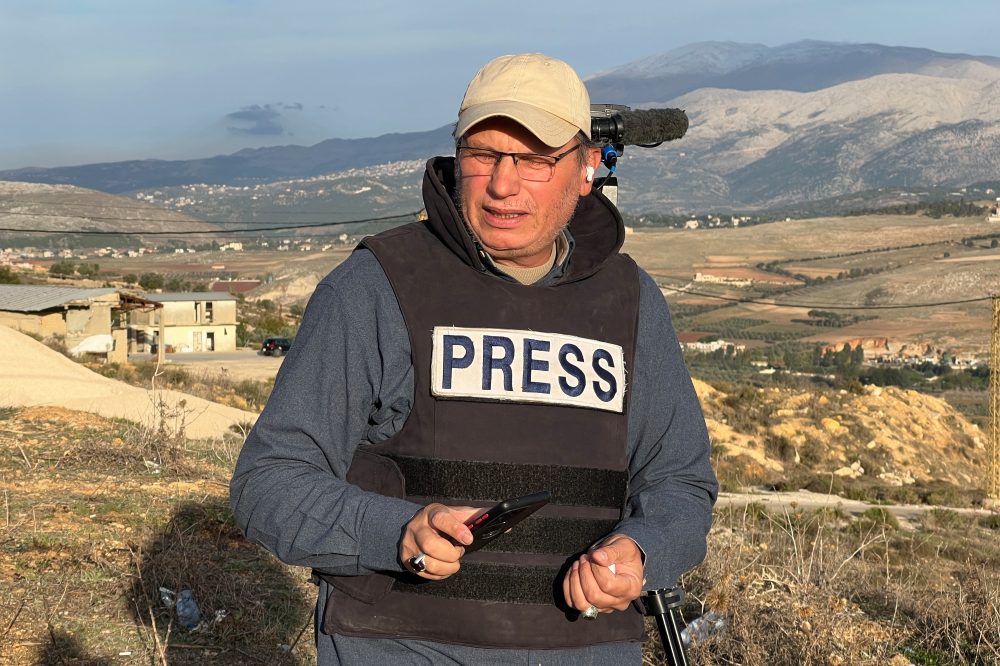
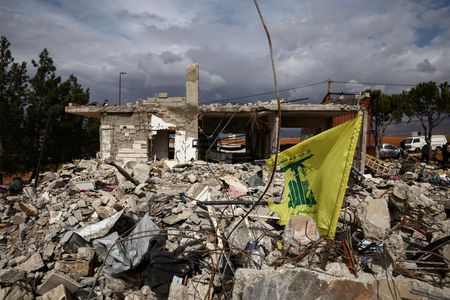
BEIRUT — Three journalists lost their lives Saturday when Israeli forces conducted an airstrike in southern Lebanon while the reporters were covering the ongoing conflict between Israel and Hezbollah, according to their respective television networks.
Al-Manar TV, affiliated with Hezbollah, reported that veteran correspondent Ali Shoeib died in the Saturday attack in southern Lebanon.
Israeli military officials confirmed they had deliberately targeted Shoeib, claiming he served as a Hezbollah intelligence agent, though they offered no supporting evidence for this assertion.
Al-Mayadeen TV, a Beirut-based pan-Arab network, announced that reporter Fatima Ftouni and her brother Mohammed, who worked as a video journalist, were also killed in the same strike in Jezzine district in southern Lebanon. Ftouni had completed a live television report from the region just before the attack occurred.
Lebanese President Joseph Aoun strongly criticized the attack, describing it as a “flagrant crime that violates all laws and agreements that protect journalists.”
In its coverage, Al-Manar referred to the incident as an Israeli attack on media personnel that resulted in the “martyrdom of the icon of resistance media.” Shoeib had established himself as a prominent Lebanese war reporter, spending almost thirty years covering southern Lebanon for Al-Manar.
Israeli military representatives alleged that Shoeib was “operating systematically to expose the locations of (Israeli) soldiers operating in southern Lebanon.” They further claimed he maintained communication with Hezbollah fighters and promoted hostility toward Israeli military personnel and citizens, though they provided no additional details.
Al-Manar TV chose not to address the Israeli accusations directly but characterized their correspondent as “distinguished by his professional and credible reporting of events.”
Israel’s accusations echoed similar claims the military has made against Palestinian reporters they have targeted during their conflict with Hamas in Gaza, alleging these journalists were actually Hamas operatives disguised as media workers.
The Israeli military made no reference to the other two fatalities in their official statement.
Throughout the current Israel-Hezbollah conflict that started on March 2, Israeli air forces have attacked Hezbollah civilian infrastructure, including Al-Manar’s headquarters and the organization’s Al-Nour radio facility.
This Saturday incident occurred just days following another Israeli airstrike on a Beirut apartment that killed Mohammed Sherri, who directed political programming at Al-Manar TV, along with his spouse.
These recent fatalities increase the total number of journalists and media personnel killed in Lebanon this year to five.
According to the Committee to Protect Journalists, freelance photographer Hussain Hamood, who had worked with Al-Manar TV, was also killed Wednesday in Nabatiyeh, a southern Lebanese city.
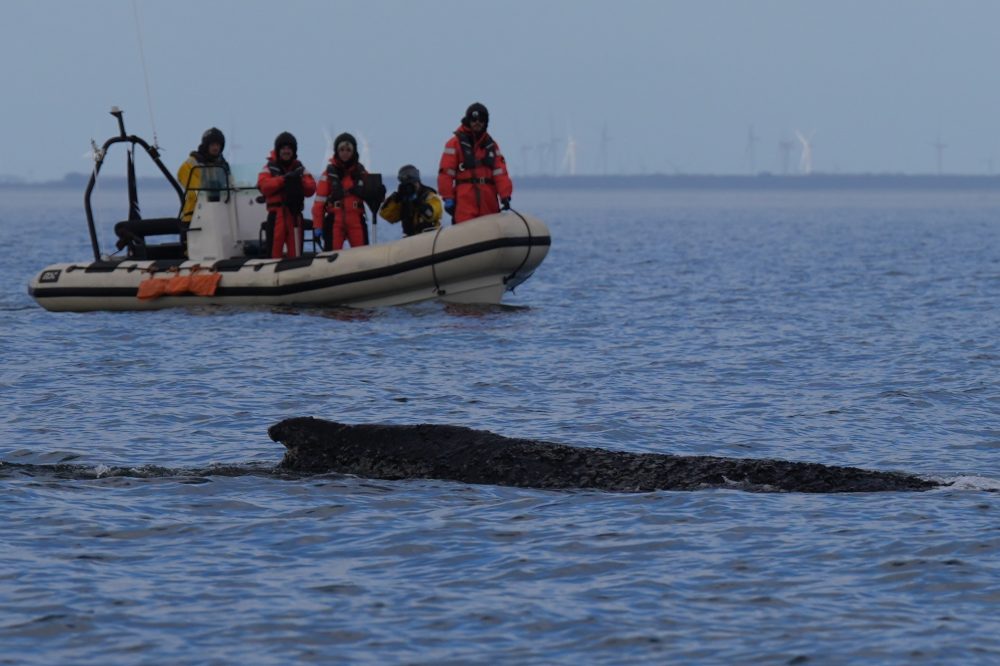
A massive humpback whale that captured Germany’s attention during dramatic rescue efforts has found itself in trouble once again, becoming stranded for a second time in Baltic Sea waters.
The enormous marine mammal, measuring between 39 and 49 feet in length, had been trapped for multiple days in shallow waters near Timmendorfer Strand beach before rescue teams successfully freed it earlier this week. The rescue operation became a national sensation, with German media providing constant updates and live coverage that had citizens across the country following the whale’s fate.
Rescue teams initially tried various methods to guide the whale toward deeper waters, including using boats from the coast guard and fire department to generate large waves. When those efforts proved unsuccessful, crews brought in heavy machinery on Thursday, using an excavator to create a special escape route through the shallow area.
The whale successfully navigated through the artificial channel early Friday morning, disappearing from view as rescuers hoped it would find its way back to open ocean. However, those hopes were dashed when the animal was discovered Saturday near Wismar, a coastal community located further east in the Mecklenburg-Pomerania region.
Environmental organization Greenpeace verified Saturday that the whale had become trapped once more, according to reports from German news services. An official from the state environment ministry explained that “after managing to free itself from its plight, the whale was spotted again at noon today in Wismar Bay.”
Officials have not yet announced whether another rescue operation will be attempted.
Marine experts remain puzzled about why the whale entered Baltic waters in the first place. Some scientists theorize the animal may have become disoriented while pursuing a school of herring, while others suggest it could be a male whale, as males are more likely to undertake long migrations.
The whale’s survival depends on reaching the Atlantic Ocean, but its current location presents serious challenges. The Baltic Sea’s lower salt content is harmful to the animal, and local reports indicate it has already developed skin problems. Additionally, the whale cannot find appropriate food sources in these waters.
To survive, the marine mammal must complete a journey spanning several hundred miles through German and Danish waters to reach the Atlantic Ocean.
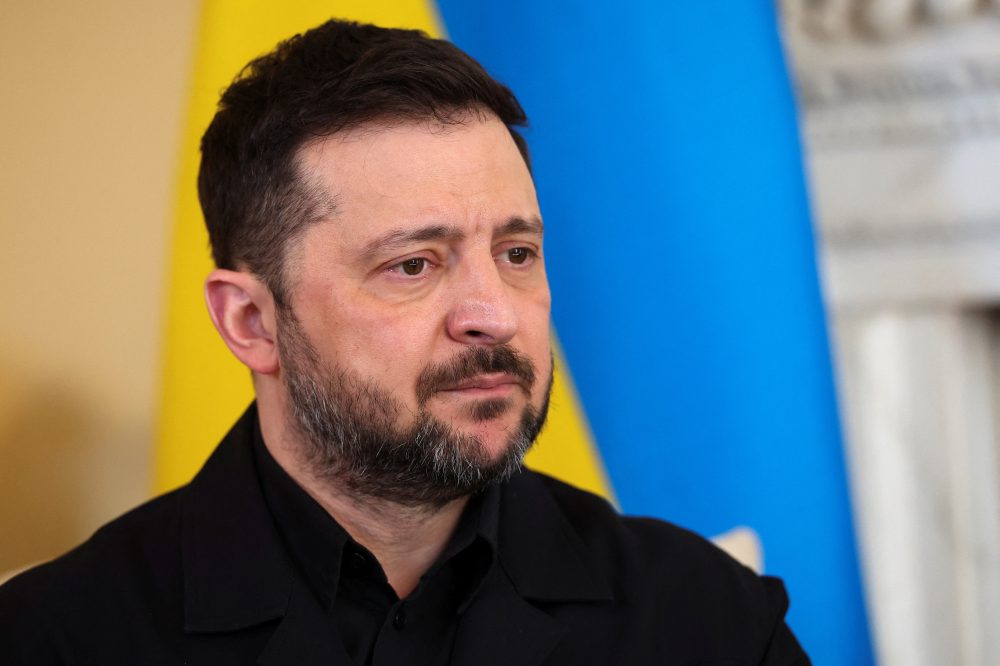
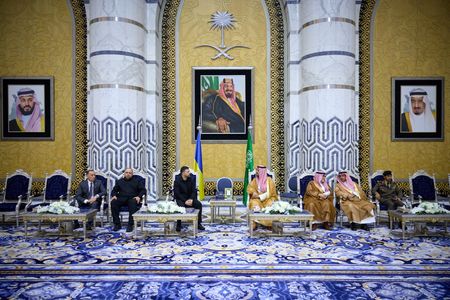
Ukrainian President Volodymyr Zelensky conducted surprise diplomatic missions to the United Arab Emirates and Qatar over the weekend, offering Ukraine’s proven drone defense technology to help Gulf nations counter Iranian aerial assaults amid ongoing Middle East conflicts.
The Ukrainian leader announced that his country has already secured decade-long security partnerships with Saudi Arabia and Qatar, with plans to complete a comparable deal with the UAE in the near future.
Since Russia’s February 24, 2022 invasion began, Ukraine has emerged as a global leader in manufacturing affordable, battlefield-proven drone interception systems. These technologies have become essential in defending against Moscow’s ongoing military campaign.
Ukraine hopes to exchange its defensive expertise for sophisticated air defense missiles that Gulf states possess and that Kyiv desperately needs to protect against Russian bombardments. Zelensky had previously met with Saudi officials on Thursday and indicated Ukraine might assist in securing the Strait of Hormuz shipping lane.
Both Zelensky and UAE officials confirmed Saturday’s meeting between the Ukrainian president and Emirati leader Mohamed bin Zayed Al Nahyan, focusing on regional security concerns related to Iran’s military actions.
Zelensky later announced his Qatar arrival on social media platform X.
“Real security is built on partnership, we value everyone and remain open to supporting all those who are ready to work together for this goal,” he posted with footage showing his arrival and greeting of Qatari representatives.
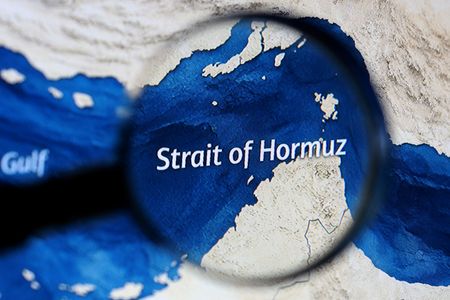
Middle Eastern hostilities began February 28 when American and Israeli forces conducted coordinated strikes against Iran. Tehran responded with attacks on Israel and Gulf Arab nations while blocking the Strait of Hormuz, a vital shipping corridor. The conflict has disrupted international travel and driven up oil costs globally.
Zelensky disclosed last week that Ukraine is assisting five nations—the UAE, Saudi Arabia, Qatar, Kuwait and Jordan—in defending against Tehran’s drone attacks on their territories.
“For Ukraine, this is also a matter of principle: terror must not prevail anywhere in the world. Protection must be sufficient everywhere,” he stated on X after meeting the UAE leader.
He noted their discussions covered “the security situation in the Emirates, Iranian strikes, and the blockade of the Strait of Hormuz, which directly affects the global oil market.”
Speaking to journalists, Zelensky emphasized Ukraine’s goal of establishing lasting strategic relationships with Middle Eastern nations, encompassing joint manufacturing, investment opportunities, energy collaboration and sharing combat knowledge.
“Simple sales do not interest us,” he declared during a live Zoom press conference.
Despite Ukraine’s shortage of advanced air defense systems like Patriot missiles, Zelensky said Kyiv has created a comprehensive defense framework that successfully neutralizes Iranian-designed Shahed drones.
Iran provided numerous attack drones to Russia early in the conflict. Moscow has since modified these weapons for greater effectiveness, started domestic manufacturing, and regularly deployed them in coordinated strikes against Ukrainian population centers.
Zelensky described Ukraine’s offer to Gulf partners as “combat-tested” knowledge, noting the completed 10-year security agreements with Saudi Arabia and Qatar. While he didn’t detail the contracts’ specifics, he anticipated finalizing similar terms with the UAE soon.
Russian forces launched over 270 drones against Ukraine overnight, resulting in at least five deaths, Ukrainian officials reported Saturday.
Two fatalities and at least 11 injuries occurred during nighttime Russian drone attacks on Odesa, according to regional administrator Serhii Lysak. His Telegram updates indicated the assault damaged a maternity ward and residential buildings in the major Black Sea port.
Zelensky characterized the “massive” Odesa attack as involving more than 60 drones.
Russia’s overnight operations also killed two men and injured two others in Kryvyi Rih, Zelensky’s central Ukraine birthplace, when a drone struck an industrial complex, regional leader Oleksandr Gandzha reported via Telegram. He didn’t identify the specific facility type.
One person died overnight in the Poltava region of central Ukraine as Russia targeted industrial locations there, regional authorities announced Saturday. Ukrainian state energy company Naftogaz confirmed a production facility was damaged.
Ukraine’s air force reported Russia deployed 273 drones against Ukraine during nighttime hours, with 252 either destroyed or electronically disrupted.
In Russia, a child perished when a Ukrainian drone struck a residential building in Russia’s western Yaroslavl region, local Governor Mikhail Evraev reported early Saturday. Evraev’s Telegram post indicated the child’s parents were hospitalized with severe injuries from the attack.
Russia’s Defense Ministry announced Saturday that 155 Ukrainian drones were intercepted overnight across Russia and the occupied Crimean Peninsula.
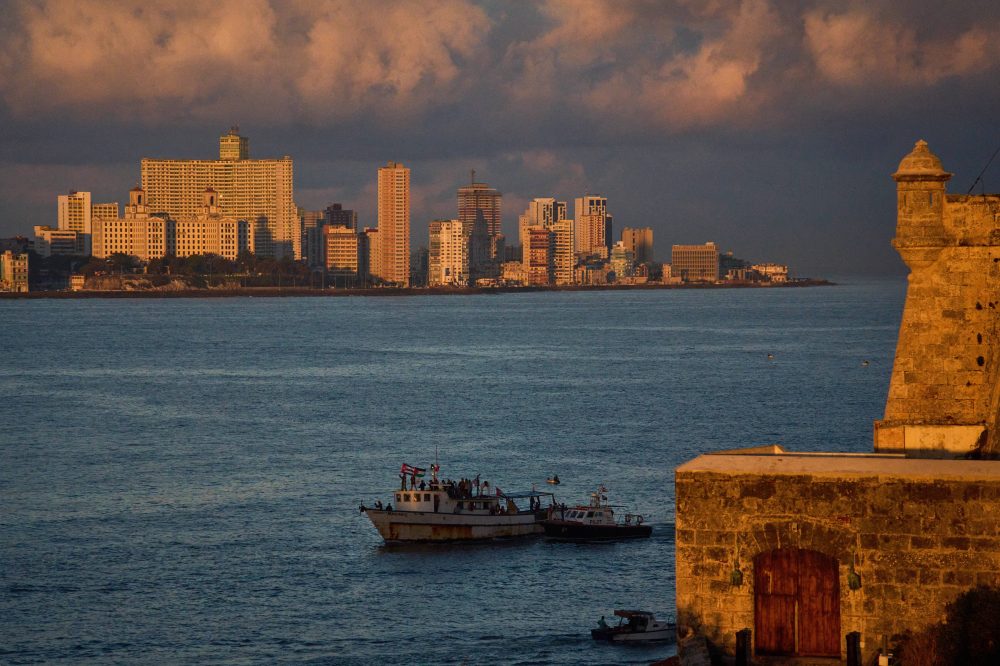
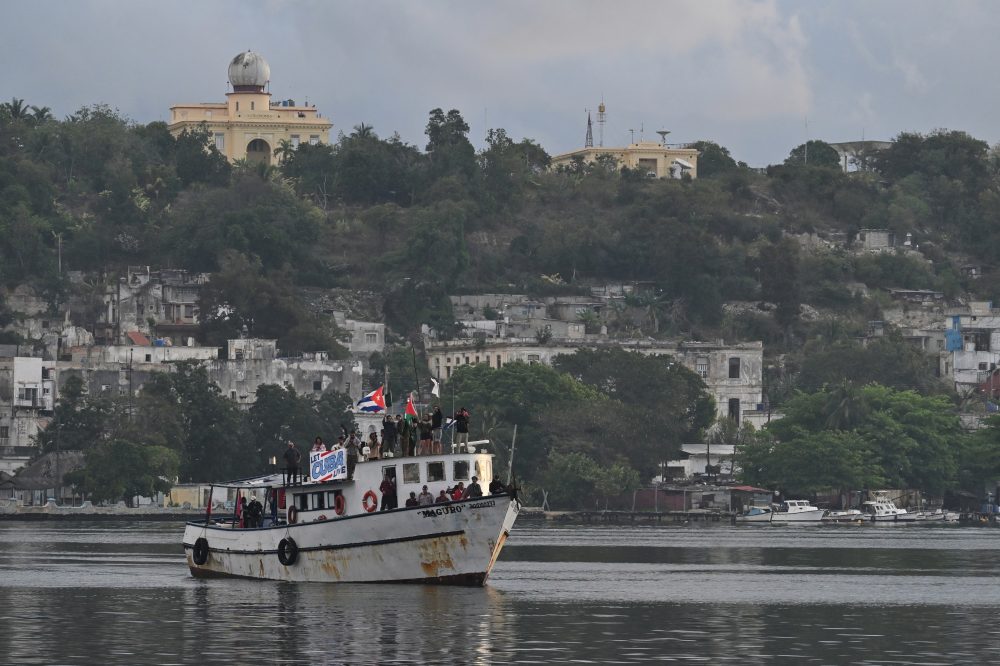
Mexican naval forces announced Saturday they have successfully located two sailboats that disappeared while transporting humanitarian supplies to Cuba, ending days of concern across multiple nations.
The two vessels, carrying nine individuals total, had set sail from Isla Mujeres in southern Mexico on March 20 before losing all communication with authorities, prompting widespread worry throughout Mexico, Cuba, and the international community.
According to a Saturday morning announcement on X by Mexico’s navy, military aircraft discovered the boats positioned 80 nautical miles (148 kilometers) northwest of Cuba’s capital, Havana. Naval officials confirmed they immediately dispatched a rescue vessel to assist the sailboats.
Cuba has been receiving growing amounts of international humanitarian assistance as a U.S. fuel embargo continues to trigger devastating power outages, bringing the island nation dangerously close to economic collapse.
The aid organization Nuestra América Convoy had indicated Friday that calculations based on the vessels’ reported speeds to Cuban maritime officials suggested the boats should reach Havana sometime between Friday and Saturday. The group emphasized that seasoned mariners were leading the expedition.
James Schneider, who serves as communications director for Progressive International and assisted in organizing the Nuestra America convoy mission to Cuba, expressed gratitude to both Mexican and Cuban officials Saturday while sharing his relief about the crews’ safety.
“The crews are safe, and the vessels are continuing their journey to Havana,” he said. “The convoy remains on track to complete its mission — delivering urgently needed humanitarian aid to the Cuban people.”
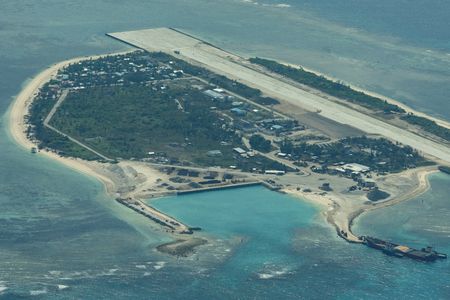
The Philippines and China held their first high-level diplomatic discussions since January this week, tackling longstanding territorial disputes in the South China Sea while exploring potential energy partnerships, according to the Philippine foreign ministry.
These discussions marked the 11th session under a diplomatic framework created in 2017, with both nations addressing maritime conflicts and energy security concerns heightened by ongoing Middle East tensions.
During the meetings, Manila “firmly reiterated its principled positions,” expressing alarm over incidents that have endangered Filipino workers and fishing crews, while stressing the need for diplomatic solutions, open communication, and respect for international maritime law, the ministry announced Saturday.
The two countries explored preliminary opportunities for oil and gas collaboration while highlighting the critical need for reliable energy and fertilizer supplies.
These diplomatic efforts follow President Ferdinand Marcos Jr.’s declaration of a national energy emergency earlier this week, triggered by oil supply interruptions from Middle East conflicts. The president announced plans to diversify fuel procurement, including potential purchases from China.
The agenda also covered renewable energy development, agricultural cooperation, trade relationships, and potential cultural exchange programs, including visa-free travel arrangements and direct flight connections, ministry officials reported. The Philippines noted that both nations “continued to make progress” in building maritime confidence, including improved communication between their respective coast guard forces.
In his own statement, Chinese Vice Foreign Minister Sun Weidong urged “concrete actions” from the Philippines to strengthen bilateral relationships.
Additional discussions between the countries’ foreign ministers are scheduled for later this year.
China’s broad territorial assertions in the South China Sea conflict with the maritime boundaries of several Southeast Asian countries, including the Philippines.
Recent naval encounters have escalated regional tensions, with Manila condemning Beijing’s “dangerous maneuvers” and use of water cannons to disrupt Philippine supply operations in disputed waters.
An international arbitration court ruled against China’s territorial claims in 2016, but Beijing continues to reject that legal determination.
This week’s meeting represented the first comprehensive bilateral relationship discussion since March 2023, designed to promote maritime cooperation and trust-building measures, the Philippine ministry stated.
PARIS, March 28 – Authorities in France have detained a suspect who tried to detonate a homemade explosive device outside Bank of America offices in downtown Paris, according to French publication Le Parisien, which cited law enforcement sources.
France’s anti-terrorism prosecutor has launched an investigation into the incident, Interior Minister Laurent Nunez announced Saturday on social media. The case has been assigned to Paris police investigators and France’s domestic intelligence service, the DGSI, according to Nunez.
“Well done to the rapid response team from the (Paris) police authority, whose actions thwarted a violent terrorist attack in Paris last night,” Nunez stated.
“Vigilance remains at a higher level than ever. I congratulate all the security and intelligence forces, who are fully mobilised under my authority in the current international context.”
Paris police officials refused to provide comment on the matter. The anti-terrorism prosecutor’s office has not yet responded to requests for information.
“We are aware of the situation and are communicating with the authorities,” a Bank of America representative stated to Reuters.
Law enforcement apprehended the individual at approximately 3:25 a.m. local time in Paris’s 8th district while he attempted to ignite the explosive device, Le Parisien reported. Officers took him into custody, though a second person who was at the scene escaped and has not been captured, according to the publication.
The improvised explosive contained a five-liter container with an unknown liquid and an explosive component made from roughly 650 grams of powder, the French newspaper stated. Authorities secured the device and transferred it to forensic specialists at the Paris police laboratory for analysis, according to the report.
Iraqi officials have launched an investigation following a Saturday morning drone strike that targeted the residence of Kurdistan Region President Nechirvan Barzani, according to security officials familiar with the incident.
Defense systems successfully intercepted a second unmanned aircraft near a Peshmerga military installation in Duhok, the same sources reported.
These attacks occur during a period of increased violence affecting both Iranian-supported militia groups and Kurdish military units, as broader Middle Eastern conflicts involving the United States and Israel extend into Iraqi territory, creating challenges for multiple armed factions and complicating Baghdad’s containment efforts.
Iraqi Prime Minister Mohammed Shia al-Sudani denounced the assault on President Barzani’s residence and contacted him directly by telephone, according to an official statement from the prime minister’s office.
Al-Sudani has directed the formation of a combined federal and Kurdistan Region security and technical investigation team to examine these incidents and determine who carried them out, the announcement continued.
Military operations have repeatedly struck locations associated with the Popular Mobilization Forces, Iraq’s coordinating organization for Iranian-backed Shiite militia groups, as well as Kurdish Peshmerga military units throughout the Kurdistan Region since the beginning of U.S.-Israeli military actions against Iran.
Iraqi military officials have blamed the United States and Israel for conducting certain aerial bombardments against the PMF.
Armed organizations supported by Tehran have simultaneously conducted their own operations against American military installations in Iraq and targeted the U.S. embassy facility.
Sixty-six countries have successfully launched groundbreaking international digital commerce regulations, circumventing opposition that had previously stalled the initiative at the World Trade Organization.
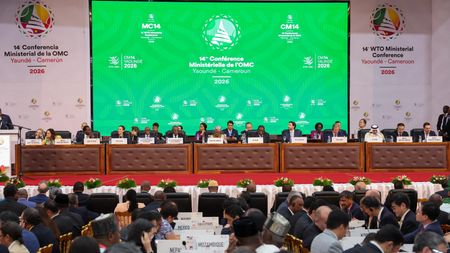
The historic agreement was finalized Saturday during the 14th WTO Ministerial Conference taking place in Yaounde, Cameroon. This marks the first time baseline standards for digital trade have been established on a global scale.
Previous attempts to incorporate the E-Commerce Agreement into official WTO guidelines faced repeated roadblocks from opposing member nations. The new pact is designed to create favorable conditions for online commerce across participating countries.
Frustration with these ongoing obstacles prompted the 66 nations – representing 70% of worldwide trade volume – to pursue an alternative path forward, according to a senior diplomatic source. WTO protocols typically require unanimous approval for agreements involving groups of member countries.
The participating nations chose to implement an interim solution that allows the regulations to take effect within their borders while continuing efforts to integrate the framework into broader WTO policy.
Yamada Kenji, Japan’s State Minister of Economy, Trade and Industry, praised the development as a “historic step” toward establishing universal digital commerce standards.
British Business and Trade Secretary Peter Kyle also welcomed the breakthrough.
“As the first global digital trade deal, this will make trade cheaper, faster and more secure for businesses around the world,” Kyle said.
India has emerged as a primary opponent of the initiative, maintaining that trade policies should be adopted through multilateral consensus rather than smaller group agreements.
“The agreement is a strong message to India, and some others, that if you use consensus to block any reform process or advancements forward, we will proceed anyway,” a senior European diplomat said.
India is simultaneously opposing another WTO plurilateral agreement under discussion in Cameroon that focuses on increasing investment in developing nations, according to two senior diplomatic sources.
Indian officials have expressed concerns that the International Facilitation for Development Agreement could weaken their negotiating position in future talks.
Notably, the United States has not joined the 66 signatory countries, as the Biden administration continues reviewing the proposal.
This digital trade framework operates independently from an existing e-commerce moratorium that prohibits customs fees on digital downloads and streaming services. That separate issue remains deadlocked between U.S. and Indian representatives at the ongoing Cameroon conference.
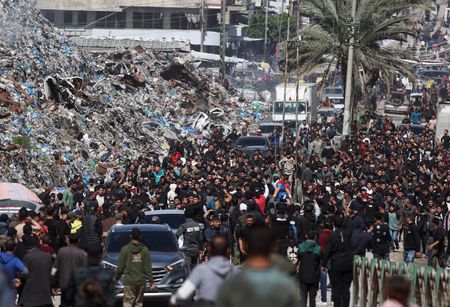
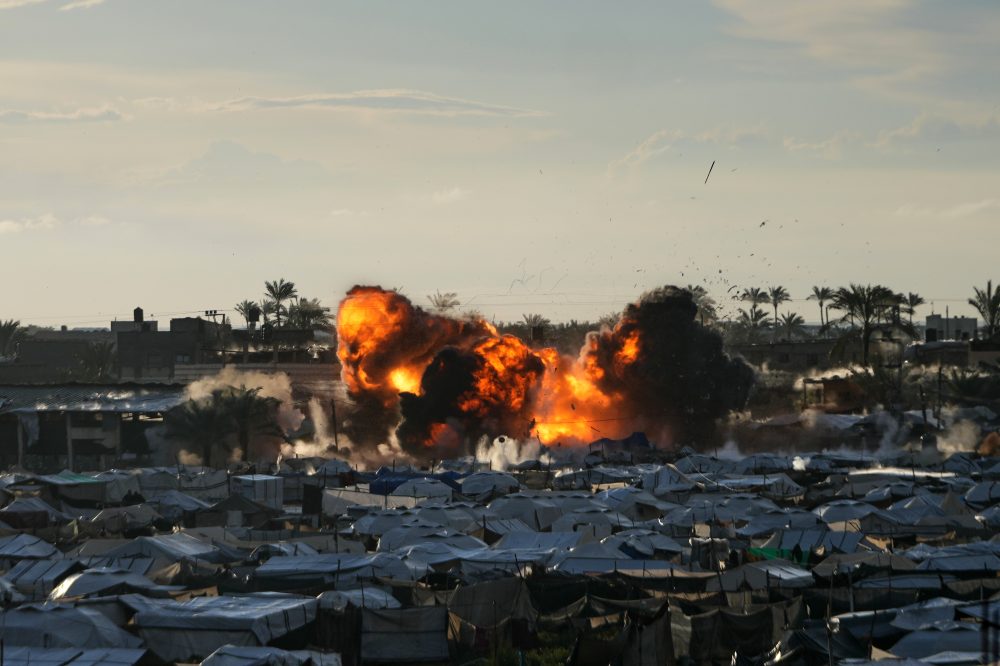
Three Palestinian men lost their lives Saturday when Israeli forces carried out dual airstrikes across Gaza, according to local health authorities and medical personnel, marking another escalation in ongoing hostilities despite a U.S.-mediated truce now spanning more than five months.
Health officials in Palestine reported that one individual died when an airstrike targeted a vehicle in the Khan Younis region of southern Gaza, while medical sources confirmed two adult brothers perished in Shujiaya, a district located east of Gaza City.
Israeli military officials have not yet provided a response to requests for comment regarding these two aerial attacks.
According to local health authorities, Israeli forces have been responsible for over 680 Palestinian deaths in Gaza following the November ceasefire agreement with Hamas. The total death toll has exceeded 72,000 since hostilities began in October 2023.
Israel currently maintains military operations on multiple fronts, including a joint campaign with the United States against Iran and a fresh offensive against Hezbollah that has led to Israeli ground forces entering southern Lebanon.
The Hamas-linked Shehab News Agency reported that the two brothers died in an Israeli military airstrike following an attempted kidnapping by an Israeli-supported Palestinian militia operating in Gaza.
Hamas and other militant organizations have not claimed the brothers as affiliated members.
Reuters spoke with witnesses who described the two brothers as armed individuals who engaged in combat with the militia before becoming targets of drone strikes. These same witnesses also reported tank fire from Israeli forces.
Ongoing violence continues to plague Gaza even with the ceasefire in effect and amid Israel’s broader conflict with Iran. Territory health officials report that Israeli forces have killed at least 40 Palestinians since the Iranian conflict commenced one month ago.
Russian nuclear officials warned Saturday that conditions at Iran’s Bushehr nuclear facility are becoming increasingly dangerous following another recent attack near the plant.
Alexei Likhachev, who leads Russia’s state nuclear corporation Rosatom, expressed alarm about the deteriorating security situation and said the strikes represent a serious risk to nuclear safety after the latest incident occurred near the facility.
According to the International Atomic Energy Agency on Friday, Iranian officials reported the most recent strike in the area surrounding Bushehr, marking the third such event within a 10-day period. The agency noted that no harm occurred to the active reactor and no radioactive materials were released.
Russia’s Foreign Ministry issued a statement Saturday demanding what it called “unequivocal and firm condemnation” of the attack near the nuclear site.
Foreign Ministry spokesperson Maria Zakharova expressed hope that IAEA leadership would take action, stating: “We hope that, by receiving timely and objective information directly from the Iranian authorities about what is happening on the ground, the Director General of the IAEA will be able to convey a simple message to the aggressors immediately and unequivocally: ‘It is time for you to stop!’”
Meanwhile, Likhachev confirmed that 163 additional Russian personnel from the Bushehr facility have been brought back to Russia as part of ongoing evacuation efforts, with plans to remove two more groups of workers in the next few days.
A decades-old international trade policy that affects everything from Netflix streaming to software downloads is facing a crucial decision point as global trade officials meet in Cameroon.
The World Trade Organization’s digital commerce moratorium, which prohibits member nations from imposing customs fees on electronic transmissions, is scheduled to expire during the organization’s 14th ministerial conference taking place this month in Yaounde, Cameroon.
This international agreement, which covers digital services including software downloads, electronic books, music and movie streaming platforms, and video games, was initially established in 1998 during the WTO’s Second Ministerial Conference in Geneva. The policy was designed as a temporary measure to support the growth of early digital commerce.
Since its inception, the tariff prohibition has been renewed approximately every two years during successive WTO ministerial meetings, with the most recent two-year extension approved at the 13th conference in 2024.
Nations with substantial digital economies, including the United States, European Union, Canada and Japan, are pushing for a permanent extension of the moratorium. These countries argue that making the policy permanent would provide stability and predictability for international digital commerce.
The United States specifically seeks to create a consistent regulatory framework for major American technology corporations like Amazon, Microsoft and Apple, eliminating concerns about potential tariffs that could disrupt international digital business operations.
Support for extending the moratorium comes from the business community as well, with more than 200 international business organizations endorsing a joint statement advocating for continuation of the policy.
According to the International Chamber of Commerce, allowing the moratorium to expire would increase business costs, create internet fragmentation and limit companies’ ability to engage in cross-border digital commerce.
However, several developing nations oppose extending the agreement, with India leading the opposition. These countries argue that continuing the moratorium prevents them from collecting tariff revenue that could fund infrastructure development and help bridge the digital gap between developed and developing nations.
Sofia Scasserra from the Transnational Institute think tank contends that the moratorium has not succeeded in strengthening digital economies in developing countries, but instead has reinforced the market dominance of American and other major technology companies from advanced economies.
Research from the United Nations Conference on Trade and Development estimated in a 2019 study that developing countries potentially lost $10 billion in tariff revenue in 2017 due to the moratorium.
Contradicting this finding, an OECD analysis suggested that potential revenue losses could be largely compensated through value-added taxes or goods and services taxes applied to imported digital services.
Four different proposals have been presented for consideration at the Cameroon conference. The African, Caribbean and Pacific Group supports extending the moratorium until the next ministerial meeting, while the United States advocates for permanent extension.
A coalition led by Switzerland proposes both permanent extension and establishment of a digital trade committee, while Brazil’s plan calls for extension until the next conference combined with creation of a digital trade committee.
SAO PAULO – Brazilian President Luiz Inacio Lula da Silva announced Saturday that his nation will maintain its endorsement of former Chilean President Michelle Bachelet’s campaign for UN Secretary-General, even after Chile pulled its backing.
“Bachelet is highly qualified and has the best credentials for the role,” Lula stated in a social media post on X.
Earlier this week on Tuesday, Chile’s administration announced it would remain neutral and not endorse any contender in the Secretary-General selection process. The decision comes under newly sworn-in Chilean President Jose Antonio Kast, who has been a vocal critic of Bachelet’s time in office and took the oath this month.
Meanwhile, Mexican President Claudia Sheinbaum declared Wednesday that Mexico will also maintain its backing for Bachelet’s nomination to lead the United Nations.
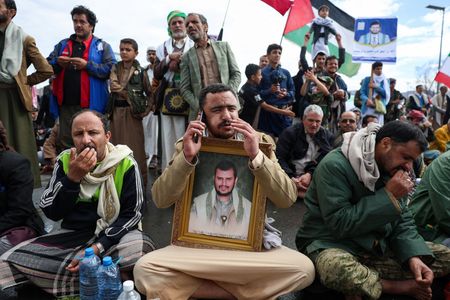
Yemen’s Iran-backed Houthi militants have launched their inaugural missile strike against Israel, marking a significant expansion of the month-old Middle East conflict.
The rebel group’s military spokesperson, Brig. Gen. Yahya Saree, announced the attack through a Saturday broadcast on the Houthis’ Al-Masirah television network. According to Saree, the militants launched multiple ballistic missiles aimed at what he termed “sensitive Israeli military sites” located in Israel’s southern region.
Israeli defense forces confirmed they successfully intercepted the incoming projectile.
This assault follows Saree’s cryptic Friday announcement suggesting the rebel faction would enter the ongoing war.
The strike represents the first time Yemen has targeted Israel since hostilities erupted last month. Previously, Houthi forces disrupted Red Sea shipping lanes during the Israel-Hamas conflict.
Meanwhile, diplomatic efforts continue as foreign ministers from Saudi Arabia, Turkey and Egypt plan to gather in Islamabad on Sunday for peace negotiations, according to Pakistan’s Foreign Minister Ishaq Dar.
Iran’s military command headquarters made unsubstantiated claims through state-controlled media regarding Ukrainian personnel.
The Khatam al-Anbiya Headquarters alleged more than 20 Ukrainians were present in a United Arab Emirates warehouse with unknown status.
However, Ukraine’s Foreign Ministry spokesperson Heorhii Tykhyi dismissed the Iranian assertions as false during a press conference, as reported by Ukraine’s national broadcaster.
These allegations surface while Ukrainian President Volodymyr Zelenskyy conducts regional discussions with leaders from Saudi Arabia, UAE and Qatar.
The Houthis have maintained restraint regarding Red Sea shipping attacks, though such actions would severely impact global commerce and economic stability.
Potential Houthi strikes on Red Sea and Bab al-Mandab Strait shipping would interrupt Suez Canal traffic, a vital passage for oil, gas and commercial cargo bound for the Mediterranean.
Approximately 10 percent of worldwide maritime commerce, including 40 percent of container vessel traffic, passes through this canal annually.
Such disruptions would force ships to navigate around Africa’s southern coast, increasing insurance expenses and delaying cargo deliveries. This could also affect Saudi oil shipments to Asia through the Red Sea’s Yanbu port.
Between November 2023 and January 2025, Houthi forces targeted more than 100 commercial ships using missiles and drones, sinking two vessels.
Israeli military officials stated that one journalist killed in Saturday’s southern Lebanon strike was targeted as a suspected Hezbollah intelligence operative, though they provided no supporting evidence.
Israel’s statement regarding Hezbollah’s al-Manar TV reporter Ali Shoeib echoed previous military accusations against Palestinian journalists during the Hamas conflict.
The Israeli army alleged that Shoeib, a prominent Lebanese war correspondent, was “systematically working to reveal locations of Israeli soldiers in southern Lebanon.” They also accused him of maintaining Hezbollah contacts and inciting against Israeli forces and civilians, without providing details.
Beirut-based Al-Mayadeen TV confirmed its reporter Fatima Ftouni died in the same airstrike alongside Shoeib. Israeli military statements did not reference her death.
Al-Manar TV did not address the Israeli allegations but reported his death in the airstrike, describing him as known for “professional and credible event reporting.”
Seven individuals sustained injuries in an Iranian missile strike on central Israel, according to Israel’s Magen David Adom rescue service on Saturday.
Some victims were wounded by the explosion’s impact in Eshtaol, near Jerusalem, while others were injured while seeking shelter.
Iran expressed skepticism about recent diplomatic peace efforts during a Saturday phone conversation between its Foreign Minister Abbas Araghchi and his Turkish counterpart.
Iranian state media reported that Araghchi criticized the U.S. for making “unreasonable demands” and displaying “contradictory actions” that undermined agreement prospects.
He stated recent U.S. actions have created “increased pessimism” on Iran’s part, without specifying particular moves.
The Iranian summary indicated Turkey’s Foreign Minister Hakan Fidan told Araghchi that “Iran’s pessimism toward the other side is understandable because Iran has twice been subjected to attack and military aggression in the midst of negotiations.”
The United Arab Emirates reported its air defense systems countered 20 ballistic missiles and 37 drone strikes on Saturday.
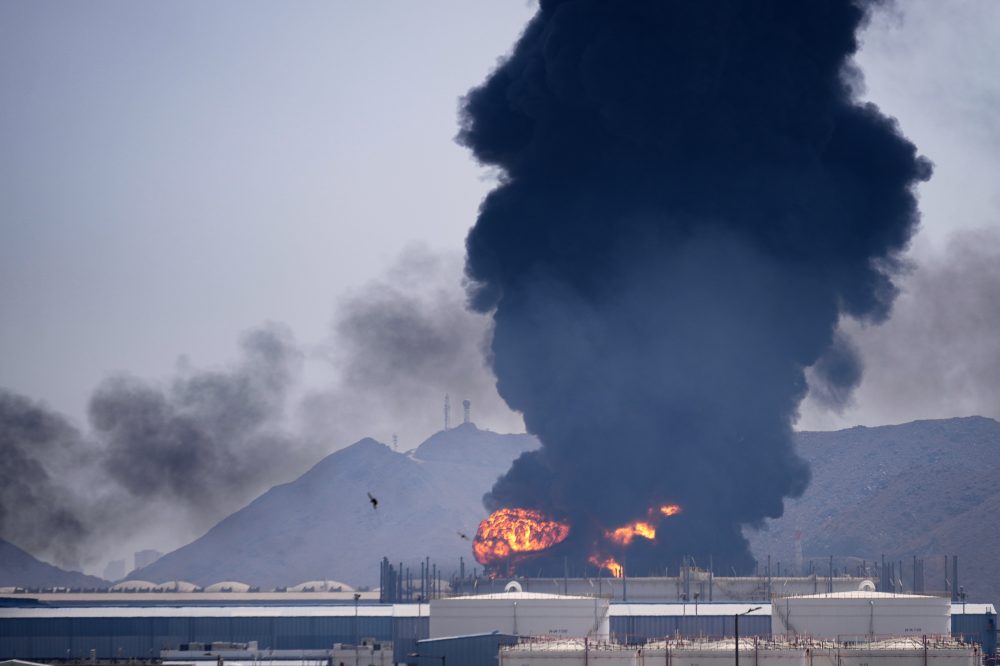
These attacks injured six people in an Abu Dhabi industrial area, where authorities reported three fires.
The UAE’s Defense Ministry documented 413 missile and 1,872 drone attacks since the war began. These assaults have resulted in 10 deaths, including two military personnel, and wounded 178 others.
Hezbollah’s al-Manar TV confirmed correspondent Ali Shoeib’s death Saturday in southern Lebanon, while Beirut-based Al-Mayadeen TV reported reporter Fatima Ftouni died in the same strike.
Shoeib was a well-recognized war correspondent who had covered southern Lebanon for Al-Manar for nearly three decades.
Ftouni had delivered a live report from southern Lebanon moments before the strike in the Jezzine area.
This attack occurred days after an Israeli strike on a central Beirut apartment killed Mohammed Sherri, Al-Manar TV’s political programming director, along with his wife.
A U.S. aircraft carrier has docked in Croatia while en route to the Middle East during the monthlong U.S. and Israeli conflict with Iran.
The U.S. 6th Fleet announced the USS Gerald R. Ford, the world’s largest aircraft carrier, anchored at Croatia’s Port of Split following its Adriatic Sea journey from Greece’s Souda Bay, where it underwent repairs and refueling.
The carrier previously docked at the American naval facility at Souda Bay last month, prompting protests on Crete before U.S. and Israeli strikes on Iran that initiated the war.
Kuwait’s Mubarak Al Kabeer and Shuwaikh ports suffered damage from drone and missile attacks within the past day, the Defense Ministry announced Saturday.
Ministry officials said forces responded to four ballistic missiles, one cruise missile, and seven drones that targeted the oil-rich nation in the past 24 hours.
No casualties were reported.
Ukrainian President Volodymyr Zelenskyy visited the UAE and met with Emirati leader Mohamed bin Zayed Al Nahyan to discuss Middle East regional security.
“For Ukraine, this is also a matter of principle: terror must not prevail anywhere in the world. Protection must be sufficient everywhere,” Zelenskyy posted on X following his meeting. He said they discussed “the security situation in the Emirates, Iranian strikes, and the blockade of the Strait of Hormuz, which directly affects the global oil market.”
The Emirates News Agency reported both leaders discussed “security developments in the region amid ongoing military escalation and their implications for regional and international peace and security, as well as their impact on international navigation and the global economy.”
Zelenskyy announced last week that Kyiv is assisting five Middle East and Gulf nations — the UAE, Saudi Arabia, Qatar, Kuwait and Jordan — in defending against drone attacks.
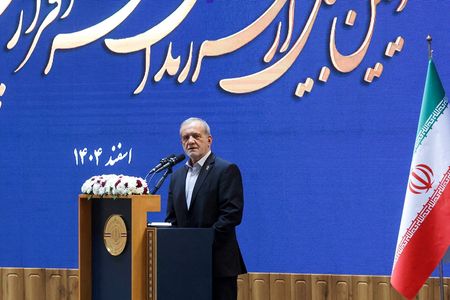
Pakistan’s Prime Minister Shehbaz Sharif said Saturday he conducted “extensive discussions” with Iran’s President Masoud Pezeshkian regarding ongoing regional conflicts and peace efforts.
Pezeshkian received briefings on Pakistan’s diplomatic initiatives led by Foreign Minister Ishaq Dar and Army Chief Field Marshal Asim Munir to engage the United States and Gulf and Islamic nations in creating conditions for peace talks, according to Sharif’s office.
Sharif expressed optimism that “a viable path toward ending hostilities could be found collectively” during their hour-long conversation.
Pezeshkian commended Pakistan’s peace initiatives, emphasizing the importance of building trust to enable dialogue and mediation.
Foreign ministers from Saudi Arabia, Turkey and Egypt will participate in Sunday talks in Islamabad aimed at ending the conflict, Dar confirmed.
Bahrain, home to the U.S. 5th Fleet, reported Saturday that its air defense systems responded to 20 missile and 23 drone attacks in the previous 24 hours.
This brings the total projectiles fired at the Shiite-majority nation to 174 missiles and 385 drones since the Middle East war began on February 28.
German Chancellor Friedrich Merz strongly criticized U.S. President Donald Trump’s approach to the Iran conflict, according to dpa news agency reports.
“What Trump is doing right now is not de-escalation and an attempt to reach a peaceful solution, but a massive escalation with an uncertain outcome,” Merz said Friday evening at a Frankfurt event.
“These are escalations that are threatening,” he added. “Not only for those directly affected, but for all of us.”
Merz also questioned whether the current Iranian leadership could be overthrown through warfare. “Is regime change really the goal?” he asked. “If that is the goal, I don’t think they will achieve it. That has usually gone wrong.”
An airstrike struck Iran’s Bushehr Nuclear Power Plant grounds just before midnight, the country’s atomic energy agency reported.
The strike, the third in 10 days, caused no material damage or casualties, according to the Atomic Energy Organization of Iran. Officials said no technical disruption occurred at the facility.
The International Atomic Energy Agency confirmed Iran notified them of the strike.
An airstrike hit Iran’s University of Science and Technology in Tehran on Saturday, state-run IRNA news agency reported.
The strike damaged research and educational facilities, IRNA reported, citing the university’s public relations department.
Foreign ministers from Saudi Arabia, Turkey and Egypt will attend Islamabad talks aimed at ending the U.S.-Iran war and reducing regional tensions, Pakistan’s Foreign Minister Ishaq Dar and officials announced Saturday.
Saudi Foreign Minister Prince Faisal bin Farhan, Turkey’s Foreign Minister Hakan Fidan and Egypt’s Foreign Minister Badr Abdelatty will arrive Sunday for a two-day visit to “hold in-depth discussions on a range of issues, including efforts to de-escalate tensions in the region,” according to an official statement.
The visiting ministers will meet Prime Minister Shehbaz Sharif, who said in a televised address that Pakistan is pursuing “sincere and robust diplomatic efforts” to help end the conflict through mediation.
The casualty count from Saturday’s early morning missile attack in Abu Dhabi has increased to six.
The Abu Dhabi Media Office reported an additional Pakistani national was injured by falling debris near Khalifa Economic Zones Abu Dhabi when air defense systems intercepted a ballistic missile.
The attack sparked three fires in the area, which have been controlled.
Kuwait International airport was struck by drone attacks on Saturday, authorities confirmed.
The Civil Aviation Authority stated the attacks severely damaged the airport’s radar systems.
No casualties were reported.
An Israeli airstrike killed two Palestinian brothers Saturday morning in the Gaza Strip, hospital authorities reported.
The strike hit the men near the Showa roundabout in Gaza City’s Shijaiyah neighborhood, according to Al-Ahly hospital.
The location is near the so-called Yellow Line separating Israeli-controlled Gaza Strip areas from the remainder of the enclave.
Israel’s military did not immediately respond to comment requests.
More than two dozen U.S. troops have been wounded in Iranian attacks on a Saudi air base over the past week, according to two briefed sources.
Iran launched six ballistic missiles and 29 drones at Saudi Arabia’s Prince Sultan air base in Friday’s attack, wounding at least 15 troops, including five seriously, according to sources unauthorized to comment publicly who spoke anonymously. U.S. officials initially reported at least 10 U.S. troops were injured, including two seriously wounded.
The base had been attacked twice earlier this week, including an incident injuring 14 U.S. troops, according to briefed sources.
Located approximately 96 kilometers from Saudi capital Riyadh, the base is operated by the Royal Saudi Air Force but also hosts U.S. troops.
Oman reported the strike hit Salalah port Saturday morning, wounding a foreign worker.
The government media office said the two-drone attack also damaged a crane.
Sirens sounded in Bahrain Saturday morning ahead of a potential attack, authorities reported.
The Interior Ministry urged residents to seek the nearest safe location.
Officials in Russia’s Dagestan region issued an emergency declaration Saturday following torrential rains that caused severe flooding and knocked out electricity for hundreds of thousands of residents.
City leaders in Makhachkala, the regional capital, announced the emergency measures as floodwaters swept through the area. “Emergency services have been placed on high alert, efforts are under way to deal with the aftermath, and assistance will be provided to affected residents,” the Makhachkala city administration said on Telegram.
The power outages have affected more than 327,000 people across the region, according to Dagestan’s emergency management ministry. “As of 12:00 (Moscow time, 0900 GMT), 283 settlements with a population of 327,183 people, including 89,705 children, remain without electricity,” the ministry reported on its website.
Regional leader Sergei Melikov acknowledged that while emergency crews had prepared for severe weather, the actual conditions “exceeded even the most pessimistic forecasts.”
The flooding also caused significant infrastructure damage, with authorities in Khasavyurt, the region’s second-largest city, reporting that heavy rains destroyed a railway bridge. “Two spans of the bridge collapsed on the Khasavyurt–Kadiyurt section of the North Caucasus Railway,” Dagestan’s government press service announced.
Weather forecasters predict the intense rainfall will persist through Sunday, potentially worsening conditions across the region.
KYIV – Ukrainian officials reported Saturday that Russian forces conducted extensive drone strikes across the country, resulting in four civilian deaths and widespread damage to essential facilities including energy infrastructure, port operations, homes, and a maternity hospital.
According to Ukraine’s air force, Russian military units deployed 273 drones in the assault, with the majority concentrated on the southern Odesa region.
Ukrainian President Volodymyr Zelenskiy reported that over 60 drones targeted Odesa city specifically during the offensive.
“There was no military purpose whatsoever – this was pure terror against ordinary civilian life,” Zelenskiy wrote on Telegram. “Sadly, there is extensive damage.”
Regional Governor Oleh Kiper confirmed that two individuals lost their lives in the Odesa attacks, while 12 others sustained injuries, including one child.
In Ukraine’s central Poltava region, a 55-year-old energy sector employee was fatally struck when Russian forces targeted the nation’s natural gas production infrastructure, according to energy firm Naftogaz.
Additionally, a 28-year-old man died in Kryvyi Rih, an industrial center located in the Dnipropetrovsk region, regional authorities confirmed.
Ukrainian defense forces successfully intercepted 252 of the incoming drones, though 21 managed to strike their intended targets across 18 different locations, the air force reported.
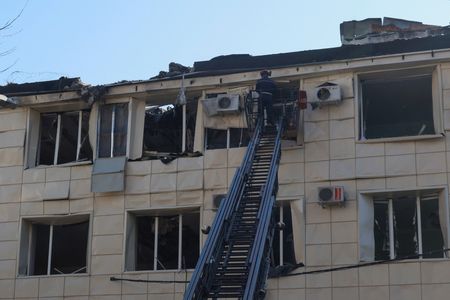
The assault on the Black Sea port city of Odesa resulted in significant damage to the maternity ward facility, apartment complexes, and harbor infrastructure, local officials stated.
Video footage captured firefighters responding to the hospital site, where windows were shattered and the roof structure was destroyed.
Hospital director Ihor Shpak explained to reporters that a massive blast tore through the medical facility, obliterating the rooftop, destroying connecting passages between the third and fourth levels, and damaging multiple patient rooms.
Medical staff successfully relocated 22 newborn infants, including twin babies requiring ventilator assistance, along with 32 additional patients to protective areas moments before the strike occurred, Shpak noted.
Local resident Olena Kudriashova described her fear as Shahed drones approached her neighborhood.
“On the right, on the left, at the front, and at the back, windows and doors were smashed. Our little window survived, and we’re so happy we made it through the night,” she said while standing outside her damaged building in central Odesa.
At least two Lebanese broadcast journalists were killed when Israeli forces targeted a media vehicle in southern Lebanon, according to reports from Al Manar TV on Saturday.
The deadly attack occurred in the southern region of Lebanon, with the television network confirming the deaths of the media personnel.
Israeli military officials have not yet provided a response when asked to comment on the reported incident.
WARSAW – Polish officials announced Saturday they will continue monitoring their borders with neighboring European Union nations Germany and Lithuania for an additional six-month period, extending the measures through October 1.
The border monitoring began in July as part of a broader trend among EU countries reinstating checkpoint procedures to address unauthorized border crossings.
“This decision is due to the need to counteract illegal migration and ensure internal security,” the ministry said in a post on X.
The move reflects ongoing concerns about migration management across European borders, with Poland joining other EU member states in implementing temporary frontier oversight measures.
A tragic maritime incident in the Mediterranean Sea has claimed the lives of 22 migrants who spent nearly a week drifting in an inflatable boat before being discovered by authorities, according to reports from Saturday, March 28.
European border agency Frontex successfully rescued 26 survivors from the waters near the Greek island of Crete, as confirmed by Greek coast guard officials. The survivors provided accounts to authorities describing their harrowing six-day ordeal at sea in the rubber vessel.
The deadly incident highlights the ongoing dangers faced by migrants attempting perilous sea crossings in the Mediterranean region. News agencies report that verification of these details is still pending through additional sources.
Mexican naval forces have successfully located two sailboats that disappeared while transporting humanitarian supplies to Cuba, with all crew members reported safe, according to a representative from the Nuestra America Convoy on Saturday.
The vessels are part of an international grassroots relief mission aimed at delivering essential items including food, medical supplies, infant formula and other necessities to Cuba. This effort comes as the island nation faces severe challenges due to U.S. sanctions that have restricted oil shipments and other goods, resulting in widespread power shortages and forcing the government to limit public services.
“The vessels are continuing their journey to Havana,” a convoy representative informed Reuters. “The Convoy remains on track to complete its mission — delivering urgently needed humanitarian aid to the Cuban people.”
The two sailboats had vanished after setting sail from Mexico’s Isla Mujeres last Saturday and were scheduled to reach Cuba’s capital city between March 24 and 25.
Officials have not yet provided details about what caused the boats to go missing.
Earlier on Friday, the U.S. Coast Guard initially informed the French news agency AFP that the vessels had been recovered, but subsequently withdrew that statement and said search operations were ongoing, creating uncertainty about their status.
The Nuestra America coalition, which translates to “Our America” in English, encompasses nearly 300 organizations spanning more than 30 nations. These include nonprofit groups, labor unions, political organizations and elected officials.
The coalition has successfully transported roughly 20 tons of relief supplies to Cuba through both air and sea routes, including food items, medications, solar energy equipment and bicycles.
ISLAMABAD – During a phone conversation lasting more than an hour on Saturday, Iran’s President Masoud Pezeshkian emphasized to Pakistan’s Prime Minister Shehbaz Sharif that establishing trust remains essential for successful negotiations and mediation efforts regarding Middle Eastern conflicts, according to statements from the Pakistani prime minister’s office.
The Iranian leader commended Pakistan’s diplomatic initiatives in the region, while both officials addressed ongoing regional violence and strategies to bring an end to current hostilities. Prime Minister Sharif updated President Pezeshkian on Pakistan’s recent diplomatic communications with both the United States and various Gulf nations during their extended discussion.
Ukrainian President Volodymyr Zelenskyy announced Saturday that he has secured a new security and defense partnership with the United Arab Emirates following discussions with UAE President Sheikh Mohammed bin Zayed Al Nahyan.
Speaking through the Telegram messaging platform, Zelenskyy confirmed the defense cooperation deal, stating that “Our teams will finalise the details.”
According to the UAE’s official news agency WAM, both leaders explored ways to strengthen bilateral ties within their existing Comprehensive Economic Agreement framework, though specific details were not disclosed.
The meeting also covered regional security concerns and military tensions affecting international shipping routes and the worldwide economy, WAM reported.
Zelenskyy’s announcement comes during an active diplomatic mission across the Middle East. He traveled to Saudi Arabia on Thursday, where Ukrainian and Saudi defense officials formalized a separate defense cooperation pact.
The Ukrainian president continued his regional tour by arriving in Qatar on Saturday.
Ukraine’s foreign minister revealed Friday that the country is on the verge of finalizing multiple security partnerships, including agreements with both the UAE and Qatar, as part of efforts to address Iranian military threats.
Multiple American service members were wounded when Iranian forces launched an assault on a United States military installation located in Saudi Arabia, marking a significant escalation as the conflict enters its second month.
The strike against the U.S. airbase resulted in injuries to several American personnel stationed at the facility. The attack represents the latest development in the month-long military engagement that began in late February.
The incident occurred as the Iranian conflict reaches the four-week milestone, highlighting the expanding scope of military operations beyond Iran’s borders into neighboring regions where American forces maintain a presence.
ISLAMABAD – Pakistan is set to welcome foreign ministers from Saudi Arabia, Turkey and Egypt beginning Sunday for diplomatic discussions centered on the Iran conflict, as the nation positions itself as a possible location for future U.S.-Iran peace talks.
The weekend gathering will feature “comprehensive conversations on various matters, including initiatives to reduce regional tensions,” according to a Saturday announcement from Pakistan’s foreign ministry regarding the two-day diplomatic session.
Turkey’s Foreign Minister Hakan Fidan explained that the gathering would focus on creating a framework designed to lower tensions in the region.
“We would discuss where the negotiations in this war are heading and how these four countries assess the situation and what can be done,” he stated during a Friday evening interview with broadcaster A Haber.
All four participating nations have attempted to serve as intermediaries between Washington and Tehran regarding the conflict that began February 28 when the U.S. and Israel launched military action, and each country faces significant risks from disrupted energy supplies and commercial shipping lanes.
Pakistani officials have delivered a U.S. peace proposal to Iranian leadership and extended an invitation to host negotiations, with Iranian representatives suggesting that any diplomatic talks might occur in either Pakistan or Turkey.
While U.S. President Donald Trump has characterized discussions with Iran as proceeding “very well,” Tehran has denied engaging in direct conversations with Washington.
Iranian officials continue examining the 15-point American proposal, though one representative has criticized it as “one-sided and unfair.” The proposal reportedly includes requirements for Iran to dismantle its nuclear capabilities, limit missile development programs, and essentially surrender control of the Strait of Hormuz, based on source reports.
Speaking at an Istanbul conference Saturday, Turkey’s Fidan emphasized that the world’s emerging “polycentric system” demands solutions for protecting crucial energy and trade corridors. He described Turkey’s high-level diplomatic efforts as focused on quickly identifying “actionable steps” to halt the conflict before additional damage occurs to regional stability and the global economy.
CAIRO (AP) — Iranian citizens were already struggling with economic devastation and the violent suppression of mass demonstrations when American and Israeli airstrikes first hit Tehran one month ago.
Today, they face an ongoing conflict with no clear resolution, dealing with economic ruin, property destruction, and the constant stress of explosions. Many question what lies ahead — whether their nation will be destroyed, if the religious government will collapse in chaos, or if it will endure but become even more oppressive.
“I think we’ve experienced everything bad possible,” said a 26-year-old designer in Tehran, “from the terrible atmosphere of January and the killings and arrests to the war.”
Constant explosions, both nearby and distant, create unpredictable destruction to residential areas. Commercial enterprises are facing severe difficulties. A complete internet shutdown since January has isolated citizens from global communications and hampered domestic connectivity.
The psychological impact of warfare compounds the trauma from January’s events, when hundreds of thousands of Iranians participated in the largest anti-government demonstrations in recent history — only to face security forces who opened fire, resulting in thousands of casualties. Tens of thousands were imprisoned, with detentions continuing.
The Associated Press interviewed 10 individuals throughout Iran, with most requesting anonymity for safety reasons.
The designer, who operates a leather fashion manufacturing business with a partner, reported her company is close to shutting down.
“When the economy gets bad, nonessential goods are the first thing to be removed from the shopping cart,” she said. Most of her revenue comes from online sales, and the internet shutdown has virtually eliminated “the small sales to zero.”
Following the January demonstrations, she has survived on limited savings, and the brutality of the government response has emotionally prevented her from returning to work.
When hostilities commenced on Feb. 28, she relocated to her parents’ residence. Days later, an explosion from a nearby attack damaged her apartment, which she had recently vacated. Like most Iranians, she lacks homeowner’s insurance, meaning she must cover repair costs personally.
She only ventures from her parents’ home to purchase essential items.
The frightening rhythm of air attacks defines everyday existence in Tehran.
An engineer residing in Tehran attempts to identify patterns in the strikes – questioning whether certain periods are safer. Recent evenings have featured explosions illuminating the night sky. One night, a blast rattled his residence while entertaining guests. They went to the rooftop and unsuccessfully tried to locate the impact site. “We didn’t see any visible fire,” he said.
He believes the attacks are less common now, or perhaps “our perception of it has changed,” as people become accustomed to the bombardments.
He experiences worry when relatives or friends venture outside, and has difficulty sleeping. He received a job opportunity before the conflict began but remains uncertain if it still exists. He predicts many will soon face challenges paying housing costs and utilities.
Public sector employees, representing a significant portion of the labor force, continue receiving paychecks. However, private companies struggle to compensate workers as they shut down for extended periods or reduce operating hours.
The devaluation of Iran’s currency, primarily resulting from American and international sanctions related to its nuclear activities, sparked the protests in late 2022.
Numerous Iranians have evacuated to northern regions, which have experienced less damage. Rasht, one of the primary northern cities, has become overcrowded with refugees from Tehran and other areas, overwhelming local infrastructure.
A physician at a children’s hospital reported patient numbers have almost doubled. Medical supplies are depleting, he explained, and patients must now purchase basic necessities, including antibiotics and IV solutions, from outside vendors.
The internet blackout hampers his ability to review patient records and verify proper medication dosages online, he noted. The shutdown has also forced him to abandon his personal project documenting casualties from January’s crackdown because witnesses cannot be contacted and online databases are inaccessible.
He occupies his time with video games and television viewing. During a recent week-long period, he has watched five seasons of “The Walking Dead,” the American post-apocalyptic horror series.
Meanwhile, Iranians continue grappling with conflicted emotions regarding the war, the religious leadership, and what lies ahead.
Officials persist in organizing pro-government demonstrations to display public backing. The intimidating paramilitary Basij force, responsible for domestic security, has increased street presence despite being targeted in air raids.
The engineer noted that decades of poor governance have been difficult for Iranians. However, he argued this doesn’t warrant the American-Israeli attacks. He expressed anger over the fatalities and destruction of infrastructure and military capabilities.
He’s attempting to transform that anger into resolve for reconstruction. “I’m going to be stronger after this war. I will be damaged, just like my country. But that’s it. This is life. We’re going to make it better.”
At the conflict’s beginning, U.S. President Donald Trump urged Iranians to remove their leaders. Currently, he claims to be in discussions with high-ranking Iranian officials who he alleges are “begging” for an agreement, without identifying them. Iran has rejected claims that such negotiations are occurring.
Some Iranians worry the conflict will result in a damaged but increasingly authoritarian Islamic Republic.
One woman in her 40s expressed greater fear of negotiations than warfare. “This is what our situation has come to — we are willing to endure war in the hope of being freed from them,” she said.
The physician in Rasht described the war as “the last remaining option” for removing the ruling religious leaders. However, he has concerns about American and Israeli military tactics. If the U.S. reaches an agreement now, he argued, it would only strengthen the theocracy.
“We now have the Islamic Republic on steroids,” he said. “We are afraid they will take this revenge out on the people, which they very openly see as the enemy from inside.”
In southwestern Iran, an attorney who has defended prisoners and women’s rights advocates — and has been incarcerated herself — spoke to the AP earlier during the conflict, expressing hope for the Islamic Republic’s eventual collapse. She discussed the strength of collective action and self-governance.
After a month of bombing campaigns, she appeared more reflective, quiet, and worn down by isolation and uncertainty.
“There is no sign of hope, no dreams, no joy,” she said. “Worry about the future has taken over.”
Israeli military forces successfully stopped a missile fired from Yemen early Saturday morning, marking the first attack by Iranian-backed Houthi rebels since the current Middle East conflict began.
Military spokesman Brig. Gen. Yahya Saree took responsibility for the attack during a Saturday morning broadcast on the rebels’ Al-Masirah satellite television network. The Houthis’ entry into the conflict raises serious concerns about potential renewed attacks on commercial vessels traveling through the crucial Red Sea shipping corridor.
Warning sirens sounded around Beer Sheba and near Israel’s primary nuclear research facility for the third time Friday night into Saturday, as Iran and Hezbollah maintained their overnight bombardment of Israel. Loud blasts echoed through Tel Aviv, with Israel’s Fire and Rescue Service responding to 11 separate impact locations throughout the metropolitan region.
The missile launch occurred hours after Israel targeted Iran’s nuclear installations, following Friday threats to “escalate and expand” military operations against Tehran. Iran promised retaliation and attacked a Saudi Arabian base, injuring American service members and damaging aircraft.
Over two dozen U.S. military personnel have sustained injuries during Iranian strikes on Saudi Arabia’s Prince Sultan air base within the past week, according to two individuals briefed on the situation. Iran launched six ballistic missiles and 29 drones at the facility during Friday’s assault, injuring at least 15 troops with five suffering serious wounds, according to sources who requested anonymity due to lack of authorization to speak publicly.
The installation, located approximately 96 kilometers (60 miles) from Saudi capital Riyadh, faced attacks twice earlier this week, including one strike that wounded 14 American troops, according to briefed sources. While operated by the Royal Saudi Air Force, U.S. forces also utilize the base.
Lebanese officials report over 1,100 fatalities since the war’s beginning. The Associated Press now characterizes Israel’s military operations in southern Lebanon as an invasion. Israel has deployed thousands of soldiers across the Lebanese border, with Israeli forces and Iran-supported Hezbollah militants engaging in ground combat for at least three weeks.
American stock markets continued declining Friday. The S&P 500 dropped 1.7%, completing its worst week since the Iran war started and marking its fifth consecutive losing week. The Dow Jones Industrial Average fell 1.7%, while the Nasdaq composite declined 2.1%. Oil prices continued their upward surge.
With U.S. gasoline prices nearing $4 per gallon, Congressional members have advocated suspending the federal gas tax, currently set at 18.4 cents per gallon for gasoline and 24.4 cents for diesel. President Donald Trump suggested states consider suspending their fuel taxes.
Saree stated the Houthis launched multiple ballistic missiles targeting what he called “sensitive Israeli military sites” in southern Israel. The assault followed Saree’s vague Friday statement indicating the rebels would enter the conflict.
The Houthis have controlled Yemen’s capital city, Sanaa, since 2014, and had previously remained outside the war while maintaining an unstable ceasefire with Saudi Arabia, which began military operations against the group in 2015 on behalf of Yemen’s exiled government.
Vessel attacks during the Israel-Hamas war disrupted Red Sea shipping, through which approximately $1 trillion in goods traveled annually before the conflict. The rebels previously launched drones targeting Israel.
In 2024, the Trump administration conducted strikes against the Houthis that concluded weeks later. The U.S.-led operation against the Houthi rebels, overshadowed by the Israel-Hamas conflict in Gaza, became the Navy’s most intense sustained maritime battle since World War II.
Houthi rebels targeted over 100 merchant ships using missiles and drones, sinking two vessels and killing four sailors between November 2023 and January 2025. This would create additional disruption in global shipping, already struggling with Iran’s control over the Strait of Hormuz, the narrow Persian Gulf entrance through which one-fifth of all oil and natural gas previously flowed.
Potential Houthi involvement in the war would also complicate the USS Gerald R. Ford’s deployment, as the aircraft carrier arrived at a Crete port Monday for repairs. Returning the carrier to the Red Sea could expose it to the same intense attack pattern experienced by the USS Dwight D. Eisenhower in 2024 and the USS Harry S. Truman during the 2025 American campaign against the Houthis.
Israel concentrated Friday’s attacks on locations “in the heart of Tehran” where ballistic missiles and weapons are manufactured, the military announced. It reported striking missile launchers and storage facilities in Western Iran, while eastern Tehran witnesses described partial power outages following airstrikes.
Iranian state media reported Friday that two nuclear facilities came under attack. Israel, which had threatened to “escalate and expand” operations against Tehran, claimed responsibility, prompting Iran’s immediate retaliation threats.
“Iran will exact HEAVY price for Israeli crimes,” Iranian Foreign Minister Abbas Araghchi posted on X.
Iran’s Atomic Energy Organization confirmed the Shahid Khondab Heavy Water Complex in Arak and the Ardakan yellowcake production plant in Yazd Province were targeted, IRNA reported. The strikes caused no casualties and posed no contamination risk, officials stated. The Arak facility has remained non-operational since Israel’s June attack.
Yellowcake represents concentrated uranium after impurity removal from raw ore. Heavy water serves as a nuclear reactor moderator.
Israeli military officials later stated raw materials undergo enrichment processing at the Yazd plant, calling the strike a significant setback to Iran’s nuclear program.
Seyed Majid Moosavi, IRGC’s Aerospace Force commander, posted on X that employees of U.S. and Israeli-connected companies should evacuate their workplaces: “This time, the equation will no longer be ‘an eye for an eye,’ just wait.”
Late Friday, Israeli authorities reported Iran launched missiles at the country, killing a 52-year-old man in Tel Aviv. Sirens warned residents to seek shelter in Tel Aviv, Jerusalem, Beer Sheba, and areas near the country’s main nuclear research center, which faced Iranian strikes injuring dozens last weekend.
Saudi Arabia’s Defense Ministry announced shooting down missiles and drones targeting Riyadh. In Lebanon, the Health Ministry reported two deaths.
Kuwait reported attacks on its Shuwaikh Port in Kuwait City and the northern Mubarak Al Kabeer Port, currently under construction as part of China’s “Belt and Road” initiative. China continues purchasing Iranian crude oil.
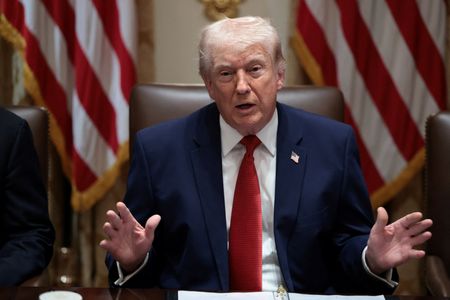
Speaking at a Miami event sponsored by the Saudi sovereign wealth fund, Trump reiterated his desire for the two countries to establish normal relations.
The president has spent years pressing the Middle East’s two largest powers on this issue as part of his Abraham Accords initiatives, stating the timing will be appropriate when Iranian hostilities cease.
“It’s now time,” he said. “We’ve now taken them out, and they are out bigly. We got to get into the Abraham Accords.”
Major obstacles persist, including Saudi Arabia’s requirement for a credible Palestinian state pathway before normalizing commercial and diplomatic relationships with Israel.
News of Iran attacks emerged after Trump claimed war-ending discussions were proceeding “very well” and that he had extended Iran’s deadline to reopen the Strait of Hormuz. Iran maintains it has not participated in any negotiations.
With stock markets declining and economic consequences extending beyond the Middle East, Trump faces mounting pressure to end Iran’s strait control.
Trump envoy Steve Witkoff said Washington delivered a 15-point “action list” to Iran for a potential ceasefire, using Pakistan as an intermediary. The proposal suggests restricting Iran’s nuclear program and reopening the strait.
Iran rejected the offer and submitted its own five-point proposal including reparations and sovereignty recognition over the waterway.
Trump has stated that if Iran doesn’t reopen the strait to all traffic by April 6, he will order Iran’s energy plants destroyed.
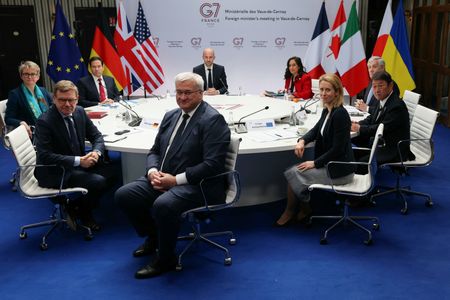
Diplomats from multiple countries including Pakistan and Turkey have attempted organizing direct meetings between U.S. and Iranian representatives. Separately, G7 foreign ministers meeting Friday in France formally requested immediate cessation of attacks against populations and infrastructure.
U.S. vessels moved closer to the region carrying approximately 2,500 Marines, and at least 1,000 82nd Airborne paratroopers trained for hostile territory landings to secure key positions and airfields have been deployed to the Middle East.
Secretary of State Marco Rubio said the U.S. “can achieve all of our objectives without ground troops.” Following the G7 meeting, Rubio explained the deployments ensure “maximum opportunity to adjust to contingencies should they emerge.”
Israel deployed the 162nd Division into southern Lebanon to support efforts protecting northern border towns from Hezbollah attacks and eliminating the militant organization, the military announced.
Nineteen people have died in Israel, while four Israeli soldiers have been killed in Lebanon.
Officials report over 1,900 deaths in Iran. The U.N.’s International Organization for Migration said Friday that 82,000 civilian buildings in Iran, including hospitals and homes of 180,000 people, sustained damage.
At least 13 American troops have been killed, with four deaths in the occupied West Bank and 20 in Gulf Arab states.
In Iraq, where Iranian-supported militia groups joined the conflict, 80 security force members have died.
A breakthrough appeared as Tehran agreed to permit humanitarian aid and agricultural shipments through the Strait of Hormuz, accepting a U.N. request. Ali Bahreini, Iran’s ambassador to the United Nations in Geneva, said Iran agreed to “facilitate and expedite” such movement.
The crucial waterway typically handles one-fifth of global oil shipments and nearly one-third of worldwide fertilizer trade. While markets and governments have focused on blocked oil and natural gas supplies, restricted fertilizer ingredients and trade threaten farming and food security globally.
“This measure reflects Iran’s continued commitment to supporting humanitarian efforts and ensuring that essential aid reaches those in need without delay,” Bahreini posted on X. The U.N. previously announced a task force addressing the war’s ripple effects on aid delivery.
Yemen’s Iranian-backed Houthi militants acknowledged Saturday they had fired missiles at Israel, representing their first direct strike against the Jewish state since the ongoing Middle East conflict erupted.
Israeli officials had previously reported they were working to stop an incoming missile fired from Yemeni territory.
The rebel organization stated they launched multiple missiles in response to ongoing strikes against facilities across Iran, Lebanon, Iraq and Palestinian areas. The Houthis declared their military actions will persist until what they called the “aggression” across all battlefronts comes to an end.
This development signals the Houthis’ formal entrance into the wider regional conflict and increases concerns about the war expanding beyond its current scope.
MOSCOW – A deadly drone strike by Ukrainian forces in Russia’s Yaroslavl region resulted in the death of a child and left three others wounded on Saturday, according to regional authorities.
Regional Governor Mikhail Evraev confirmed the fatality through his official Telegram account, stating: “A child who was in one of the private houses in the suburban district of Yaroslavl region at the time of the attack has died.”
The governor reported that the child’s parents sustained serious injuries and were taken to a hospital for treatment. A woman from a nearby residence was also hurt in the assault. “His parents have been hospitalised in a serious condition. A woman living in a neighbouring house was also injured. They are receiving all necessary medical care,” Evraev explained.
The attack, which occurred northeast of Moscow, caused structural damage to multiple homes and what officials described as “a retail object.”
According to Evraev, Russian air defense systems successfully intercepted and destroyed more than 30 Ukrainian drones during the Saturday operation.
The Russian Defense Ministry reported broader defensive actions across the country, announcing that military forces shot down a total of 155 Ukrainian drones overnight across several Russian territories, including areas around Moscow.
LAGOS, Nigeria (AP) — When taxi driver Adegbola Isaac filled up his tank twice over the weekend in Lagos, he watched fuel prices surge to 1,350 naira ($0.99) per liter — a staggering 35% jump since Middle East hostilities began. The increase has eliminated nearly all his daily earnings.
“It is hitting hard,” Isaac shared with The Associated Press.
Isaac represents millions of Africans experiencing severe economic consequences from distant Middle Eastern warfare that commenced February 28th with coordinated U.S.-Israeli attacks on Iran.
Across Africa, fuel cost increases resulting from the largely blocked Strait of Hormuz are intensifying existing financial struggles in some of the globe’s most impoverished communities.
This recent crisis follows a troubling pattern.
Once again, Africa faces devastating impacts from international emergencies it didn’t create.
Following COVID-19, the Ukraine conflict, and now Middle Eastern warfare, the world’s most rapidly expanding continent — whose population matches China and India — bears the brunt of cascading effects including worldwide competition for essential resources like fuel and fertilizer.
Since most African nations import refined petroleum products, consequences arrived quickly, driving up retail fuel costs throughout Africa and triggering price increases for virtually all goods and services.
Analysts explain that African countries maintain deep connections to international markets and face vulnerability to worldwide disruptions due to their reliance on major economic powers.
On Friday, the United Nations announced efforts to restore safe fertilizer transport through the Strait of Hormuz, hoping to strengthen broader diplomatic initiatives regarding the Iran conflict.
A 2025 U.N. Trade and Development (UNCTAD) analysis, which characterizes Africa as “the epicenter of overlapping global crises,” reveals that over half the continent’s trade occurs with five countries outside Africa.
Kenya imports 100% of its fuel from Middle Eastern sources, especially the United Arab Emirates, with retailers reporting 20% of stations already experiencing shortages. Uganda’s fuel reserves were initially expected to last only several weeks.
South Africa obtains substantial fuel supplies from Saudi Arabia. Nigeria, despite being Africa’s top oil producer, lacks adequate refining infrastructure and must import processed petroleum from Europe.
Zimbabwean healthcare workers staged protests demanding salary increases as living expenses skyrocketed. Government officials responded by planning to boost fuel-ethanol blending from 5% to 20%. However, higher ethanol concentrations can damage vehicles and increase harmful emissions.
“I now avoid going into town during peak hours because the fares are too high,” explained Washington Nyakarize, a mobile phone vendor operating in Harare’s Central Business District. “If I go later, the charge is a bit lower, but I lose business, because most customers come early in the morning.”
Following reduced Saudi Arabian fuel deliveries to South Africa, diesel-dependent sectors began emergency purchasing amid supply fears. This occurred despite assurances from the Department of Mineral and Petroleum Resources that the nation maintains unused strategic stockpiles and alternative supply channels.
UNCTAD reports that fertilizer access throughout Africa, including war-torn regions like Sudan and Somalia, will face significant disruption.
Kenya’s flower sector has documented weekly losses reaching $1.4 million since Iranian hostilities started, with producers citing reduced demand and transportation interruptions.
Specialists warn the conflict could push Africa into unprecedented circumstances if fighting continues.
“If the conflict persists for another month or two, honestly, we’re going to be in unknown terrain, that no one else, like, no one can really predict, and we just have to wait and see,” stated Zainab Usman, a senior research scholar at the New York-based Center on Global Energy Policy.
Facing global oil supply constraints, African governments are exploring alternative procurement channels.
Bloomberg reported this week that multiple nations including South Africa, Kenya and Ghana have contacted Nigeria’s Dangote Refinery seeking fuel agreements.
Though the Dangote facility regularly ships jet fuel to American and Asian markets, it announced this week completing sales of 12 refined petroleum shipments to various African countries, including Ivory Coast, Cameroon, Tanzania, Ghana and Togo — marking the largest such transaction since achieving full operational capacity earlier this year.
Energy specialists caution that the Dangote refinery may struggle to satisfy growing continental demand if planned expansions face delays or crude oil supply disruptions occur.
“As long as there is a steady supply of crude oil, the (Dangote) refinery has the capacity to meet some of the needs” from across the continent, according to Olufola Wusu, a Lagos-based oil and gas expert who was part of a team that helped review Nigeria’s national gas policy.
Israeli military officials confirmed Saturday they detected a missile fired from Yemen for the first time since the month-long U.S.-Israeli conflict with Iran began.
Military authorities did not immediately release details about who launched the projectile or its intended target. The missile detection occurred just hours after Yemen’s Iran-backed Houthis declared their readiness to take action if what they termed escalating attacks against Iran and the “Axis of Resistance” persisted.
The heavily armed Houthis possess the capability to target neighboring Gulf nations, and their entry into the current conflict could severely disrupt shipping routes around the Arabian Peninsula. This comes as global commerce already struggles with the near-complete blockade of the Strait of Hormuz.
UNDERSTANDING THE HOUTHIS
The Houthis operate as a combined military, political and religious organization under the leadership of the Houthi family from northern Yemen. The group follows Zaydi Shi’ite Islamic beliefs.
While the Houthis previously engaged in guerrilla warfare against Yemen’s government forces, they significantly expanded their influence and strengthened relationships with Iran following the 2011 Arab Spring demonstrations.
Taking advantage of Yemen’s political turmoil, the organization seized control of the capital city Sanaa in 2014.
A year later, Saudi Arabia spearheaded a coalition of Arab nations in a military operation aimed at removing the Houthis from power.
During the conflict, the Houthis showcased advanced missile and drone technology, launching strikes against oil facilities and critical infrastructure in both Saudi Arabia and the United Arab Emirates.
Following years of warfare that created one of the globe’s most severe humanitarian disasters, the United Nations facilitated a 2022 ceasefire agreement between the opposing forces in Yemen that remains in effect.
RED SEA SHIPPING DISRUPTIONS
Following Hamas’s October 7, 2023 assault on Israel that sparked Israel’s devastating Gaza military operation, the Houthis initiated attacks on commercial vessels in the Red Sea, claiming their actions supported Palestinian causes.
The group also launched drone and missile strikes against Israeli targets, prompting Israeli airstrikes on Houthi positions. American forces also conducted military operations against the Houthis.
The Houthis suspended their maritime attacks after a U.S.-mediated ceasefire between Israel and Hamas took effect in October 2025.
DELAYED ENTRY INTO CURRENT CONFLICT
Houthi leader Abdul Malik Al-Houthi announced on March 5 that his organization stood prepared for immediate military action.
“Regarding military escalation and action, our fingers are on the trigger at any moment should developments warrant it,” he stated during a broadcast address.
However, unlike Lebanon’s Hezbollah and Iraqi militant organizations, the Houthis have not officially declared their participation in the war. On Friday, the group reiterated its warning as fighting intensified, and hours later, Israel reported detecting the Yemen missile launch.
Houthi religious beliefs do not require allegiance to Iran’s supreme leader in the manner that binds Hezbollah and Iraqi groups.
Although Iran promotes the Houthis as members of its regional “Axis of Resistance,” Yemen specialists indicate the movement primarily pursues domestic objectives while maintaining political alignment with Iran and Hezbollah.
American officials assert that Iran has provided weapons, financing and training to the Houthis with Hezbollah assistance.
The Houthis reject claims of serving as an Iranian proxy and maintain they produce their own weaponry.
POTENTIAL FUTURE ACTIONS
Experts remain divided on the potential actions of the Houthis, known for their unpredictable behavior.
Some diplomatic sources and analysts suspect the group may have already conducted isolated attacks on targets in neighboring countries. Reuters was unable to verify these allegations.
Other observers suggest the Houthis have conserved their military resources for an optimal moment to join the conflict in coordination with Iran to maximize strategic impact.
The effective blockade of the Strait of Hormuz for Gulf Arab oil exports and increased dependence on Red Sea routes could present such an opportunity.
On Friday, the organization warned it was ready to respond if additional nations joined the U.S. and Israel in their conflict against Iran, or if the Red Sea became a launching point for attacks on Iran.
This warning heightened concerns about expanded regional warfare, particularly given the Houthis’ demonstrated ability to strike distant targets and interrupt shipping corridors around the Arabian Peninsula that are vital to international commerce.
WASHINGTON – After one month of military conflict with Iran, President Donald Trump confronts difficult decisions as energy costs climb and his public approval numbers decline. The president must choose between pursuing a potentially imperfect diplomatic agreement or intensifying military action that could lead to an extended conflict threatening his presidency.
Following weeks of diplomatic efforts, Trump concludes another week of the combined U.S.-Israeli military operation while grappling with an expanding Middle East crisis. Iran continues to resist, maintaining control over Gulf oil and gas transport routes while launching ongoing missile and drone attacks throughout the region.
Political analysts question whether Trump will choose to reduce or increase what opponents label a discretionary conflict that has triggered the most severe global energy supply disruption in recorded history and expanded well beyond regional boundaries.
According to a senior White House official, Trump has informed his staff of his desire to prevent a “forever war” and seek a diplomatic resolution, encouraging them to emphasize the four-to-six-week conflict timeline he has publicly outlined, though the official noted this schedule seems “shaky.”
However, Trump has simultaneously warned of significant military intensification should negotiations collapse.
Trump’s peace initiatives toward Iran, including a 15-point settlement proposal transmitted through Pakistani diplomatic channels, suggest an increasingly desperate search for an exit strategy. Yet realistic opportunities for productive talks remain uncertain.
“President Trump has poor options all around to end the war,” said Jonathan Panikoff, former U.S. deputy national intelligence officer for the Middle East. “Part of the challenge is the lack of clarity related to what a satisfactory outcome would be.”
A White House official maintained that the Iran campaign “will conclude when the commander-in-chief determines that our objectives are met” and emphasized that Trump had established clear objectives.
While seemingly covering multiple approaches, Trump continues deploying thousands of additional U.S. military personnel to the area and threatening Iran with increased attacks, potentially including ground forces, unless it surrenders to his requirements.
Political experts suggest this military demonstration might aim to create negotiating advantages with Tehran but risks involving the U.S. in extended warfare, with any ground deployment in Iranian territory likely to upset American voters.
Another potential approach, according to specialists, involves the U.S. conducting a final major aerial campaign called “Operation Epic Fury” to further damage Iran’s military infrastructure and nuclear facilities, after which Trump would claim success and withdraw, stating his military goals were accomplished.
However, such declarations would appear meaningless unless the critical Strait of Hormuz reopens completely, which Iran continues to prevent. Trump has expressed disappointment over European partners’ unwillingness to deploy naval vessels to help secure the shipping channel.
Trump, who has consistently promised to avoid foreign military entanglements, appears to struggle with controlling the expanding conflict he initiated alongside Israel.
While continuing to issue optimistic assessments, he has increasingly focused his communication on reassuring anxious financial markets, directing senior staff to stress the war’s quick conclusion, according to the senior White House official, who requested anonymity to discuss internal discussions.
The absence of a clear withdrawal plan poses risks for both Trump’s presidential record and his party’s electoral chances as Republicans work to maintain slim congressional majorities in November’s midterm elections.
Trump’s greatest error has been underestimating Tehran’s counterattack scope. Iran has deployed its remaining missiles and drones against Israel and neighboring Gulf nations while largely blocking the Strait of Hormuz, which handles one-fifth of global oil transport, creating worldwide economic disruption.
“The Iranian government’s bet is they can take more pain for longer than their adversaries, and they might be right,” said Jon Alterman of the Center for Strategic and International Studies think tank in Washington.
The White House official, speaking anonymously, stated Trump and his administration were “well-prepared” for Iran’s strait response and remain confident it will reopen shortly.
Nevertheless, Trump’s increasing concern about the conflict became most apparent Monday when he backed down from threatening to destroy Iran’s electrical infrastructure unless it permitted shipping to resume through the strait.
In a decision widely interpreted as market reassurance, he announced a five-day suspension of his threat to allow diplomatic efforts. Thursday, he extended this pause another 10 days.
Meanwhile, domestic pressure increases.
Public opinion surveys indicate Americans overwhelmingly oppose the war, and while Trump’s MAGA supporters have largely remained loyal, his political foundation could erode if economic consequences, including elevated gas prices, continue.
Trump’s overall approval has dropped to 36%, his lowest since returning to the White House, according to a Reuters/Ipsos poll completed Monday.
The White House has grown more concerned about political consequences from the war, a former senior Trump administration official told Reuters, citing worries expressed by Republican legislators about upcoming midterm elections.
Reflecting growing Republican unease, U.S. Representative Mike Rogers, chair of the House Armed Services Committee, criticized the administration Thursday for insufficient information about the Iran campaign’s scope.
Responding, the White House official said Trump aides had briefed Congress multiple times before and during the conflict.
Currently, diplomatic options provide no simple solutions.
Trump’s 15-point proposal resembles what Iran had largely rejected in pre-war talks and includes difficult-to-enforce elements. The requirements range from dismantling Iran’s nuclear capabilities and reducing its missile inventory to abandoning proxy organizations and essentially surrendering strait control.
Iran characterized the U.S. proposal as unfair and unrealistic, though it didn’t eliminate future indirect communications.
While Trump claimed Thursday that Iran was “begging” for an agreement, the nation’s leadership appears unhurried to negotiate a conflict resolution, analysts report, believing they can claim victory simply through survival.
Any diplomatic progress has been hindered by replacing some leaders killed in U.S.-Israeli airstrikes with more extreme successors, analysts note. The leadership has demonstrated distrust of Trump, who twice in the past year launched airstrikes while both sides were still negotiating.
“The president is willing to listen, but if they fail to accept the reality of the current moment, they will be hit harder than ever before,” said the White House official.
Israeli officials have meanwhile indicated concern that Trump might make compromises limiting their future strikes against Iran.
Washington’s Gulf partners may also oppose a rushed U.S. departure, considering they could face a damaged, hostile neighbor.
Should Trump actually prepare to deploy ground forces, he could capture Iran’s Kharg Island oil facility or other strategic islands, conduct coastal operations, or send special forces for what would be a complicated attempt to secure its highly enriched uranium stockpile believed mostly buried underground by U.S.-Israeli bombing last June.
Such actions could escalate into broader conflict reminiscent of the extended wars in Iraq and Afghanistan that Trump has promised the U.S. would never enter under his leadership. They would also risk increased American casualties and raise additional questions about U.S. mission goals.
Gulf partners have cautioned the administration against placing U.S. troops on Iranian soil, warning it could provoke more Tehran retaliation, possibly against their energy and civilian infrastructure, a senior Gulf official said anonymously.
The White House official said Trump had clarified “he has no plans to send ground troops anywhere at this time,” but noted he always maintains all available options.
For now, Trump keeps the world uncertain, alternately making statements designed to calm unstable markets and issuing threats that increase energy prices.
“Trump traffics in contradictory signals,” said Laura Blumenfeld of the Johns Hopkins School of Advanced International Studies in Washington. “He is a one-man ‘fog of war’ messaging machine to keep opponents off-balance.”
Secretary of State Marco Rubio announced Saturday that the United States anticipates wrapping up its military campaign in Iran within weeks rather than months, as Israeli forces reported striking targets in Tehran while defending against incoming Iranian missiles.
The ongoing conflict took a toll on American forces Friday when an Iranian assault on a Saudi Arabian air base left 12 U.S. service members wounded, with two sustaining serious injuries, according to a U.S. official who spoke to Reuters. Drone and missile attacks have persisted throughout the Gulf region.
The military campaign, which began a month ago with coordinated U.S.-Israeli strikes against Iran, has now expanded throughout the Middle East, resulting in thousands of casualties and creating unprecedented disruptions to global energy markets. The crisis has sent shockwaves through the world economy and sparked concerns about rising inflation.
Speaking to media following discussions with Group of Seven officials in France, Rubio stated that Washington was “on or ahead of schedule in that operation, and expect to conclude it at the appropriate time here — a matter of weeks, not months.”
Israeli military officials confirmed they were conducting operations across Iran’s capital city while simultaneously detecting missile launches from Yemen. The Iran-backed Houthis in Yemen, who had previously targeted shipping lanes with missile strikes, have largely remained out of the current conflict.
However, Houthi representatives indicated Friday their willingness to enter the fighting under specific circumstances, particularly if additional nations join the U.S.-Israeli alliance or if the Red Sea becomes a staging area for attacks against Iran.
The war has created tension between the United States and its longtime allies, who have chosen not to participate in the military action. President Donald Trump suggested this lack of support could affect NATO commitments, the cornerstone of Western defense cooperation.
“We would have always been there for them, but now, based on their actions, I guess we don’t have to be, do we?” Trump remarked during an investment conference in Miami Friday. “Why would we be there for them if they’re not there for us? They weren’t there for us.”
The North Atlantic Treaty Organization’s founding principles establish that an assault on any member nation constitutes an attack on all members, requiring mutual defense support.
Rubio emphasized that European and Asian nations benefiting from commerce through the Strait of Hormuz—a critical waterway now largely controlled by Iran—should contribute to efforts ensuring safe passage for international trade.
While Rubio maintained that Washington could accomplish its objectives without deploying ground forces, he confirmed some troops were being positioned in the region “to give the president maximum optionality and maximum opportunity to adjust the contingencies, should they emerge.”
The Pentagon has ordered two Marine contingents, numbering in the thousands, to deploy to the area. The first group is scheduled to arrive shortly aboard a massive amphibious assault vessel. Military officials also plan to send thousands of specialized airborne troops.
These troop movements have intensified worries that the conflict could evolve into an extended ground war.
Financial markets plummeted Friday as Brent crude oil prices climbed above $112 per barrel, representing more than a 50% increase since hostilities began.
Within the United States, where Trump faces political pressure over rising fuel costs, diesel prices in California reached a record average of $7.17 per gallon, according to the American Automobile Association.
Trump has signaled his desire to end the increasingly unpopular war, highlighting this week what he described as promising diplomatic negotiations—despite Tehran’s repeated denials that any such discussions have commenced. On Thursday, Trump granted Iran an additional 10-day extension to reopen the Strait of Hormuz or face strikes against its civilian energy infrastructure.
At least five people died and seven others were injured in a U.S.-Israeli attack on a residential building in Iran’s northwestern city of Zanjan, Iranian media reported early Saturday. The Iran University of Science and Technology in Tehran was also targeted, according to media accounts.
Iranian Foreign Minister Abbas Araqchi posted on social media that Israel, working with U.S. coordination, had also struck two steel manufacturing facilities and a power plant. “Attack contradicts POTUS extended deadline for diplomacy. Iran will exact HEAVY price for Israeli crimes,” Araqchi wrote Friday.
Israel’s military reported Saturday that it had identified incoming missiles from Iran, while Syrian state television documented explosions heard over Damascus as Israeli defense systems intercepted the Iranian projectiles.
The United Arab Emirates and Bahrain also experienced missile attacks in the early hours Saturday.
WASHINGTON (AP) — After one month of military operations against Iran, President Donald Trump is hinting at winding down the conflict despite failing to fully accomplish several key objectives he established for the campaign.
The president recently expanded his goals to five priorities for the extensive bombing campaign, growing from the original four outlined by his administration when hostilities began February 28th. This represents an increase from the three objectives initially described by Pentagon officials and Secretary of State Marco Rubio. While Trump’s team maintains their aims remain consistent and well-defined, the expanding list of priorities has evolved as the military action has impacted global markets, strained international partnerships, and generated questions about strategic planning and long-term consequences.
Military analysts acknowledge that American and Israeli airstrikes have substantially weakened Iran’s armed forces and eliminated numerous high-ranking military officials. However, these battlefield victories don’t guarantee the fulfillment of the president’s broader strategic goals.
Several of Trump’s stated aims present significant challenges, and if the United States withdraws without completing these missions while Iran’s paramilitary Islamic Revolutionary Guard maintains control, the president may encounter domestic political criticism and international consequences regarding the achievements of his decision to initiate this optional military engagement that destabilized Middle Eastern stability and disrupted worldwide economic markets.
The Trump administration and White House continue asserting the military action proceeds successfully toward meeting established targets. Press secretary Karoline Leavitt informed journalists this week that “We are very close to meeting the core objectives of Operation Epic Fury, and this military mission continues unabated,” describing the campaign as “ahead of schedule and performing exceptionally.”
Below is an examination of Trump’s stated objectives and their current status:
A primary goal outlined by the president regarding Iran involved plans to “destroy their missiles and raze their missile industry to the ground.”
Administration officials claim this capability has suffered major damage. However, Iran continues firing missiles and unmanned aircraft, including multiple attacks against Israel while Trump announced ongoing diplomatic discussions with Iranian representatives.
Speaking Thursday from the White House, Trump stated that approximately 90% of Iran’s missiles and launching systems have been eliminated, and that unmanned aircraft plus manufacturing facilities producing drones and missiles “are way down.”
Prior to recent statements, the president and his team sometimes presented this as an independent goal, characterizing it as an objective to “raze their missile industry to the ground.” At other times, this priority disappeared from official lists. Pentagon leadership typically incorporates this into their primary objective of eliminating Iran’s missile capabilities.
U.S. Central Command reports targeting weapons manufacturing and missile production facilities in Iranian strikes. Nevertheless, Iranian attacks against Gulf region neighbors and Israel persist.
American and Israeli forces rapidly gained aerial dominance over Iranian airspace, conducting operations with minimal resistance. Defense Secretary Pete Hegseth announced Thursday that U.S. forces have damaged or destroyed over 150 Iranian naval vessels.
Following a U.S. submarine’s torpedo attack that sank an Iranian warship in early March, two additional Iranian ships — the IRIS Bushehr and IRIS Lavan — sought refuge in Sri Lankan and Indian ports requesting assistance. The U.S. has provided no updates indicating these vessels have been subsequently destroyed or captured.
Iran’s Revolutionary Guard operates its own naval force utilizing smaller craft for coordinated attacks and mine deployment. The remaining strength of this fleet remains unclear, as does whether any mines have been positioned. Iranian missiles continue disrupting commercial shipping through the Strait of Hormuz.
Trump dramatically changed his position over recent months after claiming the U.S. had “obliterated” Iran’s nuclear program last June, only to have advisors later warn that Iran approached weapons capability within weeks, justifying current military operations.
Iranian government media reported nuclear facility attacks on Friday. Strikes hit a heavy water facility and yellowcake production plant, with Israel subsequently confirming responsibility for these attacks.
Israel had previously announced strikes against other nuclear-related targets, including assassinating a senior Iranian nuclear scientist.
A critical wartime question involves whether Trump will attempt seizing or destroying approximately 970 pounds of enriched uranium held by Tehran that could potentially support weapons development.
For the first time Monday, Trump indicated the U.S. would recover this uranium, believed stored deep within a mountain facility. However, he suggested this would occur through some agreement with Iran permitting U.S. retrieval. Military experts warn that seizing this material without Iranian consent would constitute an extremely dangerous mission requiring substantial U.S. ground force deployment into Iranian territory.
Trump recently added a fifth objective through social media: “Protecting, at the highest level, our Middle Eastern Allies, including Israel, Saudi Arabia, Qatar, the United Arab Emirates, Bahrain, Kuwait, and others. The Hormuz Strait will have to be guarded and policed, as necessary, by other Nations who use it — The United States does not!”
The U.S. currently stations thousands of military personnel at regional bases and installations. Trump’s willingness to expand protection for Middle Eastern allies against threats remains uncertain, particularly as Iran retains attack capabilities against these nations. The extent of U.S. commitment to maintaining Strait of Hormuz accessibility also remains unclear. Trump has wavered on American responsibilities for policing this waterway. He recently extended Iran’s deadline for reopening the Strait of Hormuz or facing power plant attacks, now setting the date for April 6th.
Trump has discussed governmental overthrow since warfare began, urging Iranian citizens to “take over your government” after Israeli strikes, supported by the U.S., killed Iran’s supreme leader and most senior leadership.
However, Trump and his administration have never formally declared regime change as an Iranian objective, despite clearly expressing desires to end the oppressive theocracy’s 47-year rule.
Speaking Thursday at the White House, Trump described the regime as “largely decimated.”
“You could really say we have regime change because they have been killed,” he stated during a Fox News Channel interview.
Currently, the U.S. claims to conduct negotiations with elements of the same Iranian government while seeking rapid conflict resolution and Strait of Hormuz reopening for maritime commerce. Iran continues publicly denying any negotiations with the White House.
Trump’s initial expectations regarding Iranian popular uprising appear likely to remain unmet.
Trump administration officials have provided limited updates on this objective, which the president described as ensuring “the region’s terrorist proxies can no longer destabilize the region or the world and attack our forces” and “ensuring that the Iranian regime cannot continue to arm, fund, and direct terrorist armies outside of their borders.”
While the U.S. has targeted Iranian-aligned militia groups in Iraq, and Israel appears expanding operations against Hezbollah in Lebanon, the administration has not detailed plans for permanently stopping Tehran’s support for militant organizations.
The White House stated that preventing Iranian proxy groups from further regional destabilization remains a key goal and that “proxies are hardly putting up a fight because our United States Military is so strong and lethal.”
Israeli defense forces reported detecting a missile launch from Yemen in the early hours of Saturday, marking the first time such a projectile has been fired from Yemeni territory since the current regional conflict began.
The missile detection occurred just hours after the Iran-backed Houthi group issued a warning on Friday, stating they stood ready to take action if escalations against Iran and what they termed the “axis of resistance” persisted. The group did not specify what type of intervention they might pursue.
The involvement of the Houthis in the conflict increases concerns about a wider regional war, especially considering the group’s demonstrated capability to hit targets well beyond Yemen’s borders and their history of disrupting maritime traffic in the Red Sea and around the Arabian Peninsula. These previous disruptions were carried out in solidarity with Hamas in Gaza following the October 7, 2023 attacks.
Other Iranian-allied groups in Lebanon and Iraq have already entered the regional fighting that began after U.S. and Israeli military actions against Tehran four weeks prior.
KATHMANDU, Nepal (AP) — Nepalese authorities detained former Prime Minister Khadga Prasad Oli in the early hours of Saturday morning in connection with fatal September demonstrations that claimed dozens of lives and brought down the government, leading to fresh elections.
Law enforcement officers apprehended the influential communist politician at his home located on Kathmandu’s outskirts. Officials also took into custody Ramesh Lekhak, the previous home minister who faces allegations of commanding security forces to open fire on demonstrators.
Current Home Minister Sudan Gurung revealed the detentions through social media posts.
“No one is above the law. We have taken former Prime Minister KP Sharma Oli and former home minister Ramesh Lekhak under control,” Gurung said. “This is not revenge against anyone, it is just the beginning of justice.”
A government-established investigative panel has recommended prison sentences of up to a decade for Oli, Lekhak, and the police chief who was in charge during the demonstrations.
Multiple police vehicles filled with riot-equipped officers carried out the detentions at both men’s residences before transporting them to the Kathmandu District Police headquarters.
These detentions occurred one day following the inauguration of a new administration led by former rapper-turned-politician Balendra Shah, whose Rastriya Swatantra Party achieved a decisive victory in this month’s parliamentary elections.
Both Shah and Gurung have pledged accountability for victims who lost their lives or suffered injuries.
This election marked the nation’s first since youth-driven demonstrations against government corruption and mismanagement on September 8th and 9th resulted in 76 fatalities and over 2,300 wounded individuals. Enraged crowds set fire to the prime minister’s and president’s offices, police facilities, and residences of senior political figures who escaped via military helicopters.
The youth-led movement, driven by “Gen Z” organizers, led to the September 12th appointment of Nepal’s inaugural female prime minister, Sushila Karki, a former Supreme Court justice who oversaw the transitional period before the elections.
India appears ready to compromise on a worldwide agreement that prevents countries from imposing tariffs on digital services, according to two senior diplomatic sources.
The development comes after India’s Commerce Minister Piyush Goyal questioned American proposals for making the digital tariff ban permanent during World Trade Organization discussions in Cameroon on Thursday, stating the matter required “careful reconsideration.”
But by Friday evening, Indian representatives told WTO delegates they would support a two-year continuation of the moratorium, marking the first indication of flexibility in their stance before Saturday’s formal meeting on the issue.
The United States may not find a short-term solution acceptable, however. U.S. Trade Representative Jamieson Greer stated Thursday that Washington wanted only a permanent extension, not a temporary one.
Corporate executives emphasize that continuing the agreement is essential for maintaining stability, worrying that fees could be imposed if the deal expires.
Two senior diplomatic sources confirmed that American and Indian negotiating positions remain significantly different.
A third senior diplomat revealed that WTO members are attempting to find a compromise by extending the moratorium for five to 10 years, beyond the next ministerial conference. Whether either the U.S. or India would accept such a middle-ground approach remains uncertain, the diplomat noted.
The outcome of discussions on the digital commerce moratorium at the Yaounde meeting is viewed as a crucial measure of the WTO’s continued importance, following a period marked by trade disputes driven by tariffs and significant disruptions to shipping, energy costs, and supply networks caused by Middle Eastern conflicts.
“I think for some countries it’s actually quite existential to prolong the moratorium for a significant time,” Norwegian Foreign Minister Espen Barth Eide commented, noting it would help show that officials could achieve tangible results at the Yaounde gathering.
The digital commerce moratorium has been repeatedly renewed for almost 30 years, continuing until each subsequent ministerial conference. The United States seeks to ensure major American technology companies including Amazon, Microsoft, and Apple operate in a predictable regulatory framework without concerns about potential tariffs that nations might impose on international digital commerce.
KATHMANDU – Authorities in Nepal have arrested former Prime Minister K.P. Sharma Oli on Saturday as investigators examine whether he failed in his duty to prevent the deaths of dozens during anti-government demonstrations last September.
The 74-year-old former leader faces potential prosecution after a government investigation committee this week called for charges against him, citing his failure to stop the violent suppression of anti-corruption demonstrations.
The September unrest resulted in 76 fatalities over a two-day period, ultimately forcing Oli to step down from his position.
“They took him from his residence this morning,” said Min Bahadur Shahi, a high-ranking official with Oli’s Communist Party of Nepal (Unified Marxist Leninist), in a statement to Reuters.
Police spokesperson Om Adhikari verified that both Oli and his former home minister, Ramesh Lekhak, have been detained.
The political landscape in Nepal shifted dramatically on Friday when Balendra Shah, a former rapper who entered politics, took the oath of office as the new prime minister following his victory in the March 5 parliamentary elections.
Iran’s fragile economy is teetering on the edge of complete collapse following weeks of ongoing conflict, as basic necessities become increasingly unaffordable for ordinary citizens.
The cost of essential food items has surged dramatically, with prices climbing not just daily but hourly. Some basic staples have seen price increases of at least 50% when compared to levels before the war began.
More than 40% of Iran’s population currently survives below the absolute poverty threshold, with that percentage rising above 50% in the nation’s capital. However, economists caution that the actual poverty rate may have surged beyond 60% throughout the country.
The crisis extends beyond rising prices. Widespread internet outages have brought many essential services to a halt, while manufacturing plants and industrial facilities struggle with severe shortages of necessary raw materials. The nation’s government operations have also been significantly damaged.
“It has become impossible to endure this situation any longer,” a Tehran resident told The Media Line.
Economic journalist Arezoo Karimi notes that even if Iran’s government and the United States manage to negotiate a potential agreement, reversing Iran’s economic downfall cannot happen quickly.
JAKARTA, Indonesia — Indonesia launched sweeping new digital restrictions on Saturday, becoming the first Southeast Asian nation to prohibit children under 16 from accessing major social media platforms that could expose them to harmful content, online predators, and digital addiction.
The groundbreaking policy blocks minors from creating accounts on popular platforms including YouTube, TikTok, Facebook, Instagram, Threads, X, Bigo Live and Roblox. Indonesia follows Australia’s pioneering example from last year, when that country became the first globally to implement such comprehensive social media age restrictions as governments worldwide seek to curb tech companies’ influence over young users.
Indonesian officials plan to roll out the new rules progressively until all digital platforms meet compliance requirements.
Communication and Digital Affairs Minister Meutya Hafid announced the regulation in March, stating it will affect roughly 70 million children across Indonesia’s 280 million population.
According to Hafid, authorities identify high-risk platforms based on several criteria: how easily children can encounter strangers, the potential for predatory behavior, exposure to dangerous content, and vulnerability to exploitation or data breaches.
However, Hafid admitted the enforcement process will present significant challenges. Ensuring platform compliance and requiring companies to report deactivated underage accounts poses substantial difficulties.
“This is certainly a task. But we must take steps to save our children,” Hafid stated. “It’s not easy. Nevertheless, we must see it through.”
Maura Munthe, a 13-year-old who typically spends about four hours daily on her phone using social media and playing Roblox games with friends, expressed mixed feelings about the new restrictions but generally supports the policy.
She noted that her classmates worry about losing access to their current entertainment and social connections.
“There are always other games on my phone, not only the online ones,” she explained. “I will likely play more games alone or just hang out with my friends.”
Munthe’s mother, Leni Sinuraya, 47, has previously allowed her daughter to use devices responsibly for both educational and recreational purposes. Despite this trust, she views the government’s action as beneficial for Indonesian children overall.
Sinuraya believes parents have surrendered control to social media companies.
“Nowadays, when we see kids sitting in a restaurant, they have a phone right in front of them. It’s clear that they’re addicted,” Sinuraya observed. “They won’t eat unless they’re given a phone, and they throw a tantrum if they aren’t.”
“Mealtime is supposed to be a time for us to chat with the people around us,” she continued.
Diena Haryana, who established the Semai Jiwa Amini foundation (SEJIWA) in Jakarta, leads a nonprofit organization focused on protecting children online.
Haryana cited research demonstrating that social media usage among children can negatively affect mental health and contribute to anxiety and depression.
However, she acknowledged that digital platforms provide educational benefits and learning opportunities. Her organization encourages collaboration between parents and communities to supervise and guide children’s online activities.
“We also need to remember that they need to learn to use this digital technology at the right time, at the right age, and with the right guidance as well,” she emphasized.
Haryana anticipates the restrictions’ impact will become clear only after implementation, expecting both youth complaints and parental confusion.
She stressed that parents and educational institutions must help children find real-world alternatives to digital learning environments.
“Of course, this takes time to get used to, which is why parents and schools need to encourage children to engage with the real world and make it fun for them,” Haryana added. “And there’s plenty in the real world for children to explore.”
Most platforms have remained largely silent regarding Indonesia’s new regulations.
Elon Musk’s X platform updated its Indonesia Online Safety Information page to list 16 as the required minimum user age. “It’s not our choice – it’s what Indonesian law requires,” the page states.
Google-owned YouTube expressed support for the Indonesian government’s efforts to establish an effective framework addressing online dangers while maintaining information access and digital opportunities.
“We are ready to engage under the regulation’s self-assessment approach to demonstrate our long-standing safety rigor,” the company stated.
Australia first implemented similar restrictions in December, with social media companies removing approximately 4.7 million accounts identified as belonging to children.
Several other nations including Spain, France and the United Kingdom are developing or considering comparable measures to limit children’s social media access amid increasing concerns about harmful exposure to unregulated online content.
SYDNEY – Australian Prime Minister Anthony Albanese announced Saturday that his government will modify export-finance legislation to strengthen the nation’s fuel supply security as ongoing conflict involving Iran continues to disrupt global energy markets.
The country relies on imports for approximately 90% of its fuel needs and has faced regional supply shortages over the past month since hostilities between the United States, Israel and Iran escalated, creating widespread disruptions to international fuel distribution networks.
“Today, I announce that Australia will establish new powers to get fuel here for Australians,” Albanese stated during televised comments. “New fuel security powers will enable the government to underwrite the purchase of fuel by the private sector.”
According to Albanese, these new authorities will allow Australia’s export-finance agency to guarantee fuel shipment purchases, helping to increase domestic supply levels.
The Prime Minister indicated his center-left Labor administration plans to present the legislative changes to export-finance and insurance-corporation statutes in parliament beginning Monday.
Energy Minister Chris Bowen revealed during Saturday’s televised statements that Australia currently maintains a 39-day supply of gasoline reserves along with 30 days’ worth of diesel and aviation fuel.
Government officials acknowledged this week that while overall supply remains robust, the nation has experienced the cancellation of six fuel deliveries from Asian suppliers and several hundred Australian service stations have temporarily run out of either gasoline or diesel.
A coordinated Iranian strike on Friday left at least 10 American military personnel injured and caused significant damage to U.S. aircraft stationed at Prince Sultan Air Base in Saudi Arabia, according to two defense officials with knowledge of the incident.
The assault involved both missiles and drones, with two service members sustaining serious injuries, one official confirmed. Multiple American refueling planes were damaged in the strike, said the sources, who requested anonymity due to the classified nature of military operations.
The Friday attack follows bold declarations from the Trump administration just one day earlier, when President Donald Trump claimed Iran had been “obliterated” and Defense Secretary Pete Hegseth stated that “never in recorded history has a nation’s military been so quickly and so effectively neutralized.”
Prince Sultan Air Base has previously been in Iran’s crosshairs. Army Sgt. Benjamin N. Pennington, age 26, sustained injuries during a March 1 strike on the facility and succumbed to his wounds several days afterward. Pennington is among 13 military personnel who have lost their lives in the ongoing conflict.
Images captured by satellite technology showing aircraft damage from the most recent assault have surfaced online. The Wall Street Journal first broke news of the attack.
U.S. Central Command reported earlier Friday that more than 300 service members have sustained injuries during the month-long military engagement. Though the majority of wounded personnel have healed and resumed their duties, 30 remain unable to serve and 10 are classified as critically injured.
Through Pakistani intermediaries, the Trump administration has presented Iran with a 15-point proposal outlining potential ceasefire terms.
Tehran has rejected claims that diplomatic discussions are underway, while its control over the Strait of Hormuz has caused fuel costs to surge and disrupted global markets. However, Iran announced Friday its willingness to allow humanitarian supplies and agricultural goods to pass through the strategic shipping channel.
Even as ceasefire talks are mentioned, Pentagon officials are arranging to deploy at least 1,000 soldiers from the 82nd Airborne Division to the Middle East within days. This elite unit specializes in paratrooper operations to secure critical locations and airstrips in dangerous zones.
Military commanders are also positioning two Marine battalions that will bring approximately 5,000 Marines and thousands of naval personnel to the region.
Despite the massive troop buildup heading toward the area, Secretary of State Marco Rubio declared Friday that America “can achieve all of our objectives without ground troops.”
Regarding the additional military deployments, “we are always going to be prepared to give the president maximum optionality and maximum opportunity to adjust to contingencies should they emerge,” Rubio explained to journalists following the Group of Seven foreign ministers meeting in France.
WASHINGTON – A dozen American service members sustained injuries during an Iranian military assault on Prince Sultan Air Base in Saudi Arabia, according to a U.S. official who spoke with Reuters on Friday. Two of the wounded personnel suffered serious injuries in the attack.
This incident brings the total number of wounded American military personnel to more than 300 since hostilities with Iran began on February 28. Military officials reported Friday that 273 of those injured have already been cleared to return to active duty. The ongoing conflict has claimed the lives of 13 U.S. troops.
Emergency crews rushed to downtown Toronto on Friday following reports of a rooftop blaze at a construction site, with witnesses reporting potential explosions as thick smoke billowed from the structure.
The incident occurred at a building under development situated in a heavily populated section near Toronto’s central business district.
According to Toronto Paramedic Service officials, emergency responders had reached the location and reported no injuries during their initial assessment of the scene.
Top diplomatic officials from Russia and Iran met Friday to explore potential pathways toward resolving the current Middle East crisis through negotiations, according to a statement from Moscow’s foreign ministry.
Russian Foreign Minister Sergei Lavrov held discussions with his Iranian counterpart Abbas Araqchi about diplomatic alternatives to the ongoing conflict. According to the ministry’s announcement, the officials examined “in detail the most difficult military-political crisis in the Middle East, which erupted as a result of unprovoked American-Israeli aggression against Iran.”
The diplomatic meeting focused on exploring ways to transition the current hostilities toward peaceful resolution. “There was an exchange of views on the prospects of shifting the conflict into a channel for a political-diplomatic settlement based on international law and taking into account the legitimate interests of all countries in the region,” the ministry stated.
During their conversation, Lavrov also briefed his Iranian colleague on Russia’s latest humanitarian aid delivery to Iran, the statement revealed.
The two nations recently formalized their relationship through a comprehensive strategic partnership that encompasses political, economic, military, and energy collaboration, though it stops short of including mutual defense commitments.
Moscow has been utilizing Iranian-manufactured drones in its ongoing four-year military campaign in Ukraine.
Meanwhile, at a G7 gathering on Friday, European foreign ministers raised concerns with U.S. Secretary of State Marco Rubio about Russia’s alleged assistance to Iran in targeting American military personnel in the Middle East conflict.
According to two Western intelligence sources and a regional official with ties to Tehran who spoke to Reuters, Russia has been supplying satellite intelligence to Iran and has assisted in enhancing Iranian drone technology to match the capabilities of those deployed by Russian forces in Ukraine.
Yemen’s Iran-backed Houthi rebels issued a stark warning Friday, declaring their readiness for direct military action if additional nations align with the United States and Israel in their conflict against Iran, or if Red Sea waters are utilized to launch strikes against the Islamic Republic.
“We confirm that our fingers are on the trigger for direct military intervention” should any new partnerships emerge to support Washington and Israel against Iran and its allies, or if the Red Sea becomes a staging ground for “hostile operations” against Iran, declared military spokesman Yahya Saree during a broadcast address.
Saree further indicated the Houthis stood ready to respond if what he characterized as escalating actions against Iran and the “axis of resistance” persisted, though he provided no specifics about potential intervention methods.
This declaration heightens concerns about expanded regional warfare, especially considering the Houthis’ demonstrated capacity to attack distant targets and interfere with maritime traffic around the Arabian Peninsula.
Tehran’s Shiite partners in Lebanon and Iraq have already entered the regional conflict sparked by American and Israeli operations against Iran. Until this announcement, the Houthis had not declared direct participation in the war, despite possessing significant military resources and controlling strategic territory overlooking the Red Sea.
During his address, Saree emphasized the group would prevent Red Sea usage for “hostile operations” against Iran or any Muslim nation. He also cautioned against further intensification of what he termed “the blockade on Yemen.”
Saree demanded immediate cessation of U.S. and Israeli strikes on Iran and allied nations, including Palestinian areas, Lebanon and Iraq, while calling for Gaza ceasefire implementation.
Following Hamas’s October 7, 2023, assault on Israel that sparked the Gaza conflict, the Houthis initiated attacks on international vessels in the Red Sea, claiming solidarity with Palestinians.
The organization also fired drones and missiles toward Israel, prompting Israeli counterstrikes and U.S. military operations against Houthi positions in Yemen.
The Houthis suspended these attacks following a U.S.-mediated ceasefire between Israel and Hamas in October 2025.
A federal appeals court has reversed a massive $16.1 billion ruling against Argentina, throwing out a lower court decision that would have required the South American nation to pay former shareholders of a seized energy company.
The U.S. Court of Appeals for the Second Circuit in New York overturned the 2023 decision on Friday, which had ordered Argentina to compensate two investment firms — Petersen Energía and Petersen Energía Inversora — for the government’s takeover of a controlling interest in YPF Energy more than a decade ago.
Argentine President Javier Milei hailed the court’s decision as a major victory for his country. “It’s historic, unthinkable, the greatest judicial victory in national history,” Milei posted on X.
The president also criticized former left-wing leader Cristina Fernández de Kirchner, whose government carried out the YPF takeover in 2012. “Because I’m Milei, I’ll say it the Milei way,” he wrote, adding that his government has “cleaned up the mess” left by the former leader.
Kirchner is currently serving a house arrest sentence that began in 2025, after receiving a six-year prison term for corruption charges.
Last June, U.S. District Judge Loretta Preska had directed Argentina to hand over its 51% majority ownership in YPF as part of the compensation package for the plaintiffs. However, the appeals court suspended that directive two months later.
Milei, who faces challenges in restoring the country’s drained foreign currency reserves and has promised to sell off government-owned enterprises, has repeatedly criticized his political rivals for the legal consequences stemming from the YPF takeover.
The government’s seizure of Argentina’s biggest energy corporation in 2012 further hurt the nation’s reputation internationally by adding to its track record of defaulting on global financial commitments.
The investment firms were able to bring their lawsuit against YPF in American courts because the energy company trades on the New York Stock Exchange.
Following the nationalization, YPF has expanded development of Argentina’s extensive shale gas deposits in the Vaca Muerta formation located in Patagonia. Oil production from Vaca Muerta has grown consistently, hitting nearly 600,000 barrels daily in January, representing about 68% of the country’s total output. YPF announced a $5 billion profit in 2025, marking its best financial performance in a decade.
PARIS (AP) — Secretary of State Marco Rubio forcefully rejected claims made by Ukrainian President Volodymyr Zelenskyy that the Trump administration is requiring Ukraine to surrender its eastern Donbas territory to Russia as a condition for receiving U.S. security assurances in any potential ceasefire agreement.
Following a Group of Seven summit in France on Friday, Rubio addressed reporters and firmly contradicted Zelenskyy’s recent statements, emphasizing that America has imposed no such conditions during negotiations with Ukraine.
“That’s a lie,” Rubio stated. “And I saw him say that. And it’s unfortunate he would say that because he knows that’s not true and that’s not what he was told.”
During a Reuters interview published earlier this week, Zelenskyy claimed Washington was linking its security guarantee offer to Ukraine’s willingness to abandon the Donbas region, an industrial area that Russian President Vladimir Putin has long sought to control. While Russian military forces control most of this territory, they have yet to capture a heavily defended section along the front lines.
According to Zelenskyy, President Donald Trump seeks to conclude the Ukrainian conflict as America concentrates on its confrontation with Iran.
“The Americans are prepared to finalize these guarantees at a high level once Ukraine is ready to withdraw from Donbas,” Zelenskyy told Reuters.
Rubio countered these allegations, explaining that the U.S. has simply communicated Russia’s position without endorsing it. He clarified that security guarantees would only be possible once hostilities cease, and America remains committed to facilitating peace negotiations.
“We’ve told the Ukrainian side what the Russians are insisting on,” he explained. “We’re not advocating for it. We’ve explained it to them. It’s their choice to make. It’s not for us to make for them. We’ve never told them they have to take it or leave it. The role we have played is to try to figure out what both sides want, and see if we can bridge the middle ground.”
Ukraine’s presidential office chose not to address the conflicting accounts.
Putin seeks complete Ukrainian withdrawal from the Donbas region, which experts say would provide Moscow with a permanent strategic position to menace other Ukrainian territories.
Rubio mentioned that American officials met with Ukrainian representatives in Florida the previous week, though no additional discussions are currently planned. He also confirmed that while no U.S. military equipment destined for Ukraine has been redirected to Middle East operations, such diversions remain possible if required.
“If we need something for America and it’s American, we’re going to keep it for America first,” Rubio declared. “But as of now, that has not happened.”
The Associated Press previously reported that American Patriot missile defense systems have been relocated from European positions to the Middle East as Washington shifts resources toward its Iranian conflict. Zelenskyy has cautioned that Kyiv will “definitely” experience Patriot system shortages due to the Iranian war.
BOGOTA, Colombia — A memorial service took place Friday in Colombia’s capital to pay tribute to 69 security personnel who perished in a devastating military aircraft accident earlier this week.
The ceremony at a Bogota church featured photographs of each victim displayed near the altar, creating a solemn tribute to those who lost their lives. Survivors of the crash participated in the prayer service, with some using wheelchairs and receiving medical assistance, while others bore visible injuries including bandaged limbs and struggled with mobility.
The tragedy unfolded Monday when a Colombian Aerospace Force C-130 Hercules transport plane went down moments after departure from Puerto Leguizamo, located in Colombia’s Amazon territory. The aircraft was carrying 126 security force personnel when it crashed, leaving 57 survivors.
“We are deeply pained by what has happened, because when a soldier or a police officer falls, a part of our military family is broken,” said Gen. Hugo Alejandro López, commander of the Military Forces, during the religious ceremony.
During the service, a clergy member recited each victim’s name individually, declaring they had “offered their lives in service to the homeland.”
Defense Minister Pedro Sánchez expressed sympathy to grieving families and promised institutional support during their time of loss.
“For some, it would be the last flight they would ever take in this world — one that would carry them toward the eternal flight. For others — those who survived — it was, in a sense, being born again,” said Sánchez.
The nation observed a three-day period of national mourning following what ranks among the country’s most devastating aviation disasters in recent years. Officials continue examining the crash causes, having eliminated the possibility of an attack by illegal armed groups while focusing their investigation on aircraft conditions, runway factors, and crew circumstances.
The incident has sparked renewed discussion about Colombia’s aging military aircraft inventory. President Gustavo Petro, the nation’s first leftist leader, questioned the operational approval of what he called such an old aircraft, pointing out its 1983 manufacturing date and 2020 donation from the United States.
Petro has also stressed the importance of updating the country’s Hercules fleet, which consists of military transport planes designed to operate from basic, unpaved airstrips.
MEXICO CITY — Mexican officials announced Friday they have discovered potential signs of life for approximately one-third of the nation’s 130,000 officially missing persons, sparking immediate backlash from search organizations who view the claim as an effort to minimize the severity of Mexico’s disappearance emergency.
Through cross-checking vaccination databases, birth certificates, marriage records, and tax documents, authorities determined that 40,367 individuals — roughly 31% of reported missing cases — have shown some form of government record activity after being declared disappeared.
Top security official Marcela Figueroa stated this evidence suggests these individuals could still be living.
Employing this investigative approach and working alongside various search organizations, Figueroa reported that officials successfully located 5,269 people who have now been classified as “found.”
Figueroa characterized numerous instances as “voluntary absences,” providing examples such as men abandoning their families for other relationships being listed as missing, and women fleeing domestic violence situations.
“Not all disappearances are the same,” she said, adding that the government was constantly working to locate Mexico’s missing people.
However, Héctor Flores, who leads a search organization in Jalisco state — the epicenter of Mexico’s disappearance emergency — labeled Friday’s announcement as “misleading” and criticized the government’s lack of methodological transparency.
Organizations like Flores’ have long accused officials of attempting to minimize the disappeared population to improve Mexico’s international image. The historical lack of accountability in such situations has created deep mistrust among families who worry that registry modifications could eliminate legitimate cases and obstruct search operations.
“For us, it’s just another attempt by the administration to hide and downplay the numbers and continue to paint a picture that doesn’t reflect the reality of what we’re living through,” said Flores, whose 19-year-old son was forcibly disappeared by agents from the Jalisco state prosecutor’s office in 2021.
Friday’s data revealed that 46,000 cases — representing 36% of registered disappearances — contained incomplete information such as missing names and dates, making investigation efforts impossible.
Additionally, 43,128 cases, or 33%, displayed no recorded government database activity. Among these, fewer than 10% are currently under criminal investigation, which Figueroa acknowledged represents a failure by Mexican law enforcement.
Figueroa also announced enhanced “monitoring” of regional prosecutor offices that have neglected to properly investigate and document missing person cases, while working to increase the number of active investigations.
“Society and the families can trust in the records and better tools to search for people,” Figueroa said.
These revised statistics represent part of a broader initiative to organize a complex database connected to collective trauma affecting the Latin American country, highlighting an intense debate over Mexico’s tracking of its disappearance crisis.
Criminal cartels have historically used forced disappearances as a control mechanism through intimidation while simultaneously hiding murder statistics. The 130,000 registered missing persons since 2006 could populate a small city, with missing person flyers covering walls throughout Mexico’s major urban areas.
This debate has persisted for years but intensified during former President Andrés Manuel López Obrador’s 2018-2024 administration. His government initiated a disappeared persons census after alleging previous statistics were exaggerated to damage his reputation.
Widespread criticism in 2023 resulted in the resignation of the official overseeing the search for disappeared individuals.
Mexican authorities have maintained that the official disappearance registry represents an overcount, frequently compromised by inaccurate local prosecutor data and instances where individuals are reported missing multiple times.
Search organizations like Flores’ group and the U.N. Committee on Enforced Disappearances contend the actual numbers likely exceed official statistics due to local government failures, family fears about reporting cases, and insufficient “clear and transparent” information.
The Miguel Agustín Pro Juárez Human Rights Center released a Friday statement welcoming data reliability improvements but criticized how officials presented the information as “minimizes the state’s responsibility” in the disappearance crisis while providing little assistance to families who frequently must conduct independent searches for missing relatives.
BERLIN, March 27 – German Chancellor Friedrich Merz pledged Friday to exhaust all efforts to rescue the troubled FCAS fighter jet program being developed jointly with France and Spain, while pushing for enhanced collaboration across Europe’s defense manufacturing sector.
Speaking at a conference organized by the FAZ newspaper, Merz emphasized the critical importance of the defense industry to Germany’s economic future. “The future of German industry is now at stake, and this industry is heavily dependent on the defence sector,” the chancellor stated, declaring he would “fight until the very last moment” for collaborative European initiatives like FCAS.
Merz announced that two mediators – one French and one German – have been designated to develop solutions for ensuring the program’s continuation by the conclusion of next month.
The ambitious initiative to create an advanced air combat system faces potential collapse due to a public disagreement over project leadership between France’s Dassault Aviation and Airbus, which serves as the representative for Germany and Spain in the massive 100-billion-euro undertaking.
Additionally, the chancellor revealed that Germany’s government plans to acquire an ownership position in KNDS, the Franco-German manufacturer of Leopard tanks, aiming to maintain strategic influence before the company’s anticipated public offering later this year, which could value the firm between 20-25 billion euros.
Previous Reuters reporting from February indicated that Berlin was preparing to purchase a minority ownership stake of at least 25.1% in KNDS, according to sources with knowledge of the discussions.
BEIRUT – Internal sources within Hezbollah report that over 400 of the group’s militants have died since renewed hostilities with Israel began on March 2nd, according to two individuals with knowledge of the organization’s casualty counts who spoke with Reuters.
This marks the first comprehensive death toll released for Hezbollah combatants since Israel escalated its military operations in Lebanon through both aerial bombardments and ground forces. While the Lebanese militant organization has occasionally announced individual fighter deaths, it has not released official comprehensive casualty figures.
During the previous 2023-2024 conflict with Israel, Hezbollah regularly published daily death announcements for each fallen fighter and later confirmed that approximately 5,000 of its members had perished during that war.
Israeli military officials dispute the lower casualty count, claiming this week that their forces have eliminated at least 700 Hezbollah fighters throughout Lebanon, including numerous members of the group’s specialized Radwan Force unit.
Lebanon’s health ministry reported Friday that Israeli military strikes and ground operations have resulted in 1,142 deaths across Lebanon. The casualties include 122 children, 83 women, and 42 healthcare workers. The ministry does not separate civilian deaths from military casualties in its reporting.
Israeli forces also sustained casualties Friday, with military officials confirming that one soldier and one combat officer suffered serious injuries during overnight operations in Lebanon. The Israeli military previously acknowledged that four of its soldiers have died in combat operations in southern Lebanon.
BEIRUT – The sound of Israeli airstrikes in early March forced Hawraa Houmani to make a difficult choice. At 29 years old and nearly ready to give birth, she abandoned her village close to Nabatieh and sought refuge at a Beirut school shelter. The move meant leaving behind the physician who had monitored her pregnancy.
“I had prepared myself physically and mentally for that doctor, for her to be the one delivering,” Houmani said.
When Houmani sought prenatal care at a Beirut medical facility, staff refused to see her. However, when labor pains began seven days later, the same hospital admitted her. Her son Ali was born on March 11.
The following day brought her back to a classroom that now serves as home for herself, her spouse, their 4-year-old child, and extended family members who also fled. They join more than one million Lebanese citizens who have been forced to relocate since the March 2 outbreak of hostilities between Israel and Hezbollah.
According to UNFPA, the United Nations reproductive health organization, approximately 13,500 pregnant women are currently displaced throughout Lebanon. Medical officials anticipate that as many as 1,500 of these women will deliver babies within the coming month.
Living conditions at the shelter present daily challenges for Houmani, who shares bathroom facilities with numerous families. She expresses concern about maintaining proper hygiene while nursing and washing her children. Baby Ali developed respiratory symptoms and facial irritation within his first two weeks of life. The family desperately wants pediatric medical attention, but no doctors have visited their shelter.
Sabah Marji, Ali’s 64-year-old grandmother, held both Ali and his newborn cousin Fatima, who arrived just before the conflict began.
“Right now, I feel great about them, but the joy is incomplete. It’s not the same as when a person is living in their own home with everything around them,” she said.
Ahlam Sayegh, a midwife who also evacuated from Nabatieh, provides whatever assistance she can to displaced expectant and new mothers in Beirut, though resources remain scarce.
“We are giving support, but at the same time most of that support is mainly psychological support – support by telling them what they should do, when the necessities required to put that into practice on the ground are not reaching them,” she said.
Sarah Shahla, 31, was carrying her daughter at five months when the bombardment commenced. She escaped Nabatieh alongside her husband and two boys. At her current shelter, she operates a small business selling sweets and snacks.
With Lebanon nearing one month of renewed warfare and Israel warning of potential southern occupation, Sarah maintains hope of returning home before her daughter’s arrival.
“Of course, I hope that she comes into a life better than this one, that she comes into a life with stability, safety, a family atmosphere, a sense of home, all of these things.”
New international aviation regulations now restrict airline travelers to carrying a maximum of two portable battery chargers aboard aircraft, according to rules that went into effect Friday.
The International Civil Aviation Organization announced that passengers are also forbidden from charging these rechargeable battery devices while airborne, according to the agency’s official statement.
Several airlines including the Lufthansa Group and nations such as South Korea had previously begun implementing their own restrictions on portable chargers during flights. These measures followed safety incidents, including a fire aboard an Air Busan aircraft in 2025.
Officials with the U.S. Federal Aviation Administration could not be reached immediately for response to the new regulations.
The Montreal-headquartered ICAO typically establishes worldwide aviation standards that receive approval from its 193 member nations. However, these latest requirements concerning portable battery packs took effect without delay.
The U.S. Coast Guard has issued a correction regarding two missing sailboats that were transporting humanitarian supplies from Mexico to Cuba, acknowledging that an earlier report claiming the vessels had been found was inaccurate.
A Coast Guard representative confirmed to Reuters on Friday that the previous statement provided to AFP indicating the boats had been located was wrong. The agency emphasized that rescue crews are still actively searching for the missing sailboats.
No additional details about the search operation or the condition of those aboard the vessels have been released at this time.
Intelligence officials from the United States and Europe have confirmed to The Associated Press that Moscow is delivering drone technology to Tehran, including enhanced versions of the same unmanned aircraft Iran initially provided to Russia following the 2022 Ukraine invasion.
Tehran has launched multiple drone attacks against Israeli targets, neighboring Gulf states, and American military installations throughout the Middle East over the past month, following recent U.S. and Israeli strikes on Iranian territory. Although Iran maintains its own inventory of Shahed drones, Moscow has enhanced the original design throughout the Ukraine conflict, incorporating improved navigation systems and other battlefield upgrades.
A European intelligence source revealed to AP that Russian and Iranian representatives have engaged in “very active” negotiations this month concerning the drone transfer from Moscow to Tehran. According to a U.S. defense source, it remains uncertain whether this represents a single delivery or part of an ongoing series. Neither source could specify the shipment’s scale or the exact number of drones involved. A separate European official noted that a limited drone delivery would unlikely significantly alter the war’s trajectory. All sources requested anonymity when discussing classified information.
The U.S. defense official noted that Moscow’s reasoning for providing Tehran with more sophisticated drones remains puzzling, considering each weapon sent to Iran represents one fewer munition available for use against Ukraine.
During a Friday press conference in Paris following the Group of Seven foreign ministers summit, U.S. Secretary of State Marco Rubio stated that “there is nothing Russia is doing for Iran that is in any way impeding or affecting our operation or the effectiveness of it.” Neither the White House nor Pentagon responded to requests for additional comment.
The European source indicated their intelligence points to a drone shipment currently in transit, though they cannot verify the exact transportation method. Two truck convoys carrying what Moscow has labeled humanitarian assistance have traveled from Russia through Azerbaijan to Iran, potentially containing the drones, according to the European official.
Russia’s Embassy in Azerbaijan’s capital Baku reported that seven trucks carrying 150 tons of food and additional aid crossed into Astara in northern Iran on Friday, while Russia’s Emergency Ministry confirmed delivering 313 tons of medical supplies to Astara by rail, according to Interfax news agency reports.
A second European official stated their nation has not verified Russian drone transfers to Iran, but suggested that if drones are being transported by truck, the quantities are probably minimal and could represent a largely symbolic effort to preserve Moscow-Tehran relations. The official also noted that Moscow is providing targeting assistance to Iran.
Britain’s most recent defense intelligence evaluation indicates Russia almost certainly provided training and intelligence support, including information about drone types and electronic warfare tactics, to Iran before the Middle East conflict began. Iran is also sharing intelligence with Russia “quite generously,” the European intelligence official revealed, noting that Russian officials learned of Ali Larijani’s death — a senior Iranian security official — before the information became public.
However, the Russia-Iran relationship has experienced tension, the European official explained, with Iranian leadership feeling “deeply disappointed” after Russia failed to assist Iran during its 2025 confrontation with Israel, which resulted in Trump authorizing strikes on three major Iranian nuclear facilities.
When questioned Thursday about Financial Times reports regarding Russian drone supplies to Iran, Kremlin spokesperson Dmitry Peskov dismissed them as “false news stories.”
Russia and Iran finalized a $1.7 billion agreement for Iran’s Shahed drone technology after President Vladimir Putin’s Ukraine invasion in 2022, with Moscow deploying the Iranian-supplied drones in combat later that year.
Initially, Iranian drones arrived in Russia disassembled, but a manufacturing facility was subsequently established at the Alabuga plant in Russia’s Tatarstan region. The facility has since undergone rapid expansion and increased its workforce, including African women who claim they were deceived into drone production work.
Russian engineers have modified and improved the Shahed drone by developing decoy versions without explosives intended to overwhelm air defense systems. They have also incorporated various enhancements including jet engines, cameras, sophisticated anti-jamming technology, radio communication systems, artificial intelligence computing platforms, and Starlink internet connectivity.
Drone wreckage recovered in Ukraine also demonstrates continued Iran-Russia collaboration on military technology, including exchanges involving advanced anti-jamming capabilities and jet-powered engines that also propel Iran’s cruise missiles.
The U.S. official confirmed uncertainty regarding which drone version or versions Moscow is shipping to Iran.
Earlier this year, Ukrainian officials reported that Russian forces lost access to their Starlink satellite internet terminals at the front lines after Ukraine requested Elon Musk’s SpaceX company to block Russian use of the service in Ukraine. Russian forces subsequently experienced degraded command-and-control capabilities and navigation systems for Starlink-equipped drones.
Moscow might be transferring its Starlink-capable drones to Iran because Russian forces face increased difficulty using them in Ukraine, the U.S. official suggested. Alternatively, Moscow could be supplying Iran with other Shahed variants featuring jet propulsion, AI-powered autonomous flight capabilities without signal requirements, or camera equipment for surveillance missions, the U.S. official added.
The transfer of advanced Russian drones to Iran could complicate U.S. and allied efforts to intercept incoming drones, depending on the quantity of Russian drones delivered or how Iran utilizes the enhanced Russian technology, the official warned.
Jet-powered drones operate at higher speeds and therefore present significantly greater challenges for current U.S. anti-drone systems deployed in the Middle East, which would need to rely on limited supplies of costly advanced weapons for successful interception.
Mexican military officials announced Friday they have sent specialized rescue teams to assist in the ongoing search for four miners who disappeared following a mine cave-in in the country’s northwestern Sinaloa state.
The mining accident took place Wednesday at the Minerales de Sinaloa facility located in El Rosario municipality, according to a defense ministry announcement.
Military officials transported 38 search and rescue experts via aircraft to the accident site, where they joined 60 military personnel already providing security for the operation. The rescue effort also includes participation from local emergency responders and additional rescue units.
Two vessels participating in a humanitarian supply mission from Mexico to Cuba that had disappeared during their journey have successfully reached their destination, according to reports from Agence France-Presse on Friday.
The U.S. Coast Guard confirmed the safe arrival of the sailboats in Cuba, AFP stated. The vessels had been part of a larger flotilla delivering aid supplies across the waters between the two nations.
When contacted by Reuters, a representative for the aid convoy said the organization could not immediately verify whether the missing vessels had been found. Neither the U.S. Coast Guard nor Mexican naval authorities provided immediate responses when asked for additional details about the situation.
AMSTERDAM – Law enforcement officials in the Netherlands announced Friday that they have taken three more individuals into custody in connection with antisemitic incidents targeting Jewish places of worship.
Authorities detained two Dutch citizens, ages 20 and 23, for their suspected participation in an attack that occurred at a Rotterdam synagogue on March 13, according to prosecutors.
The latest arrests increase the total number of suspects held in connection with the Rotterdam incident to seven individuals.
In a separate case, officials also apprehended an 18-year-old man suspected of participating in preparations for an assault on a synagogue located in Heemstede.
Law enforcement had previously detained two juvenile suspects the prior week, who officials say were planning to detonate an explosive device at a synagogue in Heemstede, a community situated approximately 25 kilometers west of Amsterdam.
JERUSALEM — The militant organization Hamas is evaluating a disarmament proposal that could represent a significant compromise, potentially opening the door for President Trump’s reconstruction initiative in the war-torn Gaza Strip.
The group’s decision, anticipated within the next several weeks, carries enormous consequences for Gaza’s 2 million residents, who have endured uncertain conditions since a truce began nearly six months ago.
Since its establishment, Hamas has maintained armed opposition to Israel as a core principle, making the organization hesitant to surrender weaponry including rockets, anti-tank missiles and explosives that define its fundamental mission.
Given this history, compliance remains highly uncertain. Hamas has expressed dissatisfaction with the current U.S.-supported proposal being discussed. The ongoing U.S.-Israel conflict with Iran has added complexity to Gaza negotiations, potentially causing additional setbacks as regional focus shifts elsewhere.
Meanwhile, essential elements of Trump’s reconstruction strategy remain stalled, particularly the critical rebuilding of the devastated region.
“The future of Gaza … is entirely dependent now on Hamas decommissioning its weapons,” Mike Waltz, the U.S. ambassador to the United Nations, told the Security Council this week. “We truly stand at an inflection point now.”
The October 10th truce sought to end over two years of conflict while initiating a comprehensive process to conclude Hamas’ twenty-year governance and reconstruct Gaza.
While the ceasefire has stopped major combat operations and improved humanitarian assistance delivery to Gaza, providing some respite, challenges persist.
However, Israeli military actions have resulted in nearly 700 Palestinian deaths since the truce began, according to local medical authorities, with Israel maintaining control over more than half of Gaza. Israeli officials justify these strikes as responses to ceasefire violations.
The comprehensive aspects of the 20-point U.S. ceasefire framework remain unimplemented.
These components encompass deploying a U.N.-authorized international peacekeeping mission and foreign-trained Palestinian security forces, establishing a recently named Palestinian administrative committee for Gaza’s governance, additional Israeli military withdrawals, and a multi-year reconstruction program.
Hamas’ weapon surrender is essential for advancing these initiatives. Israeli Prime Minister Benjamin Netanyahu has stated no advancement will occur without disarmament, while numerous donor nations hesitate to provide funding or personnel for Gaza’s recovery if warfare might resume.
Trump’s comprehensive plan mandates that all Hamas “military, terror and offensive infrastructure, including tunnels and weapon production facilities” in Gaza must be eliminated. The framework also requires weapons be placed “permanently beyond use.”
Both Israel and the United States interpret this language as unambiguous, requiring Hamas to relinquish all armaments.
According to Hamas representatives and mediators speaking anonymously about ongoing talks, Hamas has attempted to distinguish between “heavy” weaponry like rockets and “light” arms such as rifles and handguns.
The organization also seeks to connect any demilitarization with Israeli troop withdrawals.
Nickolay Mladenov, director of the U.S.-supported Board of Peace, a newly established Trump-led organization supervising the ceasefire, informed the U.N. Security Council this week that mediating nations Turkey, Qatar and Egypt have submitted a proposal to Hamas.
“Serious discussions are underway as we speak,” he said.
According to Mladenov, the proposal demands “complete decommissioning” of all Hamas armaments while transferring Gaza security responsibilities entirely to the new administrative committee.
He explained that disarmament would start with the “most dangerous weapons,” including rockets, explosives and assault weapons, then progress to “personal weapons.”
This process would occur alongside gradual Israeli withdrawals.
Mladenov emphasized that disarmament represents “the only way forward” for reconstruction and the Palestinian governing committee’s success. “For the people of Gaza, the implications are profound.”
Hamas has responded with skepticism.
Senior Hamas official Bassem Naim criticized Mladenov for allegedly favoring Israel. In a Thursday post on X, he accused the envoy of trying “to be more royalist than the king himself, as he attempts to tie everything to the weapons dossier.”
Other Hamas representatives, speaking anonymously about negotiations, indicated they had accepted the new proposal “in principle,” while maintaining reservations about certain plan elements.
They explained that their response will include modifications addressing concerns, particularly the absence of “crucial” assurances that Israel will cease Gaza attacks and avoid resuming warfare.
The timing of Hamas’ formal response remains unclear.
This uncertainty suggests additional delays or worse outcomes may await Gaza’s war-exhausted population.
Israel’s two-year military campaign, initiated following Hamas’ October 7, 2023 assault on southern Israel, destroyed extensive areas of Gaza and displaced approximately 90% of residents. Hundreds of thousands continue living in temporary shelters, unable to reconstruct their homes or lives while depending heavily on humanitarian assistance.
Extended negotiations would mean postponed Gaza reconstruction and heightened risk of renewed conflict.
WASHINGTON – A source with knowledge of ongoing diplomatic efforts says Tehran is anticipated to deliver its counter-proposal to an American peace plan today, aimed at bringing an end to the ongoing Middle Eastern conflict.
According to the informed source, intermediaries have notified President Donald Trump and senior White House staff that Iran’s response to the U.S. proposal would be forthcoming on Friday.
The conflict, which erupted when American and Israeli forces launched attacks against Iran on February 28, has since expanded throughout the Middle Eastern region.
Tehran has been examining a comprehensive 15-point proposal delivered through Pakistani diplomatic channels, which reportedly contains requirements for dismantling Iran’s nuclear capabilities, restricting its missile programs, and essentially transferring control of the strategically important Strait of Hormuz, based on multiple sources and published accounts.
A senior Iranian representative told Reuters on Thursday that government leaders had examined the American proposal and concluded it primarily benefited U.S. and Israeli objectives. However, the official indicated that diplomatic discussions remain ongoing.
Slovenia’s Prime Minister Robert Golob began discussions with political party leaders on Friday to form a broad coalition government following last week’s extremely close election results that left no party with a clear majority.
Vote counting from the March 22 election shows Golob’s Freedom Movement (GS) secured 29 seats in parliament, edging out the right-wing Slovenian Democratic Party (SDS) led by former premier Janez Jansa by just a single seat.
Both parties need additional partners to reach a working majority in Slovenia’s 90-member parliament, giving smaller political groups significant influence in determining the country’s next government.
Golob extended invitations to all parties that won seats except the SDS to join a unity government during what he described as a challenging period marked by Europe’s latest energy crisis stemming from the U.S.-Israeli conflict with Iran.
However, three center-right parties with platforms similar to the SDS declined the offer, stating they would attempt to create their own center-right alliance instead.
Current projections show parties historically aligned with Golob’s movement could bring his parliamentary support to 40 seats, while Jansa’s SDS and potential allies would hold 43 seats – still falling short of the needed majority. Jansa indicated he plans to wait for final vote tallies before beginning his own coalition discussions.
During Friday’s meeting, Golob emphasized the need for immediate economic intervention, stating that all participants agreed to work together on urgent measures to protect Slovenia’s agricultural sector and broader economy. He described these steps as necessary following “the unwise attack on Iran, and as Europe is preparing for a major economic crisis.”
Slovenia is already experiencing energy supply challenges and recently had to impose temporary restrictions on fuel purchases at gas stations due to hoarding behavior triggered by price increases.
Meeting participants agreed that any future government’s top priorities should focus on anti-corruption efforts and stabilizing the energy sector.
Under Golob’s leadership, Slovenia has maintained pro-European policies emphasizing social reforms while aligning its foreign policy with other European nations.
In contrast, Jansa – who maintains close ties with Hungarian nationalist leader Viktor Orban and has expressed support for U.S. President Donald Trump – advocates for business tax reductions, cuts to welfare and media funding, and a shift in Slovenia’s international relationships.
The SDS filed formal complaints with election officials requesting new early voting due to alleged irregularities, but the electoral commission rejected these claims on Friday.
The election attracted international scrutiny after Golob accused “foreign services” of interference, referencing a reported December meeting between Jansa and officials from Israeli private intelligence firm Black Cube. Golob characterized this as “the biggest scandal we have witnessed in Slovenia since independence.” Jansa has denied any wrongdoing and accused Golob of attempting to hide corruption within his own party.
Cuban leader Miguel Díaz-Canel voiced his worries Friday about two vanished sailboats transporting humanitarian supplies and nine individuals to the island nation.
Mexico’s naval forces announced Thursday evening they had launched search operations for the missing vessels, which set sail from Isla Mujeres in southern Mexico on March 20.
The boats’ disappearance occurs during a period when numerous nations and relief groups are delivering aid shipments to Cuba, as American fuel restrictions create devastating power outages and threaten to collapse the Caribbean country’s infrastructure.
“From our country, we are doing everything possible in the search and rescue of these brothers in struggle,” Díaz-Canel said.
Naval officials report no contact or verification that the ships reached Cuban shores, though they were anticipated to arrive sometime between Tuesday and Wednesday this week.
The relief organization Nuestra América Convoy announced Friday that considering the vessels’ reported speeds to Cuban maritime officials, the boats should reach Havana sometime between Friday and Saturday. The group issued a public appeal seeking any details or sightings of the missing craft.
Both ships carry seasoned mariners as captains and crew members, and each vessel contains proper safety systems and communication devices.
“We are cooperating fully with the authorities and remain confident in the crews’ ability to reach Havana safely,” the organization said in a statement.
An initial ship from Convoy Nuestra América successfully reached Havana on Tuesday, delivering 14 tons of food supplies and medications, 73 solar energy panels, and approximately twelve bicycles.
Mexican naval forces have notified maritime commands in Isla Mujeres and Yucalpetén, plus naval search and rescue stations as part of their response efforts. They’ve also coordinated with maritime rescue centers in Poland, France, Cuba and the United States, alongside diplomatic officials from the missing passengers’ home countries.
The rescue mission includes navy ships and Persuader aircraft conducting water and air search patterns along the projected path from Isla Mujeres to Havana. Operations factor in potential route deviations, current weather patterns, and regional ocean currents.
DUBAI, United Arab Emirates (AP) — After 30 days of conflict with Iran, American and Israeli forces are facing an adversary that operates more like a guerrilla movement than a traditional military power — maximizing damage with increasingly scarce resources.
Even while enduring daily bombardments from two of the globe’s most advanced air forces, Iran continues to harass neighboring Gulf states and Israel through missile and drone attacks while maintaining economic leverage over world markets, largely through intimidation tactics.
Iran’s capacity to regulate shipping — and consequently oil supplies — passing through the Strait of Hormuz represents its most significant strategic weapon. This approach mirrors strategies that Iran’s allied groups have employed for years under Tehran’s guidance as head of what it calls the “Axis of Resistance.”
At the same time, Iran’s financial system, already isolated from international markets due to longstanding sanctions, remains largely protected from the economic turmoil it’s creating elsewhere.
The blockade of the strait has triggered soaring oil costs, falling stock values, and increased prices for essential commodities, creating political pressure on President Donald Trump that may push him toward further military action.
Though Iran has achieved some success by closing the strait, domestic challenges remain that Washington and Jerusalem might leverage as the conflict continues. However, the theocratic government’s path to success through guerrilla-style methods stays relatively straightforward — simply endure.
“The Islamic Republic understands that it cannot defeat the United States militarily,” wrote Shukriya Bradost, a Mideast security analyst. “Instead, its objective is both simpler and more strategic: Survive the war long enough to claim victory.”
The Strait of Hormuz, the critical Persian Gulf passage that previously handled one-fifth of global oil and natural gas shipments, now sees minimal maritime activity. Iranian authorities permit only selected cargo to pass, setting their own terms and pricing. Despite losing most of its naval fleet, Iran maintains control over the waterway using decades-old stockpiles of missiles and drones.
Asian nations, which rely heavily on oil transported through the strait, face the most severe impact — but since oil markets operate globally, motorists across Europe and America also experience price increases. Because petroleum costs affect manufacturing and transportation of numerous products, gasoline isn’t the only commodity seeing higher prices.
This situation creates additional challenges for Trump, who already faced difficulties demonstrating to voters that he could reduce living expenses before November’s midterm elections.
Resolving the crisis presents complex options. Negotiating a ceasefire offers one possibility — Trump claims discussions are advancing, though Iran disputes this.
Should diplomacy fail, America and Israel must choose between declaring sufficient progress and withdrawing from the war — or significantly intensifying military operations to force the strait’s reopening. Trump has already deployed additional paratroopers and Marines to the region. He established a new ultimatum — postponed twice already — of 8 p.m. Eastern time on April 6 for Iran to restore strait access. He’s warned that failure to comply will trigger bombing campaigns against Iranian power facilities.
“Trump’s preference remains ‘escalate to de-escalate,’” the risk advisory Eurasia Group said in an analysis Thursday. “The U.S. is moving more ships and ground troops into the region and will be better prepared to escalate in mid-April.”
However, Iran has demonstrated remarkable endurance against the punishment it has sustained so far.
Trump stated Thursday evening that approximately 9% of Iran’s missile stockpile remains operational. Independent confirmation of this estimate proved impossible — but even if correct, Tehran retains multiple methods for causing destruction.
With its aircraft largely eliminated and air defense systems severely compromised, Iran still operates an extensive network of air and naval installations, many constructed decades earlier.
The country has also established underground facilities more recently, which combined with missile systems disguised as civilian trucks, enable concealment of launch positions until deployment. Maintaining mobile launcher movement helps protect them from aerial attacks.
This approach, called “shoot and scoot,” represents a standard practice among numerous insurgent organizations, including Yemen’s Houthi rebels. The Iran-supported group successfully interrupted international commerce in the Red Sea. Iranian-backed Shiite militias in Iraq employed comparable methods against American forces there. Both groups have persisted despite repeated targeting.
Iran’s geographical characteristics and landscape — a mountainous country roughly equivalent to Alaska in size — provide ample space and natural features for insurgent-style concealment.
Nevertheless, underlying problems persist for Iran as well.
Both American and Israeli officials have expressed hopes that Iranian citizens, who confronted their theocratic government during nationwide demonstrations in January, might overthrow their leadership.
No evidence of such an uprising has emerged — and currently, many Iranians remain in shelters avoiding airstrikes.
Iran’s population also recalls the government’s violent suppression earlier this year that resulted in thousands of deaths and tens of thousands of arrests. The Revolutionary Guard’s volunteer Basij militia, which played a crucial role in that crackdown, continues operating despite frequent targeting during the war, with social media footage showing armed members patrolling neighborhoods while broadcasting propaganda through speakers.
Indicating Iran feels pressure on its forces, Guard official Rahim Nade-Ali announced recruitment of children as young as 12 for the Basij. He characterized this as meeting public demand — but it also represents a method for replenishing ranks as checkpoints face attacks.
Uncertainty surrounds Iran’s leadership structure. Mojtaba Khamenei hasn’t appeared publicly since assuming the role of supreme leader, with American officials reporting he suffered war injuries. Guard and other military divisions seem to function without centralized command. Any ceasefire agreement that fails to satisfy Guard and hardline expectations could split the country’s political leadership.
But Trump’s military strategy might not produce intended results.
“Washington seems to believe that an overwhelming display of military power will force the Iranians to the negotiating table,” the New York-based Soufan Center said in an analysis Friday. “But … the U.S. can’t expect to gain in peace what it was not able to take in war.”
State media in Myanmar announced Friday that the country’s military leadership will undergo significant changes following the annual armed forces parade, marking an uncommon public announcement from the secretive organization that controls the Southeast Asian nation.
The timing of this leadership restructuring is particularly noteworthy, occurring just before Myanmar’s recently assembled parliament convenes Monday to begin selecting a new president. Current military commander Min Aung Hlaing has reportedly been eyeing the presidential position for some time.
During a Thursday gathering with former military officers, deputy commander Soe Win told attendees that “leadership changes” would take place after the armed forces ceremony in Naypyitaw, the nation’s capital, according to state media coverage.
This political shift follows a recent election that critics widely condemned as fraudulent, which resulted in victory for a military-supported political party. The outcome creates a pathway for Min Aung Hlaing to assume the presidency within Myanmar’s military-dominated governmental structure.
Friday’s elaborate military display included tanks, missile systems, artillery demonstrations, and aerial shows featuring illuminated aircraft and helicopters. Min Aung Hlaing, wearing his military decorations, reviewed the troops from an open-air vehicle.
In his brief address lasting under 20 minutes, the military chief avoided discussing the upcoming leadership transition. Instead, he emphasized the armed forces’ crucial importance, defended the necessity of the 2021 military takeover, and outlined the military’s ongoing political involvement “to collaborate in the national interest.”
“It must be clearly understood this does not signify ‘leading in politics’ as some pessimists might allege,” Min Aung Hlaing stated during his speech.
The recent election occurred during an ongoing civil conflict that erupted after the 2021 military coup, which removed the democratically elected administration headed by Nobel Peace Prize recipient Aung San Suu Kyi. This upheaval has pushed the already impoverished nation deeper into chaos.
Independent analyst Htin Kyaw Aye noted that Myanmar’s military rarely announces high-level personnel changes in advance, particularly while engaged in combat operations against various armed opposition groups across multiple regions.
“This is a scripted transition, however, such a disclosure of information suggests that there may be underlying anxieties regarding the leadership transition and the redistribution of high-level positions,” the analyst explained.
Min Aung Hlaing, age 69, built his career as an infantry officer before being selected by former military leader Than Shwe to serve as commander-in-chief in 2011. He has not yet publicly identified who will replace him in the military hierarchy.
VAUX-DE-CERNAY, France — Top diplomats from seven of the world’s leading nations issued an urgent plea Friday for immediate protection of innocent people and essential infrastructure during the ongoing conflict in Iran.
Meeting for their second day of discussions in France, the foreign ministers from the Group of Seven countries released a unified statement emphasizing the critical need to reduce the war’s impact on neighboring nations, everyday citizens, and vital facilities.
The diplomatic leaders highlighted their commitment to working together across different partnerships and supporting various efforts to address the crisis. “We focused on the value of diverse partnerships, coordination, and supporting initiatives, including to mitigate global economic shocks such as disruptions to economic, energy, fertilizer and commercial supply chains, which have direct impacts on our citizens,” the ministers stated in their official declaration.
The G7 representatives also emphasized the urgent necessity of ensuring safe passage for ships traveling through the strategically important Strait of Hormuz without requiring toll payments.
The Group of Seven includes the United States, United Kingdom, Canada, France, Germany, Italy, Japan, and the European Union as participating members.
DUBAI – Persian Gulf nations are pressuring Washington to ensure that any agreement with Iran extends far beyond simply halting the current conflict, insisting that Tehran’s missile and drone programs must be permanently restricted and that global energy supplies can never again be used as weapons, according to four Gulf sources.
President Donald Trump has given Iran additional time to reopen the Strait of Hormuz, a critical waterway that handles approximately 20% of the world’s oil and liquefied natural gas shipments, or risk having its energy facilities destroyed.
However, Gulf policymakers say their primary concern has shifted from how the Iranian conflict concludes to what type of regional stability will emerge afterward, the four Gulf sources familiar with the discussions told Reuters.
SIMPLE CEASEFIRE WON’T SUFFICE
Gulf leadership, representing nations that have faced repeated attacks from Tehran during the ongoing U.S.-Israeli conflict with Iran, have informed Washington during private discussions that the Islamic Republic has provided them with no diplomatic escape route, sources indicated.
These officials are demanding that any agreement include enforceable limitations on missile and drone strikes against energy infrastructure and civilian targets, restrictions on threats to oil transportation routes and shipping lanes, and an end to proxy conflicts, sources added.
Any settlement must establish new rules of engagement that guarantee the Strait of Hormuz will never again serve as a weapon of war, and Gulf nations must be included in the framework of whatever follows, they argue.
“The real challenge is not persuading Iran to stop the war, but ensuring the Gulf is not left exposed to the same dynamics that made it possible in the first place,” Ebtessam Al-Kerbi, president of the Emirates Policy Centre, told Reuters.
Yousef al-Otaiba, the United Arab Emirates’ ambassador to the United States, has characterized the conflict not as a crisis to be temporarily halted but as a test of whether Iran can continue threatening the global economy in the future.
“A simple ceasefire isn’t enough,” Otaiba wrote in a column for the Wall Street Journal. “We need a conclusive outcome that addresses Iran’s full range of threats: nuclear capabilities, missiles, drones, terror proxies and blockades of international sea lanes.”
An agreement that merely suspends missiles, drones and proxy conflicts, he argued, would only postpone the next crisis.
Gulf nations’ economies, which depend heavily on energy exports and international travel, have suffered significant damage from the war, which has created shockwaves throughout the global economy. Disruptions in the strait have increased energy costs, disrupted supply chains and contributed to inflation.
The United States can confirm with certainty that it has eliminated approximately one-third of Iran’s extensive missile stockpile, according to five individuals with access to U.S. intelligence information.
Gulf officials say their doubts stem from past experience.
Iran’s nuclear enrichment activities – which are part of nuclear weapons development though Tehran denies pursuing such weapons – were limited under a 2015 agreement, but Tehran maintained its ability to threaten the region through missiles, drones, proxy conflicts and maritime security threats. Gulf states argue this possibility must now be eliminated for regional stability.
In 2018, Trump announced America’s exit from the 2015 Iran nuclear agreement, describing it as a “defective” and “one-sided” deal that failed to serve U.S. interests.
IRANIAN ATTACKS STRENGTHEN UAE-U.S. TIES
Qatar, Oman and Kuwait are privately advocating for a rapid end to the conflict, concerned about economic consequences and potential retaliation, sources revealed.
The UAE, Saudi Arabia and Bahrain indicate they are prepared to accept an escalation of the conflict and will not tolerate a post-war Iran that can still use the Strait of Hormuz as leverage or for what they consider extortion.
Trump has announced he will extend his deadline for Tehran to open the strait until April 7 at midnight GMT, and has stated that discussions with Iran are proceeding “very well.”
An Iranian official has characterized a U.S. proposal for ending the conflict as “one-sided and unfair,” and Tehran has demanded the shutdown of U.S. military bases in the Gulf as a prerequisite for any agreement.
However, UAE presidential adviser Anwar Gargash stated that Iran’s strikes against Gulf nations have had “profound geopolitical repercussions,” establishing Tehran as the primary threat influencing Gulf strategic planning. The consequence, he said, will be stronger security cooperation between the UAE and Washington.
“This is the cost of Iran’s misguided calculations,” he said.
GULF NATIONS SEEK SECURITY ASSURANCES
Abdulaziz Sager, chairman of the Saudi-based Gulf Research Center, said the Gulf states’ communication to Washington has become direct rather than subtle – that any deal with Iran must specifically address and guarantee Gulf state security.
“The United States protects its interests, and Israel’s. Now it is our turn to protect and defend ours,” he said.
This position was supported by the Gulf Cooperation Council, an organization that includes Bahrain, Kuwait, Saudi Arabia, Qatar, Oman and the UAE, which has demonstrated a united stance against any settlement that ignores Gulf security concerns.
Referencing 5,000 missile and drone strikes on Gulf energy installations, civilian infrastructure and maritime traffic, GCC Secretary-General Jasem Al-Budaiwi has declared that Iran has “crossed all limits.”
He stated that the Gulf has shown restraint to prevent a broader conflict but that the region will not tolerate being attacked again, clarifying that while diplomatic solutions are preferred, every nation maintains the right to self-defense.
Trump has been considering whether to deploy ground troops to capture Iran’s strategic oil facility at Kharg Island, which processes 90% of Iran’s oil exports, according to a U.S. official and three individuals familiar with the situation.
Capturing it, analysts suggest, would provide Washington with significant control over Iran’s economy.
Tehran has cautioned that any such action would prompt Iranian strikes against the “vital infrastructure” of any nation that assisted such a U.S. military operation.
Some Gulf partners have been advising Washington against deploying ground forces, including troops to Kharg Island, believing this would expand the conflict, provoke substantial Iranian retaliation, and possibly target Gulf energy and civilian infrastructure, a senior Gulf official stated. However, Gulf states are encouraging Washington to continue weakening Iran’s cruise and ballistic missile capabilities since these have long represented the primary threat to their nations, the Gulf official said.
DAR ES SALAAM, Tanzania — Torrential rains have sparked devastating landslides in southern Tanzania, claiming at least 20 lives over recent days, according to local officials, adding to a mounting death toll across the broader East African region.
The deadly slides occurred early Wednesday morning in the Mbeya region, destroying multiple homes as intense rainfall combined with powerful winds, according to Jaffar Haniu, who serves as administrator for Rungwe district where the disaster struck.
“The death toll now stands at 20,” he told reporters. “One victim is a very young child, a year and a half old.”
Weather forecasters are predicting additional rainfall in coming days, prompting Haniu to issue urgent evacuation warnings for residents living in areas susceptible to landslides.
The crisis extends beyond Tanzania’s borders. In nearby Kenya, where seasonal flooding occurs annually, the death toll has reached at least 88 people. The deluge has impacted 21 counties throughout the country, with a minimum of two rivers overflowing their banks since intense storms began this month.
The magnitude and severity of the ongoing emergency has sparked fresh discussions about disaster readiness and the precarious situation facing communities situated near waterways and flood-susceptible regions. Military forces have been called in to support emergency response teams.
Earlier in March, southern Ethiopia experienced its own landslide catastrophe, resulting in at least 80 deaths.
The Climate Prediction and Applications Centre, part of the regional organization IGAD, issued a forecast last month indicating the March through May rainy season carries a 45% probability of exceeding normal precipitation levels throughout most regional nations, spanning from Uganda to Djibouti.
BRASILIA, Brazil — Former Brazilian President Jair Bolsonaro walked out of a Brasilia medical facility Friday morning to complete his 27-year prison term for attempting a coup from the comfort of his home in an affluent residential area.
Brazil’s highest court approved the home confinement arrangement earlier this week, citing the ex-leader’s deteriorating medical condition. Court officials said they may reassess this decision within the next three months.
Around 10 a.m. local time, Bolsonaro departed DF Star hospital in Brazil’s capital and returned to his residence in the Jardim Botanico district, where he resides with his spouse Michelle and 15-year-old daughter Laura.
The former president, now 71, was admitted to the medical facility on March 13 after developing pneumonia, adding to a series of health complications stemming from a 2018 stabbing incident that occurred before his presidential victory. Medical staff placed him in critical care for several days as he battled kidney dysfunction and inflammatory conditions.
Bolsonaro held Brazil’s presidency from 2019 through 2022, ultimately losing his re-election campaign by a narrow margin to the nation’s current leader, Luiz Inácio Lula da Silva.
SAO PAULO, March 27 – Brazil’s former President Jair Bolsonaro left the hospital Friday and was moved to his residence, where he’ll remain under what officials are calling “humanitarian house arrest” for a minimum of three months.
The 71-year-old ex-leader has been imprisoned since November, serving a 27-year sentence for his role in attempting to orchestrate a coup following his electoral defeat to current President Luiz Inacio Lula da Silva in 2022.
Earlier this week, Supreme Court Justice Alexandre de Moraes approved the house arrest arrangement for 90 days based on medical considerations. Officials will review the far-right former president’s situation after the initial period to decide if the home confinement should continue.
The former president, who governed Brazil from 2019 to 2022, was hospitalized earlier this month in Brasilia’s intensive care unit after developing severe pneumonia, requiring antibiotic treatment.
Dr. Brasil Caiado, his physician, spoke to media about his recovery: “His progress over the past two days has been what we expected — smooth, without any complications.”
Medical issues have plagued Bolsonaro repeatedly since an assassination attempt during a 2018 campaign rally left him with stab wounds to his abdomen. Dr. Caiado indicated the former president will need to return to the hospital for shoulder surgery scheduled for late April.
Two Chinese cargo vessels abandoned their effort to navigate through the Strait of Hormuz on Friday, according to maritime tracking information, even though Iran had guaranteed safe transit for Chinese ships.
The shipping company COSCO had announced in a client notice on March 25 that it was accepting cargo bookings again for routes from Asia to several Middle Eastern destinations including the United Arab Emirates, Saudi Arabia, Bahrain, Qatar, Kuwait and Iraq.
Both vessels – the CSCL Indian Ocean and CSCL Arctic Ocean, registered under Hong Kong flags – have remained trapped in Gulf waters since the U.S.-Israeli conflict with Iran started on February 28.
Maritime data from Kpler shows the ships made their transit attempt at 0350 GMT Friday morning before reversing direction and heading back.
This marked the first time a major shipping company had attempted such a crossing since hostilities began, but the failed passage demonstrated that “safe passage could not be guaranteed,” according to Kpler analyst Rebecca Gerdes.
Earlier this week, Iran’s Foreign Minister Abbas Araghchi announced on social media that his country “permitted passage through the Strait of Hormuz for friendly nations including China, Russia, India, Iraq, and Pakistan.”
Ship tracking data revealed that both Chinese vessels had transmitted messages through their AIS systems indicating Chinese ownership and crew members aboard.
COSCO Shipping, the Shanghai-based parent company, did not respond to requests for comment.
Iran’s maritime attacks and threats have left hundreds of ships and approximately 20,000 crew members stranded in Gulf waters. Critical energy shipments, including Saudi crude oil and Qatari liquefied natural gas, have come to a virtual standstill.
President Donald Trump stated Thursday that Iran had allowed 10 oil tankers to pass through the Strait of Hormuz in what appeared to be a diplomatic gesture during ongoing negotiations.
No specific information has emerged about these tankers or whether any successfully completed the transit following Trump’s remarks.
A small number of other vessels have managed to depart recently, including Indian-flagged tankers transporting cooking gas and a Thai oil tanker that coordinated its passage through diplomatic channels, according to Thai officials and the vessel’s operating company.
Recent maritime traffic has primarily consisted of Iranian oil tankers leaving the area and bulk cargo ships bringing grain and other supplies into Iran, based on data from Lloyd’s List Intelligence and maritime analysis.
Iranian officials have maintained their position that certain vessels may receive transit permission, but Tehran reserves the right to make those determinations while blocking ships connected to the United States, Israel, or their allies.
“Aggressor parties – namely, the United States and the Israeli regime – as well as other participants in the aggression, do not qualify for innocent or non-hostile passage,” Iran stated in a March 24 communication to member nations of the International Maritime Organization, the UN’s shipping agency.
Chinese Foreign Minister Wang Yi suggested during a Friday phone conversation with his Pakistani counterpart that beginning peace negotiations would help “restore normal navigation” through the Hormuz waterway.
A 23-year-old Russian national will spend four years behind bars after being convicted of attacking a woman in London while President Donald Trump’s youngest son watched the violence unfold through a video call.
Matvei Rumiantsev received his sentence Friday at Snaresbrook Crown Court in east London, following his January 28 conviction for assault causing bodily harm. A jury cleared him of rape and choking charges but found him guilty of obstructing justice for sending the victim a letter from custody requesting she withdraw her accusations.
Justice Joel Bennathan described Rumiantsev as completely unremorseful and prone to jealous behavior during the sentencing hearing.
“Your lack of insight and empathy was apparent at trial,” the judge stated. “You continue to try to blame the complainant for everything that has happened.”
The January 18, 2025 incident occurred when an intoxicated Rumiantsev became envious of the victim’s online friendship with 19-year-old Barron Trump, whom she had connected with through social media platforms.
While beating the woman, Rumiantsev picked up her phone when Barron Trump called via FaceTime and deliberately pointed the camera toward the crying victim on the ground.
The president’s son immediately contacted London authorities from the United States, urgently requesting assistance during what he described as a difficult phone conversation with dispatchers.
“It’s really an emergency … I’m calling from the U.S., uh, I just got a call from a girl, you know, she’s getting beat up,” Barron Trump told the emergency operator.
Officers responded to the location and took Rumiantsev, who worked as a receptionist in London, into custody.
During testimony, Rumiantsev admitted to feeling jealous of Trump while also claiming he pitied him because he believed the woman was misleading the young man.
Defense attorney Sasha Wass argued during proceedings that Trump was unaware the woman had a romantic partner and questioned what he could have observed during such a brief video encounter lasting only seconds. She characterized the relationship as drama-filled and suggested the woman used her connection to Trump to provoke her boyfriend’s jealousy.
Barron Trump, the sole child of Donald and Melania Trump, did not provide testimony during the trial proceedings.
The judge commended Trump’s quick thinking in contacting emergency services, noting his actions likely prevented a more serious outcome. The victim reportedly feared for her life during the attack.
“Mr. Trump properly and responsibly, despite being in the United States, made sure the emergency services here were called, and he told them what he had seen,” the judge remarked.
WASHINGTON – American intelligence officials can verify the destruction of only about one-third of Iran’s extensive missile stockpile as military operations against the nation approach the one-month milestone, according to five sources with knowledge of classified intelligence assessments.
Another third of Iran’s weapons may have been damaged, destroyed, or buried within underground tunnel networks and bunker systems during bombing campaigns, though the status remains uncertain, four intelligence sources revealed. All sources requested anonymity due to the classified nature of the information.
Intelligence officials report similar findings regarding Iran’s drone arsenal, with confirmed destruction of roughly one-third of those capabilities as well.
These internal assessments, never before made public, indicate that while most Iranian missiles are either eliminated or unreachable, Tehran maintains substantial weapons reserves and could potentially recover buried or damaged systems after hostilities cease.
The intelligence findings contradict President Trump’s Thursday statements claiming Iran had “very few rockets left.” However, Trump acknowledged the ongoing threat from remaining Iranian weapons systems to potential U.S. operations protecting the strategically important Strait of Hormuz.
Reuters previously reported that Trump is considering escalating the conflict by sending American ground forces to Iranian coastlines near the Strait.
“The problem with the straits is this: let’s say we do a great job. We say we got 99% (of their missiles). 1% is unacceptable, because 1% is a missile going into the hull of a ship that cost a billion dollars,” Trump stated during a televised Cabinet meeting Thursday.
Pentagon and White House officials did not respond to requests for comment.
Democratic Representative Seth Moulton, a Marine veteran with four Iraq deployments, refused to discuss Reuters’ intelligence findings but challenged Trump’s characterizations of the war’s effectiveness against Iranian capabilities.
“If Iran is smart they’ve retained some of their capability – they’re not using everything that they have. And they’re laying in wait,” Moulton stated.
The Trump administration has outlined goals to diminish Iran’s military strength by eliminating its naval forces, destroying missile and drone systems, and preventing nuclear weapons development.
U.S. Central Command reports that Operation “Epic Fury,” launched February 28 alongside Israeli forces, is meeting or exceeding initial timeline projections.
American strikes have targeted over 10,000 Iranian military installations through Wednesday, with Central Command claiming destruction of 92 percent of Iran’s major naval vessels. Military officials have released footage showing attacks on weapons manufacturing facilities, emphasizing efforts to eliminate not just existing stockpiles but production capabilities.
Central Command has declined to specify exact percentages of destroyed missile or drone capabilities.
Intelligence sources cite difficulties determining pre-war missile quantities stored in underground facilities. The U.S. has not publicly disclosed estimates of Iran’s initial weapons stockpile.
Military analysts estimate Iran possessed between 2,500 missiles according to Israeli assessments and approximately 6,000 based on independent analysis.
Despite intensive American bombardment, Iran continues demonstrating active weapons capabilities.
Thursday alone saw Iran launch 15 ballistic missiles and 11 drones targeting the United Arab Emirates, according to UAE Defense Ministry reports.
Iranian forces have also revealed new capabilities, including their first long-range missile strikes against the U.S.-UK Diego Garcia military installation in the Indian Ocean last week.
Nicole Grajewski, an Iranian missile expert at Sciences Po university in Paris specializing in Islamic Revolutionary Guard Corps analysis, suggested the Trump administration may have exaggerated strike effectiveness against Iranian capabilities.
She highlighted Iran’s continued ability to launch attacks from the heavily bombed Bid Kaneh military complex.
“The fact that they’ve managed to sustain this, I think, indicates the U.S. was overstating the success of its operation,” Grajewski explained, estimating Iran retains approximately 30 percent of missile capabilities.
Grajewski noted Iran operates more than twelve major underground facilities housing missile launchers and weapons systems.
“The big question is: have these facilities collapsed?” she questioned.
A senior U.S. official expressed doubt about America’s ability to accurately evaluate Iranian missile capabilities, particularly given uncertainty about underground weapons accessibility. “I don’t know if we’ll ever have an accurate number,” the official acknowledged.
Defense Secretary Pete Hegseth recognized challenges posed by Iran’s tunnel networks during March 19 remarks, stating: “Iran is a vast country. And just like Hamas and their tunnels (in Gaza), they’ve poured any aid, any economic development, humanitarian aid, into tunnels and rockets.”
“But we are hunting them down methodically, ruthlessly and overwhelmingly, like no other military in the world can do, and the results speak for themselves,” Hegseth added, without providing specific destruction percentages.
Cuban government representatives have approached high-ranking Vatican officials, including the Pope, requesting assistance in convincing the Trump administration to relax its oil sanctions against the island nation, according to a Friday report from the Washington Post citing sources with knowledge of the discussions.
The news outlet’s claims could not be independently confirmed by Reuters. Requests for comment from the Vatican’s press office, the White House, and Cuban government officials went unanswered.
The diplomatic outreach comes as Havana and Washington began discussions earlier this month amid mounting pressure from Trump’s oil sanctions that are driving the Communist-governed island deeper into financial hardship. Previous reports have indicated the Trump administration’s goal of ousting Cuban President Miguel Diaz-Canel from leadership.
New data from British government officials shows the United Kingdom performed nearly 300,000 abortions during 2023, marking the most recent year with complete statistics available. The figures reveal a striking comparison when measured against the roughly 600,000 babies born alive in the UK during that same 12-month period. Pro-life organizations point to these numbers as evidence of what they describe as a growing crisis. At the same time, British lawmakers are considering legislation that would remove criminal penalties for abortion procedures performed at any stage of pregnancy, including up until delivery.
PRAGUE — Czech authorities are investigating an attack where an unidentified suspect hurled multiple firebombs at a Russian cultural facility in Prague late Thursday evening, police announced Friday.
The assault targeted the Russian House, a state-funded facility that promotes Russian culture and history but lacks diplomatic immunity. While the building sustained damage including shattered windows and smoke-stained walls, it did not ignite.
According to facility director Igor Girenko, who spoke with Russian state media outlet Tass, six Molotov cocktails were thrown at the structure, though half of them failed to detonate.
The cultural center describes itself as organizing educational programs, scientific events, and Russian language instruction.
Russian Foreign Ministry representative Maria Zakharova condemned the incident as “a barbaric act,” according to the Tass news agency.
Moscow’s embassy in Prague has requested Czech officials enhance protection for Russian facilities and personnel throughout the country.
Czech Interior Minister Lubomír Metnar denounced the assault, calling it “unacceptable.”
VIENNA (AP) — The Austrian government announced Friday its intention to prohibit children under 14 from accessing social media platforms, becoming the latest nation to implement age-based digital restrictions for young users.
Alexander Pröll, who oversees digitization efforts in Chancellor Christian Stocker’s administration, stated that proposed legislation will be completed by June’s end. Pröll explained that “technically modern methods” for age verification will be implemented, allowing users to confirm their age while maintaining privacy protection.
The timeline for when this age requirement legislation might become law remains unclear, as it requires parliamentary approval.
Australia led this global movement in 2024, becoming the first nation to remove children under 16 from social media platforms to shield them from dangerous content and excessive screen exposure. Indonesia will implement a comparable restriction beginning Saturday.
Across Europe, French legislators passed legislation in January prohibiting social media access for children under 15, with implementation scheduled for September when the new school year begins. Spain revealed plans last month for an under-16 social media prohibition. Denmark announced an agreement last fall for an access restriction affecting those under 15. Britain’s government stated in January it would examine banning young teenagers from social media platforms.
Austria’s three-party centrist government is now embracing this international trend.
“Today is a good day for children for children in our country,” Vice Chancellor Andreas Babler declared during a press briefing. “In the future, we will protect children and young people with determination against the negative effects of social media platforms.”
“We will no longer look on as these platforms make our children addicted and often also sick,” he stated.
Austrian officials plan to supplement the restriction with enhanced educational programs in schools focusing on media literacy and artificial intelligence understanding.
Recent court decisions this week have reinforced long-held worries about social media’s impact on children, yet America continues to operate without comprehensive federal oversight addressing these issues.
A Los Angeles jury ruled Wednesday that both Meta and YouTube bear responsibility for damages to children who used their platforms. The previous day in New Mexico, jurors concluded that Meta deliberately caused harm to young users’ mental well-being while hiding information about child sexual exploitation occurring on its networks.
While parents and child advocacy groups celebrated these rulings, they contend that meaningful reform from companies like Instagram, YouTube and TikTok remains unlikely without federal oversight to control these corporations. Many are placing their faith in the Kids Online Safety Act, legislation designed to safeguard minors from social media, gaming websites and other digital platform dangers. The Senate passed this measure in 2024, but it has stalled since then.
Meanwhile, nations across the globe have enacted or are developing extensive limitations on children’s internet usage, from complete social media prohibitions to mandating that younger teenagers connect their profiles to parental accounts. Here’s an examination of how other countries are controlling youth technology access.
Australia made history in 2024 as the first nation to ban children under 16 from social media entirely. This legislation holds platforms such as TikTok, Facebook, Snapchat, Reddit, X and Instagram accountable for penalties reaching 50 million Australian dollars ($34 million) if they allow users younger than 16 to maintain accounts. Though many parents have applauded this action, some specialists question whether age verification systems work effectively (platforms aren’t mandated to request government identification) and worry about impacts on young people’s freedom of expression, social relationships and privacy. Opponents also worry the restriction will affect privacy for all users who must demonstrate they’re over 16.
Brazil implemented new legislation this month aimed at protecting minors from addictive, violent and explicit online material, with specialists describing it as a significant advancement in youth protection.
The Brazilian law requires children under 16 to connect their social media profiles to a legal guardian for monitoring purposes. The rules also ban platforms from employing addictive elements like endless scrolling and automatic video playback. Digital companies must also establish robust age verification systems that go beyond simple self-reporting.
Indonesia is adopting Australia’s approach with its own social media ban for children under 16 starting this month.
These new rules will prevent children under 16 from maintaining accounts on “high-risk” digital services, including YouTube, TikTok, Facebook, Instagram, Threads, X, Bigo Live and Roblox.
The rollout begins gradually from March 28 until complete platform compliance is achieved.
Indonesia becomes Southeast Asia’s first country to limit children’s social media access.
Beginning in January 2025, major social media and messaging services with at least 8 million Malaysian users must obtain licensing as part of increased government digital platform supervision. Licensed services must establish age verification, content safety protocols and transparency requirements, demonstrating the government’s commitment to creating safer digital environments. Malaysia also intends to prohibit social media access for children under 16 this year.
Spanish Prime Minister Pedro Sánchez declared in February that his country will restrict social media access for children under 16, aiming to protect young people from harmful online material.
France passed legislation in January prohibiting social media for children under 15, setting the stage for implementation at the beginning of the next academic year in September. This bill also bans mobile phone usage in high schools. The French government had previously enacted laws prohibiting phone use in all elementary and middle schools.
Denmark has passed comparable legislation banning social media access for users under 15, while the United Kingdom announced last month it would explore prohibiting young teenagers from social media platforms as it strengthens laws protecting children from dangerous content and excessive screen exposure.
The ongoing conflict between Israel and Hezbollah is bringing Lebanon’s vulnerable government and society dangerously close to collapse, creating dangerous rifts along religious and political lines as Shiite Muslims are forced from their homes and hostility grows between the Iran-supported organization and its critics.
Political analysts and leaders from various Lebanese factions believe this renewed fighting, sparked by the broader Iran conflict, may represent the most destabilizing crisis the country has faced since its devastating 1975-90 civil war.
Israel has made threats of Gaza-style devastation and southern occupation, while bitter disagreements persist within Lebanon regarding Hezbollah’s weapons stockpile, which the organization has refused to surrender despite a year-long governmental effort to disarm them through peaceful means.
Israeli bombing campaigns and evacuation orders have forced Hezbollah’s Shiite supporters into Christian, Druze and other communities, where many residents hold the group responsible for initiating warfare to support Tehran just 15 months after the previous conflict ended.
Municipal officials are now screening displaced individuals looking for rental housing, concerned about housing anyone who might become an Israeli target.
Relations between Hezbollah and the government continue deteriorating. The administration under Prime Minister Nawaf Salam and President Joseph Aoun has prohibited Hezbollah’s armed branch, requested negotiations with Israel and ordered Iran’s ambassador to depart.
Hezbollah representative Mahmoud Qmati has drawn comparisons between the government and Vichy France officials who received death sentences for Nazi collaboration during World War Two.
“We are capable of turning the country upside down,” he stated to Lebanese media, though he subsequently claimed his comments were misinterpreted.
Druze parliament member Wael Abu Faour indicates that internal pressures are mounting due to political disagreements over the conflict and population displacement, along with “the defiant rhetoric from more than one side.”
“This exacerbates fears for internal stability,” he stated.
‘TICKING BOMB’
Since Hezbollah launched attacks against Israel on March 2 and Israel responded, more than 1,000 Lebanese have died and over one million people – representing more than 20 percent of the nation’s population – have been forced to relocate, with most being Shiite Muslims.
A foreign diplomat described the displacement as putting stress on community relationships and warned it would become “a ticking bomb” if the displaced cannot return home.
Israeli military forces have ordered evacuations from large portions of southern Lebanon, Beirut’s Hezbollah-dominated southern neighborhoods, and the group’s strongholds in eastern regions.
Israel’s defense minister has announced plans to establish a “security zone” extending to the Litani River, which reaches the Mediterranean approximately 30 kilometers north of the Israeli border. He stated that hundreds of thousands of Shiites will not be permitted to return south of the Litani until northern Israel’s security is guaranteed.
Nadim Gemayel, a Christian legislator who opposes Hezbollah, voiced worries that Israel is intentionally driving Shiites into other Lebanese regions to spark conflicts with different communities.
Hezbollah has maintained longstanding disputes with numerous other Lebanese groups and possesses weaponry superior to the national army’s arsenal.
During a short civil conflict in 2008, when a Western-supported government attempted to ban Hezbollah’s communication systems, Hezbollah fighters seized control of Beirut. The government subsequently withdrew its demands.
Gemayel noted that tension “already exists, but the ignition hasn’t happened yet, and I hope that it will never happen.”
“If the Israelis stay long, very long in the south, this will be catastrophic for everyone … Lebanon cannot assimilate such a displacement of people,” he stated, calling on the Lebanese government to “disarm Hezbollah and terminate this war.”
When asked to respond to accusations that Israel seeks to inflame sectarian tensions, an Israeli official avoided directly addressing the claim but stated that Hezbollah initiated the only conflict in Lebanon and encouraged the country to remove the group.
The Israeli military stated it operates exclusively against Hezbollah, calling any claims it targets specific populations “false and misleading.”
However, an Israeli military representative informed Reuters that evacuation warnings had been sent only to Shiite villages in southern Lebanon, while Christian villages remain inhabited and are not targeted by Israeli forces.
‘SECTARIAN LOGIC’
Hezbollah parliament member Hassan Fadlallah accused some Lebanese of approaching the displacement issue “with sectarian logic.”
“We will overcome this phase because the displaced will return to their land and their homes as soon as the aggression ceases,” he declared.
Highlighting existing tensions, residents of a mainly Christian area north of Beirut fought with displaced people and demanded their departure on Tuesday when pieces of an intercepted Iranian ballistic missile fell on the area.
Attempts to create a shelter for displaced individuals in Beirut’s Karantina district, located in a predominantly Christian area near the port, drew objections from Christian political leaders. Salam later ordered the location be used for aid storage instead.
In the primarily Christian Dekwaneh neighborhood east of Beirut, approximately 2,000 displaced Shiites are taking shelter in a vocational school.
Zeinab al-Meqdad, 50, reported her family has faced no difficulties in the neighborhood since leaving her home in the southern suburbs on March 2.
Antoine Abu Aboud, a community official, said an additional 1,000 displaced people are staying in hotels and rental properties in Dekwaneh.
“There is a war, and the situation is bigger than us. Today, we Lebanese must be patient with one another,” he remarked.
He explained that the local council has intensified screening of rental applicants, forwarding identification documents to security agencies for verification, as residents worry about anyone who might “represent a danger to their building or lives.”
COEXISTENCE BETWEEN STATE AND HEZBOLLAH ARMS ENDING?
Social divisions within Lebanese society are reflected in governmental structures, which have also been disrupted by the war’s consequences.
Hezbollah maintained significant influence over the state until suffering heavy losses from Israeli attacks in 2024. Following that conflict, the government attempted to disarm the group, but the numerous rockets launched by Hezbollah since March 2, along with its quick redeployment of fighters to the south, have undermined confidence in the state domestically and internationally.
Hezbollah expects the government will eventually reverse its decisions, including the prohibition of its military operations.
“All the measures taken by the government will be reversed when Israel fails to achieve its objectives,” Fadlallah stated. “When we finish confronting this aggression, we, as Lebanese, will address our internal problems.”
Israeli officials have suggested Israel’s military campaign will extend beyond the Iran conflict, with much depending on developments in the broader regional war.
A 15-point American proposal for ending the conflict includes Iran discontinuing financial support for allies like Hezbollah, according to Israeli cabinet sources. Iran has suggested that Lebanon must be part of any ceasefire agreement.
Christian legislator Alain Aoun described Lebanon as being in a transitional period, with final outcomes to be decided by the war’s results.
“The coexistence between the state and Hezbollah arms which we witnessed for decades is nearing its end in one way or another, with all the potential repercussions for society and the political system,” he stated.
HAVANA – The island nation of Cuba finds itself at a crossroads as high-level discussions with the United States unfold during a period of escalating tensions. Former President Donald Trump’s administration had implemented what amounts to an oil embargo, creating additional economic strain that has pushed the Communist leadership toward diplomatic engagement.
Cuban leader Miguel Diaz-Canel has emphasized that any negotiations must occur “on the basis of equality” with mutual respect between the nations. However, Trump has made aggressive statements about Cuba, declaring he could do “anything I want” regarding the sovereign Caribbean nation.
Despite the harsh rhetoric, sources within the Trump administration have suggested to news outlets that some form of agreement might be possible. According to The New York Times, which spoke with four individuals knowledgeable about the discussions, Washington’s goal involves removing Diaz-Canel from his leadership position. In return, the United States might reduce economic sanctions while avoiding action against the Castro family members.
Several key individuals hold significant influence over how these negotiations proceed and what Cuba’s future might look like.
FORMER U.S. PRESIDENT DONALD TRUMP
Trump has made increasingly aggressive statements in recent weeks, saying he anticipated having the “honor” of “taking Cuba.” Following military action against Iran, he stated, “We’re talking to Cuba, but we’re going to do Iran before Cuba.”
However, with American military forces occupied in Iran, the commanding general responsible for U.S. operations in Latin America informed senators that the military is not conducting invasion rehearsals or actively planning to seize control of the island nation.
Reports from The Times and USA Today suggest the American strategy would mirror recent events in Venezuela, where the United States removed President Nicolas Maduro on January 3rd. Instead of installing opposition leadership, Trump has worked with acting President Delcy Rodriguez, who was Maduro’s former vice president and assumed control after U.S. forces removed Maduro during an early-morning operation.
SECRETARY OF STATE MARCO RUBIO
Trump has designated Rubio, a Cuban American serving as both Secretary of State and National Security Advisor, to head the discussions with Cuban officials.
The Miami-born Rubio, considered a potential 2028 presidential candidate, grew up immersed in Cuban exile culture, which has historically opposed the Cuban revolution. Any agreement that allows the Communist Party to remain in control without consequences for the Castros could face criticism from South Florida’s Cuban American community.
However, if Rubio’s strategy involves overthrowing Cuba’s government, it risks triggering violence and potentially massive migration. Additionally, Cuba currently assists in anti-drug trafficking efforts. A sudden collapse of Cuban governance could create opportunities for criminal organizations along the country’s 3,570 miles of coastline, located just 90 miles from American shores.
RAUL CASTRO
At 94 years old, Raul Castro participated in the revolutionary struggle alongside his elder brother Fidel, helping overthrow a U.S.-backed government in 1959. He served as Fidel’s trusted defense minister for many years before becoming president, initially on an interim basis when Fidel fell ill in 2006, then permanently when Fidel stepped down in 2008. Following Fidel’s 2016 death, Raul became the primary unifying figure for revolution supporters.
Despite leaving the presidency in 2018 and Communist Party leadership in 2021, he maintains considerable influence, now holding the honorary title of army general.
When Diaz-Canel informed the nation about entering talks with the United States, he indicated that Castro was co-leading the effort. Diaz-Canel has frequently mentioned Castro’s ongoing involvement in governmental affairs.
In December 2025, as the Communist Party prepared to select Diaz-Canel’s replacement at this year’s crucial party congress, Castro recommended indefinitely postponing the gathering due to Cuba’s economic difficulties. Demonstrating his continued authority, the party’s Central Committee unanimously accepted his suggestion.
MIGUEL DIAZ-CANEL
Cuba’s current president and Communist Party leader became the first non-Castro to govern the country since 1959 when he took office in 2018.
His tenure began with significant challenges, including Trump’s rise to power, which reversed the diplomatic warming between Cuba and the United States that President Barack Obama had established.
The 2020 coronavirus pandemic then devastated Cuba’s crucial tourism sector while the government had invested billions in new hotels that now sit largely empty.
Diaz-Canel’s reputation suffered most severely from his handling of widespread popular demonstrations.
When Cubans spontaneously protested nationwide on July 11, 2021, creating the most significant challenge to Communist rule in decades, security forces swiftly suppressed the uprising after Diaz-Canel called on government supporters to confront demonstrators.
“The combat order has been given!” declared the 65-year-old leader.
The subsequent crackdown, combined with worsening economic conditions, has damaged Diaz-Canel’s standing.
Any Cuban surrender – particularly one requiring Diaz-Canel to step down with two years remaining as president and five years left as party leader – would be without precedent.
RAUL GUILLERMO RODRIGUEZ CASTRO
Rodriguez Castro, 41, nicknamed “El Cangrejo” or “The Crab,” is considered among his grandfather Raul Castro’s closest advisors. As his grandfather’s former bodyguard, he frequently accompanied him throughout his presidency and reportedly holds the rank of lieutenant colonel.
Cuban officials did not respond to inquiries about Rodriguez Castro’s background or potential negotiating role.
Axios reported on February 18, citing three unnamed sources, that Rodriguez Castro was conducting secret discussions with Rubio. The Miami Herald reported on February 26, also using unnamed sources, that Rubio associates met with Rodriguez Castro during a Caribbean Community conference in St. Kitts and Nevis.
Rodriguez Castro is the child of Raul’s daughter Deborah Castro Espin and the deceased General Luis Alberto Rodriguez Lopez-Calleja, who headed the military business empire GAESA.
Under Raul Castro’s leadership, GAESA gained control over the state’s most significant enterprises, including hospitality, banking, transportation, and retail sectors. Rodriguez Lopez-Calleja died from a heart attack in 2022 at 62. Reports indicate Rodriguez Castro may have assumed responsibilities within his late father’s business operations.
This family background positions Rodriguez Castro where Cuba’s political power intersects with its most influential economic institution, potentially making him a valuable intermediary for Washington.
Rodriguez Castro has never made public statements or granted interviews.
MANUEL MARRERO
Appointed prime minister by Diaz-Canel in 2019 and confirmed by the National Assembly, Marrero joined the Politburo, the Communist Party’s governing elite, in 2021, placing him among potential successors to Diaz-Canel.
The former architectural engineer, now 62, served as tourism minister from 2004 to 2019.
According to EcuRed, Cuba’s official online reference source, Marrero previously led Grupo Gaviota, GAESA’s tourism division, where he oversaw the construction of two resort properties.
OSCAR PEREZ-OLIVA FRAGA
Considered an emerging leader due to his expanding responsibilities since becoming foreign trade minister in 2024, he has since gained the positions of deputy prime minister and National Assembly member in 2025.
His family connection to the Castro brothers – his maternal grandmother Angela Castro was Fidel and Raul Castro’s sister – provides him with Castro family credibility without the burden of carrying their surname.
When Cuba introduced an investment program targeting Cuban nationals living overseas, Perez-Oliva Fraga received extensive television coverage on state-controlled media to present the initiative.
Political observers have suggested that Perez-Oliva Fraga might fulfill a function similar to Delcy Rodriguez’s role in Venezuela.
BEIRUT (AP) — United Nations investigators released a harsh report Friday stating Syria has shown “no indication” of examining human rights violations committed by government forces during last summer’s sectarian violence that claimed at least 1,700 lives, predominantly from the Druze minority community.
The damning assessment from the U.N. Independent International Commission of Inquiry on the Syrian Arab Republic demanded Syria’s administration examine security force commanders who permitted or orchestrated sectarian violence targeting Druze populations.
According to the findings, approximately 200,000 individuals fled their homes during the bloodshed in Sweida, which serves as the center of Syria’s Druze population. The casualties included nearly 200 women and children.
The violence erupted in mid-July when armed factions loyal to Druze religious leader Sheikh Hikmat al-Hijri fought with area Bedouin tribes, prompting government military involvement that essentially supported the Bedouin side. Sectarian violence initially targeting the minority religious group, then later the Bedouin population, along with multiple kidnappings, worsened community relations.
Syrian President Ahmad al-Sharaa has promised to examine these incidents and prosecute those responsible across all parties, including government troops.
U.N. fact-finders conducted extensive fieldwork in Syria, speaking with over 400 survivors, officials, and suspected perpetrators. Their investigation covered impacted regions, including government-controlled territories and areas under the effective control of an Israeli-supported coalition of local Druze armed groups.
The assessment stated Damascus must determine whether “certain practices are tolerated” among elements within its security apparatus, referencing the brutality. It demanded identification and removal of leadership figures who enabled the violence.
Tribal combatants from distant regions of Syria moved into Sweida to assist government forces, while authorities seemed “unwilling or unable” to stop them, according to the findings.
The multi-day summer fighting in Sweida represented a major challenge for al-Sharaa, who has worked to establish complete governmental control throughout the conflict-ravaged nation and gain support from Syria’s minority populations.
While some prisoner exchanges have occurred, meaningful reconciliation remains elusive. Human rights organizations condemn Damascus for insufficient accountability mechanisms regarding civilian attacks.
The assessment detailed “widespread looting and systematic burning” during the government-backed offensive, plus civilian murders and kidnappings. Tribal forces attacked nearly every residence in 35 provincial villages that had mixed or majority-Druze populations.
“Particularly, the Druze population has been subjected to severe sectarian violence, leading to massive displacement that is expected to persist for an extended period,” the report said.
Investigators found some remains months following the ceasefire, discovered in streets and fields, with others burned or mutilated.
“Nearly all Druze religious sites in those villages … were looted, burned, and vandalized,” the report stated. It noted three worship centers were destroyed by fire, with another ransacked and damaged.
Counter-attacks against Bedouin non-combatants occurred mainly in Sweida province’s western rural areas. While most documented incidents happened during active fighting, many attacks “appeared to be deliberately directed at civilian areas.”
The findings describe Bedouin civilians, including minors and elderly residents, being shot dead while attempting to escape on foot, and one incident where two men’s remains were displayed at a village entrance for days. Four mosques were also attacked.
The violence’s magnitude overwhelmed medical facilities in both Sweida and adjacent Daraa province, as hundreds of victims arrived during the escalating conflict, exceeding morgue capacity. Many remains were severely burned while others left outdoors were “likely scavenged by wild animals before being found.”
“Hospital staff and first responders were forced to allow the burial of bodies before they could be identified; while safeguarding records and images of where the body was found and when, and of remaining clothing or jewelry, body marks or tattoos where available, to aid subsequent identification,” the report said.
The United Nations children’s agency announced Friday that Israel’s military campaign against Hezbollah has resulted in the displacement of more than 370,000 Lebanese children from their homes.
Marcoluigi Corsi, who serves as UNICEF’s representative in Lebanon, revealed the devastating toll on young people caught in the crossfire. According to his report, at least 121 children have lost their lives while 399 others have sustained injuries during the ongoing conflict.
The figures underscore the humanitarian crisis affecting Lebanon’s youngest and most vulnerable population as military operations continue in the region.
VIENNA, March 27 – The Austrian government’s three-party coalition announced Friday its intention to establish a mandatory minimum age requirement of 14 years old for accessing social media platforms.
Alexander Proell, the conservative junior minister overseeing digitization, revealed the proposal during a joint news conference featuring cabinet representatives from all three governing parties. “Austria is introducing a compulsory minimum age of 14 for the use of social media platforms,” Proell stated, noting that officials expect to complete draft legislation by June.
The announcement represents a significant step by the conservative-led government to regulate young people’s access to digital platforms.
MOSCOW – Russian government officials criticized the United States on Friday for requiring a resolution to the Ukraine conflict before pursuing economic partnerships between the two nations.
Dmitry Peskov, who serves as the Kremlin’s chief spokesperson, argued that linking business cooperation to the war settlement is counterproductive for both countries.
“We are wasting time, and American companies, just like our own, are missing out on the profits they could already be making,” Peskov stated during Friday’s briefing.
The Russian official maintained that discussions about potential collaboration remain under consideration, emphasizing that Moscow and Washington “have many opportunities for mutually beneficial cooperation” despite current diplomatic tensions.
TUNIS – Family members of imprisoned Tunisian opposition leaders have emerged as the primary advocates for democratic reform, taking up the fight for their detained relatives in what human rights organizations describe as President Kais Saied’s systematic suppression of political dissent.
Over the past three years, Tunisia’s major opposition party leaders have been incarcerated alongside numerous politicians, media figures, business leaders and activists. Authorities have charged them with plotting against national security, financial crimes, and corruption – accusations the defendants claim are completely false.
Youssef Chaouachi, a 35-year-old engineer, transformed into an activist following his father’s arrest three years ago. His father Ghazi Chaouachi, a Social Democratic leader, received a 20-year prison sentence in 2025 for allegedly conspiring to remove Saied from power, charges he vehemently rejects.
“We are now the ones organizing protests, speaking to the media, and putting ourselves on the front lines. We didn’t choose this role,” Youssef Chaouachi explained while holding his father’s photograph during a demonstration in Tunis last month.
The widespread arrests and legal proceedings have silenced nearly all opposition voices in a country that was once celebrated as the Arab Spring’s greatest democratic achievement, according to domestic and international human rights organizations.
“It feels like the revolution never happened,” Chaouachi stated.
Tunisia’s government media representatives did not respond to requests for comment regarding allegations of political persecution and false charges. During recent ministerial meetings at the end of 2025, the president has repeatedly declared he is “in the process of cleansing the country of the corrupt and traitors.”
In 2022, President Saied dismantled Tunisia’s Supreme Judicial Council and removed dozens of judges, citing corruption and obstruction of justice. Opposition leaders argue this action destroyed judicial independence.
Justice Minister Leila Jeffel addressed parliament last December, stating that courts enforce the law, the ministry upholds justice principles, and will not harm innocent people. She emphasized that the judiciary operates independently and judges need not fear reprisals.
Ministry officials were unavailable for additional comment.
The suppression of political opposition motivated four family members of different detainees interviewed by Reuters to expand beyond simple release campaigns. They now organize demonstrations, establish advocacy organizations, and conduct media interviews demanding political reform and the restoration of civil rights.
Currently in Tunisia, most political organizations are either dormant or have leadership in prison.
Family members of detainees have become increasingly prominent in street demonstrations and sit-ins outside courthouses and correctional facilities, joining other civil society activists.
While there’s minimal indication they can achieve their demanded changes, they appear to be gaining public support, evidenced by growing participation in at least three major demonstrations in recent months, as observed by Reuters journalists.
These family-led efforts coincide with Saied’s administration confronting labor strikes, public anger over lost civil freedoms, economic difficulties, and environmental deterioration, according to activists.
Saied disbanded parliament in 2021 and began governing through executive orders to eliminate what he termed widespread corruption and poor governance. A new parliament was elected in 2022 with only 8% voter participation.
“Tunisia has become a huge prison,” Youssef Chaouachi shouted at a February protest, while dozens of police officers watched nearby.
His father is among various imprisoned figures including moderate Islamist Rached Ghannouchi, Abir Moussi (a supporter of former President Zine El Abidine Ben Ali), and veteran leftist politician Nejib Chebbi along with his brother Issam.
Defense attorneys claim the cases are fabricated and politically driven, designed to eliminate opposition, arguing no concrete evidence exists to establish guilt.
Reuters did not independently examine the evidence.
Government officials have maintained the charges are legitimate.
The son of prominent attorney Ahmed Souab organized protests attracting thousands before Souab’s release following a successful appeal, while the son of detained politician Chaima Issa regularly demonstrates outside prisons.
Faiza Rahem, wife of imprisoned opposition figure Issam Chebbi, said the absence of opposition leaders motivated her involvement.
“We were not politically active, but injustice forced us to be,” she explained, adding it has brought together families of the imprisoned from various political backgrounds.
She described how the imprisonments now control family routines. When relatives plan gatherings or trips, they must coordinate around prison visiting hours and meal preparations.
The Chaouachi family’s suburban Tunis residence feels unusually quiet. Dining table seats that once hosted spirited discussions remained vacant during Ramadan meals. In the kitchen, Ghazi’s wife Sofia Ben Agla prepared a week’s supply of food for her husband’s prison visits.
Some relatives have faced legal action themselves.
Ghazi Chaouachi’s son Elyes, Youssef’s brother, now lives in exile and faces over 70 years imprisonment after convictions on multiple charges including terrorism, defamation for criticizing Saied and judges on Facebook, and inciting judicial violence, which he denies.
“I could have stayed silent and lived a normal life — visiting my father during holidays. But I chose another path. I chose to be a voice for those who have none,” he told Reuters from France, where he currently resides.
Last year, during a meeting with the prime minister at the presidential palace in Carthage, the president stated that Tunisia guarantees freedoms.
Secretary of State Marco Rubio is traveling to France today for a crucial G7 summit, where he plans to seek backing from reluctant European allies for the Trump administration’s ongoing military conflict with Iran.
The high-stakes meeting brings together officials from the globe’s most prosperous democratic nations as the U.S. works to build an international coalition. Rubio faces the challenge of convincing partners who have shown hesitation about supporting America’s military engagement in the region.
The diplomatic push comes as tensions continue to escalate in the Middle East, with the administration looking to strengthen its position through allied support at this critical juncture.
GENEVA – A United Nations investigation released Friday documented devastating violence in southern Syria that claimed over 1,700 lives and displaced nearly 200,000 people during one week last July, with investigators saying multiple groups may have committed war crimes.
The comprehensive 85-page investigation by the Independent International Commission of Inquiry on the Syrian Arab Republic determined that at least 1,707 people died in Suweida Governorate. Most victims were civilians from the Druze religious minority, along with members of the Bedouin population and at least 225 government workers.
According to the investigation, approximately 155,000 people continue to live as displaced persons, creating an ongoing humanitarian crisis that persists months after a tenuous ceasefire took effect.
A separate investigation commissioned by the Syrian government and released March 17 recorded 1,760 deaths and 2,188 injuries “from all sides.” That inquiry also determined there were “many human rights violations” by various parties, including local armed groups and individuals connected to ISIS, as well as government and security force members, many of whom have been detained.
The government-appointed committee, established soon after the violence occurred, stated its work was based on collecting evidence and interviewing witnesses, with results forwarded to the Justice Ministry.
The UN Commission determined that violations occurred across all major conflict participants. Many of these violations could qualify as war crimes, and some instances might rise to the level of crimes against humanity, investigators concluded.
According to the report, tribal fighters who joined government forces during initial operations functioned under direct government oversight, making the state responsible for their conduct, while other fighters were classified as active combatants.
The bloodshed occurred in three distinct waves from July 14 through July 19, 2025, approximately seven months following the rebel overthrow of Bashar al-Assad’s government, with each period characterized by civilian attacks and extensive abuses. During the opening phase, government troops and allied fighters conducted executions, unlawful detentions, torture, sexual assault and theft, mainly targeting Druze residents, the investigation found.
The second wave involved Druze armed groups striking back against Bedouin populations, carrying out murders, torture, forced relocations and attacks on civilian and religious locations, resulting in the displacement of virtually all Bedouins from territories they controlled.
The final phase witnessed thousands of tribal fighters organizing and moving into Suweida, where they conducted extensive looting, killings and home burning across dozens of villages, with nearly every structure in 35 villages reportedly damaged or completely destroyed.
Investigators stated that unlawful executions were commonplace, with civilians – including women, children, elderly and disabled individuals – targeted during home invasions and in public areas, frequently accompanied by religious slurs.
The commission also recorded systematic torture, kidnappings, sexual and gender-based violence, attacks on religious buildings and deliberate destruction of civilian property, much of which perpetrators filmed and shared on social media platforms.
Although major fighting ended following the July 19 ceasefire, intermittent conflicts and violations have persisted, and investigators cautioned that without accountability measures and political solutions, conditions remain unstable.
The commission emphasized that addressing violations, delivering justice for victims and restoring trust among communities would be crucial to preventing future violence.
KYIV – Ukrainian President Volodymyr Zelenskyy announced Friday that his country has entered into a defense cooperation pact with Saudi Arabia, establishing a framework for upcoming military contracts, technology sharing, and investment opportunities.
The Ukrainian leader made the announcement while on an official visit to the Saudi kingdom, noting that the pact was finalized before his scheduled meeting with Saudi Crown Prince Mohammed bin Salman.
Speaking through his Telegram social media account, Zelenskyy expressed Ukraine’s willingness to collaborate with the Middle Eastern nation. “We are ready to share our expertise and systems with Saudi Arabia and to work together to strengthen the protection of lives,” the president stated.
The agreement marks another step in Ukraine’s efforts to build international partnerships amid ongoing global tensions.
BEIJING – China’s commerce ministry announced Friday it has opened two investigations examining US trade practices that restrict Chinese goods from entering American markets, choosing to pursue formal inquiries rather than immediate retaliatory action against recent US measures.
The announcement comes as a trade ceasefire between the two economic powers remains intact following the October meeting between US President Donald Trump and Chinese President Xi Jinping. Trump announced earlier this week plans to visit Beijing in mid-May as part of Washington’s broader strategy to rebuild relationships across the Asia-Pacific region.
According to the ministry’s statement, both Chinese investigations will wrap up within six months, though officials indicated the timeline could be extended if needed. The probes directly respond to two US Section 301 investigations targeting China, with the ministry characterizing their actions as reciprocal measures.
Chinese officials stated they will implement appropriate actions to protect their national interests based on what the investigations uncover.
The US initiated two trade inquiries earlier this month, examining excessive industrial capacity among 16 trading partners, including China, alongside concerns about forced labor practices. During bilateral trade discussions in Paris, Chinese representatives voiced objections to these investigations.
Chinese Commerce Minister Wang Wentao reiterated these concerns Thursday while meeting with US Trade Representative Jamieson Greer during a World Trade Organization gathering in Cameroon. Despite expressing reservations, Wang indicated China’s openness to enhancing economic and trade partnerships between the nations.
BEIJING – Chinese officials are pushing back against Japan’s response to a security incident at Beijing’s embassy in Tokyo, saying a simple apology isn’t adequate after a Japanese military officer carrying a knife forced his way into the diplomatic facility.
Foreign Ministry spokesman Lin Jian told reporters Friday that while Japan has acknowledged the Tuesday incident was unfortunate, Chinese leadership wants much more transparency about what happened.
Japan’s chief government spokesman Minoru Kihara had previously called the embassy breach “regrettable” and promised new security protocols to prevent similar incidents.
However, Lin emphasized that Beijing remains unsatisfied with Tokyo’s handling of the situation. “The Japanese side has expressed deep regret to the Chinese side regarding this incident, but this is far from sufficient,” Lin stated during a routine press briefing.
Chinese officials are now pressing for complete details about the security breach. “We once again urge the Japanese side to conduct a thorough investigation as soon as possible and provide China with a responsible explanation,” Lin added.
According to Lin, Japanese authorities have yet to release specific information about how the incident unfolded or the circumstances surrounding the intrusion.
This diplomatic tension adds another layer of complexity to already strained relations between the two Asian powers. The countries’ relationship has grown increasingly difficult since Japan’s prime minister announced in November that Japanese forces could potentially intervene militarily if Chinese actions against Taiwan posed threats to Japanese territory.
ISLAMABAD (AP) — With concerns growing about broader Middle East conflict after recent U.S. and Israeli military actions against Iran starting in late February, Pakistan has surprisingly positioned itself as a peace broker, volunteering to facilitate dialogue between Washington and Tehran.
While Islamabad doesn’t typically serve in such high-level diplomatic roles, the nation has taken on this responsibility due to its positive relationships with both the U.S. and Iran, plus its significant interest in seeing regional tensions de-escalate.
Pakistani leadership has indicated their public peace initiatives follow several weeks of behind-the-scenes diplomatic work, though specific details remain limited. Officials have also expressed Islamabad’s willingness to serve as a venue for direct discussions between American and Iranian representatives.
Pakistan’s involvement in U.S.-Iran diplomatic channels only became public knowledge recently through news coverage. Islamabad officials later confirmed they had transmitted an American proposal to Iranian leadership.
The identity of Iran’s primary contact in these indirect negotiations remains unknown. While Iran has denied participating in such discussions and rejected the U.S. proposal, Tehran has confirmed sending counter-proposals in response.
Pakistani officials report they are serving as a communication bridge, delivering U.S. messages to Iran and Iranian responses back to Washington, though they haven’t detailed the exact process or identified specific participants. Foreign Minister Ishaq Dar noted this week that Turkey and Egypt are also conducting behind-the-scenes efforts to encourage negotiations.
Abdullah Khan, managing director of the Pakistan Institute for Conflict and Security Studies, suggested Pakistan’s mediation work may be helping maintain relative calm in the situation. He observed that President Donald Trump has postponed threatened major strikes against Iran’s energy sector due to diplomatic developments, while Iranian actions against U.S. Gulf interests have been restrained, possibly to maintain diplomatic opportunities.
Past U.S.-Iran negotiations have typically involved Middle Eastern nations like Oman and Qatar as facilitators, but with these countries now facing Iranian attacks during the current conflict, Pakistan has assumed this responsibility.
Experts note Pakistan’s border with Iran, combined with its established U.S. relationship, creates a distinctive advantage when direct U.S.-Iran communication remains difficult.
Islamabad maintains functional relationships with most major conflict participants, including both America and Iran. The country has strong strategic connections with Gulf nations like Saudi Arabia, signing a defense partnership agreement last year. However, Pakistan doesn’t maintain Israeli diplomatic ties due to the unresolved Palestinian statehood question.
U.S.-Pakistan relations have strengthened since last year through increased diplomatic contact and growing economic connections. Pakistan also joined Trump’s Board of Peace focused on Gaza stability, despite domestic Islamist opposition.
Recently, President Trump contacted Pakistani army chief Field Marshal Asim Munir, whom Trump has publicly called his “favorite Field Marshal.” Experts describe Munir as someone who maintains good connections with both Iranian and American military leadership.
The regional crisis presents some of Pakistan’s most severe economic and energy security threats in history, according to Islamabad security analyst Syed Mohammad Ali.
Pakistan depends on Middle Eastern sources for most oil and gas supplies, while approximately five million Pakistani workers in Arab nations send home annual remittances roughly matching the country’s total export revenue.
Increased regional tensions have already driven up global oil costs, forcing Pakistan to raise fuel prices about 20% and creating pressure for Prime Minister Shehbaz Sharif’s government.
The conflict is also intensifying domestic unrest, as Pakistan has been managing its own border dispute with Afghanistan for months. Islamabad has blamed Afghanistan’s Taliban leadership for allowing militant organizations responsible for Pakistani attacks.
Nationwide protests broke out earlier this month following U.S. strikes on Iran, with demonstrators confronting security personnel in multiple cities.
Following the U.S. and Israeli attack on Iran that killed Supreme Leader Ayatollah Ali Khamenei, violence erupted in Pakistan’s southern port city of Karachi and northern regions, resulting in at least 22 deaths and over 120 injuries across the country.
At least 12 people died near the U.S. Consulate in Karachi when crowds breached the facility and tried to ignite it.
Khamenei held significant religious and political importance for global Shiites, including Pakistani communities.
Although Pakistan seldom acts as a mediator, the nation has participated in several significant diplomatic initiatives.
Former President Gen. Yahya Khan enabled secret communications that resulted in President Richard Nixon’s groundbreaking 1972 China visit. This breakthrough led to formal U.S.-China diplomatic relations in 1979.
Subsequently, Pakistan has contributed to various complex regional disputes, particularly during the 1988 Geneva Accords that enabled Soviet forces to leave Afghanistan. As a frontline nation and crucial intermediary, Islamabad joined U.N.-mediated discussions while collaborating with America and other partners to pressure Moscow’s withdrawal.
More recently, Pakistan enabled Afghan Taliban-Washington contact that produced Doha negotiations, resulting in a 2020 agreement that established conditions for U.S.-led NATO departure and the Taliban’s 2021 return to power.
India is working to strengthen energy partnerships with Russia following supply disruptions triggered by recent U.S.-Israeli military operations against Iran, according to sources familiar with the negotiations.
The development represents a significant shift for New Delhi, which had previously reduced Russian oil purchases earlier this year as part of broader diplomatic efforts with the Trump administration regarding trade tariffs.
Two individuals with knowledge of the discussions revealed that India and Russia are preparing to finalize agreements for Moscow to restart direct liquefied natural gas sales to India for the first time since the Ukraine conflict began. Officials from both nations reached a preliminary understanding during a March 19 meeting between Russian Deputy Energy Minister Pavel Sorokin and Indian Petroleum and Gas Minister Hardeep Singh Puri in New Delhi.
The talks also covered expanding crude oil shipments to India, potentially doubling from January levels to comprise at least 40% of India’s total oil imports within approximately one month, according to three sources briefed on the discussions.
India emerged as a significant purchaser of discounted Russian crude following the Ukraine invasion, acquiring nearly $44 billion worth of oil from Moscow last year. This relationship had created tensions with the Trump administration, as India ranks as the world’s third-largest oil importer and consumer.
The energy crisis intensified after the February 28 U.S.-Israeli strikes on Iran, which prompted Tehran to retaliate by targeting vessels in the Strait of Hormuz. This critical waterway handles approximately half of India’s crude oil and natural gas imports, and its disruption has created supply shortages across the country.
Indian consumers have experienced the impact firsthand, with lengthy queues forming at gas stations and some restaurants facing cooking gas shortages.
Sources indicate that India has already contacted Washington seeking potential sanctions exemptions for the proposed Russian energy deals. Indian officials have also instructed energy importers to prepare for resuming Russian natural gas purchases.
When asked about the potential agreements, Indian External Affairs Ministry spokesperson Randhir Jaiswal confirmed last week that New Delhi maintains discussions with multiple countries to secure energy supplies, including natural gas. Indian authorities have also acknowledged purchasing Russian liquefied petroleum gas for cooking purposes, which falls outside current sanctions.
Russian energy ministry officials declined to provide comment on the India discussions, while the U.S. Treasury Department did not address questions regarding sanctions relief.
Former Indian Ambassador to Moscow Ajai Malhotra defended India’s approach, stating: “India chose the course that best served its national interests, anchored in a long-standing and trusted partnership with Russia.”
Malhotra added that New Delhi should “demand exemptions or accommodations as a normal part of negotiation between strategic partners,” referring to discussions with Washington.
The energy crisis has created broader economic concerns for India. A government briefing document dated March 20 warned that extended Middle East supply disruptions could trigger “higher inflation, a weaker currency and rising foreign debt.”
The internal assessment cautioned that export growth could decline by 2% to 4%, while wholesale inflation might increase by 0.3% to 0.7%. The document noted: “India had reduced purchases of discounted Russian crude, which would have buffered the situation to an extent.”
Russia appears eager to capitalize on the changing dynamics. Any new natural gas agreement would likely offer less favorable terms for India compared to the 20-year supply contract that India’s state-owned GAIL signed with Russia’s Gazprom in 2012. “It is now a seller’s market,” one source explained.
The renewed cooperation extends beyond energy. Russian state power company Rosseti executives visited New Delhi this month to propose collaboration on transmission infrastructure projects in India’s mountainous and remote regions, marking a potential first entry into India’s power transmission sector for Moscow.
Aviation ties are also expanding, with Timofei Titarenko from St. Petersburg’s Pulkovo Airport exploring additional direct flight connections between the two countries.
Top Russian diplomat Sergei Lavrov highlighted the strengthened economic relationship at a recent conference on Indo-Russian relations, noting that 96% of bilateral trade now occurs in rupees and rubles.
“The time-tested Russian-Indian friendship serves as an example of how interstate relations should and can be built – based on equality, mutual trust and respect, and consideration of each other’s interests,” Lavrov stated.
Financial infrastructure between the nations has also improved significantly. A senior executive from Russian bank Sberbank’s Indian operations reported that rupee-ruble transactions up to $1 billion can now be processed within a single day, more than doubling the speed from previous years.
Myanmar’s armed forces leadership is preparing for a major restructuring after Friday’s military parade, according to state media reports, marking an unusual public announcement from the secretive institution that controls the Southeast Asian country.
The timing of this leadership overhaul is significant, occurring just before Myanmar’s recently assembled parliament begins meeting Monday to select a new president. Current military commander Min Aung Hlaing has reportedly been positioning himself for this presidential role.
During a Thursday gathering with former military officers, Deputy Chief Soe Win announced that “leadership changes” would occur following the armed forces day ceremony, which traditionally includes an elaborate parade in the capital city of Naypyitaw.
“Irrespective of who leads, Tatmadaw will continue to follow the guidance of successive leaders, advisors and mentors, as well as established military doctrines and policies,” Soe Win stated, as reported by the Global New Light of Myanmar newspaper.
Myanmar is currently experiencing a political shift after elections held in December and January that critics widely condemned as fraudulent. The military-supported party’s victory has created a pathway for Min Aung Hlaing to assume the presidency.
These elections occurred during an ongoing civil conflict that began with a 2021 military coup, which removed the democratically elected administration of Nobel Peace Prize recipient Aung San Suu Kyi, further destabilizing the already struggling nation.
Independent analyst Htin Kyaw Aye noted that Myanmar’s military rarely announces high-level leadership transitions in advance, especially while engaged in combat operations across multiple regions.
“This is a scripted transition, however, such a disclosure of information suggests that there may be underlying anxieties regarding the leadership transition and the redistribution of high-level positions,” he explained.
The 69-year-old Min Aung Hlaing, an infantry veteran who was selected by former military leader Than Shwe to become commander-in-chief in 2011, has not yet publicly revealed who will succeed him in the military role.
A former rapper who transitioned into politics has taken the oath of office as Nepal’s new prime minister, facing the challenge of bringing stability to a nation plagued by governmental instability and economic struggles.
Balendra Shah, age 35, was inaugurated on Friday at the President House, becoming the youngest person to hold the office in decades. His Rastriya Swatantra Party (RSP), established just three years ago, secured a commanding 182 seats in the 275-seat parliament during the March 5 elections.
The election marked the first voting opportunity since deadly anti-corruption demonstrations in September, which resulted in 76 fatalities. Shah, who previously served as mayor of Kathmandu, makes history as the first Madhesi leader to govern the Himalayan country situated between India and China.
During the ceremony, Shah appeared in fitted pants, a coordinating jacket, his characteristic black Nepali cap, and sunglasses, with diplomats and government officials in attendance.
Political expert Puranjan Acharya emphasized the immediate expectations facing the new administration. “The first test of the new government lies in transparent and prompt delivery of services to people, who expect early signs of good governance from Sunday itself,” Acharya stated, noting that Sunday is a workday in Nepal.
According to Acharya, Shah’s immediate priority involves addressing the findings of an investigation into the violent protests, which families of victims have demanded be implemented. The investigation called for prosecuting officials responsible for the harsh response, including former Prime Minister K.P. Sharma Oli.
The demonstrations were driven by unemployment and widespread corruption in the nation of 30 million, where approximately 20% live in poverty and roughly 1,500 citizens emigrate daily seeking employment opportunities.
Nepal has struggled with consistent leadership, experiencing 32 different governments since 1990, with none successfully completing a full five-year term.
The established Nepali Congress party finished far behind in second place with only 38 parliamentary seats. Oli’s Communist Party of Nepal (Unified Marxist-Leninist), who stepped down following the youth uprising, holds 25 seats.
Former Chief Justice Sushila Karki guided the country during the transitional period leading up to the parliamentary elections.
European Union leaders are eagerly awaiting Hungary’s April 12 election, hoping it will end Prime Minister Viktor Orban’s pattern of obstructing crucial EU initiatives, including essential financial support for Ukraine.
Current polling data indicates Orban’s nationalist Fidesz party, which has governed since 2010, may face defeat against Peter Magyar’s center-right Tisza party.
Orban has consistently frustrated EU colleagues through his close relationship with Russian President Vladimir Putin and alliance with U.S. President Donald Trump. His recent obstruction of a critical 90 billion euro Ukrainian loan package has particularly angered European partners.
“This was the last straw that broke the camel’s back,” an EU diplomat stated. “On our side, the hope to talk reason into Orban is gone.”
Should Orban lose office, diplomats from several EU member nations anticipate an end to Hungary’s obstruction of various policies, from Ukrainian financial assistance to sanctions targeting Russia and violent Israeli settlers.
However, if Orban secures another victory and continues using his veto power, some officials predict efforts to marginalize Hungary within the union.
“It seems that ‘more of the same’ is no longer an option for most EU countries,” former Latvian Prime Minister Krisjanis Karins, who attended numerous EU summits with Orban, told Reuters.
“If Orban stays, we will have to change how we work,” a senior European official added.
Hungarian government representatives did not provide comment when contacted.
Reuters interviewed more than twelve current and former officials knowledgeable about Europe’s relationship with Hungary regarding next month’s election implications for the EU. Speaking anonymously about internal member state politics, many expressed frank frustration with Orban.
“I think everybody hopes Orban will lose,” a second EU diplomat remarked.
European officials have long worried about what they perceive as Hungary’s declining democratic standards under Orban’s leadership, as he has strengthened executive authority, restricted press freedom and NGO operations, and conducted campaigns criticizing the EU and its initiatives.
Orban rejects claims of undermining democracy, positioning himself as a protector of Europe’s traditional Christian principles against disconnected liberal leadership.
However, the Orban administration’s maintained ties with Moscow following Russia’s comprehensive Ukraine invasion in 2022 created a more significant rift between Budapest and numerous Western governments.
German Chancellor Friedrich Merz recently characterized Orban’s Ukrainian loan veto as “gross disloyalty” that harmed the EU’s credibility and operational capacity.
While Brussels officials hope for improved relations with Budapest should Tisza prevail, they remain cautious about expectations.
Vera Jourova, former European Commission deputy head, told Reuters that an opposition victory would “renew the chance of unity on basic security matters” within the 27-member EU.
Yet Magyar, remembered in Brussels as an effective negotiator during his diplomatic service for Hungary, would likely remain among the most skeptical voices regarding migration policy and potential Ukrainian EU membership, officials note.
“I have very few illusions about Magyar’s world view. We should be careful not to expect too much,” a third EU diplomat explained. “The difference will be more in tone of voice than substance.”
“Magyar is from the same political family (as Orban), nobody is expecting a revolution,” another EU diplomat observed.
Magyar has expressed commitment to strengthening Hungary’s position within the EU and NATO, particularly seeking to access approximately 17 billion euros in EU funding that Brussels suspended due to Orban’s non-compliance with rule-of-law requirements.
Richard Demeny, an analyst at Budapest’s Political Capital think tank, stated: “I don’t expect 180 degrees change (from a Magyar-led government) regarding EU relations, but we can expect a more constructive relationship with Brussels.”
A Magyar adviser, speaking anonymously, confirmed that such a government would maintain similar positions to Orban’s on migration and EU expansion issues.
“But the difference,” the adviser explained, “is that Orban used this to blackmail (the EU) and represent the Russian interest. We will represent the Hungarian interest.”
DOLLOW, Somalia — In a packed refugee camp in southern Somalia, the wails of hungry children offer a glimmer of hope — because the most severely malnourished youngsters lack the strength to make any sound at all.
Mothers at the Ladan displacement camp in Dollow focus solely on keeping their families alive, unconcerned with distant conflicts or aid logistics. These families escaped devastating drought conditions that have struck the Horn of Africa following four consecutive seasons without adequate rainfall.
With their farms destroyed and animals dead, refugees arrive at the camp carrying little beyond their children.
Relief workers at Ladan report that the ongoing Middle Eastern conflict — occurring more than 3,000 kilometers away — has complicated their operations, disrupting supply chains and causing fuel prices to skyrocket.
According to UNICEF, approximately $15.7 million in critical supplies including therapeutic nutrition, vaccines, and protective bed nets are currently in shipment or being prepared for Somalia. However, these deliveries now face significant uncertainty.
The United Nations agency reports that transportation expenses may increase between 30% and 60%, potentially doubling on certain routes, while shipping delays from rerouting and bottlenecks become increasingly probable.
During her Wednesday visit to Dollow, UNICEF Executive Director Catherine Russell described the Iranian conflict as creating a “shock to the system” for the organization’s Somali operations.
“It means that we can’t get supplies in as easily, and that fuel costs are really high,” she stated. “It’s another problem that we have to try to deal with, and it means that more and more children will suffer.”
Simultaneously, over 400 medical and nutrition centers have shuttered across Somalia in the past year, primarily due to reduced U.S. funding, leaving numerous communities without essential services. Relief organizations caution that additional closures may occur.
These challenges have intensified conditions at Ladan, where malnutrition particularly threatens the youngest residents.
“What we’re seeing is that children are really on the edge already,” Russell observed.
From Somalia’s capital Mogadishu, government officials announced last month that approximately 6.5 million citizens — from a total population exceeding 20 million — confront serious food insecurity as drought conditions worsen and ongoing violence plus international aid reductions deepen the national emergency.
These humanitarian challenges represent only part of the crisis as Somalia’s government continues its prolonged battle against al-Shabab, the al-Qaeda-affiliated militant organization, working to regain territory from these extremist forces.
Recent findings from the Integrated Food Security Phase Classification, an international hunger monitoring organization, project that 1.84 million Somali children under age 5 will experience acute malnutrition during 2026.
At Ladan, situated along the town’s dusty perimeter, endless rows of temporary shelters extend beneath the unforgiving sun — fragile constructions of plastic sheeting and tattered cloth secured with sticks and thorny branches. Approximately 4,500 families call this camp home.
“We just want our children to survive,” explained Shamso Nur Hussein, a 20-year-old widow caring for three children. She abandoned their village in the Bakool region after losing all livestock.
Her makeshift cooking area at the camp — consisting of three stones and ash — remained cold, showing no evidence of recent use.
“Since morning we have only had black tea,” she informed The Associated Press during the camp visit.
At Dollow’s medical facility, mothers crowded together on narrow beds cradling weak children, some too exhausted to cry while others produced faint sounds.
Liban Roble, who coordinates nutrition programs, explained that the hospital previously treated mainly “moderate cases.”
“Now we are receiving children in extremely critical condition — severely malnourished, weak, and in some cases almost skeletal,” he reported.
Roble indicated the hospital maintains sufficient supplies to treat malnourished patients “until mid-April or the end of April.”
“If new stock doesn’t arrive, more children will deteriorate and potentially die,” he warned.
At Ladan’s nutrition facility, medical staff measured children and distributed peanut-based therapeutic paste, placing it directly into the youngsters’ mouths.
This treatment serves as a crucial lifeline, helping prevent rapid deterioration among malnourished children, according to nurse Abdimajid Adan Hussein.
“Their weakened bodies make them vulnerable to pneumonia, diarrhea and other illnesses,” Hussein explained.
Local leaders report that current assistance falls well below needs.
“We used to receive assistance from humanitarian agencies, but that stopped in September 2025,” stated Abdifatah Mohamed Osman, Ladan’s deputy chairman. “Now the little support we get is mainly therapeutic food for malnourished children.”
MOSCOW – Russia’s Foreign Minister Sergei Lavrov has accused the United States of attempting to seize control of the Nord Stream natural gas pipeline network in the Baltic Sea, according to statements made during a television interview on Thursday.
The pipeline system suffered catastrophic damage from unexplained explosions in September 2022, effectively cutting off most Russian gas deliveries to European nations. The blasts occurred more than three years ago and severely disrupted energy supplies across the continent, though Russia had already significantly reduced shipments by that time.
Both Russian officials and Western nations have characterized the pipeline destruction as deliberate sabotage. Investigators have spent considerable time attempting to determine responsibility for the attacks, leading to the arrest of a Ukrainian suspect in Italy last year on charges of orchestrating the operation.
During his appearance on France Televisions, Lavrov claimed America seeks to control international energy markets, pointing to situations in Venezuela and Iran as examples. He alleged Washington has gained influence over Venezuela’s massive oil reserves, which are considered the world’s largest.
“The United States is also now saying that it wants to take over the Nord Stream pipelines,” Lavrov stated, according to interview transcripts released by Russia’s foreign ministry.
The Russian official offered no additional specifics to support his allegations.
Reports from The Wall Street Journal in 2024 indicated that American businessman Stephen P. Lynch was pursuing acquisition of the Nord Stream 2 pipeline system, which consists of two lines with one remaining undamaged.
A federal judge on Thursday challenged the Trump administration’s rationale for preventing Venezuela’s government from covering the attorney fees for former President Nicolás Maduro, who remains incarcerated in New York on drug trafficking charges.
During court proceedings, the judge questioned the administration’s legal foundation for blocking the South American nation from funding Maduro’s defense in the narcotics case that has landed the former leader in a New York detention facility.
The hearing comes as Maduro faces serious drug trafficking allegations in U.S. federal court, with his legal representation becoming a point of contention between his home country’s government and American authorities.
DUBAI, United Arab Emirates (AP) — Israeli forces conducted fresh military operations against Iranian positions early Friday morning, targeting sites within Tehran as tensions continue to escalate in the Middle East conflict nearing its one-month mark.
The Friday assault focused on locations described as being “in the heart of Tehran,” following Israel’s announcement that it would be escalating attacks against Iranian weapons manufacturing sites. Details about specific targets remained unavailable immediately following the strikes.
Smoke was visible rising from Beirut, though Israeli officials had not confirmed operations in the Lebanese capital at the time. Meanwhile, warning sirens echoed across Israel as defense forces worked to counter incoming Iranian missile attacks. Iran maintained its offensive operations against neighboring Gulf nations, with drone and missile strikes reported in Kuwait and the United Arab Emirates.
Washington has been urging Tehran to engage with a 15-point ceasefire framework, while simultaneously deploying additional military personnel to the region, potentially preparing for operations to challenge Iran’s control over the Strait of Hormuz.
Following Wall Street’s most significant decline since hostilities began, Asian financial markets largely dropped Friday amid increasing skepticism about prospects for de-escalation. Energy prices climbed once more, with Brent crude reaching $107 per barrel during morning sessions, representing a surge of more than 45% since the February 28 joint U.S.-Israeli operation that initiated the current conflict.
Iran’s control over maritime traffic through the Strait of Hormuz has sparked mounting fears of a worldwide energy shortage, appearing to be part of Tehran’s approach to pressure Washington by destabilizing global markets. Gulf Arab nations reported Thursday that Iran is now collecting fees from vessels seeking safe transit through the strategic waterway.
Trump representative Steve Witkoff confirmed that Washington had transmitted a 15-point “action list” to Iran through Pakistani intermediaries for potential ceasefire negotiations. The proposal encompasses limitations on Iran’s nuclear activities and reopening the Strait of Hormuz to free navigation.
Tehran has declined the American proposal and presented its own five-point counter-offer, demanding financial compensation and acknowledgment of Iranian authority over the Strait of Hormuz.
During ongoing diplomatic activities, a U.S. naval group carrying approximately 2,500 Marines moved closer to the area. Additionally, no fewer than 1,000 paratroopers from the 82nd Airborne Division — specially trained for hostile territory operations to secure strategic locations and airstrips — received deployment orders to the region.
While American and Israeli military actions against Iran persisted, the U.N. Security Council arranged private discussions regarding Iran for Friday in New York, confirmed by two U.N. officials speaking anonymously due to the meeting’s confidential nature.
The diplomats noted that Russia had requested the session to address U.S.-Israeli strikes on civilian infrastructure within Iran, which the United States, currently holding the Security Council presidency, agreed to schedule.
Iranian Health Ministry figures indicate that over 1,900 people have lost their lives in Iran since fighting commenced.
Israeli casualties include eighteen civilians and at least three military personnel killed in Lebanon. American forces have suffered thirteen fatalities. Additional deaths include four individuals in the occupied West Bank and twenty in Gulf Arab nations.
Lebanese authorities report more than 1,100 deaths. In Iraq, where Iranian-backed militia organizations have joined the conflict, 80 security force members have been killed.
The United Arab Emirates has informed the United States and Western partners that it’s prepared to take part in an international naval coalition designed to restore access to the Strait of Hormuz, according to a Friday Financial Times report citing sources with knowledge of the discussions.
According to the report, the UAE is working to rally dozens of nations to establish what it calls a “Hormuz Security Force” that would protect the strategic waterway from Iranian aggression and provide security escorts for commercial vessels.
Among regional nations, the UAE has endured more attacks from Iran than any other country, surpassing even Israel in frequency of incidents.
Multiple American allies have indicated they currently have no plans to deploy naval vessels to clear the blocked Strait of Hormuz, declining President Trump’s appeals for military assistance to maintain access to the crucial shipping route.
On Thursday, France announced it had conducted discussions with approximately 35 nations in search of partners and proposals for a mission to restore strait access, though only after the conclusion of the U.S.-Israeli military action against Iran.
Iran’s blockade of the Strait of Hormuz has disrupted approximately 20% of worldwide oil and liquefied natural gas transportation, driving up energy costs and raising concerns about global inflation.
The UAE is also collaborating with Bahrain on a United Nations Security Council resolution that would grant official authorization to any future naval taskforce, though the report notes that Russia and China may block such efforts.
Security Council members have started discussions on resolutions aimed at safeguarding commercial shipping through and around the Strait of Hormuz, including a Bahraini proposal that would permit the use of “all necessary means,” as Reuters previously reported this week.
A week ago, a high-ranking UAE official indicated the country might participate in a U.S.-led initiative to protect maritime traffic through the Strait of Hormuz following Iran’s near-complete closure of the passage to vessels.
The shipping channel holds critical importance for the UAE’s economy, as the nation serves as both a significant oil producer and regional trading center. Iran has launched multiple strikes against an Emirati port facility outside the Gulf that handles oil export operations.
Reuters was unable to independently confirm the Financial Times report.
Russian President Vladimir Putin reportedly held a private meeting with the nation’s wealthiest business leaders this week, seeking financial contributions to help stabilize government finances amid escalating costs from the ongoing Ukraine conflict, according to reports from The Bell media outlet on Thursday evening.
The online publication, citing anonymous sources, indicated that Putin conducted the closed-door session with prominent Russian businesspeople on Thursday. The Financial Times published a corresponding report the same day, referencing three individuals with knowledge of the situation.
According to The Bell’s sources, Putin addressed military financing and the war’s continuation during the meeting. The conflict has now entered its fifth year since Russia launched its comprehensive invasion in February 2022.
Putin reportedly stated that Russia would continue fighting until it gains control over the remaining portions of Ukraine’s eastern Donbas region currently outside Russian authority, the publication noted.
The Bell also reported that billionaire Suleiman Kerimov committed to contributing 100 billion roubles (approximately $1.23 billion) during his meeting with Putin.
Reuters was unable to independently confirm these reports immediately. Attempts to reach Kerimov’s office at Russia’s Federation Council went unanswered during Friday’s non-business hours.
The extended Ukrainian conflict has created significant financial pressure for Russia, combining reduced budget income from energy exports with economic deceleration that impacts tax collections from various economic sectors.
Earlier this month, sources informed Reuters that Russian government officials have been considering potential 10% reductions to all “non-sensitive” budget expenditures for the current year, though final decisions depend on whether oil price increases related to Iranian conflicts remain stable.
KATHMANDU, Nepal (AP) — Nepal’s incoming prime minister has scheduled his inauguration ceremony for Friday afternoon using precise timing determined by Hindu religious traditions and numerological beliefs.
At exactly 12:34 p.m., Balendra Shah will be officially sworn into office on the same day Nepal observes Ram Navami, a celebration honoring the birth of the beloved Hindu deity Rama.
According to Hindu religious leaders, 12:34 p.m. represents the most favorable moment on Friday based on astrological interpretations. The timing also creates a sequential “1-2-3-4” numerical arrangement. Shah has additionally planned to arrive at his new workplace at 14:15 p.m., creating another “14-15” sequence that Hindu clergy view as spiritually beneficial.
Spiritual beliefs and astrological guidance hold significant influence in Nepal, where over 80% of citizens practice Hinduism and commonly consult favorable timing for launching businesses, wedding ceremonies, and sacred observances.
Shah’s birthplace is the capital city Kathmandu, though his ancestry traces to Nepal’s Terai area, a Hindu-majority region bordering India.
The inauguration will occur before President Ramchandra Paudel during an elaborate ceremony featuring Hindu customs, including “shankhnaad” – the ceremonial sounding of conch shells – along with sacred recitations performed by Hindu clergy and Buddhist religious leaders.
Shah intends to take his official pledge alongside his newly selected Cabinet members while government officials and foreign diplomatic representatives observe.
The incoming leader, Balendra Shah, worked as a structural engineer and gained recognition as a rap performer before serving as Kathmandu’s mayor. His political organization, the Rastriya Swatantra Party, secured approximately two-thirds of the 275 positions in Parliament’s influential lower chamber, the House of Representatives.
The 35-year-old political newcomer, commonly called Balen, will oversee a government facing the challenge of addressing widespread citizen dissatisfaction with Nepal’s traditional political establishments, which voters heavily criticized for corrupt practices and ongoing governmental instability.
Shah became a notable figure during the violent youth-driven demonstrations in September that brought down the previous administration in this nation of 30 million residents, unrest that resulted in multiple fatalities.
While Shah did not personally join the street protests, he openly endorsed the primarily Generation Z activists who spearheaded the movement.