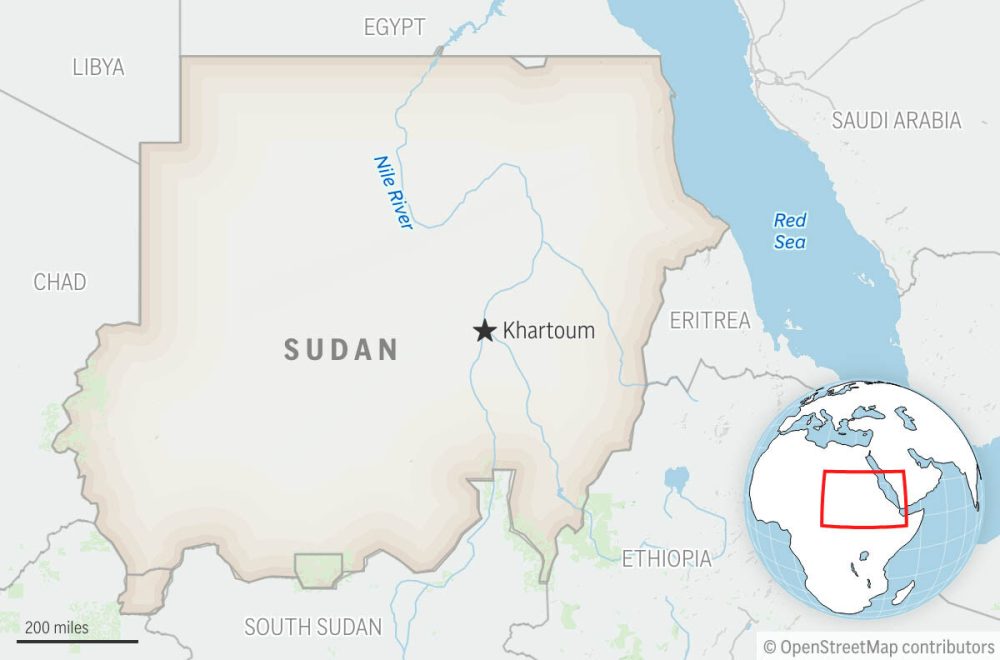

An international medical organization has documented widespread sexual violence being deployed as a strategic weapon in Sudan’s brutal civil war, according to a report released Tuesday by Doctors Without Borders.
The conflict erupted in April 2023 when tensions between Sudan’s military forces and the paramilitary Rapid Support Forces escalated into full-scale warfare across Khartoum and other regions. The International Criminal Court is now examining mass murders, group sexual assaults, and additional atrocities from this conflict as possible war crimes and crimes against humanity.
The medical aid organization, operating under the French acronym MSF, documented testimonies from women who experienced group sexual assault in both South Darfur and North Darfur provinces.
Between January 2024 and November 2025, MSF facilities provided care to no fewer than 3,396 sexual violence survivors. According to the organization, the majority of these survivors described their attackers as armed militants, with 60% of South Darfur incidents involving group perpetrators.
One survivor shared her traumatic experience in the report: “They took us to an open area. The first man raped me twice, the second once, the third four times,” according to her testimony.
MSF Emergency Coordinator Myriam Laroussi, who worked in Tawila, North Darfur, assisting medical teams following El Fasher’s capture in late 2025, addressed reporters during the report’s presentation in Nairobi, Kenya. She emphasized that the documented figures represent merely the “tip of the iceberg” and that sexual violence occurs on a much larger scale in regions where MSF cannot operate.
Gloria Endreo, an MSF midwife, reported that medical teams treat approximately 10 to 15 women each day, with the majority arriving beyond the crucial 72-hour window essential for addressing injuries, trauma, infections, and preventing unwanted pregnancies. Many victims must travel for days on foot or by camel to reach Tawila.
“As healthcare practitioners, we consider the 72 hours as a golden period because we provide a lot of care within that period,” Endreo explained.
The violence extends beyond individual victims to impact entire communities, according to Andreza Trajano, MSF’s sexual health specialist. She noted that in certain instances, young women were assaulted in front of their mothers and grandmothers. Community members now avoid essential activities like farming due to fear of sexual assault, Trajano reported.
“Will we continue to just let women’s and girls’ bodies be used as a weapon of war?” she questioned.
MSF called upon the United Nations to establish a stronger presence in Sudan to address community needs more effectively.
The catastrophic war has claimed over 40,000 lives according to United Nations data, though humanitarian organizations believe this represents a significant undercount and the actual death toll could be substantially higher.
Recent combat has concentrated in the Darfur and Kordofan regions, where fatal drone attacks occur daily. The U.N. Human Rights Office reported that more than 500 civilians died in drone strikes this year through mid-March.