
MAKURDI, Nigeria – When US foreign aid cuts threatened to leave thousands of HIV patients without access to crucial medications, volunteer health workers in Nigeria took matters into their own hands, walking from house to house to ensure people stayed alive.
Josephine Angev, a 40-year-old volunteer, spent months last year traveling through rural communities in Nigeria’s Benue State, helping HIV patients maintain access to antiretroviral drugs that keep the virus suppressed and prevent transmission to others.
Angev is among dozens of volunteer “HIV champions” who conducted personal visits to bring patients back into medical care when medication access was interrupted, serving people whose condition often carries social stigma and shame.
Many patients were unaware of the dangers of stopping their treatment. “They don’t understand the implications,” Angev explained.
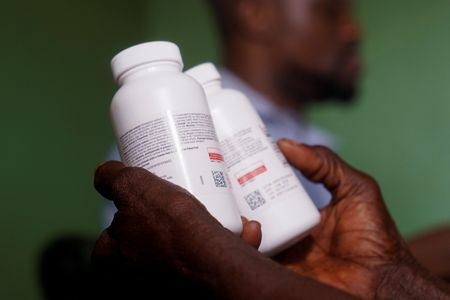
When people with HIV discontinue antiretroviral medications that control the virus, it resurges in their system. This creates risk for HIV-related health complications within months and enables virus transmission to others.
Angev made repeated visits to a 65-year-old woman who had ceased taking her medication when her supply was exhausted. The woman subsequently became sick. Through Angev’s persistent efforts, she has resumed her drug regimen and is now healthy.
This case illustrates how individuals managed during the aftermath of aid reductions that disrupted global HIV programs in 2025. Additional wealthy nations followed the US in reducing aid, forcing countries dependent on such assistance to find alternative solutions.
Nigeria responded within six weeks by announcing a $200 million health funding package that included HIV programs. The US government also granted a waiver for “life-saving” aid in February 2025, including antiretroviral medications. However, volunteers played a crucial role in filling service gaps.
Dinah Adaga oversees the volunteer network in Benue State. “If we couldn’t reach someone by phone, we went to their house – we traced the address and knocked on their door,” she explained.
A 41-year-old mother described feeling hopeless when learning about the aid reductions, worried that medications would become too expensive. Volunteers helped reconnect her with treatment in November.
“These drugs mean a lot to me. My future depends on them. I have three daughters, and they’re all doing well… They are all (HIV) negative. I’m the only one who is positive. So I believe the drugs were truly made for people like me,” she stated.
President Donald Trump’s 90-day suspension of foreign aid beginning January 20 last year created immediate consequences in Nigeria.
The US had covered approximately 90% of Nigeria’s HIV treatment expenses and supported healthcare personnel. In subsequent months, patients and advocacy organizations reported that medication distribution systems collapsed.
Patients could only obtain supplies lasting one to two weeks instead of six months from major medical facilities. In Makurdi, Benue’s capital city, all 10 treatment facilities shut down for one month, and the World Health Organization cautioned that medications might be depleted.
A network of volunteers intervened, operating as part of Afrocab, a continent-wide community support organization. They reconnected people with care facilities once they reopened with new funding sources, and addressed false information that had circulated about prayer-based “cures.” They encouraged expectant mothers to return to prenatal care to safeguard their babies.
Between June and December 2025, the volunteers brought more than 1,000 people in Benue, including 95 children under age five, back into medical care – representing everyone they estimate who had discontinued treatment in February and March.
“We have not received reports of people dying from not accessing antiretrovirals… that’s, for us, a good sign,” stated Krittayawan Boonto, UNAIDS country director in Nigeria.
Nigeria has approximately two million people living with HIV, among the world’s highest totals. Benue, a state with 4.25 million residents, has slightly over 200,000 people receiving treatment, according to Afrocab estimates.
Immediately following the aid suspension, a UNAIDS monitoring system indicated 200,000 fewer Nigerians were receiving treatment. However, by year-end 2025, data revealed 1.7 million people on treatment, a modest increase from 2024’s 1.6 million.
A US State Department representative said the number receiving medications was “very similar” at the end of 2025 compared to 2024. “The narrative suggesting widespread HIV treatment loss… is inaccurate, misleading and irresponsible,” they added.
Nigeria’s government did not respond to requests for comment.
Global health organizations and the Nigerian government have warned that HIV prevention services experienced more severe and prolonged impacts.
Bright Oniovokukor, who coordinates the Civil Society for HIV/AIDS in Nigeria, reported that people accessing drugs to prevent HIV infection decreased from 43,000 in November 2024 to below 6,000 in April 2025, while condom distribution fell by 55%.
Conditions have improved since then, but any interruption in prevention leads to increased cases, explained Dr. Oluwafunke Odunlade, HIV unit head at WHO Nigeria. Testing was also affected, meaning cases may have been overlooked: preliminary data showed that more than one million fewer people received HIV testing in 2025 compared to 2024.
Currently, the US and Nigeria are finalizing details of a health agreement for 2026-2030 that was signed in December, under which the US will provide $2.1 billion and Nigeria $3 billion.
The agreement prioritizes HIV response and commits to enrolling more patients in treatment programs, with Nigeria assuming complete funding responsibility over the next five years.
The US has indicated that only workers “formally recognised within government structures” will receive funding, and the agreement emphasizes “a strong emphasis on Christian faith-based healthcare providers,” reflecting broader US efforts to support Nigeria’s Christian population, which faces threats from Islamist violence.
In Benue, Angev will continue her volunteer work. “It can be exhausting, but we do it so lives that might have been lost are instead restored. And when you see them living better lives and truly changed, that’s when you feel happy,” she said.