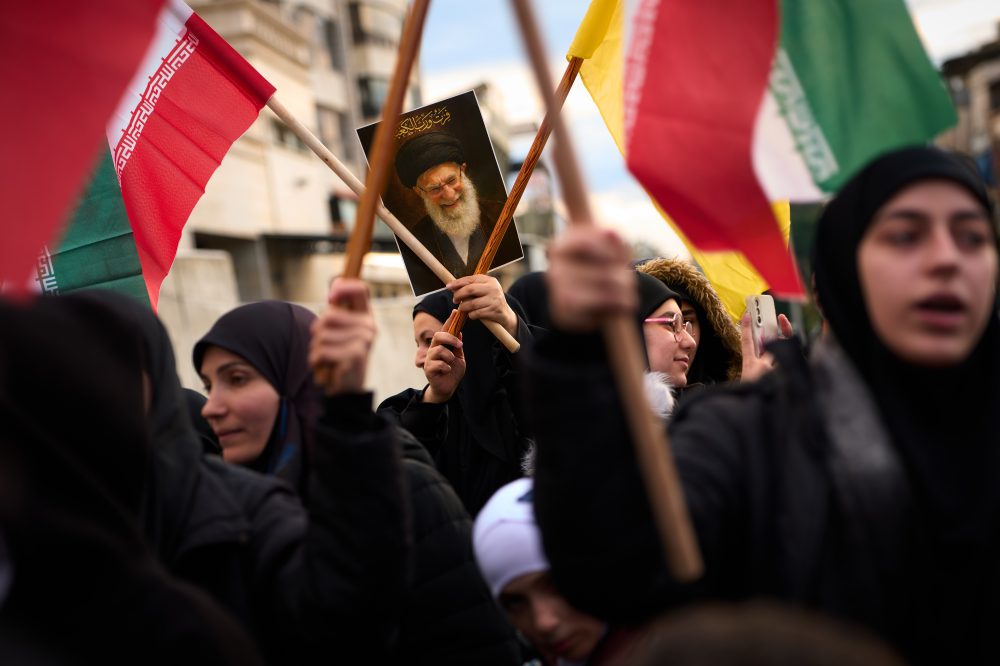

BEIRUT (AP) — Tehran has openly refused to comply with Lebanon’s demand to remove its ambassador, declaring Monday that the diplomat will remain in his position despite a weekend deadline for his departure. The defiance adds another layer of strain to a nation already caught in the middle of escalating conflict between Israel and the Iranian-supported Hezbollah militia.
Lebanese authorities had designated Ambassador Mohammad Reza Shibani as “persona non grata” in a move designed to reduce Iran’s diplomatic influence and replace him with a lower-ranking charge d’affairs. The Sunday deadline for his departure has now passed without compliance.
“Our embassy in Lebanon is active,” Iranian Foreign Ministry spokesman Esmail Baghaei told journalists. “Our ambassador, following remarks made by relevant Lebanese bodies and the conclusions reached, will continue his mission in Beirut and he is still there.”
Lebanese authorities have not yet responded to requests for comment regarding Iran’s refusal. The next steps Lebanon might take remain unclear, as does the potential impact on diplomatic relations between the two nations. Reports indicate the Iranian ambassador remains within the embassy compound, where diplomatic immunity likely protects him.
The Lebanese militant organization Hezbollah joined the broader Iran conflict by launching attacks against Israel, prompting Israeli forces to invade southern Lebanon and conduct bombing campaigns in parts of Beirut. Lebanese health authorities report more than 1,200 fatalities, with over one million people forced from their homes.
“This morning, the Iranian ambassador is drinking his coffee in Beirut and making a mockery of the ‘host’ country,” Israeli Foreign Minister Gideon Sa’ar said Monday on X. “Lebanon is a virtual country that is effectively occupied by Iran.”
Facing mounting international pressure to neutralize Hezbollah, Lebanon announced earlier this month a prohibition on military operations by both the militant group and Iran’s elite Revolutionary Guard. The ambassador’s expulsion order followed this announcement.
Hezbollah denounced the expulsion as a “reckless and reprehensible measure” and “a clear capitulation to external pressures and dictates.” The organization staged a demonstration near the Iranian embassy in support of the ambassador.
According to a Lebanese diplomatic source, Iran has applied “extreme pressure” over the past week on both the government and Parliament Speaker Nabih Berri, who maintains close political ties with Hezbollah, attempting to overturn the expulsion decision.
Beirut fears that Iran’s decision to link the Lebanese conflict to its negotiations with Washington could undermine Lebanon’s own efforts to disarm Hezbollah, the official explained, requesting anonymity due to protocol requirements.
Hezbollah maintains that Iran serves as a crucial ally, claiming the group acts as a military deterrent against Israel while delivering social services primarily to Lebanon’s Shiite Muslim population.
However, opponents argue that Hezbollah’s armed presence, which represents the strongest military force in the country, along with its autonomous decision-making, undermines Lebanese sovereignty and damages relationships with other Arab nations and Western countries.
This internal division has hampered Lebanon’s attempts to find a resolution to end the ongoing conflict.
Both President Joseph Aoun and Prime Minister Nawaf Salam, despite criticizing Israel’s invasion, have also denounced Hezbollah’s rocket attacks toward Israel in support of Iran, which triggered the current round of fighting.
Prior to the war’s outbreak, Aoun and Salam were working to establish credibility that they could successfully disarm Hezbollah through peaceful means. The militant organization had been weakened by its previous conflict with Israel, creating what many viewed as an opportunity for action. Both leaders assumed power shortly after the last war concluded in November 2024, promising to disarm Hezbollah and all non-governmental armed groups.
Internal Lebanese tensions have intensified, particularly following Foreign Minister Youssef Rajji’s announcement of the Iranian ambassador’s expulsion. Rajji is a strong Hezbollah opponent.
“Don’t play with fire because this fire will burn you, your people, and those behind you,” Mahmoud Qamati, a senior official in Hezbollah’s political bureau, said in a recent fiery address aimed at Rajji, who is a cabinet pick by the Christian Lebanese Forces party, Hezbollah’s bitter rival.