
Americans with connections to Israel are facing unprecedented travel disruptions as ongoing conflict forces the cancellation of holiday plans and family celebrations. Flight restrictions and war-related chaos have left travelers scrambling for alternative routes or abandoning trips altogether.
Lily Feinstein, a 20-year-old Dallas student at Reichman University in Herzliya, managed to return home through a grueling journey via Egypt and Greece. “My biggest fear throughout the whole war was getting stuck outside of the country rather than in the country,” said Feinstein, who is studying communications and marketing. “There was never a moment where I felt scared or something was going to happen to me. But rather, if I had to leave, what was going to happen then?”
Despite her concerns, Feinstein departed Israel as Passover approached and her family awaited her arrival for the Seder. After multiple El Al flight cancellations, she chose an unconventional route. “I had a couple of flights booked with El Al. My flights kept getting canceled,” she explained. While flights continued operating from Ben-Gurion Airport, options remained extremely limited, and each new reservation carried risks of being stranded during transit. “I just didn’t want to risk booking another flight and maybe getting stuck again. I just made the decision to go through Egypt.”
Her experience at Cairo’s airport highlighted the current travel crisis affecting Israel-bound passengers. “It was an experience for sure. I definitely wouldn’t recommend it,” Feinstein noted. “It’s not a good feeling when you don’t have the IDF behind you, and you’re alone.”
She described an airport terminal overwhelmed with Jewish travelers attempting to exit the region. “There was nobody else in the airport there. It was literally just Jews. There was not even one Egyptian person in the airport other than the staff and security, but it was chaos. Lines at the door. Their airport’s not equipped to handle what they’re doing.”
Tziril Yurman, who grew up in Israel until age 27 and currently resides on New York City’s Upper East Side working in nursing home admissions and marketing, faced her own disappointment when her March 25 El Al flight to spend Passover with elderly parents in Jerusalem was cancelled at 6 pm.
“Complete and utter devastation,” Yurman described her initial reaction. “I felt like I could not get home. I grew up there. But besides that, it’s home for every Jew, and I still feel stranded.” Having traveled without issues during COVID and following October 7, this situation felt different. “This is the first time where an Israeli, a Jew, who’s holding an Israeli passport, cannot get home.”
Instead of Jerusalem, she will attend a large Passover program in Cancun, Mexico, with her sister, joining over 1,500 participants. Security concerns weigh heavily on her mind, as tourist destinations are “definitely being looked at.” Event organizers have increased escorts and patrols, though she couldn’t confirm whether costs have risen accordingly.
California attorney and mother Melissa Cohen experienced her own devastating disruption. Cohen had spent over a year organizing what she called “the trip of a lifetime” to Israel for her middle daughter Alexa’s bat mitzvah celebration. “We actually hadn’t, I hadn’t been to Israel in over 30 years before last year for our spring break,” she shared. Having previously visited as a Houston teenager with her Jewish community and for her brother’s bar mitzvah, she felt an urgent need to return following October 7.
With Israel “being vilified for everything” in media coverage and Gaza war headlines dominating news, Cohen and her husband decided to show their daughters the country firsthand. “We wanted to take our family for the first time last year, so that we could see for ourselves, so that we could be there, so that we could support Israel, and give our tourism dollars to Israel, and give our children a sense of connection,” she explained. Their spring break trip succeeded: “All of my girls, 16, 12, and 10, fell in love with the country, and felt so connected.”
Upon departing Israel last year, they immediately began planning their bat mitzvah return. “Before we touched down on American soil, we sent a note to all of our friends saying next year in Jerusalem,” Cohen recalled. This trip was designed around joy and normalcy: Tel Aviv beaches, desert excursions, Bedouin tent experiences, and culminating with a bat mitzvah ceremony at the Western Wall. “This was really going to be the trip of a lifetime, in a way,” she said. “Being there with all of these people together, our family and friends traveling together, having one experience together, might not ever happen again.”
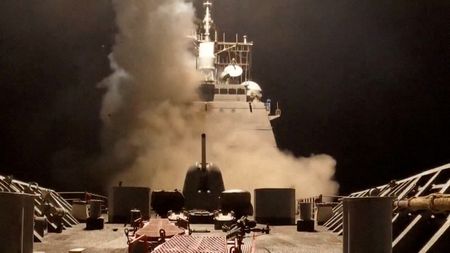
Then conflict with Iran escalated. As Israel’s military operations intensified and missiles were exchanged, authorities imposed strict limitations at Ben-Gurion airport: only one departure flight per hour to limited destinations like Athens and New York, with just 50 passengers permitted on any aircraft leaving Tel Aviv. “The vast majority of future bookings, both incoming and outgoing, has ground to a halt,” explained Mark Feldman, CEO of Ziontours Jerusalem, describing a tourism sector “paralyzed by uncertainty.” Tens of thousands of Israelis remain stranded overseas, primarily in North America and the Far East, while organized missions and group tours have virtually disappeared.
Cohen monitored these developments with increasing anxiety. “Starting with the moment we attacked Iran,” she said, “I thought, OK, well, this will be just like the 12‑day war last year. They’re even weaker than they were then, and this should be over soon, and this is good news, because this gives us time … and we’re good to go.” However, each passing day diminished that optimism. She and approximately 40 relatives and friends traveling from Houston, California, New York and Boston experienced what she describes as “whiplash”—alternating between thinking “maybe this is going to happen” and “there’s not a chance.”
Ultimately, airlines made the decision for them. As international carriers suspended Israel routes and remaining seats vanished, Cohen watched her meticulously planned celebration collapse. “They canceled flights, and then it just became very clear, I would say, seven, maybe 10 days ago, it became very clear that this was not going to happen,” she said. Passover and Easter itineraries like hers, typically booked a year in advance, “have crumbled,” Feldman observed, either because airlines ceased operations or “because they have chosen not to be in Israel during a war.”
Despite the chaos, Yurman shares Cohen’s commitment to supporting Israel. “Support the Jewish economy, the Jewish Israeli economy,” she urged. “Support any Israeli thing, anything you can, if it’s something online.” She purchases flowers and gifts for family there, encouraging visitors to buy locally—falafel, ice cream, or larger items—to help stores and tourism recover.
Financial consequences have varied. Cohen’s tour guide confirmed hotel reservations were refundable, providing rare relief. However, her attempt to save on airfare through a third-party ticket agency backfired. “That is not refundable,” she said. Rather than receiving straightforward airline credit, the company imposed “a $400 processing fee, plus a $300 commission fee on each ticket that they’re going to take.” Reflecting on the experience, she acknowledged, “In retrospect, I probably should have just gone directly through United. … I was overly confident that nothing was going to happen.”
Cohen’s miscalculation reflects broader assumptions that Israel’s skies had cleared. “Since the war last year in the summer, everything has been great,” she said. Tourism had surged, hotels required seven-night minimum stays over Passover, and prices climbed sharply as if the crisis had passed. It appeared the country had moved forward and tourists were no longer afraid to visit.
Currently, much of the travel system remains paralyzed. Feldman reports the government has provided no direct assistance, while the “one flight an hour” restriction leaves countless travelers with “no ability” to return home. Arkia, one of Israel’s domestic carriers, now operates solely from JFK to Larnaca, Cyprus, due to landing slot shortages. The US Embassy is transporting American citizens by bus to Amman’s airport in Jordan. “Short of a death certificate or a highlevel El Al frequent flier number, just getting out this week is almost a miracle,” Feldman said.
Feldman noted instances of price gouging amid the chaos: El Al’s $999 NYC economy tickets sell out immediately, with “finding space more than one or two days in advance … not possible,” while Amman’s Royal Jordanian charges $2,900 one-way to JFK, “way more than their normal fare.” Oil price spikes from the war haven’t yet impacted costs, but “will affect future ticket prices, when the system reboots,” he added.
Alternative routes used by Feinstein and others—through Egypt, Jordan, and Cyprus—have become essential lifelines. Foreign journalists enter Israel via land crossings, and Feldman reported “zero reports of any problems (other than a request for tips).”
However, these lifelines are becoming more expensive. At the Taba crossing into Egypt, fees on the Egyptian side have increased again as more stranded travelers use the route to reach connecting flights from Taba or Sharm el-Sheikh. Ynet reported on March 28 that new notices at the crossing announced that starting at March’s end, payments would only be accepted in US dollars, with costs for travelers continuing beyond the first kilometer rising to approximately $120 per person, up from the $60 fee mentioned in recent US Embassy Jerusalem travel advisories. An updated embassy alert on March 27 recommended travelers carry at least $115 cash per person, indicating how quickly this improvised exit route has become both more expensive and complicated.
Even so, the route offers little comfort. Feinstein said she “definitely felt safer in Israel” than in an Egyptian airport crowded with anxious passengers. She is now heading to Florida to meet her family and already worries about her return journey. “I don’t want to have to go through Egypt or Jordan again,” she said. “I’m hoping I don’t have to do that again.”
Yurman plans to return immediately after Passover, regardless of obstacles. “Without a question,” she said.
Cancellations have altered sacred family milestones. Rather than celebrating in Jerusalem at the Kotel, Cohen will now celebrate her daughter’s bat mitzvah at home. “I’ve spent the past week to two weeks planning a new bat mitzvah for April 11, the same day it was supposed to be,” she said. The venue has shifted from Jerusalem’s Old City to the family backyard in the Bay Area.
“Our whole family that was coming to Israel is coming here,” Cohen explained. “Everyone had tickets, they took the time off, they were planning to be away. And we’re going do it here,” she said. “…It’s going to be a very different experience. But I think it will be special, nonetheless.”
Cohen acknowledges that rising antisemitic incidents and anti-Israel sentiments have heightened fears around Jewish communal gatherings. She notes “a lot of concern” about attacks on Jews, but says, “I don’t think it’s going to change how I live my life. That’s just not how I operate daily.” Some of her friends are “very worried, very concerned,” and “don’t like going to synagogues now for bar mitzvahs” or to events with Jewish speakers. “I just can’t live that way,” she said. Yurman shared those concerns but remained determined.
The women say the war itself remains difficult for Americans to understand. As a communications student, Feinstein believes many in the US only see missiles and chaos. “They think that Israel is a scary place, with missiles all the time, and there’s no fun,” she said. Most “don’t even know you can study in English in Israel,” or that young people like her can live normal lives between sirens. She uses her modest Instagram platform to “showcase Israel in a positive light and all the fun and everything that you can do in Israel,” hoping to make it feel “not so far away and foreign.”
Yurman said the public misses the constant reality of sirens and shelter runs. “Just turn on the alarm on your phone, … just feel it with them,” she said. “You don’t have to run to a shelter, but just think that that many times people with children, old people, young people, babies have to run into shelters.”
Feinstein views the conflict with Iran in broad terms. “Without being too political, I would say that Iran has been given too much military power,” she said. In her opinion, Israel is “fighting a war on behalf of the whole world and protecting the whole world,” including Americans who may not realize they are being defended. “Iran having any sort of nuclear weapon is terrifying for the world,” she added. “Even right now, in this exact moment, it sucks that we have to deal with the consequences of war and fighting and all that. But in the long term, being able to fight this war now will protect the Jews, and honestly, everybody around the world, hopefully for forever.”
Yurman agreed the war is “definitely necessary” and overdue, calling Iran a global threat that could lead to another 9/11. “I definitely think it’s doing what it should,” she said. “It’s a legit threat, not only to Israel, but to the world.”
Cohen remains skeptical of messaging from Washington. “I don’t think Americans understand it. I don’t think anyone understands it,” she said of the war with Iran. “The messaging that is coming out of our administration is inaccurate, and untruthful, and bombastic. And so, I think it’s hard to know what’s real and what’s not.” Still, she believes the stakes could justify the campaign. “This could create a Middle East that is safer, not just for Israel and Jews, but safer for the world,” she said, while adding, “as to whether or not that is actually going to come to fruition, I don’t think anyone knows.”
Back in Israel, the impact of grounded aircraft and empty tour buses will persist long after the holidays. Feldman predicts outbound travel will recover within “one or two months” after a ceasefire, but inbound tourism will require “a solid six months” to rebound. Hotels and guides, he warns, will suffer longest, as many leave the industry “for stability, just as before.” Nothing will normalize “until the war has ended in Iran and missiles stop being fired from Lebanon,” he said. Yurman urged supporters to help accelerate that recovery: “When you end up taking a trip to Israel, you end up buying things in Israel. … Just support them.”
Feinstein is already planning beyond this Passover, balancing her activism and studies with her desire to remain rooted in Israel. Following October 7, she co-founded Mini Mitzvahs, a nonprofit that has “fed 60,000 soldiers on the front lines and visited injured soldiers in the hospital.” She and her friends have fulfilled “about 500 to 600 personal wish list requests” for wounded troops from Gaza and Lebanon and organized three barbecues on an air force base, feeding “over 100 pilots and 400 F‑16 plane technicians.”
For now, though, her focus remains personal: spending Passover with her family in Florida, then somehow returning to school without another harrowing detour. “I think anyone who wanted to get out was able to get out,” she said, noting that most students leaving Israel now are doing so for spring break, not from fear. “They’re not running away. They’re not fleeing. They just want to be with their families for this time.”
After Passover concludes, Feinstein will confront her biggest concern: repeating the exhausting journey back to Israel. “I definitely felt safer in Israel” than on the road, she said. The challenge, for now, is not the desire to be there—but finding a way to return without another “experience” she hopes never to repeat.