
BELGRADE, Serbia — European election monitors reported witnessing violent confrontations and voting violations during Sunday’s municipal elections in the EU candidate nation of Serbia.
The Congress of Local and Regional Authorities of the Council of Europe released a statement Monday describing disturbing scenes outside polling locations. “Yesterday, the delegation observed procedures inside polling stations often largely in line with provisions but was alarmed by the situation outside the premises,” the organization stated.
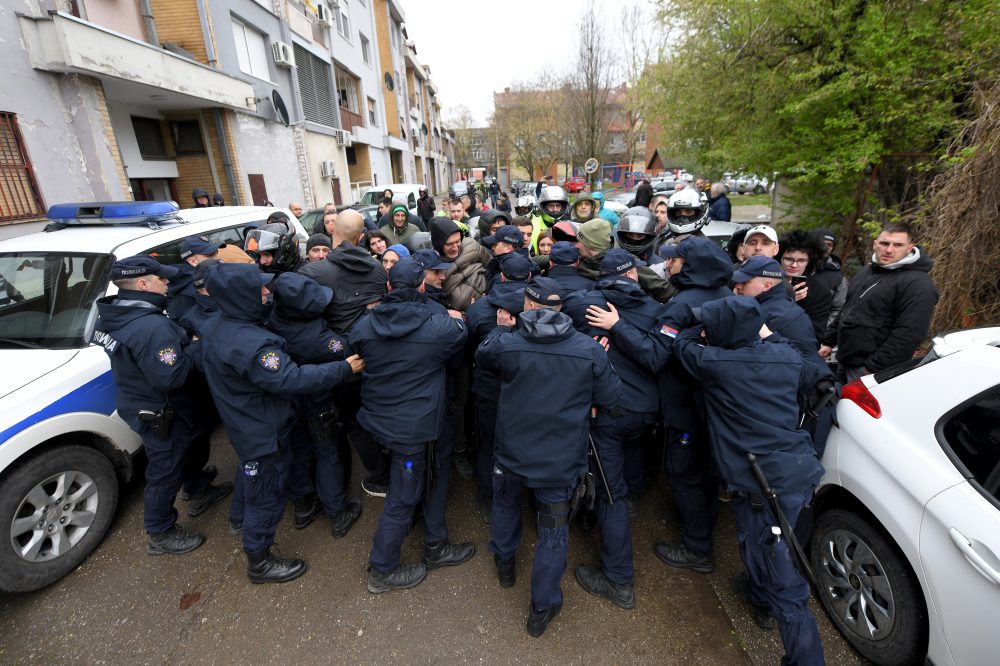
The international observers added: “Congress observers witnessed acts of violence … and in all but one of the municipalities visited, saw heated arguments and the threatening presence of large groups of people, often unidentified and sometimes masked.”
Sunday’s municipal contests across 10 Serbian communities represented a significant political benchmark for authoritarian leader Aleksandar Vucic, who has faced sustained youth-driven demonstrations for more than 12 months that have challenged his firm control over the nation.
The Serbian leader’s right-wing populist Progressive Party claimed wins in all contested municipalities, with Vucic personally spearheading the campaign effort to solidify his position following protests that began in November 2024 after a deadly railway station incident in northern Serbia.
Physical altercations broke out in no fewer than three communities during voting day. Student demonstrators and election watchers reported being assaulted by Vucic backers, including some wearing masks, while the president and his political allies blamed opposition forces for instigating the disturbances.
The European monitoring team emphasized that “Violence and coercion are unacceptable barriers to the free expression of the will of all voters” and declared “No voter should feel threatened when exercising his or her democratic right.”
Beyond the physical confrontations, observers documented “a number of irregularities, related to breaches of voting secrecy and voters taking photos of their ballot papers” which they called “highly worrying.” The pre-election period was characterized as “highly polarized and focused on national priorities and actors.”
Vucic has encountered persistent criticism for restricting democratic institutions throughout his decade-plus tenure. Despite officially pursuing European Union membership, Serbia’s accession talks have stagnated as the president has cultivated relationships with both Russia and China.
National presidential and legislative elections are anticipated in Serbia within the coming year or early next year. Political analysts suggest Vucic’s popularity may have declined, though the large-scale protests have diminished in recent months.
Domestic Serbian election monitors documented numerous violent episodes and confrontations in several municipalities, along with procedural violations throughout Sunday’s voting. Video footage captured physical clashes and showed an armed individual in one location.
The independent Center for Research, Transparency and Accountability declared that “this can hardly be called an election.”
The organization documented violations of ballot privacy and coordinated voting schemes, plus recurring physical altercations involving government workers. Multiple individuals sustained injuries and riot police were deployed to several communities.
CRTA representative Jovana Djurbabic told The Associated Press: “The whole atmosphere was marked with high intensity of tensions, violence, pressures. I would not call these elections free, they are not free at all.”
Vucic has also claimed “logistical support” was provided to his political opponents by a neighboring nation during the election. The Serbian president has previously and repeatedly accused Croatia of backing the student movement that organized protests against his government.
Croatian President Zoran Milanovic announced Monday he was canceling a scheduled May regional summit because hosting Vucic had become impossible given his recent statements.
Milanovic’s office stated that Vucic’s “political statements and actions … inflict damage on relations between the states and jeopardize peace and stability in southeastern Europe.”
Croatian-Serbian diplomatic ties have remained tense since Belgrade supported a 1991-95 Croatian Serb uprising against the nation’s separation from the Serbian-dominated former Yugoslavia. The conflict resulted in more than 10,000 deaths.