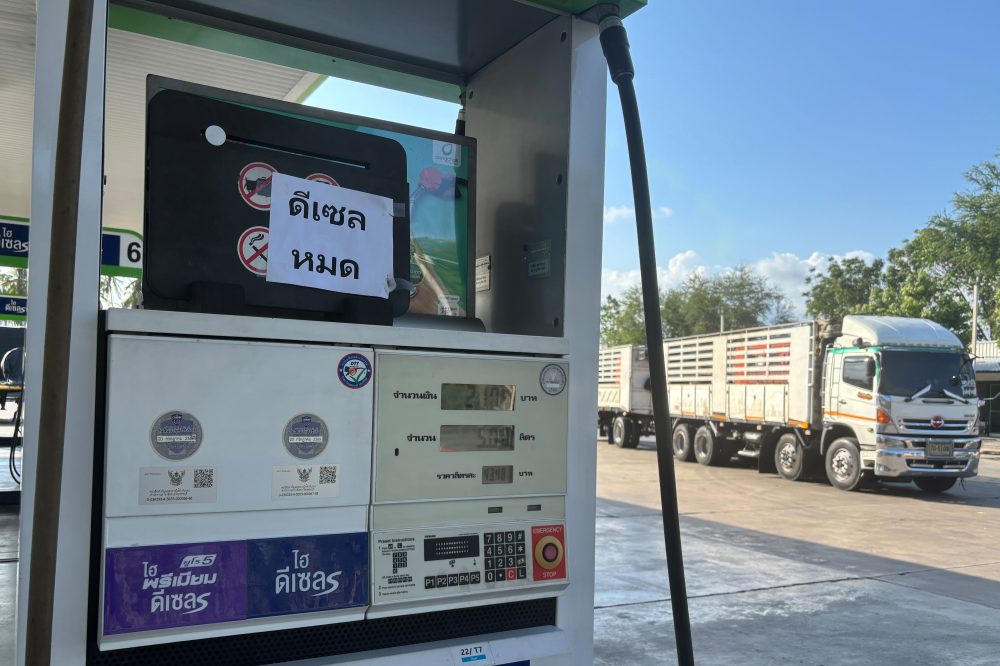

Countries throughout Asia are racing to secure Russian petroleum as energy shortages worsen following a month-long conflict involving Iran that has eliminated approximately 20% of global oil production.
The majority of petroleum from the largely closed Strait of Hormuz was destined for Asian markets, which have been most severely affected by recent energy disruptions. This past weekend, Iranian-supported Houthi forces joined the fighting, creating additional threats to maritime transport.
To help stabilize worldwide petroleum supplies, the United States has temporarily lifted restrictions on Russian oil shipments currently in transit — initially for India, then expanding to all countries.
Asian demand is climbing while Russia earns billions in revenue. However, energy experts warn Moscow’s ability to increase crude oil exports is limited, as the country is already shipping at levels near its historical maximum.
Furthermore, Russia’s ongoing four-year invasion of Ukraine and recent Ukrainian drone strikes against Russian energy infrastructure are damaging its export capacity.
According to Muyu Xu, a senior petroleum analyst at global trade data company Kpler, the window of opportunity for Asian nations facing energy shortages is brief and narrowing.
“The real problem is how much cargo is still available in this market,” she stated.
Prior to the Iranian conflict, China, India and Turkey served as the primary buyers of Russian petroleum, ignoring Western sanctions in exchange for significant price reductions.
American and European Union restrictions were designed to economically weaken Russia following its Ukrainian invasion.
However, the U.S. sanction exemption triggered intense activity among energy-starved Southeast Asian nations. This month, the Philippines, Indonesia, Thailand and Vietnam expressed renewed interest in Russian petroleum.
Manila, a longtime American partner, purchased Russian crude for the first time in five years — just days after declaring an energy crisis.
Additional countries may follow suit, but they will face competition with China and India for approximately 126 million barrels currently being shipped, according to Kpler data.
India alone requires between 5.5 million and 6 million barrels daily.
Energy analysts believe Russia is unlikely to dramatically increase exports. March shipments reached about 3.8 million barrels daily, higher than February’s 3.2 million but still below the mid-2023 maximum of 3.9 million.
Xu explained that the current situation demonstrates how rapidly international politics can change — often influenced by a small number of leaders — making long-term planning difficult for nations. She noted that “right now, really the priority is to ensure your supply and all the other considerations are secondary.”
Southeast Asian nations competing for the decreasing amount of Russian petroleum at sea likely hope the United States will extend its sanction waiver past April, Xu noted.
These countries have few alternatives, and more reliable sources — such as petroleum from the United States, South America or West Africa — are too distant for Asia, meaning deliveries would take months to arrive. This situation leaves developing nations struggling to meet their needs.
Philippine airlines are considering fuel restrictions. Emergency financial assistance is being distributed to those most affected, including transportation workers. Most days see gas station lines extending for blocks.
The country of 117 million people serves as an early indicator for Southeast Asia.
Before the conflict, the Philippines depended on the Middle East for nearly 97% of its maritime oil imports, based on Kpler information. The energy emergency declaration represents a “new frontier” in scope and severity, according to Kairos Dela Cruz from the Institute for Climate and Sustainable Cities.
“It will definitely drive people down even further in the poverty line,” he explained.
To address energy shortages, the Philippines imported crude petroleum, marking the first such purchase since 2021. Other Southeast Asian countries are considering similar measures.
Vietnamese Prime Minister Pham Minh Chinh’s March 23 trip to Russia included petroleum and natural gas cooperation agreements, along with nuclear energy partnerships, as increasing diesel costs begin affecting Vietnam’s manufacturing industry.
Indonesian officials stated “all countries are possible” partners as they build up reserves. This includes Russia and the small oil-rich nation of Brunei, according to Indonesian Energy Minister Bahlil Lahadalia.
“When you don’t have any other options, all options are on the table,” explained Putra Adhiguna from the Jakarta-based Energy Shift Institute.
While considering similar actions, Thailand is not as urgently affected as the Philippines, said Jitsai Santaputra from energy consulting firm The Lantau Group in Bangkok. She added that Thailand will likely observe developments as long as impacts remain manageable.
However, effects are expanding.
Thai fuel prices increased on March 26 after price controls and subsidies ended, with most fuels rising approximately 20 U.S. cents per liter and diesel climbing roughly 18% — affecting industry and transportation while threatening to increase costs of other products.
Disregarding Western sanctions, China and India were significant Russian petroleum buyers before the U.S. and Israel attacked Iran on February 28.
India gained an extra benefit by having U.S. restrictions on Russian petroleum lifted about one week before other nations.
“They took that chance and snapped up quite many cargoes,” Xu said. When U.S. President Donald Trump permitted other countries to purchase, she explained it was “already a bit too late because most of the cargo had already been ordered” by China and India.
Despite this advantage, Kpler data indicates India’s Russian petroleum imports likely cannot compensate for lost Middle Eastern supplies.
Indian imports from Russia increased to approximately 1.9 million barrels daily in March, up from about 1 million barrels before the Iranian conflict. Prior to that fighting, India imported around 2.6 million barrels per day from Middle Eastern sources.
This may prove insufficient with approaching peak summer energy demands — driven by travel, farming and shipping requirements — particularly as emergency reserves decline, according to Duttatreya Das from research organization Ember. He noted that short-term purchases cover only several days of supply, making any shortage difficult to address without additional shipments from the United States or Canada.
“I don’t know how the shortfall will be met,” he said.
Despite ranking as the fifth-largest petroleum producer and promoting renewable energy, China maintains strong oil demand from its 1.4 billion citizens. However, the country has also accumulated massive oil reserves.
China possesses approximately 1.2 billion barrels of domestic crude stockpiles, Kpler estimates. This represents nearly four months of total maritime crude imports, providing protection against short-term war impacts.
China obtained about 13% of its maritime crude from Iran, according to Kpler, and roughly 20% from Russia, reported financial data company LSEG.
With substantial reserves and financial resources, analysts suggest some Russian shipments intended for China could be redirected to more desperate nations.
“Russia emerges as a major winner from the entire conflict,” said Sam Reynolds from the U.S.-based Institute for Energy Economics and Financial Analysis. Given the energy crisis, delivery speed and temporarily reduced prices, he stated Asia has “a much larger incentive to import Russian oil.”
“We can argue whether there’s a moral dilemma there, but I think it’s a reflection of the fact that countries are going to do whatever they need to to protect their energy security,” he concluded.