
Two major Asian nations have forged a stronger alliance to secure their energy futures as Middle Eastern conflicts create uncertainty in global oil and gas markets.
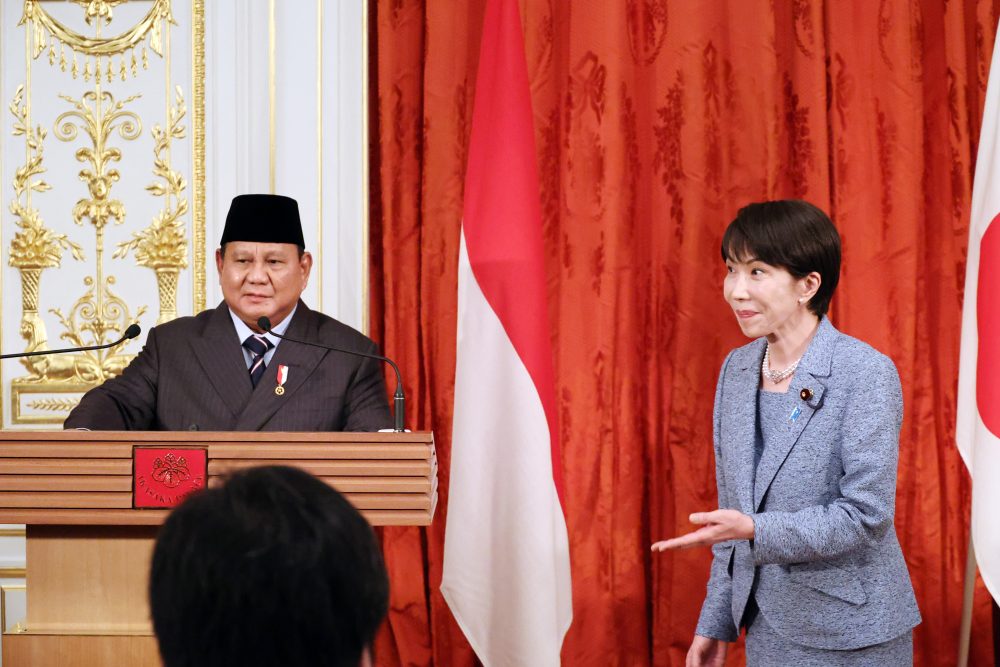
Japanese Prime Minister Sanae Takaichi and Indonesian President Prabowo Subianto announced Tuesday their commitment to expanded energy cooperation during talks held in Tokyo.
“In the wake of the Iran situation, the importance of resources and energy security is being recognized globally,” Takaichi stated during their joint press conference.
While specific terms of their new partnership remain confidential, both leaders revealed they had formalized an economic collaboration agreement earlier this month focusing on essential minerals and nuclear technology.
The March 15 memorandum outlines plans for constructing a nuclear facility, potentially located in Indonesia’s West Kalimantan region, utilizing Japanese technical knowledge and possible financing from development institutions, according to Japan’s Ministry of Economy, Trade and Industry documentation.
President Prabowo expressed Indonesia’s interest in Japanese assistance with processing valuable minerals including rare earth materials, along with expanding renewable energy and nuclear power capabilities.
Despite the devastating 2011 Fukushima nuclear accident, Japan has renewed its commitment to atomic energy while pursuing partnerships across Southeast Asia to achieve carbon-neutral goals. Meanwhile, Indonesia seeks nuclear solutions to address rising energy consumption.
Indonesian officials previously announced intentions to construct two compact nuclear reactors on a southern island by 2034, with formal cooperation proposals already received from Canadian and Russian governments.
The nations also committed to strengthening supply chain stability, particularly for liquefied natural gas, according to Japan’s Foreign Ministry statement.
Japan ranks among the world’s largest LNG importers, with Indonesia supplying approximately 5% of its needs. The resource-limited island nation relies on the Middle East for over 90% of its oil imports and has begun tapping strategic reserves this month to maintain market stability while seeking alternative suppliers.