
BELGRADE, Serbia (AP) — European Union officials on Tuesday condemned reports of violent incidents that occurred during Serbia’s local elections over the weekend, demanding that President Aleksandar Vucic’s government prosecute those responsible for the attacks.
The EU’s diplomatic mission in Serbia — a nation seeking to join the 27-member European bloc — referenced observations from international election monitors who documented violence and voting violations during Sunday’s elections.
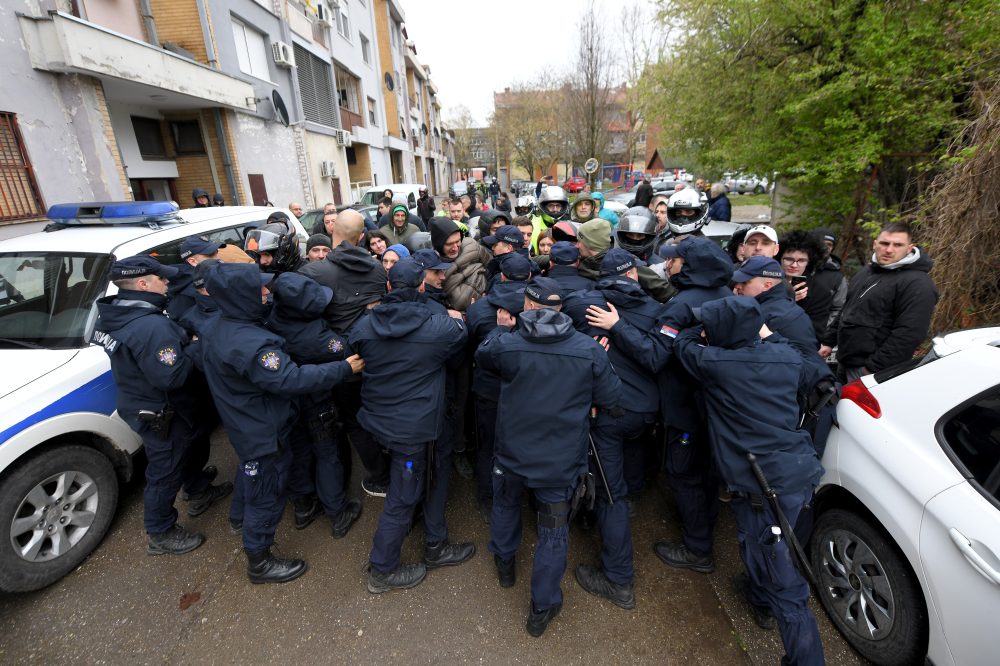
“We regret the number of reported irregularities and incidents during the elections, the uneven playing field, and note with concern reports of acts of violence against independent observers, citizens, representatives of political parties and media workers,” the EU said in a statement.
“We call on the competent national authorities to ensure swift and transparent follow up and to hold perpetrators accountable,” the statement added.
Sunday’s elections took place across 10 Serbian municipalities and served as a crucial test for the authoritarian leader Vucic, who has faced over a year of youth-driven demonstrations that have weakened his stronghold on authority.
Vucic proclaimed success for his right-wing populist Serbian Progressive Party across all 10 local governments. The Serbian leader personally spearheaded the campaign effort, attempting to solidify his leadership following protests that began in November 2024 after a deadly train station incident in northern Serbia.
International election monitors from the Congress of Local and Regional Authorities of the Council of Europe stated Monday that although the actual voting process followed proper procedures, they were “alarmed” by conditions surrounding the polling locations.
Observers “saw heated arguments and the threatening presence of large groups of people, often unidentified and sometimes masked,” the group said.
The Associated Press asked the Serbian government to comment on the allegations but did not have a reply yet.
Multiple individuals sustained injuries during confrontations in at least three municipalities, including students and media personnel, who reported being assaulted by organized pro-government groups. Vucic has blamed his political opposition for inciting the disorder.
Although Vucic officially supports Serbia’s European Union membership bid, critics accuse him of restricting democratic rights while cultivating strong ties with Russia and China.
The student-organized demonstrations following the Novi Sad railway station roof collapse that claimed 16 lives have presented the most significant threat to Vucic’s leadership in more than ten years. Government officials have since intensified their crackdown on opposition voices, with hundreds of individuals arrested or reporting job losses.
On Tuesday, law enforcement officers searched the University of Belgrade campus, claiming they were investigating a student’s death from the previous week. University staff told local news outlets they believed the search was connected to ongoing government pressure following the student-led demonstrations.
Serbia is anticipated to hold presidential and parliamentary elections either later this year or in 2025. Political analysts believe Vucic’s popularity has declined, though large-scale protests have diminished in recent months.