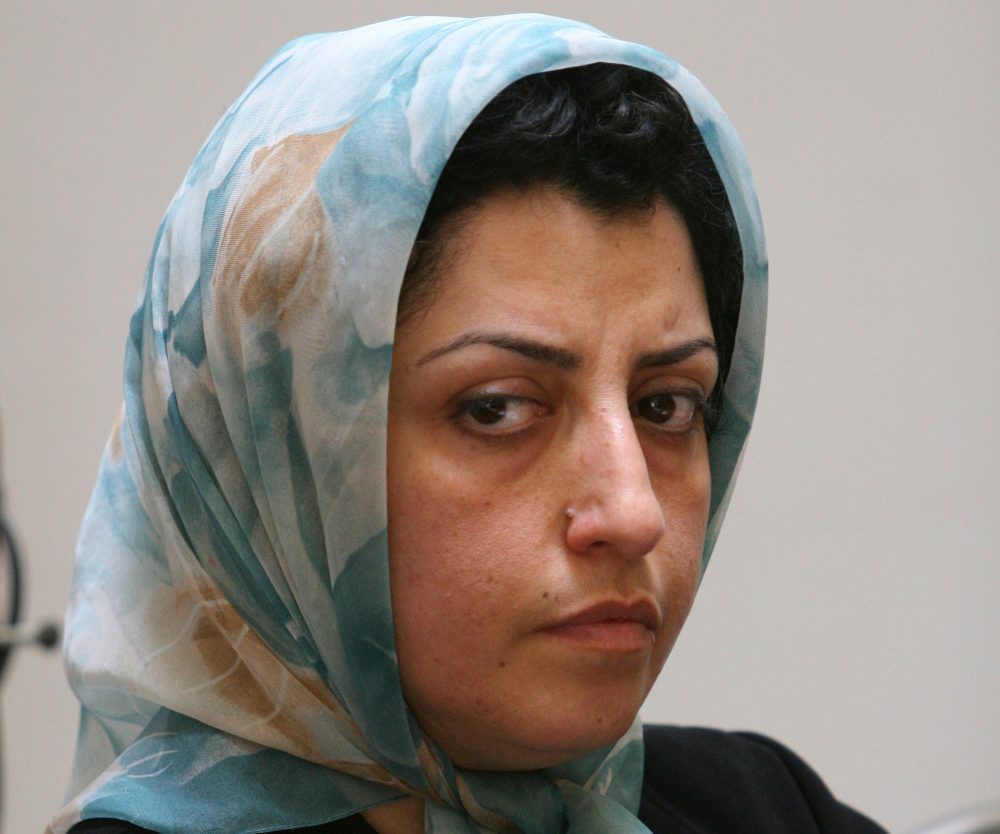

Nobel Peace Prize winner Narges Mohammadi was rushed to a hospital in northwestern Iran following a severe medical emergency while serving time in prison, according to her foundation’s announcement Friday.
The 53-year-old human rights attorney experienced two episodes where she completely lost consciousness along with a serious heart crisis, the Narges Mohammadi Foundation reported.
The medical emergency occurred Friday at Zanjan prison in northwestern Iran, where Mohammadi collapsed twice before being transported for emergency care. Her legal team revealed she likely experienced a heart attack in late March, with lawyers noting during a subsequent visit that she appeared frail, significantly underweight, and required nursing assistance to walk.
According to the foundation, the hospital transport happened following “140 days of systematic medical neglect” dating back to her December 12 arrest.
“This transfer was done as an unavoidable necessity after prison doctors determined her condition could not be managed on-site, despite standing medical recommendations that she be treated by her specialized team in Tehran,” the foundation stated.
For weeks, Mohammadi’s relatives had pushed for her relocation to proper medical facilities.
The foundation, citing family members, described Friday’s hospital transfer in Zanjan as “a desperate, ‘last-minute’ action that may be too late to address her critical needs.”
Her legal team disclosed that on March 24, fellow prisoners discovered Mohammadi unconscious in her cell. During a lawyer visit days afterward, she recounted how a prison clinic physician informed her she had likely suffered a heart attack. Since that incident, she has experienced ongoing chest discomfort and difficulty breathing.
Chirinne Ardakani, her French legal representative, previously stated that prison officials refused Mohammadi’s requests for hospital treatment or visits to her heart specialist. Prison staff monitored the entire brief meeting with her attorneys.
Mohammadi, who received the Nobel Peace Prize in 2023 while incarcerated, was taken into custody in December while visiting Mashhad in eastern Iran and received an additional seven-year prison term.
Her relatives reported in February that her physical condition was declining behind bars, partly due to violence she suffered during her December arrest. They described how several men struck and kicked her in the side, head, and neck areas. The Nobel committee issued a February statement condemning the “ongoing life-threatening mistreatment” of Mohammadi.
“In recent days, her blood pressure has experienced severe fluctuations, going very high and low, and today she suddenly fainted due to a sudden drop in blood pressure,” attorney Mostafa Nili wrote on X.
Initially, prison medical staff administered medication to Mohammadi, but she declined hospital transport, insisting on seeing her heart doctor. Hours later, she lost consciousness again. At that point, a neurologist demanded her immediate hospitalization, Nili explained.
Medical personnel rushed Mohammadi to the hospital where she was placed in cardiac intensive care, “but her blood pressure continues to fluctuate severely,” Nili documented. He noted that a Zanjan medical official suggested suspending her sentence for one month to allow treatment, but the local prosecutor forwarded the decision to Tehran authorities.
Before her December 12 detention, Mohammadi was already completing a 13-year, nine-month sentence on charges of conspiring against state security and spreading anti-government propaganda, though she had been granted medical furlough since late 2024 due to health issues.
Throughout her temporary release, Mohammadi continued her advocacy work through public demonstrations and international media interviews, including protests outside Tehran’s infamous Evin Prison where she had been detained.
In February, a Revolutionary Court in Mashhad imposed the additional seven-year sentence on Mohammadi. These courts routinely deliver judgments with minimal or no chance for defendants to challenge the accusations.
According to her supporters, Mohammadi experienced several heart attacks during previous imprisonments before requiring emergency surgical intervention in 2022.
In 2023, Mohammadi joined four other individuals who received the Nobel Peace Prize while imprisoned, further highlighting her advocacy for the widespread demonstrations that erupted across Iran following Mahsa Amini’s death. Amini died after being detained by Iran’s morality police for allegedly violating mandatory headscarf regulations.
Her Nobel selection infuriated Iran’s conservative Shiite leadership, which extended her prison sentence and later deployed guards to physically assault her and other inmates who were protesting within Evin Prison.
Despite these challenges, Mohammadi continued her resistance, including calling for boycotts of the 2024 election that brought President Masoud Pezeshkian to power. She has consistently maintained that Iran’s government will eventually fall due to public pressure.