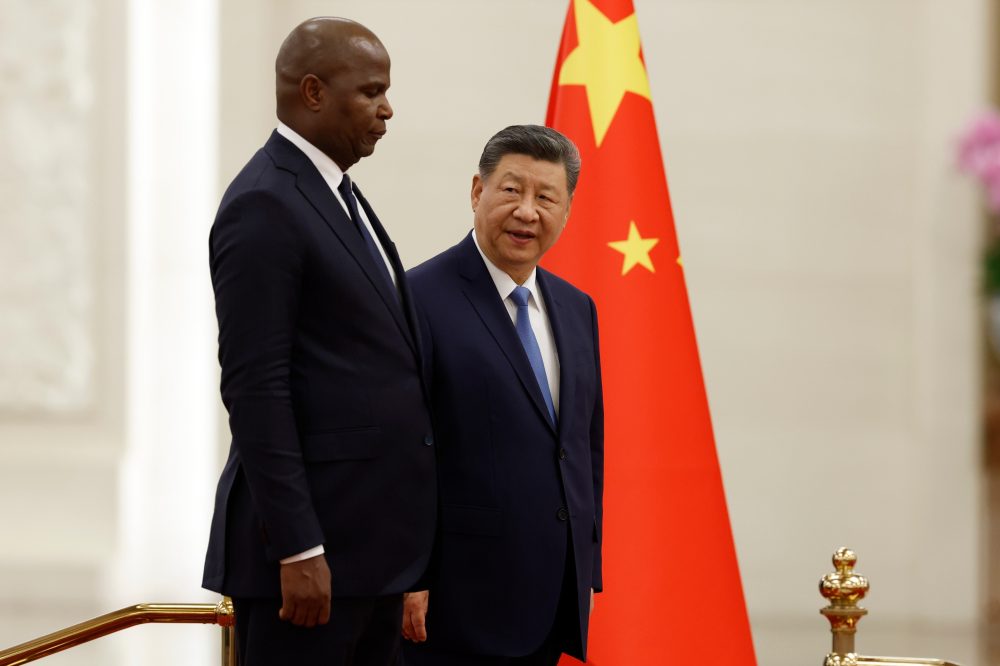

CAPE TOWN, South Africa — China launched a sweeping trade initiative Friday that eliminates import duties for nearly every African nation, creating a stark contrast with the United States’ move toward increased protectionism under President Donald Trump.
The new Chinese policy extends duty-free market access to Africa’s 20 most significant economies for the next two years, encompassing nations like South Africa, Egypt, Nigeria, Algeria and Kenya. Combined with existing agreements covering 33 smaller African nations, this expansion means 53 of Africa’s 54 countries now qualify for tariff-free trade privileges with China.
Only Eswatini remains excluded from the arrangement due to its unique status as Africa’s sole nation maintaining official diplomatic relations with Taiwan.
China’s Customs Tariff Commission of the State Council announced the policy would foster mutual economic growth between China and African nations. State media reported that a 24-metric-ton apple shipment from South Africa, processed through Shenzhen customs early Friday morning, marked the first cargo to benefit from the zero-tariff framework.
The Commerce Ministry highlighted that the policy would particularly advantage African exports such as cocoa from Ivory Coast and Ghana, coffee and avocados from Kenya, and citrus fruits plus wine from South Africa — products that previously faced import duties ranging from 8% to 30%, according to official Chinese media.
Ivory Coast dominates global cocoa production, and together with Ghana, the two nations supply over half the world’s cocoa. South Africa ranks among the world’s leading citrus exporters.
Multiple major African economies indicated they would seek alternative markets for goods previously destined for the United States after the Trump administration implemented reciprocal tariffs last year — reaching 30% for South Africa and exceeding 40% for other African countries.
“South Africa looks forward to working with China in a friendly, pragmatic and flexible manner,” South African Trade Minister Parks Tau stated in February during bilateral discussions in China.
Although the U.S. Supreme Court ruled Trump’s comprehensive global tariffs unconstitutional in February, the Republican president announced his administration possessed “very powerful alternatives” and quickly implemented temporary import taxes as replacements.
China already serves as Africa’s primary trading partner. The continent houses 1.5 billion people and is projected to nearly double to 2.5 billion by 2050, according to United Nations estimates, representing more than 25% of the global population at that time.
While China promoted its tariff-free agreement as encouraging mutual development, a significant trade imbalance exists between China and Africa, with African nations owing Beijing substantial debt obligations.
Trade between China and Africa hit a record $348 billion in 2025, with China’s exports to Africa rising approximately 25% to $225 billion, while Chinese imports from Africa increased only about 5% to $123 billion, expanding Africa’s trade deficit.
China has historically purchased raw materials from Africa while exporting manufactured products in return. Thierry Pairault, a China-Africa specialist at France’s National Center for Scientific Research, noted that while the new framework might benefit agricultural exports, most African raw material exports including oil and minerals already enjoyed tariff-free access to Chinese markets.
“(Chinese leader) Xi Jinping is positioning China as the antithesis of Western protectionism. This gesture is intended to appeal to both African public opinion and global markets,” Pairault wrote in an analysis published by the China Global South Project, which examines China’s relationships with developing nations.
However, Pairault observed that the policy “only applies where it costs (China) almost nothing.”