
Restaurant operators in Dubai are facing significant challenges obtaining specialty ingredients as the ongoing conflict in Iran enters its second month, forcing many establishments to reduce their offerings and adapt their business models.
Shaw Lash, who operates the Mexican eatery Lila Molino, typically imports avocados and tomatillos – small green fruits essential to Central American cooking – to create her vibrant, spicy menu items. However, the Iranian conflict has disrupted supply chains and increased transportation costs throughout the Gulf region.
The restaurant owner has implemented several cost-cutting measures including reducing staff hours, purchasing smaller ingredient quantities, and scaling back overall production. She’s currently emphasizing her popular take-home fajita packages and retail product line while waiting for conditions to improve.
“The reality is cargo has gotten more expensive, gas prices have gone up, the Strait of Hormuz is still blocked,” Lash explained during an interview at her establishment located in Dubai’s popular Alserkal Avenue cultural district. “This is really creating a problem for us as far as our supply.”
Restaurants throughout the cosmopolitan city are modifying their menus in response, with many switching to regional ingredients or reducing the number of dishes they offer. Local government officials have implemented economic assistance programs, reduced various fees, and launched promotional campaigns to encourage dining out.
The situation poses significant challenges for the United Arab Emirates’ restaurant industry, which market research firm Mordor Intelligence valued at $9.5 billion in the previous year. Prior to the conflict, analysts had projected 20% growth reaching $11.3 billion for this year.
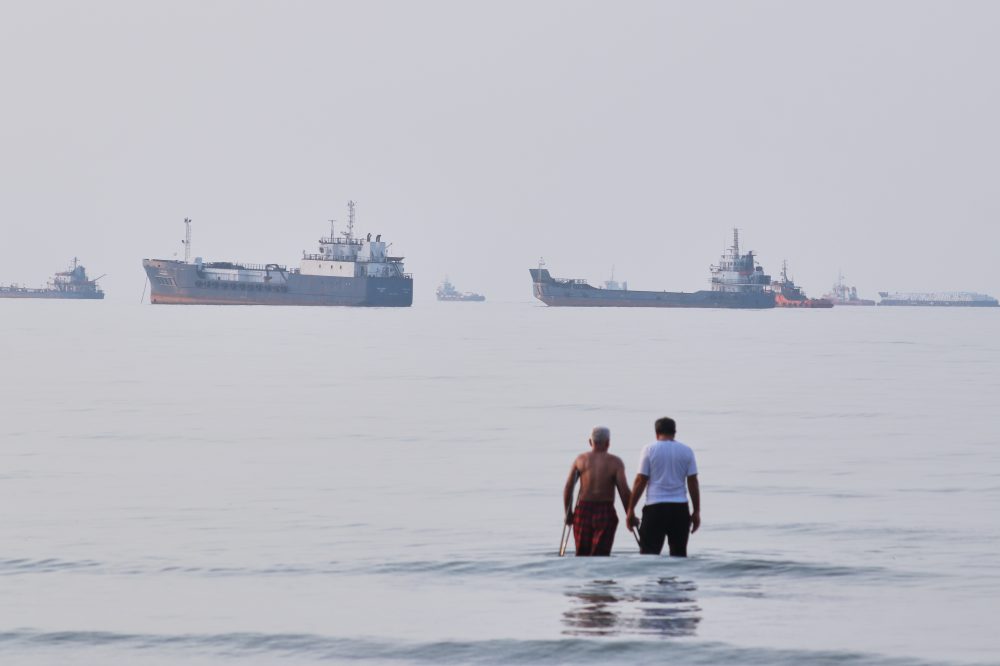
However, the war may alter these projections. Following strikes by the United States and Israel against Iran in late February, the Gulf region experienced weeks of Iranian missile and drone attacks. While a ceasefire took effect on April 8, the Strait of Hormuz – the UAE’s only maritime access point – remains essentially blocked. The country relies on imports for over 80% of its food supply.
The conflict has reduced tourist arrivals, decreased shopping activity in upscale retail centers, affected luxury vehicle sales, and disrupted restaurants – a cornerstone of Dubai’s thriving hospitality sector built on its reputation for luxury and security.
Research conducted by Juniper Strategy and the Global Restaurant Investment Forum revealed that UAE food service businesses are experiencing an average 27% decline in customer demand compared to last year. Supply costs have increased by an average of 13%, according to their report based on surveys of 30 industry executives between April 1-8, representing approximately 400 restaurants.
The study found that establishments in tourist areas and business districts face the most pressure, while neighborhood restaurants have shown better resilience and some have even grown.
The Dubai Department of Economy and Tourism acknowledged in a statement that some businesses are navigating a “period of disrupted footfall” while finding innovative solutions.
“Across the city, restaurants, chefs and platforms are adapting through new formats, targeted offers and community-led initiatives,” the department stated in materials provided to Reuters.
Kelvin Cheung, head chef at the fusion establishment Jun’s Dubai, described the difficulty and expense of finding alternative transportation methods for delicate specialty items like Norwegian scallops or specific Japanese seafood products.
“Your only option was then to fly air freight, which would increase our costs by about thirty, thirty-five percent,” Cheung noted, explaining that he has shifted to featuring local fish varieties on his menu.
Air transportation costs have surged up to 70% on certain routes as the conflict has disrupted Gulf oil shipments and driven up aviation fuel prices. Flight operations to and from the UAE are gradually returning to normal levels.
“Tourism has taken a huge hit,” Cheung observed. “That massive influx of tourists who provide that extra boost of economy, of spend, across all industries is what we’re missing now.”
Cheung has launched a six-course dining experience priced at 225 dirhams ($61) featuring locally sourced ingredients. His restaurant has maintained its full workforce. Additional establishments plan to offer discounted fixed-price meals during May’s Restaurant Week promotion.
Food industry expert Courtney Brandt, who has worked in the region since 2007, noted that the conflict has intensified existing problems including high operational costs, dependence on tourism, and supply chain vulnerabilities. She pointed out that the market was already oversaturated before the war began.
“We were due for a correction,” Brandt explained, suggesting that international restaurant chains with celebrity chef partnerships and stronger financial backing might weather the crisis better, though rising costs remain challenging despite local government support. “Difficult decisions have to be made if businesses are going to survive.”
Several upscale dining establishments, including venues in the luxury Atlantis resort complexes on Dubai’s famous artificial palm-shaped island, have temporarily closed for renovations without specifically citing the war as a factor. Meanwhile, new restaurants continue opening, including the Italian restaurant Siena in Dubai in early April and Isabel Mayfair in the UAE capital of Abu Dhabi.
Both Lash and Cheung remain optimistic about market recovery.
“Over the last few weeks, especially with the ceasefire and schools resuming, we’ve started to see a positive uplift in business and overall movement across the city. There is a sense of normalcy slowly returning,” Cheung said.