
In the capital city of Ashgabat, 38-year-old entrepreneur Azat Seyitmuhammedov operates his e-commerce business Wabrum from a well-lit, modern workspace – a scene that would seem ordinary in most parts of the world but represents something revolutionary in Turkmenistan, long considered among the planet’s most closed-off nations.
“This may sound normal in Europe or the United States, but for Turkmenistan this is new,” the father of six explained. “E-commerce here is still in its very early stages, and we consider ourselves pioneers.”
Seyitmuhammedov’s venture, launched nearly ten years ago, represents part of an emerging trend of sophisticated private enterprises taking root in this desert nation of Central Asia, which shares borders with Iran and Afghanistan. His delivery teams distribute primarily Turkish-manufactured clothing and footwear from their warehouse facility to customers throughout the former Soviet territory.
Reuters journalists were recently granted unusual permission to travel independently throughout Turkmenistan and report without restrictions on a nation where digital innovations like online retail are gaining acceptance, even as President Serdar Berdymukhamedov and his administration maintain strict political oversight.
Following its break from Soviet rule in 1991, the country’s first leader Saparmurat Niyazov – known as “Turkmenbashi” meaning leader of the Turkmen people – proclaimed the nation “permanently neutral” and implemented severely restrictive entry policies that remain largely effective more than twenty years following Niyazov’s passing.
Government representatives justify their nation’s isolation by pointing to regional security challenges, emphasizing the importance of defending against extremist threats and narcotics trafficking from nearby Afghanistan.
During Niyazov’s reign, an extensive personality cult developed around the leader, while Ashgabat underwent massive reconstruction as a marble monument funded by the country’s enormous natural gas deposits – ranked fourth globally in reserves. Succeeding administrations have maintained this basic framework with minimal alterations.
However, since President Serdar Berdymukhamedov assumed power from his father Gurbanguly Berdymukhamedov in 2022, observers have noted indicators of gradual warming in policies.
The nation, which official data indicates has approximately 7.7 million residents, has expressed intentions to streamline visa procedures, pursue World Trade Organization membership, and expand economic opportunities beyond state-controlled sectors.
The current president has expanded international relationships, undertaking foreign visits more frequently than his predecessors.
Several international diplomatic representatives in Ashgabat informed Reuters they perceive gradual transformation, though progress remains slow, influenced by generational shifts within the governing class.
A Western diplomatic source stationed in Turkmenistan noted that segments of the leadership show interest in implementing reforms, with individual liberties experiencing modest improvements in recent years.
Nevertheless, Turkmenistan continues presenting obstacles for international business investment, operating dual official and unofficial currency exchange systems while maintaining unclear political processes.
Turkish companies comprise the majority of foreign businesses operating locally. Cultural connections and substantial Turkmen communities in Turkey have resulted in widespread Turkish language use among younger generations.
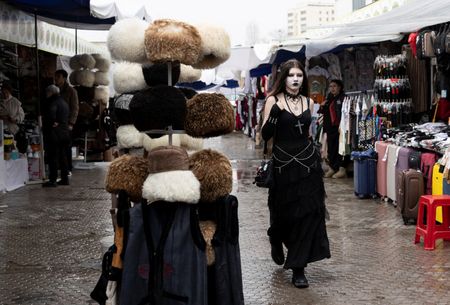
Beyond political spheres, Turkmen society is experiencing transformation, particularly in digital spaces, despite relatively limited internet penetration rates.
Internet access remains slow and heavily restricted, which authorities claim is essential to prevent radical ideological content that has influenced other Central Asian countries through online platforms.
Despite restrictions, social media platforms including Instagram and TikTok, officially blocked but reachable through virtual private networks, have grown increasingly popular recently.
Within Ashgabat’s upscale retail centers, young people film dance performances on mobile devices for TikTok while friends in mandatory red traditional-style uniforms worn by female university students provide encouragement.
Social media entrepreneur Enejan Velmuradova began using Instagram in 2020 to market her travel business, organizing international vacations for affluent Turkmen clients to European and Southeast Asian destinations.
Speaking from her expansive downtown office, adorned with social media awards and international souvenirs, Velmuradova expressed satisfaction with her country’s gradual opening.
“As a resident of Turkmenistan, I am also very happy that stereotypes are finally being broken, (the idea) that Turkmenistan is closed,” she stated.
At a local athletic facility in Ashgabat, instructor Muhammet Bayramgulyyev conducts breakdancing lessons for teenagers during his free time.
Bayramgulyyev explained to Reuters that this street dance form, which originated in New York, existed primarily as an underground movement in Turkmenistan during his younger years.
“It was around the year 2000. Back then, we didn’t have breakdancers. We only watched it on cassette tapes, on television — we saw how it was done and wanted to do it ourselves.”
Currently, he reports that his classes in a newly constructed studio have waiting lists and breakdancing has achieved mainstream acceptance.
“We want our guys, our Turkmen athletes, to compete — for example, at Asian championships, world championships. And in the future, God willing, at the Olympics too,” he said.