
Commercial activity between Colombia and Ecuador has ground to a virtual halt as both South American nations enacted steep tariffs this week, according to business organizations operating along their shared border.
Ecuador’s President Daniel Noboa implemented a sweeping 100% tariff that became effective Friday, though his administration has not disclosed which specific goods will be subject to the levy. Meanwhile, Colombia’s government under President Gustavo Petro officially established varying tariff rates of 35%, 50%, and 75% on approximately 190 Ecuadorian products Thursday.
President Noboa has defended these measures, which were initially introduced at reduced rates in February, citing Colombia’s trade surplus and alleging that the neighboring country has failed to address drug trafficking concerns along their 586-kilometer shared frontier. President Petro has consistently denied these claims.
Colombia’s trade minister stated Thursday that the nation’s response represents a measured approach designed to minimize the economic impact of Ecuador’s tariffs on Colombian businesses.
“It’s a whim, the very inflated egos of the two presidents have kept escalating this,” Carlos Bastidas, the head of the Heavy Transport Association of Carchi in Ecuador, told Reuters. “The movement of goods is minimal, but from next week this drops to zero.”
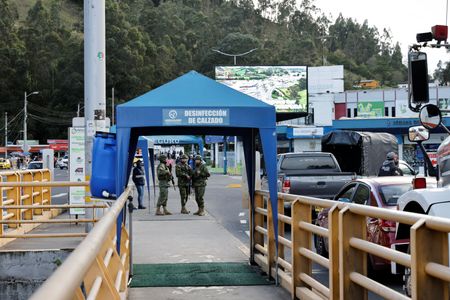
Bastidas noted that the Rumichaca International Bridge typically sees up to 150 trucks awaiting passage, but Friday’s count showed only about five vehicles present.
“This is generating unemployment and people have to look for alternatives. There are many crossings here, so what are people going to do? Turn to smuggling,” he warned.
Ecuador’s administration did not provide immediate comment when contacted.
Government officials in Ecuador have claimed that the original tariffs succeeded in creating the country’s first-ever positive trade balance with Colombia, generating a combined $62.9 million surplus during February and March compared to a $146 million deficit during the same period in 2024.
“The measure practically shuts down exports,” said Ivan Florez, head of the Ipiales Chamber of Commerce on the Colombian side of the border. “What you see along the border is very different from the view in Quito and Bogota.”
In response to the dispute, Colombia has halted electricity exports to Ecuador, which also relies heavily on its northern neighbor for medical supplies and agricultural chemicals.