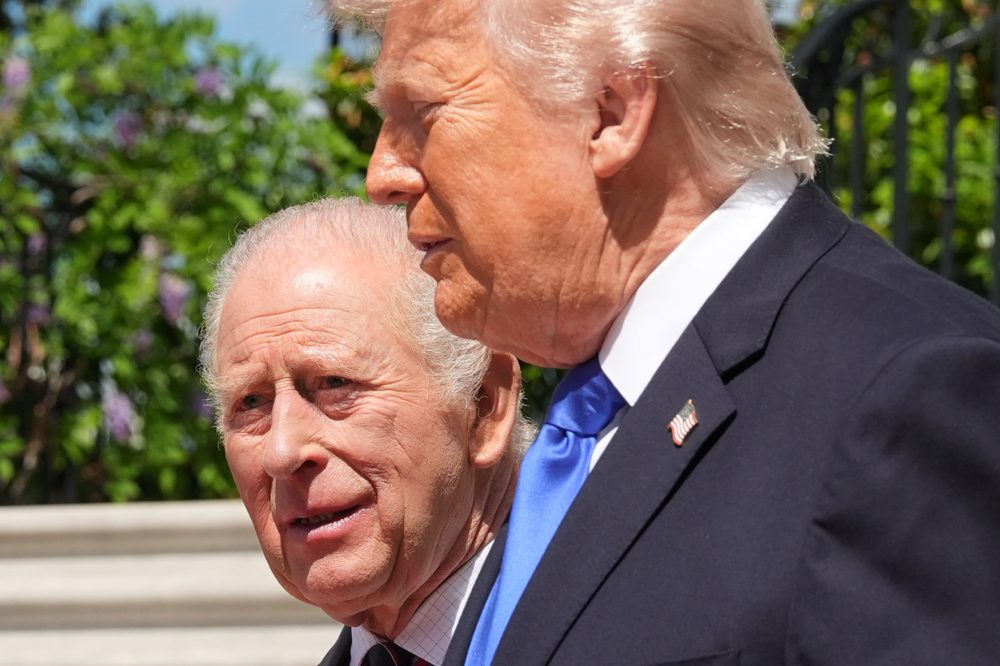

LONDON (AP) — King Charles III earned widespread acclaim for his diplomatic skills during a recent state visit to the United States, where President Donald Trump expressed admiration for the British monarch and even removed certain tariffs on Scotch whisky in the royal couple’s honor.
The monarch demonstrated exceptional diplomatic finesse throughout the trip, balancing compliments for his American hosts with carefully worded critiques. However, experts question whether this royal charm offensive will significantly improve the strained relationship between the two nations, particularly given ongoing disagreements about the Iran conflict.
“In the short term probably yes, in the long term probably no,” said Kristofer Allerfeldt, a University of Exeter professor specializing in American history. But he said Charles had “definitely clawed back some of the prestige of the monarchy” in his homeland with his assured performance.
“He’s done us proud,” Allerfeldt said.
The carefully orchestrated four-day journey to Washington, New York and Virginia by Charles and Queen Camilla represented a strategic diplomatic mission requested by the British government. Scheduled to coincide with America’s 250th anniversary celebrations, the visit aimed to repair tensions between the UK government and Trump’s administration.
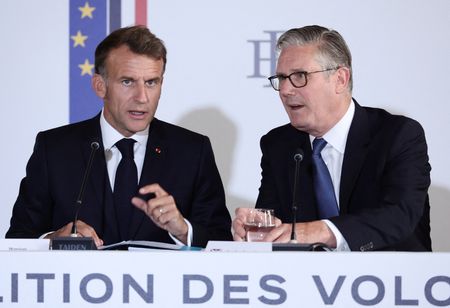
Trump has repeatedly criticized Prime Minister Keir Starmer — previously someone he commended — for refusing to participate in American military operations against Iran, calling Britain’s leader “not Winston Churchill,” referencing the wartime leader who first described the “special relationship” between the two nations.
This disagreement reflects broader friction between Trump and NATO partners, whom he has labeled “cowards” and “useless” for declining to join Iranian military action.
Despite these political tensions, Trump’s appreciation for British royalty appears unchanged and may have grown stronger following his historic second state visit to the UK last September.
Several UK opposition figures had urged cancellation of the king’s reciprocal visit, fearing the president might create embarrassing situations for the monarch.
Ultimately, the visit proceeded smoothly with considerable warmth and minimal uncomfortable incidents — although Trump occasionally broke protocol by discussing private royal conversations publicly.
During Tuesday’s formal state dinner, Trump declared that “Charles agrees with me, even more than I do” regarding preventing Iran from acquiring nuclear weapons.
Trump also claimed that “if that were up to him,” the king “would have followed the suggestions we made with respect to Ukraine.”
Buckingham Palace seemed untroubled by Trump’s Iran remarks, stating that “the king is naturally mindful of his government’s longstanding and well-known position on the prevention of nuclear proliferation.”
However, clear differences emerged on Ukraine policy. Britain has strongly supported Kyiv against Russian aggression, and during his Congressional address, the king emphasized the necessity of “unyielding resolve” in backing Ukraine.
This represented one of multiple indirect challenges to the “America first” administration’s policies during his speech, which served as the visit’s highlight.
Speaking with royal restraint and refined pronunciation, Charles emphasized NATO’s vital importance, the necessity of limiting executive authority, climate change dangers, and the value of “vibrant, diverse and free societies.” He also mentioned his pride in Royal Navy service, despite Trump’s previous disparagement of that force.
“It’s difficult to imagine he could have gone much further in what he said and what he didn’t say,” historian Anthony Seldon told The Guardian. “He judged it incredibly well: very brave, very smart, very clever.”
Allerfeldt highlighted the “extraordinary” bipartisan response to the Congressional speech, which generated numerous standing ovations.
“Apart from the section on the natural world and the environment, both Republicans and Democrats stood up and applauded,” he said.
At the state banquet’s more relaxed atmosphere, the king even generated laughter by referencing British forces burning the White House in 1814.
The visit succeeded despite controversy surrounding the king’s brother Andrew Mountbatten-Windsor, formerly Prince Andrew, who lost his royal title and public role amid police investigation of his Jeffrey Epstein connections. He maintains his innocence of any wrongdoing.
Epstein survivors had requested meetings with the king, which didn’t occur, though he addressed the matter indirectly during his Congressional remarks, noting the importance of supporting “victims of some of the ills that, so tragically, exist in both our societies today.”
Andrew Lownie, who wrote “Entitled,” a biography of the former Prince Andrew, called the speech “the best defense of the monarchy in years.”
Following the royal departure, Trump announced tariff reductions on certain Scotch products “in honor of the King and Queen of the United Kingdom.”
Buckingham Palace welcomed this decision, stating the king “sends his sincere gratitude for a decision that will make an important difference to the British whisky industry and the livelihoods it supports.”
Trump praised the king as “a phenomenal representative” for Britain before returning to familiar criticism of Starmer.
Speaking to Sky News, the president said Charles is “a much different person than your prime minister.
“Your prime minister has to learn to deal the way he deals, and he’ll do a lot better,” he said.