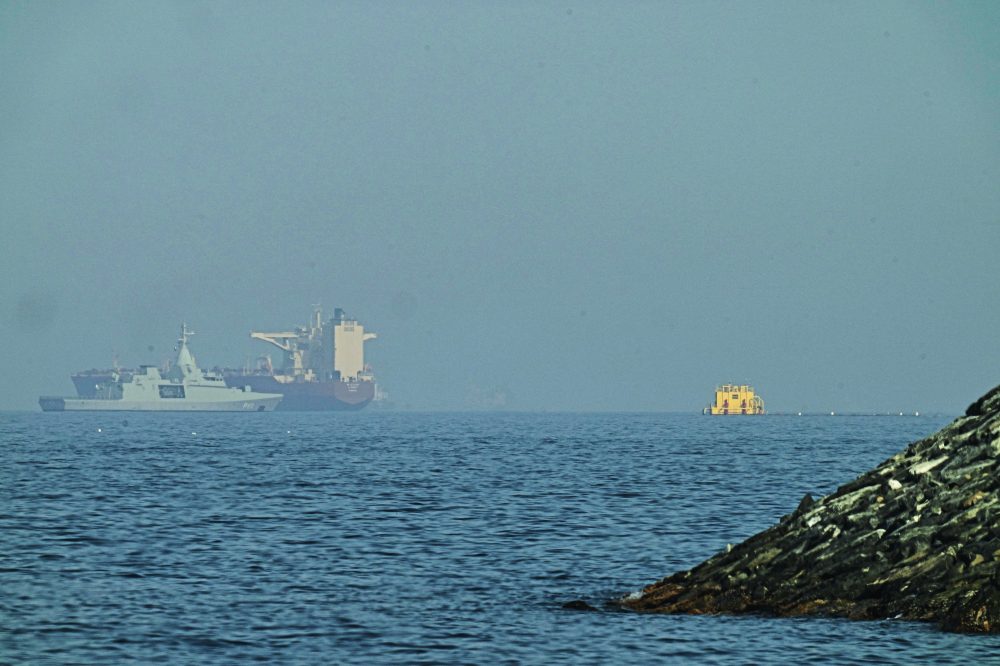

The Treasury Department’s Office of Foreign Assets Control issued a warning Friday that maritime companies may face penalties for compensating Iran to secure safe transit through the Strait of Hormuz.
This latest advisory intensifies the ongoing conflict between Washington and Tehran regarding authority over the strategically vital waterway.
During peaceful periods, roughly 20% of global oil and natural gas commerce flows through this narrow passage at the entrance to the Persian Gulf.
Following the commencement of hostilities between the U.S. and Israel on February 28, Iran essentially shut down the strait to regular maritime traffic by launching attacks and issuing threats against vessels. Subsequently, Iranian authorities began permitting certain ships to navigate through alternative pathways nearer to Iranian coastal waters, sometimes imposing charges for this service.
This fee collection system has become the target of Washington’s sanctions alert.
According to OFAC, the payment requirements may encompass not just monetary transfers but also “digital assets, offsets, informal swaps, or other in-kind payments,” including charitable contributions and payments made at Iranian diplomatic missions.
“OFAC is issuing this alert to warn U.S. and non-U.S. persons about the sanctions risks of making these payments to, or soliciting guarantees from, the Iranian regime for safe passage. These risks exist regardless of payment method,” the agency stated.
Washington responded to Iran’s blockade by implementing its own naval embargo on April 13, blocking Iranian oil tankers from departing and cutting off crucial petroleum revenues that Iran requires to support its struggling economy.
U.S. Central Command reported that 45 commercial vessels have been ordered to reverse course since the blockade’s implementation.
The sanctions warning emerged as President Donald Trump quickly dismissed Iran’s most recent proposal to resolve the conflict between the nations.
“They want to make a deal, I’m not satisfied with it, so we’ll see what happens,” Trump stated Friday from the White House. He declined to specify what aspects he found inadequate but voiced displeasure with Iranian leadership.
“It’s a very disjointed leadership,” Trump remarked. “They all want to make a deal, but they’re all messed up.”
Iran’s official IRNA news service reported that Iranian officials delivered their proposal to Pakistani mediators Thursday evening.
The fragile three-week truce between Washington and Tehran continues to hold, despite mutual allegations of violations from both sides. The crisis is placing mounting strain on the worldwide economy, pushing up costs and creating shortages of fuel and other petroleum-related goods.
Diplomatic discussions have continued via telephone after Trump canceled his representatives’ planned visit to Pakistan last week, the president confirmed. Trump recently proposed a new initiative to reopen the essential shipping channel that America’s Gulf allies depend on for oil and gas exports.
Iranian Foreign Minister Abbas Araghchi has updated numerous regional counterparts about his country’s efforts to end the conflict, according to his social media posts. He also conducted discussions Friday with European Union foreign policy chief Kaja Kallas, who maintains communication with the EU’s Gulf partners.
Fu Cong, China’s United Nations ambassador, said Friday that preserving the ceasefire represents “the most urgent issue” while bringing the parties together for sincere negotiations “to make sure that the ground is laid for reopening of Hormuz.”
Foreign Minister Wang Yi “has been on the phone almost constantly” with officials from all parties, Fu noted, emphasizing that China backs Pakistan’s mediation efforts between the conflicting sides.
Fu emphasized that the fundamental cause of the enormous hardship in Iran and surrounding nations, along with increasing global economic instability, particularly affecting developing countries, “is the illegitimate war by the U.S. and Israel.”