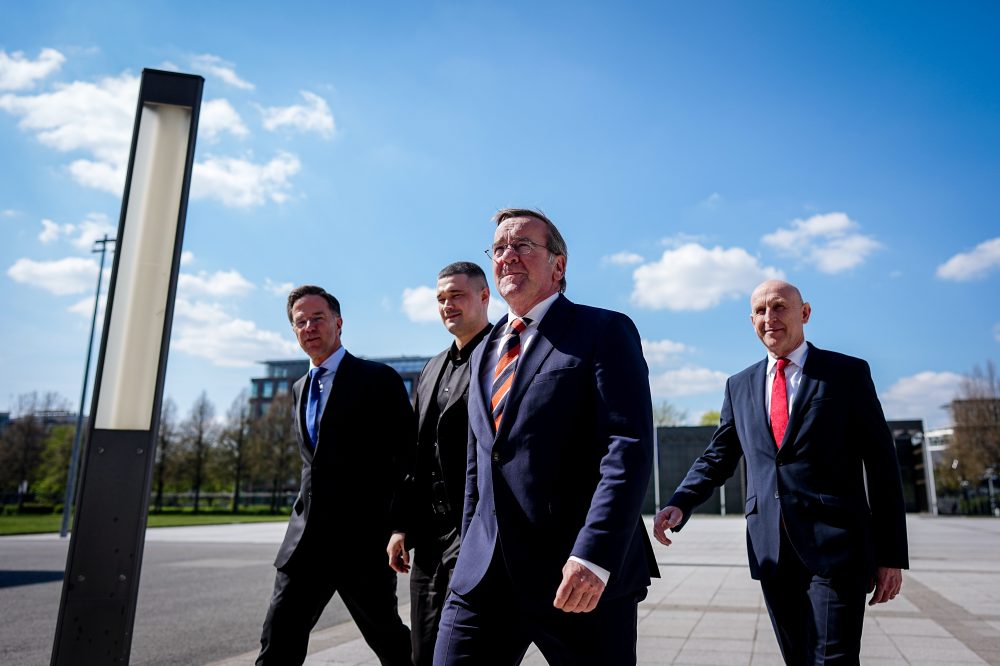

Germany’s defense chief responded calmly Saturday to Pentagon plans for withdrawing approximately 5,000 American military personnel from German soil, characterizing the reduction as anticipated while highlighting the reciprocal advantages of America’s long-established European military presence.
Defense Minister Boris Pistorius acknowledged that European nations recognize the need to shoulder greater responsibility for their own defense within NATO, where Germany serves as a crucial ally. He noted that America also benefits from maintaining forces on the continent.
“The presence of American soldiers in Europe, and especially in Germany, is in our interest and in the interest of the U.S.,” Pistorius told the German news agency dpa.
The defense minister characterized the withdrawal as “foreseeable,” seemingly referencing President Donald Trump’s earlier warnings about reducing Germany’s troop levels.
However, the planned reductions over the coming six to 12 months signal worsening tensions between the United States and Germany, along with other European partners. Trump has voiced frustration with NATO members’ reluctance to support his Israeli-backed campaign against Iran and has publicly criticized leaders including German Chancellor Friedrich Merz, Spanish Prime Minister Pedro Sánchez, and British Prime Minister Keir Starmer.
Merz recently condemned the Iranian conflict, stating the U.S. faces “humiliation” from Iranian leadership while criticizing Washington’s strategic approach.
Trump has also accused European Union nations of failing to honor trade agreements and announced intentions to raise tariffs on EU-manufactured cars and trucks to 25% next week, a policy that would significantly impact Germany’s automotive industry.
At least one European Union legislator denounced the tariff increase as “unacceptable” and accused Trump of violating another American trade commitment.
The proposed withdrawal would remove roughly one-seventh of the 36,000 American service members currently based in Germany, representing a substantial but not devastating reduction. Pentagon officials provided limited information about which units or missions would be impacted.
Across Europe, between 80,000 and 100,000 U.S. military personnel are typically deployed, with numbers fluctuating based on operations, training exercises, and rotation schedules. American forces in Europe expanded following Russia’s comprehensive invasion of Ukraine in February 2022. NATO allies including Germany have anticipated for more than a year that these additional troops would be among the first to depart.
In his statement to dpa, Pistorius said, “We Europeans must take on more responsibility for our security,” while highlighting Germany’s recent initiatives to strengthen its military capabilities, speed up equipment purchases, and improve infrastructure.
NATO representative Allison Hart posted on X Saturday that the alliance was “working with the U.S. to understand the details of their decision on force posture in Germany.”
“This adjustment underscores the need for Europe to continue to invest more in defense and take on a greater share of the responsibility for our shared security,” she stated, referencing advancement toward NATO’s goal of member nations spending 5% of their economic output on defense.
Pentagon representative Sean Parnell explained in a statement that the “decision follows a thorough review of the Department’s force posture in Europe and is in recognition of theater requirements and conditions on the ground.”
Germany houses multiple American military installations, including headquarters for U.S. European and Africa commands, Ramstein Air Base, and a medical facility in Landstuhl that treated wounded personnel from Afghanistan and Iraq conflicts. The country also hosts U.S. nuclear weapons.
The unpredictable American president has contemplated reducing military presence in Germany for years and has criticized NATO for declining to support Washington in the conflict that commenced February 28 with combined U.S.-Israeli attacks on Iran.
NATO allies have prepared for potential American troop reductions since Trump assumed office, as Washington indicated that Europe must increasingly manage its own security matters, including Ukraine’s defense.