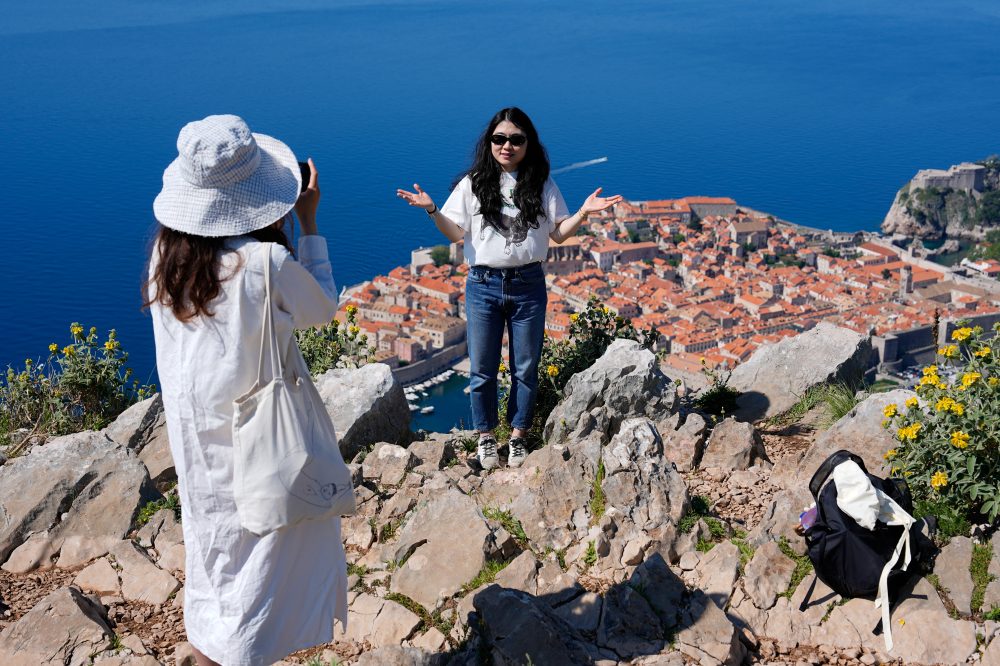

DUBROVNIK, Croatia — Though summer remains months away, the historic streets of Dubrovnik are already bustling with international visitors. However, this early tourism boost comes with concerns about what lies ahead for the season.
Rising fuel costs and Middle East conflicts have created uncertainty for the travel industry, particularly affecting Dubrovnik, which welcomes millions of visitors each year to Croatia’s premier Adriatic coast destination.
The economic implications are significant for Croatia, as tourism represents a vital revenue source that relies heavily on international guests.
Despite increased visitor numbers in Dubrovnik, local authorities caution that nothing is certain. Escalating fuel costs and tensions in the Persian Gulf region may increase flight prices and reduce tourist arrivals during peak season.
Miro Draskovic, who heads the Dubrovnik Tourist Board, observed that while American visitors continue arriving in strong numbers, Australian tourists — traditionally ranking among the city’s top 10 visitor groups — are now “facing difficulties traveling toward Europe.”
“The situation for sure is very, very difficult, and we are following what’s happening every day,” he told The Associated Press.
Current indicators appear positive. During Easter, Dubrovnik’s airport saw visitor numbers climb 13% compared to the previous year. The city’s vibrant atmosphere and tourist boats circulating the harbor demonstrate its enduring popularity.
This UNESCO World Heritage site attracts visitors with its medieval architecture, coastal setting, and historic churches and palaces enclosed within ancient stone fortifications. The city gained additional fame after being featured as a filming location for the popular television series “Game of Thrones.”
Dubrovnik faces particular vulnerability to fuel price increases due to its position at Croatia’s southern Adriatic coastline. Approximately 80% of the city’s tourists arrive by aircraft.
Marina Ruso Mileusnic, representing the local airport that connects to roughly 70 international airports, stated “we are very cautious about the upcoming season.”
Forecasts for coming months have been mixed.
In early April, International Energy Agency chief Fatih Birol warned in an AP interview that Europe has only weeks of jet fuel reserves remaining and could experience its worst energy crisis in history.
However, this week European Union Transport Commissioner Apostolos Tzitzikostas stated there is “no actual evidence” of shortages across the 27-member bloc, encouraging people to make vacation plans without worry.
Singapore business owner Ramon Padiernos shares this optimism. Middle East tensions forced him to switch from his preferred Emirates and Qatar Airways to Turkish Airlines, but he still reached Dubrovnik successfully.
“We feel the impact maybe of oil prices but I think everybody just goes on with their lives and enjoy their holidays,” he said. “I think it is best for the world to see the lighter side of it, rather than focusing on the issues that we cannot control.”
Beyond tourism effects, the energy situation has pushed Croatia’s inflation rate to 5.8% in April, among the European Union’s highest levels.
Last year, Croatia welcomed nearly 22 million tourist arrivals. Of approximately 110 million overnight stays in 2025, Dubrovnik accounted for 4.28 million, according to national tourism statistics.
Draskovic expressed optimism that conditions will normalize soon. Meanwhile, he said, “we can only work on day to day basis to get the best possible season we can.”