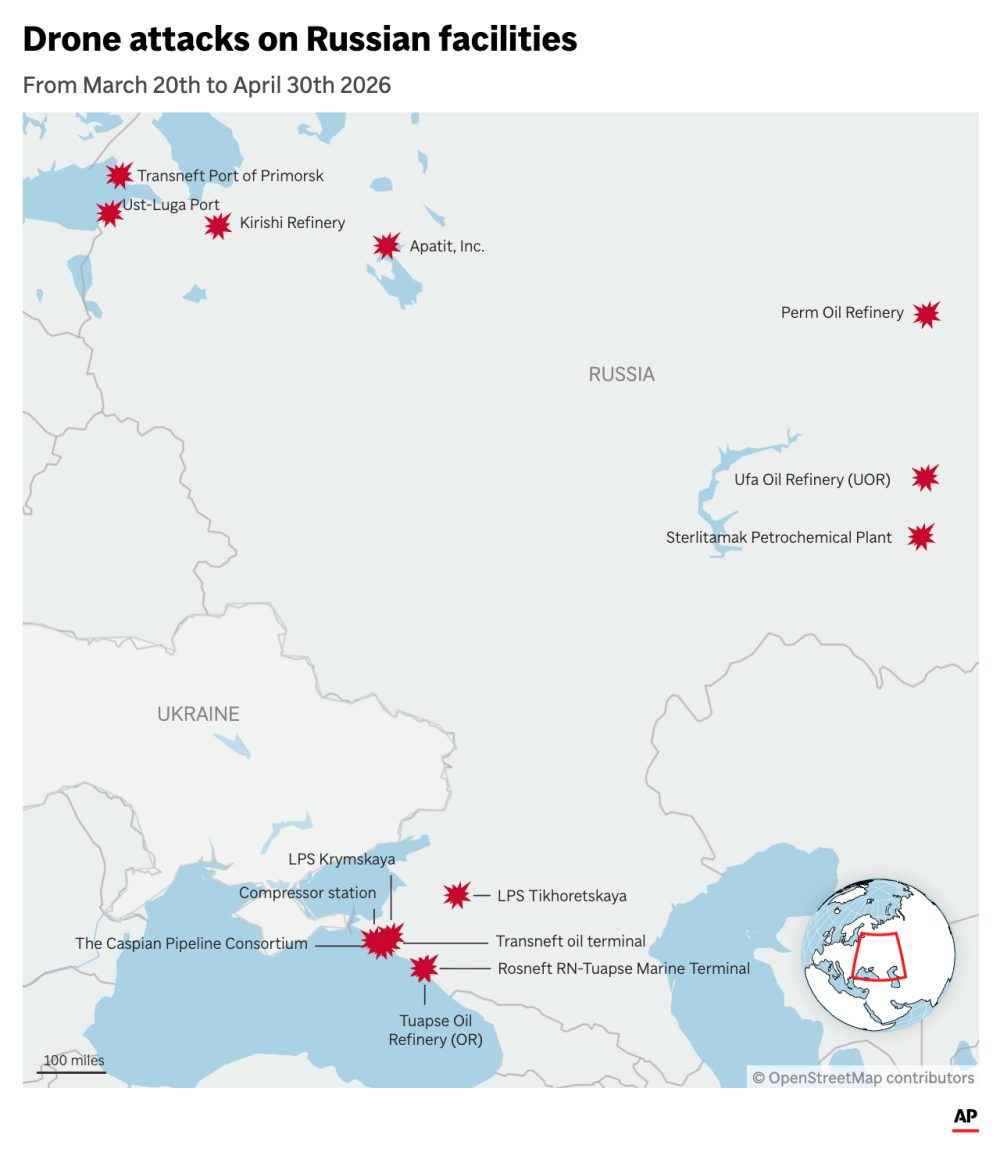

Ukrainian forces are deploying unmanned aircraft to target petroleum infrastructure deep within Russian territory, creating massive smoke clouds visible from orbit and causing contaminated rainfall in Black Sea resort areas.
These operations seek to reduce Moscow’s petroleum exports, which serve as a critical revenue stream for its ongoing military campaign in Ukraine. However, the financial consequences remain uncertain, as increased oil prices stemming from Middle East conflicts and relaxed U.S. sanctions have helped refill Russia’s treasury.
Nevertheless, the extensive reach of these operations and their environmental consequences are making the conflict a reality for Russian civilians living far from combat zones.
Ukrainian aircraft have targeted the petroleum refinery and shipping terminal in the Black Sea community of Tuapse four times within just over two weeks, igniting blazes that forced local residents to evacuate and created enormous smoke plumes. This location sits approximately 450 kilometers (280 miles) from active fighting areas.
Following the third assault on April 18, local Gov. Veniamin Kondratyev shared a video where an emergency responder reported that heated petroleum products had spilled into streets, causing vehicle damage.
Ukrainian officials announced Thursday they struck a petroleum pumping facility in Russia’s Perm region, located more than 1,500 kilometers (900 miles) from Ukraine, on consecutive days. Russian news outlets confirmed the attacks, though Perm Gov. Dmitry Makhonin only acknowledged that drones had targeted industrial sites.
The Ust-Luga terminal on the Baltic Sea, among Russia’s most significant oil and gas shipping facilities, suffered three attacks within one week during late March. This location sits more than 800 kilometers (500 miles) from Ukraine.
Several weeks following these incidents, regional Gov. Alexander Drozdenko announced in a broadcast that the St. Petersburg area, Russia’s second-largest metropolitan region, had become a “front-line region” due to airborne threats.
Ukrainian President Volodymyr Zelenskyy has likened these operations to international economic sanctions against Russia. They appear increasingly important as Moscow collects substantial profits from the global energy emergency connected to Iran’s blockade of the Strait of Hormuz.
Zelenskyy stated Friday that Russia has suffered losses of at least $7 billion since January directly from attacks on its petroleum industry. Earlier this week, he reported that Ukrainian intelligence shows reduced exports from major oil ports including Ust-Luga and Primorsk.
Unmanned aircraft strikes have also interrupted Russia’s oil processing capabilities, while sanctions complicate acquiring replacement equipment, according to experts.
However, the complete economic consequences remain uncertain as Russia gains from the Middle Eastern crisis.
Russian petroleum and oil product exports increased by 320,000 barrels daily month-over-month to reach 7.1 million in March, according to the International Energy Agency. Higher prices meant oil export income nearly doubled, rising from $9.7 billion to $19 billion. Whether April’s attacks will change this pattern remains unclear.
“U.S. action against Iran has saved both the Russian oil sector and the federal budget from a crisis that was clearly developing in late February,” said Chris Weafer, CEO of Macro-Advisory Ltd. Consultancy.
The harm to Russia’s petroleum infrastructure has been much less severe than the enormous explosions might indicate, he explained.
“If you hit an oil tank, particularly an oil tank that’s not full, the vapors ignite and you get the flames. So it looks very spectacular.” However, this only postpones shipments by several days, he noted.
“It’s much less damaging than hitting the pump stations or the compressors or the loading infrastructure. And that appears to be well protected. The tanks are not.”
The capacity to attack critical infrastructure deep within Russia has demonstrated Ukraine’s expanding military abilities and stressed Moscow’s stretched air defense systems. It has also compelled more Russians to face the results of a conflict their leadership claims to be winning.
Ukraine’s Defense Ministry reports its forces have more than doubled their long-range strike capabilities since Russia’s comprehensive invasion in February 2022. The extended range also enables drones to approach targets from various angles, making defensive measures more difficult.
“Drone attacks have so far been a very successful case of leveraging simple technologies and domestically assembled technology to attack Russia in places that, at the start of the war, they just would have never expected to be attacked,” said Marcel Plichta, a Ph.D. candidate in the School of International Relations at the University of St Andrews.
“This capability just didn’t exist” four years ago, he explained.
Russian authorities typically avoid discussing long-range strikes.
However, the Tuapse attacks and resulting footage gained attention in Russian media. Russian President Vladimir Putin cautioned of “serious environmental consequences” while maintaining that situations remained manageable.
Authorities warned that dangerous levels of benzene, a cancer-causing substance present in petroleum products, had been detected in the atmosphere during fires and advised residents to minimize outdoor exposure.
Citizens also widely documented “black rain,” oily drops falling on their skin and clothing. Local media published photographs of stray dogs and cats with gray-stained fur. Petroleum spills along the shoreline have covered birds and fish, and Russian media recently shared images of beached dolphins.
These photographs are disturbing to Russians familiar with Black Sea coastal vacations.
Vladimir Slivyak, co-chairman of the Russian environmental organization Ecodefense, warned of potential long-term effects on human health and the regional ecosystem.
“There is a lot of oil in the sea,” he explained. “In the next few years, every storm will be bringing more oil pollution onto the coast.”
No public opposition to the strikes has emerged yet, as authorities maintain their suppression of dissent. However, this could shift as the damage expands.
“I think a lot of people understand that there is a very big difference between what Putin says and what regional authorities are saying, and what’s really going on,” Slivyak said.