MALE, Maldives — Rescue operations resumed Friday in the Maldives as authorities continue dangerous underwater searches for four Italian divers who perished in a tragic cave diving incident.
Officials recovered one victim’s body on Thursday following the deadly accident that claimed five lives.
The group of divers, which included an instructor, was reportedly investigating the underwater cave system when they disappeared, according to Maldivian presidential spokesperson Mohamed Hussain Shareef.
“The cave is so deep that divers even with the best equipment do not try to approach,” he said.
Italy’s Foreign Ministry confirmed the five divers “apparently died while attempting to explore caves at a depth of 50 meters (164 feet)” in the Vaavu Atoll on Thursday. The ministry noted that investigators are still examining what led to their deaths.
Emergency responders mobilized extensive rescue resources following Thursday’s incident, sending out watercraft, aerial support and specialized diving crews to comb the region.
Recovery teams pulled one victim from approximately 60 meters (200 feet) underwater on Thursday, while initial search efforts could not find the other four divers, believed to remain within the cave structure, Maldivian officials reported.
Dive teams prepared for another attempt Friday, with Maldivian officials maintaining communication with Italian representatives. Italy’s ambassador joined the search vessel operations, and the Maldives indicated they might request international help if necessary.
The Italian foreign ministry offered no updates on body recovery efforts. Officials confirmed an Italian specialist was working alongside coast guard and Maldivian vessels during Friday’s search mission.
Authorities planned an assessment dive to determine cave accessibility, though challenging weather could hamper recovery efforts.
The diving party had embarked on their morning expedition near Alimathaa, with their disappearance reported when they failed to return to the surface by Thursday afternoon, early accounts indicated. Weather was reportedly poor during the incident, with a yellow alert status active.
The Italian Embassy maintained contact with bereaved families while offering support services.
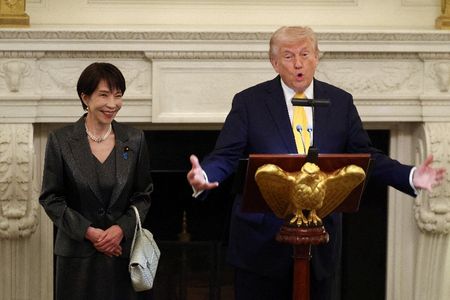
Japan’s Prime Minister Sanae Takaichi announced Friday that she spoke by telephone with U.S. President Donald Trump, who called from Air Force One following the conclusion of his two-day trip to China. During their conversation, both leaders reinforced what Takaichi described as an “ironclad” partnership between their nations.
Speaking to members of the press following the phone call, Takaichi explained that the discussion covered various topics concerning China, spanning both economic and security matters. “We exchanged views on issues surrounding China, including the economy and security…and reaffirmed close communication on Indo-Pacific issues,” she stated.
The Japanese leader noted that Iran-related topics were also part of their conversation, and she conveyed Japan’s position on those matters to Trump. When asked by a journalist whether Taiwan was discussed during the call, Takaichi declined to provide an answer.
Regarding Trump’s recent diplomatic mission to China, Takaichi revealed that the President provided her with comprehensive details about his visit, though she emphasized that Trump “briefed me in detail (on his China visit) on the condition that our conversation remain confidential.”
President Donald Trump revealed Friday that he explored the possibility of removing sanctions on Chinese firms that purchase Iranian oil during his recent diplomatic visit to Beijing, with a decision expected in the coming days.
Washington recently placed sanctions on multiple Chinese oil refining companies for their Iranian oil purchases, including Hengli Petrochemical, which ranks among China’s biggest private refiners and represents Beijing’s efforts to advance and modernize its energy sector.
“We talked about that and I’m going to make a decision over the next few days,” Trump informed reporters while traveling on Air Force One after completing his two-day summit with President Xi Jinping in Beijing.
American officials, including Trump, brought up the prospect of China increasing purchases of U.S. energy during the summit discussions, though Chinese accounts of the meetings did not reference any agreements.
Trump expressed growing impatience with Iran and stated that he and Xi reached consensus that Tehran must be prevented from obtaining nuclear weapons and must reopen the Strait of Hormuz.
The president also indicated his willingness to accept Iran halting its nuclear activities for two decades, provided Tehran makes a genuine commitment.
“Twenty years is enough, but the level of guarantee from them, it’s got to be a real 20 years,” Trump stated.
President Donald Trump revealed on Friday that he engaged in extensive discussions about U.S. weapons sales to Taiwan with Chinese President Xi Jinping during recent meetings in Beijing, announcing that a decision on the matter would come soon.
While speaking with reporters during his flight back from China aboard Air Force One, Trump indicated that he and Xi had lengthy conversations about Taiwan, though he emphasized he didn’t perceive any disagreement on the subject. The president confirmed he made no promises to Xi concerning Taiwan policy.
According to Trump, Xi directly questioned whether America would come to Taiwan’s defense in the event of a Chinese attack on the island, but Trump refused to provide an answer.
“There’s only one person that knows that, and it is me. I’m the only person,” Trump said. “That question was asked to me today by President Xi. I said, I don’t talk about that.”
Beijing considers Taiwan part of its sovereign territory and has consistently condemned American weapon sales to the island, viewing such transactions as meddling in China’s domestic matters. Although the United States maintains no official diplomatic relations with Taiwan, it serves as Taiwan’s primary international ally and main arms provider.
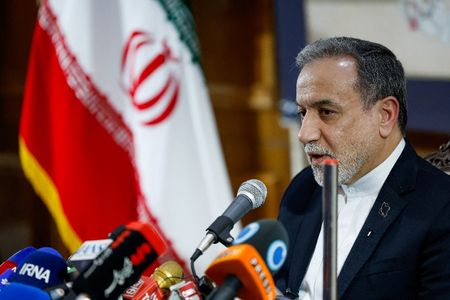
Iran’s Foreign Minister Abbas Araqchi declared Friday that his country lacks confidence in the United States and will only pursue meaningful dialogue if Washington demonstrates genuine commitment to peace negotiations.
Speaking to reporters in New Delhi while attending the BRICS foreign ministers’ meeting, Araqchi stated that all ships may travel through the Strait of Hormuz except those belonging to nations at war with Iran. He noted that vessels seeking passage should coordinate with Iran’s naval forces.
The foreign minister described the situation surrounding the crucial waterway as “very complicated.”
Iran has essentially blocked the strait to most maritime traffic since conflict with the US and Israel began in February. The waterway previously carried approximately one-fifth of global oil and gas shipments.
Although Washington and Tehran declared a ceasefire last month, both nations continue to face challenges in developing a lasting peace agreement. Pakistan-mediated discussions have been halted since both countries rejected each other’s latest proposals last week.
Araqchi explained that “contradictory messages” have created skepticism about America’s genuine intentions regarding negotiations. He emphasized that while Pakistan’s mediation efforts haven’t collapsed, they face significant “difficulty.”
The Iranian official said his country seeks to maintain the ceasefire to allow diplomatic efforts to continue, but remains ready to resume hostilities if necessary.
Key obstacles preventing progress in negotiations include Iran’s nuclear program and its authority over the Hormuz strait.
Araqchi’s remarks came just hours after US President Donald Trump expressed diminishing patience with Iran and reached agreement with Chinese President Xi Jinping that Tehran must allow the strait to reopen.
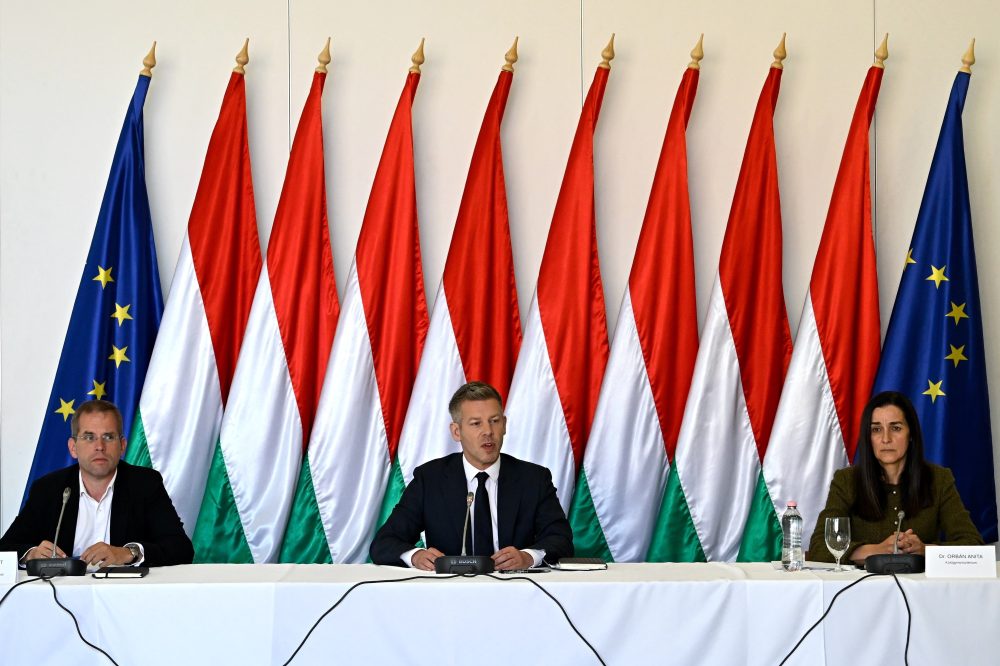
Companies across Hungary are voicing strong opposition to the incoming government’s proposal to suspend work visas for employees from countries outside the European Union, warning the policy could damage production in an already strained job market.
The Tisza party, led by Prime Minister Peter Magyar, swept into power after defeating longtime leader Viktor Orban in an April 12 election that ended Orban’s 16-year tenure. The new administration plans to discontinue visa approvals for non-EU workers beginning next month.
“We will not allow foreign guest workers to take the jobs of Hungarians and push down salaries,” the party stated in its campaign platform, sparking concern among major international companies operating in Hungary.
Sandor Baja, who oversees Randstad’s operations across the Czech Republic, Hungary and Romania, cautioned that completely blocking workers from non-EU countries would create long-term problems for businesses that depend on international staff.
“An outright ban on workers from outside the EU would not be viable in the long run,” Baja explained, pointing out that significant portions of Hungary’s labor force will reach retirement age within the coming decade.
Speaking to Reuters on Friday, Baja expressed optimism that economic considerations would influence policy decisions. “I sincerely hope that (economy minister Istvan) Kapitany’s team will allow economic rationality to prevail here,” he said.
Government data shows international workers make up just 2% of Hungary’s total employment. The country has not experienced the large influx of Ukrainian refugees that has helped address labor shortages in Germany, Poland and the Czech Republic.
Despite the small overall percentage, business representatives say certain industries depend heavily on foreign employees for their operations.
Akos Janza, who leads the American Chamber of Commerce, reported that international workers fill as much as 20% of positions at some member companies, including both professional and manual labor roles.
“We have a member company, which would have to cut a full shift (without guest workers),” Janza noted on Friday, identifying the affected business as a manufacturer in Hungary’s important industrial sector.
While Baja estimated that younger Hungarians under 25, older workers above 55, and residents of rural areas could provide approximately 400,000 additional workers, he acknowledged that transportation and relocation challenges would limit their ability to fill current gaps.
Robert Keszte, representing German businesses operating in Hungary, issued a stark warning about the economic impact of halting visa approvals.
“In our view, the Hungarian economy cannot currently function without workers from third countries (outside the EU),” he stated last week.
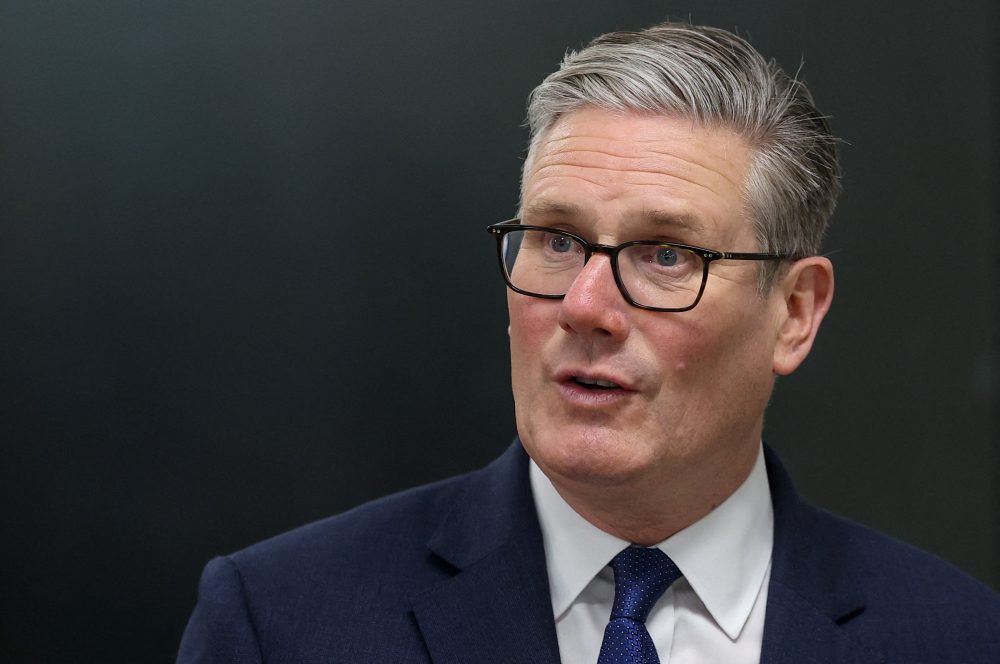
LONDON (AP) — Britain’s government confronts an extended period of political instability while Prime Minister Keir Starmer deals with a brewing leadership contest from the mayor of Greater Manchester, Andy Burnham, who must first secure a parliamentary seat before officially entering the race.
Burnham’s route to Westminster remains complicated. He faces the challenge of defeating a formidable opponent from the anti-immigrant Reform UK party in an upcoming special election for a parliamentary position that was vacated to accommodate his return.
Financial markets reacted negatively Friday as British government borrowing expenses increased and the pound declined amid investor worries about ongoing governmental chaos. The currency has fallen 1.4% compared to the U.S. dollar during this week.
Months of rumors regarding Starmer’s political survival erupted into public defiance within the ruling Labour Party Thursday when Burnham announced his leadership ambitions and two additional senior officials positioned themselves for potential campaigns. Pressure mounted on Starmer following Labour’s poor performance in recent local elections, where the party lost support to Reform UK and the Green Party.
Housing Secretary Steve Reed Friday urged party colleagues to avoid a damaging leadership battle that he warned would hinder the government’s ability to address pressing concerns like rising living costs while strengthening Reform UK’s position.
“This weekend people just need to take a breath, look at what’s gone wrong this week, and come back next week ready to do what we said we’d do — country first, party second — and focus on delivering the change we were elected to deliver,” he told the BBC.
Reed’s appeal followed a week dominated by political maneuvering that overshadowed other Westminster business.
Following public demands from numerous Labour members for Starmer’s resignation, Health Secretary Wes Streeting Thursday became the initial Cabinet official to quit. Despite commending Starmer’s “courage and statesmanship” in foreign policy, Streeting expressed lost faith in the prime minister’s domestic leadership due to policy errors.
“Where we need vision, we have a vacuum. Where we need direction, we have drift,” Streeting wrote in a sharp resignation letter.
“Leaders take responsibility, but too often that has meant other people falling on their swords,” he added. “You also need to listen to your colleagues, including backbenchers, and the heavy-handed approach to dissenting voices diminishes our politics.”
Streeting avoided declaring himself the ideal party leader for the upcoming general election, instead suggesting Starmer should resign to permit a “broad” range of candidates to discuss the party’s direction.
This appeared to reference Burnham, a former Cabinet official who departed Parliament in 2017 to pursue the Greater Manchester mayoral position. Burnham has sought opportunities to rejoin the House of Commons to mount his leadership challenge against Starmer.
Josh Simons, a Labour representative from Northern England, created that opportunity Thursday by stepping down from his position specifically to provide Burnham with a seat. However, this represents just the initial hurdle for Burnham. Before returning to Westminster, he must prevail in a special election for Makerfield, a constituency where Reform UK demonstrated significant strength in recent local voting.
Burnham recognized these obstacles Thursday while announcing his candidacy for the position.
“I truly do not take a single vote for granted and will work hard to regain the trust of people in the Makerfield constituency, many of whom have long supported our party but lost faith in recent times,” he said in a statement.
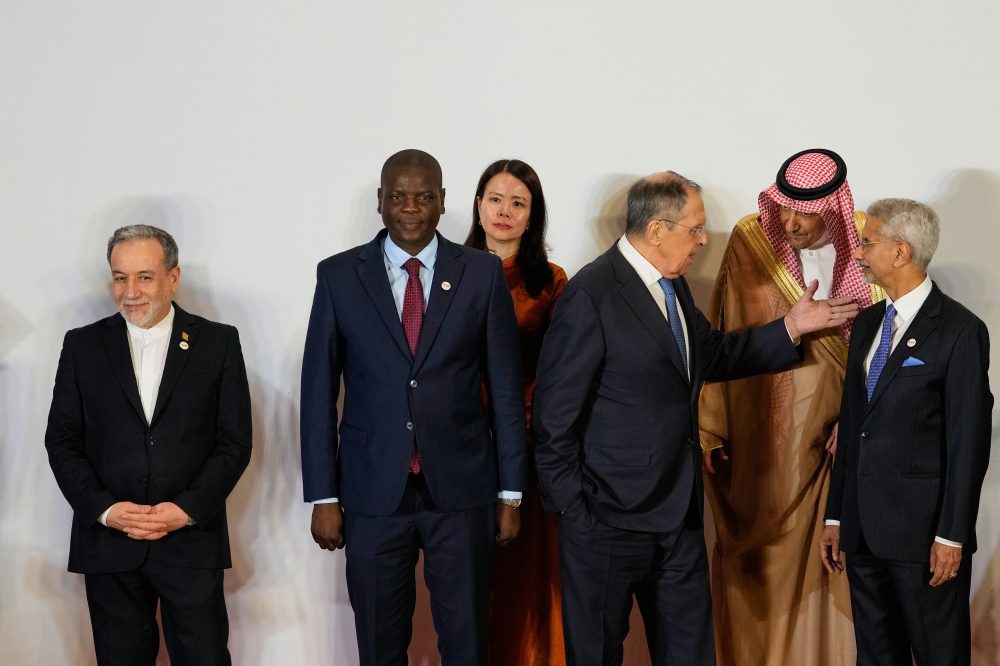
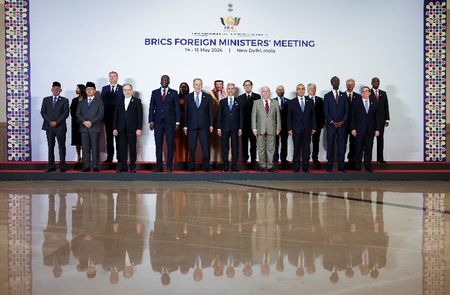
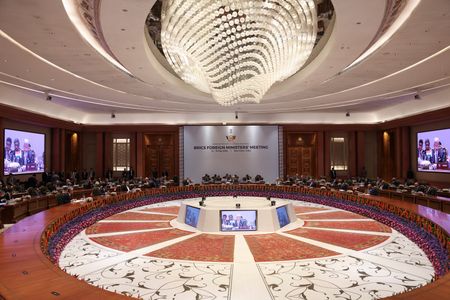
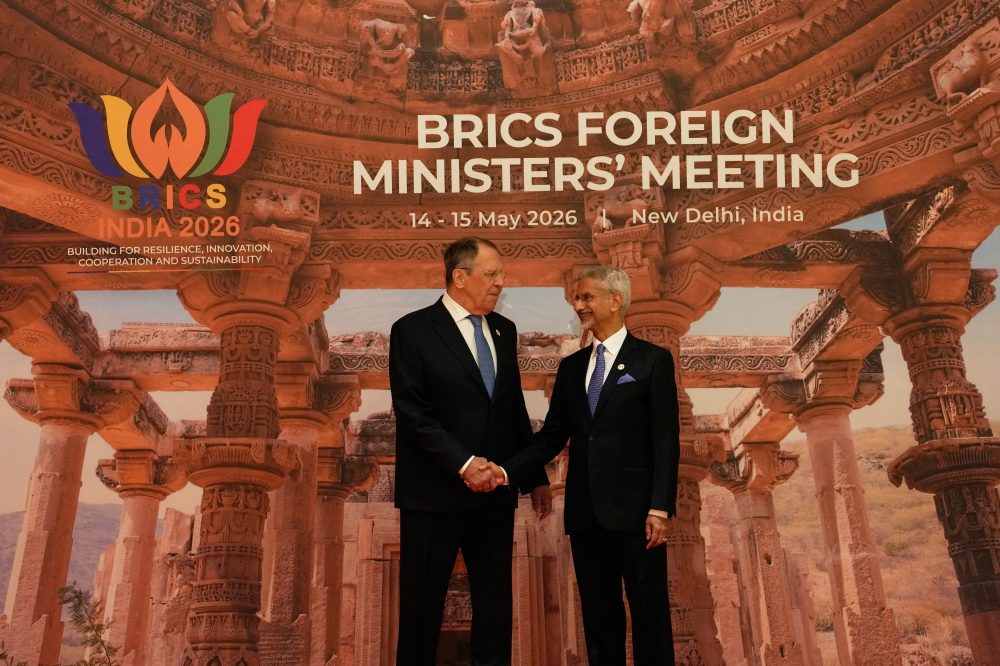
Foreign ministers from BRICS nations wrapped up their two-day conference in New Delhi on Friday without reaching consensus for a joint statement, according to host India. The failure to agree stemmed from conflicting viewpoints among member countries regarding the ongoing Middle East crisis.
The inability to reach agreement underscored the difficulties the alliance faces in staying unified while working to broaden its global reach.
According to India’s official statement, participating nations articulated “their respective national positions and shared a range of perspectives” on matters such as sovereignty, maritime security and safeguarding civilian infrastructure and lives in the Middle East region.
The statement contained a footnote noting that “a member had reservations” regarding portions of sections addressing Gaza and security concerns in the Red Sea and Bab al-Mandeb Strait.
The BRICS alliance consists of Brazil, Russia, India, China, South Africa, Ethiopia, Egypt, Iran, the United Arab Emirates and Indonesia.
Disagreements between members have grown more apparent during the Iran war, especially between Iran and the UAE.
During Thursday’s proceedings, Iranian Foreign Minister Abbas Araghchi pushed BRICS countries to denounce the U.S. and Israel for what he characterized as their “unlawful aggression.” He additionally urged fellow member nations to oppose what he termed the politicization of international institutions.
ATHENS, May 15 – Greek officials on Friday requested European Union assistance to address what they characterized as illegal fishing practices and maritime law violations by Turkish vessels in the eastern Mediterranean waters.
The two NATO member nations and regional neighbors have maintained conflicting positions for decades regarding continental shelf boundaries and maritime authority in the Aegean Sea, particularly concerning fishing rights.
During a Friday meeting in Athens with the European Commissioner for Fisheries and Oceans, Costas Kadis, Shipping Minister Vasilis Kikilias presented the concerns.
“I’ve raised with the Commissioner a major issue for Greece regarding our fishermen and our fisheries and the provocative behaviour of our Turkish neighbours with regards to the unlawful fishing, the non-respect of the law of the sea, and the disputing of our sovereign rights,” Kikilias stated.
“We ask the European Union to intervene,” Kikilias declared, emphasizing that Greek maritime boundaries also represent European borders.
Turkish authorities had not provided immediate responses to requests for comment.
Greek authorities have established restricted fishing zones within the Aegean Sea, several of which Turkey has disputed as beyond the country’s legal authority. Athens filed formal protests last year regarding a Turkish maritime spatial plan that established designated areas for fishing and additional activities throughout the Aegean Sea.
The EU Commission indicated last year that coastal nations bear primary enforcement responsibility while it assists Greece through European Fisheries Control Agency patrols, satellite monitoring and inspection services.
Even amid these disagreements, both countries have maintained regular diplomatic discussions to examine possibilities for beginning negotiations to establish maritime boundary demarcations.
NEW DELHI, May 15 – Foreign ministers from BRICS nations concluded their yearly gathering in New Delhi on Friday without reaching agreement on key issues, prompting India to release a chair’s statement rather than the traditional joint declaration due to conflicting perspectives on Middle Eastern developments.
The economic alliance encompasses Brazil, Russia, India, China, South Africa, Ethiopia, Egypt, Iran, the United Arab Emirates and Indonesia.
The disagreements stem partly from the opposing positions of Iran and the UAE regarding Tehran’s ongoing conflict with the U.S. and Israel, a confrontation in which Iran has focused attacks on the UAE more extensively than other Gulf nations.
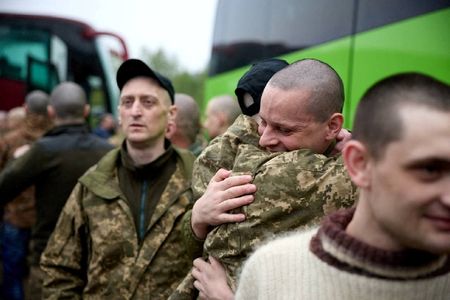
Russia and Ukraine carried out a prisoner exchange on Friday, with both nations releasing 205 captured soldiers as part of a broader diplomatic agreement.
According to Russia’s Defence Ministry, the returned Russian military personnel were transported to Belarus where they are receiving necessary care and support. Officials in Moscow noted that the United Arab Emirates served as the mediator for the prisoner swap.
Ukrainian authorities also verified that their prisoners of war had been successfully returned.
The exchange represents part of a larger arrangement between the two warring nations to swap 1,000 soldiers total, stemming from an agreement tied to a ceasefire that U.S. President Donald Trump helped broker earlier in May. That temporary ceasefire lasted from May 9 through May 11, though both sides reported violations of the truce during that period.
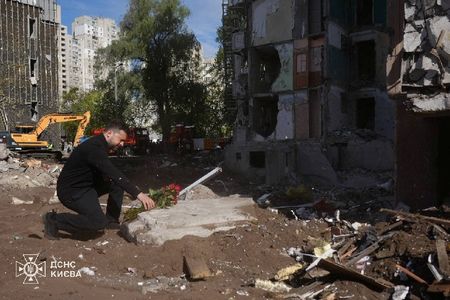
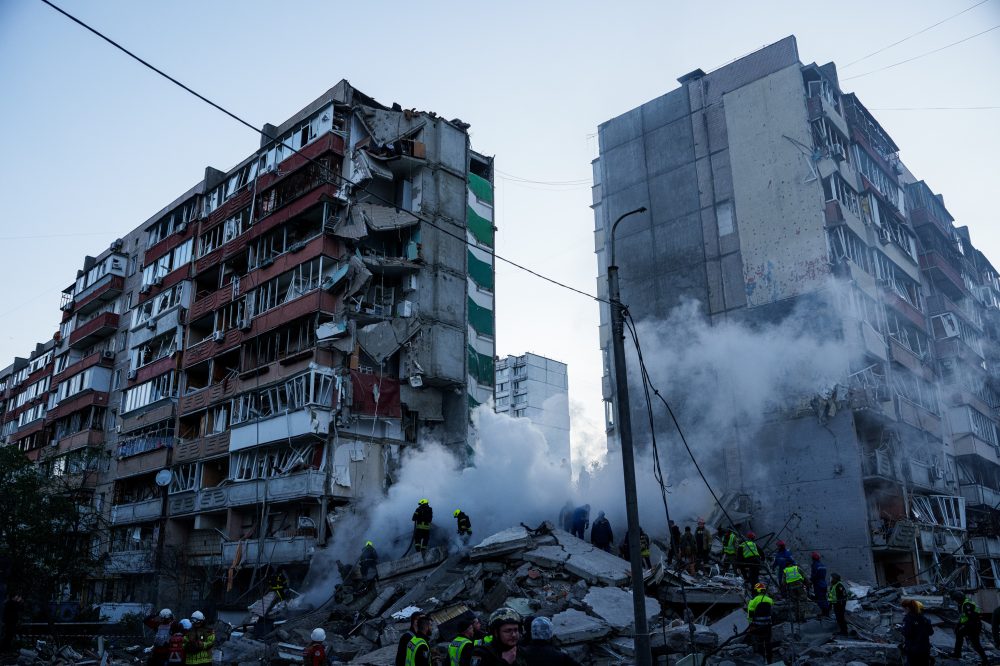
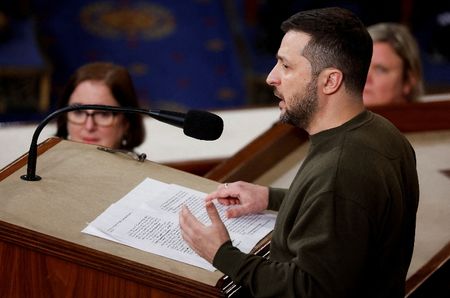
Ukrainian President Volodymyr Zelenskiy demanded accountability from Moscow on Friday as he paid respects at the site where a Russian missile devastated a residential apartment complex, claiming the lives of 24 people, including three young children.
Emergency crews concluded their search efforts at the destroyed building, which suffered the attack during what officials described as Russia’s most intense aerial bombardment of the Ukrainian capital in 2024.
“Our first responders … worked non-stop for more than a day,” Zelenskiy posted on the Telegram messaging platform following his visit to the attack location in Kyiv’s Darnytskyi district, situated on the left bank of the Dnipro river, where he laid flowers and spoke with emergency personnel.
“The Russians practically levelled an entire section of the building with their missile,” he stated.
Moscow launched its comprehensive military operation against Ukraine in February 2022, and Ukrainian authorities reported that Russia deployed over 1,500 drones and numerous missiles in coordinated attacks throughout the country during two straight days this week.
Western Ukraine, located far from active combat zones, experienced six fatalities during Wednesday’s bombardments.
“A Russia like this can never be normalized – a Russia that deliberately destroys lives and hopes to remain unpunished. Pressure is needed,” Zelenskiy declared, renewing his requests for international partners to assist Ukraine in bolstering its aerial defense capabilities.
DAY OF MOURNING IN KYIV
Municipal leaders in Kyiv designated Friday as an official day of remembrance for the casualties, ordering national flags lowered to half-staff throughout the metropolis of three million residents. All recreational activities were either canceled or delayed.
The Interior Ministry reported that emergency response efforts at the residential complex continued for over 28 hours, with hundreds of rescue personnel examining 3,000 cubic meters of debris.
Municipal authorities confirmed that 24 bodies were retrieved from the wreckage while approximately 30 individuals were pulled out alive. Close to 50 people sustained injuries, and roughly 400 residents needed mental health assistance, according to interior ministry officials.
Zelenskiy stated that preliminary investigations indicated a newly manufactured Russian Kh-101 missile was responsible for hitting the residential structure.
Moscow has not provided immediate response regarding the apartment building attack. Russia maintains it does not intentionally target civilian populations, though throughout more than four years of conflict, it has repeatedly struck residential complexes and other non-military infrastructure in aerial campaigns throughout Ukraine.
Ukrainian President Volodymyr Zelenskyy announced Friday that 24 people died when a Russian missile struck a residential building in Kyiv the day before, with three children among the victims.
Rescue teams completed their search through the debris after working for more than 24 hours, Zelenskyy reported on the social media platform X.
The missile struck a nine-story residential building on a corner during what Ukrainian air defense officials described as Russia’s most extensive bombing campaign since the full-scale invasion began.
The bombardment primarily focused on Ukraine’s capital city, where 48 additional people sustained injuries, including two children, according to Zelenskyy’s statement.
Officials in Kyiv declared Friday as an official day of mourning to honor the victims of the attack.
Analysis of the missile debris revealed that the weapon was manufactured during the second quarter of 2024, Zelenskyy noted, citing findings from Ukrainian investigators.
“This means Russia is still importing the components, resources, and equipment necessary for missile production in circumvention of global sanctions,” Zelenskyy wrote in a separate post on X Thursday evening.
“Stopping Russia’s sanctions evasion schemes must be a genuine priority for all our partners,” he added.
Ukrainian President Volodymyr Zelenskiy announced Friday that 205 Ukrainian military members have been returned from Russian detention as part of an initial phase of a larger prisoner exchange agreement.
The exchange marks the beginning of a more extensive prisoner swap arrangement where both Russia and Ukraine will release 1,000 prisoners of war from each side. This exchange is taking place during a three-day ceasefire that was facilitated by U.S. President Donald Trump.
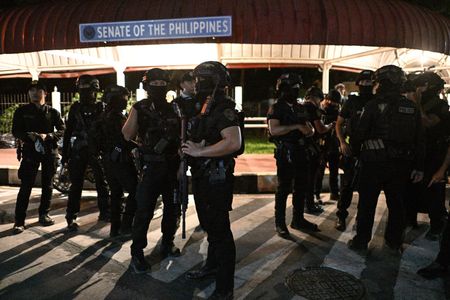
MANILA – The Philippines’ anti-corruption leader has imposed a six-month suspension on the Senate’s top security official after gunfire erupted in the legislative building Wednesday, followed by the flight of a senator sought by the International Criminal Court.
“It’s a preventive suspension meant to make things easier for us to get to the bottom of this,” Ombudsman Jesus Crispin Remulla stated during a Friday press briefing.
“We can’t ignore something of this magnitude,” Remulla explained, noting that Senate Sergeant-at-Arms Mao Aplasca’s suspension became effective Friday.
Reuters was unable to immediately reach Aplasca for his response to the suspension.
Military forces were sent to the legislative complex after Senator Ronald dela Rosa, who previously led President Rodrigo Duterte’s aggressive anti-drug campaign, called on his followers to gather and prevent his pending arrest on an ICC warrant.
Aplasca has acknowledged firing the initial warning shot during a confrontation with National Bureau of Investigation officers within the Senate facility.
“He was the first to fire. Do you fire at law enforcement? We do not tolerate that,” Remulla declared. “What right does he have to do that? Not even the President will do that.”
Dela Rosa, who had been sheltering in the Senate since Monday, has relocated elsewhere following what his spouse called an “escape” in the early morning hours Thursday.
“Flight is an indication of guilt, right? That’s a very basic tenet of criminal law. Flight is an indication of guilt,” Remulla observed.
“Is that how our senators should be, someone who runs from the law? He should be held accountable. He should just face the accusations and respond properly if he really has done nothing wrong.”
President Ferdinand Marcos Jr previously urged restraint and stated that no government staff participated in the confrontation. Both the Senate and law enforcement agencies confirmed that an inquiry into the shooting incident is ongoing.
According to the Philippine Constitution and the Ombudsman Act, the Ombudsman possesses the power to sanction public officials and can implement preventive suspensions to maintain objectivity during investigations.
HAVANA — Juan Miguel Mas spent almost 30 years leading Cuba’s Danza Voluminosa dance company, which regularly performed at elite theaters including the 2,000-capacity National Theater. The 60-year-old choreographer created an innovative movement featuring exclusively larger-bodied performers — work that became the subject of a Canadian documentary film.
Now the Havana native has moved away from the grand theaters where he once worked with professional performers. His current routine involves leading dance classes for young people and organizing community shows.
Mas faces the same challenges as other Cubans dealing with the island’s severe economic downturn, including frequent power failures, water shortages, rising prices and limited public transit options.
Artists face additional hardships, including canceled productions, eliminated funding for shows and widespread departures from the arts community. Mas recently learned his teaching position with the National Theater of Cuba has been terminated.
Arts journalist and essayist Michel Hernández described the situation bluntly. “The outlook for the arts is complex and bleak,” he said, explaining that Cuba’s once-accessible, government-funded cultural venues have declined dramatically, forcing artists to rely on costly private locations.
Despite these obstacles, Mas remains determined to stay.
“I am very interested in staying in Cuba,” he explained to The Associated Press during a recent Saturday while getting ready for practice with neighborhood children. “Were I to emigrate, I would lose contact with that ‘Cubanness’ that exists here, with the audience, the people, the folks next door.”
Mas was born in Havana in 1965 and learned dance and choreography from celebrated ballerina Laura Alonso and Ramiro Guerra, considered the founder of contemporary dance in Cuba. He also trained with Cuban-American performer and choreographer Lorna Burdsall, who supported him through discrimination from dance institutions due to his 160-kilogram (352-pound) weight.
In 1996, he launched Danza Voluminosa (or Voluminous Dance), which operated through 2024 and welcomed performers whose physiques didn’t match traditional dance standards. He also pursued acting and appeared in 2025’s “Cherri,” a dramatized movie inspired by his personal story.
To earn additional money beyond his modest income from youth instruction, Mas rents out part of his residence for commercial purposes and organizes weekend yard sales selling selected secondhand clothing, dishes and home items.
After his sister and teenage nephew moved to Spain last year, he lives by himself and manages costs by shopping at a neighborhood farmers’ market two blocks from home. He also benefits from having a government-subsidized pharmacy located directly across his street.
On a recent morning, carrying water to combat the heat, Mas walked six blocks to the bustling Marianao neighborhood, where 30 children and their mothers gathered to meet him.
The group quickly converted a street intersection into a performance space, and for 90 minutes straight, music played as the young performers sang songs and demonstrated dance routines while dressed as bees and other vibrant characters.
Despite facing significant challenges, Mas emphasized the value of maintaining ties to his neighborhood.
“It’s about bringing the knowledge of art to these children and lifting them out of a reality defined by conflict,” he said.
Australian officials have designated a neo-Nazi organization as the second group to be prohibited under new legislation that makes hate groups illegal.
The organization, previously called the National Socialist Network and also referred to as White Australia, announced it would dissolve after lawmakers enacted the legislation in January that permits certain groups to be outlawed. The legislation was created following the antisemitic assault on a Hanukkah event at Sydney’s Bondi Beach in December that resulted in 15 deaths.
“They changed their name, but didn’t change the fact that they were still an organization and were still engaging in the same sort of behavior that met the thresholds for this legislation,” Home Affairs Minister Tony Burke stated to media in Canberra on Friday.
The prohibition, effective at Friday’s conclusion, makes supporting, financing, training for, recruiting for, joining or leading the organization illegal, including if it reorganizes with a different identity, Burke explained. Violations carry penalties of up to 15 years imprisonment.
The Islamist organization Hibzt ut-Tahrir became the first group prohibited under the hate speech legislation in March. Both that group and the National Socialist Network were specifically named by legislators and government officials as the law’s main focus.
The legislation enabled authorities to ban hate organizations that didn’t qualify as terrorist groups under Australia’s existing definitions. It was part of multiple measures implemented to combat antisemitic hatred following the Bondi attack that shocked the nation.
The national security agency ASIO determines if an organization qualifies for designation as a hate group, and a government minister must subsequently authorize the ban. Requirements include that an organization’s actions could heighten violence risks and that it has promoted or participated in hate crimes.
“None of this will stop bigoted people from having horrific ideologies,” Burke stated. “But it does prevent this group from organizing, from meeting, and prevents some of the sorts of horrific bigoted rallies that we’ve seen around our country.”
The disbanded group’s leader Thomas Sewell faces trial on charges connected to an assault he allegedly led against an Indigenous protest site last August. Masked individuals attacked the Melbourne camp during an anti-immigration demonstration, wounding three people.
Sewell has entered not guilty pleas to his five charges. A separate investigation into the white supremacist shooting deaths of 51 Muslims in Christchurch, New Zealand in 2019 determined that Sewell had tried to recruit the shooter, Brenton Tarrant, into another white nationalist organization two years prior to the mosque killings.
Burke rejected claims that the National Socialist Network had truly disbanded. The organization posted on its Telegram account in January that it would dissolve to prevent member arrests, according to Australian media reports.
The minister indicated his administration was ready for court challenges from the banned organizations.
Prior to the Bondi shooting in 2024, Australia implemented a national prohibition on Nazi salutes and displaying swastikas and other Nazi imagery. This followed months of antisemitic incidents targeting synagogues and Jewish businesses and schools in Sydney and Melbourne.
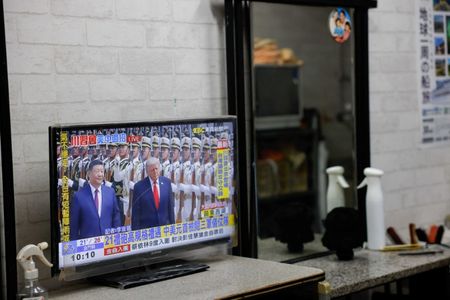
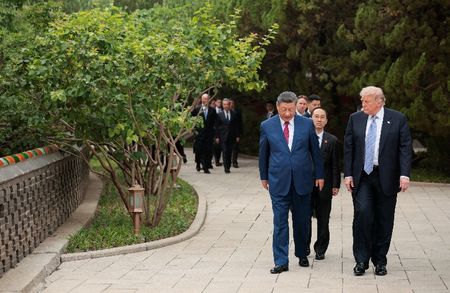
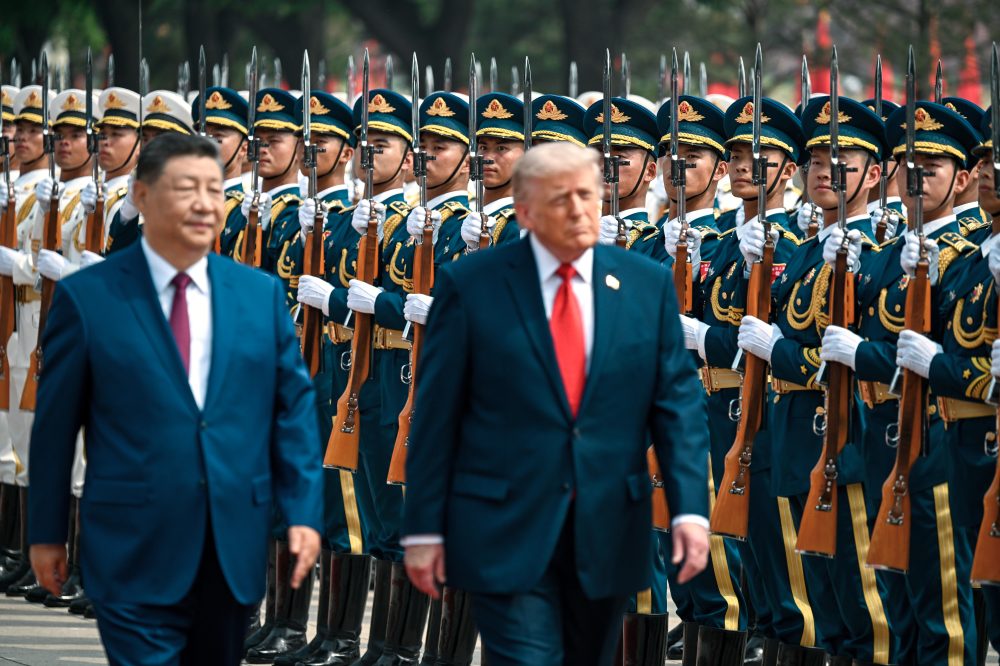
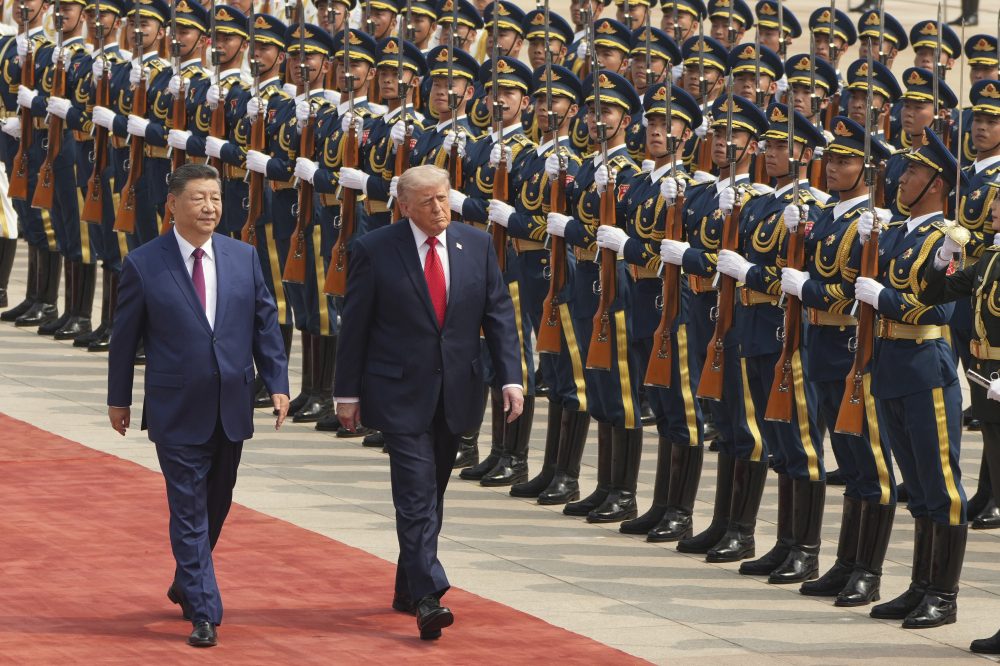
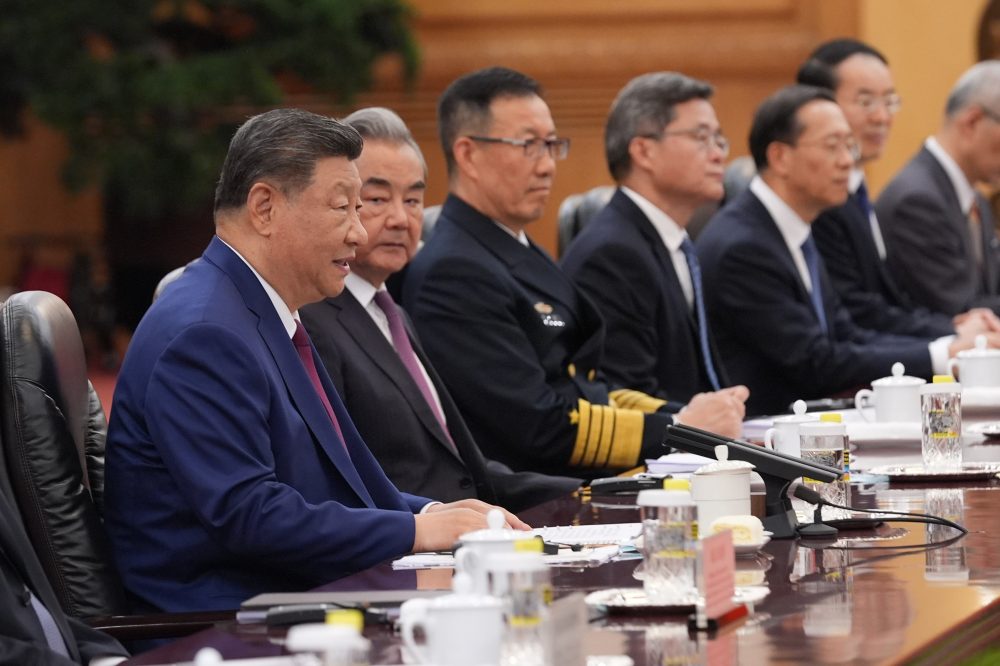
BEIJING, May 15 – Following discussions about trade, Taiwan and Iran, the Chinese President took the U.S. President Donald Trump on an exclusive walk through the historic Zhongnanhai compound in Beijing during the final portion of their diplomatic meeting.
The secure government complex, which previously served as an imperial garden and currently accommodates the offices of the ruling Communist Party and the state council, sits next to Beijing’s renowned Forbidden City near Tiananmen Square.
Audio equipment picked up the conversation between the two leaders, revealing Trump’s amazement upon learning that certain trees in the garden had survived for a millennium.
“Let me tell you, all the trees on this side are over 200 to 300 years old,” the Chinese President explained through his interpreter while pointing toward the massive tree trunks. “Over there, there are some more than 400 years old.”
Trump responded with surprise, asking “They live that long?”
The Chinese leader continued, “There are also 1,000-year-old trees in other places.”
When Trump inquired whether other international leaders had visited the compound, the Chinese President confirmed such visits were uncommon.
“Very rarely,” he answered. “At first, we usually didn’t hold diplomatic events here. Even after we started having some, it’s still extremely rare. For example, Putin has been here.”
The Chinese President then encouraged Trump to feel the bark of a tree that was 280 years old.
“Good. I like it,” Trump responded.
This exchange provided an unusual look at casual diplomatic moments between world leaders.
Previously in September, recording equipment had captured a conversation between the Chinese President and Russian President Vladimir Putin about organ transplants and human longevity potentially reaching 150 years as they approached Tiananmen Square for Beijing’s military parade.
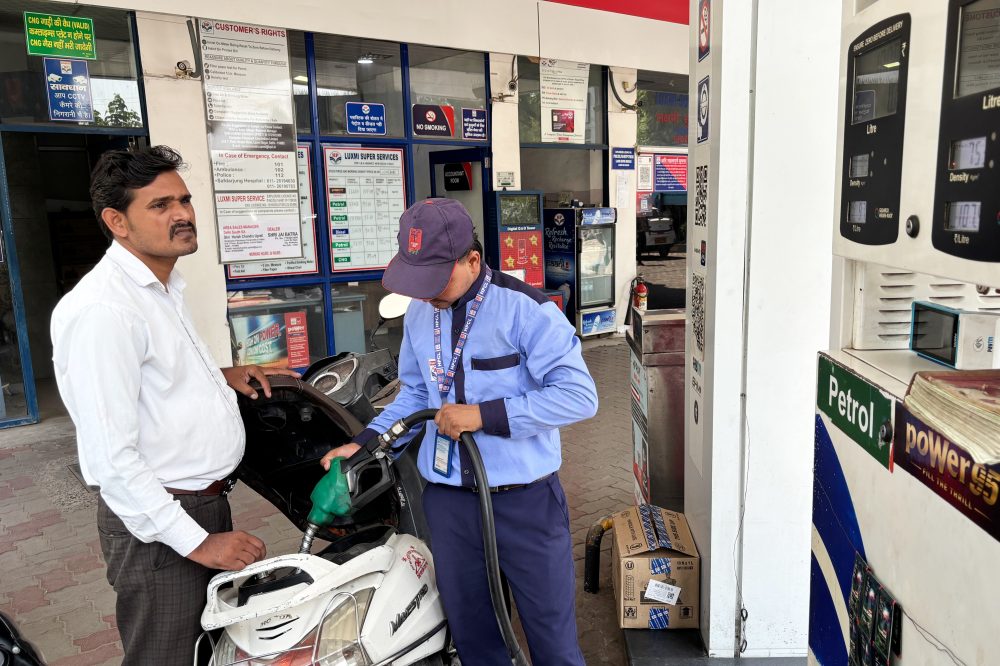
India implemented a 3 rupee ($0.03) per liter increase in fuel costs Friday as officials work to balance losses caused by escalating worldwide oil prices.
The capital city of New Delhi now sees gasoline priced at 97.77 rupees ($1.17) per liter, with diesel reaching 90.67 rupees ($1.09) per liter.
The nation depends on imports for approximately 90% of its oil supply and has faced significant challenges from climbing energy costs and distribution problems connected to the Iran war and the Strait of Hormuz closure. Until this point, the country had resisted increasing consumer fuel costs despite dramatic rises in energy expenses, positioning it among the final major economies to transfer elevated crude prices to buyers.
These cost adjustments occurred just days following Prime Minister Narendra Modi’s call for Indians to embrace voluntary conservation efforts.
During a Sunday address, Modi encouraged citizens to work from home when feasible, restrict international travel, and decrease gold purchases. He characterized fuel preservation and foreign exchange conservation as acts of “patriotism,” while promoting increased public transit usage, ride-sharing, and reduced fertilizer consumption.
Political opposition figures noted that Modi’s request came only after a significant state election cycle had finished, pointing out that fuel costs remained stable throughout the campaign period.
This week also saw India implement higher import tariffs on gold and silver at 15% as an attempt to reduce demand for imports that deplete foreign currency reserves.
The nation’s currency has dropped to historic lows recently as elevated oil costs have intensified import pressures and strained foreign exchange holdings.
India’s capital has emerged as the first state to implement conservation policies.
New Delhi officials announced fuel conservation initiatives Thursday, featuring required remote work days for certain government workers. Delhi Chief Minister Rekha Gupta explained the 90-day initiative seeks to decrease official fuel consumption and motivate residents to depend more heavily on public transit rather than personal vehicles.
The strategy requires employees capable of remote work to stay home twice weekly, while private businesses receive encouragement to voluntarily implement comparable policies.
The country has also expedited ethanol integration in gasoline as part of efforts to decrease crude oil dependency.
The majority of filling stations nationwide now offer gasoline mixed with 20% ethanol, with officials proposing expanded use of fuels containing 85% or complete ethanol in suitable vehicles.
Energy specialists noted that biofuel blending can provide protection from global energy disruptions but may further strain already diminishing groundwater supplies, encroach on agricultural land designated for food production, and affect older vehicle engines.
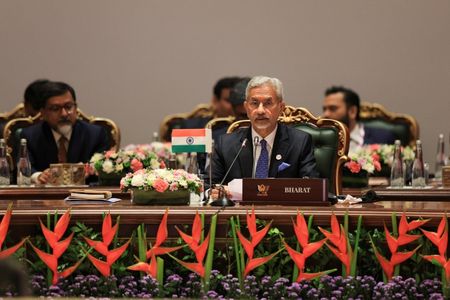
India’s Foreign Minister Subrahmanyam Jaishankar declared Friday that overhauling the United Nations and its related organizations continues to be a priority, stating that major UN institutions, especially the Security Council, still mirror an outdated time period.
Speaking at the BRICS foreign ministers’ gathering in New Delhi, Jaishankar emphasized that proper representation for Asia, Africa, and Latin America is crucial within the UN framework.
DEIR AL-BALAH, Gaza Strip — A quick glance reveals only scattered stone remnants of the community that Yusuf Abu Hamam’s relatives were compelled to abandon when he was a baby in 1948.
The community, al-Joura, was destroyed by Israeli forces during that period. It has since disappeared beneath residential areas of the southern Israeli city of Ashkelon and a national park’s grounds.
The area where Abu Hamam’s family settled — and where he lived most of his years — now also sits mostly in ruins. Structures in the Shati Camp in northern Gaza have been demolished and destroyed by Israeli bombing and demolitions throughout the last 2½ years of conflict.
On Friday, Abu Hamam and millions of Palestinians observe the 78th anniversary of the Nakba, meaning “catastrophe” in Arabic, which refers to the mass displacement and exodus of approximately 750,000 Palestinians from present-day Israel during the 1948 conflict surrounding Israel’s establishment. This marks the third Nakba remembrance since the Gaza war started.
The 78-year-old Abu Hamam, among a shrinking group of Nakba survivors, believes the present conflict represents an even worse disaster.
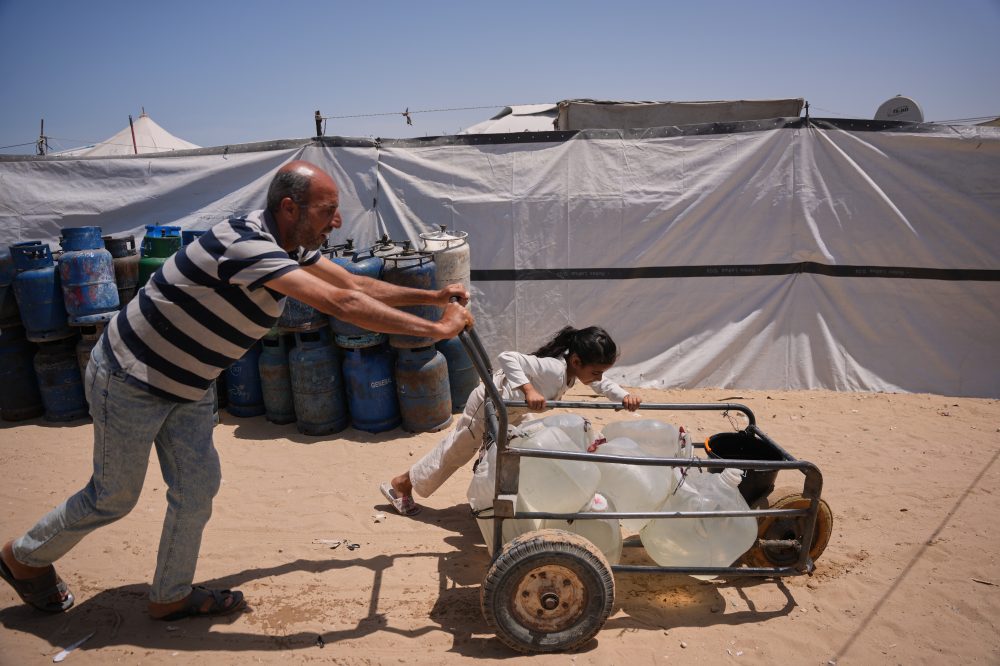
More than six months following an October ceasefire, he and Gaza’s remaining 2 million inhabitants are packed into fewer than half of the 25-mile coastal territory along the Mediterranean, encircled by an Israeli-controlled area covering the remaining land.
“There is no country left,” Abu Hamam said, speaking next to his home, which was heavily damaged by Israeli shelling earlier in the war. “A square kilometer and a half extending from the sea, this is what we are living in … It’s indescribable, unbearable.”
For Palestinians, the Nakba represented losing most of their ancestral land. Approximately 80% of Palestinians residing in the region that became Israel were forced from their residences by the emerging state’s forces before and during the conflict. The fighting started when Arab armies attacked after Israel’s creation as a Jewish homeland following the Holocaust. Palestinians who stayed received Israeli citizenship.
Following the conflict, Israel declined to permit Palestinian refugees to return to maintain a Jewish majority within its boundaries. Palestinians became what appears to be a permanent refugee population now totaling around 6 million, with most residing in refugee camps in the Israeli-occupied West Bank, Lebanon, Syria, Jordan and Gaza.
Approximately 530 Palestinian communities in what became Israel were demolished, according to the Palestinian Bureau of Statistics.
Abu Hamam’s birthplace was among them. Al-Joura was captured by Israeli forces as they advanced against Egyptian troops in November 1948. Soldiers received orders to demolish every residence in al-Joura and surrounding communities to prevent their Palestinian residents from returning, according to military records referenced by Israeli historian Benny Morris.
Refugees expanded the population of the small coastal territory that became the Gaza Strip. They remained in temporary camps, managed by a newly established U.N. agency for Palestinians, UNRWA, which supplied assistance and education. Those camps, including Abu Hamam’s Shati Camp, developed into crowded urban areas over decades, before many were destroyed during the recent Gaza conflict by Israeli bombardment.
The forebears of Ne’man Abu Jarad and his wife, Majida, were already residing in what would become the Gaza Strip in 1948. Both remember family stories about refugees arriving on foot from northern areas, like the community Abu Hamam originated from.
Although they escaped the initial Nakba, there was no avoiding what Majida now terms “our Nakba.”
Their community has been completely destroyed. During the past year, Israeli bulldozers and controlled explosions have demolished almost every structure in the northern Gaza towns of Beit Lahiya and Beit Hanoun. A new Israeli military installation sits approximately 700 meters (765 yards) from where the Abu Jarads’ residence once existed, based on satellite images.
Also destroyed is the southern Gaza city of Rafah, formerly housing a quarter million residents, and other communities and areas in the Israeli-controlled portion of the Gaza Strip. The military states it is eliminating positions used by Hamas and preparing the region for rebuilding. Satellite images reveal nearly every building reduced to debris.
During the last 31 months of conflict, the Abu Jarads and their six daughters have been forced to relocate more than twelve times while escaping Israeli bombing and military operations. They presently reside in a camp in the southern city of Khan Younis. Their tent provides minimal protection from harsh winter winds or summer heat, Majida explained.
Their daughters have been absent from school for more than two years.
“The Nakba of ’48, I don’t think it can be compared to our Nakba,” Majida said. “In ’48, they say people were displaced once and settled in one place, and they are still there until now. But our Nakba, honestly, is more severe because our displacement has happened multiple times. There is no stability.”
Approximately 90% of Gaza’s more than 2 million residents have lost their residences, based on U.N. estimates, with most now living in massive tent camps with rodent problems and sewage pools. They depend on aid for survival.
Israel’s military campaign has resulted in over 72,700 Palestinian deaths, according to local health authorities. It began following Hamas’ Oct. 7, 2023, assault on southern Israel that resulted in approximately 1,200 deaths. Militants also captured 251 hostages.
In the northern West Bank, tens of thousands of Palestinians are experiencing their 15th month of displacement, after Israeli forces ordered them from their refugee camps during an operation targeting militant organizations.
Since that time, troops have destroyed or severely damaged at least 850 buildings throughout the refugee camps of Nur Shams, Jenin and Tulkarem, based on satellite imagery analysis by Human Rights Watch published in December.
The 1948 Nakba also resulted in Palestinians losing their historical records, as those fleeing found it difficult to preserve documents and belongings connecting them to their homes.
One of the most extensive collections of Palestinian documents from the Nakba period belongs to UNRWA.
UNRWA personnel, who evacuated their Gaza offices after Israel ordered northern evacuation, were forced to abandon the agency’s comprehensive archive.
The staff then began a rescue operation for the most essential documents — birth, death and marriage certificates and refugee registration cards, according to Juliette Touma, a former senior UNRWA official.
Without these documents, Palestinians could forfeit their rights and refugee status. Staff members filled their personal luggage with papers and transported them through checkpoints and out of the territory, Touma explained.
The ongoing conflict has taken from Palestinians in Gaza what remained of their personal histories. Majida’s parents’ residence in Beit Hanoun was demolished, along with family photographs.
“There is nothing left,” she said.
Abu Hamam also states everything has been lost.
“When this war came, it devoured trees, stones and people,” he said. “Entire families were erased from the civil registry. Hundreds of families are still buried under the rubble.”
BUCHAREST, Romania — Disturbing footage shows dogs drinking from frozen water bowls and eating dried waste in concrete enclosures at a facility in eastern Romania.
These images were captured during a covert investigation by Vier Pfoten, an international animal welfare organization also called Four Paws, which examined conditions at Romania’s government-funded stray dog facilities.
During a 10-day period from Jan. 8-18, investigators visited nine facilities across the nation, recording what the organization characterizes as “high death rates and disturbing conditions” that represent “systemic neglect.”
The welfare organization discovered cramped enclosures, animals with untreated injuries, and numerous dogs housed in areas without protection from harsh winter weather.
With approximately 500,000 stray dogs, Romania maintains one of Europe’s largest homeless canine populations. Thousands of these animals live in government facilities where they await adoption or, sometimes, euthanasia.
Manuela Rowlings, who specializes in stray animal issues at Four Paws, explained to The Associated Press that their findings demonstrate these problems are widespread and require comprehensive reform.
“Public shelters are horrible places in Romania,” she stated. “It’s simply places where dogs are locked up and where they wait to die, and they do not even receive the minimum care or minimum standards.”
“Enclosures were frequently soiled with feces and overcrowded, leading to aggression and fighting among the dogs,” the Four Paws report states. “One dog even appeared to have bitten off parts of his own tail due to the highly stressful environment.”
During their visit to a government facility in western Arad County, considered among the better locations they examined, Four Paws discovered bare concrete flooring, no bedding or heating systems, and a complete absence of enrichment activities or toys. Despite these conditions, the organization commended staff members for their efforts to enhance the environment and promote adoptions.
The investigation criticized numerous facilities for making adoption processes difficult and noted that public records requests showed poor transparency regarding funding, animal intake numbers, and euthanasia statistics.
Romania’s National Sanitary Veterinary and Food Safety Authority, which supervises animal welfare and shelter operations, did not respond to the AP’s requests for comment.
Data obtained by the welfare organization shows that in 2024, only 134 of 644 dogs brought to a facility in northeastern Galati County found homes, while 28 were legally euthanized and 412 died from “other causes.”
“There is nothing that can be reported to the authorities, because it is not illegal to keep dogs in very, very poor conditions in the shelters,” Rowlings said.
Following the death of a 4-year-old boy killed by stray dogs in Bucharest in 2013, Romania enacted legislation leading to mass roundups of homeless animals, with those not adopted within 14 days facing euthanasia.
Animal protection advocates have consistently maintained that widespread spaying and neutering programs offer the most effective long-term solution.
Hilde Tudora, Director of Animal Protection at Ilfov County Council, explained to the AP that comprehensive sterilization programs fail because the stray dog situation has become a “money-making machine,” with taxpayer funds often supporting private facilities.
“Private companies have swelled up with public money, and then it turned into a business,” she said. “There must be dogs, because if you castrate en masse, there’s no more merchandise … No one really wants to solve the problem.”
Proposed legislation introduced last November would classify animals as “living beings with rights and freedoms” and shift focus from euthanasia to sterilization and microchipping programs.
Andrei Baciu, a parliamentarian from the National Liberal Party, said Romania has spent over 1.3 billion euros ($1.5 billion) in the last three decades on euthanizing stray dogs.
“From a single pair of unsterilized dogs can appear, in just six years, over 67,000 puppies,” he said in a Facebook post. “Capturing and euthanizing them would cost around 13.4 million euros ($15.6 billion). With the same money, we could sterilize 268,000 dogs.”
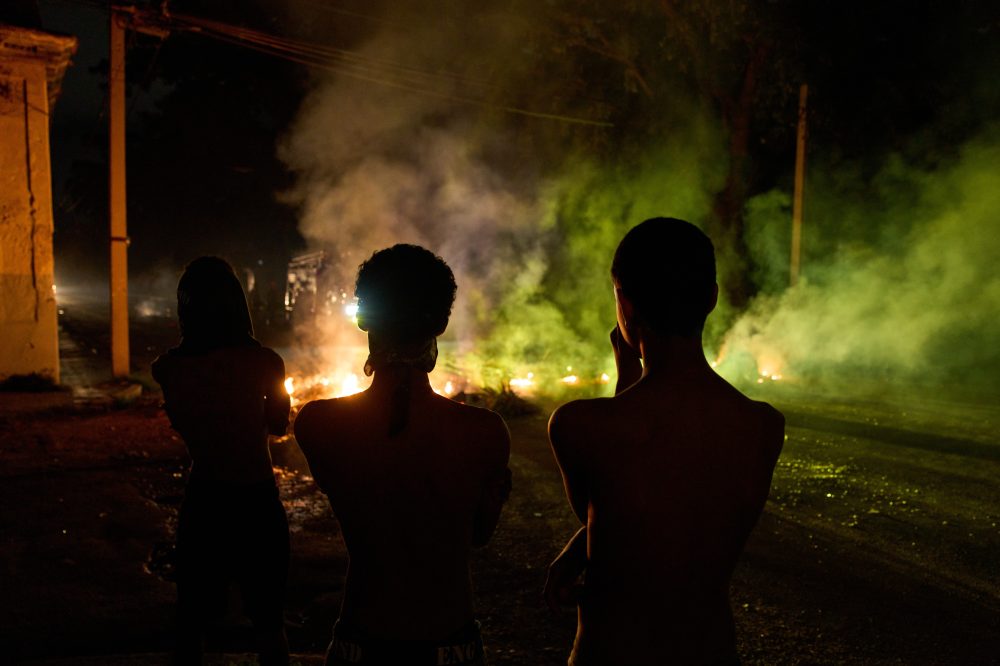
A catastrophic breakdown of Cuba’s electrical infrastructure has left the island nation’s eastern regions completely without power, while residents in Havana continue to endure persistent electrical outages. Frustrated citizens in the capital responded by constructing flaming roadblocks in protest of the extended power failures.
In Colombia, the Cienaga Grande de Santa Marta wetland ecosystem is experiencing severe environmental damage caused by an invasive Asian plant species. The rapidly spreading aquatic vegetation is blocking fishing channels and obstructing waterways, threatening the economic survival of local communities who depend on the lagoon for income.
Large demonstrations filled the streets of Buenos Aires, Argentina, as protesters marched to government buildings to oppose funding cuts that are undermining the financial stability of the nation’s university system.
This gallery was curated by photo editor Anita Baca based in Mexico City.
BEIJING, May 15 – During his state visit to China on Friday, U.S. President Donald Trump announced that he and Chinese President Xi Jinping had conversations about Iran and share the goal of preventing that nation from acquiring nuclear weapons while ensuring “the straits remain open.”
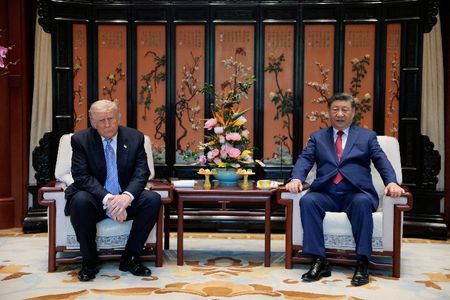
The meeting between the two world leaders took place at Beijing’s secure Zhongnanhai complex as Trump concluded his official visit to China.
Speaking about their discussions, Trump stated: “We’ve settled a lot of different problems that other people wouldn’t have been able to solve.”
Three people died and 12 others were wounded, including children, when drones struck the Russian city of Ryazan early Friday morning, according to Regional Governor Pavel Malkov.
“To our great regret, three people have been killed and 12 injured, including children,” Malkov wrote on the Telegram messaging app.
The governor reported that the drone strike caused damage to two high-rise apartment buildings. Falling debris from the drones also struck an unspecified industrial facility in the area, Malkov stated.
Images posted on the unofficial Telegram channel Mash depicted smoke billowing from a high-rise structure and indicated that one building entrance was obstructed, trapping residents inside.
Additional unofficial sources published photos showing multiple apartments engulfed in flames.
The targeted city of Ryazan sits approximately 200 kilometers (120 miles) southeast of Moscow and houses a major oil refinery.
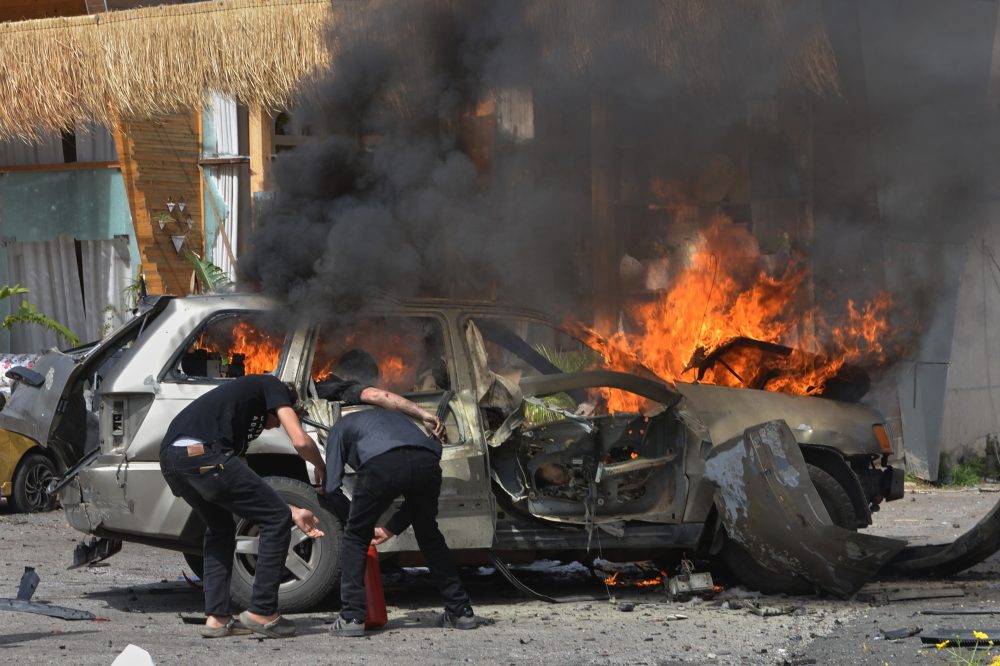
CHIYAH, Lebanon (AP) — Ayman al-Zain stood watching as heavy machinery removed debris from what remained of his athletic apparel shop, one of many structures leveled during Israeli attacks targeting the Hezbollah militant organization.
With a fragile ceasefire now reducing but not eliminating hostilities, Al-Zain considered whether to reconstruct his business in Beirut’s southern neighborhoods that he had planned to leave to his children. However, rebuilding appears unlikely in the near term, and not solely due to concerns about additional air attacks.
“Everything is expensive,” he explained to The Associated Press. “If I want to open a new store and get mannequins, hangers and some accessories, the prices are very different than before.”
The conflict between the U.S. and Israel against Iran, along with the blocking of the Strait of Hormuz, has created financial turbulence throughout the Middle East. Lebanon’s difficulties have been magnified by pre-existing economic troubles and largely uncontrolled markets susceptible to exploitation.
“This continues to be a major economic shock, one of honestly an existential nature,” stated Economy Minister Amer Bisat, a member of the Lebanese Cabinet that assumed power more than a year ago with reform objectives.
Beginning in 2019, the small Mediterranean nation has endured an economic catastrophe that devastated its local currency’s worth and destroyed its banking infrastructure.
Lebanese financial institutions failed at that time, wiping out depositors’ funds and forcing roughly half of the 6.5 million residents into poverty, following years of widespread corruption, waste and poor governance. The nation experienced approximately $70 billion in financial sector damages, further increased by roughly $11 billion from the 2024 conflict between Israel and Hezbollah, according to the World Bank. The Lebanese pound has subsequently declined more than 90% of its strength versus the U.S. dollar.
The financially struggling state power company delivers just a few hours of electricity daily, forcing most Lebanese to depend on diesel-powered generators for additional power. This situation makes the economy especially susceptible to fuel cost increases.
Lebanon was already “grappling with multiple rounds of crises,” explained Mohamad Faour, professor of finance at the American University of Beirut. “So this round of war only made an already fragile situation more fragile.”
During this latest conflict, 1.2 million Lebanese citizens have been forced from their homes, primarily from southern Lebanon and Beirut’s southern districts. Many are taking refuge in educational facilities without employment or depleting their remaining funds on apartment rentals or hotel accommodations.
During an AP interview at his workplace, Bisat calculated that the nation confronts economic damages of approximately 7% of its gross domestic product from the war because “companies are closing, people are losing their jobs, tourists are not showing up.”
Signs of rising costs are everywhere.
At the typically busy fresh food market in Sabra, south of Beirut, seller Ahmad al-Farra appeared discouraged as an older woman shopping for watermelon, tomatoes and potatoes left empty-handed after seeing the costs.
Costs have surged since the U.S. and Israel began their war against Iran on Feb. 28, quickly followed by renewed fighting between Israel and Hezbollah.
“We’re keeping our prices low so we can sell, and even then we’re not selling,” al-Farra explained as an Israeli drone buzzed overhead.
Even customers with spending power are worried and reducing non-essential buying, leaving many establishments nearly empty.
Riad Aboulteif, who operates multiple restaurants and bars in the capital, reported his income has fallen by approximately 90% since hostilities started, as Lebanon’s diminishing middle class reduces expenses.
Citizens are preserving more funds for basic needs and avoiding plans for birthday celebrations or other special events, he noted at one of his establishments in Beirut’s busy Hamra area, where lively customer conversations once drowned out the jazz music from the speakers.
That evening, only a handful of tables had patrons. He has been forced to reduce employees and modify his menus to provide more budget-friendly options.
At the same time, the nation’s financially ruined government has found it difficult to stop unfair and illegal profiteering and the stockpiling of fuel and other vital supplies.
Numerous farming regions in southern and eastern Lebanon are now unreachable due to airstrikes and fighting, but al-Faraa suspects suppliers have increased costs beyond what’s needed to cover expense rises.
Some of the most dramatic price increases have occurred with generator charges.
Households and businesses have for years paid several utility bills to cover privately provided electricity and water due to absent government services. Local generator operators impose monthly fees, and some property owners maintain their own generators and pass costs to renters.
Angry business operators report that generator expenses have sometimes doubled, compelling them to reduce operating hours or close on certain days to lower costs.
“If we didn’t take these measures, we cannot continue,” Aboulteif stated.
Bisat noted his ministry has performed more than 4,000 inspections of private generators, fuel stations and stores nationwide since the war started in March and filed numerous court complaints. However, the problem will not be rapidly solved.
Currently, the government has limited capacity to control the small number of companies that import and distribute fuel and other products.
With no war conclusion visible, the economic circumstances show no indication of improvement.
A fragile ceasefire exists between the U.S. and Iran, but discussions between Washington and Tehran have stalled. A temporary truce between Israel and Hezbollah has decreased but not eliminated fighting in Lebanon.
For the present, Lebanese families and business operators are addressing the difficulties daily while hoping for improvement.
“Only God knows how we’ve been trying to manage ourselves,” al-Farra stated.
VIENNA (AP) — Eurovision Song Contest performers have just three minutes to create a memorable impact.
Capturing audience attention among 25 competing acts in Saturday’s grand finale in Vienna requires maximum effort in both musical and visual presentation.
For this year’s leading contenders, Finnish performers pop vocalist Pete Parkkonen and classical musician Linda Lampenius, their strategy includes fire jets, an antique violin from the 18th century, and a crew of “ninjas” dedicated to preventing mishaps.
Their track “Liekinheitin,” which translates to “Flamethrower,” has gained favor among supporters and gambling odds with its fusion of popular and classical music styles — plus its dramatic presentation.
Here’s the process behind crafting their attention-grabbing act.
Parkkonen and Lampenius describe their musical style as “new pop with a classical touch.” Their composition about passionate love delivers explosive energy where Parkkonen’s intense singing creates contrast with Lampenius’ dynamic violin playing.
The Finnish team needed to obtain special authorization for Lampenius to perform her instrument live. Eurovision regulations require that main vocals be sung live, while instruments use pre-recorded tracks to facilitate quick transitions between performances.
Lampenius explains “Flamethrower” was “written as a duet,” requiring both artists to perform live for proper execution.
“It’s a woman and a man, it’s a female voice and a male voice. So I do all my lyrics through my violin, by playing, and you (Parkkonen) are singing it with words. But we are talking. We are (equally) as important, both of us.”
The duo remained uncertain upon reaching Vienna whether Eurovision officials would approve their request. Final authorization came only after they demonstrated their act before a live audience during rehearsal.
The European Broadcasting Union, Eurovision’s organizing body, stated that competition rules permit “live audio capture of instruments may exceptionally be permitted where artistically justified.”
Lampenius traveled with two violins as backup — a prized Gagliano crafted in 1781 for optimal live sound quality, plus a less expensive alternative for potential playback use. This strategy would protect the Gagliano from the somewhat dangerous staging elements.
Lampenius and Parkkonen report they have been practicing for this opportunity since November. After winning Finland’s national Eurovision selection in February, they estimate having performed their song hundreds of times.
Precision is essential. Their act culminates with fire bursts erupting from the stage while Lampenius, wearing a flowing gown and aided by a leaf blower, plays her valuable violin.
Lampenius admits it’s “a bit scary when you think of it.”
However, she feels confident knowing she has dark-clothed crew members who refer to themselves as “ninjas” standing by to protect her costume from the flames — a critical but invisible element for home viewers.
“They’re running with me – first one guy carrying my dress when I’m running, then the other one catching me during my run,” she explained. “And he helps me also when I jump up on the stage and do the pirouette.”
During the dramatic concluding pose where Lampenius balances on chairs in high heels while holding her violin high, Parkkonen manages both his vocal performance and serves as a safety observer, ready to catch her if she falls.
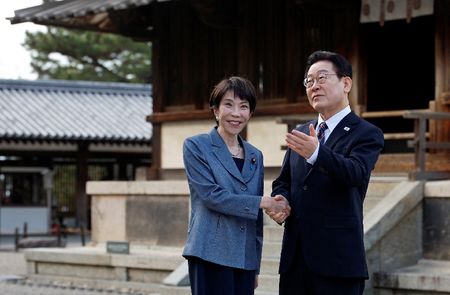
The leaders of South Korea and Japan have scheduled a diplomatic meeting for this weekend, according to an announcement from Seoul’s presidential office on Friday.
South Korean President Lee Jae Myung will host Japan’s Prime Minister Sanae Takaichi in the South Korean city of Andong from May 19 through May 20. The location holds personal significance as it is Lee’s place of birth.
This diplomatic gathering represents the second time the two leaders will meet face-to-face in 2024. Their previous encounter took place in January when Lee traveled to Nara, Takaichi’s birthplace, as part of what officials describe as continuing “shuttle diplomacy” between the neighboring countries.
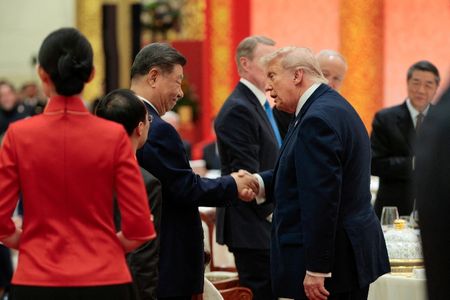
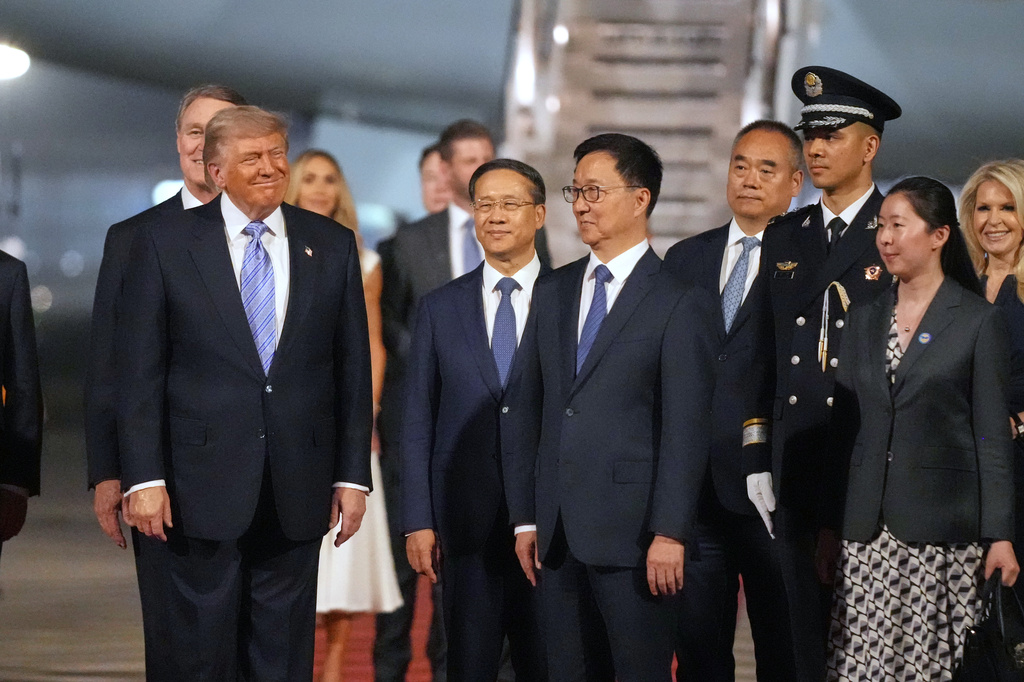
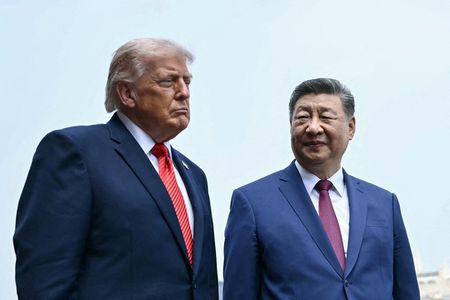
President Trump concluded his Beijing visit on Friday with a final private meeting at Chinese leader Xi Jinping’s official residence before departing for Washington.
The two leaders spent Thursday addressing contentious topics including the Iran conflict, trade relations, technology issues and Taiwan.
Trump revealed that Xi informed him China is willing to help broker an end to the conflict and reopen the Strait of Hormuz. Since China purchases the most Iranian oil, Trump hopes Xi will leverage this relationship to pressure Iran into accepting U.S. conditions. Trump also mentioned that Xi promised China would not supply Iran with military equipment.
Throughout this visit, Trump has maintained an optimistic view of U.S.-China relations. However, this perspective faces challenges when confronting the most difficult issues between the two nations, including Taiwan, the Iran conflict and trade disputes.
During their summit filled with ceremony and diplomatic courtesy, Xi cautioned Trump that disagreements over Taiwan, a self-governing island that Beijing considers its territory, could lead to U.S.-China confrontations or conflict. Trump approved an $11 billion arms package for Taiwan in December but has not proceeded with delivery. Secretary of State Marco Rubio later warned Thursday that China attempting to seize Taiwan by force would be “a terrible mistake.”
Trump also emphasized trade matters and agreements for China to purchase more agricultural goods and passenger aircraft, establishing a board to resolve their disagreements and prevent another trade war like the one sparked last year following Trump’s tariff increases.
The president’s convoy traveled to Zhongnanhai, the Chinese central leadership complex adjacent to the Forbidden City in Beijing.
The compound’s gardens hosted Trump and Xi for an official photograph commemorating Trump’s visit, followed by a working tea session.
The leaders also planned a private lunch before Trump’s Friday afternoon departure to Washington.
Last year, the Trump administration announced it would begin canceling visas for certain Chinese students, including those connected to the Communist Party or studying in sensitive areas.
When questioned about this policy during a Fox News interview, Trump stated, “I frankly think that it’s good that people come from other countries and they learn our culture, and many of them want to stay here.”
Approximately 270,000 Chinese students attended U.S. colleges and universities during the 2023-2024 academic year, representing nearly a quarter of all international students.
Trump referenced a figure of 500,000 Chinese students in the interview and commented, “if you want to see a university system die, take a half a million people out of it.”
“It’s something I’m always looking at. But it’s a very insulting thing to tell a country, we don’t want your people in our schools,” he explained.
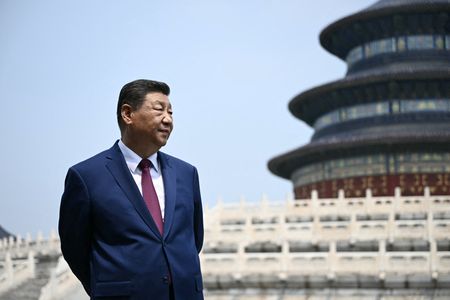
Adjacent to Beijing’s Forbidden City sits a secretive complex surrounding two artificial lakes created for imperial enjoyment.
Zhongnanhai, meaning “middle and southern seas,” represents China’s power center as Chinese President Xi Jinping’s primary residence and central government headquarters.
Zhongnanhai draws comparisons to the White House, the Kremlin or South Korea’s Blue House. However, unlike other presidential residences, Zhongnanhai rarely serves as the primary location for diplomatic visits.
China’s leadership reserves the highly protected grounds exclusively for their closest allies and carefully chosen dignitaries.
Russian President Vladimir Putin, whom Xi has described as his closest friend, visited Zhongnanhai at least twice, in 2024 and 2025.
Xi also invited former U.S. President Barack Obama to Zhongnanhai in 2014, where the two leaders enjoyed an evening walk and dinner.
Elon Musk’s 6-year-old son appeared Thursday at the Great Hall of the People wearing Chinese-style clothing and carrying a tiger bag that became an internet sensation in China.
The small, tiger-head crossbody bag comes from artisanal brand YASTEE, which collaborates with embroiderers in southern China to create handcrafted items.
According to local media, a bag similar to the one Musk’s son wore requires several days to make and decorate by hand.
The bag became viral on Chinese social media and sold out within hours on the company’s online platforms.
In his interview with Sean Hannity of Fox News, the president said he invited them to join his meeting with Xi at the Great Hall of the People despite their participation not being planned.
Trump explained the American business executives were in the building “and I said I think I can get them in five minutes.”
Trump declined to identify which executives participated but said they introduced themselves and spoke briefly, appearing to impress Xi. He noted most had never met the Chinese president.
“He actually said that was very good. That was a good idea,” Trump said regarding Xi’s reaction.
Trump, whose delegation included the CEOs of Mastercard and Visa, said he also discussed with Xi expanding U.S. credit card companies’ access to the Chinese market.
“I said, ‘What about using Visa in China?’” Trump mentioned in his Fox News interview. “For some reason they were blackballed and maybe that’ll come off.”
China permits foreign cards to connect with instant payment apps like Alipay and WeChat Pay. However, physical card usage remains limited primarily to international hotels, luxury shopping centers, and select upscale restaurants.
Visa and Mastercard have long sought greater access to Chinese consumers and businesses in the world’s second-largest economy.
Trump inquired about releasing Jimmy Lai, the 78-year-old former newspaper publisher and pro-democracy activist serving a 20-year sentence in Hong Kong, during his meeting with Xi, Secretary of State Marco Rubio revealed in an NBC News interview Thursday.
“We would like to see him released. We would be open to any arrangement that would work for them, as long as he’s given his freedom,” Rubio stated.
Lai published Apple Daily, a tabloid that criticized Chinese and Hong Kong government officials.
“He’s all business,” Trump told Sean Hannity of Fox News in a recorded interview following Thursday’s meeting with the Chinese leader. “There’s no games. There’s no talking about how nice the weather is.”
Trump described Xi as “a very smart person” and said they maintain “a good relationship.”
“He’s all about China,” Trump observed.
The president suggested during the Fox News interview that Iranian officials initially “said very strongly” that the U.S. could send teams to collect hundreds of pounds of enriched uranium believed buried beneath nuclear sites severely damaged by U.S. military strikes last year.
However, he said Iran later withdrew from the agreement.
“They agreed to it. They take it back. They agree, you know it’s back and forth,” he explained.
Iran’s willingness to surrender enriched uranium represents a crucial point in negotiations to end the conflict.
Trump has consistently maintained Tehran is prepared to do so, but Iran has largely dismissed such claims.
Trump added during the interview that Iran claims only the U.S. and China possess sufficient technology to extract the enriched uranium, given its deep underground location.
Trump and Xi planned additional discussions Friday.
They scheduled time together at Xi’s official Beijing residence before Trump returns to Washington.
Secretary of State Marco Rubio told NBC that “there’s going to be some agricultural purchases” resulting from this visit.
U.S. soybean farmers suffered significant losses during Trump’s trade war with China and have pressed him to convince Beijing to increase purchases of their crops.
China is expected to meet its commitment to buy 12 million metric tons (13.2 million tons) of U.S. soybeans this year, though this falls well short of the 25 million to 30 million metric tons (27.5 million to 33 million tons) purchased previously.
China, the largest foreign purchaser of U.S. soybeans, completely stopped buying them last year after Trump raised tariffs on all Chinese products. Following Trump’s October meeting with Xi, the White House announced China agreed to purchase 12 million metric tons.
The American Soybean Association hopes Trump can negotiate an agreement for an additional 8 million metric tons (8.8 million tons) by August 31.
HARARE, Zimbabwe (AP) — Names like Have-A-Look, Handsome, Thanks, Trust, Privilege, Doubt, Problem, and Shame aren’t merely words in Zimbabwe. Parents select these names purposefully in a society where choosing what to call a child extends far beyond simple identification and can provide insight into family stories, feelings, and situations.
Initially, Privilege Mubani, a 37-year-old bar manager in Harare, the capital city, hadn’t considered the significance of her name much.
However, when she matured, she questioned her father about her name’s meaning. His response revealed a tale she had never envisioned, one containing stigma, strength, and surprising happiness.
Her mother had conceived while unmarried. In their traditional society where unwed motherhood faces disapproval, she had abandoned hopes of marriage.
But then a man appeared who married her despite the social stigma, making her mother feel vindicated.
“People had been laughing at her. She was being mocked for having a ‘fatherless’ child. Naming me Privilege was her own expression of gratitude,” she said with a grin.
The country’s preference for English names demonstrates its past as a British colony and its predominantly Christian population. English continues as an official language and the primary one used in education and government.
However, this custom extends beyond colonial influence.
In this southern African country, names frequently serve as brief stories of happiness, sorrow, belief, struggle, or strength during a child’s birth, explained David Chikwaza, a decolonization researcher at Dublin City University’s School of History and Geography in Ireland.
“It is an echo of pre-colonial naming traditions. Zimbabweans, and Africans in general, are very spiritual and the naming of a child always carried deep symbolism,” Chikwaza said. “Parents would name their child as a way of addressing a societal or a personal issue. Colonialism promoted English as a language of sophistication, so Africans simply turned to the English vocabulary for expression, but the meanings remain the same.”
This creates a naming system that frequently captivates people from other countries.
When Zimbabwe’s national soccer team played in January’s African Cup of Nations tournament, their remarkable player names caught public attention and became popular on social media.
“I have never seen a team with cooler names. I am hearing the commentator say these names and I am like, there’s no way these are real,” one TikTok user said, reacting to players named Teenage, Godknows, Divine, Marvellous, Knowledge, Prince and Prosper.
This uniqueness also becomes material for humor.
Learnmore Jonasi, who reached the finals of “America’s Got Talent” in 2024, frequently gets laughs from American audiences by joking about his name and others from his homeland.
Names like Givemore, Best, Promise, Guarantee, Anxious, Innocent, Confidence and Hardlife are among many that might seem unusual elsewhere, but appear normal in Zimbabwe.
Many people view their names with pride and even as goals to achieve.
Consider Lovejoy Mutongwiza, a 33-year-old journalist and chief executive of 263chat, an online news outlet. He views his name as a reason to celebrate.
“My mum and dad said they were madly in love and in a happy place in their lives when they conceived me, so they aptly named me Lovejoy,” he said. “It’s a befitting name. I think I have lived up to it because I am rarely angry. I am naturally a bubbly person.”
Some people accept names that others might consider negative.
Shame Chikwana said he has never felt troubled by his name and rejected his sister’s suggestions to choose a more typical name as an adult.
“I would never trade it for any other name. I was named after my late grandfather so it’s a heritage I am carrying,” said the 51-year-old, adding that his parents refused to divulge why his grandfather was given the name.
“I hope it stays within the family for generations to come,” he said.
BENGALURU, India (AP) — The ongoing conflict with Iran has created severe energy disruptions across Asia, with ordinary citizens bearing the brunt of skyrocketing fuel costs and supply shortages.
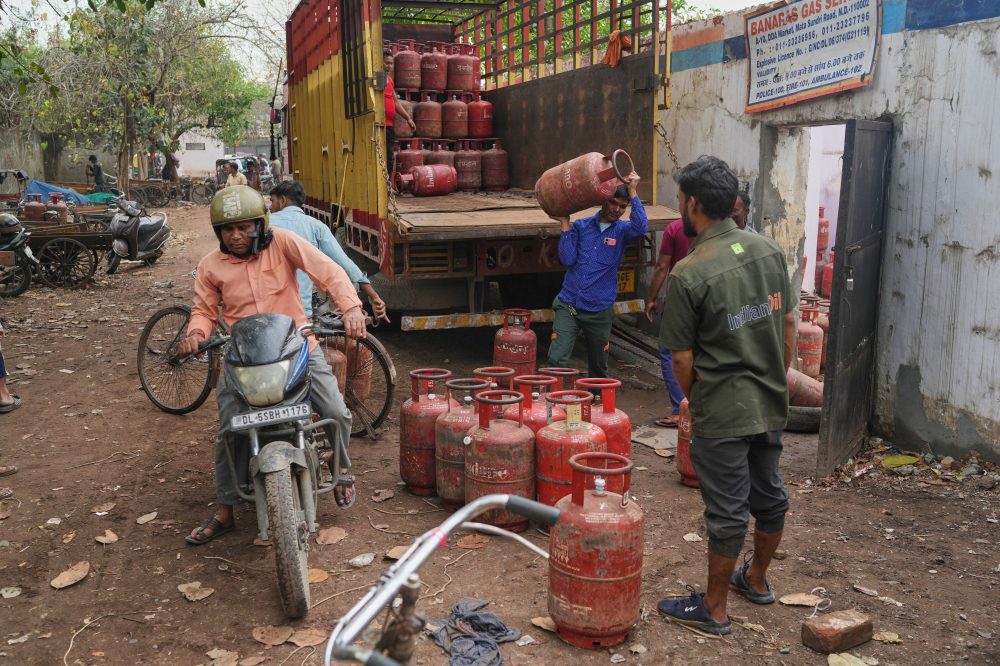
In New Delhi, taxi operator Ravi Ranjan faces mounting financial pressure as shipping interruptions from the Iran conflict force him to pay dramatically higher prices for household cooking fuel. The situation has worsened as India’s prime minister encourages citizens to cut back on driving and travel.
Ranjan’s expenses have tripled, he explained, with cooking fuel deliveries experiencing significant delays.
“I used to get a cylinder of LPG for 1,000 rupees ($11), now I pay 3,000 rupees ($31) in the black market,” he said.
Meanwhile, in Chennai on India’s coast, marketing professional Sushmita Sankar reports that both gasoline and cooking fuel costs are rising dramatically due to the conflict. Sankar notes that ethanol-blended gasoline — now the standard option at filling stations — appears to be reducing her vehicle’s fuel efficiency.
“Fuel expenses are increasing and with only ethanol mixed petrol available, I feel my car’s mileage has reduced in the last year or so,” she said. “Already our days are busy with work and taking care of our child’s school and other needs. Having to now spend a lot of time to fill my car or buy LPG is making things even more hectic.”
Responding to cooking gas shortages and rising crude oil costs, India has suggested allowing automobiles to operate on 85% or even pure ethanol. The country has also prohibited sugar exports through at least September to maintain domestic supplies and ensure sufficient raw materials for potential increases in ethanol blending.
Officials argue that increased ethanol use will decrease vehicle emissions, though motorists worry about reduced fuel efficiency. Environmental specialists also note that using corn, rice and other food crops for ethanol production could interfere with food and animal feed requirements.
Asia experienced the earliest and most severe fossil fuel disruptions from the Iran conflict’s impact on the Strait of Hormuz, a vital energy shipping route.
With countries preparing for additional impacts, governments seek to expand biofuel usage to reduce fuel import dependence. Indonesia and Malaysia are also advancing policies to increase fuel mixing with palm oil-derived alternatives, though specialists caution this could promote agricultural expansion and forest destruction.
Even with this conflict-driven focus, implementing higher fuel blends across Asia may require years due to the time needed for supply chain development, blend research and vehicle compatibility testing.
The prime minister asked Indians this month to make “nationally responsible choices” to conserve fuel by increasing public transportation use, carpooling and avoiding international travel.
India purchases nearly 90% of its crude oil from abroad, so the Iran conflict has impacted gasoline-dependent vehicles and millions of households and restaurants requiring LPG. Natural gas-dependent industries have also suffered effects. However, a national electrical system powered mainly by coal and some renewable sources has maintained electricity supply.
Following the Iran conflict’s start, Indian officials responded by diversifying oil suppliers and suggesting higher biofuel blends, though energy specialists say this has only partially reduced the impact.
Most Indian fuel stations now offer a 20% ethanol mixture after the nation reached its goal of nationwide blend distribution in 2025, five years earlier than the government’s original timeline. Officials are considering raising the blend percentage across all gasoline to 27% by 2030. The recent transport ministry announcement suggesting vehicles that operate on 85% ethanol or pure ethanol represents the clearest indication yet for auto manufacturers to start producing compatible vehicles. The schedule for these higher blends remains undetermined.
“Moving toward higher ethanol blends reflects the government’s long-term vision for energy security, lower emissions, and reduced dependence on imported crude oil,” said Chandra Kumar Jain, president of the Grain Ethanol Manufacturers Association.
India’s 20% ethanol blend resulted in a 2.5% decrease in crude oil imports in 2025, according to the Institute for Energy Economics and Financial Analysis.
While any oil import reduction benefits the country, a disadvantage of the accelerated fuel blending pace is policy uncertainty and confusion among car manufacturers, said Charith Konda of IEEFA.
Southeast Asia similarly views bioenergy as protection from the current crisis and future disruptions, according to Reza Yosri, an energy specialist at consulting firm Ramboll.
Indonesia aims to raise fuel blending to 50% biodiesel from the current 40% under a program initiated in March by the president, who declared, “We are going in a big way to biofuel.”
The biofuel program represents part of Indonesia’s drive for “energy sovereignty” following recent fuel disruptions, according to Putra Adhiguna of Jakarta-based Energy Shift Institute.
Fuel blending will also assist Indonesia in creating a domestic market for palm oil it exports worldwide, he explained. However, he emphasized the need to monitor land clearing and forest destruction.
In April, Malaysia authorized a plan to gradually raise its fuel mixing to 15% biodiesel and 85% fossil diesel, with a potential 20% blend being evaluated.
Rising fuel costs have “revived the idea,” explained Ahmad Rafdi Endut, a Kuala Lumpur-based energy analyst. Nevertheless, he warned that higher concentrations will require additional testing and consumers remain concerned about decreased mileage.
Although ethanol blending is frequently promoted as a gasoline replacement, specialists caution that the situation is more complex.
Shyamasis Das of the New Delhi-based Centre for Social and Economic Progress noted uncertainty about how higher blends would impact existing engines, and scaling up production for engines capable of running on higher concentrations will take time.
Motorists may experience compromises. Ethanol contains less energy per unit than gasoline, meaning vehicles typically use more fuel to travel the same distance, Das clarified.
Worries persist that crops required for ethanol production could compete with food supplies, increasing prices and worsening water shortages, Das added. In India, approximately 70% of ethanol derives from crops including sugarcane, corn and rice.
Creating one liter (34 fluid ounces) of ethanol can demand between 3,000 liters (792 gallons) and 10,000 liters (2,641 gallons) of water, a resource already strained in a nation experiencing groundwater depletion.
While biofuels can decrease vehicle emissions, their total climate effect depends on production methods.
Konda, the IEEFA analyst, suggested that electric vehicles represent a more effective long-term approach, combined with transitioning industries to renewable energy rather than fossil or biofuels.
The climate advantages of crop-derived ethanol can be constrained by elements including land usage and water consumption, analysts report.
Das, from CSEP, emphasized that producing ethanol from materials requiring no additional land or water — such as agricultural waste, municipal refuse and used oils — is essential.
“If the biofuel is not sourced from residues or waste, they are not usually treated as renewable,” he said.
TAIPEI, May 15 (Reuters) – Taiwan’s government expressed appreciation to the United States on Friday for maintaining its supportive stance and dedication to regional stability, while confirming that American policy toward the island remains consistent during President Donald Trump’s ongoing state visit to China.
The United States serves as Taiwan’s primary international ally and maintains legal obligations to supply the island with defensive capabilities, despite China’s claims over Taiwan and demands for arms sales to cease.
Secretary of State Marco Rubio confirmed on Thursday that discussions between Trump and President Xi Jinping included the topic of democratically-led Taiwan, while emphasizing that American policy toward the territory continues without modification.
Taiwan Foreign Minister Lin Chia-lung issued a statement through his ministry expressing gratitude to the U.S. for consistently voicing its support and highlighting the importance of maintaining peace and stability in the Taiwan Strait region, while confirming that U.S. Taiwan policy remains steady.
The ministry noted that Chinese military forces persist in conducting operations near Taiwan, engaging in “harassment and intimidation.”
“This demonstrates that Beijing is a major risk to current regional peace and stability,” the statement said.
During Thursday’s discussions, Xi warned Trump that poor management of the nations’ Taiwan-related disputes could lead China-U.S. relations to a “dangerous place.”
Speaking to NBC, Rubio characterized any Chinese use of force regarding Taiwan as a “terrible mistake.”
Joseph Wu, secretary-general of Taiwan’s National Security Council, responded to Rubio’s comments later that evening through his X social media account, expressing agreement with the sentiment.
“We’re determined to defend the status quo & deter aggression,” Wu posted.
Chinese military operations in Taiwan’s vicinity continue on a daily basis.
Taiwan’s defense ministry reported Friday morning that seven Chinese warships were detected in the area during the previous 24-hour period, while no aircraft were observed.
Trump is scheduled to depart for the United States Friday afternoon following tea and lunch engagements with Xi.
Exotic dancers in Montreal are organizing a work stoppage during the Canadian Grand Prix weekend, timing their labor action to coincide with what they say is the most profitable period for strip clubs in the city.
The Sex Work Autonomous Committee has scheduled the strike for May 23, which falls on the eve of the fifth Formula One race of the season. The group is pushing for recognition as employees rather than independent contractors, along with the workplace protections that come with employee status.
The workers’ main objective is eliminating the “bar fee” that dancers must pay to perform at clubs. They are also seeking improved safety and sanitation standards in their workplaces, plus an end to discriminatory practices in hiring and shift assignments.
“As strippers, we are considered independent contractors, this means that on paper we are treated the same as, say, an independent plumber that you would hire for your home repairs,” SWAC said in a statement.
“The independent contractor plumber is responsible to no one but themself, while the independent contractor stripper is responsible to club management, at the expense of their job.”
The organization deliberately chose the Grand Prix weekend for maximum impact on club owners’ bottom line.
“The clubs are at their busiest, making it the most lucrative period of the year for our boss,” the statement continued.
“This is our chance to threaten that income and affect them when it hurts the most. During this time, despite management making more money, dancers have to put up with … generally worse working conditions.”
The parliament of the Solomon Islands chose opposition leader Matthew Wale as the nation’s new prime minister on Friday, following last week’s removal of incumbent Jeremiah Manele through a no-confidence vote.
In a parliamentary ballot, Wale secured victory over Peter Shanel Agovaka with 26 votes compared to 22, according to Governor General Sir David Tiva Kapu, who serves as the representative of the nation’s head of state, Britain’s King Charles. The results were announced during a news conference.
Following his selection, Wale acknowledged the challenging circumstances facing his new administration.
“We take government at a difficult time, given what is happening throughout the world,” Wale said after his election.
“We are not immune from the impacts of these geopolitical events.”
The Solomon Islands, positioned 1,600 km (1,000 miles) northeast of Australia, has gained strategic significance in recent years as its relationship with China has grown stronger. The nation entered into a security agreement with China in 2022, raising alarm among the United States and neighboring South Pacific countries.
Wale had previously spoken out strongly against this agreement, arguing it would harm regional security and potentially damage relationships with current partners. However, in recent years he has worked to improve relations with China.
In 2025, he headed a delegation to Beijing, where he commended China’s economic progress and stated his party’s support for the one-China principle, based on information from a visit summary released by the Communist Party of China.
NEW YORK (AP) — The organization Global Citizen, which fights poverty worldwide, has experience with major events. The advocacy organization brought together more than 60,000 people at its Central Park festival last year to focus attention on protecting rainforests and improving energy access.
Now Global Citizen is working on its biggest project to date: organizing the inaugural FIFA World Cup halftime show scheduled for July 19, developed with assistance from Coldplay’s lead singer Chris Martin. The event will showcase Super Bowl-style entertainment — rarely seen in soccer — starring Madonna, Shakira and BTS. Additionally on Thursday, Shakira unveiled the tournament’s official anthem “Dai Dai” featuring Afrobeats star Burna Boy.
Event planners hope to channel the tournament’s anticipated billions of global viewers toward a charitable effort created in partnership with soccer’s worldwide governing organization. Using what Global Citizen founder Hugh Evans described as the “complementary” bonding forces of soccer and music, the FIFA Global Citizen Education Fund seeks to collect $100 million for community organizations that give disadvantaged children educational opportunities and sports access.
“I hope that on the world’s biggest stage, finally, the importance of investing in education steals the show,” Shakira told the Global Citizen NOW summit in New York on Thursday. Later, she told The Associated Press in an interview that she wanted to help the “many children who are being left behind.”
“That should be our first concern,” Shakira said. “I’m so excited that finally we’re gonna use a global event like this one as a platform to discuss what’s most important: kids’ education.”
However, that effort might face challenges due to the enormous expense of game tickets. One dollar from each World Cup ticket purchase will support the education fund. But with tickets priced in the four- to five-figure range, plus expensive travel and accommodation costs, some host cities are reducing their attendance projections.
Adding to the complexity of their unity message is FIFA President Gianni Infantino’s growing relationship with President Donald Trump, whose limiting immigration policies and recent military actions create what opponents view as an unwelcoming atmosphere unusual for an international sports competition.
Infantino presented FIFA’s new peace prize to Trump in December. Ivanka Trump, the president’s daughter, was also named to the education fund’s board.
Evans is not concentrating on politics, though. “I’m a pragmatist,” he told the AP. “I’ve always believed that if we can do something so unbelievably positive, it has the potential to unite people at a time when the world needs it most.”
Thursday’s Global Citizen NOW summit presenters highlighted their capacity to create cross-industry backing for initiatives like the education fund. The yearly spring meeting brings together performers, corporate leaders and international officials to explore joint approaches to eliminating extreme poverty, often connecting with the United Nations’ comprehensive “sustainable development goals” that span from ending hunger to reaching gender equality.
They’ve collected $47 million thus far for the education fund, according to a Thursday announcement at a Global Citizen summit in New York City. Corporate backers Bank of America, MetLife and Cisco contributed $15 million collectively, according to Evans. MetLife is adding an extra $5 for each video that supporters share online showing themselves juggling a soccer ball with the hashtag #FootworkForFutures.
Indian education entrepreneur Sunny Varkey and his Varkey Foundation provided $3 million. Also being contributed are ticket revenues from The Weeknd’s successful world tour along with the joint tour recently revealed by Usher and Chris Brown. Shakira announced Thursday she will contribute 100% of her “Dai Dai” earnings plus $1 from each ticket to her newly expanded tour in the United States.
Evans is now approaching national leaders for additional financial backing. He invited current or future World Cup host nations to add supplemental funding.
“It has the potential to say to the whole world: We are global citizens… We’re all on this amazing planet together. Let’s solve the world’s biggest problems together,” Evans said, adding that the move can foster a human approach rather than a “nationalistic” one.
Evans referenced the 27 initial FIFA Global Citizen Education Fund recipients, announced earlier this week, as motivation. Among the beneficiaries was Hit the Books, a Harlem-based nonprofit that uses mixed martial arts as the hook to provide students with additional educational resources.
The grants range from $50,000 to $250,000. Jhae Thompson, executive director of Hit the Books, said the support is meaningful because many nonprofits support hundreds of children on incredibly small budgets.
“What we are really leveraging is the foundation of what a young person needs in order to build character, to build discipline, to build confidence,” Thompson told the Global Citizen NOW audience.
Global Citizen has developed partnerships in new areas as traditional supporters including the U.S. reduce their international aid spending. That growth includes the Middle East, represented by the addition of Mariam AlMheiri to their board.
AlMheiri, who heads the International Affairs Office at the Presidential Court of the United Arab Emirates, emphasized that “when you look at a football, everyone’s happy” — a positive association she hopes will translate into support for the education fund.
Marcus Samuelsson, a multiple James Beard Award-winning chef and avid soccer fan, noted that this World Cup is spread across three different countries: the United States, Mexico and Canada. The tournament, he added, has expanded from its origins as a competition largely between South American and European nations to represent countries in Africa and Asia, too.
He hopes that wide geographic spread inspires curiosity about global issues.
“You start thinking about these countries. You maybe want to go there on vacation, maybe you want to go there, volunteer and help out. Whatever gets you going,” Samuelsson told AP. “And it can start by falling in love while watching them.”
President Donald Trump concluded his rapid visit to China on Friday, maintaining that ties between the world’s two largest economies are strong and improving, even as major disagreements persist over Taiwan, Iran, and other critical issues.
On his final day in Beijing, Trump took to social media to claim that Chinese leader Xi Jinping had “congratulated me on so many tremendous successes” and clarified that Xi was speaking only about his predecessor, former U.S. President Joe Biden, when he “very elegantly referred to the United States as perhaps being a declining nation.”
However, Trump’s optimistic assessment of U.S.-China ties conflicts with challenging realities surrounding the most contentious matters between the two global powers.
China has demonstrated minimal public enthusiasm for American requests to become more engaged in addressing the Iran situation, despite Trump revealing in a Fox News interview with Sean Hannity that Xi had privately offered assistance during their discussions. The White House also maintains that China could do more to reduce the supply of Chinese-produced precursor chemicals flowing into Mexico for illegal fentanyl production that has devastated numerous American communities.
During private discussions, Xi cautioned Trump that their disagreements regarding the self-governed island of Taiwan could push the world’s leading powers toward “clashes and even conflicts” if mismanaged, according to Chinese government representatives.
Trump and Xi planned additional time together at Xi’s official Beijing residence on Friday before the American president’s lengthy return trip to Washington.
Xi’s stern warnings about Taiwan dominated Thursday’s discussions, even as Trump emphasized the idea that America and China maintain a “special relationship.”
Secretary of State Marco Rubio informed NBC News that American policy regarding Taiwan remained “unchanged” and warned it would be “a terrible mistake” for China to attempt taking Taiwan through military force. He characterized Xi’s remarks as routine.
“They always raise it on their side. We always make clear our position, and we move on to the other topics,” Rubio explained, noting he was among senior advisors joining Trump for the discussions.
In recent weeks, China has emphasized its position that Taiwan represents the “core” of its interests and remains essential for maintaining stable U.S. relations.
Trump has insisted Taiwan boost its defense expenditures, and in December, the White House revealed an $11 billion arms package for Taiwan, representing the largest ever for the island democracy.
However, America has not yet started delivering these weapons sales, and Trump indicated he planned to address this issue with Xi in Beijing. He has also complained that Taiwan “stole” America’s semiconductor industry and demanded Taiwan compensate the U.S. for protection.
Meanwhile, Trump has used tariff threats and Biden-era incentives to encourage Taipei to commit to substantial investments in American semiconductor production and purchase billions in U.S. liquefied natural gas and crude oil. This approach toward Taiwan has sparked questions about whether Trump might reduce support for the island democracy.
Ma Chun-wei, a China-Taiwan relations specialist at Taiwan’s Tamkang University, explained that the strengthened defense partnership between Washington and Taipei has prompted China to intensify its Taiwan rhetoric.
“For Xi Jinping, he must show that the Taiwan issue is in China’s hands. He must demonstrate this image, or else he would be criticized,” Ma stated.
Iran featured prominently when Trump met with Xi on Thursday for their two-hour session in the Great Hall of the People.
The leaders reached agreement that the Strait of Hormuz — essentially blocked since the Iran conflict began — must reopen to support worldwide energy needs, Trump revealed in his Fox News interview. Approximately 20% of global oil passed through the strait before hostilities commenced on Feb. 28.
Trump disclosed in the interview that Xi privately volunteered help in resolving the conflict, though the specifics remained unclear given China’s strategic alliance with Iran.
“He’d like to see the Hormuz Strait open,” Trump stated. “He said if I can be of any help whatsoever, I would like to help.”
The president also noted Xi opposed implementing tolls on vessels using the strait and showed interest in China potentially buying more American oil to decrease Chinese reliance on Gulf oil going forward.
Earlier this week, Trump had minimized the significance of Iran discussions with Xi regarding the 11-week conflict that has caused rising energy costs and threatens global economic recession if not resolved quickly.
“We have a lot of things to discuss. I wouldn’t say Iran is one of them, to be honest with you, because we have Iran very much under control,” Trump informed reporters Tuesday before departing for Beijing.
Yet before Air Force One reached Beijing, Rubio indicated administration officials would argue to Chinese representatives why they should help pressure Iran to negotiate an end to the war.
“Economies are melting down because of this crisis,” Rubio stated aboard the presidential aircraft during the Beijing flight. This situation, the secretary added in a Wednesday Fox News interview with Sean Hannity, will cause consumers to buy “less Chinese product.”
“So it’s in their interest to resolve this,” Rubio concluded.
China, which has criticized American and Israeli attacks on Iran, possesses unique influence as Iran’s largest trading partner. The Chinese government has managed the war’s economic impact using strategic oil reserves, but this protection has limits. Economic experts warn the Iran conflict could significantly affect China’s export-dependent economy.
Prior to the visit, the White House emphasized Trump wouldn’t make the trip without seeking concrete results, hinting at possible trade announcements.
Such developments remained possible, with American officials hoping to secure Chinese commitments for purchasing U.S. soybeans and beef. Trump told Fox News that Xi had indicated China’s commitment to buy 200 Boeing aircraft from America.
Thursday’s discussions included increasing Chinese purchases of American agricultural products and expanding investment opportunities between both markets, the White House reported. Trump administration officials also seek to establish a Board of Trade with China for addressing commercial disputes.
Chinese Premier Li Qiang emphasized friendship and cooperation in U.S.-China relations while meeting with American business leaders, including Tesla’s Elon Musk, Apple’s Tim Cook, and Nvidia CEO Jensen Huang, who accompanied Trump’s Beijing delegation.
“China and the United States have been able to maintain frank and smooth dialogue and communication and actively safeguard a stable and healthy bilateral relationship” despite international turbulence, Li remarked.
President Donald Trump is conducting high-stakes discussions in Beijing with Chinese leader Xi Jinping, though major breakthroughs on contentious topics like the Iran conflict, trade disputes, technology issues, and Taiwan remain unlikely.
During talks about Iran, Trump revealed that Xi expressed China’s willingness to help broker an end to the conflict and reopen the Strait of Hormuz. Given that China purchases the most Iranian oil globally, Trump has been hoping Xi would leverage this relationship to pressure Iran into accepting a deal on American terms. Trump also mentioned that Xi provided assurances that China would not supply military equipment to Iran.
During private discussions, Xi cautioned Trump that disagreements over Taiwan — a self-governing island that Beijing considers its territory — could lead to confrontations or military conflict between the United States and China. Trump approved an $11 billion weapons package for Taiwan in December but has not yet proceeded with the delivery. Secretary of State Marco Rubio subsequently cautioned that China attempting to seize Taiwan through military force would be “a terrible mistake.”
Trump is also emphasizing trade negotiations and agreements for China to purchase additional agricultural goods and commercial aircraft, establishing a framework to resolve disputes and prevent another trade conflict like the one sparked last year following Trump’s tariff increases.
In related developments, Adm. Brad Cooper, a senior U.S. military commander in the Middle East, is appearing before the Senate for his first testimony since the Iran conflict started.
Trump began his final day in Beijing by posting on social media, asserting that when Chinese leader Xi Jinping “very elegantly referred to the United States as perhaps being a declining nation,” he was not referring to Trump personally. The U.S. president, who did not clarify where these comments originated, claimed they were directed at former President Joe Biden. Trump stated that Xi has only praised his own accomplishments since returning to office last year. “In fact, President Xi congratulated me on so many tremendous successes in such a short period of time,” Trump posted.
Meanwhile, Interior Secretary Doug Burgum’s Thursday post on X, where he shared design blueprints for a historic Washington golf course, has prompted a court filing from lawyers in a civil lawsuit challenging those plans. Attorneys for the DC Preservation League submitted a notice to inform the court that Trump administration officials continue discussing design proposals for the popular and historic golf course while the legality of these plans remains under judicial review.
In other national developments, the Supreme Court on Thursday maintained access to mifepristone, a medication used in the most prevalent abortion method, rejecting lower court restrictions while litigation continues. The court’s decision allows women seeking abortions to keep obtaining mifepristone at pharmacies or by mail without requiring an in-person doctor visit.
The Cuban government announced that CIA Director John Ratcliffe held Thursday meetings with officials from the Caribbean nation’s Ministry of the Interior during a senior-level visit to the island. According to official reports, Cuba used the meeting to present evidence claiming the nation presents no danger to U.S. national security.
A Democratic initiative to pass legislation limiting Trump’s authority to launch additional attacks against Iran failed in the House with a tied vote. The war powers resolution was defeated 212-212, with three Republicans joining Democrats in support while one Democrat opposed it.
The Department of Justice is charging Yale University with illegally factoring race into medical school admissions decisions. Assistant Attorney General Harmeet Dhillon stated in a Thursday letter that data indicate Black and Hispanic students receive higher admission rates than white or Asian students despite having somewhat lower grades and test scores.
The Environmental Protection Agency announced Thursday its intention to ease regulations requiring coal-fired power plants to prevent toxic heavy metals from entering waterways. The agency cited the rule’s excessive costs to the energy sector during a period of increasing energy demand.
The Justice Department filed a lawsuit challenging attempts to sanction attorneys from Trump administrations, claiming the District of Columbia Bar is inappropriately politicizing the legal disciplinary system. The head of U.S. Border Patrol, Michael Banks, announced his immediate resignation during a Fox News interview Thursday, stating “It’s just time.”
U.S. ambassador to the United Nations Mike Waltz announced an additional $1.8 billion in funding for UN humanitarian assistance at a Thursday press conference. The funding will support life-saving aid for disaster victims, famine relief, and “people who are truly in critical need.”
VIENNA (AP) — Eurovision’s final competition roster has been set after Thursday’s second semifinal eliminated five additional nations from the international singing competition.
Thursday’s semifinal featured 15 nations competing for the remaining 10 spots in Saturday’s grand finale of the continent-wide music contest, with winners determined through combined voting from national panels and global television audiences.
Advancing to the final round are Denmark’s Søren Torpegaard Lund performing the sultry “Før Vi Går Hjem” (“Before We Go Home”), Australia’s Delta Goodrem with her power ballad “Eclipse,” and Bulgaria’s Dara singing the infectious “Bangaranga.”
Additional qualifiers include Daniel Žižka representing Czechia, Ukraine’s Leléka, Albania’s Alis, Malta’s Aidan, Cyprus performer Antigoni, Romania’s Alexandra Căpitănescu, and Norway’s Jonas Lovv. Countries from Azerbaijan, Luxembourg, Armenia, Switzerland and Latvia failed to advance.
Tuesday’s earlier semifinal had already secured spots for 10 other performers, including Finland’s Pete Parkkonen and Linda Lampenius, Greece’s rapper Akylas, Serbia’s goth metal group Lavina, Moldova’s folk-rapper Satoshi, and Israel’s Noam Bettan.
The United Kingdom, France, Germany and Italy receive automatic final placement as the competition’s primary financial supporters. Austria earns direct entry as the host nation following last year’s victory.
While Eurovision promotes “United by Music” as its guiding principle and attempts to avoid political controversy, it frequently struggles with such issues. Russia faced expulsion in 2022 following its comprehensive attack on Ukraine.
Both the 2024 competition in Malmo, Sweden, and the previous year’s event in Basel, Switzerland, witnessed pro-Palestinian demonstrations demanding Israel’s removal due to its military actions against Hamas in Gaza. Another protest targeting Israel’s involvement is scheduled before Saturday’s Vienna finale.
Spain, Ireland, the Netherlands, Slovenia and Iceland have withdrawn from this year’s Eurovision in protest of Israel’s continued participation.
Israel has additionally faced accusations of conducting an unauthorized promotional campaign to secure contestant votes. The European Broadcasting Union, Eurovision’s organizing body, has strengthened voting regulations in response, reducing individual voting limits from 20 to 10 and implementing stricter protections against “suspicious or coordinated voting activity.”
Bettan encountered some protest chanting during his Tuesday semifinal performance. Departing from previous policies, Palestinian flags are now permitted within the venue, and Austrian broadcaster ORF announced it will not silence audience disapproval.
The five-nation withdrawal represents a significant financial and audience setback for an event that organizers report drew 166 million global viewers last year. While Bulgaria, Moldova and Romania have rejoined after recent absences due to artistic or budgetary concerns, total participation remains at its lowest point since 2003.
Nevertheless, Eurovision continues exploring growth opportunities, with a new Eurovision Song Contest Asia scheduled for Bangkok this November.
Contest director Martin Green expressed optimism Thursday that Hungary might rejoin Eurovision for the first time since 2019, now that Prime Minister Péter Magyar has succeeded nationalist-populist leader Viktor Orbán.
Green also indicated that the boycotting nations remain welcome to return.
“We’ve made it very clear to them we can’t wait for them to come back,” Green said.
CIA Director John Ratcliffe conducted a significant diplomatic visit to Cuba on Thursday, holding talks with high-ranking Cuban officials including Raulito Rodriguez Castro, the grandson of former leader Raul Castro, according to sources from both governments.
During the meetings, Ratcliffe sat down with Rodriguez Castro, Ministry of Interior Lazaro Alvarez Casas, and Cuba’s intelligence chief to discuss cooperation on intelligence matters, economic stability, and security concerns. A CIA representative verified these discussions to the Associated Press.
The CIA director traveled to the island “to personally deliver President Donald Trump’s message that the United States is prepared to seriously engage on economic and security issues, but only if Cuba makes fundamental changes. According to official reports, the meeting served as a platform for Cuba to present evidence asserting that the nation poses no threat to U.S. national security,” the CIA official said.
Cuba’s government released a statement acknowledging the discussions “took place Thursday, May 14, against a backdrop of complex bilateral relations.”
American representatives emphasized that Cuba must not remain a “safe haven for adversaries in the Western Hemisphere,” while Cuban negotiators maintained their nation does not threaten U.S. security. The Cuban side also challenged their country’s placement on America’s list of state sponsors of terrorism.
This diplomatic encounter occurred several weeks following Cuba’s acknowledgment of recent discussions with American officials on the island, as relations remain strained due to the U.S. energy blockade affecting the Caribbean nation. Cuba’s electrical infrastructure has suffered major failures, leaving eastern regions without power. The American fuel embargo has worsened the island’s economic crisis, leading to shortened work schedules and food spoilage as refrigeration systems fail.
Just days before the meeting, the U.S. State Department restated its offer to provide Cuba with $100 in humanitarian aid and satellite internet access “if the Cuban regime will permit it.”
In late January, President Donald Trump issued warnings of tariffs against nations that sell or provide oil to Cuba. While Trump has also suggested potential intervention in the country, and Cuban President Miguel Díaz-Canel recently stated his nation would defend itself if necessary, sources informed the AP this month that military action is not expected in the near term.
An Iranian-American artist revealed a memorial artwork Thursday morning in Webster, Texas, paying tribute to young victims of violence perpetrated by Iran’s Islamic regime and allied groups.
The large memorial piece, called “WOMAN. LIFE. FREEDOM.,” was displayed between 10:00 and 11:00 a.m. at 425 Henrietta in Webster, located outside Houston. Artist Hooman Khalili created the work to bring global awareness to the victims as the world prepares for the FIFA World Cup.
The memorial artwork shows children assembled on a soccer field and weaves together stories of young victims from both Israel and Iran. Featured prominently are the 12 Druze children who died on July 27, 2024, after a Hezbollah rocket hit a soccer field in Majdal Shams near Mount Hermon in northern Israel.
The piece also pays tribute to Iranian children who perished during civil unrest and government crackdowns by the Islamic regime beginning in 2022, including Kian Pirfalak, Sarina Esmailzadeh, and Nika Shakarami.
“This mural is ultimately about children,” Khalili said. “Different backgrounds, different countries, different languages—but the same stolen innocence. These children share a common enemy in the ideology and violence exported by the Islamic regime and its proxies.”
According to Khalili, the memorial’s timing was planned to align with increased global focus on North America as the FIFA World Cup approaches, with games scheduled across the United States, Canada, and Mexico.
“The roots of this project are in Israel,” he said. “But my hope is that the tree blossoms in the United States. As the world gathers around soccer, I want the eyes of the world to also see the humanity of these children and the brutality that took their lives.”
The memorial features visual elements representing both Druze and Persian heritage, incorporating symbols from Nabi Shu’ayb (also called Jethro’s Tomb), Tehran’s Azadi Tower, and Persia’s Lion and Sun emblem.
Prior to creating the memorial, Khalili visited Majdal Shams, where he spoke with Naila Fakhr al-Din, whose daughter Alma Fakhr al-Din was among the victims, and met with Druze spiritual leader Sheikh Rafa Halabi. The artwork additionally honors Iranian footballer Zahra Azadpour, who was killed during civil unrest in Iran in January 2026.
Russian President Vladimir Putin’s recent hints that the Ukraine conflict might be approaching its conclusion has sparked fresh debate in Kyiv and among its allies: Is Moscow genuinely preparing for diplomatic engagement, or is it employing peace rhetoric to pressure Ukraine and fracture Western unity while warfare persists?
The disconnect is stark. Putin and other Kremlin officials have recently discussed potential progress toward ending hostilities while simultaneously insisting that Ukraine must retreat from territories Russia claims to have incorporated, including areas where Russian forces lack complete control. Reuters reported this week that the Kremlin reiterated Putin’s June 2024 stipulations, which would allow ceasefire talks and negotiations only if Ukraine pulled back from the four Ukrainian regions Russia says it has incorporated. Kyiv has dismissed these terms as unworkable.
Russia’s military actions tell a different story. On May 13 and 14, Russia conducted what Reuters characterized as its most extensive two-day air campaign since the full-scale invasion began, deploying 1,567 drones and 56 missiles, according to Zelenskyy. The bombardment targeted Kyiv and other areas, damaging residential buildings and infrastructure, cutting power in multiple locations, and killing at least 15 civilians. These attacks occurred while Moscow continued presenting itself as receptive to negotiations.
From Kyiv’s perspective, Russia’s stipulations appear less like compromise and more like demands for surrender. Moscow declared brief truces around Easter and Victory Day, but both sides alleged violations. Kremlin foreign policy aide Yuri Ushakov recently informed the Russian news agency Interfax that Russia saw no value in additional peace discussions until Ukraine withdrew its forces from the Donbas, strengthening Ukraine’s belief that Moscow’s proposal amounts to an ultimatum disguised as diplomacy.
More than four years after Russia’s full-scale invasion began, Russia continues occupying roughly one-fifth of Ukrainian land and maintains significant advantages in personnel, missile capabilities, artillery manufacturing, and strategic resources. However, Moscow failed to capture Kyiv, failed to destroy the Ukrainian government, and has failed to completely control the four Ukrainian regions it claims as Russian territory. Russia announced the incorporation of Donetsk, Luhansk, Kherson, and Zaporizhzhia in September 2022 following widely condemned referendums, but it lacked complete control over all four regions then and has never achieved it since.
David Satter, an American journalist, historian, and former Moscow correspondent, said Putin’s recent statements should be considered potentially significant because they are uncommon, not because they necessarily signal a genuine change in Moscow’s objectives.
“It is serious because it is unusual, and it could be a signal to the Russian public that there may be some concessions Russia will have to make,” Satter told The Media Line. “But at this stage, I would not attach too much importance to it, because Russia also has a desire to appear reasonable.”
Satter suggested Moscow’s strategy may focus less on convincing Kyiv than on swaying Europe. In his assessment, Russia seeks to create the appearance of willingness to compromise to undermine European determination and isolate Ukraine from its supporters. “They want to separate Ukraine from its European supporters,” he said. “It is in their interest to give the impression that they are willing to compromise.”
Jason Jay Smart, an adviser on national security and geopolitics based between Kyiv and Washington, and an expert on Russia and Ukraine, provided a more pointed evaluation from the Ukrainian viewpoint. “Inside Ukraine, Putin’s statements are not taken as a serious offer,” Smart told The Media Line. “They are heard as messaging aimed at Washington and Europe, while Russia keeps attacking on the ground.”
Smart referenced recent ceasefire declarations as one reason Ukrainians evaluate Moscow based on actions rather than Kremlin rhetoric. “Moscow announced Easter and May 9 ‘Victory Day’ ceasefires, then violated them hundreds of times,” he said, “which is why Ukrainians judge the conduct, not the Kremlin wording.”
He also cited Ushakov’s statement on Donbas as proof that Moscow’s diplomatic language still depends on demands Ukraine cannot accept. “That is not negotiation,” Smart said. “It is surrender language packaged as diplomacy.”
Russia has captured territory, but it has not secured the political triumph it pursued. Satter characterized Ukraine’s accomplishment as “enormous” because, in his opinion, it prevented the country’s destruction. Ukraine, he said, blocked Russia from achieving its initial invasion objectives, maintained control of many major cities, and forced Russia to pay “a terrible price” for whatever advances it has made.
Russia’s successes, in contrast, are more difficult to characterize politically, Satter said. Moscow incorporated four Ukrainian oblasts—Donetsk, Luhansk, Kherson, and Zaporizhzhia—into the Russian constitution, but it has not completely conquered the territory it claims. “In terms of their objectives, they have not been successful,” he said. Russia declared the regions part of the Russian Federation, but “they have not conquered those territories.”
He said Luhansk is the only one of the four under near-complete Russian control, while Donetsk remains only partially occupied, and Russia still lacks full authority over Zaporizhzhia and Kherson. For this reason, he argued, Moscow’s battlefield advances have not delivered the political victory the Kremlin proclaimed when it announced the incorporations.
Smart characterized Ukraine’s current situation as both weary and resolute. Years of missile attacks, funerals, mobilization, and occupation have placed tremendous strain on Ukrainian society, he said, but have not created acceptance of Russian authority. “Ukrainians are exhausted,” he said, “but they are not confused about what surrender would bring.”
Ukraine’s political stance, Smart argued, depends on a fundamental principle: an aggressor cannot invade another nation and then demand to retain the territory it managed to capture. “You cannot break into someone’s house and then demand to keep the rooms you managed to occupy,” he said. “The invader has to leave.”
He described Ukraine’s primary achievement as survival that has imposed genuine costs on Russia. “Ukraine preserved the state, defended Kyiv, kept democratic politics alive, reopened trade routes, struck Russian military infrastructure, and showed the limits of Russian power,” Smart said. “Its central achievement is survival with consequences.”
Ukraine’s endurance has relied on external assistance, but Smart warned against reducing the conflict to Western weapons alone. External aid mattered because Ukraine first made the national choice to resist. “Without that national decision,” he said, “no shipment of weapons would have saved the country.”
One of Ukraine’s most evident military achievements has been its employment of aerial drones, unmanned naval systems, electronic warfare, battlefield software, and locally modified technologies. These instruments have helped Ukraine partially counter Russia’s advantages in armor, artillery, and personnel by enabling Ukrainian forces to damage or destroy more expensive Russian equipment with cheaper, more adaptable systems.
“Drones and electronic warfare changed the economics of the battlefield,” Smart said. Unable to match Russia “tank for tank or shell for shell,” Ukraine used drones, sensors, and battlefield software to make Russian troops, armor, artillery, and supply lines easier to locate and attack. Innovation has not replaced artillery, air defense, or Western support, he said, but it has made Ukraine “more dangerous, more adaptable, and much harder for Russia to overwhelm.”
The conflict has also compelled Europe to examine its reliance on the US for security. With long-term American support for Ukraine uncertain, European governments and defense analysts are discussing whether the continent can keep Ukraine equipped while rebuilding its own depleted stockpiles, expanding defense production, and preparing to deter Russia with reduced dependence on Washington. The discussion is no longer theoretical; it involves shells, air-defense interceptors, production lines, and defense budgets.
Satter said Ukraine is already protecting the rest of Europe. If Ukraine were to collapse, he argued, much of the country’s mobilized capacity could be absorbed into or redirected by Russia, creating a far greater threat to NATO’s more vulnerable members.
For Satter, Europe has the capability to resist Russia alongside Ukraine, but only if it has the political determination. “The key question is whether Europe can now rearm and defend itself without the US,” he said. “Europe, together with Ukraine, can definitely resist Russia.”
Smart also said uncertainty over US support has made Ukrainians more urgent and realistic. Europe can do more, and Ukraine is expanding its own defense production, but American support remains crucial in specific areas, including air defense, intelligence, long-range capabilities, and advanced systems. “For Ukrainians, delays are measured in lives, not press statements,” Smart said.
Economic pressure on Russia is genuine, but whether it is adequate to alter Moscow’s behavior remains unclear. Sanctions, war expenditures, labor shortages, inflationary pressure, and long-term isolation from Europe all impose costs. Satter cautioned against expecting an immediate Russian collapse. “It is not at a breaking point,” he said, “but it is under pressure.”
Russia’s size and resources mean it can persist for some time, Satter said. That pressure matters, but, in his view, Russia is more likely to be stopped by military defeat than by economic collapse alone.
Conflicts beyond Ukraine also influence Russia’s ability to sustain the war, especially those that affect energy prices or strain Moscow’s partnerships. Higher oil prices linked to conflict involving Iran can benefit Russia financially, but Satter said the broader picture does not necessarily strengthen Russian influence. Russia may gain from rising prices, he argued, while still appearing less capable as a protector of its partners and clients. “As for their influence, I do not think it helps them,” he said. “They were not able to defend Assad in Syria.”
Asked about speculation that Iran could transfer enriched uranium to Russia, Satter was cautious. Russia already has its own uranium resources and nuclear weapons, he noted, and he said there is no clear indication Iran would send enriched uranium to Moscow. “This is all very hypothetical,” Satter said.
A possible ceasefire remains one of the war’s most politically sensitive questions. A ceasefire along the current line of contact would halt the fighting, at least temporarily, but it would not require Ukraine to formally recognize Russian sovereignty over occupied territory. That distinction is central to Kyiv’s position: Zelenskyy has said Ukraine will not recognize occupied territory as Russian.
Satter said Ukraine might accept a ceasefire based on the existing line of contact, but not a settlement that gives Russia legal recognition over conquered territory or territory it does not fully occupy.
Smart was even more categorical about Ukraine’s red lines. Formal recognition of Russian territorial conquest, imposed neutrality, or Moscow-dictated limits on Ukraine’s future alliances would be unacceptable, he said. “Anyone arguing for territorial concessions should ask how rewarding mass violence is supposed to deter the next invasion.”
“Ukraine is not asking for a special rule,” he said. “The normal rule is enough: the invader leaves, the victim survives, and aggression is punished rather than rewarded.”
Many Ukrainians are suspicious of a ceasefire that freezes Russian occupation without making Ukraine more secure. The memory of 2014 and the Minsk process remains central: for many in Ukraine, a frozen conflict can become the preparation period for a larger war.
“A ceasefire that leaves Ukrainians under Russian occupation is not peace for the people still trapped there,” Smart said. “Everyone wants the missiles, drones, artillery, and funerals to stop,” he added, “but stopping the shooting is not enough if Russia gets time to reload.”
He said the real test of any ceasefire would be whether Ukraine becomes safer. If a ceasefire freezes Russian occupation, abandons occupied communities, leaves abducted children in Russian hands, and gives Moscow time to rebuild, many Ukrainians will see it as “a pause before the next attack.”
This also limits Zelenskyy’s room for maneuver. Smart said the Ukrainian president can negotiate sequencing, guarantees, monitoring, sanctions, prisoner exchanges, and the mechanics of stopping the shooting, but cannot sell Ukrainians a deal that makes Russia’s invasion appear successful. “Ukrainians understand painful choices,” Smart said. “They will not accept being told that Russia gets rewarded because it was brutal enough.”
For Europe, such a settlement would shape future defense spending, sanctions policy, energy relations, and the credibility of deterrence. For Russia, it would determine whether the Kremlin emerges from the war isolated and constrained or partially normalized despite the invasion. For other powers, the outcome would send a message about whether territorial conquest can be rewarded if the aggressor can absorb enough costs.
Satter warned that Western governments should not rush to normalize ties with Moscow simply because the fighting stops. “I think the relationship with the West is going to be ruined for a long time,” he said. He argued that easing sanctions without clear signs of changed Russian behavior would be unwise if the same government remains in power.
Smart framed the question in global terms. “A just end strengthens deterrence,” he said, because it shows that “borders cannot be erased by force, civilians cannot be bombed into submission, and nuclear threats do not grant the right to steal land.”
“A weak pause teaches the opposite lesson,” he warned. “Every dictatorship is watching whether Russia is punished for conquest or paid for it. If Moscow is rewarded, this war becomes a precedent. If Moscow is punished, it becomes a warning.”
For now, Putin’s language has changed more than Russia’s demands. Moscow says it is open to talks while insisting that Ukraine withdraw from territories Russia claims but does not fully control. Ukraine remains under severe pressure, but it is not defeated. The question facing Kyiv and its partners is not only whether the war can be stopped, but whether any ceasefire would make Ukraine safer—or merely give Russia time to prepare for the next phase.
Violence erupted Thursday in Bolivia’s capital city as law enforcement officers deployed tear gas against a group of miners who detonated small explosive charges while attempting to storm the presidential palace during the second week of countrywide protests.
The confrontation marks another escalation in mounting civil disorder that has challenged President Rodrigo Paz’s government since he took office late last year, beginning a new chapter for the South American country following almost two decades under single-party control.
Large numbers of miners flooded downtown La Paz demanding workplace reforms and fuel supplies, but as time went on, they started shouting demands for the president to step down.
Road blockades and protest marches have brought Bolivia’s capital to a standstill over recent days. Earlier Thursday, teachers from rural areas marched through the city’s center demanding increased pay, adding to the pressure on the capital.
The current protest movement began when agricultural workers called for the elimination of legislation allowing farmland to be used as mortgage collateral. Despite the president issuing an order Wednesday evening to cancel the law and appealing for calm, the demonstrations have kept expanding.
Officials in Egypt have put on display a remarkable plaster wall from King Tutankhamun’s burial chamber and opened two newly restored ancient tombs in Luxor that showcase scenes from daily life and burial customs from the New Kingdom era.
The plaster wall, which sealed the famous pharaoh’s tomb, represents an extraordinary piece of history that cannot be found anywhere else, according to Abdelghaffar Wagdy, director-general of Luxor Antiquities. He explained that this uniqueness stems from the fact that nearly all pharaonic burial sites were robbed throughout history.
“Therefore, it is a one-of-a-kind artifact — the only one currently on display more than 100 years after the discovery of Tutankhamun’s Tomb,” Wagdy stated during the Luxor exhibition. “It is the only surviving artifact of Tutankhamun that the world had never seen before. Recently, an Egyptian team reconstructed it.”
The Egyptian Ministry of Tourism and Antiquities describes the original plaster barrier as one of the most significant elements connected to the sealing of the tomb that British archaeologist Howard Carter uncovered in 1922.
Making its public debut at the Luxor Museum, the wall served to protect the burial chamber entrances and featured official markings that represented funeral ceremonies and governmental authority related to the monarch’s interment, the ministry noted.
According to Wagdy, the barrier displays seals from Tutankhamun along with markings from cemetery guardians who were responsible for safeguarding the tombs and preventing robbery.
The western side of the Nile River at Luxor houses the Valley of the Kings, where rulers and aristocrats from the New Kingdom period were laid to rest in chambers carved from stone.
Tutankhamun, commonly called King Tut, was among the numerous New Kingdom pharaohs interred in this location. His 14th-century B.C. burial site and complete contents were discovered in 1922.
The newly opened burial chambers belong to Rabuya and his son Samut from the 18th Dynasty, which marked the beginning of the New Kingdom dynasties. Both men worked as doorkeepers for the deity Amun, the ministry reported.
“Today we are inaugurating two very important tombs that were discovered by chance in 2015,” announced Hisham El-Leithy, secretary-general of Egypt’s Supreme Council of Antiquities.
The burial chambers feature depictions of various activities such as farming, harvesting, craftsmanship, bread making, pottery creation, and wine production.
An explosive drone attack injured four Israeli civilians Thursday in a parking lot in the Rosh Hanikra region, coinciding with the start of fresh US-facilitated peace discussions between Israeli and Lebanese officials in Washington as hostilities persist in southern Lebanon.
Medical officials at Galilee Medical Center in Nahariya reported treating one victim in critical condition and another with moderate injuries from the drone attack. The facility also received two additional injured civilians in good condition, with one already discharged and the other expected to leave the hospital shortly.
Meanwhile, Israeli and Lebanese delegates launched new discussions at State Department facilities in Washington with American mediators. An Israeli official confirmed the negotiations had begun earlier and were scheduled to continue Friday.
Combat operations along the northern border persisted as the Israel Defense Forces documented further Hezbollah assaults on Israeli military personnel deployed in southern Lebanon. The IDF Spokesperson reported that Hezbollah fired surface-to-air missiles Thursday morning at Israeli Air Force planes conducting operations over southern Lebanon. Military officials stated the missile launches were unsuccessful.
The IDF Spokesperson additionally announced that Israeli troops eliminated 20 Hezbollah fighters in southern Lebanon over the past day and attacked roughly 65 Hezbollah infrastructure locations through air and ground campaigns.
Strike targets encompassed weapons storage sites, surveillance positions, command facilities, and other infrastructure that officials said Hezbollah operatives had utilized to develop terror operations.
Officials from both Lebanon and Syria are working together regarding approximately 100 former Syrian military and intelligence personnel connected to the fallen government of Bashar Assad who are currently in Lebanon, as Damascus pursues legal channels to go after individuals who escaped across the border when the previous regime crumbled.
According to a senior Syrian security source who spoke with The Media Line, these former officers crossed into Lebanon using unofficial border points in the Bekaa Valley and northern Lebanon, then established themselves primarily in regions with political, sectarian, or security connections to Assad’s previous supporters. The source stated that Lebanese agencies are tracking their activities, while Beirut and Damascus explore potential extradition processes and broader judicial collaboration.
This matter has emerged as one of the most delicate topics in renewed Lebanese-Syrian communications. The situation involves border security, wartime responsibility, the position of Hezbollah in eastern Lebanon, and Lebanon’s extensive history of participation in Syria’s domestic matters. This development occurs as Syria’s new leadership works to strengthen control following Assad’s downfall, while Lebanon’s administration attempts to prevent becoming a support base for former regime networks.
The Syrian source indicated that some of these former officers are thought to be residing in Jabal Mohsen, a mainly Alawite neighborhood in Tripoli historically connected with pro-Assad attitudes. Additional individuals are reportedly staying in villages in the Akkar plain near the Syrian border, including locations close to the Nahr al-Kabir River. Another group is believed to be in the Baalbek-Hermel area, where Hezbollah maintains significant political and military control.
The source explained their locations were not coincidental, characterizing the arrangement as connected to local networks favorable to the former Syrian government. Lebanese security services, according to the source, have put the group under careful surveillance as authorities evaluate whether any of the former officers represent an operational danger.
The matter of handling wanted former Syrian officials came up during recent communications between Lebanese and Syrian officials, the source reported. Both nations are exploring a combined legal structure that would establish guidelines for extradition, information exchange, and judicial-security collaboration. The justice and interior ministries in both countries are anticipated to have key roles in developing this framework.
The source noted that Lebanon does not want its land used for hostile actions against Syria or any other Arab nation. Beirut, according to the source, is attempting to handle the situation through legal processes that safeguard Lebanon’s domestic stability while preventing actions that would violate international law.
Legal expert Fadi al-Hawari explained to The Media Line that the most feasible approach would be to implement the 1951 Lebanese-Syrian judicial agreement, which governs extradition and legal cooperation between the two neighboring nations.
Al-Hawari stated that Damascus would need to submit official requests through the justice ministries, identify the people being sought, and supply evidence connecting them to criminal cases already proceeding through the Syrian courts. He noted that Lebanese law prohibits extradition in matters that are political in character, requiring Syria to demonstrate that any accusations involve criminal behavior rather than political association, speech, or service in the previous government.
This distinction may prove crucial. Numerous former Syrian officers face accusations from rights organizations of participation in repression, torture, forced disappearances, and wartime violations. However, Lebanese courts would still require clear documentation, ongoing proceedings, and charges that satisfy extradition criteria. Without these elements, Beirut might encounter legal challenges or claims of handing over opponents of Syria’s new leadership for political motives.
This situation follows previous reports that Syrian authorities provided Lebanon with a list of approximately 200 former military and security personnel who escaped after Assad’s fall. The worry in Damascus is that former regime supporters might reorganize in Lebanon, particularly in border areas where Hezbollah and other pro-Assad groups have historically maintained power.
Lebanon and Syria have a permeable border, strong family and business connections, and a past influenced by Syrian military control in Lebanon from the civil war period until Syrian forces withdrew in 2005. Throughout Syria’s civil war, Lebanon took in large numbers of refugees and became a logistical, political, and military battleground for competing Syrian-aligned forces. Hezbollah participated openly on Assad’s behalf, while numerous Lebanese communities became involved in the conflict through sectarian, political, or security connections.
The present disagreement puts Lebanon’s leadership in a challenging situation. Working with Damascus might enhance border security and decrease the possibility of armed actions by former regime members. Simultaneously, extradition proceedings involving Syrians accused of political or military connections to the Assad administration could worsen domestic tensions and attract examination from human rights organizations.
The matter received additional focus after Lebanese Prime Minister Nawaf Salam traveled to Damascus on May 9 with a ministerial delegation. The trip was viewed as an attempt to restart Lebanese-Syrian relations after years of tension and to address unresolved security issues between the two nations.
During the visit, Salam stated that “senior figures of the Assad regime are not in Lebanon,” noting that many are thought to be in Russia and other nations, while only a small number stay inside Lebanon. He also mentioned that Beirut is working to stop Lebanese territory from being used for political or military actions against Syria’s new leadership.
The Syrian Network for Human Rights recently cautioned that dozens of former Syrian military and intelligence officials accused of war crimes and crimes against humanity continue to be in Lebanon. The organization stated that Lebanon should enhance judicial cooperation with Damascus and international organizations to prevent impunity, while ensuring that any action follows legal requirements.
Currently, the future of the former officers seems connected to whether Beirut and Damascus can convert their initial agreements into a working legal procedure. If the matter is managed quietly through courts and ministries, it might become part of broader normalization of relations between the two governments. If it becomes politicized, it could reopen previous Lebanese divisions regarding Syria, Hezbollah, accountability, and sovereignty.
President Trump’s diplomatic trip to China has resulted in a managed improvement in relations between the two nations, with both countries announcing intentions for enhanced trade cooperation, potential significant Chinese acquisitions of Boeing planes, and an invitation for Chinese President Xi Jinping to visit the White House, though major disagreements concerning Taiwan, trade duties, cutting-edge technology, rare earth materials, and Iran remain unaddressed.
The American president and Xi conducted meetings Thursday at Beijing’s Great Hall of the People during President Trump’s initial China visit since 2017. These discussions occurred after President Trump’s Wednesday arrival in Beijing and took place as both administrations attempted to steady their relationship following extended periods of commercial tensions and strategic competition.
Chinese leadership characterized the session as an attempt to establish a more steady partnership in the coming years. According to official summaries of the discussions, Xi informed President Trump that China and the US ought to function as ‘partners, rather than rivals.’ Simultaneously, the Chinese leader cautioned Washington to approach Taiwan with ‘utmost caution,’ stating the matter could create an ‘extremely dangerous situation’ if handled improperly.
Taiwan continues to represent the most delicate political disagreement between both nations. Beijing considers the independently governed island territory as Chinese property and has not eliminated the possibility of military action to bring it under Chinese authority. Taiwan’s leadership disputes China’s assertion and maintains that only the island’s residents can determine their destiny. Washington keeps informal ties with Taipei and provides Taiwan with military equipment, while officially acknowledging Beijing as China’s legitimate government.
The commercial aspects of the trip seemed to generate the most apparent progress. Treasury Secretary Scott Bessent indicated he anticipated a substantial Chinese purchase order for Boeing aircraft to be revealed during the journey. He additionally mentioned that both nations were exploring Chinese acquisitions of US energy and farming goods, along with potential Chinese investments in non-critical areas of the American economy.
According to Bessent, Washington and Beijing were considering establishing a joint ‘Board of Trade’ and ‘Board of Investment’ to coordinate future economic cooperation. He also dismissed reports suggesting the administration was pursuing $1 trillion in Chinese investment, clarifying that such figures were not part of the negotiations.
Technology continued to be among the most scrutinized topics. The US has allegedly authorized sales of Nvidia H200 artificial intelligence processors to multiple prominent Chinese corporations, including Alibaba, Tencent, ByteDance, and JD.com, although shipments have not yet commenced. Nvidia Chief Executive Jensen Huang accompanied President Trump’s group in Beijing, demonstrating the crucial role of semiconductors and artificial intelligence in bilateral relations.
For Washington, semiconductor exports present concerns regarding profits, technological supremacy, and national security. For Beijing, this matter connects to China’s attempts to decrease reliance on US technology while preserving access to advanced equipment required for artificial intelligence advancement.
The trip also conveyed a significant business signal. Top executives from leading American corporations, including Nvidia, Tesla, and Apple, attended the Beijing meetings as Xi attempted to convince international investors that China remained welcoming to foreign business. This message arrives when international companies are evaluating Chinese market opportunities against regulatory risks, sluggish domestic consumption, and increasing geopolitical tensions.
President Trump also extended an invitation to Xi and his spouse, Peng Liyuan, to visit the White House on Sept. 24. Officials have indicated the two leaders might convene multiple times this year, including during the Group of 20 summit in Miami and the Asia-Pacific Economic Cooperation gathering in Guangzhou.
Iran-related conflicts also featured in the discussions. Available public information suggests diplomatic positioning rather than significant Chinese commitments. Both sides addressed Middle East tensions, energy transportation through the Strait of Hormuz, China’s position in international oil markets, and US concerns regarding sanctions implementation. China continues as a principal purchaser of Iranian petroleum, while the US seeks Beijing’s cooperation in avoiding actions that undermine pressure on Tehran.
From a ceremonial perspective, the journey appears to have proceeded without incident, featuring an official reception, a Temple of Heaven tour, a state dinner, and high-level meetings intended to demonstrate stability. In terms of substance, the visit resembles a temporary halt in ongoing competition rather than a major breakthrough. Both administrations secured valuable public relations benefits and possible business agreements, but fundamental disagreements persist.
President Trump is scheduled to depart China on Friday, May 15.
A national public radio broadcast recently explored questions surrounding the adequacy of America’s military weapons supply during the current conflict with Iran.
The radio program featured host Ailsa Chang conducting an interview with Barbara Starr, who previously served as a Pentagon correspondent for CNN, discussing the current state of the nation’s weapons inventory.
The conversation centered on whether the United States maintains sufficient military equipment and armaments to sustain operations during the ongoing war with Iran.
HAVANA, May 14 – An aircraft belonging to the American government was observed taking off from Cuba’s main airport on Thursday afternoon, a Reuters reporter witnessed firsthand, occurring several days after President Donald Trump indicated that the two long-standing rival nations were “going to talk.”
When friends tried to predict where Golda Katz would settle after moving to Israel, Jerusalem wasn’t their first guess. Most people suggested Tel Aviv would be a better fit. They had their reasons. The 25-year-old from Monsey, New York, doesn’t match what many consider the typical Jerusalem newcomer profile.
“I have a lot of tattoos and piercings, and I’m kind of alternative looking,” Katz explained. Her background includes growing up in an ultra-Orthodox household, later attending public school, studying abroad in Taiwan, and spending years involved in progressive political movements in the United States.
Her perspective shifted during a trip to Israel following the October 7 attacks. While in Jerusalem on Independence Day, Katz encountered another young woman from Monsey who had also experienced the loss of friendships and political communities after the Hamas assault. The encounter resonated deeply because it marked the first time she met someone whose experience mirrored her own.
“I never met someone who looked like me, who was proud of being Jewish and a proud Zionist and who had the same experience,” Katz shared.
The conversation that followed included words that continue to stay with her. “Goldie, you need to make Aliyah,” the woman advised. “You will find your people here.” That statement transformed the concept of relocating to Israel from abstract to concrete for Katz. “If I met her after just one day in Israel, I’ll definitely meet more people like her,” she reasoned.
Katz completed her immigration to Israel in July 2025 and chose Jerusalem as her home. The decision caught some people off guard. “A lot of people told me because of how I look that I would suit Tel Aviv,” she noted. “I look like a very Tel Aviv type.” However, Jerusalem offered something Tel Aviv couldn’t provide. “There’s just something so special about Jerusalem,” Katz observed. “The people there are authentic, and they’re real.”
New statistics from Nefesh B’Nefesh reveal that Jerusalem has maintained its appeal for North American immigrants throughout the war period. The organization reports that more than 1,000 people have relocated to the city since the previous Jerusalem Day, representing a diverse group spanning young singles, families, and retirees. Since 2002, Nefesh B’Nefesh has helped over 100,000 North American Jews immigrate to Israel, with nearly 30,000 selecting Jerusalem as their destination.
The demographic breakdown demonstrates the movement’s breadth: approximately 70 families, around 400 young singles, and roughly 180 retirees. The age range tells its own compelling story, stretching from an 11-month-old infant to a 96-year-old new resident.
Mayor Moshe Lion interpreted these numbers as proof that Jerusalem attracts people not merely as a historical or religious symbol, but as a genuine place to build lives. “Jerusalem is much more than a historic symbol or Israel’s capital city. It is a vibrant, growing city filled with opportunity, a place where people choose to build their future,” Lion stated. He highlighted “strong communities, excellent education, culture, employment opportunities, innovation, and a true sense of belonging unlike anywhere else.”
Lion also emphasized the broader significance of these immigration patterns. “Making Aliyah to Jerusalem is a powerful Zionist statement,” he declared, “and we are proud to open the doors of our city to everyone who chooses to build their lives and future in Israel’s capital.”
Katz’s upbringing was deeply connected to Israel and Judaism. Her ultra-Orthodox family remains close to her, she had Israeli relatives, and she visited for her bat mitzvah. However, as she matured, much of her identity developed within different environments, particularly leftist and progressive circles in America.
“I became very entrenched in that subculture and very passionate about social justice and a lot of progressive causes,” Katz told The Media Line.
The October 7 attacks marked a turning point. Katz anticipated that people within those circles would acknowledge what had happened to Israelis. Instead, she felt immediately rejected. A conversation with a college friend became the moment she realized something fundamental had changed.
The friend shared a video shortly after October 7, claiming that Israelis were taking pleasure in Gaza’s suffering. Katz reached out privately, attempting to explain that Israelis weren’t celebrating violence. She expected a compassionate, perhaps apologetic response.
“I expected a reaction of, ‘Oh, I’m so sorry. I didn’t know that. Please, can you share with me more information or more resources to help me understand what’s actually going on?’” Katz remembered. That wasn’t what occurred.
“Instead, what I got was antisemitism and hatred telling me that I’m wrong, that I’m evil for supporting Israel, that I don’t know what I’m talking about,” she said. Katz described receiving accusations that Israel was stealing organs, attempting to seize Gaza, and that October 7 was fabricated. “It really shocked me how someone who I thought was intelligent and had a nuanced view on the world could be so, so ignorant and so closed-minded and, honestly, so mean when I thought she was my friend.”
The impact extended beyond personal relationships. Watching protests spread across New York and other locations, Katz sensed the change wasn’t temporary. “I realized like this time is different,” she said. “Talking to people on Instagram is not going to change it. And something bad is coming.”
When explaining her choice of Jerusalem over Tel Aviv, Katz repeatedly returned to the concept of authenticity. For her, Jerusalem’s appeal wasn’t its convenience or ease, but the intentionality of people who chose to live there. “There’s an authenticity and a realness to the people who feel drawn to Jerusalem, where they feel it in their heart that that’s where they belong,” she explained. “And I felt the same way, even though I don’t necessarily fit.”
Katz doesn’t claim to represent the typical Jerusalem immigrant. Her decision stands out because she doesn’t match the profile many Israelis might expect, either politically or socially. She isn’t simply a young American continuing a familiar religious path in a more traditional setting. She arrived after discovering that movements she had trusted couldn’t accommodate her Jewish and Zionist identity following the October 7 massacre.
The newcomer demographics prove more diverse than stereotypes suggest. Nefesh B’Nefesh reports that nearly 60% of North American immigrants settling in Jerusalem are women. Many originate from New York, New Jersey, California, and Florida, with Ontario, Canada, also representing a significant source. The professional backgrounds of new immigrants include doctors, educators, lawyers, social workers, business professionals, and engineers. Physicians lead this year’s list, with 35 doctors selecting Jerusalem.
For Tony Gelbart, co-founder and chairman of Nefesh B’Nefesh, this variety reinforces a key point: “Jerusalem is not only central to the Jewish people’s history, but also a vibrant center of life and community today.” Each new immigrant contributes to “the city’s evolving story.” He expressed pride that so many immigrants now consider Jerusalem home.
The organization’s physical presence has become part of Jerusalem’s immigration infrastructure. Its Jerusalem Campus, which opened in 2021 near many national institutions, has welcomed 150,000 visitors since launching. In the past year alone, it hosted over 8,000 visitors and organized more than 100 events, including professional networking programs, educational seminars, and initiatives for lone soldiers and young families.
For Katz, however, Jerusalem’s meaning isn’t primarily found in formal programs. She discusses buses, sidewalks, and the everyday proximity of people who might not encounter each other in the same spaces elsewhere. Even her morning commute, with its crowds and frustrations, has become part of how she understands the city.
“I always come back to the diversity,” she said. “Being able to get on my bus on the way to my office in the morning, and there’s so many different people just sitting on the bus together, just enjoying, well, I don’t know about enjoying their commute, but experiencing their commute, it reminds me of how all of the Jews in Israel are so different, but yet we’re all here.”
This diversity transformed her understanding of Judaism itself. In America, she said, the Jewish communities she knew were primarily those closest to her family and background. “My family is ultra-Orthodox. Half of them are Chabad and half of them are Yeshivish,” she explained. Beyond that, she was familiar with Reform Judaism in America. Jerusalem revealed something broader.
“Honestly, moving to Jerusalem showed me just how much diversity there is amongst the Jewish people,” Katz said. “When I arrived to Jerusalem, I saw the most Orthodox of the most Orthodox, ultra-Orthodox. And then I saw people who looked like me, with tattoos, piercings, and dyed hair. People who were secular, people anywhere along the spectrum in between.”
She laughed slightly at not having understood this earlier, but emphasized the discovery was genuine. “I had no idea there was so much diversity amongst the Jewish people,” she said. “Jerusalem is very alive with all sorts of, I don’t know if contradictions is the right word, but we’re all part of the same people. We’re all Jewish people, but people are still so different from each other and have such different opinions and views.”
This gives the official immigration statistics more personal significance. The city isn’t simply absorbing people; it’s also reshaping what some understand Jewish belonging to mean. Katz said she feels “safe and at home” walking through the city because she’s surrounded by her people, even when those people don’t resemble one another.
“When push comes to shove, Israelis, for the most part, I understand there are certainly a few exceptions, but for the most part, when it comes down to it, Israelis will have your back when you need them,” she said. “Jewish people will have your back when you need them.”
This year’s Jerusalem Day also finds the city again at the center of Israel’s diplomatic efforts. Deputy Prime Minister and Justice Minister Yariv Levin, who also oversees the Jerusalem Affairs portfolio, used an official visit to Romania this week to request that the Romanian Embassy be relocated to Jerusalem. Speaking to a special joint session of the Romanian parliament marking the Day of Solidarity between Romania and Israel, Levin connected the city’s status to international recognition of Israel’s historical rights.
“The heart of the Holy Land is our eternal capital, Jerusalem,” Levin stated. “After many years of denial of our historical rights in our capital, President Trump moved the United States Embassy in Israel to Jerusalem. He was followed by other prominent leaders from a growing number of countries.”
Levin then made a direct request to Romanian leaders. “I believe that the Romanian flag deserves to be raised in the city of the great kings, David and Solomon,” he said. He also characterized Israel as defending democratic values and criticized those he said use international law against Israel while failing to support Prime Minister Benjamin Netanyahu in the fight against terror.
For Israeli officials, Jerusalem remains a diplomatic challenge. For municipal leaders and immigration organizations, it represents a city of growth, services, communities, and future residents. For Katz, the matter is more personal and, in some ways, more historical. She reflects on the generations of Jews who wanted to return to Jerusalem but couldn’t.
“For thousands of years, there were Jewish people around the world in the diaspora who wanted nothing more than to be able to return to Jerusalem safely,” she said. “It’s a privilege that I, from my comfy life in America, I live in a period of time where I can choose to just go to Jerusalem and live in Jerusalem and live in the land of my people.”
That privilege, she said, became impossible to ignore. “Who am I to not take this amazing opportunity?” Katz asked.
When asked why North American immigrants, including young people, would choose Jerusalem over places that might feel more familiar to an American lifestyle, Katz pointed to what she described as a spiritual attraction. “In the diaspora, obviously, we have synagogues, and we have Jewish community centers, but we’re very far removed from the center of Judaism,” she said. “When we have the chance to go to Israel, why not go right to the heart of it?”
Katz understands that Jerusalem is political. She knows it carries the weight of history and conflict. But when asked what the city means to her now, she didn’t start with policy. She began with a feeling of being close to the center of something she had inherited long before she arrived.
“Jerusalem is, I think, the beating heart of Israel,” she said. “You have everyone from everywhere. You’re in the center of it all. I mean, obviously, the political center of Israel, but like the cultural center and the spiritual center and just the authentic, like the center of authenticity, I feel is in Jerusalem.”
She then attempted to describe what it’s like to live near the Old City, in a place where so much of Jewish memory isn’t confined to books or prayers but exists just outside the door. Katz said she knows Israel isn’t literally the cradle of civilization, but Jerusalem feels that way to her.
“It feels like the center of the world to me,” she said.
Israel Aerospace Industries has made history by selecting its current chief executive Boaz Levy to simultaneously serve as board chairman, creating the first dual leadership arrangement of its kind among Israeli government-owned enterprises.
The groundbreaking appointment became official on May 13 when Defense Minister Israel Katz and Minister in charge of the Government Companies Authority Dudi Amsalem executed the formal appointment documentation. Levy’s selection followed board approval and clearance from the Senior Appointments Committee.
This decision establishes Levy in combined leadership positions at Israel Aerospace Industries, recognized as among Israel’s most significant government-controlled defense contractors. Levy has held the chief executive position since 2020.
Katz characterized the decision as an “unprecedented step” that combines “deep managerial, technological and defense experience” during Israel’s current push for enhanced military independence through what he termed a comprehensive strategic initiative.
“Prime Minister Netanyahu and I are leading a broad-based strategic plan, with an investment of hundreds of billions of shekels, to build the military power of the State of Israel and achieve self-reliance in defense,” Katz said. He added that IAI plays “a key role in this national process.”
Amsalem indicated the selection demonstrates trust in Levy’s capabilities and aims to preserve organizational stability while enhancing the company’s global reputation and its contributions to Israel’s economic and security interests.
Levy outlined his intentions to broaden the organization’s defense and commercial operations, promote technological advancement, and expand international market presence.
“IAI is a strategic asset to the State of Israel, combining technological excellence with a national mission,” Levy said. He also thanked the company’s employees and management for what he described as “unprecedented security, technological and business achievements.”
Levy began his career at IAI in 1990 as an engineering professional working on the Arrow program and subsequently managed multiple significant defense initiatives, including the Barak program and the organization’s air-defense systems operations.
Iraq’s legislative body confirmed 14 cabinet members out of 23 proposed positions on Thursday for Prime Minister-designate Ali al-Zaidi’s administration, while encountering obstacles with several key ministerial nominations.
Among the 270 legislators present for the vote, approval was granted for 14 positions in the proposed cabinet. The majority of confirmed ministers are new to government roles, though foreign minister Fuad Hussein kept his current position.
Three candidates for interior minister, higher education minister and planning minister positions were rejected by parliamentary vote. Decisions on additional roles including defense, labor, housing and reconstruction, and education ministers were delayed indefinitely.
Political gridlock frequently characterizes Iraqi governance, often resulting in extended periods without functioning leadership.
A power-sharing system divides ministerial positions among political groups, with the leading parliamentary coalition – the Coordination Framework, consisting of Shiite parties with Iranian ties – selecting 12 ministers. Sunni factions choose six positions, Kurdish groups pick four, and religious minorities select one.
The incoming administration must address political and economic consequences from the U.S.-Israeli conflict with Iran, which affected Iraq while Strait of Hormuz restrictions have interrupted oil shipments that support Iraq’s financial system.
Legislative approval was given to a government agenda focusing on enhanced public services, resolving electricity shortages, and maintaining economic stability, alongside anti-corruption efforts, administrative reform, and judicial system strengthening.
The approved plan contains measures for limiting weapons to state control, though practical implementation may prove challenging.
Several Iran-supported armed groups operate within Iraq, and these organizations repeatedly targeted U.S. military installations and diplomatic compounds during the recent U.S.-Israeli conflict with Iran. Washington has pressured Baghdad to restrain these armed organizations, while Tehran likely opposes their disarmament.
Two Coordination Framework representatives, speaking anonymously due to lack of authorization, revealed that Quds Force commander Esmail Qaani from Iran’s Islamic Revolutionary Guard Corps directed multiple Shiite political and militia leaders to avoid disarmament actions currently, postponing the matter pending clarity on U.S.-Iran diplomatic talks.
These sources indicated Qaani also recommended delaying votes on ministry positions connected to political groups with armed affiliates.
Al-Zaidi, a business leader without political experience, became the agreed-upon prime ministerial choice following extensive discussions within Coordination Framework member parties seeking a compromise leader for the next government. Both U.S. and Iranian officials endorsed his selection. Iraq maintains significant relationships with both competing nations and has historically balanced between their interests.
U.S. envoy to Iraq Tom Barrack congratulated al-Zaidi on government formation through a social media post, stating: “We are encouraged by your fresh leadership and look forward to collaborating on a bold new agenda aligned with our shared interests.”
Iran’s Foreign Minister Abbas Araghchi offered congratulations to al-Zaidi in his own message and also praised Iraqi Foreign Minister Fuad Hussein on his reappointment.
“Expanding friendly and brotherly relations between Tehran and Baghdad remains, at all times, a top priority of our foreign policy,” he stated.
TAPACHULA, Mexico — Desperate family members are combing Mexico’s southern coastline searching for 40 migrants who disappeared while attempting a treacherous sea voyage toward the United States border on Christmas Eve 2024.
Among the missing is Elianis Caridad Morejón Pérez, a young woman from Cuba who made her last phone call to her mother before boarding a vessel in San José El Hueyate, a community in Chiapas state. Her final words indicated she had secured a life jacket and was preparing to depart on what smugglers call one of the most hazardous maritime routes for migrants.
This month, her mother Isis Pérez traveled to the same border village near Guatemala to conduct her own investigation. Joined by other family members of the vanished migrants from Cuba, Honduras and Ecuador, they examined the San José El Hueyate dock, took boats along the Pacific shoreline, and questioned local business owners and residents.
While Pérez gathered no definitive leads, multiple locals remembered that before the second Trump presidency began in January 2025, numerous vehicles regularly brought migrants to the area for ocean transport.
That migration pattern dropped significantly last year as the United States intensified deportation operations, returning migrants to their origin countries or transferring them to third nations that agreed to receive them.
“As family members, we live in constant torment and anguish, longing to find them,” said Óscar Hernández, a Honduran man who traveled to Chiapas in hopes of locating his brother, who is among the disappeared.
The International Organization for Migration’s Missing Migrants Project has documented 11,475 migrant disappearances or deaths along the South America to United States corridor since 2014, with more than half occurring within Mexico.
A recent IOM analysis identifies multiple smuggling harbors operating since 2021. The typical pattern involves migrants boarding small dual-engine vessels in Puerto de Ocós, Guatemala, then making stops for fuel and supplies at Chiapas ports including Puerto Madero, San José, Barra de Zacapulco, and Paredón. The journey concludes with arrivals in Salina Cruz or Huatulco, Oaxaca, where travelers continue northward overland.
Family members of some missing persons say the 40 migrants who vanished in late 2024 were rushing to reach America before U.S. President Donald Trump’s second term began, worried he would eliminate the more lenient immigration approaches of his Democratic predecessor, Joe Biden.
Among the disappeared were Cubans Meiling Álvarez Bravo, 41, and her 15-year-old son, Samei Armando Reyes Álvarez.
“On Dec. 21, 2024, at 8 a.m., she told me they were going to have breakfast because they were about to cross toward Mexico City by boat,” recounted Julia Margarita Bravo Díaz, Meiling’s mother and the boy’s grandmother.
The mother and teenager had flown from Cuba to Nicaragua before making an overland journey through Honduras and Guatemala into Mexico. According to relatives of four missing individuals, the pair initially had no knowledge their route to the U.S. border would involve ocean travel.
Locating missing individuals in Mexico presents enormous challenges on land, but becomes exponentially more complex at sea, explained Ana Enamorado, coordinator of the nonprofit Regional Network of Migrant Families.
From July through November 2025, the Mexican Navy conducted rescue operations for 22 migrants — six from ocean shipwrecks and 16 from coastal areas as they prepared to depart from Chiapas. Responding to these dangers, Mexican officials announced in March they had expanded ocean surveillance operations with Guatemalan authorities to combat both narcotics trafficking and unauthorized migrant movement toward North America.
The mothers and family members of the 40 migrants who disappeared in late December 2024 acknowledge that while they must return to their home nations, their investigation will continue from a distance.
“We are leaving with heavy hearts but with the hope of finding them,” said Pérez. “We ask that you help us search, help us find them.”
BEIRUT (AP) — High-level representatives from Israel and Lebanon began their third round of face-to-face negotiations in Washington on Thursday, racing against time as a temporary ceasefire nears its expiration date while combat between Israeli forces and the Lebanese militant organization Hezbollah persists.
Officials from Lebanon express optimism that these two-day discussions will produce a lasting ceasefire agreement and create a pathway to address complex challenges, such as removing Israeli military units from southern Lebanese territory and dismantling Hezbollah’s arsenal.
The Trump administration has been working to achieve a diplomatic breakthrough between these neighboring nations, which have remained technically at war since Israel’s establishment in 1948.
However, Hezbollah remains excluded from these discussions and has publicly condemned Lebanon’s participation in face-to-face negotiations with Israel.
Despite a U.S.-mediated ceasefire implemented on April 17, Israel and the Iranian-supported militant organization have maintained almost continuous exchanges of fire along their shared border. The initial 10-day pause in hostilities was subsequently extended for an additional three weeks.
U.S. Secretary of State Marco Rubio, who participated in the initial Israel-Lebanon meetings in Washington during April, was accompanying President Donald Trump on a diplomatic trip to China and was absent from Thursday’s session.
These current discussions mark progress toward more substantive negotiations, featuring senior-level representatives from both Lebanon and Israel, following earlier preparatory meetings led by each nation’s ambassadors to Washington.
Simon Karam, Lebanon’s lead negotiator for Thursday’s talks, serves as a lawyer and well-connected former Lebanese ambassador to the United States who recently represented Lebanon in indirect discussions with Israel regarding ceasefire implementation that preceded the most recent outbreak of hostilities between Israel and Hezbollah. Israel’s delegation was expected to include Deputy National Security Adviser Yossi Draznin.
Substantial differences persist regarding what each side hopes to achieve through direct negotiations. Israeli representatives have emphasized dismantling Hezbollah and characterized the talks as potentially leading to normalized diplomatic ties. Lebanese representatives have indicated they seek a security arrangement or armistice that would fall short of full normalization.
Trump has publicly advocated for a meeting between Lebanese President Joseph Aoun and Israeli Prime Minister Benjamin Netanyahu, though Aoun has refused to meet or communicate directly with Netanyahu at this time — a decision that would likely provoke domestic criticism in Lebanon.
A senior Lebanese official with knowledge of the Washington negotiations said Thursday that Lebanon seeks a comprehensive ceasefire initially, followed by negotiations over Israeli force withdrawal. The matter of Hezbollah’s weaponry would be addressed through Lebanon’s political processes afterward, he explained. The official requested anonymity to discuss the talks candidly.
He indicated Lebanon is “relying heavily on the U.S. administration” to provide negotiating leverage against Israel and believes Trump is “sincere” in his commitment to assist Lebanon.
The official reported that during Trump and Aoun’s recent conversation, Trump did not pressure Aoun to meet or speak with Netanyahu and showed understanding when Aoun explained his refusal. According to the official, Aoun informed Trump that meeting and shaking hands with Netanyahu in Washington, only to have talks collapse later, could create domestic consequences in Lebanon and damage Trump’s credibility.
Aoun informed Trump that if both countries successfully negotiate a security agreement, he would visit the White House to “inaugurate” it, to which Trump replied “I like that,” the official stated.
Should Israel agree to a ceasefire and withdraw from occupied southern Lebanese territory, the official believes Hezbollah would accept an arrangement where it transfers its weapons to Lebanon’s army, which could retain some and destroy others. This plan could include allowing individual Hezbollah fighters to enlist in Lebanon’s army if they satisfy eligibility criteria, he explained.
Meanwhile, Israeli Ambassador to the U.S. Yechiel Leiter told Israeli news site Walla News Thursday that Israel seeks “to negotiate for full peace as if Hezbollah does not exist — borders, embassies, visas, tourism, everything.” Despite Lebanese officials’ statements that diplomatic normalization is not currently under consideration, he expressed belief that “it is possible to reach such an agreement within a few months.” However, he noted, “it would be conditioned on the success of the second track — dismantling Hezbollah.”
Thursday’s negotiations began hours after a Hezbollah drone detonated within Israel, wounding three civilians, two critically, according to Israeli military and hospital sources. This marked the first civilian casualties from Hezbollah projectiles since the ceasefire began, based on reports from Israel’s rescue service, Magen David Adom.
Israel has found it challenging to prevent regular Hezbollah drone strikes against Israeli forces in southern Lebanon and across the border in northern Israel.
Israel has maintained its strikes within Lebanon. On Wednesday, Israeli forces hit seven vehicles in Lebanon — three on the primary highway south of Beirut — resulting in 12 deaths including a woman and her two children, Lebanon’s Health Ministry reported. Subsequent strikes in southern Lebanon killed an additional 10 people, including six children, the ministry stated.
Lebanon’s Health Ministry reports that since fighting began on March 2, 2,896 people have died — approximately 400 since the nominal ceasefire took effect — with 8,824 injured. On the Israeli side, 18 Israeli soldiers, two Israeli civilians within Israel, and one defense contractor working in southern Lebanon have been killed.
U.N. peacekeeping forces in southern Lebanon have also suffered casualties, with six deaths reported.
DAKAR, Senegal (AP) — New research published Thursday reveals that violence has escalated markedly across multiple African nations following former President Donald Trump’s abrupt elimination of the U.S. Agency for International Development last year, which had served as a major international aid provider.
The study authors stopped short of directly attributing the violence surge to the USAID termination, but emphasized their findings illustrate how “large-scale, sudden aid cuts can destabilize fragile settings.” The researchers clarified this doesn’t prove increased aid prevents conflict, but rather highlights “the effect of a sudden and unexpected disruption.”
USAID had delivered essential assistance to African nations devastated by conflict and violence for decades. The Trump administration’s elimination of over 90% of foreign aid agreements effectively slashed approximately $60 billion in assistance.
European and American university researchers conducting the study noted that the sudden termination of USAID resources also disrupted existing agreements, personnel arrangements, and aid distribution networks.
“The abrupt withdrawal of USAID led to a significant and sustained increase in conflict across Africa’s most USAID-dependent regions,” the researchers wrote in their findings published in the Science journal.
The investigation analyzed whether USAID’s immediate shutdown correlated with increased violence in African areas that had historically received substantial support, discovering a clear connection.
Conflict specialists indicate Africa currently faces greater jihadi threats than any other global region. The Armed Conflict Location & Event Data, or ACLED, reported Wednesday that regional jihadis have escalated their involvement in widespread violence and increasingly targeted civilians over the past four years.
For years, USAID served as the primary funding source for numerous African countries, delivering resources that enabled governments and humanitarian organizations to address various crises across multiple sectors.
Nigeria exemplifies this relationship, where USAID assistance supported victims of the militant Boko Haram organization, active since 2002. In Ethiopia’s unstable Tigray region, local officials depended extensively on U.S. funding while comprehensive recovery initiatives remained stalled following warfare that claimed hundreds of thousands of lives.
Additionally, in northern Ivory Coast, positioned at the forefront of global anti-extremism efforts, USAID had committed substantial financial resources to combat the expansion of al-Qaida and the Islamic State group.
Nathaniel Raymond, executive director of the Humanitarian Research Lab at the Yale School of Public Health, who wasn’t involved in the research, emphasized the study’s findings highlight the enduring consequences of funding reductions.
“The lasting problem with the shuttering of USAID is likely going to be that for much of its conflict prevention work, even if you put back all the money … the experience is gone,” Raymond said.
Furthermore, certain USAID initiatives may have prevented conflict expansion beyond affected zones, according to Ladd Serwat, senior Africa analyst at ACLED.
“We now see increasing insurgency and spillover, so some of those programs may have supported these communities from insurgent threats, and now they are no longer active,” said Serwat.
UNITED NATIONS — On Thursday, the Trump administration revealed plans to provide an additional $1.8 billion in humanitarian funding to the United Nations, with officials stating the resources will support disaster relief efforts, combat famine, and assist “people who are truly in critical need.”
This funding will be distributed throughout the next year and supplements the $2 billion commitment made by the Trump administration in December. During a press conference, Mike Waltz, the U.S. ambassador to the United Nations, described this new funding as just “the latest step.”
While the contribution represents less than historical U.S. funding levels, President Donald Trump’s administration views it as a substantial commitment that preserves America’s position as the world’s leading humanitarian contributor.
The Trump administration has reduced billions in U.S. foreign assistance, forcing U.N. agencies to cut expenditures, terminate aid programs and eliminate thousands of positions. Additional traditional U.N. contributors including Britain, France, Germany and Japan have similarly decreased their aid commitments.
U.N. humanitarian chief Tom Fletcher described his agency as “overstretched, underresourced and literally under attack” and emphasized its 2026 goal to assist 87 million of the world’s most vulnerable people with $23 billion in funding — despite 300 million people requiring humanitarian assistance.
Prior to Waltz’s announcement, he noted, the U.N. had secured approximately $7.4 billion. He characterized the United States as “the single largest national donor” to the United Nations.
Waltz criticized what he described as a media narrative suggesting the U.S. has abandoned helping those in need, calling it “absolutely false.”
Under Trump’s leadership, the U.S. has adopted a selective approach to United Nations dues payments, choosing which operations and agencies align with Trump’s priorities while avoiding those that no longer serve U.S. interests. The State Department has stated “individual U.N. agencies will need to adapt, shrink, or die.”
Critics argue the Western aid reductions have been misguided, pushing millions toward starvation, displacement or illness, and weakening U.S. soft power globally.
A catastrophic breakdown of Cuba’s electrical infrastructure occurred Thursday morning, leaving the island’s eastern regions without power as the capital continues to endure extended blackouts, government officials reported.
The Caribbean nation’s deteriorating electrical system has steadily declined over recent years during an extended financial crisis, worsened by a U.S. energy blockade affecting the island where 10 million residents face daily hardships.
Officials from the state-run Electric Union reported that the system failure had cut electricity to all eastern regions spanning from Guantánamo to Ciego de Ávila, with repair teams working to restore service, though no timeline was provided for restoration.
One day earlier, Cuban President Miguel Díaz-Canel had characterized the power situation as “tense” following the depletion of oil supplies that arrived via Russian tanker in late March. The island nation generates only about 40% of the fuel required to operate its economy.
Moscow has announced intentions to dispatch another fuel vessel to Cuba in early April. Russian media outlets report the oil tanker departed from the Russian Baltic port of Vysotsk in January but has remained stationary in Atlantic waters for several weeks.
Electrical outages in Havana, where officials have implemented power rationing, extended to 24 straight hours on Thursday.
Wednesday night, Associated Press reporters witnessed citizens across multiple neighborhoods protesting the blackouts by banging cookware and igniting garbage containers. Subsequently, Energy and Mines Minister Vicente de la O Levy appeared on Cuban television to classify the power situation as “critical.”
While Cuba’s electrical infrastructure is deteriorating, officials have also attributed the outages to U.S. sanctions following President Donald Trump’s January warning of tariffs against nations selling or supplying oil to Cuba. The Trump administration has insisted that Cuba free political prisoners and pursue political and economic reforms in exchange for sanctions relief.
The power failures have resulted in shortened work schedules and food spoilage as refrigeration units fail. Medical facilities have postponed surgical procedures in some instances.
The International Monetary Fund expressed approval Thursday for recent diplomatic engagement between the United States and China, stating that decreased friction between the world’s two economic powerhouses benefits global markets.
During a Washington news briefing, IMF spokesperson Julie Kozack emphasized the significance of high-level communication between the economic superpowers when discussing outcomes from the Trump-Xi summit held in Beijing.
“It’s very important, of course, that the world’s two largest economies are engaging at the highest level,” Kozack stated during the briefing.
“We certainly welcome the fact that there’s a constructive dialogue between the two countries. Anything that is going to help reduce trade tensions and reduce uncertainty is good for both of those large economies, and, of course, good for the global economy as well,” she continued.
The spokesperson noted that ongoing Middle East warfare and Iran’s blockade of the Strait of Hormuz have driven oil prices beyond $100 per barrel, pushing the world economy toward the IMF’s middle-range projection from its April World Economic Outlook report.
Under this “adverse scenario,” worldwide real GDP growth would drop to 2.5% this year, down from the 3.1% predicted in the organization’s more optimistic “reference forecast” that anticipates swift conflict resolution, and below the 3.4% growth projected for 2025.
This unfavorable projection assumes oil remains at $100 per barrel throughout the year while also factoring in tighter financial conditions and increased inflation expectations.
Despite elevated energy costs driving up short-term price increase expectations, Kozack said the IMF considers medium-term inflation expectations to be stable. She added that global financial conditions remain “accommodative.”
The monetary organization continues exploring potential financial support for member nations struggling with increased energy and commodity expenses resulting from Middle East hostilities. However, Kozack provided no specifics about particular countries or responded to reports that Iraq has requested financial aid.
During spring meetings in April, International Monetary Fund Managing Director Kristalina Georgieva indicated that approximately 12 countries would likely require assistance totaling $20 billion to $50 billion from the IMF and World Bank, with both institutions coordinating on optimal support strategies.
Kozack declined to update those estimates.
“Right now, what we’re seeing is that many countries are actually asking us for support in the policy area,” she explained. “They’re asking us for policy advice. How can they best respond to the shock given the individual country circumstances?”
In April, the Fund advised member nations against implementing widespread fuel subsidies that would deplete limited government resources and increase oil demand during supply shortages, further driving up prices.
AMMAN, Jordan — Two opposing factions in Yemen’s ongoing conflict have struck an agreement to exchange more than 1,600 prisoners, marking the most significant detainee swap since the civil war began 11 years ago.
The agreement was finalized in Jordan’s capital following 14 weeks of diplomatic discussions, with United Nations representatives and International Committee of the Red Cross officials serving as witnesses to the process.
According to Abdelkader al-Murtada, who leads the Houthis’ National Committee for Prisoners’ Affairs and participated in the discussions, approximately 1,100 of the nearly 1,700 prisoners are connected to the Houthi movement. The remaining 580 individuals set for release by the opposing faction include seven Saudi nationals and 20 Sudanese citizens.
Government delegation leader Yahya Kazman announced on social media platform X that “a number of politicians and media professionals” currently held by the Houthis would also gain their freedom, though he provided no additional specifics.
U.N. Special Envoy for Yemen Hans Grundberg described the arrangement as covering the most extensive release of “conflict-related detainees.” The International Committee of the Red Cross confirmed in an official statement that both warring parties have reached consensus on which prisoners will be freed and expressed readiness to assist with their return home.
Officials have not yet announced when the prisoner releases will commence.
Grundberg noted that this agreement stems from diplomatic talks conducted in Oman during December 2025, when both sides explored the possibility of releasing 2,900 detainees.
Yemen’s civil conflict erupted in 2014 after the Iran-backed Houthis captured Sanaa, the nation’s capital, along with large portions of northern territory, forcing the recognized government to flee the country. The following year, a coalition led by Saudi Arabia and including the United Arab Emirates launched military intervention aimed at restoring governmental authority.
The prolonged warfare has devastated Yemen’s economic system and created what the World Food Program describes as “severe” food shortages across northern regions.
LONDON (AP) — British Prime Minister Keir Starmer finds himself in political turmoil as his Labour Party faces mounting pressure following devastating losses in recent local elections.
Health Secretary Wes Streeting stepped down from his Cabinet position on Thursday, marking the first senior government official to resign, though he has not yet formally announced his anticipated campaign to challenge Starmer’s leadership.
The electoral losses appear to be the breaking point for a leader already facing criticism over his choice to name Peter Mandelson as Britain’s ambassador to Washington, given the seasoned politician’s connections to Jeffrey Epstein.
Over 90 Labour members of parliament are demanding Starmer resign to allow for a leadership competition to select a new leader who would assume the role of prime minister, with several junior government officials also stepping down.
Despite the pressure, Starmer maintains he will remain in position, and no official leadership challenge has been initiated.
Though no clear favorite has emerged to succeed Starmer, several prominent figures are being considered for the leadership role:
At 43, Wes Streeting is viewed as among the government’s most effective speakers and has spearheaded efforts to reform the struggling National Health Service.
His commitment to healthcare reform stems from personal experience, as the NHS treated him for kidney cancer, leading Streeting to pledge he would help save the health service in return.
First elected to parliament in 2015, Streeting has long been thought to harbor ambitions for the top position, though he previously denied any plans to challenge Starmer.
He documented his journey from London’s working-class East End, where he was raised in public housing, in his book “One Boy, Two Bills and a Fry Up: A Memoir of Growing Up and Getting On.” The title references his two grandfathers named Bill: his mother’s father had criminal associations and was imprisoned for armed robbery, while he credits his father’s father with guiding him toward Cambridge University.
Streeting entered politics early, heading the Cambridge student union and serving as president of the National Union of Students.
He subsequently worked for Stonewall, the LGBT organization, and has discussed his challenges with coming out as gay while maintaining his Anglican faith.
Former Deputy Prime Minister Angela Rayner has distinguished herself as an unconventional politician with a remarkable background story. Raised in social housing, she left school at 16 after becoming a teenage mother.
The 46-year-old Rayner was involved in trade unions before winning election to parliament in 2015 and represents the party’s left wing. She quickly advanced through Labour’s leadership ranks during their opposition years and won election as deputy leader in 2020.
While Rayner commands substantial party support, she was compelled to leave government last year after acknowledging she underpaid taxes on a property transaction. On Thursday, she announced she had resolved the matter with tax officials in what seems to signal preparation for a potential leadership bid.
Following controversy over the Epstein document revelations regarding Mandelson, Rayner spearheaded a parliamentary rebellion that forced the government to transfer authority to Parliament’s Intelligence and Security Committee for determining which documents should be made public.
Former Cabinet official Andy Burnham, the well-regarded, center-left Greater Manchester mayor, has long been viewed as a possible challenger to Starmer. However, his leadership chances suffered when Labour prevented him from running as the party’s parliamentary candidate in a special February election.
According to established tradition, the prime minister must hold a parliamentary seat. Burnham’s allies prefer postponing any leadership contest to allow him time to return to the House of Commons through a special election.
The 56-year-old Burnham held senior positions in previous Labour administrations, including culture secretary and health secretary.
Energy Secretary Ed Miliband previously led the Labour Party, but his five-year tenure as opposition leader concluded with the party’s 2015 electoral defeat. The 56-year-old Miliband has publicly downplayed interest in returning to the leadership role, though he ranks among the Cabinet’s most seasoned members.
Home Secretary Shabana Mahmood, 45, handles one of government’s most challenging portfolios, managing immigration and law enforcement. She has gained favor among Labour’s right wing through her efforts to strengthen border security and combat illegal immigration.
The former Royal Marine who served honorably in Afghanistan currently serves as armed forces minister in Starmer’s Labour administration and has gained prominence within the party since his initial election to Parliament during Labour’s 2024 electoral triumph.
At 46, Carns possesses a compelling personal narrative that might appeal to various Labour factions. Beyond his distinguished Afghan service, which earned him the Military Cross in 2011, Carns was born to a single mother in a working-class family in the Scottish oil community of Aberdeen.
“We do not need more slogans, strategies, press releases or commissions,” Carns wrote in a Thursday article for The New Statesman magazine, “We need action.”
His limited experience could prove problematic. Replacing a leader criticized for poor political judgment with a political newcomer, despite their compelling background, might pose risks.
International organizations report that Afghanistan’s ruling Taliban have taken at least three journalists into custody in recent days without revealing specific charges against them.
On Thursday, the United Nations mission in Afghanistan voiced “serious concern” about these arrests and “reports of assaults against journalists and confiscation of property during search operations by the de facto authorities.”
Afghanistan has become one of the globe’s most restrictive nations for media freedom since the Taliban returned to power in 2021, with Reporters without Borders placing it at 175th position out of 180 countries in their 2026 rankings.
“A free, independent, and safe press is essential for transparency, accountability, and the well-being of Afghan society,” the U.N. mission stated, calling on authorities “to uphold their obligations under international human rights law and ensure that journalists can do their work without fear of intimidation, harassment, or reprisal.”
On Wednesday, Afghanistan’s Ministry of Information and Culture confirmed that two TOLONews journalists were taken into custody “a few days ago.” Officials provided no explanation for the arrests but noted their situation remains “under investigation. The court has not yet ruled on them.”
TOLONews confirmed through social media that the detained journalists are Imran Danish and Mansoor Niazi, both arrested in Kabul. “Security officials told TOLONews that details will be shared after the relevant legal procedures are completed,” the news outlet reported.
Danish serves as a political editor for the channel while Niazi works as an anchor.
The Committee to Protect Journalists demanded their immediate freedom and reported that authorities conducted “a sweeping raid” on the broadcaster and its parent company, Moby Group, following the arrests.
The arrests and subsequent raid “underscores the climate of fear facing journalists in Afghanistan,” stated Kunal Majumder, the CPJ Asia-Pacific Program Coordinator, in a Tuesday release. “Taliban authorities must immediately and unconditionally release the detained journalists and ensure the press can operate without interference.”
The Afghanistan Journalists Center, which advocates for media freedom, reported that a third journalist, Jawid Niazi, who operates the Paigard private news agency, has also been taken into custody. The organization indicated he was detained on May 6.
The organization demanded immediate and unconditional freedom for all detained journalists. “AFJC urges the Taliban to cease all efforts to suppress media freedom, including threats, arrests, and intimidation tactics that undermine the vital role of journalism in Afghan society,” their statement declared.
Previous journalist arrests by Afghan authorities have involved various accusations. In 2022, three TOLO journalists were detained over coverage reporting that the new government had prohibited all foreign drama series broadcasts. They were subsequently freed. In 2023, the Taliban released a French-Afghan journalist who had been held for more than 280 days after a court dismissed espionage and other allegations against him.
A global hunger monitoring organization announced Thursday that more than four in ten people living in conflict-ravaged Sudan are experiencing severe levels of acute food insecurity, with conditions projected to persist through May as the nation’s war nears its fourth year.
According to the Integrated Food Security Phase Classification, or IPC, nearly 19.5 million individuals are confronting this critical level of food insecurity. Among these, 135,000 people have reached Phase 5 conditions, defined by “extreme food gaps, starvation, very high levels of malnutrition, and death due to disease or acute malnutrition.”
The monitoring group’s assessment warns that circumstances will likely worsen during the coming June through September lean season. “Conditions are expected to deteriorate further in the upcoming June–September lean season,” the IPC assessment statement read. The organization projects that approximately 825,000 children under age 5 will experience severe acute malnutrition in 2026 due to restricted access to medical care, representing a 7% rise from the previous year and a 25% jump from pre-conflict numbers.
Treatment data shows that more than 98,500 children received care for severe acute malnutrition during the January through March period, the IPC reported.
Sudan’s armed conflict began in April 2023 when escalating tensions between military forces and the paramilitary Rapid Support Forces exploded into comprehensive warfare. The violence has claimed at least 59,000 lives, forced 13 million people from their homes, and driven numerous regions into famine conditions. Humanitarian aid is needed by more than 30 million residents.
While Thursday’s IPC report found no current famine conditions, it cautioned that 14 locations across North Darfur, South Darfur, and South Kordofan provinces face famine risk should fighting escalate, food availability decrease, medical and sanitation services deteriorate, or population displacement expand.
Previous assessments confirmed famine conditions in el-Fasher, a significant city in western Darfur, and in Kadugli, located in South Kordofan.
Agricultural producers throughout Sudan are preparing for a costly planting period as expenses for fertilizers, gasoline for farming machinery, and diesel for irrigation equipment rise due to Middle Eastern conflicts.
The Gulf area, where numerous commercial vessels have remained stuck for weeks because of Iran’s control over the Strait of Hormuz, supplies more than half of Sudan’s sea-imported fertilizer. Energy costs have surged approximately 30%.
China intensified its aggressive position regarding Taiwan on Thursday, cautioning the United States that the two superpowers could face “clashes and even conflicts” if Taiwan matters aren’t managed appropriately.
During a summit meeting with U.S. President Donald Trump, China’s President Xi Jinping emphasized that the “Taiwan question” represents the most critical matter affecting relations between the two nations, based on an official statement from China’s foreign ministry.
“‘Taiwan independence’ and cross-Strait peace are as irreconcilable as fire and water,” Xi declared to Trump, the ministry’s statement revealed.
The Chinese leader’s harsh language demonstrates Beijing’s mounting pressure on America, which serves as Taiwan’s primary unofficial partner. While U.S. law mandates ensuring Taiwan maintains defensive capabilities, Washington officially follows what experts call strategic ambiguity — avoiding clear commitments about potential military intervention should China attempt forcible reunification.
“If it is handled properly, the bilateral relationship will enjoy overall stability. Otherwise, the two countries will have clashes and even conflicts, putting the entire relationship in great jeopardy,” Xi stated, the ministry reported.
China has already intensified efforts in recent years to persuade Taiwan’s diplomatic partners to switch allegiances while escalating military intimidation around the island.
Secretary of State Marco Rubio declared Thursday that America’s Taiwan policy remains “unchanged” while cautioning that Chinese military action against Taiwan would constitute “a terrible mistake.”
“U.S. policy on the issue of Taiwan is unchanged as of today,” he stated during an NBC News interview.
The mainland and Taiwan have operated under separate governments since 1949, following the Communist Party’s victory in Beijing after civil warfare. Defeated Nationalist forces retreated to Taiwan, which eventually evolved from military rule into a multi-party democratic system.
Beijing considers independently-governed Taiwan a rebellious territory that must be reclaimed through force if needed.
Tensions between the mainland and Taiwan have escalated since Taiwan initially elected Tsai Ing-wen as president in 2016. Her Democratic Progressive Party maintains Taiwan operates as an independent, sovereign nation. China suspended most official communications with Taiwan’s administration. Recently, Beijing has deployed naval vessels and military aircraft near the island almost continuously.
The Chinese president has previously declared China would “surely be reunified” with Taiwan, home to approximately 23 million residents.
Apart from political considerations, Taiwan serves as a crucial producer of AI servers, semiconductor chips and advanced manufacturing equipment. The artificial intelligence surge has driven Taiwan’s top tech firms to unprecedented earnings and sales.
Experts suggest Xi’s statements reveal China’s concerns about strengthening defense cooperation between Taiwan and America.
“If China had secured any meaningful concession on Taiwan from Trump, it would have been reflected” in Beijing’s official summary of the leaders’ discussion, explained William Yang, a senior analyst for Northeast Asia for International Crisis Group.
“The lack of such mention and the relatively stern tone suggest Trump may not have budged on Taiwan in principle,” he noted.
In December, Trump’s administration revealed an $11 billion arms deal for Taiwan, representing the largest such package ever. Trump has also pressed Taiwan to boost its defense expenditures.
Ma Chun-wei, a specialist in China-Taiwan affairs at Taiwan’s Tamkang University, suggested China might also be concerned the Trump administration has shifted from traditional diplomatic terminology regarding Taiwan. America’s stance has historically acknowledged China’s Taiwan position while maintaining unofficial island relationships.
The most recent national security strategy from the Trump administration, released last December, states simply: “We will also maintain our longstanding declaratory policy on Taiwan, meaning that the United States does not support any unilateral change to the status quo in the Taiwan Strait.”
America typically employs highly standardized phrasing regarding its Taiwan relationship.
“For Xi Jinping, he must show that the Taiwan issue is in China’s hands. He must demonstrate this image, or else he would be criticized,” Ma observed.
Yemen’s internationally recognized government and the Iran-backed Houthi rebel group have agreed to swap more than 1,600 prisoners in what represents the war’s most extensive detainee exchange to date, according to the United Nations special envoy’s office announced Thursday.
The fighting began when Houthi forces took control of the capital city Sanaa in 2014, leading to a Saudi-led coalition military campaign backing the government in 2015.
According to Houthi official Abdulqader al-Mortada’s statement on X, the rebel group will free 580 detainees, including seven from Saudi Arabia and 20 from Sudan, while the government will release 1,100 Houthi captives.
Both parties have committed to conducting future discussions about releasing additional prisoners and permitting reciprocal visits to detention centers. They have also established an implementation framework with the International Committee of the Red Cross to execute the prisoner release.
“The agreement includes the release of a number of coalition forces personnel, members of the armed forces and security services, fighters from various military formations and the popular resistance, as well as politicians and journalists who spent years in Houthi detention,” said Yahya Kazman, who leads the government’s negotiating team, in a post on X.
This agreement comes after 14 weeks of talks conducted in Amman, stemming from a December accord reached by both sides following United Nations-mediated discussions in Muscat, the Omani capital.
“The issue of prisoners remains at the forefront of our priorities,” stated Mahdi al-Mashat, who heads the Houthis’ Supreme Political Council, calling the agreement “a historic accomplishment.”
In April 2023, both sides conducted a significant prisoner exchange involving nearly 900 individuals, which was facilitated by the International Committee of the Red Cross.
The ongoing conflict has resulted in tens of thousands of deaths and created one of the globe’s most severe humanitarian disasters.
JERUSALEM (AP) — The ancient city of Jerusalem was preparing Thursday for the arrival of tens of thousands of ultranationalist Jewish participants in an annual procession through Palestinian neighborhoods in the Old City, an event that has historically featured racist chanting and violent incidents.
The demonstration marks Jerusalem Day, celebrating Israel’s seizure of east Jerusalem during the 1967 Middle East conflict, including the Old City and religious sites held sacred by Jewish, Christian and Muslim faiths. The same march triggered an 11-day conflict in Gaza four years earlier.
The event occurs as Israel’s far-right administration, which includes settler leaders in important roles, approaches upcoming elections and seeks to energize its political supporters.
Earlier Thursday, far-right National Security Minister Itamar Ben Gvir made a provocative appearance at Jerusalem’s most contentious religious location, home to the Al-Aqsa Mosque, Islam’s third most sacred site. The location is known to Jews as the Temple Mount, site of ancient biblical temples and Judaism’s most holy place. The appearance risked escalating tensions already high in the city following two and a half years of nearly continuous warfare and unstable truces.
During his Thursday appearance, Ben Gvir displayed an Israeli flag while singing and declaring “the Temple Mount is in our hands,” echoing the renowned words of an Israeli paratrooper commander from 1967 who announced Israeli control over sections of the Old City during intense combat.
Ben-Gvir has made repeated appearances at the disputed Jerusalem hilltop location during tense periods.
The parade frequently results in violent clashes between ultranationalists and Palestinian inhabitants of the Old City. Previous events have featured crowds shouting phrases such as “Death to Arabs” and “May your villages burn.”
The procession path goes straight through the Muslim Quarter of the Old City, beginning at Damascus Gate and continuing down a marketplace normally filled with Palestinian shoppers. Early Thursday morning found the street deserted, as Palestinian families stayed indoors while merchants secured their businesses with heavy locks, shutting down early for protection.
Fighting erupted when groups of young participants entered the Old City ahead of the official march, meeting Palestinians in the Christian quarter. Chairs were thrown between the groups. Members of Standing Together, an Israeli-Palestinian peace organization, intervened to halt the confrontation, according to video shared by the group.
“When we put our bodies on the line, it oftentimes reduces the violence because settlers are less willing to attack when there are Jews there or when we document what’s going on,” said Ori Shaham, the group’s international spokesperson.
Tag Meir, another organization opposing extremist Jewish violence, conducted their yearly “flower march” before the crowds arrived, distributing flowers to merchants before they closed early.
Jerusalem Police created a restricted area for media coverage of the event. During previous marches, crowds have attacked journalists.
Jerusalem remains central to the Israeli-Palestinian dispute. Both sides view the city as essential to their national and religious heritage. It represents one of the most difficult aspects of the conflict and frequently becomes a source of tension.
Israel views all of Jerusalem as its eternal, unified capital. The international community does not recognize its annexation of east Jerusalem. Palestinians seek an independent nation with east Jerusalem as their capital.
MARMARIS, Turkey — A fleet of more than 50 vessels carrying humanitarian aid and activists set sail Thursday from Turkey’s Mediterranean coastline, marking another effort to challenge Israel’s maritime blockade of Gaza following the recent interception of a similar convoy.
The departure from Marmaris port represents what organizers of the Global Sumud Flotilla called the concluding phase of their mission to reach Gaza’s coastline, with nearly 500 activists from 45 nations participating in the initiative.
The new attempt comes just weeks after Israeli military forces stopped more than 20 boats from an earlier flotilla near the southern Greek island of Crete on April 30, initially detaining approximately 175 activists. The confrontation sparked international criticism and diplomatic protests, while raising legal questions about blockade enforcement in international maritime zones. Israeli officials justified the early intervention by citing the substantial number of vessels involved.
Two activists from the April incident — Spanish-Swedish citizen of Palestinian origin Saif Abukeshek and Brazilian citizen Thiago Ávila — were taken to Israel for questioning and held for multiple days. The detained individuals alleged they suffered torture during their captivity. Both Brazil and Spain denounced Israel for what they termed the “kidnapping” of their nationals. The pair was expelled from Israel on Sunday.
According to organizers, the current mission includes vessels that regrouped following the earlier Israeli intervention, supplemented by additional boats that joined the effort.
The flotilla aims to spotlight the humanitarian situation facing Palestinians in Gaza, an area devastated by the ongoing Israel-Hamas conflict. Gaza’s Health Ministry reports that 72,744 Palestinians have died since the war erupted following the Hamas-led assault on southern Israel on Oct. 7, 2023, which resulted in approximately 1,200 deaths and 251 hostages taken. The ministry, operating under Hamas governance, keeps comprehensive casualty documentation that U.N. agencies and independent analysts consider generally credible, though it doesn’t distinguish between civilian and militant casualties.
A tenuous ceasefire that began six months ago has paused the most severe combat between Israeli troops and Hamas-led fighters. However, roughly 2 million Gaza inhabitants continue living amid destruction with inadequate food and medical supplies, receiving only restricted aid through one Israeli-monitored border crossing.
Both Israel and Egypt have maintained different levels of restrictions on Gaza since Hamas took control from opposing Palestinian factions in 2007. Israel justifies the blockade as necessary to stop Hamas from acquiring weapons, while opponents characterize it as collective punishment against Gaza’s civilian population.
Israeli authorities prevented a comparable effort last year involving approximately 50 boats and some 500 activists, including Swedish climate campaigner Greta Thunberg, Nelson Mandela’s grandson Mandla Mandela and multiple European lawmakers.
Israel detained and subsequently expelled those participants, who alleged mistreatment by Israeli authorities. Israeli officials rejected these claims.
Earlier attempts to breach the maritime restrictions have similarly been unsuccessful. In 2010, Israeli special forces boarded the Turkish vessel Mavi Marmara during an aid convoy’s Gaza mission, resulting in the deaths of nine Turkish nationals and one Turkish-American passenger. The most recent successful activist vessel to reach the territory occurred in 2008.
ATHENS, Greece — Greek authorities have activated a new biometric identification system for travelers from outside the European Union at the nation’s airports, dismissing claims that British visitors would receive a formal exemption during the summer months. However, airport officials indicate the scanners may be temporarily disabled during busy periods.
“We have not received any further update or clarification as to whether, for example, specific nationalities are temporarily exempt from the relevant procedure,” the Foreign Ministry said Thursday in response to a question from The Associated Press.
The European Union’s Entry-Exit System, known as EES, launched at Greek airports and border crossings on April 10 during a continent-wide implementation. The technology substitutes traditional passport stamps with biometric information gathered through facial photography and electronic fingerprinting.
Greek representatives visiting the United Kingdom had previously indicated the biometric requirements might be suspended this summer for British tourists, who represent a crucial segment of Greece’s travel sector.
Present travel advisories from the U.K. Foreign Office indicate: “Greek authorities have indicated that they will not collect biometric data (fingerprints and photos) for UK travelers as part of EES. Follow the advice of authorities on the ground.”
However, European and Greek officials subsequently explained that halting the system is only authorized during times of heavy passenger volume at particular border locations and does not exempt any specific nation or citizenship.
Despite official statements, numerous travelers will likely continue passing through airports without undergoing the new biometric procedures, since EU regulations permit temporary halts during the initial implementation phase.
Greek police recently characterized the electronic entry system as operating at “full operation,” while noting they would implement “all necessary measures to ensure the smooth flow of visitors … making full use of provisions in (European) Union legislation.”
Tourism industry operators worry that enhanced airport screening procedures might deter travel from the United Kingdom — particularly last-minute reservations — to European Union destinations and increase the advantage enjoyed by EU citizens, who can travel throughout the bloc without passport verification.
Greece welcomed almost 38 million tourists last year, who contributed 23 billion euros ($25 billion) to the nation’s 204 billion-euro economic output.
German visitors topped the list at nearly 6 million, with British travelers ranking second at 4.9 million.
The city of Warsaw documented its first same-sex marriage Thursday, following through on European court decisions that mandate Poland acknowledge same-sex unions performed in other European Union member states.
The EU’s top court ruled in November that Poland must recognize same-sex marriages conducted in other EU nations, despite Polish domestic law currently prohibiting such unions. Poland’s Supreme Administrative Court referenced that decision in March when directing officials to acknowledge a German marriage between two Polish men.
“This morning we issued the first transcription of a marriage certificate for a same-sex couple, in accordance with the court rulings,” Warsaw Mayor Rafał Trzaskowski announced.
The mayor additionally pledged that his city would actively acknowledge other Polish same-sex marriages performed elsewhere in the EU without requiring individual court orders.
Prime Minister Donald Tusk stated Tuesday that his administration would work to carry out the court decisions quickly, and spoke directly to same-sex couples, saying he was sorry “to all those who, for many years, felt rejected and humiliated.”
Tusk urged Polish officials, regardless of their personal views, “to respect the dignity of each individual and to remember that these people live around us, among us, near us, and that they deserve the same feelings of respect, dignity and love as any other person.”
LGBTQ+ advocates have spent decades pushing for equal treatment in Poland, where same-sex marriage and civil partnerships remain prohibited. The court decisions do not require Poland to make same-sex marriage legal domestically.
Tusk’s administration took office promising to authorize civil unions for same-sex couples. However, opposition from conservative members within his governing coalition and resistance from President Karol Nawrocki, a devout Catholic, have blocked those initiatives.
COPENHAGEN – The 86-year-old former Queen Margrethe of Denmark has been hospitalized Thursday after experiencing angina, according to an announcement from the royal court.
The court released a statement saying “Her Majesty is tired, but in good spirits.”
Medical staff will keep the former monarch under observation through the weekend while conducting additional medical tests, the court confirmed. Queen Margrethe stepped down from the throne in 2024, transferring royal duties to her eldest son Frederik.
REGGIO EMILIA, Italy (AP) — A two-day visit by the Princess of Wales to Italy has brought international attention to an innovative early childhood education philosophy that has transformed how young children experience learning.
The educational method known as the Reggio Approach operates in public childcare facilities and early learning centers throughout the northern Italian city of Reggio Emilia. This philosophy celebrates children’s natural inquisitiveness and capabilities, positioning educators as guides rather than traditional teachers while encouraging active participation from families and the broader community. Princess Catherine, who has championed early childhood development as a key initiative, dedicated two days to observing this approach firsthand.
“I love that you put children and childhood at the heart of the community, and I’m really fascinated to learn more about it,” she commented upon arriving at one of the city’s preschools on Wednesday.
This Italian educational philosophy emerged from Montessori principles, and both methodologies have gained international recognition as alternatives to educational systems in countries like the United States and Britain that prioritize standardized assessments and testing for children who have not yet begun reading.
While the Reggio method attracts Italian families who experienced traditional rote learning themselves, their enthusiasm has limits, according to Kathryn Ramsay, an experienced early childhood educator who operates a Reggio-influenced program north of Rome.
“When the children are 3 or 4, they’re totally fine with it,” Ramsay explained. “And then when they hit 5, they (the parents) start getting a little twitchy because they’re thinking about Grade 1,” when children must remain seated for extended periods and master reading and writing skills.
The Reggio philosophy emerged during Italy’s post-World War II reconstruction period when a group of mothers in the war-torn city of Reggio Emilia, a stronghold of anti-Fascist resistance, joined forces to create something new.
“They sold the metal from a German tank for funds and they hand-carried stones from the river to reconstruct a place for the children to be cared for while the rest of the village went about the business of putting life back together,” explained Margie Cooper of the North America Reggio Emilia Alliance.
Educational innovator Loris Malaguzzi drew from Montessori and other progressive educational movements to develop Reggio’s child-focused methodology, which serves children from birth through age six.
His written work exploring how young children express themselves and understand their environment through art, movement, and music became a foundational document. Recognizing children’s abilities and experiences represented a revolutionary concept at that time.
“The child was only an adult in formation and didn’t have things to say or competencies already realized,” noted Roberta Cardarello, senior professor of didactical and special pedagogy at the University of Modena and Reggio Emilia.
The methodology expanded to additional communities, particularly in northern Italy’s progressive municipalities. However, Italy’s national government in Rome — controlled by conservative Christian Democrats through the 1990s — avoided widespread promotion of the approach, possibly due to its connection with Reggio Emilia’s communist background.
While those political concerns have faded, implementation today often depends on whether financially constrained local governments fund training programs or individual educators pursue independent preparation, according to Elisabetta Nigris, professor of didactic programs and evaluation at the University of Studies Milan-Bicocca.
The Reggio method incorporates elements found in quality early childhood programs, including emphasis on adult-child relationships that support social and emotional development, according to Sylvi Kuperman, senior researcher at the Center for the Economics of Human Development at the University of Chicago. Her 2017 research on Reggio programs in Italy showed improved high school completion rates and employment prospects compared to children who did not receive formal early care.
Students typically remain with the same educator for multiple years, she noted. They help prepare meals. Learning environments feature natural lighting and organic materials like wood. Outdoor spaces and artistic expression are fundamental components.
During Thursday’s visit, Catherine toured the “Salvatore Allende” daycare and preschool in Reggio Emilia, engaging with children in the outdoor learning area, examining grass and plants through a magnifying glass, and at one point allowing a slippery newt to crawl across her palm.
“In London, we have newts like this too,” she observed.
Catherine’s visit carries special significance for Britain, since the Reggio philosophy lacks recognition in national education policy, and most early childhood programs operate under private, profit-driven organizations, said Peter Moss, emeritus professor at the University College London’s Institute of Education.
However, he emphasized that Reggio developed under unique historical circumstances that are difficult to recreate elsewhere.
“Reggio Emilia is a reaction to 20 years of authoritarian rule under Mussolini and, after that fell, of course a lot of places in Italy were asking the question ‘How do we make sure that never happens again?’”
At Ramsay’s Reggio-influenced, bilingual program north of Rome, children learn in an expansive grassy area without traditional playground structures or colorful educational posters covering classroom walls. Instead, the small wooden building with its covered entrance features minimal, earth-toned design. Most educational activities occur outdoors: the “mud kitchen” where children experiment with dishes and utensils, a designated digging area, and a large stone for climbing and sliding. The program, named “Wild Gioia” (Wild Joy), currently serves five children between ages 3-6.
Ramsay references research indicating that play provides the most effective foundation for literacy skills because it develops children’s ability to focus.
“They don’t learn to concentrate by being told what to concentrate on,” she explained. “They’re learning to concentrate by having the freedom to be able to follow their own interests.”
WASHINGTON – Representatives from Iraq have reached out to the International Monetary Fund requesting emergency financial support due to economic devastation caused by the current Middle East conflict, according to a source with knowledge of IMF operations who spoke Thursday.
Preliminary discussions occurred in April during the annual spring gatherings of the IMF and World Bank held in Washington, with ongoing talks focusing on determining the amount of funding Iraq requires and how any potential loan package would be organized, the source revealed.
The conflict, which started February 28 with an extensive bombing operation by U.S. and Israeli forces targeting Iran and leading to Tehran’s decision to block the Strait of Hormuz, has destabilized the broader Middle East region, causing widespread infrastructure destruction and economic turmoil.
The war has severely impacted Iraq’s economy, with the majority of its petroleum exports – which constitute almost the entirety of government revenue – eliminated due to the blockade of the vital shipping route that previously transported approximately 20 percent of global crude oil supplies.
Nearly 19.5 million people in Sudan are experiencing severe food shortages, representing more than 40% of the nation’s population, according to new findings from an international hunger monitoring organization, as a devastating three-year conflict continues to reshape the crisis.
The prolonged war in Sudan has made widespread hunger and starvation its defining characteristic, with estimates suggesting hundreds of thousands have died while the conflict has destroyed the nation’s economy and farming systems, forcing 14 million people from their homes.
The new figures from the U.N.-backed Integrated Food Security Phase Classification (IPC) show a modest decrease from autumn projections of 21.2 million affected people, though 14 regions across North Darfur, South Darfur, and South Kordofan states continue facing famine conditions, with 135,000 residents enduring what officials describe as “catastrophic” hunger levels.
These threatened regions include the urban centers of al-Fashir and Kadugli, which experienced famine conditions last year primarily due to blockades imposed by the Rapid Support Forces. However, the RSF successfully captured al-Fashir in October, essentially evacuating the city, while government forces lifted the Kadugli blockade earlier this year.
Unmanned aircraft attacks have emerged as the dominant military strategy in Sudan, replacing traditional ground operations. Combat continues across the Kordofan region and Blue Nile state, with drone strikes claiming at least 880 civilian lives since January, according to the U.N.’s human rights office. These aerial attacks have specifically targeted civilian facilities including marketplaces, medical centers, and electrical infrastructure.
“Ongoing hostilities – especially around major supply routes, such as El Obeid in North Kordofan – and the possibility of renewed siege‑like conditions continue to heighten risks,” the IPC said in a statement.
Approximately 825,000 children are projected to experience severe acute malnutrition as violence, restricted access, and funding reductions have complicated relief operations across much of the nation, the IPC reported. Sudan’s upcoming rainy season, typically starting around July and overlapping with the challenging planting period, is anticipated to further deteriorate conditions.
Additional regions facing potential famine include areas in North Darfur sheltering refugees from al-Fashir, such as Tina, Um Baru, and Kernoi, which have experienced both drone bombardments and ground fighting as the RSF strengthens its territorial control.
The broader regional Iran crisis also poses additional threats to the situation, driving up costs for food, fuel and fertilizer while reducing prospects for a productive harvest season this year.
A major political shift unfolded in Israel Tuesday evening as former Prime Ministers Naftali Bennett and Yair Lapid officially unveiled their new political partnership called “Beyachad” or “Together” before more than 2,000 supporters in Tel Aviv.
The timing proved significant, as the campaign launch occurred just hours after Rabbi Dov Lando, a senior spiritual leader of the Degel HaTorah party, issued a handwritten letter instructing party lawmakers to work toward dissolving the Knesset over stalled military draft exemption legislation.
“We no longer have trust in Netanyahu,” Rabbi Lando wrote in his message, which was widely reported across Israeli media. He also stated that talk of a political “bloc” no longer existed.
The evening’s events transformed what was originally planned as a campaign kickoff into what felt more like the opening night of an election season, as opposition groups moved to bring dissolution bills to a vote while Prime Minister Benjamin Netanyahu’s governing coalition appeared to fracture from within.
The Tel Aviv gathering made clear the leadership structure of the new alliance. While Yesh Atid contributes the current lawmakers, parliamentary infrastructure, and nationwide volunteer network, Bennett brings leadership experience and the potential to attract voters beyond the traditional center-left base.
This dynamic was evident in the speaking arrangements: Lapid addressed the crowd for approximately 10 minutes, while Bennett spoke for nearly an hour, with Lapid effectively ceding center stage to his partner.
“Before we made this union, I had to ask myself only one question,” Lapid told the audience. “Am I ready to tell you that Naftali Bennett can lead the country in the coming years? The answer is ‘yes.’”
Shortly after, Lapid introduced Bennett as “the former prime minister and the prime minister in the near future of the State of Israel.” The crowd responded with standing applause and chanting.
Lapid characterized the arrangement as an act of responsibility rather than personal sacrifice following years of political fragmentation. “I did not put my ego aside,” he explained. “I put my heart in the right place.”
He described Together as uniting “the Israeli center with the liberal right,” aiming not just to merge parties but to reconnect Israeli society after years of division. Bennett, he noted, was “a right-wing man” while he was “a man of the center,” but their disagreement was intentional.
“We do not pretend that we agree on everything,” Lapid said. “There are disagreements between us, and that is good. We are saying to Israeli society: look, people who do not agree on everything know how to work together.”
This message captures Together’s political proposition: presenting their alliance as a return to functional governance after the failures following October 7 and years of coalition politics built around vetoes and personal loyalty to Netanyahu.
However, the alliance remains structurally unbalanced. Bennett’s emerging political framework currently lacks the party apparatus that Yesh Atid has developed over 14 years. Bennett has publicly presented only three figures for his future list: Jonathan Shalev of Katef el Katef, former Transportation Ministry director-general Keren Turner, and former Communications Ministry director-general Liran Avisar Ben Horin.
In contrast, Yesh Atid maintains sitting lawmakers, municipal networks, activist groups, and local branches nationwide, including language-specific communities for Spanish, English, Russian, and French speakers, as well as Arab and Druze citizens, LGBTQ Israelis, people with disabilities, senior citizens, self-employed workers, young adults, and teenagers.
This established network now provides Bennett with what his new list couldn’t have built in time: a campaign infrastructure.
Jonathan Shalev made the leadership arrangement explicit from the stage: “The most suitable person to lead this historic move, to rehabilitate, unite and rebuild the state, is none other than Naftali Bennett.” He praised Lapid for “putting ego aside” and said there were leaders who saw “only the good of the people and the good of the State of Israel.”
When Bennett took the stage, he emphasized the contrast between the new alliance and Netanyahu’s coalition. “Yair Lapid and I came here tonight together precisely because we are different,” Bennett said. “Lapid has his beliefs, which he absorbed in his parents’ home, in secular Tel Aviv. I have my beliefs, which I absorbed in my parents’ home, on the Carmel, in Haifa, in a religious-Zionist community. We are not hiding the differences between us. We are proud of them.”
He added, “We are proud of them because we are proving that what we have in common is infinitely greater than what separates us.”
Bennett’s speech combined discussion of national trauma, political criticism, and policy goals. He argued that Israel’s darkest hour after October 7 had also revealed its social strength. “The government did not save the country,” he said. “The people of Israel saved the country.”
He praised civilians who rushed south on the morning of October 7, reservists, volunteers, bereaved families, hostage families, and soldiers still fighting in Lebanon. But he accused the current government of acting as though the massacre had not occurred.
“They are trying to deny the past, and they are abandoning the future,” Bennett said. He then connected the Together launch to the immediate coalition crisis.
“They are talking now about dissolving the Knesset,” he said, referring to efforts to advance elections. “Now they are trying to set it in September, before the memorial day for the massacre, because then what? The people of Israel will forget?”
He then delivered one of the evening’s sharpest political attacks. “This alliance of draft dodgers is collapsing before our eyes,” Bennett said.
The comment resonated in a hall already aware of the day’s developments. Rabbi Lando’s letter had transformed the Haredi draft crisis from a long-running legislative dispute into a potential election trigger. Reports indicated that Prime Minister Benjamin Netanyahu wanted more time, while Haredi parties were considering an earlier date.
For the Together party, the military service issue represents more than a campaign tool. It sits at the center of the alliance’s attempt to redefine responsibility after October 7. Bennett, who admitted that before the massacre he didn’t feel the same urgency around Haredi military service, told the audience that the war changed everything.
“October 7 changed everything,” he said during a question-and-answer session with a young man preparing for combat service. Bennett argued that the Israel Defense Forces now lacks tens of thousands of combat soldiers and said the burden falls too heavily on soldiers and reservists already serving.
“Draft evasion is killing our soldiers,” he said, adding that he wasn’t accusing individual Haredi young men, but the political system that had trapped them outside the service framework.
His proposed solution combined pressure and integration. Those who don’t serve, he said, shouldn’t receive economic benefits from the state. Simultaneously, he spoke of creating frameworks that would allow ultra-Orthodox men to serve in ways adapted to their community, including border-defense models that combine Torah study and military duty.
Bennett also used the platform to make a direct promise to October 7 victims’ families: the first act of a government he leads would be to establish a state commission of inquiry.
He told the story of Menashe and Sigal, whose daughters were murdered at the Nova festival, and said they had asked only for answers.
“I promise you that the first action we take in the new government we form will be to establish a state commission of inquiry,” Bennett said. He then added, “I apologize in the name of the state that this has not happened until now.”
Lapid, in his remarks, struck a similar theme. He said Israelis wanted a government that sees them and cares about them, not one that describes the October 7 massacre as merely a tactical failure. “They want a normal government of people who work for them,” Lapid said. “And we will give them exactly that.”
The event’s emotional language extended beyond the stage. Several Yesh Atid lawmakers and activists repeatedly used the same words in interviews: hope, responsibility, healing, and elections.
Yesh Atid lawmaker Vladimir Beliak described the atmosphere as unusually energized. “There is a very, very special atmosphere here,” Beliak said. “This is the first conference of Together, Bennett, and Lapid tonight in the same place, on the same stage. I think there are at least 2,000 people here. I have to say, I have not felt an atmosphere like this for a long time, an atmosphere of change, of hope, especially hope, in light of the news of the last few hours. I think we are going to do something big here.”
Member of the Knesset Naor Shiri also connected the event directly to Rabbi Lando’s intervention. “This event is, first of all, super moving,” Shiri said. “I think we are on a day when maybe we will receive the news that we are going to elections. More than anything, this event symbolizes the maturity, the leadership, and the responsibility of Bennett and certainly of Lapid. They knew how to put ego and disagreement aside, and now we are in an event that has to win.”
The evening revealed the practical logic behind the alliance. Bennett serves as the declared leader, while Yesh Atid provides much of the existing field operation. Bennett gives Together its candidate for prime minister and its ability to speak to voters beyond Lapid’s traditional base; Lapid’s party provides the sitting Israeli lawmakers, the activists, and the organizational memory of a movement built over 14 years.
The crowd didn’t appear to view that arrangement as a weakness. By the end of the event, both the stage and the hall had clearly answered whether Yesh Atid would fully embrace Bennett as the candidate to replace Netanyahu.
The Netanyahu bloc was being challenged from two directions simultaneously. From inside the coalition, Rabbi Lando’s letter signaled that the Haredi partnership with Netanyahu could no longer be assumed. From outside, Bennett and Lapid used Together’s first major rally to present a ready-made alternative.
Whether elections come in August, September, October, or later, the campaign now has its first defining image: Lapid standing before his own party’s national network and inviting Bennett to lead it. As Lapid put it, “What you are feeling now, and have not felt for a long time, is called hope.”
For Together, the question after Tuesday night is whether that feeling can be converted into votes quickly enough.
A well-known Iranian human rights attorney was freed on bail Wednesday following several weeks of detention, according to Iranian media outlets and advocacy organizations. The case has brought fresh international focus to how Tehran handles dissidents, legal advocates, and those supporting women’s rights.
Nasrin Sotoudeh, among Iran’s most recognized defense lawyers, has defended activists, opposition members, political detainees, and women facing prosecution for opposing the nation’s required hijab regulations. Media accounts indicated her freedom came after bail was secured, though Iranian officials have not immediately specified whether charges remain pending or if any conditions apply to her release.
A news outlet connected to Iran’s primary security organization reported her release but provided no specifics about the legal proceedings against her. Advocacy groups stated the move does not address wider issues regarding Iran’s application of security-related charges and extended detention of attorneys and civil society members.
Sotoudeh has faced multiple arrests and imprisonments due to her legal advocacy and human rights activities. She was honored with the European Parliament’s Sakharov Prize for Freedom of Thought in 2012 and received the Right Livelihood Award in 2020. International rights organizations have frequently referenced her situations as demonstrations of pressure placed on independent attorneys in Iran.
Her spouse, Reza Khandan, an activist who has similarly opposed mandatory hijab requirements, continues to be held in prison, according to advocacy groups and Persian-language news sources. His imprisonment has maintained the family’s position at the heart of a broader suppression of Iranian civil society.
The release occurred while other notable Iranian prisoners remain under intense observation. Nobel Peace Prize winner Narges Mohammadi, currently incarcerated in Iran, was recently moved to a hospital in Tehran after receiving a sentence suspension upon posting substantial bail, according to an organization operated by her family.
Iran has increased pressure on political activists, journalists, attorneys, and women’s rights supporters during the ongoing conflict involving Iran, Israel, and the United States, with advocacy groups cautioning that wartime circumstances have decreased external oversight of detainee situations.
Law enforcement officials in Turkey arrested 324 individuals Wednesday during a sweeping nationwide operation aimed at dismantling suspected Islamic State networks, according to the country’s Interior Ministry. The coordinated raids took place across 47 provinces as part of ongoing efforts to combat extremist organizations, their financial operations, and support systems operating within Turkish borders.
According to the ministry, the operation involved counterterrorism units from provincial police departments working alongside intelligence and counterterrorism divisions from the General Directorate of Security, the National Intelligence Organization, and local chief public prosecutors’ offices.
Officials stated that among those taken into custody were individuals subject to outstanding arrest warrants, persons suspected of providing financial support to the Islamic State group, and people previously identified as active participants in the organization. Law enforcement did not disclose the identities, nationalities, or specific alleged criminal activities of those detained.
“For the peace, unity, and solidarity of our nation, we continue our operations tirelessly, day and night, 365 days a year,” the ministry said.
The country classified the Islamic State group as a terrorist organization in 2013 and has experienced multiple attacks connected to the group throughout the last ten years. Among the most devastating incidents occurred during 2017 New Year festivities, when an armed assailant opened fire at an Istanbul nightclub, resulting in 39 fatalities.
These recent detentions come after other security operations connected to alleged Islamic State activities. Last December, a police operation in northwestern Turkey resulted in an armed confrontation that claimed the lives of three law enforcement officers and six Islamic State militants. Turkish officials have also examined potential extremist connections in other security matters, including a shooting incident in April near a structure housing the Israeli Consulate in Istanbul.
The administration has incorporated comprehensive anti-terrorism campaigns into its standard domestic security strategy, frequently focusing on suspected recruiters, financial supporters, logistical operatives, and former participants in militant organizations. Wednesday’s detentions follow this established approach, although officials have not yet announced whether any of those arrested will face formal criminal charges.
President Trump characterized his opening summit session with Chinese President Xi as “extremely positive and productive.” The Chinese leader emphasized the importance of cooperation between the United States and China, though Correspondent Will Weissert reported that Xi also cautioned about the possibility of future conflict.
Economic matters dominated much of the summit agenda. China is pushing for reduced trade restrictions, while the United States is seeking new trade agreements between the two nations.
After their two-hour discussion concluded, both presidents participated in a formal state dinner. President Trump extended an invitation to his Chinese counterpart to make an official visit to the White House in September.
Meanwhile, as the ongoing tensions with Iran continue, additional developments are expected to further strain relations in the region.
Law enforcement officials in Turkey conducted a massive security operation Wednesday, arresting 324 individuals across 47 provinces who are suspected of having connections to the Islamic State group, according to the Interior Ministry.
The coordinated raids involved provincial police counterterrorism units working alongside the General Directorate of Security’s intelligence and counterterrorism branches, the National Intelligence Organization, and local chief public prosecutors’ offices, the ministry reported.
Officials said the arrested individuals included those with outstanding warrants, people allegedly involved in financing the Islamic State group, and individuals previously identified as active within the organization. Law enforcement did not disclose the suspects’ identities, nationalities, or information about any specific alleged plots.
The ministry stated: “For the peace, unity, and solidarity of our nation, we continue our operations tirelessly, day and night, 365 days a year.”
Turkey classified the Islamic State group as a terrorist organization in 2013 and has experienced multiple attacks connected to the group throughout the last ten years. Among the most devastating was a 2017 New Year’s Eve assault when a gunman opened fire at an Istanbul nightclub, resulting in 39 deaths.
These recent detentions come after other security operations targeting alleged Islamic State networks. Last month, a police raid in northwestern Turkey resulted in a firefight that left three police officers and six Islamic State fighters dead. Turkish officials have also examined potential extremist connections in other security incidents, including a shooting in April near a building housing the Israeli Consulate in Istanbul.
The administration has incorporated nationwide counterterrorism operations into its regular domestic security strategy, frequently focusing on suspected recruiters, financial supporters, logistics personnel, and former members of armed organizations. Wednesday’s detentions follow this established approach, though officials have not yet announced whether any of those arrested will face formal criminal charges.
Israeli media outlets reported Wednesday that the nation’s ruling coalition is drafting legislation to dissolve parliament and advance the timeline for early elections, as Prime Minister Benjamin Netanyahu’s government confronts an intensifying rebellion from ultra-Orthodox political parties angered by the failure to enact laws maintaining military service exemptions for religious seminary students.
According to Ynet, coalition leaders plan to introduce a dissolution measure that may face an initial vote as soon as next Wednesday. This strategy would enable the coalition to control the timing and terms of the dissolution rather than allowing opposition parties, who have already introduced their own measures, to dictate the process.
The governmental crisis intensified when Rabbi Dov Lando, the top spiritual authority of Degel HaTorah, instructed the group’s legislators to move swiftly toward dissolving parliament. “We no longer have trust in [Prime Minister Benjamin] Netanyahu,” Lando stated, as reported by The Jerusalem Post. “From this point onward, we will do only what is good for Haredi Judaism and the yeshiva world.” He continued, “Steps must be taken to dissolve the Knesset as soon as possible. All kinds of talk about a ‘bloc’ no longer exist.”
United Torah Judaism announced Tuesday its intention to pursue early elections following the coalition’s inability to move forward with the draft exemption legislation, a persistent priority of the Haredi parties. Shas has similarly indicated growing separation from Netanyahu’s alliance, further undermining the coalition’s capacity to maintain a reliable majority.
Opposition Leader Yair Lapid called for swift action from legislators. “After three and a half years of pain and division and disasters and governmental decay, let’s not drag through another entire summer of corruption and hatred among brothers. Let’s dissolve the Knesset as early as next week,” Lapid stated.
Any parliamentary dissolution measure must complete the necessary legislative procedures, including final passage by no fewer than 61 members of the 120-member legislature. While elections are presently scheduled for late October, the current crisis may accelerate the voting timeline to September.
LONDON (AP) — British Prime Minister Keir Starmer confronted mounting uncertainty Thursday as influential Labour Party figures positioned themselves to contest his leadership amid growing calls from party lawmakers for his resignation.
Sources close to Health Secretary Wes Streeting indicated he was organizing a leadership bid, with plans to make a public statement later Thursday.
Meanwhile, former Deputy Prime Minister Angela Rayner revealed she had resolved a tax matter that led to her Cabinet resignation last year, positioning her to potentially enter a leadership race. Speaking to the Guardian newspaper, Rayner suggested Starmer should “reflect on” his position and stated she was prepared to “play my part” in a leadership contest should Streeting initiate one.
The struggling prime minister finds himself in a vulnerable position after Labour’s devastating performance in recent local and regional elections. Over 80 members of Parliament have subsequently called for him to establish a timeline for his exit, though none have directly confronted Starmer yet.
Despite the pressure, Starmer maintains he will not resign and retains backing from party allies. More than 100 legislators have endorsed a letter declaring it’s “no time” for a leadership battle.
Either Streeting or Rayner would require signatures from a minimum of 81 Labour MPs to formally launch a challenge.
Here’s the latest:
As leadership rumors intensify, better-than-expected UK economic data has received little attention.
Upon taking office in July 2024, Prime Minister Keir Starmer declared improving the nation’s sluggish growth performance over the past 15 years his top priority.
Government data released Thursday revealed growth was moving positively during the first quarter of 2026, despite negative effects from the beginning of the Iran conflict.
The Office for National Statistics reported a 0.6% growth increase in the first quarter compared to the prior three-month period, with most industries showing improvement. Enhanced growth translates to increased tax income for Labour’s agenda and potentially reduced government borrowing.
Treasury chief Rachel Reeves, who has faced widespread criticism for policy failures that damaged Labour’s standing, cautioned party members against endangering the economy by “plunging the country into chaos.”
A former Royal Marine with distinguished Afghanistan service is emerging as a possible successor to Starmer should a leadership contest develop.
Al Carns, currently serving as armed forces minister in Starmer’s Labour administration, has gained prominence within the party since winning his parliamentary seat in Labour’s 2024 electoral sweep.
The 46-year-old Carns possesses a compelling background that might appeal to various Labour factions. Beyond his decorated Afghanistan service, which earned him the Military Cross in 2011, Carns grew up in a working-class household in the Scottish oil city of Aberdeen, raised by a single mother.
“We do not need more slogans, strategies, press releases or commissions,” Carns wrote in a Thursday article for The New Statesman magazine, “We need action.”
His potential vulnerability lies in limited experience. Replacing a leader criticized for political inexperience with a parliamentary newcomer, despite their appealing background, presents risks.
Attempts to remove Starmer appeared poised to escalate into open revolt Thursday, with one potential challenger expected to declare candidacy and another preparing to enter any upcoming leadership race.
Associates of Health Secretary Wes Streeting indicated he would make an announcement Thursday after securing sufficient support from governing Labour Party lawmakers to challenge Starmer for party and government leadership.
Former Deputy Prime Minister Angela Rayner announced Thursday she had settled matters with tax officials regarding questions that prompted her Cabinet departure last September. Speaking to the Guardian newspaper, Rayner urged Starmer to “reflect on” his position and expressed readiness to “play my part” in a leadership election should Streeting trigger a contest.
Demands for Starmer to resign or face a leadership challenge have grown since Labour’s catastrophic performance in last week’s local and regional elections.
Malaysian Prime Minister Anwar Ibrahim sharply criticized Norway on Thursday for canceling an export license for naval missiles destined for Malaysia’s military, cautioning that such actions could undermine trust in European defense contractors.
During a telephone conversation with Norwegian Prime Minister Jonas Gahr Støre, Anwar expressed Malaysia’s strong disapproval after Norway prevented the shipment of Naval Strike Missile systems and related launcher parts planned for Malaysia’s coastal combat vessel program.
“Malaysia has honored every obligation under this contract since 2018: scrupulously, faithfully and without equivocation,” Anwar declared in a public statement. “Norway, it appears, has not felt compelled to extend us the same courtesy and demonstration of good faith.”
According to Malaysian news agency Bernama, the weapons manufacturer Kongsberg Defense & Aerospace AS stated that export licensing matters are exclusively managed by Norwegian government officials.
Norwegian officials have not issued any public statements regarding the missile contract cancellation or responded to Anwar’s criticisms.
Malaysian Defense Minister Mohamed Khaled Nordin informed local reporters that his government had already remitted close to 95% of the contract’s total cost when Norway halted the shipment in March.
The anti-ship missile technology was designated for Malaysia’s newest class of coastal combat vessels as part of military upgrade initiatives.
Anwar warned that Norway’s decision would compromise Malaysia’s military preparedness and “undoubtedly carry broader ramifications for the regional balance.”
The Malaysian leader challenged the dependability of European defense companies when existing contracts can be canceled without mutual agreement.
“Signed contracts are solemn instruments. They are not confetti to be scattered in so capricious a manner,” Anwar stated. “If European defense suppliers reserve the right to renege with impunity, their value as strategic partners flies out the window.”
Khaled announced that officials are now reviewing legal remedies and potential compensation demands regarding the canceled shipment.
RIGA, Latvia (AP) — Latvia’s center-right Prime Minister Evika Silina stepped down Thursday following the collapse of her governing coalition after the left-leaning Progressives Party withdrew their support, leaving her administration without a parliamentary majority.
Silina’s departure follows last week’s forced resignation of Defense Minister Andris Spruds from the Progressives Party over how the administration managed several incidents where wayward drones believed to originate from Ukraine strayed into Latvia’s airspace. Silina stated that Spruds had lost both her confidence and that of the citizens.
The drone episodes “clearly demonstrated that the political leadership of the defense sector has failed to fulfill its promise of safe skies over our country,” Silina said on Sunday, explaining Spruds’ resignation.
Two suspected Ukrainian drones crossed into Latvia on May 7, with one crashing at a fuel storage facility. Spruds indicated they were likely Ukrainian drones targeting Russia that mistakenly ended up in Latvia.
Since March, several Ukrainian drones bound for Russia have struck territories across the three Baltic nations. Opposition voices argue these episodes have exposed gaps in Latvia’s capacity to address military dangers.
The three-party Latvian coalition government, which included an agrarian party, had faced mounting tensions for months across various policy matters.
Silina’s departure occurs just months before scheduled general elections in October.
“My priority has always been, and remains, the well-being and security of Latvia’s people,” Silina wrote on X on Thursday. “Parties and coalitions change, but Latvia endures. And my responsibility to society comes above all else.”
Latvian President Edgars Rinkevics, who holds the authority to name a new government leader, plans to conduct meetings with delegates from all parliamentary parties on Friday.
On Sunday, Ukraine’s Foreign Minister Andrii Sybiha said the incidents in Latvia were “the result of Russian electronic warfare deliberately diverting Ukrainian drones from their targets in Russia.” He offered Ukraine’s help to the Baltic states and Finland to prevent such incidents in the future.
MANILA, Philippines — A Philippine lawmaker facing International Criminal Court charges for alleged crimes against humanity has escaped from the nation’s legislative building where he had been hiding to avoid arrest, government officials announced Thursday.
Sen. Ronald dela Rosa managed to leave the heavily secured Senate facility following an incident Wednesday evening when security guards discharged multiple gunshots during a confrontation with a government official, creating disorder that apparently allowed the senator to escape undetected.
President Ferdinand Marcos Jr. addressed the nation on television late Wednesday night, urging citizens to stay calm. Police have launched an investigation, including examining whether the incident was deliberately staged to create an opportunity for dela Rosa to flee.
“There is no obstruction of justice,” Senate President Alan Cayetano stated regarding dela Rosa’s departure while under the Senate’s protection.
During a press conference, he explained that he had not been shown any ICC arrest warrant for dela Rosa and that the senator was permitted to leave the building.
Opposition voices, however, argued that Cayetano and the Senate’s head of security should face accountability for allowing dela Rosa’s escape.
The 64-year-old dela Rosa previously headed the national police force under Rodrigo Duterte, who held the presidency from 2016 through 2022. Duterte was taken into custody in March of last year on an ICC warrant for alleged crimes against humanity related to violent anti-narcotics campaigns he initiated and is currently facing prosecution in The Hague.
An ICC warrant made public Monday accuses dela Rosa of the crime against humanity of murder involving “no less than 32 persons” from July 2016 through late April 2018, during his tenure as national police chief under Duterte while implementing his violent enforcement operations.
Both dela Rosa and Duterte have rejected claims they authorized extrajudicial executions, though the former president publicly threatened drug suspects with death during his time in office.
Dela Rosa’s legal troubles have emerged amid growing political tensions between the Duterte family and Marcos. Vice President Sara Duterte, the former president’s daughter, has accused Marcos of orchestrating what she called the “kidnapping” of her father and his transfer to an international tribunal.
These conflicts highlight the profound divisions that have historically troubled the dynamic Asian democracy.
On Monday, Sara Duterte faced impeachment by the House of Representatives, controlled by Marcos supporters, over accusations of unexplained wealth, misappropriation of government funds, and publicly threatening to assassinate Marcos, his spouse, and the House speaker if she were killed in their escalating feud.
While she has rejected any misconduct, she has declined to provide detailed responses to the specific accusations.
The Senate will transform into an impeachment tribunal as early as Monday to begin preparations for the vice president’s trial, Cayetano announced.
Cayetano, a close associate of Rodrigo Duterte, secured the Senate presidency Monday after gaining backing from 13 of 24 senators. He achieved this majority after dela Rosa, who had been absent for months due to arrest concerns, unexpectedly appeared at the Senate Monday in Cayetano’s vehicle.
National Bureau of Investigation officers attempted to deliver the ICC arrest warrant, but dela Rosa rushed toward a narrow staircase leading to the Senate chamber and requested assistance from supportive senators, who placed him under their protection.
Thousands of Israeli nationalists conducted their annual march Thursday through Jerusalem’s historic Muslim quarter, commemorating the capture of East Jerusalem in a conflict that occurred nearly six decades ago.
The demonstration, which serves as the primary observance of Jerusalem Day, has evolved into a display of strength for Jewish nationalists while Palestinians consider it a deliberate provocation designed to weaken their connection to the city.
“Jerusalem is our holy city. It is our holy city forever,” stated Shira Gefen, a 53-year-old Israeli who made the journey to Jerusalem from her residence near Haifa to participate in the event.
Israeli officials positioned thousands of law enforcement personnel throughout Jerusalem, including officers equipped with riot control gear stationed at Damascus Gate, the primary entrance to the Old City’s traditional Muslim district.
Authorities erected barriers in the Damascus Gate vicinity, blocking entry for Palestinians who don’t reside within the Old City. Business owners in the Palestinian community reported being compelled to shut down their shops before the demonstration began.
Israel took control of East Jerusalem during the 1967 Middle East conflict and subsequently incorporated it into their territory, an action that the United Nations and the majority of nations worldwide have refused to acknowledge.
The demonstration regularly heightens tensions as extreme nationalist Jewish organizations move through Palestinian neighborhoods within the Old City. Previously, groups of protesters, many of them young people, have shouted phrases including “Death to Arabs.”
The procession begins in West Jerusalem and concludes at the Western Wall, remains of an ancient support structure that Jews hold sacred as the Temple Mount, a remnant from their religion’s two historical temples. Muslims know this location as Al Haram Al Sharif, or the Noble Sanctuary, representing Islam’s third most sacred site.
Palestinians regard the Jerusalem Day march as one element of a wider effort to strengthen Jewish presence throughout the city at their expense.
They have consistently desired East Jerusalem to serve as the capital of a prospective Palestinian state.
Severe weather conditions claimed the lives of at least 96 people and left more than 50 others injured across northern India’s most populated state, authorities confirmed Thursday.
The deadly combination of powerful winds, torrential rainfall, and electrical storms tore through multiple areas of Uttar Pradesh late Wednesday evening, causing widespread destruction.
Authorities reported that victims died from various causes including falling trees, building collapses, and lightning strikes. Emergency crews equipped with chainsaws and heavy machinery worked to remove downed trees blocking roadways and train routes throughout the affected regions.
These types of severe weather events typically occur across northern India’s hot season, which spans from March through June, prior to the arrival of the yearly monsoon period.
Narendra N. Srivastava, an administrative official, confirmed that rescue teams had been sent to all impacted zones, noting that residential buildings, agricultural areas, and electrical systems sustained extensive damage, especially in countryside locations.
Residents in Prayagraj district recalled the terror as powerful winds ripped through their communities.
“The storm came suddenly and the sky turned completely dark within minutes,” Ram Kishore said. “Tin roofs were flying and people ran indoors. We could hear trees falling throughout the evening.”
In the adjacent Bhadohi district, Savitri Devi described how her family barely avoided tragedy when fierce winds destroyed their home.
“We rushed outside when the walls started shaking because of the wind. Our roof collapsed moments later. We spent the night at a relative’s house,” she said.
Uttar Pradesh’s Chief Minister Yogi Adityanath commanded officials to finish rescue efforts within one day and instructed local authorities to distribute financial assistance and emergency support to impacted households.
BUDAPEST — In a dramatic diplomatic move, Hungary has called in Russia’s ambassador following a large-scale drone assault that occurred close to Hungary’s Ukrainian border, representing a significant policy shift under new Prime Minister Péter Magyar compared to the previous administration’s warm ties with the Kremlin.
Russian Ambassador Evgeny Stanislavov is scheduled to meet with Hungarian Foreign Minister Anita Orbán at the foreign ministry around midday Thursday regarding Wednesday’s strikes in Ukraine’s Transcarpathia region, an area with a substantial Hungarian ethnic population.
During a Wednesday news conference in Ópusztaszer in southern Hungary where he revealed the diplomatic summons, Magyar declared: “The Hungarian government strongly condemns the Russian attack on Transcarpathia.”
“She will tell him the same and ask for information on when Russia and Vladimir Putin plan to finally end this bloody war that began more than four years ago,” the prime minister continued.
Moscow has yet to issue any public response regarding the diplomatic summons.
According to Ukrainian President Volodymyr Zelenskyy, Russia launched no fewer than 800 drones in Wednesday’s extensive daylight assault, striking approximately 20 Ukrainian regions including Transcarpathia. The attack resulted in at least six deaths and injured dozens, among them children. The multi-hour bombardment represented one of Moscow’s most prolonged offensives in the conflict now entering its fifth year.
Zelenskyy described the Budapest summons as an “important message” and expressed gratitude for Magyar’s statements.
“Moscow has once again shown itself to be a common threat not only to Ukraine, but also to neighbouring countries and Europe as a whole,” Zelenskyy posted on social media.
Following his historic electoral victory over Orbán last April, Magyar has pledged to reverse much of the previous leader’s 16-year legacy, with particular emphasis on addressing alleged corruption.
The diplomatic protest represents a remarkable transformation following years of Budapest’s close relationship with Moscow — despite Hungary’s membership in both the European Union and NATO — which persisted even after Russia’s 2022 full-scale invasion of Ukraine.
Last March, Ambassador Stanislavov published a Facebook letter addressed to Magyar, rejecting claims that Moscow had assisted longtime Kremlin ally Orbán.
“It’s really not worth scaring Hungarians with imaginary Russian threats,” he stated. “The embassy has clear objectives: to ensure the maintenance of normal bilateral relations, to develop mutually beneficial cooperation in the current situation where possible, and to protect the interests of citizens of Russia and Hungary.”
A high-ranking Taiwanese official stated Thursday that recent discussions between Chinese and American leaders in Beijing yielded no unexpected developments, while calling on China to cease military intimidation efforts against Taiwan.
During earlier talks, China’s Xi Jinping cautioned U.S. President Donald Trump that disputes concerning Taiwan—which Beijing considers part of its territory—could push bilateral relations toward a perilous course and potentially spark military confrontation.
Mainland Affairs Council deputy head and spokesman Liang Wen-chieh told reporters in Taipei that Taiwan consistently ranks among the most significant subjects discussed whenever Chinese and American officials meet.
“So at this point, all we can say is that there has been no surprising information so far and we will continue to maintain close communication with the American side,” he stated, noting that warnings about potential conflict have been voiced previously.
According to Liang, China’s persistent military intimidation represents the genuine danger to regional stability that could spark a crisis, rather than Taiwan’s population seeking to preserve their current lifestyle.
“If maintaining peace and stability in the Taiwan Strait is truly the greatest common ground between China and the United States, then the Chinese Communist Party should restrain its own behaviour of military intimidation,” he continued.
Beijing has consistently refused to rule out using military force to bring Taiwan under its authority, with Chinese military aircraft and naval vessels conducting operations near the island on an almost daily basis.
Despite lacking official diplomatic relations, the United States serves as Taiwan’s primary international supporter and main arms supplier.
Taiwanese leadership dismisses Beijing’s territorial assertions, maintaining that only Taiwan’s citizens have the authority to determine the island’s destiny.
MOSCOW, May 14 – Moscow announced Thursday it is developing comprehensive ties with Afghanistan’s Taliban leadership while urging neighboring nations to strengthen their own relationships with Kabul, according to statements from a top Russian security official.
Moscow made history last year as the first nation to officially recognize the Taliban government that assumed control in August 2021 following the turbulent departure of U.S.-led military forces after two decades of conflict.
The Interfax news service reported that Russian official Sergei Shoigu emphasized that working with Kabul remains crucial for regional stability and growth.
Shoigu, who serves as secretary of Russia’s Security Council, explained that Moscow is developing practical discussions with the Taliban covering security matters, commerce, cultural exchanges and humanitarian assistance.
His remarks came during discussions with officials from the Shanghai Cooperation Organisation (SCO), a 10-nation alliance that encompasses China, India, Iran, Pakistan and several former Soviet republics.
Shoigu also called for the SCO to restart its Afghanistan contact group.
Russia had previously designated the Taliban as a terrorist organization in 2003, though this classification was removed in April 2025. Moscow views engagement with Kabul as necessary given significant security concerns from extremist groups operating across territories spanning from Afghanistan to the Middle East.
LONDON (AP) — British Prime Minister Keir Starmer faces an imminent leadership challenge as political rivals prepare to make their moves following days of behind-the-scenes positioning.
Sources close to Health Secretary Wes Streeting indicate he plans to make a formal announcement Thursday after securing sufficient backing from Labour Party lawmakers to mount a challenge against Starmer for party leadership and control of the government.
Meanwhile, former Deputy Prime Minister Angela Rayner announced Thursday she has resolved tax-related issues with authorities, removing obstacles that led to her Cabinet departure last September. Speaking to the Guardian newspaper, Rayner suggested Starmer should “reflect on” his position and stated she stands ready to “play my part” in any leadership race should Streeting initiate a challenge.
Calls for Starmer to resign or face a leadership battle have grown louder following Labour’s devastating performance in recent local and regional elections, highlighting voter dissatisfaction with the government’s sluggish progress on key issues.
Despite the mounting pressure, Starmer has pledged to stay in his role, cautioning that a leadership fight would create “chaos” when the government should concentrate on pressing matters including the cost of living crisis and Middle East conflict.
According to Labour Party regulations, any leadership challenger must secure support from 81 of the party’s 403 House of Commons members. More than that threshold have publicly demanded Starmer’s resignation in recent days.
Both Streeting and Starmer represent the party’s moderate faction, while Rayner appeals to progressive voters who want higher minimum wages and increased taxes on wealthy individuals.
Additional candidates may emerge in any leadership race.
Greater Manchester Mayor Andy Burnham has been frequently mentioned as a possible contender, though he would need to secure a parliamentary seat before running. His supporters suggest a current House of Commons member could step down, allowing Burnham to compete in a by-election.
Burnham scrapped his scheduled Thursday appearance on a local BBC radio show to “prioritize discussions arising from last week’s elections.”
DUBAI, United Arab Emirates (AP) — British military authorities reported Thursday that unauthorized personnel have taken control of a vessel anchored off the United Arab Emirates’ eastern coastline, with the ship now moving toward Iranian territorial waters.
According to the United Kingdom Maritime Trade Operations center, the incident occurred while the vessel was positioned 38 nautical miles (70 kilometers, 44 miles) northeast of Fujairah, a UAE port located near the Strait of Hormuz.
The vessel seizure takes place while U.S. President Donald Trump conducts a highly anticipated diplomatic meeting with Chinese leader Xi Jinping in Beijing. Their discussions are anticipated to address the ongoing Iranian conflict, which has significantly impacted global commerce in oil, gas and other commodities while causing economic instability worldwide.
The incident occurred just hours following Israel’s announcement that Prime Minister Benjamin Netanyahu had conducted an undisclosed trip to the United Arab Emirates during the Israeli-U.S. conflict with Iran, although UAE officials quickly refuted any such clandestine meeting took place.
The Gulf state established diplomatic ties with Israel in 2020. Iran has condemned this diplomatic arrangement and has consistently alleged through the years that Israel operates military and intelligence facilities within the Emirates.
Israeli officials have conducted periodic trips to the UAE following the establishment of diplomatic relations.
UKMTO has not identified the vessel and stated they are conducting an investigation. No groups have immediately taken responsibility for the seizure.
Fujairah serves as a crucial oil shipping facility and represents the UAE’s primary port located beyond the Persian Gulf boundaries. The facility has faced multiple attacks throughout the Iranian conflict.
Iran has captured multiple vessels following the conflict’s start.
Iranian naval forces captured an oil tanker called the Ocean Koi last week, claiming it was working to interfere with oil shipments and Iranian operations, the official IRNA news agency reported.
Officials stated the tanker was captured in the Gulf of Oman while transporting Iranian oil when personnel boarded it and directed it to Iran’s southern coastline.
U.S. authorities imposed sanctions on the Ocean Koi in February, describing it as part of a “shadow fleet” involved in moving Iranian oil.
CARACAS, Venezuela — President Donald Trump has floated the idea of making Venezuela America’s 51st state on two occasions this week. His most recent suggestion appeared Tuesday on Truth Social, featuring a map that depicted the South American nation covered with the American flag.
In years past, when U.S. officials questioned Venezuela’s sovereignty over the last quarter-century, top government leaders including the president would respond with immediate scorn. The ruling party even staged rallies in Caracas as recently as January 3, just hours after then-President Nicolás Maduro was taken into U.S. custody, featuring crowds shouting “Gringo go home.” This time, however, Venezuelan leadership has remained largely silent, except for brief remarks made to the press Monday by acting President Delcy Rodríguez.
This restrained response highlights the delicate balancing act Rodríguez faces in managing foreign relations and domestic concerns after the January U.S. military operation in Caracas. The Trump administration has rolled out a step-by-step strategy aimed at rehabilitating the crisis-stricken nation and has compelled Rodríguez’s political faction, Chavismo, to set aside the anti-American rhetoric that has traditionally defined its ideology.
“This is probably the most public and sharp manifestation of the government’s transactional, self-survival approach above everything else right now, above even that sort of basic tenet of Chavismo,” said Christopher Sabatini, senior fellow for Latin America at the London-based Chatham House think tank. “It’s better that they hold their tongue, not offend the U.S. right now. Why overreact to a ridiculous claim by Donald Trump?”
When speaking to reporters Monday, Rodríguez stated that Venezuela had no intention of becoming America’s 51st state, though her remarks were far more measured than previous presidential speeches that condemned such U.S. statements. Her comments followed Trump’s declaration that he was “seriously considering” the proposal. Trump has made comparable statements regarding Canada.
“We will continue to defend our integrity, our sovereignty, our independence, our history,” Rodríguez said. Venezuela, she emphasized, is “not a colony, but a free country.”
The Trump administration surprised Venezuelans by choosing to collaborate with Rodríguez rather than the nation’s political opposition after Maduro’s removal. She has since spearheaded cooperation with the administration’s gradual plan, promoting her petroleum-rich country to global investors and opening its energy industry to private investment and international arbitration. Rodríguez has also dismissed key officials, including Maduro’s loyal defense minister and attorney general.
Trump has commended her efforts, and his administration has removed economic sanctions targeting her personally while relaxing sanctions on the country, though some restrictions continue. The U.S. now acknowledges her as the “sole” leader of Venezuela.
The U.S. ceased recognizing Maduro as Venezuela’s rightful leader in 2019, one year after he declared electoral victory in a race widely deemed fraudulent as opposition parties and candidates were prohibited from participating.
Maduro and his wife, Cilia Flores, were transported to New York to face drug trafficking charges following their January 3 arrest. Both have entered not guilty pleas and remain detained at a Brooklyn facility.
In Caracas, some citizens on Wednesday interpreted the government’s response as yielding to Trump, though they also recognized that Rodríguez lacks the position to deploy Chavismo’s typical anti-American messaging.
“She knows that it’s wise not to engage in direct confrontation because she knows she’s bound to lose,” college student Adonai Osoria said. “Now, are there some who disagree, who don’t like it? Well, yes, of course. But I consider her reaction right now to be a common, understandable reaction.”
Government backers last displayed their hostile stance toward the U.S. in the period following Maduro’s capture, setting American flags ablaze and holding signs declaring “Gringo go home.”
Among the government’s most devoted supporters nationwide are the armed factions called colectivos. These groups are fixtures at pro-ruling party rallies. Local leader Jorge Navas described Trump’s remarks as “irresponsible acts of provocation” and commended Rodríguez for her diplomatic handling.
“We are bending, strategically, but we will not break,” Navas said of Chavismo’s current stance toward U.S. pressure. “We continue to resist, that is, realistically, given the country’s economic situation.”
Latvia’s centre-right Prime Minister Evika Silina announced Thursday that she will step down from her position, bringing down her coalition government just months ahead of the country’s scheduled October election.
The resignation was announced on May 14, with the timing creating political uncertainty as the Baltic nation approaches its upcoming electoral contest.
The Philippine Senate announced Thursday it will transform into an impeachment court on May 18 to begin proceedings against Vice President Sara Duterte, setting the stage for a high-stakes political showdown between the nation’s most influential families.
Senate President Alan Peter Cayetano confirmed the upper chamber’s 24 members will meet Monday to establish trial procedures and rules, though the actual trial date remains undecided. He delivered this announcement by reading a formal letter to his counterpart in the lower house.
The 47-year-old vice president, once considered the leading candidate to succeed President Ferdinand Marcos Jr in 2028, now faces potential removal from office and a prohibition from holding future positions if found guilty. Marcos is constitutionally restricted to serving only one term.
This impeachment represents a dramatic escalation in the ongoing political warfare between supporters of Duterte and those loyal to the 68-year-old Marcos, former allies who have become bitter adversaries.
The charges against Duterte include allegations of improperly spending government money, acquiring wealth through questionable means, and making death threats against Marcos, his spouse, and the previous House speaker. Duterte has rejected all accusations.
The Senate announcement followed Wednesday’s dramatic events when chaos erupted at the heavily secured legislative building. Gunfire broke out and tensions reached a boiling point after a senator supporting Duterte, who had sought sanctuary inside, informed his followers he faced imminent arrest and potential transfer to The Hague’s International Criminal Court.
Monday’s lower house vote overwhelmingly supported the impeachment complaint, which was filed by a coalition of activists, religious organizations, and legal professionals. Duterte’s legal representatives have dismissed the proceedings as a “fishing expedition.”
The vice president’s anger toward Marcos intensified after his congressional supporters subjected her to extensive investigations into suspected financial misconduct within her office over several months.
The former partners have engaged in repeated public confrontations, and their relationship deteriorated so severely that Marcos handed over Duterte’s father and his presidential predecessor, Rodrigo Duterte, to the ICC last year. The elder Duterte faces murder charges as crimes against humanity related to his violent anti-drug campaign.
Despite the political drama, Marcos has maintained distance from the impeachment effort, characterizing it as a legislative matter outside his purview.
Sara Duterte spent this week at The Hague supporting her father while her legal team worked on her defense strategy. She directed full responsibility for the country’s political instability toward Marcos, who is commonly called “Bongbong” in the Philippines, accusing him of squandering government resources to “demolish political opposition.”
“Our country is in turmoil, which should not be the case. We are only in turmoil because of Bongbong Marcos,” she stated in comments released through her office.
A Ukrainian anti-corruption court issued an arrest warrant Thursday for Andriy Yermak, who previously served as President Volodymyr Zelenskyy’s chief of staff, following money laundering accusations.
The judicial panel established bail at 140 million hryvnias, equivalent to $3.19 million, which would permit Yermak’s release while awaiting a final verdict. Yermak has consistently rejected the charges brought against him.
Speaking to media following the court’s ruling, Yermak stated: “I don’t have that kind of money, and my lawyer will now work with friends and acquaintances (to raise the money for bail).”
He added: “My legal team will file an appeal. We will use every legal avenue to seek justice and the truth.”
Earlier this week, Ukrainian officials identified Yermak as a suspect in a significant corruption investigation. This arrest represents the closest anti-corruption authorities have reached to the president’s immediate advisors.
According to Ukraine’s anti-graft agencies, Yermak allegedly took part in a criminal organization that processed approximately $10.5 million in illicit funds through a luxury residential project near the capital city of Kyiv.
Many considered Yermak the nation’s second most influential figure behind Zelenskyy, exercising considerable control over Ukrainian political affairs despite occupying an appointed rather than elected role.
The former entertainment industry producer and legal counsel regularly accompanied the president during public appearances and served as Kyiv’s primary representative in U.S.-supported peace negotiations with Russia.
Yermak stepped down from his position last year during a wider administrative reorganization designed to rebuild confidence in the presidential office, which has faced criticism over concentrated authority.
While the allegations against Yermak may not immediately threaten Zelenskyy’s position, political observers suggest they could damage his reputation should he seek reelection following the conflict.
When Presidents Donald Trump and Xi Jinping gather for an elaborate state dinner in Beijing this Thursday, the menu will likely showcase Huaiyang cuisine – a regional Chinese cooking style from the Shanghai area celebrated for its gentle flavors, precise preparation techniques, and focus on seasonal ingredients.
China has long leveraged food’s symbolic power during significant official occasions and visits from important foreign dignitaries. The country’s modern history of food shortages and political upheaval that led to years of widespread rationing transformed meals into powerful status symbols within Chinese society.
“One of the key strengths of Huaiyang cuisine is its broad appeal. Its flavours are widely acceptable and accessible to most people … including international guests,” said Shi Qiang, executive chef at Gui Hua Lou, an upscale Huaiyang cuisine restaurant in Shanghai.
“From the overall philosophy of Huaiyang cuisine, state banquets are not centered on luxury ingredients, they don’t rely on expensive items, extravagance is simply not the focus.”
As one of China’s eight primary regional cooking traditions, Huaiyang cuisine has consistently taken the spotlight at important diplomatic gatherings. The cuisine appeared at the 1949 “founding banquet” marking the establishment of the People’s Republic, China’s 50th anniversary celebration feast in 1999, and a 2002 dinner where then-President Jiang Zemin hosted visiting U.S. President George W. Bush.
Culinary moments have also created unexpected viral incidents during foreign officials’ Chinese visits in recent years. In 2023, former U.S. Treasury Secretary Janet Yellen made light of consuming “magic mushrooms” at a Yunnan-style restaurant in Beijing, while then-U.S. Vice President Joe Biden dined at a modest Beijing establishment known for its fried liver in 2011.
China even developed a chicken preparation named for U.S. top diplomat Henry Kissinger, presented to him during his confidential 1971 visit, and meals served to foreign leaders frequently become “set banquets” offered by local dining establishments.
Notable Huaiyang specialties include soft, bouncy “lion’s head” pork meatballs, Yangzhou fried rice, “squirrel fish” prepared with deep-frying and sweet-and-sour coating, and “wensi tofu” – tofu cut into thousands of thin strips.
The cooking style emphasizes ingredients from the Yangtze river region such as freshwater fish, eel and bamboo shoots, using light seasoning to showcase natural flavors.
“It’s great for banquets because it’s lighter than the food of Shandong in China’s north, not spicy like the foods of the southwest (like Sichuanese), and more approachable and less reliant on exotic ingredients than Cantonese, the big cuisine of the south,” said Christopher St. Cavish, a food writer based in Shanghai.
“In the most basic description, it’s ‘safe’. It’s the equivalent of serving chicken at a banquet in Washington, DC. No one is going to get offended or find it too hot to eat or too exotic to try.”
When Trump previously visited China in 2017, his hosts prepared Huaiyang-influenced dishes including braised vegetables in broth and stewed beef with tomato – acknowledging his preference for well-cooked steak.
India’s top diplomat stressed Thursday that keeping international shipping lanes open is essential for worldwide economic stability, particularly highlighting concerns about key maritime passages like the Strait of Hormuz.
Foreign Minister Subrahmanyam Jaishankar made these remarks while opening a two-day gathering of BRICS foreign ministers in New Delhi.
“The conflict in West Asia merits particular attention,” Jaishankar stated, referencing the ongoing U.S.-Israeli war in Iran.
“Safe and unimpeded maritime flows through international waterways, including the Strait of Hormuz and the Red Sea, remain vital for global economic well-being.”
The Iranian conflict’s effects, particularly the practical shutdown of the Strait of Hormuz, have been characterized as among the most severe disruptions to energy markets in recorded history.
These interruptions have severely limited oil tanker movement and caused energy costs to spike dramatically, raising concerns about accelerating inflation and potential worldwide economic decline.
The BRICS alliance originally consisted of Brazil, Russia, India and China, with South Africa joining in 2011. More recent additions include Egypt, Ethiopia, Indonesia, Iran and the United Arab Emirates. India currently serves as the BRICS chair for 2026.
Representatives from most member nations are participating in the New Delhi conference, including Iran’s Foreign Minister Abbas Araqchi and the UAE’s Deputy Foreign Minister Khalifa Shaheen Al Marar.
The ongoing war has complicated efforts for the group to agree on unified statements, highlighting tensions between Iran and the UAE, which support different sides in the conflict that began February 28.
Jaishankar additionally criticized what he called the “increasing resort to unilateral coercive measures and sanctions inconsistent with international law and the U.N. Charter.”
“Such measures disproportionately affect developing countries. These unjustifiable measures cannot substitute dialogue, nor can pressure replace diplomacy.”
The minister noted that developing nations look to BRICS to provide constructive leadership and stability in global affairs.
The leadership of South Africa’s ruling African National Congress has united in support of President Cyril Ramaphosa amid the ongoing “Farmgate” controversy, according to reports from the country’s public broadcasting service.
During a Wednesday session, the party’s National Executive Committee backed Ramaphosa’s choice to legally contest findings from an independent panel that concluded he engaged in misconduct, SABC politics reporter Samkele Maseko shared on X.
The president successfully resisted demands for his resignation this week regarding the controversy, which centers on criminals who took bundles of money hidden inside furniture at Ramaphosa’s ranch during 2020.
While the ANC previously prevented impeachment efforts against Ramaphosa concerning Farmgate in 2022, the nation’s highest court renewed the proceedings just last week.
The party’s National Executive Committee, which serves as a governing body that directs party members, convened Wednesday to determine their approach to managing the scandal.
Before the session began, a senior ANC leader expressed strong support for Ramaphosa, informing journalists that demands for the president’s departure were politically motivated and that the constitutional court’s ruling contained no requirement for Ramaphosa’s resignation.
Ramaphosa, who has served as the nation’s leader since 2018, has maintained his innocence regarding the Farmgate matter.
Party officials were scheduled to update the media on the National Executive Committee meeting results at 0800 GMT.
China’s President Xi Jinping praised what he called a “fresh framework” for US-China relations on Thursday, emphasizing cooperation alongside controlled competition following his summit meeting with President Donald Trump.
According to a statement from China’s foreign ministry, Xi indicated that both leaders reached agreement on establishing a constructive and strategically stable relationship to guide their nations’ interactions over the next three years and into the future.
The Chinese leader characterized this approach as fundamentally rooted in cooperation while incorporating controlled competition to achieve “a normal stability in which differences are controllable, and a lasting stability in which peace can be expected,” the ministry statement revealed.
Xi advocated for expanded exchanges and cooperation between the two nations across multiple sectors including trade, health, agriculture, tourism, people-to-people connections, and law enforcement activities.
While promoting cooperation, Xi emphasized the need for “utmost caution” from the United States regarding Taiwan, the democratically governed island that China claims as its territory, though Taiwan disputes this claim.
“If handled poorly, the two countries could collide or even enter into conflict, pushing the entire China-U.S. relationship into an extremely dangerous situation,” the Chinese leader warned.
French President Emmanuel Macron confronts a significant challenge next week as parliamentary committees prepare to vote on his selection of a former chief of staff to lead the nation’s central bank, with critics suggesting the move aims to shield important institutions from potential far-right control following the 2027 election.
Should lawmakers reject Emmanuel Moulin’s nomination, it would deliver a humiliating blow to the unpopular president, highlighting his weakened position with less than a year remaining in his second term.
However, if approved, the decision would likely strengthen opponents’ claims that Macron is positioning trusted allies in influential roles to preserve his legacy and guard against a potential National Rally victory in the upcoming presidential race.
“The president is right to propose (Moulin’s) appointment, as it is technically justified, but he is taking a political risk should the proposal be rejected by parliament, given that he no longer has a majority,” said political analyst William Thay of think tank Le Millenaire.
Parliamentary opponents serving on finance committees in both chambers could prevent Moulin’s confirmation on Wednesday if three-fifths vote in opposition. The tallies from both houses will be combined, and Moulin gains approval if opposition votes fall short of 60% of the total.
Committee membership, featuring 72 members in the lower house and 49 in the Senate, reflects the composition of both chambers. Macron and his supporters lack majorities in either house.
While resistance appears likely in the divided lower house committee, the Senate committee – controlled by the conservative Republicains – holds the deciding power. Several lawmakers caution the outcome could be close, with possible defections among Republicains whose backing Moulin requires.
Moulin’s qualifications as among France’s most seasoned economic policymakers face little challenge.
However, Macron’s advocacy has intensified examination of his independence, a crucial concern for a central bank position designed to remain separate from political influence.
“Have you seen an Elysee chief of staff named to head the Bank of France before? That’s never happened,” said Eric Coquerel, the hard-left head of the finance committee in the lower house.
Coquerel indicated most left-wing parties in the lower chamber would resist Moulin, though the Socialists remain undecided, while non-Macron centrists might divide.
A similar appointment has occurred previously. Macron’s predecessor Francois Hollande appointed his chief of staff Pierre-Rene Lemas in 2014 to run public lender Caisse des Depots, among France’s largest financial institutions.
Moulin will participate in question sessions in both houses on Wednesday before committee voting begins. The Senate meeting will exclude press coverage, while the lower house has not announced whether its session will be public.
Socialist lawmaker Philippe Brun reported that Moulin agreed to discuss priorities including bank oversight, inflation control, and his independence with colleagues.
In a questionnaire delivered Friday to Moulin, Brun inquired: “How can the independence of the Bank of France … be guaranteed, given your very recent political roles within the government?”
When contacted by Reuters, Moulin indicated he would save his responses for lawmakers. Brun did not immediately respond regarding his Wednesday meeting with Moulin.
As head of the 226-year-old Bank of France, Moulin would join the European Central Bank’s rate-setting governing council and oversee French bank regulation.
Even before proposing Moulin, Macron’s opponents criticized his placement of allies including Richard Ferrand to lead the constitutional court that reviews legislation and Amelie de Montchalin to direct the audit office that validates public accounts.
RN lawmakers claim these nominations seek to install anti-RN allies should they gain power in next year’s presidential contest.
“After Ferrand and Montchalin, we’re going to say enough is enough,” said RN lawmaker Philippe Ballard.
Polling data suggests next year’s presidential election second round will almost certainly include the anti-immigrant RN, which has promised to dismantle much of Macron’s social and economic policies.
Ferrand received approval by one vote last year in law committees of both houses, with RN lawmakers abstaining, while Montchalin’s selection required no parliamentary confirmation.
The Senate will prove crucial for Moulin, who has worked under both conservative and Macron administrations, with uncertainty over whether some Republicains will break away to oppose his nomination.
“It’s a safe bet that Republicains MPs will be split between those who believe it’s better to maintain a respectable profile on the right and those who want to punish the betrayal of one of their own who left them in 2017 to serve Macron’s camp,” Thay said.
NEW DELHI (AP) — Top diplomats from BRICS member nations launched two days of discussions in New Delhi on Thursday as the growing economic alliance confronts internal disagreements regarding Middle East warfare, escalating fuel costs and mounting worldwide financial instability.
The gathering unites representatives from Brazil, Russia, India, China and South Africa alongside diplomats from recently admitted nations. The conference occurs while Iranian conflict has interrupted worldwide energy distribution and pushed up petroleum costs, happening simultaneously with U.S. President Donald Trump’s discussions with Chinese leader Xi Jinping in Beijing.
Iranian Foreign Minister Abbas Araqchi and Russia’s chief diplomat Sergey Lavrov are participating. China has sent Ambassador Xu Feihong as its representative while Foreign Minister Wang Yi stays in the Chinese capital during Trump’s diplomatic visit.
India Foreign Minister Subrahmanyam Jaishankar indicated the discussions would concentrate on worldwide and regional obstacles and methods to strengthen collaboration between member states.
During his opening statements, Jaishankar explained that BRICS could assist developing nations in better addressing health and financial difficulties they encounter along with elevated costs for energy, food and fertilizer.
“We meet at a time of considerable flux in international relations,” he said, adding that emerging and developing countries increasingly expect BRICS to play a “constructive and stabilizing role.”
Established by Brazil, Russia, India and China, BRICS developed as an alliance of significant emerging economies viewed as a balance to Western-controlled organizations like the G7. South Africa became a member in 2010 and the alliance grew additional in 2024 through the inclusion of Egypt, Ethiopia, Iran and the United Arab Emirates. Indonesia achieved full membership status in 2025.
The organization has attempted to broaden its reach by advocating for increased participation in a worldwide system historically controlled by the United States and its Western partners. It has received backing throughout portions of the Global South, where numerous nations have criticized Western-controlled financial organizations.
However, BRICS countries stay split on major matters.
India and China persist in competing for regional dominance, while member nations frequently vary in their connections with the West. Russia’s conflict in Ukraine has additionally revealed those disagreements.
The alliance’s growth has also created additional pressures. Conflicting regional priorities have heightened the challenge of displaying a coordinated stance.
Disagreements have intensified during the escalating Middle East crisis. Iran and the UAE hold BRICS membership while following conflicting regional objectives.
Iran’s deputy foreign minister stated Wednesday that internal BRICS disagreements regarding the conflict had blocked the alliance from achieving a coordinated position.
Kazem Gharibabadi informed news agency Press Trust of India that “one member country” had advocated for statements criticizing Iran, making consensus-building within the organization more difficult.
“We want India’s BRICS chairship to be successful. It is not a good approach to send a signal to the world that the BRICS is divided. One country is insisting on condemning Iran,” Gharibabadi said.
Officials in the Philippines worked Thursday to verify whether a senator facing International Criminal Court charges had escaped following a violent incident at the nation’s Senate building the previous evening.
Senator Ronald “Bato” dela Rosa, who previously served as the country’s top police official and helped lead former President Rodrigo Duterte’s deadly anti-drug campaign, had been staying at the Senate to avoid arrest on charges of crimes against humanity – the same accusations facing Duterte.
“Several sources confirmed that the Senator, Senator Bato, is no longer in the Senate premises. But we are still getting confirmation,” Presidential Communications Undersecretary Claire Castro said during a news briefing.
Late Wednesday evening, gunfire erupted inside the Senate building, sending people diving for safety. This occurred hours after the 64-year-old dela Rosa had posted on social media asking his supporters to rally, claiming law enforcement was preparing to take him into custody.
The violent episode created pandemonium, with heavy police and armed security presence surrounding the Senate, demonstrations forming outside, and more than twelve shots fired shortly after marines arrived to strengthen security measures.
On Thursday, President Ferdinand Marcos Jr held discussions with security leaders, and police reported one individual had been taken into custody. Investigators are working to identify people who attempted to enter the Senate, recovering bullet shells and magazines from assault weapons.
“The person has provided names, but these still need confirmation,” police spokesperson Randulf Tuano said in a radio interview.
Questions remained about who discharged the weapons and whether dela Rosa remained in the Senate Thursday, with widespread speculation suggesting he may have left during the night.
The international court in The Hague made public an arrest warrant Monday that had been issued in November, while dela Rosa has submitted an urgent appeal to the Supreme Court, contending the ICC lacks authority in the Philippines following the country’s 2019 departure from the international body.
Thursday morning, as he entered the heavily secured Senate, dela Rosa’s attorney Jimmy Bondoc said he had spoken with his client overnight and believed he remained inside.
“I asked him if you have plans to leave, he said none,” Bondoc told media representatives.
The outspoken dela Rosa gained widespread recognition as Duterte’s chief aide, directing an aggressive enforcement effort that resulted in thousands of suspected drug dealers being killed, with human rights organizations accusing police of organized killings and concealment efforts.
Law enforcement officials dispute these claims, stating that the more than 6,000 deaths in Project Double Barrel involved armed individuals who fought against arrest.
Human rights advocates say the actual number of deaths may remain unknown, with drug users and sellers shot daily in unexplained neighborhood killings that police attributed to vigilante groups and territorial disputes.
Marcos has attempted to separate his administration from the Senate crisis and stated no directive was issued to capture dela Rosa, who had asked the president Tuesday not to arrest him.
National Bureau of Investigation chief Melvin Matibag acknowledged that intelligence personnel from his agency were present at a structure near the Senate Wednesday, but said they carried no weapons.
He added that investigators are also examining whether the incident might have been orchestrated.
In a radio interview broadcast early Thursday, dela Rosa stated he would “exhaust all available remedies” to prevent his transfer to the ICC, and after learning about Duterte’s detention circumstances, he no longer wanted to defend his case in The Hague.
The timing of that interview remained unclear. Dela Rosa has rejected claims of participation in unlawful killings.
The Senate crisis represents a significant test of Marcos’ leadership, as he had depended on the powerful Duterte family’s backing to secure victory in the 2022 election before a bitter split that resulted in him turning over his predecessor Rodrigo Duterte to the ICC.
The 81-year-old Duterte is expected to become the first former Asian leader to face trial at the ICC. He denies encouraging police to commit murder.
Political tensions have escalated recently regarding dela Rosa and Monday’s impeachment of the former president’s daughter, Vice President Sara Duterte, who was previously Marcos’ ally and campaign partner.
Sara Duterte, currently in The Hague visiting her father, is battling for her political future, confronting an impeachment trial in the Senate that could damage her potential presidential campaign in 2028.
“What we are seeing now is the administration using all government resources to demolish political opposition,” she said in statements released by her office.
She claimed dela Rosa would face extraordinary rendition, comparing it to what she described as her father’s unlawful kidnapping.
“That is how the world saw it then. And that is also what they are trying to do now,” she said.
A devastating storm swept through India’s most populous state on Wednesday, killing 89 people and leaving destruction in its wake, according to state disaster management officials who released the death toll on Thursday.
The severe weather struck Uttar Pradesh with powerful winds, heavy rainfall, and hailstones during what officials described as “adverse weather conditions” on Wednesday, the state’s relief commissioner announced in a social media post.
Beyond the tragic loss of life, the storm left 53 people with injuries, destroyed 87 homes, and killed 114 farm animals throughout the region, authorities reported.
News footage captured the storm’s destructive power as strong winds toppled large trees and advertising signs, with debris crashing into vehicles while dust clouds engulfed the area and scattered wooden furniture from street vendors.
A state relief official confirmed to news agencies that many of the deaths resulted from trees falling on victims and residential walls collapsing under the storm’s force.
These types of severe storms typically occur in the northern Indian state during the hot months spanning March through June, before monsoon season arrives to provide relief from the intense heat.
The state’s chief minister, whose administration operates under Prime Minister Narendra Modi’s Bharatiya Janata Party, has ordered government officials to provide immediate assistance to storm survivors and distribute emergency financial support within one day, according to state authorities.